| ID |
Date |
Author |
Status |
Type |
Category |
Location |
Title |
|
67
|
Wed Mar 23 18:11:22 2022 |
Manar Amer | Fixed | report | utilities | Optical room | Dust Cleaning of SBox | An Initial cleaning of the KBoX outside was done, All the optics and mechanics placed that were on the table were removed.
Only the old Mitylaser amplifier remains on the table.
Since we will be using the ThomX Celia amplifier, we will remove it and place it in a secure location (to be decided).
Tomorrow a cleaning of the inside of the cavity box is to be done. |
| Attachment 1: Log_Top_window.jpg
| 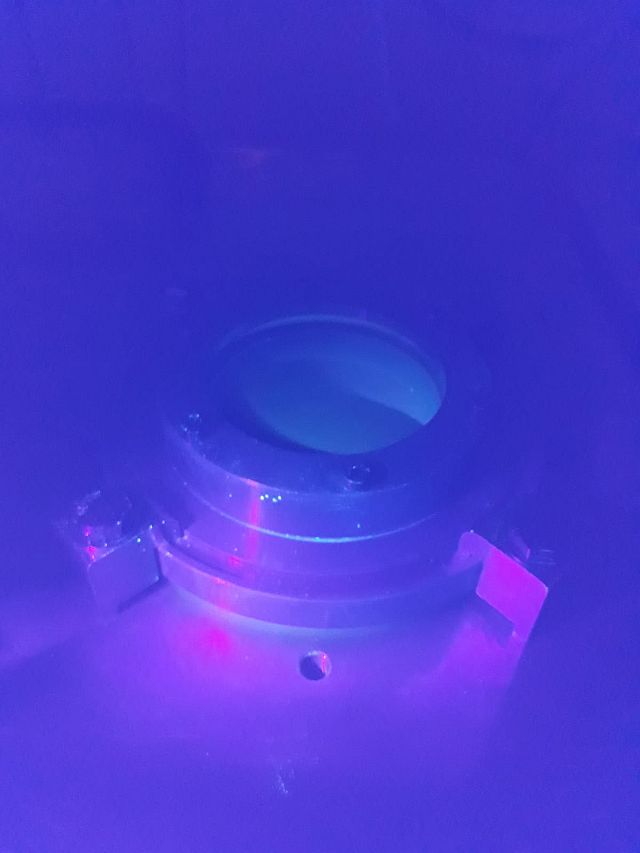 |
| Attachment 2: Log_Reflection_window.jpg
| 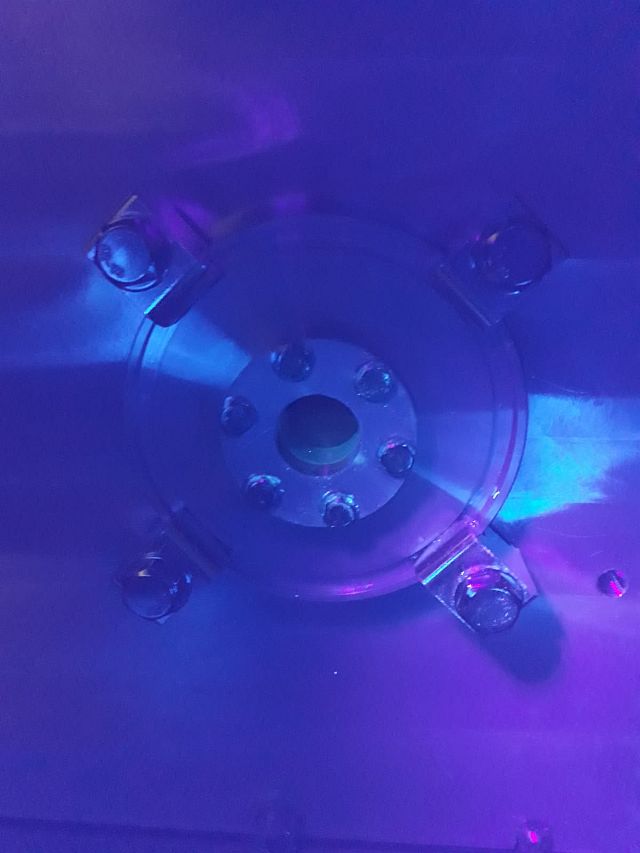 |
| Attachment 3: Log_Injection_Side_window.jpg
| 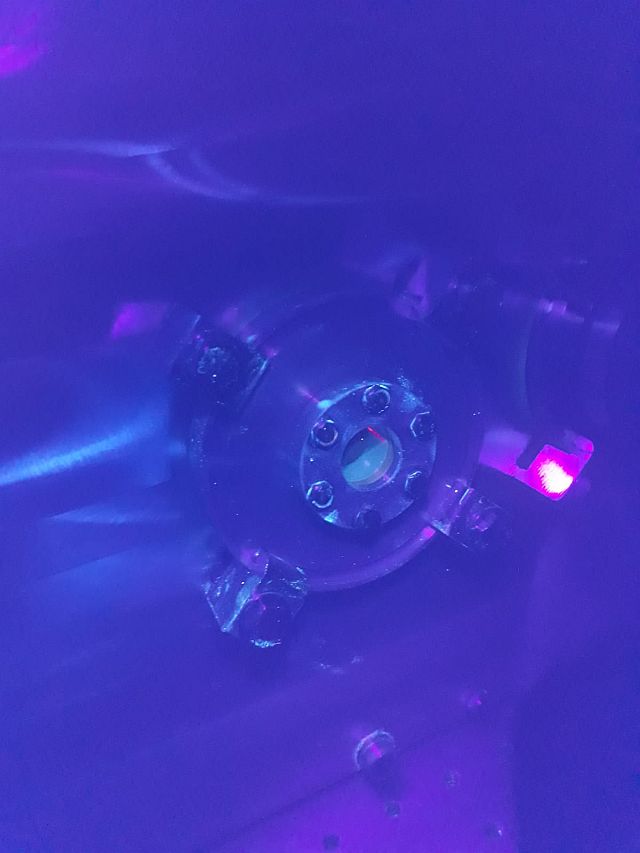 |
| Attachment 4: Log_Injection_side_window2.jpg
| 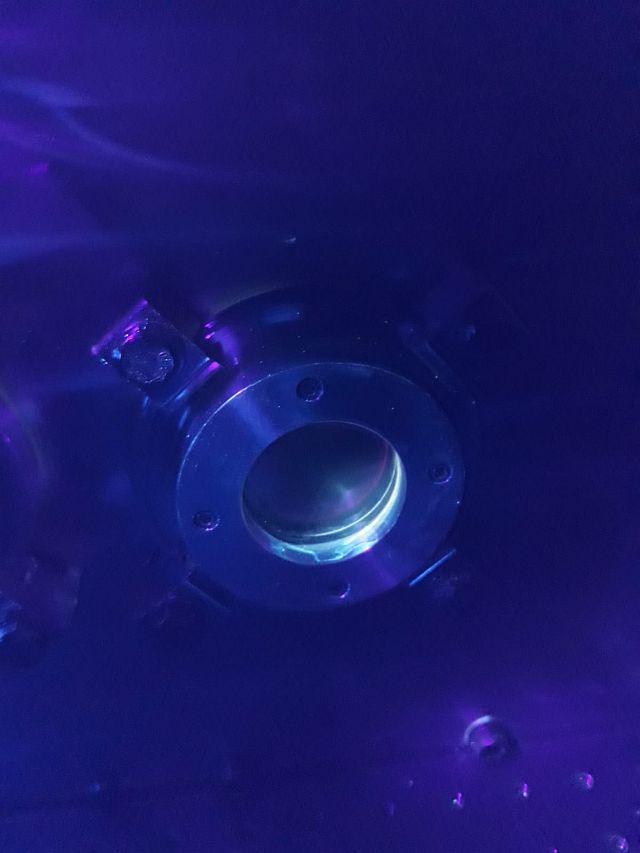 |
|
68
|
Wed Mar 23 18:17:45 2022 |
Manar Amer | Fixed | report | utilities | Optical room | Dust Cleaning of SBox | The cleaning was done twice with half an hour interval between the two times
reading on the dust meter was taken after each time, and it was zero averaged over a 10-min
| Manar Amer wrote: |
|
An Initial cleaning of the KBoX outside was done, All the optics and mechanics placed that were on the table were removed.
Only the old Mitylaser amplifier remains on the table.
Since we will be using the ThomX Celia amplifier, we will remove it and place it in a secure location (to be decided).
Tomorrow a cleaning of the inside of the cavity box is to be done.
|
|
|
70
|
Tue Mar 29 16:27:34 2022 |
Manar Amer | Fixed | report | utilities | Optical room | Spincoater - Mirrror cleaning | In preparation for cleaning the mirrors.
The spincoater has been moved with its bump into the sas of the SBox.
The pure water used will be provided by Alice, as the previous source in the workshop is not available.
|
|
121
|
Thu Jul 28 13:52:23 2022 |
Aurélien Martens | Fixed | report | utilities | Optical room | chiller for CELIA amplifier | The chiller of CELIA amplifier has been moved from the corridor to the changing room in front of PLIC.
It was not functionning well (quick drop of flow below 0.9l/min). After several cleanings of the filter, shorting the water circuit a stable 2.1l/min flow was obtained. Then the water circuit was elongated to go close to the amplifier but not into it. Allowing to get about 1.3l/min stable. Now the amplifier is conencted, the filter has been cleaned again twice and the flow seem stable with 1.4l/min. New filters have been ordered and must arrive quickly. Changing it is necessary I think. |
|
122
|
Mon Aug 8 11:11:28 2022 |
Aurélien Martens | Fixed | report | utilities | Optical room | chiller for CELIA amplifier | today, temperature of the chiller has been set to 23°C.
measured temperature in the chiller reaches 23°C after approximatively 10 minutes
| Aurélien Martens wrote: |
|
The chiller of CELIA amplifier has been moved from the corridor to the changing room in front of PLIC.
It was not functionning well (quick drop of flow below 0.9l/min). After several cleanings of the filter, shorting the water circuit a stable 2.1l/min flow was obtained. Then the water circuit was elongated to go close to the amplifier but not into it. Allowing to get about 1.3l/min stable. Now the amplifier is conencted, the filter has been cleaned again twice and the flow seem stable with 1.4l/min. New filters have been ordered and must arrive quickly. Changing it is necessary I think.
|
|
|
228
|
Tue Dec 3 13:51:52 2024 |
Ronic Chiche | Fixed | info | utilities | Optical room | optical table cleaning | this morning with Alice and Daniele, we removed all the optics elements and equipments from the SBOX optical table and started to clean it.
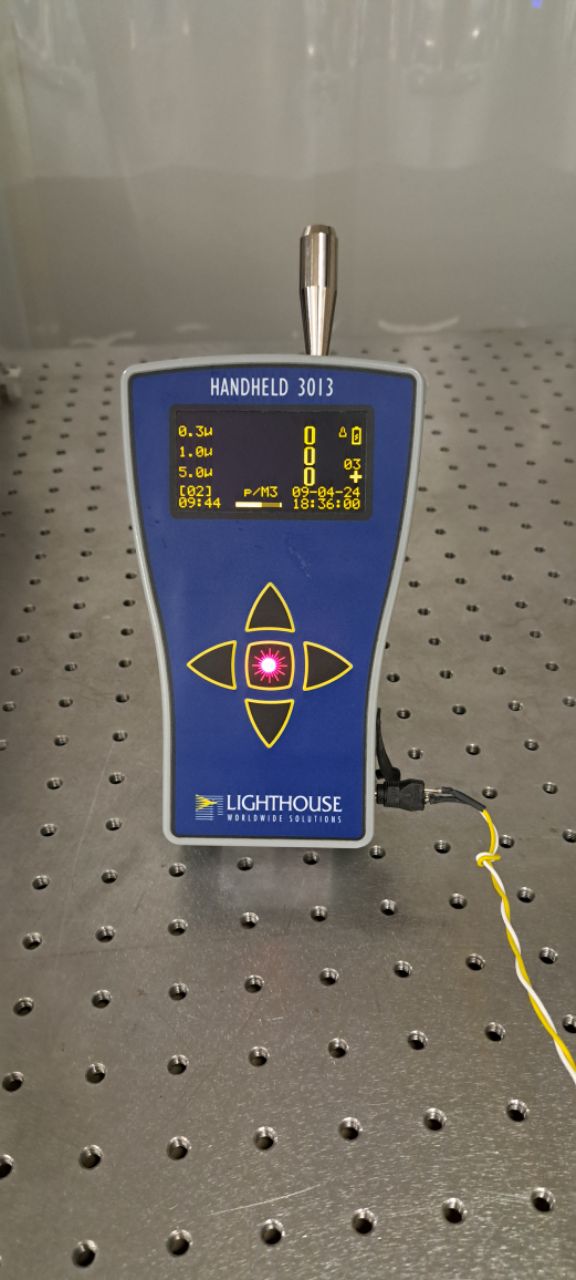
the dust meter count 0 on all particle sizes after the cleaning.
we observed a small part of the SBOX which seems to be oxydised (see picture).
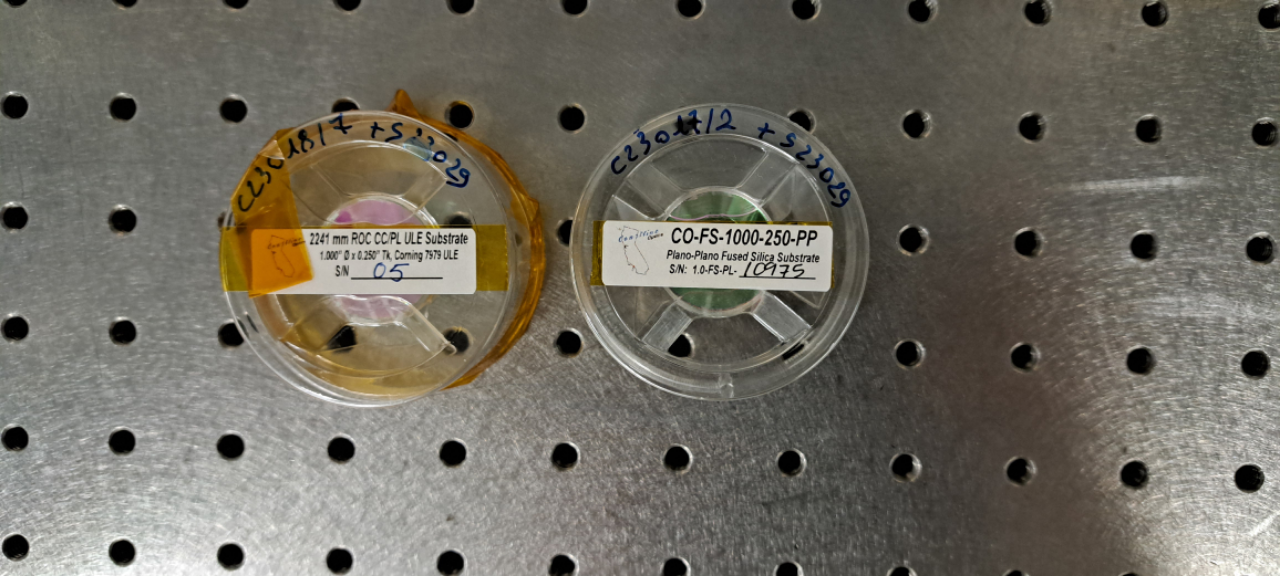
the two previously used mirrors of the SBOX (C23018/7 and C23017/2) were already in their plastic boxes outside of the SBOX.
they are still on the optical table.
we have to decide which mirrors to put in the cavity:
if we don't want to use a "new" ThomX coupling mirror M1, we have to use a Gamma-factory mirror (161185) with T=460ppm for example (we don't have any other FS plan mirrors).
if we don't plan to work at high power in the SBOX for the moment, we could use an "old" ThomX M2 mirror with ROC=2.241m (C1611/11) to avoid any risk of contamination of a "new" ThomX M2 mirror. |
| Attachment 1: Oxydation.jpg
|  |
| Attachment 2: 20241203_113105.jpg
|  |
| Attachment 3: 20241203_125359.jpg
|  |
|
229
|
Fri Dec 6 16:59:57 2024 |
Ronic Chiche | Fixed | info | utilities | Optical room | optical table cleaning | this afternoon, we checked the dust meter which is at 0 for 1 and 5µm dust particles but ~ 2000-3000 for 0.3µm particles.
we opened the two top panels to let the air flow clean the inside of the vessel.
we observed some other minor oxydised regions (than the one taken in picture) on the external parts of the inox panels but at first sight, nothing inside the vessel.
| Ronic Chiche wrote: |
|
this morning with Alice and Daniele, we removed all the optics elements and equipments from the SBOX optical table and started to clean it.
the dust meter count 0 on all particle sizes after the cleaning.
we observed a small part of the SBOX which seems to be oxydised (see picture).
the two previously used mirrors of the SBOX (C23018/7 and C23017/2) were already in their plastic boxes outside of the SBOX.
they are still on the optical table.
we have to decide which mirrors to put in the cavity:
if we don't want to use a "new" ThomX coupling mirror M1, we have to use a Gamma-factory mirror (161185) with T=460ppm for example (we don't have any other FS plan mirrors).
if we don't plan to work at high power in the SBOX for the moment, we could use an "old" ThomX M2 mirror with ROC=2.241m (C1611/11) to avoid any risk of contamination of a "new" ThomX M2 mirror.
|
|
|
231
|
Tue Mar 4 18:33:26 2025 |
Ronic Chiche | Fixed | info | utilities | Optical room | optical table cleaning | now, it seems the table is clean enough (dust meter counts 0 particles) to install a 2 mirrors FP-cavity.
| Ronic Chiche wrote: |
|
this afternoon, we checked the dust meter which is at 0 for 1 and 5µm dust particles but ~ 2000-3000 for 0.3µm particles.
we opened the two top panels to let the air flow clean the inside of the vessel.
we observed some other minor oxydised regions (than the one taken in picture) on the external parts of the inox panels but at first sight, nothing inside the vessel.
| Ronic Chiche wrote: |
|
this morning with Alice and Daniele, we removed all the optics elements and equipments from the SBOX optical table and started to clean it.
the dust meter count 0 on all particle sizes after the cleaning.
we observed a small part of the SBOX which seems to be oxydised (see picture).
the two previously used mirrors of the SBOX (C23018/7 and C23017/2) were already in their plastic boxes outside of the SBOX.
they are still on the optical table.
we have to decide which mirrors to put in the cavity:
if we don't want to use a "new" ThomX coupling mirror M1, we have to use a Gamma-factory mirror (161185) with T=460ppm for example (we don't have any other FS plan mirrors).
if we don't plan to work at high power in the SBOX for the moment, we could use an "old" ThomX M2 mirror with ROC=2.241m (C1611/11) to avoid any risk of contamination of a "new" ThomX M2 mirror.
|
|
|
|
71
|
Wed Mar 30 18:53:01 2022 |
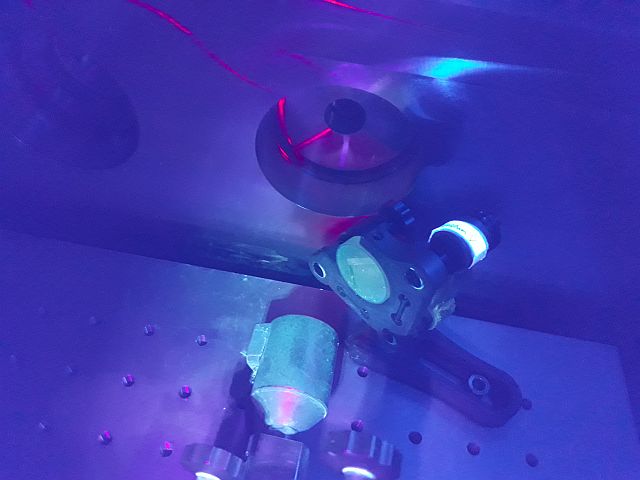
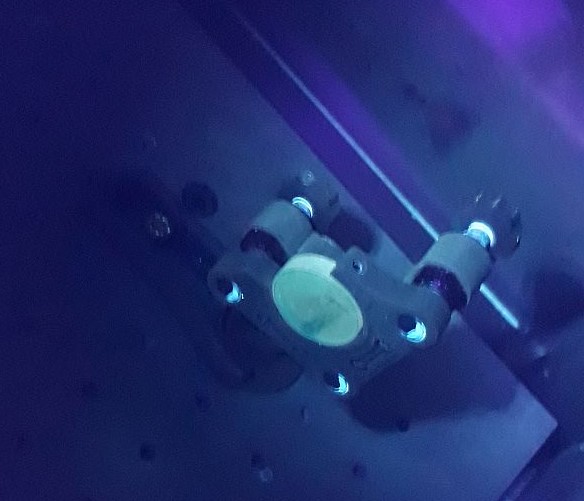
Manar Amer | Fixed | report | mechanics | lasers and optics | utilities | Optical room | Dust Cleaning of SBox | The inside of the cavity was cleaned today. It was very dirty and had big dust particles and fibers inside.
Cleaning was done for everything; wall, floor, fixed mounts, wires (still have some dust difficult to remove), edges.
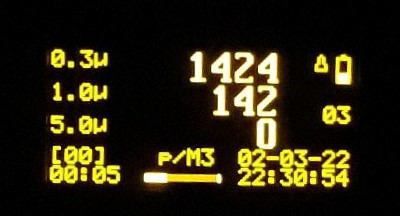
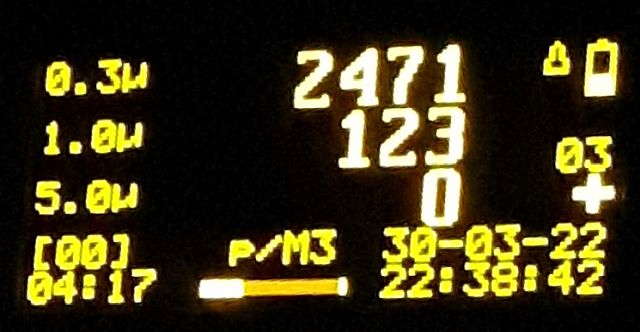
The dust meter average was measured outside the cavity (2471 p/m3 av 6 min) and inside after cleaning (1424 p/m3 av 10 min).
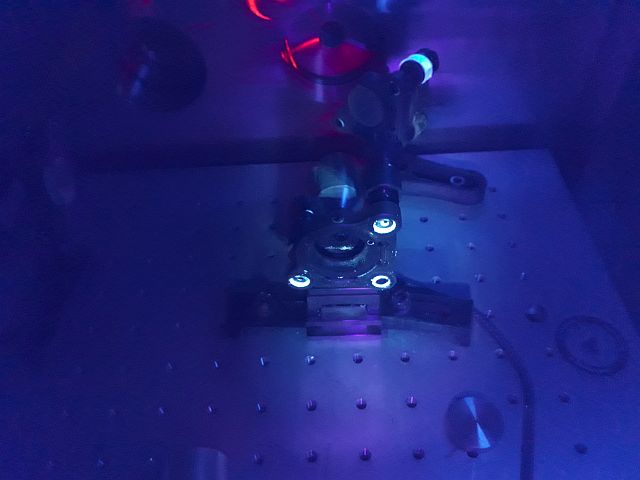
The cavity was left open under the clean air flow, will observe it under UV, clean and measure Dust tomorrow.
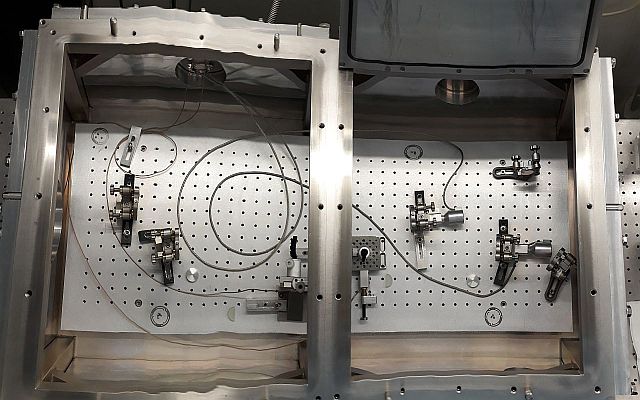
Images attached are after cleaning.
Objects inside the cavity at the moment :
- 4 main mirror mounts
- 4 mirror fixers on mounts and 3 screws each (total 12)
- 2 reflecting mirror mounts
- 2 dielectric mirrors (mounted and to be cleaned)
- two mounts for D-shaped mirrors.
- 2 D-shaped mirrors (unmounted, and they will need cleaning)
- 2 metal irises (pinholes)
| Manar Amer wrote: |
|
The cleaning was done twice with half an hour interval between the two times
reading on the dust meter was taken after each time, and it was zero averaged over a 10-min
| Manar Amer wrote: |
|
An Initial cleaning of the KBoX outside was done, All the optics and mechanics placed that were on the table were removed.
Only the old Mitylaser amplifier remains on the table.
Since we will be using the ThomX Celia amplifier, we will remove it and place it in a secure location (to be decided).
Tomorrow a cleaning of the inside of the cavity box is to be done.
|
|
|
| Attachment 1: 20220330_SBox_Inside_Cavity_Box.jpg
|  |
| Attachment 2: 20220330_Injection_Mount_UV.jpg
|  |
| Attachment 3: 20220330_Reflection_One_UV.jpg
|  |
| Attachment 4: 20220330_Reflection_two_UV.jpg
|  |
| Attachment 5: 20220330_Dust_Meter_Inside_cavity_Av10min.jpg
|  |
| Attachment 6: 20220330_Dust_Meter_Outside_cavity_Av6min.jpg
|  |
|
72
|
Thu Mar 31 13:29:01 2022 |
Manar Amer | Fixed | report | mechanics | lasers and optics | utilities | Optical room | Dust Cleaning of SBox | After an overnight where the cavity box was left open, a measurement of the Dust meter was taken:
Outside on the optical table on direct air flux (1701 p/m3 Av 10 min) and
Inside the cavity box (998 p/m3 Av 10 min)
The dust inside the cavity has decreased by ~ 30 % for 0.3 u particles.
Note: the cavity box is still open.
| Manar Amer wrote: |
|
The inside of the cavity was cleaned today. It was very dirty and had big dust particles and fibers inside.
Cleaning was done for everything; wall, floor, fixed mounts, wires (still have some dust difficult to remove), edges.
The dust meter average was measured outside the cavity (2471 p/m3 av 6 min) and inside after cleaning (1424 p/m3 av 10 min).
The cavity was left open under the clean air flow, will observe it under UV, clean and measure Dust tomorrow.
Images attached are after cleaning.
Objects inside the cavity at the moment :
- 4 main mirror mounts
- 4 mirror fixers on mounts and 3 screws each (total 12)
- 2 reflecting mirror mounts
- 2 dielectric mirrors (mounted and to be cleaned)
- two mounts for D-shaped mirrors.
- 2 D-shaped mirrors (unmounted, and they will need cleaning)
- 2 metal irises (pinholes)
| Manar Amer wrote: |
|
The cleaning was done twice with half an hour interval between the two times
reading on the dust meter was taken after each time, and it was zero averaged over a 10-min
| Manar Amer wrote: |
|
An Initial cleaning of the KBoX outside was done, All the optics and mechanics placed that were on the table were removed.
Only the old Mitylaser amplifier remains on the table.
Since we will be using the ThomX Celia amplifier, we will remove it and place it in a secure location (to be decided).
Tomorrow a cleaning of the inside of the cavity box is to be done.
|
|
|
|
| Attachment 1: 20220331_Dust_Meter_Outside_cavity_Av10min.jpg
|  |
| Attachment 2: 20220331_Dust_Meter_Inside_cavity_Av10min.jpg
|  |
|
175
|
Thu Dec 7 09:30:03 2023 |
Ronic Chiche | Fixed | info | mechanics | lasers and optics | detectors and electronics | software | Optical room | new setup for the 160MHz Menhir oscillator | from the begining of the week, Xinyi, Aurélien, Viktor and myself started to install a new setup for the Menhir 160MHz oscillator.
the goal is to rich a record power in the FP-cavity.
- the 160MHz Menhir oscillator has been injected in a fiber.
we reached ~ 25mV on 50ohms which is equivalent to 0.5mA in a DET10 photodiode.
=> ~1mW coupled in the fiber => it is not enough to put an EOM and an AOM before the amplifier.
=> one needs to improve the fiber injection.
in fact, I checked the power in the fiber with a powermeter, and it is ~16mW !
at this level of power, one needs to add some optical density before connecting to a photodiode, or it can be saturated.
- we calculated the mirrors position in the SBOX vessel to obtain a 160MHz FSR FP-cavity.
see in attached files, the calculations and scheme in the PPTX file and the Matlab code to get some results.
- we cleaned the optical table and verified with the dust counter that the SBOX environnement is clean.
the 2nd airflow box (from the entrance) seems more dusty (measureed directly close to the top) than the others.
we also opened the vessel and cleaned it.
see the dust measurement inside the SBOX.
- we checked the motors inside the vessel :
=> spherical and plan mirrors translation stage control with the ESP300.
the translation stage have been placed on the middle of their range.
=> the 2 D-shape mirrors translation stage control with PICOMOTORS controller Newport 8742.
- today, Viktor and Xinyi should start the installation of the mirrors mount and make some test to check if the beam is properly propagated inside the FP-cavity, before installing the final mirrors.
the mirror mounts are the Newport SU100TW-F2K zero-drift low waveform distortion : https://www.newport.com/p/SU100TW-F2K
they can accept mirrors with 6-6.35mm thickness => normally the SBOX mirrors from the LMA have a 6.35mm thickness.
see 1st file from this post : https://elog.lal.in2p3.fr/FPC/SBOX+commissioning/174 |
| Attachment 1: Plan_SBOX_@_160MHz.pptx
|
| Attachment 2: Implantation_disymmetric.m
|
clear
clc

% simulation parameters
c=299792458;            % light speed in vacuum
Frep=160.3084e6;        % laser repetition rate
D=0.07;                 % side distance between "output" windows of the vessel
DR=0.12;                % side distance between "input" windows of the vessel
L0=1.02;                % cavity box length
L3=0.505;               % distance between spherical mirrors

theta1=linspace(0.115,0.120,1e3);

% calculated parameters
Lrt=c/Frep;
theta2=2*atan(1./((Lrt/D)-1./tan(theta1/2)));
L2=D./sin(theta2);
L4=D./sin(theta1);
L1=Lrt-L2-L3-L4;

LM3=(DR-D)./tan(theta2);
LM2=L0-DR./tan(theta2);
LM1=L0-L1-LM2;
LM4=L0-L3-LM3;

id=LM1>0.15 & LM2>0.15 & LM3>0.15 & LM4>0.15 & abs(LM1-LM3)>0.08 & abs(LM2-LM4)>0.08;
L1(~id)=0;
L2(~id)=0;
L4(~id)=0;
LM1(~id)=0;
LM2(~id)=0;
LM3(~id)=0;
LM4(~id)=0;

figure(1)
clf
plot(theta1*1e3,L1)
hold on
plot(theta1*1e3,L2)
plot(theta1*1e3,L4)
plot(theta1*1e3,LM1)
plot(theta1*1e3,LM2)
plot(theta1*1e3,LM3)
plot(theta1*1e3,LM4)
grid on
legend('L1','L2','L4','LM1','LM2','LM3','LM4','location','best')
xlabel('theta1 angle (mrad)')
ylabel('length parameters (m)')

id=find(id~=0);
id=id(1);

disp(['LRT = ' num2str(Lrt) ' m'])
disp(['D = ' num2str(D*1e3) ' mm'])
disp(['theta1 = ' num2str(theta1(id)*1e3) ' mrad'])
disp(['theta2 = ' num2str(theta2(id)*1e3) ' mrad'])
disp(['L1 = ' num2str(L1(id)*1e3) ' mm'])
disp(['L2 = ' num2str(L2(id)*1e3) ' mm'])
disp(['L3 = ' num2str(L3*1e3) ' mm'])
disp(['L4 = ' num2str(L4(id)*1e3) ' mm'])
disp(' ')
disp(['L0 = ' num2str(L0) ' m'])
disp(['DR = ' num2str(DR*1e3) ' mm'])
disp(['LM1 = ' num2str(LM1(id)*1e3) ' mm'])
disp(['LM2 = ' num2str(LM2(id)*1e3) ' mm'])
disp(['LM3 = ' num2str(LM3(id)*1e3) ' mm'])
disp(['LM4 = ' num2str(LM4(id)*1e3) ' mm'])
disp(['LM3-LM1 = ' num2str((LM3(id)-LM1(id))*1e3) ' mm'])
disp(['LM2-LM4 = ' num2str((LM2(id)-LM4(id))*1e3) ' mm'])
|
| Attachment 3: IMG_20210519_155329.jpg
|  |
|
99
|
Tue Jun 21 23:52:28 2022 |
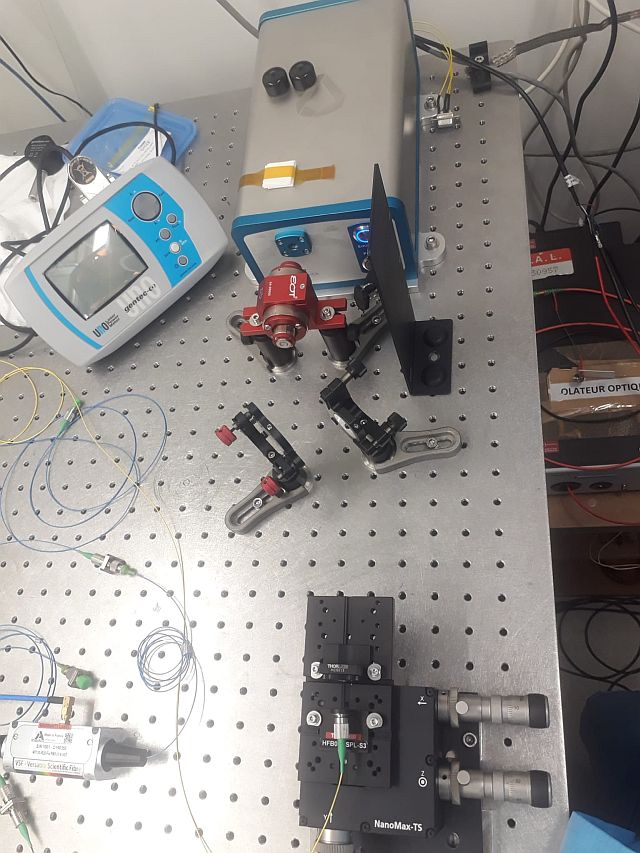
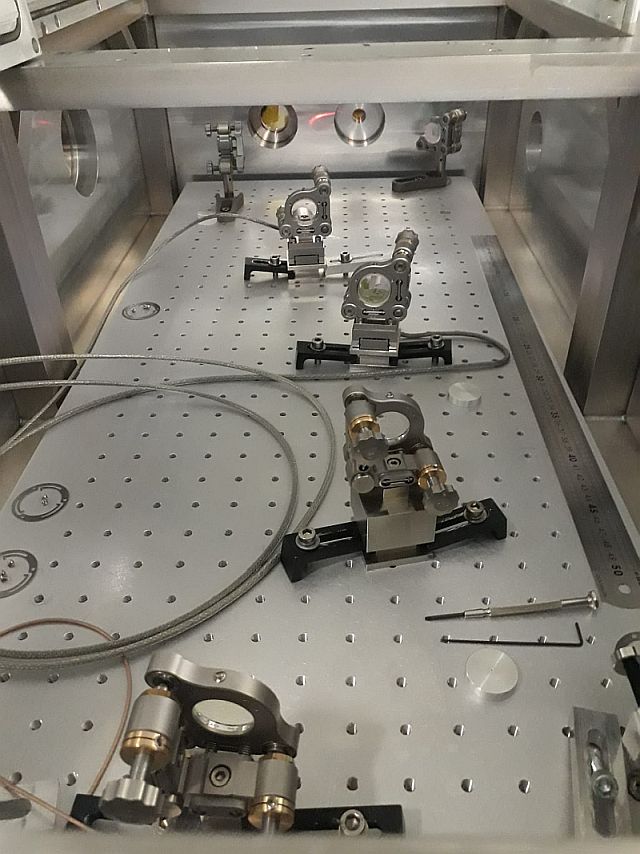
Manar Amer | Fixed | report | mechanics | lasers and optics | detectors and electronics | Optical room | Menhir Pulsed Laser | The SBox Length (FSR), was changed to match the repetition rate of the Menhir pulsed laser Frep = 216.6625 MHz
It was changed by removing the 2 D-shaped mirrors placed between M1 and M2, distance between M1-M2 ~= 169 mm
it was still needed to be adjusted with M1 motor to reach the correct FSR.
The pulsed laser is placed on the able with injection into a fiber
The Finesse of the cavity has progressed from ~2500 to ~ 18 000
** Note: PowerPoint attached shows the progress over the last two weeks on the laser and |
| Attachment 1: MENHIR_injection_into_fiber.jpg
|  |
| Attachment 2: SBox_M.jpg
|  |
| Attachment 3: 20220620_SBox_MENHIR.pptx
|
|
156
|
Fri Sep 9 18:35:07 2022 |
Ronic Chiche | Fixed | info | mechanics | lasers and optics | detectors and electronics | Optical room | D-shape mirrors positionning status | This afternoon we opened the cavity and put the D-shape mirrors at their correct place, close to the beam.
we checked the relative position of the mirrors to the beam using the 2nd stage of the amplifier (<1W) and with the sensitive (and cleaned) orange optical card.
with this configuration, we can see very clearly the beam inside the cavity (~ 100µW) and we can check easily if the D-shape mirrors are correctly placed.
the motors used to move the D-shape are the Newport Picomotors 8303-V
with roughly 30nm/step sensitivity and 50mm of range (~1 600 000 steps)
the 4 axis controller used ot move these motors is the Newport 8742.
For both Vertical and Horizontal D-shape mirrors:
* when you do +N steps on the controller, you retract the D-shape mirror from the beam
* when you do -N steps on the controller, you push the D-shape mirror to the beam
the 0 position on the controller corresponds to the D-shape close to the beam.
now, the FP cavity is closed and pumped to go back to vacuum.
|
|
157
|
Fri Sep 9 19:03:58 2022 |
Ronic Chiche | Fixed | info | mechanics | lasers and optics | detectors and electronics | Optical room | D-shape mirrors positionning status | The cavity box is vacuum pumped at 6*10^-2 mbar.
| Ronic Chiche wrote: |
|
This afternoon we opened the cavity and put the D-shape mirrors at their correct place, close to the beam.
we checked the relative position of the mirrors to the beam using the 2nd stage of the amplifier (<1W) and with the sensitive (and cleaned) orange optical card.
with this configuration, we can see very clearly the beam inside the cavity (~ 100µW) and we can check easily if the D-shape mirrors are correctly placed.
the motors used to move the D-shape are the Newport Picomotors 8303-V
with roughly 30nm/step sensitivity and 50mm of range (~1 600 000 steps)
the 4 axis controller used ot move these motors is the Newport 8742.
For both Vertical and Horizontal D-shape mirrors:
* when you do +N steps on the controller, you retract the D-shape mirror from the beam
* when you do -N steps on the controller, you push the D-shape mirror to the beam
the 0 position on the controller corresponds to the D-shape close to the beam.
now, the FP cavity is closed and pumped to go back to vacuum.
|
|
|
223
|
Wed Jun 19 10:38:00 2024 |
Ronic Chiche | Fixed | info | mechanics | lasers and optics | detectors and electronics | Optical room | D-shape mirrors positionning status | summary:
- the motors used to move the D-shape are the Newport Picomotors 8303-V
the sensitivity is roughly 30nm/step
the range is 1 600 000 steps or 50mm
- the 4 axis controller used ot move these motors is the Newport 8742.
channel 1 is for the vertical D-shape
channel 2 is for the horizontal D-shape
+N steps on the controller, you retract the D-shape mirror from the beam
-N steps on the controller, you push the D-shape mirror to the beam
the 0 position, vertically and horizontally is close to the beam.
the stand position is at ~ +200 000 steps in both directions.
| Ronic Chiche wrote: |
|
The cavity box is vacuum pumped at 6*10^-2 mbar.
| Ronic Chiche wrote: |
|
This afternoon we opened the cavity and put the D-shape mirrors at their correct place, close to the beam.
we checked the relative position of the mirrors to the beam using the 2nd stage of the amplifier (<1W) and with the sensitive (and cleaned) orange optical card.
with this configuration, we can see very clearly the beam inside the cavity (~ 100µW) and we can check easily if the D-shape mirrors are correctly placed.
the motors used to move the D-shape are the Newport Picomotors 8303-V
with roughly 30nm/step sensitivity and 50mm of range (~1 600 000 steps)
the 4 axis controller used ot move these motors is the Newport 8742.
For both Vertical and Horizontal D-shape mirrors:
* when you do +N steps on the controller, you retract the D-shape mirror from the beam
* when you do -N steps on the controller, you push the D-shape mirror to the beam
the 0 position on the controller corresponds to the D-shape close to the beam.
now, the FP cavity is closed and pumped to go back to vacuum.
|
|
|
|
238
|
Mon Jun 23 14:38:33 2025 |
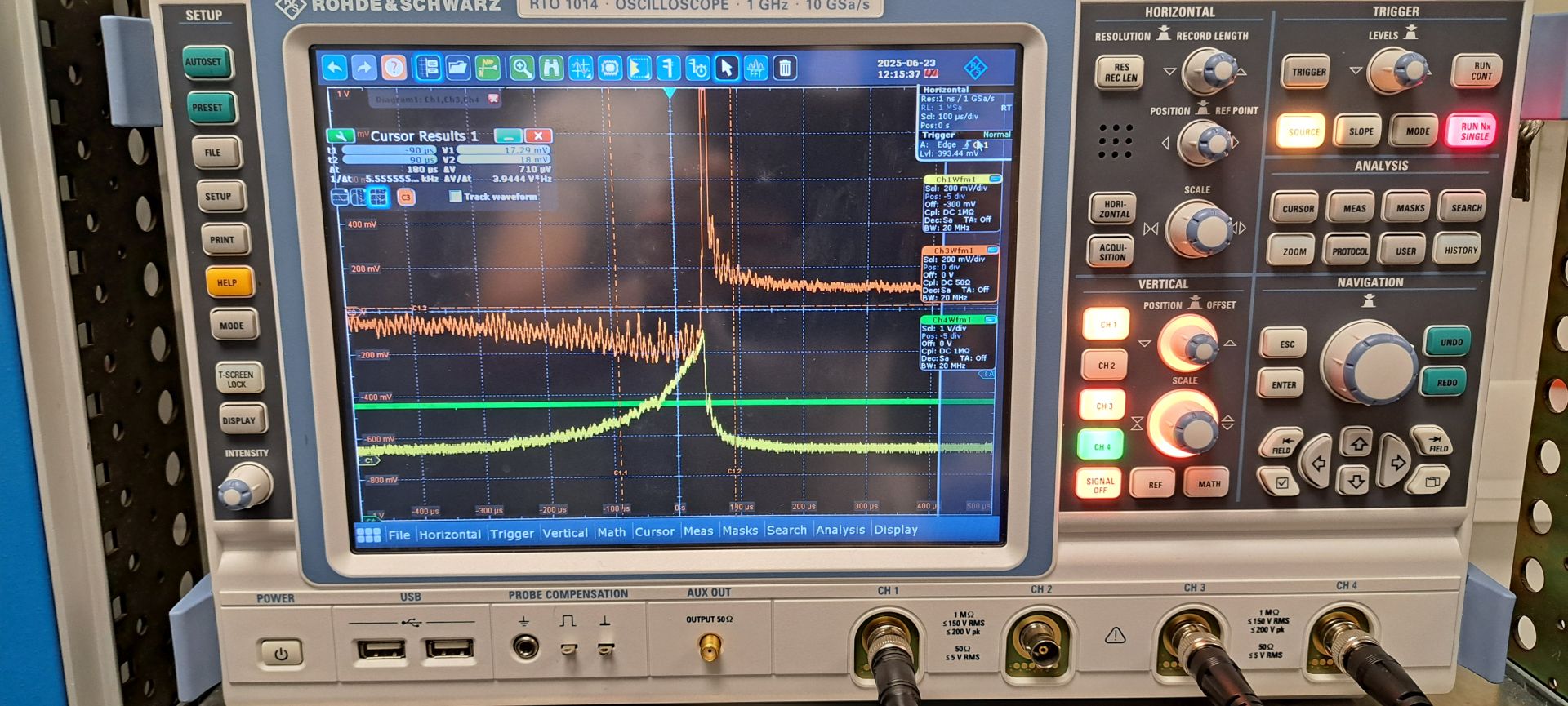
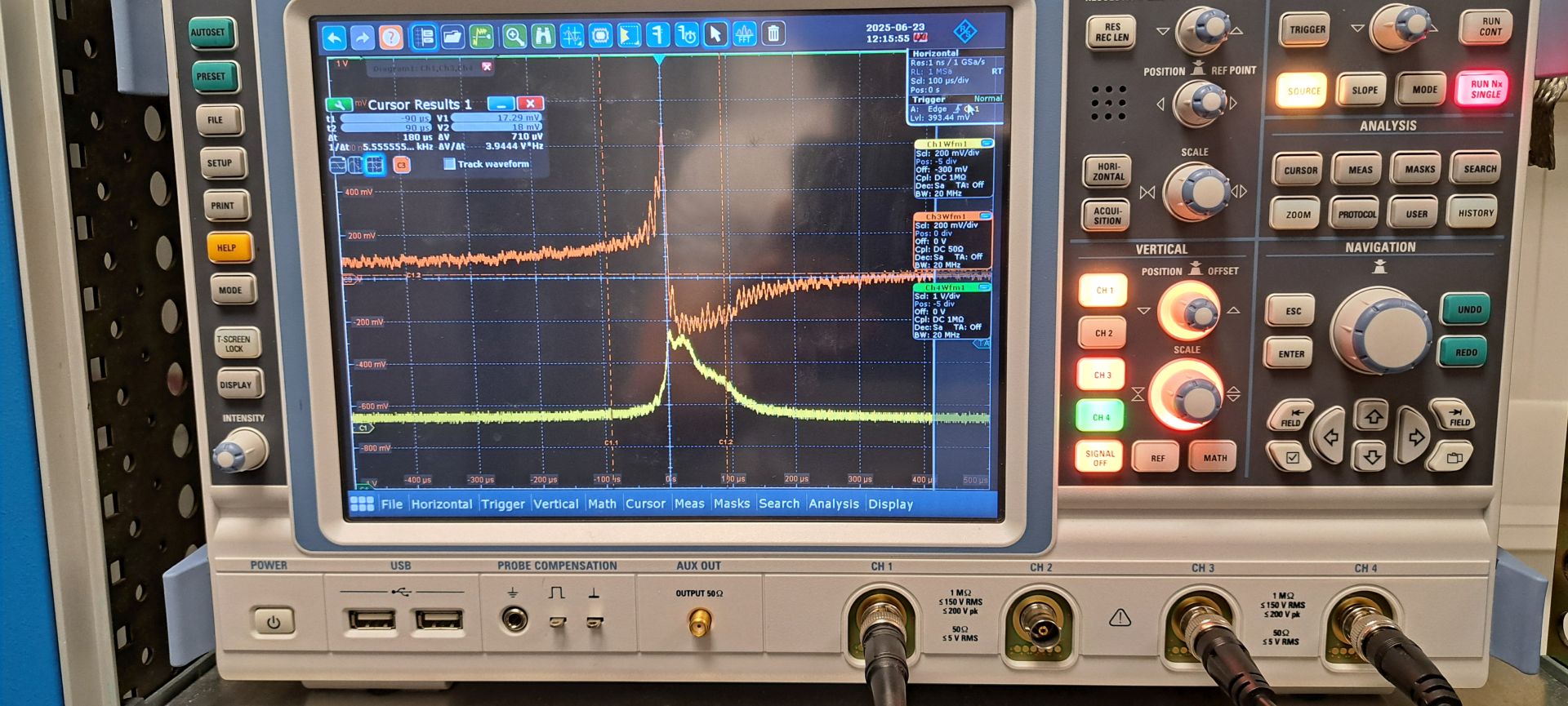
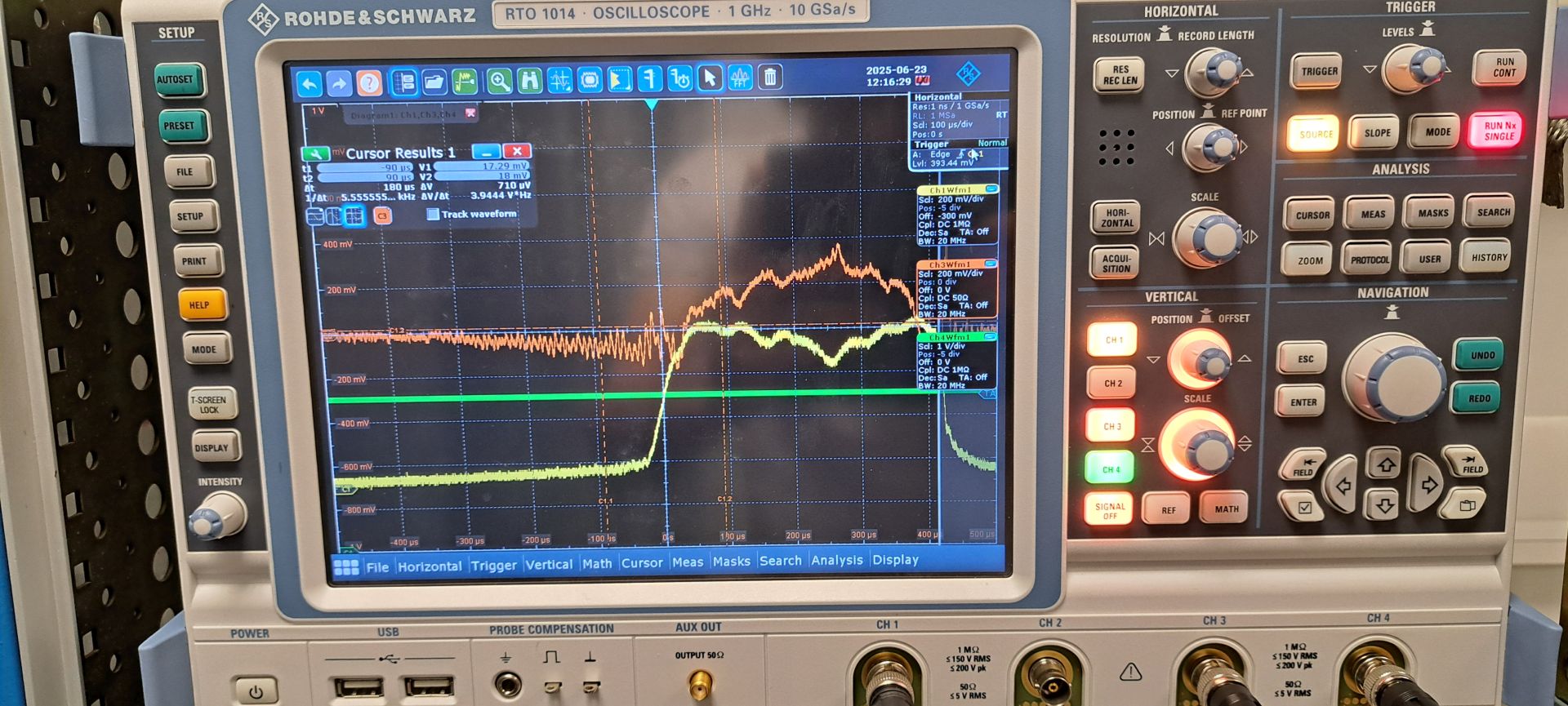
Ronic Chiche | Under Process | issue | mechanics | lasers and optics | detectors and electronics | Optical room | first attempt to lock | With Alice, we installed the EOWaves oscillator to be locked on the FP-cavity (T1 ~ 2500ppm, T2 ~ 10ppm => F ~ 2500)
FSR = 216MHz => LW = 86kHz.
We installed the PDH box, and we got some error signal, but the shape of the transmission signal and error signal is a bit strange...
It grows smoothly, and when the power is large enough, one can see a sudden and fast drop.
Could it be some mechanical problem with the mirrors' mounts ?
I opened the SBOX this morning to do some inspection, and the mirrors seem properly installed in the mounts.
In some rare cases (last picture), the "instability" effect is not dominant, and we are able to maintain a quasi-lock during some 1- 2ms.
But it is still impossible to lock the cavity.
(We did a test with a vacuum in the SBOX at ~2mbar, but the problem is the same.) |
| Attachment 1: 20250623_123816.jpg
|  |
| Attachment 2: 20250623_123833.jpg
|  |
| Attachment 3: 20250623_123908.jpg
|  |
|
246
|
Wed Aug 5 11:25:41 2026 |
Ronic Chiche | Under Process | info | mechanics | lasers and optics | cabling | Optical room | Neolase amplifier installation | we have all the adaptor plugs for connecting the chiller.
so, I tested first the chiller connected in closed loop (on itself).
there is no manual, so procedure is not completely clear...
DO NOT PLUG ANYTHING BEFORE THE CHILLER ASK FOR IT
ONE MUST FOLLOW THE PROCEDURE ON THE CHILLER DISPLAY
1) if the chiller circuit is full of coolant liquid,
one must start by a System Startup -> Draining
(a trash tank and the hose will be need for emptying the circuit)
2) once the chiller circuit is empty
one must continue by System Startup -> Filling
(a clean demineralized water tank and the hose will be need for filling the circuit)
=> OK !
the chiller is able the fill and drain its circuit.
I saw the cooling water circulating in the closed loop.
|
|
247
|
Wed Aug 5 12:22:52 2026 |
Ronic Chiche | Under Process | info | mechanics | lasers and optics | cabling | Optical room | Neolase amplifier installation | now, I connected the chiller circuit to the amplifier, thanks to the adapters.
chiller IN => blue pipe => laser OUT
chiller OUT => black pipe => laser IN
after several filling and compression procedure, the flow is only 1.7Lpm and the pressure is 0.8 bar.
the temperature has been set to 20°C according to the manual operating range 18-23°C.
the flow is too low !
according to the manual, the flow should be 3-5Lpm !
a very small leakage appears if the mechanical constrains on the pipe is too high.
so, I separated the IN and OUT pipes to release this constrain and fixed the pipes to keep the position.
| Ronic Chiche wrote: |
|
we have all the adaptor plugs for connecting the chiller.
so, I tested first the chiller connected in closed loop (on itself).
there is no manual, so procedure is not completely clear...
DO NOT PLUG ANYTHING BEFORE THE CHILLER ASK FOR IT
ONE MUST FOLLOW THE PROCEDURE ON THE CHILLER DISPLAY
1) if the chiller circuit is full of coolant liquid,
one must start by a System Startup -> Draining
(a trash tank and the hose will be need for emptying the circuit)
2) once the chiller circuit is empty
one must continue by System Startup -> Filling
(a clean demineralized water tank and the hose will be need for filling the circuit)
=> OK !
the chiller is able the fill and drain its circuit.
I saw the cooling water circulating in the closed loop.
|
|
|
248
|
Wed Aug 5 13:49:49 2026 |
Ronic Chiche | Under Process | info | mechanics | lasers and optics | cabling | Optical room | Neolase amplifier installation | pipes are maybe too long ?
we can use the Darcy-Weisbach + Blasius laws (non linear laws).
I asked to ChatGPT, Claude, Mistral and MathGPT to solve it with these parameters :
L ~ 3m
D = 1 cm
water at 20°C
dP = 0.7 bar
they all found ~ 22-23L/min
so, the tube length should not be the problem... to be investiguated.
| Ronic Chiche wrote: |
|
now, I connected the chiller circuit to the amplifier, thanks to the adapters.
chiller IN => blue pipe => laser OUT
chiller OUT => black pipe => laser IN
after several filling and compression procedure, the flow is only 1.7Lpm and the pressure is 0.8 bar.
the temperature has been set to 20°C according to the manual operating range 18-23°C.
the flow is too low !
according to the manual, the flow should be 3-5Lpm !
a very small leakage appears if the mechanical constrains on the pipe is too high.
so, I separated the IN and OUT pipes to release this constrain and fixed the pipes to keep the position.
| Ronic Chiche wrote: |
|
we have all the adaptor plugs for connecting the chiller.
so, I tested first the chiller connected in closed loop (on itself).
there is no manual, so procedure is not completely clear...
DO NOT PLUG ANYTHING BEFORE THE CHILLER ASK FOR IT
ONE MUST FOLLOW THE PROCEDURE ON THE CHILLER DISPLAY
1) if the chiller circuit is full of coolant liquid,
one must start by a System Startup -> Draining
(a trash tank and the hose will be need for emptying the circuit)
2) once the chiller circuit is empty
one must continue by System Startup -> Filling
(a clean demineralized water tank and the hose will be need for filling the circuit)
=> OK !
the chiller is able the fill and drain its circuit.
I saw the cooling water circulating in the closed loop.
|
|
|
|
249
|
Thu Aug 6 14:49:32 2026 |
Ronic Chiche | Under Process | info | mechanics | lasers and optics | cabling | Optical room | Neolase amplifier installation | I drained the chiller to install again the short pipe (< 1m) in closed loop.
then, I filled again the chiller and did the compression process to obtain 1bar.
in that case, the flow measured by the chiller is correct about 5.8Lpm.
PS : the correct length for the previous calculation is 6m (2x 3m) and not 3m...
in that case, the flow should be ~ 15Lpm (and not 22 Lpm)
| )Ronic Chiche wrote: |
|
pipes are maybe too long ?
we can use the Darcy-Weisbach + Blasius laws (non linear laws).
I asked to ChatGPT, Claude, Mistral and MathGPT to solve it with these parameters :
L ~ 3m
D = 1 cm
water at 20°C
dP = 0.7 bar
they all found ~ 22-23L/min
so, the tube length should not be the problem... to be investiguated.
| Ronic Chiche wrote: |
|
now, I connected the chiller circuit to the amplifier, thanks to the adapters.
chiller IN => blue pipe => laser OUT
chiller OUT => black pipe => laser IN
after several filling and compression procedure, the flow is only 1.7Lpm and the pressure is 0.8 bar.
the temperature has been set to 20°C according to the manual operating range 18-23°C.
the flow is too low !
according to the manual, the flow should be 3-5Lpm !
a very small leakage appears if the mechanical constrains on the pipe is too high.
so, I separated the IN and OUT pipes to release this constrain and fixed the pipes to keep the position.
| Ronic Chiche wrote: |
|
we have all the adaptor plugs for connecting the chiller.
so, I tested first the chiller connected in closed loop (on itself).
there is no manual, so procedure is not completely clear...
DO NOT PLUG ANYTHING BEFORE THE CHILLER ASK FOR IT
ONE MUST FOLLOW THE PROCEDURE ON THE CHILLER DISPLAY
1) if the chiller circuit is full of coolant liquid,
one must start by a System Startup -> Draining
(a trash tank and the hose will be need for emptying the circuit)
2) once the chiller circuit is empty
one must continue by System Startup -> Filling
(a clean demineralized water tank and the hose will be need for filling the circuit)
=> OK !
the chiller is able the fill and drain its circuit.
I saw the cooling water circulating in the closed loop.
|
|
|
|
|
250
|
Thu Aug 6 15:12:49 2026 |
Ronic Chiche | Under Process | info | mechanics | lasers and optics | cabling | Optical room | Neolase amplifier installation | now, I installed the long pipes (2x 3m) in closed loop (without the amplifier connected), but the exact ones used to connect the laser, with the same pipe adapters.
after the compression process, the chiller works at 0.9 bar and the measured flow is 4.7Lpm.
so, it's still OK !
after a long time, I observed a small leakage on the "male" adapter on the amplifier side.
| Ronic Chiche wrote: |
|
I drained the chiller to install again the short pipe (< 1m) in closed loop.
then, I filled again the chiller and did the compression process to obtain 1bar.
in that case, the flow measured by the chiller is correct about 5.8Lpm.
PS : the correct length for the previous calculation is 6m (2x 3m) and not 3m...
in that case, the flow should be ~ 15Lpm (and not 22 Lpm)
| )Ronic Chiche wrote: |
|
pipes are maybe too long ?
we can use the Darcy-Weisbach + Blasius laws (non linear laws).
I asked to ChatGPT, Claude, Mistral and MathGPT to solve it with these parameters :
L ~ 3m
D = 1 cm
water at 20°C
dP = 0.7 bar
they all found ~ 22-23L/min
so, the tube length should not be the problem... to be investiguated.
| Ronic Chiche wrote: |
|
now, I connected the chiller circuit to the amplifier, thanks to the adapters.
chiller IN => blue pipe => laser OUT
chiller OUT => black pipe => laser IN
after several filling and compression procedure, the flow is only 1.7Lpm and the pressure is 0.8 bar.
the temperature has been set to 20°C according to the manual operating range 18-23°C.
the flow is too low !
according to the manual, the flow should be 3-5Lpm !
a very small leakage appears if the mechanical constrains on the pipe is too high.
so, I separated the IN and OUT pipes to release this constrain and fixed the pipes to keep the position.
| Ronic Chiche wrote: |
|
we have all the adaptor plugs for connecting the chiller.
so, I tested first the chiller connected in closed loop (on itself).
there is no manual, so procedure is not completely clear...
DO NOT PLUG ANYTHING BEFORE THE CHILLER ASK FOR IT
ONE MUST FOLLOW THE PROCEDURE ON THE CHILLER DISPLAY
1) if the chiller circuit is full of coolant liquid,
one must start by a System Startup -> Draining
(a trash tank and the hose will be need for emptying the circuit)
2) once the chiller circuit is empty
one must continue by System Startup -> Filling
(a clean demineralized water tank and the hose will be need for filling the circuit)
=> OK !
the chiller is able the fill and drain its circuit.
I saw the cooling water circulating in the closed loop.
|
|
|
|
|
|
251
|
Fri Aug 7 10:59:52 2026 |
Ronic Chiche | Under Process | info | mechanics | lasers and optics | cabling | Optical room | Neolase amplifier installation | I cut a small part of the black pipe on the amplifier side (could it be slightly deformed by a try with an other type of adapter ?), with the dedicated tool, changed the adapter and plugged it more firmly in the pipe (pipe deeply inserted in the adapter).
it seems, there is no more leakage.
measured pressure and flow are 0.9 bar and 4.7Lpm => OK without amplifier.
| Ronic Chiche wrote: |
|
now, I installed the long pipes (2x 3m) in closed loop (without the amplifier connected), but the exact ones used to connect the laser, with the same pipe adapters.
after the compression process, the chiller works at 0.9 bar and the measured flow is 4.7Lpm.
so, it's still OK !
after a long time, I observed a small leakage on the "male" adapter on the amplifier side.
| Ronic Chiche wrote: |
|
I drained the chiller to install again the short pipe (< 1m) in closed loop.
then, I filled again the chiller and did the compression process to obtain 1bar.
in that case, the flow measured by the chiller is correct about 5.8Lpm.
PS : the correct length for the previous calculation is 6m (2x 3m) and not 3m...
in that case, the flow should be ~ 15Lpm (and not 22 Lpm)
| )Ronic Chiche wrote: |
|
pipes are maybe too long ?
we can use the Darcy-Weisbach + Blasius laws (non linear laws).
I asked to ChatGPT, Claude, Mistral and MathGPT to solve it with these parameters :
L ~ 3m
D = 1 cm
water at 20°C
dP = 0.7 bar
they all found ~ 22-23L/min
so, the tube length should not be the problem... to be investiguated.
| Ronic Chiche wrote: |
|
now, I connected the chiller circuit to the amplifier, thanks to the adapters.
chiller IN => blue pipe => laser OUT
chiller OUT => black pipe => laser IN
after several filling and compression procedure, the flow is only 1.7Lpm and the pressure is 0.8 bar.
the temperature has been set to 20°C according to the manual operating range 18-23°C.
the flow is too low !
according to the manual, the flow should be 3-5Lpm !
a very small leakage appears if the mechanical constrains on the pipe is too high.
so, I separated the IN and OUT pipes to release this constrain and fixed the pipes to keep the position.
| Ronic Chiche wrote: |
|
we have all the adaptor plugs for connecting the chiller.
so, I tested first the chiller connected in closed loop (on itself).
there is no manual, so procedure is not completely clear...
DO NOT PLUG ANYTHING BEFORE THE CHILLER ASK FOR IT
ONE MUST FOLLOW THE PROCEDURE ON THE CHILLER DISPLAY
1) if the chiller circuit is full of coolant liquid,
one must start by a System Startup -> Draining
(a trash tank and the hose will be need for emptying the circuit)
2) once the chiller circuit is empty
one must continue by System Startup -> Filling
(a clean demineralized water tank and the hose will be need for filling the circuit)
=> OK !
the chiller is able the fill and drain its circuit.
I saw the cooling water circulating in the closed loop.
|
|
|
|
|
|
|
252
|
Fri Aug 7 11:41:17 2026 |
Ronic Chiche | Under Process | info | mechanics | lasers and optics | cabling | Optical room | Neolase amplifier installation | as soon as I connect the amplifier to the pipes, the flow decreases to 1.7Lpm.
and the filling process is very long and noisy, as there was something blocking the filling process...
| Ronic Chiche wrote: |
|
I cut a small part of the black pipe on the amplifier side (could it be slightly deformed by a try with an other type of adapter ?), with the dedicated tool, changed the adapter and plugged it more firmly in the pipe (pipe deeply inserted in the adapter).
it seems, there is no more leakage.
measured pressure and flow are 0.9 bar and 4.7Lpm => OK without amplifier.
| Ronic Chiche wrote: |
|
now, I installed the long pipes (2x 3m) in closed loop (without the amplifier connected), but the exact ones used to connect the laser, with the same pipe adapters.
after the compression process, the chiller works at 0.9 bar and the measured flow is 4.7Lpm.
so, it's still OK !
after a long time, I observed a small leakage on the "male" adapter on the amplifier side.
| Ronic Chiche wrote: |
|
I drained the chiller to install again the short pipe (< 1m) in closed loop.
then, I filled again the chiller and did the compression process to obtain 1bar.
in that case, the flow measured by the chiller is correct about 5.8Lpm.
PS : the correct length for the previous calculation is 6m (2x 3m) and not 3m...
in that case, the flow should be ~ 15Lpm (and not 22 Lpm)
| )Ronic Chiche wrote: |
|
pipes are maybe too long ?
we can use the Darcy-Weisbach + Blasius laws (non linear laws).
I asked to ChatGPT, Claude, Mistral and MathGPT to solve it with these parameters :
L ~ 3m
D = 1 cm
water at 20°C
dP = 0.7 bar
they all found ~ 22-23L/min
so, the tube length should not be the problem... to be investiguated.
| Ronic Chiche wrote: |
|
now, I connected the chiller circuit to the amplifier, thanks to the adapters.
chiller IN => blue pipe => laser OUT
chiller OUT => black pipe => laser IN
after several filling and compression procedure, the flow is only 1.7Lpm and the pressure is 0.8 bar.
the temperature has been set to 20°C according to the manual operating range 18-23°C.
the flow is too low !
according to the manual, the flow should be 3-5Lpm !
a very small leakage appears if the mechanical constrains on the pipe is too high.
so, I separated the IN and OUT pipes to release this constrain and fixed the pipes to keep the position.
| Ronic Chiche wrote: |
|
we have all the adaptor plugs for connecting the chiller.
so, I tested first the chiller connected in closed loop (on itself).
there is no manual, so procedure is not completely clear...
DO NOT PLUG ANYTHING BEFORE THE CHILLER ASK FOR IT
ONE MUST FOLLOW THE PROCEDURE ON THE CHILLER DISPLAY
1) if the chiller circuit is full of coolant liquid,
one must start by a System Startup -> Draining
(a trash tank and the hose will be need for emptying the circuit)
2) once the chiller circuit is empty
one must continue by System Startup -> Filling
(a clean demineralized water tank and the hose will be need for filling the circuit)
=> OK !
the chiller is able the fill and drain its circuit.
I saw the cooling water circulating in the closed loop.
|
|
|
|
|
|
|
|
7
|
Thu Oct 18 09:42:39 2018 |
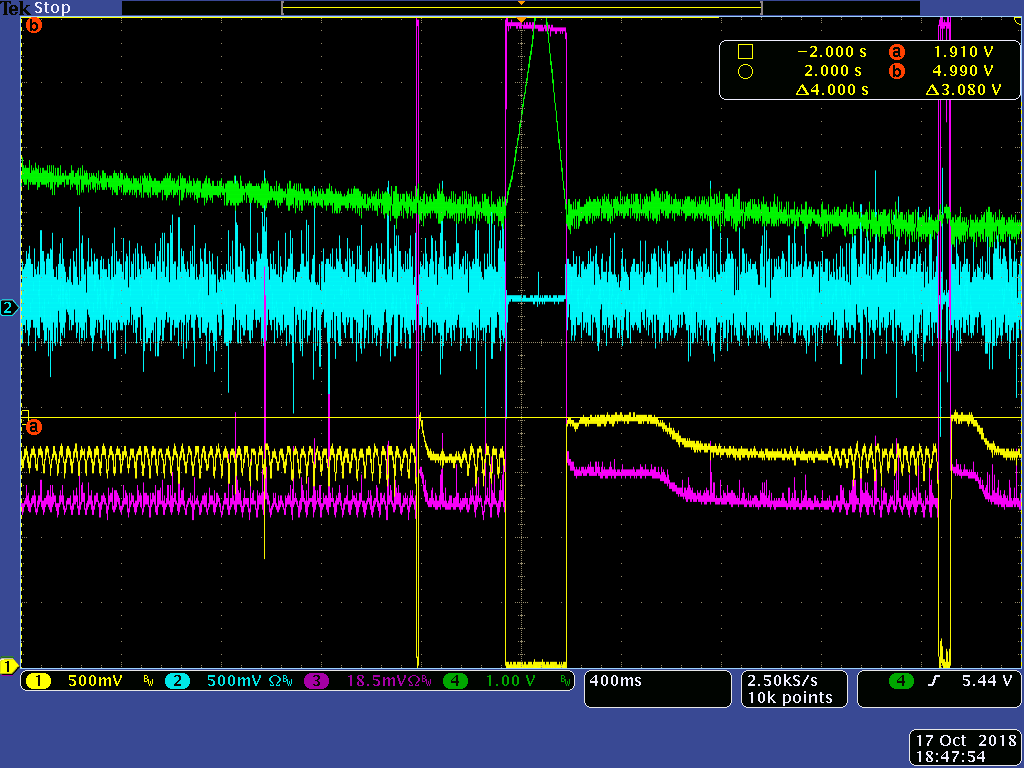
Loïc Amoudry | Fixed | report | mechanics | lasers and optics | Optical room | Motors for D-shaped mirrors | Motors have been installed on 16/10/18. No problem with them.
Effect of the motors tested on 17/10/18. No improvement. But they give the possibility to perfectly cut HOM or let them go through as show the following picture of a 2.2 mode at ~340 mW in trans and 70% coupling @4A. |
| Attachment 1: tek00000.png
|  |
| Attachment 2: tek0000CH1.isf
|
| Attachment 3: tek0000CH2.isf
|
| Attachment 4: tek0000CH3.isf
|
| Attachment 5: tek0000CH4.isf
|
|
11
|
Wed Oct 31 11:27:49 2018 |
Loïc Amoudry | Fixed | report | mechanics | lasers and optics | Optical room | Power measurement with D-shape | Measurements of lot of points with D-shape mirrors well positionned.
Power not optimized to the best but almost. (@4A could have 350 mW).
| I (A) |
Ptrans (mW) |
Coupling (%) |
|
0
|
8 |
62 |
| 1 |
18 |
67 |
| 1.3 |
43 |
72 |
| 1.6 |
76 |
72 |
| 1.9 |
112 |
72 |
| 2.2 |
145 |
72 |
| 2.5 |
177 |
72 |
| 2.8 |
217 |
72 |
| 3.1 |
253 |
72 |
| 3.4 |
281 |
72 |
| 3.7 |
300 |
72 |
| 4 |
323 |
71 |
| 4.3 |
249 |
71 |
| 4.6 |
379 |
68 |
| 4.9 |
402 |
68 |
| 5.2 |
417 |
67 |
| 5.5 |
435 |
67 |
| 5.8 |
441 |
65 |
|
|
232
|
Tue Mar 4 18:51:57 2025 |
Ronic Chiche | Under Process | info | mechanics | lasers and optics | Optical room | Alignment of a 2-mirror FP cavity | today with Alice,
- we measured the height of the SBOX windows center : 140mm from the optical table.
- we set the laser fiber colimator exactly at this height.
- we placed 2 mirrors to align the future telescope path at exactly 140mm height along the whole possible travel of the lenses in order to keep them aligned.
the horizontal position is also aligned on this path and a ruler has been placed along this path to help to move the future telescope lenses without misalignment.
- we aligned 2 iris on this path to keep this path axis in case of misalignment.
- we placed 2 iris at the center of the input and output FP-cavity windows.
- we precisely aligned the laser beam on these iris.
in the next days, we need to align the mounts in the SBOX and align also the 2 FP-cavity mirrors.
the output mirror will be a "bad" ThomX 2.24m ROC ULE mirror and the input mirror will be a plan 460ppm Gamma Factory mirror. |
|
233
|
Fri Mar 21 18:27:36 2025 |
Alice Renaux | Under Process | report | mechanics | lasers and optics | Optical room | 2-mirror cavity alignment | At the beginning of the week, I installed a half-wave plate, a beamsplitter cube and a quarter-wave plate, as well as the end-of-cavity mirror, which I unsuccessfully tried to align.
I removed the end-of-cavity mirror and started the laser injection over again with the two motorized mirrors placed in front of the vacuum chamber (but left Ronic's setup as it was).
Today, I aligned the laser by putting an iris on the cavity mirrors' mounts. I tested the repeatability of such a setup, both by removing and putting back the same iris and by using a different iris. The result is in the attached pictures. Is it good enough ?
The mirrors' motors positions are :
- 1 : 3.349670 mm ;
- 3 : 2.060280 mm ;
- 4 : 3.484560 mm ;
- 5 : 3.269710 mm.
|
| Attachment 1: 2-mirror_cavity_alignment.zip
|
|
100
|
Mon Jun 27 08:52:46 2022 |
Manar Amer | Fixed | report | lasers and optics | vacuum | Optical room | SBox Finesse at 216.6625 MHz | The Sbox currently has the injection from ThomX installed T ~ 120 ppm , M2 planar from Sbox spare and M3 / M4 spherical mirrors from Sbox installed.
The last finesse measurement that was done gave a Finesse of ~ 19300 (After cleaning M2 using ethanol + aceton + pure water)
on Friday the whole optical table was cleaned again and the inside of the box was cleaned (even with a lot of dust inside the box the Finesse was 19300 )
all the mirrors were cleaned after using the three steps, M3 and M4 had clear visible dust on them.
D-shaped mirrors were installed again between M1 and M2
The alignment was redone and the beating observed , There is still a need for alignment improvement.
the cavity is under vacuum ~ 4.8*10^-2 mbar on Friday evening (~ 19h00) , The cavity is yet to be locked and to measure its Finesse
A PowerPoint showing the last finesse measurement and the error signal of the menhir laser lock
|
| Attachment 1: 20220624_SBox_MENHIR.pptx
|
|
104
|
Wed Jul 6 18:39:25 2022 |
Manar Amer | Fixed | report | lasers and optics | vacuum | Optical room | SBox Finesse at 216.6625 MHz | Max Finesse obtained @ 4 mirror setup was ~ 19 300
With M1 from ThomX , M2/M3/M4 from SBox
| Manar Amer wrote: |
|
The Sbox currently has the injection from ThomX installed T ~ 120 ppm , M2 planar from Sbox spare and M3 / M4 spherical mirrors from Sbox installed.
The last finesse measurement that was done gave a Finesse of ~ 19300 (After cleaning M2 using ethanol + aceton + pure water)
on Friday the whole optical table was cleaned again and the inside of the box was cleaned (even with a lot of dust inside the box the Finesse was 19300 )
all the mirrors were cleaned after using the three steps, M3 and M4 had clear visible dust on them.
D-shaped mirrors were installed again between M1 and M2
The alignment was redone and the beating observed , There is still a need for alignment improvement.
the cavity is under vacuum ~ 4.8*10^-2 mbar on Friday evening (~ 19h00) , The cavity is yet to be locked and to measure its Finesse
A PowerPoint showing the last finesse measurement and the error signal of the menhir laser lock
|
|
|
105
|
Wed Jul 6 18:39:38 2022 |
Manar Amer | Fixed | report | lasers and optics | vacuum | Optical room | SBox Finesse at 216.6625 MHz |
| Manar Amer wrote: |
|
Max Finesse obtained @ 4 mirror setup was ~ 19 300
With M1 from ThomX , M2/M3/M4 from SBox
| Manar Amer wrote: |
|
The Sbox currently has the injection from ThomX installed T ~ 120 ppm , M2 planar from Sbox spare and M3 / M4 spherical mirrors from Sbox installed.
The last finesse measurement that was done gave a Finesse of ~ 19300 (After cleaning M2 using ethanol + aceton + pure water)
on Friday the whole optical table was cleaned again and the inside of the box was cleaned (even with a lot of dust inside the box the Finesse was 19300 )
all the mirrors were cleaned after using the three steps, M3 and M4 had clear visible dust on them.
D-shaped mirrors were installed again between M1 and M2
The alignment was redone and the beating observed , There is still a need for alignment improvement.
the cavity is under vacuum ~ 4.8*10^-2 mbar on Friday evening (~ 19h00) , The cavity is yet to be locked and to measure its Finesse
A PowerPoint showing the last finesse measurement and the error signal of the menhir laser lock
|
|
|
|
75
|
Wed Apr 13 18:42:50 2022 |
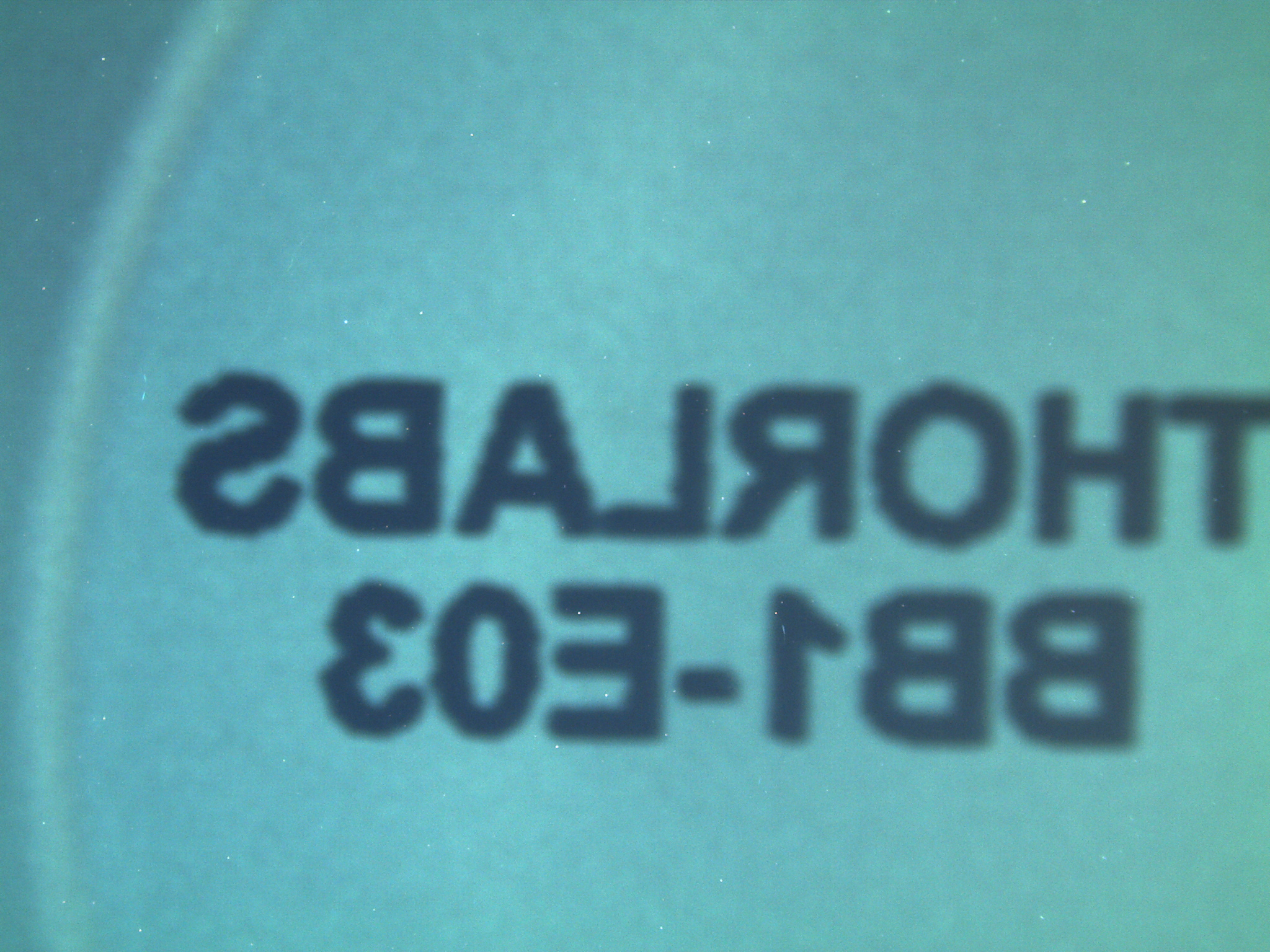
Manar Amer | Fixed | report | lasers and optics | utilities | Optical room | Spincoater - Mirrror cleaning | Used the spincoater and pure water to clean dielectric mirrors which will be installed inside the SBox for directing the reflection line.
The method : place pure alchole on mirror - wipe it using white sterile tissue (in one direction) - clean with pure water in spincoater suing cotton swap .
After multible rounds, the result in the images was obtained. there is still a significant amount of dust particles (not all could be dust!!).
Not sure if the reason is the cleaning method ?? will invistegate it more !!!
| Manar Amer wrote: |
|
In preparation for cleaning the mirrors.
The spincoater has been moved with its bump into the sas of the SBox.
The pure water used will be provided by Alice, as the previous source in the workshop is not available.
|
|
| Attachment 1: Reflection_one_front_after_cleaning.jpg
|  |
| Attachment 2: reflection_two_front_before_cleaning.jpg
|  |
| Attachment 3: Reflection_two_front_after_cleaning.jpg
|  |
|
82
|
Wed Apr 27 22:30:14 2022 |
Manar Amer | Fixed | report | lasers and optics | utilities | Optical room | Spincoater - Mirrror cleaning | Images of the SBox mirrors cleaned at the same time when the cavity was aligned.
Directly from the spincoater to the SBox directly.
PowerPoint attached shows details
| Manar Amer wrote: |
|
Used the spincoater and pure water to clean dielectric mirrors which will be installed inside the SBox for directing the reflection line.
The method : place pure alchole on mirror - wipe it using white sterile tissue (in one direction) - clean with pure water in spincoater suing cotton swap .
After multible rounds, the result in the images was obtained. there is still a significant amount of dust particles (not all could be dust!!).
Not sure if the reason is the cleaning method ?? will invistegate it more !!!
| Manar Amer wrote: |
|
In preparation for cleaning the mirrors.
The spincoater has been moved with its bump into the sas of the SBox.
The pure water used will be provided by Alice, as the previous source in the workshop is not available.
|
|
|
| Attachment 1: Images_SBox_Mirrors.pptx
|
|
85
|
Mon May 9 19:27:35 2022 |
Manar Amer | Fixed | report | lasers and optics | utilities | Optical room | Spincoater - Mirrror cleaning | PowerPoint shows the detailed images of all the mirrors before and after cleaning.
Images of SBox mirrors and M1 from Gamma factory attached only for the front after cleaning
the lines showing are on the back of the mirrors, they come from the spinning mount the mirrors are fixed on in the spin-coater.
Naming code :
M#BB - M# mirror Back Before cleaning
M#BA - M# mirror Back After cleaning
M#FB - M# mirror Front Before cleaning
M#FA - M# mirror Front After cleaning
G : Gamma factory
| Manar Amer wrote: |
|
Images of the SBox mirrors cleaned at the same time when the cavity was aligned.
Directly from the spincoater to the SBox directly.
PowerPoint attached shows details
| Manar Amer wrote: |
|
Used the spincoater and pure water to clean dielectric mirrors which will be installed inside the SBox for directing the reflection line.
The method : place pure alchole on mirror - wipe it using white sterile tissue (in one direction) - clean with pure water in spincoater suing cotton swap .
After multible rounds, the result in the images was obtained. there is still a significant amount of dust particles (not all could be dust!!).
Not sure if the reason is the cleaning method ?? will invistegate it more !!!
| Manar Amer wrote: |
|
In preparation for cleaning the mirrors.
The spincoater has been moved with its bump into the sas of the SBox.
The pure water used will be provided by Alice, as the previous source in the workshop is not available.
|
|
|
|
| Attachment 1: 20220509_Images_SBox_Mirrors.pptx
|
| Attachment 2: M1GFA.jpg
|  |
| Attachment 3: M2FA.jpg
|  |
| Attachment 4: M3FA.jpg
|  |
| Attachment 5: M4FA.jpg
|  |
|
87
|
Wed May 11 20:51:28 2022 |
Manar Amer | Fixed | report | lasers and optics | utilities | Optical room | Spincoater - Mirrror cleaning | Following the observation that when rotating M2 plan mirror of SBox the deformation position of the mode changes.
M2 was replaced with M2 spare of SBox
images of the mirror front side attached before and after cleaning, no spots at the center, but there seems to be 2 spots far from the center of the mirror.
After comparing with old images of M2 SBox spare, they do not appear to be damages, but dust !! (old image attached, taken on 10/12/2020, was never opened after)
| Manar Amer wrote: |
|
PowerPoint shows the detailed images of all the mirrors before and after cleaning.
Images of SBox mirrors and M1 from Gamma factory attached only for the front after cleaning
the lines showing are on the back of the mirrors, they come from the spinning mount the mirrors are fixed on in the spin-coater.
Naming code :
M#BB - M# mirror Back Before cleaning
M#BA - M# mirror Back After cleaning
M#FB - M# mirror Front Before cleaning
M#FA - M# mirror Front After cleaning
G : Gamma factory
| Manar Amer wrote: |
|
Images of the SBox mirrors cleaned at the same time when the cavity was aligned.
Directly from the spincoater to the SBox directly.
PowerPoint attached shows details
| Manar Amer wrote: |
|
Used the spincoater and pure water to clean dielectric mirrors which will be installed inside the SBox for directing the reflection line.
The method : place pure alchole on mirror - wipe it using white sterile tissue (in one direction) - clean with pure water in spincoater suing cotton swap .
After multible rounds, the result in the images was obtained. there is still a significant amount of dust particles (not all could be dust!!).
Not sure if the reason is the cleaning method ?? will invistegate it more !!!
| Manar Amer wrote: |
|
In preparation for cleaning the mirrors.
The spincoater has been moved with its bump into the sas of the SBox.
The pure water used will be provided by Alice, as the previous source in the workshop is not available.
|
|
|
|
|
| Attachment 1: M2_spare_fb_2.jpg
|  |
| Attachment 2: M2_spare_fa_2.jpg
|  |
| Attachment 3: 20201210_M2_spare_after_cleaning.tif
|
|
89
|
Tue May 24 21:51:01 2022 |
Manar Amer | Fixed | report | lasers and optics | utilities | Optical room | Spincoater - Mirrror cleaning | While repeating the alignment, the mirrors were cleaned using the spin-coater and placed again.
The current mirrors placed in the SBox are
M1 plane injection from Gamma factory
M2 plane from SBox spare
M3/M4 spherical from SBox main set
no visible damage seen on the mirrors with the microscope
no images of the surfaces were taken due to time constraint.
| Manar Amer wrote: |
|
Following the observation that when rotating M2 plan mirror of SBox the deformation position of the mode changes.
M2 was replaced with M2 spare of SBox
images of the mirror front side attached before and after cleaning, no spots at the center, but there seems to be 2 spots far from the center of the mirror.
After comparing with old images of M2 SBox spare, they do not appear to be damages, but dust !! (old image attached, taken on 10/12/2020, was never opened after)
| Manar Amer wrote: |
|
PowerPoint shows the detailed images of all the mirrors before and after cleaning.
Images of SBox mirrors and M1 from Gamma factory attached only for the front after cleaning
the lines showing are on the back of the mirrors, they come from the spinning mount the mirrors are fixed on in the spin-coater.
Naming code :
M#BB - M# mirror Back Before cleaning
M#BA - M# mirror Back After cleaning
M#FB - M# mirror Front Before cleaning
M#FA - M# mirror Front After cleaning
G : Gamma factory
| Manar Amer wrote: |
|
Images of the SBox mirrors cleaned at the same time when the cavity was aligned.
Directly from the spincoater to the SBox directly.
PowerPoint attached shows details
| Manar Amer wrote: |
|
Used the spincoater and pure water to clean dielectric mirrors which will be installed inside the SBox for directing the reflection line.
The method : place pure alchole on mirror - wipe it using white sterile tissue (in one direction) - clean with pure water in spincoater suing cotton swap .
After multible rounds, the result in the images was obtained. there is still a significant amount of dust particles (not all could be dust!!).
Not sure if the reason is the cleaning method ?? will invistegate it more !!!
| Manar Amer wrote: |
|
In preparation for cleaning the mirrors.
The spincoater has been moved with its bump into the sas of the SBox.
The pure water used will be provided by Alice, as the previous source in the workshop is not available.
|
|
|
|
|
|
|
195
|
Wed Feb 28 17:26:46 2024 |
Ronic Chiche | Fixed | info | lasers and optics | software | Optical room | 100W CELIA laser amplifier "how's to" document | 1st version of the document.
if some information is not correct or missing, give any comment by replying to this post. |
| Attachment 1: How_to_start_the_Amplifier_v1.pdf
|
|
95
|
Wed Jun 8 11:10:17 2022 |
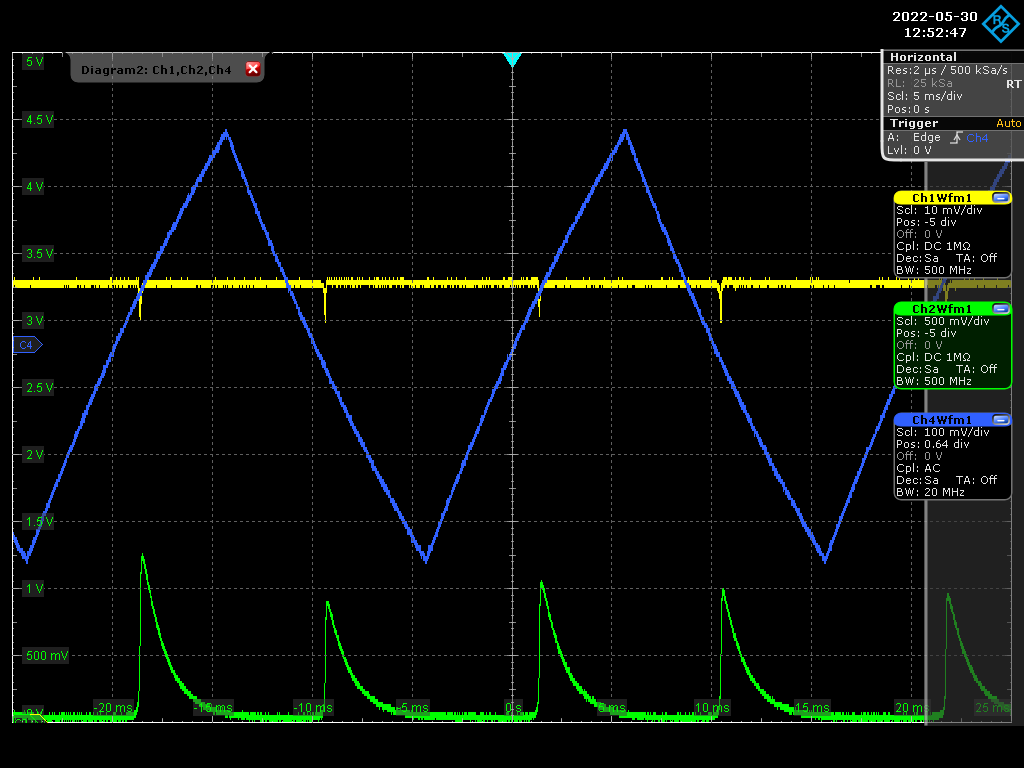
Manar Amer | Fixed | report | lasers and optics | detectors and electronics | software | Optical room | Cavity Lock | Start with the cavity lock images attached, taken from last week, at start we have a coupling ~ 5% and started improving on the alignment .
The image of 00 modes attached corresponds to the coupling seen on the oscilloscope.
We have a higher coupling with the 11 mode due to the size of the injected beam in comparison to mode
lenses were added to improve it. |
| Attachment 1: Screenshot_2022-05-30_0_125247.png
|  |
| Attachment 2: 20220530_00_Mode.bmp
|
| Attachment 3: 11.bmp
|
|
97
|
Wed Jun 8 11:31:47 2022 |
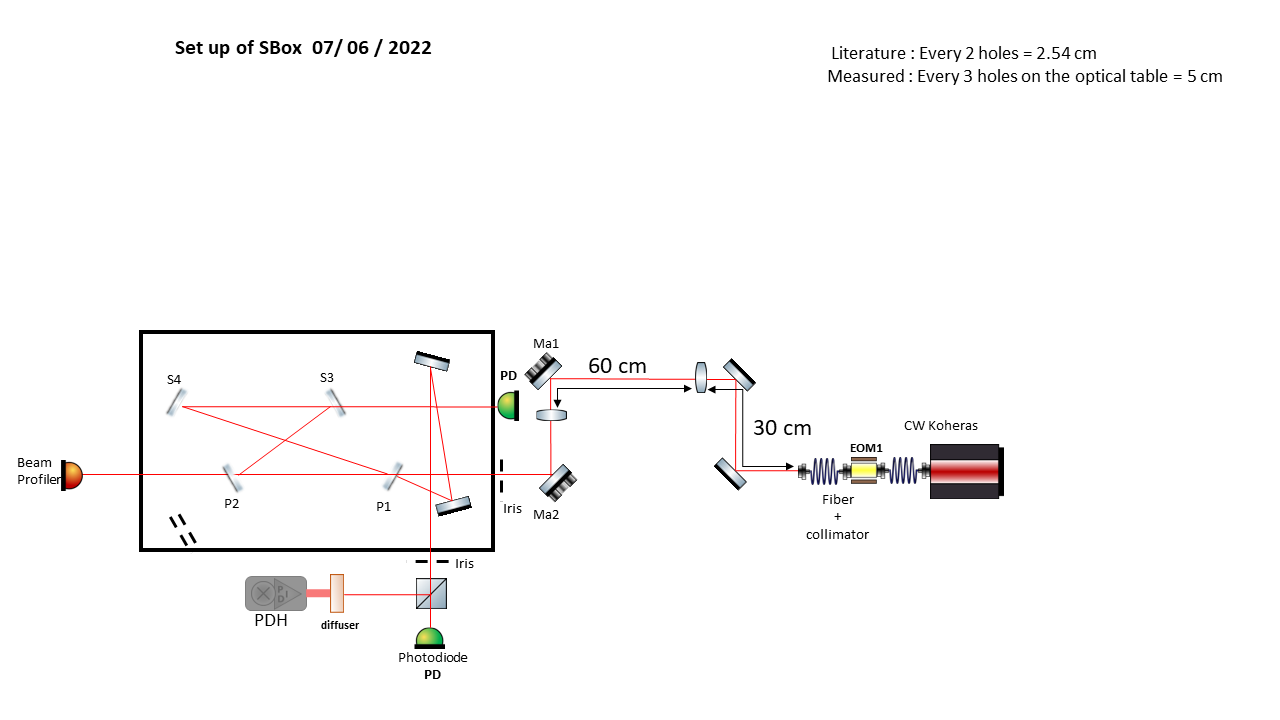
Manar Amer | Fixed | report | lasers and optics | detectors and electronics | software | Optical room | Cavity Lock | Current setup at SBox for locking the cavity
After spacial matching, the coupling increased to ~ 15 - 20 %
The locking was done for the fundamental mode, tried to improve the coupling with the motors, but the lock is very unstable to be investigated. (Note: the cavity in under normal pressure)
| Manar Amer wrote: |
|
Start with the cavity lock images attached, taken from last week, at start we have a coupling ~ 5% and started improving on the alignment .
The image of 00 modes attached corresponds to the coupling seen on the oscilloscope.
We have a higher coupling with the 11 mode due to the size of the injected beam in comparison to mode
lenses were added to improve it.
|
|
| Attachment 1: 20220607_SBox_Setup.png
|  |
| Attachment 2: Ma1_Ma2_Horizontal_end-of-day.jpg
|  |
| Attachment 3: Ma1_Ma2_Vertical_end-of-day.jpg
|  |
|
98
|
Thu Jun 9 19:59:42 2022 |
Manar Amer | Fixed | report | lasers and optics | detectors and electronics | software | Optical room | Cavity Lock | Cavity locked today under vacuum and no airflow, it is stable over a long time
the alignment was improved and an increase of the transmission by 20 % from its original value
unfortunately, data from the oscilloscope was saved, but it was not in the correct format (image) to show.
Attached ; the mode shape, the new motor positions.
| Manar Amer wrote: |
|
Current setup at SBox for locking the cavity
After spacial matching, the coupling increased to ~ 15 - 20 %
The locking was done for the fundamental mode, tried to improve the coupling with the motors, but the lock is very unstable to be investigated. (Note: the cavity in under normal pressure)
| Manar Amer wrote: |
|
Start with the cavity lock images attached, taken from last week, at start we have a coupling ~ 5% and started improving on the alignment .
The image of 00 modes attached corresponds to the coupling seen on the oscilloscope.
We have a higher coupling with the 11 mode due to the size of the injected beam in comparison to mode
lenses were added to improve it.
|
|
|
| Attachment 1: 00_Mode_Locked_Under_vacuum.bmp
|
| Attachment 2: Ma1_Ma2_Horizontal_end-of-day.jpg
|  |
| Attachment 3: Ma1_Ma2_Vertical_end-of-day.jpg
|  |
|
101
|
Wed Jul 6 18:34:12 2022 |
Manar Amer | Fixed | report | lasers and optics | detectors and electronics | software | Optical room | Cavity Lock | Closing the series for the setup
The cavity was only locked @ 133.33 MHz but the Finesse was not measured
The FSR was changed to match the new laser MENHIR 216.6625 MHz
| Manar Amer wrote: |
|
Cavity locked today under vacuum and no airflow, it is stable over a long time
the alignment was improved and an increase of the transmission by 20 % from its original value
unfortunately, data from the oscilloscope was saved, but it was not in the correct format (image) to show.
Attached ; the mode shape, the new motor positions.
| Manar Amer wrote: |
|
Current setup at SBox for locking the cavity
After spacial matching, the coupling increased to ~ 15 - 20 %
The locking was done for the fundamental mode, tried to improve the coupling with the motors, but the lock is very unstable to be investigated. (Note: the cavity in under normal pressure)
| Manar Amer wrote: |
|
Start with the cavity lock images attached, taken from last week, at start we have a coupling ~ 5% and started improving on the alignment .
The image of 00 modes attached corresponds to the coupling seen on the oscilloscope.
We have a higher coupling with the 11 mode due to the size of the injected beam in comparison to mode
lenses were added to improve it.
|
|
|
|
|
115
|
Tue Jul 12 19:07:50 2022 |
Manar Amer | Fixed | report | lasers and optics | detectors and electronics | software | Optical room | CELIA amplifier installation | The amplifier was installed on the optical table next to SBox table.
The CVBG that will be used for stretching before amplification needs cleaning (they are very fragile, 'ask victor for best method')
The software to drive the diodes of the amplifier we have is not the compatible one. |
|
116
|
Fri Jul 22 17:07:32 2022 |
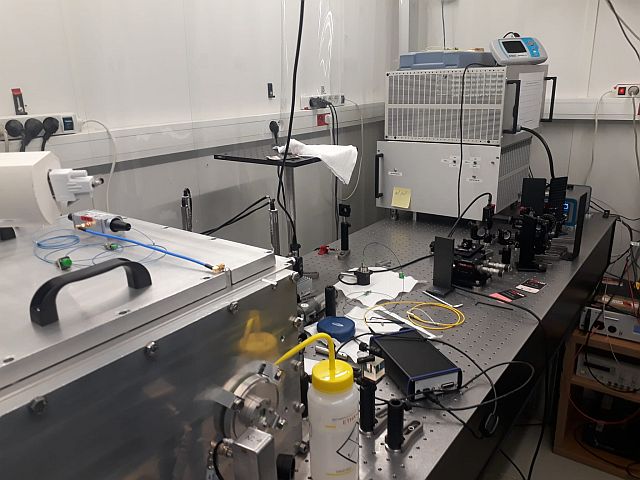
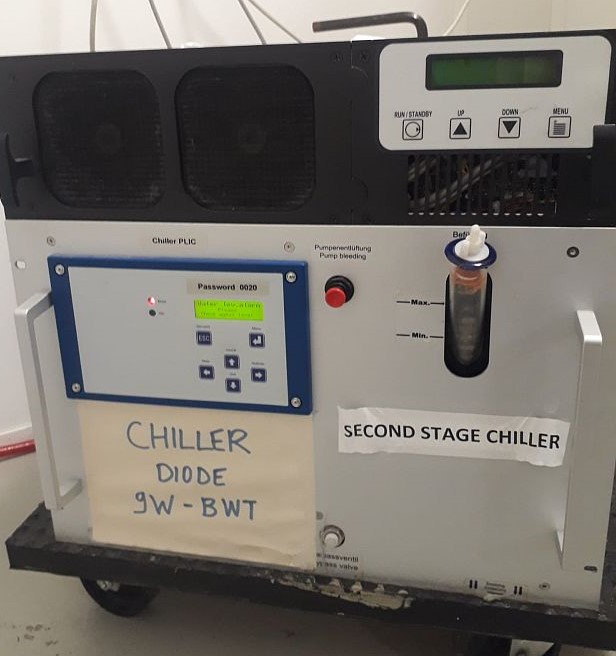
Manar Amer | Fixed | report | lasers and optics | detectors and electronics | software | Optical room | CELIA amplifier installation + chiller | Amplifier placed next to the pulsed laser on the table under the airflow
The output is in free space with height from the table of about 10 cm, note the injection height into the cavity is between 14 - 15 cm.
a power cable is placed but not plugged.
Connection to the computer is made using USB B on amplifier to USB A (note need a longer cable, the available on is too short)
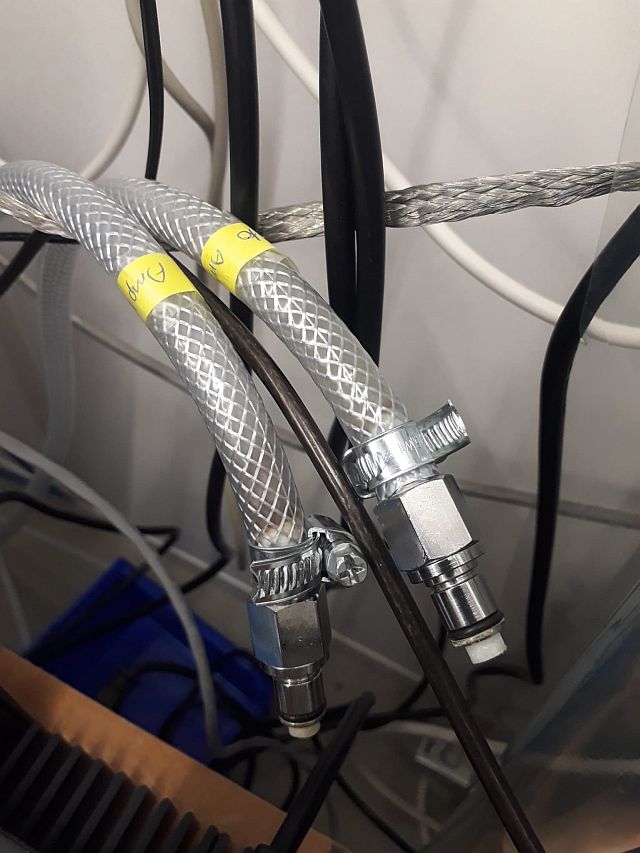
The cooling, to be connected to an outside chiller, will use the bottom one shown in the image attached.
The two water tubes, from chiller to amplifier, has been marked. The size of the tubes from the amplifier fit inside the tubes from the chiller.
| Manar Amer wrote: |
|
The amplifier was installed on the optical table next to SBox table.
The CVBG that will be used for stretching before amplification needs cleaning (they are very fragile, 'ask victor for best method')
The software to drive the diodes of the amplifier we have is not the compatible one.
|
|
| Attachment 1: WhatsApp_Image_2022-07-22_at_4.26.24_PM.jpg
|  |
| Attachment 2: WhatsApp_Image_2022-07-22_at_4.26.24_PM.jpg
|  |
| Attachment 3: WhatsApp_Image_2022-07-22_at_5.02.24_PM.jpg
|  |
|
118
|
Fri Jul 22 18:00:21 2022 |
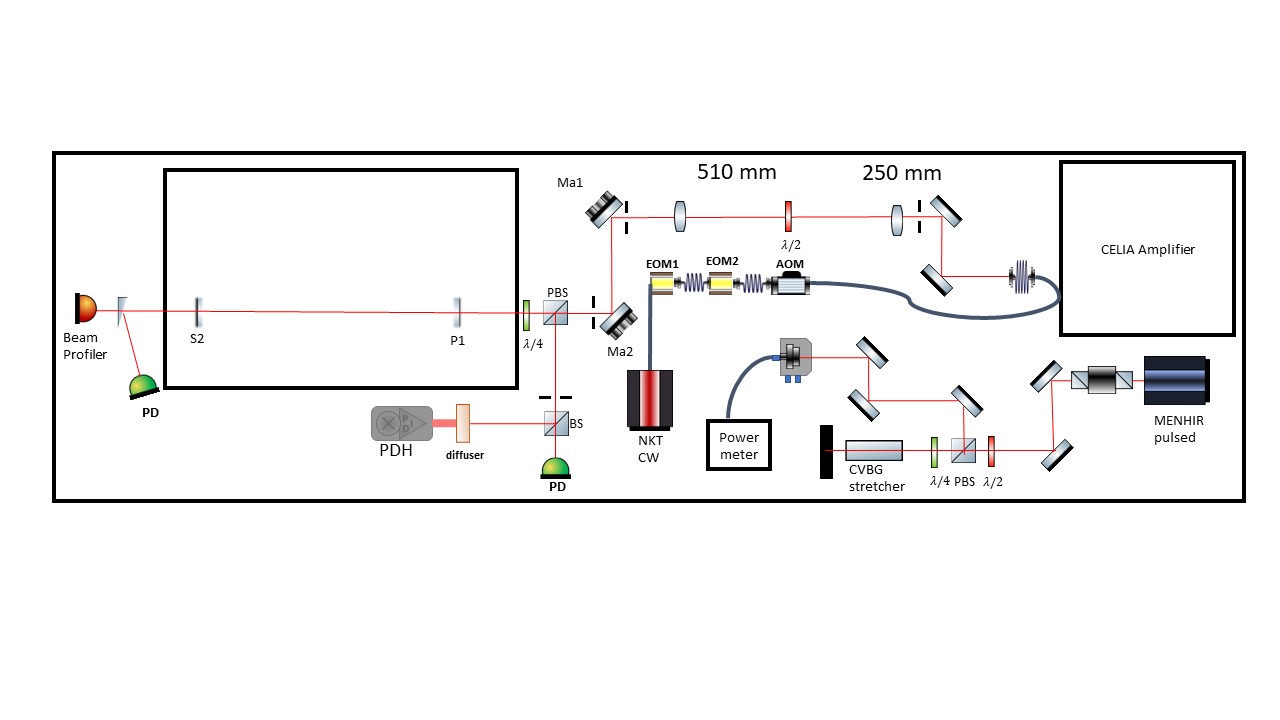
Manar Amer | Fixed | report | lasers and optics | detectors and electronics | software | Optical room | Alignment / Table setup | The current setup of the optical table attached.
The cavity is aligned and the lock of the fundamental mode has been attempted, but the mode is drifting too quickly to be able to follow.
I have placed the cavity under vacuum for a better stability.
a simple telescope for the CW was adjusted to having 2 lenses of 300 mm placed ~ 250 mm away from the colimator and 200 mm lens placed after it with 510 mm.
|
| Attachment 1: 20220722_table_setup.jpg
|  |
| Attachment 2: 20220722_tablesetup.jpg
|  |
|
119
|
Fri Jul 22 18:19:13 2022 |
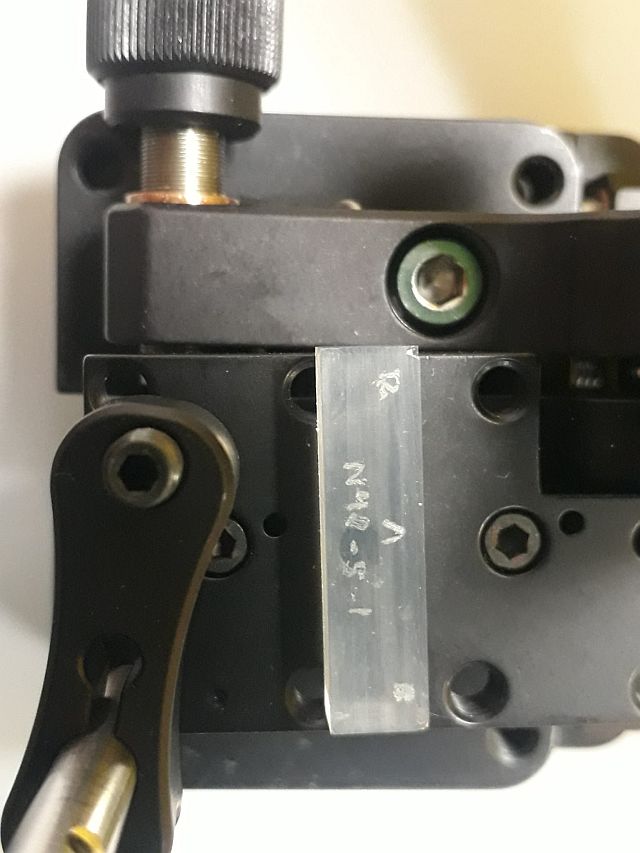
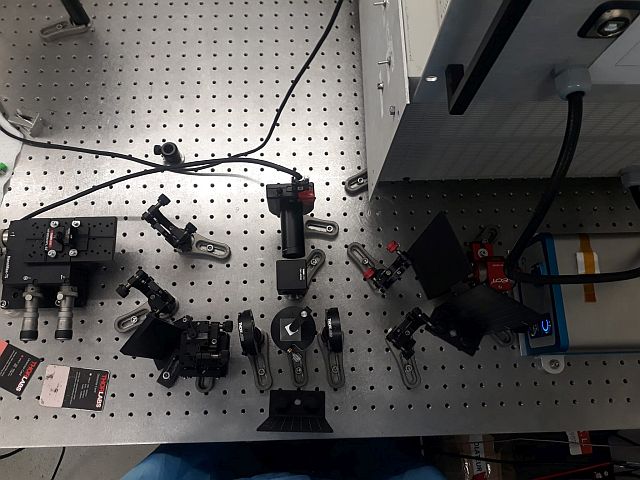
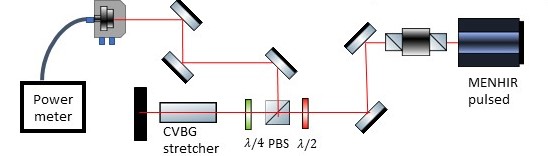
Manar Amer | Fixed | report | lasers and optics | detectors and electronics | software | Optical room | CVBG stretching / Fiber Injection | Before injecting into the amplifier, the pulse needs to be stretched using a CVBG, type attached.
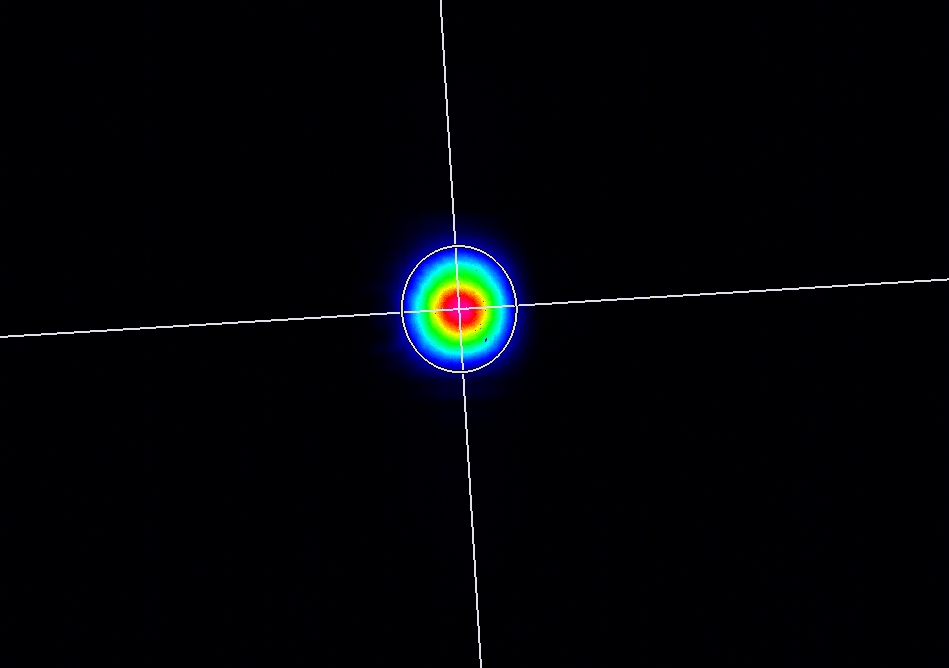
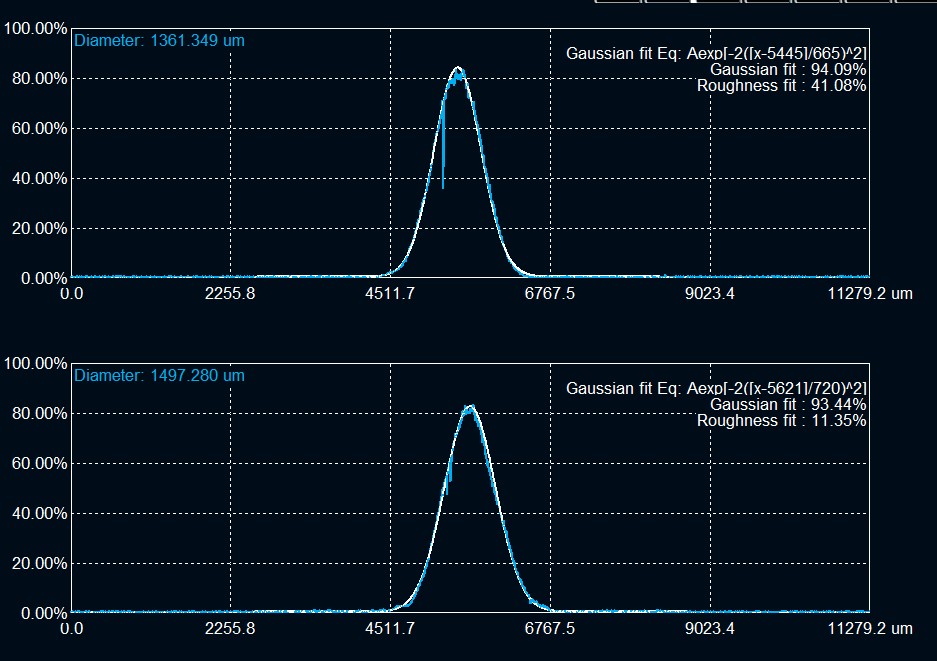
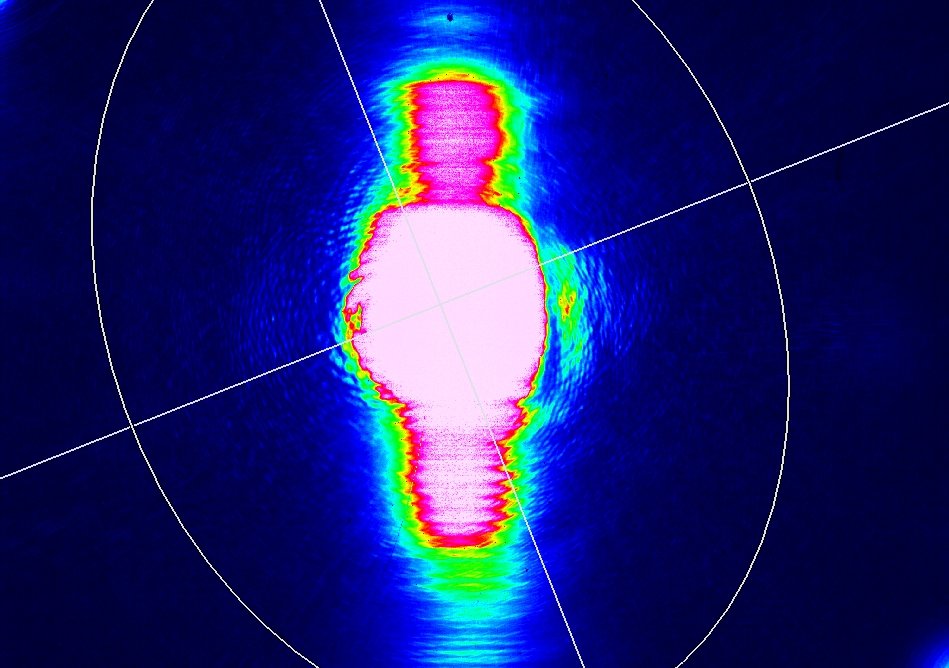
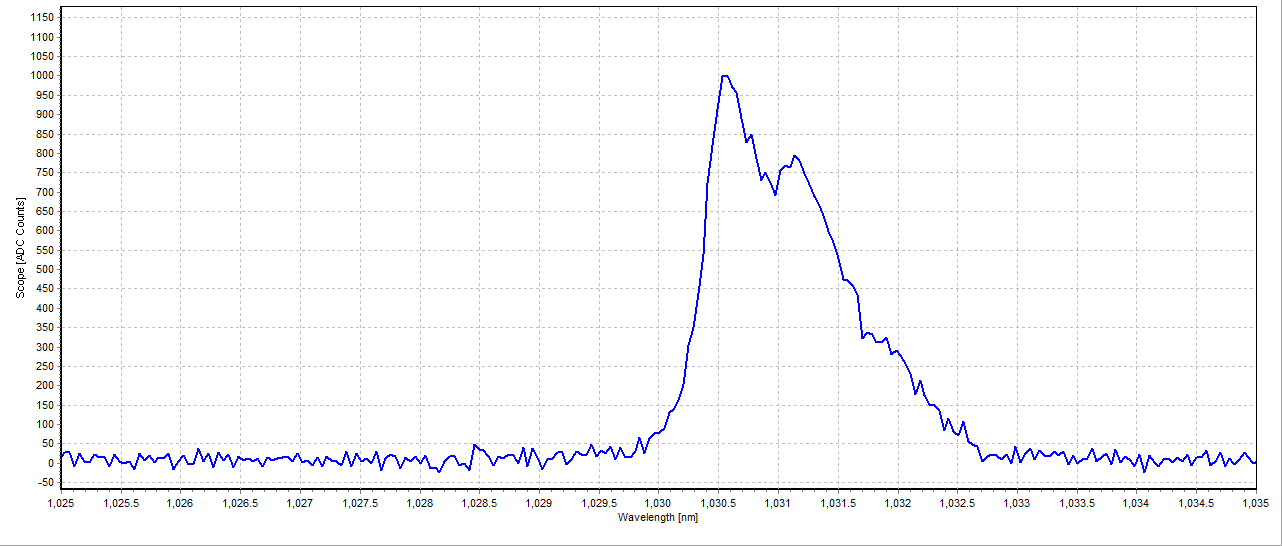
the CVBG is to be used at a small angle, the beam shape and spectrum after the PBS is attached.
After measuring the beam profile, a mirror was placed to direct all the power for fiber injection
power before the fiber is 13 mW and the power injected is 6.19 mW
|
| Attachment 1: CVBG.jpg
|  |
| Attachment 2: beamafterCVBG.jpg
|  |
| Attachment 3: beamafterCVBG_Fit.jpg
|  |
| Attachment 4: beamafterCVBG_saturated.jpg
|  |
| Attachment 5: SpectrumafterCVBGzoom.png
|  |
| Attachment 6: CVBG_Injection_Setup.jpg
|  |
| Attachment 7: 20220722_CVBG_stretching.jpeg
|  |
|
120
|
Fri Jul 22 18:25:31 2022 |
Manar Amer | Fixed | report | lasers and optics | detectors and electronics | software | Optical room | CELIA amplifier installation + chiller | The software to control the CELIA amplifier is on the laptop that was placed in ThomX bunker.
I have placed it in the PLIC room next to the SBox table.
it is called 'Alphanov Control Software'
| Manar Amer wrote: |
|
Amplifier placed next to the pulsed laser on the table under the airflow
The output is in free space with height from the table of about 10 cm, note the injection height into the cavity is between 14 - 15 cm.
a power cable is placed but not plugged.
Connection to the computer is made using USB B on amplifier to USB A (note need a longer cable, the available on is too short)
The cooling, to be connected to an outside chiller, will use the bottom one shown in the image attached.
The two water tubes, from chiller to amplifier, has been marked. The size of the tubes from the amplifier fit inside the tubes from the chiller.
| Manar Amer wrote: |
|
The amplifier was installed on the optical table next to SBox table.
The CVBG that will be used for stretching before amplification needs cleaning (they are very fragile, 'ask victor for best method')
The software to drive the diodes of the amplifier we have is not the compatible one.
|
|
|
|
129
|
Fri Aug 19 16:02:33 2022 |
Manar Amer | Fixed | report | lasers and optics | detectors and electronics | software | Optical room | CELIA amplifier installation + chiller | Closing series
| Manar Amer wrote: |
|
The software to control the CELIA amplifier is on the laptop that was placed in ThomX bunker.
I have placed it in the PLIC room next to the SBox table.
it is called 'Alphanov Control Software'
| Manar Amer wrote: |
|
Amplifier placed next to the pulsed laser on the table under the airflow
The output is in free space with height from the table of about 10 cm, note the injection height into the cavity is between 14 - 15 cm.
a power cable is placed but not plugged.
Connection to the computer is made using USB B on amplifier to USB A (note need a longer cable, the available on is too short)
The cooling, to be connected to an outside chiller, will use the bottom one shown in the image attached.
The two water tubes, from chiller to amplifier, has been marked. The size of the tubes from the amplifier fit inside the tubes from the chiller.
| Manar Amer wrote: |
|
The amplifier was installed on the optical table next to SBox table.
The CVBG that will be used for stretching before amplification needs cleaning (they are very fragile, 'ask victor for best method')
The software to drive the diodes of the amplifier we have is not the compatible one.
|
|
|
|
|
130
|
Fri Aug 19 16:03:17 2022 |
Manar Amer | Fixed | report | lasers and optics | detectors and electronics | software | Optical room | Alignment / Table setup | closing series
| Manar Amer wrote: |
|
The current setup of the optical table attached.
The cavity is aligned and the lock of the fundamental mode has been attempted, but the mode is drifting too quickly to be able to follow.
I have placed the cavity under vacuum for a better stability.
a simple telescope for the CW was adjusted to having 2 lenses of 300 mm placed ~ 250 mm away from the colimator and 200 mm lens placed after it with 510 mm.
|
|
|
131
|
Fri Aug 19 16:03:40 2022 |
Manar Amer | Fixed | report | lasers and optics | detectors and electronics | software | Optical room | CVBG stretching / Fiber Injection | closing series
| Manar Amer wrote: |
|
Before injecting into the amplifier, the pulse needs to be stretched using a CVBG, type attached.
the CVBG is to be used at a small angle, the beam shape and spectrum after the PBS is attached.
After measuring the beam profile, a mirror was placed to direct all the power for fiber injection
power before the fiber is 13 mW and the power injected is 6.19 mW
|
|
|
64
|
Mon Jul 5 14:14:01 2021 |
Manar Amer | Fixed | report | lasers and optics | detectors and electronics | Optical room | OEwaves CW Laser - Phase Noise |
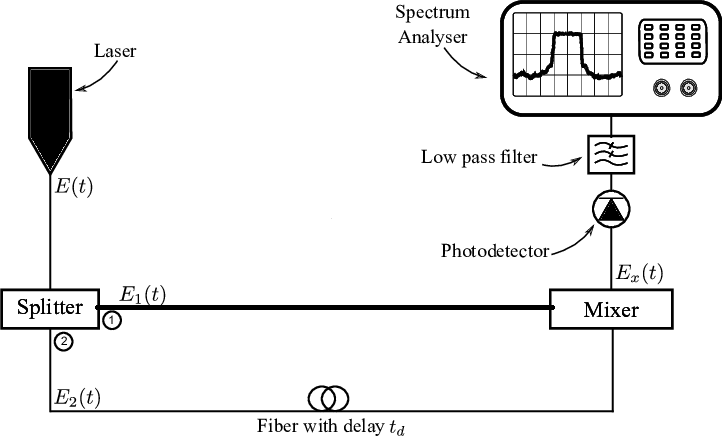
- We started measuring the phase noise on the OEwaves CW laser.
- Class 3b
- wavelength 1.5 um
- The procedure is done using self coupling of the laser
- splitter 50%-50%\
- delay line 100 m
- all fibers are PM type (polarity maintained)
- Photodetector is "lab buddy", very fast diode.
- Note: différance from schematic (we did not use a low pass filter)
|
| Attachment 1: 20210207_OEwaves_laser.jpg
|  |
| Attachment 2: 20210207_Self_coupling_setup.jpg
|  |
| Attachment 3: Schematic-setup-for-optical-delayed-self-coupling-detection.png
|  |
|
65
|
Mon Jul 5 14:40:57 2021 |
Manar Amer | Fixed | report | lasers and optics | detectors and electronics | Optical room | OEwaves CW Laser - Phase Noise | a correction on the wavelength of the laser it is 1030 um
| Manar Amer wrote: |
- We started measuring the phase noise on the OEwaves CW laser.
- Class 3b
- wavelength 1.5 um
- The procedure is done using self coupling of the laser
- splitter 50%-50%\
- delay line 100 m
- all fibers are PM type (polarity maintained)
- Photodetector is "lab buddy", very fast diode.
- Note: différance from schematic (we did not use a low pass filter)
|
|
|
66
|
Mon Jul 5 14:46:44 2021 |
Manar Amer | Fixed | report | lasers and optics | detectors and electronics | Optical room | OEwaves CW Laser - Phase Noise | correction on unit 1030 nm
| Manar Amer wrote: |
|
a correction on the wavelength of the laser it is 1030 um
| Manar Amer wrote: |
- We started measuring the phase noise on the OEwaves CW laser.
- Class 3b
- wavelength 1.5 um
- The procedure is done using self coupling of the laser
- splitter 50%-50%\
- delay line 100 m
- all fibers are PM type (polarity maintained)
- Photodetector is "lab buddy", very fast diode.
- Note: différance from schematic (we did not use a low pass filter)
|
|
|
|
106
|
Wed Jul 6 19:57:17 2022 |
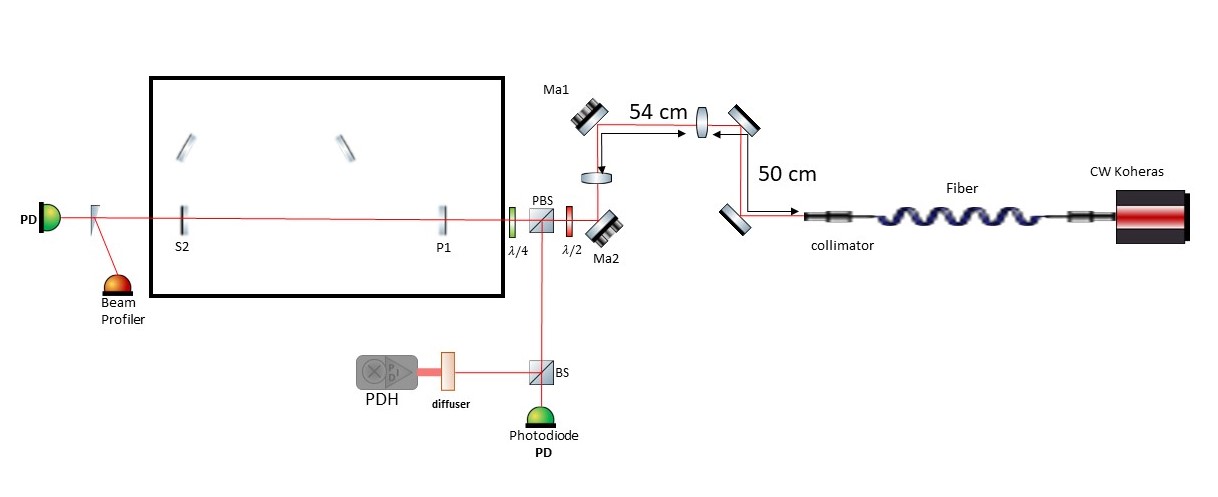
Manar Amer | Fixed | report | lasers and optics | detectors and electronics | Optical room | 2 Mirror Setup @ 216.6 MHz | The SBox cavity setup was changed to have only 2 mirrors M1 plane and M2 spherical, both from ThomX
Distance between the mirror ~ 72 cm , increased from 70 cm to take into account the thickness of the ThomX mirrors
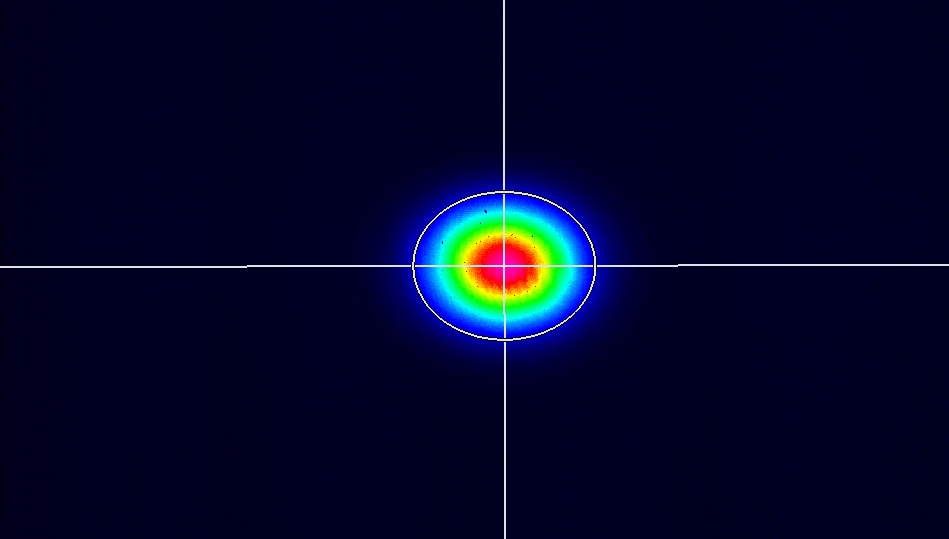
Two lenses (300 mm @ 50 cm , 200 @ 104 cm) were placed to have the beam radius ~ 0.55 mm.
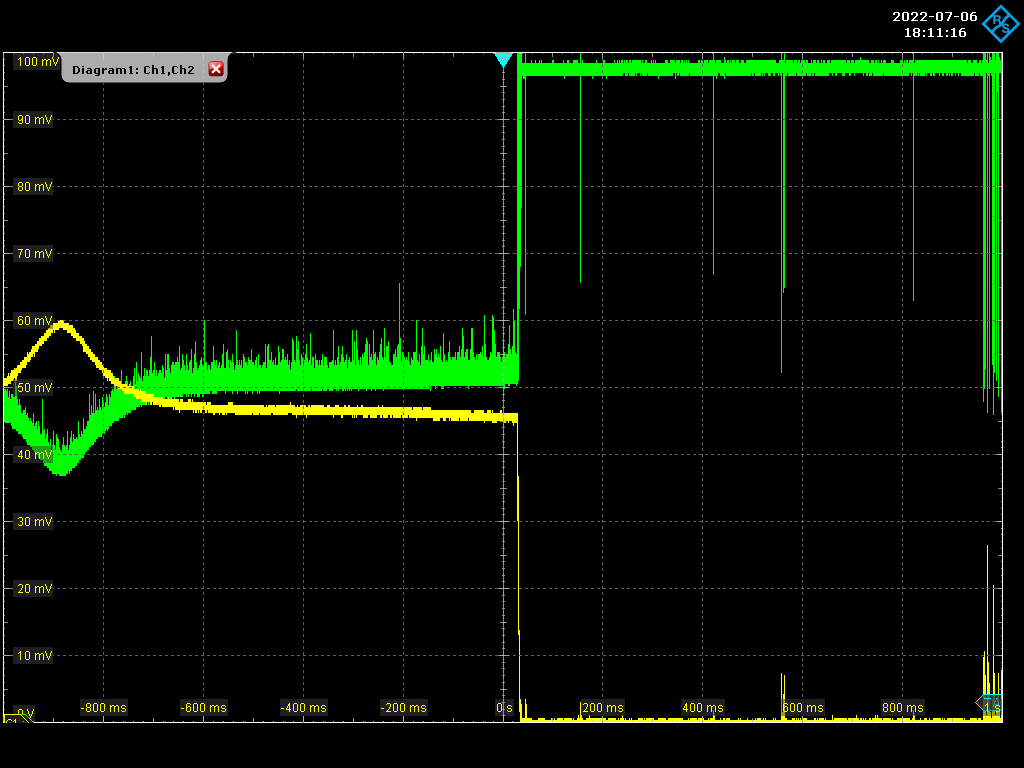
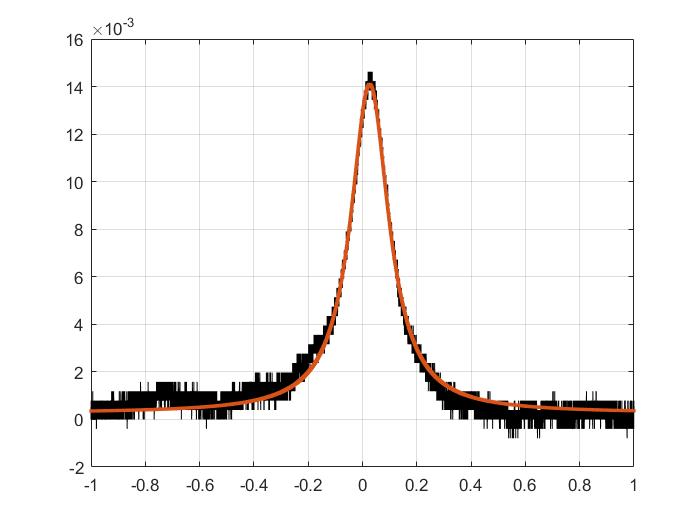
The cavity was locked with a coupling of 60 %, for Finesse measurement the sweep was taken over 100 KHz of 2 seconds.
FSR ~ 210.00 MHz, line width ~ 8.56 KHz, Finesse ~ 24 500 .
|
| Attachment 1: 20220706_Setup.jpg
|  |
| Attachment 2: Screenshot_2022-07-06_1_181116.png
|  |
| Attachment 3: Finesse_Fit.jpg
|  |
| Attachment 4: 00mode.jpg
|  |
| Attachment 5: 00mode_diameter.jpg
| 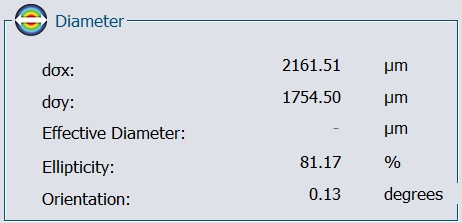 |
|
109
|
Fri Jul 8 17:48:48 2022 |
Manar Amer | Fixed | report | lasers and optics | detectors and electronics | Optical room | 2 Mirror Setup @ 216.6 MHz | The cavity was realigned using irises instead of pinholes, gave a better alignment.
The inside of the box, the spherical and the injection mirror were cleaned and placed back inside the box.
we see beating of fundamental mode, previously at the transmission point we placed a wedge to split the beam which resulted in an elliptical mode
we removed it and placed a very thin beam splitter, the beam is circular now.
The cavity was locked in air at a coupling of ~ 60-70 %
Finesse and line width measured five readings with a Finesse average 25095.08884 of a Gain ~ 8000
FWHM (KHz) = 8.2928
Finesse = 25323.0544
FWHM (KHz) = 7.9202
Finesse = 26514.4395
FWHM (KHz) = 8.5834
Finesse = 24465.8636
FWHM (KHz) = 8.4571
Finesse = 24831.2419
FWHM (KHz) = 8.6275
Finesse = 24340.8448
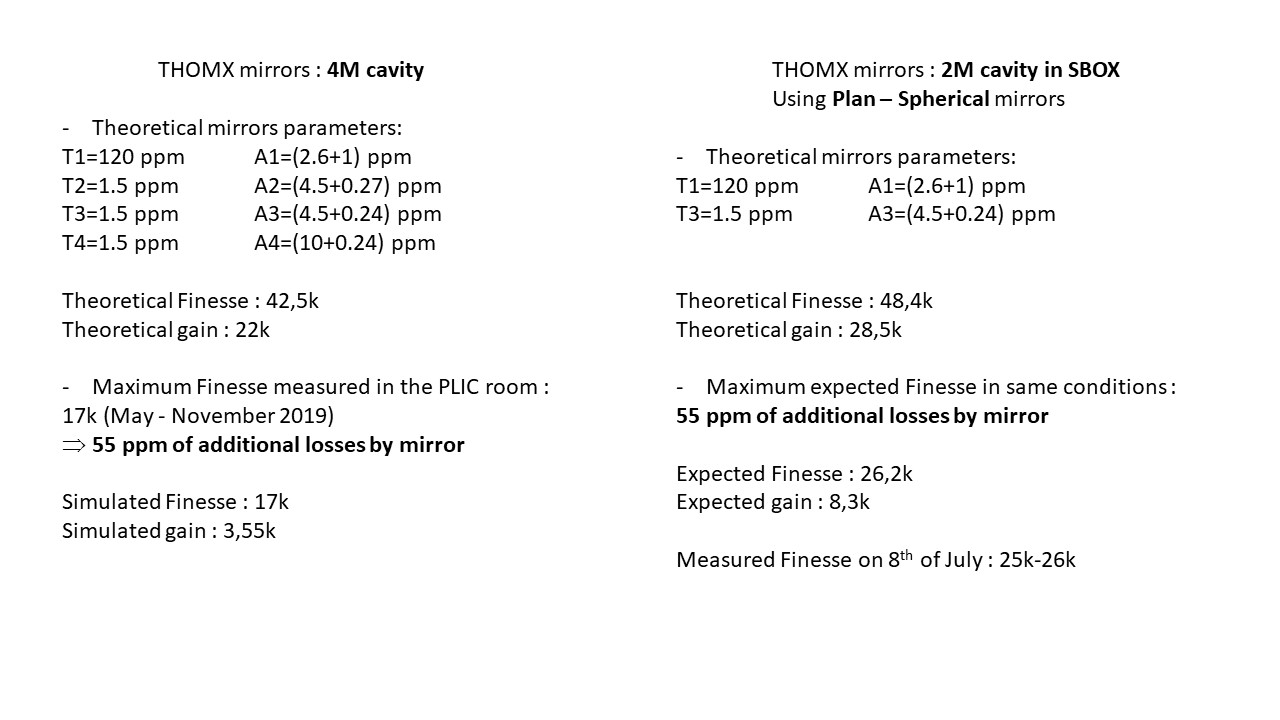
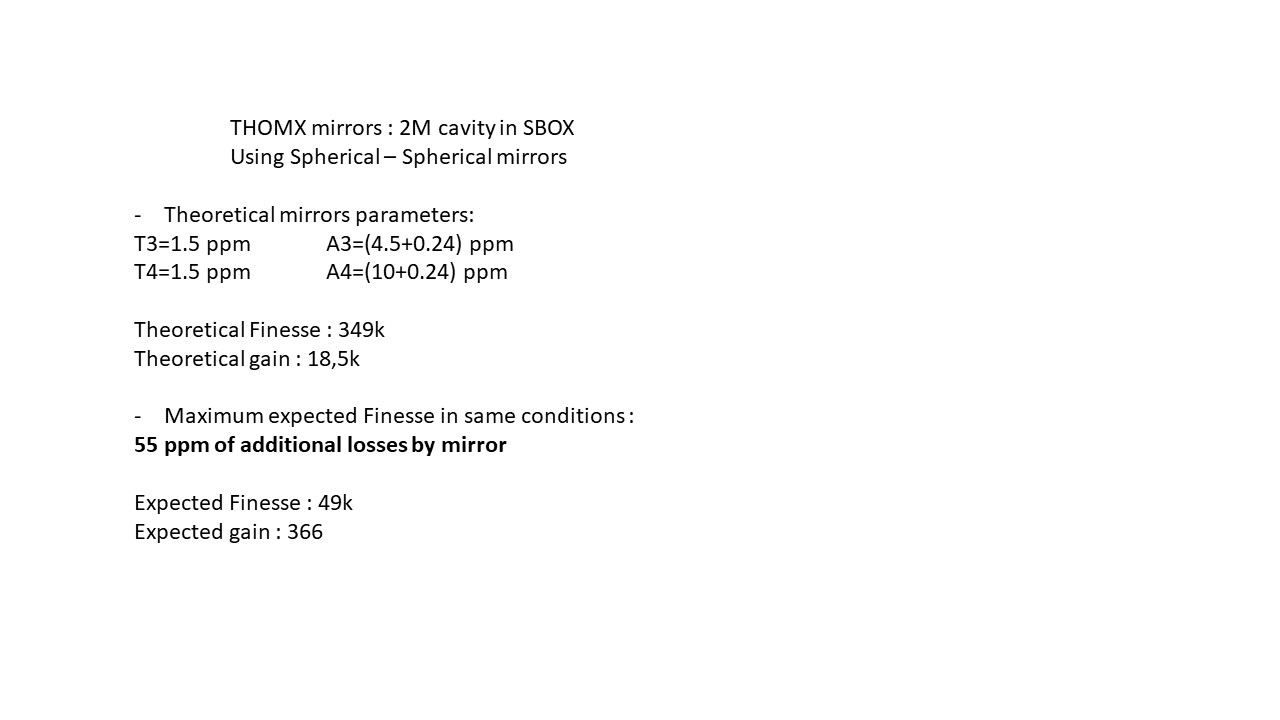
Theoretical and expected Finesse for the 2 mirror setup with the losses is calculated by Ronic for comparison between four and 2 mirror setup.
| Manar Amer wrote: |
|
The SBox cavity setup was changed to have only 2 mirrors M1 plane and M2 spherical, both from ThomX
Distance between the mirror ~ 72 cm , increased from 70 cm to take into account the thickness of the ThomX mirrors
Two lenses (300 mm @ 50 cm , 200 @ 104 cm) were placed to have the beam radius ~ 0.55 mm.
The cavity was locked with a coupling of 60 %, for Finesse measurement the sweep was taken over 100 KHz of 2 seconds.
FSR ~ 210.00 MHz, line width ~ 8.56 KHz, Finesse ~ 24 500 .
|
|
| Attachment 1: 00mode.jpg
| 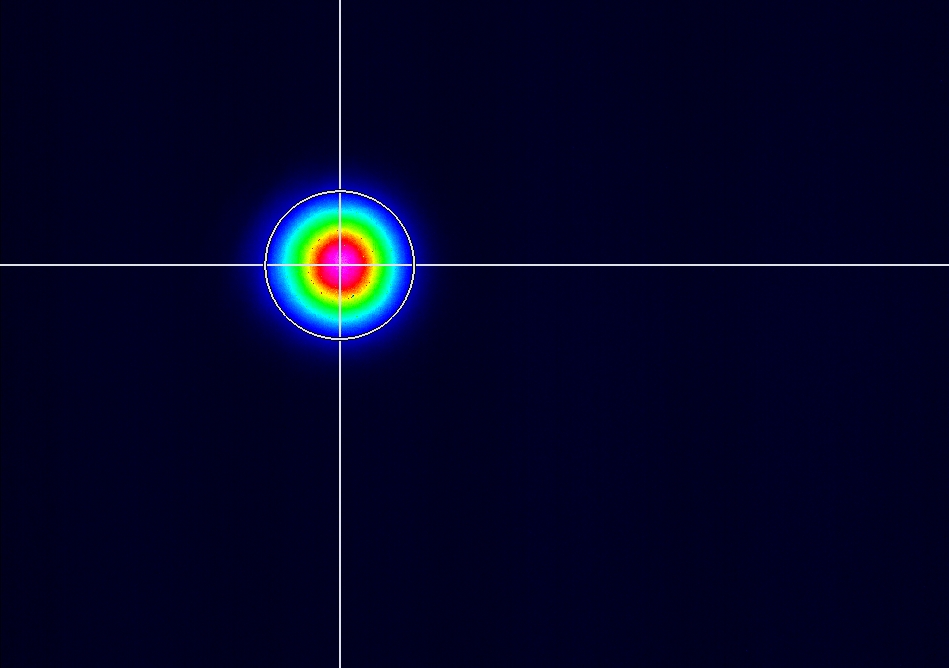 |
| Attachment 2: 00mode_diameter.jpg
| 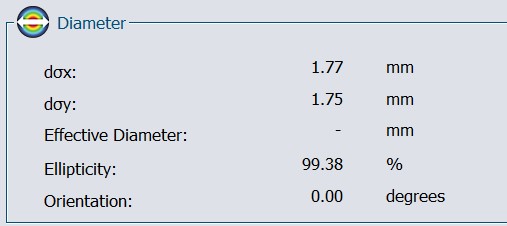 |
| Attachment 3: Screenshot_2022-07-08_0_164115.png
|  |
| Attachment 4: Slide1.JPG
|  |
| Attachment 5: Slide2.JPG
|  |
|
110
|
Fri Jul 8 19:37:24 2022 |
Manar Amer | Fixed | report | lasers and optics | detectors and electronics | Optical room | 2 Mirror Setup @ 216.6 MHz | Update for Finesse measurement, The cavity was put under vacuum ~ 1.1*10^-1 mbar
and the alignment and coupling improved.
FSR = 210.1 MHz
Average Finesse = 25686.46222
FWHM (KHz) = 8.2387
Finesse = 25501.5659
FWHM (KHz) = 8.2028
Finesse = 25613.2858
FWHM (KHz) = 8.0978
Finesse = 25945.3289
FWHM (KHz) = 8.1744
Finesse = 25702.3142
FWHM (KHz) = 8.1847
Finesse = 25669.8163
Concluded from Ronic's calculations, this could be the maximum finesse we might be able to obtain with this setup
with Gain ~ 8000
On Monday we adjust the frequency to match 2160.66 MHz and lock the Pulsed,
at the same time start we start with the CELIA amplifier.
| Manar Amer wrote: |
|
The cavity was realigned using irises instead of pinholes, gave a better alignment.
The inside of the box, the spherical and the injection mirror were cleaned and placed back inside the box.
we see beating of fundamental mode, previously at the transmission point we placed a wedge to split the beam which resulted in an elliptical mode
we removed it and placed a very thin beam splitter, the beam is circular now.
The cavity was locked in air at a coupling of ~ 60-70 %
Finesse and line width measured five readings with a Finesse average 25095.08884 of a Gain ~ 8000
FWHM (KHz) = 8.2928
Finesse = 25323.0544
FWHM (KHz) = 7.9202
Finesse = 26514.4395
FWHM (KHz) = 8.5834
Finesse = 24465.8636
FWHM (KHz) = 8.4571
Finesse = 24831.2419
FWHM (KHz) = 8.6275
Finesse = 24340.8448
Theoretical and expected Finesse for the 2 mirror setup with the losses is calculated by Ronic for comparison between four and 2 mirror setup.
| Manar Amer wrote: |
|
The SBox cavity setup was changed to have only 2 mirrors M1 plane and M2 spherical, both from ThomX
Distance between the mirror ~ 72 cm , increased from 70 cm to take into account the thickness of the ThomX mirrors
Two lenses (300 mm @ 50 cm , 200 @ 104 cm) were placed to have the beam radius ~ 0.55 mm.
The cavity was locked with a coupling of 60 %, for Finesse measurement the sweep was taken over 100 KHz of 2 seconds.
FSR ~ 210.00 MHz, line width ~ 8.56 KHz, Finesse ~ 24 500 .
|
|
|
| Attachment 1: Screenshot_2022-07-08_2_182405.png
|  |
|
111
|
Tue Jul 12 10:07:05 2022 |
Manar Amer | Fixed | report | lasers and optics | detectors and electronics | Optical room | FSR change & Finesse Measurements | The FSR of the 2 mirror (plan-spherical) Cavity was adjusted from 210 MHz to reach 216.643 MHz
it was done by having two reference irises, one at the injection point and one at the reflection
then changing the position of injection plan mirror to slightly closer distance and monitoring the reflection on the oscilloscope to be max.
The cavity modes were still seen, and we had to only improve the injection alignment after.
Me and Ronic locked in air and measured the Finesse, which was bigger by ~ 20%
average Finesse = 30208.53614
FWHM (KHz) = 7.0179
Finesse = 30869.9522
FWHM (KHz) = 7.1257
Finesse = 30403.005
FWHM (KHz) = 7.1287
Finesse = 30390.4014
FWHM (KHz) = 7.2884
Finesse = 29724.5531
FWHM (KHz) = 7.3055
Finesse = 29654.769
| Manar Amer wrote: |
|
Update for Finesse measurement, The cavity was put under vacuum ~ 1.1*10^-1 mbar
and the alignment and coupling improved.
FSR = 210.1 MHz
Average Finesse = 25686.46222
FWHM (KHz) = 8.2387
Finesse = 25501.5659
FWHM (KHz) = 8.2028
Finesse = 25613.2858
FWHM (KHz) = 8.0978
Finesse = 25945.3289
FWHM (KHz) = 8.1744
Finesse = 25702.3142
FWHM (KHz) = 8.1847
Finesse = 25669.8163
Concluded from Ronic's calculations, this could be the maximum finesse we might be able to obtain with this setup
with Gain ~ 8000
On Monday we adjust the frequency to match 2160.66 MHz and lock the Pulsed,
at the same time start we start with the CELIA amplifier.
| Manar Amer wrote: |
|
The cavity was realigned using irises instead of pinholes, gave a better alignment.
The inside of the box, the spherical and the injection mirror were cleaned and placed back inside the box.
we see beating of fundamental mode, previously at the transmission point we placed a wedge to split the beam which resulted in an elliptical mode
we removed it and placed a very thin beam splitter, the beam is circular now.
The cavity was locked in air at a coupling of ~ 60-70 %
Finesse and line width measured five readings with a Finesse average 25095.08884 of a Gain ~ 8000
FWHM (KHz) = 8.2928
Finesse = 25323.0544
FWHM (KHz) = 7.9202
Finesse = 26514.4395
FWHM (KHz) = 8.5834
Finesse = 24465.8636
FWHM (KHz) = 8.4571
Finesse = 24831.2419
FWHM (KHz) = 8.6275
Finesse = 24340.8448
Theoretical and expected Finesse for the 2 mirror setup with the losses is calculated by Ronic for comparison between four and 2 mirror setup.
| Manar Amer wrote: |
|
The SBox cavity setup was changed to have only 2 mirrors M1 plane and M2 spherical, both from ThomX
Distance between the mirror ~ 72 cm , increased from 70 cm to take into account the thickness of the ThomX mirrors
Two lenses (300 mm @ 50 cm , 200 @ 104 cm) were placed to have the beam radius ~ 0.55 mm.
The cavity was locked with a coupling of 60 %, for Finesse measurement the sweep was taken over 100 KHz of 2 seconds.
FSR ~ 210.00 MHz, line width ~ 8.56 KHz, Finesse ~ 24 500 .
|
|
|
|
| Attachment 1: 00mode.jpg
| 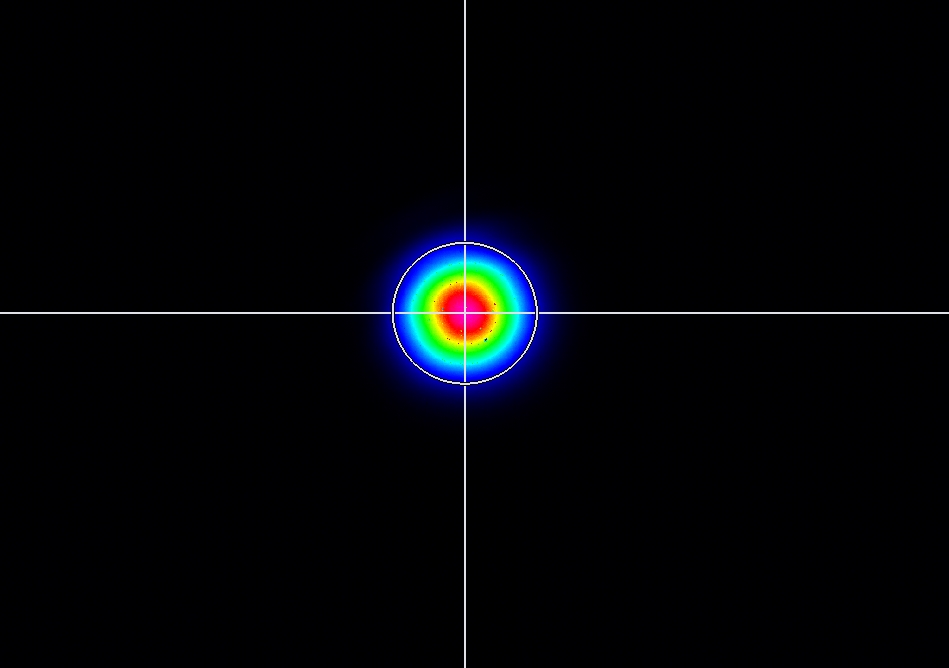 |
| Attachment 2: 00mode_diameter.jpg
| 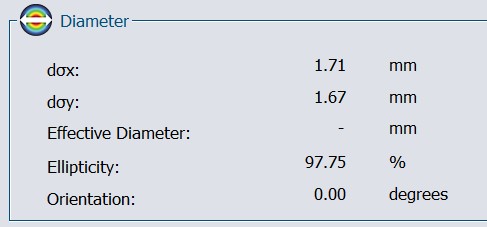 |
| Attachment 3: 00mode_diameter_fit.jpg
| 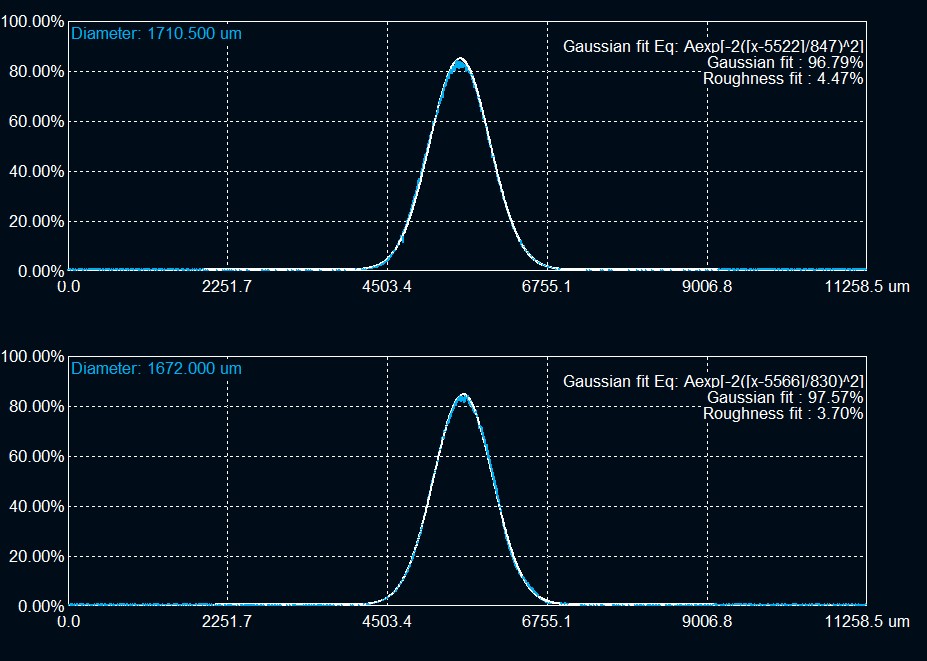 |
|
112
|
Tue Jul 12 10:19:30 2022 |
Manar Amer | Fixed | report | lasers and optics | detectors and electronics | Optical room | FSR change & Finesse Measurements | Yesterday evening the cavity was Vacuum pumped up to pressure of 5.5*10^-2 and locked
changed FSR to be 216.662 MHz and alignment a little and measured the Finesse
in Vacuum we have average Finesse = 30341.6265
FWHM (KHz) = 7.0592
Finesse = 30692.1961
FWHM (KHz) = 7.2186
Finesse = 30014.556
FWHM (KHz) = 7.1051
Finesse = 30493.7635
FWHM (KHz) = 7.1079
Finesse = 30481.9812
FWHM (KHz) = 7.1413
Finesse = 30339.2695
FWHM (KHz) = 7.1624
Finesse = 30249.776
FWHM (KHz) = 7.0239
Finesse = 30846.2719
FWHM (KHz) = 7.2614
Finesse = 29837.6477
FWHM (KHz) = 7.1935
Finesse = 30119.1768
| Manar Amer wrote: |
|
The FSR of the 2 mirror (plan-spherical) Cavity was adjusted from 210 MHz to reach 216.643 MHz
it was done by having two reference irises, one at the injection point and one at the reflection
then changing the position of injection plan mirror to slightly closer distance and monitoring the reflection on the oscilloscope to be max.
The cavity modes were still seen, and we had to only improve the injection alignment after.
Me and Ronic locked in air and measured the Finesse, which was bigger by ~ 20%
average Finesse = 30208.53614
FWHM (KHz) = 7.0179
Finesse = 30869.9522
FWHM (KHz) = 7.1257
Finesse = 30403.005
FWHM (KHz) = 7.1287
Finesse = 30390.4014
FWHM (KHz) = 7.2884
Finesse = 29724.5531
FWHM (KHz) = 7.3055
Finesse = 29654.769
| Manar Amer wrote: |
|
Update for Finesse measurement, The cavity was put under vacuum ~ 1.1*10^-1 mbar
and the alignment and coupling improved.
FSR = 210.1 MHz
Average Finesse = 25686.46222
FWHM (KHz) = 8.2387
Finesse = 25501.5659
FWHM (KHz) = 8.2028
Finesse = 25613.2858
FWHM (KHz) = 8.0978
Finesse = 25945.3289
FWHM (KHz) = 8.1744
Finesse = 25702.3142
FWHM (KHz) = 8.1847
Finesse = 25669.8163
Concluded from Ronic's calculations, this could be the maximum finesse we might be able to obtain with this setup
with Gain ~ 8000
On Monday we adjust the frequency to match 2160.66 MHz and lock the Pulsed,
at the same time start we start with the CELIA amplifier.
| Manar Amer wrote: |
|
The cavity was realigned using irises instead of pinholes, gave a better alignment.
The inside of the box, the spherical and the injection mirror were cleaned and placed back inside the box.
we see beating of fundamental mode, previously at the transmission point we placed a wedge to split the beam which resulted in an elliptical mode
we removed it and placed a very thin beam splitter, the beam is circular now.
The cavity was locked in air at a coupling of ~ 60-70 %
Finesse and line width measured five readings with a Finesse average 25095.08884 of a Gain ~ 8000
FWHM (KHz) = 8.2928
Finesse = 25323.0544
FWHM (KHz) = 7.9202
Finesse = 26514.4395
FWHM (KHz) = 8.5834
Finesse = 24465.8636
FWHM (KHz) = 8.4571
Finesse = 24831.2419
FWHM (KHz) = 8.6275
Finesse = 24340.8448
Theoretical and expected Finesse for the 2 mirror setup with the losses is calculated by Ronic for comparison between four and 2 mirror setup.
| Manar Amer wrote: |
|
The SBox cavity setup was changed to have only 2 mirrors M1 plane and M2 spherical, both from ThomX
Distance between the mirror ~ 72 cm , increased from 70 cm to take into account the thickness of the ThomX mirrors
Two lenses (300 mm @ 50 cm , 200 @ 104 cm) were placed to have the beam radius ~ 0.55 mm.
The cavity was locked with a coupling of 60 %, for Finesse measurement the sweep was taken over 100 KHz of 2 seconds.
FSR ~ 210.00 MHz, line width ~ 8.56 KHz, Finesse ~ 24 500 .
|
|
|
|
|
| Attachment 1: Screenshot_2022-07-11_1_204143.png
| 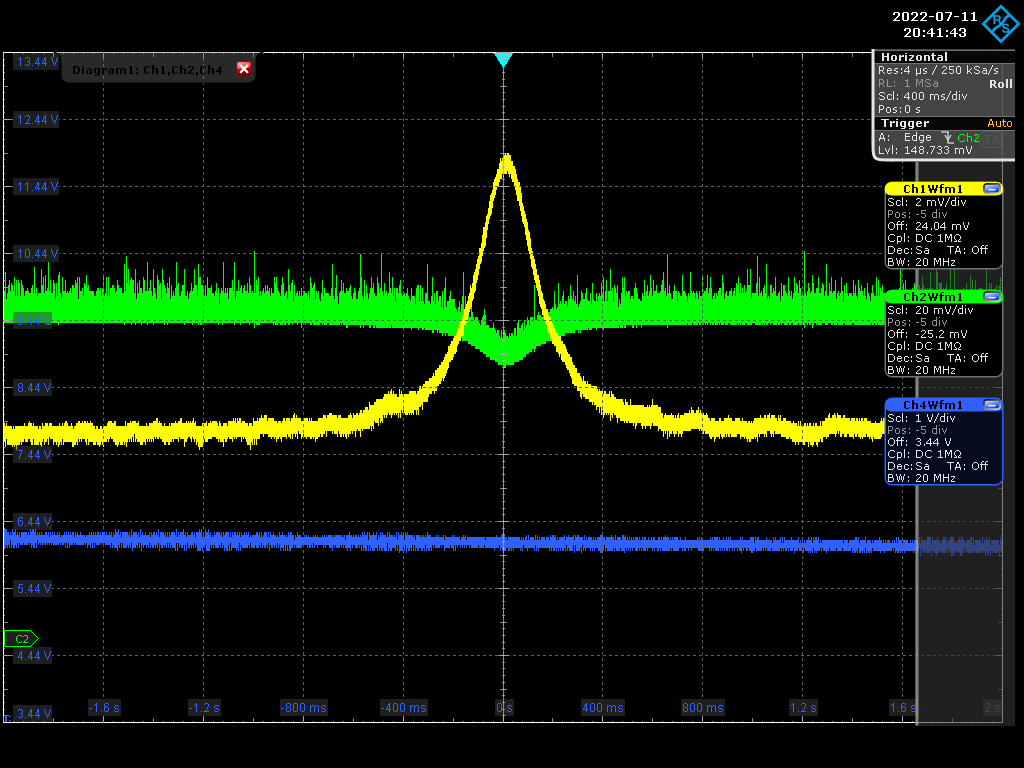 |
| Attachment 2: Screenshot_2022-07-11_0_203646.png
| 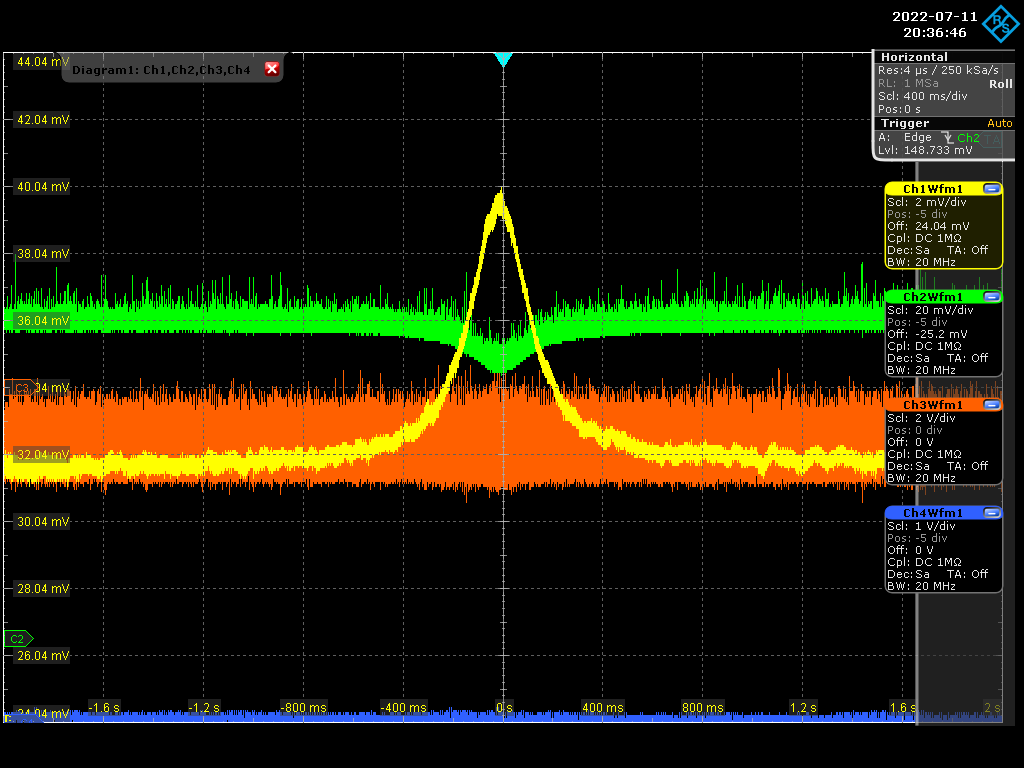 |
|
113
|
Tue Jul 12 14:41:55 2022 |
Manar Amer | Fixed | report | lasers and optics | detectors and electronics | Optical room | FSR change & Finesse Measurements | a Finesse of 30k with the present mirrors :
T1=120 ppm ;A1=(2.6+1) ppm;
T2=1.5 ppm ;A2=(4.5+0.27) ppm;
corresponds to 39 ppm of additional losses for each mirror and a theoretical gain of about 11k.
| Manar Amer wrote: |
|
Yesterday evening the cavity was Vacuum pumped up to pressure of 5.5*10^-2 and locked
changed FSR to be 216.662 MHz and alignment a little and measured the Finesse
in Vacuum we have average Finesse = 30341.6265
FWHM (KHz) = 7.0592
Finesse = 30692.1961
FWHM (KHz) = 7.2186
Finesse = 30014.556
FWHM (KHz) = 7.1051
Finesse = 30493.7635
FWHM (KHz) = 7.1079
Finesse = 30481.9812
FWHM (KHz) = 7.1413
Finesse = 30339.2695
FWHM (KHz) = 7.1624
Finesse = 30249.776
FWHM (KHz) = 7.0239
Finesse = 30846.2719
FWHM (KHz) = 7.2614
Finesse = 29837.6477
FWHM (KHz) = 7.1935
Finesse = 30119.1768
| Manar Amer wrote: |
|
The FSR of the 2 mirror (plan-spherical) Cavity was adjusted from 210 MHz to reach 216.643 MHz
it was done by having two reference irises, one at the injection point and one at the reflection
then changing the position of injection plan mirror to slightly closer distance and monitoring the reflection on the oscilloscope to be max.
The cavity modes were still seen, and we had to only improve the injection alignment after.
Me and Ronic locked in air and measured the Finesse, which was bigger by ~ 20%
average Finesse = 30208.53614
FWHM (KHz) = 7.0179
Finesse = 30869.9522
FWHM (KHz) = 7.1257
Finesse = 30403.005
FWHM (KHz) = 7.1287
Finesse = 30390.4014
FWHM (KHz) = 7.2884
Finesse = 29724.5531
FWHM (KHz) = 7.3055
Finesse = 29654.769
| Manar Amer wrote: |
|
Update for Finesse measurement, The cavity was put under vacuum ~ 1.1*10^-1 mbar
and the alignment and coupling improved.
FSR = 210.1 MHz
Average Finesse = 25686.46222
FWHM (KHz) = 8.2387
Finesse = 25501.5659
FWHM (KHz) = 8.2028
Finesse = 25613.2858
FWHM (KHz) = 8.0978
Finesse = 25945.3289
FWHM (KHz) = 8.1744
Finesse = 25702.3142
FWHM (KHz) = 8.1847
Finesse = 25669.8163
Concluded from Ronic's calculations, this could be the maximum finesse we might be able to obtain with this setup
with Gain ~ 8000
On Monday we adjust the frequency to match 2160.66 MHz and lock the Pulsed,
at the same time start we start with the CELIA amplifier.
| Manar Amer wrote: |
|
The cavity was realigned using irises instead of pinholes, gave a better alignment.
The inside of the box, the spherical and the injection mirror were cleaned and placed back inside the box.
we see beating of fundamental mode, previously at the transmission point we placed a wedge to split the beam which resulted in an elliptical mode
we removed it and placed a very thin beam splitter, the beam is circular now.
The cavity was locked in air at a coupling of ~ 60-70 %
Finesse and line width measured five readings with a Finesse average 25095.08884 of a Gain ~ 8000
FWHM (KHz) = 8.2928
Finesse = 25323.0544
FWHM (KHz) = 7.9202
Finesse = 26514.4395
FWHM (KHz) = 8.5834
Finesse = 24465.8636
FWHM (KHz) = 8.4571
Finesse = 24831.2419
FWHM (KHz) = 8.6275
Finesse = 24340.8448
Theoretical and expected Finesse for the 2 mirror setup with the losses is calculated by Ronic for comparison between four and 2 mirror setup.
| Manar Amer wrote: |
|
The SBox cavity setup was changed to have only 2 mirrors M1 plane and M2 spherical, both from ThomX
Distance between the mirror ~ 72 cm , increased from 70 cm to take into account the thickness of the ThomX mirrors
Two lenses (300 mm @ 50 cm , 200 @ 104 cm) were placed to have the beam radius ~ 0.55 mm.
The cavity was locked with a coupling of 60 %, for Finesse measurement the sweep was taken over 100 KHz of 2 seconds.
FSR ~ 210.00 MHz, line width ~ 8.56 KHz, Finesse ~ 24 500 .
|
|
|
|
|
|
|
114
|
Tue Jul 12 18:53:55 2022 |
Manar Amer | Fixed | report | lasers and optics | detectors and electronics | Optical room | Installation of D-shaped mirror / Alignment | To prepare for the amplifier. I installed the D-shapped mirrors after cleaning (using aceton and ethanol) between the cavity 2 mirrors.
Before closing, I observed the back reflection from M1 (injection mirror). both the injection and reflection lines were off, due to that there was an internal reflection hitting the walls of the cavity.
I tried to correct it by slightly adjusting on M1 without losing the mode, but unfortunately we lost it.
Tried to go back to the original position using the reflection iris reference, with no success.
Cavity axis is lost, and we need to align again.
| Manar Amer wrote: |
|
a Finesse of 30k with the present mirrors :
T1=120 ppm ;A1=(2.6+1) ppm;
T2=1.5 ppm ;A2=(4.5+0.27) ppm;
corresponds to 39 ppm of additional losses for each mirror and a theoretical gain of about 11k.
| Manar Amer wrote: |
|
Yesterday evening the cavity was Vacuum pumped up to pressure of 5.5*10^-2 and locked
changed FSR to be 216.662 MHz and alignment a little and measured the Finesse
in Vacuum we have average Finesse = 30341.6265
FWHM (KHz) = 7.0592
Finesse = 30692.1961
FWHM (KHz) = 7.2186
Finesse = 30014.556
FWHM (KHz) = 7.1051
Finesse = 30493.7635
FWHM (KHz) = 7.1079
Finesse = 30481.9812
FWHM (KHz) = 7.1413
Finesse = 30339.2695
FWHM (KHz) = 7.1624
Finesse = 30249.776
FWHM (KHz) = 7.0239
Finesse = 30846.2719
FWHM (KHz) = 7.2614
Finesse = 29837.6477
FWHM (KHz) = 7.1935
Finesse = 30119.1768
| Manar Amer wrote: |
|
The FSR of the 2 mirror (plan-spherical) Cavity was adjusted from 210 MHz to reach 216.643 MHz
it was done by having two reference irises, one at the injection point and one at the reflection
then changing the position of injection plan mirror to slightly closer distance and monitoring the reflection on the oscilloscope to be max.
The cavity modes were still seen, and we had to only improve the injection alignment after.
Me and Ronic locked in air and measured the Finesse, which was bigger by ~ 20%
average Finesse = 30208.53614
FWHM (KHz) = 7.0179
Finesse = 30869.9522
FWHM (KHz) = 7.1257
Finesse = 30403.005
FWHM (KHz) = 7.1287
Finesse = 30390.4014
FWHM (KHz) = 7.2884
Finesse = 29724.5531
FWHM (KHz) = 7.3055
Finesse = 29654.769
| Manar Amer wrote: |
|
Update for Finesse measurement, The cavity was put under vacuum ~ 1.1*10^-1 mbar
and the alignment and coupling improved.
FSR = 210.1 MHz
Average Finesse = 25686.46222
FWHM (KHz) = 8.2387
Finesse = 25501.5659
FWHM (KHz) = 8.2028
Finesse = 25613.2858
FWHM (KHz) = 8.0978
Finesse = 25945.3289
FWHM (KHz) = 8.1744
Finesse = 25702.3142
FWHM (KHz) = 8.1847
Finesse = 25669.8163
Concluded from Ronic's calculations, this could be the maximum finesse we might be able to obtain with this setup
with Gain ~ 8000
On Monday we adjust the frequency to match 2160.66 MHz and lock the Pulsed,
at the same time start we start with the CELIA amplifier.
| Manar Amer wrote: |
|
The cavity was realigned using irises instead of pinholes, gave a better alignment.
The inside of the box, the spherical and the injection mirror were cleaned and placed back inside the box.
we see beating of fundamental mode, previously at the transmission point we placed a wedge to split the beam which resulted in an elliptical mode
we removed it and placed a very thin beam splitter, the beam is circular now.
The cavity was locked in air at a coupling of ~ 60-70 %
Finesse and line width measured five readings with a Finesse average 25095.08884 of a Gain ~ 8000
FWHM (KHz) = 8.2928
Finesse = 25323.0544
FWHM (KHz) = 7.9202
Finesse = 26514.4395
FWHM (KHz) = 8.5834
Finesse = 24465.8636
FWHM (KHz) = 8.4571
Finesse = 24831.2419
FWHM (KHz) = 8.6275
Finesse = 24340.8448
Theoretical and expected Finesse for the 2 mirror setup with the losses is calculated by Ronic for comparison between four and 2 mirror setup.
| Manar Amer wrote: |
|
The SBox cavity setup was changed to have only 2 mirrors M1 plane and M2 spherical, both from ThomX
Distance between the mirror ~ 72 cm , increased from 70 cm to take into account the thickness of the ThomX mirrors
Two lenses (300 mm @ 50 cm , 200 @ 104 cm) were placed to have the beam radius ~ 0.55 mm.
The cavity was locked with a coupling of 60 %, for Finesse measurement the sweep was taken over 100 KHz of 2 seconds.
FSR ~ 210.00 MHz, line width ~ 8.56 KHz, Finesse ~ 24 500 .
|
|
|
|
|
|
|
|
117
|
Fri Jul 22 17:10:06 2022 |
Manar Amer | Fixed | report | lasers and optics | detectors and electronics | Optical room | Installation of D-shaped mirror / Alignment | The D-shaped mirrors are installed properly and not cutting the path of the beam.
The cavity has been aligned again and 00 modes beating observed, and external reference points has been placed.
| Manar Amer wrote: |
|
To prepare for the amplifier. I installed the D-shapped mirrors after cleaning (using aceton and ethanol) between the cavity 2 mirrors.
Before closing, I observed the back reflection from M1 (injection mirror). both the injection and reflection lines were off, due to that there was an internal reflection hitting the walls of the cavity.
I tried to correct it by slightly adjusting on M1 without losing the mode, but unfortunately we lost it.
Tried to go back to the original position using the reflection iris reference, with no success.
Cavity axis is lost, and we need to align again.
| Manar Amer wrote: |
|
a Finesse of 30k with the present mirrors :
T1=120 ppm ;A1=(2.6+1) ppm;
T2=1.5 ppm ;A2=(4.5+0.27) ppm;
corresponds to 39 ppm of additional losses for each mirror and a theoretical gain of about 11k.
| Manar Amer wrote: |
|
Yesterday evening the cavity was Vacuum pumped up to pressure of 5.5*10^-2 and locked
changed FSR to be 216.662 MHz and alignment a little and measured the Finesse
in Vacuum we have average Finesse = 30341.6265
FWHM (KHz) = 7.0592
Finesse = 30692.1961
FWHM (KHz) = 7.2186
Finesse = 30014.556
FWHM (KHz) = 7.1051
Finesse = 30493.7635
FWHM (KHz) = 7.1079
Finesse = 30481.9812
FWHM (KHz) = 7.1413
Finesse = 30339.2695
FWHM (KHz) = 7.1624
Finesse = 30249.776
FWHM (KHz) = 7.0239
Finesse = 30846.2719
FWHM (KHz) = 7.2614
Finesse = 29837.6477
FWHM (KHz) = 7.1935
Finesse = 30119.1768
| Manar Amer wrote: |
|
The FSR of the 2 mirror (plan-spherical) Cavity was adjusted from 210 MHz to reach 216.643 MHz
it was done by having two reference irises, one at the injection point and one at the reflection
then changing the position of injection plan mirror to slightly closer distance and monitoring the reflection on the oscilloscope to be max.
The cavity modes were still seen, and we had to only improve the injection alignment after.
Me and Ronic locked in air and measured the Finesse, which was bigger by ~ 20%
average Finesse = 30208.53614
FWHM (KHz) = 7.0179
Finesse = 30869.9522
FWHM (KHz) = 7.1257
Finesse = 30403.005
FWHM (KHz) = 7.1287
Finesse = 30390.4014
FWHM (KHz) = 7.2884
Finesse = 29724.5531
FWHM (KHz) = 7.3055
Finesse = 29654.769
| Manar Amer wrote: |
|
Update for Finesse measurement, The cavity was put under vacuum ~ 1.1*10^-1 mbar
and the alignment and coupling improved.
FSR = 210.1 MHz
Average Finesse = 25686.46222
FWHM (KHz) = 8.2387
Finesse = 25501.5659
FWHM (KHz) = 8.2028
Finesse = 25613.2858
FWHM (KHz) = 8.0978
Finesse = 25945.3289
FWHM (KHz) = 8.1744
Finesse = 25702.3142
FWHM (KHz) = 8.1847
Finesse = 25669.8163
Concluded from Ronic's calculations, this could be the maximum finesse we might be able to obtain with this setup
with Gain ~ 8000
On Monday we adjust the frequency to match 2160.66 MHz and lock the Pulsed,
at the same time start we start with the CELIA amplifier.
| Manar Amer wrote: |
|
The cavity was realigned using irises instead of pinholes, gave a better alignment.
The inside of the box, the spherical and the injection mirror were cleaned and placed back inside the box.
we see beating of fundamental mode, previously at the transmission point we placed a wedge to split the beam which resulted in an elliptical mode
we removed it and placed a very thin beam splitter, the beam is circular now.
The cavity was locked in air at a coupling of ~ 60-70 %
Finesse and line width measured five readings with a Finesse average 25095.08884 of a Gain ~ 8000
FWHM (KHz) = 8.2928
Finesse = 25323.0544
FWHM (KHz) = 7.9202
Finesse = 26514.4395
FWHM (KHz) = 8.5834
Finesse = 24465.8636
FWHM (KHz) = 8.4571
Finesse = 24831.2419
FWHM (KHz) = 8.6275
Finesse = 24340.8448
Theoretical and expected Finesse for the 2 mirror setup with the losses is calculated by Ronic for comparison between four and 2 mirror setup.
| Manar Amer wrote: |
|
The SBox cavity setup was changed to have only 2 mirrors M1 plane and M2 spherical, both from ThomX
Distance between the mirror ~ 72 cm , increased from 70 cm to take into account the thickness of the ThomX mirrors
Two lenses (300 mm @ 50 cm , 200 @ 104 cm) were placed to have the beam radius ~ 0.55 mm.
The cavity was locked with a coupling of 60 %, for Finesse measurement the sweep was taken over 100 KHz of 2 seconds.
FSR ~ 210.00 MHz, line width ~ 8.56 KHz, Finesse ~ 24 500 .
|
|
|
|
|
|
|
|
|
126
|
Thu Aug 11 19:27:09 2022 |
Ronic Chiche | Fixed | info | lasers and optics | detectors and electronics | Optical room | Koheras CW laser lock on FP cavity | I locked the Koheras CW on the FP cavity but the lock was pretty noisy and very difficult to acquire.
I tried to produce some modulation sidebands close to 216MHz to measure the Finesse but the power loss was very small so, the signal to extract the Finesse would be unreadable !
(generator voltage was at maximum Vout = 0.5Vrms on 50 ohms... is it normal ? or the used 10GHz EOM suffers some problems ?)
At one moment, I lost the lock and was not able to find it again... it seems the Koheras is too noisy for this cavity (may be is it a good news for the Finesse ?).
Tomorrow, I will try to use the OEwave + amplifier to lock the cavity.
|
|
207
|
Fri Mar 29 16:23:34 2024 |
Ronic Chiche | Fixed | info | lasers and optics | detectors and electronics | Optical room | 100W CELIA laser amplifier "Power vs Pump current" curve | We measured again the 100W CELIA laser amplifier with a pump current until 8A.
as the first current pump of the amplifier has a Peltier issue, we don't exceeded 6A on this stage and we compensated with the 3 other stages.
7A average current is obtained with 6A / 7.3A / 7.3A / 7.4A
7.5A average current is obtained with 6A / 8A / 8A / 8A
8A average current is obtained with 6A / 8.6A / 8.7A / 8.7A
we did the power measured either with the "big" powermeter which is able to handle 100W
and with a smaller powermeter after a wedge, in the reflection path, which is multiplied by 39 to match the big powermeter measurement.
a fit a 12W/A from the cut-off current of 2A is a good estimation until 5A. |
| Attachment 1: CELIA_100W_amplifier_Power_vs_Current.png
| 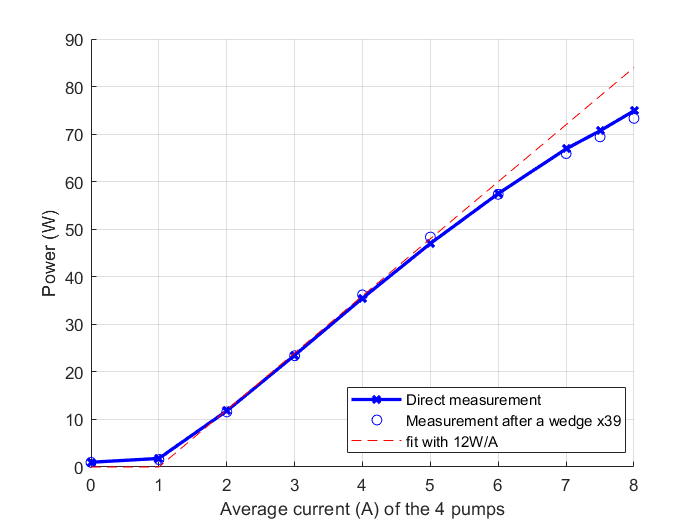 |
|
241
|
Thu Sep 4 17:35:50 2025 |
Ronic Chiche | Fixed | info | lasers and optics | detectors and electronics | Optical room | Installation of the avalanche photodiode | After installing the 2nd EOM, we had some trouble to be able to lock again.
One possible reason was the very low signal level in transmission, which is important to trigger the locking system (and stop it).
See the Alice post for details, but we were able to measure only once the Finesse of the cavity at around 2600.
After the Finesse measurement, we opened the box to change the M1 mirror... so the box is at ambient pressure now.
I took back the avalanche photodiode from the Minicav room and installed it on the setup to replace the FPC transmission photodiode.
Now, the transmission peaks are at the 1V level, and it's very easy to trigger on...
The system locked very easily, even without being under vacuum.
It will help if we need to inject very low power laser (e.g. OEwaves after 2x EOM and AOM).
|
|
69
|
Tue Mar 29 16:23:00 2022 |
Manar Amer | Fixed | report | lasers and optics | cabling | Optical room | Mightylaser Amplifier | Migthylaser amplifier has been moved from the SBox table to the PLIC table.
|
|
1
|
Wed Sep 26 18:12:44 2018 |
Loïc Amoudry | Fixed | info | lasers and optics | Optical room | Cavity polarization states (Koheras), Finesse of 2 polarization states | Measurments of Finesse with the 2 polarization states, let's call them H (higher) and L (lower): 24500 for the H and 23500 for the L.
We checked the polarization states in transmission of the FP cavity after a PBS. The H was stronger in PBS trans and the L stronger in PBS ref.
We measured the power in reflection of the PBS and added a half WP that we aligned with the PBS polarization. Then, to get the maximum power we had to tilt the half WP of 22° for the H and 18° for the L.
Finally we checked the extinction through half WP and PBS for H and L.
- For H : max 75 mW min 5 mW. Ratio 6.66%
- For L : max 70 mW min 4 mW. Ratio 5.7%
Right after Koheras : max 3.5 mW min 47 uW. Ratio 1.3%
|
| Attachment 1: Finesse_higher.isf
|
| Attachment 2: Finesse_lower.isf
|
| Attachment 3: The2polarizations_states_direct_trans.isf
|
| Attachment 4: The2polarizations_states_direct_trans.png
| 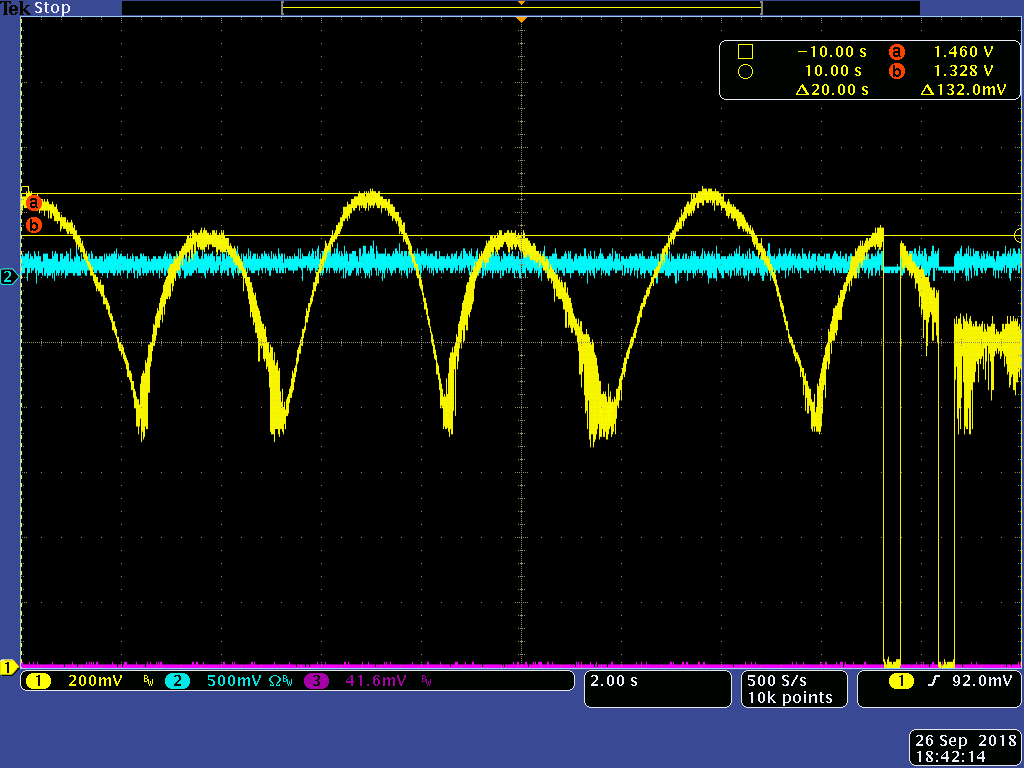 |
|
2
|
Mon Oct 1 11:30:39 2018 |
Loïc Amoudry | Fixed | report | lasers and optics | Optical room | Phase measurement with HASO | 2 measurement.
First one locked, in transmission of M2 with 2nd stage 0A.Total 89 cm from the big waist (planar mirrors). 2 wedges used.
Second one at input beam with the same power. Datas taken at the same equivalent position than the first one. 3 wedges used. |
| Attachment 1: 180928_M2_0A.has
|
<?xml version="1.0" encoding="utf-8"?>
<haso_slopes_process_manager>
	<raw_slopes>
		<metadata>
			<haso_serial_number>
				<value>7395</value>
				<crc>2129152653</crc>
			</haso_serial_number>
			<revision_number>1</revision_number>
			<lower_calibration_wl>1014</lower_calibration_wl>
			<upper_calibration_wl>2014</upper_calibration_wl>
			<o_haso_model>HASO4 first</o_haso_model>
			<acquisition_info>
				<camera_serial_number>21410552</camera_serial_number>
				<exposure_time_us>
					<order>500</order>
					<state>500</state>
				</exposure_time_us>
				<nb_summed_images>1</nb_summed_images>
				<camera_max_level>4095</camera_max_level>
				<camera_ccd_type>progressive_scan_type</camera_ccd_type>
				<smearing_removed>false</smearing_removed>
				<background_removed>false</background_removed>
				<trigger_mode>cam_internal</trigger_mode>
				<acquisition_date>2018-09-28T17:22:30.525402</acquisition_date>
				<comments/>
			</acquisition_info>
			<src_wavelength_nm>1031</src_wavelength_nm>
			<comments/>
			<session_name>test</session_name>
			<start_position_um>
				<x>18</x>
				<y>14</y>
			</start_position_um>
			<pupil_average>0.5</pupil_average>
		</metadata>
		<slopes>
			<size>
				<x>40</x>
				<y>32</y>
			</size>
			<step>
				<x>114.0509</x>
				<y>114.0507</y>
			</step>
			<x_slopes>
				<buffer>
NaN	NaN	NaN	NaN	NaN	NaN	NaN	NaN	NaN	NaN	NaN	NaN	NaN	NaN	NaN	NaN	NaN	NaN	NaN	NaN	NaN	NaN	NaN	NaN	NaN	NaN	NaN	NaN	NaN	NaN	NaN	NaN	NaN	NaN	NaN	NaN	NaN	NaN	NaN	NaN
NaN	NaN	NaN	NaN	NaN	NaN	NaN	NaN	NaN	NaN	NaN	NaN	NaN	NaN	NaN	NaN	NaN	NaN	NaN	NaN	NaN	NaN	NaN	NaN	NaN	NaN	NaN	NaN	NaN	NaN	NaN	NaN	NaN	NaN	NaN	NaN	NaN	NaN	NaN	NaN
NaN	NaN	NaN	NaN	NaN	NaN	NaN	NaN	NaN	NaN	NaN	NaN	NaN	NaN	NaN	NaN	NaN	NaN	NaN	NaN	NaN	NaN	NaN	NaN	NaN	NaN	NaN	NaN	NaN	NaN	NaN	NaN	NaN	NaN	NaN	NaN	NaN	NaN	NaN	NaN
NaN	NaN	NaN	NaN	NaN	NaN	NaN	NaN	NaN	NaN	NaN	NaN	NaN	NaN	NaN	NaN	NaN	NaN	NaN	NaN	NaN	NaN	NaN	NaN	NaN	NaN	NaN	NaN	NaN	NaN	NaN	NaN	NaN	NaN	NaN	NaN	NaN	NaN	NaN	NaN
NaN	NaN	NaN	NaN	NaN	NaN	NaN	NaN	NaN	NaN	NaN	NaN	NaN	NaN	NaN	NaN	NaN	NaN	NaN	NaN	NaN	NaN	NaN	NaN	NaN	NaN	NaN	NaN	NaN	NaN	NaN	NaN	NaN	NaN	NaN	NaN	NaN	NaN	NaN	NaN
NaN	NaN	NaN	NaN	NaN	NaN	NaN	NaN	NaN	NaN	NaN	NaN	NaN	NaN	NaN	NaN	NaN	NaN	NaN	NaN	NaN	NaN	NaN	NaN	NaN	NaN	NaN	NaN	NaN	NaN	NaN	NaN	NaN	NaN	NaN	NaN	NaN	NaN	NaN	NaN
NaN	NaN	NaN	NaN	NaN	NaN	NaN	NaN	NaN	NaN	NaN	NaN	NaN	NaN	NaN	NaN	NaN	NaN	NaN	NaN	NaN	NaN	NaN	NaN	NaN	NaN	NaN	NaN	NaN	NaN	NaN	NaN	NaN	NaN	NaN	NaN	NaN	NaN	NaN	NaN
NaN	NaN	NaN	NaN	NaN	NaN	NaN	NaN	NaN	NaN	NaN	NaN	NaN	NaN	NaN	NaN	NaN	NaN	NaN	NaN	NaN	NaN	NaN	NaN	NaN	NaN	NaN	NaN	NaN	NaN	NaN	NaN	NaN	NaN	NaN	NaN	NaN	NaN	NaN	NaN
NaN	NaN	NaN	NaN	NaN	NaN	NaN	NaN	NaN	NaN	NaN	NaN	0.0132321194	0.0194264948	0.0446751937	-0.0857108235	-0.213635445	-0.207440898	-0.297976255	0.110265866	NaN	NaN	NaN	NaN	NaN	NaN	NaN	NaN	NaN	NaN	NaN	NaN	NaN	NaN	NaN	NaN	NaN	NaN	NaN	NaN
NaN	NaN	NaN	NaN	NaN	NaN	NaN	NaN	NaN	NaN	NaN	-0.0742208734	0.0149374995	0.0401855335	0.0463794395	0.0249952469	-0.170820296	0.107533522	-0.180496067	-0.00384998135	-0.321989805	-0.315790176	0.054177098	NaN	NaN	NaN	NaN	NaN	NaN	NaN	NaN	NaN	NaN	NaN	NaN	NaN	NaN	NaN	NaN	NaN
NaN	NaN	NaN	NaN	NaN	NaN	NaN	NaN	NaN	NaN	-0.163400665	-0.0555729233	-0.0732490793	0.176482081	-0.0608631186	-0.0982084796	-0.156421587	0.109232396	-0.178782746	-0.00214584544	-0.2451666	-0.0799346119	-0.00919782743	-0.312842578	NaN	NaN	NaN	NaN	NaN	NaN	NaN	NaN	NaN	NaN	NaN	NaN	NaN	NaN	NaN	NaN
NaN	NaN	NaN	NaN	NaN	NaN	NaN	NaN	NaN	-0.111202277	-0.161689147	-0.155498207	-0.00258530118	-0.0653496608	-0.0888110399	-0.100046299	-0.0938539207	0.110928372	-0.177069977	-0.000443706289	-0.243450403	-0.0782285035	-0.00749628432	-0.31112361	NaN	NaN	NaN	NaN	NaN	NaN	NaN	NaN	NaN	NaN	NaN	NaN	NaN	NaN	NaN	NaN
NaN	NaN	NaN	NaN	NaN	NaN	NaN	NaN	-0.463607728	-0.109495401	-0.161732391	-0.0271859169	-0.0941835865	0.00530833751	-0.0525279753	-0.0809126645	-0.0921472907	0.166412383	-0.0157913789	-0.181895107	-0.205913693	-0.168365702	-0.00579693168	-0.177394375	0.0357340053	NaN	NaN	NaN	NaN	NaN	NaN	NaN	NaN	NaN	NaN	NaN	NaN	NaN	NaN	NaN
NaN	NaN	NaN	NaN	NaN	NaN	NaN	-0.192532986	-0.438032746	-0.107790172	-0.1600229	-0.0986706018	-0.0192932319	-0.0412479863	-0.0508260801	0.108562931	-0.0935630053	0.234110028	-0.186376467	-0.00790346228	-0.173991486	-0.0890651494	-0.099961549	-0.175685063	0.168325245	0.0436083078	NaN	NaN	NaN	NaN	NaN	NaN	NaN	NaN	NaN	NaN	NaN	NaN	NaN	NaN
NaN	NaN	NaN	NaN	NaN	NaN	NaN	-0.190823391	-0.436302215	-0.0952836499	-0.158314914	-0.106119394	-0.0356773175	0.0312426649	-0.0491265543	0.080091849	-0.0918599442	0.263196528	-0.0123963989	-0.178474188	-0.0935527682	-0.104448609	-0.0982594639	-0.0946965441	0.00602815673	0.0122103505	NaN	NaN	NaN	NaN	NaN	NaN	NaN	NaN	NaN	NaN	NaN	NaN	NaN	NaN
NaN	NaN	NaN	NaN	NaN	NaN	NaN	-0.189115271	-0.395454645	-0.0935835093	-0.248339504	-0.0401739776	-0.0339819044	0.139749572	-0.158447132	0.0817768499	-0.110442303	0.150598928	-0.237042665	-0.0383856967	-0.155362368	-0.121756904	-0.0965596363	-0.109379813	0.00429760478	0.0104788151	0.112252913	NaN	NaN	NaN	NaN	NaN	NaN	NaN	NaN	NaN	NaN	NaN	NaN	NaN
NaN	NaN	NaN	NaN	NaN	NaN	NaN	-0.120180726	-0.390629232	-0.0918859243	-0.23441942	-0.027326569	-0.0158075094	0.134890318	-0.137113929	0.0834579021	-0.10874211	0.152272969	-0.172100127	-0.036693193	-0.217876226	-0.12250565	-0.113868862	-0.0913010091	-0.0146365911	0.0121638477	0.0163605958	NaN	NaN	NaN	NaN	NaN	NaN	NaN	NaN	NaN	NaN	NaN	NaN	NaN
NaN	NaN	NaN	NaN	NaN	NaN	-0.11535804	-0.113642737	-0.388902545	-0.1189311	-0.168630376	-0.1118984	-0.0194468554	0.127442464	-0.128209397	0.0789336339	-0.107044607	0.0724533424	-0.0677116737	0.00999630429	-0.216167688	-0.120807767	0.00510253944	-0.173344389	0.149922922	0.0114291105	-0.0227277335	NaN	NaN	NaN	NaN	NaN	NaN	NaN	NaN	NaN	NaN	NaN	NaN	NaN
NaN	NaN	NaN	NaN	NaN	NaN	-0.175694287	-0.169506997	-0.387176484	-0.153800145	-0.16692929	-0.127469063	-0.104014307	0.129109636	-0.122826934	0.0806065351	-0.219382495	0.0741268843	-0.0660219938	-0.0169976763	-0.214461237	-0.114745401	0.00678253546	-0.0165561996	0.06150176	-0.027224984	-0.0989660919	NaN	NaN	NaN	NaN	NaN	NaN	NaN	NaN	NaN	NaN	NaN	NaN	NaN
NaN	NaN	NaN	NaN	NaN	NaN	-0.173996449	-0.164985389	-0.404313445	-0.215267077	-0.16523096	-0.125775382	0.00520308129	0.130771697	-0.121133439	0.0822747648	-0.153716788	0.0757957399	-0.0643358529	-0.015317874	-0.156637192	-0.113054052	0.0335502774	-0.0148779321	0.0631697923	0.00254447572	-0.0972792879	NaN	NaN	NaN	NaN	NaN	NaN	NaN	NaN	NaN	NaN	NaN	NaN	NaN
NaN	NaN	NaN	NaN	NaN	NaN	-0.226117939	-0.183623523	-0.390667021	-0.268598288	-0.233644038	-0.116407014	0.0430982336	0.144305825	-0.119443327	0.14072746	-0.129785925	0.17374137	-0.134069234	-0.0136423483	-0.154943153	-0.0794171318	-0.0159025565	-0.0132039115	0.0648329332	0.0477194861	-0.0955960602	NaN	NaN	NaN	NaN	NaN	NaN	NaN	NaN	NaN	NaN	NaN	NaN	NaN
NaN	NaN	NaN	NaN	NaN	NaN	-0.22441867	-0.181929752	-0.388943613	-0.238126695	-0.231942117	-0.114721365	0.0519975573	0.117139295	-0.156943828	0.142377272	-0.128098026	0.175386354	-0.234207168	0.0377056897	-0.149327144	-0.131164178	-0.0142322015	-0.0884498507	0.0588676482	0.00588102825	-0.14485395	NaN	NaN	NaN	NaN	NaN	NaN	NaN	NaN	NaN	NaN	NaN	NaN	NaN
NaN	NaN	NaN	NaN	NaN	NaN	NaN	-0.180239394	-0.387221962	-0.187481254	-0.230243206	-0.00183578208	0.0536545776	0.118786693	-0.145503983	0.144021034	-0.112317801	0.17702502	-0.232507557	0.0429269932	-0.147640705	-0.0760620087	-0.0125666447	-0.0867736936	0.0304283015	-0.00972113386	-0.143171087	NaN	NaN	NaN	NaN	NaN	NaN	NaN	NaN	NaN	NaN	NaN	NaN	NaN
NaN	NaN	NaN	NaN	NaN	NaN	NaN	0.043243058	-0.183380708	-0.0701968446	-0.161833182	-0.000175828114	0.055305995	0.120427974	-0.143821031	0.205130994	-0.110640101	0.265453249	-0.230811194	0.0445797518	-0.143240571	-0.13705942	0.00856042467	-0.0882384107	-0.0142345224	-0.0173393283	NaN	NaN	NaN	NaN	NaN	NaN	NaN	NaN	NaN	NaN	NaN	NaN	NaN	NaN
NaN	NaN	NaN	NaN	NaN	NaN	NaN	NaN	-0.349066854	-0.0935046822	-0.116259091	-0.00137993693	0.00480686128	0.206936583	-0.142142326	0.156809941	-0.0654468834	0.267064035	-0.284705579	0.0295227617	-0.14156276	-0.141530022	0.0102123469	-0.0865709037	-0.021855399	-0.0156846642	NaN	NaN	NaN	NaN	NaN	NaN	NaN	NaN	NaN	NaN	NaN	NaN	NaN	NaN
NaN	NaN	NaN	NaN	NaN	NaN	NaN	NaN	-0.180016994	-0.0918398723	-0.158475429	-0.0579873696	0.00645534135	0.208550096	-0.102657892	0.0186563972	-0.0637860373	0.291837186	-0.259989709	-0.0441686437	-0.137064159	-0.129391894	0.00827501155	-0.179221198	-0.0291270074	NaN	NaN	NaN	NaN	NaN	NaN	NaN	NaN	NaN	NaN	NaN	NaN	NaN	NaN	NaN
NaN	NaN	NaN	NaN	NaN	NaN	NaN	NaN	NaN	-0.0901802778	-0.112925977	-0.203024656	0.0105736293	0.0821816027	-0.100995377	0.0202968456	-0.0621306263	0.293427706	-0.164389729	-0.0425172858	-0.133902445	-0.129219353	-0.0500428043	-0.221367791	NaN	NaN	NaN	NaN	NaN	NaN	NaN	NaN	NaN	NaN	NaN	NaN	NaN	NaN	NaN	NaN
NaN	NaN	NaN	NaN	NaN	NaN	NaN	NaN	NaN	NaN	NaN	NaN	0.076478228	-0.0237326194	-0.0993382335	-0.134983927	-0.0981453359	0.0990676731	-0.162720814	-0.150079623	-0.219930321	-0.119397134	-0.0483969003	NaN	NaN	NaN	NaN	NaN	NaN	NaN	NaN	NaN	NaN	NaN	NaN	NaN	NaN	NaN	NaN	NaN
NaN	NaN	NaN	NaN	NaN	NaN	NaN	NaN	NaN	NaN	NaN	NaN	NaN	NaN	NaN	NaN	-0.127147436	-0.179479331	-0.161057025	-0.167125985	-0.278184891	-0.212079316	0.260710627	NaN	NaN	NaN	NaN	NaN	NaN	NaN	NaN	NaN	NaN	NaN	NaN	NaN	NaN	NaN	NaN	NaN
NaN	NaN	NaN	NaN	NaN	NaN	NaN	NaN	NaN	NaN	NaN	NaN	NaN	NaN	NaN	NaN	NaN	NaN	NaN	NaN	NaN	NaN	NaN	NaN	NaN	NaN	NaN	NaN	NaN	NaN	NaN	NaN	NaN	NaN	NaN	NaN	NaN	NaN	NaN	NaN
NaN	NaN	NaN	NaN	NaN	NaN	NaN	NaN	NaN	NaN	NaN	NaN	NaN	NaN	NaN	NaN	NaN	NaN	NaN	NaN	NaN	NaN	NaN	NaN	NaN	NaN	NaN	NaN	NaN	NaN	NaN	NaN	NaN	NaN	NaN	NaN	NaN	NaN	NaN	NaN
NaN	NaN	NaN	NaN	NaN	NaN	NaN	NaN	NaN	NaN	NaN	NaN	NaN	NaN	NaN	NaN	NaN	NaN	NaN	NaN	NaN	NaN	NaN	NaN	NaN	NaN	NaN	NaN	NaN	NaN	NaN	NaN	NaN	NaN	NaN	NaN	NaN	NaN	NaN	NaN
</buffer>
				<crc>4006906315</crc>
			</x_slopes>
			<y_slopes>
				<buffer>
NaN	NaN	NaN	NaN	NaN	NaN	NaN	NaN	NaN	NaN	NaN	NaN	NaN	NaN	NaN	NaN	NaN	NaN	NaN	NaN	NaN	NaN	NaN	NaN	NaN	NaN	NaN	NaN	NaN	NaN	NaN	NaN	NaN	NaN	NaN	NaN	NaN	NaN	NaN	NaN
NaN	NaN	NaN	NaN	NaN	NaN	NaN	NaN	NaN	NaN	NaN	NaN	NaN	NaN	NaN	NaN	NaN	NaN	NaN	NaN	NaN	NaN	NaN	NaN	NaN	NaN	NaN	NaN	NaN	NaN	NaN	NaN	NaN	NaN	NaN	NaN	NaN	NaN	NaN	NaN
NaN	NaN	NaN	NaN	NaN	NaN	NaN	NaN	NaN	NaN	NaN	NaN	NaN	NaN	NaN	NaN	NaN	NaN	NaN	NaN	NaN	NaN	NaN	NaN	NaN	NaN	NaN	NaN	NaN	NaN	NaN	NaN	NaN	NaN	NaN	NaN	NaN	NaN	NaN	NaN
NaN	NaN	NaN	NaN	NaN	NaN	NaN	NaN	NaN	NaN	NaN	NaN	NaN	NaN	NaN	NaN	NaN	NaN	NaN	NaN	NaN	NaN	NaN	NaN	NaN	NaN	NaN	NaN	NaN	NaN	NaN	NaN	NaN	NaN	NaN	NaN	NaN	NaN	NaN	NaN
NaN	NaN	NaN	NaN	NaN	NaN	NaN	NaN	NaN	NaN	NaN	NaN	NaN	NaN	NaN	NaN	NaN	NaN	NaN	NaN	NaN	NaN	NaN	NaN	NaN	NaN	NaN	NaN	NaN	NaN	NaN	NaN	NaN	NaN	NaN	NaN	NaN	NaN	NaN	NaN
NaN	NaN	NaN	NaN	NaN	NaN	NaN	NaN	NaN	NaN	NaN	NaN	NaN	NaN	NaN	NaN	NaN	NaN	NaN	NaN	NaN	NaN	NaN	NaN	NaN	NaN	NaN	NaN	NaN	NaN	NaN	NaN	NaN	NaN	NaN	NaN	NaN	NaN	NaN	NaN
NaN	NaN	NaN	NaN	NaN	NaN	NaN	NaN	NaN	NaN	NaN	NaN	NaN	NaN	NaN	NaN	NaN	NaN	NaN	NaN	NaN	NaN	NaN	NaN	NaN	NaN	NaN	NaN	NaN	NaN	NaN	NaN	NaN	NaN	NaN	NaN	NaN	NaN	NaN	NaN
NaN	NaN	NaN	NaN	NaN	NaN	NaN	NaN	NaN	NaN	NaN	NaN	NaN	NaN	NaN	NaN	NaN	NaN	NaN	NaN	NaN	NaN	NaN	NaN	NaN	NaN	NaN	NaN	NaN	NaN	NaN	NaN	NaN	NaN	NaN	NaN	NaN	NaN	NaN	NaN
NaN	NaN	NaN	NaN	NaN	NaN	NaN	NaN	NaN	NaN	NaN	NaN	-0.0530667827	-0.0518595725	-0.0506515615	0.0250827912	0.0262924284	-0.0754378363	-0.0742250681	-0.139565408	NaN	NaN	NaN	NaN	NaN	NaN	NaN	NaN	NaN	NaN	NaN	NaN	NaN	NaN	NaN	NaN	NaN	NaN	NaN	NaN
NaN	NaN	NaN	NaN	NaN	NaN	NaN	NaN	NaN	NaN	NaN	0.0259974096	0.0272057131	0.0162746143	0.017483402	0.0251971353	0.0339680091	-0.044409506	-0.0643956661	-0.0419827551	-0.138641715	-0.0664389282	-0.103461593	NaN	NaN	NaN	NaN	NaN	NaN	NaN	NaN	NaN	NaN	NaN	NaN	NaN	NaN	NaN	NaN	NaN
NaN	NaN	NaN	NaN	NaN	NaN	NaN	NaN	NaN	NaN	-0.123433501	-0.00153677724	0.0308303535	0.0612202585	-0.069311589	-0.0232940074	-0.0220834017	-0.0208717827	-0.0430766232	-0.0543159395	-0.0530995503	-0.0663160831	-0.0650956035	-0.10211233	NaN	NaN	NaN	NaN	NaN	NaN	NaN	NaN	NaN	NaN	NaN	NaN	NaN	NaN	NaN	NaN
NaN	NaN	NaN	NaN	NaN	NaN	NaN	NaN	NaN	-0.0472607687	-0.0269310586	-0.122105494	0.0105808228	-0.131465167	-0.106125012	-0.104914926	-0.0397764593	-0.0385641679	-0.061856959	-0.0730721653	0.00527244061	-0.142617568	-0.115471929	-0.170478433	NaN	NaN	NaN	NaN	NaN	NaN	NaN	NaN	NaN	NaN	NaN	NaN	NaN	NaN	NaN	NaN
NaN	NaN	NaN	NaN	NaN	NaN	NaN	NaN	-0.0555378646	-0.0280218665	-0.0268135704	-0.0256050508	-0.112886973	-0.054762736	-0.130129471	-0.104789026	-0.0682596415	-0.0384414271	-0.0350441672	-0.0605161041	0.0279779211	-0.0255916584	-0.14730069	-0.114115216	-0.0991187841	NaN	NaN	NaN	NaN	NaN	NaN	NaN	NaN	NaN	NaN	NaN	NaN	NaN	NaN	NaN
NaN	NaN	NaN	NaN	NaN	NaN	NaN	-0.0566265061	-0.0886732191	-0.0205541644	-0.0242788903	-0.067789197	-0.0558496043	0.0312325712	-0.0534295402	0.0259473193	-0.0442967564	-0.0361339524	-0.0480610915	0.0507811159	-0.0266843513	-0.029134931	-0.0279140733	-0.0585311726	0.00243791938	0.00366336666	NaN	NaN	NaN	NaN	NaN	NaN	NaN	NaN	NaN	NaN	NaN	NaN	NaN	NaN
NaN	NaN	NaN	NaN	NaN	NaN	NaN	-0.0897574648	-0.0552983731	-0.0253693257	-0.0241596289	-0.0676655024	0.0301382467	-0.0696700066	0.0248542465	-0.0453841165	0.00215815008	-0.0429568514	0.0045867078	-0.0703481734	0.0282222852	-0.0253372658	-0.0408311747	0.049766846	-0.0706091076	0.0721366778	NaN	NaN	NaN	NaN	NaN	NaN	NaN	NaN	NaN	NaN	NaN	NaN	NaN	NaN
NaN	NaN	NaN	NaN	NaN	NaN	NaN	-0.0408551022	0.00436791778	0.0493654609	-0.0240393914	-0.0553913116	-0.0746311918	0.0314673483	-0.0722085685	0.0261863563	0.0215962082	0.0034957733	-0.0469593592	0.0342380106	-0.0605782345	-0.0419216603	0.0486705936	-0.0717006698	0.0710377693	-0.0692417547	-0.0747917593	NaN	NaN	NaN	NaN	NaN	NaN	NaN	NaN	NaN	NaN	NaN	NaN	NaN
NaN	NaN	NaN	NaN	NaN	NaN	NaN	-0.0438975096	-0.0426868796	-0.079243727	-0.0564768352	-0.106377378	0.0856904164	-0.0732913762	0.0450125299	0.0064636562	0.0217185318	0.0229337271	0.00415494666	-0.0616644323	-0.0306542739	0.00630444102	-0.0521452092	0.00874988176	-0.0545286089	-0.0532979295	-0.0746502876	NaN	NaN	NaN	NaN	NaN	NaN	NaN	NaN	NaN	NaN	NaN	NaN	NaN
NaN	NaN	NaN	NaN	NaN	NaN	-0.00505001098	-0.0213666093	0.00433232635	-0.0645446852	-0.0939412564	0.0838936418	-0.142286599	0.0870172456	0.00537306443	0.00658764876	0.00780297816	-0.0364127234	0.0709233582	0.0666235164	-0.0305211321	-0.0292988587	0.00765739754	-0.0507808402	-0.0543887764	0.0910067186	0.0865893066	NaN	NaN	NaN	NaN	NaN	NaN	NaN	NaN	NaN	NaN	NaN	NaN	NaN
NaN	NaN	NaN	NaN	NaN	NaN	-0.0224607177	-0.00371920131	-0.0200337842	-0.0644179657	-0.00384765491	-0.00263384543	0.0911224931	0.0170178469	0.0420567878	-0.00476137362	-0.0415551215	0.0330317542	0.0342485122	0.0354673266	-0.0257124528	0.0344307721	-0.0468228422	-0.0547956303	-0.0535654873	0.0854901597	0.0867172629	NaN	NaN	NaN	NaN	NaN	NaN	NaN	NaN	NaN	NaN	NaN	NaN	NaN
NaN	NaN	NaN	NaN	NaN	NaN	-0.0065725185	-0.0335068107	-0.0595878512	-0.0917424336	-0.00372609869	0.0381913707	0.0159247145	0.0171403717	0.0183564462	-0.0426392928	-0.00532214344	0.0176180657	0.0343758576	0.0200572778	-0.025576286	-0.0243521649	0.0417429246	-0.0546523705	0.0151038766	0.0163338538	0.0175659023	NaN	NaN	NaN	NaN	NaN	NaN	NaN	NaN	NaN	NaN	NaN	NaN	NaN
NaN	NaN	NaN	NaN	NaN	NaN	-0.0345995016	-0.0333843157	-0.0632026792	0.0445527583	-0.059720818	0.0426663533	0.0207546651	0.0345204473	0.0246859826	-0.00450496934	0.019080773	0.0202999916	0.0215201192	0.0799721256	0.0811931118	0.0479216129	-0.042952951	0.0431005731	-0.0675984174	0.0294888522	0.015057724	NaN	NaN	NaN	NaN	NaN	NaN	NaN	NaN	NaN	NaN	NaN	NaN	NaN
NaN	NaN	NaN	NaN	NaN	NaN	-0.104071125	-0.064288877	0.0443842821	-0.0623637512	0.0458861515	-0.0548901707	-0.0281622633	0.0220950451	0.049924884	0.0260293726	-0.0389840007	0.0204291549	-0.0045231767	0.037620768	0.0852360725	-0.0301193018	-0.0093681626	-0.0446825102	-0.00713518262	-0.0404399261	-0.179272383	NaN	NaN	NaN	NaN	NaN	NaN	NaN	NaN	NaN	NaN	NaN	NaN	NaN
NaN	NaN	NaN	NaN	NaN	NaN	NaN	-0.102723293	0.0288308784	0.0911662206	-0.0464837737	-0.0292499792	-0.0440484807	-0.00830000825	0.0500465147	-0.000970220193	0.000250652432	-0.00779526867	0.0365279876	0.0377513021	0.0853609517	-0.0299758036	-0.0287462287	-0.00822344981	-0.0415256172	-0.15103662	-0.0390504636	NaN	NaN	NaN	NaN	NaN	NaN	NaN	NaN	NaN	NaN	NaN	NaN	NaN
NaN	NaN	NaN	NaN	NaN	NaN	NaN	0.0277264174	0.0446123444	0.0912745222	0.0924967378	-0.00892151706	-0.0093902424	-0.00648150034	0.047547441	0.0253196675	-0.00902454555	0.0306911226	0.0635113865	0.0795436129	0.0854866579	-0.00639784522	-0.00516779348	-0.0338920727	-0.00684462488	-0.0401362404	NaN	NaN	NaN	NaN	NaN	NaN	NaN	NaN	NaN	NaN	NaN	NaN	NaN	NaN
NaN	NaN	NaN	NaN	NaN	NaN	NaN	NaN	-0.0349739492	-0.0337539166	-0.0595863499	-0.0583665818	-0.00757236779	0.04644835	0.0476708002	0.0254482795	-0.00888866186	0.0289355125	0.0685983002	0.0796695501	0.0808956325	-0.0777169019	-0.0398610793	-0.0386264697	0.00927004218	0.0105065163	NaN	NaN	NaN	NaN	NaN	NaN	NaN	NaN	NaN	NaN	NaN	NaN	NaN	NaN
NaN	NaN	NaN	NaN	NaN	NaN	NaN	NaN	-0.262414873	-0.247010022	-0.245794266	-0.183132216	0.27558437	0.0768771395	0.00274387375	0.00044077076	0.00166575611	0.0290677454	0.0999160856	0.137380674	0.0012992397	-0.00940825231	-0.0987871289	0.102784216	0.0745956004	NaN	NaN	NaN	NaN	NaN	NaN	NaN	NaN	NaN	NaN	NaN	NaN	NaN	NaN	NaN
NaN	NaN	NaN	NaN	NaN	NaN	NaN	NaN	NaN	-0.417649925	-0.245623022	-0.372687817	-0.181749493	-0.141070813	-0.0775958747	-0.0763702467	0.00180232525	0.159920141	0.194051445	0.101265922	0.00144281238	-0.00926101394	0.0332494415	-0.177669346	NaN	NaN	NaN	NaN	NaN	NaN	NaN	NaN	NaN	NaN	NaN	NaN	NaN	NaN	NaN	NaN
NaN	NaN	NaN	NaN	NaN	NaN	NaN	NaN	NaN	NaN	NaN	NaN	-0.142135859	-0.320652813	-0.24167569	-0.240448669	-0.219083428	-0.0650840327	-0.0638530552	-0.0626205206	-0.0607899204	-0.132715538	-0.302793533	NaN	NaN	NaN	NaN	NaN	NaN	NaN	NaN	NaN	NaN	NaN	NaN	NaN	NaN	NaN	NaN	NaN
NaN	NaN	NaN	NaN	NaN	NaN	NaN	NaN	NaN	NaN	NaN	NaN	NaN	NaN	NaN	NaN	-0.0378442854	-0.109293379	-0.108060077	-0.117331594	-0.26743421	-0.303830862	-0.302582592	NaN	NaN	NaN	NaN	NaN	NaN	NaN	NaN	NaN	NaN	NaN	NaN	NaN	NaN	NaN	NaN	NaN
NaN	NaN	NaN	NaN	NaN	NaN	NaN	NaN	NaN	NaN	NaN	NaN	NaN	NaN	NaN	NaN	NaN	NaN	NaN	NaN	NaN	NaN	NaN	NaN	NaN	NaN	NaN	NaN	NaN	NaN	NaN	NaN	NaN	NaN	NaN	NaN	NaN	NaN	NaN	NaN
NaN	NaN	NaN	NaN	NaN	NaN	NaN	NaN	NaN	NaN	NaN	NaN	NaN	NaN	NaN	NaN	NaN	NaN	NaN	NaN	NaN	NaN	NaN	NaN	NaN	NaN	NaN	NaN	NaN	NaN	NaN	NaN	NaN	NaN	NaN	NaN	NaN	NaN	NaN	NaN
NaN	NaN	NaN	NaN	NaN	NaN	NaN	NaN	NaN	NaN	NaN	NaN	NaN	NaN	NaN	NaN	NaN	NaN	NaN	NaN	NaN	NaN	NaN	NaN	NaN	NaN	NaN	NaN	NaN	NaN	NaN	NaN	NaN	NaN	NaN	NaN	NaN	NaN	NaN	NaN
</buffer>
				<crc>979436330</crc>
			</y_slopes>
			<intensity>
				<buffer>
0	0	0	0	0	0	0	0	0	0	0	0	0	0	0	0	0	0	0	0	0	0	0	0	0	0	0	0	0	0	0	0	0	0	0	0	0	0	0	0
0	0	0	0	0	0	0	0	0	0	0	0	0	0	0	0	0	0	0	0	0	0	0	0	0	0	0	0	0	0	0	0	0	0	0	0	0	0	0	0
0	0	0	0	0	0	0	0	0	0	0	0	0	0	0	0	0	0	0	0	0	0	0	0	0	0	0	0	0	0	0	0	0	0	0	0	0	0	0	0
0	0	0	0	0	0	0	0	0	0	0	0	0	0	0	0	0	0	0	0	0	0	0	0	0	0	0	0	0	0	0	0	0	0	0	0	0	0	0	0
0	0	0	0	0	0	0	0	0	0	0	0	0	0	0	0	0	0	0	0	0	0	0	0	0	0	0	0	0	0	0	0	0	0	0	0	0	0	0	0
0	0	0	0	0	0	0	0	0	0	0	0	0	0	0	0	0	0	0	0	0	0	0	0	0	0	0	0	0	0	0	0	0	0	0	0	0	0	0	0
0	0	0	0	0	0	0	0	0	0	0	0	0	0	0	0	0	0	0	0	0	0	0	0	0	0	0	0	0	0	0	0	0	0	0	0	0	0	0	0
0	0	0	0	0	0	0	0	0	0	0	0	0	0	0	0	0	0	0	0	0	0	0	0	0	0	0	0	0	0	0	0	0	0	0	0	0	0	0	0
0	0	0	0	0	0	0	0	0	0	0	0	1907	1907	2004	2140	2266	2266	2173	2173	0	0	0	0	0	0	0	0	0	0	0	0	0	0	0	0	0	0	0	0
0	0	0	0	0	0	0	0	0	0	0	2423	2423	2664	2995	3065	3334	3334	3138	2806	2247	1923	1923	0	0	0	0	0	0	0	0	0	0	0	0	0	0	0	0	0
0	0	0	0	0	0	0	0	0	0	2603	2603	3438	4017	4226	4779	4779	4560	4463	4149	3380	2687	2242	2242	0	0	0	0	0	0	0	0	0	0	0	0	0	0	0	0
0	0	0	0	0	0	0	0	0	2738	2802	3791	5005	5601	6474	6474	6246	6229	6165	5591	4400	3612	3058	2260	0	0	0	0	0	0	0	0	0	0	0	0	0	0	0	0
0	0	0	0	0	0	0	0	2379	2738	3642	4968	6020	7824	7824	7790	7771	7771	7640	6232	4816	4601	3770	2624	2349	0	0	0	0	0	0	0	0	0	0	0	0	0	0	0
0	0	0	0	0	0	0	1757	2379	3537	4963	6219	8195	9301	9888	9888	9888	10483	9081	8508	7675	6127	4747	3445	2349	2187	0	0	0	0	0	0	0	0	0	0	0	0	0	0
0	0	0	0	0	0	0	1757	2936	4267	5924	7410	9829	10345	10427	11316	12520	12520	11392	10418	8257	6996	5107	3942	2856	2187	0	0	0	0	0	0	0	0	0	0	0	0	0	0
0	0	0	0	0	0	0	2267	3578	5191	6662	8822	10563	12086	12760	14364	14956	14956	13952	12199	10505	8280	6200	5104	3615	2520	1865	0	0	0	0	0	0	0	0	0	0	0	0	0
0	0	0	0	0	0	0	2600	4030	5375	7849	9965	11840	14040	14068	16869	16869	16441	15482	13181	11142	8768	7814	6251	4181	2726	1865	0	0	0	0	0	0	0	0	0	0	0	0	0
0	0	0	0	0	0	1837	2693	4097	5893	8000	10073	12102	15043	16616	17981	18647	17981	17182	13660	11500	10694	8755	6375	4397	3108	1865	0	0	0	0	0	0	0	0	0	0	0	0	0
0	0	0	0	0	0	1794	2693	4175	6120	8181	10083	12710	16413	17818	19272	19911	18859	17182	13968	12616	11200	8755	6344	4420	3108	1865	0	0	0	0	0	0	0	0	0	0	0	0	0
0	0	0	0	0	0	1748	2673	4328	6120	8480	10811	12842	16413	17818	19272	19571	18447	16407	14500	13486	11200	8358	6344	4420	3094	1892	0	0	0	0	0	0	0	0	0	0	0	0	0
0	0	0	0	0	0	1743	2544	4187	6101	8181	10083	12842	14849	16587	18438	18438	17593	15754	13968	13486	10527	8257	6049	4370	3060	1932	0	0	0	0	0	0	0	0	0	0	0	0	0
0	0	0	0	0	0	1748	2544	4187	5198	7556	9360	11344	13583	14891	15821	16012	15821	14792	13266	11509	9681	7641	5825	3975	2997	1932	0	0	0	0	0	0	0	0	0	0	0	0	0
0	0	0	0	0	0	0	2235	3500	4581	6234	7522	9187	11107	12236	13651	13651	13215	12753	11218	8842	8179	6099	4932	3532	2465	1932	0	0	0	0	0	0	0	0	0	0	0	0	0
0	0	0	0	0	0	0	2235	3175	4085	5052	6643	8411	10015	11565	11630	11630	11539	11238	10144	8840	6804	5551	4320	3034	2102	0	0	0	0	0	0	0	0	0	0	0	0	0	0
0	0	0	0	0	0	0	0	2130	3031	4173	5187	6465	7938	8118	9174	9343	9343	9162	7732	6822	5640	4411	3554	2455	2102	0	0	0	0	0	0	0	0	0	0	0	0	0	0
0	0	0	0	0	0	0	0	2130	2913	3749	4109	4839	5973	6525	7423	7603	7423	6818	6197	5146	4483	3708	2816	2455	0	0	0	0	0	0	0	0	0	0	0	0	0	0	0
0	0	0	0	0	0	0	0	0	2704	2704	3604	4793	5659	5659	5342	5342	5283	5167	4669	4152	3436	2700	2700	0	0	0	0	0	0	0	0	0	0	0	0	0	0	0	0
0	0	0	0	0	0	0	0	0	0	0	0	2654	2654	3442	4283	4485	4600	4600	3610	3124	2399	1908	0	0	0	0	0	0	0	0	0	0	0	0	0	0	0	0	0
0	0	0	0	0	0	0	0	0	0	0	0	0	0	0	0	2019	2019	2246	2246	1950	1936	1908	0	0	0	0	0	0	0	0	0	0	0	0	0	0	0	0	0
0	0	0	0	0	0	0	0	0	0	0	0	0	0	0	0	0	0	0	0	0	0	0	0	0	0	0	0	0	0	0	0	0	0	0	0	0	0	0	0
0	0	0	0	0	0	0	0	0	0	0	0	0	0	0	0	0	0	0	0	0	0	0	0	0	0	0	0	0	0	0	0	0	0	0	0	0	0	0	0
0	0	0	0	0	0	0	0	0	0	0	0	0	0	0	0	0	0	0	0	0	0	0	0	0	0	0	0	0	0	0	0	0	0	0	0	0	0	0	0
</buffer>
				<crc>4020311605</crc>
			</intensity>
			<pupil>
				<buffer>
0	0	0	0	0	0	0	0	0	0	0	0	0	0	0	0	0	0	0	0	0	0	0	0	0	0	0	0	0	0	0	0	0	0	0	0	0	0	0	0
0	0	0	0	0	0	0	0	0	0	0	0	0	0	0	0	0	0	0	0	0	0	0	0	0	0	0	0	0	0	0	0	0	0	0	0	0	0	0	0
0	0	0	0	0	0	0	0	0	0	0	0	0	0	0	0	0	0	0	0	0	0	0	0	0	0	0	0	0	0	0	0	0	0	0	0	0	0	0	0
0	0	0	0	0	0	0	0	0	0	0	0	0	0	0	0	0	0	0	0	0	0	0	0	0	0	0	0	0	0	0	0	0	0	0	0	0	0	0	0
0	0	0	0	0	0	0	0	0	0	0	0	0	0	0	0	0	0	0	0	0	0	0	0	0	0	0	0	0	0	0	0	0	0	0	0	0	0	0	0
0	0	0	0	0	0	0	0	0	0	0	0	0	0	0	0	0	0	0	0	0	0	0	0	0	0	0	0	0	0	0	0	0	0	0	0	0	0	0	0
0	0	0	0	0	0	0	0	0	0	0	0	0	0	0	0	0	0	0	0	0	0	0	0	0	0	0	0	0	0	0	0	0	0	0	0	0	0	0	0
0	0	0	0	0	0	0	0	0	0	0	0	0	0	0	0	0	0	0	0	0	0	0	0	0	0	0	0	0	0	0	0	0	0	0	0	0	0	0	0
0	0	0	0	0	0	0	0	0	0	0	0	1	1	1	1	1	1	1	1	0	0	0	0	0	0	0	0	0	0	0	0	0	0	0	0	0	0	0	0
0	0	0	0	0	0	0	0	0	0	0	1	1	1	1	1	1	1	1	1	1	1	1	0	0	0	0	0	0	0	0	0	0	0	0	0	0	0	0	0
0	0	0	0	0	0	0	0	0	0	1	1	1	1	1	1	1	1	1	1	1	1	1	1	0	0	0	0	0	0	0	0	0	0	0	0	0	0	0	0
0	0	0	0	0	0	0	0	0	1	1	1	1	1	1	1	1	1	1	1	1	1	1	1	0	0	0	0	0	0	0	0	0	0	0	0	0	0	0	0
0	0	0	0	0	0	0	0	1	1	1	1	1	1	1	1	1	1	1	1	1	1	1	1	1	0	0	0	0	0	0	0	0	0	0	0	0	0	0	0
0	0	0	0	0	0	0	1	1	1	1	1	1	1	1	1	1	1	1	1	1	1	1	1	1	1	0	0	0	0	0	0	0	0	0	0	0	0	0	0
0	0	0	0	0	0	0	1	1	1	1	1	1	1	1	1	1	1	1	1	1	1	1	1	1	1	0	0	0	0	0	0	0	0	0	0	0	0	0	0
0	0	0	0	0	0	0	1	1	1	1	1	1	1	1	1	1	1	1	1	1	1	1	1	1	1	1	0	0	0	0	0	0	0	0	0	0	0	0	0
0	0	0	0	0	0	0	1	1	1	1	1	1	1	1	1	1	1	1	1	1	1	1	1	1	1	1	0	0	0	0	0	0	0	0	0	0	0	0	0
0	0	0	0	0	0	1	1	1	1	1	1	1	1	1	1	1	1	1	1	1	1	1	1	1	1	1	0	0	0	0	0	0	0	0	0	0	0	0	0
0	0	0	0	0	0	1	1	1	1	1	1	1	1	1	1	1	1	1	1	1	1	1	1	1	1	1	0	0	0	0	0	0	0	0	0	0	0	0	0
0	0	0	0	0	0	1	1	1	1	1	1	1	1	1	1	1	1	1	1	1	1	1	1	1	1	1	0	0	0	0	0	0	0	0	0	0	0	0	0
0	0	0	0	0	0	1	1	1	1	1	1	1	1	1	1	1	1	1	1	1	1	1	1	1	1	1	0	0	0	0	0	0	0	0	0	0	0	0	0
0	0	0	0	0	0	1	1	1	1	1	1	1	1	1	1	1	1	1	1	1	1	1	1	1	1	1	0	0	0	0	0	0	0	0	0	0	0	0	0
0	0	0	0	0	0	0	1	1	1	1	1	1	1	1	1	1	1	1	1	1	1	1	1	1	1	1	0	0	0	0	0	0	0	0	0	0	0	0	0
0	0	0	0	0	0	0	1	1	1	1	1	1	1	1	1	1	1	1	1	1	1	1	1	1	1	0	0	0	0	0	0	0	0	0	0	0	0	0	0
0	0	0	0	0	0	0	0	1	1	1	1	1	1	1	1	1	1	1	1	1	1	1	1	1	1	0	0	0	0	0	0	0	0	0	0	0	0	0	0
0	0	0	0	0	0	0	0	1	1	1	1	1	1	1	1	1	1	1	1	1	1	1	1	1	0	0	0	0	0	0	0	0	0	0	0	0	0	0	0
0	0	0	0	0	0	0	0	0	1	1	1	1	1	1	1	1	1	1	1	1	1	1	1	0	0	0	0	0	0	0	0	0	0	0	0	0	0	0	0
0	0	0	0	0	0	0	0	0	0	0	0	1	1	1	1	1	1	1	1	1	1	1	0	0	0	0	0	0	0	0	0	0	0	0	0	0	0	0	0
0	0	0	0	0	0	0	0	0	0	0	0	0	0	0	0	1	1	1	1	1	1	1	0	0	0	0	0	0	0	0	0	0	0	0	0	0	0	0	0
0	0	0	0	0	0	0	0	0	0	0	0	0	0	0	0	0	0	0	0	0	0	0	0	0	0	0	0	0	0	0	0	0	0	0	0	0	0	0	0
0	0	0	0	0	0	0	0	0	0	0	0	0	0	0	0	0	0	0	0	0	0	0	0	0	0	0	0	0	0	0	0	0	0	0	0	0	0	0	0
0	0	0	0	0	0	0	0	0	0	0	0	0	0	0	0	0	0	0	0	0	0	0	0	0	0	0	0	0	0	0	0	0	0	0	0	0	0	0	0
</buffer>
				<crc>3489139780</crc>
			</pupil>
		</slopes>
	</raw_slopes>
	<process_history/>
</haso_slopes_process_manager>
<phase_reconstruction_mode>zonal</phase_reconstruction_mode>
<phase_reconstruction_params>
	<preferences>
		<max_nb_weak_iterations>6</max_nb_weak_iterations>
		<residual_variation_limit>5e-005</residual_variation_limit>
		<max_nb_iterations>250</max_nb_iterations>
	</preferences>
	<filter>
		<tilt_x>false</tilt_x>
		<tilt_y>false</tilt_y>
		<curvature>false</curvature>
		<astigmatism_0>false</astigmatism_0>
		<astigmatism_45>false</astigmatism_45>
	</filter>
</phase_reconstruction_params>
|
| Attachment 2: 1801001_input_0A.has
|
<?xml version="1.0" encoding="utf-8"?>
<haso_slopes_process_manager>
	<raw_slopes>
		<metadata>
			<haso_serial_number>
				<value>7395</value>
				<crc>1377385852</crc>
			</haso_serial_number>
			<revision_number>1</revision_number>
			<lower_calibration_wl>1014</lower_calibration_wl>
			<upper_calibration_wl>2014</upper_calibration_wl>
			<o_haso_model>HASO4 first</o_haso_model>
			<acquisition_info>
				<camera_serial_number>21410552</camera_serial_number>
				<exposure_time_us>
					<order>300</order>
					<state>300</state>
				</exposure_time_us>
				<nb_summed_images>1</nb_summed_images>
				<camera_max_level>4095</camera_max_level>
				<camera_ccd_type>progressive_scan_type</camera_ccd_type>
				<smearing_removed>false</smearing_removed>
				<background_removed>false</background_removed>
				<trigger_mode>cam_internal</trigger_mode>
				<acquisition_date>2018-10-01T10:58:28.306320</acquisition_date>
				<comments/>
			</acquisition_info>
			<src_wavelength_nm>1031</src_wavelength_nm>
			<comments/>
			<session_name>test</session_name>
			<start_position_um>
				<x>18</x>
				<y>14</y>
			</start_position_um>
			<pupil_average>0.5</pupil_average>
		</metadata>
		<slopes>
			<size>
				<x>40</x>
				<y>32</y>
			</size>
			<step>
				<x>114.0509</x>
				<y>114.0507</y>
			</step>
			<x_slopes>
				<buffer>
NaN	NaN	NaN	NaN	NaN	NaN	NaN	NaN	NaN	NaN	NaN	NaN	NaN	NaN	NaN	NaN	NaN	NaN	NaN	NaN	NaN	NaN	NaN	NaN	NaN	NaN	NaN	NaN	NaN	NaN	NaN	NaN	NaN	NaN	NaN	NaN	NaN	NaN	NaN	NaN
NaN	NaN	NaN	NaN	NaN	NaN	NaN	NaN	NaN	NaN	NaN	NaN	NaN	NaN	NaN	NaN	NaN	NaN	NaN	NaN	NaN	NaN	NaN	NaN	NaN	NaN	NaN	NaN	NaN	NaN	NaN	NaN	NaN	NaN	NaN	NaN	NaN	NaN	NaN	NaN
NaN	NaN	NaN	NaN	NaN	NaN	NaN	NaN	NaN	NaN	NaN	NaN	NaN	NaN	NaN	NaN	NaN	NaN	NaN	NaN	NaN	NaN	NaN	NaN	NaN	NaN	NaN	NaN	NaN	NaN	NaN	NaN	NaN	NaN	NaN	NaN	NaN	NaN	NaN	NaN
NaN	NaN	NaN	NaN	NaN	NaN	NaN	NaN	NaN	NaN	NaN	NaN	NaN	NaN	NaN	NaN	NaN	NaN	NaN	NaN	NaN	NaN	NaN	NaN	NaN	NaN	NaN	NaN	NaN	NaN	NaN	NaN	NaN	NaN	NaN	NaN	NaN	NaN	NaN	NaN
NaN	NaN	NaN	NaN	NaN	NaN	NaN	NaN	NaN	NaN	NaN	NaN	NaN	NaN	NaN	NaN	NaN	NaN	NaN	NaN	NaN	NaN	NaN	NaN	NaN	NaN	NaN	NaN	NaN	NaN	NaN	NaN	NaN	NaN	NaN	NaN	NaN	NaN	NaN	NaN
NaN	NaN	NaN	NaN	NaN	NaN	NaN	NaN	NaN	NaN	NaN	NaN	NaN	NaN	NaN	NaN	NaN	NaN	NaN	NaN	NaN	NaN	NaN	NaN	NaN	NaN	NaN	NaN	NaN	NaN	NaN	NaN	NaN	NaN	NaN	NaN	NaN	NaN	NaN	NaN
NaN	NaN	NaN	NaN	NaN	NaN	NaN	NaN	NaN	NaN	NaN	NaN	NaN	NaN	NaN	-0.334464818	-0.581371903	-0.330649912	-0.182858378	0.164077356	0.194914684	NaN	NaN	NaN	NaN	NaN	NaN	NaN	NaN	NaN	NaN	NaN	NaN	NaN	NaN	NaN	NaN	NaN	NaN	NaN
NaN	NaN	NaN	NaN	NaN	NaN	NaN	NaN	NaN	NaN	NaN	NaN	NaN	-0.462907612	-0.485778034	-0.333687663	-0.140303597	-0.285804808	-0.182084724	-0.151239976	-0.0844281465	-0.233321741	-0.133078262	-0.171625391	0.0504177213	0.0461651012	0.146882355	NaN	NaN	NaN	NaN	NaN	NaN	NaN	NaN	NaN	NaN	NaN	NaN	NaN
NaN	NaN	NaN	NaN	NaN	NaN	NaN	NaN	NaN	NaN	NaN	NaN	NaN	-0.515826046	-0.431285799	-0.300860107	-0.162534684	-0.329090774	-0.26349476	-0.231540352	-0.168847501	-0.133816272	-0.201693743	0.0203523561	-0.0264230818	0.0820249468	0.0352522656	NaN	NaN	NaN	NaN	NaN	NaN	NaN	NaN	NaN	NaN	NaN	NaN	NaN
NaN	NaN	NaN	NaN	NaN	NaN	NaN	NaN	NaN	NaN	NaN	NaN	-0.321734011	-0.31209451	-0.330911994	-0.306240737	-0.269234955	-0.308907032	-0.262710392	-0.230757073	-0.155834451	-0.137221977	-0.0941468775	-0.0865833908	-0.0501811951	-0.00121849775	0.140168309	0.0604511052	0.251262218	NaN	NaN	NaN	NaN	NaN	NaN	NaN	NaN	NaN	NaN	NaN
NaN	NaN	NaN	NaN	NaN	NaN	NaN	NaN	NaN	NaN	NaN	NaN	-0.342133254	-0.311303139	-0.327987432	-0.298314184	-0.328325093	-0.317380488	-0.25857082	-0.216910601	-0.16728133	-0.105174214	-0.0816633105	-0.0877474844	-0.0923734307	0.0548783913	0.05191122	0.171767861	0.25203231	0.300076783	NaN	NaN	NaN	NaN	NaN	NaN	NaN	NaN	NaN	NaN
NaN	NaN	NaN	NaN	NaN	NaN	NaN	NaN	NaN	NaN	NaN	NaN	-0.343842745	-0.358020544	-0.270708025	-0.296355546	-0.266681552	-0.29668808	-0.268672109	-0.226934686	-0.177268788	-0.146426395	-0.0971278995	-0.0869608372	-0.0775165111	0.0218585879	0.0829944462	0.0835226625	0.177132577	0.279968113	0.381296068	NaN	NaN	NaN	NaN	NaN	NaN	NaN	NaN	NaN
NaN	NaN	NaN	NaN	NaN	NaN	NaN	NaN	NaN	NaN	NaN	NaN	-0.233795345	-0.351571679	-0.276351094	-0.22105208	-0.233056933	-0.287903458	-0.26420936	-0.241725445	-0.176473618	-0.162227035	-0.0800879002	-0.0861699581	-0.0654862523	0.000943541527	0.0317771137	0.107348949	0.138173521	0.351260394	0.170662045	0.0870779157	NaN	NaN	NaN	NaN	NaN	NaN	NaN	NaN
NaN	NaN	NaN	NaN	NaN	NaN	NaN	NaN	NaN	NaN	NaN	-0.263812721	-0.232991233	-0.306370795	-0.302315891	-0.247536764	-0.240654364	-0.287095308	-0.267064631	-0.239895388	-0.163362846	-0.123820946	-0.0955414027	-0.0955291539	-0.0759300441	-0.0338553935	0.0227922648	0.036579594	0.156669304	0.275983512	0.290026367	0.0878686309	NaN	NaN	NaN	NaN	NaN	NaN	NaN	NaN
NaN	NaN	NaN	NaN	NaN	NaN	NaN	NaN	NaN	NaN	NaN	-0.415958196	-0.308870763	-0.403126687	-0.274730533	-0.290671855	-0.259842247	-0.286280662	-0.269920141	-0.239084095	-0.154186338	-0.123350114	-0.0913278461	-0.123862177	-0.0966280401	-0.0404411256	0.0235862136	0.12358322	0.18001008	0.25999561	0.290802419	0.298983127	NaN	NaN	NaN	NaN	NaN	NaN	NaN	NaN
NaN	NaN	NaN	NaN	NaN	NaN	NaN	NaN	NaN	NaN	NaN	-0.415124059	-0.216219649	-0.298950493	-0.380176723	-0.275831997	-0.284089446	-0.254985869	-0.240516469	-0.221971467	-0.175849512	-0.12221013	-0.0905219167	-0.126655445	-0.0845980197	-0.0396376401	0.0243847221	0.111370131	0.142190084	0.177732304	0.208543956	0.2997621	0.330558538	NaN	NaN	NaN	NaN	NaN	NaN	NaN
NaN	NaN	NaN	NaN	NaN	NaN	NaN	NaN	NaN	NaN	NaN	-0.34192127	-0.14471665	-0.380985379	-0.276303709	-0.299977362	-0.315761805	-0.305654883	-0.251978576	-0.221148014	-0.150246143	-0.119414955	-0.0885837376	-0.114617854	-0.0950065255	-0.0388287306	0.0267897546	0.0884500593	0.133582115	0.147013217	0.19862695	0.208633274	0.254329264	NaN	NaN	NaN	NaN	NaN	NaN	NaN
NaN	NaN	NaN	NaN	NaN	NaN	NaN	NaN	NaN	NaN	NaN	-0.341077685	-0.308672905	-0.320134521	-0.318001926	-0.264690161	-0.314921439	-0.340914607	-0.256516933	-0.225689307	-0.139244184	-0.127496734	-0.110709563	-0.149441466	-0.08296673	0.0160503834	0.0468737036	0.0790854841	0.106091201	0.168612808	0.178622127	0.252102733	0.255120337	NaN	NaN	NaN	NaN	NaN	NaN	NaN
NaN	NaN	NaN	NaN	NaN	NaN	NaN	NaN	NaN	NaN	NaN	-0.34022519	-0.143065393	-0.319285005	-0.294661313	-0.298291951	-0.289601892	-0.286288351	-0.255674571	-0.207844049	-0.13841477	-0.141166568	-0.133440286	-0.0931867957	-0.0623607635	0.0168650746	0.0533300042	0.0841479599	0.0807132274	0.138116747	0.252026975	0.31166029	0.342450082	NaN	NaN	NaN	NaN	NaN	NaN	NaN
NaN	NaN	NaN	NaN	NaN	NaN	NaN	NaN	NaN	NaN	NaN	-0.198024616	-0.306967378	-0.240905091	-0.335451603	-0.332467377	-0.288747251	-0.26412487	-0.233306393	-0.202733561	-0.139829651	-0.163426712	-0.109505877	-0.106586024	-0.0413982719	-0.0140187591	0.0155404955	0.0955116004	0.0469976217	0.138926595	0.252823859	0.312451065	0.619064331	NaN	NaN	NaN	NaN	NaN	NaN	NaN
NaN	NaN	NaN	NaN	NaN	NaN	NaN	NaN	NaN	NaN	NaN	-0.367443144	-0.166375101	-0.240047514	-0.334581614	-0.331597805	-0.269384742	-0.243128419	-0.212314129	-0.201880515	-0.138984621	-0.130126595	-0.122668445	-0.0713824332	-0.0440049171	-0.0131871402	0.0176291466	0.0321971178	0.0810216367	0.111830428	0.172183946	0.318898916	NaN	NaN	NaN	NaN	NaN	NaN	NaN	NaN
NaN	NaN	NaN	NaN	NaN	NaN	NaN	NaN	NaN	NaN	NaN	NaN	-0.198863998	-0.175074056	-0.333701909	-0.330718577	-0.306463003	-0.242261365	-0.19701083	-0.166198865	-0.138131306	-0.129274085	-0.0984587222	-0.0747189671	-0.0439037532	-0.0123482496	0.00221948326	0.0634841174	0.0638410896	0.125096455	0.288911253	0.288242728	NaN	NaN	NaN	NaN	NaN	NaN	NaN	NaN
NaN	NaN	NaN	NaN	NaN	NaN	NaN	NaN	NaN	NaN	NaN	NaN	-0.0675449371	-0.264016539	-0.306993991	-0.351277381	-0.30557695	-0.285199195	-0.196140796	-0.0983292162	-0.120853484	-0.128412932	-0.106627375	-0.0765728354	-0.0641075373	-0.0332959294	-0.00248554349	0.0116347671	0.0951252878	0.234248951	0.26503846	NaN	NaN	NaN	NaN	NaN	NaN	NaN	NaN	NaN
NaN	NaN	NaN	NaN	NaN	NaN	NaN	NaN	NaN	NaN	NaN	NaN	-0.0666856915	-0.178820059	-0.232337758	-0.339100718	-0.304680526	-0.287413716	-0.223629162	-0.159430966	-0.128626451	-0.136567399	-0.105760053	-0.0885465294	-0.0824832171	-0.0462897867	-0.0417941958	0.0425602049	0.172657296	0.215553939	NaN	NaN	NaN	NaN	NaN	NaN	NaN	NaN	NaN	NaN
NaN	NaN	NaN	NaN	NaN	NaN	NaN	NaN	NaN	NaN	NaN	NaN	NaN	-0.185828269	-0.147149503	-0.17141968	-0.221922874	-0.23607707	-0.205280781	-0.174482226	-0.122913122	-0.0979469121	-0.104883671	-0.0876722932	-0.0568687022	0.0183936357	0.0269628763	0.0799906552	0.138192832	0.204280838	NaN	NaN	NaN	NaN	NaN	NaN	NaN	NaN	NaN	NaN
NaN	NaN	NaN	NaN	NaN	NaN	NaN	NaN	NaN	NaN	NaN	NaN	NaN	NaN	-0.154151693	-0.170524374	-0.15173538	-0.190230504	-0.0996079594	-0.152819827	-0.127858713	-0.10718967	-0.0663740486	-0.0455953628	0.00287668407	0.033672139	0.0644662827	0.108252481	0.174335524	NaN	NaN	NaN	NaN	NaN	NaN	NaN	NaN	NaN	NaN	NaN
NaN	NaN	NaN	NaN	NaN	NaN	NaN	NaN	NaN	NaN	NaN	NaN	NaN	NaN	NaN	-0.169618517	-0.235144585	-0.164087445	-0.173576325	-0.188093752	-0.157303363	-0.0962766111	-0.0755017102	-0.0346930027	-0.00924500823	0.021546334	0.0147638023	0.0455546677	NaN	NaN	NaN	NaN	NaN	NaN	NaN	NaN	NaN	NaN	NaN	NaN
NaN	NaN	NaN	NaN	NaN	NaN	NaN	NaN	NaN	NaN	NaN	NaN	NaN	NaN	NaN	NaN	NaN	-0.203438148	-0.132392392	-0.182268247	-0.113043651	-0.0822585672	-0.0514727086	-0.0643983334	-0.0540807694	0.0224310905	NaN	NaN	NaN	NaN	NaN	NaN	NaN	NaN	NaN	NaN	NaN	NaN	NaN	NaN
NaN	NaN	NaN	NaN	NaN	NaN	NaN	NaN	NaN	NaN	NaN	NaN	NaN	NaN	NaN	NaN	NaN	NaN	-0.212113738	-0.234001935	-0.20322156	-0.0813459754	-0.0942705274	0.0846155882	NaN	NaN	NaN	NaN	NaN	NaN	NaN	NaN	NaN	NaN	NaN	NaN	NaN	NaN	NaN	NaN
NaN	NaN	NaN	NaN	NaN	NaN	NaN	NaN	NaN	NaN	NaN	NaN	NaN	NaN	NaN	NaN	NaN	NaN	NaN	NaN	NaN	NaN	NaN	NaN	NaN	NaN	NaN	NaN	NaN	NaN	NaN	NaN	NaN	NaN	NaN	NaN	NaN	NaN	NaN	NaN
NaN	NaN	NaN	NaN	NaN	NaN	NaN	NaN	NaN	NaN	NaN	NaN	NaN	NaN	NaN	NaN	NaN	NaN	NaN	NaN	NaN	NaN	NaN	NaN	NaN	NaN	NaN	NaN	NaN	NaN	NaN	NaN	NaN	NaN	NaN	NaN	NaN	NaN	NaN	NaN
NaN	NaN	NaN	NaN	NaN	NaN	NaN	NaN	NaN	NaN	NaN	NaN	NaN	NaN	NaN	NaN	NaN	NaN	NaN	NaN	NaN	NaN	NaN	NaN	NaN	NaN	NaN	NaN	NaN	NaN	NaN	NaN	NaN	NaN	NaN	NaN	NaN	NaN	NaN	NaN
</buffer>
				<crc>1867281237</crc>
			</x_slopes>
			<y_slopes>
				<buffer>
NaN	NaN	NaN	NaN	NaN	NaN	NaN	NaN	NaN	NaN	NaN	NaN	NaN	NaN	NaN	NaN	NaN	NaN	NaN	NaN	NaN	NaN	NaN	NaN	NaN	NaN	NaN	NaN	NaN	NaN	NaN	NaN	NaN	NaN	NaN	NaN	NaN	NaN	NaN	NaN
NaN	NaN	NaN	NaN	NaN	NaN	NaN	NaN	NaN	NaN	NaN	NaN	NaN	NaN	NaN	NaN	NaN	NaN	NaN	NaN	NaN	NaN	NaN	NaN	NaN	NaN	NaN	NaN	NaN	NaN	NaN	NaN	NaN	NaN	NaN	NaN	NaN	NaN	NaN	NaN
NaN	NaN	NaN	NaN	NaN	NaN	NaN	NaN	NaN	NaN	NaN	NaN	NaN	NaN	NaN	NaN	NaN	NaN	NaN	NaN	NaN	NaN	NaN	NaN	NaN	NaN	NaN	NaN	NaN	NaN	NaN	NaN	NaN	NaN	NaN	NaN	NaN	NaN	NaN	NaN
NaN	NaN	NaN	NaN	NaN	NaN	NaN	NaN	NaN	NaN	NaN	NaN	NaN	NaN	NaN	NaN	NaN	NaN	NaN	NaN	NaN	NaN	NaN	NaN	NaN	NaN	NaN	NaN	NaN	NaN	NaN	NaN	NaN	NaN	NaN	NaN	NaN	NaN	NaN	NaN
NaN	NaN	NaN	NaN	NaN	NaN	NaN	NaN	NaN	NaN	NaN	NaN	NaN	NaN	NaN	NaN	NaN	NaN	NaN	NaN	NaN	NaN	NaN	NaN	NaN	NaN	NaN	NaN	NaN	NaN	NaN	NaN	NaN	NaN	NaN	NaN	NaN	NaN	NaN	NaN
NaN	NaN	NaN	NaN	NaN	NaN	NaN	NaN	NaN	NaN	NaN	NaN	NaN	NaN	NaN	NaN	NaN	NaN	NaN	NaN	NaN	NaN	NaN	NaN	NaN	NaN	NaN	NaN	NaN	NaN	NaN	NaN	NaN	NaN	NaN	NaN	NaN	NaN	NaN	NaN
NaN	NaN	NaN	NaN	NaN	NaN	NaN	NaN	NaN	NaN	NaN	NaN	NaN	NaN	NaN	0.0652840585	0.0973872244	0.167461172	0.147881895	0.151439145	0.154992998	NaN	NaN	NaN	NaN	NaN	NaN	NaN	NaN	NaN	NaN	NaN	NaN	NaN	NaN	NaN	NaN	NaN	NaN	NaN
NaN	NaN	NaN	NaN	NaN	NaN	NaN	NaN	NaN	NaN	NaN	NaN	NaN	0.19427754	0.00730885565	0.0938531607	0.097418189	0.100981042	0.083232522	0.0381382853	0.0230239332	-0.0729275495	-0.112684846	0.0839520246	0.161486149	0.181772545	1.05162442	NaN	NaN	NaN	NaN	NaN	NaN	NaN	NaN	NaN	NaN	NaN	NaN	NaN
NaN	NaN	NaN	NaN	NaN	NaN	NaN	NaN	NaN	NaN	NaN	NaN	NaN	0.00377389789	0.158233941	0.0109072477	0.0856981277	-0.0111370534	-0.00757575035	-0.00401668251	-0.0338301361	-0.0741698891	-0.0612182021	0.00968416035	0.0132273138	0.16503866	0.00435709953	NaN	NaN	NaN	NaN	NaN	NaN	NaN	NaN	NaN	NaN	NaN	NaN	NaN
NaN	NaN	NaN	NaN	NaN	NaN	NaN	NaN	NaN	NaN	NaN	NaN	-0.0730691403	0.154690489	-0.0241268277	-0.0283447653	-0.0316190571	-0.0734450817	-0.0379905701	-0.10899137	-0.077696234	-0.072867915	-0.0611907542	-0.0425850302	-0.0390403867	-0.0876437277	-0.0366566479	-0.0113166124	0.169917941	NaN	NaN	NaN	NaN	NaN	NaN	NaN	NaN	NaN	NaN	NaN
NaN	NaN	NaN	NaN	NaN	NaN	NaN	NaN	NaN	NaN	NaN	NaN	-0.0195446163	-0.0276620537	-0.0240969509	-0.0283155143	-0.0497141033	-0.041523248	-0.0580550432	-0.108961433	-0.105404213	-0.0602633804	-0.0611657798	-0.0947040766	-0.104068458	-0.100525364	-0.114440143	-0.0112984627	0.149808288	0.208240286	NaN	NaN	NaN	NaN	NaN	NaN	NaN	NaN	NaN	NaN
NaN	NaN	NaN	NaN	NaN	NaN	NaN	NaN	NaN	NaN	NaN	NaN	-0.0195147842	-0.00829830766	-0.0240688026	-0.113226876	-0.109664798	-0.0615877807	-0.0580288321	-0.108933225	-0.147089541	-0.124256775	-0.110753357	-0.10720472	-0.10404548	-0.136705294	-0.0867852867	-0.0160540491	0.056843102	0.208239928	0.21173653	NaN	NaN	NaN	NaN	NaN	NaN	NaN	NaN	NaN
NaN	NaN	NaN	NaN	NaN	NaN	NaN	NaN	NaN	NaN	NaN	NaN	0.00128275156	0.00484633446	0.00840909779	-0.0659961849	-0.0430956334	-0.0610131025	-0.0580046177	-0.0602634102	-0.056709975	-0.0531591028	-0.0602172911	-0.0695576221	-0.0810112655	-0.0774719268	-0.0823978186	-0.0725720972	0.00311255455	0.133890882	0.178234428	0.317172885	NaN	NaN	NaN	NaN	NaN	NaN	NaN	NaN
NaN	NaN	NaN	NaN	NaN	NaN	NaN	NaN	NaN	NaN	NaN	0.356590569	0.0736220479	0.0104516745	0.0103461444	-0.00416731834	-0.0624106079	-0.0795947909	-0.082258597	-0.0787040442	-0.0751516521	-0.0637467951	-0.0602000058	-0.0695408732	-0.0607245266	-0.0532888323	-0.0497563779	-0.0462283939	0.00311750174	0.106701031	0.114746481	0.317150295	NaN	NaN	NaN	NaN	NaN	NaN	NaN	NaN
NaN	NaN	NaN	NaN	NaN	NaN	NaN	NaN	NaN	NaN	NaN	0.35658592	0.137494653	0.0219820887	0.0418147445	-0.0386004001	-0.0405160785	-0.0556067228	-0.0662178546	-0.0614060909	-0.0373832285	-0.0546520799	-0.0524377525	-0.0521520227	-0.0545134246	-0.0509758443	-0.0474452078	-0.0144727975	0.0358726978	0.0408904105	0.110191852	0.317121029	NaN	NaN	NaN	NaN	NaN	NaN	NaN	NaN
NaN	NaN	NaN	NaN	NaN	NaN	NaN	NaN	NaN	NaN	NaN	0.319832325	0.0736550093	0.0417543203	-0.0117126852	0.0198660046	-0.0404964387	-0.047315836	-0.0472514331	-0.0613891333	-0.0578407645	-0.0591001362	-0.0555570424	-0.0524015576	-0.0583704412	-0.0586568862	-0.043181628	-0.0130008012	-0.0093202889	-0.0038035959	0.0443856418	0.345254242	0.438049614	NaN	NaN	NaN	NaN	NaN	NaN	NaN
NaN	NaN	NaN	NaN	NaN	NaN	NaN	NaN	NaN	NaN	NaN	0.285878241	0.0584994853	0.0279426277	0.0418428481	-0.0172968954	-0.025505513	-0.0472989827	-0.0437487364	-0.0784836262	-0.0659191608	-0.0590888411	-0.0454753041	-0.0419378132	-0.0583642423	-0.0548331887	-0.0431803167	-0.0144757181	-0.00932571292	-0.0125775188	0.0221021473	0.308832228	0.351791322	NaN	NaN	NaN	NaN	NaN	NaN	NaN
NaN	NaN	NaN	NaN	NaN	NaN	NaN	NaN	NaN	NaN	NaN	0.285867929	0.0585119724	0.0528265685	0.0496461391	0.0181439966	0.00982201099	0.0180873424	0.0413918197	0.0300105065	0.0335523784	0.0163856596	-0.00651046634	0.00236152112	-0.00891393423	0.0413461775	0.0140871108	0.0360179991	-0.00757023692	-0.0125881881	0.0067396462	0.171460494	0.289962232	NaN	NaN	NaN	NaN	NaN	NaN	NaN
NaN	NaN	NaN	NaN	NaN	NaN	NaN	NaN	NaN	NaN	NaN	0.229092583	0.118384361	0.113949969	0.0623898208	0.0160220712	0.0145457983	0.0266333967	0.0201222897	0.0250608474	0.0165108144	0.0248475522	0.00367450714	0.00677488744	0.0378115773	0.020215556	0.0478969216	0.0360016674	0.0520069003	0.0150516778	0.0608262718	0.050744459	0.189516783	NaN	NaN	NaN	NaN	NaN	NaN	NaN
NaN	NaN	NaN	NaN	NaN	NaN	NaN	NaN	NaN	NaN	NaN	0.140043125	0.136144638	0.0856624097	0.0623933971	0.0262860805	0.0298320353	0.0333761722	0.0301772654	0.00375364721	0.0213068426	0.0248411745	0.0283721685	0.055648163	0.0626224279	0.0639422089	0.037458688	0.0484782904	0.051982522	0.0779217631	0.0848101079	0.117540464	0.189466834	NaN	NaN	NaN	NaN	NaN	NaN	NaN
NaN	NaN	NaN	NaN	NaN	NaN	NaN	NaN	NaN	NaN	NaN	0.140040532	0.105562866	0.109110728	0.0801265836	0.0762271732	0.0797702968	0.0760410279	0.0699601173	0.0734962672	0.0720277727	0.0690556616	0.0725782216	0.0905592293	0.0940772593	0.0661163181	0.0374363959	0.0410360843	0.0613899827	0.0812844783	0.0847726166	0.0506787151	NaN	NaN	NaN	NaN	NaN	NaN	NaN	NaN
NaN	NaN	NaN	NaN	NaN	NaN	NaN	NaN	NaN	NaN	NaN	NaN	0.119522274	0.109105185	0.0973545015	0.0968698412	0.104436666	0.106679901	0.0951092839	0.0957854241	0.0873230398	0.0690368563	0.0725607276	0.0760765821	0.0691810548	0.072692886	0.0762000382	0.0800847858	0.0965195298	0.118576065	0.193541378	0.197011277	NaN	NaN	NaN	NaN	NaN	NaN	NaN	NaN
NaN	NaN	NaN	NaN	NaN	NaN	NaN	NaN	NaN	NaN	NaN	NaN	0.0850509703	0.15845181	0.161992818	0.161103562	0.136267304	0.147653416	0.131349683	0.0986203998	0.100092858	0.105962321	0.109481841	0.112997338	0.167503834	0.0840972811	0.103962034	0.0910990089	0.168093204	0.171574846	0.28424713	NaN	NaN	NaN	NaN	NaN	NaN	NaN	NaN	NaN
NaN	NaN	NaN	NaN	NaN	NaN	NaN	NaN	NaN	NaN	NaN	NaN	0.142448962	0.178212598	0.161970884	0.161079124	0.1646128	0.147625849	0.185942739	0.154089764	0.111462116	0.114981934	0.101537675	0.10505031	0.108558595	0.100418225	0.0727606714	0.107411548	0.0739199519	0.0774052292	NaN	NaN	NaN	NaN	NaN	NaN	NaN	NaN	NaN	NaN
NaN	NaN	NaN	NaN	NaN	NaN	NaN	NaN	NaN	NaN	NaN	NaN	NaN	0.237385467	0.240920424	0.198389038	0.188392609	0.182377741	0.195444703	0.15687938	0.136535883	0.0784554929	0.0947932005	0.131466791	0.162467599	0.138469353	0.189657241	0.0762095898	0.097196579	0.0707868487	NaN	NaN	NaN	NaN	NaN	NaN	NaN	NaN	NaN	NaN
NaN	NaN	NaN	NaN	NaN	NaN	NaN	NaN	NaN	NaN	NaN	NaN	NaN	NaN	0.0660716891	-0.0298240036	0.0731277168	0.179808661	0.18585822	0.212924048	0.216437817	0.219947532	0.21924457	0.216684565	0.22018075	0.223671749	0.281677932	0.316087186	0.319554806	NaN	NaN	NaN	NaN	NaN	NaN	NaN	NaN	NaN	NaN	NaN
NaN	NaN	NaN	NaN	NaN	NaN	NaN	NaN	NaN	NaN	NaN	NaN	NaN	NaN	NaN	-0.376012236	-0.372487009	-0.1203973	-0.0870171338	-0.0584657937	-0.00449061394	0.0275358111	0.0310443342	0.0345492512	0.0367655158	-0.0460176319	-0.243602619	-0.240097672	NaN	NaN	NaN	NaN	NaN	NaN	NaN	NaN	NaN	NaN	NaN	NaN
NaN	NaN	NaN	NaN	NaN	NaN	NaN	NaN	NaN	NaN	NaN	NaN	NaN	NaN	NaN	NaN	NaN	-0.0729652643	-0.0619900078	-0.0584747642	-0.0287307203	-0.0252211243	-0.372019976	-0.368502498	-0.400100499	-0.396585226	NaN	NaN	NaN	NaN	NaN	NaN	NaN	NaN	NaN	NaN	NaN	NaN	NaN	NaN
NaN	NaN	NaN	NaN	NaN	NaN	NaN	NaN	NaN	NaN	NaN	NaN	NaN	NaN	NaN	NaN	NaN	NaN	0.32268402	0.187295005	0.190797746	0.177261665	0.180756956	0.184247836	NaN	NaN	NaN	NaN	NaN	NaN	NaN	NaN	NaN	NaN	NaN	NaN	NaN	NaN	NaN	NaN
NaN	NaN	NaN	NaN	NaN	NaN	NaN	NaN	NaN	NaN	NaN	NaN	NaN	NaN	NaN	NaN	NaN	NaN	NaN	NaN	NaN	NaN	NaN	NaN	NaN	NaN	NaN	NaN	NaN	NaN	NaN	NaN	NaN	NaN	NaN	NaN	NaN	NaN	NaN	NaN
NaN	NaN	NaN	NaN	NaN	NaN	NaN	NaN	NaN	NaN	NaN	NaN	NaN	NaN	NaN	NaN	NaN	NaN	NaN	NaN	NaN	NaN	NaN	NaN	NaN	NaN	NaN	NaN	NaN	NaN	NaN	NaN	NaN	NaN	NaN	NaN	NaN	NaN	NaN	NaN
NaN	NaN	NaN	NaN	NaN	NaN	NaN	NaN	NaN	NaN	NaN	NaN	NaN	NaN	NaN	NaN	NaN	NaN	NaN	NaN	NaN	NaN	NaN	NaN	NaN	NaN	NaN	NaN	NaN	NaN	NaN	NaN	NaN	NaN	NaN	NaN	NaN	NaN	NaN	NaN
</buffer>
				<crc>1814816804</crc>
			</y_slopes>
			<intensity>
				<buffer>
0	0	0	0	0	0	0	0	0	0	0	0	0	0	0	0	0	0	0	0	0	0	0	0	0	0	0	0	0	0	0	0	0	0	0	0	0	0	0	0
0	0	0	0	0	0	0	0	0	0	0	0	0	0	0	0	0	0	0	0	0	0	0	0	0	0	0	0	0	0	0	0	0	0	0	0	0	0	0	0
0	0	0	0	0	0	0	0	0	0	0	0	0	0	0	0	0	0	0	0	0	0	0	0	0	0	0	0	0	0	0	0	0	0	0	0	0	0	0	0
0	0	0	0	0	0	0	0	0	0	0	0	0	0	0	0	0	0	0	0	0	0	0	0	0	0	0	0	0	0	0	0	0	0	0	0	0	0	0	0
0	0	0	0	0	0	0	0	0	0	0	0	0	0	0	0	0	0	0	0	0	0	0	0	0	0	0	0	0	0	0	0	0	0	0	0	0	0	0	0
0	0	0	0	0	0	0	0	0	0	0	0	0	0	0	0	0	0	0	0	0	0	0	0	0	0	0	0	0	0	0	0	0	0	0	0	0	0	0	0
0	0	0	0	0	0	0	0	0	0	0	0	0	0	0	1854	1687	1854	1687	1752	1752	0	0	0	0	0	0	0	0	0	0	0	0	0	0	0	0	0	0	0
0	0	0	0	0	0	0	0	0	0	0	0	0	1998	1998	2255	2535	2536	2741	2784	2741	2610	2477	2389	2073	1902	1902	0	0	0	0	0	0	0	0	0	0	0	0	0
0	0	0	0	0	0	0	0	0	0	0	0	0	2092	2623	2923	3394	3669	4224	4245	4245	4155	3927	3745	3463	2980	2120	0	0	0	0	0	0	0	0	0	0	0	0	0
0	0	0	0	0	0	0	0	0	0	0	0	2013	2541	3119	3560	4484	5040	5594	6072	6072	5936	5539	5166	4626	3975	3191	2361	2325	0	0	0	0	0	0	0	0	0	0	0
0	0	0	0	0	0	0	0	0	0	0	0	2013	2844	3691	4694	6017	6884	8081	8215	8464	8464	8046	7424	6384	5316	4171	2929	2325	2153	0	0	0	0	0	0	0	0	0	0
0	0	0	0	0	0	0	0	0	0	0	0	2205	3217	4772	5933	7636	8849	10273	10618	11059	11059	10459	9485	7856	6799	5338	4044	3307	2153	2153	0	0	0	0	0	0	0	0	0
0	0	0	0	0	0	0	0	0	0	0	0	2336	3938	5647	7333	9643	10551	11796	12611	13105	13105	12777	11866	9697	8379	6765	5210	4380	3147	2247	2022	0	0	0	0	0	0	0	0
0	0	0	0	0	0	0	0	0	0	0	2165	2955	4694	6737	7362	11600	12811	13908	14489	15405	15424	15424	14359	12257	10390	8442	6895	5254	3946	2674	2022	0	0	0	0	0	0	0	0
0	0	0	0	0	0	0	0	0	0	0	2056	3159	5186	7777	9769	12225	14110	14347	16190	16594	17034	17034	16344	14062	11912	9994	8269	6792	4750	3219	2261	0	0	0	0	0	0	0	0
0	0	0	0	0	0	0	0	0	0	0	2165	3471	5920	8593	10733	13442	14655	16216	17627	19202	19202	18889	17963	15322	13541	11875	9656	7831	5152	3673	2363	1896	0	0	0	0	0	0	0
0	0	0	0	0	0	0	0	0	0	0	2375	3542	5920	8593	10733	13460	15039	16477	17844	19352	20009	19349	18200	15716	13713	12269	9929	7973	5167	3726	2492	1896	0	0	0	0	0	0	0
0	0	0	0	0	0	0	0	0	0	0	2375	3517	5879	7785	10326	13460	14997	17746	19519	19834	20398	19349	17963	15716	14776	12863	9929	7973	5152	3910	2601	1896	0	0	0	0	0	0	0
0	0	0	0	0	0	0	0	0	0	0	2185	3517	5701	7770	9963	13211	14997	17746	19519	19834	19654	18387	17745	15716	14776	12863	9918	7271	5122	3910	2675	1802	0	0	0	0	0	0	0
0	0	0	0	0	0	0	0	0	0	0	2097	2951	4818	6961	9430	12088	13756	16357	17916	18344	18344	17322	16996	15531	14372	11601	9120	6822	4629	3468	2675	1802	0	0	0	0	0	0	0
0	0	0	0	0	0	0	0	0	0	0	2097	2908	4132	6123	8539	10948	12900	15577	17143	17420	17420	16451	16396	14876	12944	11099	8441	6045	4209	3407	2357	0	0	0	0	0	0	0	0
0	0	0	0	0	0	0	0	0	0	0	0	2316	3606	5089	6985	9219	11272	13284	14321	14489	14489	14095	13538	12108	10917	9271	6778	5145	3512	2640	2357	0	0	0	0	0	0	0	0
0	0	0	0	0	0	0	0	0	0	0	0	2082	3025	4220	5708	7483	8974	9859	11840	12128	12128	11552	11496	10734	9077	7415	5753	4153	3138	2640	0	0	0	0	0	0	0	0	0
0	0	0	0	0	0	0	0	0	0	0	0	2082	2394	3379	4578	6299	7511	8938	9800	9910	9910	9707	9488	8122	7126	6225	4367	3259	2180	0	0	0	0	0	0	0	0	0	0
0	0	0	0	0	0	0	0	0	0	0	0	0	2326	2326	3201	4360	5013	6058	7022	7182	7182	6687	6588	6099	4909	4162	3015	2386	2180	0	0	0	0	0	0	0	0	0	0
0	0	0	0	0	0	0	0	0	0	0	0	0	0	2194	2194	3271	3793	4572	5243	5582	5582	5319	5195	4414	3691	3239	2273	2273	0	0	0	0	0	0	0	0	0	0	0
0	0	0	0	0	0	0	0	0	0	0	0	0	0	0	2194	2460	3002	3469	3829	3892	3892	3867	3528	3115	2650	2091	2091	0	0	0	0	0	0	0	0	0	0	0	0
0	0	0	0	0	0	0	0	0	0	0	0	0	0	0	0	0	2828	2828	2897	2897	2160	2160	2295	2295	2295	0	0	0	0	0	0	0	0	0	0	0	0	0	0
0	0	0	0	0	0	0	0	0	0	0	0	0	0	0	0	0	0	1753	1753	1764	1797	1797	1846	0	0	0	0	0	0	0	0	0	0	0	0	0	0	0	0
0	0	0	0	0	0	0	0	0	0	0	0	0	0	0	0	0	0	0	0	0	0	0	0	0	0	0	0	0	0	0	0	0	0	0	0	0	0	0	0
0	0	0	0	0	0	0	0	0	0	0	0	0	0	0	0	0	0	0	0	0	0	0	0	0	0	0	0	0	0	0	0	0	0	0	0	0	0	0	0
0	0	0	0	0	0	0	0	0	0	0	0	0	0	0	0	0	0	0	0	0	0	0	0	0	0	0	0	0	0	0	0	0	0	0	0	0	0	0	0
</buffer>
				<crc>3265253477</crc>
			</intensity>
			<pupil>
				<buffer>
0	0	0	0	0	0	0	0	0	0	0	0	0	0	0	0	0	0	0	0	0	0	0	0	0	0	0	0	0	0	0	0	0	0	0	0	0	0	0	0
0	0	0	0	0	0	0	0	0	0	0	0	0	0	0	0	0	0	0	0	0	0	0	0	0	0	0	0	0	0	0	0	0	0	0	0	0	0	0	0
0	0	0	0	0	0	0	0	0	0	0	0	0	0	0	0	0	0	0	0	0	0	0	0	0	0	0	0	0	0	0	0	0	0	0	0	0	0	0	0
0	0	0	0	0	0	0	0	0	0	0	0	0	0	0	0	0	0	0	0	0	0	0	0	0	0	0	0	0	0	0	0	0	0	0	0	0	0	0	0
0	0	0	0	0	0	0	0	0	0	0	0	0	0	0	0	0	0	0	0	0	0	0	0	0	0	0	0	0	0	0	0	0	0	0	0	0	0	0	0
0	0	0	0	0	0	0	0	0	0	0	0	0	0	0	0	0	0	0	0	0	0	0	0	0	0	0	0	0	0	0	0	0	0	0	0	0	0	0	0
0	0	0	0	0	0	0	0	0	0	0	0	0	0	0	1	1	1	1	1	1	0	0	0	0	0	0	0	0	0	0	0	0	0	0	0	0	0	0	0
0	0	0	0	0	0	0	0	0	0	0	0	0	1	1	1	1	1	1	1	1	1	1	1	1	1	1	0	0	0	0	0	0	0	0	0	0	0	0	0
0	0	0	0	0	0	0	0	0	0	0	0	0	1	1	1	1	1	1	1	1	1	1	1	1	1	1	0	0	0	0	0	0	0	0	0	0	0	0	0
0	0	0	0	0	0	0	0	0	0	0	0	1	1	1	1	1	1	1	1	1	1	1	1	1	1	1	1	1	0	0	0	0	0	0	0	0	0	0	0
0	0	0	0	0	0	0	0	0	0	0	0	1	1	1	1	1	1	1	1	1	1	1	1	1	1	1	1	1	1	0	0	0	0	0	0	0	0	0	0
0	0	0	0	0	0	0	0	0	0	0	0	1	1	1	1	1	1	1	1	1	1	1	1	1	1	1	1	1	1	1	0	0	0	0	0	0	0	0	0
0	0	0	0	0	0	0	0	0	0	0	0	1	1	1	1	1	1	1	1	1	1	1	1	1	1	1	1	1	1	1	1	0	0	0	0	0	0	0	0
0	0	0	0	0	0	0	0	0	0	0	1	1	1	1	1	1	1	1	1	1	1	1	1	1	1	1	1	1	1	1	1	0	0	0	0	0	0	0	0
0	0	0	0	0	0	0	0	0	0	0	1	1	1	1	1	1	1	1	1	1	1	1	1	1	1	1	1	1	1	1	1	0	0	0	0	0	0	0	0
0	0	0	0	0	0	0	0	0	0	0	1	1	1	1	1	1	1	1	1	1	1	1	1	1	1	1	1	1	1	1	1	1	0	0	0	0	0	0	0
0	0	0	0	0	0	0	0	0	0	0	1	1	1	1	1	1	1	1	1	1	1	1	1	1	1	1	1	1	1	1	1	1	0	0	0	0	0	0	0
0	0	0	0	0	0	0	0	0	0	0	1	1	1	1	1	1	1	1	1	1	1	1	1	1	1	1	1	1	1	1	1	1	0	0	0	0	0	0	0
0	0	0	0	0	0	0	0	0	0	0	1	1	1	1	1	1	1	1	1	1	1	1	1	1	1	1	1	1	1	1	1	1	0	0	0	0	0	0	0
0	0	0	0	0	0	0	0	0	0	0	1	1	1	1	1	1	1	1	1	1	1	1	1	1	1	1	1	1	1	1	1	1	0	0	0	0	0	0	0
0	0	0	0	0	0	0	0	0	0	0	1	1	1	1	1	1	1	1	1	1	1	1	1	1	1	1	1	1	1	1	1	0	0	0	0	0	0	0	0
0	0	0	0	0	0	0	0	0	0	0	0	1	1	1	1	1	1	1	1	1	1	1	1	1	1	1	1	1	1	1	1	0	0	0	0	0	0	0	0
0	0	0	0	0	0	0	0	0	0	0	0	1	1	1	1	1	1	1	1	1	1	1	1	1	1	1	1	1	1	1	0	0	0	0	0	0	0	0	0
0	0	0	0	0	0	0	0	0	0	0	0	1	1	1	1	1	1	1	1	1	1	1	1	1	1	1	1	1	1	0	0	0	0	0	0	0	0	0	0
0	0	0	0	0	0	0	0	0	0	0	0	0	1	1	1	1	1	1	1	1	1	1	1	1	1	1	1	1	1	0	0	0	0	0	0	0	0	0	0
0	0	0	0	0	0	0	0	0	0	0	0	0	0	1	1	1	1	1	1	1	1	1	1	1	1	1	1	1	0	0	0	0	0	0	0	0	0	0	0
0	0	0	0	0	0	0	0	0	0	0	0	0	0	0	1	1	1	1	1	1	1	1	1	1	1	1	1	0	0	0	0	0	0	0	0	0	0	0	0
0	0	0	0	0	0	0	0	0	0	0	0	0	0	0	0	0	1	1	1	1	1	1	1	1	1	0	0	0	0	0	0	0	0	0	0	0	0	0	0
0	0	0	0	0	0	0	0	0	0	0	0	0	0	0	0	0	0	1	1	1	1	1	1	0	0	0	0	0	0	0	0	0	0	0	0	0	0	0	0
0	0	0	0	0	0	0	0	0	0	0	0	0	0	0	0	0	0	0	0	0	0	0	0	0	0	0	0	0	0	0	0	0	0	0	0	0	0	0	0
0	0	0	0	0	0	0	0	0	0	0	0	0	0	0	0	0	0	0	0	0	0	0	0	0	0	0	0	0	0	0	0	0	0	0	0	0	0	0	0
0	0	0	0	0	0	0	0	0	0	0	0	0	0	0	0	0	0	0	0	0	0	0	0	0	0	0	0	0	0	0	0	0	0	0	0	0	0	0	0
</buffer>
				<crc>521648761</crc>
			</pupil>
		</slopes>
	</raw_slopes>
	<process_history/>
</haso_slopes_process_manager>
<phase_reconstruction_mode>zonal</phase_reconstruction_mode>
<phase_reconstruction_params>
	<preferences>
		<max_nb_weak_iterations>6</max_nb_weak_iterations>
		<residual_variation_limit>5e-005</residual_variation_limit>
		<max_nb_iterations>250</max_nb_iterations>
	</preferences>
	<filter>
		<tilt_x>false</tilt_x>
		<tilt_y>false</tilt_y>
		<curvature>false</curvature>
		<astigmatism_0>false</astigmatism_0>
		<astigmatism_45>false</astigmatism_45>
	</filter>
</phase_reconstruction_params>
|
| Attachment 3: 180928_M2_trans_0A.txt
|
<?xml version="1.0" encoding="utf-8"?>
<haso_slopes_process_manager>
	<raw_slopes>
		<metadata>
			<haso_serial_number>
				<value>7395</value>
				<crc>2129152653</crc>
			</haso_serial_number>
			<revision_number>1</revision_number>
			<lower_calibration_wl>1014</lower_calibration_wl>
			<upper_calibration_wl>2014</upper_calibration_wl>
			<o_haso_model>HASO4 first</o_haso_model>
			<acquisition_info>
				<camera_serial_number>21410552</camera_serial_number>
				<exposure_time_us>
					<order>500</order>
					<state>500</state>
				</exposure_time_us>
				<nb_summed_images>1</nb_summed_images>
				<camera_max_level>4095</camera_max_level>
				<camera_ccd_type>progressive_scan_type</camera_ccd_type>
				<smearing_removed>false</smearing_removed>
				<background_removed>false</background_removed>
				<trigger_mode>cam_internal</trigger_mode>
				<acquisition_date>2018-09-28T17:22:30.525402</acquisition_date>
				<comments/>
			</acquisition_info>
			<src_wavelength_nm>1031</src_wavelength_nm>
			<comments/>
			<session_name>Loic</session_name>
			<start_position_um>
				<x>18</x>
				<y>14</y>
			</start_position_um>
			<pupil_average>0.5</pupil_average>
		</metadata>
		<slopes>
			<size>
				<x>40</x>
				<y>32</y>
			</size>
			<step>
				<x>114.0509</x>
				<y>114.0507</y>
			</step>
			<x_slopes>
				<buffer>
NaN	NaN	NaN	NaN	NaN	NaN	NaN	NaN	NaN	NaN	NaN	NaN	NaN	NaN	NaN	NaN	NaN	NaN	NaN	NaN	NaN	NaN	NaN	NaN	NaN	NaN	NaN	NaN	NaN	NaN	NaN	NaN	NaN	NaN	NaN	NaN	NaN	NaN	NaN	NaN
NaN	NaN	NaN	NaN	NaN	NaN	NaN	NaN	NaN	NaN	NaN	NaN	NaN	NaN	NaN	NaN	NaN	NaN	NaN	NaN	NaN	NaN	NaN	NaN	NaN	NaN	NaN	NaN	NaN	NaN	NaN	NaN	NaN	NaN	NaN	NaN	NaN	NaN	NaN	NaN
NaN	NaN	NaN	NaN	NaN	NaN	NaN	NaN	NaN	NaN	NaN	NaN	NaN	NaN	NaN	NaN	NaN	NaN	NaN	NaN	NaN	NaN	NaN	NaN	NaN	NaN	NaN	NaN	NaN	NaN	NaN	NaN	NaN	NaN	NaN	NaN	NaN	NaN	NaN	NaN
NaN	NaN	NaN	NaN	NaN	NaN	NaN	NaN	NaN	NaN	NaN	NaN	NaN	NaN	NaN	NaN	NaN	NaN	NaN	NaN	NaN	NaN	NaN	NaN	NaN	NaN	NaN	NaN	NaN	NaN	NaN	NaN	NaN	NaN	NaN	NaN	NaN	NaN	NaN	NaN
NaN	NaN	NaN	NaN	NaN	NaN	NaN	NaN	NaN	NaN	NaN	NaN	NaN	NaN	NaN	NaN	NaN	NaN	NaN	NaN	NaN	NaN	NaN	NaN	NaN	NaN	NaN	NaN	NaN	NaN	NaN	NaN	NaN	NaN	NaN	NaN	NaN	NaN	NaN	NaN
NaN	NaN	NaN	NaN	NaN	NaN	NaN	NaN	NaN	NaN	NaN	NaN	NaN	NaN	NaN	NaN	NaN	NaN	NaN	NaN	NaN	NaN	NaN	NaN	NaN	NaN	NaN	NaN	NaN	NaN	NaN	NaN	NaN	NaN	NaN	NaN	NaN	NaN	NaN	NaN
NaN	NaN	NaN	NaN	NaN	NaN	NaN	NaN	NaN	NaN	NaN	NaN	NaN	NaN	NaN	NaN	NaN	NaN	NaN	NaN	NaN	NaN	NaN	NaN	NaN	NaN	NaN	NaN	NaN	NaN	NaN	NaN	NaN	NaN	NaN	NaN	NaN	NaN	NaN	NaN
NaN	NaN	NaN	NaN	NaN	NaN	NaN	NaN	NaN	NaN	NaN	NaN	NaN	NaN	NaN	NaN	NaN	NaN	NaN	NaN	NaN	NaN	NaN	NaN	NaN	NaN	NaN	NaN	NaN	NaN	NaN	NaN	NaN	NaN	NaN	NaN	NaN	NaN	NaN	NaN
NaN	NaN	NaN	NaN	NaN	NaN	NaN	NaN	NaN	NaN	NaN	NaN	0.0132321194	0.0194264948	0.0446751937	-0.0857108235	-0.213635445	-0.207440898	-0.297976255	0.110265866	NaN	NaN	NaN	NaN	NaN	NaN	NaN	NaN	NaN	NaN	NaN	NaN	NaN	NaN	NaN	NaN	NaN	NaN	NaN	NaN
NaN	NaN	NaN	NaN	NaN	NaN	NaN	NaN	NaN	NaN	NaN	-0.0742208734	0.0149374995	0.0401855335	0.0463794395	0.0249952469	-0.170820296	0.107533522	-0.180496067	-0.00384998135	-0.321989805	-0.315790176	0.054177098	NaN	NaN	NaN	NaN	NaN	NaN	NaN	NaN	NaN	NaN	NaN	NaN	NaN	NaN	NaN	NaN	NaN
NaN	NaN	NaN	NaN	NaN	NaN	NaN	NaN	NaN	NaN	-0.163400665	-0.0555729233	-0.0732490793	0.176482081	-0.0608631186	-0.0982084796	-0.156421587	0.109232396	-0.178782746	-0.00214584544	-0.2451666	-0.0799346119	-0.00919782743	-0.312842578	NaN	NaN	NaN	NaN	NaN	NaN	NaN	NaN	NaN	NaN	NaN	NaN	NaN	NaN	NaN	NaN
NaN	NaN	NaN	NaN	NaN	NaN	NaN	NaN	NaN	-0.111202277	-0.161689147	-0.155498207	-0.00258530118	-0.0653496608	-0.0888110399	-0.100046299	-0.0938539207	0.110928372	-0.177069977	-0.000443706289	-0.243450403	-0.0782285035	-0.00749628432	-0.31112361	NaN	NaN	NaN	NaN	NaN	NaN	NaN	NaN	NaN	NaN	NaN	NaN	NaN	NaN	NaN	NaN
NaN	NaN	NaN	NaN	NaN	NaN	NaN	NaN	-0.463607728	-0.109495401	-0.161732391	-0.0271859169	-0.0941835865	0.00530833751	-0.0525279753	-0.0809126645	-0.0921472907	0.166412383	-0.0157913789	-0.181895107	-0.205913693	-0.168365702	-0.00579693168	-0.177394375	0.0357340053	NaN	NaN	NaN	NaN	NaN	NaN	NaN	NaN	NaN	NaN	NaN	NaN	NaN	NaN	NaN
NaN	NaN	NaN	NaN	NaN	NaN	NaN	-0.192532986	-0.438032746	-0.107790172	-0.1600229	-0.0986706018	-0.0192932319	-0.0412479863	-0.0508260801	0.108562931	-0.0935630053	0.234110028	-0.186376467	-0.00790346228	-0.173991486	-0.0890651494	-0.099961549	-0.175685063	0.168325245	0.0436083078	NaN	NaN	NaN	NaN	NaN	NaN	NaN	NaN	NaN	NaN	NaN	NaN	NaN	NaN
NaN	NaN	NaN	NaN	NaN	NaN	NaN	-0.190823391	-0.436302215	-0.0952836499	-0.158314914	-0.106119394	-0.0356773175	0.0312426649	-0.0491265543	0.080091849	-0.0918599442	0.263196528	-0.0123963989	-0.178474188	-0.0935527682	-0.104448609	-0.0982594639	-0.0946965441	0.00602815673	0.0122103505	NaN	NaN	NaN	NaN	NaN	NaN	NaN	NaN	NaN	NaN	NaN	NaN	NaN	NaN
NaN	NaN	NaN	NaN	NaN	NaN	NaN	-0.189115271	-0.395454645	-0.0935835093	-0.248339504	-0.0401739776	-0.0339819044	0.139749572	-0.158447132	0.0817768499	-0.110442303	0.150598928	-0.237042665	-0.0383856967	-0.155362368	-0.121756904	-0.0965596363	-0.109379813	0.00429760478	0.0104788151	0.112252913	NaN	NaN	NaN	NaN	NaN	NaN	NaN	NaN	NaN	NaN	NaN	NaN	NaN
NaN	NaN	NaN	NaN	NaN	NaN	NaN	-0.120180726	-0.390629232	-0.0918859243	-0.23441942	-0.027326569	-0.0158075094	0.134890318	-0.137113929	0.0834579021	-0.10874211	0.152272969	-0.172100127	-0.036693193	-0.217876226	-0.12250565	-0.113868862	-0.0913010091	-0.0146365911	0.0121638477	0.0163605958	NaN	NaN	NaN	NaN	NaN	NaN	NaN	NaN	NaN	NaN	NaN	NaN	NaN
NaN	NaN	NaN	NaN	NaN	NaN	-0.11535804	-0.113642737	-0.388902545	-0.1189311	-0.168630376	-0.1118984	-0.0194468554	0.127442464	-0.128209397	0.0789336339	-0.107044607	0.0724533424	-0.0677116737	0.00999630429	-0.216167688	-0.120807767	0.00510253944	-0.173344389	0.149922922	0.0114291105	-0.0227277335	NaN	NaN	NaN	NaN	NaN	NaN	NaN	NaN	NaN	NaN	NaN	NaN	NaN
NaN	NaN	NaN	NaN	NaN	NaN	-0.175694287	-0.169506997	-0.387176484	-0.153800145	-0.16692929	-0.127469063	-0.104014307	0.129109636	-0.122826934	0.0806065351	-0.219382495	0.0741268843	-0.0660219938	-0.0169976763	-0.214461237	-0.114745401	0.00678253546	-0.0165561996	0.06150176	-0.027224984	-0.0989660919	NaN	NaN	NaN	NaN	NaN	NaN	NaN	NaN	NaN	NaN	NaN	NaN	NaN
NaN	NaN	NaN	NaN	NaN	NaN	-0.173996449	-0.164985389	-0.404313445	-0.215267077	-0.16523096	-0.125775382	0.00520308129	0.130771697	-0.121133439	0.0822747648	-0.153716788	0.0757957399	-0.0643358529	-0.015317874	-0.156637192	-0.113054052	0.0335502774	-0.0148779321	0.0631697923	0.00254447572	-0.0972792879	NaN	NaN	NaN	NaN	NaN	NaN	NaN	NaN	NaN	NaN	NaN	NaN	NaN
NaN	NaN	NaN	NaN	NaN	NaN	-0.226117939	-0.183623523	-0.390667021	-0.268598288	-0.233644038	-0.116407014	0.0430982336	0.144305825	-0.119443327	0.14072746	-0.129785925	0.17374137	-0.134069234	-0.0136423483	-0.154943153	-0.0794171318	-0.0159025565	-0.0132039115	0.0648329332	0.0477194861	-0.0955960602	NaN	NaN	NaN	NaN	NaN	NaN	NaN	NaN	NaN	NaN	NaN	NaN	NaN
NaN	NaN	NaN	NaN	NaN	NaN	-0.22441867	-0.181929752	-0.388943613	-0.238126695	-0.231942117	-0.114721365	0.0519975573	0.117139295	-0.156943828	0.142377272	-0.128098026	0.175386354	-0.234207168	0.0377056897	-0.149327144	-0.131164178	-0.0142322015	-0.0884498507	0.0588676482	0.00588102825	-0.14485395	NaN	NaN	NaN	NaN	NaN	NaN	NaN	NaN	NaN	NaN	NaN	NaN	NaN
NaN	NaN	NaN	NaN	NaN	NaN	NaN	-0.180239394	-0.387221962	-0.187481254	-0.230243206	-0.00183578208	0.0536545776	0.118786693	-0.145503983	0.144021034	-0.112317801	0.17702502	-0.232507557	0.0429269932	-0.147640705	-0.0760620087	-0.0125666447	-0.0867736936	0.0304283015	-0.00972113386	-0.143171087	NaN	NaN	NaN	NaN	NaN	NaN	NaN	NaN	NaN	NaN	NaN	NaN	NaN
NaN	NaN	NaN	NaN	NaN	NaN	NaN	0.043243058	-0.183380708	-0.0701968446	-0.161833182	-0.000175828114	0.055305995	0.120427974	-0.143821031	0.205130994	-0.110640101	0.265453249	-0.230811194	0.0445797518	-0.143240571	-0.13705942	0.00856042467	-0.0882384107	-0.0142345224	-0.0173393283	NaN	NaN	NaN	NaN	NaN	NaN	NaN	NaN	NaN	NaN	NaN	NaN	NaN	NaN
NaN	NaN	NaN	NaN	NaN	NaN	NaN	NaN	-0.349066854	-0.0935046822	-0.116259091	-0.00137993693	0.00480686128	0.206936583	-0.142142326	0.156809941	-0.0654468834	0.267064035	-0.284705579	0.0295227617	-0.14156276	-0.141530022	0.0102123469	-0.0865709037	-0.021855399	-0.0156846642	NaN	NaN	NaN	NaN	NaN	NaN	NaN	NaN	NaN	NaN	NaN	NaN	NaN	NaN
NaN	NaN	NaN	NaN	NaN	NaN	NaN	NaN	-0.180016994	-0.0918398723	-0.158475429	-0.0579873696	0.00645534135	0.208550096	-0.102657892	0.0186563972	-0.0637860373	0.291837186	-0.259989709	-0.0441686437	-0.137064159	-0.129391894	0.00827501155	-0.179221198	-0.0291270074	NaN	NaN	NaN	NaN	NaN	NaN	NaN	NaN	NaN	NaN	NaN	NaN	NaN	NaN	NaN
NaN	NaN	NaN	NaN	NaN	NaN	NaN	NaN	NaN	-0.0901802778	-0.112925977	-0.203024656	0.0105736293	0.0821816027	-0.100995377	0.0202968456	-0.0621306263	0.293427706	-0.164389729	-0.0425172858	-0.133902445	-0.129219353	-0.0500428043	-0.221367791	NaN	NaN	NaN	NaN	NaN	NaN	NaN	NaN	NaN	NaN	NaN	NaN	NaN	NaN	NaN	NaN
NaN	NaN	NaN	NaN	NaN	NaN	NaN	NaN	NaN	NaN	NaN	NaN	0.076478228	-0.0237326194	-0.0993382335	-0.134983927	-0.0981453359	0.0990676731	-0.162720814	-0.150079623	-0.219930321	-0.119397134	-0.0483969003	NaN	NaN	NaN	NaN	NaN	NaN	NaN	NaN	NaN	NaN	NaN	NaN	NaN	NaN	NaN	NaN	NaN
NaN	NaN	NaN	NaN	NaN	NaN	NaN	NaN	NaN	NaN	NaN	NaN	NaN	NaN	NaN	NaN	-0.127147436	-0.179479331	-0.161057025	-0.167125985	-0.278184891	-0.212079316	0.260710627	NaN	NaN	NaN	NaN	NaN	NaN	NaN	NaN	NaN	NaN	NaN	NaN	NaN	NaN	NaN	NaN	NaN
NaN	NaN	NaN	NaN	NaN	NaN	NaN	NaN	NaN	NaN	NaN	NaN	NaN	NaN	NaN	NaN	NaN	NaN	NaN	NaN	NaN	NaN	NaN	NaN	NaN	NaN	NaN	NaN	NaN	NaN	NaN	NaN	NaN	NaN	NaN	NaN	NaN	NaN	NaN	NaN
NaN	NaN	NaN	NaN	NaN	NaN	NaN	NaN	NaN	NaN	NaN	NaN	NaN	NaN	NaN	NaN	NaN	NaN	NaN	NaN	NaN	NaN	NaN	NaN	NaN	NaN	NaN	NaN	NaN	NaN	NaN	NaN	NaN	NaN	NaN	NaN	NaN	NaN	NaN	NaN
NaN	NaN	NaN	NaN	NaN	NaN	NaN	NaN	NaN	NaN	NaN	NaN	NaN	NaN	NaN	NaN	NaN	NaN	NaN	NaN	NaN	NaN	NaN	NaN	NaN	NaN	NaN	NaN	NaN	NaN	NaN	NaN	NaN	NaN	NaN	NaN	NaN	NaN	NaN	NaN
</buffer>
				<crc>4006906315</crc>
			</x_slopes>
			<y_slopes>
				<buffer>
NaN	NaN	NaN	NaN	NaN	NaN	NaN	NaN	NaN	NaN	NaN	NaN	NaN	NaN	NaN	NaN	NaN	NaN	NaN	NaN	NaN	NaN	NaN	NaN	NaN	NaN	NaN	NaN	NaN	NaN	NaN	NaN	NaN	NaN	NaN	NaN	NaN	NaN	NaN	NaN
NaN	NaN	NaN	NaN	NaN	NaN	NaN	NaN	NaN	NaN	NaN	NaN	NaN	NaN	NaN	NaN	NaN	NaN	NaN	NaN	NaN	NaN	NaN	NaN	NaN	NaN	NaN	NaN	NaN	NaN	NaN	NaN	NaN	NaN	NaN	NaN	NaN	NaN	NaN	NaN
NaN	NaN	NaN	NaN	NaN	NaN	NaN	NaN	NaN	NaN	NaN	NaN	NaN	NaN	NaN	NaN	NaN	NaN	NaN	NaN	NaN	NaN	NaN	NaN	NaN	NaN	NaN	NaN	NaN	NaN	NaN	NaN	NaN	NaN	NaN	NaN	NaN	NaN	NaN	NaN
NaN	NaN	NaN	NaN	NaN	NaN	NaN	NaN	NaN	NaN	NaN	NaN	NaN	NaN	NaN	NaN	NaN	NaN	NaN	NaN	NaN	NaN	NaN	NaN	NaN	NaN	NaN	NaN	NaN	NaN	NaN	NaN	NaN	NaN	NaN	NaN	NaN	NaN	NaN	NaN
NaN	NaN	NaN	NaN	NaN	NaN	NaN	NaN	NaN	NaN	NaN	NaN	NaN	NaN	NaN	NaN	NaN	NaN	NaN	NaN	NaN	NaN	NaN	NaN	NaN	NaN	NaN	NaN	NaN	NaN	NaN	NaN	NaN	NaN	NaN	NaN	NaN	NaN	NaN	NaN
NaN	NaN	NaN	NaN	NaN	NaN	NaN	NaN	NaN	NaN	NaN	NaN	NaN	NaN	NaN	NaN	NaN	NaN	NaN	NaN	NaN	NaN	NaN	NaN	NaN	NaN	NaN	NaN	NaN	NaN	NaN	NaN	NaN	NaN	NaN	NaN	NaN	NaN	NaN	NaN
NaN	NaN	NaN	NaN	NaN	NaN	NaN	NaN	NaN	NaN	NaN	NaN	NaN	NaN	NaN	NaN	NaN	NaN	NaN	NaN	NaN	NaN	NaN	NaN	NaN	NaN	NaN	NaN	NaN	NaN	NaN	NaN	NaN	NaN	NaN	NaN	NaN	NaN	NaN	NaN
NaN	NaN	NaN	NaN	NaN	NaN	NaN	NaN	NaN	NaN	NaN	NaN	NaN	NaN	NaN	NaN	NaN	NaN	NaN	NaN	NaN	NaN	NaN	NaN	NaN	NaN	NaN	NaN	NaN	NaN	NaN	NaN	NaN	NaN	NaN	NaN	NaN	NaN	NaN	NaN
NaN	NaN	NaN	NaN	NaN	NaN	NaN	NaN	NaN	NaN	NaN	NaN	-0.0530667827	-0.0518595725	-0.0506515615	0.0250827912	0.0262924284	-0.0754378363	-0.0742250681	-0.139565408	NaN	NaN	NaN	NaN	NaN	NaN	NaN	NaN	NaN	NaN	NaN	NaN	NaN	NaN	NaN	NaN	NaN	NaN	NaN	NaN
NaN	NaN	NaN	NaN	NaN	NaN	NaN	NaN	NaN	NaN	NaN	0.0259974096	0.0272057131	0.0162746143	0.017483402	0.0251971353	0.0339680091	-0.044409506	-0.0643956661	-0.0419827551	-0.138641715	-0.0664389282	-0.103461593	NaN	NaN	NaN	NaN	NaN	NaN	NaN	NaN	NaN	NaN	NaN	NaN	NaN	NaN	NaN	NaN	NaN
NaN	NaN	NaN	NaN	NaN	NaN	NaN	NaN	NaN	NaN	-0.123433501	-0.00153677724	0.0308303535	0.0612202585	-0.069311589	-0.0232940074	-0.0220834017	-0.0208717827	-0.0430766232	-0.0543159395	-0.0530995503	-0.0663160831	-0.0650956035	-0.10211233	NaN	NaN	NaN	NaN	NaN	NaN	NaN	NaN	NaN	NaN	NaN	NaN	NaN	NaN	NaN	NaN
NaN	NaN	NaN	NaN	NaN	NaN	NaN	NaN	NaN	-0.0472607687	-0.0269310586	-0.122105494	0.0105808228	-0.131465167	-0.106125012	-0.104914926	-0.0397764593	-0.0385641679	-0.061856959	-0.0730721653	0.00527244061	-0.142617568	-0.115471929	-0.170478433	NaN	NaN	NaN	NaN	NaN	NaN	NaN	NaN	NaN	NaN	NaN	NaN	NaN	NaN	NaN	NaN
NaN	NaN	NaN	NaN	NaN	NaN	NaN	NaN	-0.0555378646	-0.0280218665	-0.0268135704	-0.0256050508	-0.112886973	-0.054762736	-0.130129471	-0.104789026	-0.0682596415	-0.0384414271	-0.0350441672	-0.0605161041	0.0279779211	-0.0255916584	-0.14730069	-0.114115216	-0.0991187841	NaN	NaN	NaN	NaN	NaN	NaN	NaN	NaN	NaN	NaN	NaN	NaN	NaN	NaN	NaN
NaN	NaN	NaN	NaN	NaN	NaN	NaN	-0.0566265061	-0.0886732191	-0.0205541644	-0.0242788903	-0.067789197	-0.0558496043	0.0312325712	-0.0534295402	0.0259473193	-0.0442967564	-0.0361339524	-0.0480610915	0.0507811159	-0.0266843513	-0.029134931	-0.0279140733	-0.0585311726	0.00243791938	0.00366336666	NaN	NaN	NaN	NaN	NaN	NaN	NaN	NaN	NaN	NaN	NaN	NaN	NaN	NaN
NaN	NaN	NaN	NaN	NaN	NaN	NaN	-0.0897574648	-0.0552983731	-0.0253693257	-0.0241596289	-0.0676655024	0.0301382467	-0.0696700066	0.0248542465	-0.0453841165	0.00215815008	-0.0429568514	0.0045867078	-0.0703481734	0.0282222852	-0.0253372658	-0.0408311747	0.049766846	-0.0706091076	0.0721366778	NaN	NaN	NaN	NaN	NaN	NaN	NaN	NaN	NaN	NaN	NaN	NaN	NaN	NaN
NaN	NaN	NaN	NaN	NaN	NaN	NaN	-0.0408551022	0.00436791778	0.0493654609	-0.0240393914	-0.0553913116	-0.0746311918	0.0314673483	-0.0722085685	0.0261863563	0.0215962082	0.0034957733	-0.0469593592	0.0342380106	-0.0605782345	-0.0419216603	0.0486705936	-0.0717006698	0.0710377693	-0.0692417547	-0.0747917593	NaN	NaN	NaN	NaN	NaN	NaN	NaN	NaN	NaN	NaN	NaN	NaN	NaN
NaN	NaN	NaN	NaN	NaN	NaN	NaN	-0.0438975096	-0.0426868796	-0.079243727	-0.0564768352	-0.106377378	0.0856904164	-0.0732913762	0.0450125299	0.0064636562	0.0217185318	0.0229337271	0.00415494666	-0.0616644323	-0.0306542739	0.00630444102	-0.0521452092	0.00874988176	-0.0545286089	-0.0532979295	-0.0746502876	NaN	NaN	NaN	NaN	NaN	NaN	NaN	NaN	NaN	NaN	NaN	NaN	NaN
NaN	NaN	NaN	NaN	NaN	NaN	-0.00505001098	-0.0213666093	0.00433232635	-0.0645446852	-0.0939412564	0.0838936418	-0.142286599	0.0870172456	0.00537306443	0.00658764876	0.00780297816	-0.0364127234	0.0709233582	0.0666235164	-0.0305211321	-0.0292988587	0.00765739754	-0.0507808402	-0.0543887764	0.0910067186	0.0865893066	NaN	NaN	NaN	NaN	NaN	NaN	NaN	NaN	NaN	NaN	NaN	NaN	NaN
NaN	NaN	NaN	NaN	NaN	NaN	-0.0224607177	-0.00371920131	-0.0200337842	-0.0644179657	-0.00384765491	-0.00263384543	0.0911224931	0.0170178469	0.0420567878	-0.00476137362	-0.0415551215	0.0330317542	0.0342485122	0.0354673266	-0.0257124528	0.0344307721	-0.0468228422	-0.0547956303	-0.0535654873	0.0854901597	0.0867172629	NaN	NaN	NaN	NaN	NaN	NaN	NaN	NaN	NaN	NaN	NaN	NaN	NaN
NaN	NaN	NaN	NaN	NaN	NaN	-0.0065725185	-0.0335068107	-0.0595878512	-0.0917424336	-0.00372609869	0.0381913707	0.0159247145	0.0171403717	0.0183564462	-0.0426392928	-0.00532214344	0.0176180657	0.0343758576	0.0200572778	-0.025576286	-0.0243521649	0.0417429246	-0.0546523705	0.0151038766	0.0163338538	0.0175659023	NaN	NaN	NaN	NaN	NaN	NaN	NaN	NaN	NaN	NaN	NaN	NaN	NaN
NaN	NaN	NaN	NaN	NaN	NaN	-0.0345995016	-0.0333843157	-0.0632026792	0.0445527583	-0.059720818	0.0426663533	0.0207546651	0.0345204473	0.0246859826	-0.00450496934	0.019080773	0.0202999916	0.0215201192	0.0799721256	0.0811931118	0.0479216129	-0.042952951	0.0431005731	-0.0675984174	0.0294888522	0.015057724	NaN	NaN	NaN	NaN	NaN	NaN	NaN	NaN	NaN	NaN	NaN	NaN	NaN
NaN	NaN	NaN	NaN	NaN	NaN	-0.104071125	-0.064288877	0.0443842821	-0.0623637512	0.0458861515	-0.0548901707	-0.0281622633	0.0220950451	0.049924884	0.0260293726	-0.0389840007	0.0204291549	-0.0045231767	0.037620768	0.0852360725	-0.0301193018	-0.0093681626	-0.0446825102	-0.00713518262	-0.0404399261	-0.179272383	NaN	NaN	NaN	NaN	NaN	NaN	NaN	NaN	NaN	NaN	NaN	NaN	NaN
NaN	NaN	NaN	NaN	NaN	NaN	NaN	-0.102723293	0.0288308784	0.0911662206	-0.0464837737	-0.0292499792	-0.0440484807	-0.00830000825	0.0500465147	-0.000970220193	0.000250652432	-0.00779526867	0.0365279876	0.0377513021	0.0853609517	-0.0299758036	-0.0287462287	-0.00822344981	-0.0415256172	-0.15103662	-0.0390504636	NaN	NaN	NaN	NaN	NaN	NaN	NaN	NaN	NaN	NaN	NaN	NaN	NaN
NaN	NaN	NaN	NaN	NaN	NaN	NaN	0.0277264174	0.0446123444	0.0912745222	0.0924967378	-0.00892151706	-0.0093902424	-0.00648150034	0.047547441	0.0253196675	-0.00902454555	0.0306911226	0.0635113865	0.0795436129	0.0854866579	-0.00639784522	-0.00516779348	-0.0338920727	-0.00684462488	-0.0401362404	NaN	NaN	NaN	NaN	NaN	NaN	NaN	NaN	NaN	NaN	NaN	NaN	NaN	NaN
NaN	NaN	NaN	NaN	NaN	NaN	NaN	NaN	-0.0349739492	-0.0337539166	-0.0595863499	-0.0583665818	-0.00757236779	0.04644835	0.0476708002	0.0254482795	-0.00888866186	0.0289355125	0.0685983002	0.0796695501	0.0808956325	-0.0777169019	-0.0398610793	-0.0386264697	0.00927004218	0.0105065163	NaN	NaN	NaN	NaN	NaN	NaN	NaN	NaN	NaN	NaN	NaN	NaN	NaN	NaN
NaN	NaN	NaN	NaN	NaN	NaN	NaN	NaN	-0.262414873	-0.247010022	-0.245794266	-0.183132216	0.27558437	0.0768771395	0.00274387375	0.00044077076	0.00166575611	0.0290677454	0.0999160856	0.137380674	0.0012992397	-0.00940825231	-0.0987871289	0.102784216	0.0745956004	NaN	NaN	NaN	NaN	NaN	NaN	NaN	NaN	NaN	NaN	NaN	NaN	NaN	NaN	NaN
NaN	NaN	NaN	NaN	NaN	NaN	NaN	NaN	NaN	-0.417649925	-0.245623022	-0.372687817	-0.181749493	-0.141070813	-0.0775958747	-0.0763702467	0.00180232525	0.159920141	0.194051445	0.101265922	0.00144281238	-0.00926101394	0.0332494415	-0.177669346	NaN	NaN	NaN	NaN	NaN	NaN	NaN	NaN	NaN	NaN	NaN	NaN	NaN	NaN	NaN	NaN
NaN	NaN	NaN	NaN	NaN	NaN	NaN	NaN	NaN	NaN	NaN	NaN	-0.142135859	-0.320652813	-0.24167569	-0.240448669	-0.219083428	-0.0650840327	-0.0638530552	-0.0626205206	-0.0607899204	-0.132715538	-0.302793533	NaN	NaN	NaN	NaN	NaN	NaN	NaN	NaN	NaN	NaN	NaN	NaN	NaN	NaN	NaN	NaN	NaN
NaN	NaN	NaN	NaN	NaN	NaN	NaN	NaN	NaN	NaN	NaN	NaN	NaN	NaN	NaN	NaN	-0.0378442854	-0.109293379	-0.108060077	-0.117331594	-0.26743421	-0.303830862	-0.302582592	NaN	NaN	NaN	NaN	NaN	NaN	NaN	NaN	NaN	NaN	NaN	NaN	NaN	NaN	NaN	NaN	NaN
NaN	NaN	NaN	NaN	NaN	NaN	NaN	NaN	NaN	NaN	NaN	NaN	NaN	NaN	NaN	NaN	NaN	NaN	NaN	NaN	NaN	NaN	NaN	NaN	NaN	NaN	NaN	NaN	NaN	NaN	NaN	NaN	NaN	NaN	NaN	NaN	NaN	NaN	NaN	NaN
NaN	NaN	NaN	NaN	NaN	NaN	NaN	NaN	NaN	NaN	NaN	NaN	NaN	NaN	NaN	NaN	NaN	NaN	NaN	NaN	NaN	NaN	NaN	NaN	NaN	NaN	NaN	NaN	NaN	NaN	NaN	NaN	NaN	NaN	NaN	NaN	NaN	NaN	NaN	NaN
NaN	NaN	NaN	NaN	NaN	NaN	NaN	NaN	NaN	NaN	NaN	NaN	NaN	NaN	NaN	NaN	NaN	NaN	NaN	NaN	NaN	NaN	NaN	NaN	NaN	NaN	NaN	NaN	NaN	NaN	NaN	NaN	NaN	NaN	NaN	NaN	NaN	NaN	NaN	NaN
</buffer>
				<crc>979436330</crc>
			</y_slopes>
			<intensity>
				<buffer>
0	0	0	0	0	0	0	0	0	0	0	0	0	0	0	0	0	0	0	0	0	0	0	0	0	0	0	0	0	0	0	0	0	0	0	0	0	0	0	0
0	0	0	0	0	0	0	0	0	0	0	0	0	0	0	0	0	0	0	0	0	0	0	0	0	0	0	0	0	0	0	0	0	0	0	0	0	0	0	0
0	0	0	0	0	0	0	0	0	0	0	0	0	0	0	0	0	0	0	0	0	0	0	0	0	0	0	0	0	0	0	0	0	0	0	0	0	0	0	0
0	0	0	0	0	0	0	0	0	0	0	0	0	0	0	0	0	0	0	0	0	0	0	0	0	0	0	0	0	0	0	0	0	0	0	0	0	0	0	0
0	0	0	0	0	0	0	0	0	0	0	0	0	0	0	0	0	0	0	0	0	0	0	0	0	0	0	0	0	0	0	0	0	0	0	0	0	0	0	0
0	0	0	0	0	0	0	0	0	0	0	0	0	0	0	0	0	0	0	0	0	0	0	0	0	0	0	0	0	0	0	0	0	0	0	0	0	0	0	0
0	0	0	0	0	0	0	0	0	0	0	0	0	0	0	0	0	0	0	0	0	0	0	0	0	0	0	0	0	0	0	0	0	0	0	0	0	0	0	0
0	0	0	0	0	0	0	0	0	0	0	0	0	0	0	0	0	0	0	0	0	0	0	0	0	0	0	0	0	0	0	0	0	0	0	0	0	0	0	0
0	0	0	0	0	0	0	0	0	0	0	0	1907	1907	2004	2140	2266	2266	2173	2173	0	0	0	0	0	0	0	0	0	0	0	0	0	0	0	0	0	0	0	0
0	0	0	0	0	0	0	0	0	0	0	2423	2423	2664	2995	3065	3334	3334	3138	2806	2247	1923	1923	0	0	0	0	0	0	0	0	0	0	0	0	0	0	0	0	0
0	0	0	0	0	0	0	0	0	0	2603	2603	3438	4017	4226	4779	4779	4560	4463	4149	3380	2687	2242	2242	0	0	0	0	0	0	0	0	0	0	0	0	0	0	0	0
0	0	0	0	0	0	0	0	0	2738	2802	3791	5005	5601	6474	6474	6246	6229	6165	5591	4400	3612	3058	2260	0	0	0	0	0	0	0	0	0	0	0	0	0	0	0	0
0	0	0	0	0	0	0	0	2379	2738	3642	4968	6020	7824	7824	7790	7771	7771	7640	6232	4816	4601	3770	2624	2349	0	0	0	0	0	0	0	0	0	0	0	0	0	0	0
0	0	0	0	0	0	0	1757	2379	3537	4963	6219	8195	9301	9888	9888	9888	10483	9081	8508	7675	6127	4747	3445	2349	2187	0	0	0	0	0	0	0	0	0	0	0	0	0	0
0	0	0	0	0	0	0	1757	2936	4267	5924	7410	9829	10345	10427	11316	12520	12520	11392	10418	8257	6996	5107	3942	2856	2187	0	0	0	0	0	0	0	0	0	0	0	0	0	0
0	0	0	0	0	0	0	2267	3578	5191	6662	8822	10563	12086	12760	14364	14956	14956	13952	12199	10505	8280	6200	5104	3615	2520	1865	0	0	0	0	0	0	0	0	0	0	0	0	0
0	0	0	0	0	0	0	2600	4030	5375	7849	9965	11840	14040	14068	16869	16869	16441	15482	13181	11142	8768	7814	6251	4181	2726	1865	0	0	0	0	0	0	0	0	0	0	0	0	0
0	0	0	0	0	0	1837	2693	4097	5893	8000	10073	12102	15043	16616	17981	18647	17981	17182	13660	11500	10694	8755	6375	4397	3108	1865	0	0	0	0	0	0	0	0	0	0	0	0	0
0	0	0	0	0	0	1794	2693	4175	6120	8181	10083	12710	16413	17818	19272	19911	18859	17182	13968	12616	11200	8755	6344	4420	3108	1865	0	0	0	0	0	0	0	0	0	0	0	0	0
0	0	0	0	0	0	1748	2673	4328	6120	8480	10811	12842	16413	17818	19272	19571	18447	16407	14500	13486	11200	8358	6344	4420	3094	1892	0	0	0	0	0	0	0	0	0	0	0	0	0
0	0	0	0	0	0	1743	2544	4187	6101	8181	10083	12842	14849	16587	18438	18438	17593	15754	13968	13486	10527	8257	6049	4370	3060	1932	0	0	0	0	0	0	0	0	0	0	0	0	0
0	0	0	0	0	0	1748	2544	4187	5198	7556	9360	11344	13583	14891	15821	16012	15821	14792	13266	11509	9681	7641	5825	3975	2997	1932	0	0	0	0	0	0	0	0	0	0	0	0	0
0	0	0	0	0	0	0	2235	3500	4581	6234	7522	9187	11107	12236	13651	13651	13215	12753	11218	8842	8179	6099	4932	3532	2465	1932	0	0	0	0	0	0	0	0	0	0	0	0	0
0	0	0	0	0	0	0	2235	3175	4085	5052	6643	8411	10015	11565	11630	11630	11539	11238	10144	8840	6804	5551	4320	3034	2102	0	0	0	0	0	0	0	0	0	0	0	0	0	0
0	0	0	0	0	0	0	0	2130	3031	4173	5187	6465	7938	8118	9174	9343	9343	9162	7732	6822	5640	4411	3554	2455	2102	0	0	0	0	0	0	0	0	0	0	0	0	0	0
0	0	0	0	0	0	0	0	2130	2913	3749	4109	4839	5973	6525	7423	7603	7423	6818	6197	5146	4483	3708	2816	2455	0	0	0	0	0	0	0	0	0	0	0	0	0	0	0
0	0	0	0	0	0	0	0	0	2704	2704	3604	4793	5659	5659	5342	5342	5283	5167	4669	4152	3436	2700	2700	0	0	0	0	0	0	0	0	0	0	0	0	0	0	0	0
0	0	0	0	0	0	0	0	0	0	0	0	2654	2654	3442	4283	4485	4600	4600	3610	3124	2399	1908	0	0	0	0	0	0	0	0	0	0	0	0	0	0	0	0	0
0	0	0	0	0	0	0	0	0	0	0	0	0	0	0	0	2019	2019	2246	2246	1950	1936	1908	0	0	0	0	0	0	0	0	0	0	0	0	0	0	0	0	0
0	0	0	0	0	0	0	0	0	0	0	0	0	0	0	0	0	0	0	0	0	0	0	0	0	0	0	0	0	0	0	0	0	0	0	0	0	0	0	0
0	0	0	0	0	0	0	0	0	0	0	0	0	0	0	0	0	0	0	0	0	0	0	0	0	0	0	0	0	0	0	0	0	0	0	0	0	0	0	0
0	0	0	0	0	0	0	0	0	0	0	0	0	0	0	0	0	0	0	0	0	0	0	0	0	0	0	0	0	0	0	0	0	0	0	0	0	0	0	0
</buffer>
				<crc>4020311605</crc>
			</intensity>
			<pupil>
				<buffer>
0	0	0	0	0	0	0	0	0	0	0	0	0	0	0	0	0	0	0	0	0	0	0	0	0	0	0	0	0	0	0	0	0	0	0	0	0	0	0	0
0	0	0	0	0	0	0	0	0	0	0	0	0	0	0	0	0	0	0	0	0	0	0	0	0	0	0	0	0	0	0	0	0	0	0	0	0	0	0	0
0	0	0	0	0	0	0	0	0	0	0	0	0	0	0	0	0	0	0	0	0	0	0	0	0	0	0	0	0	0	0	0	0	0	0	0	0	0	0	0
0	0	0	0	0	0	0	0	0	0	0	0	0	0	0	0	0	0	0	0	0	0	0	0	0	0	0	0	0	0	0	0	0	0	0	0	0	0	0	0
0	0	0	0	0	0	0	0	0	0	0	0	0	0	0	0	0	0	0	0	0	0	0	0	0	0	0	0	0	0	0	0	0	0	0	0	0	0	0	0
0	0	0	0	0	0	0	0	0	0	0	0	0	0	0	0	0	0	0	0	0	0	0	0	0	0	0	0	0	0	0	0	0	0	0	0	0	0	0	0
0	0	0	0	0	0	0	0	0	0	0	0	0	0	0	0	0	0	0	0	0	0	0	0	0	0	0	0	0	0	0	0	0	0	0	0	0	0	0	0
0	0	0	0	0	0	0	0	0	0	0	0	0	0	0	0	0	0	0	0	0	0	0	0	0	0	0	0	0	0	0	0	0	0	0	0	0	0	0	0
0	0	0	0	0	0	0	0	0	0	0	0	1	1	1	1	1	1	1	1	0	0	0	0	0	0	0	0	0	0	0	0	0	0	0	0	0	0	0	0
0	0	0	0	0	0	0	0	0	0	0	1	1	1	1	1	1	1	1	1	1	1	1	0	0	0	0	0	0	0	0	0	0	0	0	0	0	0	0	0
0	0	0	0	0	0	0	0	0	0	1	1	1	1	1	1	1	1	1	1	1	1	1	1	0	0	0	0	0	0	0	0	0	0	0	0	0	0	0	0
0	0	0	0	0	0	0	0	0	1	1	1	1	1	1	1	1	1	1	1	1	1	1	1	0	0	0	0	0	0	0	0	0	0	0	0	0	0	0	0
0	0	0	0	0	0	0	0	1	1	1	1	1	1	1	1	1	1	1	1	1	1	1	1	1	0	0	0	0	0	0	0	0	0	0	0	0	0	0	0
0	0	0	0	0	0	0	1	1	1	1	1	1	1	1	1	1	1	1	1	1	1	1	1	1	1	0	0	0	0	0	0	0	0	0	0	0	0	0	0
0	0	0	0	0	0	0	1	1	1	1	1	1	1	1	1	1	1	1	1	1	1	1	1	1	1	0	0	0	0	0	0	0	0	0	0	0	0	0	0
0	0	0	0	0	0	0	1	1	1	1	1	1	1	1	1	1	1	1	1	1	1	1	1	1	1	1	0	0	0	0	0	0	0	0	0	0	0	0	0
0	0	0	0	0	0	0	1	1	1	1	1	1	1	1	1	1	1	1	1	1	1	1	1	1	1	1	0	0	0	0	0	0	0	0	0	0	0	0	0
0	0	0	0	0	0	1	1	1	1	1	1	1	1	1	1	1	1	1	1	1	1	1	1	1	1	1	0	0	0	0	0	0	0	0	0	0	0	0	0
0	0	0	0	0	0	1	1	1	1	1	1	1	1	1	1	1	1	1	1	1	1	1	1	1	1	1	0	0	0	0	0	0	0	0	0	0	0	0	0
0	0	0	0	0	0	1	1	1	1	1	1	1	1	1	1	1	1	1	1	1	1	1	1	1	1	1	0	0	0	0	0	0	0	0	0	0	0	0	0
0	0	0	0	0	0	1	1	1	1	1	1	1	1	1	1	1	1	1	1	1	1	1	1	1	1	1	0	0	0	0	0	0	0	0	0	0	0	0	0
0	0	0	0	0	0	1	1	1	1	1	1	1	1	1	1	1	1	1	1	1	1	1	1	1	1	1	0	0	0	0	0	0	0	0	0	0	0	0	0
0	0	0	0	0	0	0	1	1	1	1	1	1	1	1	1	1	1	1	1	1	1	1	1	1	1	1	0	0	0	0	0	0	0	0	0	0	0	0	0
0	0	0	0	0	0	0	1	1	1	1	1	1	1	1	1	1	1	1	1	1	1	1	1	1	1	0	0	0	0	0	0	0	0	0	0	0	0	0	0
0	0	0	0	0	0	0	0	1	1	1	1	1	1	1	1	1	1	1	1	1	1	1	1	1	1	0	0	0	0	0	0	0	0	0	0	0	0	0	0
0	0	0	0	0	0	0	0	1	1	1	1	1	1	1	1	1	1	1	1	1	1	1	1	1	0	0	0	0	0	0	0	0	0	0	0	0	0	0	0
0	0	0	0	0	0	0	0	0	1	1	1	1	1	1	1	1	1	1	1	1	1	1	1	0	0	0	0	0	0	0	0	0	0	0	0	0	0	0	0
0	0	0	0	0	0	0	0	0	0	0	0	1	1	1	1	1	1	1	1	1	1	1	0	0	0	0	0	0	0	0	0	0	0	0	0	0	0	0	0
0	0	0	0	0	0	0	0	0	0	0	0	0	0	0	0	1	1	1	1	1	1	1	0	0	0	0	0	0	0	0	0	0	0	0	0	0	0	0	0
0	0	0	0	0	0	0	0	0	0	0	0	0	0	0	0	0	0	0	0	0	0	0	0	0	0	0	0	0	0	0	0	0	0	0	0	0	0	0	0
0	0	0	0	0	0	0	0	0	0	0	0	0	0	0	0	0	0	0	0	0	0	0	0	0	0	0	0	0	0	0	0	0	0	0	0	0	0	0	0
0	0	0	0	0	0	0	0	0	0	0	0	0	0	0	0	0	0	0	0	0	0	0	0	0	0	0	0	0	0	0	0	0	0	0	0	0	0	0	0
</buffer>
				<crc>3489139780</crc>
			</pupil>
		</slopes>
	</raw_slopes>
	<process_history/>
</haso_slopes_process_manager>
<phase_reconstruction_mode>zonal</phase_reconstruction_mode>
<phase_reconstruction_params>
	<preferences>
		<max_nb_weak_iterations>6</max_nb_weak_iterations>
		<residual_variation_limit>5e-005</residual_variation_limit>
		<max_nb_iterations>250</max_nb_iterations>
	</preferences>
	<filter>
		<tilt_x>false</tilt_x>
		<tilt_y>false</tilt_y>
		<curvature>false</curvature>
		<astigmatism_0>false</astigmatism_0>
		<astigmatism_45>false</astigmatism_45>
	</filter>
</phase_reconstruction_params>
|
|
3
|
Mon Oct 1 14:27:35 2018 |
Loïc Amoudry | Fixed | report | lasers and optics | Optical room | Phase measurement with HASO | * Loic has to fix the number of files (3) regarding the number of measurements (2)
* splitted Intensity and phase HASO files
* image for each file
| Loïc Amoudry wrote: |
|
2 measurement.
First one locked, in transmission of M2 with 2nd stage 0A.Total 89 cm from the big waist (planar mirrors). 2 wedges used.
Second one at input beam with the same power. Datas taken at the same equivalent position than the first one. 3 wedges used.
|
|
| Attachment 1: 180928_M2_trans_0A_int.txt
|
Intensity (Arbitrary Unity)
Acquisition 	2018/09/28 17:22:30,525
Save 	2018/10/01 14:09:08,355

ASO Size : 40 x 32; ASO Step : 114,050858 um x 114,050652 um
Area Size : 40 x 32; Area Step : 114,050858 um x 114,050652 um


																0,101401	0,101401	0,112802	0,112802	0,097936	0,097233	0,095826
												0,133293	0,133293	0,172869	0,215107	0,225252	0,231028	0,231028	0,181307	0,156898	0,120486	0,095826
									0,135804	0,135804	0,181005	0,240721	0,284215	0,284215	0,268294	0,268294	0,265331	0,259505	0,234493	0,208528	0,172568	0,135603	0,135603
								0,106976	0,146301	0,188288	0,206368	0,243031	0,299985	0,327708	0,372809	0,381849	0,372809	0,342424	0,311235	0,258450	0,225152	0,186229	0,141429	0,123299
								0,106976	0,152227	0,209583	0,260509	0,324695	0,398674	0,407714	0,460750	0,469238	0,469238	0,460148	0,388328	0,342625	0,283260	0,221536	0,178494	0,123299	0,105570
							0,112250	0,159460	0,205163	0,253729	0,333635	0,422430	0,502988	0,580835	0,584099	0,584099	0,579529	0,564412	0,509467	0,443976	0,341721	0,278791	0,216965	0,152378	0,105570
							0,112250	0,175782	0,230074	0,313093	0,377781	0,461403	0,557832	0,614535	0,685601	0,685601	0,663704	0,640500	0,563407	0,444076	0,410778	0,306313	0,247702	0,177389	0,123801	0,097032
						0,087791	0,127769	0,210286	0,261062	0,379489	0,470092	0,569735	0,682186	0,747878	0,794586	0,804179	0,794586	0,742906	0,666265	0,578022	0,486214	0,383758	0,292552	0,199638	0,150520	0,097032
						0,087540	0,127769	0,210286	0,306414	0,410878	0,506404	0,644970	0,745769	0,833057	0,926021	0,926021	0,883582	0,791221	0,701522	0,677314	0,528703	0,414695	0,303802	0,219477	0,153684	0,097032
						0,087791	0,134247	0,217367	0,307368	0,425895	0,542966	0,644970	0,824318	0,894882	0,967907	0,982924	0,926473	0,824017	0,728241	0,677314	0,562503	0,419768	0,318618	0,221988	0,155391	0,095023
						0,090101	0,135252	0,209683	0,307368	0,410878	0,506404	0,638341	0,824318	0,894882	0,967907	1,000000	0,947165	0,862940	0,701522	0,633620	0,562503	0,439707	0,318618	0,221988	0,156095	0,093667
						0,092261	0,135252	0,205766	0,295967	0,401788	0,505901	0,607805	0,755512	0,834514	0,903069	0,936517	0,903069	0,862940	0,686053	0,577570	0,537090	0,439707	0,320175	0,220833	0,156095	0,093667
							0,130581	0,202401	0,269951	0,394204	0,500477	0,594646	0,705138	0,706544	0,847220	0,847220	0,825724	0,777560	0,661996	0,559590	0,440360	0,392446	0,313947	0,209984	0,136909	0,093667
							0,113857	0,179700	0,260710	0,334589	0,443072	0,530511	0,607001	0,640852	0,721410	0,751143	0,751143	0,700718	0,612676	0,527598	0,415851	0,311386	0,256341	0,181558	0,126563	0,093667
							0,088243	0,147456	0,214304	0,297524	0,372156	0,493647	0,519562	0,523680	0,568329	0,628798	0,628798	0,572146	0,523228	0,414695	0,351364	0,256491	0,197981	0,143438	0,109839
							0,088243	0,119482	0,177640	0,249259	0,312340	0,411582	0,467129	0,496610	0,496610	0,496610	0,526493	0,456080	0,427301	0,385465	0,307719	0,238411	0,173020	0,117975	0,109839
								0,119482	0,137512	0,182914	0,249510	0,302345	0,392949	0,392949	0,391241	0,390287	0,390287	0,383707	0,312993	0,241876	0,231078	0,189343	0,131786	0,117975
									0,137512	0,140726	0,190397	0,251369	0,281302	0,325147	0,325147	0,313696	0,312842	0,309628	0,280800	0,220983	0,181407	0,153583	0,113505
										0,130732	0,130732	0,172668	0,201748	0,212244	0,240018	0,240018	0,229019	0,224147	0,208377	0,169755	0,134951	0,112601	0,112601
											0,121692	0,121692	0,133795	0,150419	0,153935	0,167445	0,167445	0,157601	0,140927	0,112852	0,096580	0,096580
												0,095776	0,095776	0,100648	0,107478	0,113806	0,113806	0,109136	0,109136
|
| Attachment 2: 180928_M2_trans_0A_int.png
| 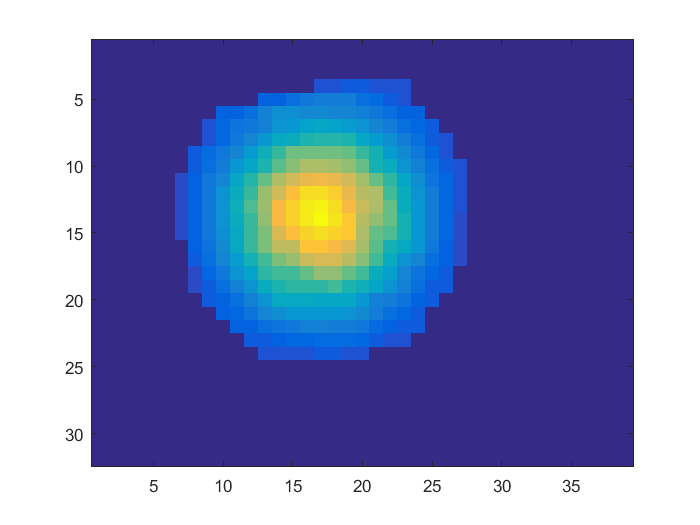 |
| Attachment 3: 180928_M2_trans_0A_pha.txt
|
Wavefront
Acquisition 	2018/09/28 17:22:30,525
Save 	2018/10/01 14:09:57,772

ASO Size : 40 x 32; ASO Step : 114,050858 um x 114,050652 um
Selection : Tilt X 1; Tilt Y 1; Focus 1; Astig 0° 1; Astig 45° 1
Unity : Microns
Area Size : 40 x 32; Area Step : 114,050858 um x 114,050652 um


																-0,022062	-0,024057	-0,029662	-0,042918	-0,068065	-0,097838	-0,102311
												-0,039566	-0,032049	-0,027783	-0,027982	-0,022901	-0,012437	-0,011503	-0,027445	-0,047285	-0,067513	-0,075036
									-0,023290	-0,029482	-0,037075	-0,025607	-0,012493	-0,011455	-0,015129	-0,018036	-0,010321	-0,007904	-0,023802	-0,039700	-0,056910	-0,064865	-0,078760
								0,025710	0,009221	-0,006493	-0,017397	-0,020849	-0,009895	-0,007881	-0,014563	-0,020807	-0,014106	-0,014489	-0,029824	-0,039289	-0,057810	-0,065642	-0,072907	-0,081822
								0,043654	0,020295	0,003009	-0,013691	-0,025230	-0,015274	-0,013582	-0,018024	-0,020334	-0,014527	-0,018128	-0,033473	-0,039214	-0,057207	-0,065660	-0,075464	-0,083639	-0,086569
							0,055646	0,042210	0,019282	-0,002113	-0,018176	-0,022978	-0,016014	-0,018563	-0,020664	-0,021081	-0,018134	-0,021494	-0,035266	-0,041444	-0,057658	-0,066533	-0,073686	-0,082012	-0,085669
							0,065367	0,040153	0,010840	-0,009321	-0,023200	-0,023532	-0,015477	-0,019296	-0,021589	-0,022274	-0,020193	-0,025215	-0,037269	-0,044249	-0,059515	-0,066978	-0,073769	-0,078115	-0,077414	-0,087486
						0,094539	0,073189	0,041795	0,010960	-0,009566	-0,022959	-0,024527	-0,016051	-0,020252	-0,022269	-0,022643	-0,021418	-0,025671	-0,037117	-0,045538	-0,060121	-0,068466	-0,073230	-0,074854	-0,068266	-0,076390
						0,100624	0,077719	0,044922	0,012382	-0,009151	-0,022453	-0,026038	-0,018306	-0,020508	-0,022745	-0,023804	-0,024816	-0,025931	-0,037557	-0,050058	-0,063702	-0,070289	-0,074590	-0,072939	-0,066318	-0,068578
						0,100687	0,081005	0,048875	0,013430	-0,005461	-0,021191	-0,026514	-0,019613	-0,019132	-0,021074	-0,025047	-0,028196	-0,028583	-0,037309	-0,050866	-0,066743	-0,073535	-0,076731	-0,073789	-0,067876	-0,071521
						0,100409	0,081911	0,050813	0,017767	-0,003012	-0,018034	-0,028597	-0,020705	-0,019089	-0,019216	-0,024026	-0,029968	-0,028816	-0,034957	-0,048833	-0,067253	-0,074557	-0,077737	-0,077417	-0,072218	-0,076792
						0,098851	0,082668	0,051951	0,020844	0,000323	-0,018353	-0,025485	-0,020582	-0,019328	-0,020988	-0,022992	-0,027007	-0,029040	-0,035988	-0,047548	-0,065980	-0,072160	-0,079344	-0,082571	-0,080195	-0,083379
							0,084644	0,054468	0,026747	0,005215	-0,015793	-0,020448	-0,017862	-0,019591	-0,021848	-0,023925	-0,023210	-0,026193	-0,035336	-0,046566	-0,062737	-0,071453	-0,080271	-0,082737	-0,084544	-0,083302
							0,088783	0,056137	0,028874	0,009278	-0,009175	-0,017259	-0,014576	-0,017831	-0,022390	-0,024512	-0,021605	-0,021239	-0,033361	-0,043821	-0,060299	-0,071201	-0,080699	-0,084816	-0,081035	-0,074408
							0,094848	0,058590	0,028648	0,013399	-0,002909	-0,011408	-0,012655	-0,016926	-0,019674	-0,025088	-0,020920	-0,014599	-0,027894	-0,043172	-0,058278	-0,072293	-0,083096	-0,087038	-0,081370
							0,102311	0,065476	0,033568	0,017974	0,003249	-0,006047	-0,008464	-0,015830	-0,016714	-0,021048	-0,015599	-0,013468	-0,026014	-0,040403	-0,058346	-0,071675	-0,087157	-0,088863	-0,081235
								0,072279	0,038180	0,022349	0,009604	0,003863	-0,001970	-0,003835	-0,009354	-0,015615	-0,012508	-0,009205	-0,022144	-0,038698	-0,058789	-0,067771	-0,080350	-0,085889
									0,043259	0,028487	0,015903	0,011931	0,012208	0,009902	0,003949	-0,005707	-0,005121	-0,007776	-0,018439	-0,034509	-0,052456	-0,055791	-0,071830
										0,035422	0,021292	0,012696	0,017437	0,021843	0,016018	0,003357	-0,000241	-0,004234	-0,013464	-0,028257	-0,044961	-0,049077	-0,061863
											0,017846	0,012412	0,015286	0,021297	0,022059	0,010983	0,004092	-0,001658	-0,008487	-0,016321	-0,040942	-0,047663
												0,015133	0,018242	0,024072	0,024789	0,016375	0,009844	-0,002579	-0,005709
|
| Attachment 4: 180928_M2_trans_0A_pha.png
| 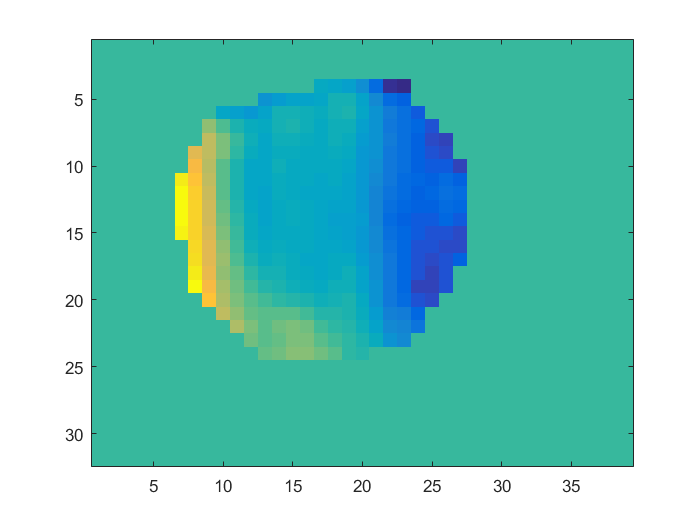 |
| Attachment 5: 1801001_input_0A_int.txt
|
Intensity (Arbitrary Unity)
Acquisition 	2018/10/01 10:58:28,306
Save 	2018/10/01 12:34:57,294

ASO Size : 40 x 32; ASO Step : 114,050858 um x 114,050652 um
Area Size : 40 x 32; Area Step : 114,050858 um x 114,050652 um


																		0,085940	0,085940	0,086479	0,088097	0,088097	0,090499
																	0,138641	0,138641	0,142024	0,142024	0,105893	0,105893	0,112511	0,112511	0,112511
															0,107560	0,120600	0,147171	0,170066	0,187714	0,190803	0,190803	0,189577	0,172958	0,152711	0,129915	0,102510	0,102510
														0,107560	0,107560	0,160359	0,185950	0,224140	0,257035	0,273654	0,273654	0,260761	0,254682	0,216394	0,180949	0,158790	0,111432	0,111432
													0,114031	0,114031	0,156927	0,213746	0,245759	0,296990	0,344249	0,352093	0,352093	0,327826	0,322973	0,299000	0,240661	0,204040	0,147809	0,116972	0,106873
												0,102069	0,117364	0,165653	0,224434	0,308805	0,368222	0,438180	0,480439	0,485832	0,485832	0,475880	0,465144	0,398176	0,349348	0,305177	0,214090	0,159771	0,106873
												0,102069	0,148299	0,206883	0,279831	0,366850	0,439945	0,483332	0,580449	0,594568	0,594568	0,566330	0,563585	0,526228	0,444995	0,363516	0,282037	0,203598	0,153839	0,129424
												0,113541	0,176782	0,249485	0,342436	0,451956	0,552603	0,651240	0,702079	0,710315	0,710315	0,690999	0,663693	0,593588	0,535200	0,454505	0,332287	0,252231	0,172174	0,129424	0,115551
											0,102804	0,142563	0,202569	0,300177	0,418619	0,536719	0,632415	0,763653	0,840426	0,854005	0,854005	0,806501	0,803804	0,729287	0,634572	0,544122	0,413815	0,296353	0,206344	0,167026	0,115551
											0,102804	0,144671	0,236200	0,341259	0,462300	0,592607	0,674380	0,801892	0,878321	0,899304	0,899304	0,849201	0,833219	0,761398	0,704579	0,568732	0,447103	0,334445	0,226934	0,170017	0,131140	0,088342
											0,107118	0,172419	0,279488	0,380920	0,488430	0,647662	0,735219	0,869987	0,956908	0,972350	0,963526	0,901412	0,869938	0,770468	0,724385	0,630601	0,486224	0,356457	0,251103	0,191685	0,131140	0,088342
											0,116433	0,172419	0,288215	0,381655	0,506226	0,659869	0,735219	0,869987	0,956908	0,972350	1,000000	0,948573	0,880626	0,770468	0,724385	0,630601	0,486763	0,390872	0,252574	0,191685	0,127512	0,092950
											0,116433	0,173644	0,290225	0,421267	0,526179	0,659869	0,737278	0,807775	0,874792	0,948720	0,980929	0,948573	0,892244	0,770468	0,672272	0,601481	0,486763	0,390872	0,253309	0,182665	0,122169	0,092950
											0,106138	0,170164	0,290225	0,421267	0,526179	0,658986	0,718453	0,794980	0,864153	0,941367	0,941367	0,926022	0,880626	0,751152	0,663840	0,582165	0,473380	0,383910	0,252574	0,180067	0,115845	0,092950
											0,100794	0,154868	0,254241	0,381263	0,478920	0,599323	0,691734	0,703353	0,793705	0,813511	0,835082	0,835082	0,801255	0,689381	0,583979	0,489950	0,405383	0,332974	0,232866	0,157810	0,110844
											0,106138	0,144867	0,230121	0,330277	0,360918	0,568683	0,628052	0,681832	0,710315	0,755221	0,756153	0,756153	0,703942	0,600892	0,509364	0,413864	0,338023	0,257574	0,193450	0,131091	0,099127
												0,114521	0,193058	0,276841	0,359496	0,472742	0,517257	0,578292	0,618247	0,642465	0,642465	0,626385	0,581724	0,475390	0,410776	0,331650	0,255417	0,214727	0,154280	0,110158	0,099127
												0,108099	0,157712	0,233945	0,290862	0,374350	0,433817	0,503628	0,520541	0,542161	0,542161	0,512746	0,464997	0,385136	0,333317	0,261692	0,198255	0,162124	0,105550	0,105550
												0,098686	0,139425	0,180949	0,230121	0,294980	0,337484	0,396166	0,402736	0,414943	0,414943	0,394450	0,363957	0,312972	0,260614	0,204481	0,143593	0,113982	0,105550
												0,098686	0,124571	0,152907	0,174527	0,219825	0,247083	0,274243	0,297676	0,297676	0,291009	0,271546	0,253260	0,226787	0,194872	0,156437	0,115747	0,113982
													0,102559	0,128591	0,143298	0,166389	0,179871	0,207079	0,208109	0,208109	0,203696	0,192519	0,183596	0,169772	0,146093	0,103932
													0,097951	0,097951	0,110550	0,124277	0,124326	0,134376	0,136484	0,134376	0,127954	0,121433	0,117119	0,101628	0,093244	0,093244
															0,090891	0,082704	0,090891	0,082704	0,085891	0,085891
|
| Attachment 6: 1801001_input_0A_int.png
| 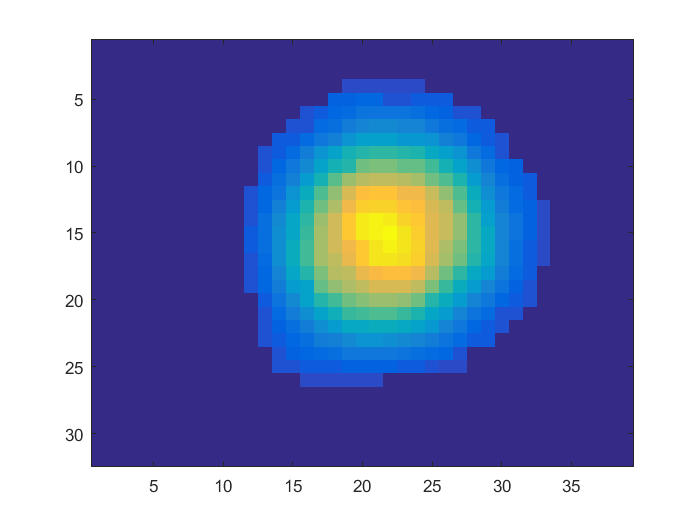 |
| Attachment 7: 1801001_input_0A_pha.txt
|
Wavefront
Acquisition 	2018/10/01 10:58:28,306
Save 	2018/10/01 12:35:22,488

ASO Size : 40 x 32; ASO Step : 114,050858 um x 114,050652 um
Selection : Tilt X 1; Tilt Y 1; Focus 1; Astig 0° 1; Astig 45° 1
Unity : Microns
Area Size : 40 x 32; Area Step : 114,050858 um x 114,050652 um


																		0,029762	0,004246	-0,019546	-0,038698	-0,058877	-0,065458
																	0,034152	0,014972	-0,004317	-0,024720	-0,040129	-0,052106	-0,060980	-0,071859	-0,076956
															0,085495	0,064018	0,045206	0,024862	0,003350	-0,018047	-0,032941	-0,038882	-0,046111	-0,051969	-0,055008	-0,057557	-0,054734
														0,134021	0,107033	0,078738	0,046888	0,020416	-0,003648	-0,026621	-0,044022	-0,054576	-0,062206	-0,067062	-0,067553	-0,063732	-0,059683	-0,046535
													0,153256	0,124988	0,097262	0,063905	0,028900	-0,000411	-0,025629	-0,046208	-0,061348	-0,073314	-0,082655	-0,089167	-0,091415	-0,090591	-0,085504	-0,073266	-0,054303
												0,157763	0,138835	0,110768	0,077973	0,041817	0,008001	-0,021823	-0,044197	-0,060882	-0,074835	-0,087378	-0,096831	-0,103121	-0,106541	-0,106285	-0,100234	-0,085627	-0,063321
												0,149717	0,128611	0,096637	0,060045	0,023306	-0,010286	-0,039734	-0,059715	-0,074904	-0,089997	-0,102632	-0,111786	-0,117824	-0,119923	-0,117820	-0,112140	-0,099866	-0,077918	-0,045696
												0,145179	0,119538	0,085836	0,046005	0,008850	-0,024140	-0,051275	-0,072406	-0,089364	-0,104184	-0,116759	-0,125782	-0,131752	-0,132412	-0,130568	-0,123514	-0,112371	-0,095448	-0,069192	-0,034207
											0,182624	0,143788	0,113652	0,076958	0,035682	-0,001504	-0,033524	-0,060982	-0,084479	-0,102253	-0,116252	-0,129221	-0,138439	-0,143246	-0,143749	-0,140407	-0,132609	-0,121059	-0,104326	-0,080740	-0,046259
											0,175044	0,140015	0,106069	0,069434	0,029013	-0,007724	-0,040037	-0,068594	-0,092848	-0,111061	-0,125897	-0,139564	-0,149855	-0,155352	-0,154916	-0,149905	-0,140039	-0,127850	-0,112541	-0,085173	-0,047302	0,011738
											0,168612	0,131981	0,099273	0,061486	0,024756	-0,010751	-0,044325	-0,074169	-0,099165	-0,117841	-0,132463	-0,146109	-0,157404	-0,164901	-0,164796	-0,158607	-0,147711	-0,134748	-0,117299	-0,088850	-0,048633	-0,003954
											0,162939	0,125644	0,090785	0,054406	0,020029	-0,013886	-0,049536	-0,080757	-0,106613	-0,125571	-0,139244	-0,150279	-0,161658	-0,171699	-0,172873	-0,166848	-0,155179	-0,139658	-0,118128	-0,089945	-0,052345	-0,017999
											0,154273	0,121480	0,088183	0,049657	0,016917	-0,017351	-0,051630	-0,082497	-0,108367	-0,128280	-0,142253	-0,152554	-0,162888	-0,172445	-0,176464	-0,171944	-0,160242	-0,141977	-0,119898	-0,093487	-0,063160	-0,035877
											0,148714	0,114724	0,083937	0,047237	0,012989	-0,018258	-0,049771	-0,079360	-0,105065	-0,125913	-0,141109	-0,151726	-0,162140	-0,171587	-0,175946	-0,173700	-0,162982	-0,144670	-0,122791	-0,099576	-0,077664	-0,061319
											0,137108	0,106884	0,076600	0,043683	0,012751	-0,016850	-0,046878	-0,076947	-0,103907	-0,125136	-0,139929	-0,150959	-0,161435	-0,171077	-0,176037	-0,175071	-0,166600	-0,149722	-0,126286	-0,102426	-0,080114
											0,112296	0,099829	0,075627	0,043304	0,013398	-0,013515	-0,042679	-0,072957	-0,100892	-0,123210	-0,138661	-0,150513	-0,160888	-0,170356	-0,175506	-0,174220	-0,167810	-0,154262	-0,130190	-0,105517	-0,092281
												0,109851	0,079798	0,045766	0,016137	-0,010038	-0,038564	-0,069084	-0,097647	-0,120430	-0,137211	-0,149483	-0,159140	-0,168926	-0,174270	-0,172484	-0,165208	-0,153806	-0,132395	-0,111777	-0,112766
												0,121857	0,086591	0,053224	0,024112	-0,005328	-0,035256	-0,065914	-0,093453	-0,115017	-0,131323	-0,143852	-0,154278	-0,164499	-0,169859	-0,168059	-0,162388	-0,152512	-0,137744	-0,117025
												0,130288	0,097509	0,061796	0,030496	0,000229	-0,032443	-0,061885	-0,087242	-0,107494	-0,124233	-0,136882	-0,147071	-0,157415	-0,162141	-0,162163	-0,161897	-0,153274	-0,141643
												0,137289	0,102869	0,066701	0,030988	0,002649	-0,028206	-0,057351	-0,080927	-0,101064	-0,119282	-0,134205	-0,144002	-0,151522	-0,153698	-0,152747	-0,158622	-0,156176
													0,107664	0,061085	0,025388	-0,000290	-0,027041	-0,056805	-0,077941	-0,095302	-0,113314	-0,133762	-0,146656	-0,152794	-0,152671	-0,139764
													0,102764	0,055056	0,018130	-0,011122	-0,038568	-0,066233	-0,081730	-0,089058	-0,106784	-0,129142	-0,153283	-0,168245	-0,176273	-0,182624
															0,019786	-0,021702	-0,062439	-0,089018	-0,096987	-0,087861
|
| Attachment 8: 1801001_input_0A_pha.png
| 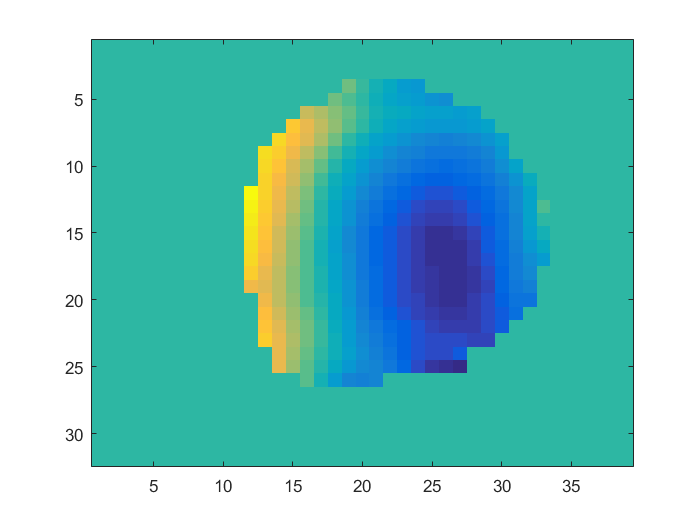 |
|
4
|
Mon Oct 1 15:19:48 2018 |
Loïc Amoudry | Fixed | report | lasers and optics | Optical room | Phase measurement with HASO | with just intensity, the coupling is 98%, and with phase, x direction coupling is 95%, y direction 97%, so the telescope is good.
| Loïc Amoudry wrote: |
|
* Loic has to fix the number of files (3) regarding the number of measurements (2)
* splitted Intensity and phase HASO files
* image for each file
| Loïc Amoudry wrote: |
|
2 measurement.
First one locked, in transmission of M2 with 2nd stage 0A.Total 89 cm from the big waist (planar mirrors). 2 wedges used.
Second one at input beam with the same power. Datas taken at the same equivalent position than the first one. 3 wedges used.
|
|
|
|
5
|
Tue Oct 9 10:15:17 2018 |
Loïc Amoudry | Fixed | report | lasers and optics | Optical room | Polarization optimization | Optimization of the polarization has been made the 03/10/18. Checked in reflection of the cavity in reflection&transmission of a PBS, locked and unlocked. Only with 2nd stage.
Ratio values are reflection of PBS divided by transmission or the opposite.
| |
Unlock value |
Ratio min/max |
Lock value |
Ratio min/max |
| No optimization |
|
|
|
|
| Reflection |
1.21 |
X |
3.89 |
X |
| Transmission |
14.3 |
8.5 % |
3.1 |
80 % |
| Only Lambda/2 |
|
|
|
|
| Reflection |
4.4 |
X |
2.91 |
X |
| Transmission |
11 |
40 % |
2.79 |
96 % |
| 2xLambda/2 + 1Lambda/4 |
|
|
|
|
| Reflection |
8.3 |
X |
3.4 |
X |
| Transmission |
6.8 |
82 % |
2.2 |
65 % |
| Same + PID optimization |
|
|
|
|
| Reflection |
9 |
X |
3.35 |
X |
| Transmission |
5.76 |
64 % |
2 |
60 % |
|
|
6
|
Tue Oct 9 10:19:29 2018 |
Loïc Amoudry | Fixed | report | lasers and optics | Optical room | Record power-up | Measurement made on 03/10/18 (nothing has been done since there).
Stable power in the cavity of 225 kW.
| 3rd stage current |
Transmission (mW) |
Pin (W) |
| 0 |
8 |
0.37 |
| 2 |
|
5.3 |
| 2.2 |
145 |
6.4 |
| 3 |
|
10.7 |
| 4 |
350 |
16.1 |
| 5 |
|
21.8 |
| 6 |
|
27.3 |
| 7 |
|
32 |
| 8 |
|
36.7 |
| 8.5 |
640 |
39.1 |
|
|
8
|
Fri Oct 19 11:13:40 2018 |
Loïc Amoudry | Fixed | report | lasers and optics | Optical room | Transmission vs D-shape position at different powe | Measurements have been done on 18/10/18.
Datas are on excel file, also matlab file. |
| Attachment 1: Plot_matlab.JPG
| 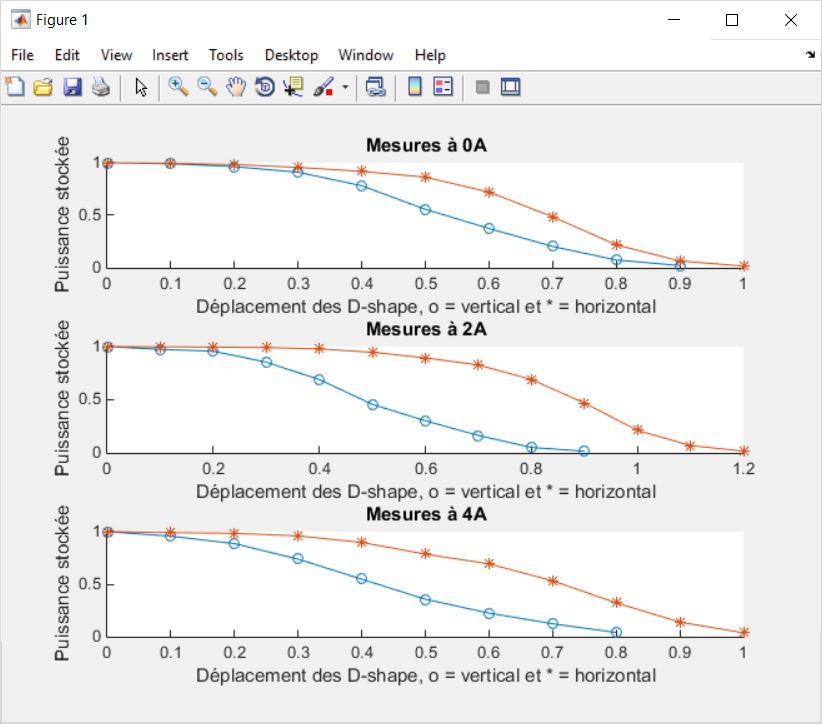 |
| Attachment 2: motors.xlsx
|
| Attachment 3: Power_stored_vs_Dshape_mirrors_position.m
|
clear all
close all

P0A_V = [9.34 9.25 9 8.5 7.3 5.2 3.5 1.9 0.7 0.2];
Step0A_V = [0:0.1:0.9];
P0A_H = [9.15 9.1 9 8.75 8.4 7.9 6.6 4.45 2 0.6 0.15];
Step0A_H = [0:0.1:1];

P2A_V = [116 113 111 99 80 53 35 19 6 1.8];
Step2A_V = [0:0.1:0.9];
P2A_H = [113 112.7 112.5 112 110.5 107 101 93.5 78 53 24 7.8 1.9];
Step2A_H = [0:0.1:1.2];

P4A_V = [325 311 288 240 178 116 73 40 13];
Step4A_V = [0:0.1:0.8];
P4A_H = [323 320 318 310 290 254 224 172 104 45 12];
Step4A_H = [0:0.1:1];

subplot(3,1,1)
xlabel('Déplacement des D-shape, o = vertical et * = horizontal')
ylabel('Puissance stockée')
title('Mesures à 0A')
hold on
plot (Step0A_V,P0A_V/9.34,'o-')
plot (Step0A_H,P0A_H/9.15,'*-')
hold off

subplot(3,1,2)
xlabel('Déplacement des D-shape, o = vertical et * = horizontal')
ylabel('Puissance stockée')
title('Mesures à 2A')
hold on
plot (Step2A_V,P2A_V/116,'o-')
plot (Step2A_H,P2A_H/113,'*-')
hold off

subplot(3,1,3)
xlabel('Déplacement des D-shape, o = vertical et * = horizontal')
ylabel('Puissance stockée')
title('Mesures à 4A')
hold on
plot (Step4A_V,P4A_V/325,'o-')
plot (Step4A_H,P4A_H/323,'*-')
hold off
|
|
9
|
Fri Oct 19 11:23:27 2018 |
Loïc Amoudry | Fixed | report | lasers and optics | Optical room | Beam size vs D-shape position | Measurement done on 18/10/18.
At high power, the shape of the 0.0 mode does not change. The D-shape only generate losses in the cavity. Then the power stored in the cavity decrease. As with this configuration, the cavity beam size decrease when power increase, the beam size decreased.
Measurements done @4A on 3rd stage.
| x (um) |
y (um) |
Picomotors displacement (um) |
Transmission power (mW) |
| 1820 |
2013 |
0 |
337 |
| 1820 |
2013 |
200 |
330 |
| 1925 |
2029 |
400 |
306 |
| 1936 |
2090 |
600 |
245 |
| 2117 |
2249 |
800 |
125 |
| 2260 |
2392 |
1000 |
17 |
Then we get the D-shape away from the beam to not cut it and decreased the amplifier power to validate the beam size at a known value. So the power as been decreased to 2A (= 125 mW in trans) and the beam size was x=2079 y=2255, similar to the 125 mW with D-shape mirrors values. |
| Attachment 1: 181018_4A_no_cut.PNG
| 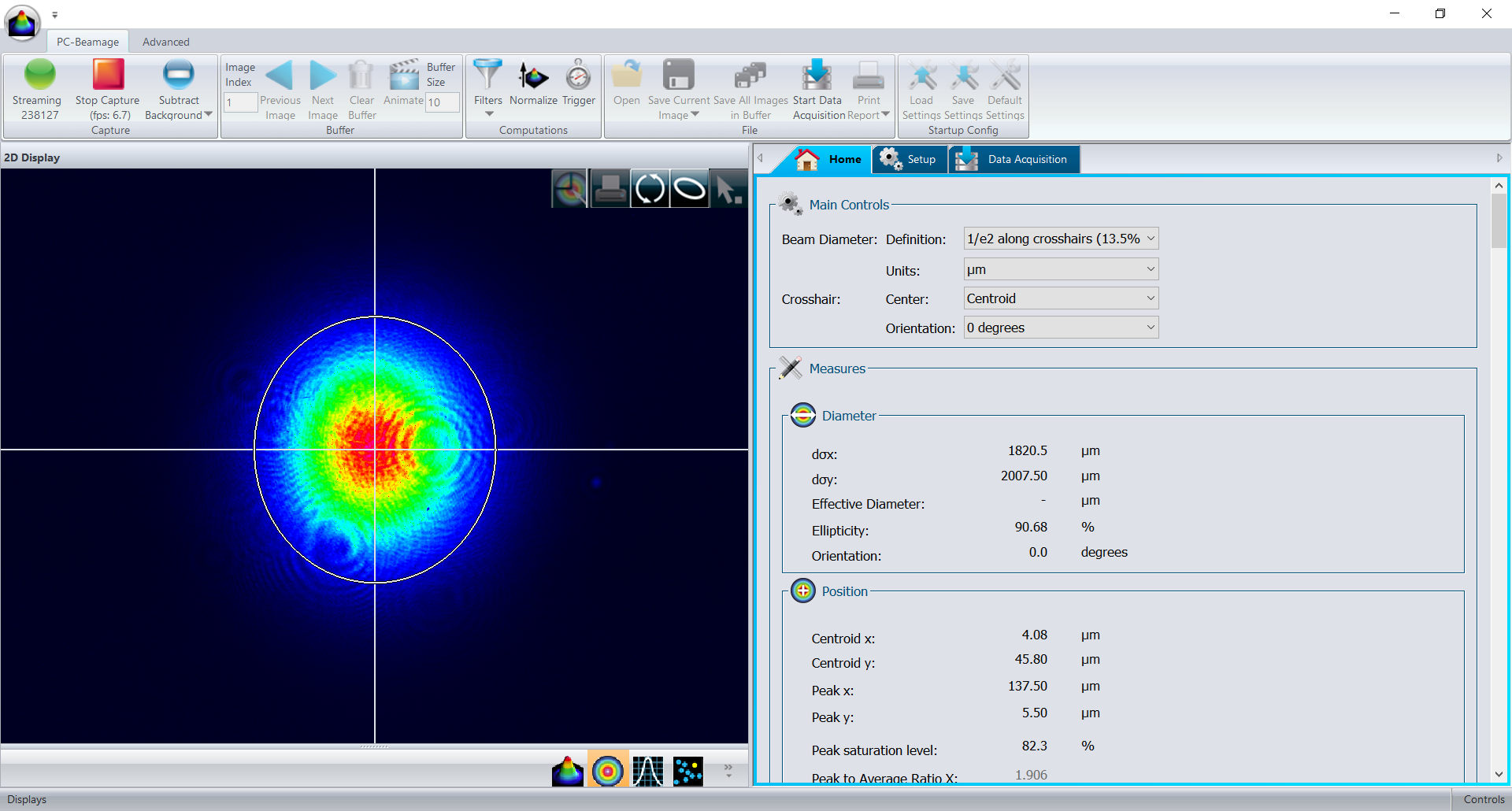 |
|
10
|
Fri Oct 19 11:46:21 2018 |
Loïc Amoudry | Fixed | report | lasers and optics | Optical room | Beam size vs D-shape position | Matlab code for size vs position and power :
clear all
close all
x = [1820 1820 1925 1936 2117 2260];
y = [2013 2013 2029 2090 2249 2392];
Position = [0 0.2 0.4 0.6 0.8 1];
Trans = [337 330 306 245 128 17]
hold on
[ax,h1,h2] = plotyy(Position,x,Position,Trans)
set(get(ax(1), 'Ylabel'), 'String', 'Beam diameter (um)');
set(get(ax(2), 'Ylabel'), 'String', 'Transmitted power (mW)');
xlabel('Position of the D-shape (mm)')
plot(Position,y,'g')
hold off
| Loïc Amoudry wrote: |
|
Measurement done on 18/10/18.
At high power, the shape of the 0.0 mode does not change. The D-shape only generate losses in the cavity. Then the power stored in the cavity decrease. As with this configuration, the cavity beam size decrease when power increase, the beam size decreased.
Measurements done @4A on 3rd stage.
| x (um) |
y (um) |
Picomotors displacement (um) |
Transmission power (mW) |
| 1820 |
2013 |
0 |
337 |
| 1820 |
2013 |
200 |
330 |
| 1925 |
2029 |
400 |
306 |
| 1936 |
2090 |
600 |
245 |
| 2117 |
2249 |
800 |
125 |
| 2260 |
2392 |
1000 |
17 |
Then we get the D-shape away from the beam to not cut it and decreased the amplifier power to validate the beam size at a known value. So the power as been decreased to 2A (= 125 mW in trans) and the beam size was x=2079 y=2255, similar to the 125 mW with D-shape mirrors values.
|
|
| Attachment 1: size_vs_position_and_power.JPG
| 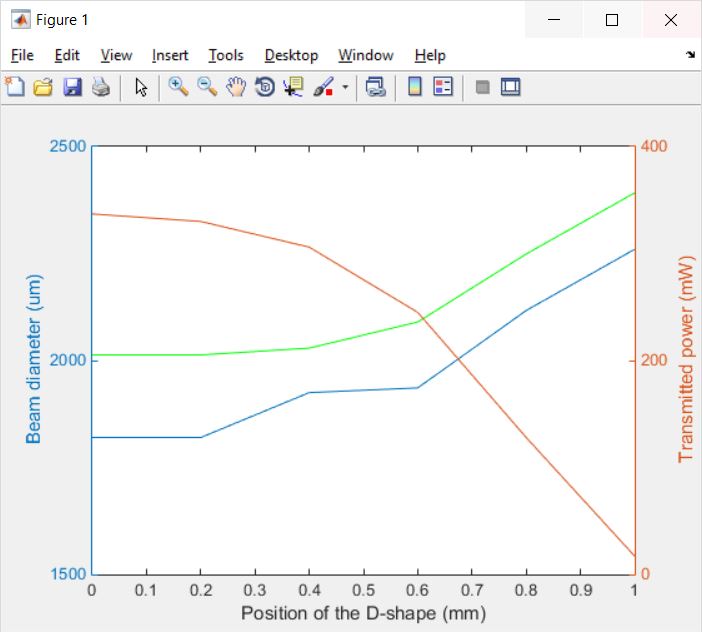 |
|
12
|
Wed Oct 31 11:36:30 2018 |
Loïc Amoudry | Fixed | report | lasers and optics | Optical room | Finesse vs power by difference between main and second resonance | Measurements show that ratio decrease versus power. BUT, the second resonance measurement induce lower power in the cavity so the ratio is not directly true.
Also, simulation of the main/second resonance power by Pierre's simulation has shown ratio ~50, ~47.6 and 43.5 respectively for 0A, 2A and 4A.
| I (A) |
Main resonance (mW) |
Second resonance (mW) |
Ratio |
| 0 |
8.07 |
0.416 |
19.4 |
| 2 |
121 |
6.77 |
17.9 |
| 4 |
324 |
20.2 |
16 |
|
| Attachment 1: CrossSecondaryResonance.m
|
clear all; close all;
tic
addpath(genpath('C:\Users\amoudry\desktop\Fichiers Labo\Fichiers Pierre\Simulation\Personal codes\Various'))
[TAS,~,r] = GetCavity('SBOX_ULE');
[F,~] = Get_info(TAS(1:4),TAS(5:8),TAS(9:12));
lambda = 1030e-9;
c = 299792458;
FSR = 133.33e6;
w0 = 2*pi*c/lambda;
tau = 1e-12; % FWHM duration
a = 4*log(2)/tau^2;
E0 = 1;%(pi/2/a)^(1/2); % Energy to normalize gaussian spectrum (Input beam power = 1)
DeltaPhiCE = 0; % CEP
N = 1e5;

dk = 0:(N-1);
Aa = (r.^dk-r.^(2.*N-dk));
Bb = E0*TAS(1)./(1-r.^2);
Cc = (1-r.^(2.*N));

Nn = 5e2; % Increase Nn <-> increase resolution
dtt = -Nn:Nn;
dtt = dtt*lambda/c/(0.1*Nn); %1e6
Ecn = zeros(numel(dtt),1);
for ii = 1:numel(dtt)
    for ll = 0:3
%         ll = 0;
        dt = dtt(ii)+ll*lambda/c;
        Phid = DeltaPhiCE + w0.*dt;
        temp_vect = Aa.*cos(dk.*Phid).*exp(-a.*dk.^2.*dt.^2./2);
        Ecn(ii,ll+1) = Bb.*(2*sum(temp_vect)-Cc);
        disp([num2str(ii)]);
    end
end
toc
%% Time plots
% figure
% semilogy(dtt/lambda*c,Ecn/max(Ecn),'LineWidth',2)
% hold on
% semilogy(dtt/lambda*c,Ecn2/max(Ecn),'LineWidth',2)
% hold on
% semilogy(dtt/lambda*c,Ecn3/max(Ecn),'LineWidth',2)
% hold on
% semilogy(dtt/lambda*c,Ecn4/max(Ecn),'LineWidth',2)
% set(gca,'FontSize',15)
% xlabel('\DeltaT (\lambda/c)')
% ylabel('Energy (A.U.)')
% grid on
% legend('\DeltaT = 0','\DeltaT = \lambda/c','\DeltaT = 2\lambda/c','\DeltaT = 3\lambda/c')
% axis square

% figure
% semilogy(dtt/lambda*c,Ecn/max(Ecn),'LineWidth',2)
% grid on
% set(gca,'FontSize',25)
% % set(gca,'YLim',[1e-9 1e0])
% xlabel('\DeltaT (\lambda_0/c)')
% ylabel('log(Energie (u.a.))')

%% Frequency
nu0 = w0/2/pi;
frep = (1/FSR-nu0/FSR*dtt).^(-1); % Infinity in dtt = 1/nu0

fprintf('\nFinesse : %g\n\n',F);
% Get linewidth
figure
for jj = 1:4
%     Find the 2 minimas of Ecn_half. Take the corresponding frep and
%     substract them
    Ecn_half = abs(Ecn(:,jj)-max(Ecn(:,jj))/2);
    Ecn_half2 = sort(Ecn_half);
    [row1,~] = find(Ecn_half==Ecn_half2(1),1);
    [row2,~] = find(Ecn_half==Ecn_half2(2),2);
    if numel(row2)>1  % Sometimes row can be a vector
        row2 = row2(2);
    end
    dnu = abs(frep(row2)-frep(row1));
    fprintf('RES %g\nMax gain : %g. Linewidth : %g kHz\n\n',jj-1,max(Ecn(:,jj)),dnu/1e3);

%     plot((frep-FSR)/FSR,Ecn(:,jj)/max(Ecn(:,1)),'LineWidth',2)
%     hold on
    semilogy((frep-FSR)/FSR,Ecn(:,jj)/max(Ecn(:,1)),'LineWidth',2)
    xlim([-0.05 0.05])
    hold on
end
set(gca,'FontSize',15)
xlabel('(f_r_e_p-FSR)/FSR')
% ylabel('Energy (A.U.)')
ylabel('log(Energie (u.a.))')
grid on
legend('\DeltaT = 0','\DeltaT = \lambda/c','\DeltaT = 2\lambda/c','\DeltaT = 3\lambda/c')
axis square
% axis([-0.01 0.01 10^-6 1])
|
| Attachment 2: GetCavity.m
|
function [TAS,r,r_prod] = GetCavity(cav_name,varargin)
% Return T and r coefficient of a given cavity
% TAS vector contains the 4 T coeffs, then 4 A coeffs, then 4 S coeffs

if strcmp(cav_name,'SBOX_ULE')==1
    TAS(1) = 180e-6;   % T
    TAS(2) = 2e-6;
    TAS(3) = 2e-6;
    TAS(4) = 2e-6;
    TAS(5) = 1.15e-6;  % A
    TAS(6) = 1.27e-6;
    TAS(7) = 1.2e-6;
    TAS(8) = 1e-6;
    TAS(9) =  7e-6;     % S
    TAS(10) = 4.5e-6;
    TAS(11) = 3.6e-6;
    TAS(12) = 9e-6;
%     TAS(1) = 180e-6;   % T
%     TAS(2) = 3.2e-6;
%     TAS(3) = 2.8e-6;
%     TAS(4) = 2.85e-6;
%     TAS(5) = 30e-6;  % A
%     TAS(6) = 30e-6;
%     TAS(7) = 30e-6;
%     TAS(8) = 30e-6;
%     TAS(9) = 20e-6;     % S
%     TAS(10) = 20e-6;
%     TAS(11) = 20e-6;
%     TAS(12) = 20e-6;

elseif strcmp(cav_name,'ThomX')==1
    TAS(1) = 120e-6;   % T
    TAS(2) = 1.5e-6;
    TAS(3) = 1.5e-6;
    TAS(4) = 1.5e-6;
    TAS(5) = 0.4e-6;  % A
    TAS(6) = 0.24e-6;
    TAS(7) = 0.24e-6;
    TAS(8) = 0.27e-6;
    TAS(9) = 4e-6;     % S
    TAS(10) = 4.5e-6;
    TAS(11) = 10e-6;
    TAS(12) = 4.5e-6;

elseif strcmp(cav_name,'MIGHTY_low')==1
    TAS(1) = 1060e-6;
    TAS(2) = 330e-6;
    TAS(3) = 330e-6;
    TAS(4) = 330e-6;
    TAS(5:12) = 0;

elseif strcmp(cav_name,'Fab_cav')==1
    TAS(1) = 100e-6;
    TAS(2) = 10e-6;
    TAS(3) = 10e-6;
    TAS(4) = 10e-6;
    TAS(5:12) = 0;
end

switch nargin
    case 2
        TAS = repmat(TAS,numel(varargin{1}),1);
        TAS(:,1) = varargin{1};
    case 3
        TAS = repmat(TAS,numel(varargin{1}),1);
        TAS(:,1) = varargin{1};
        TAS(:,2) = varargin{2};
end

% Field reflection coeffs
rr = @(TAS) (1-sum(TAS,2)).^(1/2);
for ii = 1:4
    r(:,ii) = rr(TAS(:,ii:4:12));
end
r_prod = prod(r,2);
end
|
|
13
|
Wed Oct 31 13:42:22 2018 |
Loïc Amoudry | Fixed | report | lasers and optics | Optical room | Polarization frequency | Check of the frequency of the onefive locked on each polarization of the cavity (tilt a waveplate by 45°).
Frequency repetition rate : 133.335 MHz on spectrum analyzer for both polarization locked. |
|
14
|
Wed Oct 31 13:43:03 2018 |
Loïc Amoudry | Fixed | report | lasers and optics | Optical room | Polarization frequency | Measurement on 30/10/18.
| Loïc Amoudry wrote: |
|
Check of the frequency of the onefive locked on each polarization of the cavity (tilt a waveplate by 45°).
Frequency repetition rate : 133.335 MHz on spectrum analyzer for both polarization locked.
|
|
|
15
|
Wed Oct 31 13:43:28 2018 |
Loïc Amoudry | Fixed | report | lasers and optics | Optical room | Finesse vs power by difference between main and second resonance | Measurement on 24/10/18
| Loïc Amoudry wrote: |
|
Measurements show that ratio decrease versus power. BUT, the second resonance measurement induce lower power in the cavity so the ratio is not directly true.
Also, simulation of the main/second resonance power by Pierre's simulation has shown ratio ~50, ~47.6 and 43.5 respectively for 0A, 2A and 4A.
| I (A) |
Main resonance (mW) |
Second resonance (mW) |
Ratio |
| 0 |
8.07 |
0.416 |
19.4 |
| 2 |
121 |
6.77 |
17.9 |
| 4 |
324 |
20.2 |
16 |
|
|
|
16
|
Wed Oct 31 13:44:22 2018 |
Loïc Amoudry | Fixed | report | lasers and optics | Optical room | Finesse vs power by difference between main and second resonance | Measurement on 25/10/2018
| Loïc Amoudry wrote: |
|
Measurements show that ratio decrease versus power. BUT, the second resonance measurement induce lower power in the cavity so the ratio is not directly true.
Also, simulation of the main/second resonance power by Pierre's simulation has shown ratio ~50, ~47.6 and 43.5 respectively for 0A, 2A and 4A.
| I (A) |
Main resonance (mW) |
Second resonance (mW) |
Ratio |
| 0 |
8.07 |
0.416 |
19.4 |
| 2 |
121 |
6.77 |
17.9 |
| 4 |
324 |
20.2 |
16 |
|
|
|
17
|
Wed Oct 31 13:48:58 2018 |
Loïc Amoudry | Fixed | report | lasers and optics | Optical room | M1 transmission measurement | Center of M1:
| I (A) |
Input power (mW) |
Transmitted power (mW) |
Transmission (ppm) |
| 0 |
78 |
0.01477 |
189 |
| 4 |
16500 |
3.2 |
194 |
|
|
18
|
Wed Oct 31 13:51:17 2018 |
Loïc Amoudry | Fixed | info | lasers and optics | Optical room | Change of the 3 ULE mirrors by 3 spare ULE mirrors | First finesse measurement 20 266, FSR 133.351 MHz under vacuum |
| Attachment 1: Miroirs_à_1031_nm-ThomX_-_décembre2017.pdf
|
| Attachment 2: vacuum.isf
|
|
19
|
Wed Oct 31 14:03:22 2018 |
Loïc Amoudry | Fixed | report | lasers and optics | Optical room | M4 transmission measurement | The kept transmission for M4 is 2.17 ppm. Which is the value measured after alignement (center of the mirror).
These measurements have been taken before alignement.
| I (A) |
Input power (mW) |
Transmitted power after window (mW) |
Transmission (ppm) |
| 0 |
74.3 |
195.2e-6 |
2.63 |
| 0 |
73.5 |
212.8e-6 |
2.89 |
| 0 |
52.4 |
151e-6 |
2.88 |
| 6 |
28 400 |
72e-3 |
2.54 |
High dependence against the position. Few measurement several mm away from the center each one at different position give 194, 193, 208, 200 ppm. |
|
20
|
Wed Oct 31 14:04:50 2018 |
Loïc Amoudry | Fixed | report | lasers and optics | Optical room | M4 transmission measurement |
| Loïc Amoudry wrote: |
|
The kept transmission for M4 is 2.17 ppm. Which is the value measured after alignement (center of the mirror).
These measurements have been taken before alignement.
| I (A) |
Input power (mW) |
Transmitted power after window (mW) |
Transmission (ppm) |
| 0 |
74.3 |
195.2e-6 |
2.63 |
| 0 |
73.5 |
212.8e-6 |
2.89 |
| 0 |
52.4 |
151e-6 |
2.88 |
| 6 |
28 400 |
72e-3 |
2.54 |
High dependence against the position. Few measurement several mm away from the center each one at different position give 2.86, 2.68, 2.93, 3.01, 3.06, 3.35 ppm.
|
|
|
21
|
Wed Oct 31 14:06:17 2018 |
Loïc Amoudry | Fixed | report | lasers and optics | Optical room | M1 transmission measurement | At different positions, transmission give 194, 193, 208, 200 ppm?
| Loïc Amoudry wrote: |
|
Center of M1:
| I (A) |
Input power (mW) |
Transmitted power (mW) |
Transmission (ppm) |
| 0 |
78 |
0.01477 |
189 |
| 4 |
16500 |
3.2 |
194 |
|
|
|
22
|
Mon Nov 5 13:11:08 2018 |
Loïc Amoudry | Fixed | report | lasers and optics | Optical room | First run with spare mirrors |
| I (A) |
Trans (mW) |
Coupling (%) |
Pin (W) |
Gain |
| 0 |
4 |
70 |
0.37 |
4982 |
| 2 |
58 |
80 |
5.2 |
5140 |
| 4 |
180 |
75 |
16.1 |
5152 |
| 6 |
270 |
63 |
27.3 |
4558 |
| 8 |
340 |
60 |
36.7 |
4269 |
|
| Attachment 1: Plot_power_and_gain_vs_all.JPG
| 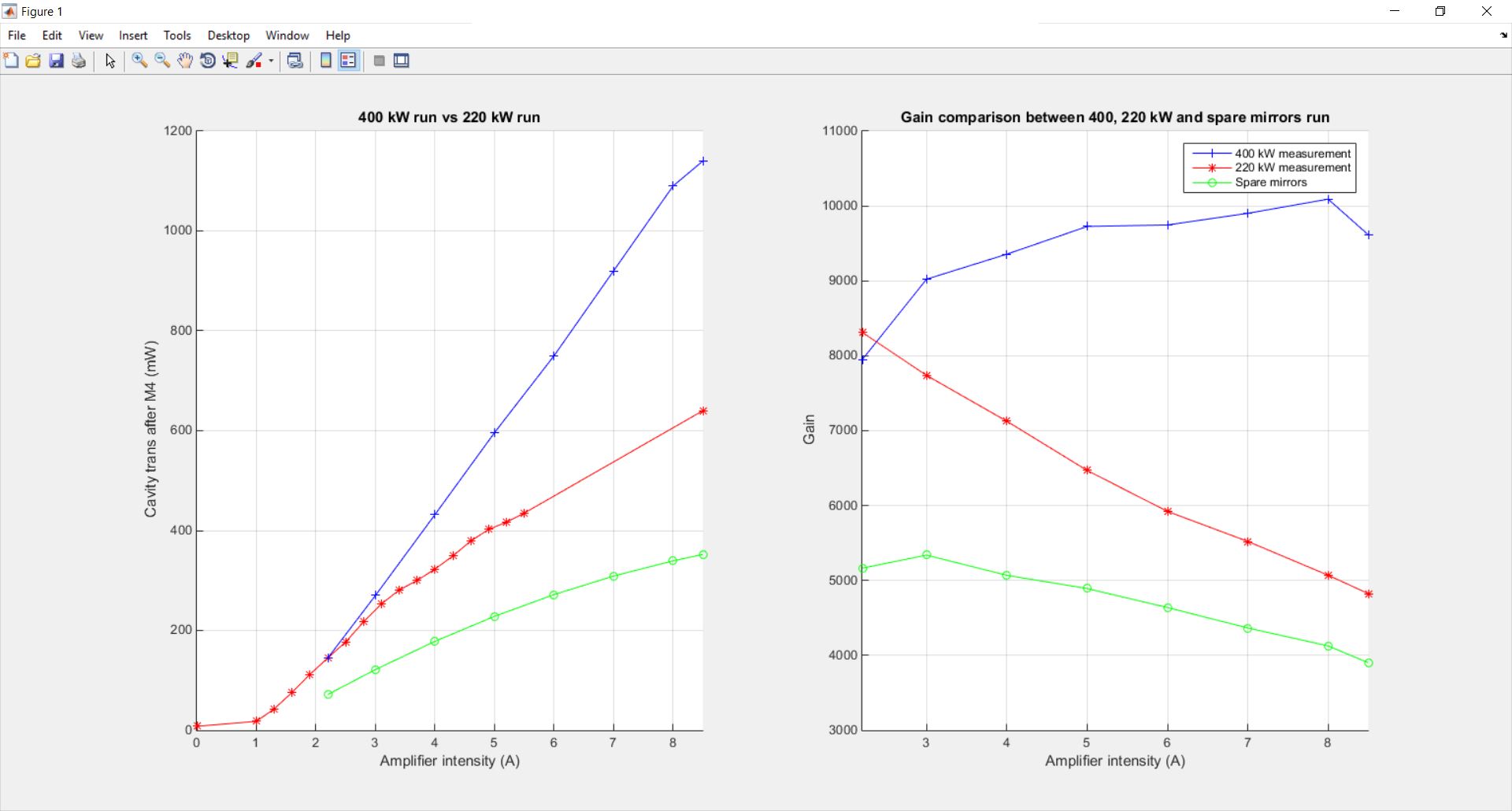 |
| Attachment 2: powerup.xlsx
|
|
23
|
Thu Nov 15 13:02:44 2018 |
Loïc Amoudry | Fixed | info | lasers and optics | Optical room | Mirrors cleaning | The new mirrors didn't give expected results. Then the 4 old mirrors have been sent to LMA on 12/11/18 for a cleaning and caracterization before and after cleaning. Also asked for a diffusion/absorption map on the mirrors if possible. They didn't really answered on what will they do.
Received on 13/11/18 by LMA. |
|
24
|
Fri Dec 21 13:42:43 2018 |
Loïc Amoudry | Fixed | info | lasers and optics | Optical room | Mirrors features, come back from LMA | Mirrors arrived today from LMA. Their features are damaged.
Photos avant ou après nettoyage, pas clair dans le mail de Laurent :
"J'ai commencé à nettoyer M1 et M2 avec notr methode habituelle et je me suis aperçu que sur la partie centrale (en gros taille de ton faisceau j'ai l'impression) que des choses apparaissaient (voir photo)
Si bien que la diffusion n'a pas évolué dans le bon sens (diminution) voir empiré pour M1. J'ai donc arrêter de les nettoyer !!!
J'ai regardé les faces arrières des miroirs avant nettoyage et j'ai pu voir ce que tu vois sur la photo même au centre. Je sais pas de quoi cela peut venir.
Une chose est sûre le coating IBS a été altéré par je ne sais quoi dans ta manip provoquant cette dégradation dès qu'on y touche. L'interaction avec les faisceaux d'eélectrons n'avait jamais altéré les miroirs sur l'expértience DESY par exemple!!
Pour me rassurer, j'ai pris un miroir fait sur un micropoli qu'on a en stock et aucun pb lors du nettoyage (on peut penser à tout)"
|
| Attachment 1: 181201_caracteristiques_miroirs.PNG
|  |
| Attachment 2: 20181207_155704_resized.jpg
| 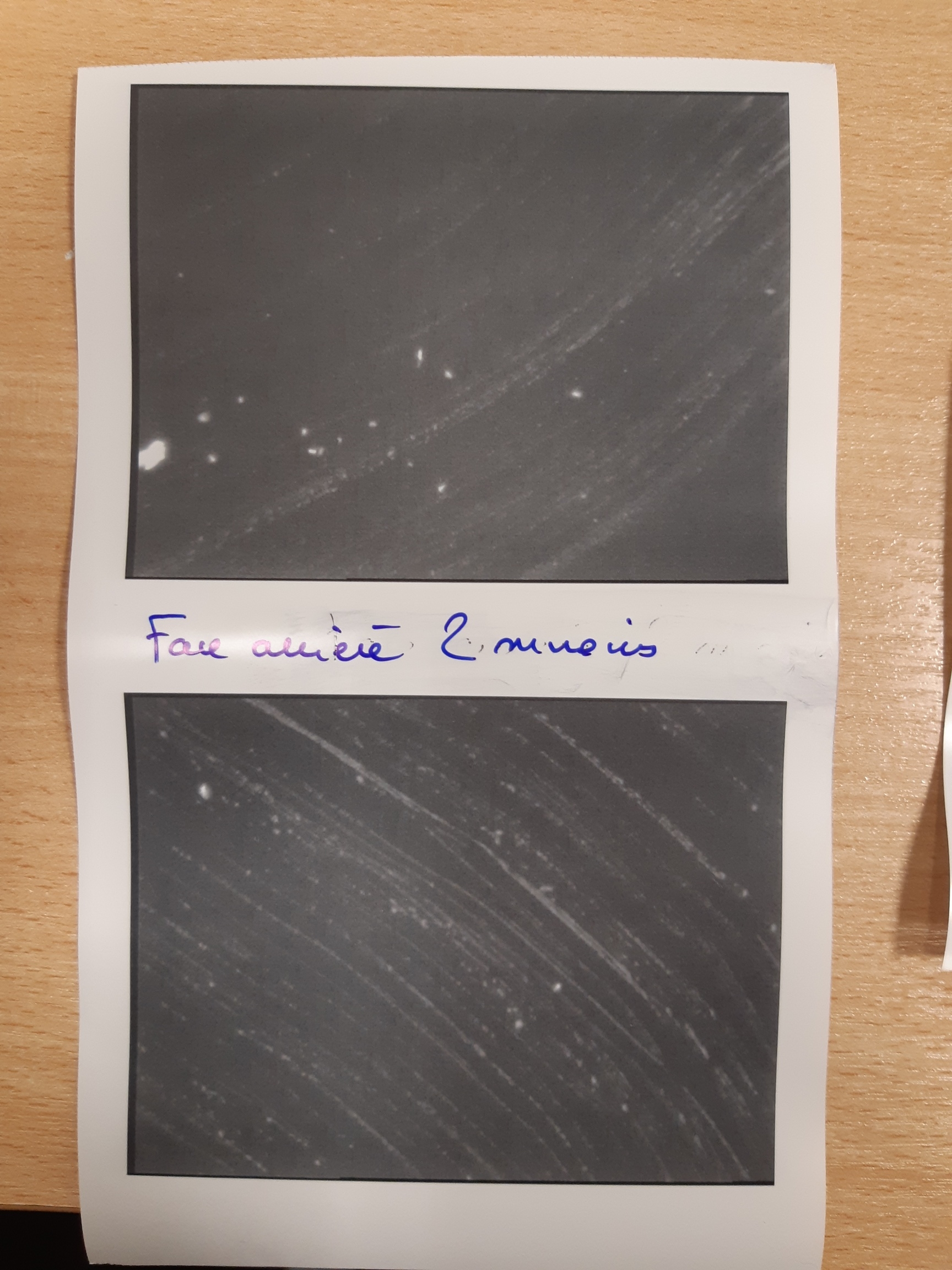 |
| Attachment 3: 20181207_155726_resized.jpg
|  |
|
25
|
Thu Jan 24 17:44:21 2019 |
Loïc Amoudry | Fixed | report | lasers and optics | Optical room | Deposit on S-box mirrors after return from LMA | Cleaning on dirty surface shows something is deposited on the surface. Cleaning displaces and removes part of the deposit. |
| Attachment 1: 28_M2ReflectiveBeforeCleaning_compressed.jpg
| 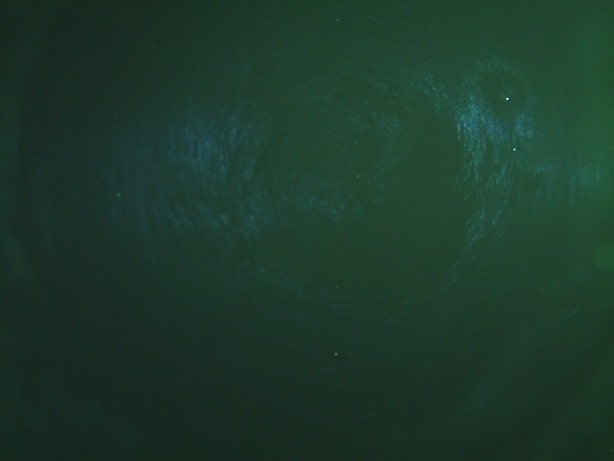 |
| Attachment 2: 29_M2ReflectiveAfter1stCleanPaper_compressed.jpg
| 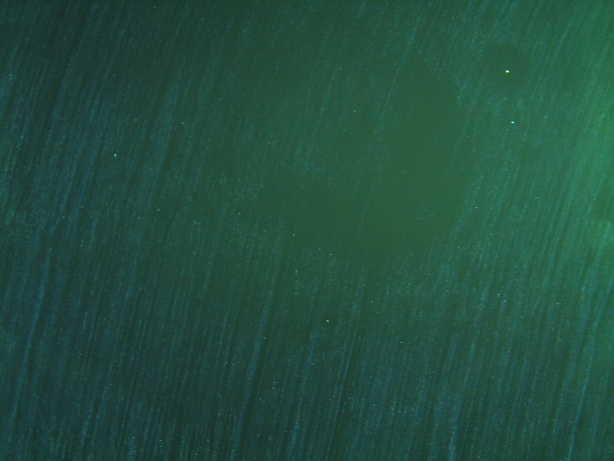 |
|
26
|
Thu Jan 24 17:49:54 2019 |
Loïc Amoudry | Fixed | report | lasers and optics | Optical room | Impacts on mirror's surface | All the mirrors show impacts on there surface (some of them do not show deposit). Does it come from experiments or fabrication ? Are these holes or bumps ? |
| Attachment 1: 18_M1reflectiveface2x_compressed.jpg
|  |
|
27
|
Fri Feb 1 13:45:19 2019 |
Loïc Amoudry | Fixed | report | lasers and optics | Other | AFM performed on S-BOX mirrors | 29/02/19 - AFM has shown that spots on mirror's surfaces are bumps and not holes. |
| Attachment 1: Image3.jpg
| 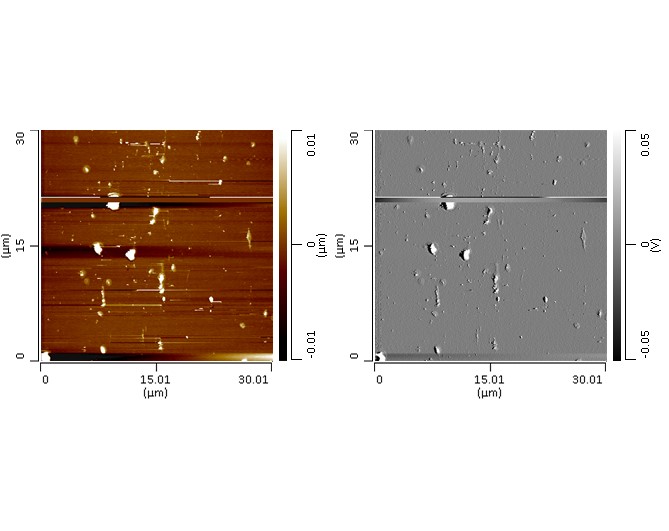 |
| Attachment 2: Image4.jpg
| 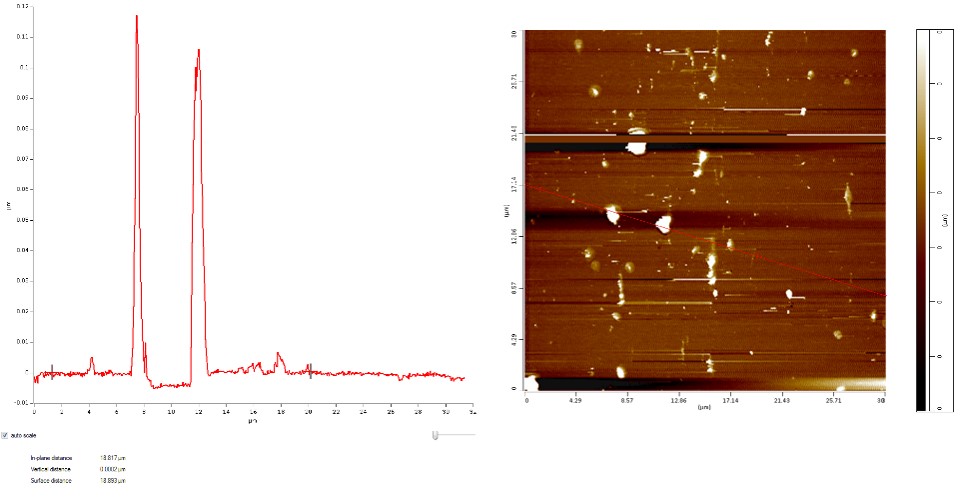 |
|
28
|
Fri Feb 1 14:04:27 2019 |
Loïc Amoudry | Fixed | info | lasers and optics | Other | Meeting with LMA people, AFM | 30/01/19 - The following powerpoint shows the results discussed with LMA people.
What came out from the discussion is:
- Their cleaning method uses demineralized water drop on a spinner. It is probably the explanation of the circular traces on the mirror's surfaces but we still don't know what is this deposit (XPS is running out on 2 of this mirrors at this time).
- According to their point of view, the spots could come from the coating deposition technique and are "normal". No real explaination, should not come from the substrat which is ultra-polished but can come from some clustering in the coating.
We gave them 2 of the mirrors so they can check if it is possible to clean them. They'll also do a measurement of the mirror's topology. |
| Attachment 1: POINT_SUR_LES_MIROIRS.pptx
|
|
58
|
Wed Jun 19 18:54:00 2019 |
Huan Wang | Fixed | info | lasers and optics | Optical room | amplifier | Onefive output power is 24mW now, and 2.41mW(after EOM) injected into fiber,
a injection power monitor added, 99% (2.06mW) injected into amplifier, 1% (16.1uW) monitored with photodiode DET36A/M, which gives ~500mV DC signal on oscilloscope with 1Mohm impedanc;
First stage amplifier works good, monitoring phtodiode gives more than 200mV DC signal with 50ohm impedance on oscilloscope (as attached photo);
Second stage, the old monitoring photodiode is broken, a new monitoring photodiode is connected, which we don't have reference data for it,
on the optical output port of the monitoring signal, it's written 150mW, but at where we measured 40mW. |
| Attachment 1: 1st_stage_amplifier_monitoring_photodiode_signal.jpg
|  |
|
59
|
Mon Jun 24 16:15:08 2019 |
Huan Wang | Fixed | info | lasers and optics | Optical room | amplifier | I just had a phone call with Jérome and he told me 2 things :
* Be carefull ! the MightyLaser amplifier is not designed to work with 33MHz laser : the streching level is not sufficient !
One could worsen the phase noise by self-modulation due to peak power or even distroy the amplifier !
One should use it only at low power !!!
* He thinks we should more or less find back the same DC levels than before even with lower seeding power and lower repetition rate.
He thinks we should look at the optical spectrum to check if we don't have some ASE in the 1st stage and 2nd stage signal !
We can send him plots or call him to discuss these points.
| Huan Wang wrote: |
|
Onefive output power is 24mW now, and 2.41mW(after EOM) injected into fiber,
a injection power monitor added, 99% (2.06mW) injected into amplifier, 1% (16.1uW) monitored with photodiode DET36A/M, which gives ~500mV DC signal on oscilloscope with 1Mohm impedanc;
First stage amplifier works good, monitoring phtodiode gives more than 200mV DC signal with 50ohm impedance on oscilloscope (as attached photo);
Second stage, the old monitoring photodiode is broken, a new monitoring photodiode is connected, which we don't have reference data for it,
on the optical output port of the monitoring signal, it's written 150mW, but at where we measured 40mW.
|
|
|
29
|
Wed Nov 13 13:15:53 2019 |
Loïc Amoudry | Fixed | report | lasers and optics | Other | AFM+ InfraRed spectroscopy (IR spectro) has been performed | AFM+ InfraRed spectroscopy (IR spectro) has been performed on 400kW S-BOX mirrors.
Seems that XPS made M3 and M4 dirty, but M1 have also ome dust. M2 seems clean, further AFM experiment should show that it is as clean as M1. |
| Attachment 1: 191113_AFMetspecIR-miroirs_SBOX.pdf
|
|
30
|
Fri Dec 6 11:53:53 2019 |
Loïc Amoudry | Fixed | report | lasers and optics | Optical room | Mirror's cleaning | XPS has been proceeded on the 400kW SBOX mirrors M3 and M4 (the initial cavity spherical mirrors) in frebruary 2019. Deposited a lot of particles on these mirrors.
All the mirrors received a Infrared spectroscopy the 12th of november 2019. Deposited glue on the non-reflective face (was used to hold them).
15th of november (2019): The four 400kW SBOX mirror's have been cleaned with aceton and isopropanol.
28th of november (2019): The four 400kW SBOX mirror's have been cleaned with spin coater.
Summary:
Aceton and isopropanol removed most of the particles and all the glue. But it let some traces on the mirror surface on all the mirrors (so there is some kind of grease on the surfaces).
Spin coater removes all the traces.
See pictures. On all the first images, we also see the dust which is on the non reflective face through the mirror. On M3 and M4 there is still the "glue" on the non reflective face on their frst images + refletive faces very dirty because of XPS. |
| Attachment 1: resume_M3.PNG
| 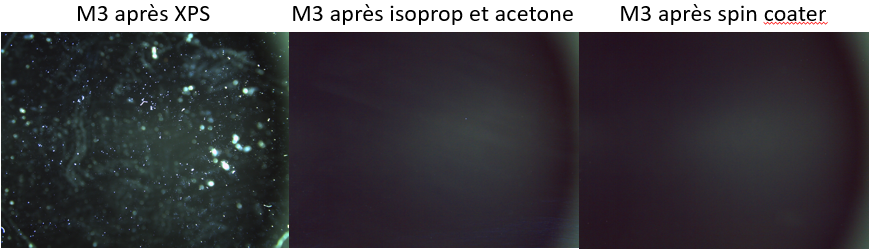 |
| Attachment 2: resume_M1_M2_M4.PNG
| 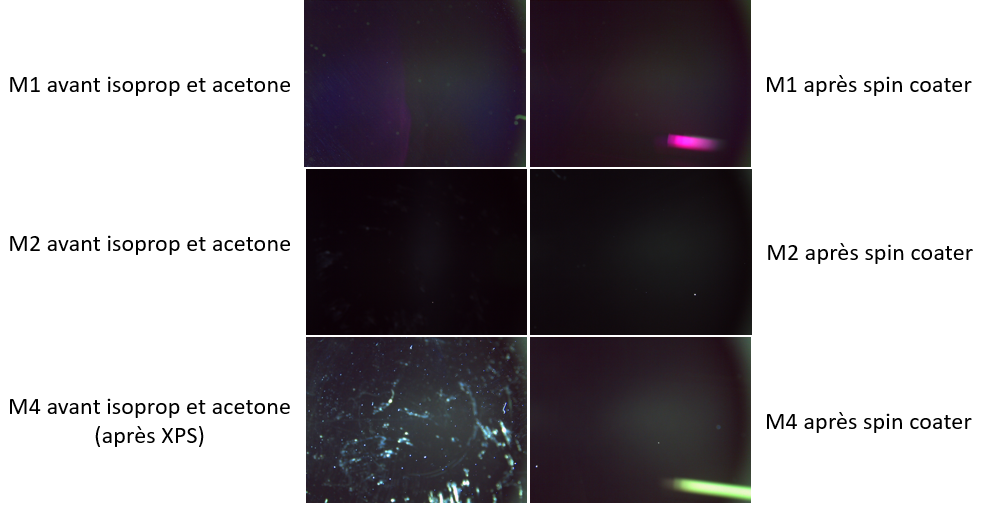 |
|
31
|
Fri Dec 6 11:54:58 2019 |
Loïc Amoudry | Fixed | report | lasers and optics | Optical room | Mirror's installed | The initial 400kW SBOX mirrors which have been cleaned ont 28th of november have been installed this morning on the SBOX. |
|
32
|
Tue Dec 10 09:36:56 2019 |
Ronic Chiche | Fixed | info | lasers and optics | Optical room | FSR and Finesse measurement | Yesterday the cavity has been aligned and locked with the CW Koheras laser.
the FSR has been measured by modulation technique at 133.344MHz at 1mbar pressure in the cavity.
the polarization has to be optimized for the Finesse measurement otherwise, some "shoulders" appear beside the Airy peak and reduce Finesse fit.
once it is done, 3 consecutive measurements give an average Finesse of 20800. |
| Attachment 1: untitled.png
| 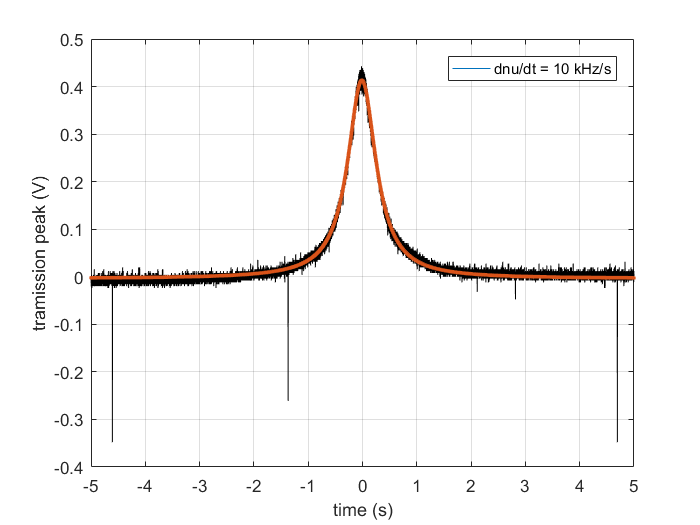 |
|
33
|
Wed Dec 11 17:13:02 2019 |
Ronic Chiche | Fixed | issue | lasers and optics | Optical room | 2nd stage amplifier issue | the 2nd stage amplifier needed several hours (4-5h) to reach its nominal power (we look at photodiode level on a scope), instead of the awaited 30 minutes.
could it come from the probable spectrum shifting of the OneFive laser ?
(the power coming from the CVBG, coupled to the fiber, is lower than expected). |
|
34
|
Thu Dec 12 11:49:05 2019 |
Ronic Chiche | Fixed | issue | lasers and optics | Optical room | 2nd stage amplifier issue | Last time, we switched ON directly the 2nd stage at 6A without increasing/decrinsing slowly the current.
today, we switched ON the chiller, switched ON the 1st stage, switch ON the power supply of the 2nd stage at 0A and then we increased slowly the current until 6A... and the problem disappeared.
| ARonic Chiche wrote: |
|
the 2nd stage amplifier needed several hours (4-5h) to reach its nominal power (we look at photodiode level on a scope), instead of the awaited 30 minutes.
could it come from the probable spectrum shifting of the OneFive laser ?
(the power coming from the CVBG, coupled to the fiber, is lower than expected).
|
|
|
35
|
Fri Dec 13 15:56:22 2019 |
Ronic Chiche | Fixed | issue | lasers and optics | Optical room | 2nd stage amplifier issue | 2nd stage output power was going down. We checked the pump diode technical data sheet and the operating temperature is [25°C:35°C].
We increased the chiller temperature setpoint from 19°C to 23°C.
Then the output power increased (93mW on 2nd stage photodiode).
| Ronic Chiche wrote: |
|
Last time, we switched ON directly the 2nd stage at 6A without increasing/decrinsing slowly the current.
today, we switched ON the chiller, switched ON the 1st stage, switch ON the power supply of the 2nd stage at 0A and then we increased slowly the current until 6A... and the problem disappeared.
| ARonic Chiche wrote: |
|
the 2nd stage amplifier needed several hours (4-5h) to reach its nominal power (we look at photodiode level on a scope), instead of the awaited 30 minutes.
could it come from the probable spectrum shifting of the OneFive laser ?
(the power coming from the CVBG, coupled to the fiber, is lower than expected).
|
|
|
|
36
|
Fri Dec 13 18:28:00 2019 |
Ronic Chiche | Fixed | report | lasers and optics | Optical room | first data with 3A on the 3rd stage | Today, at 3A on the 3rd stage, we saw some HOM effects.
the transmissions is about 100mW which corresponds to 30kW inside cavity.
we tried to play with D shape motors but without success.
on the plot below, a mix between Thermal effects andHOM effects (the trans step at 13s is done without any external action)
-yellow : transmission
- orange : coupling
- blue : PZT correction
the camera video does not correspond exactly to the scope plot.
it is just an example of HOM effect. |
| Attachment 1: Screenshot_2019-12-13_3_184235.png
| 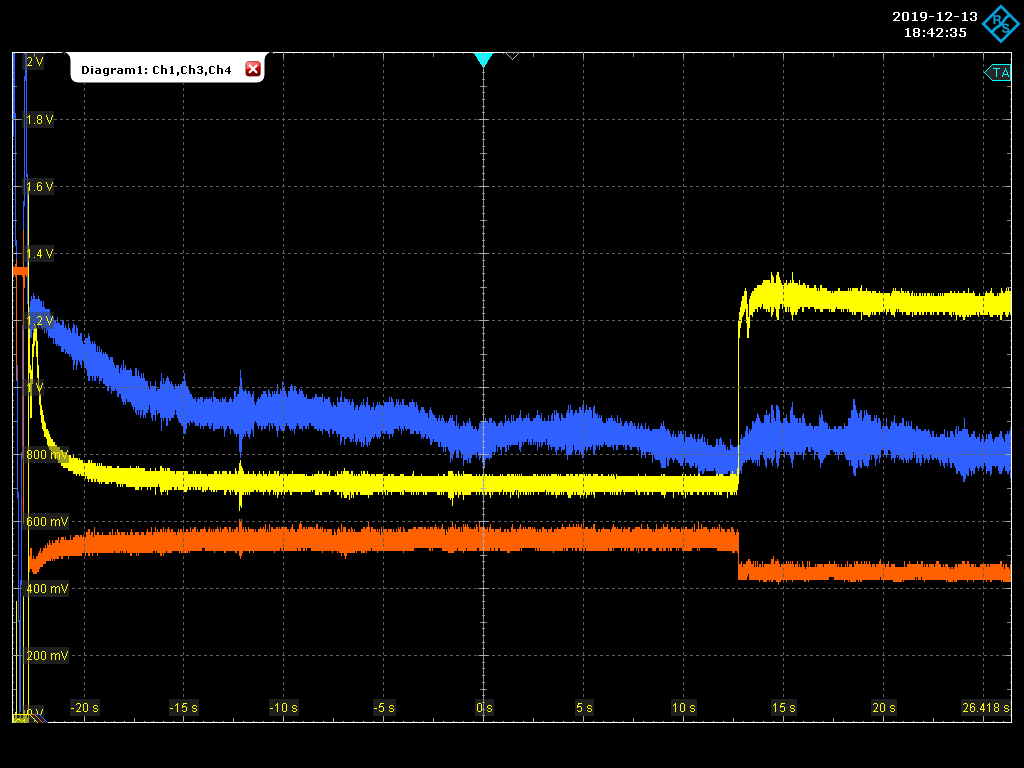 |
| Attachment 2: HOM.gif
|  |
|
37
|
Tue Dec 17 10:46:24 2019 |
Ronic Chiche | Fixed | info | lasers and optics | Optical room | Beam size behind M2 | Beam diameter behind M2 :
- 2nd stage @ 6A - 1kW inside cavity
sx = 2120 µm
sy = 2150 µm
- 3rd stage @ 3A - 30kW inside cavity
sx = 2260 µm
sy = 2475 µm |
| Attachment 1: beam_diameter_behind_M2_-_1kW.png
| 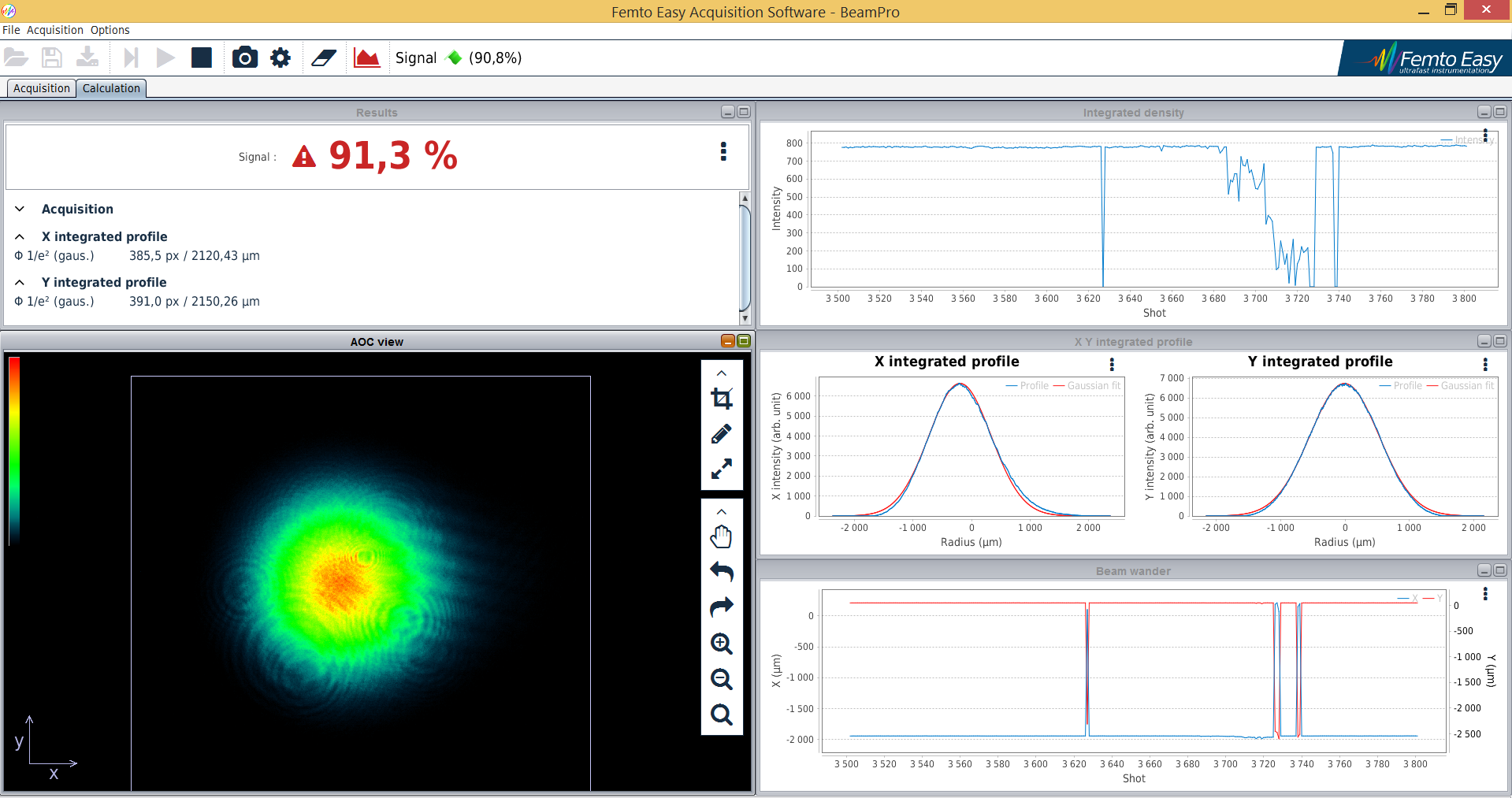 |
| Attachment 2: beam_diameter_behind_M2_-_30kW.png
| 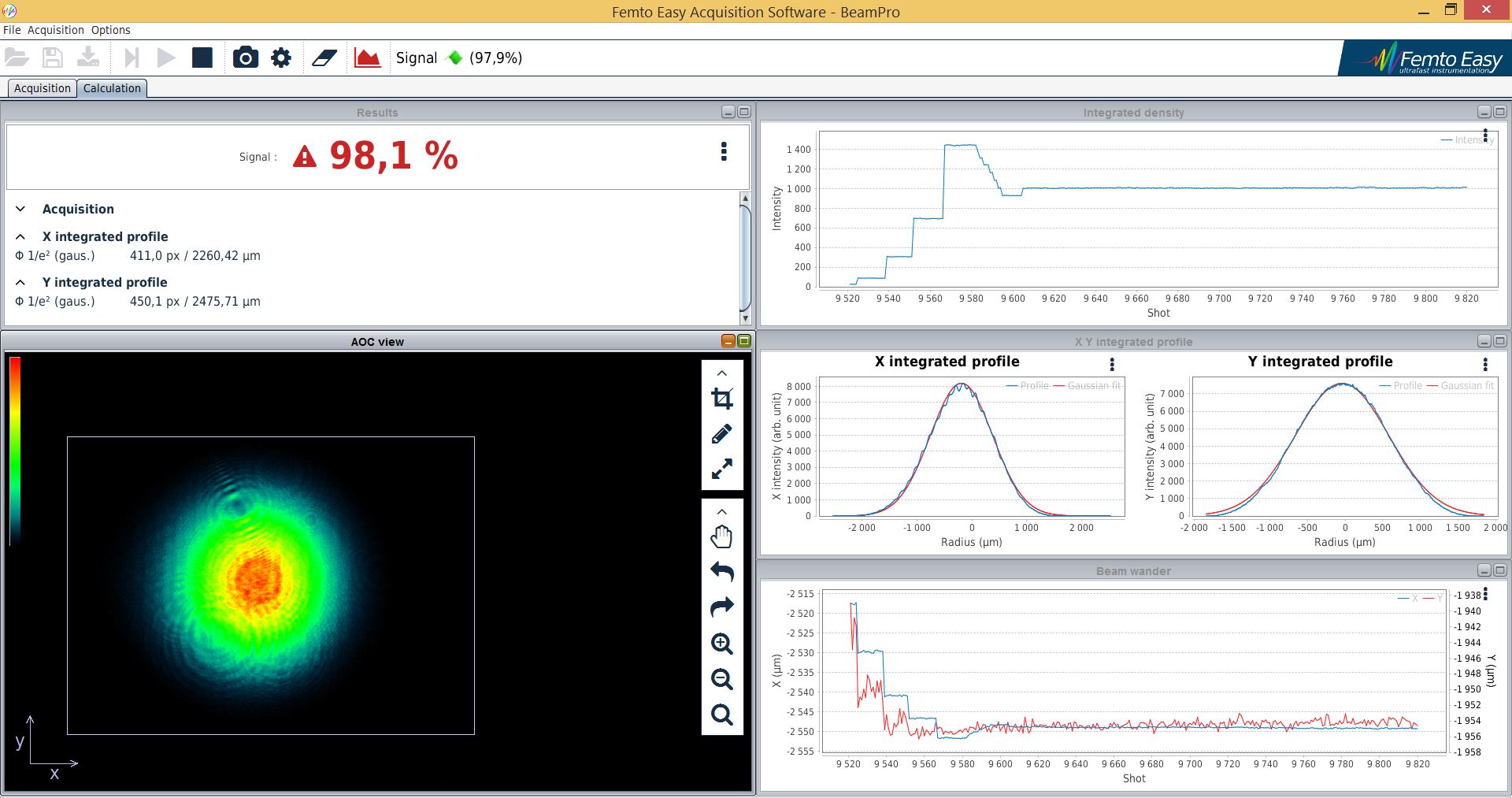 |
|
38
|
Tue Dec 17 10:56:08 2019 |
Ronic Chiche | Fixed | report | lasers and optics | Optical room | first data with 3A on the 3rd stage | 2 pictures :
typical beam with HOM
typical beam after moving the D-shape motor : no more HOM
| Ronic Chiche wrote: |
|
Today, at 3A on the 3rd stage, we saw some HOM effects.
the transmissions is about 100mW which corresponds to 30kW inside cavity.
we tried to play with D shape motors but without success.
on the plot below, a mix between Thermal effects andHOM effects (the trans step at 13s is done without any external action)
-yellow : transmission
- orange : coupling
- blue : PZT correction
the camera video does not correspond exactly to the scope plot.
it is just an example of HOM effect.
|
|
| Attachment 1: HOM_5-3_saturated.png
| 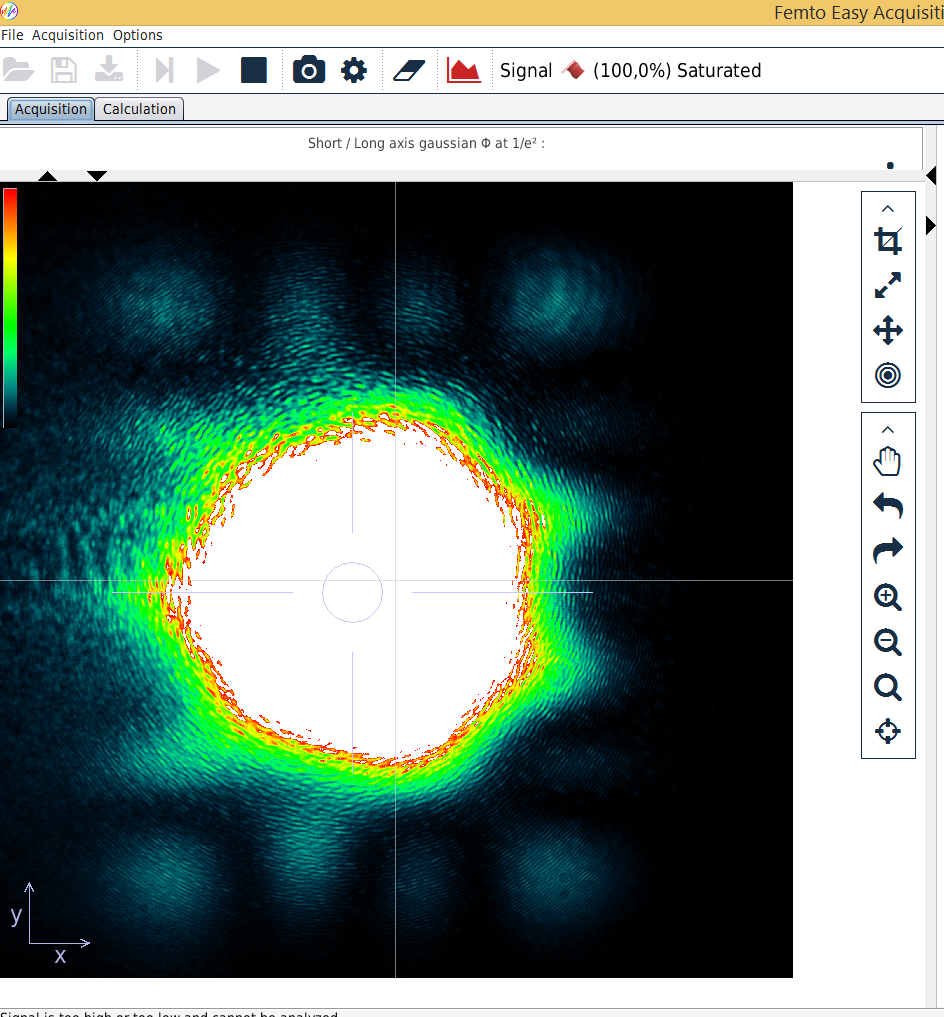 |
| Attachment 2: fundamental_mode_saturated.png
| 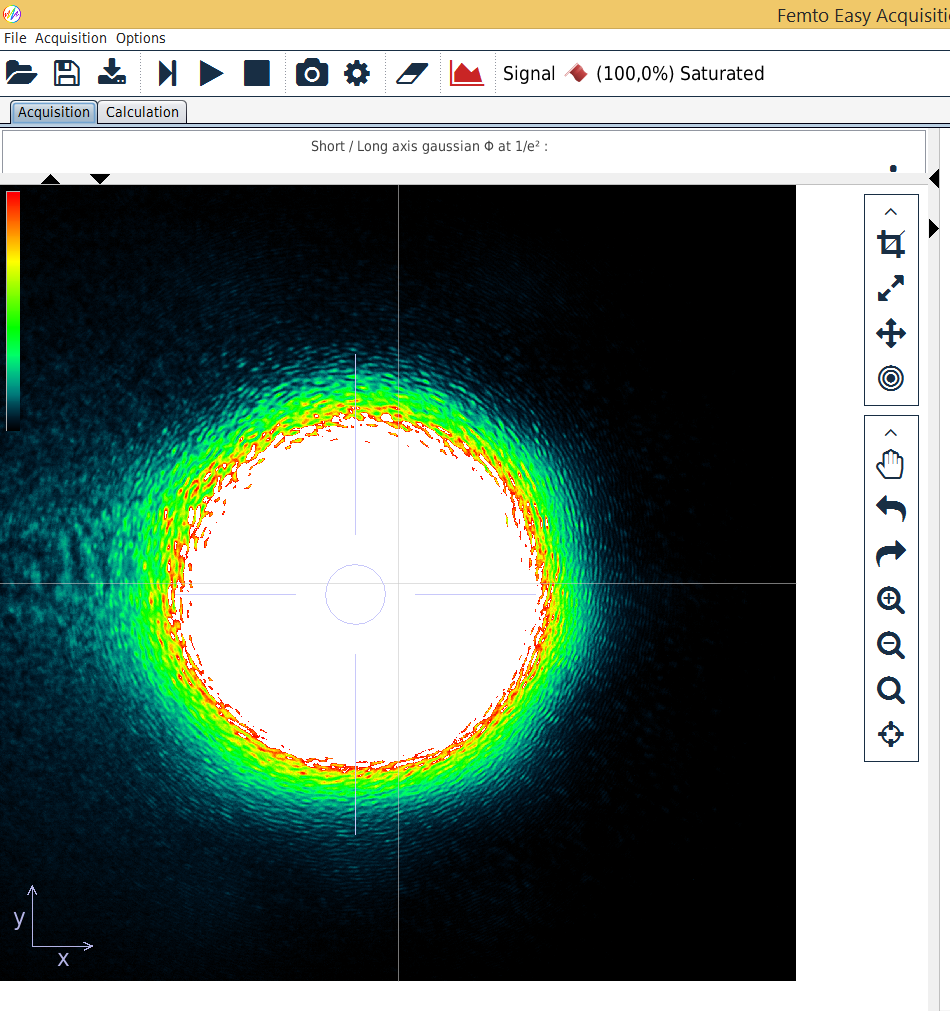 |
|
39
|
Tue Dec 17 12:16:54 2019 |
Ronic Chiche | Fixed | info | lasers and optics | Optical room | Optical amplifier polarization state | We placed a PBS + 2 photodiodes (PhD1, PhD2) at the output of the amplifier to check how the polarization of the amplifier changes with power.
example with 2nd stage @ 6A :
PhD1 = 24.7 mV
PhD2 = 8.9 mV
PhD1/PhD2 = 2.78
and with 3rd stage @ 2A :
PhD1 = 353 mV
PhD2 = 82.8 mV
PhD1/PhD2 = 4.26
Conclusion : we must adapt the quarter and half waveplates for each input power to be always matched with cavity polarization !!!
One could also study how the amplifier polarization changes during time and temperature. |
| Attachment 1: Screenshot_2019-12-17_8_122311.png
| 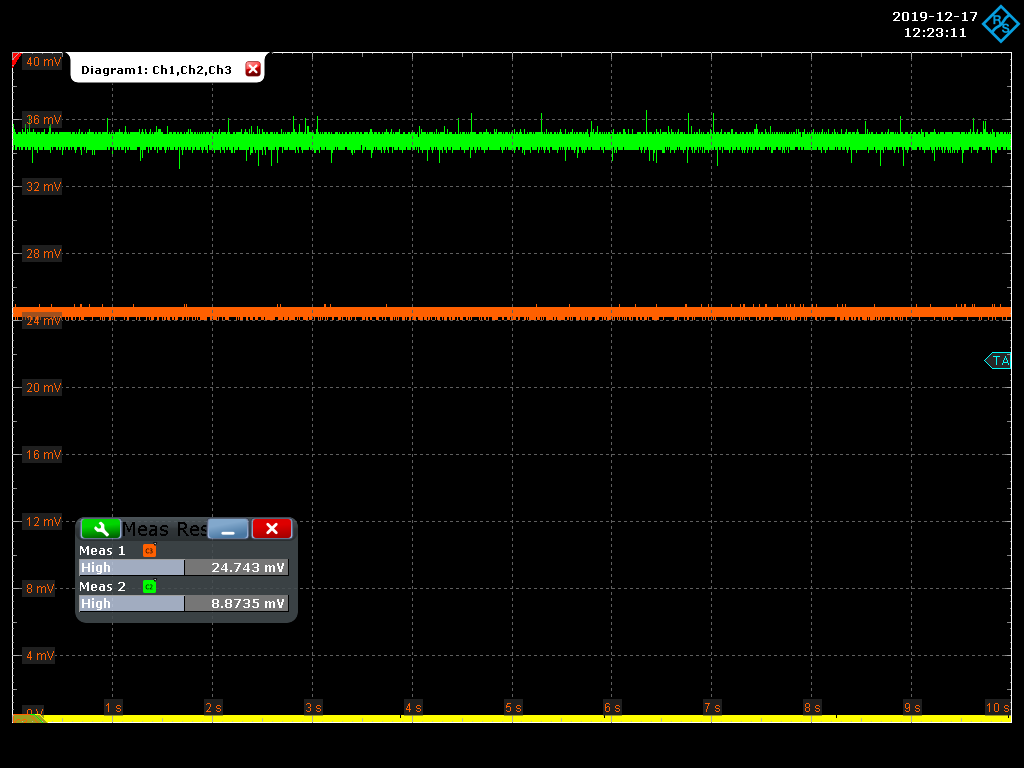 |
| Attachment 2: Screenshot_2019-12-17_7_122157.png
| 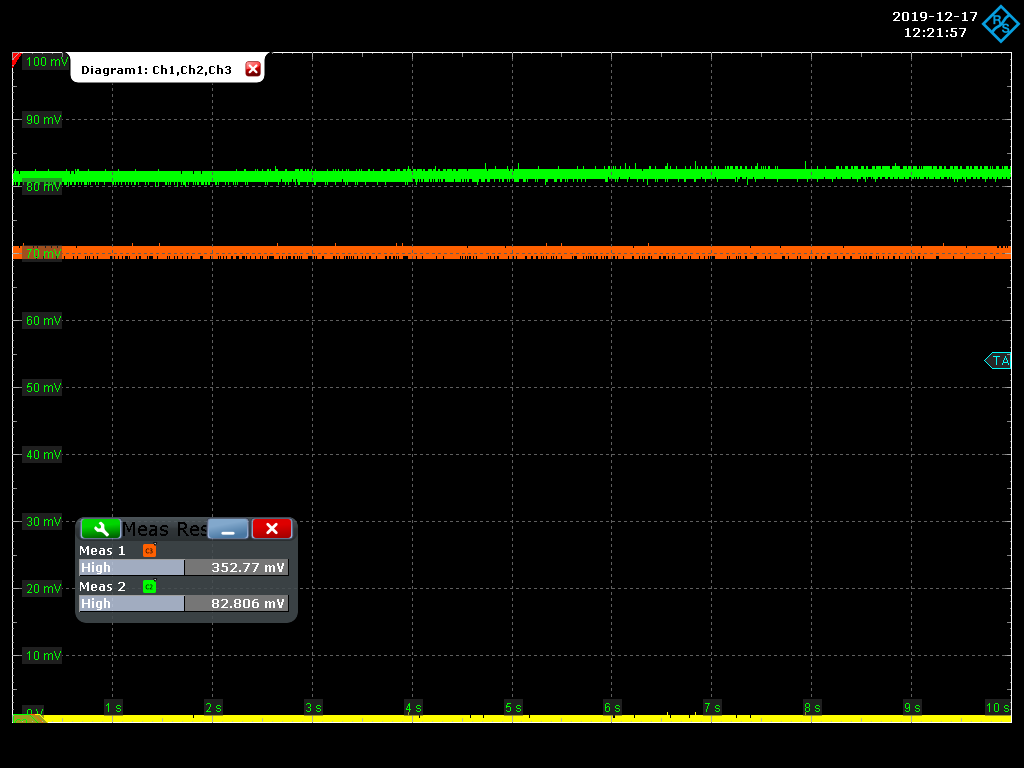 |
|
40
|
Tue Dec 17 17:54:38 2019 |
Ronic Chiche | Fixed | info | lasers and optics | Optical room | Optical amplifier polarization state | The polarimeter was giving a strange 50% of DOP of the light coming from the cavity.
we had to calibrate (LONG calibration process with care) the polarimeter to get a proper 100% of DOP !
the polarimeter needs also a good alignment with 2 mirrors, a colimated beam and a max power on photodiode between 0.7 and 0.8 (use electronic gain to adapt the level)
at low power (1.5kW inside cavity), the cavity is almost vertically polarized (89°).
| Ronic Chiche wrote: |
|
We placed a PBS + 2 photodiodes (PhD1, PhD2) at the output of the amplifier to check how the polarization of the amplifier changes with power.
example with 2nd stage @ 6A :
PhD1 = 24.7 mV
PhD2 = 8.9 mV
PhD1/PhD2 = 2.78
and with 3rd stage @ 2A :
PhD1 = 353 mV
PhD2 = 82.8 mV
PhD1/PhD2 = 4.26
Conclusion : we must adapt the quarter and half waveplates for each input power to be always matched with cavity polarization !!!
One could also study how the amplifier polarization changes during time and temperature.
|
|
| Attachment 1: cavity_polar_2e_etage_1kW.PNG
|  |
|
41
|
Tue Dec 17 17:58:12 2019 |
Ronic Chiche | Fixed | info | lasers and optics | Optical room | Beam size behind M2 | the telescope matchs the cold cavity beam, so it is normal to have a power decrease on the transmission photodiode when the cavity is heating at high power.
we can try to adjust the telescope by moving lens, one by one, to increase the cavity power.
| Ronic Chiche wrote: |
|
Beam diameter behind M2 :
- 2nd stage @ 6A - 1kW inside cavity
sx = 2120 µm
sy = 2150 µm
- 3rd stage @ 3A - 30kW inside cavity
sx = 2260 µm
sy = 2475 µm
|
|
|
42
|
Thu Dec 19 09:21:45 2019 |
Ronic Chiche | Fixed | info | lasers and optics | Optical room | Optical amplifier polarization state | polarization state of the cavity at higher power : 20kW, 30kW and 33kW (slight CEP and alignment optimization) :
the polarization state changes only a little to ~ 87° and is almost linear.
| Ronic Chiche wrote: |
|
The polarimeter was giving a strange 50% of DOP of the light coming from the cavity.
we had to calibrate (LONG calibration process with care) the polarimeter to get a proper 100% of DOP !
the polarimeter needs also a good alignment with 2 mirrors, a colimated beam and a max power on photodiode between 0.7 and 0.8 (use electronic gain to adapt the level)
at low power (1.5kW inside cavity), the cavity is almost vertically polarized (89°).
| Ronic Chiche wrote: |
|
We placed a PBS + 2 photodiodes (PhD1, PhD2) at the output of the amplifier to check how the polarization of the amplifier changes with power.
example with 2nd stage @ 6A :
PhD1 = 24.7 mV
PhD2 = 8.9 mV
PhD1/PhD2 = 2.78
and with 3rd stage @ 2A :
PhD1 = 353 mV
PhD2 = 82.8 mV
PhD1/PhD2 = 4.26
Conclusion : we must adapt the quarter and half waveplates for each input power to be always matched with cavity polarization !!!
One could also study how the amplifier polarization changes during time and temperature.
|
|
|
| Attachment 1: cavity_polar_3e_etage_2A_-_20kW.PNG
| 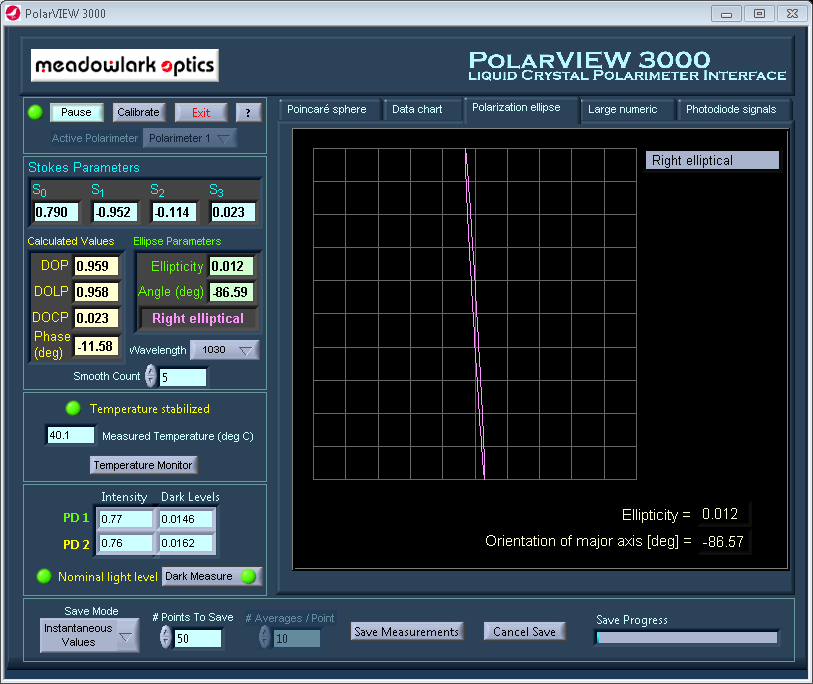 |
| Attachment 2: cavity_polar_3e_etage_3A_-_30kW.PNG
| 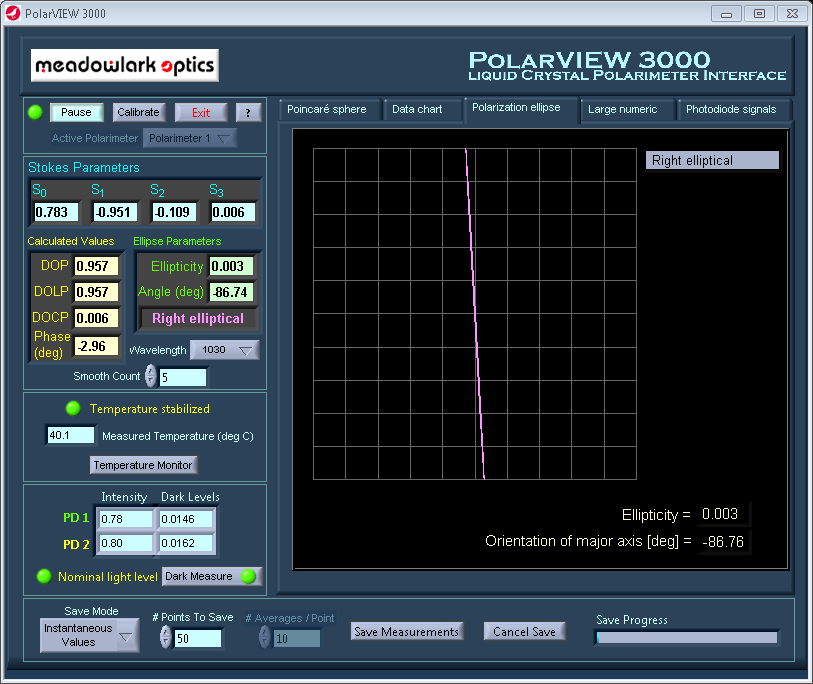 |
| Attachment 3: cavity_polar_3e_etage_3A_-_33kW.PNG
| 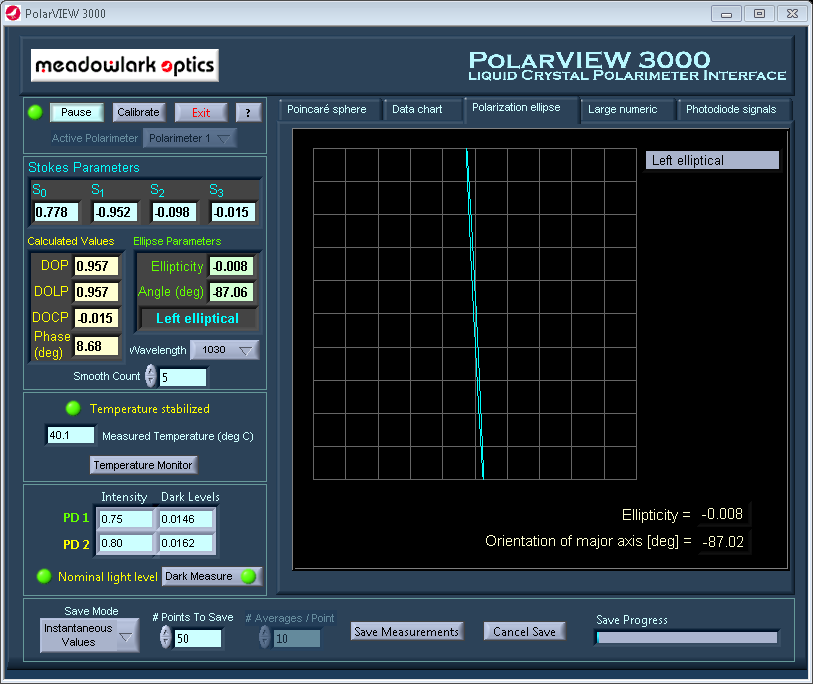 |
|
44
|
Thu Dec 19 16:03:17 2019 |
Ronic Chiche | Fixed | info | lasers and optics | Optical room | Beam size behind M2 | Yesterday, we tried to better adapt positions of the telescope lenses, dynamically, during the lock, to improve the matching between input beam and cavity mode.
it is a difficult task because it is quite sensitive to the alignment. we need to realign very often... and it is a long process.
at the end, we concluded that we need to move to much the lenses to be feasible, then we stopped.
then we tried also to change the cavity mode by moving the spherical mirrors inside the cavity but again, the telescope is too far from its expected parameters.
we need to make a cavity mode smaller at high power and we need to move too far the spherical mirrors, then we stopped also this trial.
the conclusion is we need to better measure the cavity mode and make a telescope better adapted to the "hot" cavity.
it is still strange to measure a tranmsission signal AND a coupling signal with a "thermal" decay at the beginning of the lock for both and we expect that they complementary and should vary in contrary direction.
very strange as we use very large PhD which should net be sensitive to misalignments.
| Ronic Chiche wrote: |
|
the telescope matchs the cold cavity beam, so it is normal to have a power decrease on the transmission photodiode when the cavity is heating at high power.
we can try to adjust the telescope by moving lens, one by one, to increase the cavity power.
| Ronic Chiche wrote: |
|
Beam diameter behind M2 :
- 2nd stage @ 6A - 1kW inside cavity
sx = 2120 µm
sy = 2150 µm
- 3rd stage @ 3A - 30kW inside cavity
sx = 2260 µm
sy = 2475 µm
|
|
|
|
45
|
Thu Dec 19 16:23:39 2019 |
Ronic Chiche | Fixed | info | lasers and optics | Optical room | Cavity beam axis moving with power | how the cavity beam axis is moving during a lock when the cavity is hot ?
could it explain a part of the Transmission / Coupling signal decay ?
we placed 2 Basler camera, one at (30+Z) cm and the other at (85+Z) cm (Z is about 15cm) from the M3 mirror, we recorded the video during a lock and we analyzed the centroid X and Y displacement at 2A and 3A.
frames acquisition speed is a quite slow ~ 100ms => we need to acquire the frames faster !
with these data, the displacement is no more than some pixels, which means << 100µm ... it should be completely negligeable for photdiode thorlabs DET100 with ~10mm of diameter.
the last picture displays typical locking curves (before and after lock) :
- transmission : yellow
- coupling : orange
- PZT correction : blue |
| Attachment 1: Basler_30cm_2A_v1.png
| 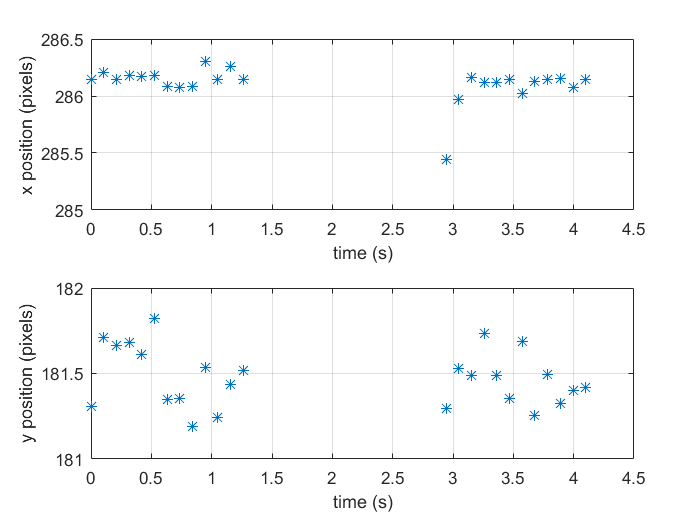 |
| Attachment 2: Basler_30cm_2A_v2.png
| 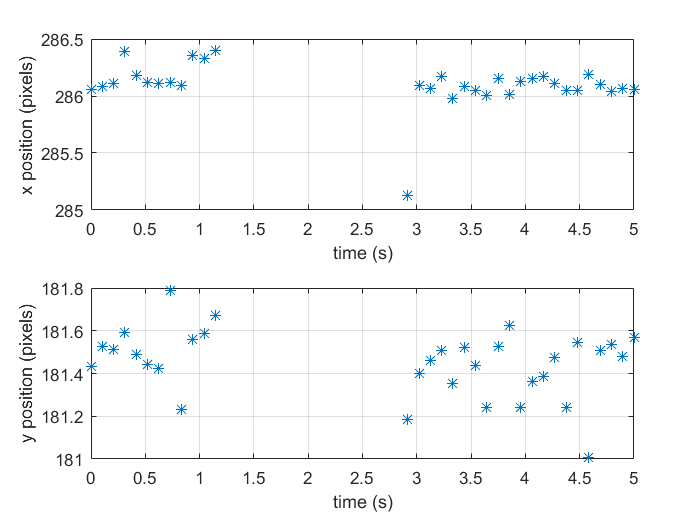 |
| Attachment 3: Basler_30cm_3A_v1.png
| 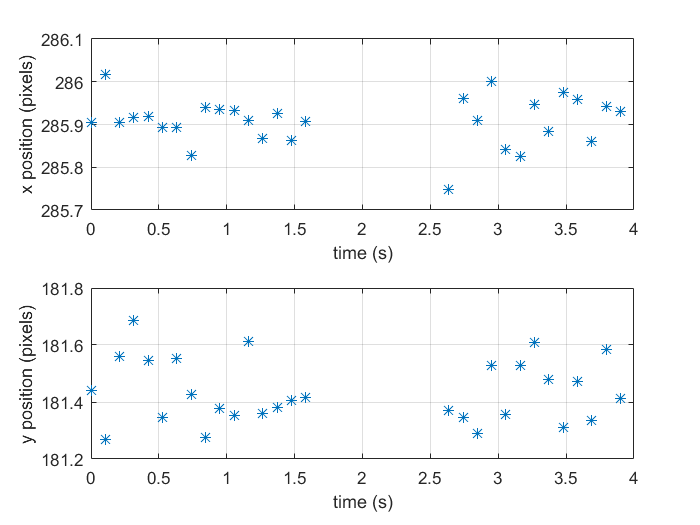 |
| Attachment 4: Basler_30cm_3A_v2.png
| 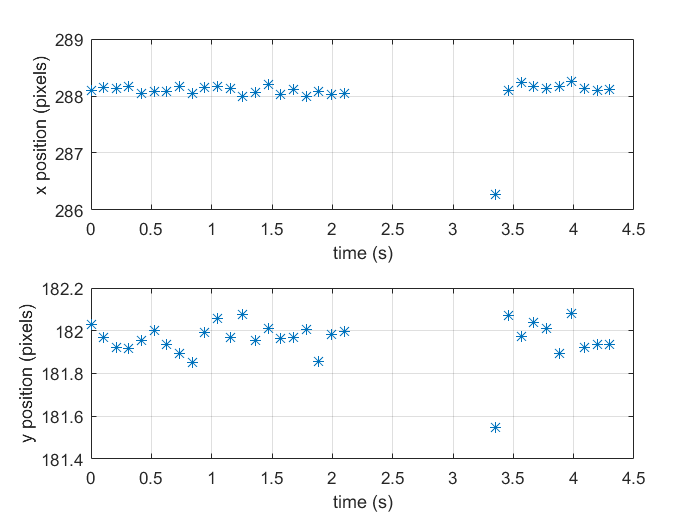 |
| Attachment 5: Basler_85cm_2A_v1.png
| 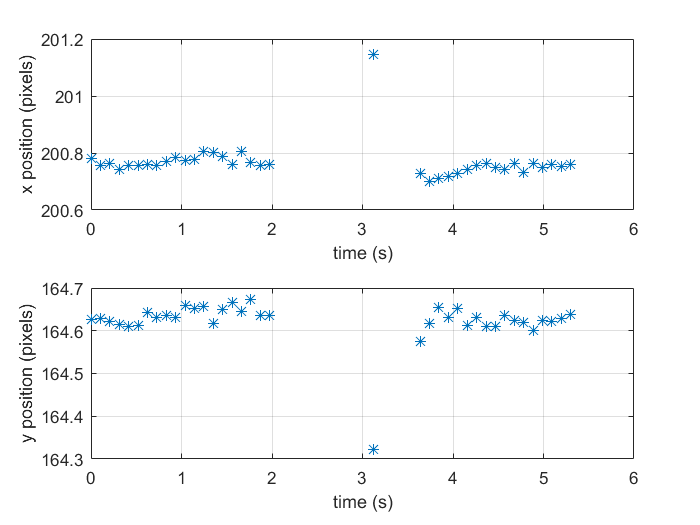 |
| Attachment 6: Basler_85cm_2A_v2.png
| 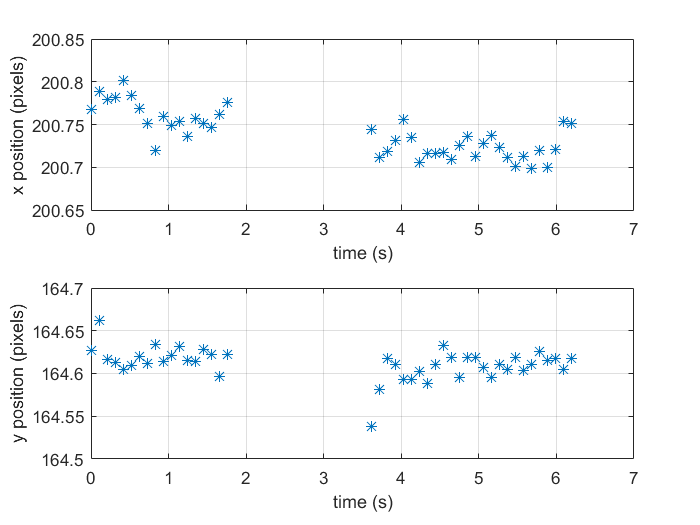 |
| Attachment 7: Basler_85cm_3A_v1.png
| 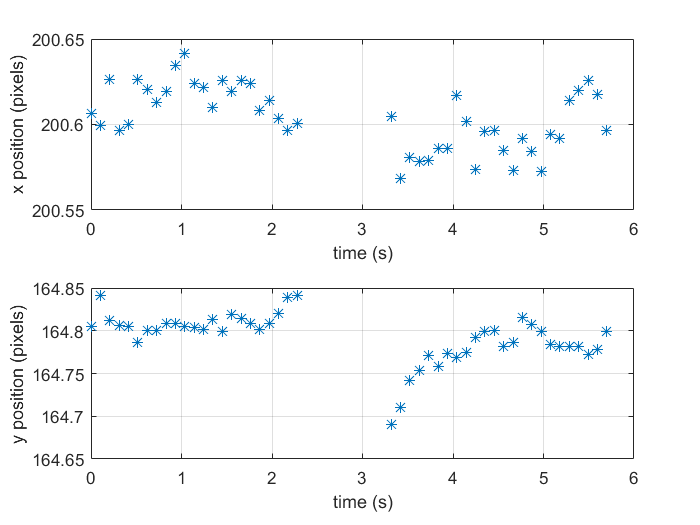 |
| Attachment 8: Basler_85cm_3A_v2.png
| 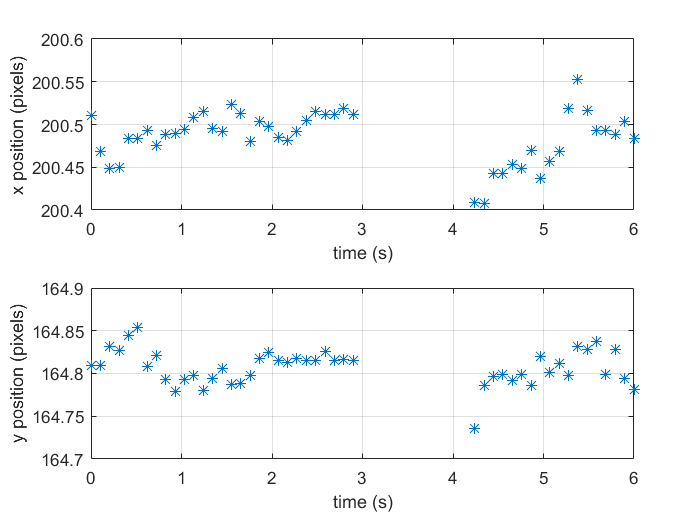 |
| Attachment 9: Screenshot_2019-12-19_4_151242.png
| 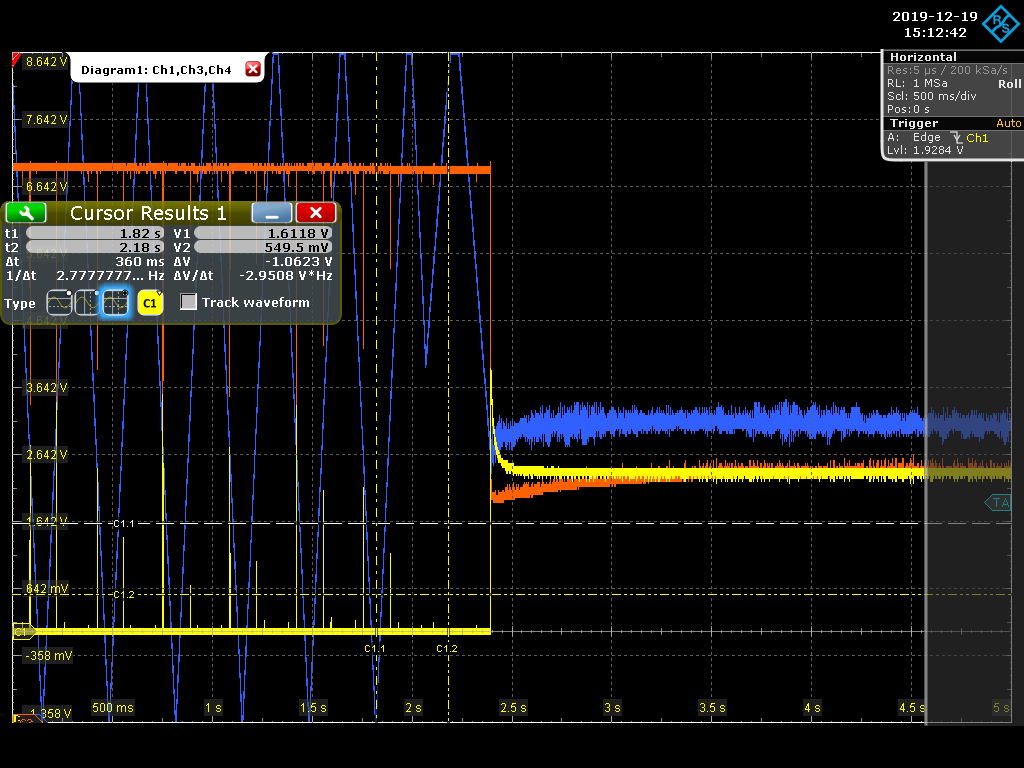 |
|
46
|
Thu Jan 9 16:54:05 2020 |
Loïc Amoudry | Fixed | report | lasers and optics | Optical room | Microscope and cleaning of SBOX mirrors | The mirrors went in the cavity the 28th of november (We did several power up to 30kW stored and only one to 40kW then the power went down to 2kW during the run).
Microscope study shows that mirrors get some dust during the handling [travel from microscope to SBOX --> installation --> in SBOX for +1month and power up --> travel to microscope].
Almost all of these dusts can be removed with cleaning.
There is only one important difference between 28th of november and today, a large spot on M1. |
| Attachment 1: resume_nettoyage_apres_sejour_dans_K-BOX_et_montee_en_puissance.PNG
|  |
|
47
|
Fri Jan 10 18:51:23 2020 |
Ronic Chiche | Fixed | report | lasers and optics | Optical room | analysis of stored and reflected power | the 10th of January, we increased the power of the amplifier to study the cavity transmitted and reflected power signals.
analyzing the noise transfer functions of transmitted and reflected power one could deduce the Finesse of the cavity.
the power of this technic (if it is confirmed) does not depend on the decay time of one signal which depends on the speed of the cut off but on the difference between reflected and transmitted transfer functions,
and then is independant of the cut off speed.
here are 6 analysis of the Finesse when the cavity is cold, depending only on short lock periods.
5 of them agrees on a Finesse around 11k.
the 6th estimation at 40kW stored in the cavity is about 4k but now, we know that the M1 mirror had suddenly a hole for this power... thus the Finesse value is reasonable.
we can then, use the non conservation of TRANS+REF signal to estimate the FInesse decrease when the cavity is hot... to be done
|
| Attachment 1: TRANS_&_REF.png
| 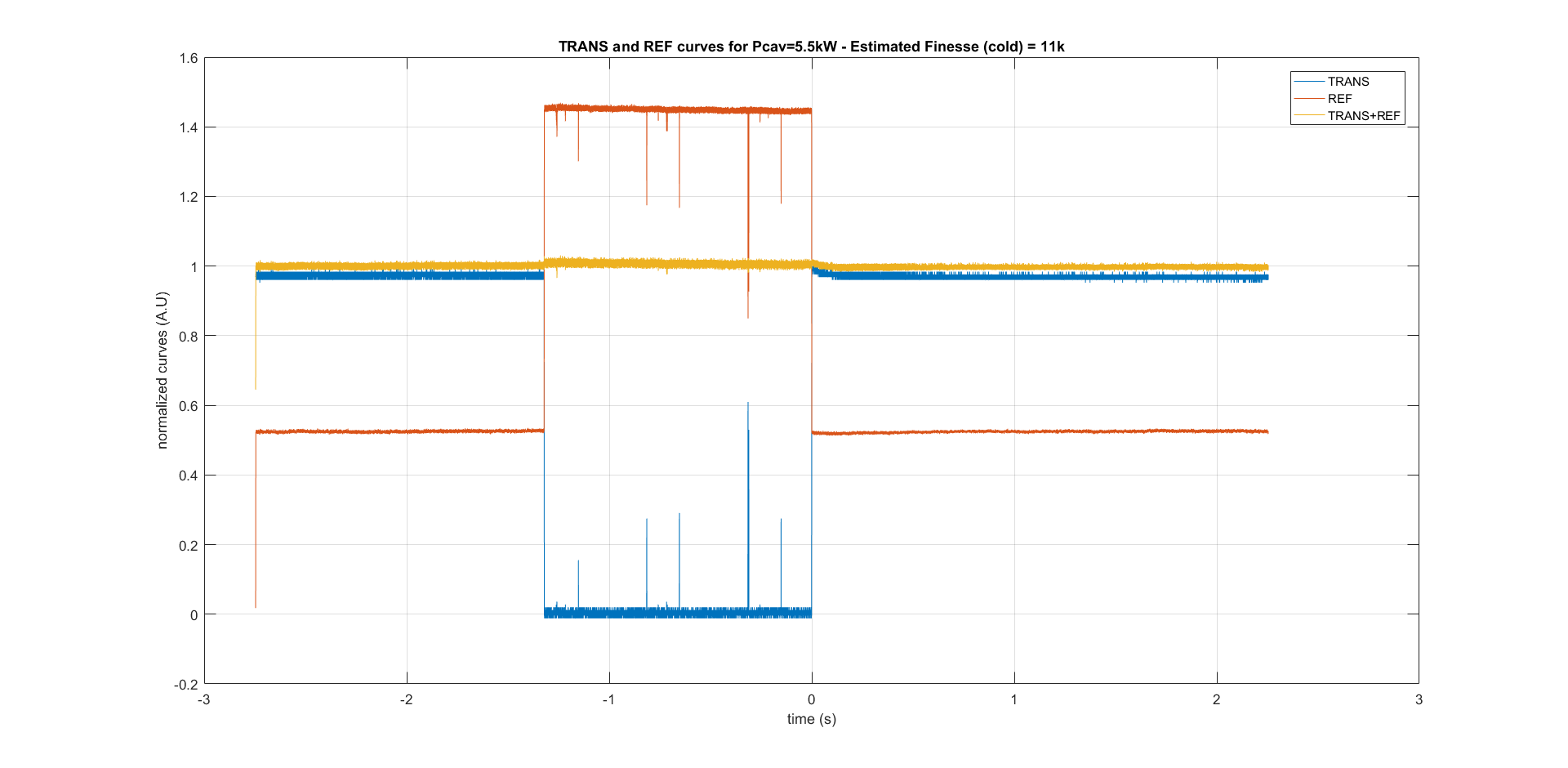 |
| Attachment 2: TRANS_&_REF.png
| 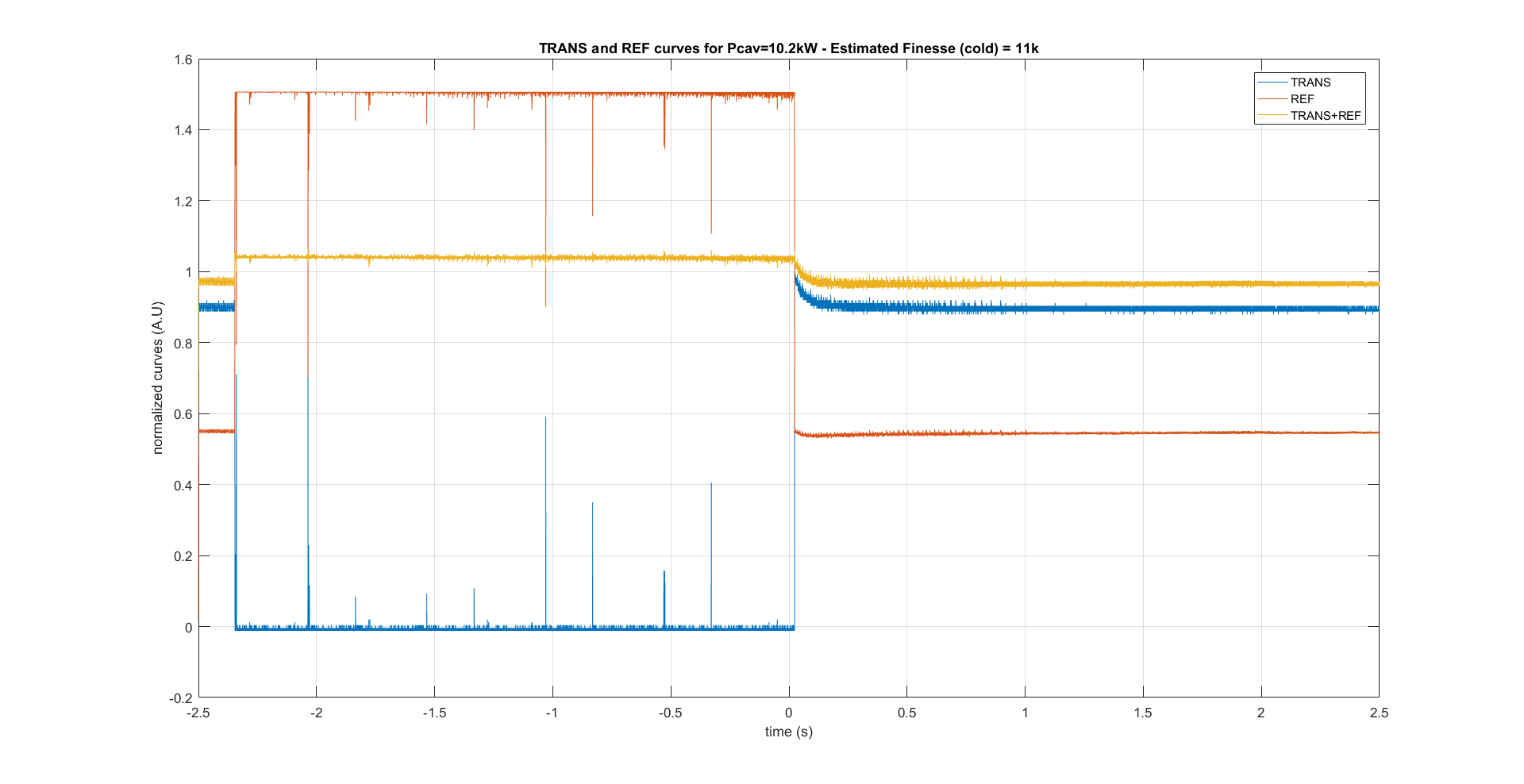 |
| Attachment 3: TRANS_&_REF.png
| 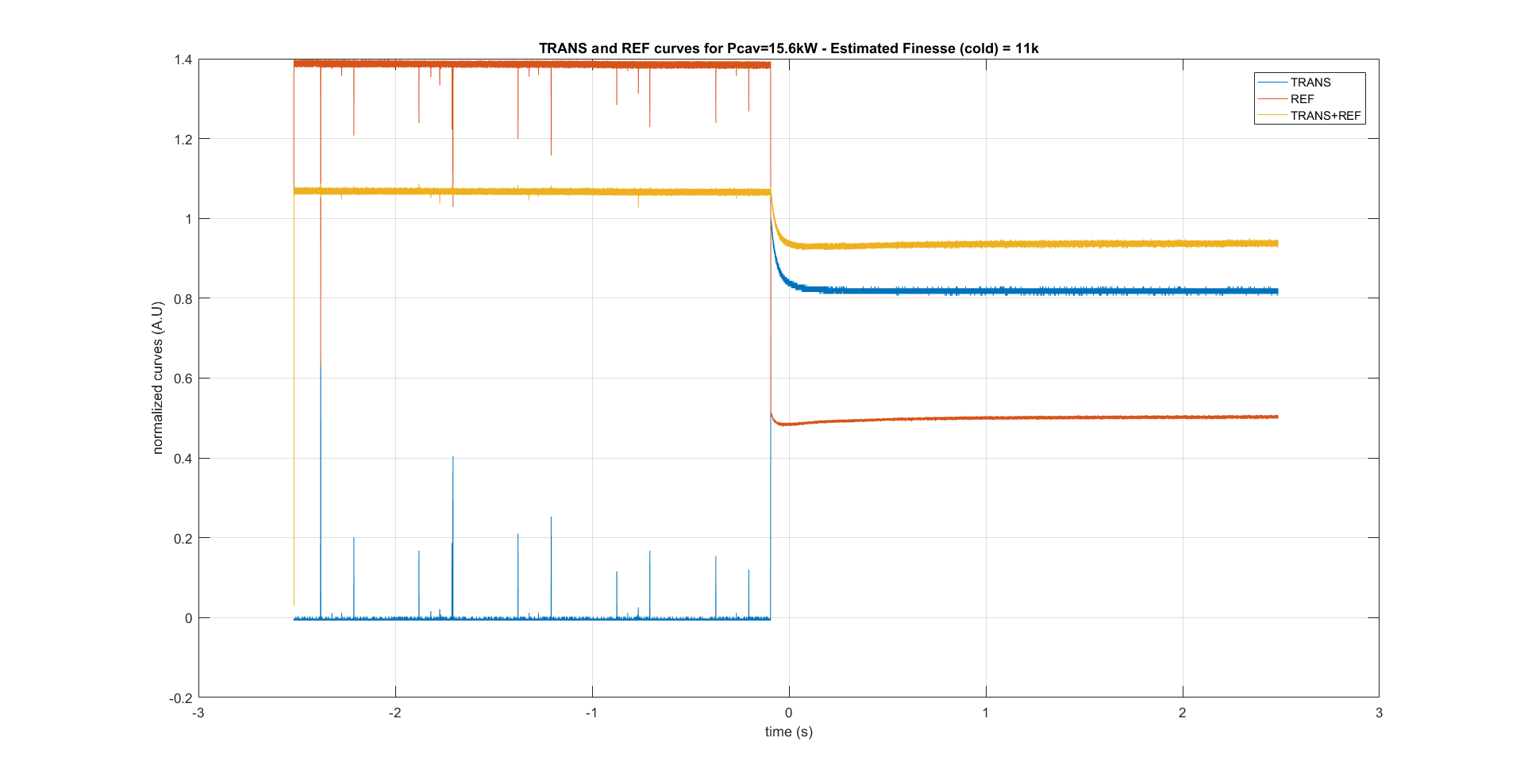 |
| Attachment 4: TRANS_&_REF.png
| 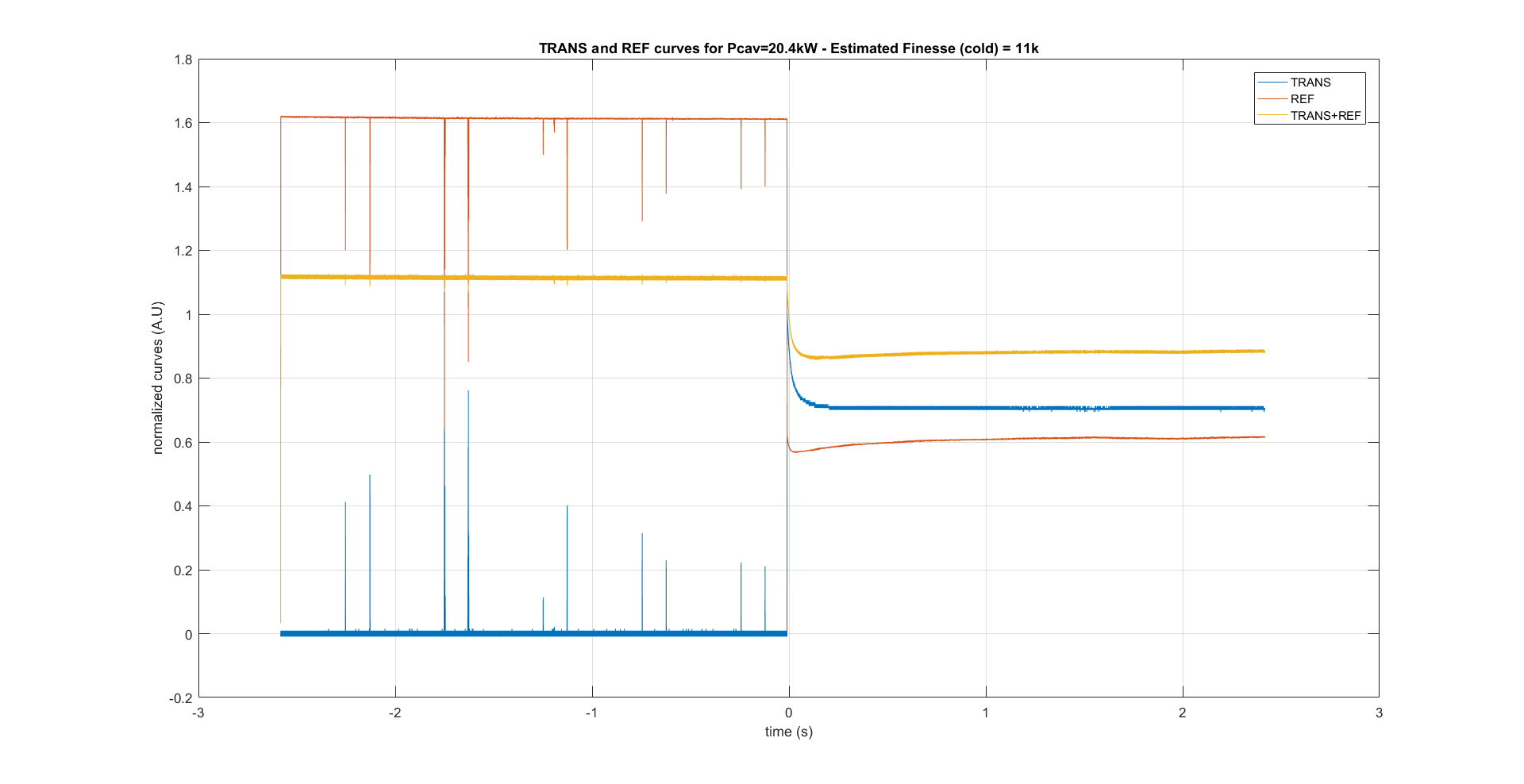 |
| Attachment 5: TRANS_&_REF.png
| 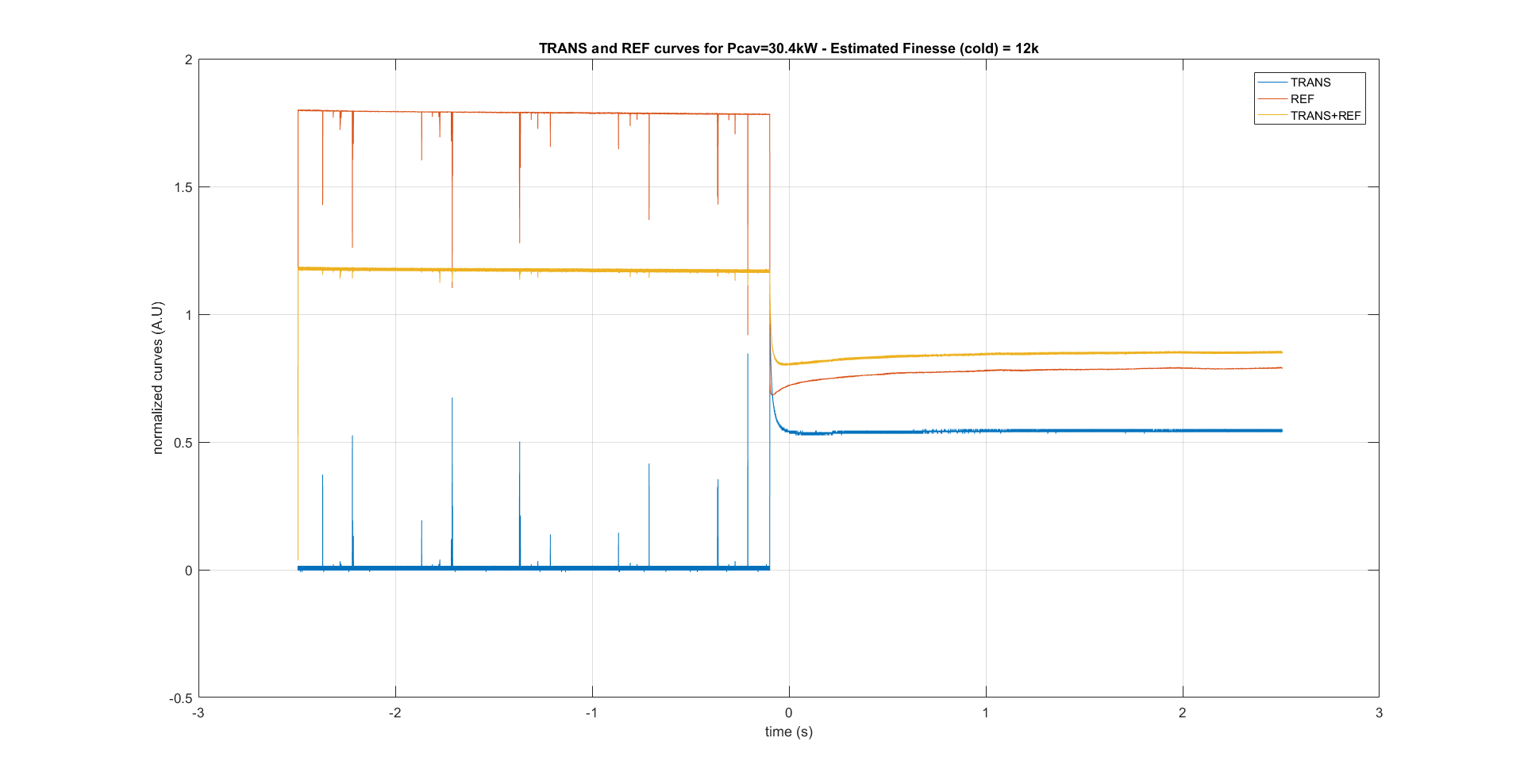 |
| Attachment 6: TRANS_&_REF.png
| 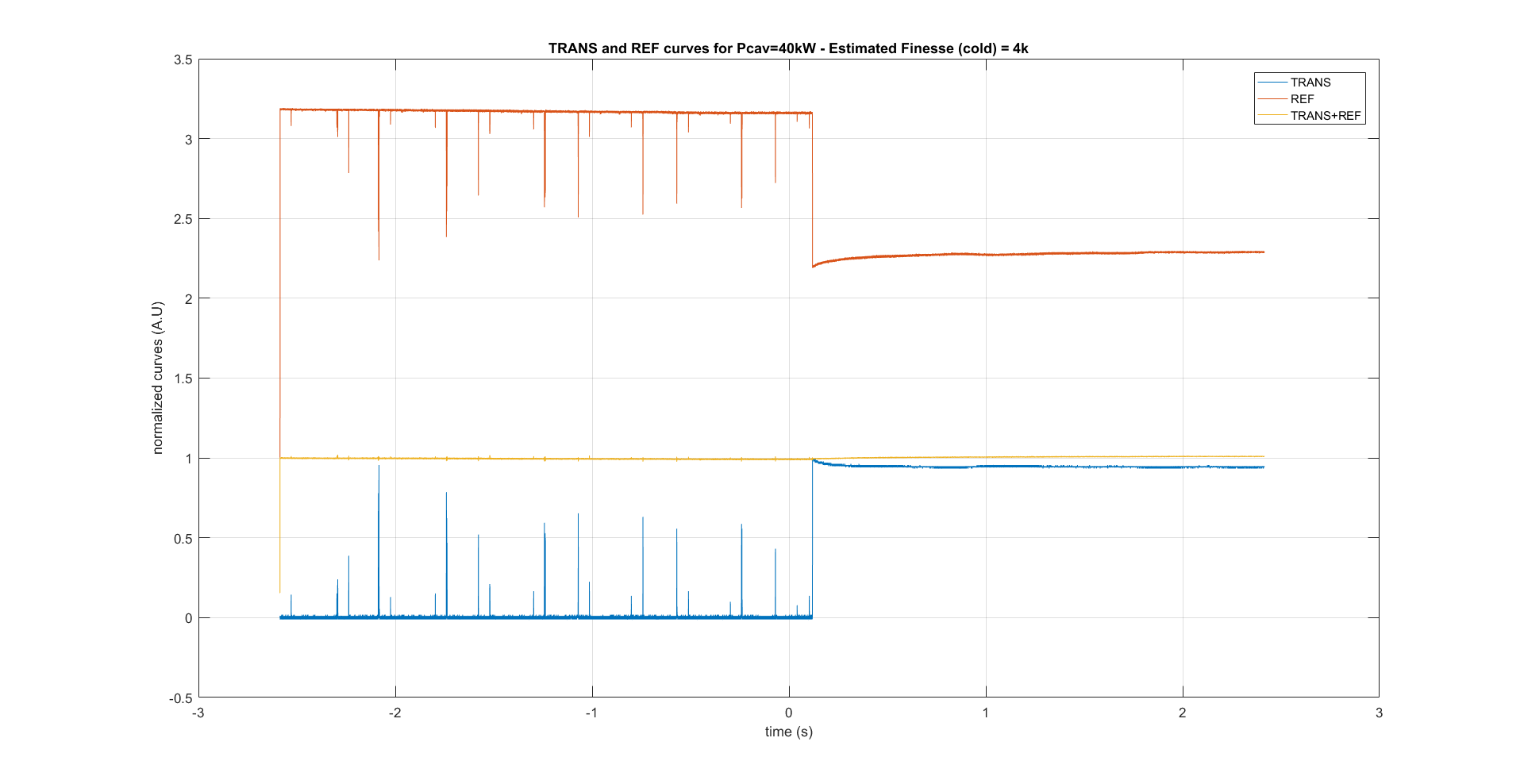 |
|
48
|
Fri Jan 24 16:16:24 2020 |
Ronic Chiche | Fixed | report | lasers and optics | Optical room | analysis of stored and reflected power | A chart which summarizes the data we have or we can estimate.
in orange, the case 1, where we suppose the initial cold Finesse is the one measured by modulation technique in December 2019 (F=20.8k).
and in green, the case 2, where we suppose the initial cold Finesse is the one measured by "zero compensation" technique between transmission and reflection signals during the power-up measurements (F~11k).
clearly, the case which matches better the only one data (written in red) of input power and then of cavity gain, is the Finesse estimated by the "zero compensation" technique. it matches also better the gain of the cavity measured after M1 had its hole and for which the estimated Finesse of 4k, and then estimated gain of 277 by "zero compensation" technique is not so far from the measurement of 185 (the gain is may be higher than 185 as it is possible we had some additional misalignment which reduced the gain).
| Ronic Chiche wrote: |
|
the 10th of January, we increased the power of the amplifier to study the cavity transmitted and reflected power signals.
analyzing the noise transfer functions of transmitted and reflected power one could deduce the Finesse of the cavity.
the power of this technic (if it is confirmed) does not depend on the decay time of one signal which depends on the speed of the cut off but on the difference between reflected and transmitted transfer functions,
and then is independant of the cut off speed.
here are 6 analysis of the Finesse when the cavity is cold, depending only on short lock periods.
5 of them agrees on a Finesse around 11k.
the 6th estimation at 40kW stored in the cavity is about 4k but now, we know that the M1 mirror had suddenly a hole for this power... thus the Finesse value is reasonable.
we can then, use the non conservation of TRANS+REF signal to estimate the FInesse decrease when the cavity is hot... to be done
|
|
| Attachment 1: Losses.pdf
|
| Attachment 2: M1_losses_vs_Pcav.png
| 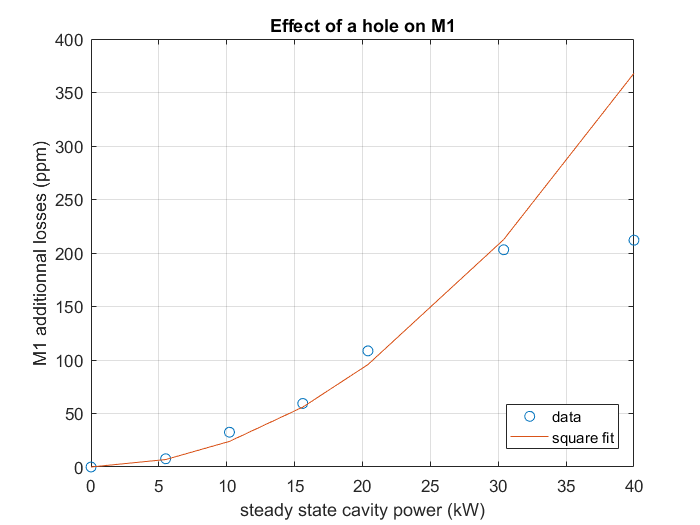 |
|
49
|
Fri Jan 24 17:52:14 2020 |
Loïc Amoudry | Fixed | report | lasers and optics | Optical room | AFM analysis of M1 | AFM has been proceeded on M1 and M2.
The pdf shows the first images taken with the PLIC room Leica microscope (zoom x10 and x80).
Then the hole has been studied with a handmade microscope. It brought a better resolution. We can now see the hole has an edge, a center structure and and extra-hole sparkle (pailleté) structure.
The AFM shows these 3 structures are real. The top of the hole is at ~+1µm and the center ~-2µm compare to the coating surface. The sparkles are ~10nm high and we also found kind of "explosion" desposit while zooming on the sparkles.
The 3D view and profil show perfectly the "crater". |
| Attachment 1: 200115_AFM_miroirs.pdf
|
|
50
|
Fri Jan 24 17:56:11 2020 |
Loïc Amoudry | Fixed | info | lasers and optics | Optical room | AFM analysis of M2 | We had enough time to proceed a quick scan of M2 which has also a hole but not centered on the mirror.
The hole is larger and higher than the one on M1. But the vertical range was to high for the AFM. Then we cannot see if there are sparkles or not on this image. Further study with microscope would be welcome. |
| Attachment 1: M2.PNG
| 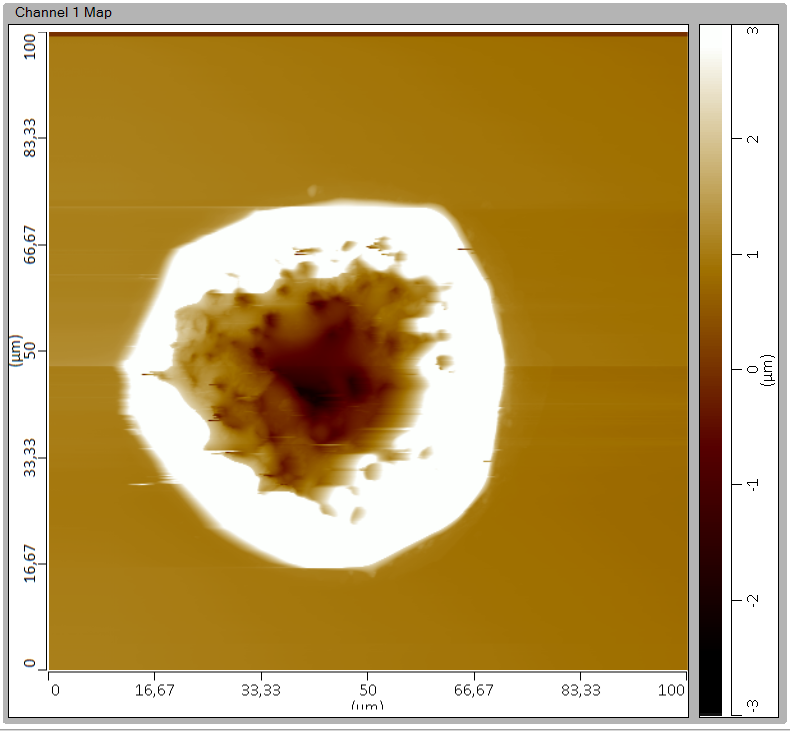 |
|
51
|
Fri Jan 24 17:58:45 2020 |
Loïc Amoudry | Fixed | info | lasers and optics | Optical room | CFBG removed from ThomX CELIA amplifier | The CFBG has been removed successfully and the amplifier is closed now.
The soldering machine had a calibration trouble and was sent to the company for review during holidays.
The output power has been checked and is the same as before (tested until 30W ouput power). |
|
52
|
Wed Jan 29 19:00:02 2020 |
Loïc Amoudry | Fixed | report | lasers and optics | Optical room | Glow discharge cleaner on SBOX mirrors | The glow discharge cleaner has been tested on the SBOX mirrors.
I've put them 1 by 1. Each run was 15min long at 15mA. The mirrors HR face was always away from the electrode and ~35° angle with the support. These values have been choosen thanks to the reference:
We have learned that Air can be compared to Azote and Azote to Oxygen in glow discharge. The main difference is H2O in air which make the glow discharge less stable as say several papers.
|
| Attachment 1: glow.PNG
| 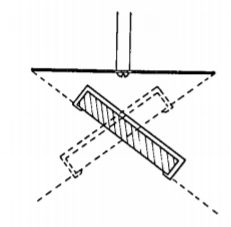 |
|
53
|
Wed Jan 29 19:04:38 2020 |
Loïc Amoudry | Fixed | report | lasers and optics | Optical room | SBOX mirrors cleaned | Today, SBOX mirrors have been cleaned with spin coater on HR face and isoprop on back face. They show similar spots as before.
They also have been installed in the SBOX. The M1 mount has been displaced so the beam doesn't go in its center (spot). |
|
54
|
Wed Feb 5 14:47:16 2020 |
Loïc Amoudry | Fixed | report | lasers and optics | Optical room | SBOX mirrors cleaned | Yesterday, after installation and alignment of mirrors and cavity, the Finesse has been measured with cavity at air pressure, with Koheras and modulation technique.
the measurement has been done 7 times with quite different fits for the Finesse : 21.5k, 21.5k, 23.7k, 21.3k, 22.3k, 22k, 21.5k
But, as the cavity is at air pressure, the lock is not very stable.
we will pump the cavity and make the measurement again.
| Loïc Amoudry wrote: |
|
Today, SBOX mirrors have been cleaned with spin coater on HR face and isoprop on back face. They show similar spots as before.
They also have been installed in the SBOX. The M1 mount has been displaced so the beam doesn't go in its center (spot).
|
|
|
55
|
Wed Feb 5 16:46:01 2020 |
Loïc Amoudry | Fixed | report | lasers and optics | Optical room | SBOX mirrors cleaned | Today we put the cavity to vacuum (~ 0.1 mBar) and we measured again the Finesse with Koheras and modulation technique.
the measurement has been done 3 times with Finesse of 23.2k, 23.8k, 23k
| Loïc Amoudry wrote: |
|
Yesterday, after installation and alignment of mirrors and cavity, the Finesse has been measured with cavity at air pressure, with Koheras and modulation technique.
the measurement has been done 5 times with quite different fits for the Finesse : 21.5k, 21.5k, 23.7k, 21.3k, 22.3k.
But, as the cavity is at air pressure, the lock is not very stable.
we will pump the cavity and make the measurement again.
| Loïc Amoudry wrote: |
|
Today, SBOX mirrors have been cleaned with spin coater on HR face and isoprop on back face. They show similar spots as before.
They also have been installed in the SBOX. The M1 mount has been displaced so the beam doesn't go in its center (spot).
|
|
|
|
56
|
Thu Feb 6 11:01:08 2020 |
Ronic Chiche | Fixed | report | lasers and optics | Optical room | analysis of stored and reflected power | with this Finesse around 22-23k, the technique comparing TRANSMISSION and REFLECTION signals doesn't work, even in taking into account individual photodiode time responses.
It seems that the cavity is not completely stationnary and the shapes are not comparable easily with just a Low Pass Filter related to the Finesse.
Below, an example of the best fit of filtered REFLECTION signal compared to TRANSMISSION signal.... it is clear that the shapes don't fit....
| Ronic Chiche wrote: |
|
the 10th of January, we increased the power of the amplifier to study the cavity transmitted and reflected power signals.
analyzing the noise transfer functions of transmitted and reflected power one could deduce the Finesse of the cavity.
the power of this technic (if it is confirmed) does not depend on the decay time of one signal which depends on the speed of the cut off but on the difference between reflected and transmitted transfer functions,
and then is independant of the cut off speed.
here are 6 analysis of the Finesse when the cavity is cold, depending only on short lock periods.
5 of them agrees on a Finesse around 11k.
the 6th estimation at 40kW stored in the cavity is about 4k but now, we know that the M1 mirror had suddenly a hole for this power... thus the Finesse value is reasonable.
we can then, use the non conservation of TRANS+REF signal to estimate the FInesse decrease when the cavity is hot... to be done
|
|
| Attachment 1: untitled.png
| 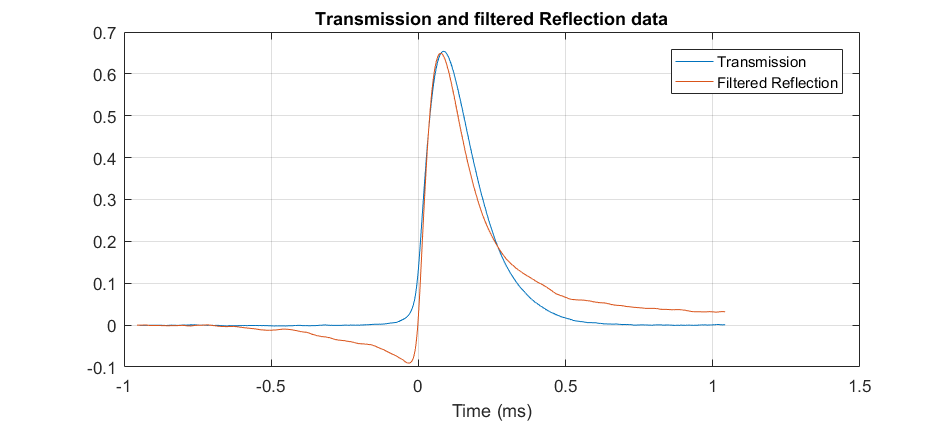 |
|
57
|
Thu Feb 6 16:58:57 2020 |
Loïc Amoudry | Fixed | report | lasers and optics | Optical room | Power up to 48kW crater effect again | As we said, after glow discharge and spin coater we recovered a low power finesse ~23000 (aligning away from the M1 crater).
Today, we have made some power up to 48kW (3A on 3rd stage). At this power, there was no important effect on the transmission which can be compared with the coupling (see image "3A_136mWtrans"). We waited ~20min without aligning and the power dropped slowly (misalignment) to 39kW.
Then we increased the amplifier power to 4A and the power went up to 44kW. At this moment, the strange transmission behavior that we observed before mirror crater, appeared again (see image "4A_126mWtrans"). We also observed a mode deformation with the camera, see image "mode_strange". This shape was not depend of the camera/filter rotation angle and still appear with another camera.
| Loïc Amoudry wrote: |
|
The mirrors went in the cavity the 28th of november (We did several power up to 30kW stored and only one to 40kW then the power went down to 2kW during the run).
Microscope study shows that mirrors get some dust during the handling [travel from microscope to SBOX --> installation --> in SBOX for +1month and power up --> travel to microscope].
Almost all of these dusts can be removed with cleaning.
There is only one important difference between 28th of november and today, a large spot on M1.
|
|
| Attachment 1: 3A_136mWtrans.png
| 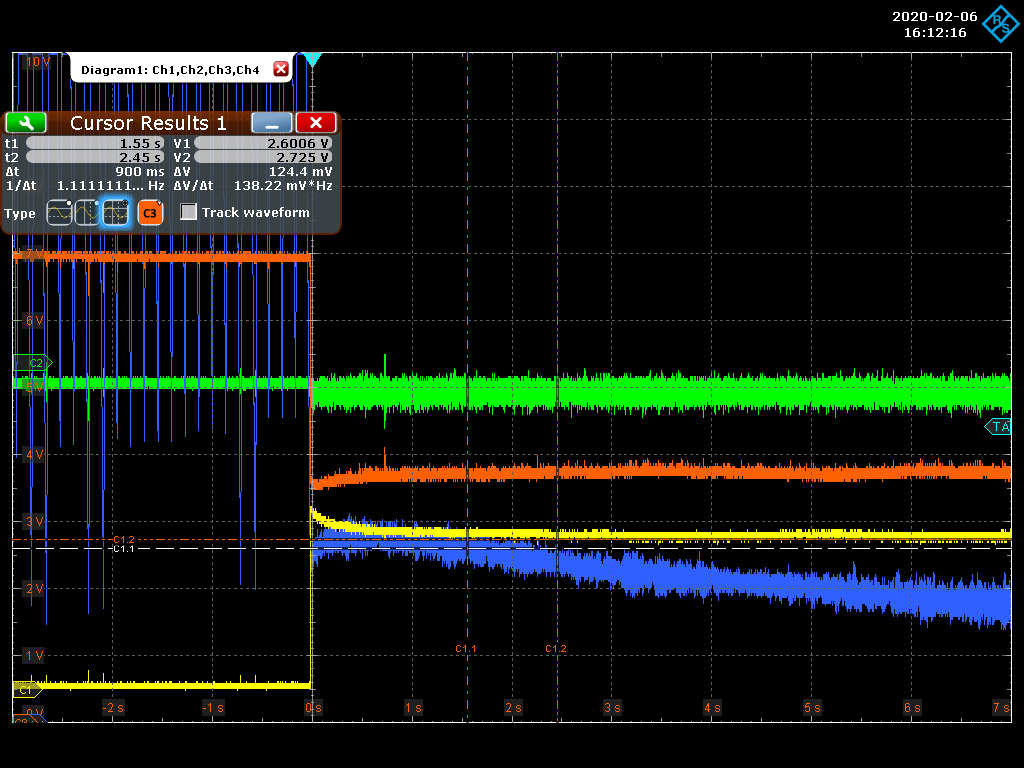 |
| Attachment 2: 4A_126mWtrans.png
| 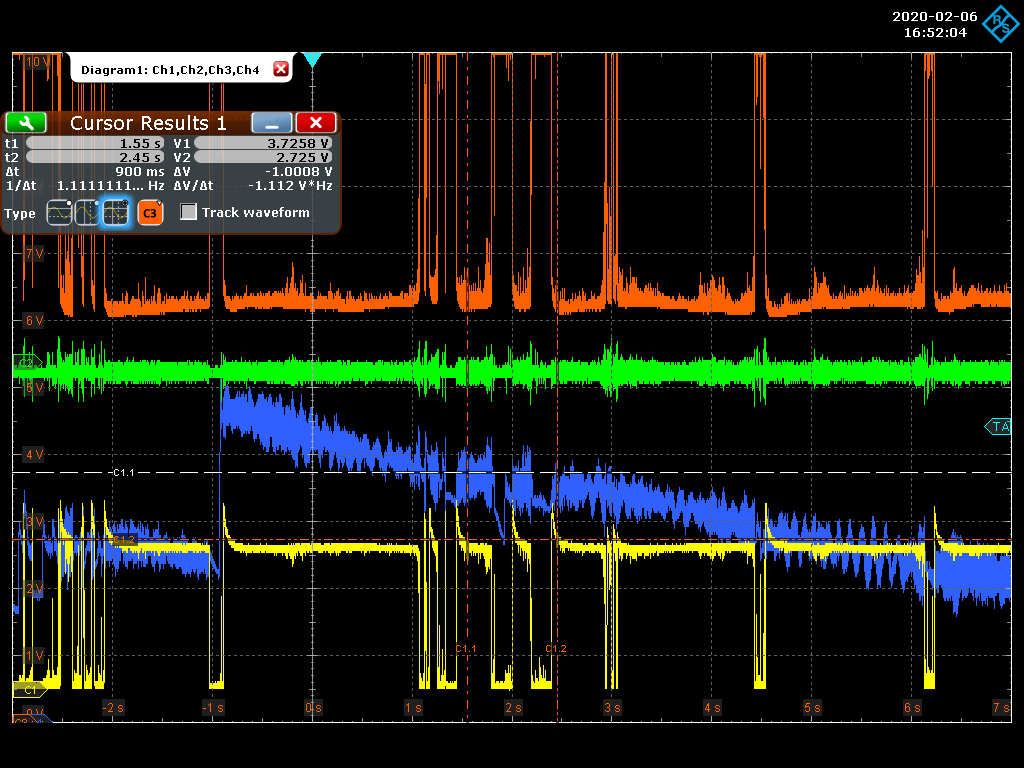 |
| Attachment 3: mode_strange.png
| 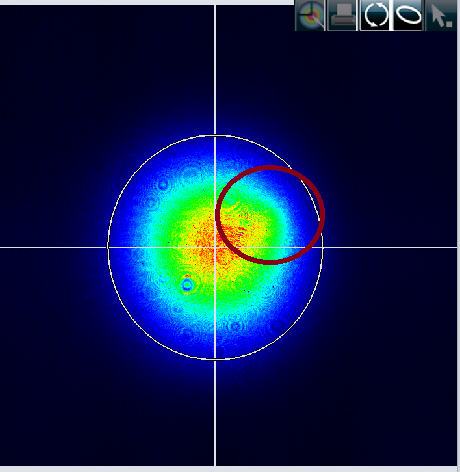 |
|
60
|
Wed Dec 16 12:36:37 2020 |
Loïc Amoudry | Fixed | report | lasers and optics | Optical room | Mirror's cleaning and microscope imaging | On 10th of december 2020 we cleaned the SBOX mirrors and took microscope images (the name of the images indicates what they are).
There are 7 mirror, the initial M1 (spot in the center), M2 (spot on the edge), M3 and M4 which made the 200-400kW and the M2, M3 and M4 SPARE. The difference we make between M3 and M4 SPARE is the number on the box (11 or 13).
We used 3 different cleaning methods : 1st, one spin coater on HR, 2nd one, tissu wipe on AR (wipe with the optical tissu and isoprop) or 3rd one, mirror wiped on tissue (put isoprop on tissu and press AR face of the mirror doing "8" shape 3 times).
The second method is far les efficient as a cleaning method. The image "M3_M4_spare_11_after_cleaning_back.tif " shows the traces let by it and removed by the 3rd method on image "M3_M4_spare_11_after_cleaning_back_second_time_on_tissu.tif".
We can also notice that the spin coater let some trace on the HR face, round shaped, see Image "M3_M4_spare_13_after_cleaning_back.tif". We can propose to use the third method with Acetone on HR face before using spin coater to remove oil or organic particles.
It also lets a trace on the AR face, this is why we clean the AR face with the 2nd method after cleaning it with the spin coater.
Note : The position of the mirrors in the microscope is always the same here. Meaning mirrors are directed so that the arrow (which shows the HR face and is placed on the side of the mirror) is placed on the top of the images. |
| Attachment 1: M1_before_cleaning.tif
|
| Attachment 2: M1_after_cleaning.tif
|
| Attachment 3: M2_after_cleaning.tif
|
| Attachment 4: M3_after_cleaning.tif
|
| Attachment 5: M4_after_cleaning.tif
|
| Attachment 6: M2_spare_before_cleaning.tif
|
| Attachment 7: M2_spare_after_cleaning.tif
|
| Attachment 8: M2_spare_after_cleaning_back.tif
|
| Attachment 9: M3_M4_spare_11_before_cleaning.tif
|
| Attachment 10: M3_M4_spare_11_after_cleaning_back.tif
|
| Attachment 11: M3_M4_spare_11_after_cleaning_back_second_time_on_tissu.tif
|
| Attachment 12: M3_M4_spare_13_before_cleaning.tif
|
| Attachment 13: M3_M4_spare_13_after_cleaning.tif
|
| Attachment 14: M3_M4_spare_13_after_cleaning_back.tif
|
|
61
|
Tue Jan 5 12:38:04 2021 |
Manar Amer | Fixed | report | lasers and optics | Optical room | Transmission Measurements for the Mirrors. |
- Thursday 10 December 2020: First Test Measurement - Inside Box
- The transmission ( T ) for the mirrors of SBOX and ThomX was measured over a range from the center of the mirror up to 5mm.
-
- The first setup was initially done while the mirrorr is installed inside the metal box, when measuring T we observe that there is an erregular change in the power measured as we move azay from the center of the mirror, this was due to reflection of light inside the box. The reflection from the mirror was reflected on the metal inside the box and it was measured by the power meter.
(so for this setup we only took measrements for T along the center of the mirror)
The file stating the measurements is : Test Cavity _ Mirrors transmission _ Inside box
=======================================================================
- Tuesday 15 December 2020 : Second Test - Outside Box
- The setup for T test was moved outside the metal box with the same distances between the injection beam and mirror ~ 50 cm. and the distance between the injection laser and the mirror next to it ~ 9 cm.
-
- Observation for T is done at full angle and at half angle of reflection ( the mirror was tilted to achive this )
-
- we observed that after each change in the distance from the center the power meter needed to be aligned to have the max power.
- after doing all the measurements for the range from the center we made it again for the center only and the consistance of the transmission was good.
The file stating the measurements is : Test Cavity _ Mirrors transmission _ outside box
note: the laser used for the test is the Koheras
details on the pwer used, mirrors, power meter, filters, ....etc are shown in the Excel data sheets
Done By : Loic , Manar and Ahmed |
| Attachment 1: Test_Cavity___Mirrors_transmission___Inside_box.xlsx
|
| Attachment 2: Test_Cavity___Mirrors_transmission___outside_box.xlsx
|
| Attachment 3: set_up_for_transmission_measurement_outside_box.jpeg
| 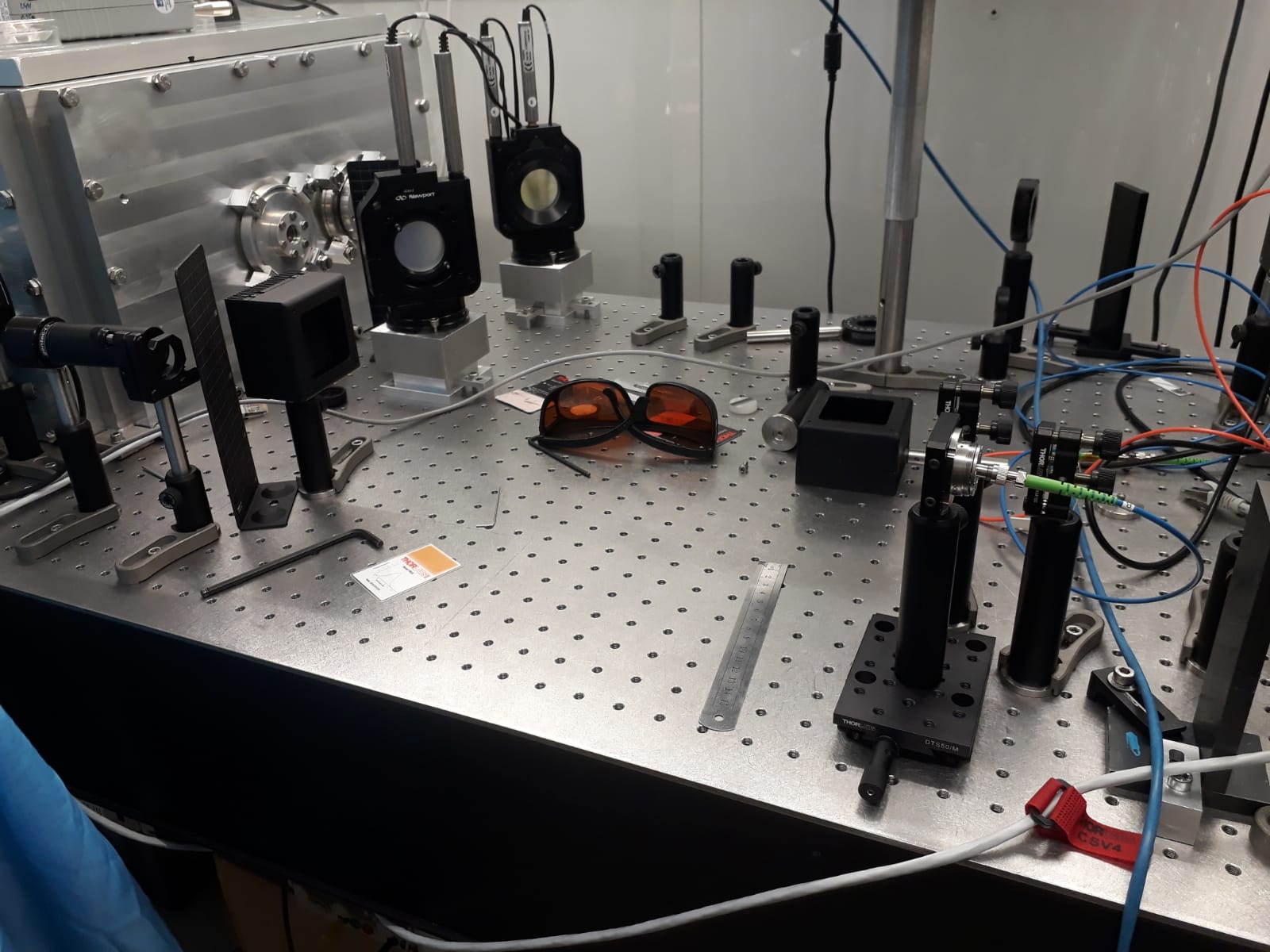 |
| Attachment 4: setup_fot_T_measurement_Injection_laser_and_mirrors_reflected_on_at_angle_and_half_angle.jpeg
|  |
| Attachment 5: Mirrors_Tested.jpeg
| 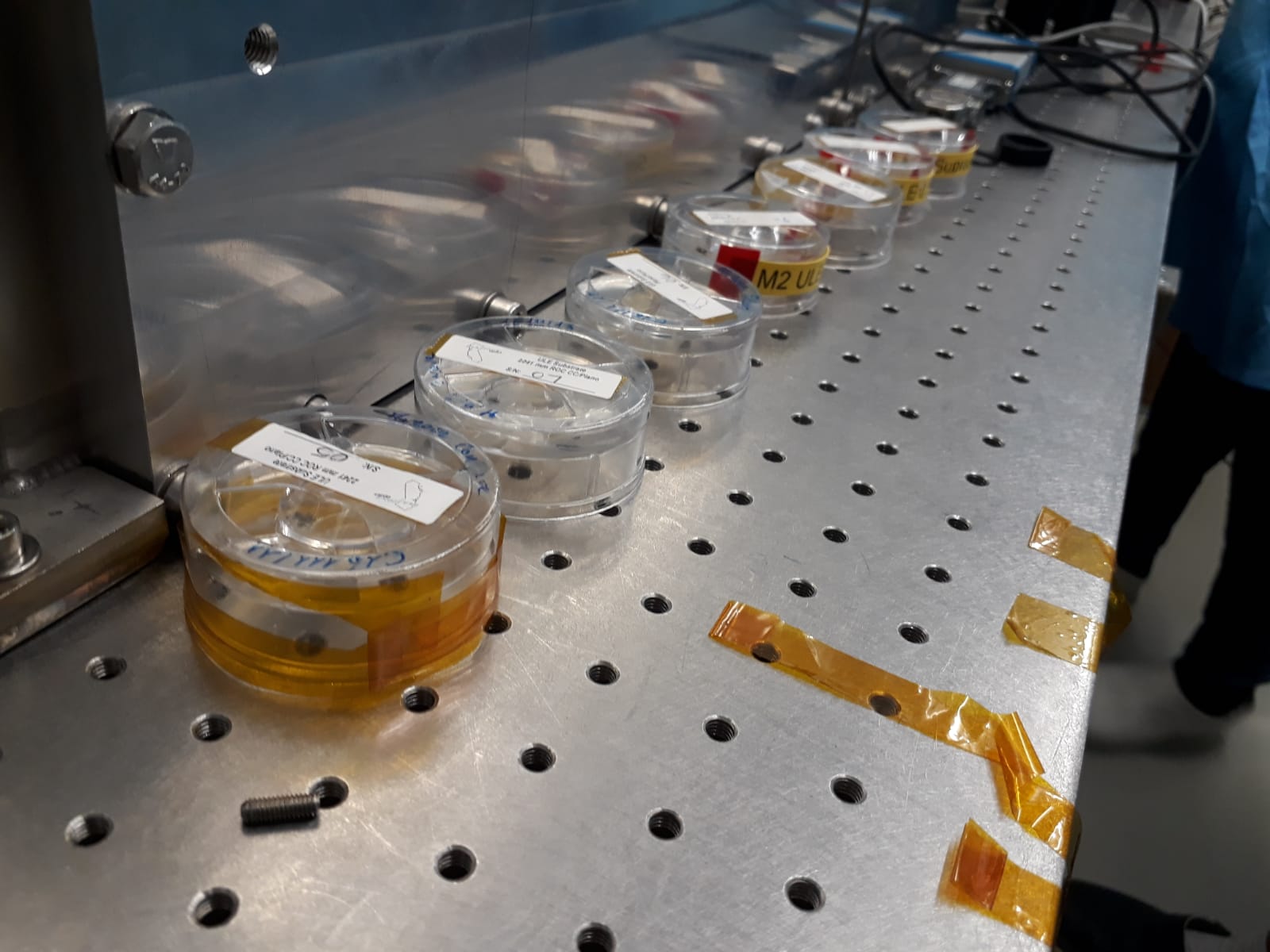 |
| Attachment 6: set_up_for_mirror_and_power_meter.jpeg
| 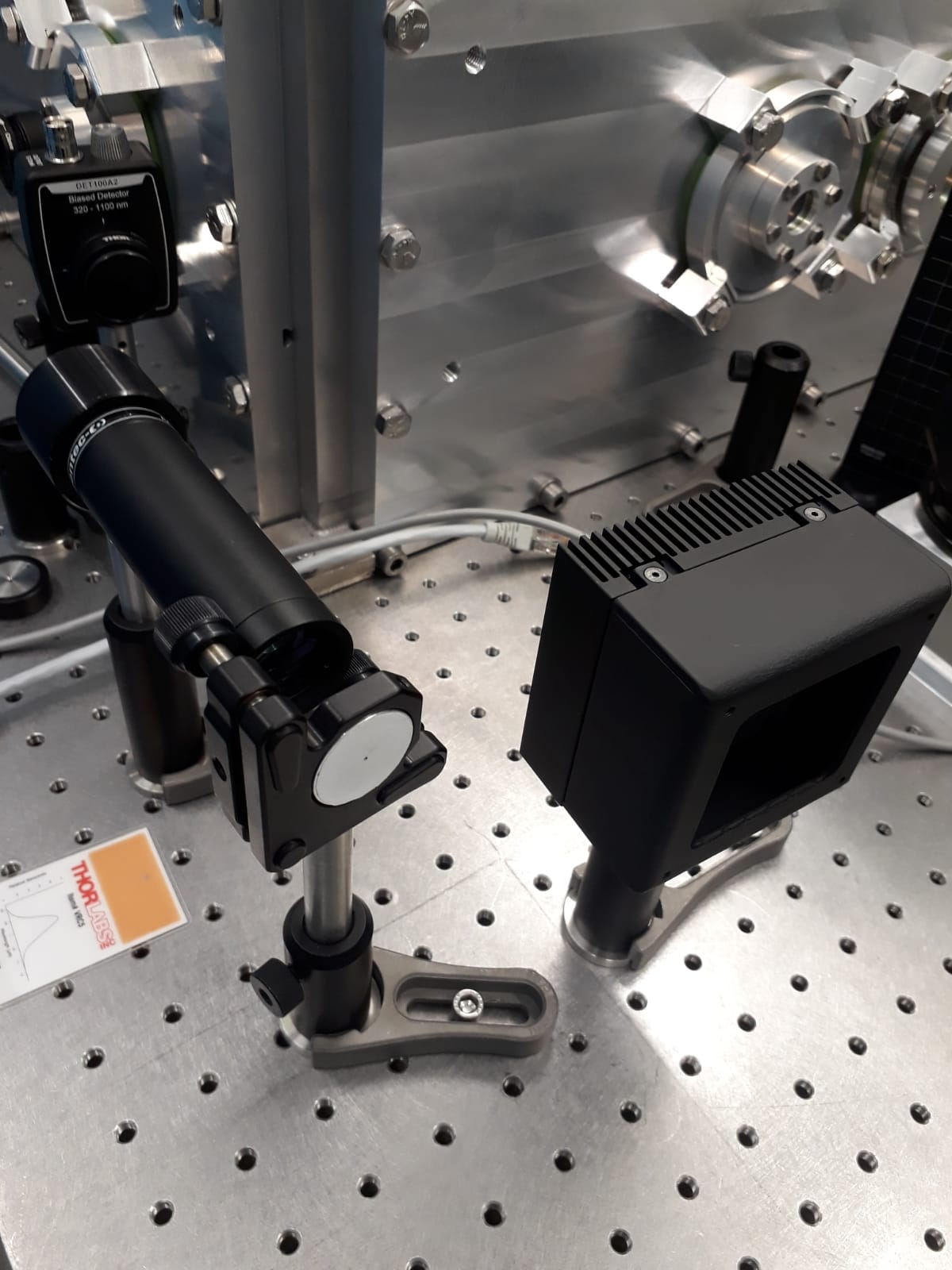 |
|
62
|
Tue Jan 12 10:44:57 2021 |
Ronic Chiche | Fixed | issue | lasers and optics | Optical room | Origami SN2440 133MHz laser power measurment... and failure | we received from NKT the Origami SN2440 133MHz oscillator from repair on 2020/12/17
and we measured the power trend from 2020/12/21 until the whole winter Hollyday, during 14 days and 17h (1 273 334 s).
the power was quite constant, about 58mW (the measurement has been done with the OD2 filter and using a (x20) factor in the software to compensate for it),
except for some peaks at the beginning of the measurement to 60.7mW.
I tried to reproduce these peaks by switching on several lights in the room and the airflow ceil but the effect is neglectable,
thus these peaks seem to really come from the oscillator power.
at the beginning of January, the oscillator suffered a back reflection from the rugged anodized convex surface of the power meter (apparently not from the OD2 filter itself) and the laser stopped immediately to modelock.
the laser power dropped to 0 and the laser controller led started to blink red. NKT has been contacted and they think it could be the laser pump diodes that have been damaged.
for the future, we will have to install a fixed optical isolator from the start, even for short operations.
|
| Attachment 1: 133mhzpower.PNG
| 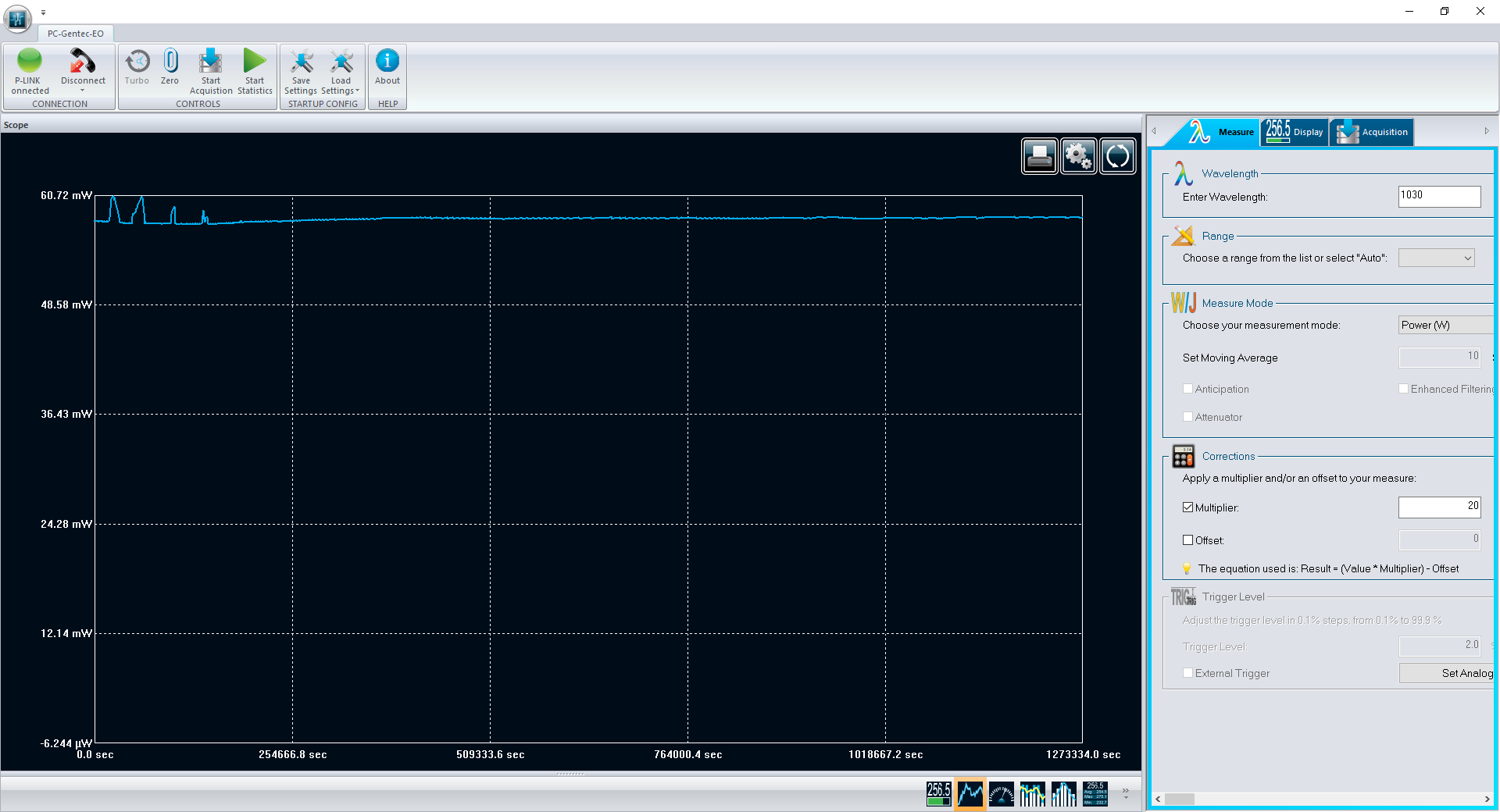 |
| Attachment 2: 133mhz_power_zoom.png
|  |
|
63
|
Thu Jun 10 17:55:15 2021 |
Ronic Chiche | Fixed | info | lasers and optics | Optical room | Origami SN2440 133MHz laser tests | Today, we received the Origami SN2440 133MHz oscillator from repair (NKT mentioned a defective wire inside the controller....)
We immediately installed it behind an isolator (Faraday rotator+PBS+halfwave plate).
the output power is around 60mW.
the spectrum is around 1030nm
the repetition rate is around 133.33MHz |
| Attachment 1: IMG_20210610_161502.jpg
|  |
| Attachment 2: spectre_133MHz.PNG
|  |
| Attachment 3: Screen_0015.png
| 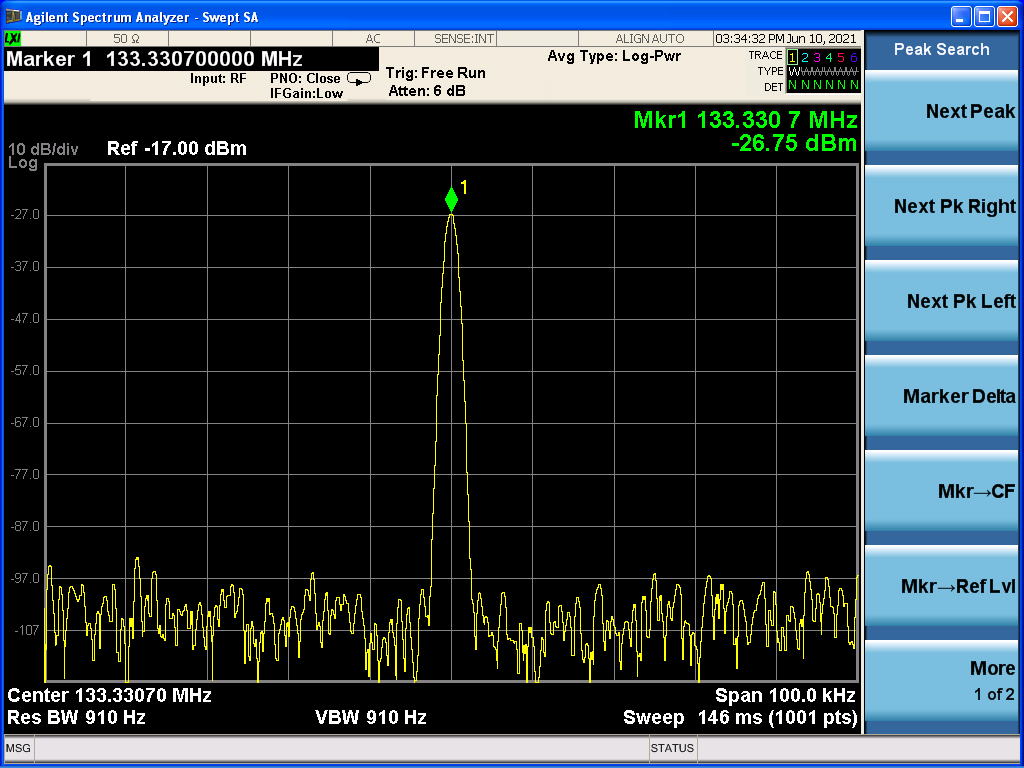 |
|
76
|
Wed Apr 20 19:05:37 2022 |
Manar Amer | Fixed | report | lasers and optics | Optical room | KBox Alignment | Starting with the alignment of the KBox using CW Koheras.
The size of the CW output from the collimator at 1 meter from is ~ 2.4 mm, to be adjusted with lenses to match the cavity !!! (attached image)
For the 2 alignment mirrors, I am only able to control 3 axes for now (motor issue for the fourth to be fixed !!) , Horizontal and vertical for Ma1 and Horizontal for Ma2(closes to injection window).
Started with only irises placed on both the M1 and M2. Placed a beam profiler at the window behind M2 to observe an output beam.
Motors position for the 3 axes and beam shape and position after M2 attached. |
| Attachment 1: CW_Koheras_1meter_ColimatorOutput_NE40A_NE10B_NE01A_Beam.bmp
|
| Attachment 2: CW_Koheras_1meter_ColimatorOutput_NE40A_NE10B_NE01A_BeamFit.png
| 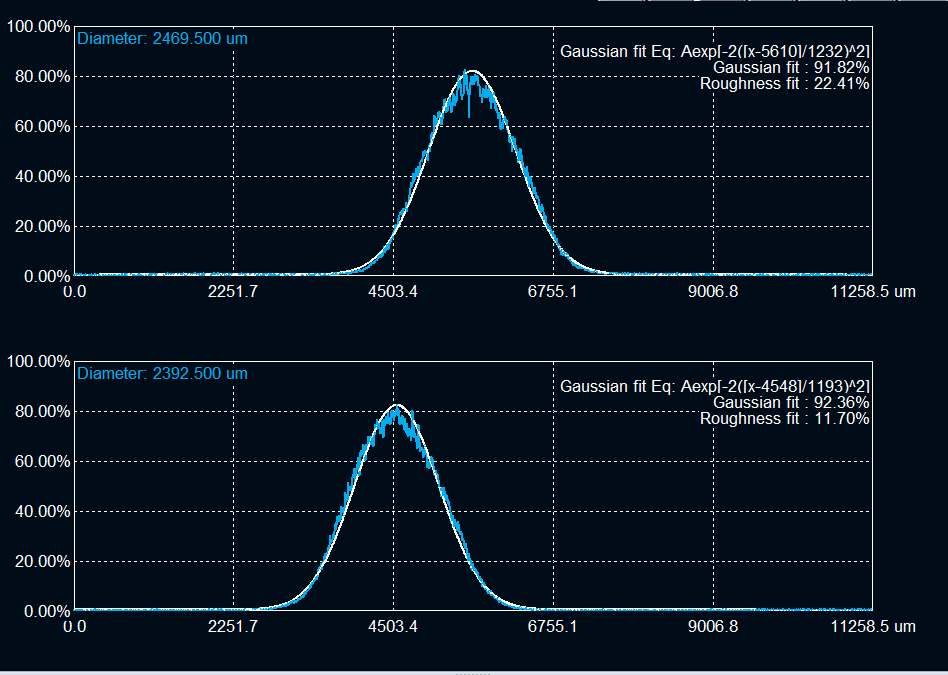 |
| Attachment 3: Ma1_Horizontal_Position.png
| 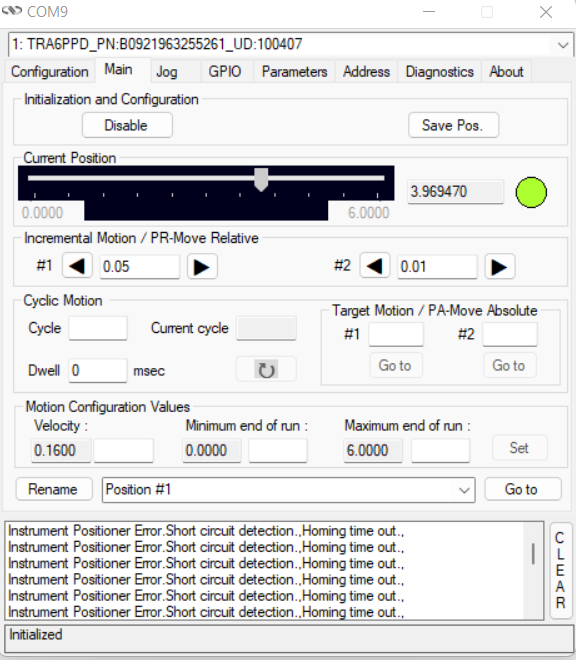 |
| Attachment 4: Ma1_Vertical_Position.png
| 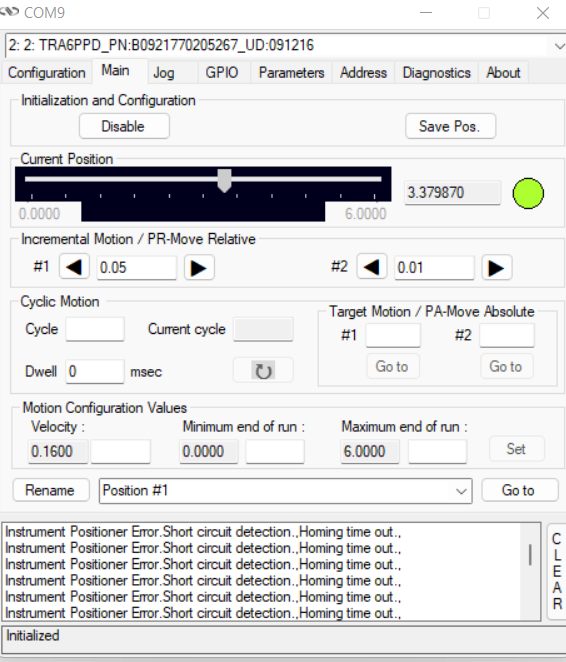 |
| Attachment 5: Ma2_Horizontal_Position.png
| 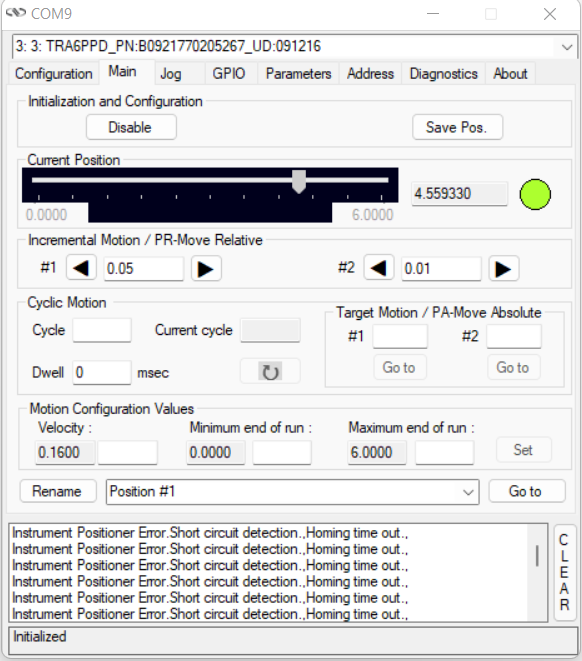 |
| Attachment 6: Transmission_M2_Irises_No_Mirrors_Beam.jpg
|  |
| Attachment 7: Transmission_M2_Irises_No_Mirrors_BeamFit.png
| 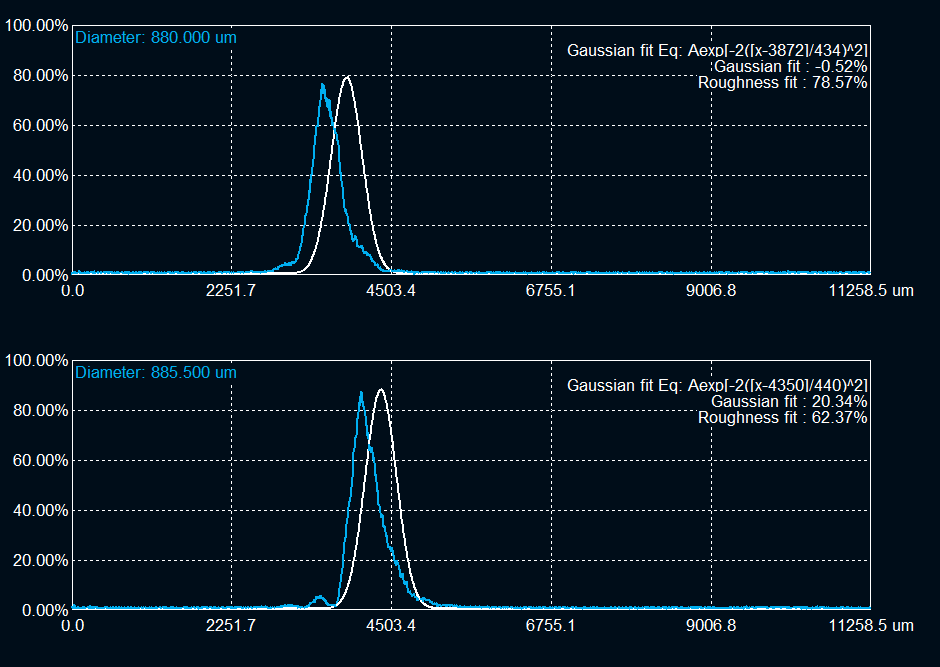 |
|
77
|
Mon Apr 25 17:28:29 2022 |
Manar Amer | Fixed | report | lasers and optics | Optical room | SBox Alignment | SBox alignment, using CW laser Koheras power 1 mW
- Finished M1 and M2 alignment using the diffraction patterns seen on the beam profiler, the beam fit is not very good ?? (image taken)
- Positions of Ma1 and Ma2 motors are registered (image taken)
- Placed Fixed 2 irises at M1 window and M2 window (Image taken while both are closed)
- Distance between the collimator and beam profiler ~ 2 m
- Distance between collimator and M1 diaphragm ~ 1 m
- Distance between collimator and M2 diaphragm ~ 1.6 m
| Manar Amer wrote: |
|
Starting with the alignment of the KBox using CW Koheras.
The size of the CW output from the collimator at 1 meter from is ~ 2.4 mm, to be adjusted with lenses to match the cavity !!! (attached image)
For the 2 alignment mirrors, I am only able to control 3 axes for now (motor issue for the fourth to be fixed !!) , Horizontal and vertical for Ma1 and Horizontal for Ma2(closes to injection window).
Started with only irises placed on both the M1 and M2. Placed a beam profiler at the window behind M2 to observe an output beam.
Motors position for the 3 axes and beam shape and position after M2 attached.
|
|
| Attachment 1: SBox_Setup.jpg
| 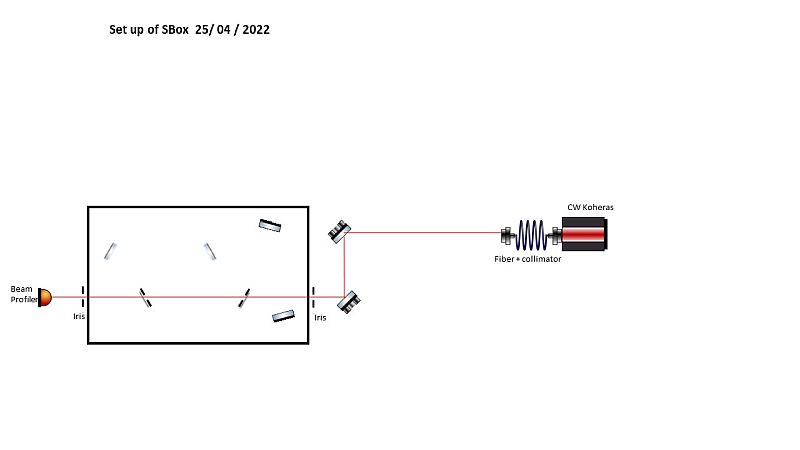 |
| Attachment 2: Ma1_Ma2_Horizontal_Position.png
| 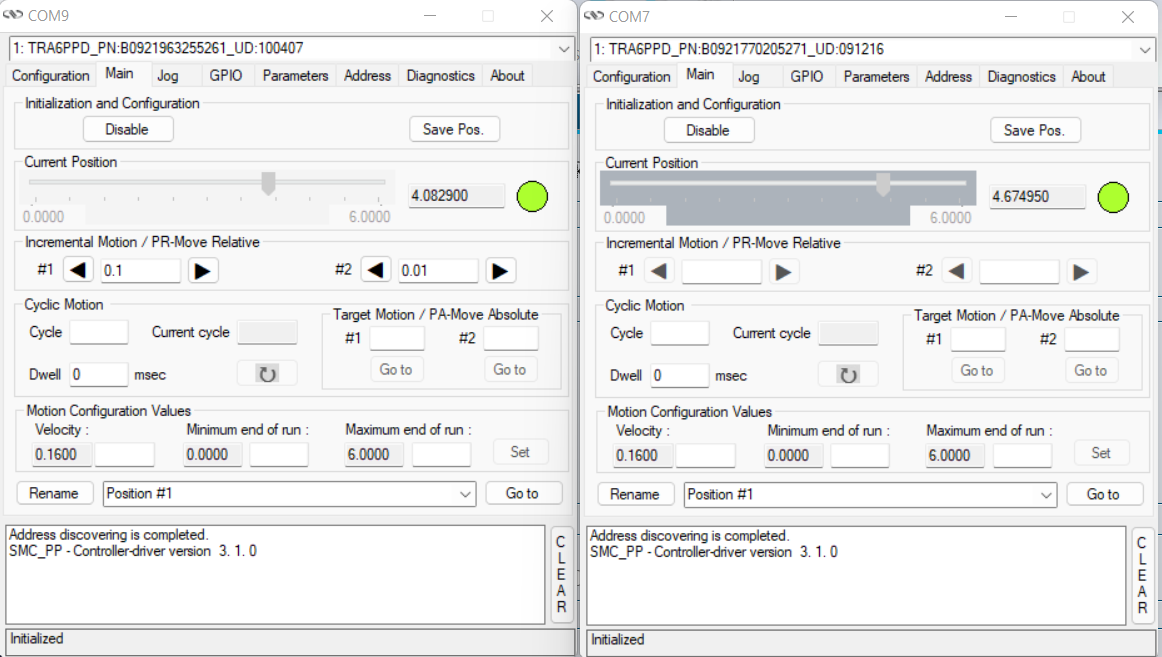 |
| Attachment 3: Ma1_Ma2_Vertical_Position.png
| 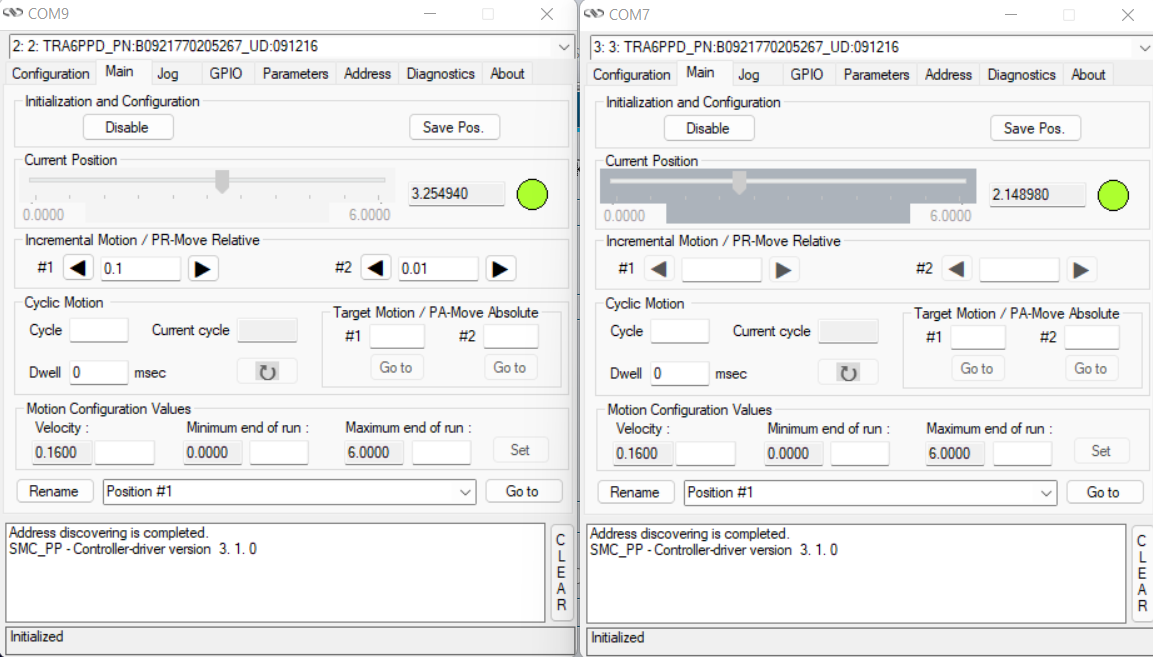 |
| Attachment 4: Output_afterM2_Diaghragm_On_M1_M2_Beam.jpg
|  |
| Attachment 5: Output_afterM2_Diaghragm_On_M1_M2_BeamFit.png
| 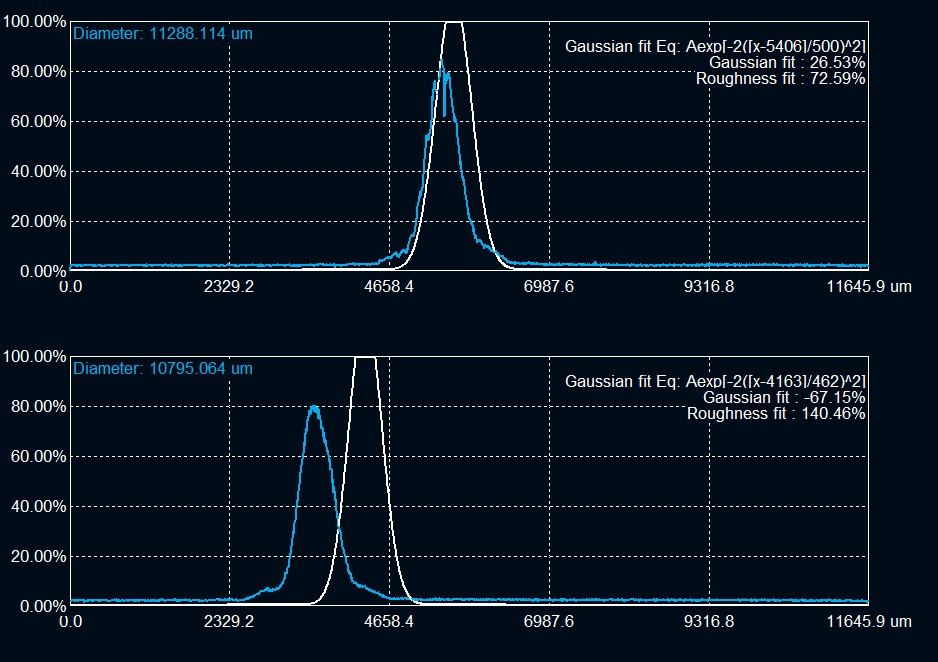 |
| Attachment 6: Output_afterM2_Diaghragm_On_M1_M2_Beam_Outside_Irises_Installed_and_Closed.jpg
|  |
|
78
|
Mon Apr 25 17:58:01 2022 |
Manar Amer | Fixed | report | lasers and optics | Optical room | SBox Alignment | After pointers and Advice from Aurélien,
improvement of the beam alignment through M1 and M2 irises was done.
To improve the image on the beam profiler, I cleaned the alignment mirrors and the windows using pure ethanol and optical lens cleaning tissue,
a significant improvement after cleaning the inside of M2 Window. Images have less dust diffraction rings.
Attached new images of the beam:
- New Ma1 and Ma2 motor position
- After M1 pinhole optimized (saturated)
- After M2 and M1 pinhole optimizing (saturated and not)
| Manar Amer wrote: |
|
SBox alignment, using CW laser Koheras power 1 mW
- Finished M1 and M2 alignment using the diffraction patterns seen on the beam profiler, the beam fit is not very good ?? (image taken)
- Positions of Ma1 and Ma2 motors are registered (image taken)
- Placed Fixed 2 irises at M1 window and M2 window (Image taken while both are closed)
- Distance between the collimator and beam profiler ~ 2 m
- Distance between collimator and M1 diaphragm ~ 1 m
- Distance between collimator and M2 diaphragm ~ 1.6 m
| Manar Amer wrote: |
|
Starting with the alignment of the KBox using CW Koheras.
The size of the CW output from the collimator at 1 meter from is ~ 2.4 mm, to be adjusted with lenses to match the cavity !!! (attached image)
For the 2 alignment mirrors, I am only able to control 3 axes for now (motor issue for the fourth to be fixed !!) , Horizontal and vertical for Ma1 and Horizontal for Ma2(closes to injection window).
Started with only irises placed on both the M1 and M2. Placed a beam profiler at the window behind M2 to observe an output beam.
Motors position for the 3 axes and beam shape and position after M2 attached.
|
|
|
| Attachment 1: Ma1_Ma2_Horizontal_Position_Optimized.png
| 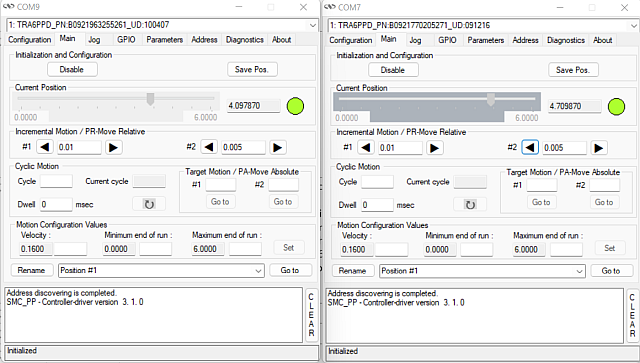 |
| Attachment 2: Ma1_Ma2_Vertical_Position_Optimized.png
| 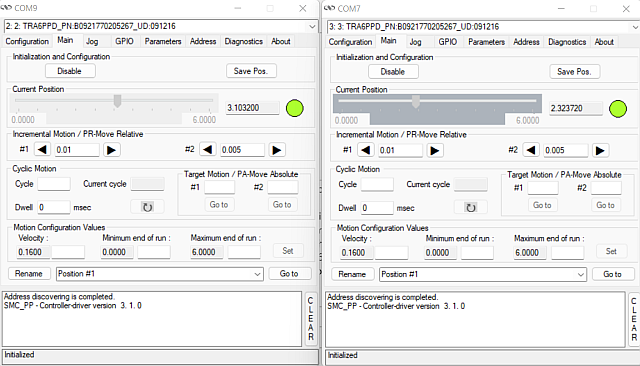 |
| Attachment 3: After_M1_diaphram_1m_Saturated_Beam_Optimized.jpg
| 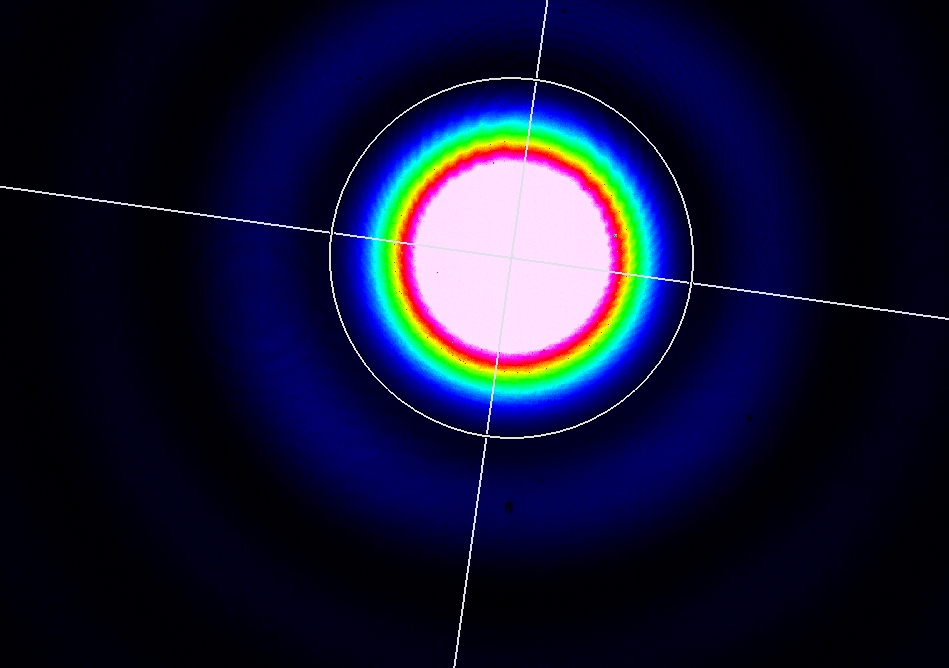 |
| Attachment 4: After_M2_M1_diaphram_Saturated_Beam_Optimized.jpg
| 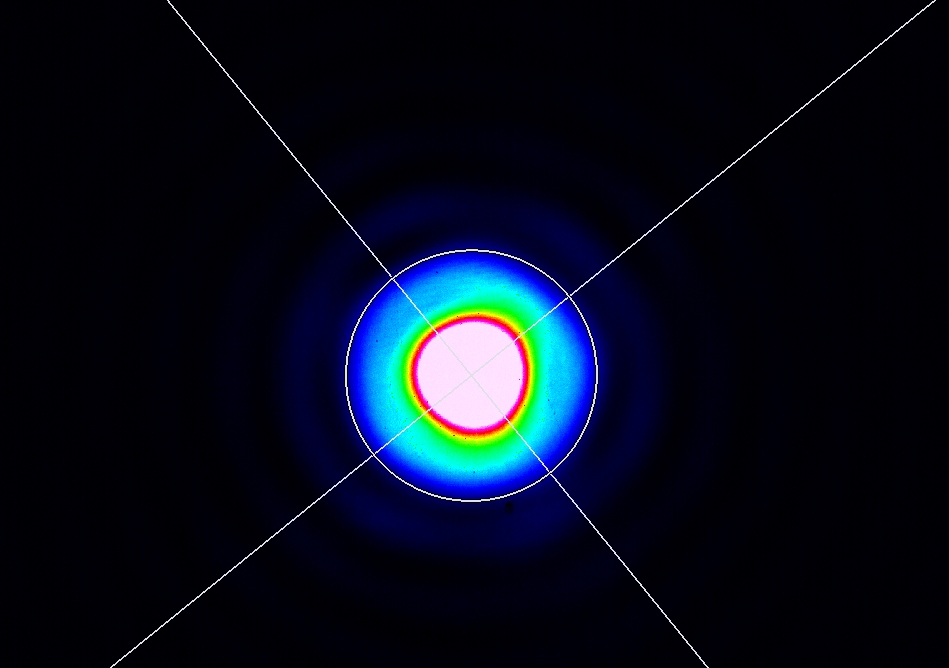 |
| Attachment 5: After_M2_M1_diaphram_Beam_Optimized.jpg
| 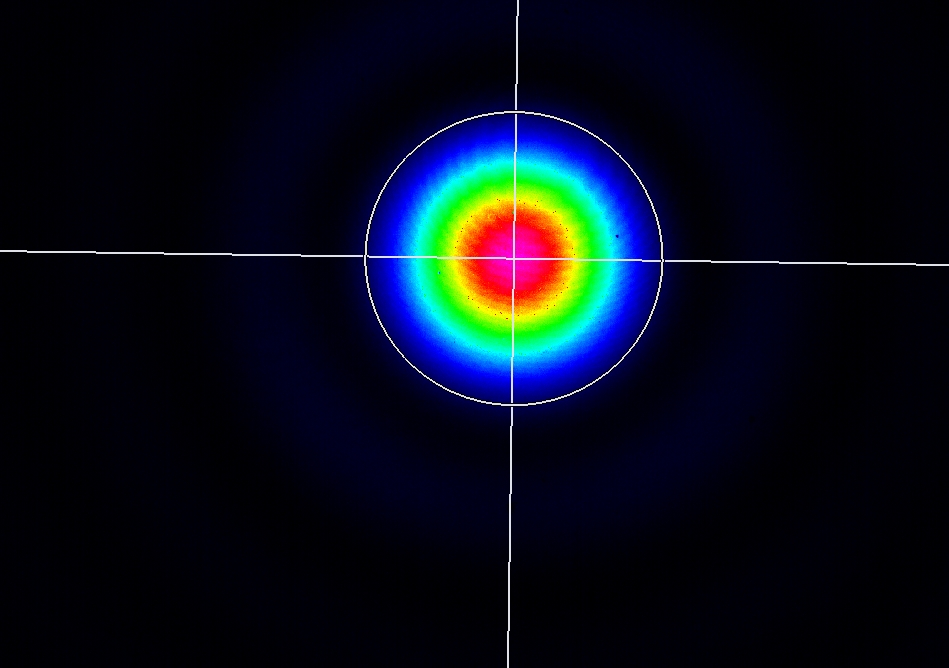 |
|
79
|
Mon Apr 25 18:02:09 2022 |
Manar Amer | Fixed | report | lasers and optics | Optical room | SBox Alignment | Remember to update the position of the reference Irises tomorrow !!!!
| Manar Amer wrote: |
|
After pointers and Advice from Aurélien,
improvement of the beam alignment through M1 and M2 irises was done.
To improve the image on the beam profiler, I cleaned the alignment mirrors and the windows using pure ethanol and optical lens cleaning tissue,
a significant improvement after cleaning the inside of M2 Window. Images have less dust diffraction rings.
Attached new images of the beam:
- New Ma1 and Ma2 motor position
- After M1 pinhole optimized (saturated)
- After M2 and M1 pinhole optimizing (saturated and not)
| Manar Amer wrote: |
|
SBox alignment, using CW laser Koheras power 1 mW
- Finished M1 and M2 alignment using the diffraction patterns seen on the beam profiler, the beam fit is not very good ?? (image taken)
- Positions of Ma1 and Ma2 motors are registered (image taken)
- Placed Fixed 2 irises at M1 window and M2 window (Image taken while both are closed)
- Distance between the collimator and beam profiler ~ 2 m
- Distance between collimator and M1 diaphragm ~ 1 m
- Distance between collimator and M2 diaphragm ~ 1.6 m
| Manar Amer wrote: |
|
Starting with the alignment of the KBox using CW Koheras.
The size of the CW output from the collimator at 1 meter from is ~ 2.4 mm, to be adjusted with lenses to match the cavity !!! (attached image)
For the 2 alignment mirrors, I am only able to control 3 axes for now (motor issue for the fourth to be fixed !!) , Horizontal and vertical for Ma1 and Horizontal for Ma2(closes to injection window).
Started with only irises placed on both the M1 and M2. Placed a beam profiler at the window behind M2 to observe an output beam.
Motors position for the 3 axes and beam shape and position after M2 attached.
|
|
|
|
|
80
|
Tue Apr 26 20:08:10 2022 |
Manar Amer | Fixed | report | lasers and optics | Optical room | SBox Alignment |
- Adjust the placement of the Irises (done at the start of the day, adjusted at the end when M1 mirror was placed)
- Improvement on the Ma1 and Ma2 (The Alignment Mirrors)
- Improves the alignment a bit. There is an observation where there is no symmetry in the image, concluded to be because of the pinholes that are usually used for the alignment the circle cut is not symmetric (took images on phone of pinholes)
- This explains why, for the pinhole used on M1, we see a little more symmetry than the pinhole used on M2.
-
- Placed M1 mirror from Sbox (with damage spot in the middle), after cleaning it using the spincoater, only used to adjust the injection into the mirror where it will give Horizontal displacement due to the thickness of the mirror.
- Last position of the motors attached
- Installed the 2 dielectric mirrors for the reflection line
- Did a rough alignment for the reflection line to have it exit through the reflection window.
Note about mirrors : They were cleaned a year a go and placed in the boxes. When opened the box and seen under microscope they were very dirty with dust particle
Specially from the back, I believe the boxes have dust in them (to be verified under the UV light / Microscope !!!!!!!! )
| Manar Amer wrote: |
|
Remember to update the position of the reference Irises tomorrow !!!!
| Manar Amer wrote: |
|
After pointers and Advice from Aurélien,
improvement of the beam alignment through M1 and M2 irises was done.
To improve the image on the beam profiler, I cleaned the alignment mirrors and the windows using pure ethanol and optical lens cleaning tissue,
a significant improvement after cleaning the inside of M2 Window. Images have less dust diffraction rings.
Attached new images of the beam:
- New Ma1 and Ma2 motor position
- After M1 pinhole optimized (saturated)
- After M2 and M1 pinhole optimizing (saturated and not)
| Manar Amer wrote: |
|
SBox alignment, using CW laser Koheras power 1 mW
- Finished M1 and M2 alignment using the diffraction patterns seen on the beam profiler, the beam fit is not very good ?? (image taken)
- Positions of Ma1 and Ma2 motors are registered (image taken)
- Placed Fixed 2 irises at M1 window and M2 window (Image taken while both are closed)
- Distance between the collimator and beam profiler ~ 2 m
- Distance between collimator and M1 diaphragm ~ 1 m
- Distance between collimator and M2 diaphragm ~ 1.6 m
| Manar Amer wrote: |
|
Starting with the alignment of the KBox using CW Koheras.
The size of the CW output from the collimator at 1 meter from is ~ 2.4 mm, to be adjusted with lenses to match the cavity !!! (attached image)
For the 2 alignment mirrors, I am only able to control 3 axes for now (motor issue for the fourth to be fixed !!) , Horizontal and vertical for Ma1 and Horizontal for Ma2(closes to injection window).
Started with only irises placed on both the M1 and M2. Placed a beam profiler at the window behind M2 to observe an output beam.
Motors position for the 3 axes and beam shape and position after M2 attached.
|
|
|
|
|
| Attachment 1: Pinhole_One.jpg
| 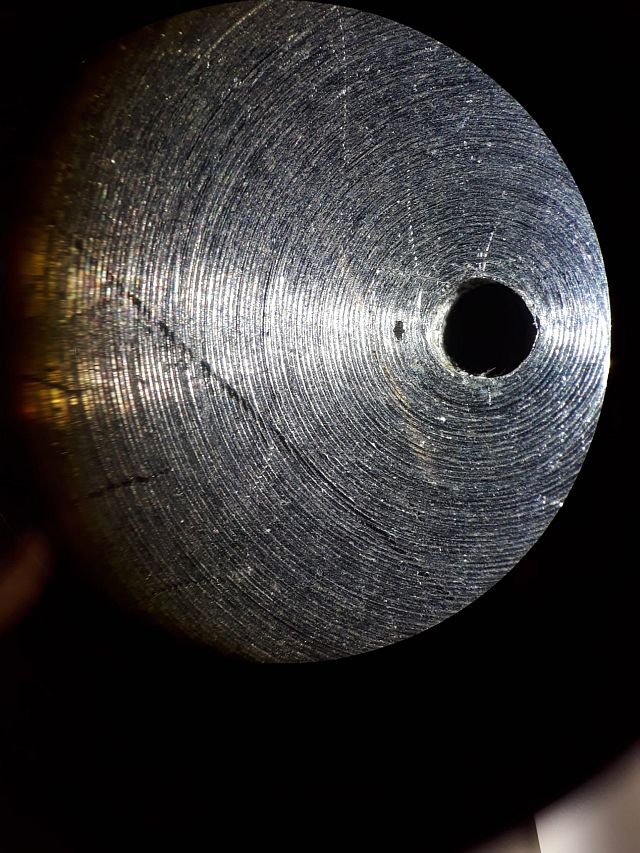 |
| Attachment 2: Pinhole_Two.jpg
| 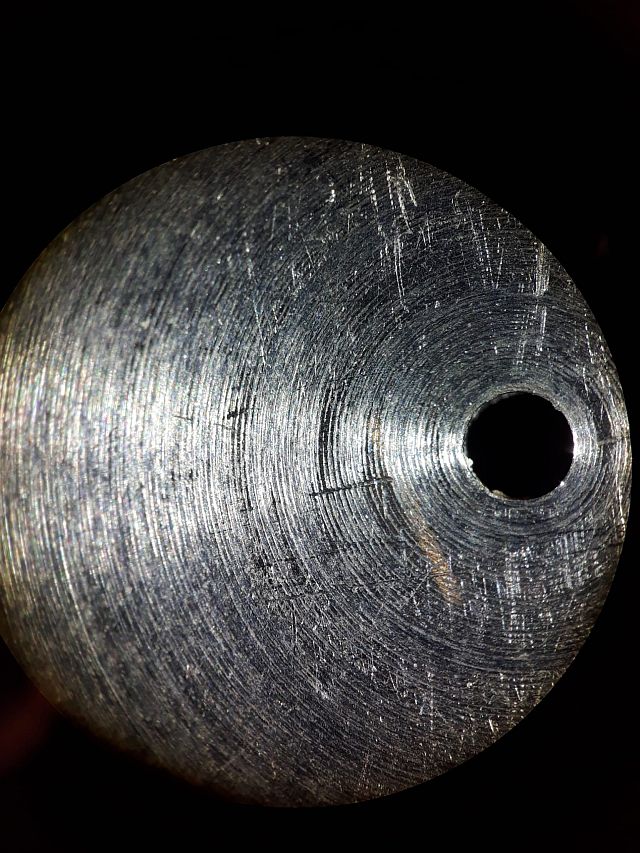 |
| Attachment 3: After_M1_diaphram_Saturated_Beam_Optimized.jpg
| 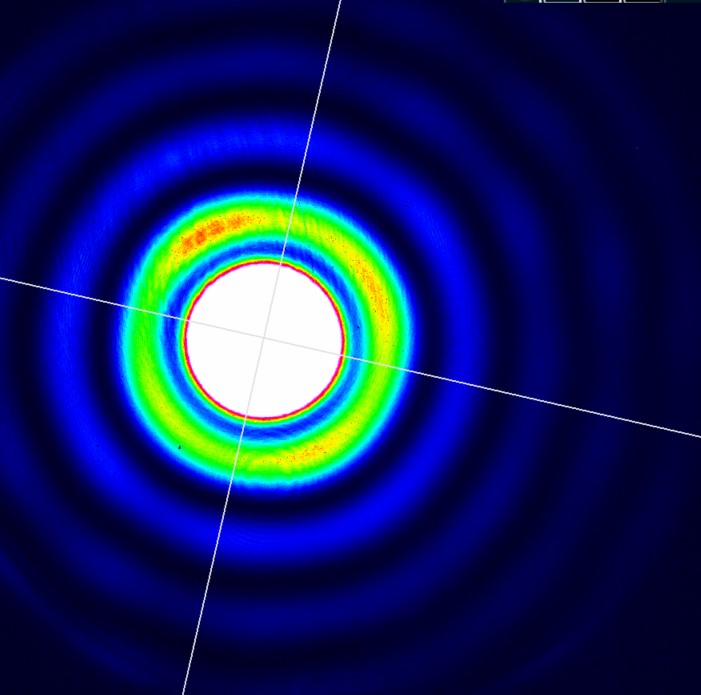 |
| Attachment 4: After_M2_diaphram_Saturated_Beam_Optimized.jpg
| 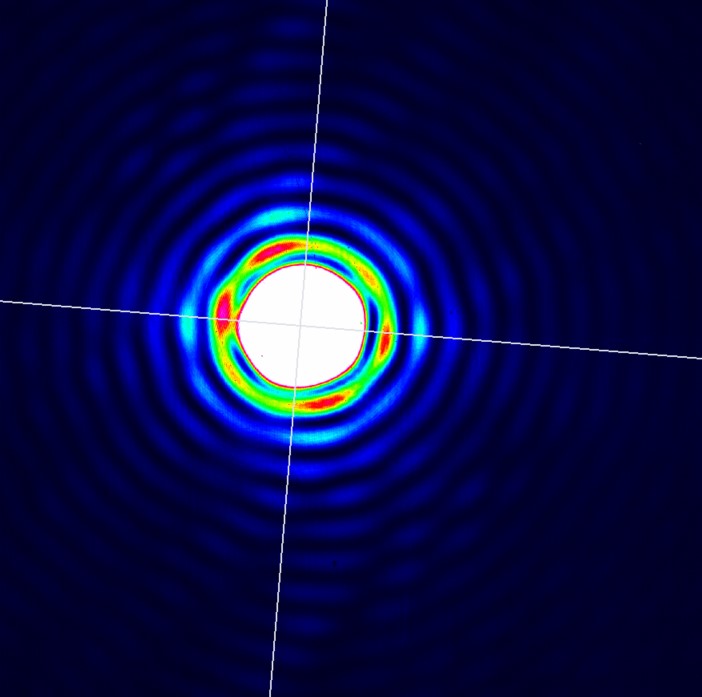 |
| Attachment 5: both_diaphrams_M1_M2.jpg
| 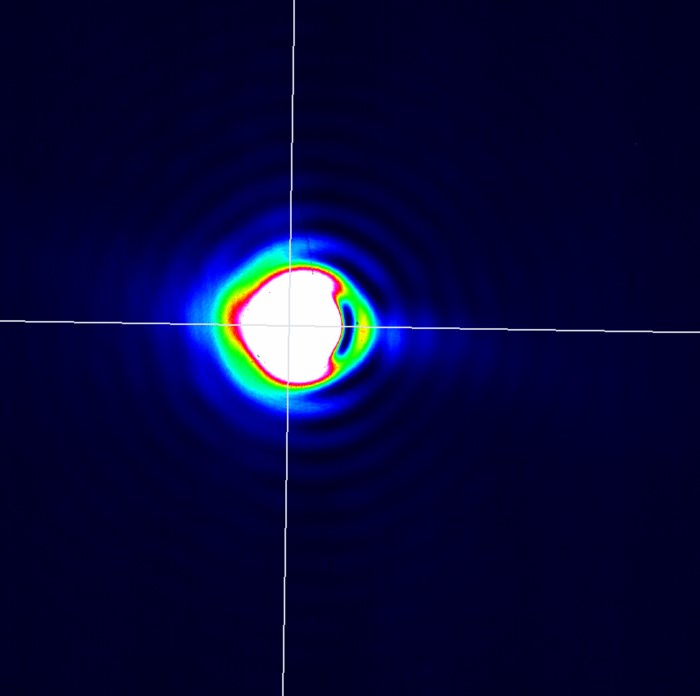 |
| Attachment 6: both_diaphrams_M1_M2_Optimized.jpg
| 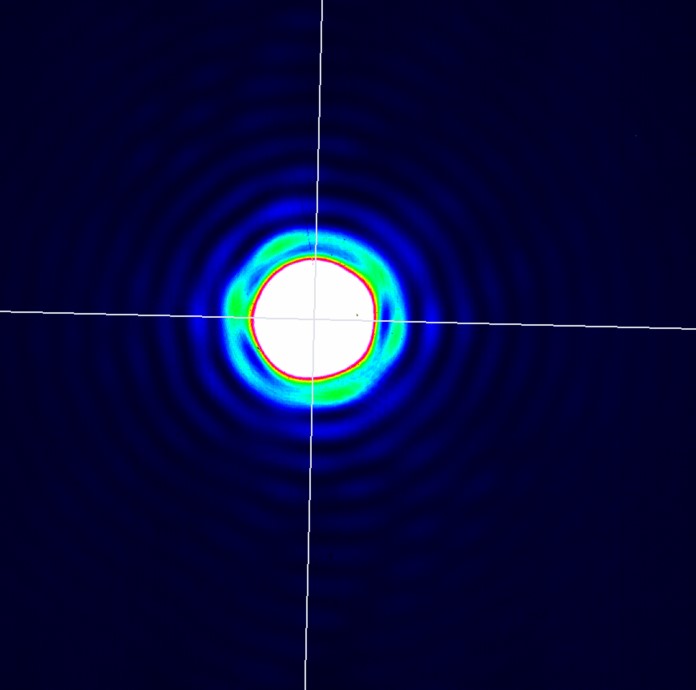 |
| Attachment 7: After_M2_diaphram_M1_Mirror_Installed_SBox_Saturated_Beam_Optimized.jpg
| 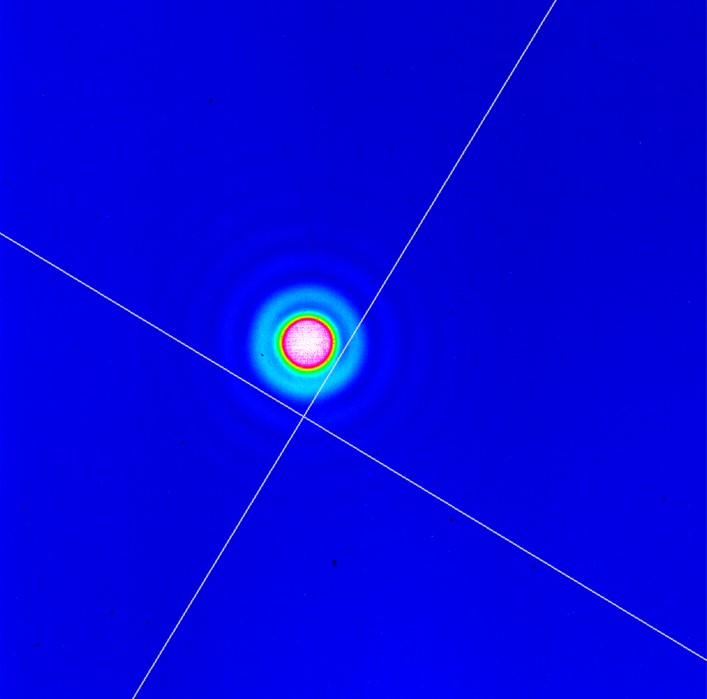 |
| Attachment 8: Ma1_Ma2_Horizontal_Position_Optimized_M1_Mirror_Installes_SBox.png
|  |
| Attachment 9: Ma1_Ma2_Vertical_Position_Optimized_M1_Mirror_Installes_SBox.png
|  |
|
81
|
Wed Apr 27 22:13:37 2022 |
Manar Amer | Fixed | report | lasers and optics | Optical room | SBox Alignment | Finished the alignment of the SBox with M1 of SBox placed, to be changed to gamma factory mirror later
Observed what seems to be transmission through M2 mirror, to be confirmed. image attached shows it
a PowerPoint attached showing the details of today's work.
| Manar Amer wrote: |
- Adjust the placement of the Irises (done at the start of the day, adjusted at the end when M1 mirror was placed)
- Improvement on the Ma1 and Ma2 (The Alignment Mirrors)
- Improves the alignment a bit. There is an observation where there is no symmetry in the image, concluded to be because of the pinholes that are usually used for the alignment the circle cut is not symmetric (took images on phone of pinholes)
- This explains why, for the pinhole used on M1, we see a little more symmetry than the pinhole used on M2.
-
- Placed M1 mirror from Sbox (with damage spot in the middle), after cleaning it using the spincoater, only used to adjust the injection into the mirror where it will give Horizontal displacement due to the thickness of the mirror.
- Last position of the motors attached
- Installed the 2 dielectric mirrors for the reflection line
- Did a rough alignment for the reflection line to have it exit through the reflection window.
Note about mirrors : They were cleaned a year a go and placed in the boxes. When opened the box and seen under microscope they were very dirty with dust particle
Specially from the back, I believe the boxes have dust in them (to be verified under the UV light / Microscope !!!!!!!! )
| Manar Amer wrote: |
|
Remember to update the position of the reference Irises tomorrow !!!!
| Manar Amer wrote: |
|
After pointers and Advice from Aurélien,
improvement of the beam alignment through M1 and M2 irises was done.
To improve the image on the beam profiler, I cleaned the alignment mirrors and the windows using pure ethanol and optical lens cleaning tissue,
a significant improvement after cleaning the inside of M2 Window. Images have less dust diffraction rings.
Attached new images of the beam:
- New Ma1 and Ma2 motor position
- After M1 pinhole optimized (saturated)
- After M2 and M1 pinhole optimizing (saturated and not)
| Manar Amer wrote: |
|
SBox alignment, using CW laser Koheras power 1 mW
- Finished M1 and M2 alignment using the diffraction patterns seen on the beam profiler, the beam fit is not very good ?? (image taken)
- Positions of Ma1 and Ma2 motors are registered (image taken)
- Placed Fixed 2 irises at M1 window and M2 window (Image taken while both are closed)
- Distance between the collimator and beam profiler ~ 2 m
- Distance between collimator and M1 diaphragm ~ 1 m
- Distance between collimator and M2 diaphragm ~ 1.6 m
| Manar Amer wrote: |
|
Starting with the alignment of the KBox using CW Koheras.
The size of the CW output from the collimator at 1 meter from is ~ 2.4 mm, to be adjusted with lenses to match the cavity !!! (attached image)
For the 2 alignment mirrors, I am only able to control 3 axes for now (motor issue for the fourth to be fixed !!) , Horizontal and vertical for Ma1 and Horizontal for Ma2(closes to injection window).
Started with only irises placed on both the M1 and M2. Placed a beam profiler at the window behind M2 to observe an output beam.
Motors position for the 3 axes and beam shape and position after M2 attached.
|
|
|
|
|
|
| Attachment 1: all_mirrorsplaced_after_m2_window.jpg
| 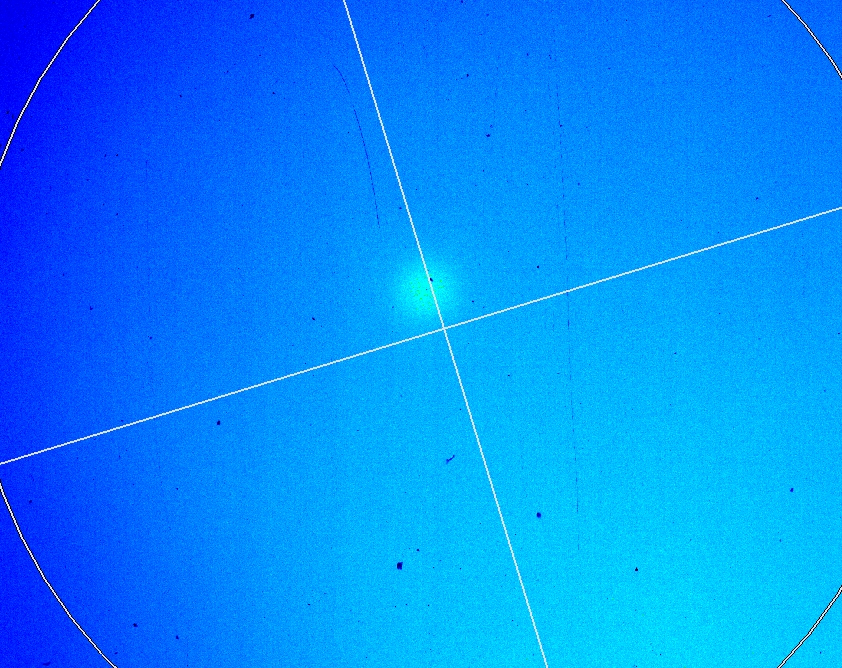 |
| Attachment 2: 20222704_SBox_alignment.pptx
|
|
83
|
Mon May 9 18:36:48 2022 |
Manar Amer | Fixed | report | lasers and optics | Optical room | SBox Alignment | Last week In FP cavity we had all SBox mirrors including the damaged M1 mirror.
The beating was observed with just a slight adjustment on M4 alignment.
In addition, it was also observed while driving the piezo of the CW laser.
In the attached image of the beam at transmission point at M2 mirror, the shape of the beam is deformed.
one of the factors could be related to the damaged spot on M1 mirror. The deformation position can also be seen in the higher order modes.
after changing the injection mirror to Gamma factory M1, this deformation should disappear.
| Manar Amer wrote: |
|
Finished the alignment of the SBox with M1 of SBox placed, to be changed to gamma factory mirror later
Observed what seems to be transmission through M2 mirror, to be confirmed. image attached shows it
a PowerPoint attached showing the details of today's work.
| Manar Amer wrote: |
- Adjust the placement of the Irises (done at the start of the day, adjusted at the end when M1 mirror was placed)
- Improvement on the Ma1 and Ma2 (The Alignment Mirrors)
- Improves the alignment a bit. There is an observation where there is no symmetry in the image, concluded to be because of the pinholes that are usually used for the alignment the circle cut is not symmetric (took images on phone of pinholes)
- This explains why, for the pinhole used on M1, we see a little more symmetry than the pinhole used on M2.
-
- Placed M1 mirror from Sbox (with damage spot in the middle), after cleaning it using the spincoater, only used to adjust the injection into the mirror where it will give Horizontal displacement due to the thickness of the mirror.
- Last position of the motors attached
- Installed the 2 dielectric mirrors for the reflection line
- Did a rough alignment for the reflection line to have it exit through the reflection window.
Note about mirrors : They were cleaned a year a go and placed in the boxes. When opened the box and seen under microscope they were very dirty with dust particle
Specially from the back, I believe the boxes have dust in them (to be verified under the UV light / Microscope !!!!!!!! )
| Manar Amer wrote: |
|
Remember to update the position of the reference Irises tomorrow !!!!
| Manar Amer wrote: |
|
After pointers and Advice from Aurélien,
improvement of the beam alignment through M1 and M2 irises was done.
To improve the image on the beam profiler, I cleaned the alignment mirrors and the windows using pure ethanol and optical lens cleaning tissue,
a significant improvement after cleaning the inside of M2 Window. Images have less dust diffraction rings.
Attached new images of the beam:
- New Ma1 and Ma2 motor position
- After M1 pinhole optimized (saturated)
- After M2 and M1 pinhole optimizing (saturated and not)
| Manar Amer wrote: |
|
SBox alignment, using CW laser Koheras power 1 mW
- Finished M1 and M2 alignment using the diffraction patterns seen on the beam profiler, the beam fit is not very good ?? (image taken)
- Positions of Ma1 and Ma2 motors are registered (image taken)
- Placed Fixed 2 irises at M1 window and M2 window (Image taken while both are closed)
- Distance between the collimator and beam profiler ~ 2 m
- Distance between collimator and M1 diaphragm ~ 1 m
- Distance between collimator and M2 diaphragm ~ 1.6 m
| Manar Amer wrote: |
|
Starting with the alignment of the KBox using CW Koheras.
The size of the CW output from the collimator at 1 meter from is ~ 2.4 mm, to be adjusted with lenses to match the cavity !!! (attached image)
For the 2 alignment mirrors, I am only able to control 3 axes for now (motor issue for the fourth to be fixed !!) , Horizontal and vertical for Ma1 and Horizontal for Ma2(closes to injection window).
Started with only irises placed on both the M1 and M2. Placed a beam profiler at the window behind M2 to observe an output beam.
Motors position for the 3 axes and beam shape and position after M2 attached.
|
|
|
|
|
|
|
| Attachment 1: Beating_TM00_SBox_damaged_M1.jpg
| 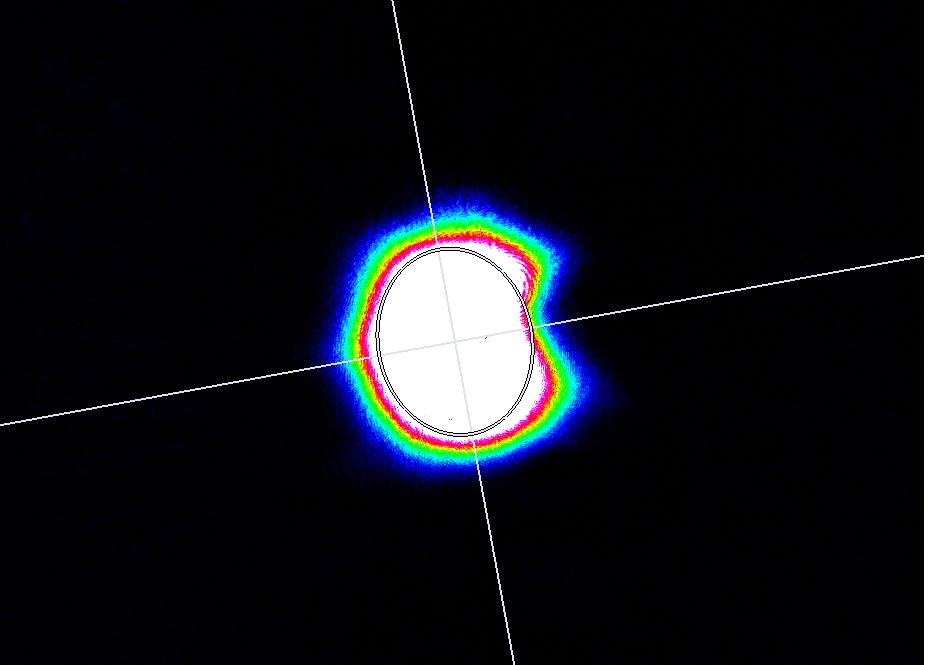 |
| Attachment 2: Beating_HigherOrder_SBox_damaged_M1.jpg
| 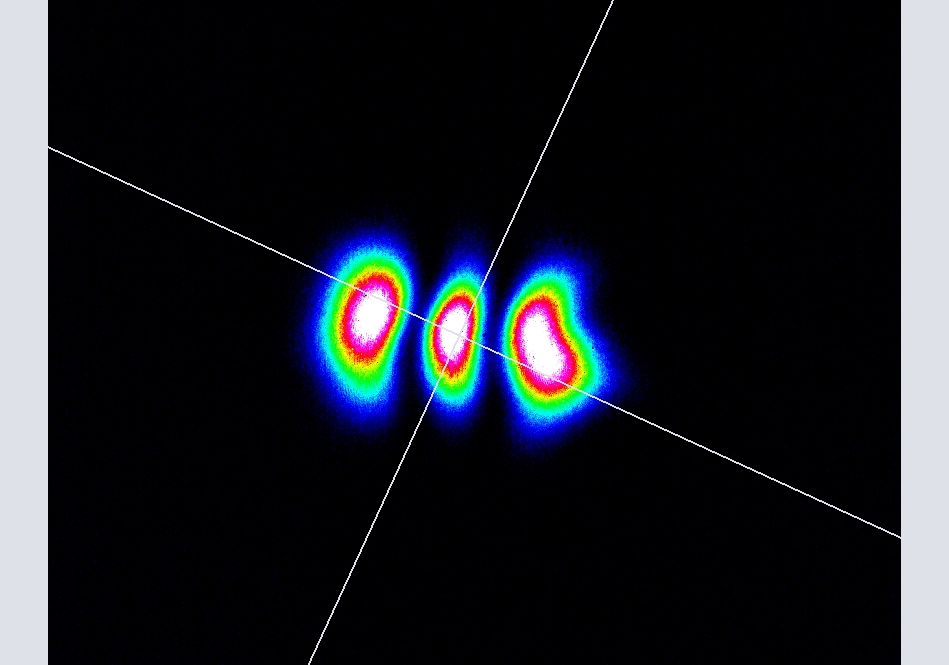 |
|
84
|
Mon May 9 19:05:35 2022 |
Manar Amer | Fixed | report | lasers and optics | Optical room | SBox Alignment | Today; replaced the M1 SBox mirror with M1 from gamma factory , following the previous alignment.
Removed all mirrors and cleaned them one by one.
Started with no M1, placed M2 did its alignment through M3 pinhole, then placed M3 aligned it through M4 pinhole, then placed M4 aligned it through M1 pinhole.
Placed M1 Gamma factory at the end
Note: mirror is new was not used before, took image on microscope there was no dust in the center, but there was little on the edges (cleaned it using spin-coater)
beating of fundamental mode observed (at M2 transmission) immediately with very higher order modes, slight adjustment on M4 suppressed them.
The beam is not circular and still has some deformation, M1 was changed, so it could be a damaged point at one of the other mirrors (to be investigated tomorrow)!!
No significant damage seen on the other mirrors.
|
Manar Amer wrote:
|
|
Last week In FP cavity we had all SBox mirrors including the damaged M1 mirror.
The beating was observed with just a slight adjustment on M4 alignment.
In addition, it was also observed while driving the piezo of the CW laser.
In the attached image of the beam at transmission point at M2 mirror, the shape of the beam is deformed.
one of the factors could be related to the damaged spot on M1 mirror. The deformation position can also be seen in the higher order modes.
after changing the injection mirror to Gamma factory M1, this deformation should disappear.
| Manar Amer wrote: |
|
Finished the alignment of the SBox with M1 of SBox placed, to be changed to gamma factory mirror later
Observed what seems to be transmission through M2 mirror, to be confirmed. image attached shows it
a PowerPoint attached showing the details of today's work.
| Manar Amer wrote: |
- Adjust the placement of the Irises (done at the start of the day, adjusted at the end when M1 mirror was placed)
- Improvement on the Ma1 and Ma2 (The Alignment Mirrors)
- Improves the alignment a bit. There is an observation where there is no symmetry in the image, concluded to be because of the pinholes that are usually used for the alignment the circle cut is not symmetric (took images on phone of pinholes)
- This explains why, for the pinhole used on M1, we see a little more symmetry than the pinhole used on M2.
-
- Placed M1 mirror from Sbox (with damage spot in the middle), after cleaning it using the spincoater, only used to adjust the injection into the mirror where it will give Horizontal displacement due to the thickness of the mirror.
- Last position of the motors attached
- Installed the 2 dielectric mirrors for the reflection line
- Did a rough alignment for the reflection line to have it exit through the reflection window.
Note about mirrors : They were cleaned a year a go and placed in the boxes. When opened the box and seen under microscope they were very dirty with dust particle
Specially from the back, I believe the boxes have dust in them (to be verified under the UV light / Microscope !!!!!!!! )
| Manar Amer wrote: |
|
Remember to update the position of the reference Irises tomorrow !!!!
| Manar Amer wrote: |
|
After pointers and Advice from Aurélien,
improvement of the beam alignment through M1 and M2 irises was done.
To improve the image on the beam profiler, I cleaned the alignment mirrors and the windows using pure ethanol and optical lens cleaning tissue,
a significant improvement after cleaning the inside of M2 Window. Images have less dust diffraction rings.
Attached new images of the beam:
- New Ma1 and Ma2 motor position
- After M1 pinhole optimized (saturated)
- After M2 and M1 pinhole optimizing (saturated and not)
| Manar Amer wrote: |
|
SBox alignment, using CW laser Koheras power 1 mW
- Finished M1 and M2 alignment using the diffraction patterns seen on the beam profiler, the beam fit is not very good ?? (image taken)
- Positions of Ma1 and Ma2 motors are registered (image taken)
- Placed Fixed 2 irises at M1 window and M2 window (Image taken while both are closed)
- Distance between the collimator and beam profiler ~ 2 m
- Distance between collimator and M1 diaphragm ~ 1 m
- Distance between collimator and M2 diaphragm ~ 1.6 m
| Manar Amer wrote: |
|
Starting with the alignment of the KBox using CW Koheras.
The size of the CW output from the collimator at 1 meter from is ~ 2.4 mm, to be adjusted with lenses to match the cavity !!! (attached image)
For the 2 alignment mirrors, I am only able to control 3 axes for now (motor issue for the fourth to be fixed !!) , Horizontal and vertical for Ma1 and Horizontal for Ma2(closes to injection window).
Started with only irises placed on both the M1 and M2. Placed a beam profiler at the window behind M2 to observe an output beam.
Motors position for the 3 axes and beam shape and position after M2 attached.
|
|
|
|
|
|
|
|
| Attachment 1: M2_alignment_M3_pinhole.jpg
| 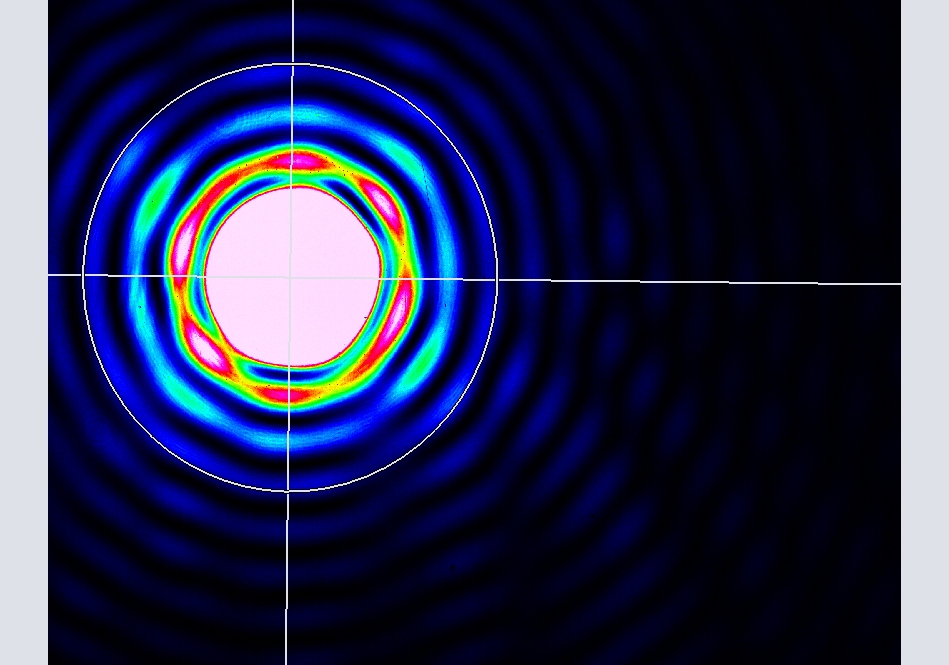 |
| Attachment 2: M3_alignment_M4_pinhole.jpg
| 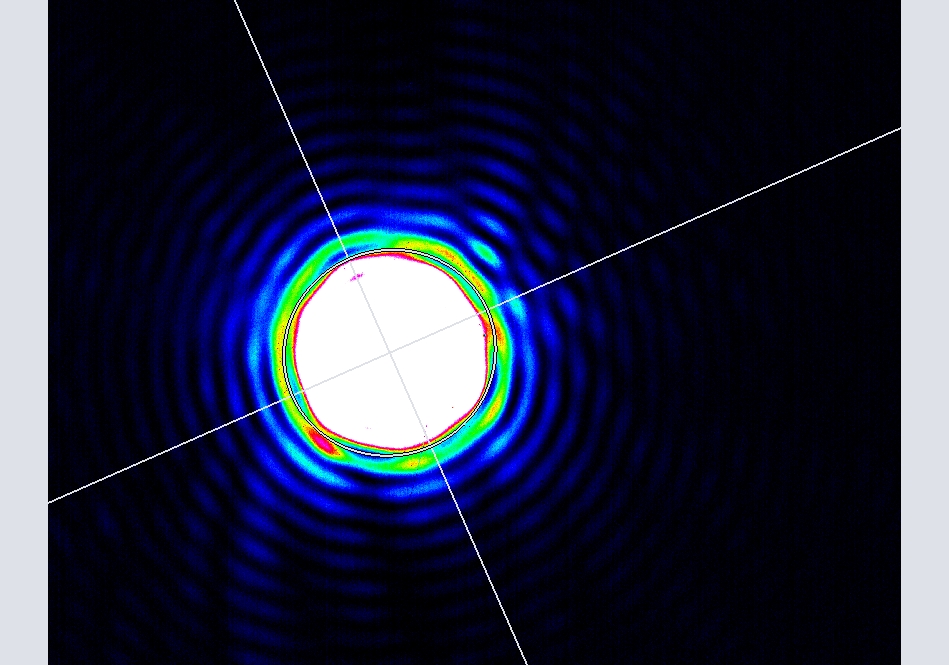 |
| Attachment 3: M4_alignment_M1_pinhole.jpg
| 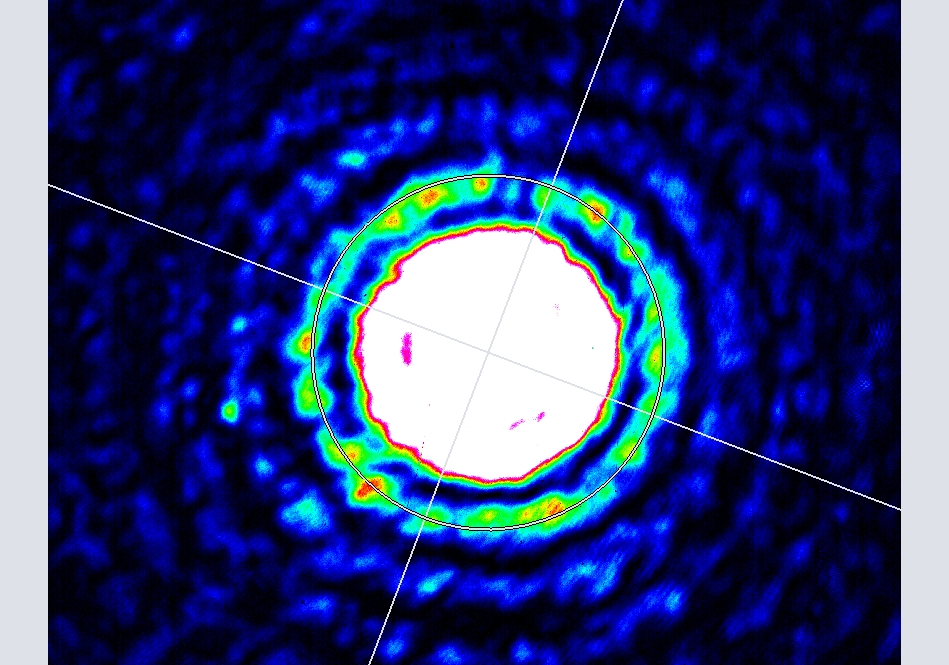 |
| Attachment 4: Beating_TM00_CW_piezo_drive.jpg
| 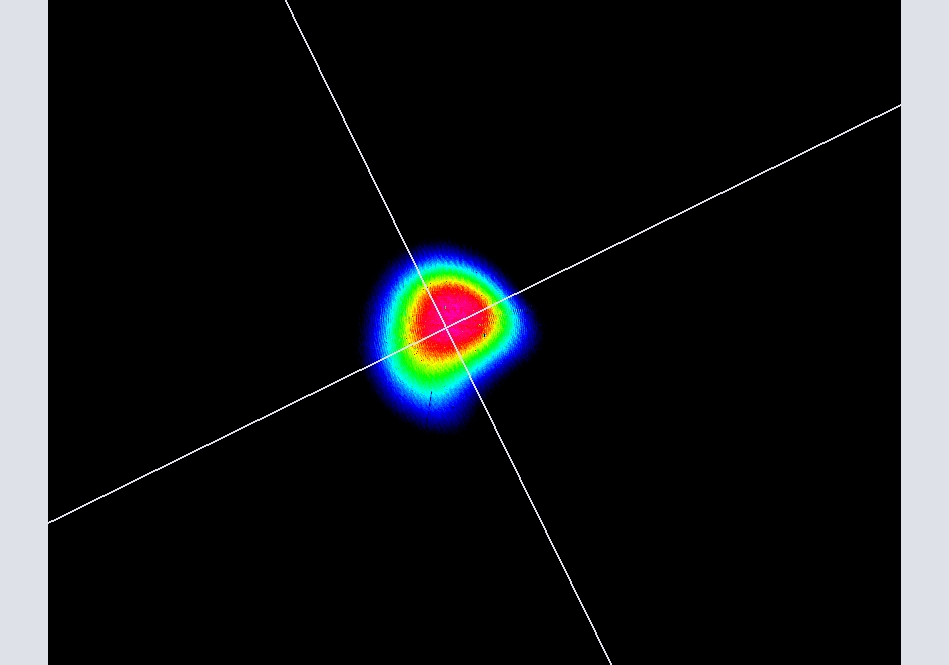 |
|
86
|
Wed May 11 09:19:48 2022 |
Manar Amer | Fixed | report | lasers and optics | Optical room | SBox Alignment | Yesterday, to find the source of why the mode is deformed, I tried to rotate the mirrors to see if there is a change.
I started with M2 and rotated it by ~ 90 degrees, there is a change in the shape of the beam.(image attached)
Will see if changing M2 to the spare M2 from SBox can fix the issue.
At the end of the day, alignment was lost.
will be redone today while changing M2 mirror.
| Manar Amer wrote: |
|
Today; replaced the M1 SBox mirror with M1 from gamma factory , following the previous alignment.
Removed all mirrors and cleaned them one by one.
Started with no M1, placed M2 did its alignment through M3 pinhole, then placed M3 aligned it through M4 pinhole, then placed M4 aligned it through M1 pinhole.
Placed M1 Gamma factory at the end
Note: mirror is new was not used before, took image on microscope there was no dust in the center, but there was little on the edges (cleaned it using spin-coater)
beating of fundamental mode observed (at M2 transmission) immediately with very higher order modes, slight adjustment on M4 suppressed them.
The beam is not circular and still has some deformation, M1 was changed, so it could be a damaged point at one of the other mirrors (to be investigated tomorrow)!!
No significant damage seen on the other mirrors.
|
Manar Amer wrote:
|
|
Last week In FP cavity we had all SBox mirrors including the damaged M1 mirror.
The beating was observed with just a slight adjustment on M4 alignment.
In addition, it was also observed while driving the piezo of the CW laser.
In the attached image of the beam at transmission point at M2 mirror, the shape of the beam is deformed.
one of the factors could be related to the damaged spot on M1 mirror. The deformation position can also be seen in the higher order modes.
after changing the injection mirror to Gamma factory M1, this deformation should disappear.
| Manar Amer wrote: |
|
Finished the alignment of the SBox with M1 of SBox placed, to be changed to gamma factory mirror later
Observed what seems to be transmission through M2 mirror, to be confirmed. image attached shows it
a PowerPoint attached showing the details of today's work.
| Manar Amer wrote: |
- Adjust the placement of the Irises (done at the start of the day, adjusted at the end when M1 mirror was placed)
- Improvement on the Ma1 and Ma2 (The Alignment Mirrors)
- Improves the alignment a bit. There is an observation where there is no symmetry in the image, concluded to be because of the pinholes that are usually used for the alignment the circle cut is not symmetric (took images on phone of pinholes)
- This explains why, for the pinhole used on M1, we see a little more symmetry than the pinhole used on M2.
-
- Placed M1 mirror from Sbox (with damage spot in the middle), after cleaning it using the spincoater, only used to adjust the injection into the mirror where it will give Horizontal displacement due to the thickness of the mirror.
- Last position of the motors attached
- Installed the 2 dielectric mirrors for the reflection line
- Did a rough alignment for the reflection line to have it exit through the reflection window.
Note about mirrors : They were cleaned a year a go and placed in the boxes. When opened the box and seen under microscope they were very dirty with dust particle
Specially from the back, I believe the boxes have dust in them (to be verified under the UV light / Microscope !!!!!!!! )
| Manar Amer wrote: |
|
Remember to update the position of the reference Irises tomorrow !!!!
| Manar Amer wrote: |
|
After pointers and Advice from Aurélien,
improvement of the beam alignment through M1 and M2 irises was done.
To improve the image on the beam profiler, I cleaned the alignment mirrors and the windows using pure ethanol and optical lens cleaning tissue,
a significant improvement after cleaning the inside of M2 Window. Images have less dust diffraction rings.
Attached new images of the beam:
- New Ma1 and Ma2 motor position
- After M1 pinhole optimized (saturated)
- After M2 and M1 pinhole optimizing (saturated and not)
| Manar Amer wrote: |
|
SBox alignment, using CW laser Koheras power 1 mW
- Finished M1 and M2 alignment using the diffraction patterns seen on the beam profiler, the beam fit is not very good ?? (image taken)
- Positions of Ma1 and Ma2 motors are registered (image taken)
- Placed Fixed 2 irises at M1 window and M2 window (Image taken while both are closed)
- Distance between the collimator and beam profiler ~ 2 m
- Distance between collimator and M1 diaphragm ~ 1 m
- Distance between collimator and M2 diaphragm ~ 1.6 m
| Manar Amer wrote: |
|
Starting with the alignment of the KBox using CW Koheras.
The size of the CW output from the collimator at 1 meter from is ~ 2.4 mm, to be adjusted with lenses to match the cavity !!! (attached image)
For the 2 alignment mirrors, I am only able to control 3 axes for now (motor issue for the fourth to be fixed !!) , Horizontal and vertical for Ma1 and Horizontal for Ma2(closes to injection window).
Started with only irises placed on both the M1 and M2. Placed a beam profiler at the window behind M2 to observe an output beam.
Motors position for the 3 axes and beam shape and position after M2 attached.
|
|
|
|
|
|
|
|
|
| Attachment 1: Beating00_after_rotatingM2_2.jpg
| 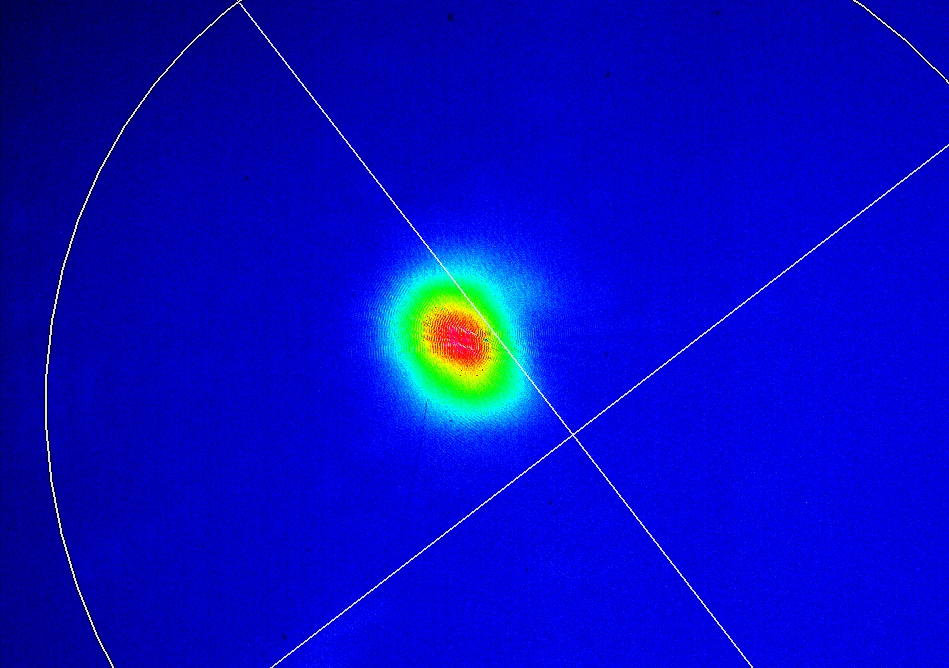 |
|
88
|
Wed May 11 21:10:27 2022 |
Manar Amer | Fixed | report | lasers and optics | Optical room | SBox Alignment | M2 Sbox changed to spare. Alignment of M2 was redone.
With the help of Ronic , We observe fundamental mode of the cavity with higher order modes. A frequency scan on the piezo was done to find the beating frequency , the shape is elliptical with no clear deformation.
The beam seems to be hitting something, which causes a reflection seen on the beam profiler.
We started a slow scan to improvement of the outside alignment.
At the end of the day, I can only get the TM01 and TM10 modes,
alignment to be continued tomorrow + the scan offset
Note: observation on TM01 and TM10 modes, we clearly see that the beam position is different from the mode center position !!
| Manar Amer wrote: |
|
Yesterday, to find the source of why the mode is deformed, I tried to rotate the mirrors to see if there is a change.
I started with M2 and rotated it by ~ 90 degrees, there is a change in the shape of the beam.(image attached)
Will see if changing M2 to the spare M2 from SBox can fix the issue.
At the end of the day, alignment was lost.
will be redone today while changing M2 mirror.
| Manar Amer wrote: |
|
Today; replaced the M1 SBox mirror with M1 from gamma factory , following the previous alignment.
Removed all mirrors and cleaned them one by one.
Started with no M1, placed M2 did its alignment through M3 pinhole, then placed M3 aligned it through M4 pinhole, then placed M4 aligned it through M1 pinhole.
Placed M1 Gamma factory at the end
Note: mirror is new was not used before, took image on microscope there was no dust in the center, but there was little on the edges (cleaned it using spin-coater)
beating of fundamental mode observed (at M2 transmission) immediately with very higher order modes, slight adjustment on M4 suppressed them.
The beam is not circular and still has some deformation, M1 was changed, so it could be a damaged point at one of the other mirrors (to be investigated tomorrow)!!
No significant damage seen on the other mirrors.
|
Manar Amer wrote:
|
|
Last week In FP cavity we had all SBox mirrors including the damaged M1 mirror.
The beating was observed with just a slight adjustment on M4 alignment.
In addition, it was also observed while driving the piezo of the CW laser.
In the attached image of the beam at transmission point at M2 mirror, the shape of the beam is deformed.
one of the factors could be related to the damaged spot on M1 mirror. The deformation position can also be seen in the higher order modes.
after changing the injection mirror to Gamma factory M1, this deformation should disappear.
| Manar Amer wrote: |
|
Finished the alignment of the SBox with M1 of SBox placed, to be changed to gamma factory mirror later
Observed what seems to be transmission through M2 mirror, to be confirmed. image attached shows it
a PowerPoint attached showing the details of today's work.
| Manar Amer wrote: |
- Adjust the placement of the Irises (done at the start of the day, adjusted at the end when M1 mirror was placed)
- Improvement on the Ma1 and Ma2 (The Alignment Mirrors)
- Improves the alignment a bit. There is an observation where there is no symmetry in the image, concluded to be because of the pinholes that are usually used for the alignment the circle cut is not symmetric (took images on phone of pinholes)
- This explains why, for the pinhole used on M1, we see a little more symmetry than the pinhole used on M2.
-
- Placed M1 mirror from Sbox (with damage spot in the middle), after cleaning it using the spincoater, only used to adjust the injection into the mirror where it will give Horizontal displacement due to the thickness of the mirror.
- Last position of the motors attached
- Installed the 2 dielectric mirrors for the reflection line
- Did a rough alignment for the reflection line to have it exit through the reflection window.
Note about mirrors : They were cleaned a year a go and placed in the boxes. When opened the box and seen under microscope they were very dirty with dust particle
Specially from the back, I believe the boxes have dust in them (to be verified under the UV light / Microscope !!!!!!!! )
| Manar Amer wrote: |
|
Remember to update the position of the reference Irises tomorrow !!!!
| Manar Amer wrote: |
|
After pointers and Advice from Aurélien,
improvement of the beam alignment through M1 and M2 irises was done.
To improve the image on the beam profiler, I cleaned the alignment mirrors and the windows using pure ethanol and optical lens cleaning tissue,
a significant improvement after cleaning the inside of M2 Window. Images have less dust diffraction rings.
Attached new images of the beam:
- New Ma1 and Ma2 motor position
- After M1 pinhole optimized (saturated)
- After M2 and M1 pinhole optimizing (saturated and not)
| Manar Amer wrote: |
|
SBox alignment, using CW laser Koheras power 1 mW
- Finished M1 and M2 alignment using the diffraction patterns seen on the beam profiler, the beam fit is not very good ?? (image taken)
- Positions of Ma1 and Ma2 motors are registered (image taken)
- Placed Fixed 2 irises at M1 window and M2 window (Image taken while both are closed)
- Distance between the collimator and beam profiler ~ 2 m
- Distance between collimator and M1 diaphragm ~ 1 m
- Distance between collimator and M2 diaphragm ~ 1.6 m
| Manar Amer wrote: |
|
Starting with the alignment of the KBox using CW Koheras.
The size of the CW output from the collimator at 1 meter from is ~ 2.4 mm, to be adjusted with lenses to match the cavity !!! (attached image)
For the 2 alignment mirrors, I am only able to control 3 axes for now (motor issue for the fourth to be fixed !!) , Horizontal and vertical for Ma1 and Horizontal for Ma2(closes to injection window).
Started with only irises placed on both the M1 and M2. Placed a beam profiler at the window behind M2 to observe an output beam.
Motors position for the 3 axes and beam shape and position after M2 attached.
|
|
|
|
|
|
|
|
|
|
| Attachment 1: TM00_mode.jpg
| 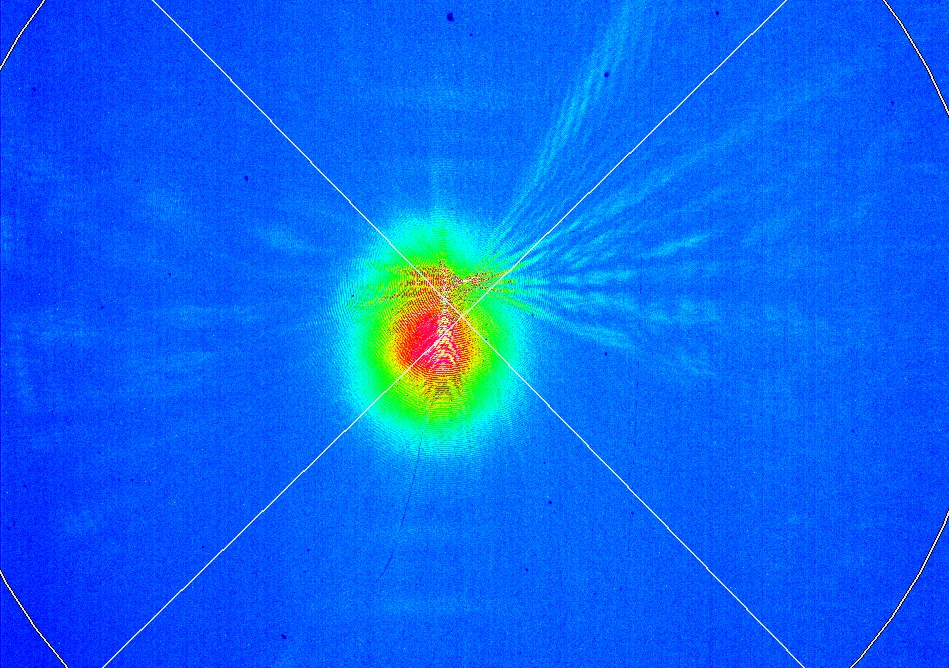 |
| Attachment 2: TM01_mode.jpg
| 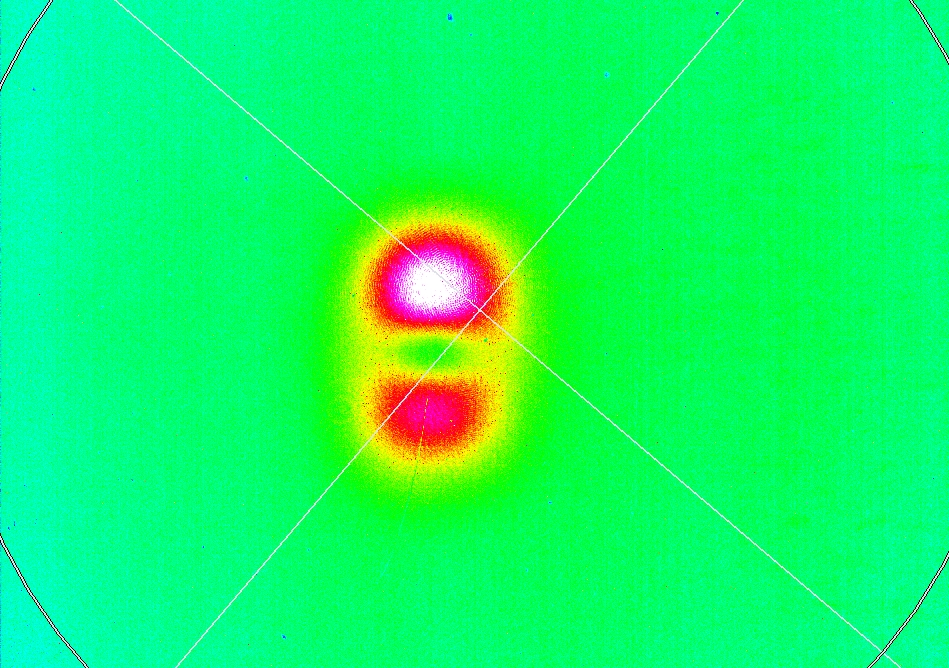 |
| Attachment 3: TM10_mode.jpg
| 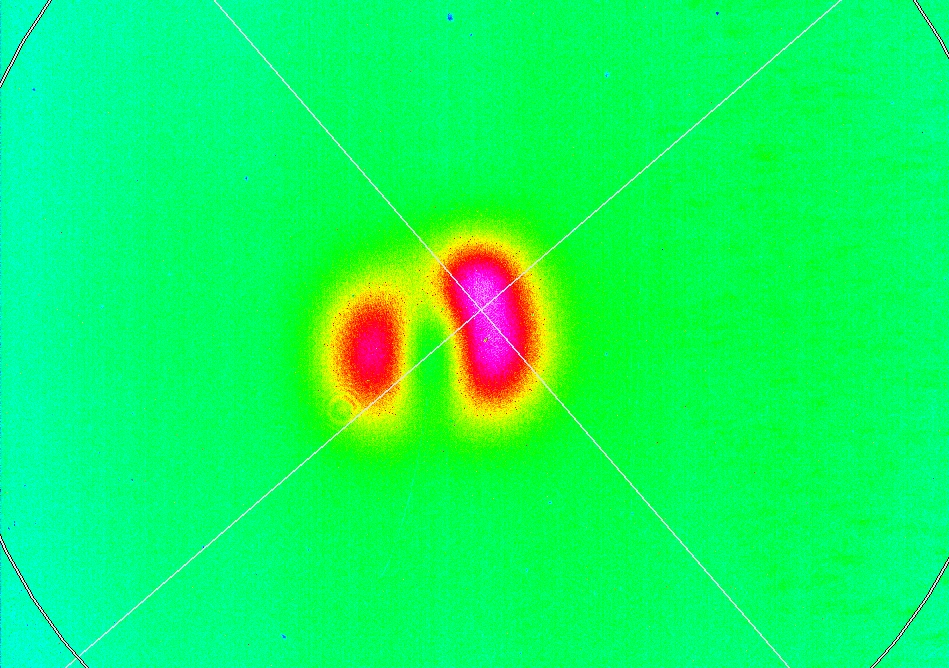 |
|
90
|
Tue May 24 22:05:48 2022 |
Manar Amer | Fixed | report | lasers and optics | Optical room | SBox Alignment | The external and internal alignment was redone.
External Alignment : the collimator position moved so in order to have a good start I placed 2 metallic mirrors and did a rough retrace of it's line through the cavity box.
It helped as I did not have to do a lot of adjustment on Ma1 and Ma2 position (new position attached)
Internal Alignment: I replaced the 2 pinholes inside the cavity box with another set where the holes are more symmetric, it shows in the alignment.
Images attached of the beam diffraction pattern after each mirror pinhole.
The injection mirror was placed at the end of the alignment.
Alignment Done !!!!!!!!!!!!!
| Manar Amer wrote: |
|
M2 Sbox changed to spare. Alignment of M2 was redone.
With the help of Ronic , We observe fundamental mode of the cavity with higher order modes. A frequency scan on the piezo was done to find the beating frequency , the shape is elliptical with no clear deformation.
The beam seems to be hitting something, which causes a reflection seen on the beam profiler.
We started a slow scan to improvement of the outside alignment.
At the end of the day, I can only get the TM01 and TM10 modes,
alignment to be continued tomorrow + the scan offset
Note: observation on TM01 and TM10 modes, we clearly see that the beam position is different from the mode center position !!
| Manar Amer wrote: |
|
Yesterday, to find the source of why the mode is deformed, I tried to rotate the mirrors to see if there is a change.
I started with M2 and rotated it by ~ 90 degrees, there is a change in the shape of the beam.(image attached)
Will see if changing M2 to the spare M2 from SBox can fix the issue.
At the end of the day, alignment was lost.
will be redone today while changing M2 mirror.
| Manar Amer wrote: |
|
Today; replaced the M1 SBox mirror with M1 from gamma factory , following the previous alignment.
Removed all mirrors and cleaned them one by one.
Started with no M1, placed M2 did its alignment through M3 pinhole, then placed M3 aligned it through M4 pinhole, then placed M4 aligned it through M1 pinhole.
Placed M1 Gamma factory at the end
Note: mirror is new was not used before, took image on microscope there was no dust in the center, but there was little on the edges (cleaned it using spin-coater)
beating of fundamental mode observed (at M2 transmission) immediately with very higher order modes, slight adjustment on M4 suppressed them.
The beam is not circular and still has some deformation, M1 was changed, so it could be a damaged point at one of the other mirrors (to be investigated tomorrow)!!
No significant damage seen on the other mirrors.
|
Manar Amer wrote:
|
|
Last week In FP cavity we had all SBox mirrors including the damaged M1 mirror.
The beating was observed with just a slight adjustment on M4 alignment.
In addition, it was also observed while driving the piezo of the CW laser.
In the attached image of the beam at transmission point at M2 mirror, the shape of the beam is deformed.
one of the factors could be related to the damaged spot on M1 mirror. The deformation position can also be seen in the higher order modes.
after changing the injection mirror to Gamma factory M1, this deformation should disappear.
| Manar Amer wrote: |
|
Finished the alignment of the SBox with M1 of SBox placed, to be changed to gamma factory mirror later
Observed what seems to be transmission through M2 mirror, to be confirmed. image attached shows it
a PowerPoint attached showing the details of today's work.
| Manar Amer wrote: |
- Adjust the placement of the Irises (done at the start of the day, adjusted at the end when M1 mirror was placed)
- Improvement on the Ma1 and Ma2 (The Alignment Mirrors)
- Improves the alignment a bit. There is an observation where there is no symmetry in the image, concluded to be because of the pinholes that are usually used for the alignment the circle cut is not symmetric (took images on phone of pinholes)
- This explains why, for the pinhole used on M1, we see a little more symmetry than the pinhole used on M2.
-
- Placed M1 mirror from Sbox (with damage spot in the middle), after cleaning it using the spincoater, only used to adjust the injection into the mirror where it will give Horizontal displacement due to the thickness of the mirror.
- Last position of the motors attached
- Installed the 2 dielectric mirrors for the reflection line
- Did a rough alignment for the reflection line to have it exit through the reflection window.
Note about mirrors : They were cleaned a year a go and placed in the boxes. When opened the box and seen under microscope they were very dirty with dust particle
Specially from the back, I believe the boxes have dust in them (to be verified under the UV light / Microscope !!!!!!!! )
| Manar Amer wrote: |
|
Remember to update the position of the reference Irises tomorrow !!!!
| Manar Amer wrote: |
|
After pointers and Advice from Aurélien,
improvement of the beam alignment through M1 and M2 irises was done.
To improve the image on the beam profiler, I cleaned the alignment mirrors and the windows using pure ethanol and optical lens cleaning tissue,
a significant improvement after cleaning the inside of M2 Window. Images have less dust diffraction rings.
Attached new images of the beam:
- New Ma1 and Ma2 motor position
- After M1 pinhole optimized (saturated)
- After M2 and M1 pinhole optimizing (saturated and not)
| Manar Amer wrote: |
|
SBox alignment, using CW laser Koheras power 1 mW
- Finished M1 and M2 alignment using the diffraction patterns seen on the beam profiler, the beam fit is not very good ?? (image taken)
- Positions of Ma1 and Ma2 motors are registered (image taken)
- Placed Fixed 2 irises at M1 window and M2 window (Image taken while both are closed)
- Distance between the collimator and beam profiler ~ 2 m
- Distance between collimator and M1 diaphragm ~ 1 m
- Distance between collimator and M2 diaphragm ~ 1.6 m
| Manar Amer wrote: |
|
Starting with the alignment of the KBox using CW Koheras.
The size of the CW output from the collimator at 1 meter from is ~ 2.4 mm, to be adjusted with lenses to match the cavity !!! (attached image)
For the 2 alignment mirrors, I am only able to control 3 axes for now (motor issue for the fourth to be fixed !!) , Horizontal and vertical for Ma1 and Horizontal for Ma2(closes to injection window).
Started with only irises placed on both the M1 and M2. Placed a beam profiler at the window behind M2 to observe an output beam.
Motors position for the 3 axes and beam shape and position after M2 attached.
|
|
|
|
|
|
|
|
|
|
|
| Attachment 1: Ma1Ma2Horizontal.jpg
| 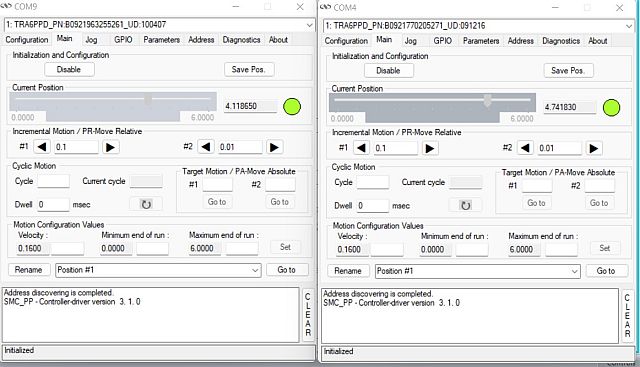 |
| Attachment 2: Ma1Ma2Vertical.jpg
| 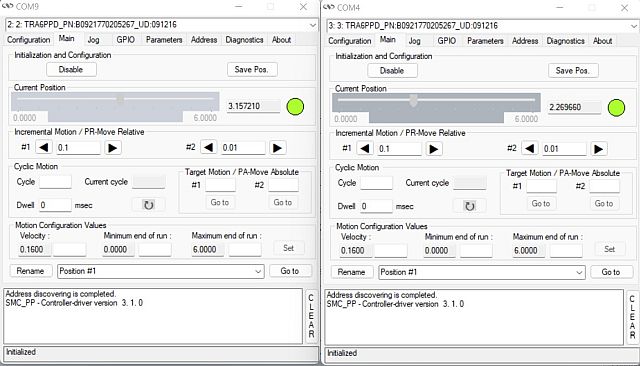 |
| Attachment 3: M1_pinhole.bmp
|
| Attachment 4: M2_pinhole.bmp
|
| Attachment 5: M1_M2_pinhole.bmp
|
| Attachment 6: M3_pinhole.bmp
|
| Attachment 7: M4_pinhole.bmp
|
|
91
|
Tue May 24 22:11:40 2022 |
Manar Amer | Fixed | report | lasers and optics | Optical room | Fundamental Mode TEM00 | The current setup for the SBox has a beam viewer and 2 photodiodes placed at reflection and transmission.
The CW laser piezoelectric crystal was driven using the lase lock system to observe the 00 mode.
Mode Observed and has no reflection (from what was previously seen)
higher order modes are resonating with 00 mode , example 11 mode (shown in image attached)
the coupling is yet to be seen and measured. |
| Attachment 1: 20220524_SBox_Setup.png
| 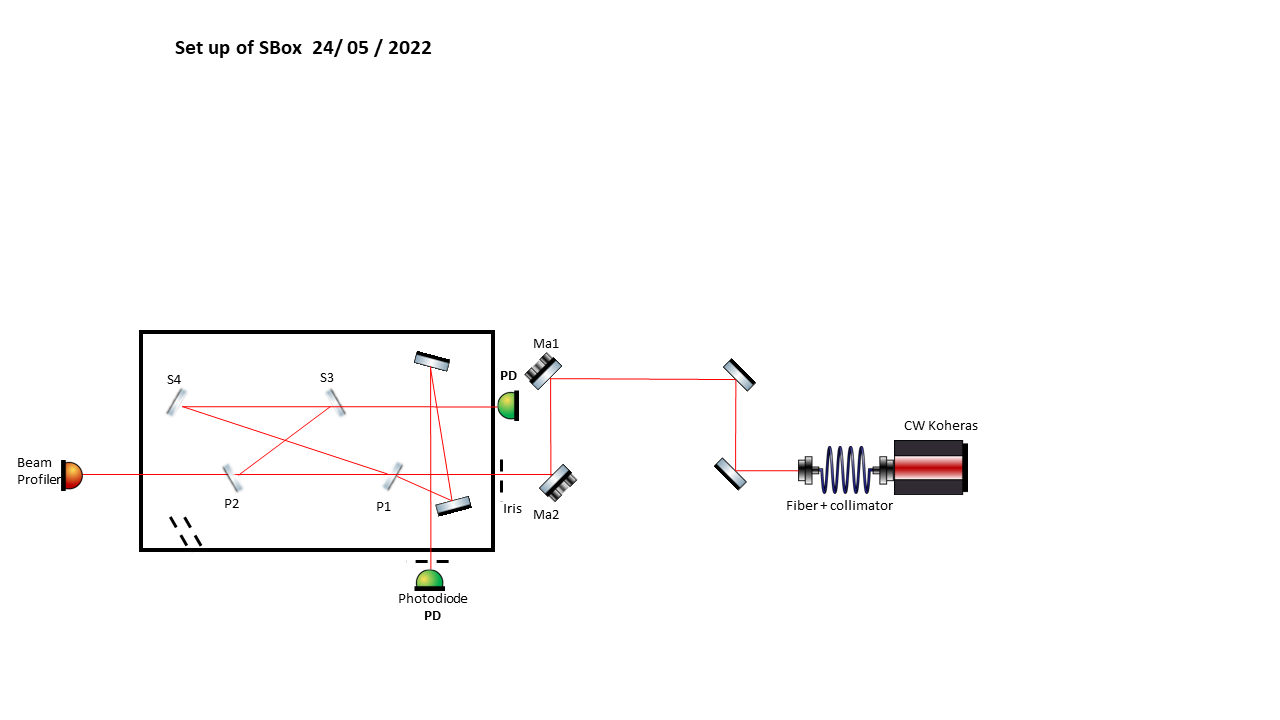 |
| Attachment 2: 00mode_CW_piezo_drive.bmp
|
| Attachment 3: 00mode_11mode.bmp
|
|
92
|
Wed May 25 17:34:29 2022 |
Manar Amer | Fixed | report | lasers and optics | Optical room | Fundamental Mode TEM00 | Adding images from the transmission after the spherical mirrors M3 and M4 window for a resonating mode inside the cavity.
There appears to be some misalignment from the center of the mirror ???
| Manar Amer wrote: |
|
The current setup for the SBox has a beam viewer and 2 photodiodes placed at reflection and transmission.
The CW laser piezoelectric crystal was driven using the lase lock system to observe the 00 mode.
Mode Observed and has no reflection (from what was previously seen)
higher order modes are resonating with 00 mode , example 11 mode (shown in image attached)
the coupling is yet to be seen and measured.
|
|
| Attachment 1: beamviwer_transmission_at_M3.bmp
|
| Attachment 2: beamviwer_transmission_at_M4.bmp
|
|
93
|
Wed Jun 8 10:47:45 2022 |
Manar Amer | Fixed | report | lasers and optics | Optical room | SBox Alignment | Closing Series for Alignment.
Beating observed, beam is in the locking stages
| Manar Amer wrote: |
|
The external and internal alignment was redone.
External Alignment : the collimator position moved so in order to have a good start I placed 2 metallic mirrors and did a rough retrace of it's line through the cavity box.
It helped as I did not have to do a lot of adjustment on Ma1 and Ma2 position (new position attached)
Internal Alignment: I replaced the 2 pinholes inside the cavity box with another set where the holes are more symmetric, it shows in the alignment.
Images attached of the beam diffraction pattern after each mirror pinhole.
The injection mirror was placed at the end of the alignment.
Alignment Done !!!!!!!!!!!!!
| Manar Amer wrote: |
|
M2 Sbox changed to spare. Alignment of M2 was redone.
With the help of Ronic , We observe fundamental mode of the cavity with higher order modes. A frequency scan on the piezo was done to find the beating frequency , the shape is elliptical with no clear deformation.
The beam seems to be hitting something, which causes a reflection seen on the beam profiler.
We started a slow scan to improvement of the outside alignment.
At the end of the day, I can only get the TM01 and TM10 modes,
alignment to be continued tomorrow + the scan offset
Note: observation on TM01 and TM10 modes, we clearly see that the beam position is different from the mode center position !!
| Manar Amer wrote: |
|
Yesterday, to find the source of why the mode is deformed, I tried to rotate the mirrors to see if there is a change.
I started with M2 and rotated it by ~ 90 degrees, there is a change in the shape of the beam.(image attached)
Will see if changing M2 to the spare M2 from SBox can fix the issue.
At the end of the day, alignment was lost.
will be redone today while changing M2 mirror.
| Manar Amer wrote: |
|
Today; replaced the M1 SBox mirror with M1 from gamma factory , following the previous alignment.
Removed all mirrors and cleaned them one by one.
Started with no M1, placed M2 did its alignment through M3 pinhole, then placed M3 aligned it through M4 pinhole, then placed M4 aligned it through M1 pinhole.
Placed M1 Gamma factory at the end
Note: mirror is new was not used before, took image on microscope there was no dust in the center, but there was little on the edges (cleaned it using spin-coater)
beating of fundamental mode observed (at M2 transmission) immediately with very higher order modes, slight adjustment on M4 suppressed them.
The beam is not circular and still has some deformation, M1 was changed, so it could be a damaged point at one of the other mirrors (to be investigated tomorrow)!!
No significant damage seen on the other mirrors.
|
Manar Amer wrote:
|
|
Last week In FP cavity we had all SBox mirrors including the damaged M1 mirror.
The beating was observed with just a slight adjustment on M4 alignment.
In addition, it was also observed while driving the piezo of the CW laser.
In the attached image of the beam at transmission point at M2 mirror, the shape of the beam is deformed.
one of the factors could be related to the damaged spot on M1 mirror. The deformation position can also be seen in the higher order modes.
after changing the injection mirror to Gamma factory M1, this deformation should disappear.
| Manar Amer wrote: |
|
Finished the alignment of the SBox with M1 of SBox placed, to be changed to gamma factory mirror later
Observed what seems to be transmission through M2 mirror, to be confirmed. image attached shows it
a PowerPoint attached showing the details of today's work.
| Manar Amer wrote: |
- Adjust the placement of the Irises (done at the start of the day, adjusted at the end when M1 mirror was placed)
- Improvement on the Ma1 and Ma2 (The Alignment Mirrors)
- Improves the alignment a bit. There is an observation where there is no symmetry in the image, concluded to be because of the pinholes that are usually used for the alignment the circle cut is not symmetric (took images on phone of pinholes)
- This explains why, for the pinhole used on M1, we see a little more symmetry than the pinhole used on M2.
-
- Placed M1 mirror from Sbox (with damage spot in the middle), after cleaning it using the spincoater, only used to adjust the injection into the mirror where it will give Horizontal displacement due to the thickness of the mirror.
- Last position of the motors attached
- Installed the 2 dielectric mirrors for the reflection line
- Did a rough alignment for the reflection line to have it exit through the reflection window.
Note about mirrors : They were cleaned a year a go and placed in the boxes. When opened the box and seen under microscope they were very dirty with dust particle
Specially from the back, I believe the boxes have dust in them (to be verified under the UV light / Microscope !!!!!!!! )
| Manar Amer wrote: |
|
Remember to update the position of the reference Irises tomorrow !!!!
| Manar Amer wrote: |
|
After pointers and Advice from Aurélien,
improvement of the beam alignment through M1 and M2 irises was done.
To improve the image on the beam profiler, I cleaned the alignment mirrors and the windows using pure ethanol and optical lens cleaning tissue,
a significant improvement after cleaning the inside of M2 Window. Images have less dust diffraction rings.
Attached new images of the beam:
- New Ma1 and Ma2 motor position
- After M1 pinhole optimized (saturated)
- After M2 and M1 pinhole optimizing (saturated and not)
| Manar Amer wrote: |
|
SBox alignment, using CW laser Koheras power 1 mW
- Finished M1 and M2 alignment using the diffraction patterns seen on the beam profiler, the beam fit is not very good ?? (image taken)
- Positions of Ma1 and Ma2 motors are registered (image taken)
- Placed Fixed 2 irises at M1 window and M2 window (Image taken while both are closed)
- Distance between the collimator and beam profiler ~ 2 m
- Distance between collimator and M1 diaphragm ~ 1 m
- Distance between collimator and M2 diaphragm ~ 1.6 m
| Manar Amer wrote: |
|
Starting with the alignment of the KBox using CW Koheras.
The size of the CW output from the collimator at 1 meter from is ~ 2.4 mm, to be adjusted with lenses to match the cavity !!! (attached image)
For the 2 alignment mirrors, I am only able to control 3 axes for now (motor issue for the fourth to be fixed !!) , Horizontal and vertical for Ma1 and Horizontal for Ma2(closes to injection window).
Started with only irises placed on both the M1 and M2. Placed a beam profiler at the window behind M2 to observe an output beam.
Motors position for the 3 axes and beam shape and position after M2 attached.
|
|
|
|
|
|
|
|
|
|
|
|
|
94
|
Wed Jun 8 10:58:15 2022 |
Manar Amer | Fixed | report | lasers and optics | Optical room | Fundamental Mode TEM00 | Images of the Transmitted beam at M2 mirror at different days.
The first one was from last week, the second from yesterday.
There is misalignment (drift due to temperature) from the position where the beam was initially. ( reference taken between centers of mode and direct injected beam)
it is most clear in the vertical position.
| Manar Amer wrote: |
|
Adding images from the transmission after the spherical mirrors M3 and M4 window for a resonating mode inside the cavity.
There appears to be some misalignment from the center of the mirror ???
| Manar Amer wrote: |
|
The current setup for the SBox has a beam viewer and 2 photodiodes placed at reflection and transmission.
The CW laser piezoelectric crystal was driven using the lase lock system to observe the 00 mode.
Mode Observed and has no reflection (from what was previously seen)
higher order modes are resonating with 00 mode , example 11 mode (shown in image attached)
the coupling is yet to be seen and measured.
|
|
|
| Attachment 1: 20220530_00_Mode.bmp
|
| Attachment 2: 00_Mode_Beam_Transmitted_Position_drift_due_to_temperature.bmp
|
|
96
|
Wed Jun 8 11:24:35 2022 |
Manar Amer | Fixed | report | lasers and optics | Optical room | Telescope - Spacial Matching | Divergence of the CW beam out of the collimator measured after 1 meter to be
- 2
 x = 0.7425 mrad --> x = 0.37125 mrad x = 0.7425 mrad --> x = 0.37125 mrad
- 2 y = 0.7115 mrad --> y = 0.3575 mrad
two lenses were placed to decrease the diameter of the injected beam |
| Attachment 1: SBox_Spacial_Matching_Telescope.png
| 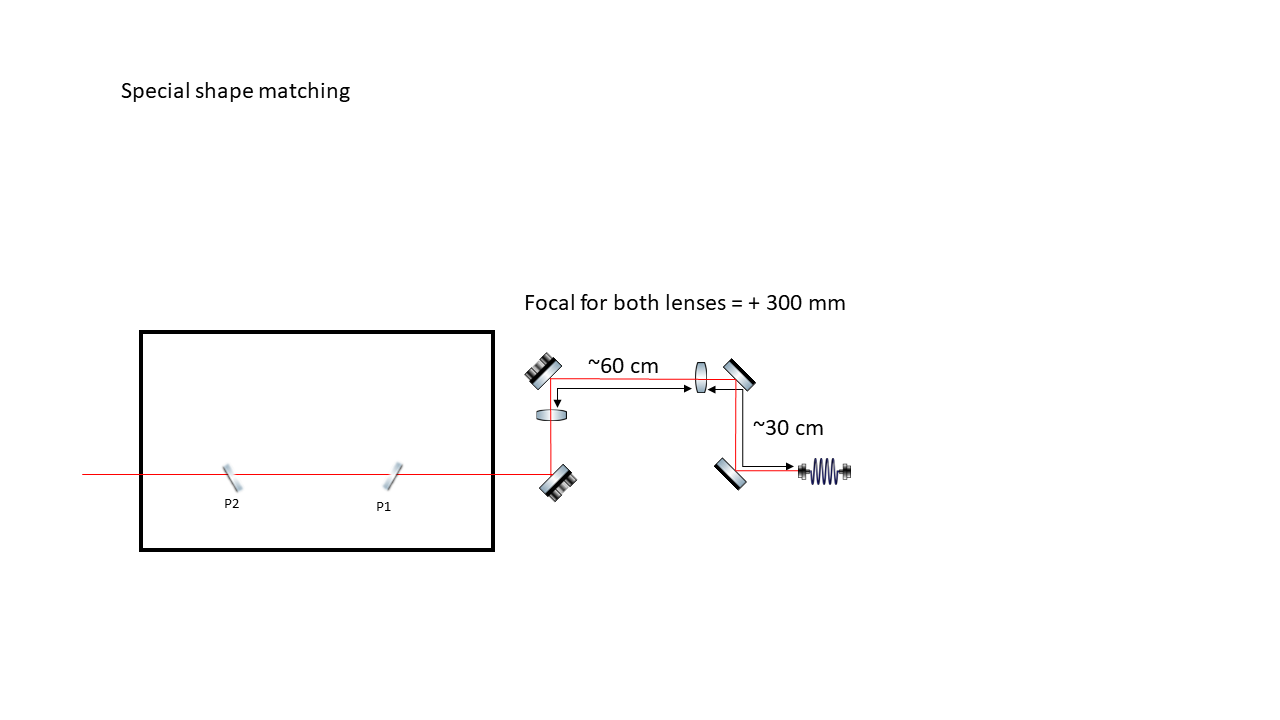 |
|
102
|
Wed Jul 6 18:35:38 2022 |
Manar Amer | Fixed | report | lasers and optics | Optical room | Fundamental Mode TEM00 | Closing series of 00 mode for FSR @ 133.33 MHz
| Manar Amer wrote: |
|
Images of the Transmitted beam at M2 mirror at different days.
The first one was from last week, the second from yesterday.
There is misalignment (drift due to temperature) from the position where the beam was initially. ( reference taken between centers of mode and direct injected beam)
it is most clear in the vertical position.
| Manar Amer wrote: |
|
Adding images from the transmission after the spherical mirrors M3 and M4 window for a resonating mode inside the cavity.
There appears to be some misalignment from the center of the mirror ???
| Manar Amer wrote: |
|
The current setup for the SBox has a beam viewer and 2 photodiodes placed at reflection and transmission.
The CW laser piezoelectric crystal was driven using the lase lock system to observe the 00 mode.
Mode Observed and has no reflection (from what was previously seen)
higher order modes are resonating with 00 mode , example 11 mode (shown in image attached)
the coupling is yet to be seen and measured.
|
|
|
|
|
103
|
Wed Jul 6 18:37:02 2022 |
Manar Amer | Fixed | report | lasers and optics | Optical room | Divergence of the CW beam after collimator | Closing the series of the telescope for the beam @ 133.33 MHz
|
|
107
|
Fri Jul 8 17:09:26 2022 |
Manar Amer | Fixed | report | lasers and optics | Optical room | Images of ThomX mirrors | Under the microscope,
the spherical mirrors show the deposit of metal dots on the reflecting surface and not on the back of the mirrors
The mirror with fewer spots near the center was used in the setup.
|
| Attachment 1: ThomX_Spherical_Front_coating.jpg
|  |
| Attachment 2: ThomX_Spherical_2_Front_coating.jpg
|  |
| Attachment 3: ThomX_Spherical_back.jpg
|  |
|
108
|
Fri Jul 8 17:10:44 2022 |
Manar Amer | Fixed | report | lasers and optics | Optical room | Images of ThomX mirrors | Mirror images in the previous log showing the metal deposit of the coating of the spherical mirrors
(not sent by mail due to large size of images)
| Manar Amer wrote: |
|
Under the microscope,
the spherical mirrors show the deposit of metal dots on the reflecting surface and not on the back of the mirrors
The mirror with fewer spots near the center was used in the setup.
|
|
|
123
|
Mon Aug 8 17:58:32 2022 |
Ronic Chiche | Fixed | info | lasers and optics | Optical room | Pulse duration measurement before and after CVBG (as a strecher) | I recorded the pulse shape of the MENHIR 216MHz in its fiber injection setup.
the fiber is then connected to the Labbuddy photodiode (~ 15GHz BW) and then to the R&S RTO2000 4GHz scope (~ 100ps rise time).
1) I put a mirror just before the CVBG.
I'm able to get >8mW in the fiber.
as the pulses coming from the laser are not streched, they should be close to Menhir pulse width (~ 200fs).
then, what I measure here is only the pulse response of the measurement system.
2) I remove the mirror before the CVBG to stretch the pulse inside the CVBG
I'm able to get >6mW in the fiber.
the 1st plot is the comparison of the 2 measurements:
in blue, the pulse measurement w/o the CVBG
in red, the pulse measurement with the CVBG
the 2nd plot is the comparison of the pulse streched by the CVBG with the pulse w/o CVBG convoluted with a tp=77.4ps sech² pulse (sech²(t/tp)).
in red, the pulse measurement with the CVBG
in dashed black, the convolution.
(as the spectrum is changed by the CVBG, it is normal that both pulse shapes are not exactly the same).
tp=77.4ps corresponds to t_FWHM = 1.76*77.4ps = 136 ps
both pulses exhibit a FWHM duration of 194 ps.
with the present spectrum after CVBG (see 3rd plot), if the pulse was Fourier Transform limited (no stretched), the product of the FWHM (BW x duration) should be 0.315 (for sech² pulses).
FWHM BW wavelength ~ 1.1nm => FWHM BW ~ 311GHz => FWHM Tau ~ 0.315/311GHz ~ 1 ps
with 136 ps of FWHM duration, one can consider the CVBG has properly streched the pulse. |
| Attachment 1: pulse_measurement_without_and_with_CVBG.png
|  |
| Attachment 2: pulse_measurement_after_CVBG_compared_with_convolution.png
| 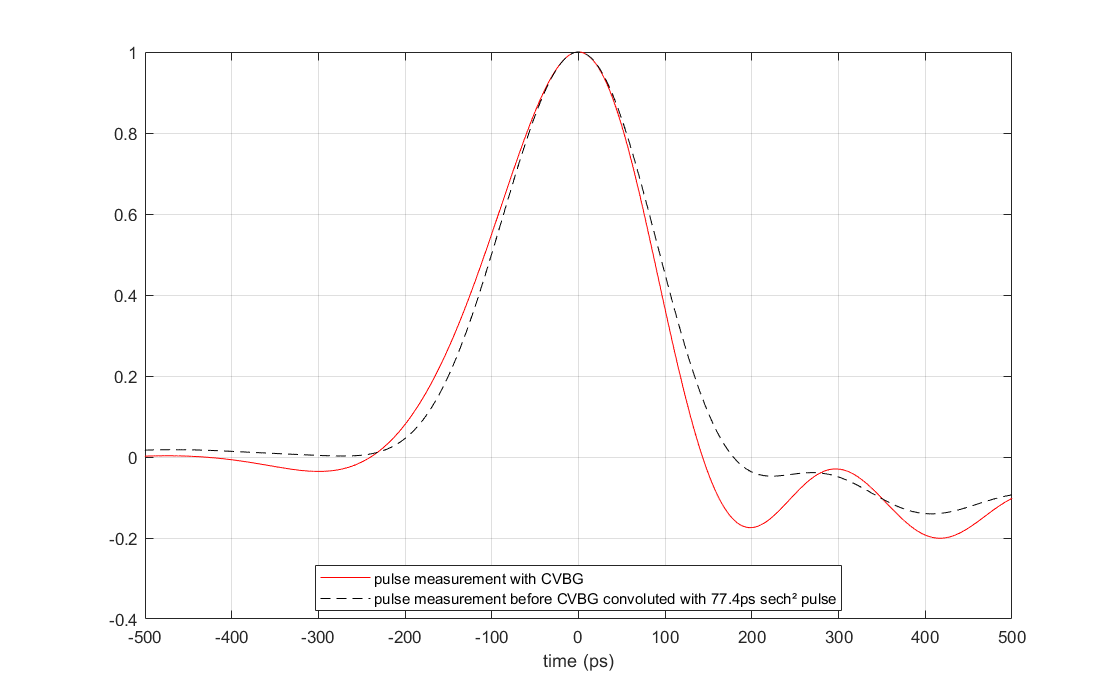 |
| Attachment 3: SpectrumafterCVBGzoom.png.png
|  |
|
124
|
Wed Aug 10 12:51:16 2022 |
Ronic Chiche | Fixed | report | lasers and optics | Optical room | "ThomX" CELIA Amplifier commissionning | The "ThomX" CELIA amplifier is installed on the optical table.
I added all the rubber pieces available between the 2 racks to isolate as best as possible the top rack, which embeds some fans, from the bottom rack from which the laser beam is going out to the FP cavity.
1ST STAGE
-----------------
if I put 1mW (minimum input power) on the input fiber of the amplifier and I switch ON the first stage, one can measure 7mW on the 5% output tap on the front panel.
then it is mandatory to check this power before swtiching ON the other stage.
this 5% output tap on the front panel MUST BE ABOVE 7mW
input power : 1mW => 5% output tap : 7mW => amplifier output : 260µW
with the present setup, I can reach 6.8mW of input power, but the 5% output tap seems to saturate at ~ 8mW.
in this condition, the amplifier output is around 800µW
the SMA connector on the rear panel does not output any signal with the 1st stage ON.
2ND STAGE
-----------------
then, one can switch ON the 2nd stage : amplifier output is around 1.4 W (without any iris or dichroïc mirror).
the SMA connector on the rear panel does not output any signal with the 2nd stage ON. |
|
125
|
Thu Aug 11 12:11:48 2022 |
Ronic Chiche | Fixed | report | lasers and optics | Optical room | "ThomX" CELIA Amplifier commissionning | Beam size at the amplifier output:
to make this measurement, I switched ON only 1st and 2nd stage.
the dichroïc mirror seems to work the best in reflection at normal AOI !!!
it's strange as most dichroïc mirrors seem to be specified at AOI = 45° ! => to be checked ! => the dichroïc mirror was set on its wrong face !!! => problem solved
the 2 images correspond to the beam measured at 24cm from the amplifier output.
we cannot use the gaussian fit due to the pump beam shape which perturbate the measurement.
I used the FWHM measurement => DX = 2.6 mm, DY = 1.8mm
Pulse shape model:
dP(x,y,t) = DP * exp( - ln(2) * ( (x/DX_fwhm)² + (y/DY_fwhm)² ) * sech²( t / tp )
=> can we use safely the Newport 20Z40DM.10 mirrors to transport the amplifier beam ?
they are specified for 500 W/cm2 CW and 4 J/cm2 for 10 nsec pulses @ 1064 nm.
- if I am correct, for the previous shape model, the average power is :
Pmoy (W) = 2pi / ln(2) * tp * DP * DX_fwhm * DY_fwhm * Frep
with DP=500W/cm2, DX_fwhm=2.6mm DY_fwhm=1.8mm, tp=77ps, Frep=216MHz => Pmoy = 3.5 W !!!
this means that we should not exceed this average power with these mirrors !?!
- if I am correct, for the previous shape model, the maximal energy density (in the pulse center) is :
DE (J/cm2) = tp * DP => Pmoy = 2pi / ln(2) * DE * DX_fwhm * DY_fwhm * Frep
with DE= 4J/cm2, DX_fwhm=2.6mm DY_fwhm=1.8mm, Frep=216MHz => Pmoy = 366 MW !!!
if one applies a safety factor due to the pulse duration ratio (77ps / 10ns) => Pmoy = 2.8 MW !
this specification seems much less restrictive !
=> can we use safely the Thorlabs BB1-E03 mirrors to transport the amplifier beam ?
they are specified for 10 kW/cm CW (linear power density) and 0.5 J/cm2 for 10 nsec pulses @ 1064 nm.
- the linear power density (LPD) is defined as the average power divided by the beam diameter (1/e²)
LPD = Pmoy / DXY = Pmoy / (1.7 DXY_fwhm) => Pmoy = LPD * 1.7 DXY_fwhm
with LPD=10kW/cm and DY_fwhm=1.8mm => Pmoy = 3 kW
- for maximal energy density:
with DE= 0.5J/cm2, DX_fwhm=2.6mm DY_fwhm=1.8mm, Frep=216MHz => Pmoy = 45 MW !!!
if one applies a safety factor due to the pulse duration ratio (77ps / 10ns) => Pmoy = 350 kW !
| Ronic Chiche wrote: |
|
The "ThomX" CELIA amplifier is installed on the optical table.
I added all the rubber pieces available between the 2 racks to isolate as best as possible the top rack, which embeds some fans, from the bottom rack from which the laser beam is going out to the FP cavity.
1ST STAGE
-----------------
if I put 1mW (minimum input power) on the input fiber of the amplifier and I switch ON the first stage, one can measure 7mW on the 5% output tap on the front panel.
then it is mandatory to check this power before swtiching ON the other stage.
this 5% output tap on the front panel MUST BE ABOVE 7mW
input power : 1mW => 5% output tap : 7mW => amplifier output : 260µW
with the present setup, I can reach 6.8mW of input power, but the 5% output tap seems to saturate at ~ 8mW.
in this condition, the amplifier output is around 800µW
the SMA connector on the rear panel does not output any signal with the 1st stage ON.
2ND STAGE
-----------------
then, one can switch ON the 2nd stage : amplifier output is around 1.4 W (without any iris or dichroïc mirror).
the SMA connector on the rear panel does not output any signal with the 2nd stage ON.
|
|
| Attachment 1: Capture.PNG
| 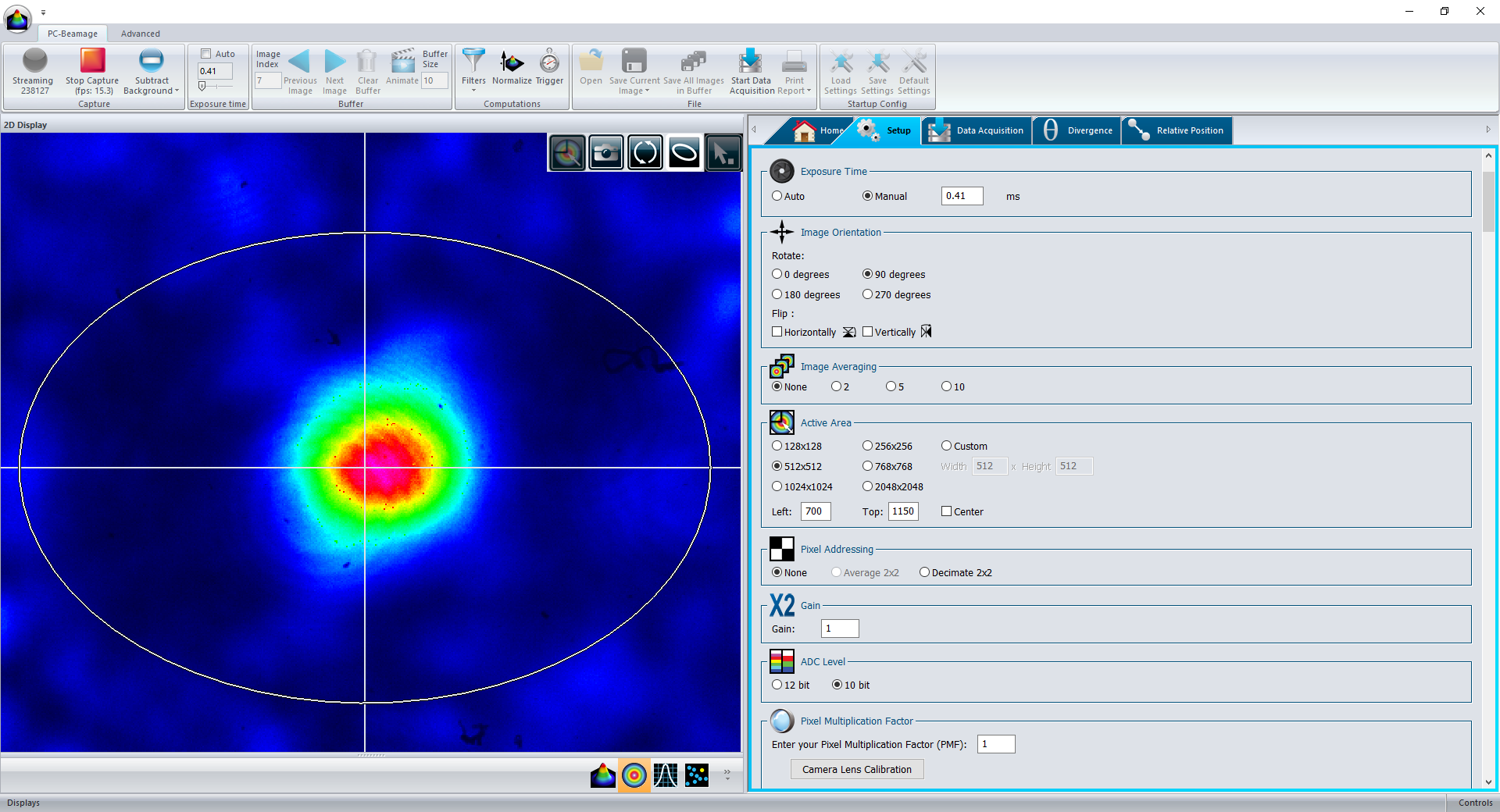 |
| Attachment 2: Capture2.PNG
| 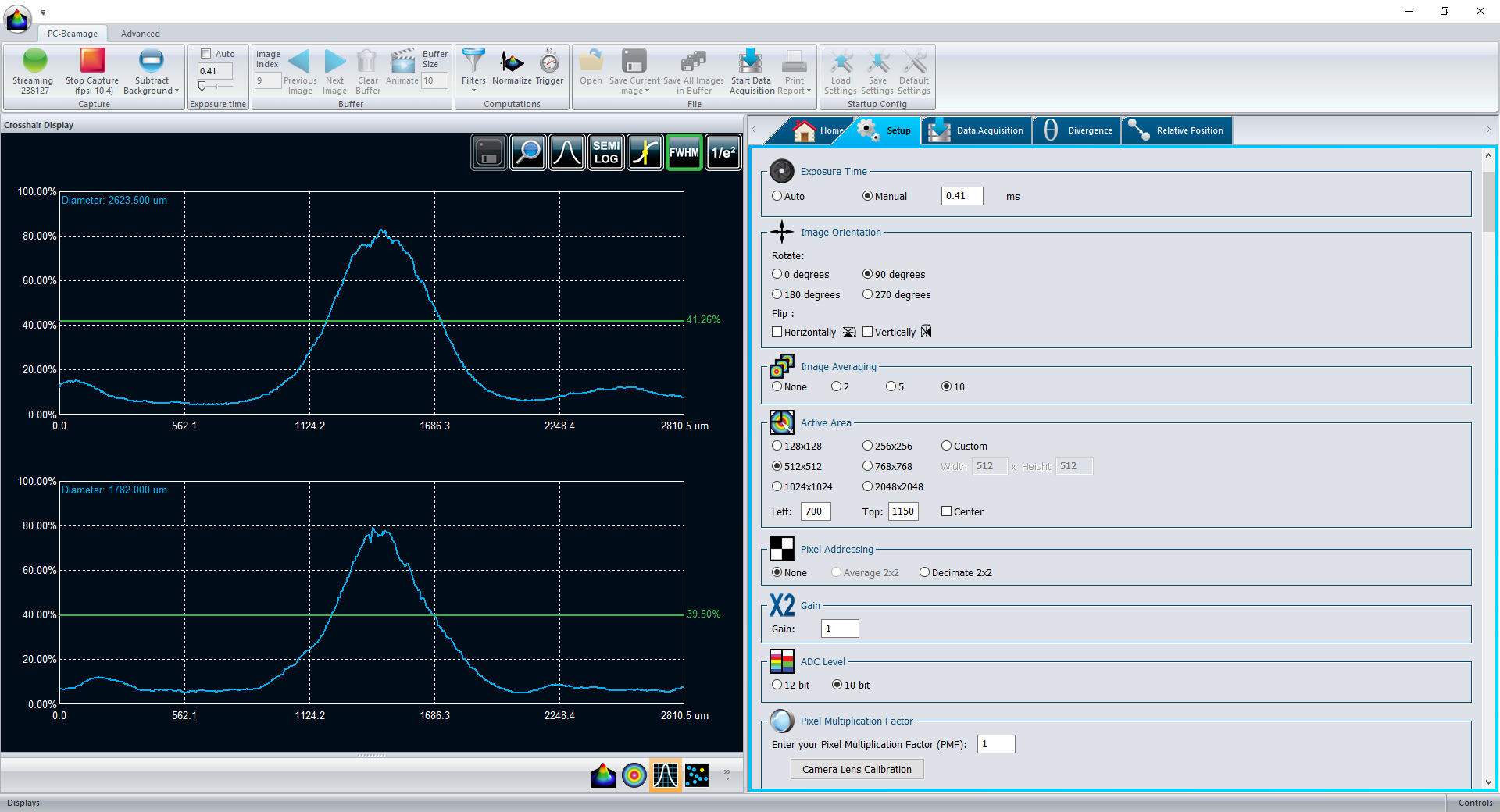 |
|
127
|
Fri Aug 12 11:46:17 2022 |
Ronic Chiche | Fixed | info | lasers and optics | Optical room | OEwaves lock and Finesse measurement | this morning, I locked the FP cavity with the OEwaves CW laser and the "Fred fiber amplifier" used at 500mA of pump current.
the lock was much more easy than with the Koheras.
I had to change the 10GHz EOM which seems damaged as the modulation depth is very low and does not allow a Finesse measurement by modulation technique.
I changed it by a recently buyed 2GHz EOM... the modulation depth is large enough and we can make the Finesse measurement.
I took several sets of data and the average Finesse is 25.5k ! |
|
128
|
Fri Aug 12 17:48:28 2022 |
Ronic Chiche | Fixed | report | lasers and optics | Optical room | "ThomX" CELIA Amplifier commissionning | this afternoon, with Fabian, we did some measurements on the 3rd stage.
finally we used the Dichroïc mirror at AOI=45°C as first mirror and a Thorlabs BB1-E03 as 2nd mirror to send the beam to the powermeter.
we put an iris to cut the pump beam part.
with only the 2nd stage ON, the dirchroïc mirror and the iris : P=0.4W
3RD STAGE
-----------------
IT IS MANDATORY TO SWITCH ON THE CHILLER
once the Alphanov software is launched, 4 windows appears on the screeen, one for each diode.
once the chiller temperature reach the set value (23°C in our case), one can start to increase the pump current.
(set "voltage adj." to AUTO)
the TEC of the first diode is not operative, then we decided to stop its current to 4A to avoid a too large temperature (in this condition, the temperature of the diode reach ~45°C !)
the other diodes temperatures are stabilized around 25°C
1A for all diodes => 1 W
2A for all diodes => 10.7 W
3A for all diodes => 22 W
4A for all diodes => 33 W
5A for diodes 2-3-4 => 40.5 W
6A for diodes 2-3-4 => 48.1 W
we stopped the measurement at 6A and we did not notice any change in the optical spectrum
During the optical spectrum measurement we tried to use a NDUV20 Thorlabs reflective filter to reflect the high power beam to the powermeter and let a few power part be transmitted to the spectral measurement.
unfortunatelly, the ND filter coating has been completly removed => DO NOT USE Thorlabs ND filters at high power !
| Ronic Chiche wrote: |
|
Beam size at the amplifier output:
to make this measurement, I switched ON only 1st and 2nd stage.
the dichroïc mirror seems to work the best in reflection at normal AOI !!!
it's strange as most dichroïc mirrors seem to be specified at AOI = 45° ! => to be checked ! => the dichroïc mirror was set on its wrong face !!! => problem solved
the 2 images correspond to the beam measured at 24cm from the amplifier output.
we cannot use the gaussian fit due to the pump beam shape which perturbate the measurement.
I used the FWHM measurement => DX = 2.6 mm, DY = 1.8mm
Pulse shape model:
dP(x,y,t) = DP * exp( - ln(2) * ( (x/DX_fwhm)² + (y/DY_fwhm)² ) * sech²( t / tp )
=> can we use safely the Newport 20Z40DM.10 mirrors to transport the amplifier beam ?
they are specified for 500 W/cm2 CW and 4 J/cm2 for 10 nsec pulses @ 1064 nm.
- if I am correct, for the previous shape model, the average power is :
Pmoy (W) = 2pi / ln(2) * tp * DP * DX_fwhm * DY_fwhm * Frep
with DP=500W/cm2, DX_fwhm=2.6mm DY_fwhm=1.8mm, tp=77ps, Frep=216MHz => Pmoy = 3.5 W !!!
this means that we should not exceed this average power with these mirrors !?!
- if I am correct, for the previous shape model, the maximal energy density (in the pulse center) is :
DE (J/cm2) = tp * DP => Pmoy = 2pi / ln(2) * DE * DX_fwhm * DY_fwhm * Frep
with DE= 4J/cm2, DX_fwhm=2.6mm DY_fwhm=1.8mm, Frep=216MHz => Pmoy = 366 MW !!!
if one applies a safety factor due to the pulse duration ratio (77ps / 10ns) => Pmoy = 2.8 MW !
this specification seems much less restrictive !
=> can we use safely the Thorlabs BB1-E03 mirrors to transport the amplifier beam ?
they are specified for 10 kW/cm CW (linear power density) and 0.5 J/cm2 for 10 nsec pulses @ 1064 nm.
- the linear power density (LPD) is defined as the average power divided by the beam diameter (1/e²)
LPD = Pmoy / DXY = Pmoy / (1.7 DXY_fwhm) => Pmoy = LPD * 1.7 DXY_fwhm
with LPD=10kW/cm and DY_fwhm=1.8mm => Pmoy = 3 kW
- for maximal energy density:
with DE= 0.5J/cm2, DX_fwhm=2.6mm DY_fwhm=1.8mm, Frep=216MHz => Pmoy = 45 MW !!!
if one applies a safety factor due to the pulse duration ratio (77ps / 10ns) => Pmoy = 350 kW !
| Ronic Chiche wrote: |
|
The "ThomX" CELIA amplifier is installed on the optical table.
I added all the rubber pieces available between the 2 racks to isolate as best as possible the top rack, which embeds some fans, from the bottom rack from which the laser beam is going out to the FP cavity.
1ST STAGE
-----------------
if I put 1mW (minimum input power) on the input fiber of the amplifier and I switch ON the first stage, one can measure 7mW on the 5% output tap on the front panel.
then it is mandatory to check this power before swtiching ON the other stage.
this 5% output tap on the front panel MUST BE ABOVE 7mW
input power : 1mW => 5% output tap : 7mW => amplifier output : 260µW
with the present setup, I can reach 6.8mW of input power, but the 5% output tap seems to saturate at ~ 8mW.
in this condition, the amplifier output is around 800µW
the SMA connector on the rear panel does not output any signal with the 1st stage ON.
2ND STAGE
-----------------
then, one can switch ON the 2nd stage : amplifier output is around 1.4 W (without any iris or dichroïc mirror).
the SMA connector on the rear panel does not output any signal with the 2nd stage ON.
|
|
|
|
132
|
Fri Aug 19 16:31:11 2022 |
Manar Amer | Fixed | report | lasers and optics | Optical room | Amplifier output Beam Profile | In preparation to measure the output beam profile from the amplifier at high power, I have placed two wedge mirrors just before the beam dump to be able to extract the beam.
One of the wedges was taken from ThomX bunker, also the HR and AR mirrors were taken to plic room in case we might need them
an updated setup is attached |
| Attachment 1: 20220819_Setup.jpg
| 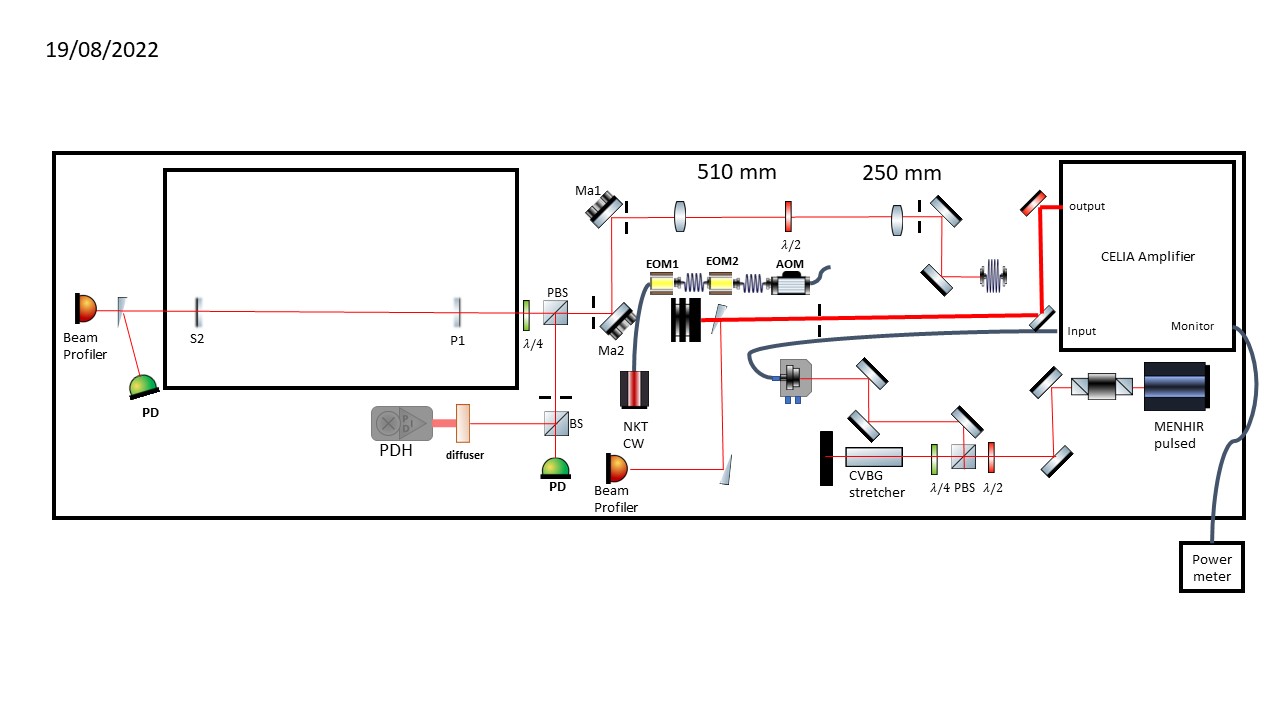 |
|
133
|
Fri Aug 19 16:36:18 2022 |
Manar Amer | Fixed | report | lasers and optics | Optical room | Telescope / amplifier output | The previous Sbox telescope was dismantled and the mechanical components cleaned.
its lenses are still in the mounts, it looks that two of them are spherical and two are cylindrical
2 are -100 mm and 2 are +150 mm, there is also a box containing fused silica lenses that could be used.
Note: at high power use only fused silica lenses not BK7 type
|
|
134
|
Mon Aug 22 18:38:03 2022 |
Manar Amer | Fixed | report | lasers and optics | Optical room | Telescope / amplifier output | Beam divergence was measured using a method called "Focal Length Divergence Measurement Method"
Where a lens of a known focal length is placed on the beam path and the beam waist is measured at the focal distance using a beam profiler.
We ramped the power up to 10 W
for a focal length = 400 mm,
we measured a FWHM = 2.1 mm,
corresponding to a divergence = 4.45 mrad (edit : wrong software use)
for comparison, we measured the FWHM 8.1 mm @ 1.55 m and extracted the divergence directly 4.46 mrad (edit : this measurement is wrong - wrong use of the software)
Note: better to use a lens of a focal lens higher than 100 mm (to reduce the error in the distance measured)
| Manar Amer wrote: |
|
The previous Sbox telescope was dismantled and the mechanical components cleaned.
its lenses are still in the mounts, it looks that two of them are spherical and two are cylindrical
2 are -100 mm and 2 are +150 mm, there is also a box containing fused silica lenses that could be used.
Note: at high power use only fused silica lenses not BK7 type
|
|
| Attachment 1: Focal_length_divergence_method.pdf
|
| Attachment 2: Beam_Profile_at_high_power_.jpg
| 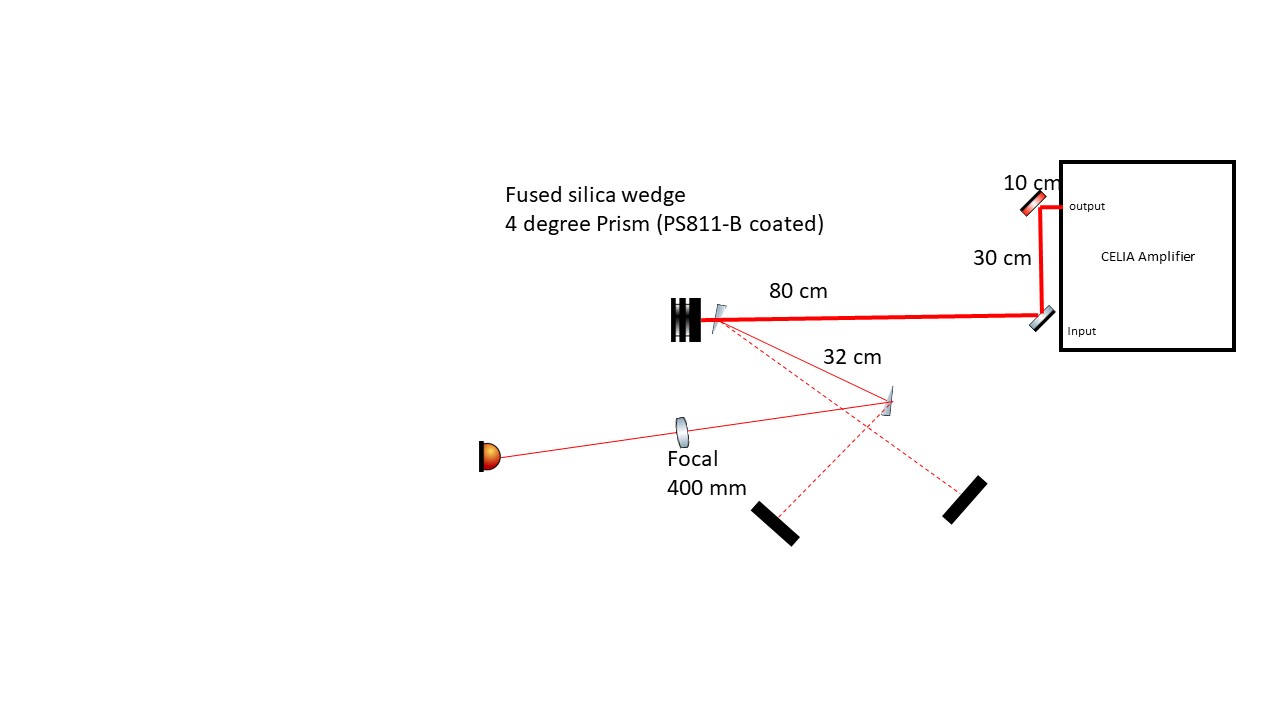 |
| Attachment 3: SBOX_CELIA_AMPLIFIER_Divergence_measurement.pdf
|
|
135
|
Mon Aug 22 18:39:13 2022 |
Manar Amer | Fixed | report | lasers and optics | Optical room | Amplifier output Beam Profile | Beam divergence after amplifier 4.46 mrad
| Manar Amer wrote: |
|
In preparation to measure the output beam profile from the amplifier at high power, I have placed two wedge mirrors just before the beam dump to be able to extract the beam.
One of the wedges was taken from ThomX bunker, also the HR and AR mirrors were taken to plic room in case we might need them
an updated setup is attached
|
|
|
136
|
Tue Aug 23 17:37:38 2022 |
Manar Amer | Fixed | report | lasers and optics | Optical room | Telescope / amplifier output | I placed a periscope to adjust the high of the beam from the amplifier output from ~ 10 cm from the table to ~ 15 cm
a dichroic mirror placed after it to reject the pump laser, all the mirrors on the path to the cavity were replaced with dielectric mirrors BB01-E03
the length of the path from the amplifier output to the cavity coupling mirror ~ 2 meters
setup defines the different optics placed in the path
Note: the beam goes all the way to the cavity, put it is not yet optimized to the irises.
| Manar Amer wrote: |
|
Beam divergence was measured using a method called "Focal Length Divergence Measurement Method"
Where a lens of a known focal length is placed on the beam path and the beam waist is measured at the focal distance using a beam profiler.
We ramped the power up to 10 W
for a focal length = 400 mm,
we measured a FWHM = 2.1 mm,
corresponding to a divergence = 4.45 mrad (edit : wrong software use)
for comparison, we measured the FWHM 8.1 mm @ 1.55 m and extracted the divergence directly 4.46 mrad (edit : this measurement is wrong - wrong use of the software)
Note: better to use a lens of a focal lens higher than 100 mm (to reduce the error in the distance measured)
| Manar Amer wrote: |
|
The previous Sbox telescope was dismantled and the mechanical components cleaned.
its lenses are still in the mounts, it looks that two of them are spherical and two are cylindrical
2 are -100 mm and 2 are +150 mm, there is also a box containing fused silica lenses that could be used.
Note: at high power use only fused silica lenses not BK7 type
|
|
|
| Attachment 1: 20220823_setup.jpg
| 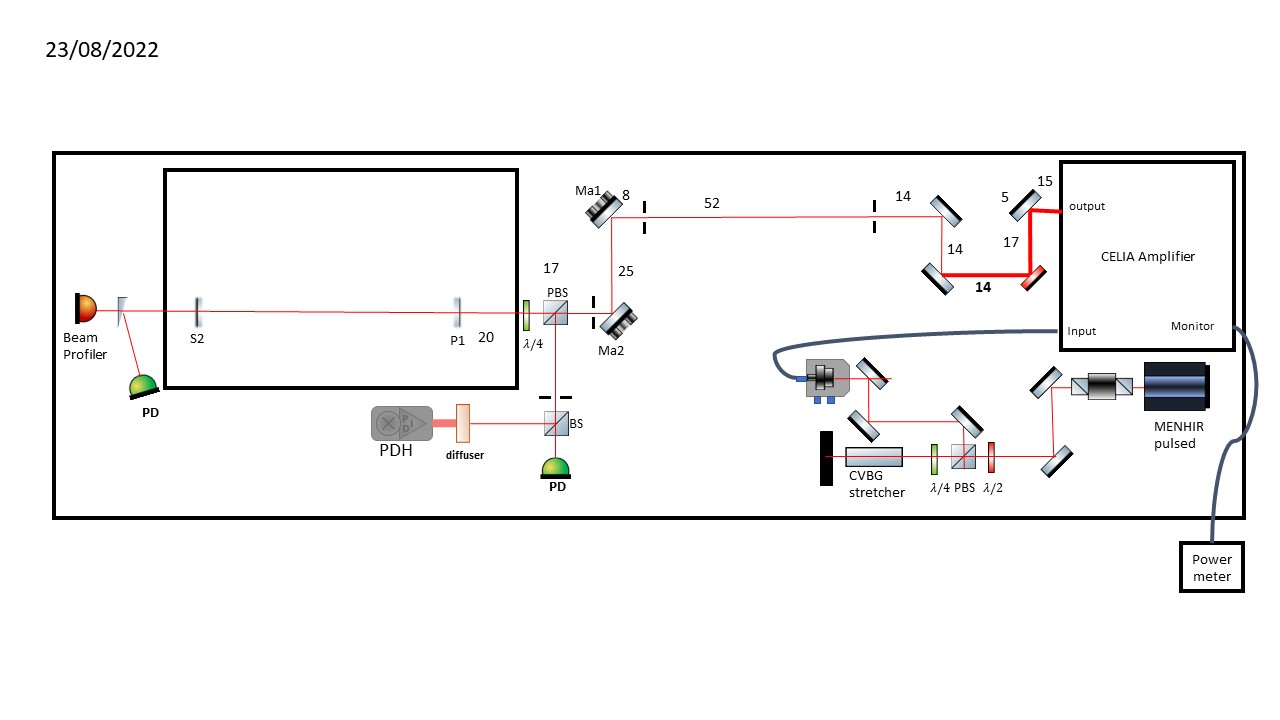 |
|
137
|
Wed Aug 24 10:39:58 2022 |
Manar Amer | Fixed | report | lasers and optics | Optical room | Telescope / amplifier output | Here is a view of beam propagation in the optical software : GaussianBeam
the red filled shape is the model of the CELIA amplifier beam propagation with a divergence of 4.46 mrad
(the 2 black dots is the measurement of the beam size without any lens to change the beam propagation).
the 2 black lines have been put at the input and output cavity mirrors position relative to the CELIA amplifier position, respectively 2m and 2.7m roughly.
the cavity mode radius should be 0.55mm and 0.7mm respectively.
the cavity mode shape is represented by the 2 red lines (very close to the red filled shape which is the beam).
the most simple working telescope could be a +250 lens at 280mm from the CELIA amplifier.
it gives a beam radius of 0.53mm at the input mirror and 0.64mm at the output mirror.
the overlapping is more than 99%
the 2nd file is the GaussianBeam file.
| Manar Amer wrote: |
|
I placed a periscope to adjust the high of the beam from the amplifier output from ~ 10 cm from the table to ~ 15 cm
a dichroic mirror placed after it to reject the pump laser, all the mirrors on the path to the cavity were replaced with dielectric mirrors BB01-E03
the length of the path from the amplifier output to the cavity coupling mirror ~ 2 meters
setup defines the different optics placed in the path
Note: the beam goes all the way to the cavity, put it is not yet optimized to the irises.
| Manar Amer wrote: |
|
Beam divergence was measured using a method called "Focal Length Divergence Measurement Method"
Where a lens of a known focal length is placed on the beam path and the beam waist is measured at the focal distance using a beam profiler.
We ramped the power up to 10 W
for a focal length = 400 mm,
we measured a FWHM = 2.1 mm,
corresponding to a divergence = 4.45 mrad (edit : wrong software use)
for comparison, we measured the FWHM 8.1 mm @ 1.55 m and extracted the divergence directly 4.46 mrad (edit : this measurement is wrong - wrong use of the software)
Note: better to use a lens of a focal lens higher than 100 mm (to reduce the error in the distance measured)
| Manar Amer wrote: |
|
The previous Sbox telescope was dismantled and the mechanical components cleaned.
its lenses are still in the mounts, it looks that two of them are spherical and two are cylindrical
2 are -100 mm and 2 are +150 mm, there is also a box containing fused silica lenses that could be used.
Note: at high power use only fused silica lenses not BK7 type
|
|
|
|
| Attachment 1: Capture.PNG
| 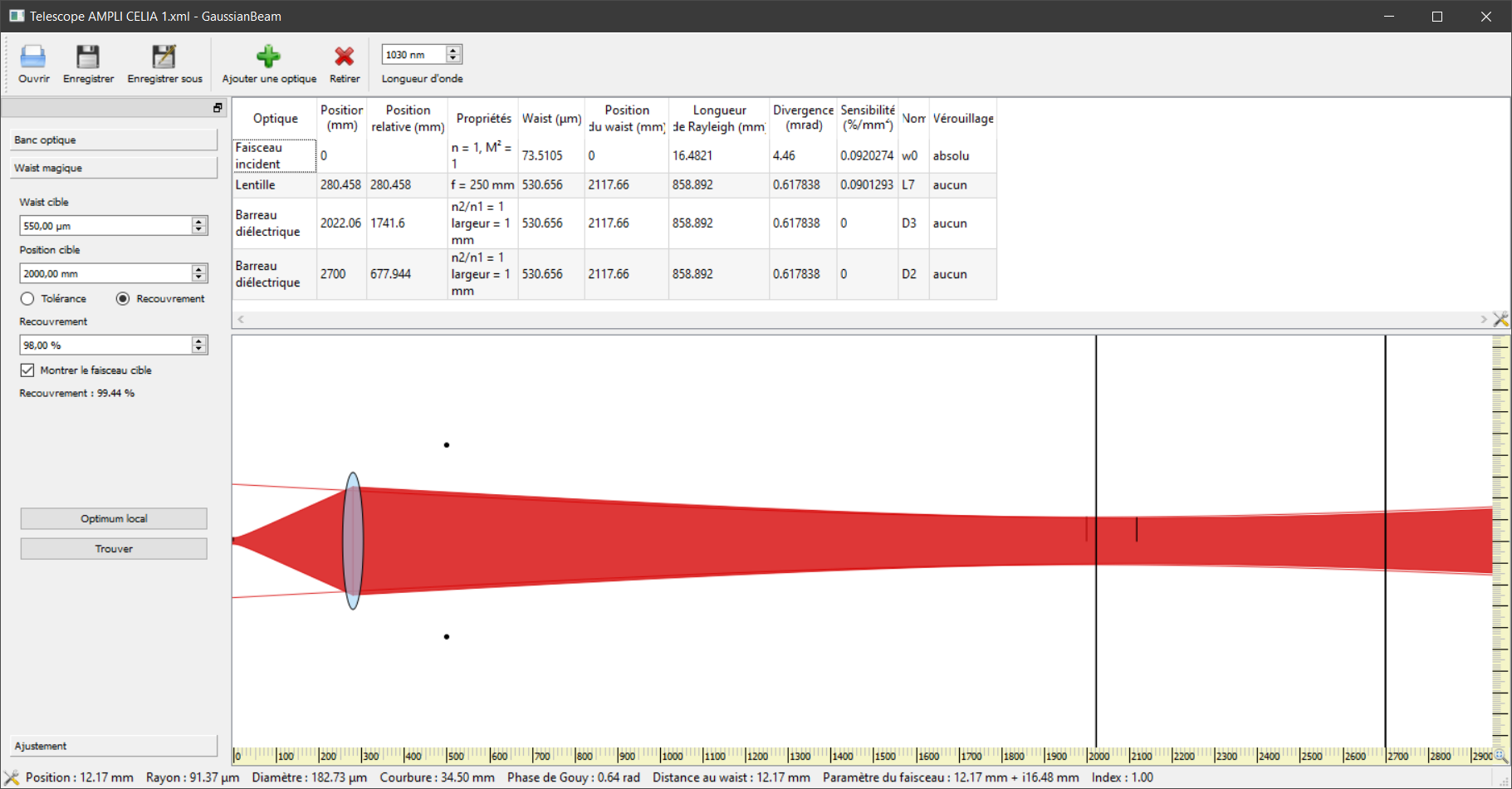 |
| Attachment 2: Telescope_AMPLI_CELIA_1.xml
|
<?xml version="1.0" encoding="UTF-8"?>
<!DOCTYPE gaussianBeam>
<gaussianBeam version="1.1">
    <bench id="0">
        <wavelength>1.03e-06</wavelength>
        <leftBoundary>-0.1</leftBoundary>
        <rightBoundary>5</rightBoundary>
        <targetBeam id="0">
            <position>2</position>
            <waist>0.00055</waist>
            <positionTolerance>0.1</positionTolerance>
            <waistTolerance>0.05</waistTolerance>
            <minOverlap>0.98</minOverlap>
            <overlapCriterion>1</overlapCriterion>
        </targetBeam>
        <beamFit id="0">
            <name>Fit6</name>
            <dataType>1</dataType>
            <color>0</color>
            <data id="0">
                <position>0.5</position>
                <value>0.00444</value>
            </data>
            <data id="1">
                <position>0</position>
                <value>0</value>
            </data>
            <data id="2">
                <position>0</position>
                <value>0</value>
            </data>
        </beamFit>
        <opticsList>
            <inputBeam id="2">
                <waist>7.35105e-05</waist>
                <index>1</index>
                <M2>1</M2>
                <position>0</position>
                <name>w0</name>
                <absoluteLock>1</absoluteLock>
            </inputBeam>
            <lens id="24">
                <focal>0.25</focal>
                <position>0.280458</position>
                <name>L7</name>
                <absoluteLock>0</absoluteLock>
            </lens>
            <dielectricSlab id="26">
                <indexRatio>1</indexRatio>
                <width>0.001</width>
                <position>2.02206</position>
                <name>D3</name>
                <absoluteLock>0</absoluteLock>
            </dielectricSlab>
            <dielectricSlab id="23">
                <indexRatio>1</indexRatio>
                <width>0.001</width>
                <position>2.7</position>
                <name>D2</name>
                <absoluteLock>0</absoluteLock>
            </dielectricSlab>
        </opticsList>
    </bench>
    <view id="0" bench="0">
        <horizontalRange>3</horizontalRange>
        <verticalRange>0.01</verticalRange>
        <origin>0</origin>
        <showTargetBeam id="0">1</showTargetBeam>
    </view>
</gaussianBeam>
|
|
138
|
Wed Aug 24 10:45:24 2022 |
Manar Amer | Fixed | report | lasers and optics | Optical room | 2 Mirror Setup @ 216.6 MHz | Adding information about the 2 mirror cavity setup (plan - spherical) that is currently installed.
From Aurélien at the start of the manipulation.
@ 0 is where the injection mirror is located
| Manar Amer wrote: |
|
The SBox cavity setup was changed to have only 2 mirrors M1 plane and M2 spherical, both from ThomX
Distance between the mirror ~ 72 cm , increased from 70 cm to take into account the thickness of the ThomX mirrors
Two lenses (300 mm @ 50 cm , 200 @ 104 cm) were placed to have the beam radius ~ 0.55 mm.
The cavity was locked with a coupling of 60 %, for Finesse measurement the sweep was taken over 100 KHz of 2 seconds.
FSR ~ 210.00 MHz, line width ~ 8.56 KHz, Finesse ~ 24 500 .
|
|
| Attachment 1: manip2miroirs.pptx
|
| Attachment 2: 2mirror_plan_shperical_beam_size.png
| 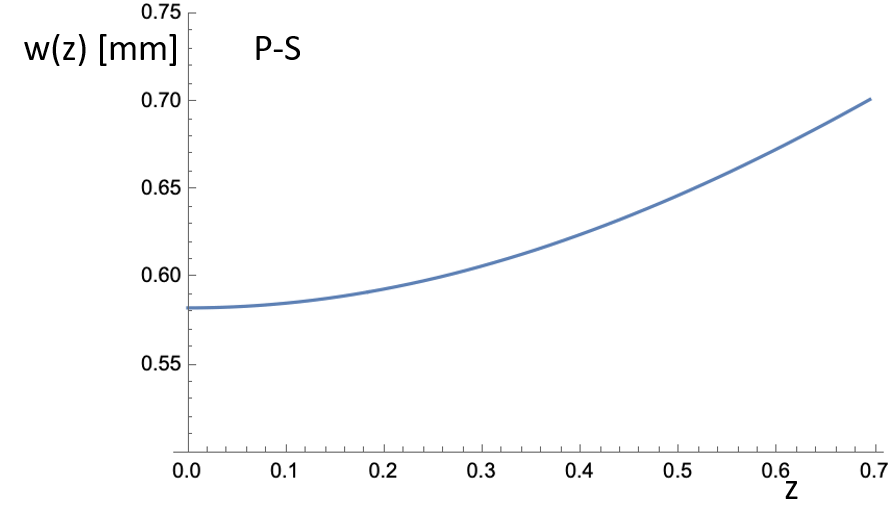 |
|
139
|
Tue Aug 30 17:48:39 2022 |
Ronic Chiche | Fixed | info | lasers and optics | Optical room | 2nd stage CELIA amplifier | today, we measured the 2nd stage CELIA amplifier pump wavelength : 970-990 nm |
| Attachment 1: 2nd_stage_pump_wavelength.jpg
|  |
|
140
|
Wed Aug 31 18:14:51 2022 |
Ronic Chiche | Fixed | info | lasers and optics | Optical room | 2nd stage CELIA amplifier | today we did several test with the Dichroic shortpass mirror (Thorlabs DMSP1000) and with a 10nm optical filter around 1030nm (which works in tranmission at AOI=0).
one used the dichroic mirror in reflection: one should cut the pump @970-990nm and we should keep only the signal @1030nm.
but we still saw plenty spots around the central beam (see the image).
adding the 10nm optical filter on the camera, the image did not change !
then we confirmed the whole signal (centered beam + spots) are well @1030nm.
this spots could be the remaining high order modes of the large fiber used for the 3rd stage of the amplifier.
| Ronic Chiche wrote: |
|
today, we measured the 2nd stage CELIA amplifier pump wavelength : 970-990 nm
|
|
| Attachment 1: image_faisceau_multimode_@1030nm.PNG
| 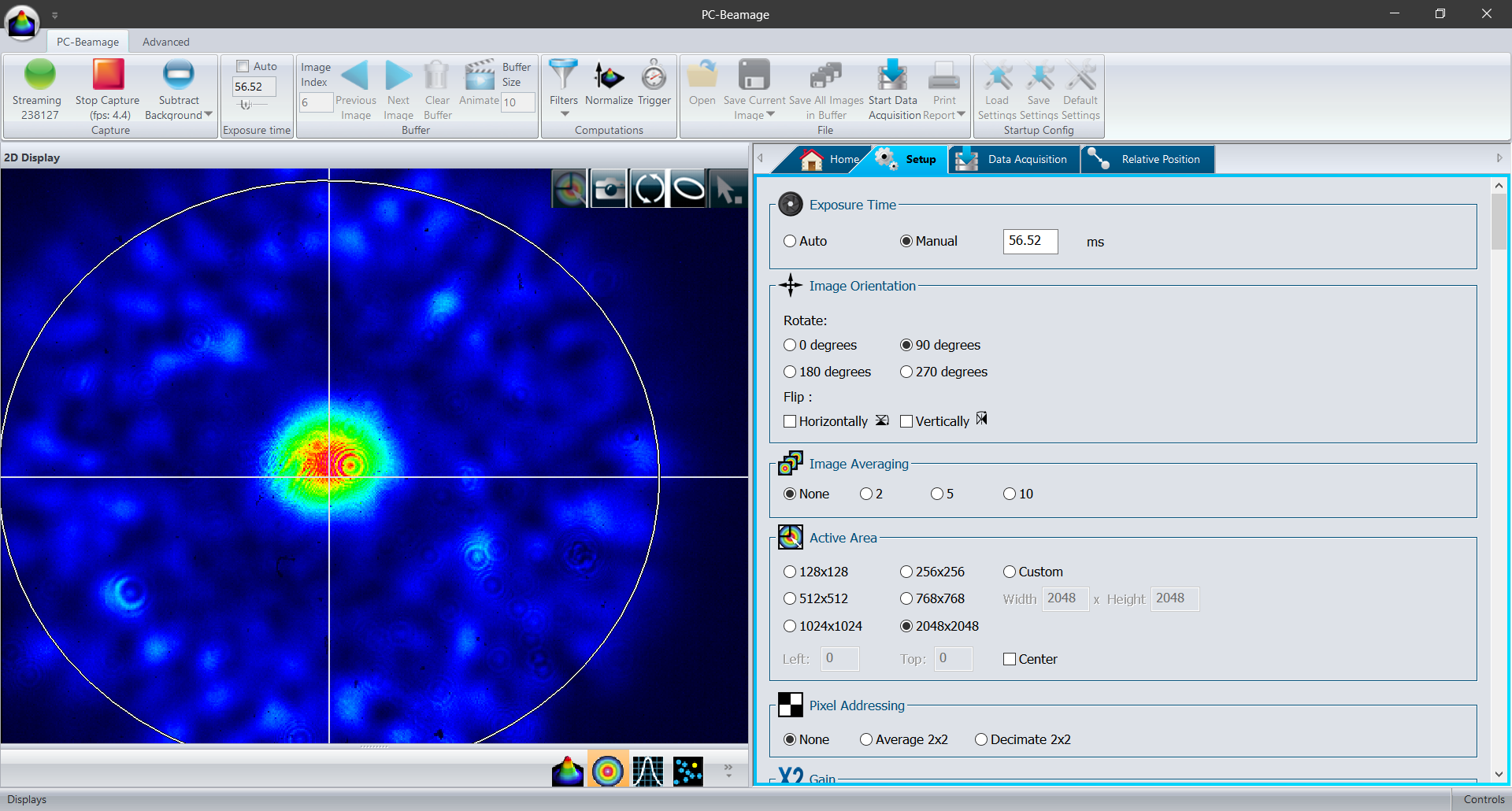 |
|
141
|
Fri Sep 2 17:50:21 2022 |
Manar Amer | Fixed | report | lasers and optics | Optical room | Telescope / amplifier output | removing the reading which is not correct (wrong use of software)
redone a reading similar using a lens of focal 250 mm got a FWHM-X = 0.64 mm , FWHM-Y = 0.84 mm
using the vertical to calculate the divergence, we get divergence ~ 2.17 mrad which is closer to fit obtained for the beam profile by taking data points along the path
attached is also the amplifier beam data taken at different points and their fit using Gaussian beam software
for a focal length = 400 mm,
we measured a FWHM = 2.1 mm,
corresponding to a divergence = 4.45 mrad
| Manar Amer wrote: |
|
Beam divergence was measured using a method called "Focal Length Divergence Measurement Method"
Where a lens of a known focal length is placed on the beam path and the beam waist is measured at the focal distance using a beam profiler.
We ramped the power up to 10 W
for a focal length = 400 mm,
we measured a FWHM = 2.1 mm,
corresponding to a divergence = 4.45 mrad (edit : wrong software use)
for comparison, we measured the FWHM 8.1 mm @ 1.55 m and extracted the divergence directly 4.46 mrad (edit : this measurement is wrong - wrong use of the software)
Note: better to use a lens of a focal lens higher than 100 mm (to reduce the error in the distance measured)
| Manar Amer wrote: |
|
The previous Sbox telescope was dismantled and the mechanical components cleaned.
its lenses are still in the mounts, it looks that two of them are spherical and two are cylindrical
2 are -100 mm and 2 are +150 mm, there is also a box containing fused silica lenses that could be used.
Note: at high power use only fused silica lenses not BK7 type
|
|
|
| Attachment 1: Beam_Profile_Fit_using_gaussian_Beam.jpg
| 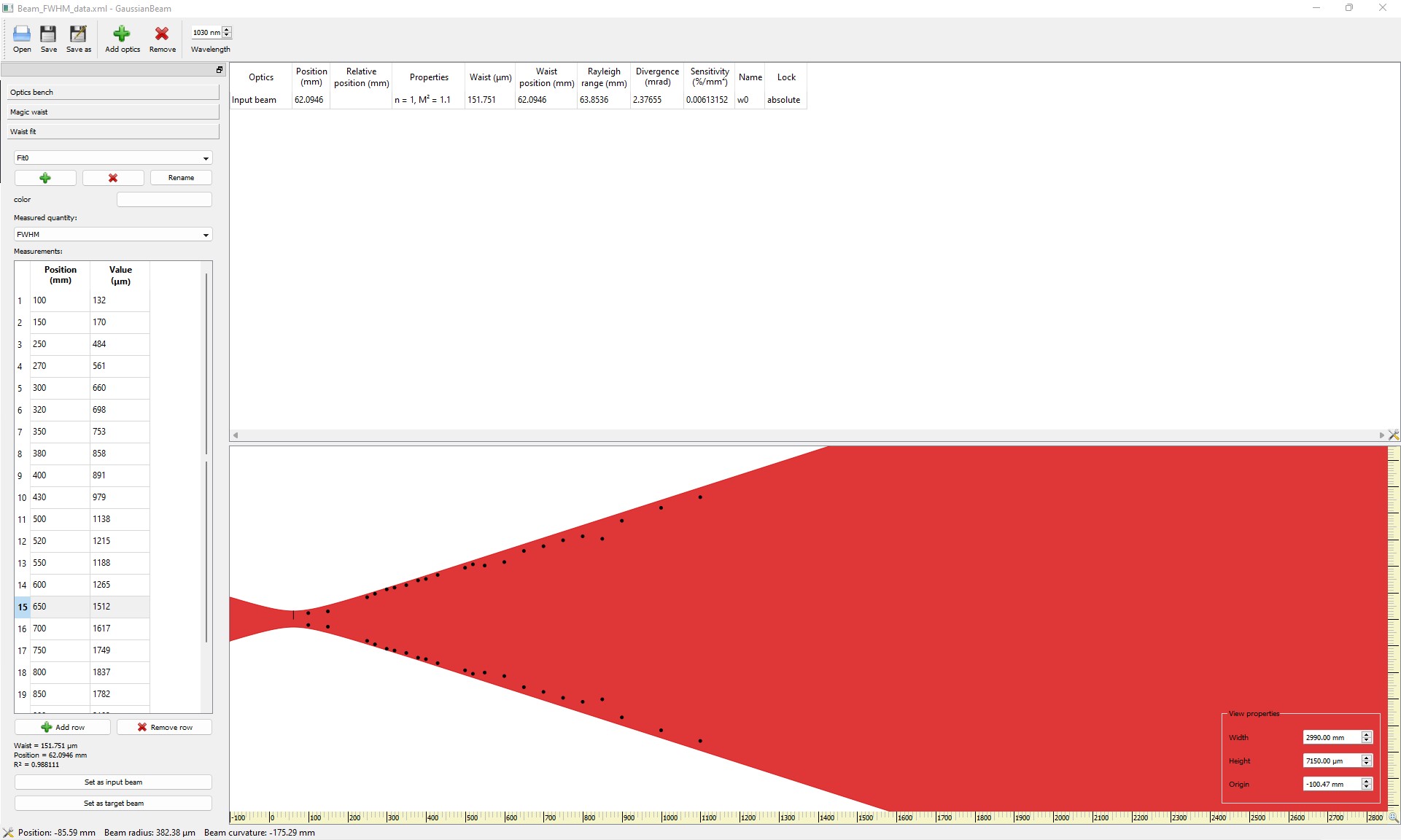 |
| Attachment 2: Beam_Profile_Fit_using_gaussian_Beam.xml
|
<?xml version="1.0" encoding="UTF-8"?>
<!DOCTYPE gaussianBeam>
<gaussianBeam version="1.1">
    <bench id="0">
        <wavelength>1.03e-06</wavelength>
        <leftBoundary>-0.1</leftBoundary>
        <rightBoundary>4</rightBoundary>
        <targetBeam id="0">
            <position>2</position>
            <waist>0.00058</waist>
            <positionTolerance>0.1</positionTolerance>
            <waistTolerance>0.05</waistTolerance>
            <minOverlap>0.96</minOverlap>
            <overlapCriterion>1</overlapCriterion>
        </targetBeam>
        <beamFit id="0">
            <name>Fit0</name>
            <dataType>3</dataType>
            <color>4278190080</color>
            <data id="0">
                <position>0.1</position>
                <value>0.000132</value>
            </data>
            <data id="1">
                <position>0.15</position>
                <value>0.00017</value>
            </data>
            <data id="2">
                <position>0.25</position>
                <value>0.000484</value>
            </data>
            <data id="3">
                <position>0.27</position>
                <value>0.000561</value>
            </data>
            <data id="4">
                <position>0.3</position>
                <value>0.00066</value>
            </data>
            <data id="5">
                <position>0.32</position>
                <value>0.000698</value>
            </data>
            <data id="6">
                <position>0.35</position>
                <value>0.000753</value>
            </data>
            <data id="7">
                <position>0.38</position>
                <value>0.000858</value>
            </data>
            <data id="8">
                <position>0.4</position>
                <value>0.000891</value>
            </data>
            <data id="9">
                <position>0.43</position>
                <value>0.000979</value>
            </data>
            <data id="10">
                <position>0.5</position>
                <value>0.001138</value>
            </data>
            <data id="11">
                <position>0.52</position>
                <value>0.001215</value>
            </data>
            <data id="12">
                <position>0.55</position>
                <value>0.001188</value>
            </data>
            <data id="13">
                <position>0.6</position>
                <value>0.001265</value>
            </data>
            <data id="14">
                <position>0.65</position>
                <value>0.001512</value>
            </data>
            <data id="15">
                <position>0.7</position>
                <value>0.001617</value>
            </data>
            <data id="16">
                <position>0.75</position>
                <value>0.001749</value>
            </data>
            <data id="17">
                <position>0.8</position>
                <value>0.001837</value>
            </data>
            <data id="18">
                <position>0.85</position>
                <value>0.001782</value>
            </data>
            <data id="19">
                <position>0.9</position>
                <value>0.002183</value>
            </data>
            <data id="20">
                <position>1</position>
                <value>0.002469</value>
            </data>
            <data id="21">
                <position>1.1</position>
                <value>0.002706</value>
            </data>
        </beamFit>
        <beamFit id="1">
            <name>Fit4</name>
            <dataType>1</dataType>
            <color>0</color>
            <data id="0">
                <position>0</position>
                <value>0</value>
            </data>
            <data id="1">
                <position>0</position>
                <value>0</value>
            </data>
            <data id="2">
                <position>0</position>
                <value>0</value>
            </data>
        </beamFit>
        <opticsList>
            <inputBeam id="2">
                <waist>0.000151751</waist>
                <index>1</index>
                <M2>1.1</M2>
                <position>0.0620946</position>
                <name>w0</name>
                <absoluteLock>1</absoluteLock>
            </inputBeam>
        </opticsList>
    </bench>
    <view id="0" bench="0">
        <horizontalRange>2.99</horizontalRange>
        <verticalRange>0.00715</verticalRange>
        <origin>-0.100473</origin>
        <showTargetBeam id="0">0</showTargetBeam>
    </view>
</gaussianBeam>
|
|
142
|
Fri Sep 2 18:10:10 2022 |
Manar Amer | Fixed | report | lasers and optics | Optical room | Telescope / amplifier output | Note the correct beam divergence is approximately ~ 2.3 mrad
M2 = 1.1 in this fit, but it is not yet optimized !!!!! could be reason for not accurate telescope reading.
Have tInstalled a new telescope with lenses
250 mm @ 86.8 cm from amplifier ,
-150 mm @109 cm (~ 22 cm between lenses)
the beam waist measured at a point on the reflection which is relatively the same distance to the injection mirror and the beam was much smaller than before
@ ~ 2 meters from amplifier + telescope , FWHM = 1.2 mm , waist = 0.85 * FWHM = 1.02 mm
| Manar Amer wrote: |
|
Here is a view of beam propagation in the optical software : GaussianBeam
the red filled shape is the model of the CELIA amplifier beam propagation with a divergence of 4.46 mrad
(the 2 black dots is the measurement of the beam size without any lens to change the beam propagation).
the 2 black lines have been put at the input and output cavity mirrors position relative to the CELIA amplifier position, respectively 2m and 2.7m roughly.
the cavity mode radius should be 0.55mm and 0.7mm respectively.
the cavity mode shape is represented by the 2 red lines (very close to the red filled shape which is the beam).
the most simple working telescope could be a +250 lens at 280mm from the CELIA amplifier.
it gives a beam radius of 0.53mm at the input mirror and 0.64mm at the output mirror.
the overlapping is more than 99%
the 2nd file is the GaussianBeam file.
| Manar Amer wrote: |
|
I placed a periscope to adjust the high of the beam from the amplifier output from ~ 10 cm from the table to ~ 15 cm
a dichroic mirror placed after it to reject the pump laser, all the mirrors on the path to the cavity were replaced with dielectric mirrors BB01-E03
the length of the path from the amplifier output to the cavity coupling mirror ~ 2 meters
setup defines the different optics placed in the path
Note: the beam goes all the way to the cavity, put it is not yet optimized to the irises.
| Manar Amer wrote: |
|
Beam divergence was measured using a method called "Focal Length Divergence Measurement Method"
Where a lens of a known focal length is placed on the beam path and the beam waist is measured at the focal distance using a beam profiler.
We ramped the power up to 10 W
for a focal length = 400 mm,
we measured a FWHM = 2.1 mm,
corresponding to a divergence = 4.45 mrad (edit : wrong software use)
for comparison, we measured the FWHM 8.1 mm @ 1.55 m and extracted the divergence directly 4.46 mrad (edit : this measurement is wrong - wrong use of the software)
Note: better to use a lens of a focal lens higher than 100 mm (to reduce the error in the distance measured)
| Manar Amer wrote: |
|
The previous Sbox telescope was dismantled and the mechanical components cleaned.
its lenses are still in the mounts, it looks that two of them are spherical and two are cylindrical
2 are -100 mm and 2 are +150 mm, there is also a box containing fused silica lenses that could be used.
Note: at high power use only fused silica lenses not BK7 type
|
|
|
|
|
| Attachment 1: Ampli_Celia_2.3mrad_divergence_New_Telescope.jpg
| 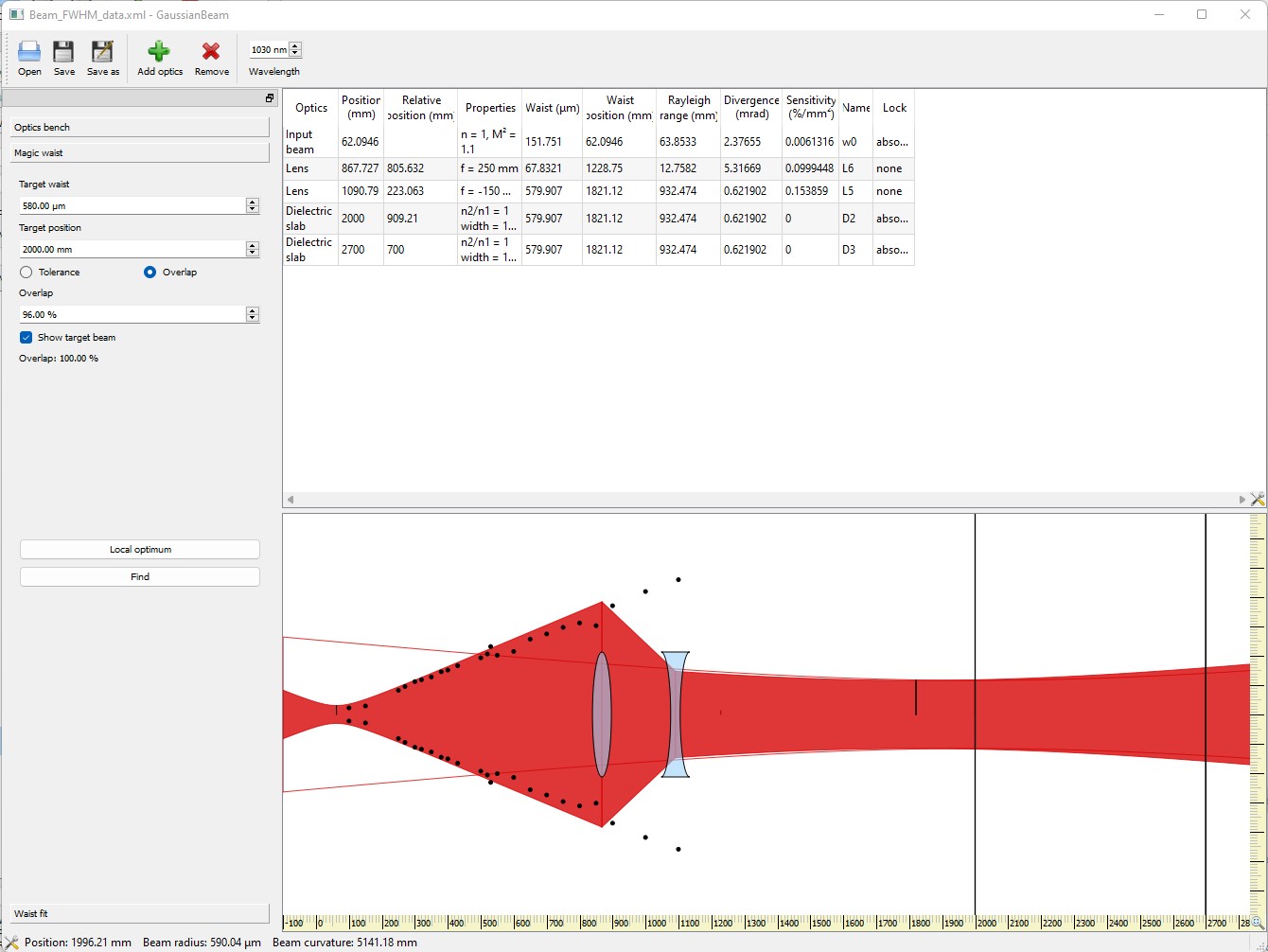 |
| Attachment 2: Beam_waist_at_injection_image.jpg
|  |
|
143
|
Mon Sep 5 18:06:53 2022 |
Manar Amer | Fixed | report | lasers and optics | Optical room | Telescope / amplifier output | Am adjustment on the lenses position to have a smaller waist.
+ 250 mm @ 88 cm from amplifier
-150 mm @ 111 cm from amplifier
the overlap with this placement is ~ 91%
the measured beam FWHM at the injection point M1 estimated to be ~ 0.94 mm
waist = 0.85*0.94 = 0.79 mm , it is still much larger than the needed 0.58 mm radius waist.
There is an improvement in reducing higher order modes, but the fundamental is still too weak to see, we observe higher order even modes 11 , 44 , ...
| Manar Amer wrote: |
|
Note the correct beam divergence is approximately ~ 2.3 mrad
M2 = 1.1 in this fit, but it is not yet optimized !!!!! could be reason for not accurate telescope reading.
Have tInstalled a new telescope with lenses
250 mm @ 86.8 cm from amplifier ,
-150 mm @109 cm (~ 22 cm between lenses)
the beam waist measured at a point on the reflection which is relatively the same distance to the injection mirror and the beam was much smaller than before
@ ~ 2 meters from amplifier + telescope , FWHM = 1.2 mm , waist = 0.85 * FWHM = 1.02 mm
| Manar Amer wrote: |
|
Here is a view of beam propagation in the optical software : GaussianBeam
the red filled shape is the model of the CELIA amplifier beam propagation with a divergence of 4.46 mrad
(the 2 black dots is the measurement of the beam size without any lens to change the beam propagation).
the 2 black lines have been put at the input and output cavity mirrors position relative to the CELIA amplifier position, respectively 2m and 2.7m roughly.
the cavity mode radius should be 0.55mm and 0.7mm respectively.
the cavity mode shape is represented by the 2 red lines (very close to the red filled shape which is the beam).
the most simple working telescope could be a +250 lens at 280mm from the CELIA amplifier.
it gives a beam radius of 0.53mm at the input mirror and 0.64mm at the output mirror.
the overlapping is more than 99%
the 2nd file is the GaussianBeam file.
| Manar Amer wrote: |
|
I placed a periscope to adjust the high of the beam from the amplifier output from ~ 10 cm from the table to ~ 15 cm
a dichroic mirror placed after it to reject the pump laser, all the mirrors on the path to the cavity were replaced with dielectric mirrors BB01-E03
the length of the path from the amplifier output to the cavity coupling mirror ~ 2 meters
setup defines the different optics placed in the path
Note: the beam goes all the way to the cavity, put it is not yet optimized to the irises.
| Manar Amer wrote: |
|
Beam divergence was measured using a method called "Focal Length Divergence Measurement Method"
Where a lens of a known focal length is placed on the beam path and the beam waist is measured at the focal distance using a beam profiler.
We ramped the power up to 10 W
for a focal length = 400 mm,
we measured a FWHM = 2.1 mm,
corresponding to a divergence = 4.45 mrad (edit : wrong software use)
for comparison, we measured the FWHM 8.1 mm @ 1.55 m and extracted the divergence directly 4.46 mrad (edit : this measurement is wrong - wrong use of the software)
Note: better to use a lens of a focal lens higher than 100 mm (to reduce the error in the distance measured)
| Manar Amer wrote: |
|
The previous Sbox telescope was dismantled and the mechanical components cleaned.
its lenses are still in the mounts, it looks that two of them are spherical and two are cylindrical
2 are -100 mm and 2 are +150 mm, there is also a box containing fused silica lenses that could be used.
Note: at high power use only fused silica lenses not BK7 type
|
|
|
|
|
|
| Attachment 1: 20220905_Telescope_lense_placement.jpg
| 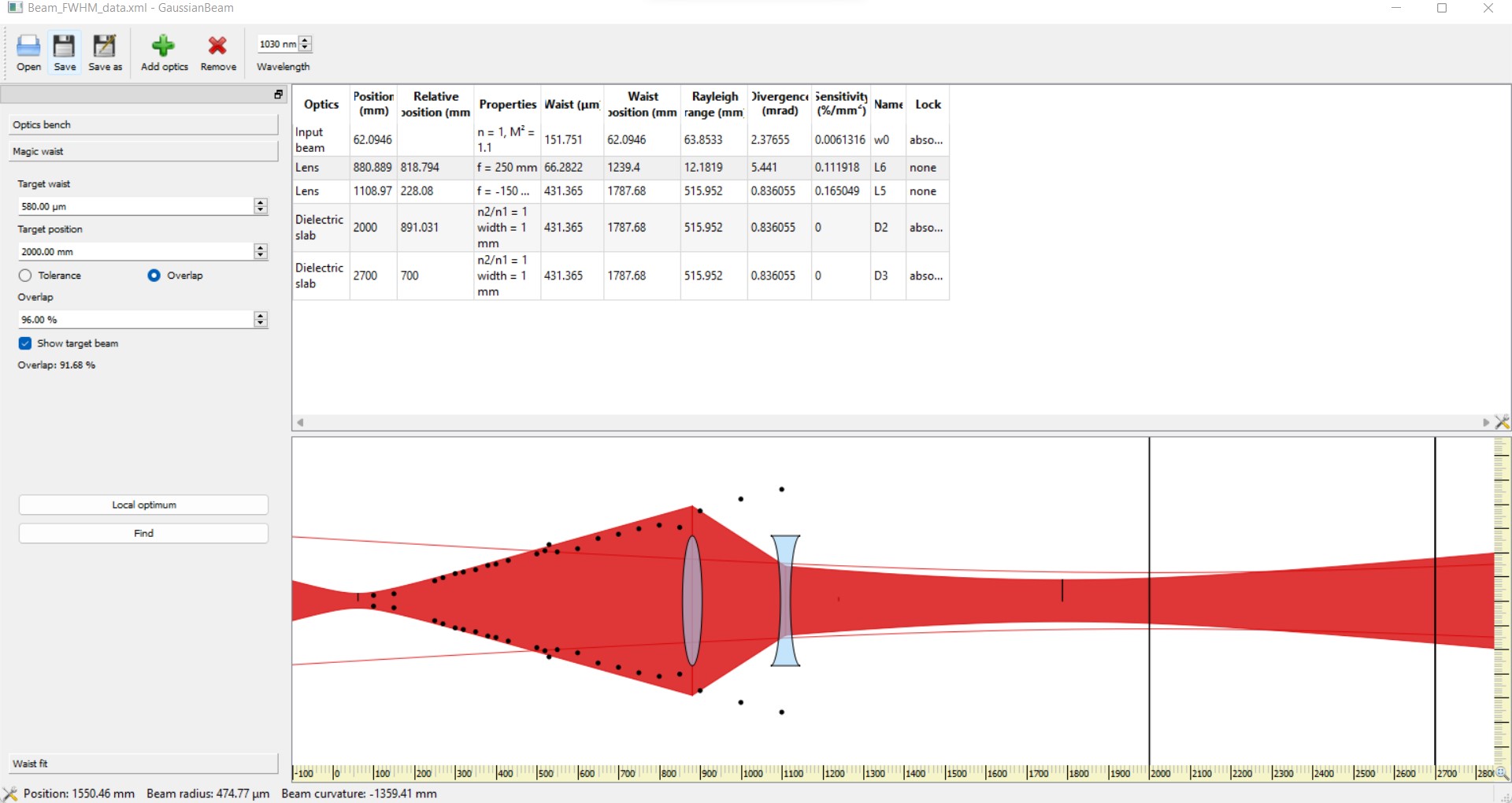 |
|
144
|
Tue Sep 6 17:47:40 2022 |
Ronic Chiche | Fixed | issue | lasers and optics | Optical room | unsuccessful telescope design :-( | we wanted to calculate the right telescope with 2 spherical lenses.
1) we have the FP cavity mode size which is 0.58mm at the input mirror and 0.7mm at the output mirror.
2) we planned to measure the laser beam at the output of the amplifier working at P=1W (2nd stage ON only).
we did several measurements at different positions from the amplifier output.
for each of these measurements, we were able to fit the intensity profile I = I0 * exp(-2 *r^2 / w^2) on x or y axis, then we have w(z).
attached files give an example of the beam image at z=40mm and an example of the beam fits for w and y.
with all the w(z) measurements, we were able to fit the divergence of the beam => 2.3 mrad
attached file show the radius measurements and the divergence fit.
with this divergence, we should find a waist bigger than 140 µm (value for M²=1).
unfortunately the smallest beam radius measured is 116 µm which would give a M²<1 that is not allowed !
then it seems the measurements have not been done correctly... :-(
we will try to do them again... maybe at P=10W or 50W ?!? |
| Attachment 1: image_at_z_being_40mm.png
| 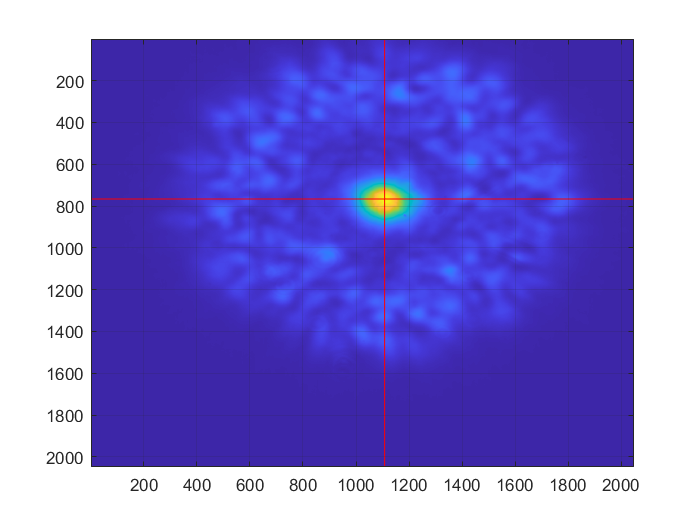 |
| Attachment 2: beam_fit_at_z_being_40mm.png
| 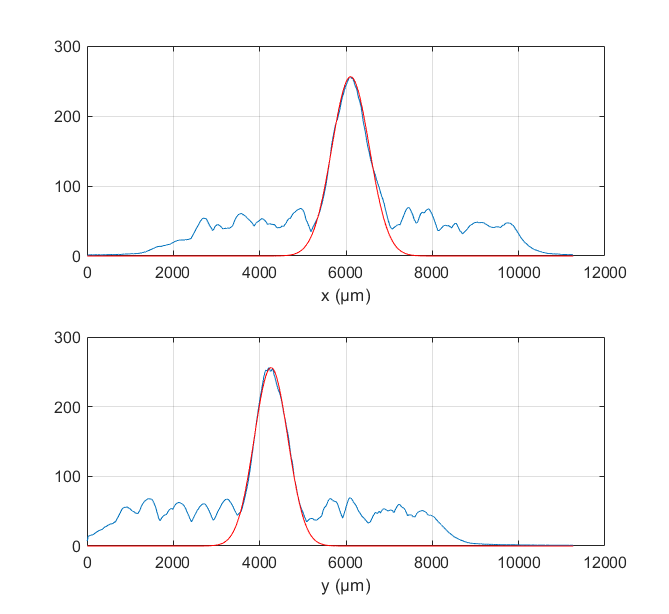 |
| Attachment 3: propagation_fit.png
| 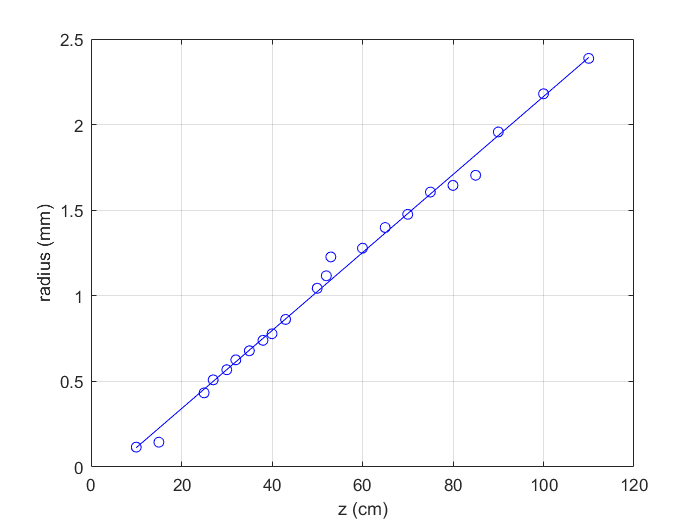 |
|
145
|
Wed Sep 7 18:57:20 2022 |
Manar Amer | Fixed | report | lasers and optics | Optical room | Telescope / amplifier output | We increased the power of the amplifier up to 10 W to see if there is a change in the beam shape at the injection point or the transmission.
There was no change in the shape of both of them from the reading at 1 W (with only the 2nd stage on)
Only saw an increase in the transmission power, which is expected.
| Manar Amer wrote: |
|
Am adjustment on the lenses position to have a smaller waist.
+ 250 mm @ 88 cm from amplifier
-150 mm @ 111 cm from amplifier
the overlap with this placement is ~ 91%
the measured beam FWHM at the injection point M1 estimated to be ~ 0.94 mm
waist = 0.85*0.94 = 0.79 mm , it is still much larger than the needed 0.58 mm radius waist.
There is an improvement in reducing higher order modes, but the fundamental is still too weak to see, we observe higher order even modes 11 , 44 , ...
| Manar Amer wrote: |
|
Note the correct beam divergence is approximately ~ 2.3 mrad
M2 = 1.1 in this fit, but it is not yet optimized !!!!! could be reason for not accurate telescope reading.
Have tInstalled a new telescope with lenses
250 mm @ 86.8 cm from amplifier ,
-150 mm @109 cm (~ 22 cm between lenses)
the beam waist measured at a point on the reflection which is relatively the same distance to the injection mirror and the beam was much smaller than before
@ ~ 2 meters from amplifier + telescope , FWHM = 1.2 mm , waist = 0.85 * FWHM = 1.02 mm
| Manar Amer wrote: |
|
Here is a view of beam propagation in the optical software : GaussianBeam
the red filled shape is the model of the CELIA amplifier beam propagation with a divergence of 4.46 mrad
(the 2 black dots is the measurement of the beam size without any lens to change the beam propagation).
the 2 black lines have been put at the input and output cavity mirrors position relative to the CELIA amplifier position, respectively 2m and 2.7m roughly.
the cavity mode radius should be 0.55mm and 0.7mm respectively.
the cavity mode shape is represented by the 2 red lines (very close to the red filled shape which is the beam).
the most simple working telescope could be a +250 lens at 280mm from the CELIA amplifier.
it gives a beam radius of 0.53mm at the input mirror and 0.64mm at the output mirror.
the overlapping is more than 99%
the 2nd file is the GaussianBeam file.
| Manar Amer wrote: |
|
I placed a periscope to adjust the high of the beam from the amplifier output from ~ 10 cm from the table to ~ 15 cm
a dichroic mirror placed after it to reject the pump laser, all the mirrors on the path to the cavity were replaced with dielectric mirrors BB01-E03
the length of the path from the amplifier output to the cavity coupling mirror ~ 2 meters
setup defines the different optics placed in the path
Note: the beam goes all the way to the cavity, put it is not yet optimized to the irises.
| Manar Amer wrote: |
|
Beam divergence was measured using a method called "Focal Length Divergence Measurement Method"
Where a lens of a known focal length is placed on the beam path and the beam waist is measured at the focal distance using a beam profiler.
We ramped the power up to 10 W
for a focal length = 400 mm,
we measured a FWHM = 2.1 mm,
corresponding to a divergence = 4.45 mrad (edit : wrong software use)
for comparison, we measured the FWHM 8.1 mm @ 1.55 m and extracted the divergence directly 4.46 mrad (edit : this measurement is wrong - wrong use of the software)
Note: better to use a lens of a focal lens higher than 100 mm (to reduce the error in the distance measured)
| Manar Amer wrote: |
|
The previous Sbox telescope was dismantled and the mechanical components cleaned.
its lenses are still in the mounts, it looks that two of them are spherical and two are cylindrical
2 are -100 mm and 2 are +150 mm, there is also a box containing fused silica lenses that could be used.
Note: at high power use only fused silica lenses not BK7 type
|
|
|
|
|
|
|
|
146
|
Wed Sep 7 18:58:03 2022 |
Manar Amer | Fixed | report | lasers and optics | Optical room | Locking Amplifier with Cavity | Today we managed to observe the fundamental mode and stabilize the scan on it until we improved the alignment enough.
We see some coupling, but it is very week < 5% , We improved the alignment and the polarization, but there is still no explanation to why it is very low.
The mode shape is circular with radius = 0.89 mm at transmission point, ~ 40 cm from circular mirror.
One EOM was installed along the injection into the amplifier, we saw a drop in the power measured by the first stage monitor from ~ 8.2 mW to 7.2 mW
we improved the injection up to 7.6 mW, but it still fluctuates a lot. We need to be careful about it.
The error signal looks clean, but it is very week which is due to the weak coupling.
|
| Attachment 1: 20220907_00mode.jpg
| 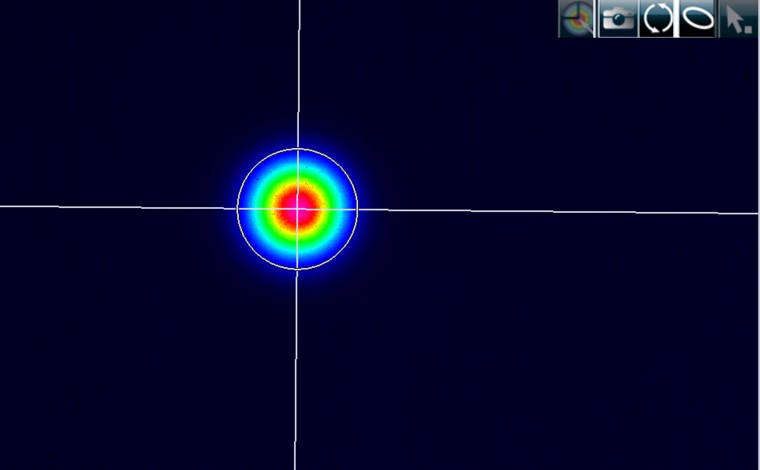 |
| Attachment 2: 20220907_00mode_diameter.jpg
| 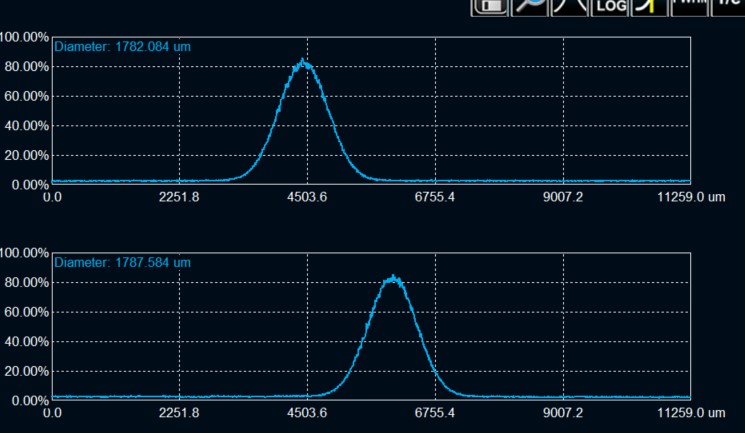 |
| Attachment 3: Screenshot_2022-09-07_0_174654.png
| 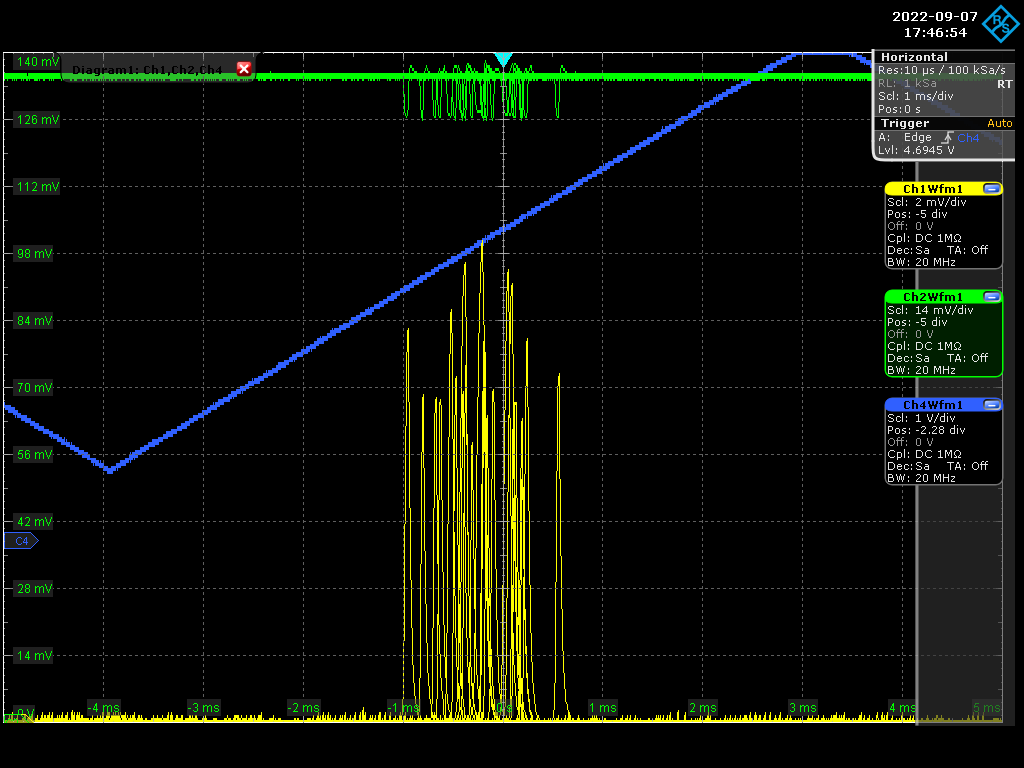 |
| Attachment 4: Screenshot_2022-09-07_2_182520.png
| 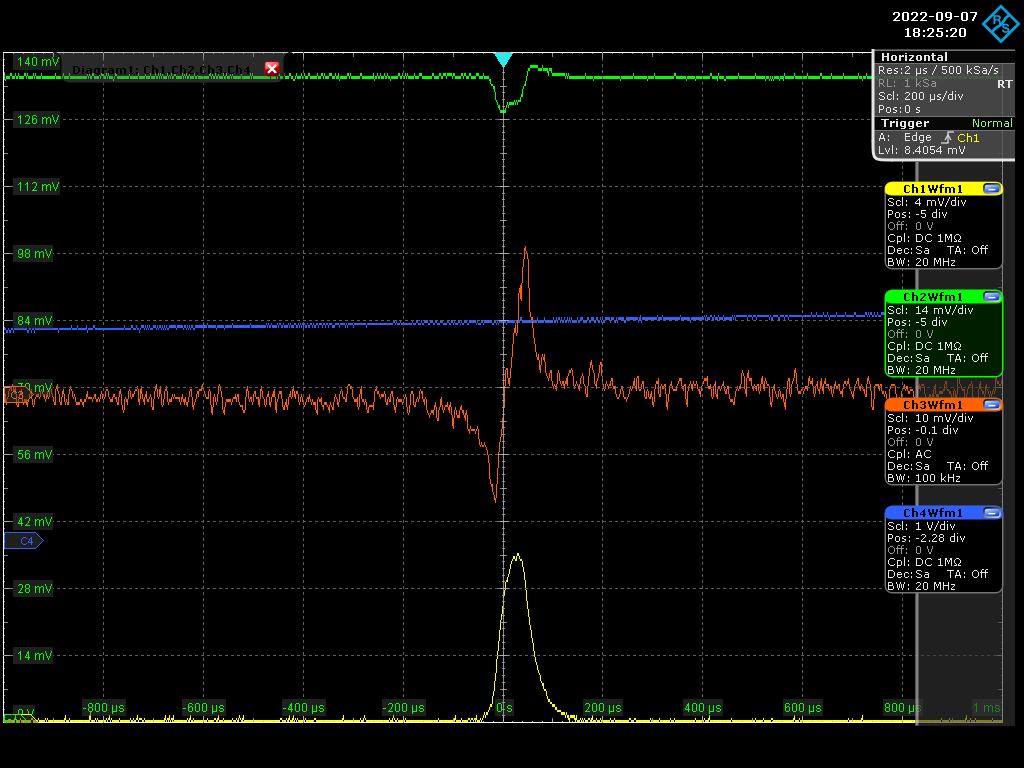 |
|
147
|
Thu Sep 8 11:16:40 2022 |
Manar Amer | Fixed | report | lasers and optics | Optical room | Locking Amplifier with Cavity | Today, we played on the CEP but using the I-tune input of the Menhir Laser (+/- 5V maximal range).
unfortunately, one only saw a very weak improvement of the transmission by 10-20%... and the coupling improvement is almost zero.
the best improvement was for the maximal I-tune range (+5V) which maybe means that we could improve more the effect if were able to get a full range of 2pi for the CEP (instead of the present pi/2 range).
| Manar Amer wrote: |
|
Today we managed to observe the fundamental mode and stabilize the scan on it until we improved the alignment enough.
We see some coupling, but it is very week < 5% , We improved the alignment and the polarization, but there is still no explanation to why it is very low.
The mode shape is circular with radius = 0.89 mm at transmission point, ~ 40 cm from circular mirror.
One EOM was installed along the injection into the amplifier, we saw a drop in the power measured by the first stage monitor from ~ 8.2 mW to 7.2 mW
we improved the injection up to 7.6 mW, but it still fluctuates a lot. We need to be careful about it.
The error signal looks clean, but it is very week which is due to the weak coupling.
|
|
|
148
|
Thu Sep 8 13:39:03 2022 |
Manar Amer | Fixed | report | lasers and optics | Optical room | Locking Amplifier with Cavity | We played on the CEP using the USB command "id0=xxxxx" of the Menhir.
we put id0=48650 and we improved A LOT the transmission and coupling (~ 60%)
here is an image of the first attempts to lock... but the locking is quite difficult.
yellow : transmission
green : reflection
amplifier is still with 2nd stage only (Pout=~1W)
we are adding an AOM in the loop...
| Manar Amer wrote: |
|
Today, we played on the CEP but using the I-tune input of the Menhir Laser (+/- 5V maximal range).
unfortunately, one only saw a very weak improvement of the transmission by 10-20%... and the coupling improvement is almost zero.
the best improvement was for the maximal I-tune range (+5V) which maybe means that we could improve more the effect if were able to get a full range of 2pi for the CEP (instead of the present pi/2 range).
| Manar Amer wrote: |
|
Today we managed to observe the fundamental mode and stabilize the scan on it until we improved the alignment enough.
We see some coupling, but it is very week < 5% , We improved the alignment and the polarization, but there is still no explanation to why it is very low.
The mode shape is circular with radius = 0.89 mm at transmission point, ~ 40 cm from circular mirror.
One EOM was installed along the injection into the amplifier, we saw a drop in the power measured by the first stage monitor from ~ 8.2 mW to 7.2 mW
we improved the injection up to 7.6 mW, but it still fluctuates a lot. We need to be careful about it.
The error signal looks clean, but it is very week which is due to the weak coupling.
|
|
|
| Attachment 1: Screenshot_2022-09-08_0_133245.png
| 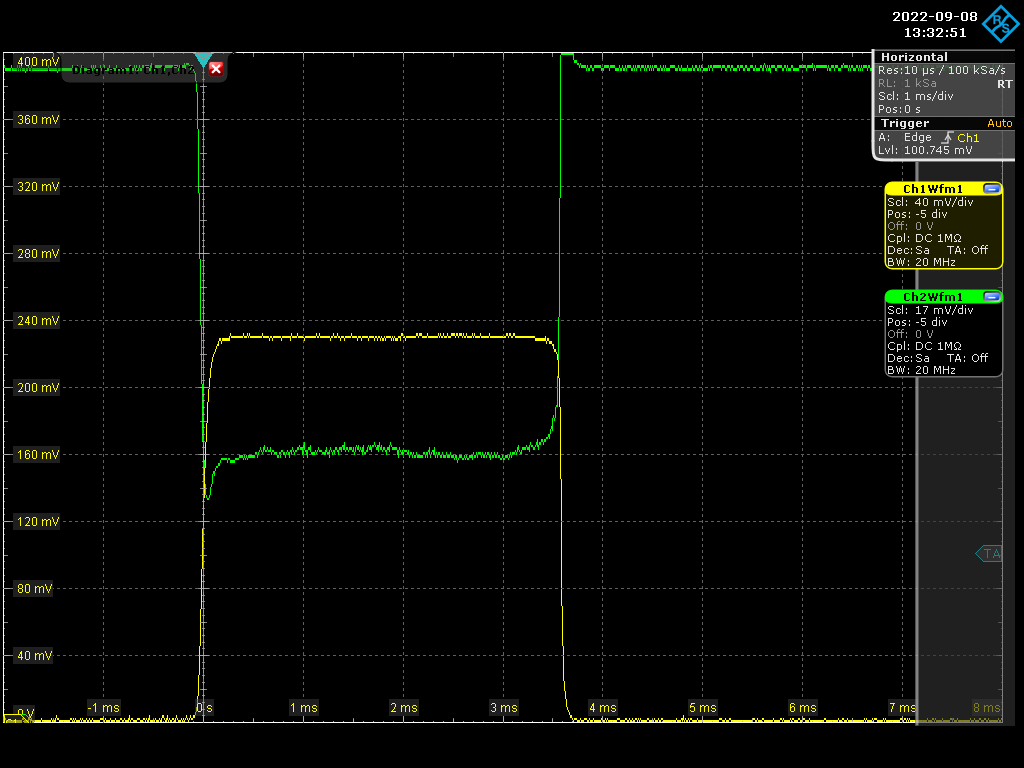 |
|
149
|
Thu Sep 8 14:58:51 2022 |
Manar Amer | Fixed | report | lasers and optics | Optical room | Locking Amplifier with Cavity | We managed to lock the cavity by adding the AOM , but the lock is still difficult to stabilize.
There is some high frequency compensated by the AOM at ~ 170 kHz (yet to understand from where it comes from)
| Manar Amer wrote: |
|
We played on the CEP using the USB command "id0=xxxxx" of the Menhir.
we put id0=48650 and we improved A LOT the transmission and coupling (~ 60%)
here is an image of the first attempts to lock... but the locking is quite difficult.
yellow : transmission
green : reflection
amplifier is still with 2nd stage only (Pout=~1W)
we are adding an AOM in the loop...
| Manar Amer wrote: |
|
Today, we played on the CEP but using the I-tune input of the Menhir Laser (+/- 5V maximal range).
unfortunately, one only saw a very weak improvement of the transmission by 10-20%... and the coupling improvement is almost zero.
the best improvement was for the maximal I-tune range (+5V) which maybe means that we could improve more the effect if were able to get a full range of 2pi for the CEP (instead of the present pi/2 range).
| Manar Amer wrote: |
|
Today we managed to observe the fundamental mode and stabilize the scan on it until we improved the alignment enough.
We see some coupling, but it is very week < 5% , We improved the alignment and the polarization, but there is still no explanation to why it is very low.
The mode shape is circular with radius = 0.89 mm at transmission point, ~ 40 cm from circular mirror.
One EOM was installed along the injection into the amplifier, we saw a drop in the power measured by the first stage monitor from ~ 8.2 mW to 7.2 mW
we improved the injection up to 7.6 mW, but it still fluctuates a lot. We need to be careful about it.
The error signal looks clean, but it is very week which is due to the weak coupling.
|
|
|
|
| Attachment 1: Screenshot_2022-09-08_2_144338.png
| 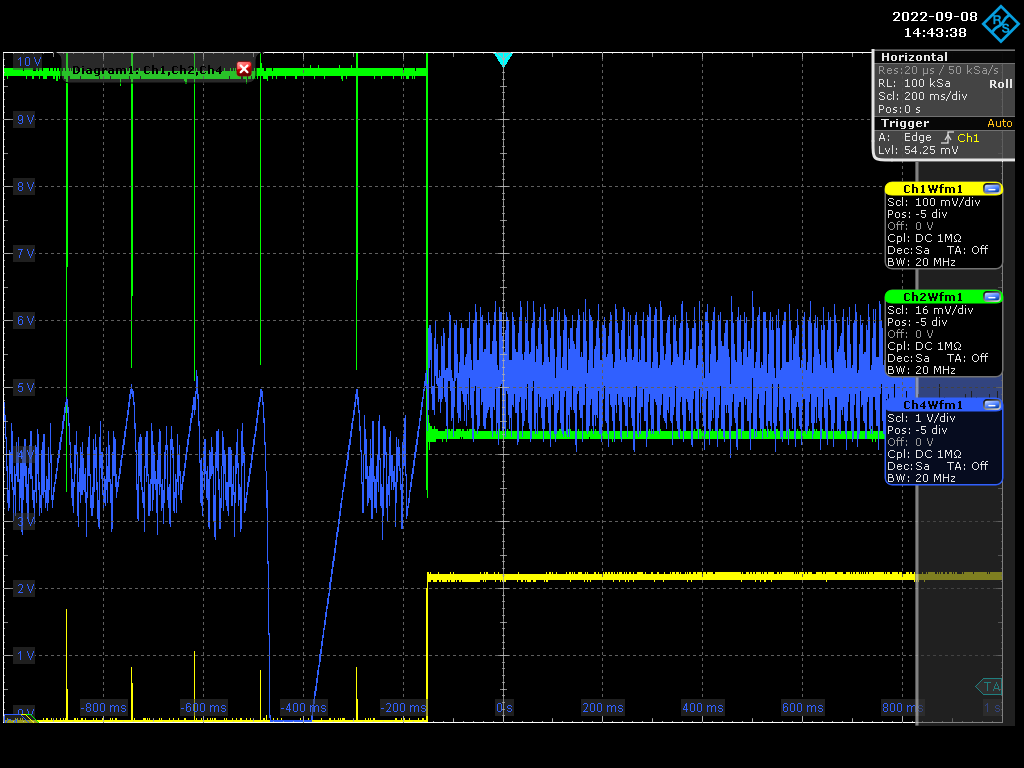 |
|
150
|
Thu Sep 8 18:28:51 2022 |
Manar Amer | Fixed | report | lasers and optics | Optical room | Locking Amplifier with Cavity | We wanted to increase the power of the amplifier to measure the transmission output at M2,
but locking the cavity again was very, very difficult.
We will try again tomorrow.
| Manar Amer wrote: |
|
We managed to lock the cavity by adding the AOM , but the lock is still difficult to stabilize.
There is some high frequency compensated by the AOM at ~ 170 kHz (yet to understand from where it comes from)
| Manar Amer wrote: |
|
We played on the CEP using the USB command "id0=xxxxx" of the Menhir.
we put id0=48650 and we improved A LOT the transmission and coupling (~ 60%)
here is an image of the first attempts to lock... but the locking is quite difficult.
yellow : transmission
green : reflection
amplifier is still with 2nd stage only (Pout=~1W)
we are adding an AOM in the loop...
| Manar Amer wrote: |
|
Today, we played on the CEP but using the I-tune input of the Menhir Laser (+/- 5V maximal range).
unfortunately, one only saw a very weak improvement of the transmission by 10-20%... and the coupling improvement is almost zero.
the best improvement was for the maximal I-tune range (+5V) which maybe means that we could improve more the effect if were able to get a full range of 2pi for the CEP (instead of the present pi/2 range).
| Manar Amer wrote: |
|
Today we managed to observe the fundamental mode and stabilize the scan on it until we improved the alignment enough.
We see some coupling, but it is very week < 5% , We improved the alignment and the polarization, but there is still no explanation to why it is very low.
The mode shape is circular with radius = 0.89 mm at transmission point, ~ 40 cm from circular mirror.
One EOM was installed along the injection into the amplifier, we saw a drop in the power measured by the first stage monitor from ~ 8.2 mW to 7.2 mW
we improved the injection up to 7.6 mW, but it still fluctuates a lot. We need to be careful about it.
The error signal looks clean, but it is very week which is due to the weak coupling.
|
|
|
|
|
|
151
|
Fri Sep 9 11:50:17 2022 |
Manar Amer | Fixed | report | lasers and optics | Optical room | Locking Amplifier with Cavity | We locked the cavity, and it is stable using the Transmission,
the high frequency that we thought could have a reason for instability, is due to the high power on the photo diode of the PDH box which can cause non-linearity effects in the signal.
We also closed the fan of the third stage and there was no significant change on the error signal and the piezo+AOM compensation signal.
| Manar Amer wrote: |
|
We managed to lock the cavity by adding the AOM , but the lock is still difficult to stabilize.
There is some high frequency compensated by the AOM at ~ 170 kHz (yet to understand from where it comes from)
| Manar Amer wrote: |
|
We played on the CEP using the USB command "id0=xxxxx" of the Menhir.
we put id0=48650 and we improved A LOT the transmission and coupling (~ 60%)
here is an image of the first attempts to lock... but the locking is quite difficult.
yellow : transmission
green : reflection
amplifier is still with 2nd stage only (Pout=~1W)
we are adding an AOM in the loop...
| Manar Amer wrote: |
|
Today, we played on the CEP but using the I-tune input of the Menhir Laser (+/- 5V maximal range).
unfortunately, one only saw a very weak improvement of the transmission by 10-20%... and the coupling improvement is almost zero.
the best improvement was for the maximal I-tune range (+5V) which maybe means that we could improve more the effect if were able to get a full range of 2pi for the CEP (instead of the present pi/2 range).
| Manar Amer wrote: |
|
Today we managed to observe the fundamental mode and stabilize the scan on it until we improved the alignment enough.
We see some coupling, but it is very week < 5% , We improved the alignment and the polarization, but there is still no explanation to why it is very low.
The mode shape is circular with radius = 0.89 mm at transmission point, ~ 40 cm from circular mirror.
One EOM was installed along the injection into the amplifier, we saw a drop in the power measured by the first stage monitor from ~ 8.2 mW to 7.2 mW
we improved the injection up to 7.6 mW, but it still fluctuates a lot. We need to be careful about it.
The error signal looks clean, but it is very week which is due to the weak coupling.
|
|
|
|
|
|
152
|
Fri Sep 9 12:45:19 2022 |
Manar Amer | Fixed | report | lasers and optics | Optical room | Locking Amplifier with Cavity | image of the lock with Coupling of ~ 60%
| Manar Amer wrote: |
|
We locked the cavity, and it is stable using the Transmission,
the high frequency that we thought could have a reason for instability, is due to the high power on the photo diode of the PDH box which can cause non-linearity effects in the signal.
We also closed the fan of the third stage and there was no significant change on the error signal and the piezo+AOM compensation signal.
| Manar Amer wrote: |
|
We managed to lock the cavity by adding the AOM , but the lock is still difficult to stabilize.
There is some high frequency compensated by the AOM at ~ 170 kHz (yet to understand from where it comes from)
| Manar Amer wrote: |
|
We played on the CEP using the USB command "id0=xxxxx" of the Menhir.
we put id0=48650 and we improved A LOT the transmission and coupling (~ 60%)
here is an image of the first attempts to lock... but the locking is quite difficult.
yellow : transmission
green : reflection
amplifier is still with 2nd stage only (Pout=~1W)
we are adding an AOM in the loop...
| Manar Amer wrote: |
|
Today, we played on the CEP but using the I-tune input of the Menhir Laser (+/- 5V maximal range).
unfortunately, one only saw a very weak improvement of the transmission by 10-20%... and the coupling improvement is almost zero.
the best improvement was for the maximal I-tune range (+5V) which maybe means that we could improve more the effect if were able to get a full range of 2pi for the CEP (instead of the present pi/2 range).
| Manar Amer wrote: |
|
Today we managed to observe the fundamental mode and stabilize the scan on it until we improved the alignment enough.
We see some coupling, but it is very week < 5% , We improved the alignment and the polarization, but there is still no explanation to why it is very low.
The mode shape is circular with radius = 0.89 mm at transmission point, ~ 40 cm from circular mirror.
One EOM was installed along the injection into the amplifier, we saw a drop in the power measured by the first stage monitor from ~ 8.2 mW to 7.2 mW
we improved the injection up to 7.6 mW, but it still fluctuates a lot. We need to be careful about it.
The error signal looks clean, but it is very week which is due to the weak coupling.
|
|
|
|
|
|
| Attachment 1: Screenshot_2022-09-09_0_120737.png
| 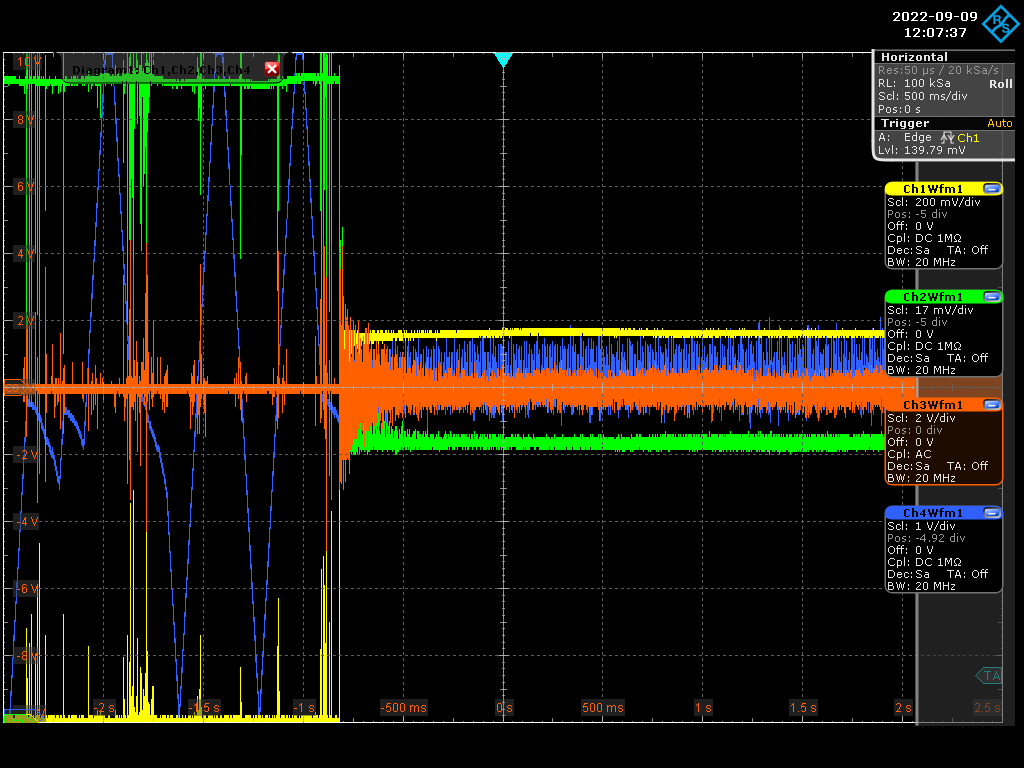 |
|
153
|
Fri Sep 9 12:49:44 2022 |
Manar Amer | Fixed | report | lasers and optics | Optical room | Locking Amplifier with Cavity | Alignment was improved to ~ 1.2 V on the photodiode.
Only the second stage was on with ~ 1 W output from amplifier
we measured the transmission from S2 to be 2.3 mW
| Manar Amer wrote: |
|
image of the lock with Coupling of ~ 60%
| Manar Amer wrote: |
|
We locked the cavity, and it is stable using the Transmission,
the high frequency that we thought could have a reason for instability, is due to the high power on the photo diode of the PDH box which can cause non-linearity effects in the signal.
We also closed the fan of the third stage and there was no significant change on the error signal and the piezo+AOM compensation signal.
| Manar Amer wrote: |
|
We managed to lock the cavity by adding the AOM , but the lock is still difficult to stabilize.
There is some high frequency compensated by the AOM at ~ 170 kHz (yet to understand from where it comes from)
| Manar Amer wrote: |
|
We played on the CEP using the USB command "id0=xxxxx" of the Menhir.
we put id0=48650 and we improved A LOT the transmission and coupling (~ 60%)
here is an image of the first attempts to lock... but the locking is quite difficult.
yellow : transmission
green : reflection
amplifier is still with 2nd stage only (Pout=~1W)
we are adding an AOM in the loop...
| Manar Amer wrote: |
|
Today, we played on the CEP but using the I-tune input of the Menhir Laser (+/- 5V maximal range).
unfortunately, one only saw a very weak improvement of the transmission by 10-20%... and the coupling improvement is almost zero.
the best improvement was for the maximal I-tune range (+5V) which maybe means that we could improve more the effect if were able to get a full range of 2pi for the CEP (instead of the present pi/2 range).
| Manar Amer wrote: |
|
Today we managed to observe the fundamental mode and stabilize the scan on it until we improved the alignment enough.
We see some coupling, but it is very week < 5% , We improved the alignment and the polarization, but there is still no explanation to why it is very low.
The mode shape is circular with radius = 0.89 mm at transmission point, ~ 40 cm from circular mirror.
One EOM was installed along the injection into the amplifier, we saw a drop in the power measured by the first stage monitor from ~ 8.2 mW to 7.2 mW
we improved the injection up to 7.6 mW, but it still fluctuates a lot. We need to be careful about it.
The error signal looks clean, but it is very week which is due to the weak coupling.
|
|
|
|
|
|
|
|
154
|
Fri Sep 9 14:44:35 2022 |
Manar Amer | Fixed | report | lasers and optics | Optical room | Power storage In Cavity | We start of power output from amplifier of 1W with only the first and second stage on then we start with the third stage power increase,
Note: when changing the current on the third stage 4 diodes, better to do it step by step for each one with a step of ~ 0.5 A
|
Amplifier output current (A)
for four diodes
|
Power Output (W) |
Transmitted power (MW)
|
| 0 , 0 , 0 , 0 |
~ 1 |
2.3 |
| 1 , 1 , 1 , 1 |
/ |
11.0 |
| 1.5 , 1.3, 1 , 1 |
/ |
35 |
| 1.5 , 1.5 , 1 , 1 |
/ |
42.16 |
| |
|
- we placed at the transmission point a splitter the transmitted power before was 35 mW after placing it we had 26 mW
- 97 % transmission , 3% reflected which goes to the beam profiler
- We see degeneracy modes at the last step of 42.16 mW , so we started to test the D-shaped mirrors
- the full range of the motors is 50.8 mm
- each step = 30 nm , 30 000 steps = 1 mm
|
|
155
|
Fri Sep 9 15:47:46 2022 |
Manar Amer | Fixed | report | lasers and optics | Optical room | Power storage In Cavity | At transmission power of 42 mW, coupling 60%, we see fundamental mode with a degeneracy
The D-shape motors were moved to a position 2 000 000 steps (in theory they should be the max position)
but no change appeared on the 00 mode or the higher order mode.
We will break the vacuum and check the position of the D-shaped mirrors.
| Manar Amer wrote: |
|
We start of power output from amplifier of 1W with only the first and second stage on then we start with the third stage power increase,
Note: when changing the current on the third stage 4 diodes, better to do it step by step for each one with a step of ~ 0.5 A
|
Amplifier output current (A)
for four diodes
|
Power Output (W) |
Transmitted power (MW)
|
| 0 , 0 , 0 , 0 |
~ 1 |
2.3 |
| 1 , 1 , 1 , 1 |
/ |
11.0 |
| 1.5 , 1.3, 1 , 1 |
/ |
35 |
| 1.5 , 1.5 , 1 , 1 |
/ |
42.16 |
| |
|
- we placed at the transmission point a splitter the transmitted power before was 35 mW after placing it we had 26 mW
- 97 % transmission , 3% reflected which goes to the beam profiler
- We see degeneracy modes at the last step of 42.16 mW , so we started to test the D-shaped mirrors
- the full range of the motors is 50.8 mm
- each step = 30 nm , 30 000 steps = 1 mm
|
|
| Attachment 1: Transmission_after_S2.jpg
| 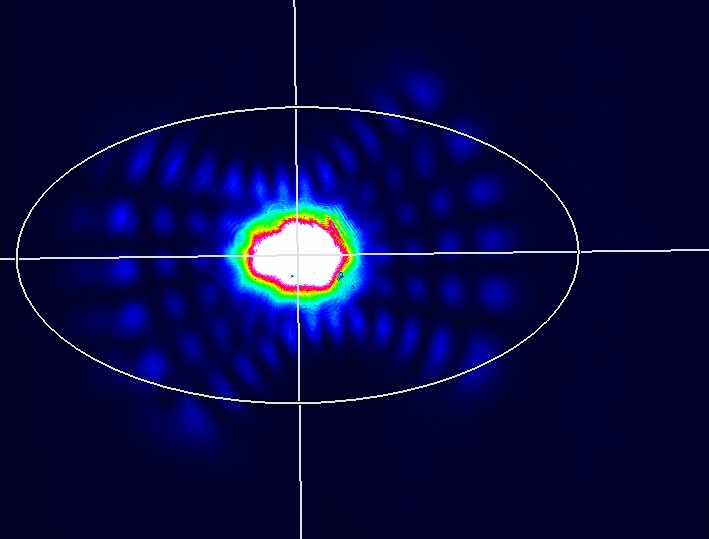 |
|
158
|
Mon Sep 12 16:27:14 2022 |
Manar Amer | Fixed | report | lasers and optics | Optical room | Power storage In Cavity | Power increased in the amplifier
reflective filters added at the transmission point to be able to have signal on the Beam Profiler, Transmission diode and power meter
|
Amplifier output current (A)
diode 1
|
Amplifier output current (A)
diode 2
|
Amplifier output current (A)
diode 3
|
Amplifier output current (A)
diode 4
|
Power Output (W) |
Transmitted power (mW) |
note |
| 0.5 |
0.5 |
0.5 |
0.5 |
|
|
no change in the beam shape |
| 1 |
1 |
1 |
1 |
|
|
|
| 1.5 |
1 |
1 |
1 |
|
|
Appearance of higher order mode (vertical), suppressed using D-shaped mirror (vertical only) by (-23000), image recorded. |
| 1.5 |
1.5 |
1.5 |
1.5 |
|
|
no change |
| 2 |
1.8 |
1.5
|
1.5 |
|
52 mA |
52 mA after CEP adjustment , power measured after 2 reflective fillers NDUV30A and NDUV20 |
| 2 |
2 |
2 |
2 |
|
70 mA |
|
| 2.5 |
2.5 |
2 |
2 |
|
95 |
|
| 2.5 |
2.5 |
2.5 |
2.5 |
|
|
sudden drop in power, cavity lock lost, lock system looks ok (maybe something in the cavity)
mode shape is the same
coupling is large, transmission is very low
change the CEP, mo effect in changing it (we have no gain in the cavity, No Finesse) could be something happened to the mirrors !!!!!!
|
| Manar Amer wrote: |
|
At transmission power of 42 mW, coupling 60%, we see fundamental mode with a degeneracy
The D-shape motors were moved to a position 2 000 000 steps (in theory they should be the max position)
but no change appeared on the 00 mode or the higher order mode.
We will break the vacuum and check the position of the D-shaped mirrors.
| Manar Amer wrote: |
|
We start of power output from amplifier of 1W with only the first and second stage on then we start with the third stage power increase,
Note: when changing the current on the third stage 4 diodes, better to do it step by step for each one with a step of ~ 0.5 A
|
Amplifier output current (A)
for four diodes
|
Power Output (W) |
Transmitted power (MW)
|
| 0 , 0 , 0 , 0 |
~ 1 |
2.3 |
| 1 , 1 , 1 , 1 |
/ |
11.0 |
| 1.5 , 1.3, 1 , 1 |
/ |
35 |
| 1.5 , 1.5 , 1 , 1 |
/ |
42.16 |
| |
|
- we placed at the transmission point a splitter the transmitted power before was 35 mW after placing it we had 26 mW
- 97 % transmission , 3% reflected which goes to the beam profiler
- We see degeneracy modes at the last step of 42.16 mW , so we started to test the D-shaped mirrors
- the full range of the motors is 50.8 mm
- each step = 30 nm , 30 000 steps = 1 mm
|
|
|
|
159
|
Mon Sep 12 17:00:35 2022 |
Manar Amer | Fixed | report | lasers and optics | Optical room | Power storage In Cavity | at max stage we reached at 2.5 A on the diodes we have
8000 gain , coupling ~ 60% , with power inside the cavity 50 kW
The higer order mode that was observed today,
it was also observed on Friday along the other higher order mode recorded on the logbook.
after cutting it with the D-shaped mirror we recorded the shape (image attached)
| Manar Amer wrote: |
|
Power increased in the amplifier
reflective filters added at the transmission point to be able to have signal on the Beam Profiler, Transmission diode and power meter
|
Amplifier output current (A)
diode 1
|
Amplifier output current (A)
diode 2
|
Amplifier output current (A)
diode 3
|
Amplifier output current (A)
diode 4
|
Power Output (W) |
Transmitted power (mW) |
note |
| 0.5 |
0.5 |
0.5 |
0.5 |
|
|
no change in the beam shape |
| 1 |
1 |
1 |
1 |
|
|
|
| 1.5 |
1 |
1 |
1 |
|
|
Appearance of higher order mode (vertical), suppressed using D-shaped mirror (vertical only) by (-23000), image recorded. |
| 1.5 |
1.5 |
1.5 |
1.5 |
|
|
no change |
| 2 |
1.8 |
1.5
|
1.5 |
|
52 mA |
52 mA after CEP adjustment , power measured after 2 reflective fillers NDUV30A and NDUV20 |
| 2 |
2 |
2 |
2 |
|
70 mA |
|
| 2.5 |
2.5 |
2 |
2 |
|
95 |
|
| 2.5 |
2.5 |
2.5 |
2.5 |
|
|
sudden drop in power, cavity lock lost, lock system looks ok (maybe something in the cavity)
mode shape is the same
coupling is large, transmission is very low
change the CEP, mo effect in changing it (we have no gain in the cavity, No Finesse) could be something happened to the mirrors !!!!!!
|
| Manar Amer wrote: |
|
At transmission power of 42 mW, coupling 60%, we see fundamental mode with a degeneracy
The D-shape motors were moved to a position 2 000 000 steps (in theory they should be the max position)
but no change appeared on the 00 mode or the higher order mode.
We will break the vacuum and check the position of the D-shaped mirrors.
| Manar Amer wrote: |
|
We start of power output from amplifier of 1W with only the first and second stage on then we start with the third stage power increase,
Note: when changing the current on the third stage 4 diodes, better to do it step by step for each one with a step of ~ 0.5 A
|
Amplifier output current (A)
for four diodes
|
Power Output (W) |
Transmitted power (MW)
|
| 0 , 0 , 0 , 0 |
~ 1 |
2.3 |
| 1 , 1 , 1 , 1 |
/ |
11.0 |
| 1.5 , 1.3, 1 , 1 |
/ |
35 |
| 1.5 , 1.5 , 1 , 1 |
/ |
42.16 |
| |
|
- we placed at the transmission point a splitter the transmitted power before was 35 mW after placing it we had 26 mW
- 97 % transmission , 3% reflected which goes to the beam profiler
- We see degeneracy modes at the last step of 42.16 mW , so we started to test the D-shaped mirrors
- the full range of the motors is 50.8 mm
- each step = 30 nm , 30 000 steps = 1 mm
|
|
|
|
| Attachment 1: 00mode_higer.jpg
| 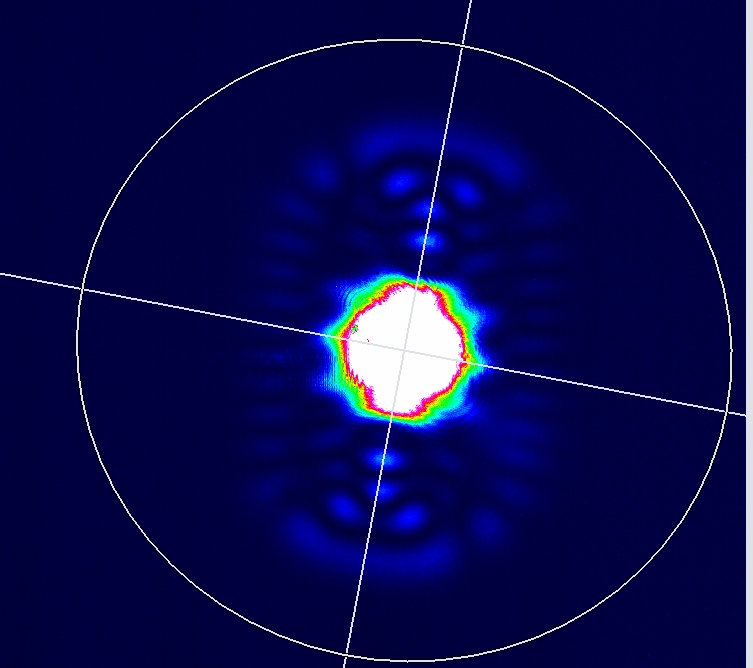 |
| Attachment 2: 00mode_Removed_higer.jpg
| 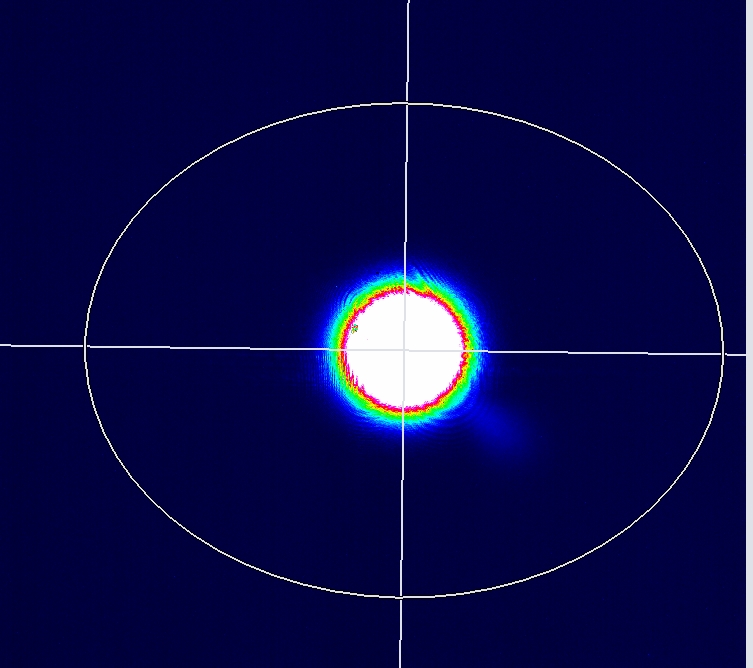 |
|
160
|
Mon Sep 12 18:49:42 2022 |
Manar Amer | Fixed | issue | lasers and optics | Optical room | Damage on mirror surface | Following the storage of ~ 50 kW inside the cavity and a sudden drop in transmitted power from the cavity
damage to the mirror surface was suspected.
We broke vacuum and took images of the surface of the 2 mirrors in the cavity, the spherical and the planar mirror
image 1 , spherical reflective surface (no visible damage with the UV light, and no visible damage under the microscope)
image 2 , planar coupler mirror reflective surface (no visible damage under UV light, but under the microscope there is a damaged spot close to the center)
image 4 is the planar surface reflective surface at zoom 8 on the microscope.
|
| Attachment 1: image001.jpg
| 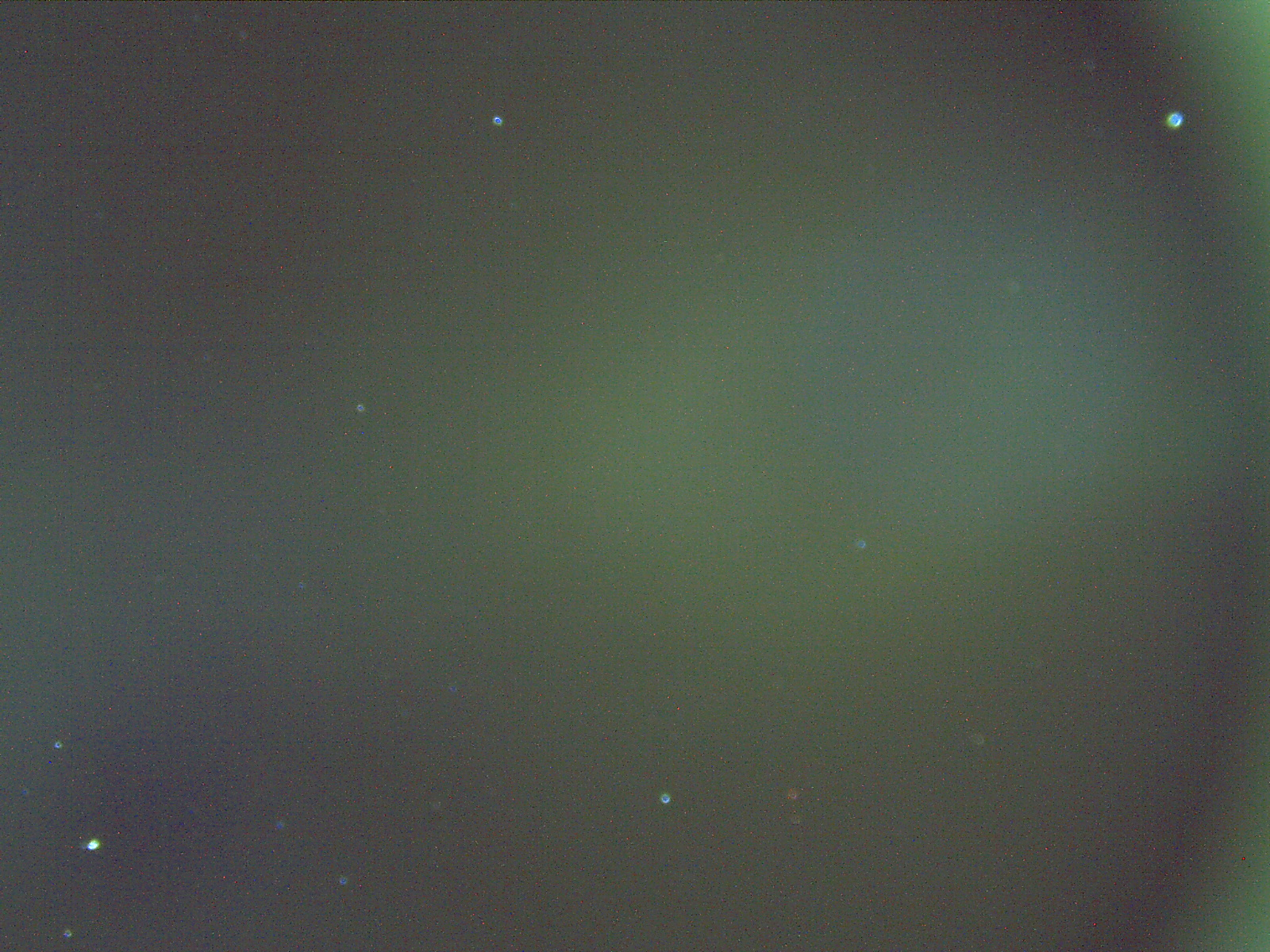 |
| Attachment 2: image002.jpg
| 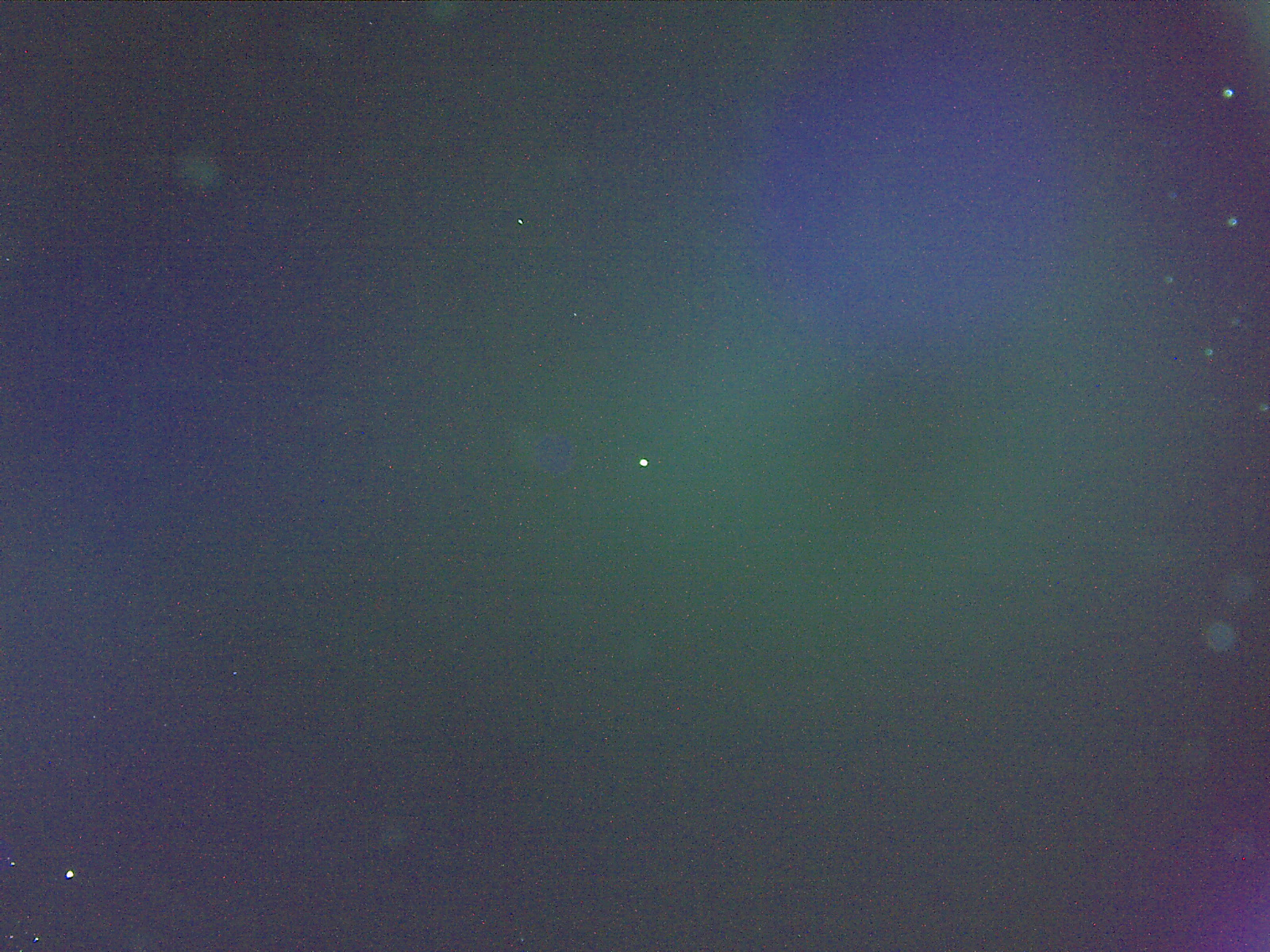 |
| Attachment 3: image004.jpg
| 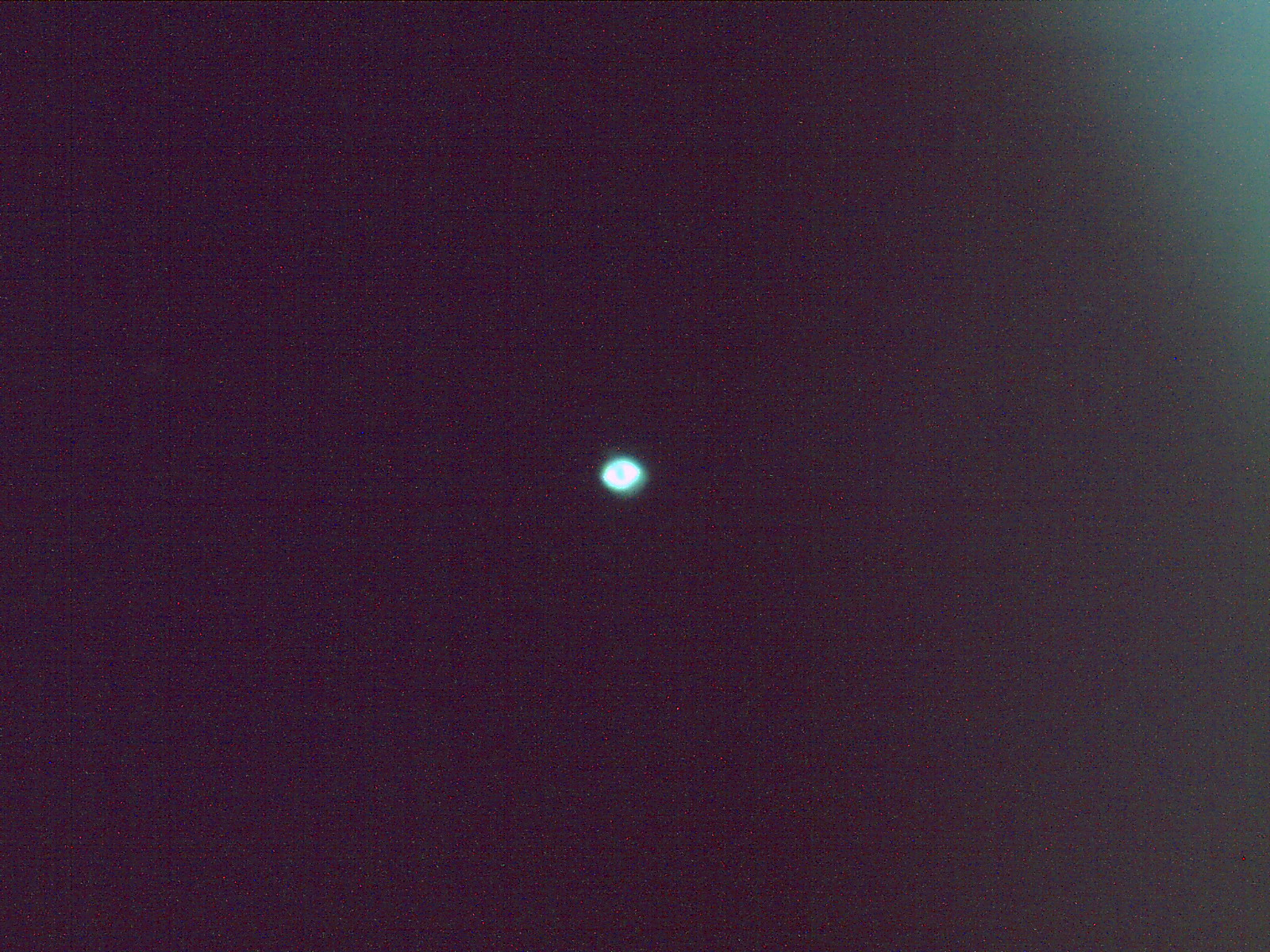 |
|
161
|
Mon Sep 12 18:50:57 2022 |
Manar Amer | Fixed | issue | lasers and optics | Optical room | Damage on mirror surface | Tomorrow will try to shift the injection mirror to avoid hitting the damaged spot.
| Manar Amer wrote: |
|
Following the storage of ~ 50 kW inside the cavity and a sudden drop in transmitted power from the cavity
damage to the mirror surface was suspected.
We broke vacuum and took images of the surface of the 2 mirrors in the cavity, the spherical and the planar mirror
image 1 , spherical reflective surface (no visible damage with the UV light, and no visible damage under the microscope)
image 2 , planar coupler mirror reflective surface (no visible damage under UV light, but under the microscope there is a damaged spot close to the center)
image 4 is the planar surface reflective surface at zoom 8 on the microscope.
|
|
|
162
|
Tue Sep 13 19:26:27 2022 |
Manar Amer | Fixed | report | lasers and optics | Optical room | Damage on mirror surface | After discussing, we have decided against shifting the mirror to avoid the time lost.
We changed the injection mirror to a different mirror from Mighty Laser set, Transmission of mirror 80 ppm. (no visible damage at the center of the mirror, only a small scratch on the back)
mirror cleaned using pure ethanol and pure water with spin coater, also the spherical mirror was cleaned again.
| Manar Amer wrote: |
|
Tomorrow will try to shift the injection mirror to avoid hitting the damaged spot.
| Manar Amer wrote: |
|
Following the storage of ~ 50 kW inside the cavity and a sudden drop in transmitted power from the cavity
damage to the mirror surface was suspected.
We broke vacuum and took images of the surface of the 2 mirrors in the cavity, the spherical and the planar mirror
image 1 , spherical reflective surface (no visible damage with the UV light, and no visible damage under the microscope)
image 2 , planar coupler mirror reflective surface (no visible damage under UV light, but under the microscope there is a damaged spot close to the center)
image 4 is the planar surface reflective surface at zoom 8 on the microscope.
|
|
|
|
163
|
Tue Sep 13 19:31:14 2022 |
Manar Amer | Fixed | report | lasers and optics | Optical room | liPower storage In Cavity | After changing the mirror M1 and cleaning the 2 mirrors
They were placed in the cavity box (avoiding touching the mounts to not affect the alignment and placing the mirrors as close to the previous position)
we saw horizontal higher order modes immediately after injecting power, horizontal misalignment!!.
We aligned the injected beam, adjusted the cavity length and saw the modes 01 (high transition) and 00 (ok but still much lower than 01)
The image attached shows some coupling < 5% , we adjusted the CEP, but it was the max coupling.
we will need to align better tomorrow to increase 00 modes.
The cavity box is closed and placed under vacuum again.
| Manar Amer wrote: |
|
at max stage we reached at 2.5 A on the diodes we have
8000 gain , coupling ~ 60% , with power inside the cavity 50 kW
The higer order mode that was observed today,
it was also observed on Friday along the other higher order mode recorded on the logbook.
after cutting it with the D-shaped mirror we recorded the shape (image attached)
| Manar Amer wrote: |
|
Power increased in the amplifier
reflective filters added at the transmission point to be able to have signal on the Beam Profiler, Transmission diode and power meter
|
Amplifier output current (A)
diode 1
|
Amplifier output current (A)
diode 2
|
Amplifier output current (A)
diode 3
|
Amplifier output current (A)
diode 4
|
Power Output (W) |
Transmitted power (mW) |
note |
| 0.5 |
0.5 |
0.5 |
0.5 |
|
|
no change in the beam shape |
| 1 |
1 |
1 |
1 |
|
|
|
| 1.5 |
1 |
1 |
1 |
|
|
Appearance of higher order mode (vertical), suppressed using D-shaped mirror (vertical only) by (-23000), image recorded. |
| 1.5 |
1.5 |
1.5 |
1.5 |
|
|
no change |
| 2 |
1.8 |
1.5
|
1.5 |
|
52 mA |
52 mA after CEP adjustment , power measured after 2 reflective fillers NDUV30A and NDUV20 |
| 2 |
2 |
2 |
2 |
|
70 mA |
|
| 2.5 |
2.5 |
2 |
2 |
|
95 |
|
| 2.5 |
2.5 |
2.5 |
2.5 |
|
|
sudden drop in power, cavity lock lost, lock system looks ok (maybe something in the cavity)
mode shape is the same
coupling is large, transmission is very low
change the CEP, mo effect in changing it (we have no gain in the cavity, No Finesse) could be something happened to the mirrors !!!!!!
|
| Manar Amer wrote: |
|
At transmission power of 42 mW, coupling 60%, we see fundamental mode with a degeneracy
The D-shape motors were moved to a position 2 000 000 steps (in theory they should be the max position)
but no change appeared on the 00 mode or the higher order mode.
We will break the vacuum and check the position of the D-shaped mirrors.
| Manar Amer wrote: |
|
We start of power output from amplifier of 1W with only the first and second stage on then we start with the third stage power increase,
Note: when changing the current on the third stage 4 diodes, better to do it step by step for each one with a step of ~ 0.5 A
|
Amplifier output current (A)
for four diodes
|
Power Output (W) |
Transmitted power (MW)
|
| 0 , 0 , 0 , 0 |
~ 1 |
2.3 |
| 1 , 1 , 1 , 1 |
/ |
11.0 |
| 1.5 , 1.3, 1 , 1 |
/ |
35 |
| 1.5 , 1.5 , 1 , 1 |
/ |
42.16 |
| |
|
- we placed at the transmission point a splitter the transmitted power before was 35 mW after placing it we had 26 mW
- 97 % transmission , 3% reflected which goes to the beam profiler
- We see degeneracy modes at the last step of 42.16 mW , so we started to test the D-shaped mirrors
- the full range of the motors is 50.8 mm
- each step = 30 nm , 30 000 steps = 1 mm
|
|
|
|
|
| Attachment 1: Screenshot_2022-09-13_0_184445.png
| 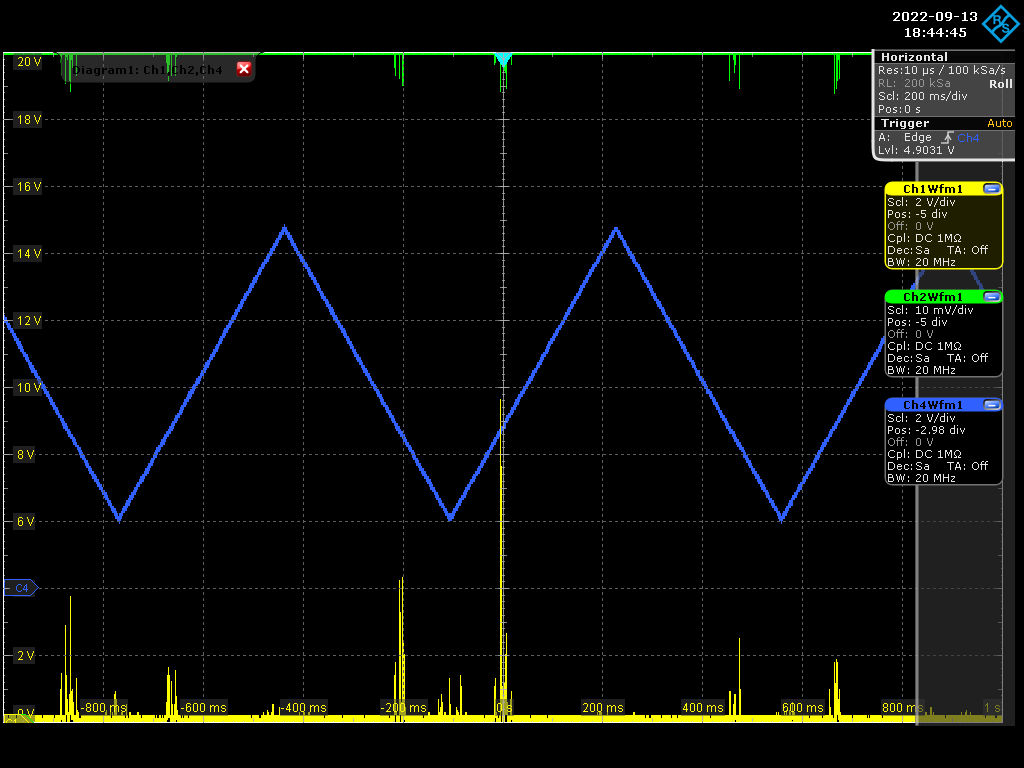 |
|
164
|
Wed Sep 14 16:16:08 2022 |
Manar Amer | Fixed | report | lasers and optics | Optical room | Power storage In Cavity | The cavity was locked under vacuum, coupling is approximately < 10%
The lock was relatively easy and the usual sign (oscillations on the transmission tail) of high finesse on the transmission signal was not seen.
| Manar Amer wrote: |
|
After changing the mirror M1 and cleaning the 2 mirrors
They were placed in the cavity box (avoiding touching the mounts to not affect the alignment and placing the mirrors as close to the previous position)
we saw horizontal higher order modes immediately after injecting power, horizontal misalignment!!.
We aligned the injected beam, adjusted the cavity length and saw the modes 01 (high transition) and 00 (ok but still much lower than 01)
The image attached shows some coupling < 5% , we adjusted the CEP, but it was the max coupling.
we will need to align better tomorrow to increase 00 modes.
The cavity box is closed and placed under vacuum again.
| Manar Amer wrote: |
|
at max stage we reached at 2.5 A on the diodes we have
8000 gain , coupling ~ 60% , with power inside the cavity 50 kW
The higer order mode that was observed today,
it was also observed on Friday along the other higher order mode recorded on the logbook.
after cutting it with the D-shaped mirror we recorded the shape (image attached)
| Manar Amer wrote: |
|
Power increased in the amplifier
reflective filters added at the transmission point to be able to have signal on the Beam Profiler, Transmission diode and power meter
|
Amplifier output current (A)
diode 1
|
Amplifier output current (A)
diode 2
|
Amplifier output current (A)
diode 3
|
Amplifier output current (A)
diode 4
|
Power Output (W) |
Transmitted power (mW) |
note |
| 0.5 |
0.5 |
0.5 |
0.5 |
|
|
no change in the beam shape |
| 1 |
1 |
1 |
1 |
|
|
|
| 1.5 |
1 |
1 |
1 |
|
|
Appearance of higher order mode (vertical), suppressed using D-shaped mirror (vertical only) by (-23000), image recorded. |
| 1.5 |
1.5 |
1.5 |
1.5 |
|
|
no change |
| 2 |
1.8 |
1.5
|
1.5 |
|
52 mA |
52 mA after CEP adjustment , power measured after 2 reflective fillers NDUV30A and NDUV20 |
| 2 |
2 |
2 |
2 |
|
70 mA |
|
| 2.5 |
2.5 |
2 |
2 |
|
95 |
|
| 2.5 |
2.5 |
2.5 |
2.5 |
|
|
sudden drop in power, cavity lock lost, lock system looks ok (maybe something in the cavity)
mode shape is the same
coupling is large, transmission is very low
change the CEP, mo effect in changing it (we have no gain in the cavity, No Finesse) could be something happened to the mirrors !!!!!!
|
| Manar Amer wrote: |
|
At transmission power of 42 mW, coupling 60%, we see fundamental mode with a degeneracy
The D-shape motors were moved to a position 2 000 000 steps (in theory they should be the max position)
but no change appeared on the 00 mode or the higher order mode.
We will break the vacuum and check the position of the D-shaped mirrors.
| Manar Amer wrote: |
|
We start of power output from amplifier of 1W with only the first and second stage on then we start with the third stage power increase,
Note: when changing the current on the third stage 4 diodes, better to do it step by step for each one with a step of ~ 0.5 A
|
Amplifier output current (A)
for four diodes
|
Power Output (W) |
Transmitted power (MW)
|
| 0 , 0 , 0 , 0 |
~ 1 |
2.3 |
| 1 , 1 , 1 , 1 |
/ |
11.0 |
| 1.5 , 1.3, 1 , 1 |
/ |
35 |
| 1.5 , 1.5 , 1 , 1 |
/ |
42.16 |
| |
|
- we placed at the transmission point a splitter the transmitted power before was 35 mW after placing it we had 26 mW
- 97 % transmission , 3% reflected which goes to the beam profiler
- We see degeneracy modes at the last step of 42.16 mW , so we started to test the D-shaped mirrors
- the full range of the motors is 50.8 mm
- each step = 30 nm , 30 000 steps = 1 mm
|
|
|
|
|
|
| Attachment 1: High_Finesse_sign_on_transmission_.jpg
| 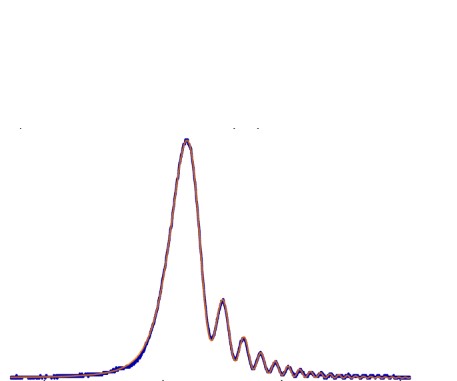 |
| Attachment 2: Screenshot_2022-09-14_0_161520.png
| 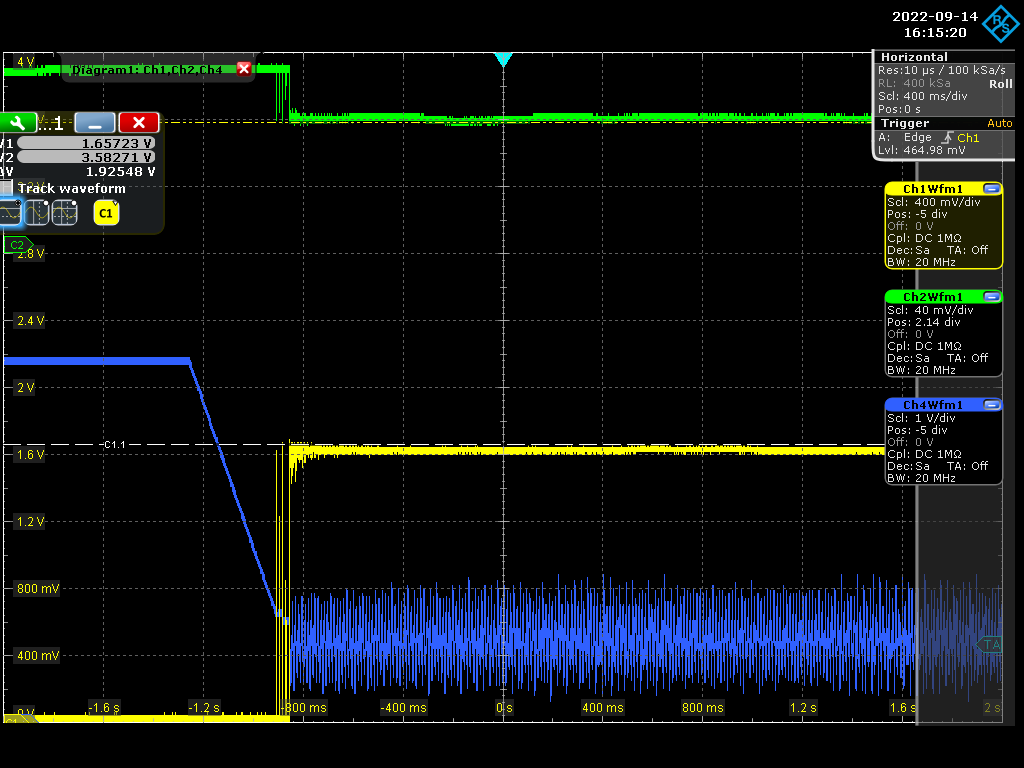 |
|
165
|
Wed Sep 14 17:21:59 2022 |
Manar Amer | Fixed | report | lasers and optics | Optical room | Power storage In Cavity | We improved the lock using the alignment, polarization and CEP , the maximum we got was ~ 12% coupling
only the second stage is on !
Decision : this is the maximum we can obtain using the M1 from mighty laser
tomorrow we break the vacuum and try with shifting M1 from ThomX position to avoid the damaged spot
| Manar Amer wrote: |
|
The cavity was locked under vacuum, coupling is approximately < 10%
The lock was relatively easy and the usual sign (oscillations on the transmission tail) of high finesse on the transmission signal was not seen.
| Manar Amer wrote: |
|
After changing the mirror M1 and cleaning the 2 mirrors
They were placed in the cavity box (avoiding touching the mounts to not affect the alignment and placing the mirrors as close to the previous position)
we saw horizontal higher order modes immediately after injecting power, horizontal misalignment!!.
We aligned the injected beam, adjusted the cavity length and saw the modes 01 (high transition) and 00 (ok but still much lower than 01)
The image attached shows some coupling < 5% , we adjusted the CEP, but it was the max coupling.
we will need to align better tomorrow to increase 00 modes.
The cavity box is closed and placed under vacuum again.
| Manar Amer wrote: |
|
at max stage we reached at 2.5 A on the diodes we have
8000 gain , coupling ~ 60% , with power inside the cavity 50 kW
The higer order mode that was observed today,
it was also observed on Friday along the other higher order mode recorded on the logbook.
after cutting it with the D-shaped mirror we recorded the shape (image attached)
| Manar Amer wrote: |
|
Power increased in the amplifier
reflective filters added at the transmission point to be able to have signal on the Beam Profiler, Transmission diode and power meter
|
Amplifier output current (A)
diode 1
|
Amplifier output current (A)
diode 2
|
Amplifier output current (A)
diode 3
|
Amplifier output current (A)
diode 4
|
Power Output (W) |
Transmitted power (mW) |
note |
| 0.5 |
0.5 |
0.5 |
0.5 |
|
|
no change in the beam shape |
| 1 |
1 |
1 |
1 |
|
|
|
| 1.5 |
1 |
1 |
1 |
|
|
Appearance of higher order mode (vertical), suppressed using D-shaped mirror (vertical only) by (-23000), image recorded. |
| 1.5 |
1.5 |
1.5 |
1.5 |
|
|
no change |
| 2 |
1.8 |
1.5
|
1.5 |
|
52 mA |
52 mA after CEP adjustment , power measured after 2 reflective fillers NDUV30A and NDUV20 |
| 2 |
2 |
2 |
2 |
|
70 mA |
|
| 2.5 |
2.5 |
2 |
2 |
|
95 |
|
| 2.5 |
2.5 |
2.5 |
2.5 |
|
|
sudden drop in power, cavity lock lost, lock system looks ok (maybe something in the cavity)
mode shape is the same
coupling is large, transmission is very low
change the CEP, mo effect in changing it (we have no gain in the cavity, No Finesse) could be something happened to the mirrors !!!!!!
|
| Manar Amer wrote: |
|
At transmission power of 42 mW, coupling 60%, we see fundamental mode with a degeneracy
The D-shape motors were moved to a position 2 000 000 steps (in theory they should be the max position)
but no change appeared on the 00 mode or the higher order mode.
We will break the vacuum and check the position of the D-shaped mirrors.
| Manar Amer wrote: |
|
We start of power output from amplifier of 1W with only the first and second stage on then we start with the third stage power increase,
Note: when changing the current on the third stage 4 diodes, better to do it step by step for each one with a step of ~ 0.5 A
|
Amplifier output current (A)
for four diodes
|
Power Output (W) |
Transmitted power (MW)
|
| 0 , 0 , 0 , 0 |
~ 1 |
2.3 |
| 1 , 1 , 1 , 1 |
/ |
11.0 |
| 1.5 , 1.3, 1 , 1 |
/ |
35 |
| 1.5 , 1.5 , 1 , 1 |
/ |
42.16 |
| |
|
- we placed at the transmission point a splitter the transmitted power before was 35 mW after placing it we had 26 mW
- 97 % transmission , 3% reflected which goes to the beam profiler
- We see degeneracy modes at the last step of 42.16 mW , so we started to test the D-shaped mirrors
- the full range of the motors is 50.8 mm
- each step = 30 nm , 30 000 steps = 1 mm
|
|
|
|
|
|
|
| Attachment 1: Screenshot_2022-09-14_0_161520.png
| 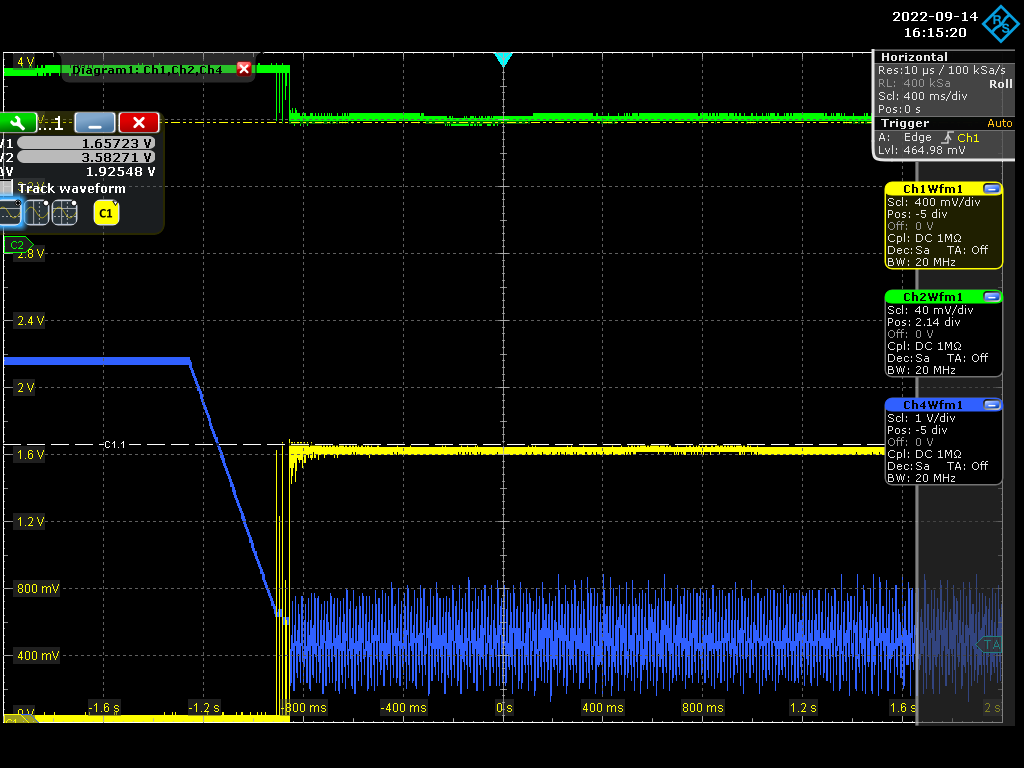 |
|
166
|
Fri Sep 16 15:56:45 2022 |
Manar Amer | Fixed | report | lasers and optics | Optical room | Damage on mirror surface | a better image of the damaged spot, image taken with the arrow for the reflective surface facing the other direction (image shows position)
The image of M1 for ThomX reflective surface was taken at min zoom (full image scale 13 mm) and max zoom (full image scale 2 mm) on microscope
The spot appears to be not close to the center of the mirror, at max zoom in the center we do not see the spot it is just out of the image
the last image has the mirror position adjusted to center the damaged spot for a better image of it.
| Manar Amer wrote: |
|
After discussing, we have decided against shifting the mirror to avoid the time lost.
We changed the injection mirror to a different mirror from Mighty Laser set, Transmission of mirror 80 ppm. (no visible damage at the center of the mirror, only a small scratch on the back)
mirror cleaned using pure ethanol and pure water with spin coater, also the spherical mirror was cleaned again.
| Manar Amer wrote: |
|
Tomorrow will try to shift the injection mirror to avoid hitting the damaged spot.
| Manar Amer wrote: |
|
Following the storage of ~ 50 kW inside the cavity and a sudden drop in transmitted power from the cavity
damage to the mirror surface was suspected.
We broke vacuum and took images of the surface of the 2 mirrors in the cavity, the spherical and the planar mirror
image 1 , spherical reflective surface (no visible damage with the UV light, and no visible damage under the microscope)
image 2 , planar coupler mirror reflective surface (no visible damage under UV light, but under the microscope there is a damaged spot close to the center)
image 4 is the planar surface reflective surface at zoom 8 on the microscope.
|
|
|
|
| Attachment 1: M1_mirror_on_Microscope_stand0.jpg
| 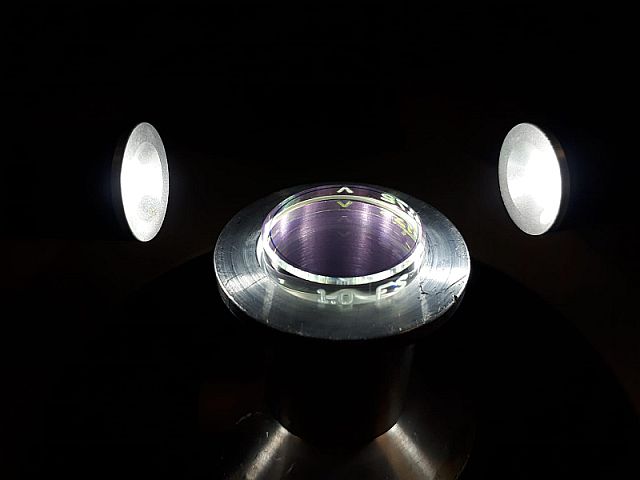 |
| Attachment 2: M1X_front_min_zoom.jpg
| 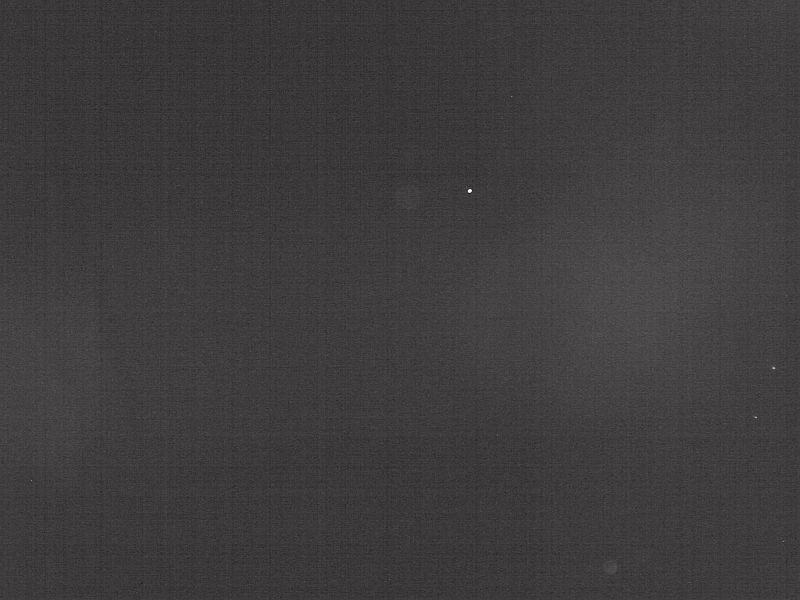 |
| Attachment 3: M1X_front_max_zoom.jpg
|  |
| Attachment 4: M1X_front_damaged_spot_max_zoom.jpg
|  |
|
167
|
Fri Sep 16 17:47:56 2022 |
Manar Amer | Fixed | report | lasers and optics | Optical room | Damage on mirror surface | ThomX injection mirror has been cleaned and placed again inside the optical cavity.
This time to avoid the damaged spot I have displaced the mirror mount horizontally to have a distance between center of the beam and the spot ~ 2.5 - 3 mm.
The alignment was affected slightly but recovered by adjusting the mirror mount nobs, (00 mode observed in air)
The cavity was closed is being pumped with vacuum.
To be done: adjust the cavity length and find the resonance, improve the outer alignment, lock the cavity
| Manar Amer wrote: |
|
a better image of the damaged spot, image taken with the arrow for the reflective surface facing the other direction (image shows position)
The image of M1 for ThomX reflective surface was taken at min zoom (full image scale 13 mm) and max zoom (full image scale 2 mm) on microscope
The spot appears to be not close to the center of the mirror, at max zoom in the center we do not see the spot it is just out of the image
the last image has the mirror position adjusted to center the damaged spot for a better image of it.
| Manar Amer wrote: |
|
After discussing, we have decided against shifting the mirror to avoid the time lost.
We changed the injection mirror to a different mirror from Mighty Laser set, Transmission of mirror 80 ppm. (no visible damage at the center of the mirror, only a small scratch on the back)
mirror cleaned using pure ethanol and pure water with spin coater, also the spherical mirror was cleaned again.
| Manar Amer wrote: |
|
Tomorrow will try to shift the injection mirror to avoid hitting the damaged spot.
| Manar Amer wrote: |
|
Following the storage of ~ 50 kW inside the cavity and a sudden drop in transmitted power from the cavity
damage to the mirror surface was suspected.
We broke vacuum and took images of the surface of the 2 mirrors in the cavity, the spherical and the planar mirror
image 1 , spherical reflective surface (no visible damage with the UV light, and no visible damage under the microscope)
image 2 , planar coupler mirror reflective surface (no visible damage under UV light, but under the microscope there is a damaged spot close to the center)
image 4 is the planar surface reflective surface at zoom 8 on the microscope.
|
|
|
|
|
|
168
|
Tue Sep 20 12:50:40 2022 |
Manar Amer | Fixed | report | lasers and optics | Optical room | M1 ThomX used while shifted from damaged spot | Yesterday , we locked the cavity and we see a sign of a high finesse on the transmission signal, but no measurement of Finesse was done.
we have a coupling of ~ 45%, which is a loss of 20% from the previous coupling of 60%
an estimate done by Ronic MATLAB simulation for the coupling drop where we have 200 pp additional losses and gain of 2.6 k we should get a transmission of 1.1 mW for injected power of ~ 300 mW
which is consistent with the power measured after a 50% beam splitter on transmission we got 0.51 mW (total would be 1.02mW)
in addition, there is a beam that is next to the mode of the cavity , confirmed it was not a reflection from the beam splitter or the optics.
it could be that we are still close to the damaged spot ?
| Manar Amer wrote: |
|
ThomX injection mirror has been cleaned and placed again inside the optical cavity.
This time to avoid the damaged spot I have displaced the mirror mount horizontally to have a distance between center of the beam and the spot ~ 2.5 - 3 mm.
The alignment was affected slightly but recovered by adjusting the mirror mount nobs, (00 mode observed in air)
The cavity was closed is being pumped with vacuum.
To be done: adjust the cavity length and find the resonance, improve the outer alignment, lock the cavity
| Manar Amer wrote: |
|
a better image of the damaged spot, image taken with the arrow for the reflective surface facing the other direction (image shows position)
The image of M1 for ThomX reflective surface was taken at min zoom (full image scale 13 mm) and max zoom (full image scale 2 mm) on microscope
The spot appears to be not close to the center of the mirror, at max zoom in the center we do not see the spot it is just out of the image
the last image has the mirror position adjusted to center the damaged spot for a better image of it.
| Manar Amer wrote: |
|
After discussing, we have decided against shifting the mirror to avoid the time lost.
We changed the injection mirror to a different mirror from Mighty Laser set, Transmission of mirror 80 ppm. (no visible damage at the center of the mirror, only a small scratch on the back)
mirror cleaned using pure ethanol and pure water with spin coater, also the spherical mirror was cleaned again.
| Manar Amer wrote: |
|
Tomorrow will try to shift the injection mirror to avoid hitting the damaged spot.
| Manar Amer wrote: |
|
Following the storage of ~ 50 kW inside the cavity and a sudden drop in transmitted power from the cavity
damage to the mirror surface was suspected.
We broke vacuum and took images of the surface of the 2 mirrors in the cavity, the spherical and the planar mirror
image 1 , spherical reflective surface (no visible damage with the UV light, and no visible damage under the microscope)
image 2 , planar coupler mirror reflective surface (no visible damage under UV light, but under the microscope there is a damaged spot close to the center)
image 4 is the planar surface reflective surface at zoom 8 on the microscope.
|
|
|
|
|
|
| Attachment 1: Screenshot_2022-09-19_2_172943.png
| 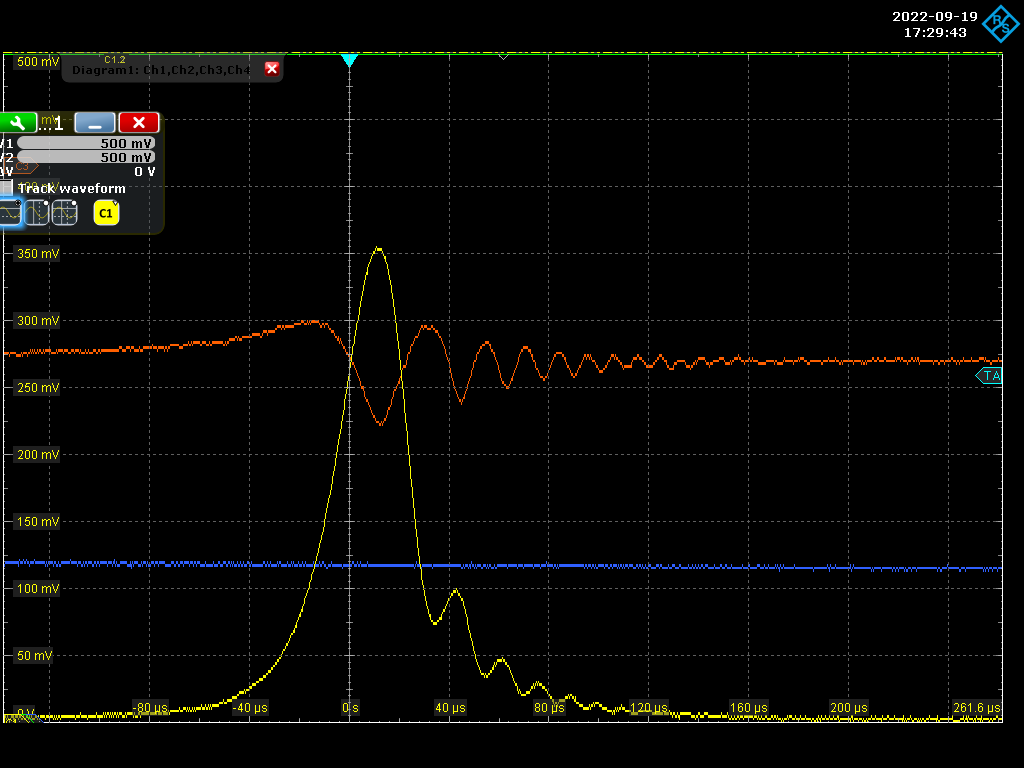 |
| Attachment 2: Screenshot_2022-09-19_1_171834.png
| 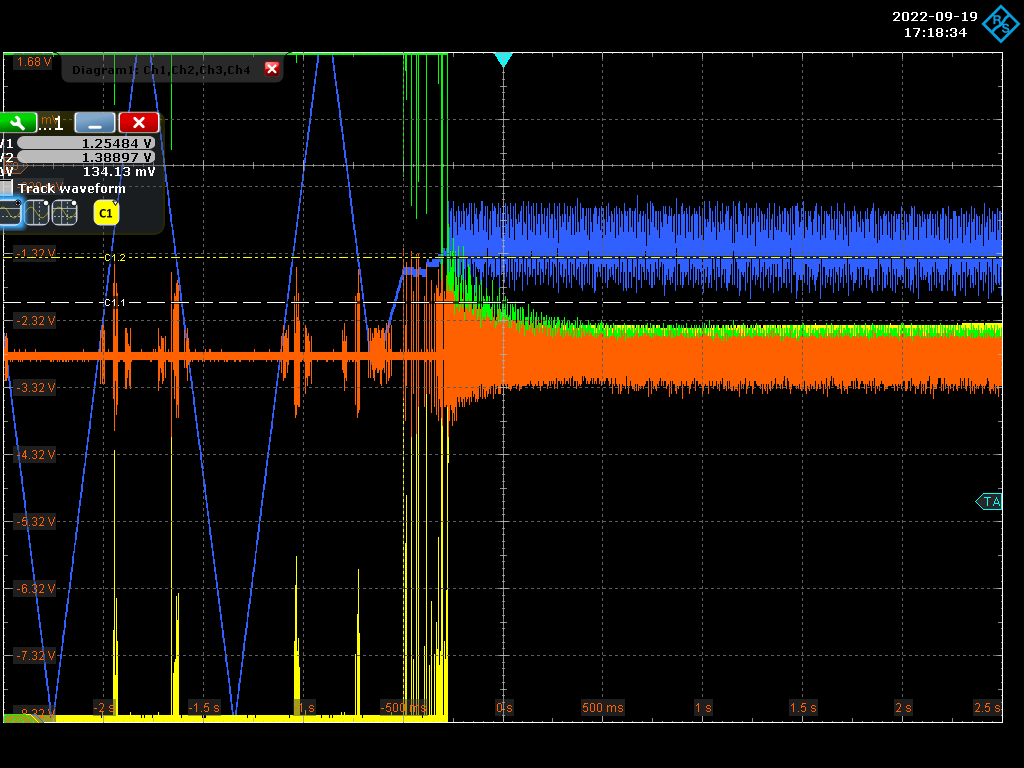 |
| Attachment 3: 00mode_LOCK.jpg
| 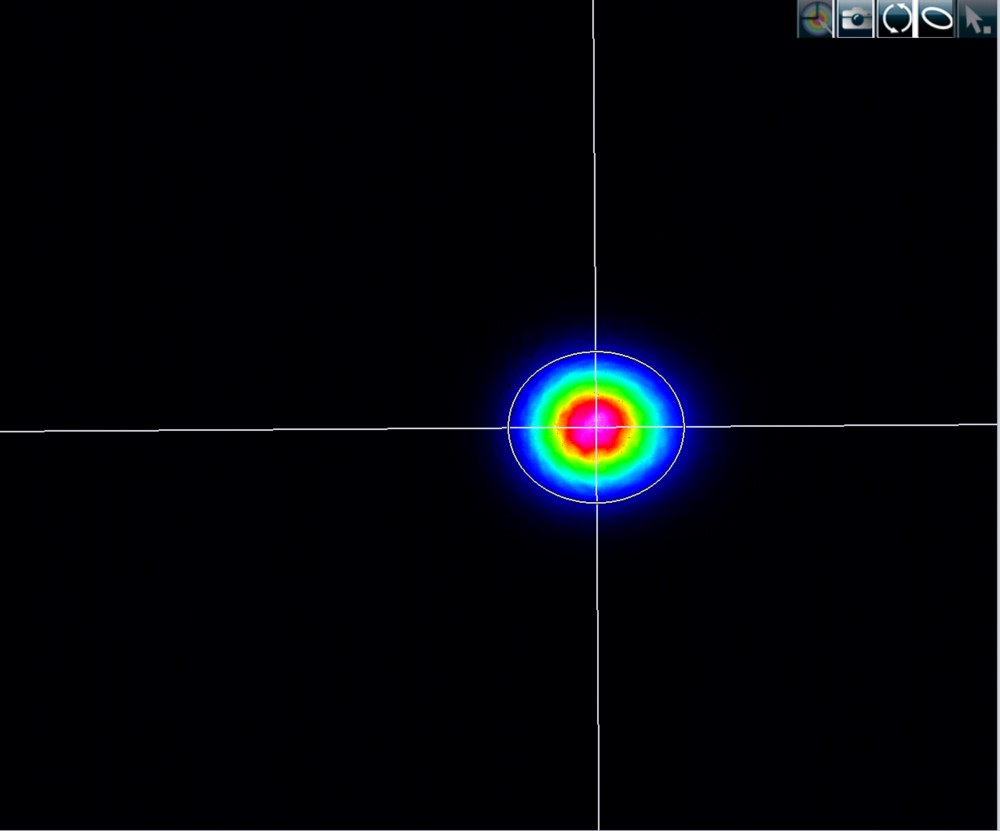 |
| Attachment 4: 00mode_LOCK_saturaed.jpg
| 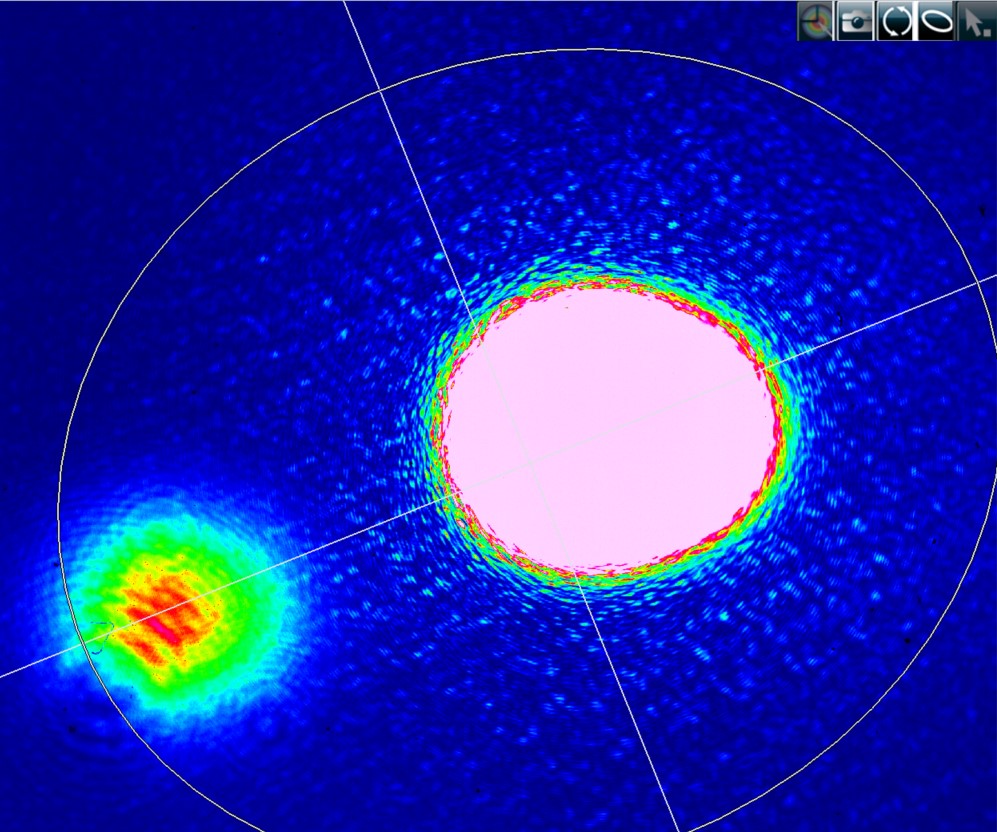 |
|
169
|
Wed Sep 21 12:10:07 2022 |
Manar Amer | Fixed | report | lasers and optics | Optical room | M1 ThomX used while shifted from damaged spot | To compare between the 2 images of the cavity mode:
- the mode by itself has an integration time of 0.06 ms, position (x, y) = (1142.969, -53.932) um on the beam profiler
- the mode saturated with the spot next to it almost at max intensity has an integration time of 50 ms, position (-3700, -2000) um
comparing the positions of both spots, they have difference (4842.969, 2053.932) um
------ > total difference on the beam profiler ~ 5.3 mm , the distance from the spherical mirror to the beam profiler is ~ 40 cm
| Manar Amer wrote: |
|
Yesterday , we locked the cavity and we see a sign of a high finesse on the transmission signal, but no measurement of Finesse was done.
we have a coupling of ~ 45%, which is a loss of 20% from the previous coupling of 60%
an estimate done by Ronic MATLAB simulation for the coupling drop where we have 200 pp additional losses and gain of 2.6 k we should get a transmission of 1.1 mW for injected power of ~ 300 mW
which is consistent with the power measured after a 50% beam splitter on transmission we got 0.51 mW (total would be 1.02mW)
in addition, there is a beam that is next to the mode of the cavity , confirmed it was not a reflection from the beam splitter or the optics.
it could be that we are still close to the damaged spot ?
| Manar Amer wrote: |
|
ThomX injection mirror has been cleaned and placed again inside the optical cavity.
This time to avoid the damaged spot I have displaced the mirror mount horizontally to have a distance between center of the beam and the spot ~ 2.5 - 3 mm.
The alignment was affected slightly but recovered by adjusting the mirror mount nobs, (00 mode observed in air)
The cavity was closed is being pumped with vacuum.
To be done: adjust the cavity length and find the resonance, improve the outer alignment, lock the cavity
| Manar Amer wrote: |
|
a better image of the damaged spot, image taken with the arrow for the reflective surface facing the other direction (image shows position)
The image of M1 for ThomX reflective surface was taken at min zoom (full image scale 13 mm) and max zoom (full image scale 2 mm) on microscope
The spot appears to be not close to the center of the mirror, at max zoom in the center we do not see the spot it is just out of the image
the last image has the mirror position adjusted to center the damaged spot for a better image of it.
| Manar Amer wrote: |
|
After discussing, we have decided against shifting the mirror to avoid the time lost.
We changed the injection mirror to a different mirror from Mighty Laser set, Transmission of mirror 80 ppm. (no visible damage at the center of the mirror, only a small scratch on the back)
mirror cleaned using pure ethanol and pure water with spin coater, also the spherical mirror was cleaned again.
| Manar Amer wrote: |
|
Tomorrow will try to shift the injection mirror to avoid hitting the damaged spot.
| Manar Amer wrote: |
|
Following the storage of ~ 50 kW inside the cavity and a sudden drop in transmitted power from the cavity
damage to the mirror surface was suspected.
We broke vacuum and took images of the surface of the 2 mirrors in the cavity, the spherical and the planar mirror
image 1 , spherical reflective surface (no visible damage with the UV light, and no visible damage under the microscope)
image 2 , planar coupler mirror reflective surface (no visible damage under UV light, but under the microscope there is a damaged spot close to the center)
image 4 is the planar surface reflective surface at zoom 8 on the microscope.
|
|
|
|
|
|
|
|
170
|
Mon Sep 26 16:15:06 2022 |
Manar Amer | Fixed | report | lasers and optics | Optical room | M1 ThomX used while shifted from damaged spot | On Wednesday 21st , I opened the cavity did an additional 2 mm shift of the injection mirror and put it under vacuum again.
Locked the cavity, and observed the transmitted beam.
The second spot is still visible on the beam profiler , the distance difference between the 2 spots is ~ 5.2 mm (the same as before )
no difference in distance, decreases the likelihood that it is from the damage (to be investigated more)
in addition, we have locked at the reflection from the cavity to confirm the spot next to the beam.
We took two images when the laser was locked with the cavity and when it was not.
We clearly see that the spot is indeed related to the mode of the cavity. And probably the damaged spot.
(Difference is size on the reflection image is due to the distance is larger than the transmission + the spherical mirror effect is not there)
| Manar Amer wrote: |
|
To compare between the 2 images of the cavity mode:
- the mode by itself has an integration time of 0.06 ms, position (x, y) = (1142.969, -53.932) um on the beam profiler
- the mode saturated with the spot next to it almost at max intensity has an integration time of 50 ms, position (-3700, -2000) um
comparing the positions of both spots, they have difference (4842.969, 2053.932) um
------ > total difference on the beam profiler ~ 5.3 mm , the distance from the spherical mirror to the beam profiler is ~ 40 cm
| Manar Amer wrote: |
|
Yesterday , we locked the cavity and we see a sign of a high finesse on the transmission signal, but no measurement of Finesse was done.
we have a coupling of ~ 45%, which is a loss of 20% from the previous coupling of 60%
an estimate done by Ronic MATLAB simulation for the coupling drop where we have 200 pp additional losses and gain of 2.6 k we should get a transmission of 1.1 mW for injected power of ~ 300 mW
which is consistent with the power measured after a 50% beam splitter on transmission we got 0.51 mW (total would be 1.02mW)
in addition, there is a beam that is next to the mode of the cavity , confirmed it was not a reflection from the beam splitter or the optics.
it could be that we are still close to the damaged spot ?
| Manar Amer wrote: |
|
ThomX injection mirror has been cleaned and placed again inside the optical cavity.
This time to avoid the damaged spot I have displaced the mirror mount horizontally to have a distance between center of the beam and the spot ~ 2.5 - 3 mm.
The alignment was affected slightly but recovered by adjusting the mirror mount nobs, (00 mode observed in air)
The cavity was closed is being pumped with vacuum.
To be done: adjust the cavity length and find the resonance, improve the outer alignment, lock the cavity
| Manar Amer wrote: |
|
a better image of the damaged spot, image taken with the arrow for the reflective surface facing the other direction (image shows position)
The image of M1 for ThomX reflective surface was taken at min zoom (full image scale 13 mm) and max zoom (full image scale 2 mm) on microscope
The spot appears to be not close to the center of the mirror, at max zoom in the center we do not see the spot it is just out of the image
the last image has the mirror position adjusted to center the damaged spot for a better image of it.
| Manar Amer wrote: |
|
After discussing, we have decided against shifting the mirror to avoid the time lost.
We changed the injection mirror to a different mirror from Mighty Laser set, Transmission of mirror 80 ppm. (no visible damage at the center of the mirror, only a small scratch on the back)
mirror cleaned using pure ethanol and pure water with spin coater, also the spherical mirror was cleaned again.
| Manar Amer wrote: |
|
Tomorrow will try to shift the injection mirror to avoid hitting the damaged spot.
| Manar Amer wrote: |
|
Following the storage of ~ 50 kW inside the cavity and a sudden drop in transmitted power from the cavity
damage to the mirror surface was suspected.
We broke vacuum and took images of the surface of the 2 mirrors in the cavity, the spherical and the planar mirror
image 1 , spherical reflective surface (no visible damage with the UV light, and no visible damage under the microscope)
image 2 , planar coupler mirror reflective surface (no visible damage under UV light, but under the microscope there is a damaged spot close to the center)
image 4 is the planar surface reflective surface at zoom 8 on the microscope.
|
|
|
|
|
|
|
|
| Attachment 1: 00mode_damaged_0_26ms.jpg
| 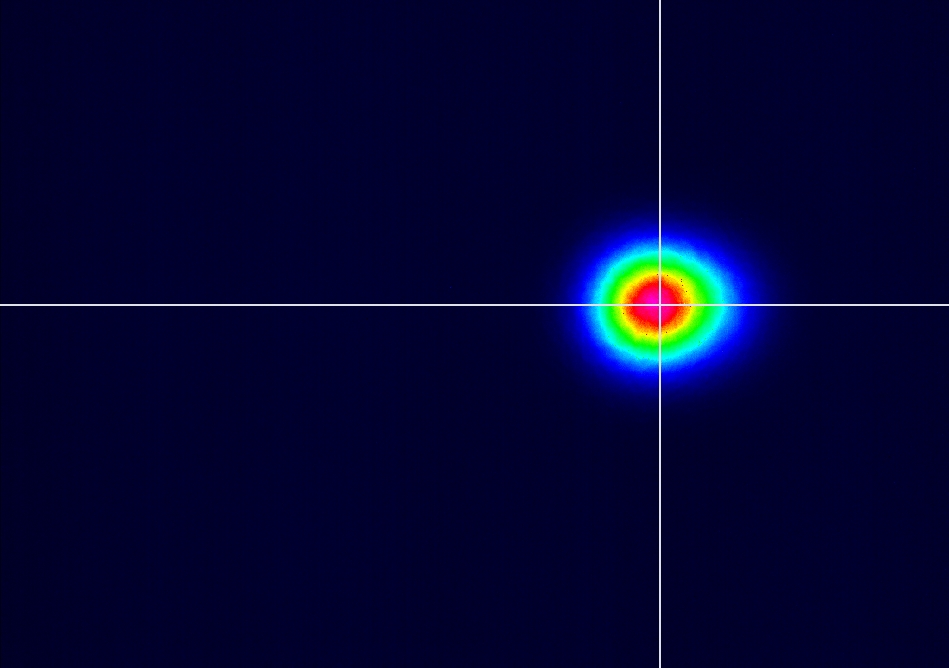 |
| Attachment 2: 00mode_damaged_saturted_50ms.jpg
| 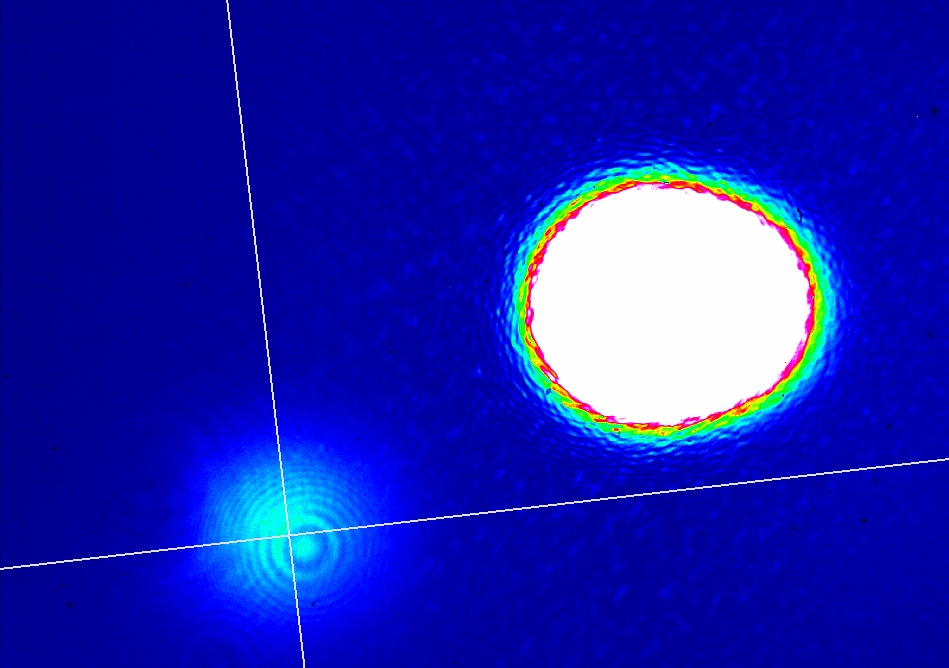 |
| Attachment 3: reflection_noLock.jpg
| 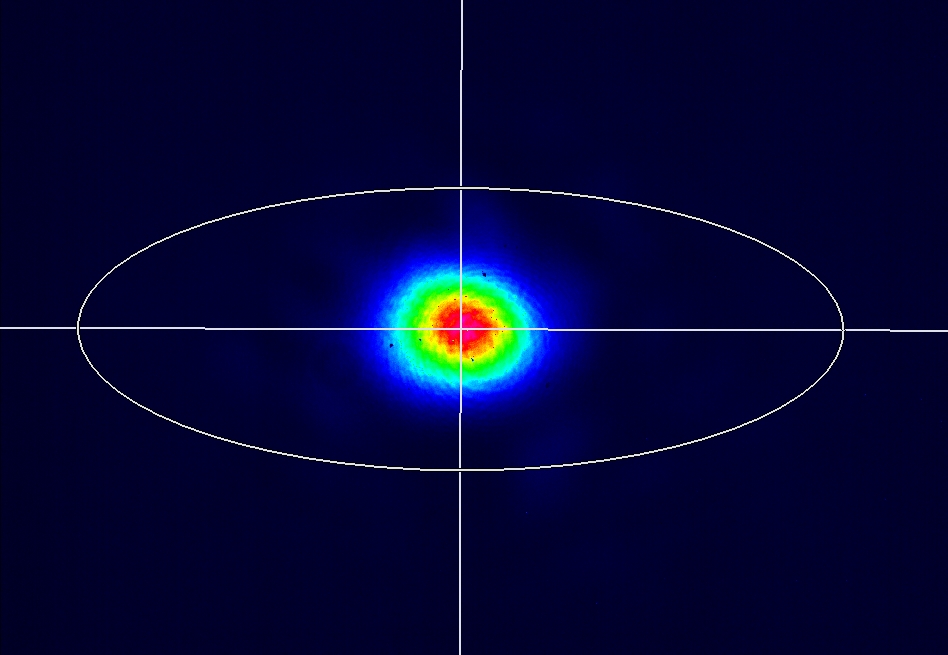 |
| Attachment 4: reflection_Lock_0_15ms.jpg
| 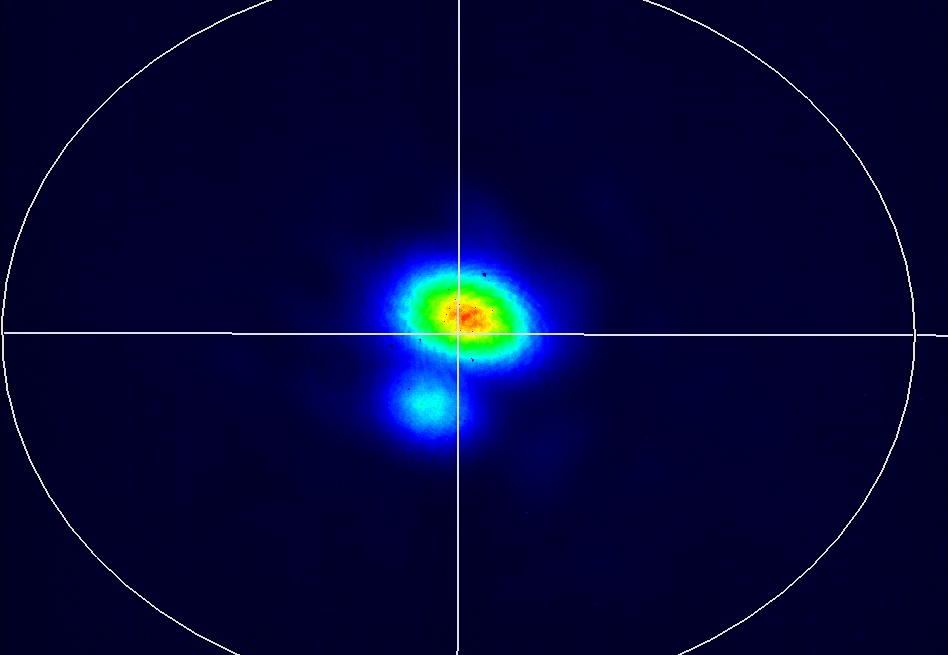 |
|
171
|
Tue Sep 27 19:30:49 2022 |
Manar Amer | Fixed | report | lasers and optics | Optical room | M1 Gamma Factory | In the morning, Vacuum broken and rotated M1 ThomX 90 degrees clockwise, locked the cavity in air and we observe a degeneracy close to the fundamental mode.
In the afternoon, I cleaned M1 from Gamma factory using pure ethanol and pure water with the spincoater
then placed it as the coupling mirror, aligned and locked in air. we observed similar degeneracy to before next to the fundamental mode.
During the process, M2 spherical from ThomX installed in the cavity was not changed. There could be damage on it, will investigate tomorrow.
| Manar Amer wrote: |
|
On Wednesday 21st , I opened the cavity did an additional 2 mm shift of the injection mirror and put it under vacuum again.
Locked the cavity, and observed the transmitted beam.
The second spot is still visible on the beam profiler , the distance difference between the 2 spots is ~ 5.2 mm (the same as before )
no difference in distance, decreases the likelihood that it is from the damage (to be investigated more)
in addition, we have locked at the reflection from the cavity to confirm the spot next to the beam.
We took two images when the laser was locked with the cavity and when it was not.
We clearly see that the spot is indeed related to the mode of the cavity. And probably the damaged spot.
(Difference is size on the reflection image is due to the distance is larger than the transmission + the spherical mirror effect is not there)
| Manar Amer wrote: |
|
To compare between the 2 images of the cavity mode:
- the mode by itself has an integration time of 0.06 ms, position (x, y) = (1142.969, -53.932) um on the beam profiler
- the mode saturated with the spot next to it almost at max intensity has an integration time of 50 ms, position (-3700, -2000) um
comparing the positions of both spots, they have difference (4842.969, 2053.932) um
------ > total difference on the beam profiler ~ 5.3 mm , the distance from the spherical mirror to the beam profiler is ~ 40 cm
| Manar Amer wrote: |
|
Yesterday , we locked the cavity and we see a sign of a high finesse on the transmission signal, but no measurement of Finesse was done.
we have a coupling of ~ 45%, which is a loss of 20% from the previous coupling of 60%
an estimate done by Ronic MATLAB simulation for the coupling drop where we have 200 pp additional losses and gain of 2.6 k we should get a transmission of 1.1 mW for injected power of ~ 300 mW
which is consistent with the power measured after a 50% beam splitter on transmission we got 0.51 mW (total would be 1.02mW)
in addition, there is a beam that is next to the mode of the cavity , confirmed it was not a reflection from the beam splitter or the optics.
it could be that we are still close to the damaged spot ?
| Manar Amer wrote: |
|
ThomX injection mirror has been cleaned and placed again inside the optical cavity.
This time to avoid the damaged spot I have displaced the mirror mount horizontally to have a distance between center of the beam and the spot ~ 2.5 - 3 mm.
The alignment was affected slightly but recovered by adjusting the mirror mount nobs, (00 mode observed in air)
The cavity was closed is being pumped with vacuum.
To be done: adjust the cavity length and find the resonance, improve the outer alignment, lock the cavity
| Manar Amer wrote: |
|
a better image of the damaged spot, image taken with the arrow for the reflective surface facing the other direction (image shows position)
The image of M1 for ThomX reflective surface was taken at min zoom (full image scale 13 mm) and max zoom (full image scale 2 mm) on microscope
The spot appears to be not close to the center of the mirror, at max zoom in the center we do not see the spot it is just out of the image
the last image has the mirror position adjusted to center the damaged spot for a better image of it.
| Manar Amer wrote: |
|
After discussing, we have decided against shifting the mirror to avoid the time lost.
We changed the injection mirror to a different mirror from Mighty Laser set, Transmission of mirror 80 ppm. (no visible damage at the center of the mirror, only a small scratch on the back)
mirror cleaned using pure ethanol and pure water with spin coater, also the spherical mirror was cleaned again.
| Manar Amer wrote: |
|
Tomorrow will try to shift the injection mirror to avoid hitting the damaged spot.
| Manar Amer wrote: |
|
Following the storage of ~ 50 kW inside the cavity and a sudden drop in transmitted power from the cavity
damage to the mirror surface was suspected.
We broke vacuum and took images of the surface of the 2 mirrors in the cavity, the spherical and the planar mirror
image 1 , spherical reflective surface (no visible damage with the UV light, and no visible damage under the microscope)
image 2 , planar coupler mirror reflective surface (no visible damage under UV light, but under the microscope there is a damaged spot close to the center)
image 4 is the planar surface reflective surface at zoom 8 on the microscope.
|
|
|
|
|
|
|
|
|
| Attachment 1: 00mode_ThomX_Mirror_degeneracySpot_1point04ms.jpg
| 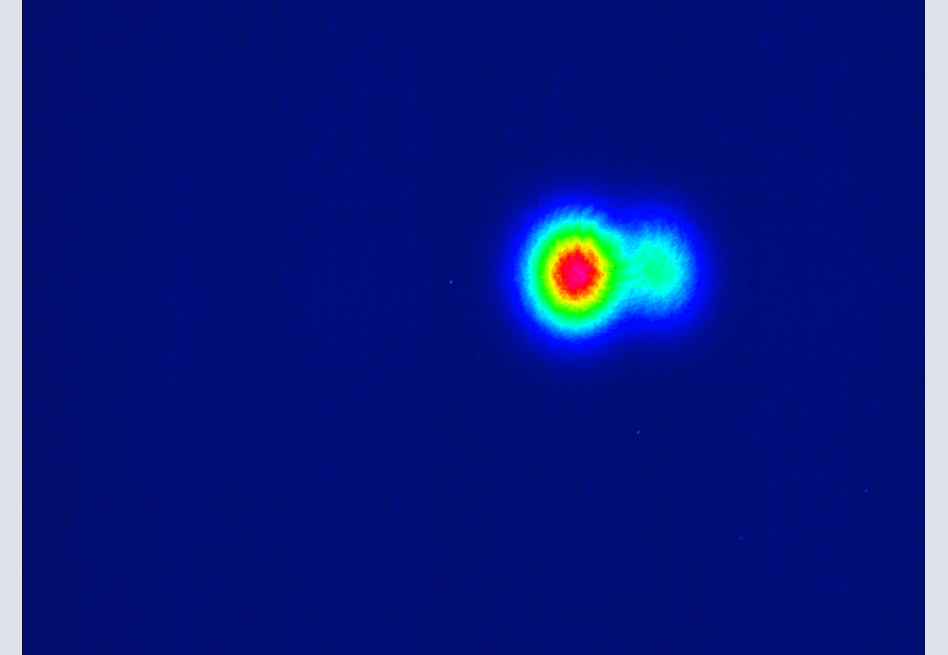 |
| Attachment 2: 00mode_ThomX_Mirror_degeneracySpot_saturateat50.jpg
| 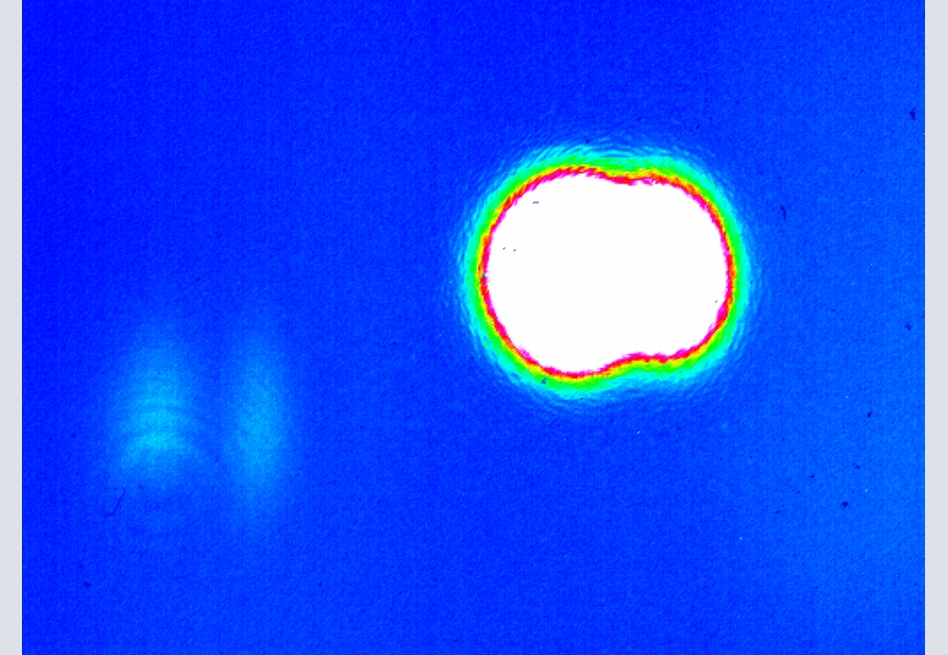 |
| Attachment 3: Coupling_mirror_.jpeg
| 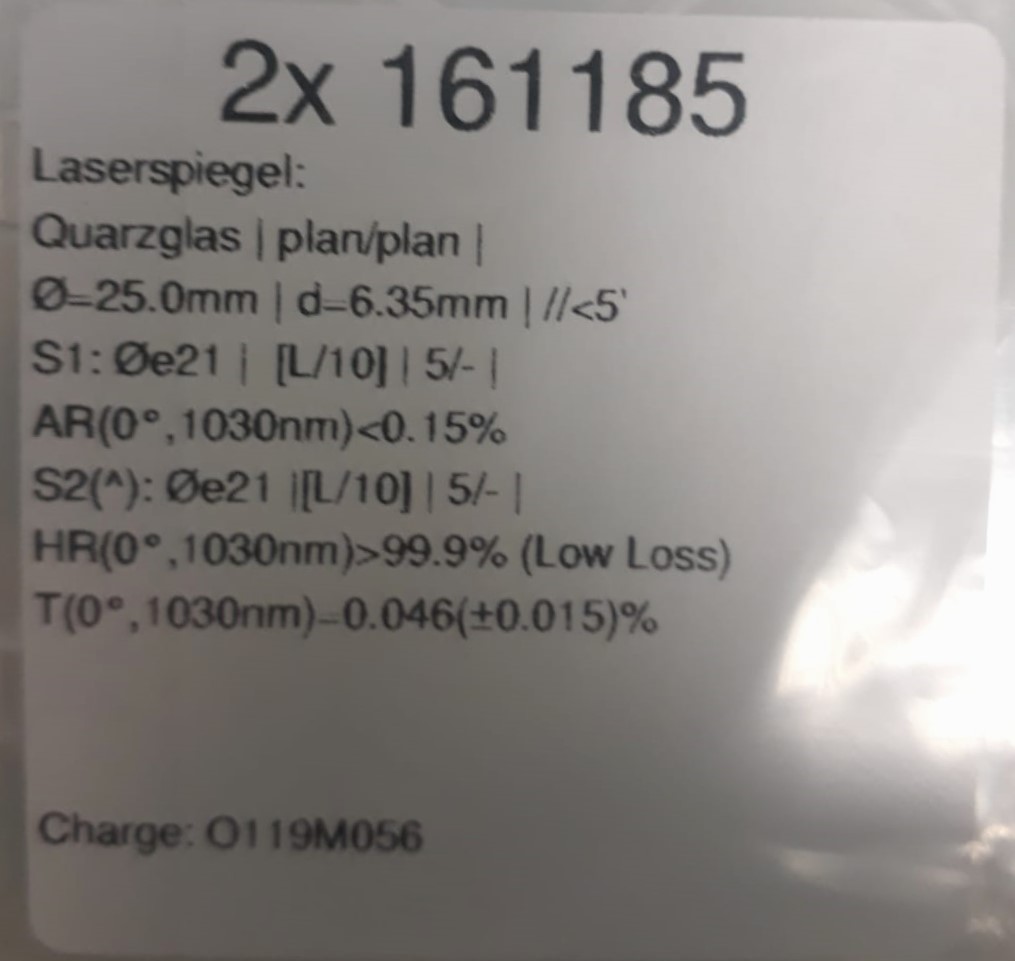 |
|
172
|
Wed Sep 28 18:43:51 2022 |
Manar Amer | Fixed | report | lasers and optics | Optical room | M2 ThomX spherical Cleaning | Today, M2 Spherical-3 from ThomX that was installed inside the SBox was removed, there was one big dust on the surface of the mirror, mirror was cleaned
using pure ethanol and pure water with spincoater. (images taken with arrow far from us)
M1 from Gamma factory, fixed with the addition of the ring with 3 screws.
The mode was immediately seen after, did not have to align. After locking the cavity, we do not see the degeneracy resonance we saw yesterday.
But we still see the spot on the bottom left of the mode in transmission. The integration time for both centers maximums were 0.34 for mode and 200 for spot.
After optimizing the polarization and the CEP, we managed to get a coupling of ~ 25%
| Manar Amer wrote: |
|
In the morning, Vacuum broken and rotated M1 ThomX 90 degrees clockwise, locked the cavity in air and we observe a degeneracy close to the fundamental mode.
In the afternoon, I cleaned M1 from Gamma factory using pure ethanol and pure water with the spincoater
then placed it as the coupling mirror, aligned and locked in air. we observed similar degeneracy to before next to the fundamental mode.
During the process, M2 spherical from ThomX installed in the cavity was not changed. There could be damage on it, will investigate tomorrow.
| Manar Amer wrote: |
|
On Wednesday 21st , I opened the cavity did an additional 2 mm shift of the injection mirror and put it under vacuum again.
Locked the cavity, and observed the transmitted beam.
The second spot is still visible on the beam profiler , the distance difference between the 2 spots is ~ 5.2 mm (the same as before )
no difference in distance, decreases the likelihood that it is from the damage (to be investigated more)
in addition, we have locked at the reflection from the cavity to confirm the spot next to the beam.
We took two images when the laser was locked with the cavity and when it was not.
We clearly see that the spot is indeed related to the mode of the cavity. And probably the damaged spot.
(Difference is size on the reflection image is due to the distance is larger than the transmission + the spherical mirror effect is not there)
| Manar Amer wrote: |
|
To compare between the 2 images of the cavity mode:
- the mode by itself has an integration time of 0.06 ms, position (x, y) = (1142.969, -53.932) um on the beam profiler
- the mode saturated with the spot next to it almost at max intensity has an integration time of 50 ms, position (-3700, -2000) um
comparing the positions of both spots, they have difference (4842.969, 2053.932) um
------ > total difference on the beam profiler ~ 5.3 mm , the distance from the spherical mirror to the beam profiler is ~ 40 cm
| Manar Amer wrote: |
|
Yesterday , we locked the cavity and we see a sign of a high finesse on the transmission signal, but no measurement of Finesse was done.
we have a coupling of ~ 45%, which is a loss of 20% from the previous coupling of 60%
an estimate done by Ronic MATLAB simulation for the coupling drop where we have 200 pp additional losses and gain of 2.6 k we should get a transmission of 1.1 mW for injected power of ~ 300 mW
which is consistent with the power measured after a 50% beam splitter on transmission we got 0.51 mW (total would be 1.02mW)
in addition, there is a beam that is next to the mode of the cavity , confirmed it was not a reflection from the beam splitter or the optics.
it could be that we are still close to the damaged spot ?
| Manar Amer wrote: |
|
ThomX injection mirror has been cleaned and placed again inside the optical cavity.
This time to avoid the damaged spot I have displaced the mirror mount horizontally to have a distance between center of the beam and the spot ~ 2.5 - 3 mm.
The alignment was affected slightly but recovered by adjusting the mirror mount nobs, (00 mode observed in air)
The cavity was closed is being pumped with vacuum.
To be done: adjust the cavity length and find the resonance, improve the outer alignment, lock the cavity
| Manar Amer wrote: |
|
a better image of the damaged spot, image taken with the arrow for the reflective surface facing the other direction (image shows position)
The image of M1 for ThomX reflective surface was taken at min zoom (full image scale 13 mm) and max zoom (full image scale 2 mm) on microscope
The spot appears to be not close to the center of the mirror, at max zoom in the center we do not see the spot it is just out of the image
the last image has the mirror position adjusted to center the damaged spot for a better image of it.
| Manar Amer wrote: |
|
After discussing, we have decided against shifting the mirror to avoid the time lost.
We changed the injection mirror to a different mirror from Mighty Laser set, Transmission of mirror 80 ppm. (no visible damage at the center of the mirror, only a small scratch on the back)
mirror cleaned using pure ethanol and pure water with spin coater, also the spherical mirror was cleaned again.
| Manar Amer wrote: |
|
Tomorrow will try to shift the injection mirror to avoid hitting the damaged spot.
| Manar Amer wrote: |
|
Following the storage of ~ 50 kW inside the cavity and a sudden drop in transmitted power from the cavity
damage to the mirror surface was suspected.
We broke vacuum and took images of the surface of the 2 mirrors in the cavity, the spherical and the planar mirror
image 1 , spherical reflective surface (no visible damage with the UV light, and no visible damage under the microscope)
image 2 , planar coupler mirror reflective surface (no visible damage under UV light, but under the microscope there is a damaged spot close to the center)
image 4 is the planar surface reflective surface at zoom 8 on the microscope.
|
|
|
|
|
|
|
|
|
|
| Attachment 1: MS_directfromcavity_reduceSize.jpg
|  |
| Attachment 2: MS_afteralcholeswipe_reducedSize.jpg
|  |
| Attachment 3: Screenshot_2022-09-28_0_172610.png
| 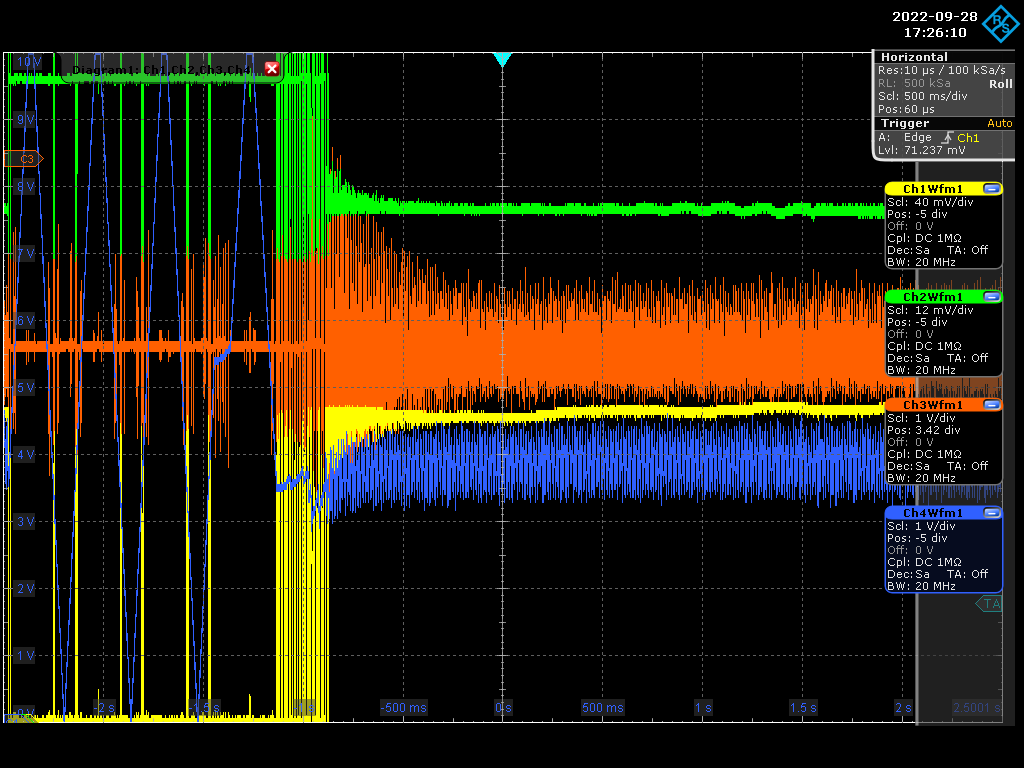 |
| Attachment 4: 00mode0point34ms_transmission.jpg
|  |
| Attachment 5: 00mode_200ms.jpg
| 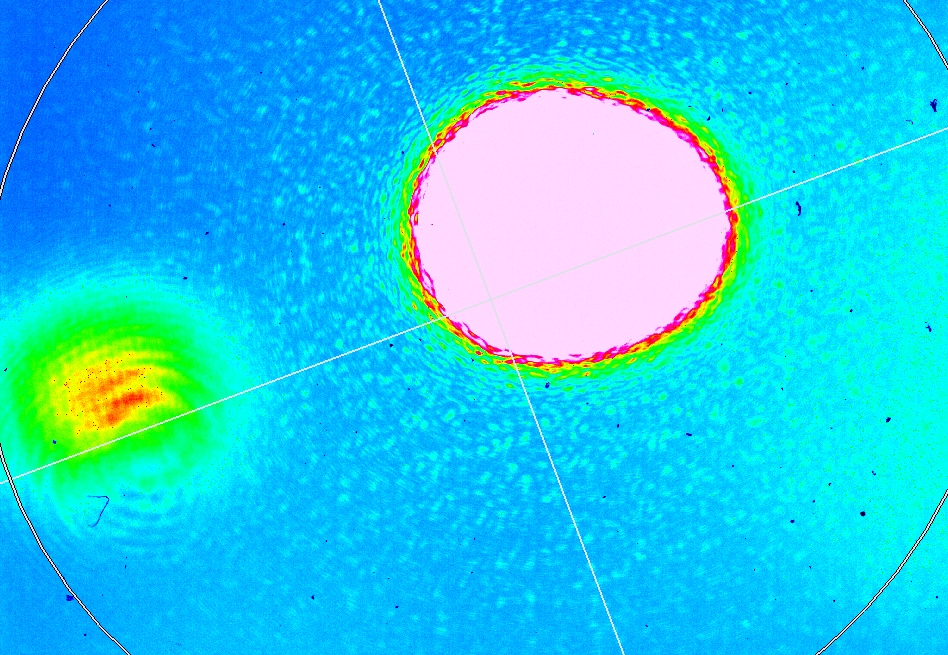 |
| Attachment 6: reflection_lock.jpg
| 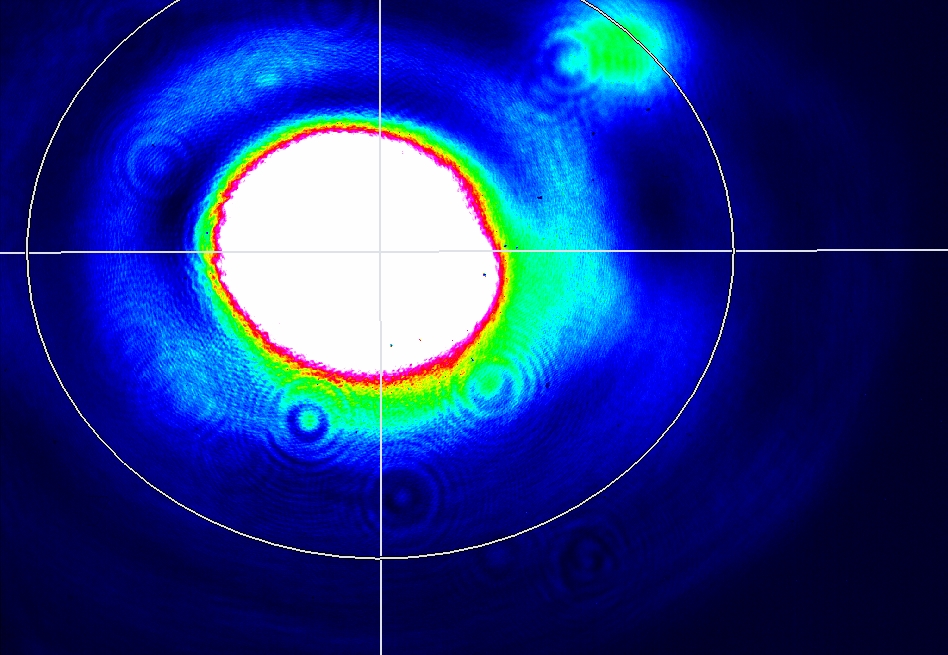 |
|
173
|
Fri Jan 6 12:33:18 2023 |
Ronic Chiche | Fixed | info | lasers and optics | Optical room | Laser Menhir reinstallation + CVBG + fiber injection | The lab purchased the Menhir laser @ 216MHz.
it has been sent back to Menhir photonics for inspection, and then is now at lab.
it has been reinstalled to the SBOX setup with injection in a CVBG for pulse stretching before amplification.
the power after CVBG is 24mV.
the power coupled to the fiber is only 6.4mW => to be optimized.
the spectrum has been mesured after CVBG and seems correct : picture is attached.
|
| Attachment 1: MenhirJan2022.PNG
|  |
|
174
|
Thu Dec 7 09:09:27 2023 |
Ronic Chiche | Fixed | info | lasers and optics | ThomX igloo | New mirrors batch informations | the 2 files describe the specfications for the 16 mirrors ordered (4 for ThomX + spare, 4 for SBOX + spare) and the measurements made by the LMA.
I add also a 3rd file in which all the "special' mirrors are referenced. |
| Attachment 1: miroirs_puma_2022_thomx_Kbox.docx
|
| Attachment 2: Miroirs_Ã _1031_nm-ThomX_-_KBox_Mars_2023.pdf
|
| Attachment 3: Recap_miroirs_KBOX_et_THOMX.xlsx
|
|
176
|
Fri Dec 8 18:59:24 2023 |
Xinyi Lu | Fixed | report | lasers and optics | Optical room | Mounts installation and cavity alignment | Over the last two days, Viktor, Ronic and I have started to install the mirror mounts and try to align the cavity.
- We used the Menhir laser @ 160MHz for alignment.
- To make it easier to operate, we removed some lenses and waveplates, and kept only a few necessary reflective mirrors.
- We measured the distance with rulers and placed the mounts in designed positions.
- We installed Iris on the mirror mounts, used a CCD camera to determine if the beam was in the center, and optimized the two reflective mirrors outside the cavity.
- There were some problems with the controller of the injection mirrors (Newport™) in front of the cavity, and Ronic has fixed them successfully.
- Next week, we will continue to align the cavity, measure the cavity mode, and design the telescope. We will install the old SBX mirrors for alignment first, and then replace them with the final good mirrors. |
|
177
|
Thu Dec 14 17:52:53 2023 |
Xinyi Lu | Fixed | report | lasers and optics | Optical room | Mounts installation and cavity alignment | Over the past few days, Viktor, Ronic and I have continued to align the cavity. We installed 4 mirrors and monitored the transmitted laser with a CCD and photodiode. By adjusting the motors of the cavity mirror stages and the injector mirrors, we obtained resonances and less symmetric TEM20-like patterns. Possible reasons for this are a mismatch between the beam sizes of the laser and the cavity mode, and the mounts are installed in rough positions.
Tomorrow, we plan to use the CW laser to realign the optical cavity and position the mounts more precisely.
| Xinyi Lu wrote: |
|
Over the last two days, Viktor, Ronic and I have started to install the mirror mounts and try to align the cavity.
- We used the Menhir laser @ 160MHz for alignment.
- To make it easier to operate, we removed some lenses and waveplates, and kept only a few necessary reflective mirrors.
- We measured the distance with rulers and placed the mounts in designed positions.
- We installed Iris on the mirror mounts, used a CCD camera to determine if the beam was in the center, and optimized the two reflective mirrors outside the cavity.
- There were some problems with the controller of the injection mirrors (Newport™) in front of the cavity, and Ronic has fixed them successfully.
- Next week, we will continue to align the cavity, measure the cavity mode, and design the telescope. We will install the old SBX mirrors for alignment first, and then replace them with the final good mirrors.
|
|
| Attachment 1: CCD.jpg
| 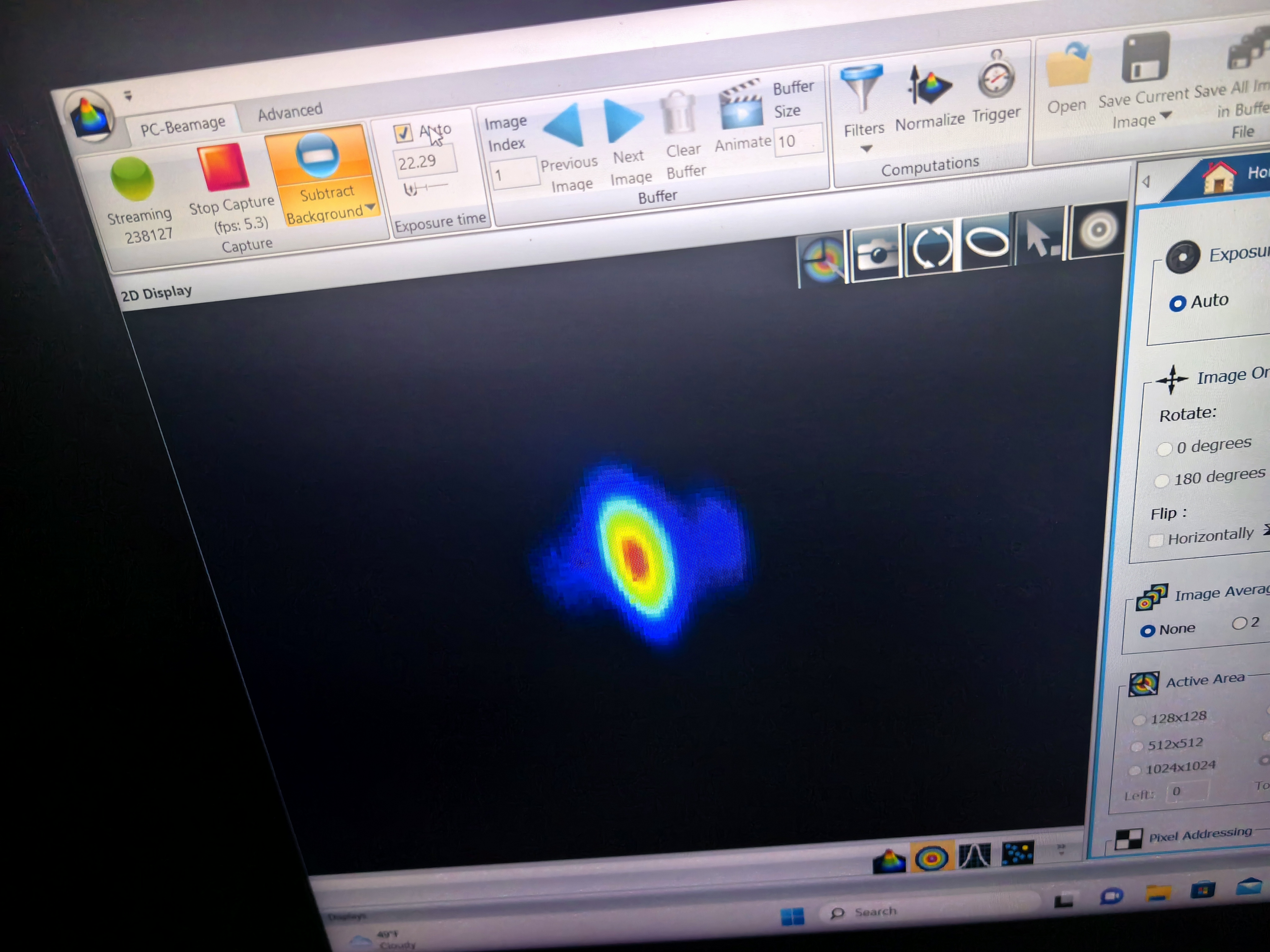 |
| Attachment 2: oscillograph.jpg
| 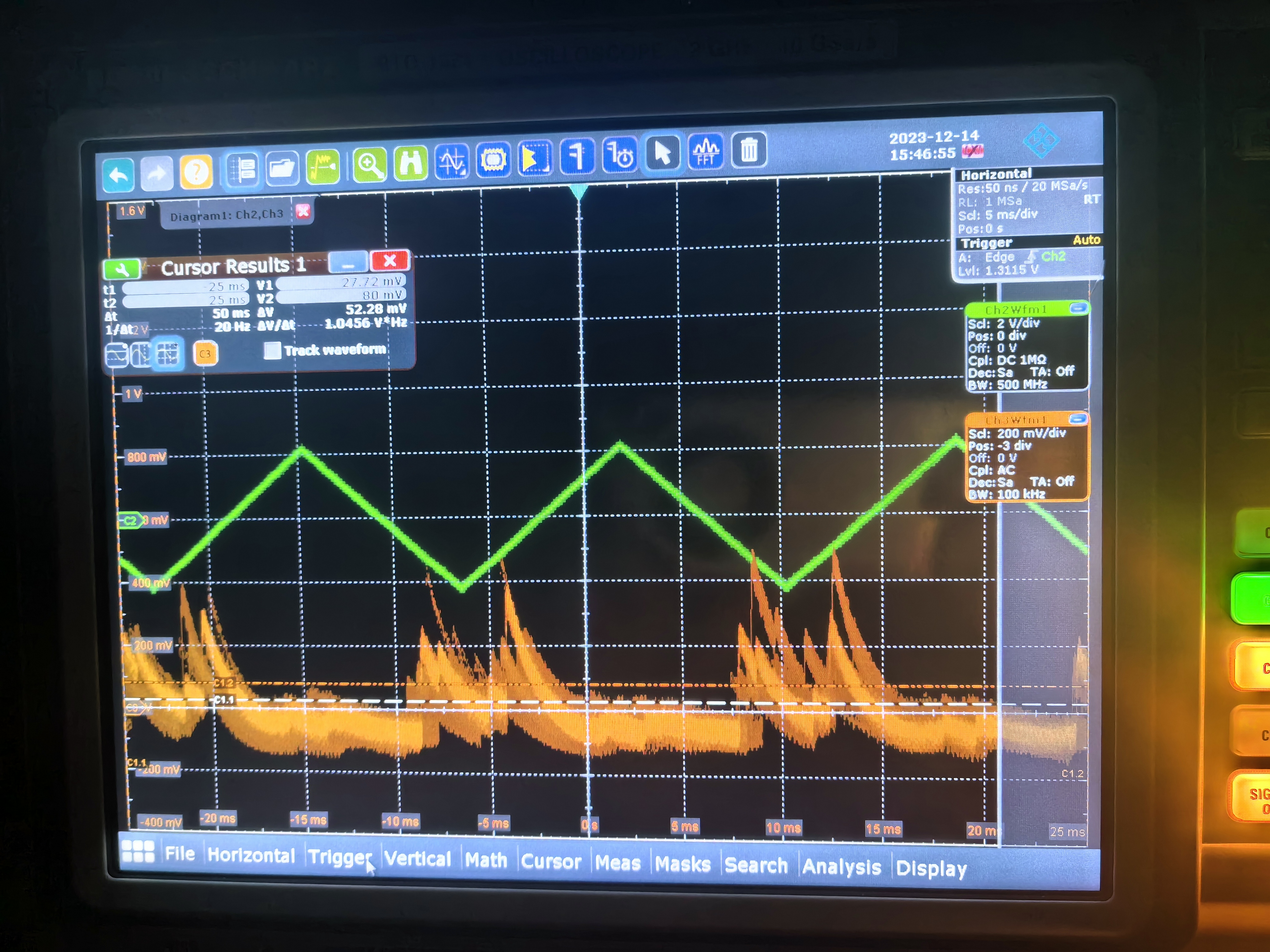 |
|
178
|
Wed Dec 20 10:45:37 2023 |
Xinyi Lu | Fixed | report | lasers and optics | Optical room | Mounts installation and cavity alignment | - Over the last few days, Viktor, Ronic and I have reinstalled the mounts and realigned the cavity with CW laser and old mirrors. By optimizing the injector mirrors, we got the fundamental mode at the transmission. We measured the beam size in the M2 window with a diameter of 2.5 mm.
- The current coupling efficiency is low. There is a need to increase the coupling in order to lock the cavity and measure FSR and finesse.
- The next step is to measure the incident light parameters and design the telescope to improve the coupling efficiency.
| Xinyi Lu wrote: |
|
Over the past few days, Viktor, Ronic and I have continued to align the cavity. We installed 4 mirrors and monitored the transmitted laser with a CCD and photodiode. By adjusting the motors of the cavity mirror stages and the injector mirrors, we obtained resonances and less symmetric TEM20-like patterns. Possible reasons for this are a mismatch between the beam sizes of the laser and the cavity mode, and the mounts are installed in rough positions.
Tomorrow, we plan to use the CW laser to realign the optical cavity and position the mounts more precisely.
| Xinyi Lu wrote: |
|
Over the last two days, Viktor, Ronic and I have started to install the mirror mounts and try to align the cavity.
- We used the Menhir laser @ 160MHz for alignment.
- To make it easier to operate, we removed some lenses and waveplates, and kept only a few necessary reflective mirrors.
- We measured the distance with rulers and placed the mounts in designed positions.
- We installed Iris on the mirror mounts, used a CCD camera to determine if the beam was in the center, and optimized the two reflective mirrors outside the cavity.
- There were some problems with the controller of the injection mirrors (Newport™) in front of the cavity, and Ronic has fixed them successfully.
- Next week, we will continue to align the cavity, measure the cavity mode, and design the telescope. We will install the old SBX mirrors for alignment first, and then replace them with the final good mirrors.
|
|
|
| Attachment 1: resonances.jpg
| 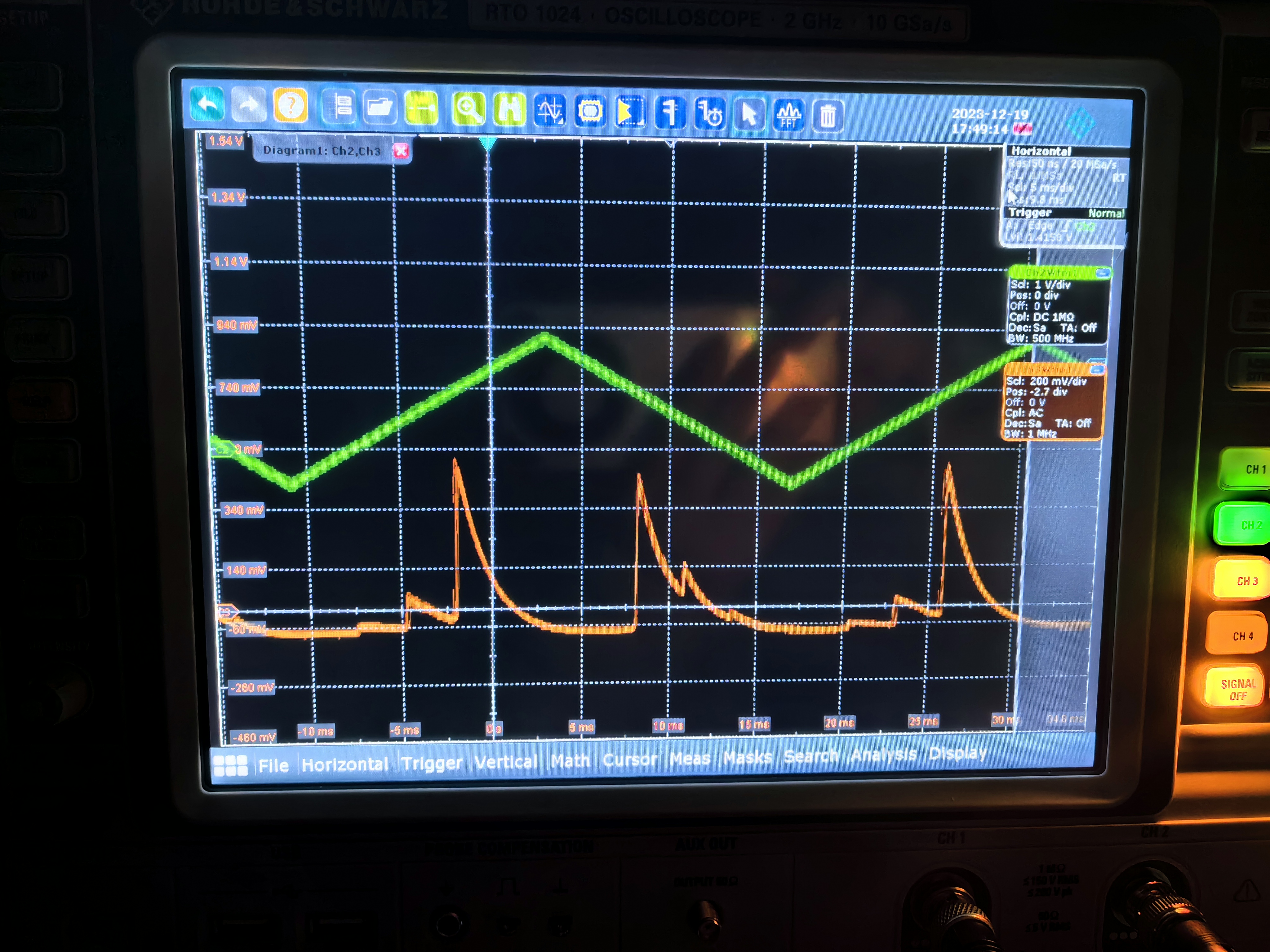 |
| Attachment 2: cavity_mode.jpg
| 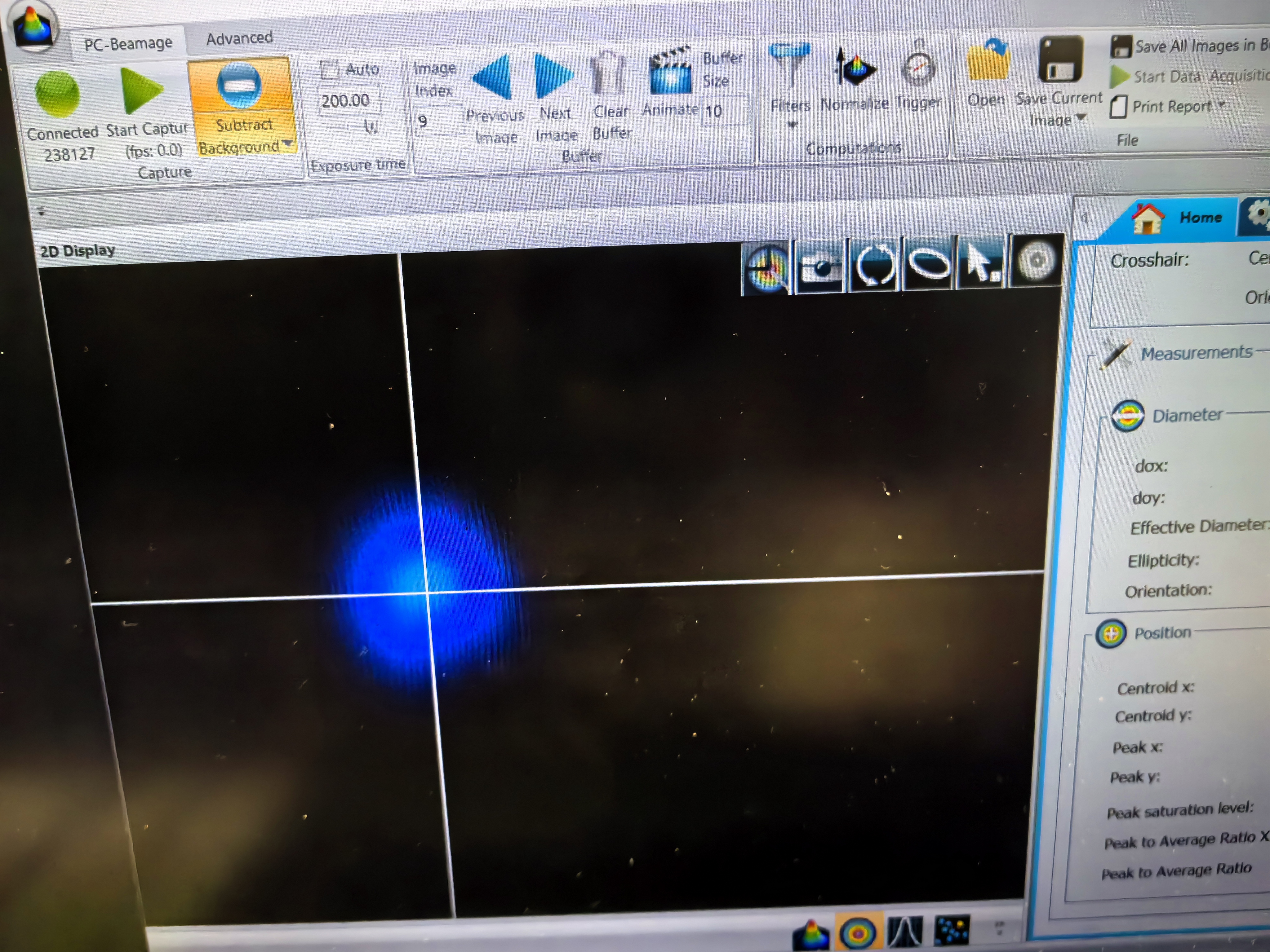 |
| Attachment 3: cavity_mode_diameter.jpg
| 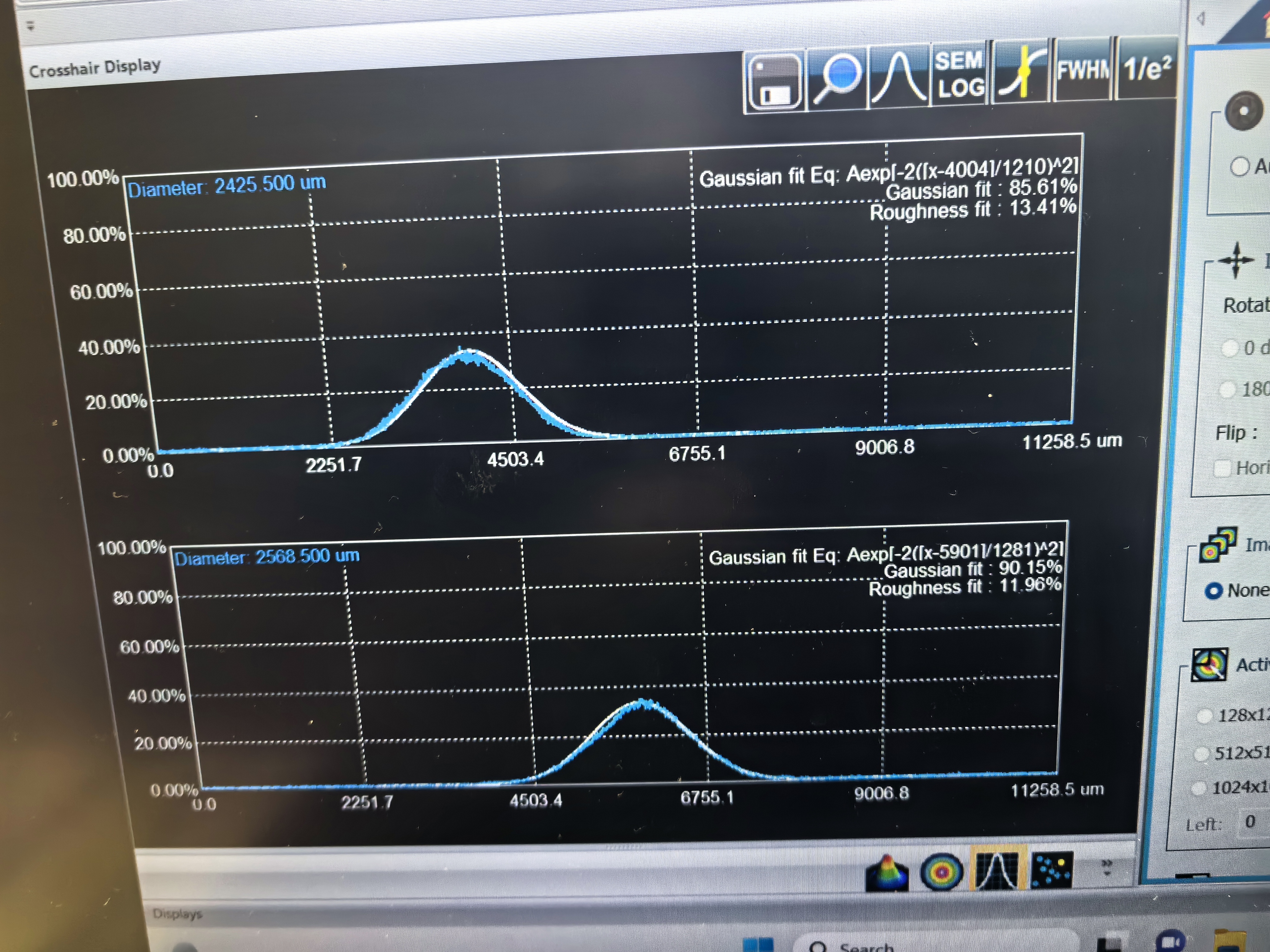 |
|
179
|
Wed Jan 10 18:35:46 2024 |
Xinyi Lu | Fixed | info | lasers and optics | Optical room | Coupling efficiency improvement | - Recently we have focused on improving the coupling efficiency. Without the telescope, the original coupling efficiency was less than 3%.
- I measured the parameters of the incident CW laser using both a HASO wavefront sensor and a CCD. I designed and installed the telescope, but the coupling efficiency still did not improve.
- After discussing with Aurélien and Ronic, it was decided to replace the M1 because the original M1 has a damaged spot in the center to the left. The damaged spot may be causing the coupling efficiency to be too low.
- Today, I replaced the M1 and realigned the cavity. Fortunately, the coupling efficiency has improved.
- We'll continue to optimize the alignment, improve the coupling, and carry out tests on the cavity. |
| Attachment 1: Coupling_efficiency_0110.jpg
| 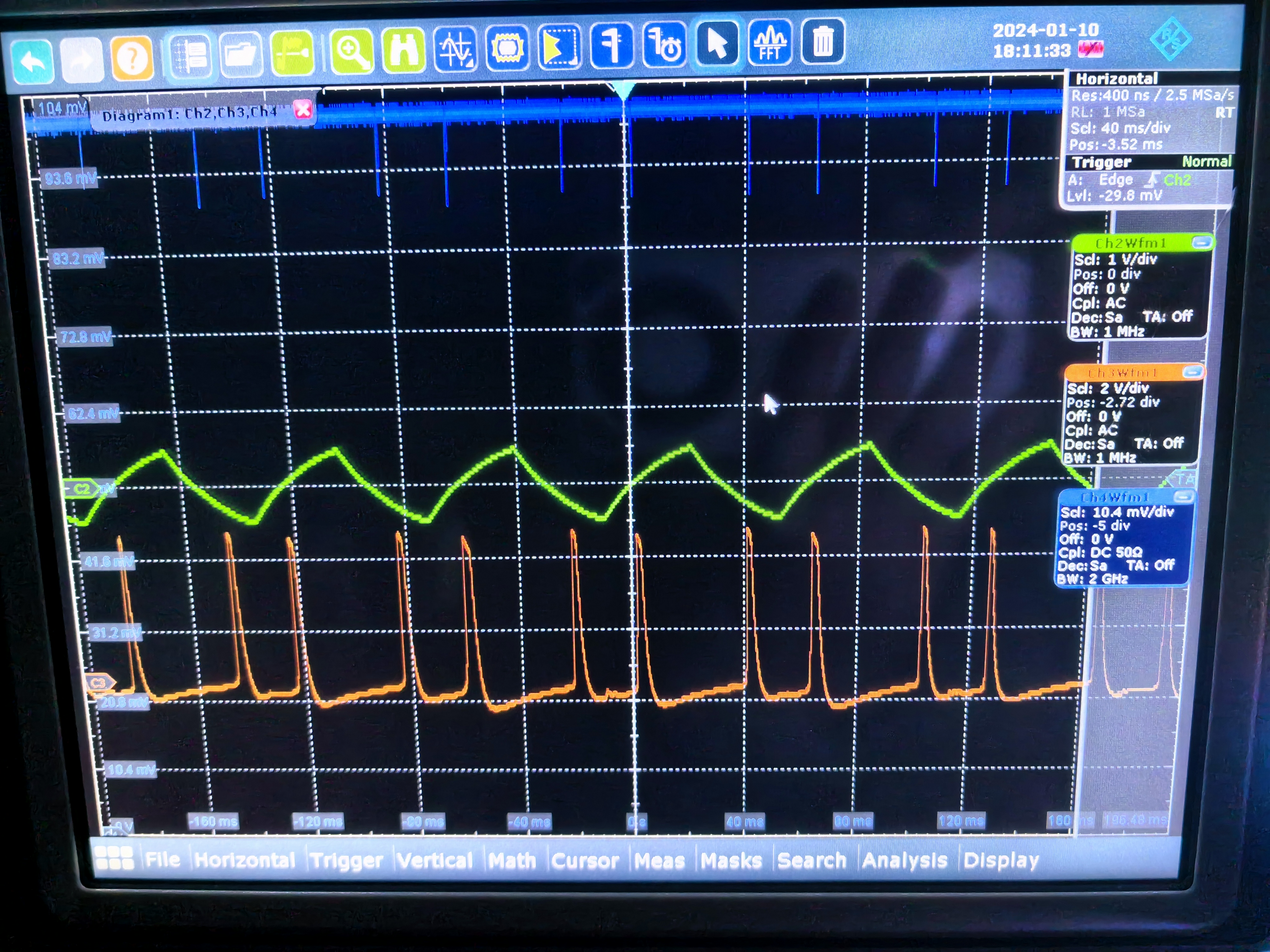 |
| Attachment 2: damaged_spot_on_M1.png
|  |
|
180
|
Mon Jan 15 19:19:00 2024 |
Xinyi Lu | Fixed | info | lasers and optics | Optical room | Coupling efficiency improvement | - We got 30% coupling efficiency by installing a set of telescopes, adjusting the polarization and optimizing the alignment. The diameter of the cavity mode is about 2.1mm.
- Ronic and I successfully locked the optical cavity. Tomorrow we will test the FSR and finesse.
| Xinyi Lu wrote: |
|
- Recently we have focused on improving the coupling efficiency. Without the telescope, the original coupling efficiency was less than 3%.
- I measured the parameters of the incident CW laser using both a HASO wavefront sensor and a CCD. I designed and installed the telescope, but the coupling efficiency still did not improve.
- After discussing with Aurélien and Ronic, it was decided to replace the M1 because the original M1 has a damaged spot in the center to the left. The damaged spot may be causing the coupling efficiency to be too low.
- Today, I replaced the M1 and realigned the cavity. Fortunately, the coupling efficiency has improved.
- We'll continue to optimize the alignment, improve the coupling, and carry out tests on the cavity.
|
|
| Attachment 1: coupling_efficiency.jpg
| 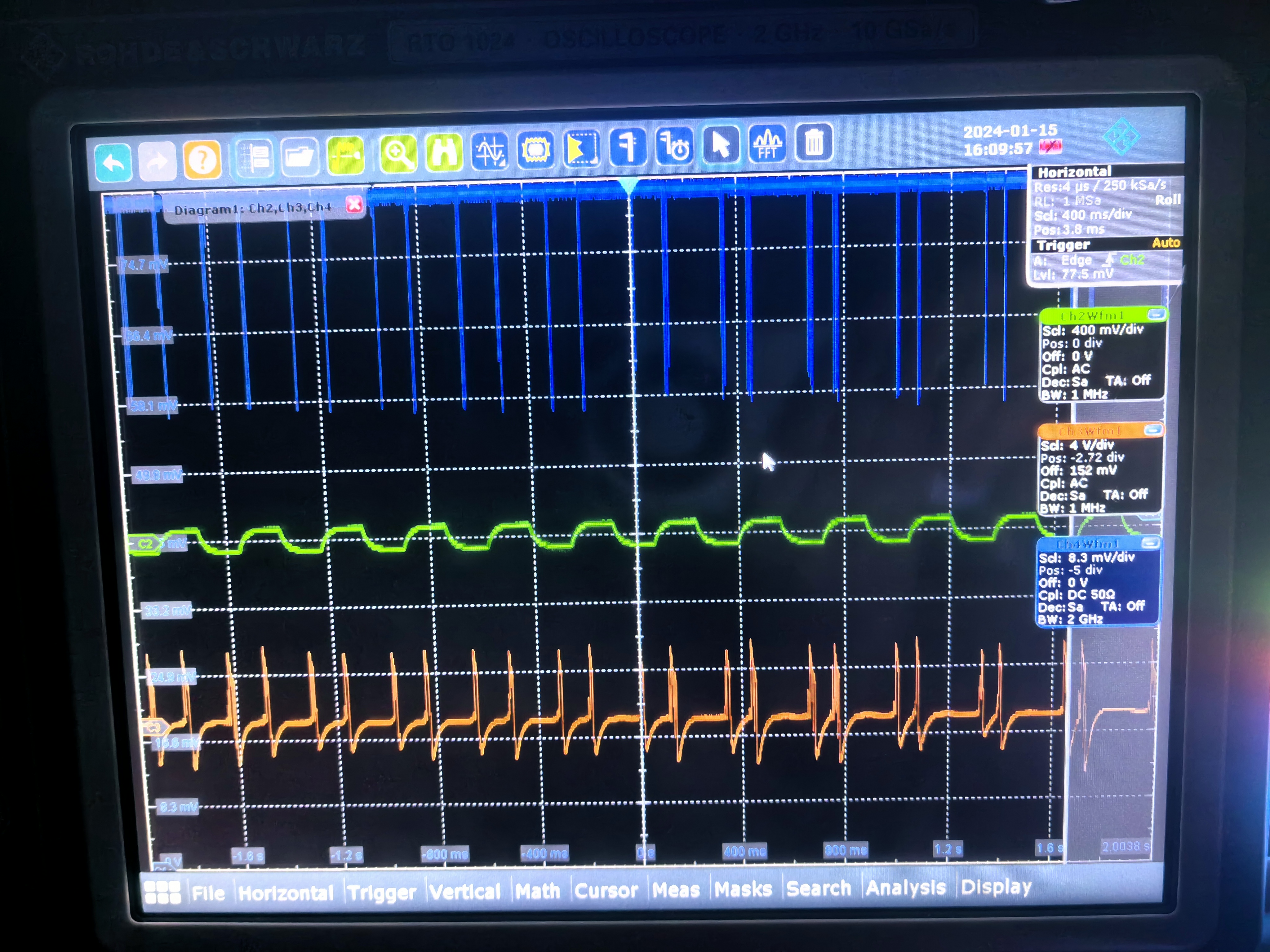 |
| Attachment 2: cavity_locking.jpg
| 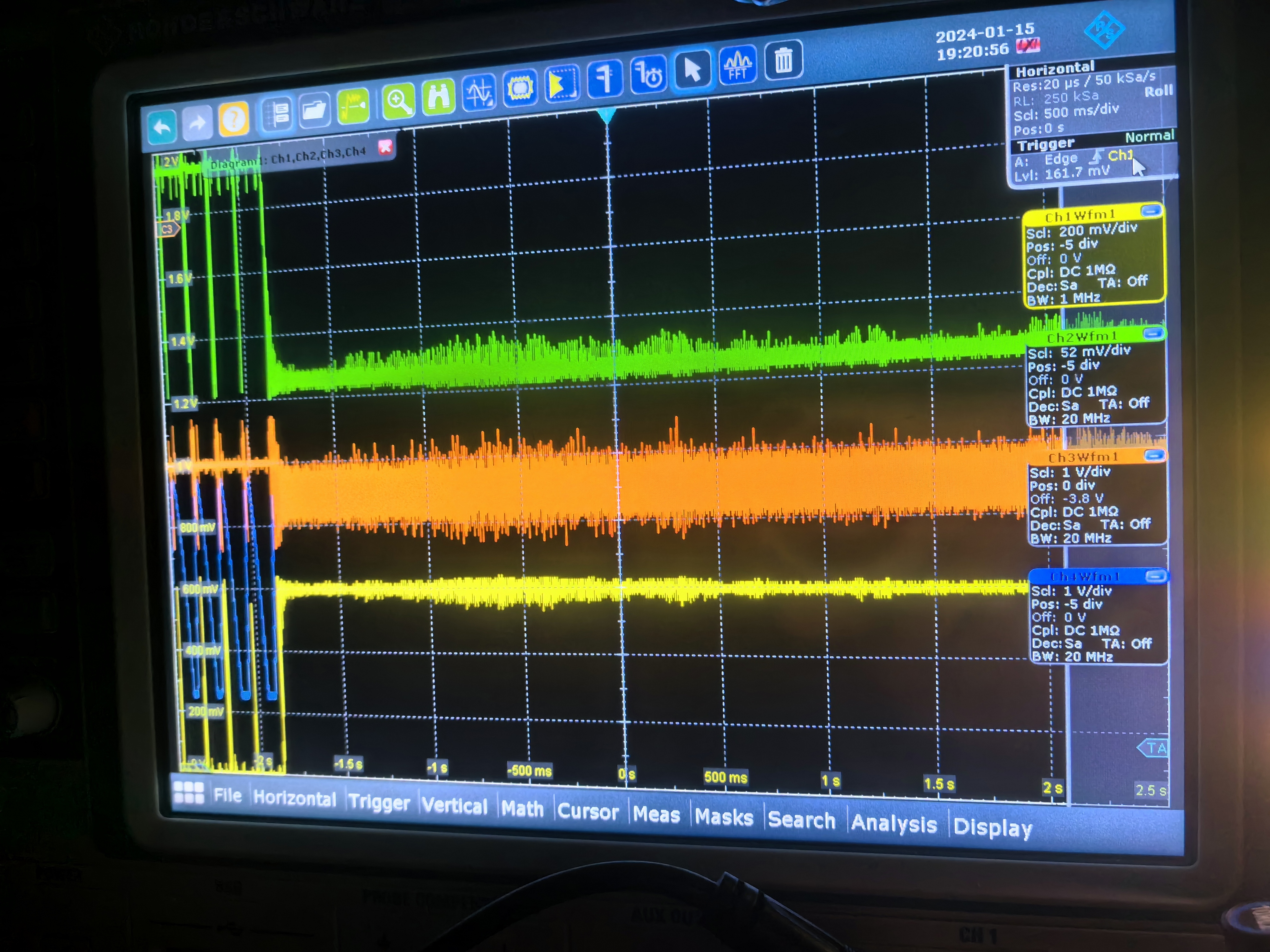 |
|
181
|
Tue Jan 16 18:42:42 2024 |
Xinyi Lu | Fixed | info | lasers and optics | Optical room | FSR and Finesse measurement | - Today, Ronic and I measured the finesse and FSR after optimizing the locking. FSR was adjusted to 160.27 MHz to match the pulsed laser repetition rate. The finesse was 3029.
Note: It's now CW laser injected, SBOX's old mirrors. There are lots of dust on the old mirrors without cleaning.
- Then we cleaned the cavity inside and outside, and removed four mirrors.
- Tomorrow we will check the clean condition and install new mirrors if we can. Before installation, it may be helpful to discuss how to minimize the introduction of dust. |
| Attachment 1: Screenshot_2024-01-16_2_145546.png
| 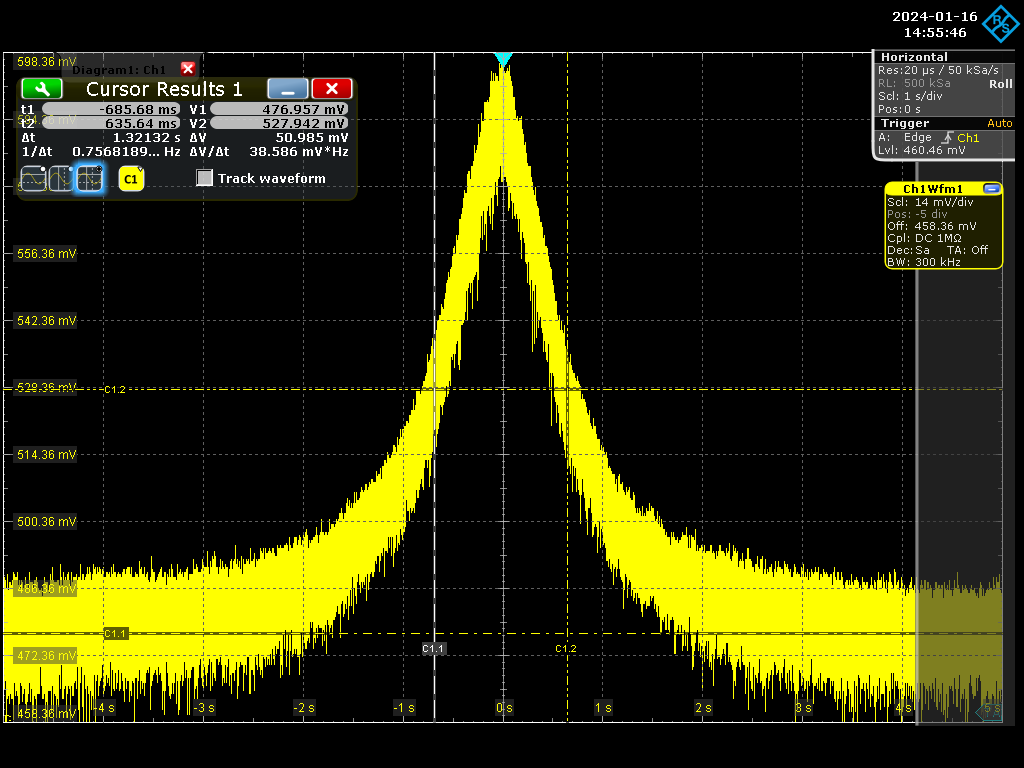 |
| Attachment 2: Screenshot_2024-01-16_4_150258.png
| 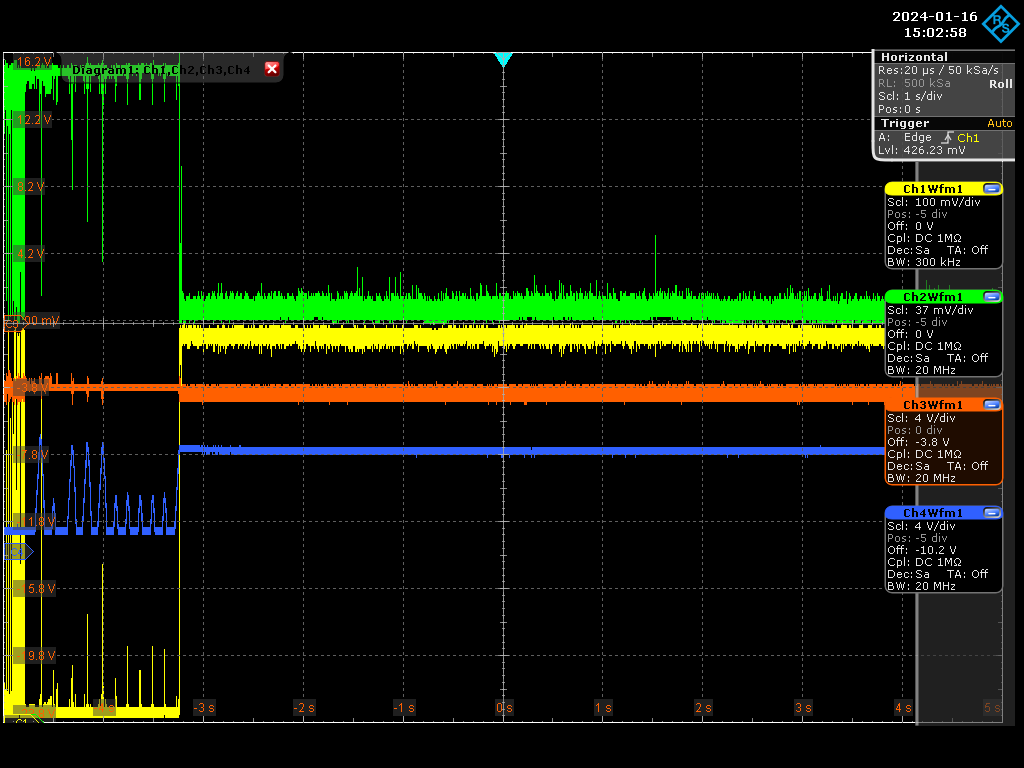 |
|
182
|
Wed Jan 17 21:11:59 2024 |
Xinyi Lu | Fixed | info | lasers and optics | Optical room | Install new mirrors | Today, Ronic and I installed the new mirrors and got resonance. We can see the oscillations in this high-finesse case. We haven't carefully optimized the alignment. Coupling efficiency is about 15% and the cavity can be locked.
Tomorrow we will optimize the alignment and locking, and measure the finesse. |
| Attachment 1: New_mirrors.png
| 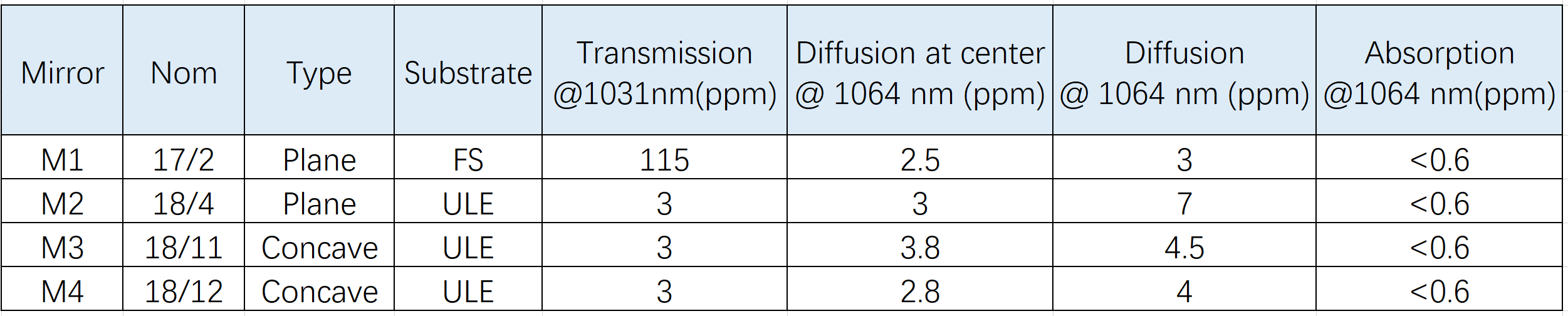 |
| Attachment 2: oscillations.jpg
| 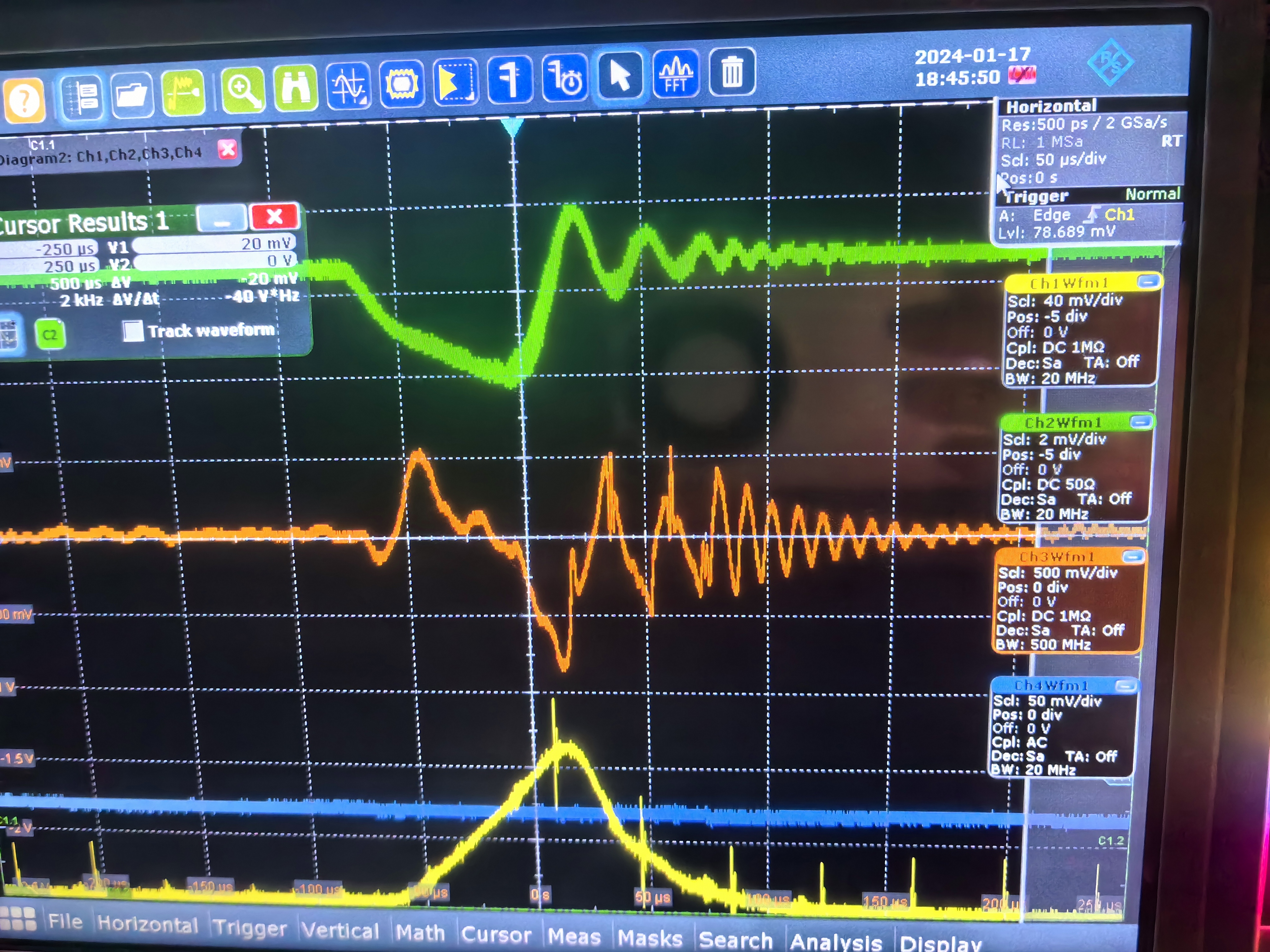 |
| Attachment 3: locking.jpg
| 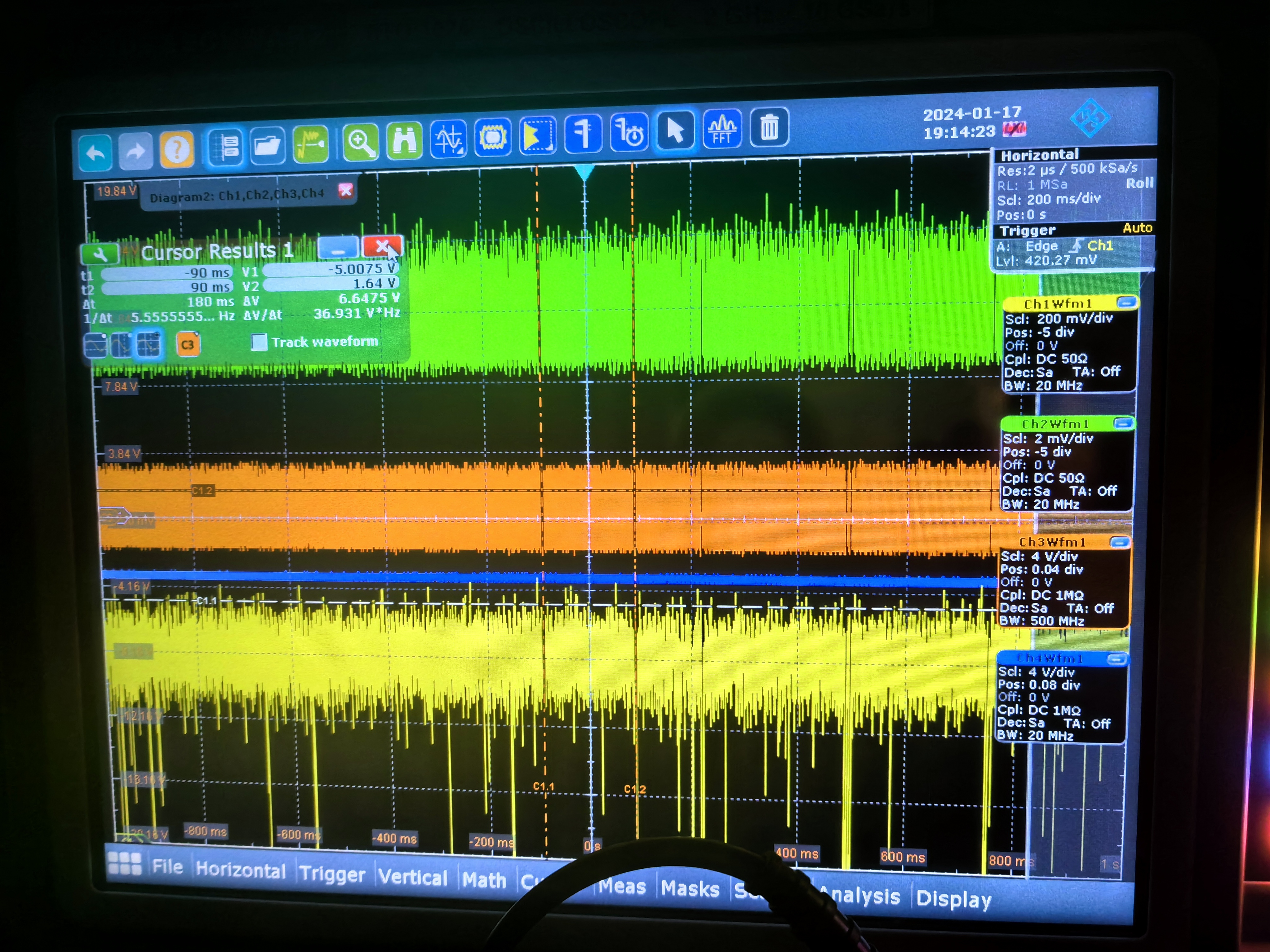 |
|
183
|
Thu Jan 18 22:14:03 2024 |
Xinyi Lu | Fixed | info | lasers and optics | Optical room | Install new mirrors | - In the last two days, Ronic and I installed new mirrors after cleaning the environment, and locked the cavity.
- We added an AOM to feedback on the high-frequency noise, but the locking condition was still not good enough. We found out that the signal generator available for this AOM has a long delay time (3 us), which may lead to low feedback bandwidth. So tomorrow we will use another AOM and signal generator to optimize the locking.
- Under this not good enough locking, we measured the finesse. Unfortunately, the finesse was measured as 15,478, which is much lower than the expected 42,000. It means that about 260ppm of additional loss was introduced. We will measure the finesse again after optimizing the locking and coupling.
By the way, attached are the delay time results for phase modulation of different signal generators:
- RIGOL DG4162: 0.7 us (best)
- SIGLENT SDG6022X: 3 us
- SIGLENT SDG7032A: 2.9 us |
| Attachment 1: New_mirrors.png
| 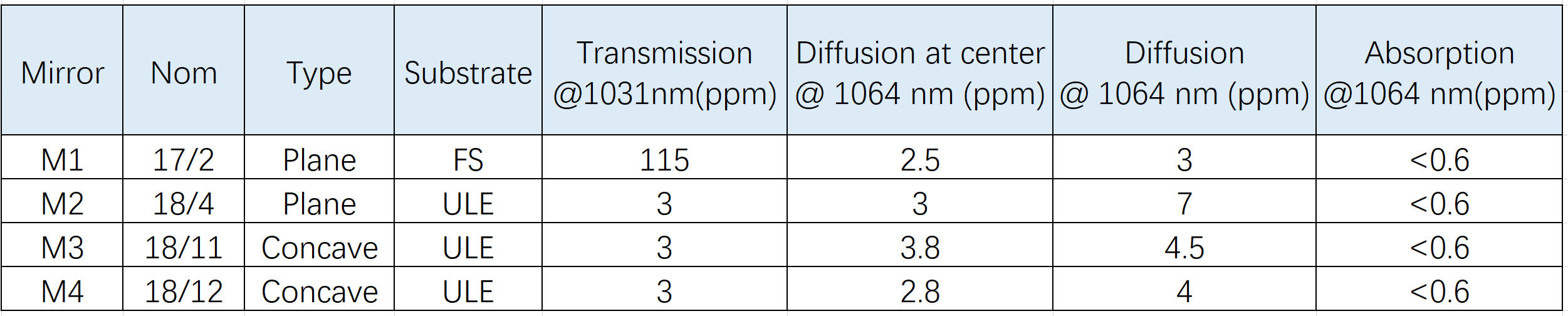 |
| Attachment 2: finesse.png
| 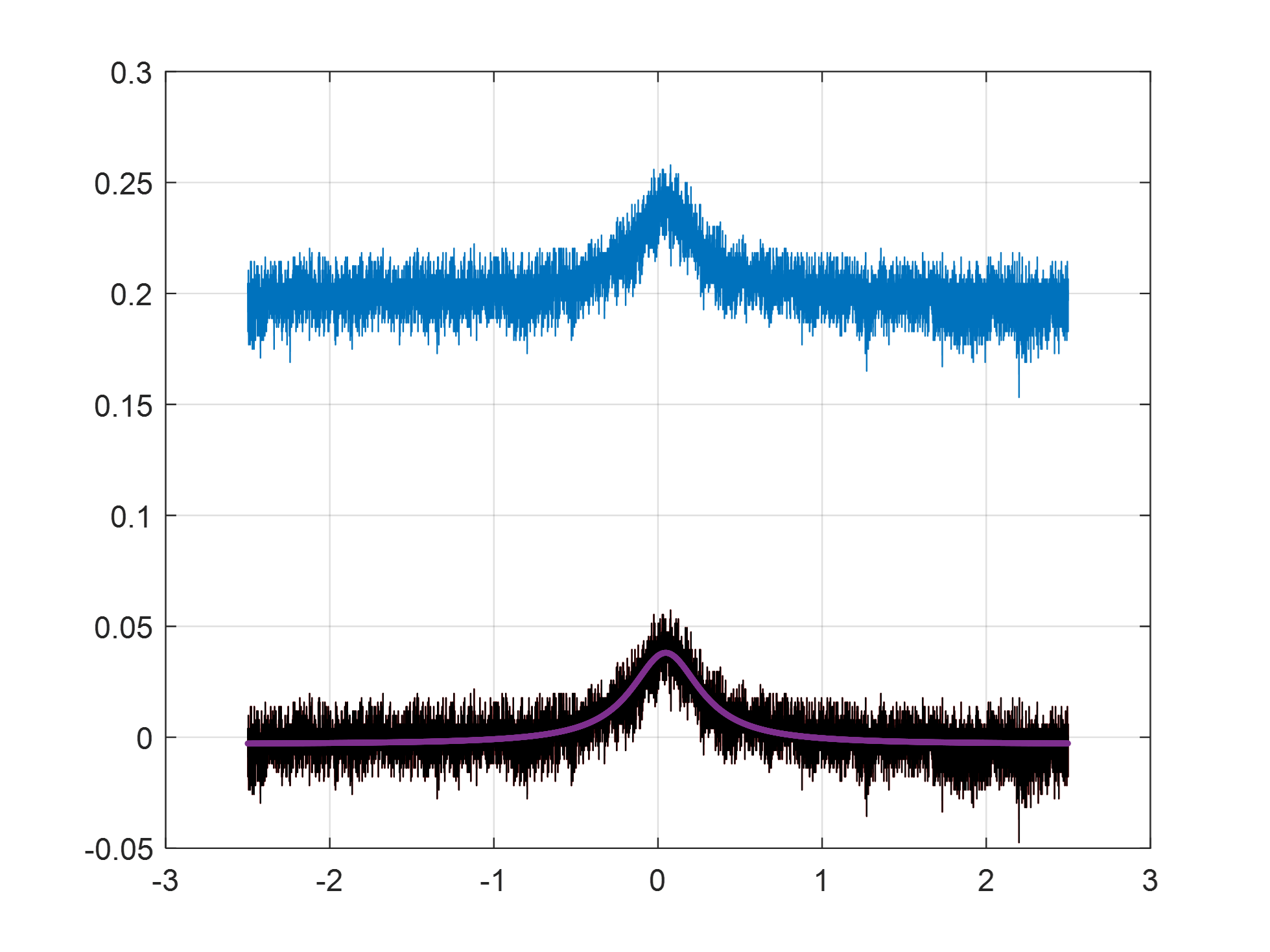 |
| Attachment 3: locking.jpg
| 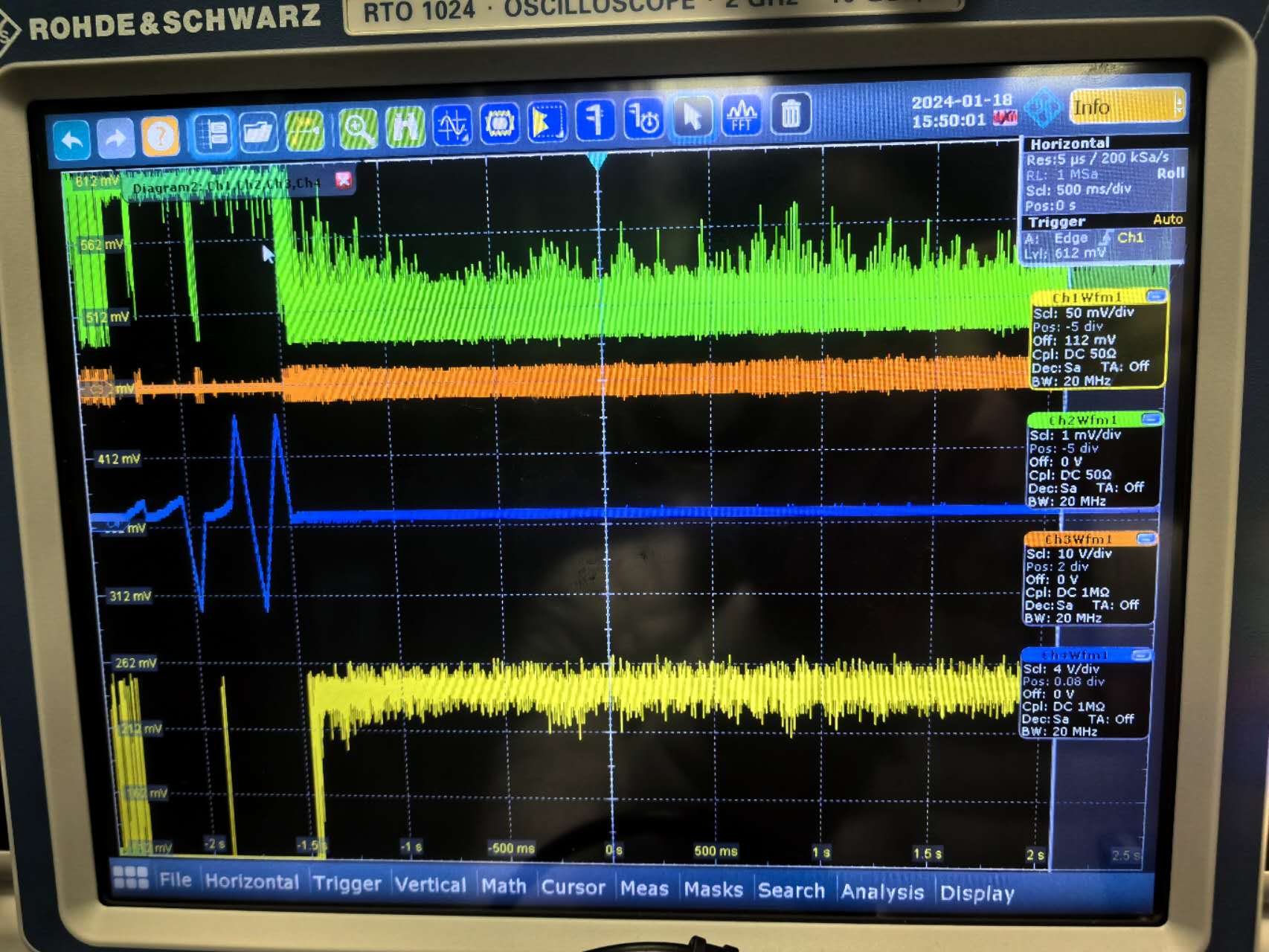 |
|
184
|
Mon Jan 22 18:18:01 2024 |
Xinyi Lu | Fixed | info | lasers and optics | Optical room | Install new mirrors | - Today, Ronic and I changed the signal generator to a low-noise one (with a delay time of only 0.5 us). Then we moved the D-shaped mirrors, optimized the alignment and locking. We re-measured the finesse and it is 16,760. It improves but not much.
- Tomorrow, we will clean the environment, open the cavity, and use UV light to see if there is any dust on the surface of the mirrors.
| Xinyi Lu wrote: |
|
- In the last two days, Ronic and I installed new mirrors after cleaning the environment, and locked the cavity.
- We added an AOM to feedback on the high-frequency noise, but the locking condition was still not good enough. We found out that the signal generator available for this AOM has a long delay time (3 us), which may lead to low feedback bandwidth. So tomorrow we will use another AOM and signal generator to optimize the locking.
- Under this not good enough locking, we measured the finesse. Unfortunately, the finesse was measured as 15,478, which is much lower than the expected 42,000. It means that about 260ppm of additional loss was introduced. We will measure the finesse again after optimizing the locking and coupling.
By the way, attached are the delay time results for phase modulation of different signal generators:
- RIGOL DG4162: 0.7 us (best)
- SIGLENT SDG6022X: 3 us
- SIGLENT SDG7032A: 2.9 us
|
|
| Attachment 1: New_finesse.png
| 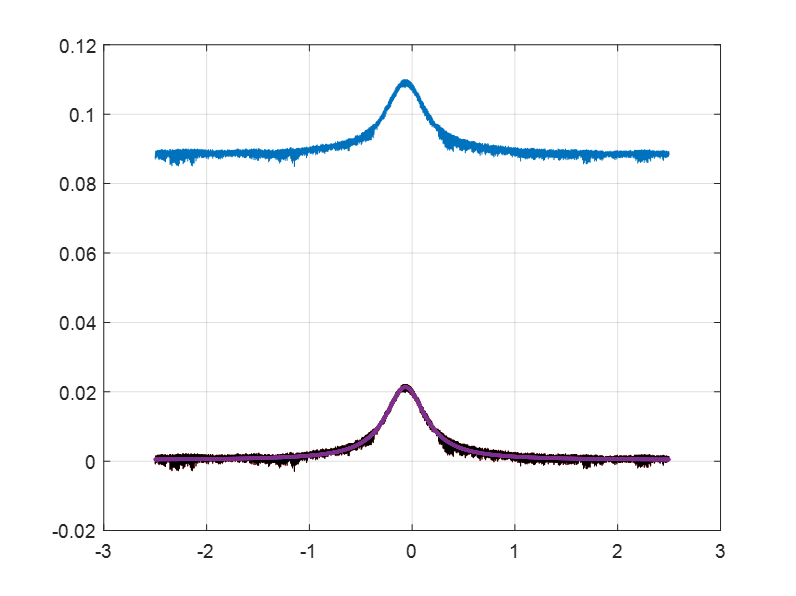 |
|
185
|
Wed Jan 24 20:33:27 2024 |
Xinyi Lu | Fixed | info | lasers and optics | Optical room | Install new mirrors | Yesterday we checked the mirrors with UV light and there was some dust on the mirrors, especially M2.
Today, Daniele, Ronic and I removed M2 and observed it with a microscope. It was indeed dirty, despite we were careful in installing it before. After that we cleaned it with alcohol and mirror paper, then with a spin coater and pure water. After cleaning, we observed it again and it was much better but not perfect. Then we installed the M2 back. But we haven't succeeded in alignment and getting resonance.
Tomorrow is the newcomer's day, so we will continue with the cleaning and measurements on Friday.
| Xinyi Lu wrote: |
|
- Today, Ronic and I changed the signal generator to a low-noise one (with a delay time of only 0.5 us). Then we moved the D-shaped mirrors, optimized the alignment and locking. We re-measured the finesse and it is 16,760. It improves but not much.
- Tomorrow, we will clean the environment, open the cavity, and use UV light to see if there is any dust on the surface of the mirrors.
| Xinyi Lu wrote: |
|
- In the last two days, Ronic and I installed new mirrors after cleaning the environment, and locked the cavity.
- We added an AOM to feedback on the high-frequency noise, but the locking condition was still not good enough. We found out that the signal generator available for this AOM has a long delay time (3 us), which may lead to low feedback bandwidth. So tomorrow we will use another AOM and signal generator to optimize the locking.
- Under this not good enough locking, we measured the finesse. Unfortunately, the finesse was measured as 15,478, which is much lower than the expected 42,000. It means that about 260ppm of additional loss was introduced. We will measure the finesse again after optimizing the locking and coupling.
By the way, attached are the delay time results for phase modulation of different signal generators:
- RIGOL DG4162: 0.7 us (best)
- SIGLENT SDG6022X: 3 us
- SIGLENT SDG7032A: 2.9 us
|
|
|
| Attachment 1: M2.jpg
| 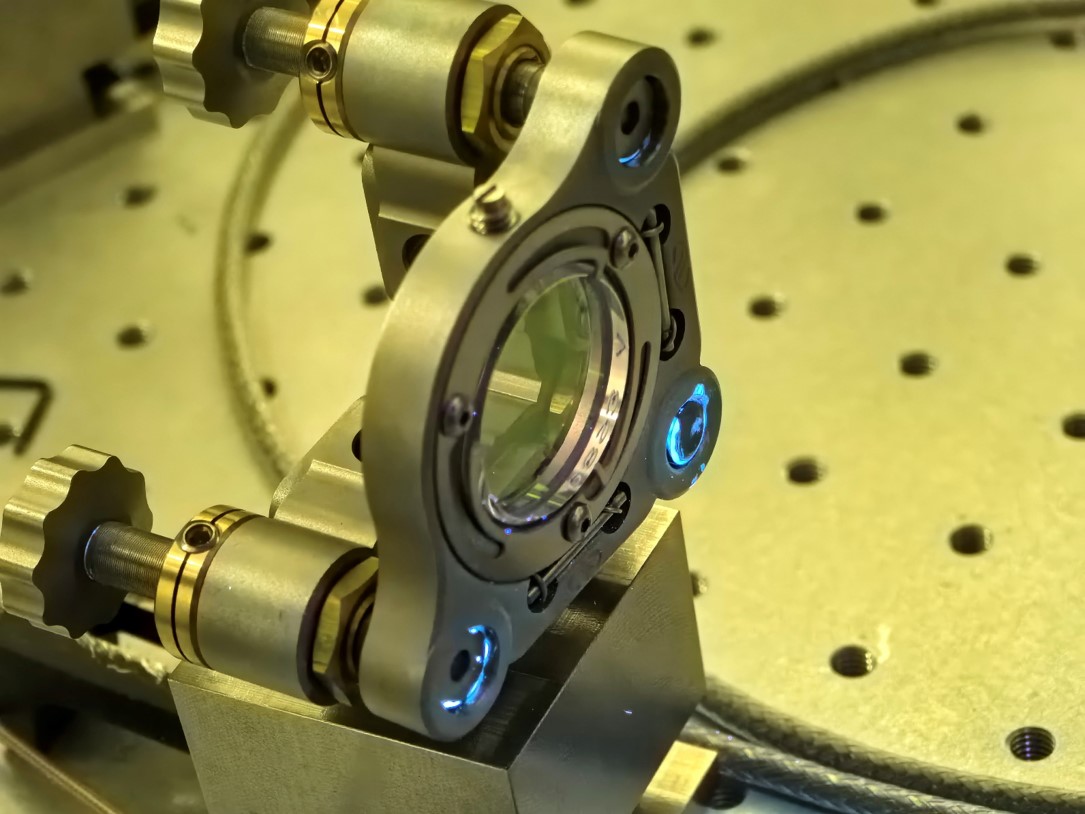 |
|
186
|
Fri Jan 26 17:33:05 2024 |
Xinyi Lu | Fixed | info | lasers and optics | Optical room | Cleaning of Mirrors | Today Daniele, Ronic and I cleaned the mirrors and locked the cavity. However, the finesse was only 13,000 because of the not clean enough environment and not pure enough alcohol and water.
We will carefully clean the environment, clean the mirrors again with pure alcohol and water and measure the finesse when I return. If it doesn't work, we will use plasma to clean the mirror. We have gone to the lab to confirm the plasma device and then we will study the best parameter settings: polarity, time, and current.
Have a nice weekend! |
|
187
|
Mon Feb 12 17:17:04 2024 |
Xinyi Lu | Fixed | info | lasers and optics | Optical room | Cleaning of Mirrors | - Today we cleaned the environment and put the spin coater and microscope inside the airflow.
- Tomorrow, Daniele and I will clean the mirrors one by one using pure alcohol and water, and measure the finesse each time. If it does not improve, we will clean them with plasma.
| Xinyi Lu wrote: |
|
Today Daniele, Ronic and I cleaned the mirrors and locked the cavity. However, the finesse was only 13,000 because of the not clean enough environment and not pure enough alcohol and water.
We will carefully clean the environment, clean the mirrors again with pure alcohol and water and measure the finesse when I return. If it doesn't work, we will use plasma to clean the mirror. We have gone to the lab to confirm the plasma device and then we will study the best parameter settings: polarity, time, and current.
Have a nice weekend!
|
|
| Attachment 1: optical_room.jpg
| 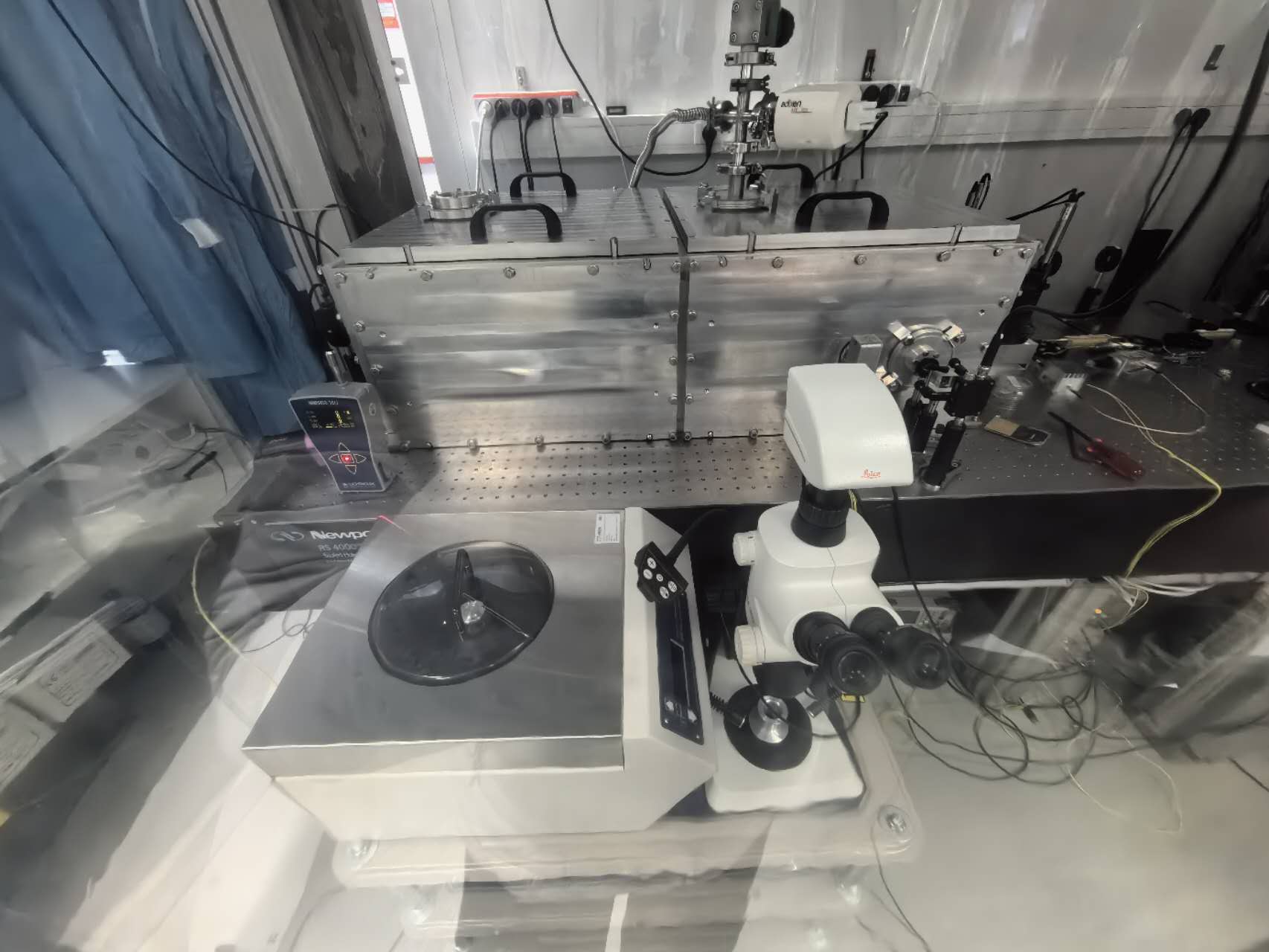 |
|
188
|
Tue Feb 13 17:33:28 2024 |
Xinyi Lu | Fixed | info | lasers and optics | Optical room | Cleaning of Mirrors | Today, Daniele and I cleaned mirrors one by one using pure water, alcohol, and the spin coater. Here are the measurements of finesse each time:
1. Initial value: 14,076
2. Clean Mirror 2: 20,606
3. Clean Mirror 4: 18,750
4. Clean Mirror 3: 18,762
5. Clean Mirror 1: 18,563
6. Reclean Mirror 4: 15,226 (unstable lock)
7. Reclean Mirror 4 again: 16,563 (unstable lock)
The finesse reached a maximum of 20,606 but finally was down. For the last two measurements, the locking state was unstable and noisy. Tomorrow we will optimize the locking status and re-measure.
| Xinyi Lu wrote: |
|
- Today we cleaned the environment and put the spin coater and microscope inside the airflow.
- Tomorrow, Daniele and I will clean the mirrors one by one using pure alcohol and water, and measure the finesse each time. If it does not improve, we will clean them with plasma.
|
|
| Attachment 1: 2nd_measurement_F20606.png
| 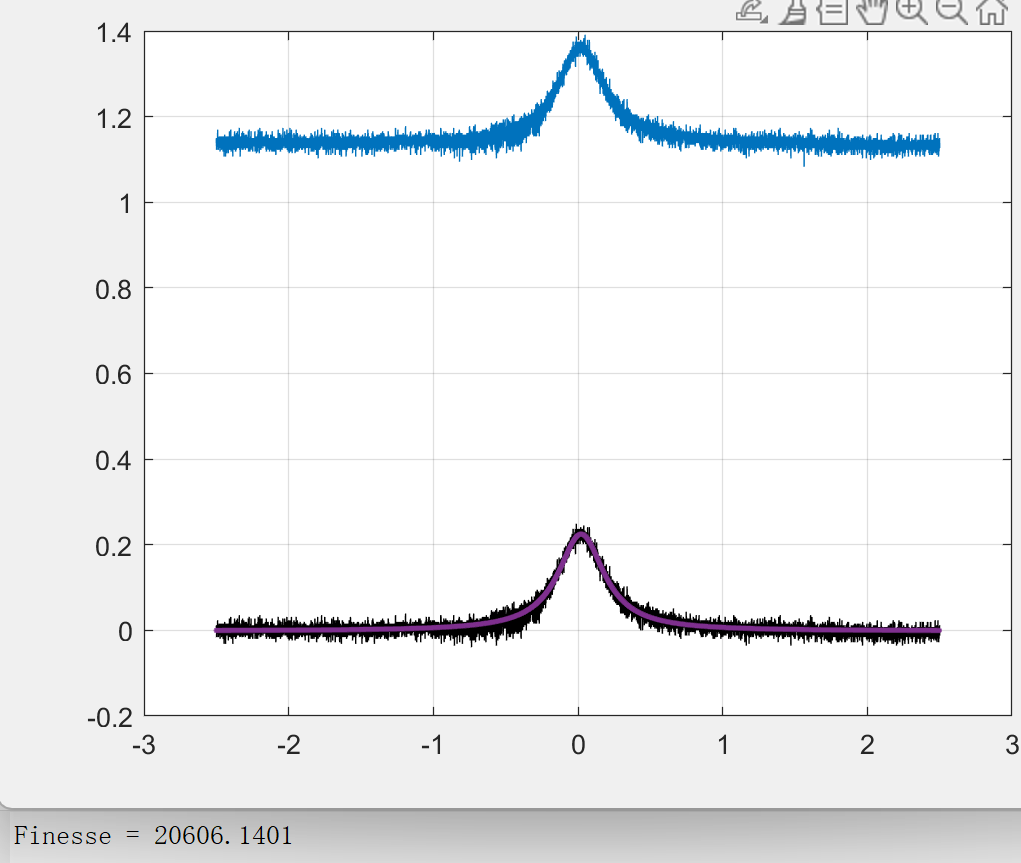 |
| Attachment 2: 7th_measurement__F16563_bad_locking.png
| 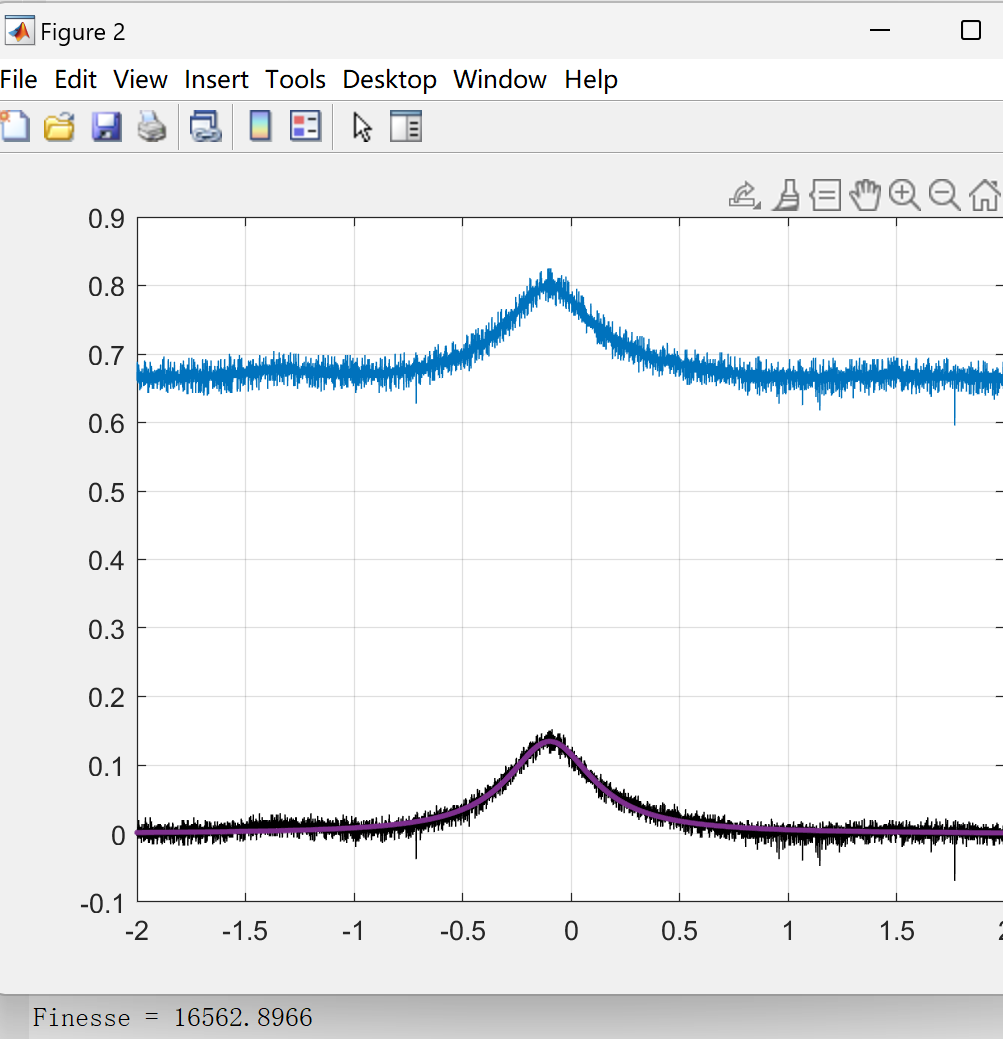 |
|
189
|
Wed Feb 14 17:20:26 2024 |
Xinyi Lu | Fixed | info | lasers and optics | Optical room | Cleaning of Mirrors | - Today, Daniele and I cleaned the cavity inside, recleaned the M2 and M4 and their mounts, optimized the locking, and the finesse is now about 25,000.
- Although it's lower than the expected 30,000-40,000, we decided to move on to the next step. In addition, the mount of M4 is near the end of the tuning range and may cause instability at high power.
- We adjusted the cavity length to match the repetition rate of the pulsed laser, and the FSR in air is 160.265 MHz.
- Tomorrow, we'll turn on the vacuum and use the pulsed laser to get resonance.
| Xinyi Lu wrote: |
|
Today, Daniele and I cleaned mirrors one by one using pure water, alcohol, and the spin coater. Here are the measurements of finesse each time:
1. Initial value: 14,076
2. Clean Mirror 2: 20,606
3. Clean Mirror 4: 18,750
4. Clean Mirror 3: 18,762
5. Clean Mirror 1: 18,563
6. Reclean Mirror 4: 15,226 (unstable lock)
7. Reclean Mirror 4 again: 16,563 (unstable lock)
The finesse reached a maximum of 20,606 but finally was down. For the last two measurements, the locking state was unstable and noisy. Tomorrow we will optimize the locking status and re-measure.
|
|
| Attachment 1: F_25299.png
| 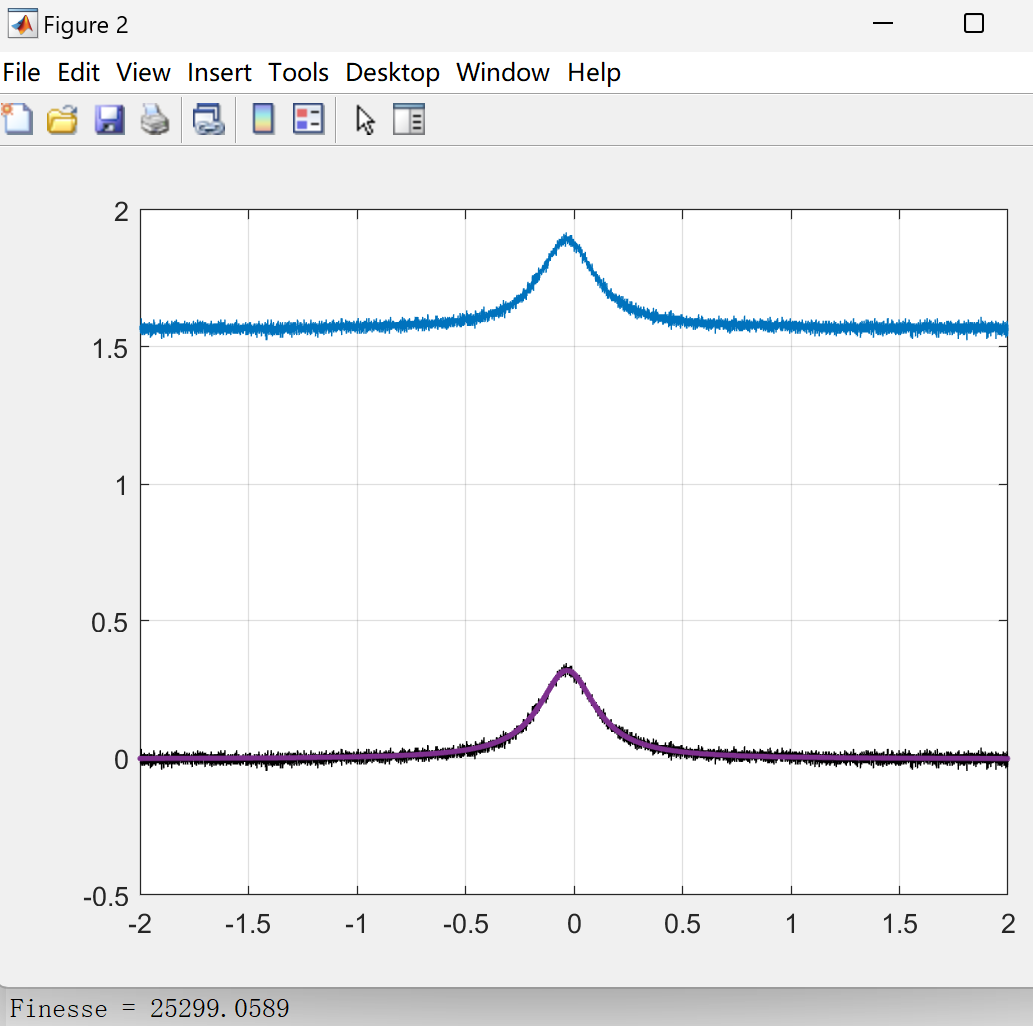 |
|
190
|
Wed Feb 21 17:33:59 2024 |
Xinyi Lu | Fixed | info | lasers and optics | Optical room | Menhir pulsed laser locking | These days, Ronic, Daniele and I achieved stable cavity locking with the menhir pulsed laser.
- After vacuuming, the current cavity finesse is now about 23,000. The diameter of the cavity mode is w_x=2.2mm, w_y=2.7mm.
- We had to compensate for frequency drift by manually adjusting the cavity length to keep locking.
Now the problem is that CEP's compensation range is not enough. The laser CEP is drifting from day to day. We adjusted the CEP by tuning the pump current of the menhir laser, but the adjustment range was not enough.
- The laser pump current is varied in the locking state and the variation of repetition rate is recorded. The current range is 850mA to 950mA and the repetition rate changes by 24 Hz. The calculation process is shown in Figure 3.
- By calculation, the variation of CEP caused by the variation of laser current is only π/2, which we hope is 2π.
- For Gamma Factory, the target FSR is 40 MHz, so the 4-pulse stack provides 4 times CEP tuning range to meet the requirements. But for our experiment, it seems not enough now.
The next step is to evaluate the gap to the maximum gain and draw the curve of CEP. Then we will discuss solutions.
|
| Attachment 1: Screenshot_2024-02-21_1_110931.png
| 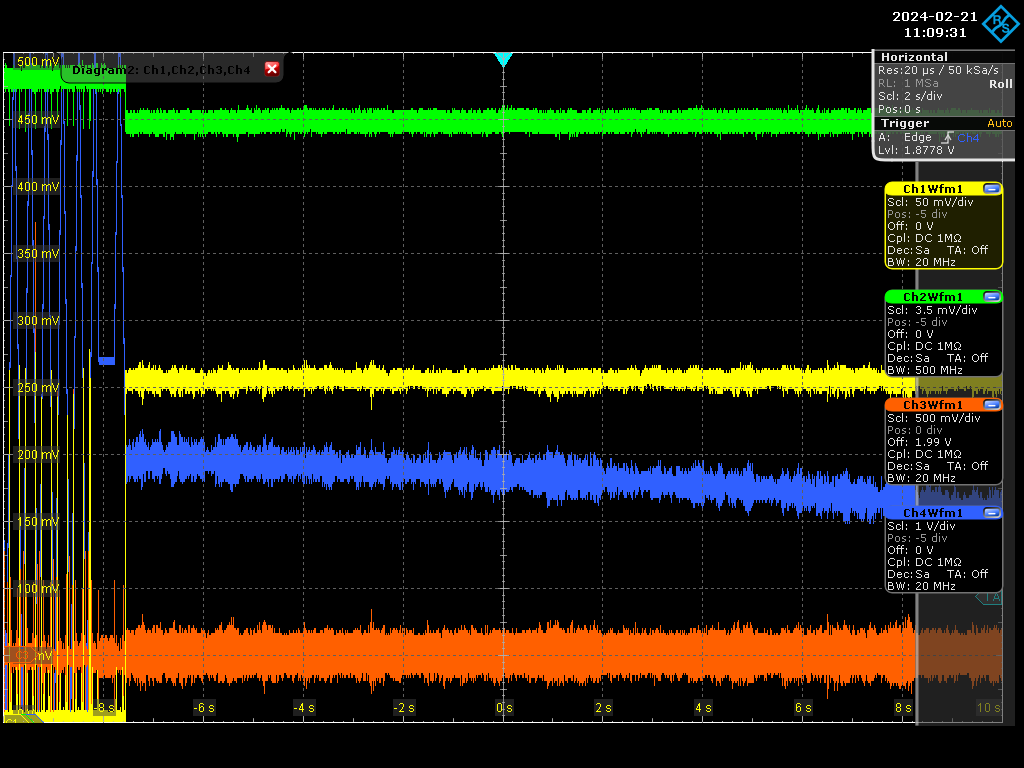 |
| Attachment 2: Screenshot_2024-02-21_110934.png
| 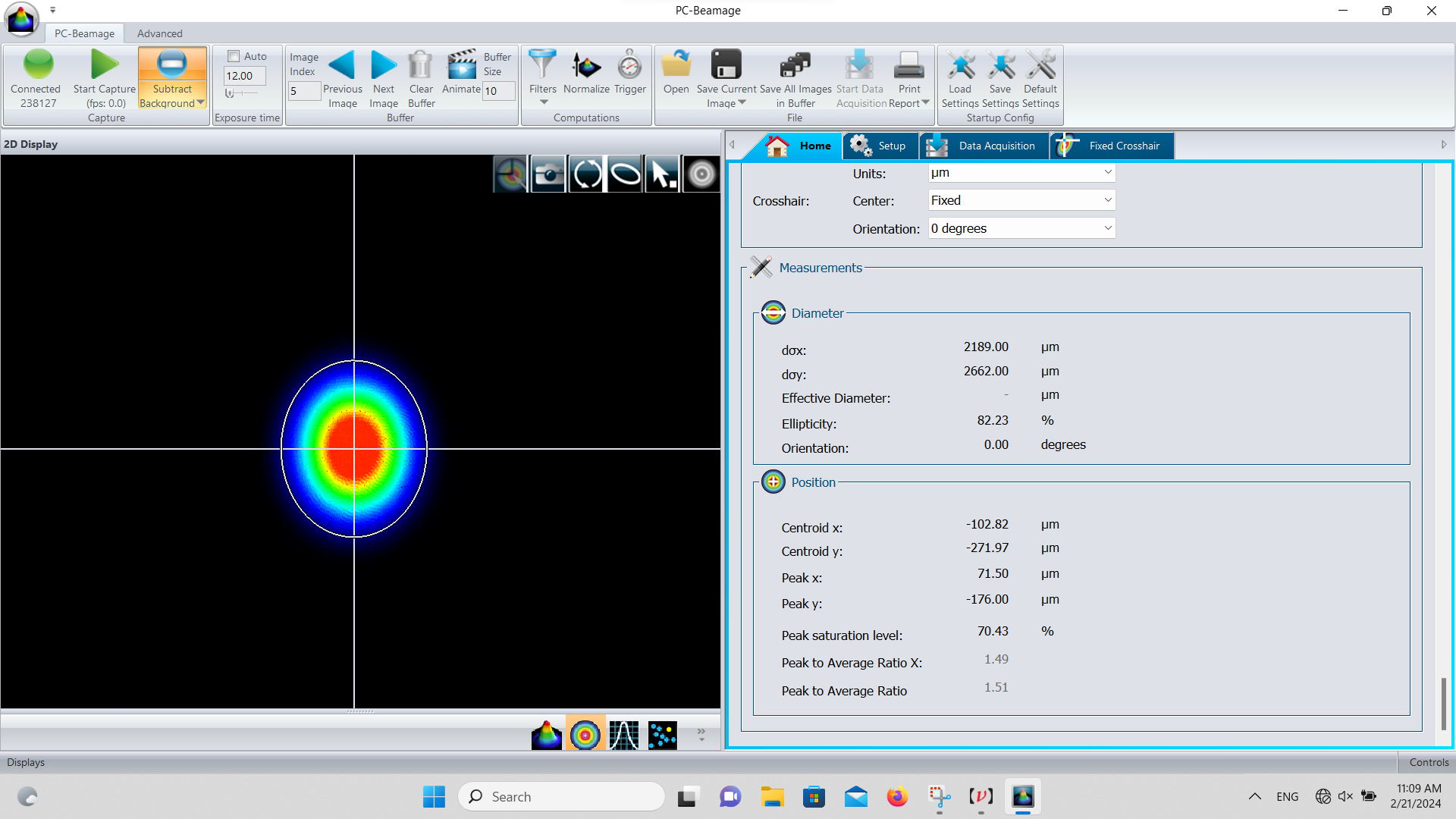 |
| Attachment 3: calculation.jpg
| 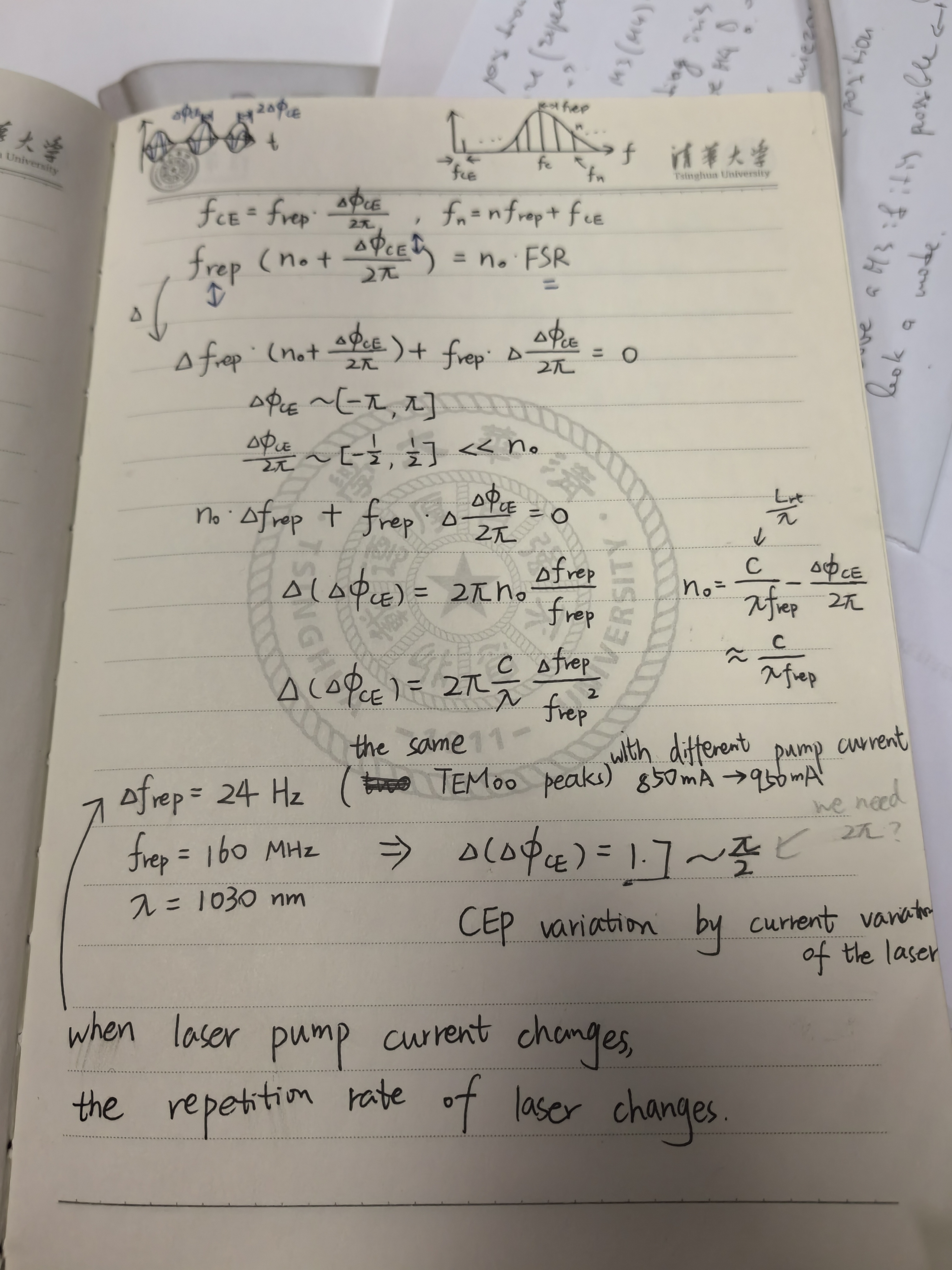 |
|
191
|
Wed Feb 21 18:09:11 2024 |
Xinyi Lu | Fixed | info | lasers and optics | Optical room | Menhir pulsed laser locking | Here is a simulation of the relative FP-cavity gain vs the CEP for a Finesse of 23000 and taking into account the Menhir laser optical spectrum and several CVBG parameters.
I added the commented Matlab code to produce this plot.
| Xinyi Lu wrote: |
|
These days, Ronic, Daniele and I achieved stable cavity locking with the menhir pulsed laser.
- After vacuuming, the current cavity finesse is now about 23,000. The diameter of the cavity mode is w_x=2.2mm, w_y=2.7mm.
- We had to compensate for frequency drift by manually adjusting the cavity length to keep locking.
Now the problem is that CEP's compensation range is not enough. The laser CEP is drifting from day to day. We adjusted the CEP by tuning the pump current of the menhir laser, but the adjustment range was not enough.
- The laser pump current is varied in the locking state and the variation of repetition rate is recorded. The current range is 850mA to 950mA and the repetition rate changes by 24 Hz. The calculation process is shown in Figure 3.
- By calculation, the variation of CEP caused by the variation of laser current is only π/2, which we hope is 2π.
- For Gamma Factory, the target FSR is 40 MHz, so the 4-pulse stack provides 4 times CEP tuning range to meet the requirements. But for our experiment, it seems not enough now.
The next step is to evaluate the gap to the maximum gain and draw the curve of CEP. Then we will discuss solutions.
|
|
| Attachment 1: Relative_cavity_gain_vs_CEP.png
| 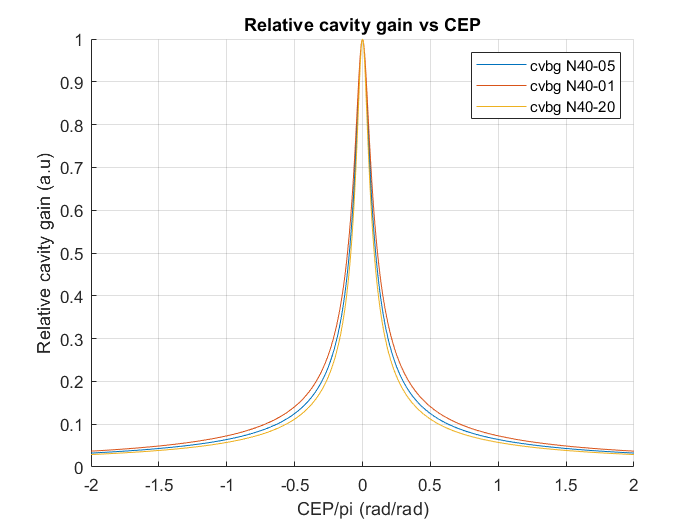 |
| Attachment 2: Gain_vs_CEP.m
|
clear
clc

c=3e8;                      % speed of light

% laser parameters
lambda0=1031.6e-9;          % central wavelength (m)
dlambda0=6.2e-9;            % spectral LW (m)
Frep0=160.3e6;              % laser repetition rate (Hz)
CEP0=0;                     % arbitrary CEP value (rad)

% CVBG parameters
CVBG=3;                      % choose the version of the CVBG
switch CVBG
    case 1
        % N40-05
        lambda1=1031.61e-9;   % central wavelength (m)
        dlambda1=2.2e-9;      % spectral LW (m)
    case 2
        % N40-01
        lambda1=1031.55e-9;   % central wavelength (m)
        dlambda1=1.92e-9;     % spectral LW (m)
    case 3
        %N40-20
        lambda1=1031.64e-9;   % central wavelength (m)
        dlambda1=2.49e-9;     % spectral LW (m)
end
lambda_min=lambda1-dlambda1/2; % minimum wavelength limit of the CVBG
lambda_max=lambda1+dlambda1/2; % maximum wavelength limit of the CVBG

% wavelength vector
lambda=linspace(lambda0-5*dlambda0,lambda0+5*dlambda0,1e5);
% laser power vs wavelentgth
Plas=Plaser(lambda,lambda0,dlambda0,0,1);
% laser power after CVBG vs wavelentgth
Pcvbg=Plaser(lambda,lambda0,dlambda0,lambda_min,lambda_max);

figure(1)
clf
plot(lambda*1e9,Plas)
hold on
plot(lambda*1e9,Pcvbg)
grid on
xlabel('wavelength (nm)')
ylabel('laser power (a.u)')
title('laser spectral power before and after CVBG')
legend('before CVBG','after CVBG')

nmin=floor(c/lambda_max/Frep0);   % minimum laser resonance index
nmax=ceil(c/lambda_min/Frep0);    % maximum laser resonance index
nmean=(nmin+nmax)/2;              % average laser resonance index
nv=nmin:nmax;                     % vector of resonance indexes
flas=(nv+CEP0/2/pi)*Frep0;        % vector of laser frequencies
lambda=c./flas;                   % new vector of wavelength for the laser
% laser power after CVBG vs wavelentgth
Pcvbg=Plaser(lambda,lambda0,dlambda0,lambda_min,lambda_max);

figure(2)
clf
plot(lambda*1e9,Pcvbg)
grid on
xlabel('wavelength (nm)')
ylabel('laser power (a.u)')
title('laser spectral power after CVBG')

% FP-cavity description
FSR=Frep0;          % Free Spectral Range of the FP-cavity
F=23000;            % Finesse of the FP-cavity
LW=FSR/F;           % FP-cavity linewidth definition

N=1e3;              % Nb of CEP simulation steps
cepv=linspace(-2*pi,2*pi,N);    % CEP vector
Gcav=zeros(1,N);                % FP-cavity gain vector initialization
for k=1:N
    dfrep=-cepv(k)/2/pi/(nmean+cepv(k)/2/pi)*FSR; % dfrep = frep - FSR
    df=(nv-nmean).*dfrep;                      % df = flas(n) - n*FSR
    T=Airy(df,LW);                            % power FP-cavity gain vs df
    Gcav(k)=sum(T.*Pcvbg)/sum(Pcvbg);         % total FP-cavity gain
end

figure(3)
clf
hold on
plot(cepv/pi,Gcav)
grid on
xlabel('CEP/pi (rad/rad)')
ylabel('Relative cavity gain (a.u)')
title('Relative cavity gain vs CEP')
%legend('cvbg N40-05','cvbg N40-01','cvbg N40-20')

% Laser power after CVBG function
function Pcvbg=Plaser(lambda,lambda0,dlambda0,lambda_min,lambda_max)
Plas=sech(1.7625*(lambda-lambda0)/dlambda0).^2;
Tcvbg=lambda>=lambda_min & lambda<=lambda_max;
Pcvbg=Plas.*Tcvbg;
end

% FP-cavity Airy function
function T=Airy(df,LW)
T=1./(1+(2*df/LW).^2);
end
|
|
192
|
Mon Feb 26 08:58:33 2024 |
Xinyi Lu | Fixed | info | lasers and optics | Optical room | Menhir pulsed laser locking | Last week, Ronic and I focused on CEP measurements of the menhir laser.
- Measurements without Cavity Locking:
- Direct measurement of repetition rate (Frep) with a spectrum analyzer. Altering the laser pump current from 950mA to 850mA, Frep changed by +28Hz.
- Measurement of the variation of carrier-envelope frequency (Fceo) by beating with CW laser. Altering the laser pump current from 950mA to 850mA resulted in a beating frequency of n0*dFrep + dFceo = +/-2.4MHz, so dFceo ~ 50MHz.
- Measurement with Cavity Locking:
- Maintaining cavity locking, we changed the laser pump current and AOM frequency to record the transmitted power of 5 consecutive fundamental mode (TEM00) resonances.
- The pump currents were set to 850 mA, 900 mA and 950 mA, and the AOM frequency were set to 210 MHz and 250 MHz. We then plotted the measured transmission amplitude values against the theoretical gain curve (see Figure 1).
- By adjusting the CEP, we reach the top point on the curve, which is the maximum gain. At this point, the coupling frequency increases from 10% to 50% (see Figure 2).
- We observe that a 100mA change in pump current adjusts the CEP for pi/2, while changing the AOM frequency by +/-40MHz adjusts the CEP for pi. In summary, our CEP tuning range is about 3pi/2 (130 MHz) - not the full 2pi, but still probably giving us maximum gain.
- Next Steps:
- Investigate factors associated with changes in CEP, such as laser temperature or pressure.
- Discuss with Menhir the feasibility of expanding the laser pump current adjustment range (now limited to 100mA).
- Optimize AOM frequency and locking status, connect the amplifier.
| Xinyi Lu wrote: |
|
Here is a simulation of the relative FP-cavity gain vs the CEP for a Finesse of 23000 and taking into account the Menhir laser optical spectrum and several CVBG parameters.
I added the commented Matlab code to produce this plot.
| Xinyi Lu wrote: |
|
These days, Ronic, Daniele and I achieved stable cavity locking with the menhir pulsed laser.
- After vacuuming, the current cavity finesse is now about 23,000. The diameter of the cavity mode is w_x=2.2mm, w_y=2.7mm.
- We had to compensate for frequency drift by manually adjusting the cavity length to keep locking.
Now the problem is that CEP's compensation range is not enough. The laser CEP is drifting from day to day. We adjusted the CEP by tuning the pump current of the menhir laser, but the adjustment range was not enough.
- The laser pump current is varied in the locking state and the variation of repetition rate is recorded. The current range is 850mA to 950mA and the repetition rate changes by 24 Hz. The calculation process is shown in Figure 3.
- By calculation, the variation of CEP caused by the variation of laser current is only π/2, which we hope is 2π.
- For Gamma Factory, the target FSR is 40 MHz, so the 4-pulse stack provides 4 times CEP tuning range to meet the requirements. But for our experiment, it seems not enough now.
The next step is to evaluate the gap to the maximum gain and draw the curve of CEP. Then we will discuss solutions.
|
|
|
| Attachment 1: Gain_vs_CEP.png
| 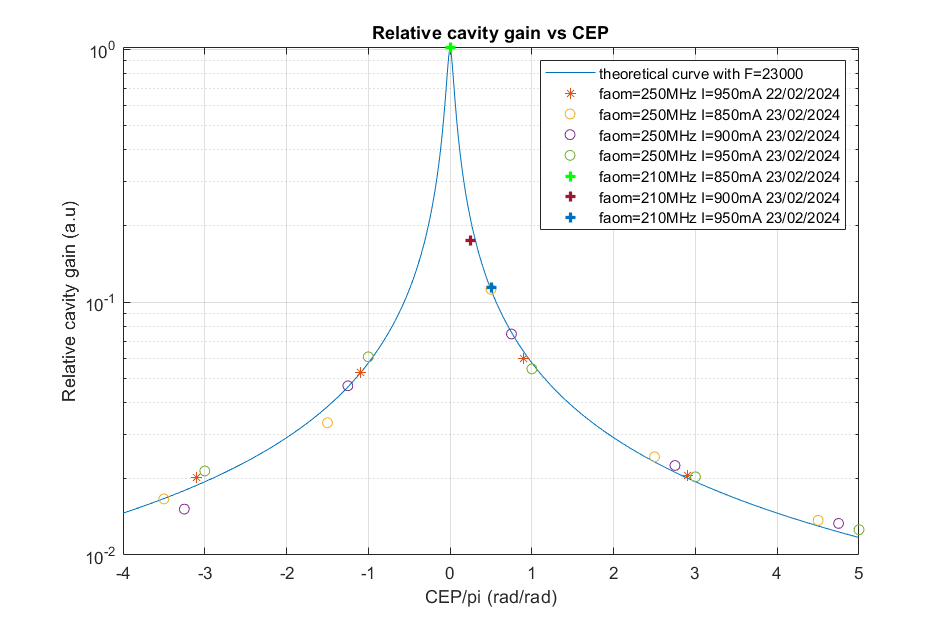 |
| Attachment 2: Screenshot_2024-02-23_0_183652.png
| 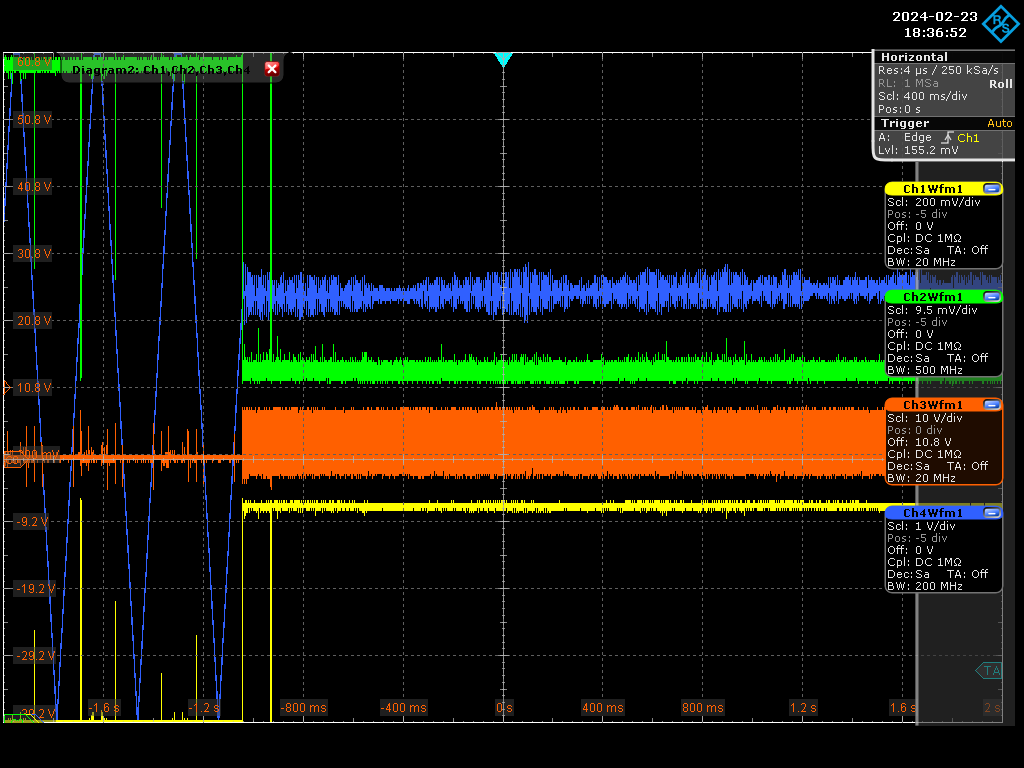 |
|
193
|
Mon Feb 26 16:53:24 2024 |
Xinyi Lu | Fixed | info | lasers and optics | Optical room | Menhir pulsed laser locking | here is the code to get this last curve
| Xinyi Lu wrote: |
|
Last week, Ronic and I focused on CEP measurements of the menhir laser.
- Measurements without Cavity Locking:
- Direct measurement of repetition rate (Frep) with a spectrum analyzer. Altering the laser pump current from 950mA to 850mA, Frep changed by +28Hz.
- Measurement of the variation of carrier-envelope frequency (Fceo) by beating with CW laser. Altering the laser pump current from 950mA to 850mA resulted in a beating frequency of n0*dFrep + dFceo = +/-2.4MHz, so dFceo ~ 50MHz.
- Measurement with Cavity Locking:
- Maintaining cavity locking, we changed the laser pump current and AOM frequency to record the transmitted power of 5 consecutive fundamental mode (TEM00) resonances.
- The pump currents were set to 850 mA, 900 mA and 950 mA, and the AOM frequency were set to 210 MHz and 250 MHz. We then plotted the measured transmission amplitude values against the theoretical gain curve (see Figure 1).
- By adjusting the CEP, we reach the top point on the curve, which is the maximum gain. At this point, the coupling frequency increases from 10% to 50% (see Figure 2).
- We observe that a 100mA change in pump current adjusts the CEP for pi/2, while changing the AOM frequency by +/-40MHz adjusts the CEP for pi. In summary, our CEP tuning range is about 3pi/2 (130 MHz) - not the full 2pi, but still probably giving us maximum gain.
- Next Steps:
- Investigate factors associated with changes in CEP, such as laser temperature or pressure.
- Discuss with Menhir the feasibility of expanding the laser pump current adjustment range (now limited to 100mA).
- Optimize AOM frequency and locking status, connect the amplifier.
| Xinyi Lu wrote: |
|
Here is a simulation of the relative FP-cavity gain vs the CEP for a Finesse of 23000 and taking into account the Menhir laser optical spectrum and several CVBG parameters.
I added the commented Matlab code to produce this plot.
| Xinyi Lu wrote: |
|
These days, Ronic, Daniele and I achieved stable cavity locking with the menhir pulsed laser.
- After vacuuming, the current cavity finesse is now about 23,000. The diameter of the cavity mode is w_x=2.2mm, w_y=2.7mm.
- We had to compensate for frequency drift by manually adjusting the cavity length to keep locking.
Now the problem is that CEP's compensation range is not enough. The laser CEP is drifting from day to day. We adjusted the CEP by tuning the pump current of the menhir laser, but the adjustment range was not enough.
- The laser pump current is varied in the locking state and the variation of repetition rate is recorded. The current range is 850mA to 950mA and the repetition rate changes by 24 Hz. The calculation process is shown in Figure 3.
- By calculation, the variation of CEP caused by the variation of laser current is only π/2, which we hope is 2π.
- For Gamma Factory, the target FSR is 40 MHz, so the 4-pulse stack provides 4 times CEP tuning range to meet the requirements. But for our experiment, it seems not enough now.
The next step is to evaluate the gap to the maximum gain and draw the curve of CEP. Then we will discuss solutions.
|
|
|
|
| Attachment 1: Gain_vs_CEP.m
|
clear
clc

c=3e8;                      % speed of light

% laser parameters
lambda0=1031.6e-9;          % central wavelength (m)
dlambda0=6.2e-9;            % spectral LW (m)
Frep0=160.3e6;              % laser repetition rate (Hz)
CEP0=0;                     % arbitrary CEP value (rad)

% CVBG parameters
CVBG=3;                      % choose the version of the CVBG
switch CVBG
    case 1
        % N40-05
        lambda1=1031.61e-9;   % central wavelength (m)
        dlambda1=2.2e-9;      % spectral LW (m)
    case 2
        % N40-01
        lambda1=1031.55e-9;   % central wavelength (m)
        dlambda1=1.92e-9;     % spectral LW (m)
    case 3
        %N40-20
        lambda1=1031.64e-9;   % central wavelength (m)
        dlambda1=2.49e-9;     % spectral LW (m)
end
lambda_min=lambda1-dlambda1/2; % minimum wavelength limit of the CVBG
lambda_max=lambda1+dlambda1/2; % maximum wavelength limit of the CVBG

% wavelength vector
lambda=linspace(lambda0-5*dlambda0,lambda0+5*dlambda0,1e5);
% laser power vs wavelentgth
Plas=Plaser(lambda,lambda0,dlambda0,0,1);
% laser power after CVBG vs wavelentgth
Pcvbg=Plaser(lambda,lambda0,dlambda0,lambda_min,lambda_max);

figure(1)
clf
plot(lambda*1e9,Plas)
hold on
plot(lambda*1e9,Pcvbg)
grid on
xlabel('wavelength (nm)')
ylabel('laser power (a.u)')
title('laser spectral power before and after CVBG')
legend('before CVBG','after CVBG')

nmin=floor(c/lambda_max/Frep0);   % minimum laser resonance index
nmax=ceil(c/lambda_min/Frep0);    % maximum laser resonance index
nmean=(nmin+nmax)/2;              % average laser resonance index
nv=nmin:nmax;                     % vector of resonance indexes
flas=(nv+CEP0/2/pi)*Frep0;        % vector of laser frequencies
lambda=c./flas;                   % new vector of wavelength for the laser
% laser power after CVBG vs wavelentgth
Pcvbg=Plaser(lambda,lambda0,dlambda0,lambda_min,lambda_max);

figure(2)
clf
plot(lambda*1e9,Pcvbg)
grid on
xlabel('wavelength (nm)')
ylabel('laser power (a.u)')
title('laser spectral power after CVBG')

% FP-cavity description
FSR=Frep0;          % Free Spectral Range of the FP-cavity
F=23000;            % Finesse of the FP-cavity
LW=FSR/F;           % FP-cavity linewidth definition

N=1e3;              % Nb of CEP simulation steps
cepv=linspace(-4*pi,5*pi,N);    % CEP vector
Gcav=zeros(1,N);                % FP-cavity gain vector initialization
for k=1:N
    dfrep=-cepv(k)/2/pi/(nmean+cepv(k)/2/pi)*FSR; % dfrep = frep - FSR
    df=(nv-nmean).*dfrep;                      % df = flas(n) - n*FSR
    T=Airy(df,LW);                            % power FP-cavity gain vs df
    Gcav(k)=sum(T.*Pcvbg)/sum(Pcvbg);         % total FP-cavity gain
end

figure(3)
clf
semilogy(cepv/pi,Gcav)
grid on
xlabel('CEP/pi (rad/rad)')
ylabel('Relative cavity gain (a.u)')
title('Relative cavity gain vs CEP')
%legend('cvbg N40-05','cvbg N40-01','cvbg N40-20')
hold on

%% measurements
% dfrep = +28Hz (frep@950mA - frep@850mA) => dCEP = -2rad

% measurements on 22/02/2024 Vinput=30mV
Idm=[0 1 2 3];
Vm=[63 164 185 64]/3100;
semilogy((Idm-1.55)*2,Vm,'*')

% measurements on 23/02/2024 Vinput=30mV
V0=2700;
NIdm=[0 1 2 3 4];
V850m=[45 90 303 66 37]/V0;
V900m=[41 126 202 61 36]/V0;
V950m=[58 164 147 55 34]/V0;
semilogy(NIdm*2-3.5,V850m,'o')
semilogy(NIdm*2-3.25,V900m,'o')
semilogy(NIdm*2-3,V950m,'o')

% measurements on 23/02/2024 Vinput=94mV
V1=650;
Vn850m=663/V1;
Vn900m=114/V1;
Vn950m=74/V1;
semilogy(0,Vn850m,'g+','linewidth',2)
semilogy(0.25,Vn900m,'+','linewidth',2)
semilogy(0.5,Vn950m,'+','linewidth',2)

legend('theoretical curve with F=23000','faom=250MHz I=950mA 22/02/2024', ...
'faom=250MHz I=850mA 23/02/2024','faom=250MHz I=900mA 23/02/2024','faom=250MHz I=950mA 23/02/2024', ...
'faom=210MHz I=850mA 23/02/2024','faom=210MHz I=900mA 23/02/2024','faom=210MHz I=950mA 23/02/2024')

% Laser power after CVBG function
function Pcvbg=Plaser(lambda,lambda0,dlambda0,lambda_min,lambda_max)
Plas=sech(1.7625*(lambda-lambda0)/dlambda0).^2;
Tcvbg=lambda>=lambda_min & lambda<=lambda_max;
Pcvbg=Plas.*Tcvbg;
end

% FP-cavity Airy function
function T=Airy(df,LW)
T=1./(1+(2*df/LW).^2);
end
|
|
194
|
Tue Feb 27 17:51:56 2024 |
Xinyi Lu | Fixed | info | lasers and optics | Optical room | Amplified laser injection | In the last two days, Ronic and I connected the amplifier and locked the cavity.
- We installed an iris on the output to remove a part of the pump.
- We turned on the second stage of the amplifier. When locking, the injected power is 220 mW and the transmitted power after M2 is 26 uW.
- Low gain and coupling efficiency due to bad mode matching and CEP.
Next steps:
- Turn on the third stage of the amplifier, measure the beam parameters, and adjust the telescope.
- Check the adjustment range of AOM frequency that enables the amplifier to operate safely.
- Measure consecutive fundamental mode resonances to determine the direction of AOM frequency tuning. |
| Attachment 1: Screenshot_2024-02-27_1_165535.png
| 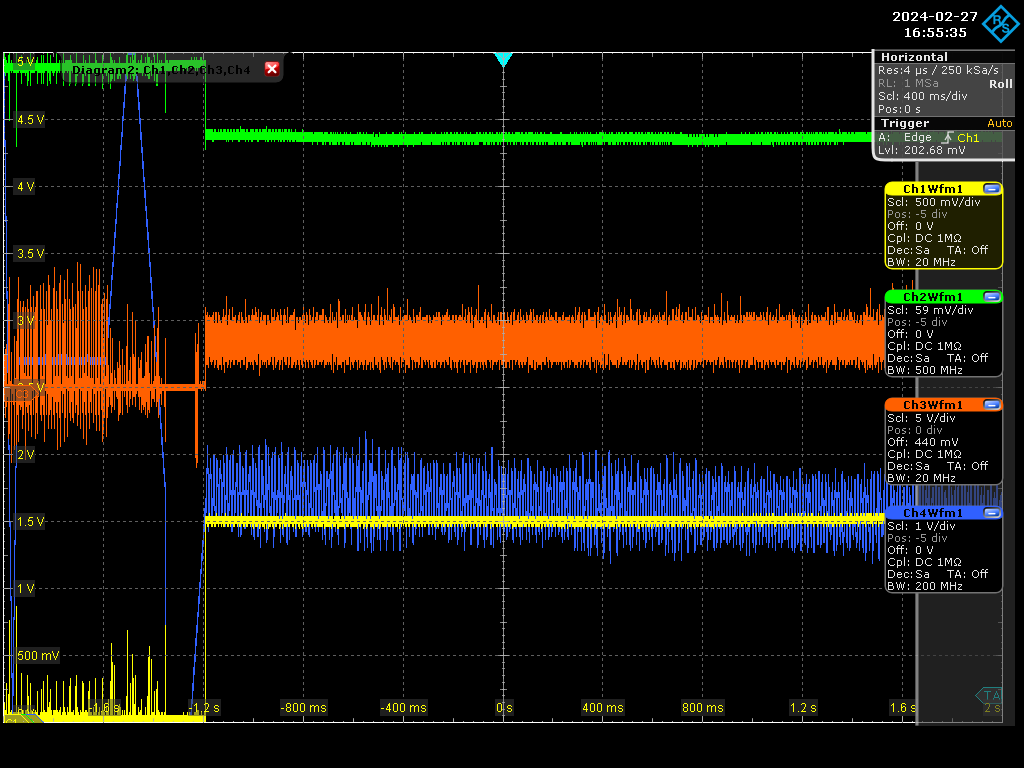 |
|
196
|
Thu Mar 7 18:55:42 2024 |
Xinyi Lu | Fixed | info | lasers and optics | Optical room | Coupling efficiency improvement | - These days, Ronic, Fatematuj and I measured the beam parameters of the output of the third-stage amplifier.
- We used 2 wedges and reflection filters to reduce the intensity on the CCD.
- We measured multiple points at pump current of 2 A (output power ~10 W). The waist diameter of the output is w_x = 792.26 um, w_y=873.90 um.
- The next step is to design the telescope and improve the coupling efficiency. |
| Attachment 1: beam_after_lens.png
| 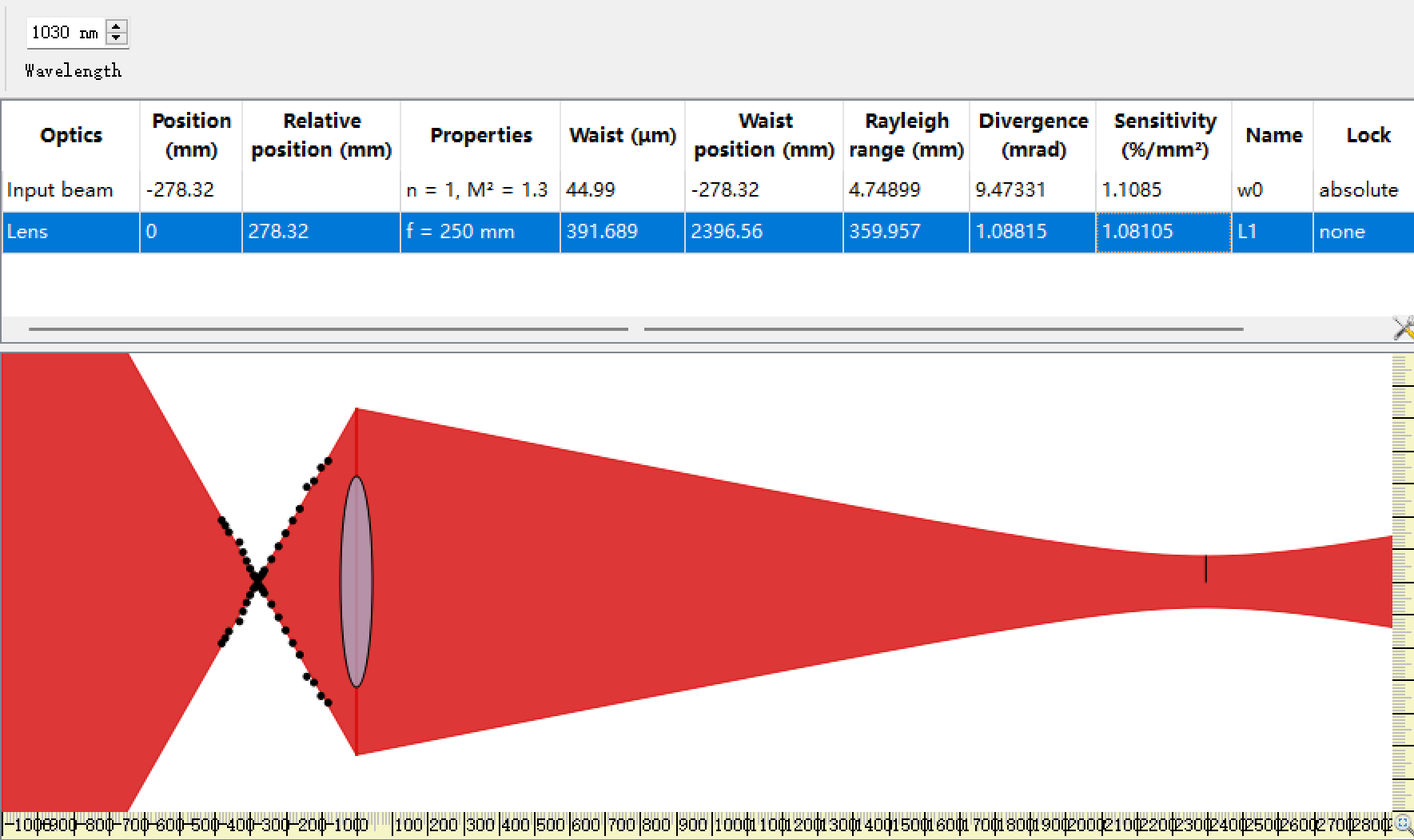 |
|
197
|
Fri Mar 8 18:04:43 2024 |
Xinyi Lu | Fixed | info | lasers and optics | Optical room | Coupling efficiency improvement | Today, Ronic and I installed the new telescope and locked the cavity.
- We locked at the amplifier current of 1 A and obtained 32% of coupling. (see Figure 1)
- The telescope was designed for a current of 2 A (output power ~10 W). To inject this power, we need to add some filters to devices.
- For CEP tuning, when we changed the AOM frequency while cavity locking, sometimes it caused unlock and power drops. It will be dangerous in high-power cases. So it's better to optimize the AOM frequency in low power and just tune the laser current in high power. Now the current variation range of the menhir laser is 750mA to 950mA.
| Xinyi Lu wrote: |
|
- These days, Ronic, Fatematuj and I measured the beam parameters of the output of the third-stage amplifier.
- We used 2 wedges and reflection filters to reduce the intensity on the CCD.
- We measured multiple points at pump current of 2 A (output power ~10 W). The waist diameter of the output is w_x = 792.26 um, w_y=873.90 um.
- The next step is to design the telescope and improve the coupling efficiency.
|
|
| Attachment 1: Screenshot_2024-03-08_0_172245.png
|  |
|
198
|
Tue Mar 12 22:13:47 2024 |
Xinyi Lu | Fixed | info | lasers and optics | Optical room | Coupling efficiency improvement | - Today, Ronic and I locked at the amplifier current of 2 A and obtained ~60% coupling after optimizing the CEP (see Figure 1).
- The injected power is 10 W at 2 A. We measured only 14 kW inside the cavity, which corresponds to an effective gain of 1,400 and a full gain of 2,300. The cavity finesse is 23,000 and the normal gain should be around 6,200.
- We found fluctuations in transmission, possibly because of mode degradation. Tomorrow we will use D-shape mirrors to suppress high-order modes and optimize alignment and locking.
| Xinyi Lu wrote: |
|
Today, Ronic and I installed the new telescope and locked the cavity.
- We locked at the amplifier current of 1 A and obtained 32% of coupling. (see Figure 1)
- The telescope was designed for a current of 2 A (output power ~10 W). To inject this power, we need to add some filters to devices.
- For CEP tuning, when we changed the AOM frequency while cavity locking, sometimes it caused unlock and power drops. It will be dangerous in high-power cases. So it's better to optimize the AOM frequency in low power and just tune the laser current in high power. Now the current variation range of the menhir laser is 750mA to 950mA.
| Xinyi Lu wrote: |
|
- These days, Ronic, Fatematuj and I measured the beam parameters of the output of the third-stage amplifier.
- We used 2 wedges and reflection filters to reduce the intensity on the CCD.
- We measured multiple points at pump current of 2 A (output power ~10 W). The waist diameter of the output is w_x = 792.26 um, w_y=873.90 um.
- The next step is to design the telescope and improve the coupling efficiency.
|
|
|
| Attachment 1: Screenshot_2024-03-12_0_192348.png
| 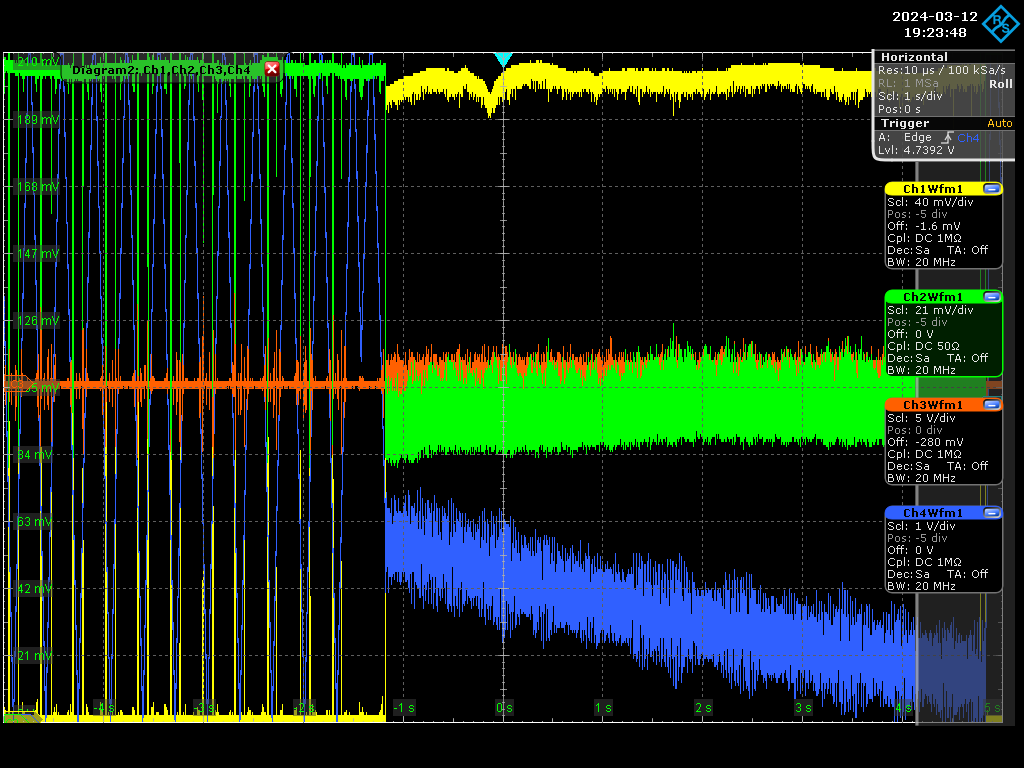 |
|
199
|
Wed Mar 13 19:44:41 2024 |
Xinyi Lu | Fixed | info | lasers and optics | Optical room | Injection at the amplifier current of 2 A | Today, Ronic and I optimized the locking at the amplifier current of 2 A and obtained ~ 21 kW inside the cavity.
- When all the iris open, the injected power is 10 W and the coupling is ~ 40%, corresponding to an effective gain of 2,100 and a full gain of 5,250. But the coupling may not be the true value because there is a large spot around the output beam.
- We have optimized the CEP, alignment, D-shaped mirrors and locking state. We optimized alignment after leaving the iris open and the inside power went from 14kW to 21kW.
- The transmission and reflection signals both have some same fluctuations, and they seem to come from the cavity. It's possible that the over-angled mirror mount could be the cause, but not sure. We will check in different power and see the stability of the signal.
- In addition, we found that the design values of the mirror incidence angles for the SBOX (3.359°, 5.900°) are different from the mirror ratings (1.146°). This may result in parameters such as reflection and transmission being different from the datasheet. It will also change the estimated maximum finesse, gain, and power inside the cavity. It might be better if the mirror parameters could be recalculated based on the actual angle of incidence.
| Xinyi Lu wrote: |
|
- Today, Ronic and I locked at the amplifier current of 2 A and obtained ~60% coupling after optimizing the CEP (see Figure 1).
- The injected power is 10 W at 2 A. We measured only 14 kW inside the cavity, which corresponds to an effective gain of 1,400 and a full gain of 2,300. The cavity finesse is 23,000 and the normal gain should be around 6,200.
- We found fluctuations in transmission, possibly because of mode degradation. Tomorrow we will use D-shape mirrors to suppress high-order modes and optimize alignment and locking.
| Xinyi Lu wrote: |
|
Today, Ronic and I installed the new telescope and locked the cavity.
- We locked at the amplifier current of 1 A and obtained 32% of coupling. (see Figure 1)
- The telescope was designed for a current of 2 A (output power ~10 W). To inject this power, we need to add some filters to devices.
- For CEP tuning, when we changed the AOM frequency while cavity locking, sometimes it caused unlock and power drops. It will be dangerous in high-power cases. So it's better to optimize the AOM frequency in low power and just tune the laser current in high power. Now the current variation range of the menhir laser is 750mA to 950mA.
| Xinyi Lu wrote: |
|
- These days, Ronic, Fatematuj and I measured the beam parameters of the output of the third-stage amplifier.
- We used 2 wedges and reflection filters to reduce the intensity on the CCD.
- We measured multiple points at pump current of 2 A (output power ~10 W). The waist diameter of the output is w_x = 792.26 um, w_y=873.90 um.
- The next step is to design the telescope and improve the coupling efficiency.
|
|
|
|
| Attachment 1: 21kW_power_at_2A_injection.png
|  |
|
200
|
Wed Mar 20 18:22:53 2024 |
Xinyi Lu | Fixed | info | lasers and optics | Optical room | Polarization issue | These days, Ronic, Aurélien, Fatematuj and I have been doing some tests on polarization issue, trying to see if it is possible to obtain higher gain under other polarization conditions.
- We installed an additional half-wave plate + PBS + PD at the transmission. By rotating the waveplate of the injection laser, we can compare the resonance signals of single and full polarization. Figures 1 and 2 demonstrate this comparison. The yellow curve is full polarization and the green one is single polarization. The intensity ratio of the different polarizations is unstable in the open-loop state.
- Based on PZT scan frequency = 3.1 Hz, amplitude = 10 V, sensitivity = 3.7 Hz/V, time difference between two polarization peaks = 100 us, we can calculate △Frep = 10mHz and △v = 42kHz, which means the frequency variation between two polarizations. We see two polarizations only at the main resonance.
- By the way, we found two spots behind the M3 window (see Figure 3) and the power of both is related to the intra-cavity power. We moved the position of D-shaped mirror and the second spot became weaker and larger like mirror's edge. Maybe the D-shaped mirror is causing a part of laser to be reflected through the window, but it's unclear exactly how the optical path works.
Next steps:
- We will lock the cavity in different polarization and see if there is higher gain.
- We will move D-shaped to the maximum and see if the second spot disappears.
- We will check the coupling value and try to optimize the telescope using adjustable stages.
| Xinyi Lu wrote: |
|
Today, Ronic and I optimized the locking at the amplifier current of 2 A and obtained ~ 21 kW inside the cavity.
- When all the iris open, the injected power is 10 W and the coupling is ~ 40%, corresponding to an effective gain of 2,100 and a full gain of 5,250. But the coupling may not be the true value because there is a large spot around the output beam.
- We have optimized the CEP, alignment, D-shaped mirrors and locking state. We optimized alignment after leaving the iris open and the inside power went from 14kW to 21kW.
- The transmission and reflection signals both have some same fluctuations, and they seem to come from the cavity. It's possible that the over-angled mirror mount could be the cause, but not sure. We will check in different power and see the stability of the signal.
- In addition, we found that the design values of the mirror incidence angles for the SBOX (3.359°, 5.900°) are different from the mirror ratings (1.146°). This may result in parameters such as reflection and transmission being different from the datasheet. It will also change the estimated maximum finesse, gain, and power inside the cavity. It might be better if the mirror parameters could be recalculated based on the actual angle of incidence.
| Xinyi Lu wrote: |
|
- Today, Ronic and I locked at the amplifier current of 2 A and obtained ~60% coupling after optimizing the CEP (see Figure 1).
- The injected power is 10 W at 2 A. We measured only 14 kW inside the cavity, which corresponds to an effective gain of 1,400 and a full gain of 2,300. The cavity finesse is 23,000 and the normal gain should be around 6,200.
- We found fluctuations in transmission, possibly because of mode degradation. Tomorrow we will use D-shape mirrors to suppress high-order modes and optimize alignment and locking.
| Xinyi Lu wrote: |
|
Today, Ronic and I installed the new telescope and locked the cavity.
- We locked at the amplifier current of 1 A and obtained 32% of coupling. (see Figure 1)
- The telescope was designed for a current of 2 A (output power ~10 W). To inject this power, we need to add some filters to devices.
- For CEP tuning, when we changed the AOM frequency while cavity locking, sometimes it caused unlock and power drops. It will be dangerous in high-power cases. So it's better to optimize the AOM frequency in low power and just tune the laser current in high power. Now the current variation range of the menhir laser is 750mA to 950mA.
| Xinyi Lu wrote: |
|
- These days, Ronic, Fatematuj and I measured the beam parameters of the output of the third-stage amplifier.
- We used 2 wedges and reflection filters to reduce the intensity on the CCD.
- We measured multiple points at pump current of 2 A (output power ~10 W). The waist diameter of the output is w_x = 792.26 um, w_y=873.90 um.
- The next step is to design the telescope and improve the coupling efficiency.
|
|
|
|
|
| Attachment 1: Screenshot_2024-03-20_0_090501.png
| 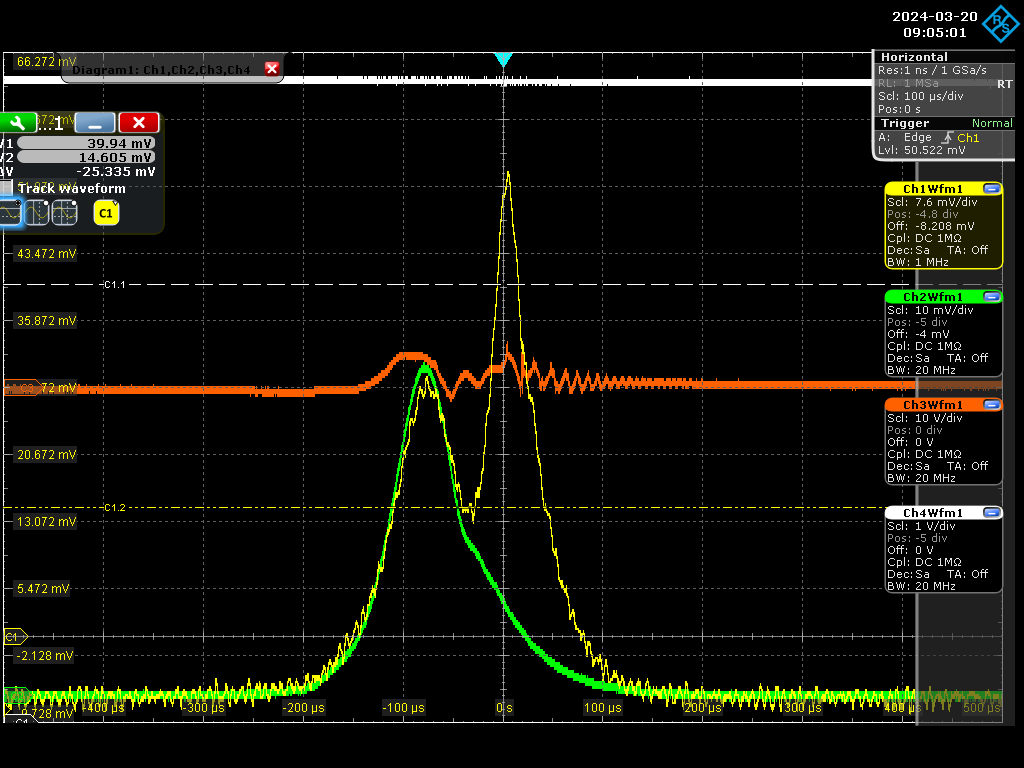 |
| Attachment 2: Screenshot_2024-03-20_4_110622.png
|  |
| Attachment 3: M3_window.png
| 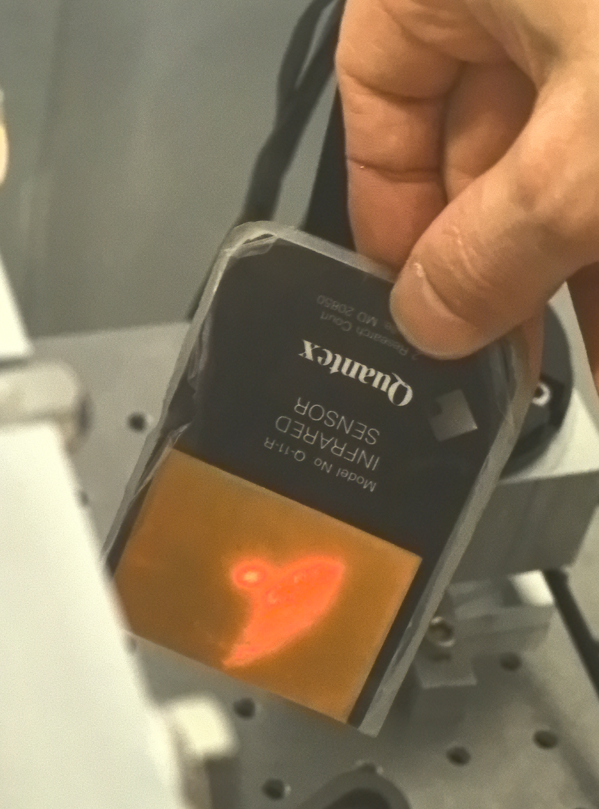 |
|
201
|
Thu Mar 21 09:26:50 2024 |
Xinyi Lu | Fixed | info | lasers and optics | Optical room | Polarization issue | just to add some details :
about the S and P polarization frequency shift:
the PZT scan is 10Vpp at 3.1Hz => the slope is 62 V/s because of the triangle shape of the PZT scan.
so 100µs of separation of the 2 polarization is equivalent to 6.2mV on the PZT.
as the PZT sensitivity is 3.7Hz/V on Frep, the separation of the 2 polarization is equivalent to 23mHz on Frep.
△Frep/Frep = △v/v => △v = 41.8 kHz
about the possibility to separate S and P polarization states on secondary resonances:
the total spectral width is ~2nm which is equivalent to 565GHz and contain about 3500 laser harmonics at 160MHz.
the central spectral harmonic is roughly the number n0=1.82M, so with the first secondary resonance condition, the Frep/FSR detuning corresponds to n0*Frep = (n0+1) FSR
so (Frep - FSR) = FSR/n0 ~ 88Hz.
then if the central frequency, related to n0, is on an S-polarization resonance, the harmonics at (n0+475) will be on the P-polarization resonance and so on...
the conclusion is the power detected by a photodiode on secondary resonances are a mix of S and P polarizations (if the laser input beam is also a combination of S and P polarizations)
and we cannot make an observation of different peaks with different polarizations in transmission of the FP-cavity.
for that, it is mandatory to be on the main resonance with Frep = FSR (CEP~0) as condition of resonance.
| Xinyi Lu wrote: |
|
These days, Ronic, Aurélien, Fatematuj and I have been doing some tests on polarization issue, trying to see if it is possible to obtain higher gain under other polarization conditions.
- We installed an additional half-wave plate + PBS + PD at the transmission. By rotating the waveplate of the injection laser, we can compare the resonance signals of single and full polarization. Figures 1 and 2 demonstrate this comparison. The yellow curve is full polarization and the green one is single polarization. The intensity ratio of the different polarizations is unstable in the open-loop state.
- Based on PZT scan frequency = 3.1 Hz, amplitude = 10 V, sensitivity = 3.7 Hz/V, time difference between two polarization peaks = 100 us, we can calculate △Frep = 10mHz and △v = 42kHz, which means the frequency variation between two polarizations. We see two polarizations only at the main resonance.
- By the way, we found two spots behind the M3 window (see Figure 3) and the power of both is related to the intra-cavity power. We moved the position of D-shaped mirror and the second spot became weaker and larger like mirror's edge. Maybe the D-shaped mirror is causing a part of laser to be reflected through the window, but it's unclear exactly how the optical path works.
Next steps:
- We will lock the cavity in different polarization and see if there is higher gain.
- We will move D-shaped to the maximum and see if the second spot disappears.
- We will check the coupling value and try to optimize the telescope using adjustable stages.
| Xinyi Lu wrote: |
|
Today, Ronic and I optimized the locking at the amplifier current of 2 A and obtained ~ 21 kW inside the cavity.
- When all the iris open, the injected power is 10 W and the coupling is ~ 40%, corresponding to an effective gain of 2,100 and a full gain of 5,250. But the coupling may not be the true value because there is a large spot around the output beam.
- We have optimized the CEP, alignment, D-shaped mirrors and locking state. We optimized alignment after leaving the iris open and the inside power went from 14kW to 21kW.
- The transmission and reflection signals both have some same fluctuations, and they seem to come from the cavity. It's possible that the over-angled mirror mount could be the cause, but not sure. We will check in different power and see the stability of the signal.
- In addition, we found that the design values of the mirror incidence angles for the SBOX (3.359°, 5.900°) are different from the mirror ratings (1.146°). This may result in parameters such as reflection and transmission being different from the datasheet. It will also change the estimated maximum finesse, gain, and power inside the cavity. It might be better if the mirror parameters could be recalculated based on the actual angle of incidence.
| Xinyi Lu wrote: |
|
- Today, Ronic and I locked at the amplifier current of 2 A and obtained ~60% coupling after optimizing the CEP (see Figure 1).
- The injected power is 10 W at 2 A. We measured only 14 kW inside the cavity, which corresponds to an effective gain of 1,400 and a full gain of 2,300. The cavity finesse is 23,000 and the normal gain should be around 6,200.
- We found fluctuations in transmission, possibly because of mode degradation. Tomorrow we will use D-shape mirrors to suppress high-order modes and optimize alignment and locking.
| Xinyi Lu wrote: |
|
Today, Ronic and I installed the new telescope and locked the cavity.
- We locked at the amplifier current of 1 A and obtained 32% of coupling. (see Figure 1)
- The telescope was designed for a current of 2 A (output power ~10 W). To inject this power, we need to add some filters to devices.
- For CEP tuning, when we changed the AOM frequency while cavity locking, sometimes it caused unlock and power drops. It will be dangerous in high-power cases. So it's better to optimize the AOM frequency in low power and just tune the laser current in high power. Now the current variation range of the menhir laser is 750mA to 950mA.
| Xinyi Lu wrote: |
|
- These days, Ronic, Fatematuj and I measured the beam parameters of the output of the third-stage amplifier.
- We used 2 wedges and reflection filters to reduce the intensity on the CCD.
- We measured multiple points at pump current of 2 A (output power ~10 W). The waist diameter of the output is w_x = 792.26 um, w_y=873.90 um.
- The next step is to design the telescope and improve the coupling efficiency.
|
|
|
|
|
|
|
202
|
Thu Mar 21 17:32:59 2024 |
Xinyi Lu | Fixed | info | lasers and optics | Optical room | Polarization issue & 50kW with 22W injection | Today, Ronic and I lock the cavity on the other polarization and achieved 50kW with 22W injection.
- After we optimize and lock the cavity in vertical polarization, we rotate the waveplate at the transmission to minimize the signal, then rotate the waveplate at the injection laser to maximize the signal. We lock the cavity in this horizontal polarization and optimize CEP and alignment. The results are: when injected at 10W, the circulating power in vertical polarization is 21.4kW and in horizontal polarization is 23.3kW. The coupling are both ~30%.
- The cavity reflection signal obtained in horizontal polarization is weaker than that in vertical polarization (1/10), so we usually lock on vertical polarization first.
- We then increase the power to see the change in coupling. From current 2A to 3A, coupling change from 30% to 40%. Finally, we obtained a circulating power of 50kW with 22W injection (3A current). In the initial stage of locking, high-order modes appear, but in stable locking, there is only fundamental mode and no mode degeneration. Although there are many fluctuations in transmission and reflection.
- Tomorrow, we will optimize the coupling and add removable stages under the telescope.
| Xinyi Lu wrote: |
|
just to add some details :
about the S and P polarization frequency shift:
the PZT scan is 10Vpp at 3.1Hz => the slope is 62 V/s because of the triangle shape of the PZT scan.
so 100µs of separation of the 2 polarization is equivalent to 6.2mV on the PZT.
as the PZT sensitivity is 3.7Hz/V on Frep, the separation of the 2 polarization is equivalent to 23mHz on Frep.
△Frep/Frep = △v/v => △v = 41.8 kHz
about the possibility to separate S and P polarization states on secondary resonances:
the total spectral width is ~2nm which is equivalent to 565GHz and contain about 3500 laser harmonics at 160MHz.
the central spectral harmonic is roughly the number n0=1.82M, so with the first secondary resonance condition, the Frep/FSR detuning corresponds to n0*Frep = (n0+1) FSR
so (Frep - FSR) = FSR/n0 ~ 88Hz.
then if the central frequency, related to n0, is on an S-polarization resonance, the harmonics at (n0+475) will be on the P-polarization resonance and so on...
the conclusion is the power detected by a photodiode on secondary resonances are a mix of S and P polarizations (if the laser input beam is also a combination of S and P polarizations)
and we cannot make an observation of different peaks with different polarizations in transmission of the FP-cavity.
for that, it is mandatory to be on the main resonance with Frep = FSR (CEP~0) as condition of resonance.
| Xinyi Lu wrote: |
|
These days, Ronic, Aurélien, Fatematuj and I have been doing some tests on polarization issue, trying to see if it is possible to obtain higher gain under other polarization conditions.
- We installed an additional half-wave plate + PBS + PD at the transmission. By rotating the waveplate of the injection laser, we can compare the resonance signals of single and full polarization. Figures 1 and 2 demonstrate this comparison. The yellow curve is full polarization and the green one is single polarization. The intensity ratio of the different polarizations is unstable in the open-loop state.
- Based on PZT scan frequency = 3.1 Hz, amplitude = 10 V, sensitivity = 3.7 Hz/V, time difference between two polarization peaks = 100 us, we can calculate △Frep = 10mHz and △v = 42kHz, which means the frequency variation between two polarizations. We see two polarizations only at the main resonance.
- By the way, we found two spots behind the M3 window (see Figure 3) and the power of both is related to the intra-cavity power. We moved the position of D-shaped mirror and the second spot became weaker and larger like mirror's edge. Maybe the D-shaped mirror is causing a part of laser to be reflected through the window, but it's unclear exactly how the optical path works.
Next steps:
- We will lock the cavity in different polarization and see if there is higher gain.
- We will move D-shaped to the maximum and see if the second spot disappears.
- We will check the coupling value and try to optimize the telescope using adjustable stages.
| Xinyi Lu wrote: |
|
Today, Ronic and I optimized the locking at the amplifier current of 2 A and obtained ~ 21 kW inside the cavity.
- When all the iris open, the injected power is 10 W and the coupling is ~ 40%, corresponding to an effective gain of 2,100 and a full gain of 5,250. But the coupling may not be the true value because there is a large spot around the output beam.
- We have optimized the CEP, alignment, D-shaped mirrors and locking state. We optimized alignment after leaving the iris open and the inside power went from 14kW to 21kW.
- The transmission and reflection signals both have some same fluctuations, and they seem to come from the cavity. It's possible that the over-angled mirror mount could be the cause, but not sure. We will check in different power and see the stability of the signal.
- In addition, we found that the design values of the mirror incidence angles for the SBOX (3.359°, 5.900°) are different from the mirror ratings (1.146°). This may result in parameters such as reflection and transmission being different from the datasheet. It will also change the estimated maximum finesse, gain, and power inside the cavity. It might be better if the mirror parameters could be recalculated based on the actual angle of incidence.
| Xinyi Lu wrote: |
|
- Today, Ronic and I locked at the amplifier current of 2 A and obtained ~60% coupling after optimizing the CEP (see Figure 1).
- The injected power is 10 W at 2 A. We measured only 14 kW inside the cavity, which corresponds to an effective gain of 1,400 and a full gain of 2,300. The cavity finesse is 23,000 and the normal gain should be around 6,200.
- We found fluctuations in transmission, possibly because of mode degradation. Tomorrow we will use D-shape mirrors to suppress high-order modes and optimize alignment and locking.
| Xinyi Lu wrote: |
|
Today, Ronic and I installed the new telescope and locked the cavity.
- We locked at the amplifier current of 1 A and obtained 32% of coupling. (see Figure 1)
- The telescope was designed for a current of 2 A (output power ~10 W). To inject this power, we need to add some filters to devices.
- For CEP tuning, when we changed the AOM frequency while cavity locking, sometimes it caused unlock and power drops. It will be dangerous in high-power cases. So it's better to optimize the AOM frequency in low power and just tune the laser current in high power. Now the current variation range of the menhir laser is 750mA to 950mA.
| Xinyi Lu wrote: |
|
- These days, Ronic, Fatematuj and I measured the beam parameters of the output of the third-stage amplifier.
- We used 2 wedges and reflection filters to reduce the intensity on the CCD.
- We measured multiple points at pump current of 2 A (output power ~10 W). The waist diameter of the output is w_x = 792.26 um, w_y=873.90 um.
- The next step is to design the telescope and improve the coupling efficiency.
|
|
|
|
|
|
|
| Attachment 1: 50kW_with_22W_injection.png
|  |
| Attachment 2: 50_kW_power_at_3A_injection.png
|  |
|
203
|
Tue Mar 26 19:36:48 2024 |
Xinyi Lu | Fixed | info | lasers and optics | Optical room | High power experiments (200kW) | These days, Ronic and I achieved 200kW inside the cavity and 70% coupling efficiency.
- By optimizing the telescope, the coupling reached 70% with iris fully open and maintained 60%-70% coupling at high power.
- The cavity mode went from 2.2mm,2.5mm (38kW) to finally 2.3mm,2.8mm (200kW) without changing a lot.
- Gradually raising the power while optimizing alignment, CEP, and locking, we got the following stable power:
| Amp current (A) |
Injection power (W) |
Circulating power (kW) |
Gain |
| 2 |
10 |
38 |
3800 |
| 2.3 |
14 |
50 |
3571 |
| 3 |
22 |
70 |
3181 |
| 4 |
35 |
115 |
3285 |
| 5 |
48 |
158 |
3292 |
| 8 |
87(Estimated) |
202 |
2322 |
- Next steps:
- Explain the strange drop phenomenon that occurs at high power, where both transmission and reflection drop, as in Fig. 2.
- Maintains a half-hour locking at 200kW. Now the temperature of the amplifier at 8A is over 40 degrees, which may be risky.
|
| Attachment 1: 202kW_power_at_8A_injection.png
|  |
| Attachment 2: Strange_drops.jpg
| 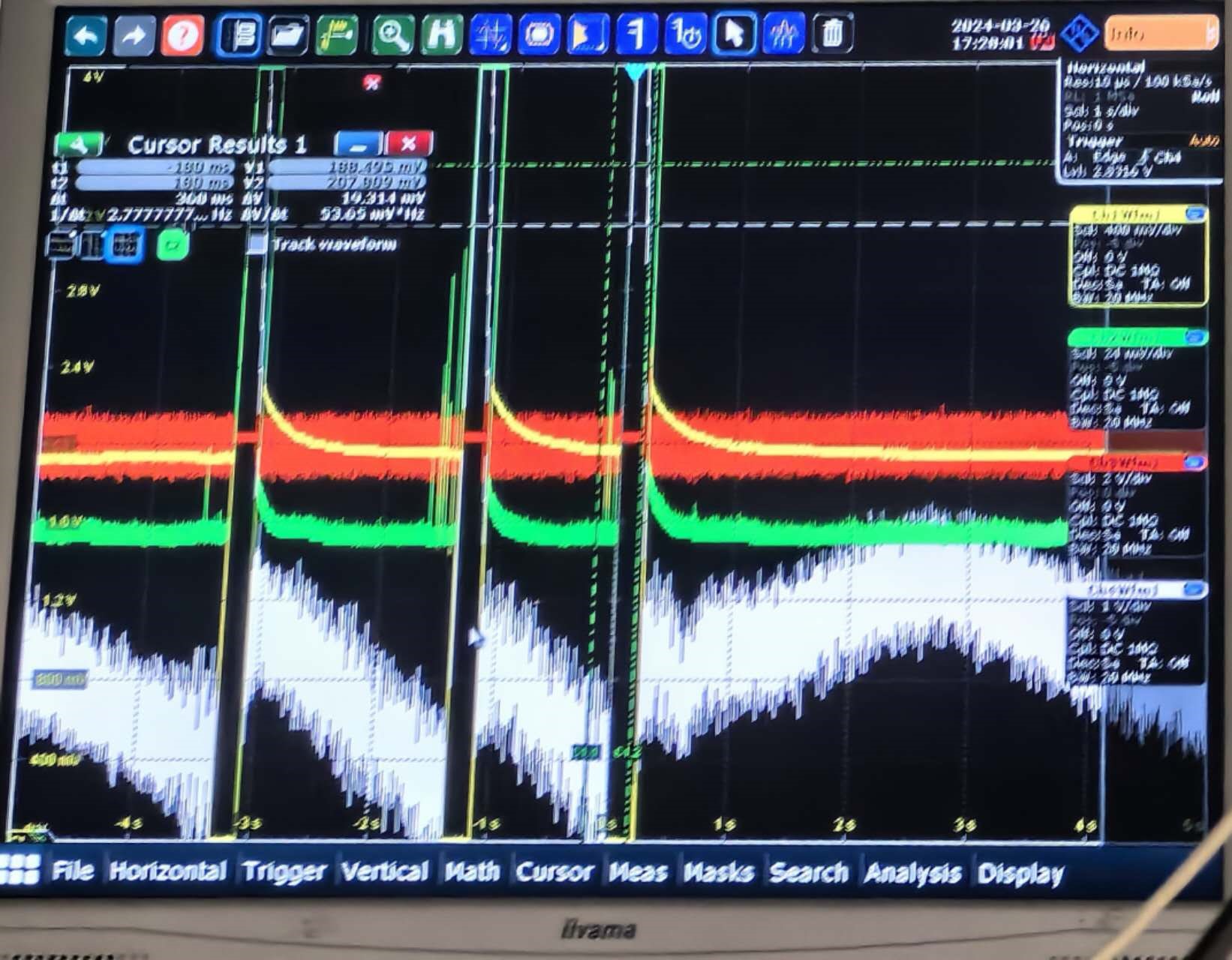 |
|
204
|
Wed Mar 27 09:47:37 2024 |
Xinyi Lu | Fixed | info | lasers and optics | Optical room | High power experiments (200kW) | all the injection power in the chart have not been measured recently but during the Loic thesis period.
and these old measurements stopped at 5.5A of pump current.... so, the data at "8A" is a pure estimation.
about the last measurement :
it was made at 6A/8A/8A/8A for the 4 pump diodes of the amplifier (because 1st stage has a Peltier issue and we cannot check its temperature), so the average current is 7.5A instead of 8A.
and the linear scale between pump current and amplifier power is ~ 12W/A, then the estimated amplifier power for the last measurement is 76W instead of 87W
and the estimated gain is more 2658.
for this current, the amplifier works out of its nominal limits (temperature set at 25°C but measured at 30°C !!!) and the fans of the crate are making noise like hell.
so the last gain estimation should be treated very cautiously.
about the transmission and reflection signals behavior, one can write :
R + T + L = 1 => energy conservation for the cavity.
dR + dT + dL = 0 => dL = - (dR + dT)
if dX = Xfinal - Xinitial, dR and dT are < 0 on the last picture, then dL > 0.
it means that this picture seems to show that some losses are increasing from the beginning of the locking process.
several possibilities :
- we saw a strange D-shape effect on the large port of the cavity.
it seems that one of the D-shape mount/mirror is touching the intra-cavity beam producing some ghost effect on this large cavity port.
some cavity axis changing during the beginning of the lock could introduce some additionnal losses.
it can be easily tested by puting the D-shapes far from the beam.
- because of cavity axis changing at the beginning of the lock, the mirror losses are different.
but it is surprising that it is still going in the same direction... more losses at the end.
could be tested by slightly changing the optical axis of the cavity.
- "prior damage" behavior with a bump in the middle of the mirror due to thermal effect which introduces some losses at the end.
=> if it's the case, it's not a good behavior !!! :-(((
can be tested by looking at the wavefront phase in transmission.
- Non linear effect is the coatings.
but the field density seems not so much to produce this kind of effect
- A thermally induced change in the refractive index of the mirrors.
Daniele mentionned a relation between real and imaginary (related to absorption) parts of this refractive index which could explain that a reflectivity change could induce an absorption change.
| Xinyi Lu wrote: |
|
These days, Ronic and I achieved 200kW inside the cavity and 70% coupling efficiency.
- By optimizing the telescope, the coupling reached 70% with iris fully open and maintained 60%-70% coupling at high power.
- The cavity mode went from 2.2mm,2.5mm (38kW) to finally 2.3mm,2.8mm (200kW) without changing a lot.
- Gradually raising the power while optimizing alignment, CEP, and locking, we got the following stable power:
| Amp current (A) |
Injection power (W) |
Circulating power (kW) |
Gain |
| 2 |
10 |
38 |
3800 |
| 2.3 |
14 |
50 |
3571 |
| 3 |
22 |
70 |
3181 |
| 4 |
35 |
115 |
3285 |
| 5 |
48 |
158 |
3292 |
| 8 |
87(Estimated) |
202 |
2322 |
- Next steps:
- Explain the strange drop phenomenon that occurs at high power, where both transmission and reflection drop, as in Fig. 2.
- Maintains a half-hour locking at 200kW. Now the temperature of the amplifier at 8A is over 40 degrees, which may be risky.
|
|
|
205
|
Wed Mar 27 22:37:02 2024 |
Xinyi Lu | Fixed | info | lasers and optics | Optical room | High power experiments (272kW) | Today, Ronic and I achieved 272kW inside the cavity at 7.5A. The coupling maintained 60%-70%.
| Amp current (A) |
Injection power (W) |
Circulating power (kW) |
Gain |
| 2 |
10 |
50 |
5000 |
| 3 |
22 |
105 |
4773 |
| 4 |
34 |
156 |
4588 |
| 5 |
47 |
210 |
4468 |
| 6 |
58(Estimated) |
250 |
4310 |
| 7.5 |
76(Estimated) |
272 |
3579 |
- Compared to yesterday's experiment, we moved the position of the D-shaped mirrors farther in two directions to make the higher-order modes just disappear.
- Possible reasons for higher gain: D-shaped mirrors position, high power and pump vacuum cleaned cavity mirrors so that improve the finesse.
- We didn't see the strange drops like yesterday (Figure 1). However, in the window behind the M3, we can see 3 spots correlating with the intracavity power, even though moving the D-shaped very far does not make them disappear, only weakens them. We don't know where they came from. When this round of experiments is over, we can open the cavity and observe the optical paths.
- Next steps:
- Repeat the experiment to ensure that the gain does not drop.
- Long-term measurement at maximum power when the amplifier temperature is safe.
- Measure the transmittance of the cavity mirrors and the amplifier power.
- Open the cavity and observe the optical paths and the mirror surface.
| Xinyi Lu wrote: |
|
all the injection power in the chart have not been measured recently but during the Loic thesis period.
and these old measurements stopped at 5.5A of pump current.... so, the data at "8A" is a pure estimation.
about the last measurement :
it was made at 6A/8A/8A/8A for the 4 pump diodes of the amplifier (because 1st stage has a Peltier issue and we cannot check its temperature), so the average current is 7.5A instead of 8A.
and the linear scale between pump current and amplifier power is ~ 12W/A, then the estimated amplifier power for the last measurement is 76W instead of 87W
and the estimated gain is more 2658.
for this current, the amplifier works out of its nominal limits (temperature set at 25°C but measured at 30°C !!!) and the fans of the crate are making noise like hell.
so the last gain estimation should be treated very cautiously.
about the transmission and reflection signals behavior, one can write :
R + T + L = 1 => energy conservation for the cavity.
dR + dT + dL = 0 => dL = - (dR + dT)
if dX = Xfinal - Xinitial, dR and dT are < 0 on the last picture, then dL > 0.
it means that this picture seems to show that some losses are increasing from the beginning of the locking process.
several possibilities :
- we saw a strange D-shape effect on the large port of the cavity.
it seems that one of the D-shape mount/mirror is touching the intra-cavity beam producing some ghost effect on this large cavity port.
some cavity axis changing during the beginning of the lock could introduce some additionnal losses.
it can be easily tested by puting the D-shapes far from the beam.
- because of cavity axis changing at the beginning of the lock, the mirror losses are different.
but it is surprising that it is still going in the same direction... more losses at the end.
could be tested by slightly changing the optical axis of the cavity.
- "prior damage" behavior with a bump in the middle of the mirror due to thermal effect which introduces some losses at the end.
=> if it's the case, it's not a good behavior !!! :-(((
can be tested by looking at the wavefront phase in transmission.
- Non linear effect is the coatings.
but the field density seems not so much to produce this kind of effect
- A thermally induced change in the refractive index of the mirrors.
Daniele mentionned a relation between real and imaginary (related to absorption) parts of this refractive index which could explain that a reflectivity change could induce an absorption change.
| Xinyi Lu wrote: |
|
These days, Ronic and I achieved 200kW inside the cavity and 70% coupling efficiency.
- By optimizing the telescope, the coupling reached 70% with iris fully open and maintained 60%-70% coupling at high power.
- The cavity mode went from 2.2mm,2.5mm (38kW) to finally 2.3mm,2.8mm (200kW) without changing a lot.
- Gradually raising the power while optimizing alignment, CEP, and locking, we got the following stable power:
| Amp current (A) |
Injection power (W) |
Circulating power (kW) |
Gain |
| 2 |
10 |
38 |
3800 |
| 2.3 |
14 |
50 |
3571 |
| 3 |
22 |
70 |
3181 |
| 4 |
35 |
115 |
3285 |
| 5 |
48 |
158 |
3292 |
| 8 |
87(Estimated) |
202 |
2322 |
- Next steps:
- Explain the strange drop phenomenon that occurs at high power, where both transmission and reflection drop, as in Fig. 2.
- Maintains a half-hour locking at 200kW. Now the temperature of the amplifier at 8A is over 40 degrees, which may be risky.
|
|
|
| Attachment 1: Screenshot_2024-03-27_7_270kW_7.5A.png
| 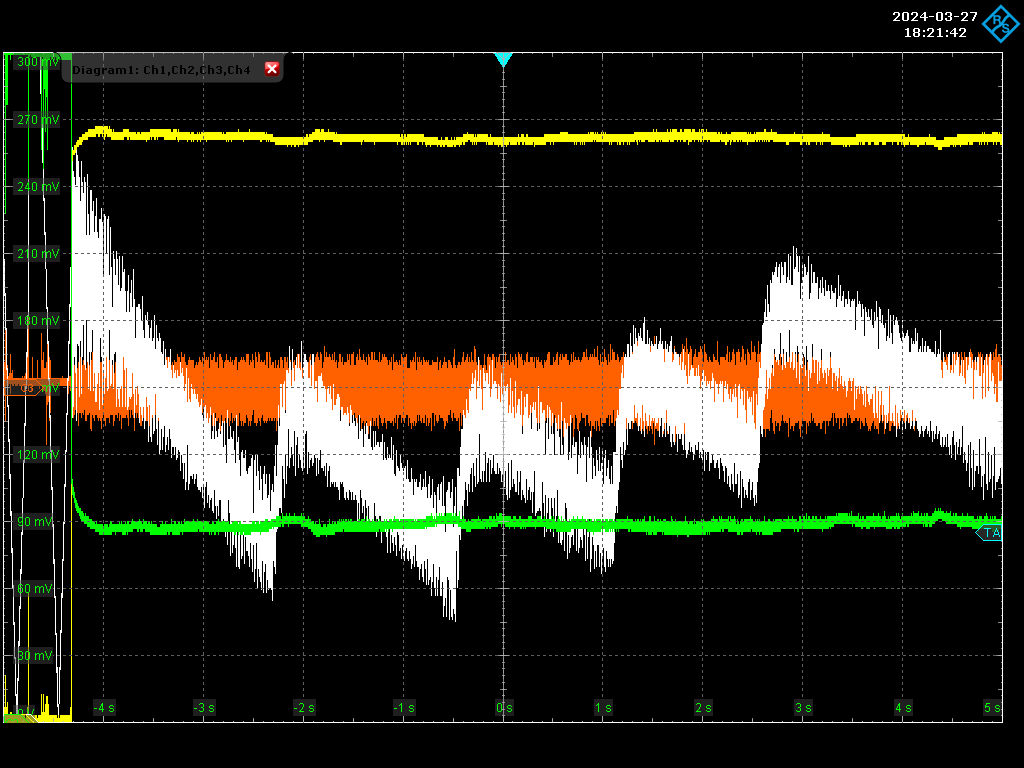 |
| Attachment 2: 210_kW_power_at_5A_injection.png
|  |
| Attachment 3: 272.3kW_at_7.5A.jpg
|  |
|
206
|
Thu Mar 28 19:03:55 2024 |
Xinyi Lu | Fixed | info | lasers and optics | Optical room | Amplifier power and mirror transmission | Today, Ronic, Daniele, Aurélien and I measured the amplifier power and mirror transmission.
| Current (A) |
0 (2rd stage) |
1 |
2 |
3 |
4 |
5 |
6 |
7 |
7.5 |
8 |
| Power (W) |
1 |
1.8 |
11.8 |
23.5 |
35.5 |
47 |
57.5 |
66.9 |
70.7 |
74.9 |
For transmission measurements, we used the same new mirrors as Sbox and ThomX, and installed an iris and a 2-inch mount to block the scattering laser.
The angle of incidence during the measurement was about 0.5°. We changed the angle and the measurements remained the same.
| Mirror Number |
PL-0898 |
PL-10978 |
| Nominal Value |
3 ppm |
115 ppm |
| Measured Value |
1.75 ppm |
113 ppm |
If the mirror being used also has a transmission of 1.75 ppm, the original 270kW is actually 463kW!!! The gain is 6549 and the finesse is 28585 (70% coupling).
We will do more tests to check it.
- Redo the experiment and check the spot behind the window at high power.
- Move the power meter to the plane mirror M2 window. It was previously behind the curved mirror M4 window.
- Compare locking curves, cavity mode sizes, and coupling efficiency at different powers.
- After finishing the high-power experiments, we will measure the finesse using CW laser and the transmission of the mirrors used.
| Xinyi Lu wrote: |
|
Today, Ronic and I achieved 272kW inside the cavity at 7.5A. The coupling maintained 60%-70%.
| Amp current (A) |
Injection power (W) |
Circulating power (kW) |
Gain |
| 2 |
10 |
50 |
5000 |
| 3 |
22 |
105 |
4773 |
| 4 |
34 |
156 |
4588 |
| 5 |
47 |
210 |
4468 |
| 6 |
58(Estimated) |
250 |
4310 |
| 7.5 |
76(Estimated) |
272 |
3579 |
- Compared to yesterday's experiment, we moved the position of the D-shaped mirrors farther in two directions to make the higher-order modes just disappear.
- Possible reasons for higher gain: D-shaped mirrors position, high power and pump vacuum cleaned cavity mirrors so that improve the finesse.
- We didn't see the strange drops like yesterday (Figure 1). However, in the window behind the M3, we can see 3 spots correlating with the intracavity power, even though moving the D-shaped very far does not make them disappear, only weakens them. We don't know where they came from. When this round of experiments is over, we can open the cavity and observe the optical paths.
- Next steps:
- Repeat the experiment to ensure that the gain does not drop.
- Long-term measurement at maximum power when the amplifier temperature is safe.
- Measure the transmittance of the cavity mirrors and the amplifier power.
- Open the cavity and observe the optical paths and the mirror surface.
| Xinyi Lu wrote: |
|
all the injection power in the chart have not been measured recently but during the Loic thesis period.
and these old measurements stopped at 5.5A of pump current.... so, the data at "8A" is a pure estimation.
about the last measurement :
it was made at 6A/8A/8A/8A for the 4 pump diodes of the amplifier (because 1st stage has a Peltier issue and we cannot check its temperature), so the average current is 7.5A instead of 8A.
and the linear scale between pump current and amplifier power is ~ 12W/A, then the estimated amplifier power for the last measurement is 76W instead of 87W
and the estimated gain is more 2658.
for this current, the amplifier works out of its nominal limits (temperature set at 25°C but measured at 30°C !!!) and the fans of the crate are making noise like hell.
so the last gain estimation should be treated very cautiously.
about the transmission and reflection signals behavior, one can write :
R + T + L = 1 => energy conservation for the cavity.
dR + dT + dL = 0 => dL = - (dR + dT)
if dX = Xfinal - Xinitial, dR and dT are < 0 on the last picture, then dL > 0.
it means that this picture seems to show that some losses are increasing from the beginning of the locking process.
several possibilities :
- we saw a strange D-shape effect on the large port of the cavity.
it seems that one of the D-shape mount/mirror is touching the intra-cavity beam producing some ghost effect on this large cavity port.
some cavity axis changing during the beginning of the lock could introduce some additionnal losses.
it can be easily tested by puting the D-shapes far from the beam.
- because of cavity axis changing at the beginning of the lock, the mirror losses are different.
but it is surprising that it is still going in the same direction... more losses at the end.
could be tested by slightly changing the optical axis of the cavity.
- "prior damage" behavior with a bump in the middle of the mirror due to thermal effect which introduces some losses at the end.
=> if it's the case, it's not a good behavior !!! :-(((
can be tested by looking at the wavefront phase in transmission.
- Non linear effect is the coatings.
but the field density seems not so much to produce this kind of effect
- A thermally induced change in the refractive index of the mirrors.
Daniele mentionned a relation between real and imaginary (related to absorption) parts of this refractive index which could explain that a reflectivity change could induce an absorption change.
| Xinyi Lu wrote: |
|
These days, Ronic and I achieved 200kW inside the cavity and 70% coupling efficiency.
- By optimizing the telescope, the coupling reached 70% with iris fully open and maintained 60%-70% coupling at high power.
- The cavity mode went from 2.2mm,2.5mm (38kW) to finally 2.3mm,2.8mm (200kW) without changing a lot.
- Gradually raising the power while optimizing alignment, CEP, and locking, we got the following stable power:
| Amp current (A) |
Injection power (W) |
Circulating power (kW) |
Gain |
| 2 |
10 |
38 |
3800 |
| 2.3 |
14 |
50 |
3571 |
| 3 |
22 |
70 |
3181 |
| 4 |
35 |
115 |
3285 |
| 5 |
48 |
158 |
3292 |
| 8 |
87(Estimated) |
202 |
2322 |
- Next steps:
- Explain the strange drop phenomenon that occurs at high power, where both transmission and reflection drop, as in Fig. 2.
- Maintains a half-hour locking at 200kW. Now the temperature of the amplifier at 8A is over 40 degrees, which may be risky.
|
|
|
|
| Attachment 1: 3rd_amp_power.png
|  |
| Attachment 2: Transmission_measurement.png
| 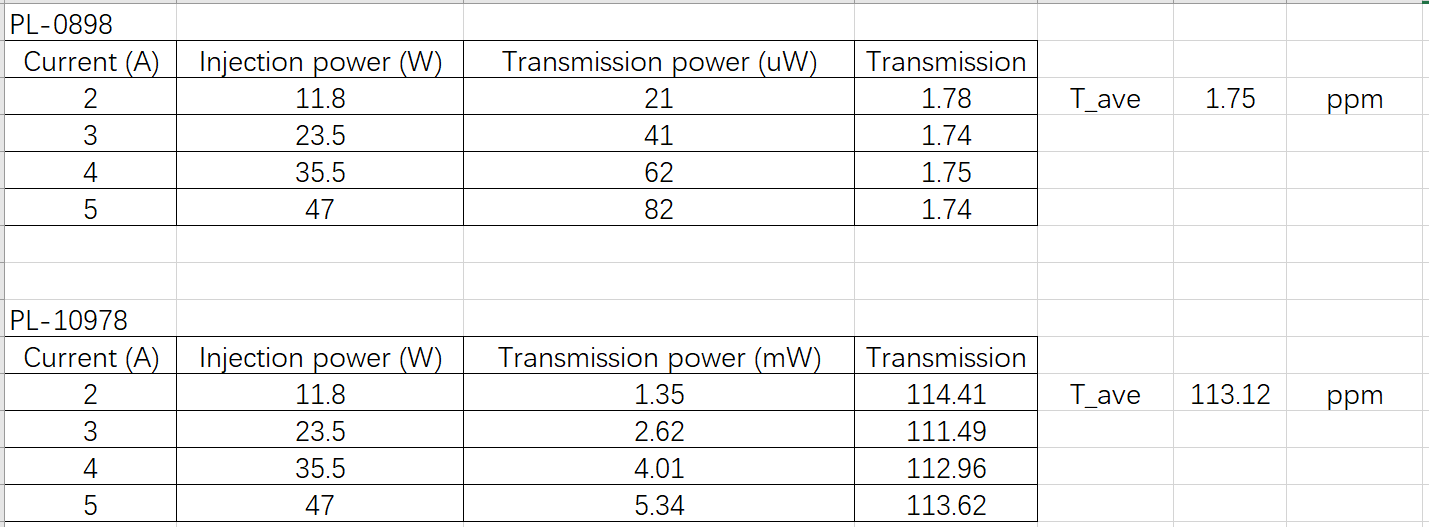 |
|
208
|
Tue Apr 2 08:39:17 2024 |
Xinyi Lu | Fixed | info | lasers and optics | Optical room | High power experiments (500kW) | Last week, we achieved a stable intracavity average power of 500kW, limited by amplifier power. The experimental data are shown in Figure 1.
- We measured the transmitted laser with a power meter in the windows behind M2 and M4 respectively, and the results were consistent, so the measurements were credible.
- There is only one transmitted laser spot behind both M2 and M4.
- We measured 10-minute locking data at different powers (Figure 2). 480 kW data was not optimized, and we will add 500 kW locking data later.
- We compared cavity modes at different powers (Figure 3). There are fluctuations because we only saved one data at one power. More data will be collected for averaging later.
- After finishing the high-power experiments, we will measure the finesse and the transmission of the mirrors used. As well as the pulse duration, spectrum, phase noise, and repetition rate of the laser.
| Xinyi Lu wrote: |
|
Today, Ronic, Daniele, Aurélien and I measured the amplifier power and mirror transmission.
| Current (A) |
0 (2rd stage) |
1 |
2 |
3 |
4 |
5 |
6 |
7 |
7.5 |
8 |
| Power (W) |
1 |
1.8 |
11.8 |
23.5 |
35.5 |
47 |
57.5 |
66.9 |
70.7 |
74.9 |
For transmission measurements, we used the same new mirrors as Sbox and ThomX, and installed an iris and a 2-inch mount to block the scattering laser.
The angle of incidence during the measurement was about 0.5°. We changed the angle and the measurements remained the same.
| Mirror Number |
PL-0898 |
PL-10978 |
| Nominal Value |
3 ppm |
115 ppm |
| Measured Value |
1.75 ppm |
113 ppm |
If the mirror being used also has a transmission of 1.75 ppm, the original 270kW is actually 463kW!!! The gain is 6549 and the finesse is 28585 (70% coupling).
We will do more tests to check it.
- Redo the experiment and check the spot behind the window at high power.
- Move the power meter to the plane mirror M2 window. It was previously behind the curved mirror M4 window.
- Compare locking curves, cavity mode sizes, and coupling efficiency at different powers.
- After finishing the high-power experiments, we will measure the finesse using CW laser and the transmission of the mirrors used.
| Xinyi Lu wrote: |
|
Today, Ronic and I achieved 272kW inside the cavity at 7.5A. The coupling maintained 60%-70%.
| Amp current (A) |
Injection power (W) |
Circulating power (kW) |
Gain |
| 2 |
10 |
50 |
5000 |
| 3 |
22 |
105 |
4773 |
| 4 |
34 |
156 |
4588 |
| 5 |
47 |
210 |
4468 |
| 6 |
58(Estimated) |
250 |
4310 |
| 7.5 |
76(Estimated) |
272 |
3579 |
- Compared to yesterday's experiment, we moved the position of the D-shaped mirrors farther in two directions to make the higher-order modes just disappear.
- Possible reasons for higher gain: D-shaped mirrors position, high power and pump vacuum cleaned cavity mirrors so that improve the finesse.
- We didn't see the strange drops like yesterday (Figure 1). However, in the window behind the M3, we can see 3 spots correlating with the intracavity power, even though moving the D-shaped very far does not make them disappear, only weakens them. We don't know where they came from. When this round of experiments is over, we can open the cavity and observe the optical paths.
- Next steps:
- Repeat the experiment to ensure that the gain does not drop.
- Long-term measurement at maximum power when the amplifier temperature is safe.
- Measure the transmittance of the cavity mirrors and the amplifier power.
- Open the cavity and observe the optical paths and the mirror surface.
| Xinyi Lu wrote: |
|
all the injection power in the chart have not been measured recently but during the Loic thesis period.
and these old measurements stopped at 5.5A of pump current.... so, the data at "8A" is a pure estimation.
about the last measurement :
it was made at 6A/8A/8A/8A for the 4 pump diodes of the amplifier (because 1st stage has a Peltier issue and we cannot check its temperature), so the average current is 7.5A instead of 8A.
and the linear scale between pump current and amplifier power is ~ 12W/A, then the estimated amplifier power for the last measurement is 76W instead of 87W
and the estimated gain is more 2658.
for this current, the amplifier works out of its nominal limits (temperature set at 25°C but measured at 30°C !!!) and the fans of the crate are making noise like hell.
so the last gain estimation should be treated very cautiously.
about the transmission and reflection signals behavior, one can write :
R + T + L = 1 => energy conservation for the cavity.
dR + dT + dL = 0 => dL = - (dR + dT)
if dX = Xfinal - Xinitial, dR and dT are < 0 on the last picture, then dL > 0.
it means that this picture seems to show that some losses are increasing from the beginning of the locking process.
several possibilities :
- we saw a strange D-shape effect on the large port of the cavity.
it seems that one of the D-shape mount/mirror is touching the intra-cavity beam producing some ghost effect on this large cavity port.
some cavity axis changing during the beginning of the lock could introduce some additionnal losses.
it can be easily tested by puting the D-shapes far from the beam.
- because of cavity axis changing at the beginning of the lock, the mirror losses are different.
but it is surprising that it is still going in the same direction... more losses at the end.
could be tested by slightly changing the optical axis of the cavity.
- "prior damage" behavior with a bump in the middle of the mirror due to thermal effect which introduces some losses at the end.
=> if it's the case, it's not a good behavior !!! :-(((
can be tested by looking at the wavefront phase in transmission.
- Non linear effect is the coatings.
but the field density seems not so much to produce this kind of effect
- A thermally induced change in the refractive index of the mirrors.
Daniele mentionned a relation between real and imaginary (related to absorption) parts of this refractive index which could explain that a reflectivity change could induce an absorption change.
| Xinyi Lu wrote: |
|
These days, Ronic and I achieved 200kW inside the cavity and 70% coupling efficiency.
- By optimizing the telescope, the coupling reached 70% with iris fully open and maintained 60%-70% coupling at high power.
- The cavity mode went from 2.2mm,2.5mm (38kW) to finally 2.3mm,2.8mm (200kW) without changing a lot.
- Gradually raising the power while optimizing alignment, CEP, and locking, we got the following stable power:
| Amp current (A) |
Injection power (W) |
Circulating power (kW) |
Gain |
| 2 |
10 |
38 |
3800 |
| 2.3 |
14 |
50 |
3571 |
| 3 |
22 |
70 |
3181 |
| 4 |
35 |
115 |
3285 |
| 5 |
48 |
158 |
3292 |
| 8 |
87(Estimated) |
202 |
2322 |
- Next steps:
- Explain the strange drop phenomenon that occurs at high power, where both transmission and reflection drop, as in Fig. 2.
- Maintains a half-hour locking at 200kW. Now the temperature of the amplifier at 8A is over 40 degrees, which may be risky.
|
|
|
|
|
| Attachment 1: record.png
| 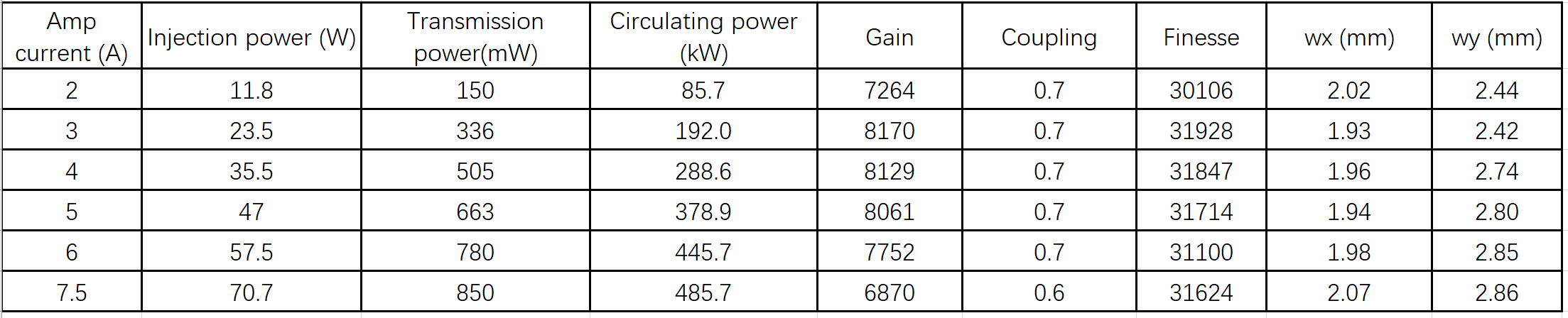 |
| Attachment 2: power_vs_time.png
| 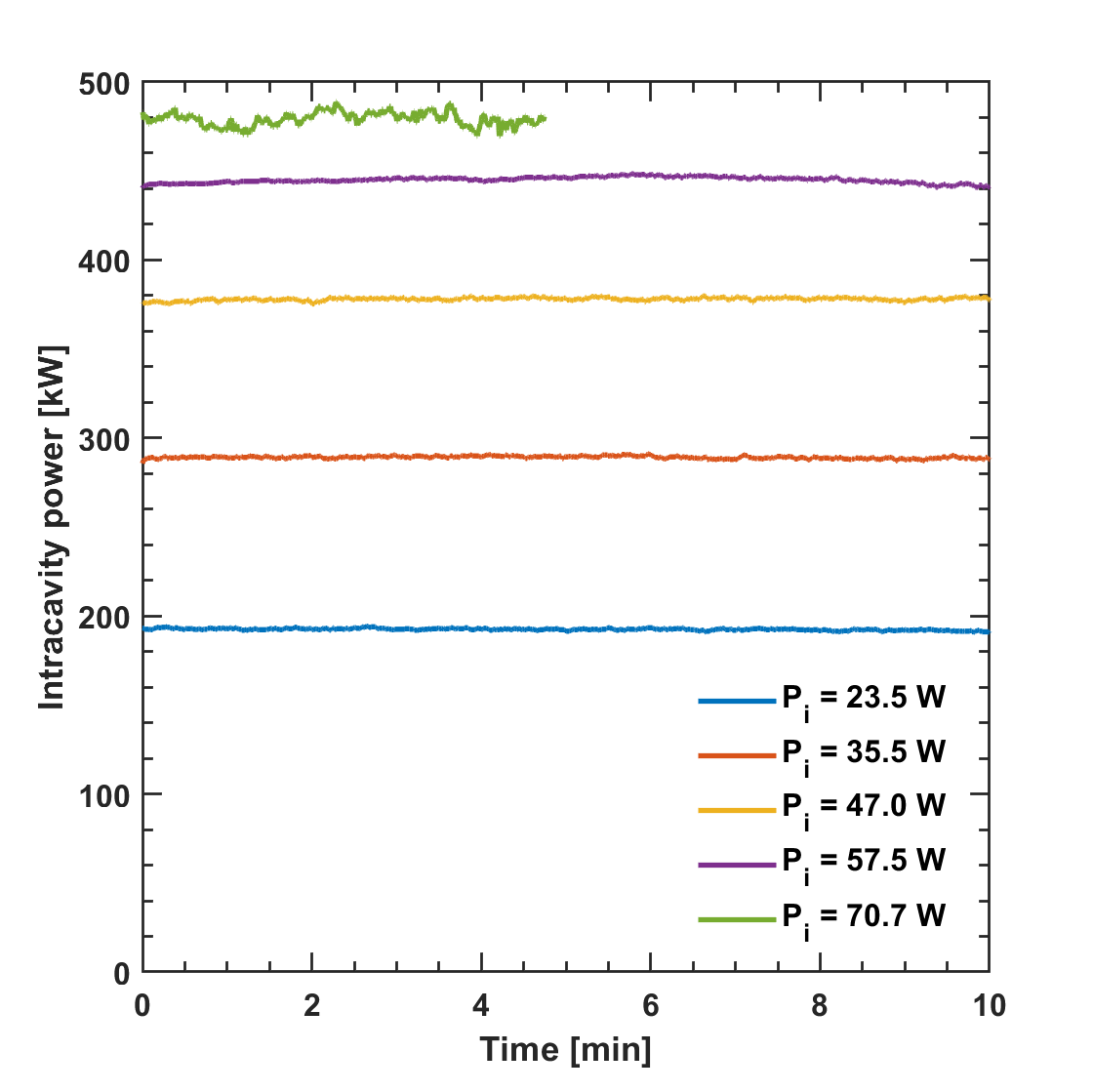 |
| Attachment 3: cavitymode_vs_power.png
| 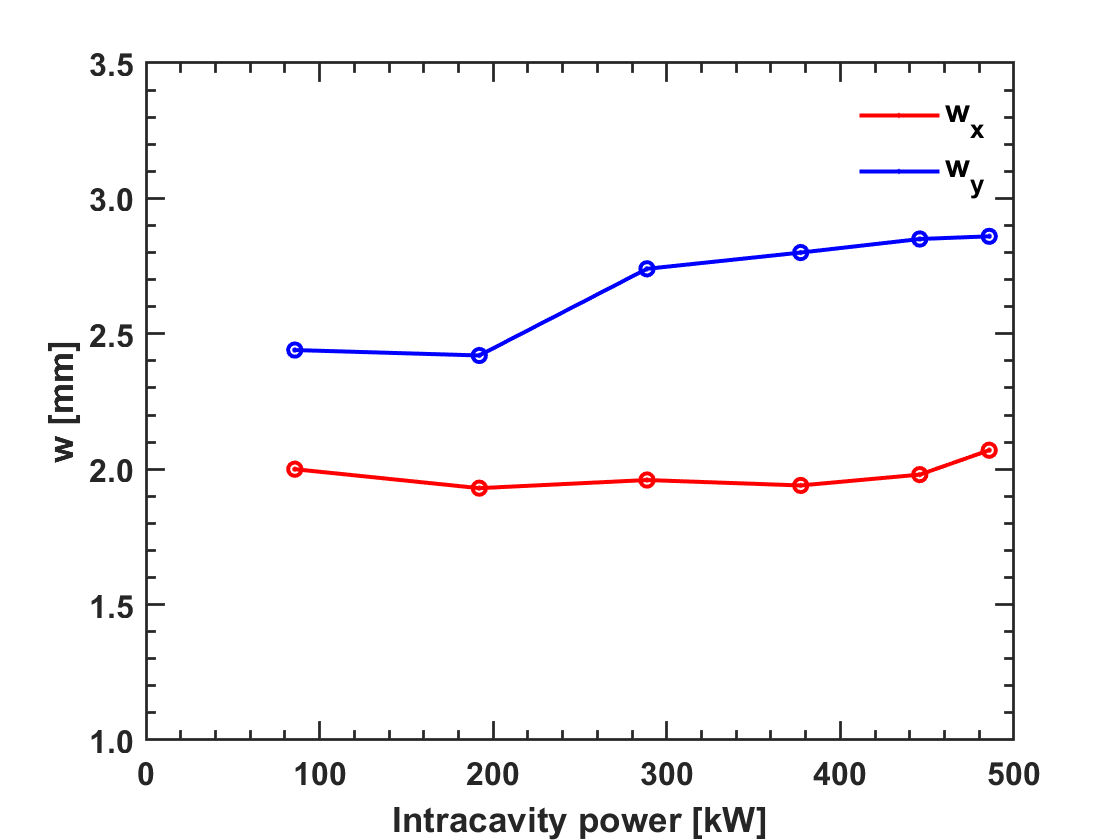 |
|
209
|
Wed Apr 3 08:53:33 2024 |
Xinyi Lu | Fixed | info | lasers and optics | Optical room | High power experiments (520kW) | Yesterday, Ronic, Xing, Qili and I achieved a more stable 520kW power at 7.5A (71W injection) by optimizing the alignment and locking parameters. (Figure 1)
- The cavity can be stable locked when airflow is on. At 7.5A, the pump temperature is about 28℃. The chiller temperature didn't change, to the same 23 ℃ setting. We can try 8A later (75W injection) for a short time;
- Figure 2 demonstrates the cavity mode variation, wy/Pc ~ 1.7 mm/MW, half that of the OL paper (3.3 mm/MW). The thermal deformation of our device is much smaller.
- The experimental data are shown in Figure 3. Figure 4 shows the injection power vs circulating power.
- There are some tests that can be done at the moment. I'll update on the elog after discussing the necessity today. ^_^
| Xinyi Lu wrote: |
|
Last week, we achieved a stable intracavity average power of 500kW, limited by amplifier power. The experimental data are shown in Figure 1.
- We measured the transmitted laser with a power meter in the windows behind M2 and M4 respectively, and the results were consistent, so the measurements were credible.
- There is only one transmitted laser spot behind both M2 and M4.
- We measured 10-minute locking data at different powers (Figure 2). 480 kW data was not optimized, and we will add 500 kW locking data later.
- We compared cavity modes at different powers (Figure 3). There are fluctuations because we only saved one data at one power. More data will be collected for averaging later.
- After finishing the high-power experiments, we will measure the finesse and the transmission of the mirrors used. As well as the pulse duration, spectrum, phase noise, and repetition rate of the laser.
| Xinyi Lu wrote: |
|
Today, Ronic, Daniele, Aurélien and I measured the amplifier power and mirror transmission.
| Current (A) |
0 (2rd stage) |
1 |
2 |
3 |
4 |
5 |
6 |
7 |
7.5 |
8 |
| Power (W) |
1 |
1.8 |
11.8 |
23.5 |
35.5 |
47 |
57.5 |
66.9 |
70.7 |
74.9 |
For transmission measurements, we used the same new mirrors as Sbox and ThomX, and installed an iris and a 2-inch mount to block the scattering laser.
The angle of incidence during the measurement was about 0.5°. We changed the angle and the measurements remained the same.
| Mirror Number |
PL-0898 |
PL-10978 |
| Nominal Value |
3 ppm |
115 ppm |
| Measured Value |
1.75 ppm |
113 ppm |
If the mirror being used also has a transmission of 1.75 ppm, the original 270kW is actually 463kW!!! The gain is 6549 and the finesse is 28585 (70% coupling).
We will do more tests to check it.
- Redo the experiment and check the spot behind the window at high power.
- Move the power meter to the plane mirror M2 window. It was previously behind the curved mirror M4 window.
- Compare locking curves, cavity mode sizes, and coupling efficiency at different powers.
- After finishing the high-power experiments, we will measure the finesse using CW laser and the transmission of the mirrors used.
| Xinyi Lu wrote: |
|
Today, Ronic and I achieved 272kW inside the cavity at 7.5A. The coupling maintained 60%-70%.
| Amp current (A) |
Injection power (W) |
Circulating power (kW) |
Gain |
| 2 |
10 |
50 |
5000 |
| 3 |
22 |
105 |
4773 |
| 4 |
34 |
156 |
4588 |
| 5 |
47 |
210 |
4468 |
| 6 |
58(Estimated) |
250 |
4310 |
| 7.5 |
76(Estimated) |
272 |
3579 |
- Compared to yesterday's experiment, we moved the position of the D-shaped mirrors farther in two directions to make the higher-order modes just disappear.
- Possible reasons for higher gain: D-shaped mirrors position, high power and pump vacuum cleaned cavity mirrors so that improve the finesse.
- We didn't see the strange drops like yesterday (Figure 1). However, in the window behind the M3, we can see 3 spots correlating with the intracavity power, even though moving the D-shaped very far does not make them disappear, only weakens them. We don't know where they came from. When this round of experiments is over, we can open the cavity and observe the optical paths.
- Next steps:
- Repeat the experiment to ensure that the gain does not drop.
- Long-term measurement at maximum power when the amplifier temperature is safe.
- Measure the transmittance of the cavity mirrors and the amplifier power.
- Open the cavity and observe the optical paths and the mirror surface.
| Xinyi Lu wrote: |
|
all the injection power in the chart have not been measured recently but during the Loic thesis period.
and these old measurements stopped at 5.5A of pump current.... so, the data at "8A" is a pure estimation.
about the last measurement :
it was made at 6A/8A/8A/8A for the 4 pump diodes of the amplifier (because 1st stage has a Peltier issue and we cannot check its temperature), so the average current is 7.5A instead of 8A.
and the linear scale between pump current and amplifier power is ~ 12W/A, then the estimated amplifier power for the last measurement is 76W instead of 87W
and the estimated gain is more 2658.
for this current, the amplifier works out of its nominal limits (temperature set at 25°C but measured at 30°C !!!) and the fans of the crate are making noise like hell.
so the last gain estimation should be treated very cautiously.
about the transmission and reflection signals behavior, one can write :
R + T + L = 1 => energy conservation for the cavity.
dR + dT + dL = 0 => dL = - (dR + dT)
if dX = Xfinal - Xinitial, dR and dT are < 0 on the last picture, then dL > 0.
it means that this picture seems to show that some losses are increasing from the beginning of the locking process.
several possibilities :
- we saw a strange D-shape effect on the large port of the cavity.
it seems that one of the D-shape mount/mirror is touching the intra-cavity beam producing some ghost effect on this large cavity port.
some cavity axis changing during the beginning of the lock could introduce some additionnal losses.
it can be easily tested by puting the D-shapes far from the beam.
- because of cavity axis changing at the beginning of the lock, the mirror losses are different.
but it is surprising that it is still going in the same direction... more losses at the end.
could be tested by slightly changing the optical axis of the cavity.
- "prior damage" behavior with a bump in the middle of the mirror due to thermal effect which introduces some losses at the end.
=> if it's the case, it's not a good behavior !!! :-(((
can be tested by looking at the wavefront phase in transmission.
- Non linear effect is the coatings.
but the field density seems not so much to produce this kind of effect
- A thermally induced change in the refractive index of the mirrors.
Daniele mentionned a relation between real and imaginary (related to absorption) parts of this refractive index which could explain that a reflectivity change could induce an absorption change.
| Xinyi Lu wrote: |
|
These days, Ronic and I achieved 200kW inside the cavity and 70% coupling efficiency.
- By optimizing the telescope, the coupling reached 70% with iris fully open and maintained 60%-70% coupling at high power.
- The cavity mode went from 2.2mm,2.5mm (38kW) to finally 2.3mm,2.8mm (200kW) without changing a lot.
- Gradually raising the power while optimizing alignment, CEP, and locking, we got the following stable power:
| Amp current (A) |
Injection power (W) |
Circulating power (kW) |
Gain |
| 2 |
10 |
38 |
3800 |
| 2.3 |
14 |
50 |
3571 |
| 3 |
22 |
70 |
3181 |
| 4 |
35 |
115 |
3285 |
| 5 |
48 |
158 |
3292 |
| 8 |
87(Estimated) |
202 |
2322 |
- Next steps:
- Explain the strange drop phenomenon that occurs at high power, where both transmission and reflection drop, as in Fig. 2.
- Maintains a half-hour locking at 200kW. Now the temperature of the amplifier at 8A is over 40 degrees, which may be risky.
|
|
|
|
|
|
| Attachment 1: power_vs_time.png
| 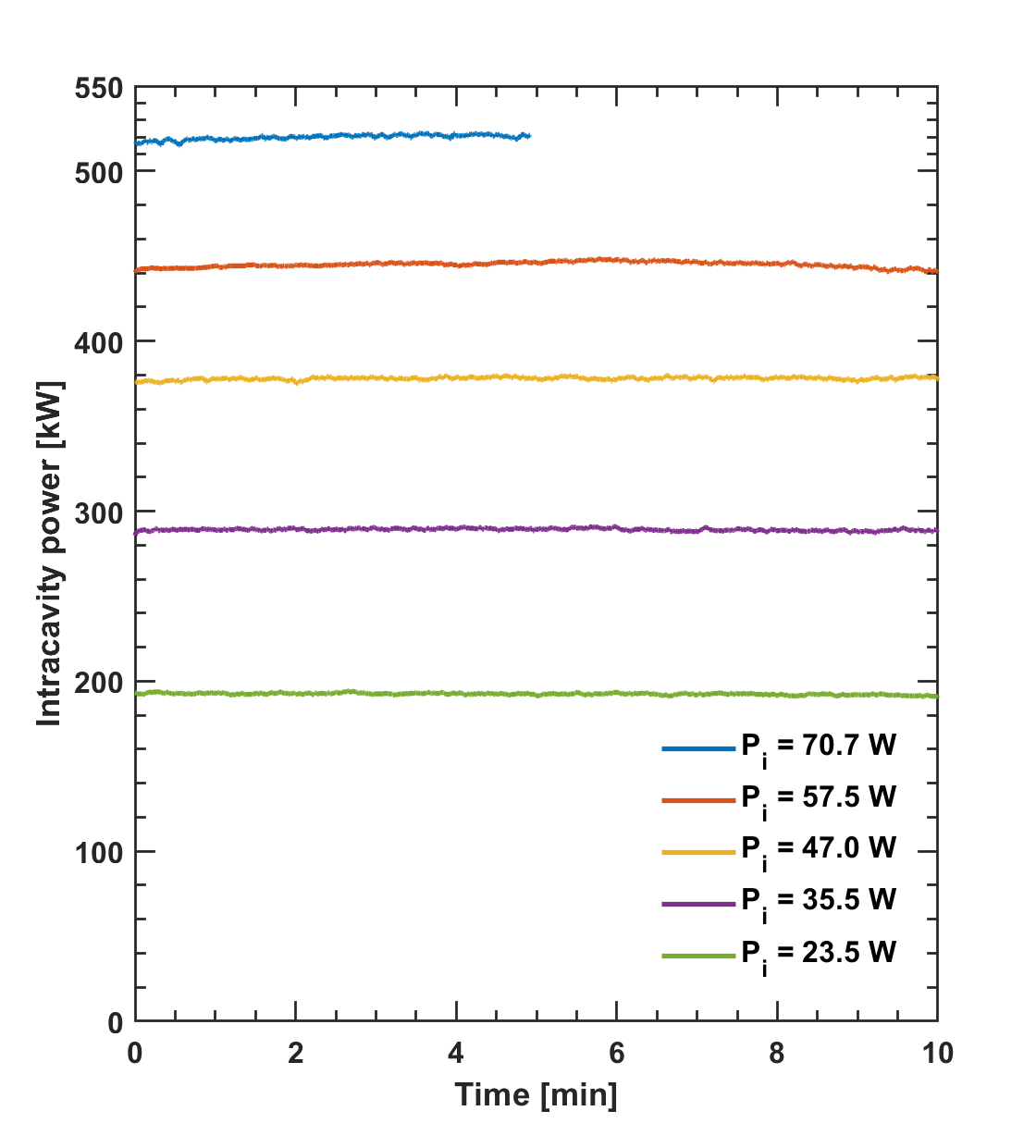 |
| Attachment 2: cavitymode_vs_power_1.png
| 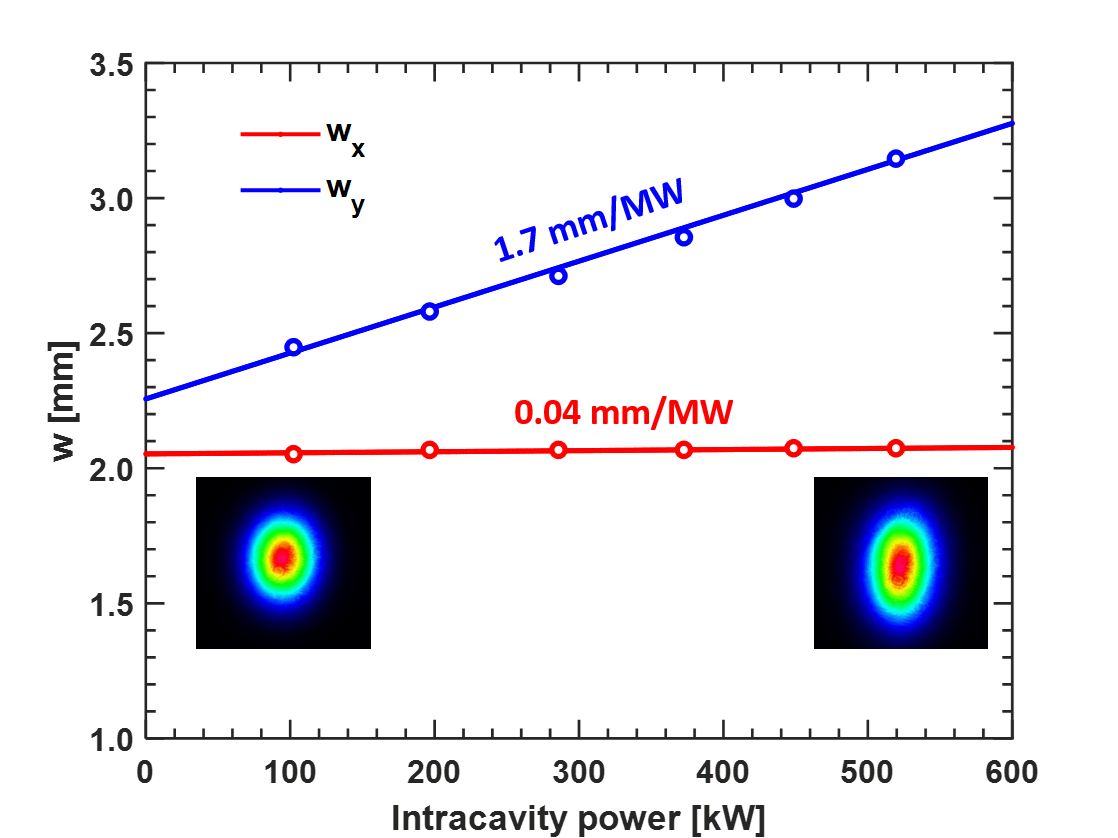 |
| Attachment 3: record.png
| 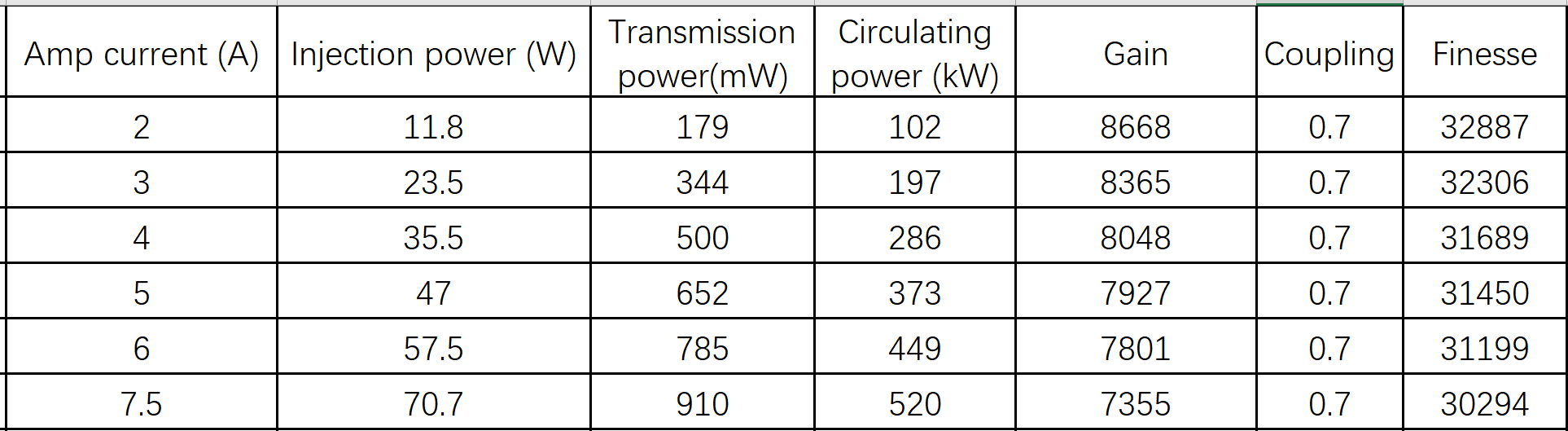 |
| Attachment 4: injection_power_vs_intra_power.png
| 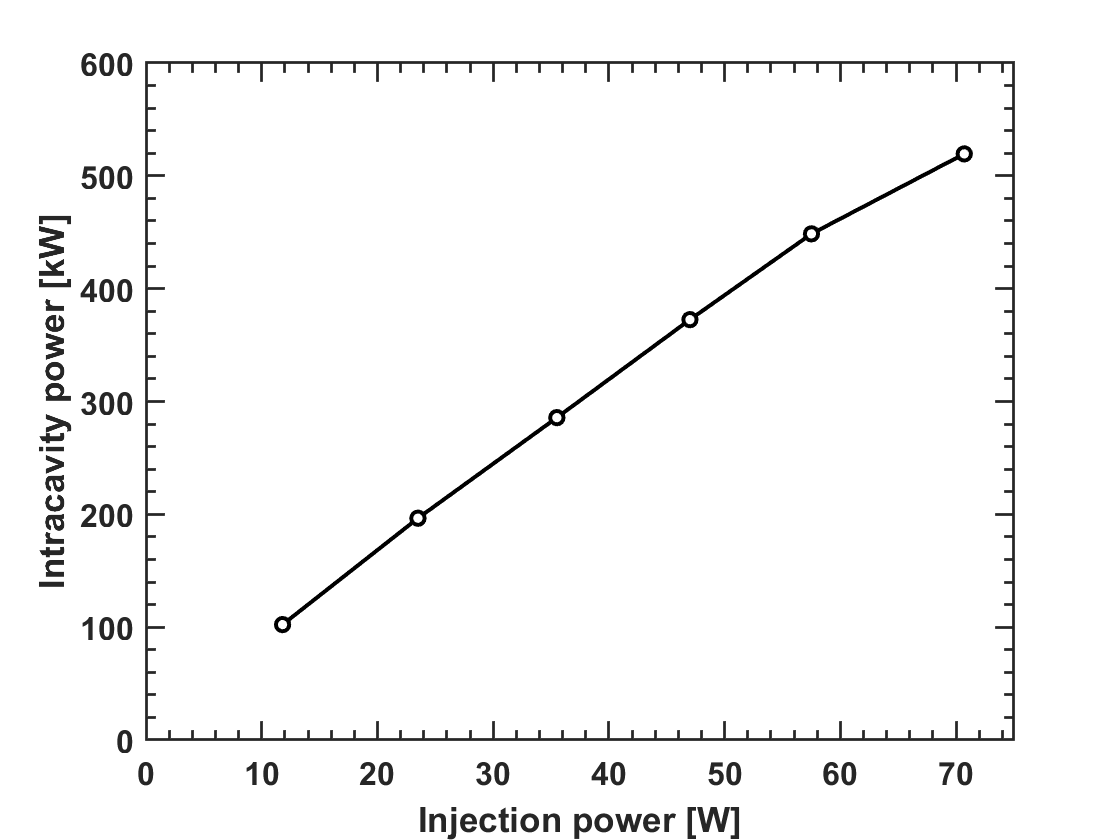 |
|
210
|
Wed Apr 3 21:37:07 2024 |
Xinyi Lu | Fixed | info | lasers and optics | Optical room | High power experiments (550kW) | - Today we moved the position of the D-shaped mirror at 6A. When motor1 (vertical) is 0.2mm away from the spot, the power in the cavity rises from 457kW to 483kW. Gain=8407 is similar to that at low power (Gain=8511). So the D-shaped mirror lost some of the gain in the previous experiments. At 4A and 5A we did not move the D-shaped mirror. (Figure 1)
- At 8A, we got 553 kW inside the cavity for one minute (Figure 2). The pump temperature is higher than yesterday (up to 34°C).
- At 7.5A and 8A, the cavity can remain stably locked, but the power fluctuation in the cavity is so large that it is difficult to optimize the alignment. This may be due to the short time the amplifier was on, the pump temperature, amplifier pointing and power fluctuations, and thermal effects in the cavity....... The amplifier operated differently at different moments.
- We measured the spectrum of the amplified laser. (Figure 3) The peak is 1032.2 nm. We will optimize the alignment and increase the power to optimize this measurement.
- Next arrangement
Thursday: larger laser beam size
Friday: smaller laser beam size
Monday: finesse measurement with CW laser (Firstly check the possibility of measuring with pulsed laser)
| Xinyi Lu wrote: |
|
Yesterday, Ronic, Xing, Qili and I achieved a more stable 520kW power at 7.5A (71W injection) by optimizing the alignment and locking parameters. (Figure 1)
- The cavity can be stable locked when airflow is on. At 7.5A, the pump temperature is about 28℃. The chiller temperature didn't change, to the same 23 ℃ setting. We can try 8A later (75W injection) for a short time;
- Figure 2 demonstrates the cavity mode variation, wy/Pc ~ 1.7 mm/MW, half that of the OL paper (3.3 mm/MW). The thermal deformation of our device is much smaller.
- The experimental data are shown in Figure 3. Figure 4 shows the injection power vs circulating power.
- There are some tests that can be done at the moment. I'll update on the elog after discussing the necessity today. ^_^
| Xinyi Lu wrote: |
|
Last week, we achieved a stable intracavity average power of 500kW, limited by amplifier power. The experimental data are shown in Figure 1.
- We measured the transmitted laser with a power meter in the windows behind M2 and M4 respectively, and the results were consistent, so the measurements were credible.
- There is only one transmitted laser spot behind both M2 and M4.
- We measured 10-minute locking data at different powers (Figure 2). 480 kW data was not optimized, and we will add 500 kW locking data later.
- We compared cavity modes at different powers (Figure 3). There are fluctuations because we only saved one data at one power. More data will be collected for averaging later.
- After finishing the high-power experiments, we will measure the finesse and the transmission of the mirrors used. As well as the pulse duration, spectrum, phase noise, and repetition rate of the laser.
| Xinyi Lu wrote: |
|
Today, Ronic, Daniele, Aurélien and I measured the amplifier power and mirror transmission.
| Current (A) |
0 (2rd stage) |
1 |
2 |
3 |
4 |
5 |
6 |
7 |
7.5 |
8 |
| Power (W) |
1 |
1.8 |
11.8 |
23.5 |
35.5 |
47 |
57.5 |
66.9 |
70.7 |
74.9 |
For transmission measurements, we used the same new mirrors as Sbox and ThomX, and installed an iris and a 2-inch mount to block the scattering laser.
The angle of incidence during the measurement was about 0.5°. We changed the angle and the measurements remained the same.
| Mirror Number |
PL-0898 |
PL-10978 |
| Nominal Value |
3 ppm |
115 ppm |
| Measured Value |
1.75 ppm |
113 ppm |
If the mirror being used also has a transmission of 1.75 ppm, the original 270kW is actually 463kW!!! The gain is 6549 and the finesse is 28585 (70% coupling).
We will do more tests to check it.
- Redo the experiment and check the spot behind the window at high power.
- Move the power meter to the plane mirror M2 window. It was previously behind the curved mirror M4 window.
- Compare locking curves, cavity mode sizes, and coupling efficiency at different powers.
- After finishing the high-power experiments, we will measure the finesse using CW laser and the transmission of the mirrors used.
| Xinyi Lu wrote: |
|
Today, Ronic and I achieved 272kW inside the cavity at 7.5A. The coupling maintained 60%-70%.
| Amp current (A) |
Injection power (W) |
Circulating power (kW) |
Gain |
| 2 |
10 |
50 |
5000 |
| 3 |
22 |
105 |
4773 |
| 4 |
34 |
156 |
4588 |
| 5 |
47 |
210 |
4468 |
| 6 |
58(Estimated) |
250 |
4310 |
| 7.5 |
76(Estimated) |
272 |
3579 |
- Compared to yesterday's experiment, we moved the position of the D-shaped mirrors farther in two directions to make the higher-order modes just disappear.
- Possible reasons for higher gain: D-shaped mirrors position, high power and pump vacuum cleaned cavity mirrors so that improve the finesse.
- We didn't see the strange drops like yesterday (Figure 1). However, in the window behind the M3, we can see 3 spots correlating with the intracavity power, even though moving the D-shaped very far does not make them disappear, only weakens them. We don't know where they came from. When this round of experiments is over, we can open the cavity and observe the optical paths.
- Next steps:
- Repeat the experiment to ensure that the gain does not drop.
- Long-term measurement at maximum power when the amplifier temperature is safe.
- Measure the transmittance of the cavity mirrors and the amplifier power.
- Open the cavity and observe the optical paths and the mirror surface.
| Xinyi Lu wrote: |
|
all the injection power in the chart have not been measured recently but during the Loic thesis period.
and these old measurements stopped at 5.5A of pump current.... so, the data at "8A" is a pure estimation.
about the last measurement :
it was made at 6A/8A/8A/8A for the 4 pump diodes of the amplifier (because 1st stage has a Peltier issue and we cannot check its temperature), so the average current is 7.5A instead of 8A.
and the linear scale between pump current and amplifier power is ~ 12W/A, then the estimated amplifier power for the last measurement is 76W instead of 87W
and the estimated gain is more 2658.
for this current, the amplifier works out of its nominal limits (temperature set at 25°C but measured at 30°C !!!) and the fans of the crate are making noise like hell.
so the last gain estimation should be treated very cautiously.
about the transmission and reflection signals behavior, one can write :
R + T + L = 1 => energy conservation for the cavity.
dR + dT + dL = 0 => dL = - (dR + dT)
if dX = Xfinal - Xinitial, dR and dT are < 0 on the last picture, then dL > 0.
it means that this picture seems to show that some losses are increasing from the beginning of the locking process.
several possibilities :
- we saw a strange D-shape effect on the large port of the cavity.
it seems that one of the D-shape mount/mirror is touching the intra-cavity beam producing some ghost effect on this large cavity port.
some cavity axis changing during the beginning of the lock could introduce some additionnal losses.
it can be easily tested by puting the D-shapes far from the beam.
- because of cavity axis changing at the beginning of the lock, the mirror losses are different.
but it is surprising that it is still going in the same direction... more losses at the end.
could be tested by slightly changing the optical axis of the cavity.
- "prior damage" behavior with a bump in the middle of the mirror due to thermal effect which introduces some losses at the end.
=> if it's the case, it's not a good behavior !!! :-(((
can be tested by looking at the wavefront phase in transmission.
- Non linear effect is the coatings.
but the field density seems not so much to produce this kind of effect
- A thermally induced change in the refractive index of the mirrors.
Daniele mentionned a relation between real and imaginary (related to absorption) parts of this refractive index which could explain that a reflectivity change could induce an absorption change.
| Xinyi Lu wrote: |
|
These days, Ronic and I achieved 200kW inside the cavity and 70% coupling efficiency.
- By optimizing the telescope, the coupling reached 70% with iris fully open and maintained 60%-70% coupling at high power.
- The cavity mode went from 2.2mm,2.5mm (38kW) to finally 2.3mm,2.8mm (200kW) without changing a lot.
- Gradually raising the power while optimizing alignment, CEP, and locking, we got the following stable power:
| Amp current (A) |
Injection power (W) |
Circulating power (kW) |
Gain |
| 2 |
10 |
38 |
3800 |
| 2.3 |
14 |
50 |
3571 |
| 3 |
22 |
70 |
3181 |
| 4 |
35 |
115 |
3285 |
| 5 |
48 |
158 |
3292 |
| 8 |
87(Estimated) |
202 |
2322 |
- Next steps:
- Explain the strange drop phenomenon that occurs at high power, where both transmission and reflection drop, as in Fig. 2.
- Maintains a half-hour locking at 200kW. Now the temperature of the amplifier at 8A is over 40 degrees, which may be risky.
|
|
|
|
|
|
|
| Attachment 1: record.png
| 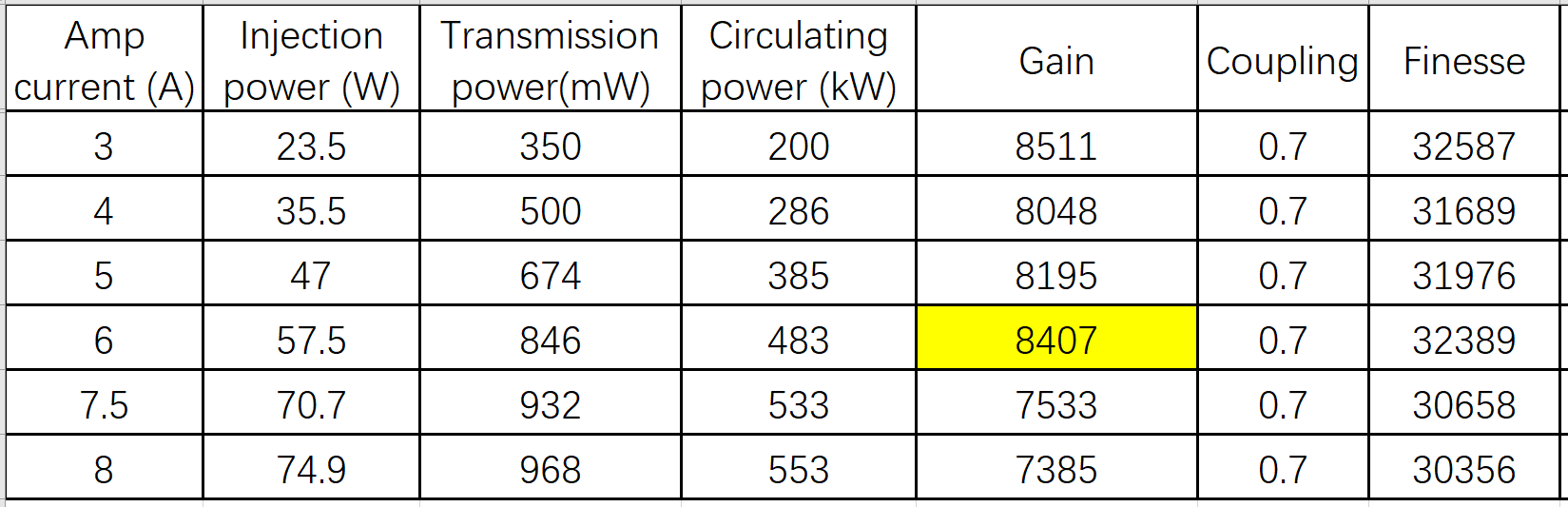 |
| Attachment 2: power_vs_time_550.jpg
| 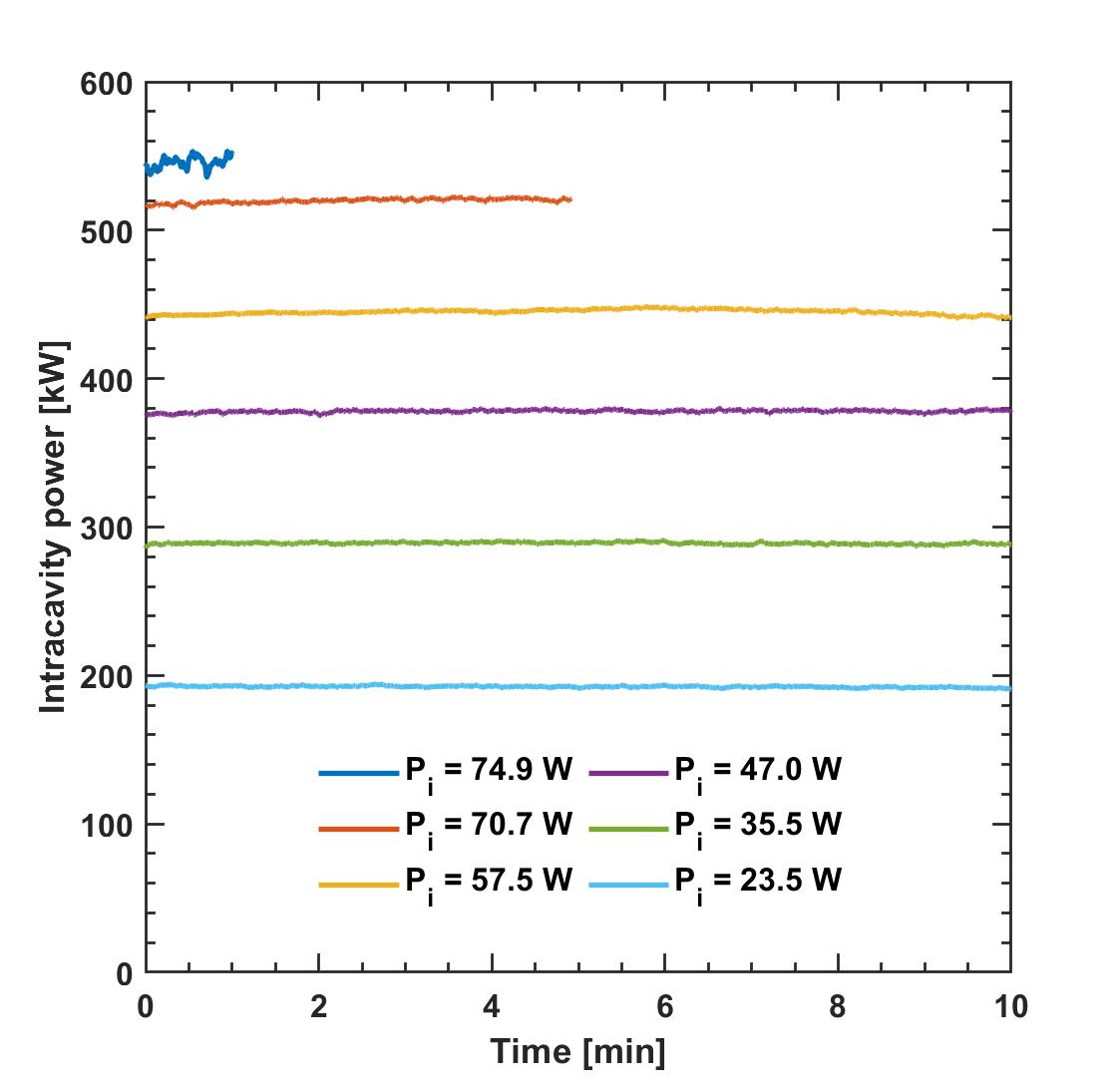 |
| Attachment 3: 1A.JPG
| 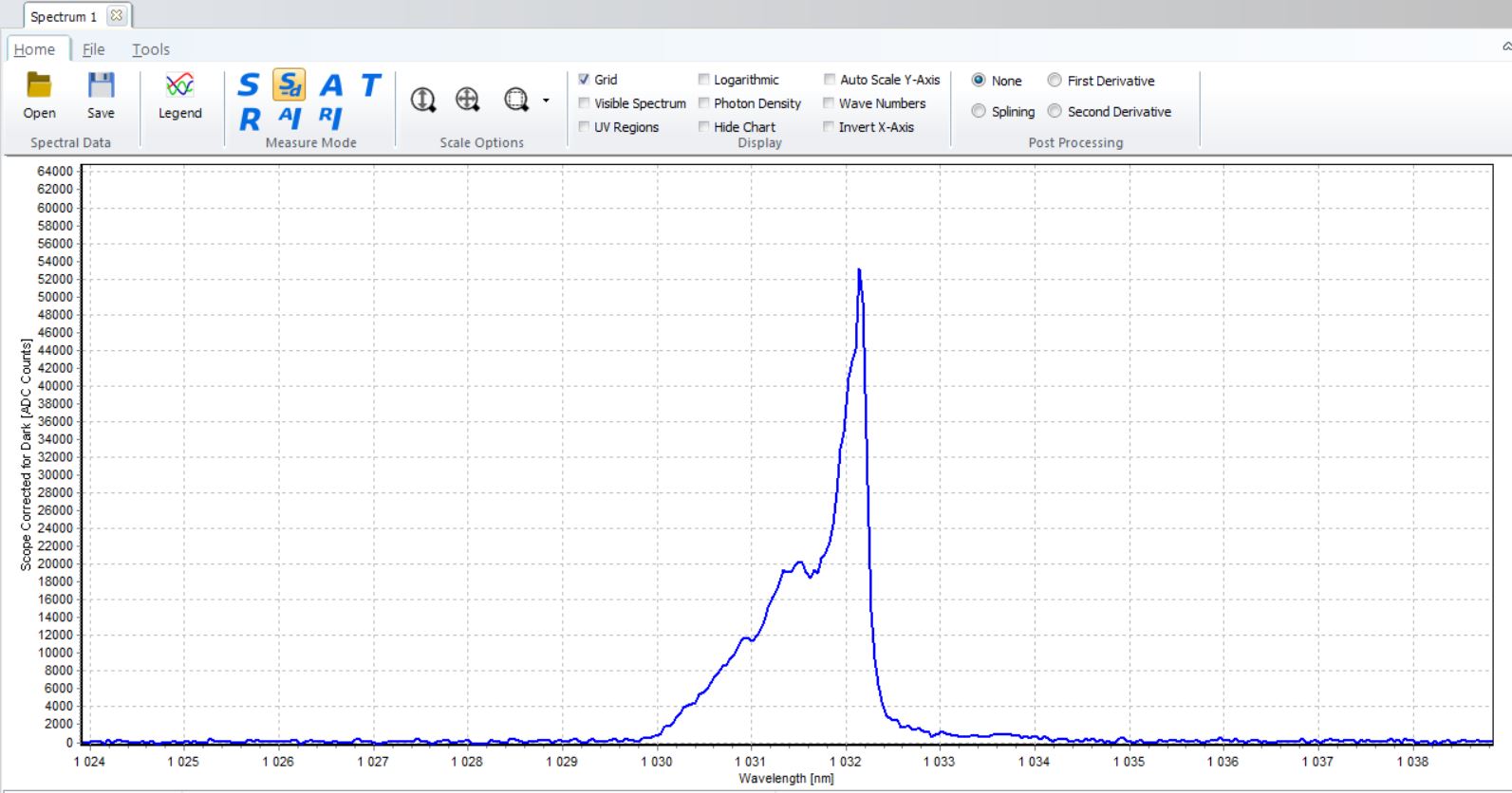 |
|
211
|
Thu Apr 4 21:48:16 2024 |
Xinyi Lu | Fixed | info | lasers and optics | Optical room | Larger beam size & Spectrum | - We re-measured the gain before moving the mirror. Gain ~9000 was achieved at 3A, but as the power increased, the gain dropped and was difficult to optimize. In fact, we found that each day the gain was a little higher than the previous day.
| Amp current (A) |
Injection power (W) |
Circulating power (kW) |
Gain(coupling~0.7) |
Finesse |
| 3 |
23.5 |
213 |
9046 |
33595 |
| 4 |
35.5 |
309 |
8692 |
32933 |
| 5 |
47 |
390 |
8292 |
32165 |
- We then moved the M3 spherical mirror 1.7mm to make the beam size larger and measured the variation in cavity mode size at different powers. (Figure 1, red is the original result and blue is the result for a larger cavity mode). It is clear that the larger the cavity mode, the larger the slope. The new slope of w_y is 7.9mm/MW. Tomorrow we will make the cavity mode smaller (like in Carstens' paper) and compare the three curves.
- It is not simple to compare the gain variations of different cavity modes because it takes more time to optimize the telescope and alignment. Ronic suggested that we could compensate for the cavity mode variation by moving the spherical mirror to see how the gain changes at different powers while keeping the cavity mode unchanged.
- In addition, we measured the spectrum of the menhir laser, after cvgb, amplifier output at 3A (Figure 2). We found that the peak changed from 1031 nm to 1032 nm after CVBG, probably because of the imperfect alignment of CVBG.
| Xinyi Lu wrote: |
|
- Today we moved the position of the D-shaped mirror at 6A. When motor1 (vertical) is 0.2mm away from the spot, the power in the cavity rises from 457kW to 483kW. Gain=8407 is similar to that at low power (Gain=8511). So the D-shaped mirror lost some of the gain in the previous experiments. At 4A and 5A we did not move the D-shaped mirror. (Figure 1)
- At 8A, we got 553 kW inside the cavity for one minute (Figure 2). The pump temperature is higher than yesterday (up to 34°C).
- At 7.5A and 8A, the cavity can remain stably locked, but the power fluctuation in the cavity is so large that it is difficult to optimize the alignment. This may be due to the short time the amplifier was on, the pump temperature, amplifier pointing and power fluctuations, and thermal effects in the cavity....... The amplifier operated differently at different moments.
- We measured the spectrum of the amplified laser. (Figure 3) The peak is 1032.2 nm. We will optimize the alignment and increase the power to optimize this measurement.
- Next arrangement
Thursday: larger laser beam size
Friday: smaller laser beam size
Monday: finesse measurement with CW laser (Firstly check the possibility of measuring with pulsed laser)
| Xinyi Lu wrote: |
|
Yesterday, Ronic, Xing, Qili and I achieved a more stable 520kW power at 7.5A (71W injection) by optimizing the alignment and locking parameters. (Figure 1)
- The cavity can be stable locked when airflow is on. At 7.5A, the pump temperature is about 28℃. The chiller temperature didn't change, to the same 23 ℃ setting. We can try 8A later (75W injection) for a short time;
- Figure 2 demonstrates the cavity mode variation, wy/Pc ~ 1.7 mm/MW, half that of the OL paper (3.3 mm/MW). The thermal deformation of our device is much smaller.
- The experimental data are shown in Figure 3. Figure 4 shows the injection power vs circulating power.
- There are some tests that can be done at the moment. I'll update on the elog after discussing the necessity today. ^_^
|
|
|
| Attachment 1: cavitymode_vs_power_bigger.jpg
| 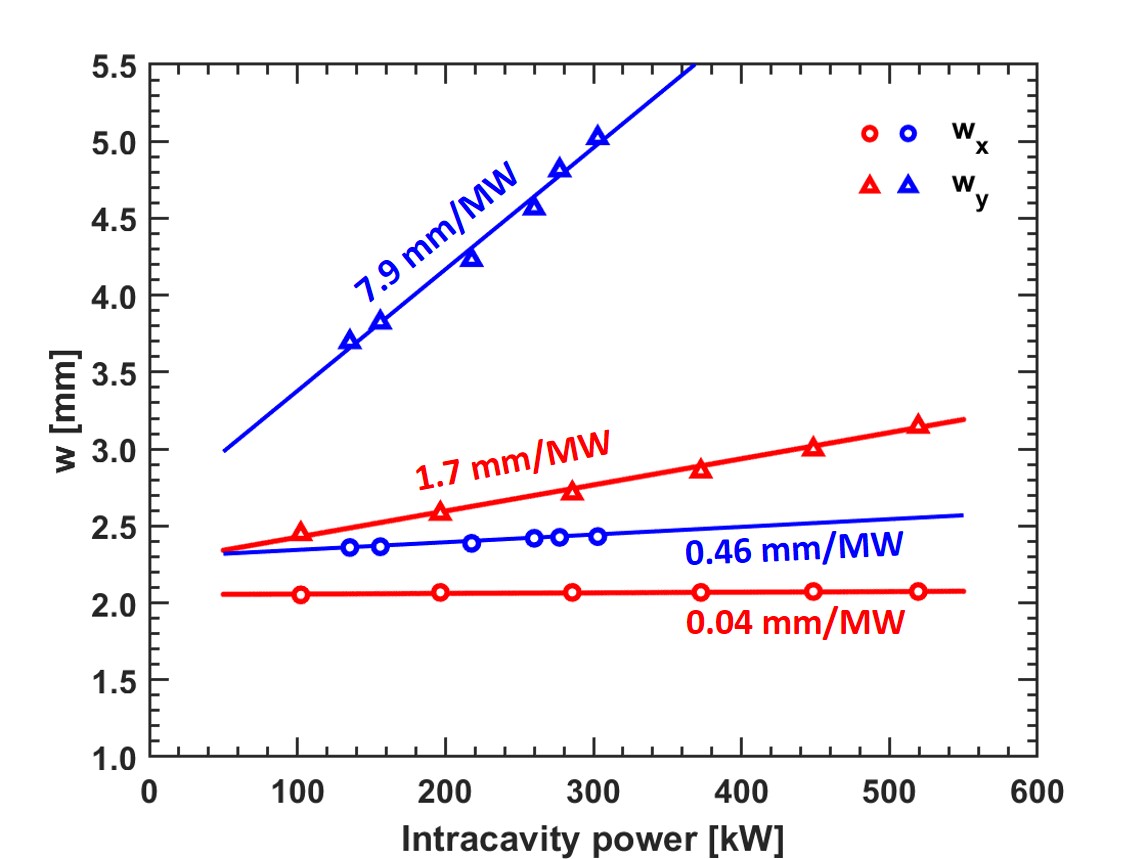 |
| Attachment 2: spectrum.png
| 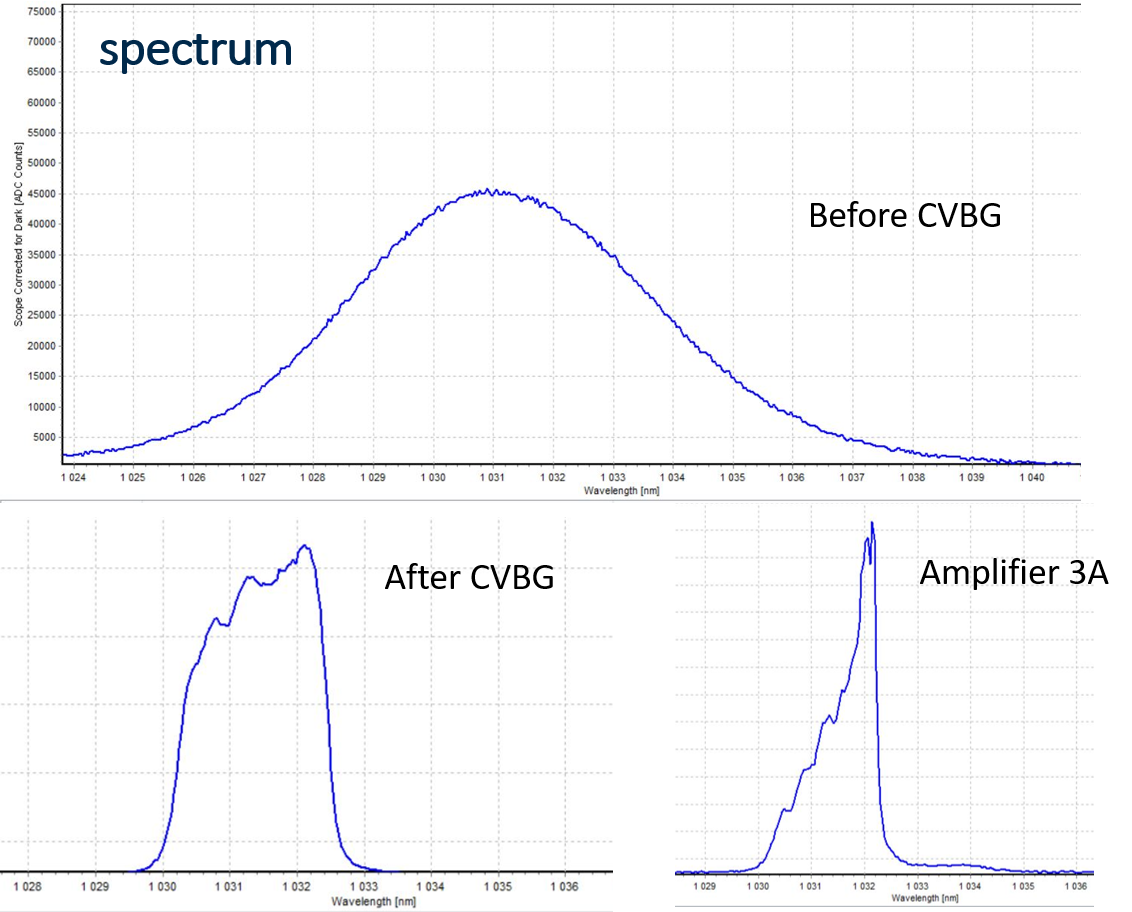 |
|
212
|
Mon Apr 8 08:34:54 2024 |
Xinyi Lu | Fixed | info | lasers and optics | Optical room | Different cavity modes & Pulse width | - Last week, we obtained three curves of the variation of different cavity modes with power (Fig. 1). By comparing the gain for similar cavity mode sizes, we found that the gain always drops with increasing power.
- We measured the pulse width. The pulse width of the seed laser, after CVBG, amplified at 2A was measured by UPD (rise time < 70ps). Code filtering was performed by comparing the data to reduce the effect of rise time. The final result was t= 186 ps after CVBG and t=162 ps for the amplified at 2A.
- Today we will measure finesse using CW laser.
| Xinyi Lu wrote: |
|
- We re-measured the gain before moving the mirror. Gain ~9000 was achieved at 3A, but as the power increased, the gain dropped and was difficult to optimize. In fact, we found that each day the gain was a little higher than the previous day.
| Amp current (A) |
Injection power (W) |
Circulating power (kW) |
Gain(coupling~0.7) |
Finesse |
| 3 |
23.5 |
213 |
9046 |
33595 |
| 4 |
35.5 |
309 |
8692 |
32933 |
| 5 |
47 |
390 |
8292 |
32165 |
- We then moved the M3 spherical mirror 1.7mm to make the beam size larger and measured the variation in cavity mode size at different powers. (Figure 1, red is the original result and blue is the result for a larger cavity mode). It is clear that the larger the cavity mode, the larger the slope. The new slope of w_y is 7.9mm/MW. Tomorrow we will make the cavity mode smaller (like in Carstens' paper) and compare the three curves.
- It is not simple to compare the gain variations of different cavity modes because it takes more time to optimize the telescope and alignment. Ronic suggested that we could compensate for the cavity mode variation by moving the spherical mirror to see how the gain changes at different powers while keeping the cavity mode unchanged.
- In addition, we measured the spectrum of the menhir laser, after cvgb, amplifier output at 3A (Figure 2). We found that the peak changed from 1031 nm to 1032 nm after CVBG, probably because of the imperfect alignment of CVBG.
| Xinyi Lu wrote: |
|
- Today we moved the position of the D-shaped mirror at 6A. When motor1 (vertical) is 0.2mm away from the spot, the power in the cavity rises from 457kW to 483kW. Gain=8407 is similar to that at low power (Gain=8511). So the D-shaped mirror lost some of the gain in the previous experiments. At 4A and 5A we did not move the D-shaped mirror. (Figure 1)
- At 8A, we got 553 kW inside the cavity for one minute (Figure 2). The pump temperature is higher than yesterday (up to 34°C).
- At 7.5A and 8A, the cavity can remain stably locked, but the power fluctuation in the cavity is so large that it is difficult to optimize the alignment. This may be due to the short time the amplifier was on, the pump temperature, amplifier pointing and power fluctuations, and thermal effects in the cavity....... The amplifier operated differently at different moments.
- We measured the spectrum of the amplified laser. (Figure 3) The peak is 1032.2 nm. We will optimize the alignment and increase the power to optimize this measurement.
- Next arrangement
Thursday: larger laser beam size
Friday: smaller laser beam size
Monday: finesse measurement with CW laser (Firstly check the possibility of measuring with pulsed laser)
| Xinyi Lu wrote: |
|
Yesterday, Ronic, Xing, Qili and I achieved a more stable 520kW power at 7.5A (71W injection) by optimizing the alignment and locking parameters. (Figure 1)
- The cavity can be stable locked when airflow is on. At 7.5A, the pump temperature is about 28℃. The chiller temperature didn't change, to the same 23 ℃ setting. We can try 8A later (75W injection) for a short time;
- Figure 2 demonstrates the cavity mode variation, wy/Pc ~ 1.7 mm/MW, half that of the OL paper (3.3 mm/MW). The thermal deformation of our device is much smaller.
- The experimental data are shown in Figure 3. Figure 4 shows the injection power vs circulating power.
- There are some tests that can be done at the moment. I'll update on the elog after discussing the necessity today. ^_^
|
|
|
|
| Attachment 1: cavitymode_vs_power_f.png
| 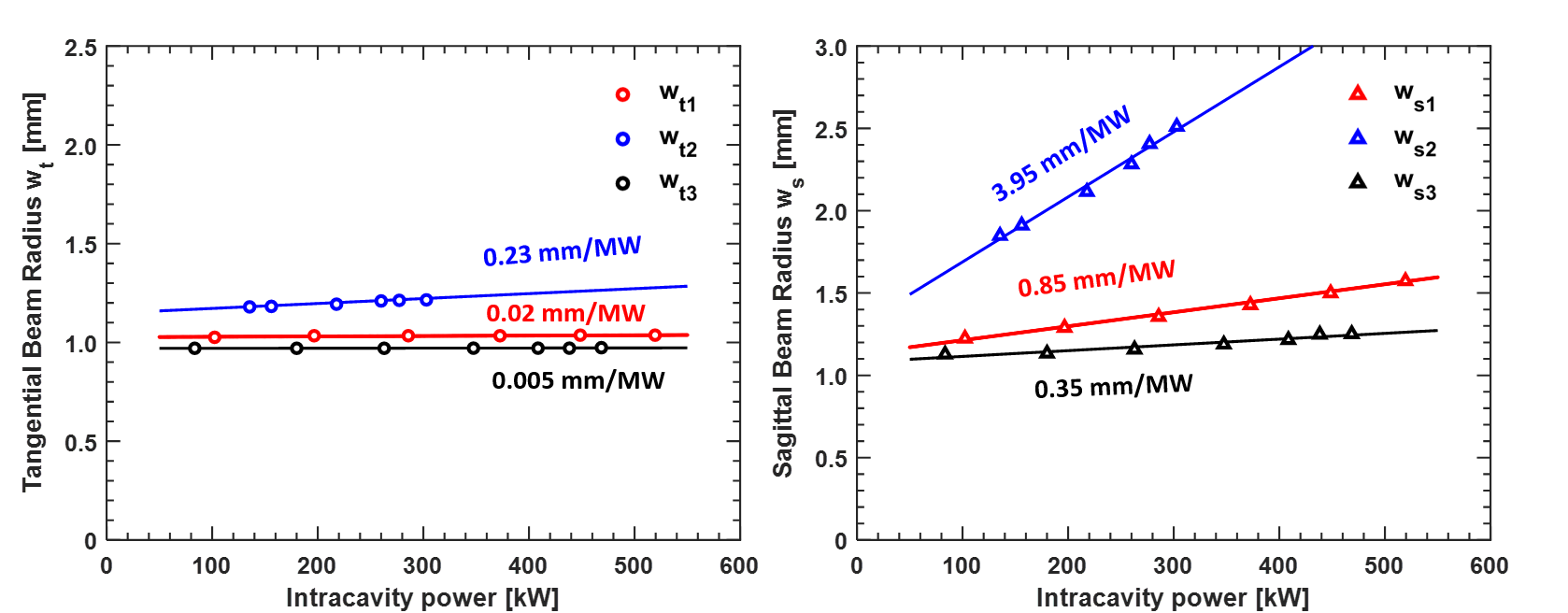 |
| Attachment 2: different_cavity_mode_data.xlsx
|
|
213
|
Tue Apr 9 08:57:22 2024 |
Xinyi Lu | Fixed | info | lasers and optics | Optical room | Different cavity modes & Pulse width | Additional information:
The pulse duration has been performed in RF on a UPD-70-IR2-P photodiode from Alphalas GmbH by carefully deconvoluting the response function of the photodiode measured directly with the sub-picosecond laser beam.
Figure 1 shows the pulse width through the CVBG. Figure 2 is the pulse width when amplified to 10W.
| Xinyi Lu wrote: |
|
- Last week, we obtained three curves of the variation of different cavity modes with power (Fig. 1). By comparing the gain for similar cavity mode sizes, we found that the gain always drops with increasing power.
- We measured the pulse width. The pulse width of the seed laser, after CVBG, amplified at 2A was measured by UPD (rise time < 70ps). Code filtering was performed by comparing the data to reduce the effect of rise time. The final result was t= 186 ps after CVBG and t=162 ps for the amplified at 2A.
- Today we will measure finesse using CW laser.
| Xinyi Lu wrote: |
|
- We re-measured the gain before moving the mirror. Gain ~9000 was achieved at 3A, but as the power increased, the gain dropped and was difficult to optimize. In fact, we found that each day the gain was a little higher than the previous day.
| Amp current (A) |
Injection power (W) |
Circulating power (kW) |
Gain(coupling~0.7) |
Finesse |
| 3 |
23.5 |
213 |
9046 |
33595 |
| 4 |
35.5 |
309 |
8692 |
32933 |
| 5 |
47 |
390 |
8292 |
32165 |
- We then moved the M3 spherical mirror 1.7mm to make the beam size larger and measured the variation in cavity mode size at different powers. (Figure 1, red is the original result and blue is the result for a larger cavity mode). It is clear that the larger the cavity mode, the larger the slope. The new slope of w_y is 7.9mm/MW. Tomorrow we will make the cavity mode smaller (like in Carstens' paper) and compare the three curves.
- It is not simple to compare the gain variations of different cavity modes because it takes more time to optimize the telescope and alignment. Ronic suggested that we could compensate for the cavity mode variation by moving the spherical mirror to see how the gain changes at different powers while keeping the cavity mode unchanged.
- In addition, we measured the spectrum of the menhir laser, after cvgb, amplifier output at 3A (Figure 2). We found that the peak changed from 1031 nm to 1032 nm after CVBG, probably because of the imperfect alignment of CVBG.
| Xinyi Lu wrote: |
|
- Today we moved the position of the D-shaped mirror at 6A. When motor1 (vertical) is 0.2mm away from the spot, the power in the cavity rises from 457kW to 483kW. Gain=8407 is similar to that at low power (Gain=8511). So the D-shaped mirror lost some of the gain in the previous experiments. At 4A and 5A we did not move the D-shaped mirror. (Figure 1)
- At 8A, we got 553 kW inside the cavity for one minute (Figure 2). The pump temperature is higher than yesterday (up to 34°C).
- At 7.5A and 8A, the cavity can remain stably locked, but the power fluctuation in the cavity is so large that it is difficult to optimize the alignment. This may be due to the short time the amplifier was on, the pump temperature, amplifier pointing and power fluctuations, and thermal effects in the cavity....... The amplifier operated differently at different moments.
- We measured the spectrum of the amplified laser. (Figure 3) The peak is 1032.2 nm. We will optimize the alignment and increase the power to optimize this measurement.
- Next arrangement
Thursday: larger laser beam size
Friday: smaller laser beam size
Monday: finesse measurement with CW laser (Firstly check the possibility of measuring with pulsed laser)
| Xinyi Lu wrote: |
|
Yesterday, Ronic, Xing, Qili and I achieved a more stable 520kW power at 7.5A (71W injection) by optimizing the alignment and locking parameters. (Figure 1)
- The cavity can be stable locked when airflow is on. At 7.5A, the pump temperature is about 28℃. The chiller temperature didn't change, to the same 23 ℃ setting. We can try 8A later (75W injection) for a short time;
- Figure 2 demonstrates the cavity mode variation, wy/Pc ~ 1.7 mm/MW, half that of the OL paper (3.3 mm/MW). The thermal deformation of our device is much smaller.
- The experimental data are shown in Figure 3. Figure 4 shows the injection power vs circulating power.
- There are some tests that can be done at the moment. I'll update on the elog after discussing the necessity today. ^_^
|
|
|
|
|
| Attachment 1: t_cvbg.png
| 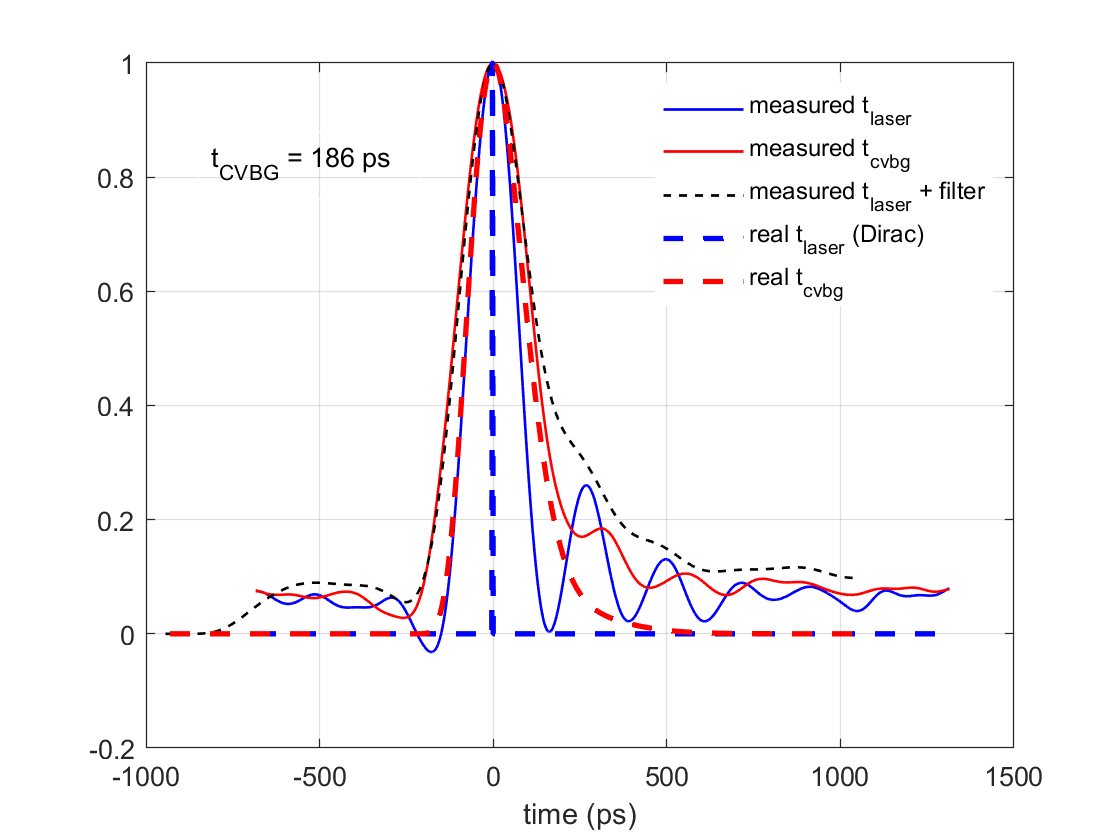 |
| Attachment 2: t_amp.png
| 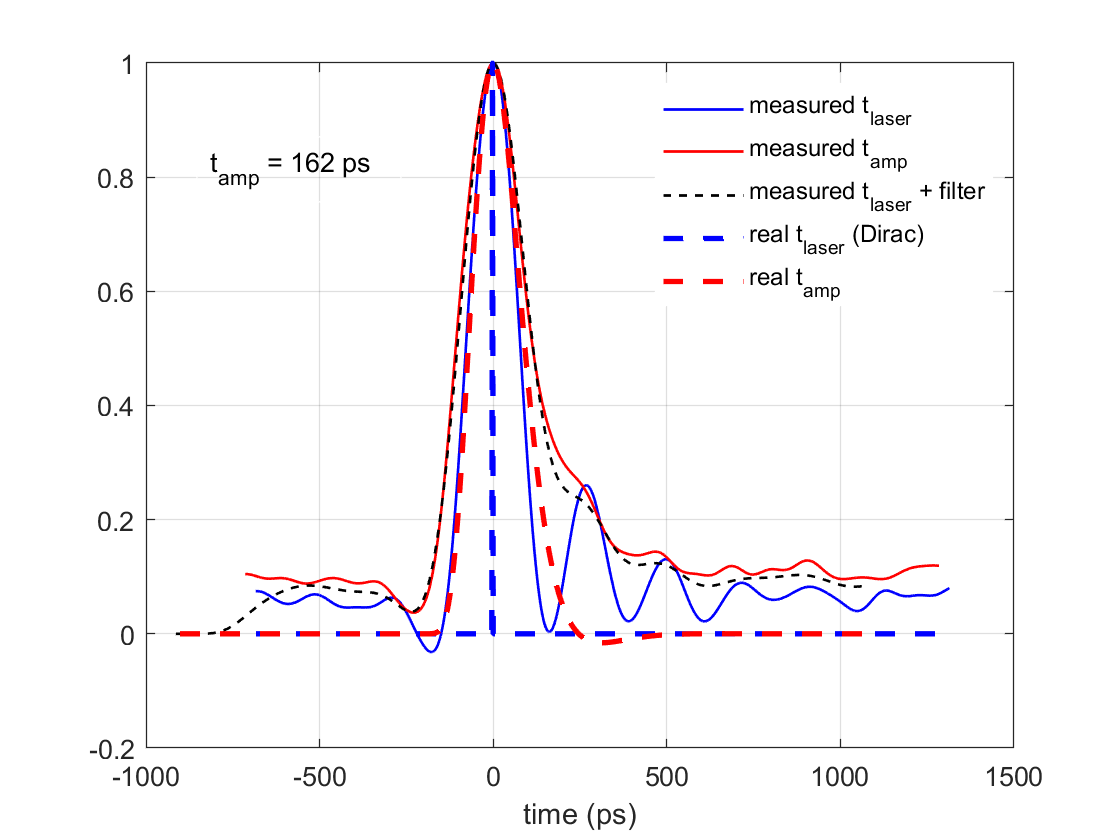 |
|
214
|
Wed Apr 10 11:35:54 2024 |
Xinyi Lu | Fixed | info | lasers and optics | Optical room | Finesse measurement (35k) | These days, Ronic, Aurélien and I use OEwaves CW laser to measure the finesse of SBOX. We made 5 measurements at 100kHz / 4s sweeps.
The finesse is around 35k (see Figure 1), corresponding to an enhancement factor of 14k.
In our experiments, we only saw up to 9k gain with 70% coupling, corresponding to an enhancement factor of 12.8k.
It could be because of the additional losses introduced by the high power, or the mirror became cleaner after the experiment......
Additionally, we found that the output of the OEwaves CW laser was not a perfect circle, with a depression at the edge of the circle. |
| Attachment 1: 5_measurements_of_finesse.png
|  |
| Attachment 2: fit.png
| 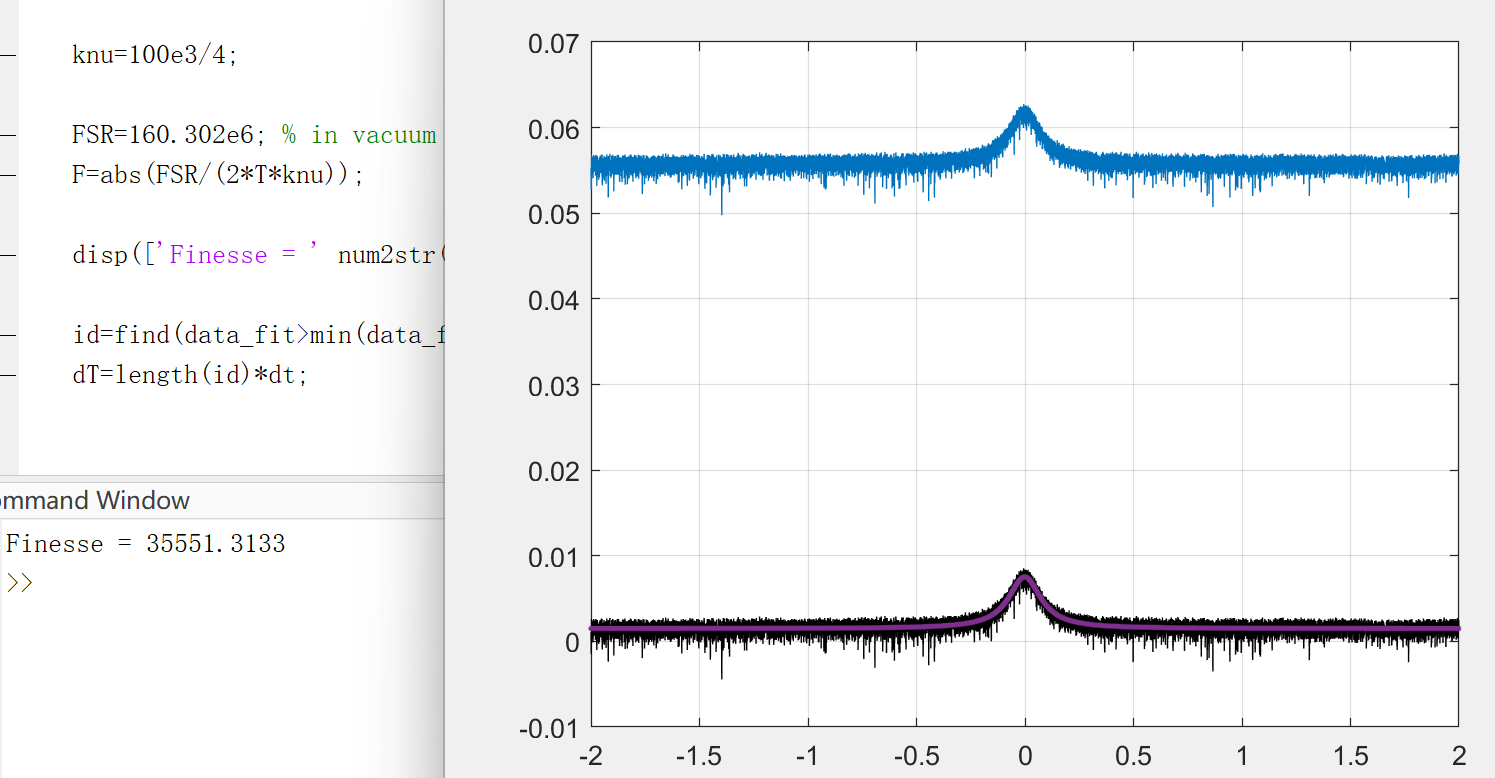 |
|
215
|
Thu Apr 11 19:09:21 2024 |
Xinyi Lu | Fixed | info | lasers and optics | Optical room | Install 2-mirror cavity | Today, Viktor and I started installing the two-mirror cavity.
- Firstly, we cleaned the environment and the dust counter showed good cleanliness
- After opening the cavity we tried to determine the source of the strange spot with a laser detection card and found that the beam was very close to the front edge of the longitudinal D-shaped mirror. In addition there was nothing else strange.
- The setup of the two-mirror cavity is shown in Figure 1. We have to use the menhir laser of 216MHz. The mirrors used are shown in Figure 2.
- We have installed the M2 and will continue the installation tomorrow. |
| Attachment 1: 2_mirror_setup.png
| 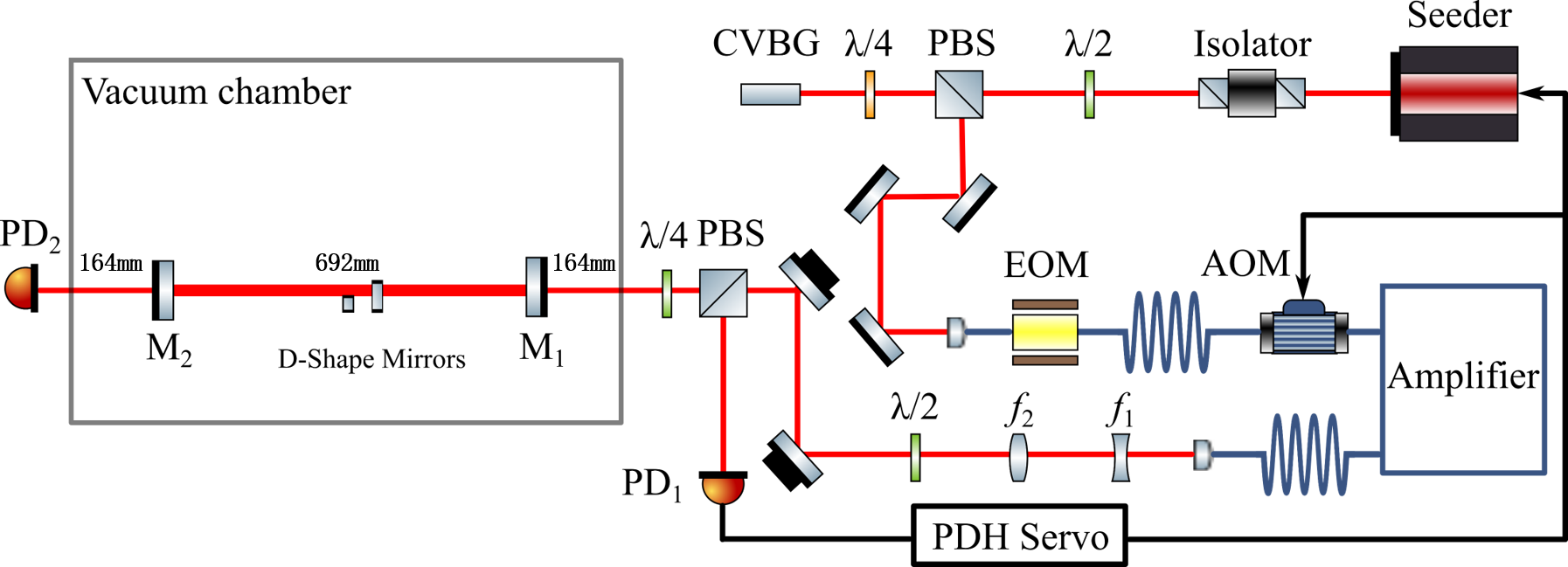 |
| Attachment 2: mirrors.png
|  |
|
216
|
Fri Apr 12 17:18:15 2024 |
Xinyi Lu | Fixed | info | lasers and optics | Optical room | Install 2-mirror cavity | Today Viktor and I completed the installation of the two-mirror cavity and managed to lock and measure the finesse.
- The finesse is 36k now (see figure 1). For the designed value of the mirror, the expected finesse is ~50k.
- The diameter of M2 transmission is 1.67 mm,1.65 mm (see figure 2).
- The installation process took a lot of time in orienting the PBS. In addition, we found that the cavity reflected beam and the window reflected beam would interfere (see figure 3). The small spot in the lower right corner is the window reflected light.
- We need to discuss whether the next step is to clean the mirrors or vacuum and move on.
| Xinyi Lu wrote: |
|
Today, Viktor and I started installing the two-mirror cavity.
- Firstly, we cleaned the environment and the dust counter showed good cleanliness
- After opening the cavity we tried to determine the source of the strange spot with a laser detection card and found that the beam was very close to the front edge of the longitudinal D-shaped mirror. In addition there was nothing else strange.
- The setup of the two-mirror cavity is shown in Figure 1. We have to use the menhir laser of 216MHz. The mirrors used are shown in Figure 2.
- We have installed the M2 and will continue the installation tomorrow.
|
|
| Attachment 1: finesse_2mirror.png
| 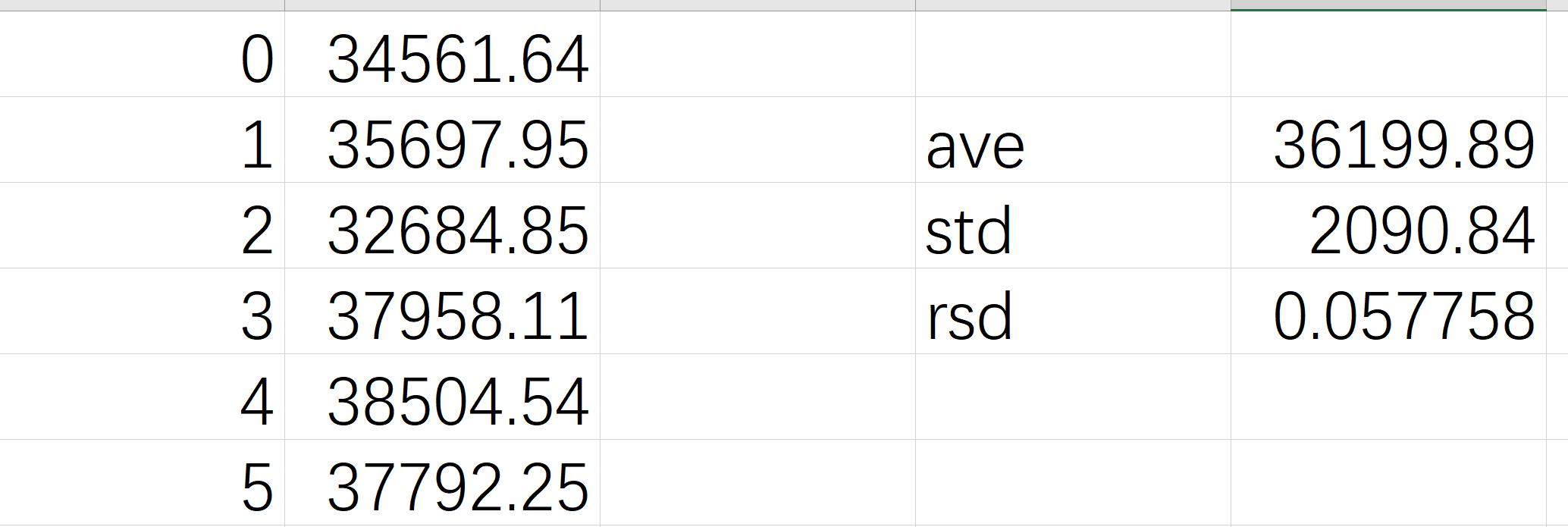 |
| Attachment 2: Screenshot_2024-04-12_170357.png
| 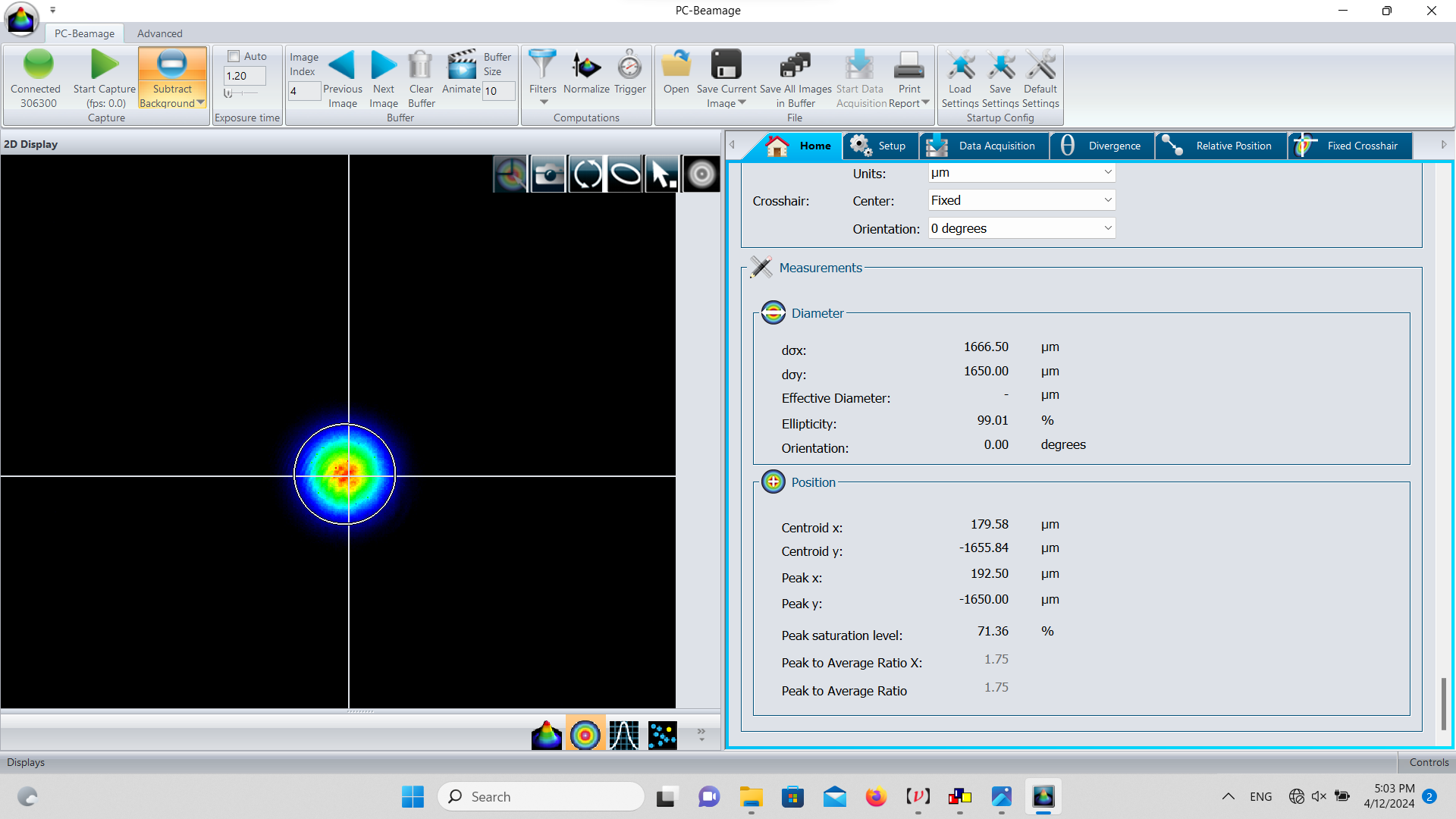 |
| Attachment 3: Screenshot_2024-04-12_145025.png
|  |
|
217
|
Mon Apr 15 18:19:40 2024 |
Xinyi Lu | Fixed | info | lasers and optics | Optical room | Finesse measurement of 2-mirror cavity | - Today Daniele and I cleaned the spherical mirror by wiping it with alcohol, and the finesse increased to 47k in air.
- After vacuuming, the final finesse is about 45k. The enhancement factor is expected to be 23k.
- Then we tuned the cavity length, FSR = 216.666 MHz. Aurélien helped us to install the menhir laser of 216 MHz.
- Tomorrow we will optimize the optical path and inject the laser into the fiber.
| Xinyi Lu wrote: |
|
Today Viktor and I completed the installation of the two-mirror cavity and managed to lock and measure the finesse.
- The finesse is 36k now (see figure 1). For the designed value of the mirror, the expected finesse is ~50k.
- The diameter of M2 transmission is 1.67 mm,1.65 mm (see figure 2).
- The installation process took a lot of time in orienting the PBS. In addition, we found that the cavity reflected beam and the window reflected beam would interfere (see figure 3). The small spot in the lower right corner is the window reflected light.
- We need to discuss whether the next step is to clean the mirrors or vacuum and move on.
| Xinyi Lu wrote: |
|
Today, Viktor and I started installing the two-mirror cavity.
- Firstly, we cleaned the environment and the dust counter showed good cleanliness
- After opening the cavity we tried to determine the source of the strange spot with a laser detection card and found that the beam was very close to the front edge of the longitudinal D-shaped mirror. In addition there was nothing else strange.
- The setup of the two-mirror cavity is shown in Figure 1. We have to use the menhir laser of 216MHz. The mirrors used are shown in Figure 2.
- We have installed the M2 and will continue the installation tomorrow.
|
|
|
| Attachment 1: finesse_45k.png
| 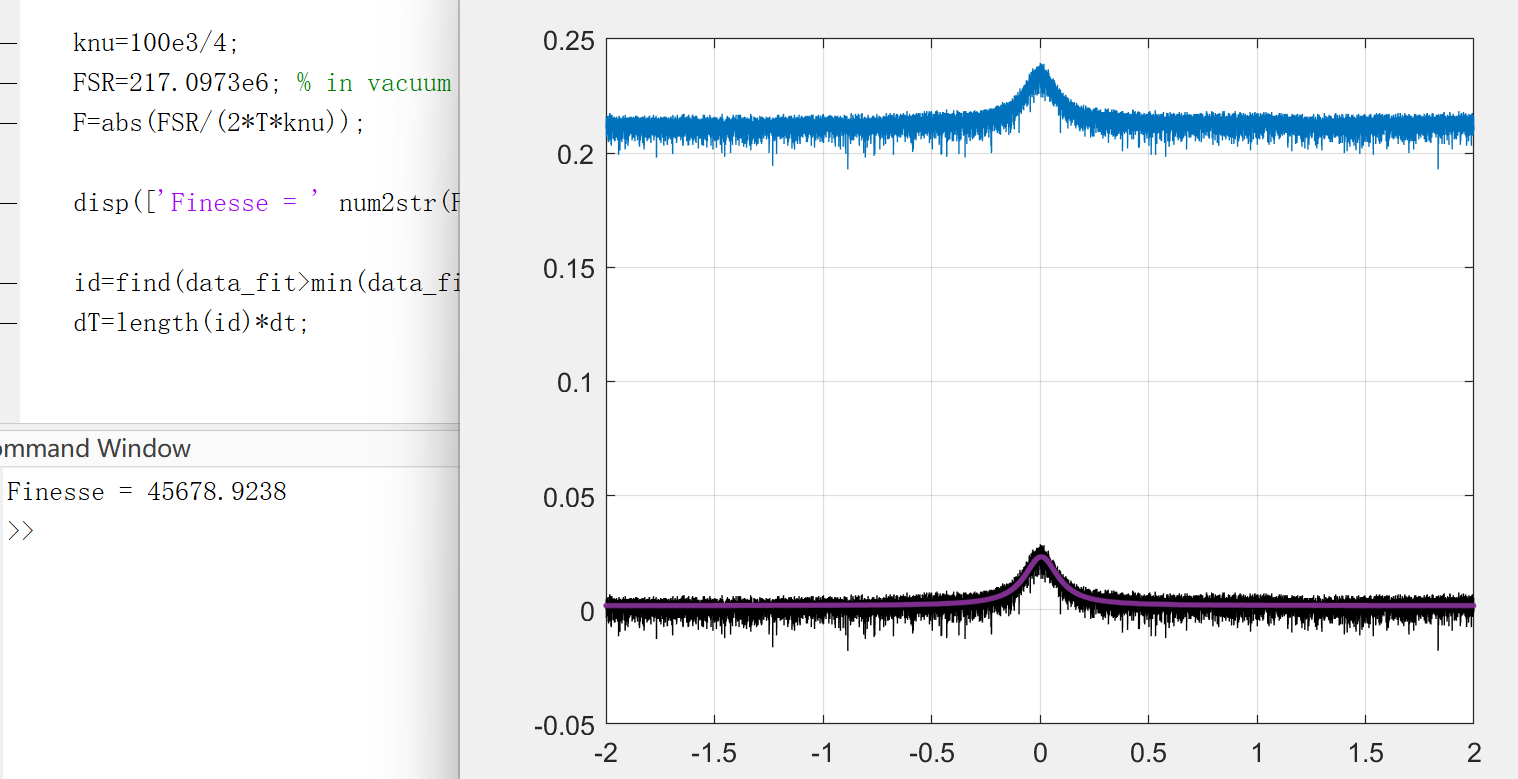 |
|
218
|
Tue Apr 16 18:38:04 2024 |
Xinyi Lu | Fixed | info | lasers and optics | Optical room | Fiber injection, spectrum and connection of 2nd stage amplifier | Today, Daniele and I injected the laser into the fiber, installed the telescope, connected the second stage of the amplifier, and obtained resonances.
- The output power of the menhir laser @ 216MHz is 150mW, after CVBG is 28mW , 9.6mW injected into the fiber, and 1.6mW via AOM and EOM. This is not far from the minimum 1mW seed power required by the amplifier.
- The spectrum after CVBG is shown in Figure 1.
- The waist of this 2-mirror cavity is 0.583 mm, and the position is on the M1. A set of telescopes is designed and installed as in Figure 2.
- We injected the second stage of the amplifier into the cavity and obtained fundamental mode. Aurélien and I are trying to lock it. |
| Attachment 1: CVBG_inject_to_fiber.png
| 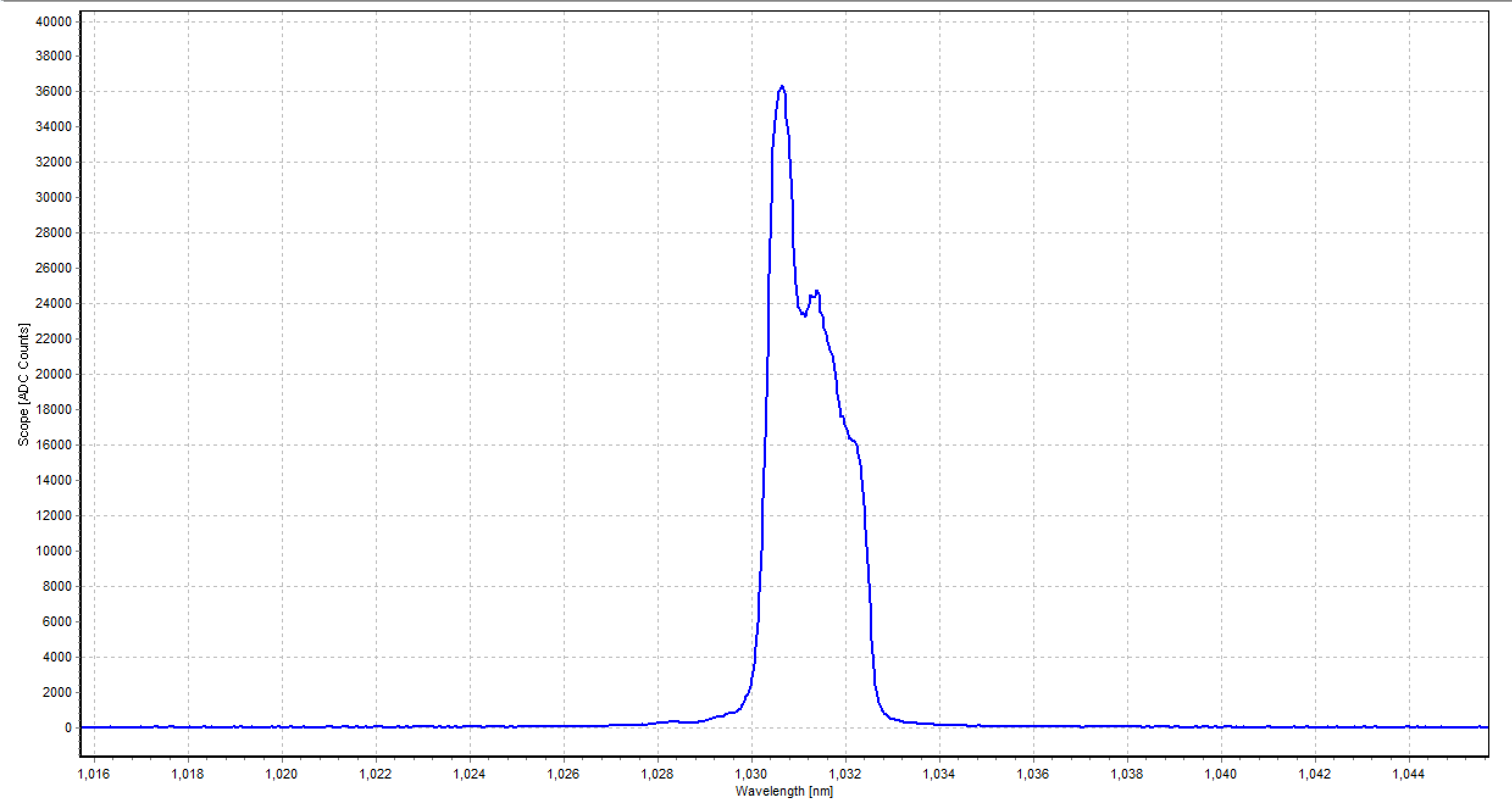 |
| Attachment 2: telescope.png
| 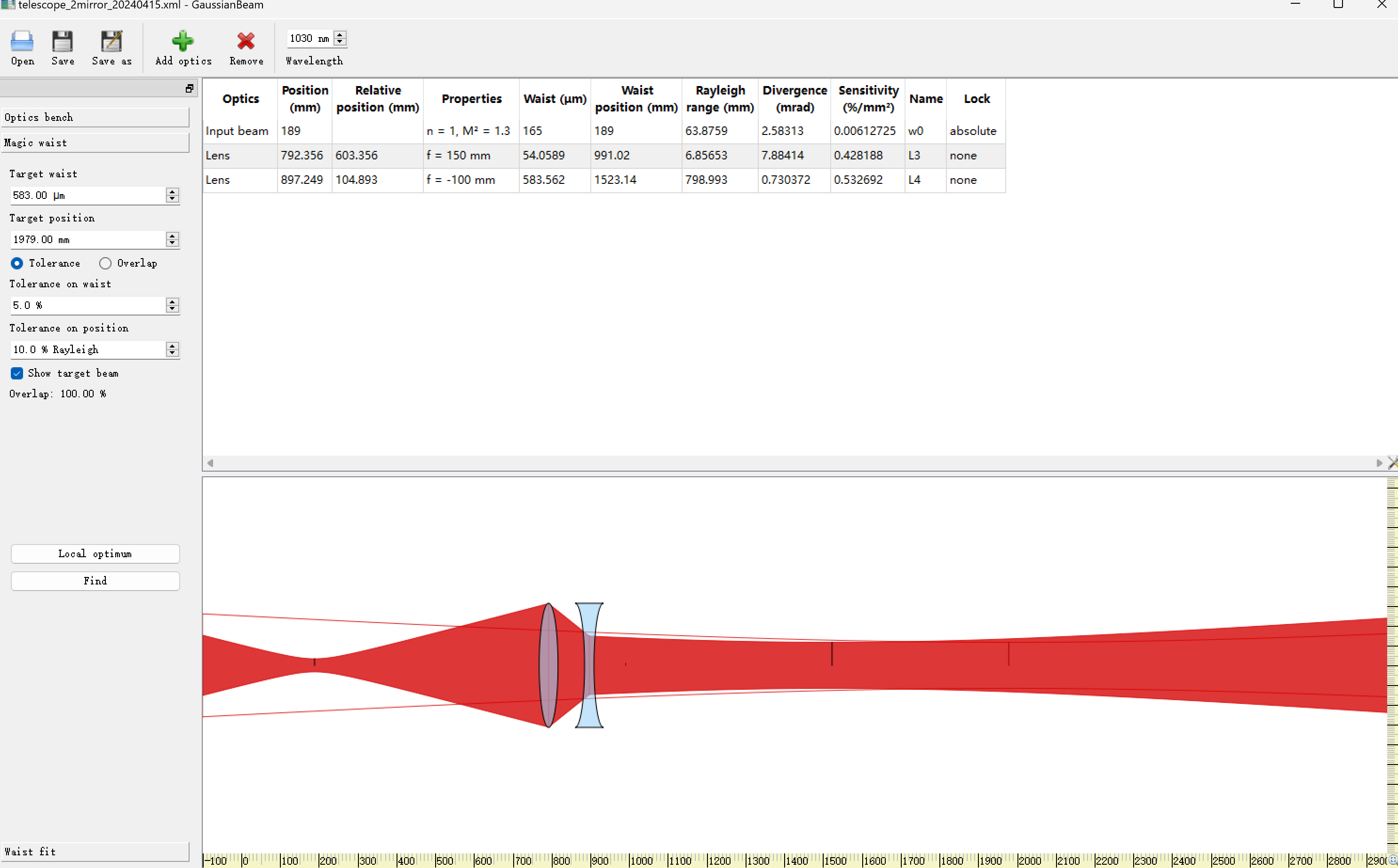 |
|
219
|
Thu Apr 25 22:12:25 2024 |
Xinyi Lu | Fixed | info | lasers and optics | Optical room | 2 mirror cavity high power experiments | Today, Ronic and I recorded some intracavity power and cavity mode size as shown in Fig. 1.
Coupling was calculated using the locking curve of this overcoupled cavity. Pr/Pi = 1-Cgeo*Cimp, Cimp = 1-|1-2T1/RTL|^2
We can see that the effective gain, coupling, and mode size decrease with increasing power. And the beam is constantly moving.
Tomorrow we will try to optimize the telescope for the high-power hot cavity.
|
| Attachment 1: record_20240425.png
|  |
| Attachment 2: Screenshot_2024-04-25_4_155354-155kw.png
| 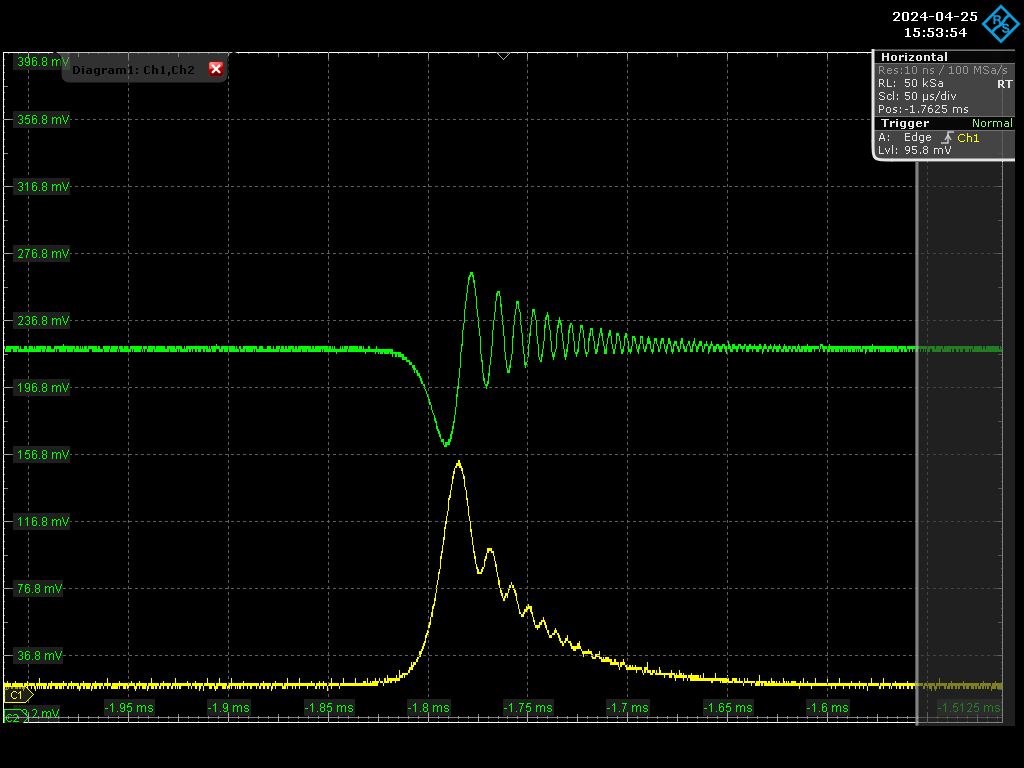 |
| Attachment 3: Screenshot_2024-04-25_1_154630-155kw.png
| 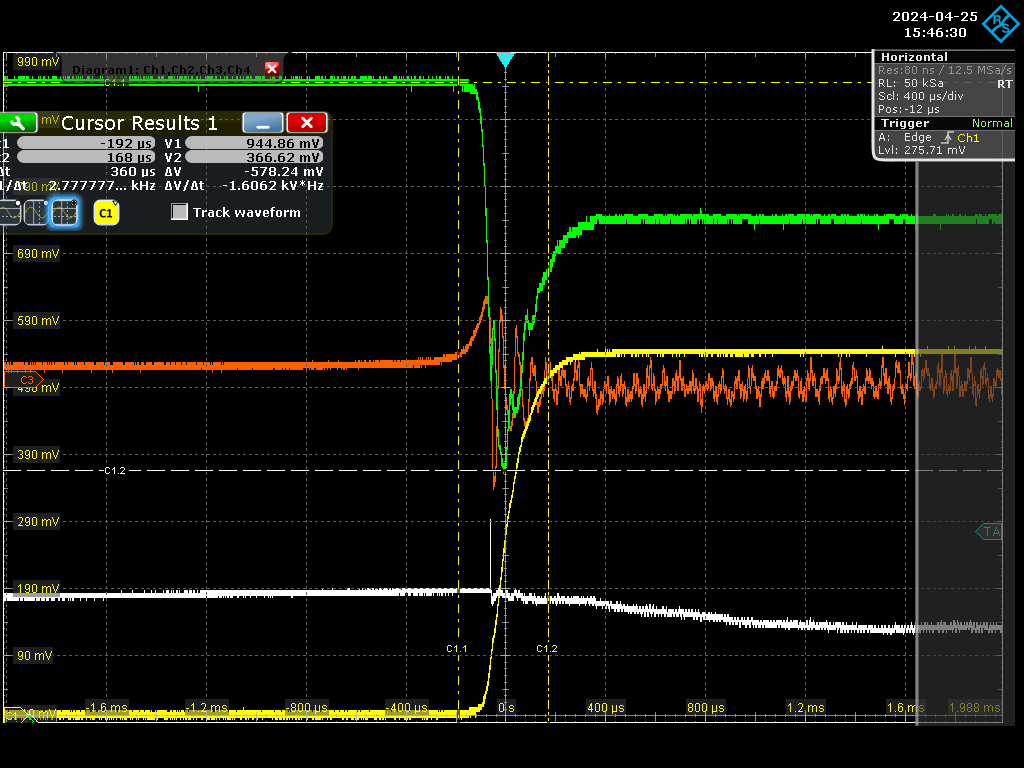 |
| Attachment 4: 60kW_highordermode2.jpg
|  |
|
220
|
Mon May 6 18:38:18 2024 |
Xinyi Lu | Fixed | info | lasers and optics | Optical room | high-power experiments of 2-mirror cavity | Today, Ronic, Daniele and I redo the high-power 2-mirror cavity experiments, and the results are shown in the table (Figure 1 and Excel 2 ).
- The intracavity power ~500kW can be obtained at 47W injection, but we then have no increase or even a decrease in intracavity power when increasing the injection power, and the coupling is decreasing. It looks like the saturation power of the current device.
- We moved the telescope last week at 2A by moving the concave lens 0.5cm closer to the cavity but almost no change in intracavity power (195kW to 193kW). The telescopes for today's experiment are in the new locations from last week, and we didn't move them today.
- Figure 3 shows the locking curve at 500kW with some thermal effect changes.
- Figure 4 shows the de-lock and to-lock curves at 14kW.
- The current results may be due to two causes, the thermal lensing effect and the physical change in the mirror coating. It is possible that the transmission of the two mirrors changes with temperature.
- The next plan is to adjust the telescope at 4A to see if we can increase the intracavity power. Meanwhile, do some simulations about dynamic locking, coupling rate, and transmittance.
| Xinyi Lu wrote: |
|
Today, Ronic and I recorded some intracavity power and cavity mode size as shown in Fig. 1.
Coupling was calculated using the locking curve of this overcoupled cavity. Pr/Pi = 1-Cgeo*Cimp, Cimp = 1-|1-2T1/RTL|^2
We can see that the effective gain, coupling, and mode size decrease with increasing power. And the beam is constantly moving.
Tomorrow we will try to optimize the telescope for the high-power hot cavity.
|
|
| Attachment 1: record_20240506.png
| 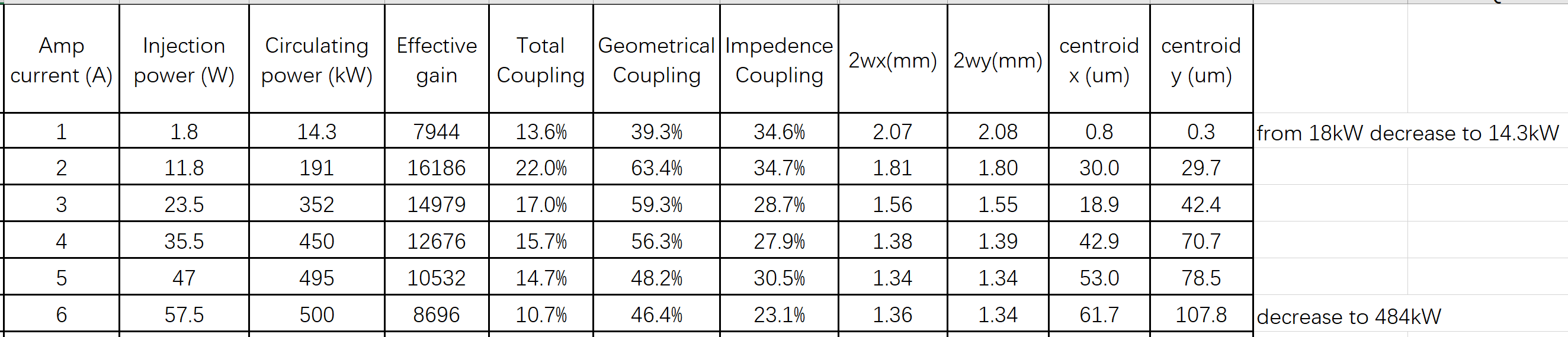 |
| Attachment 2: record20240506.xlsx
|
| Attachment 3: Screenshot_2024-05-06_11_145855-500kW.png
| 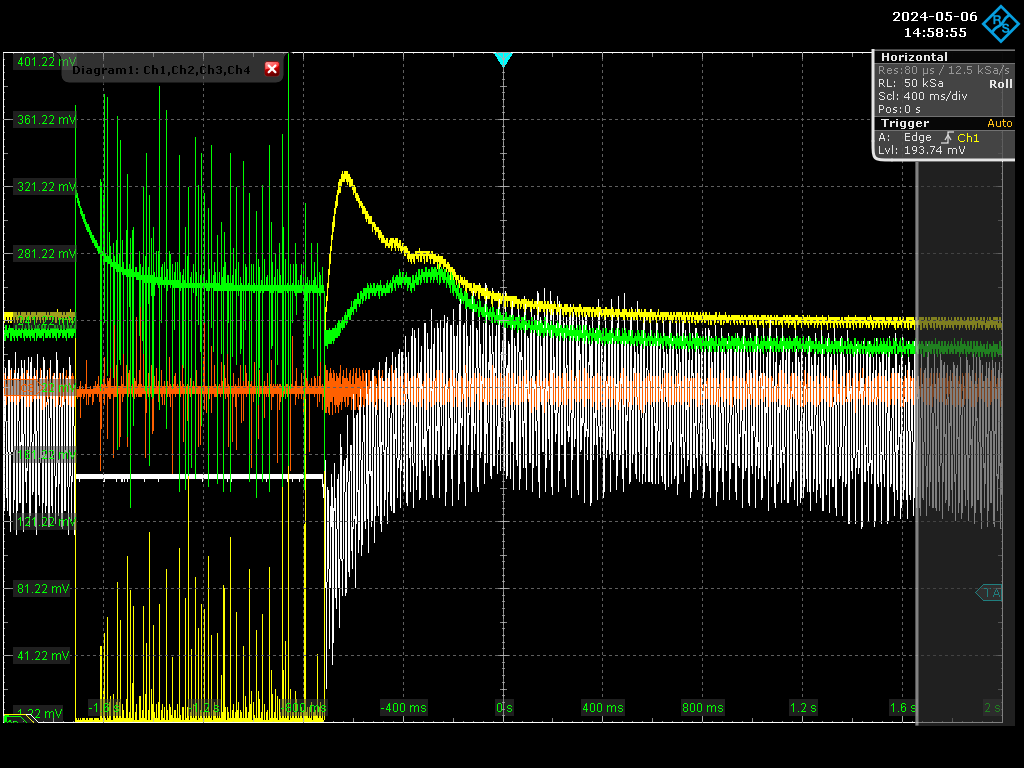 |
| Attachment 4: Screenshot_2024-05-06_1_112931-14kW.png
|  |
|
221
|
Thu May 16 18:51:17 2024 |
Xinyi Lu | Fixed | info | lasers and optics | Optical room | high-power experiments of 2-mirror cavity | here is a Matlab code to try to optimize the telescope for a hot cavity,
taking into account the thermal lens in the coupling mirror.
from that code, one can deduce using the "Gaussian Beam" software (using the attached xml file) an optimized telescope with 100% geometrical coupling @ Pcav = 700kW and absorption in the coatings = 0.6ppm
| Xinyi Lu wrote: |
|
Today, Ronic, Daniele and I redo the high-power 2-mirror cavity experiments, and the results are shown in the table (Figure 1 and Excel 2 ).
- The intracavity power ~500kW can be obtained at 47W injection, but we then have no increase or even a decrease in intracavity power when increasing the injection power, and the coupling is decreasing. It looks like the saturation power of the current device.
- We moved the telescope last week at 2A by moving the concave lens 0.5cm closer to the cavity but almost no change in intracavity power (195kW to 193kW). The telescopes for today's experiment are in the new locations from last week, and we didn't move them today.
- Figure 3 shows the locking curve at 500kW with some thermal effect changes.
- Figure 4 shows the de-lock and to-lock curves at 14kW.
- The current results may be due to two causes, the thermal lensing effect and the physical change in the mirror coating. It is possible that the transmission of the two mirrors changes with temperature.
- The next plan is to adjust the telescope at 4A to see if we can increase the intracavity power. Meanwhile, do some simulations about dynamic locking, coupling rate, and transmittance.
| Xinyi Lu wrote: |
|
Today, Ronic and I recorded some intracavity power and cavity mode size as shown in Fig. 1.
Coupling was calculated using the locking curve of this overcoupled cavity. Pr/Pi = 1-Cgeo*Cimp, Cimp = 1-|1-2T1/RTL|^2
We can see that the effective gain, coupling, and mode size decrease with increasing power. And the beam is constantly moving.
Tomorrow we will try to optimize the telescope for the high-power hot cavity.
|
|
|
| Attachment 1: telescope_optimization_for_700kW.pdf
|
| Attachment 2: 2_Mirrors_-_216MHz_-_700kW_cavity_setup.xml
|
<?xml version="1.0" encoding="UTF-8"?>
<!DOCTYPE gaussianBeam>
<gaussianBeam version="1.1">
    <bench id="0">
        <wavelength>1.03e-06</wavelength>
        <leftBoundary>0</leftBoundary>
        <rightBoundary>3</rightBoundary>
        <targetBeam id="0">
            <position>1.884</position>
            <waist>0.0005927</waist>
            <positionTolerance>0.1</positionTolerance>
            <waistTolerance>0.01</waistTolerance>
            <minOverlap>0.98</minOverlap>
            <overlapCriterion>0</overlapCriterion>
        </targetBeam>
        <beamFit id="0">
            <name>Fit0</name>
            <dataType>1</dataType>
            <color>4278190335</color>
            <data id="0">
                <position>0</position>
                <value>0</value>
            </data>
            <data id="1">
                <position>0</position>
                <value>0</value>
            </data>
            <data id="2">
                <position>0</position>
                <value>0</value>
            </data>
        </beamFit>
        <opticsList>
            <inputBeam id="2">
                <waist>0.0001447</waist>
                <index>1</index>
                <M2>1</M2>
                <position>0.189</position>
                <name>w0</name>
                <absoluteLock>1</absoluteLock>
            </inputBeam>
            <lens id="5">
                <focal>0.25</focal>
                <position>1</position>
                <name>L3</name>
                <absoluteLock>0</absoluteLock>
            </lens>
            <lens id="6">
                <focal>-0.15</focal>
                <position>1.25</position>
                <name>L4</name>
                <absoluteLock>0</absoluteLock>
            </lens>
            <lens id="11">
                <focal>0.457</focal>
                <position>1.979</position>
                <name>L4</name>
                <absoluteLock>1</absoluteLock>
            </lens>
            <dielectricSlab id="8">
                <indexRatio>1</indexRatio>
                <width>0.01</width>
                <position>1.979</position>
                <name>D2</name>
                <absoluteLock>1</absoluteLock>
            </dielectricSlab>
            <dielectricSlab id="7">
                <indexRatio>1</indexRatio>
                <width>0.01</width>
                <position>2.6708</position>
                <name>D1</name>
                <absoluteLock>1</absoluteLock>
            </dielectricSlab>
        </opticsList>
    </bench>
    <view id="0" bench="0">
        <horizontalRange>3</horizontalRange>
        <verticalRange>0.009999</verticalRange>
        <origin>0</origin>
        <showTargetBeam id="0">1</showTargetBeam>
    </view>
</gaussianBeam>
|
| Attachment 3: cavity_2M_dynamic_thermal_effect.m
|
clear
clc

c=3e8;
lambda=1030e-9;
Pin=35;
Gcav=20e3;

%% 2M-cavity geometrical setup definition
FSR=216.67e6;           % Free Spectral Range of the FP-cavity
Lrt=c/FSR;              % round trip distance in the FP-cavity
L=Lrt/2;                % distance between mirrors
iR10=0;                 % cold ROC of M1
iR20=1/2.241;           % cold ROC of M2

%% 2M-cavity thermal setup definition
A_Coating=0.6e-6;       % absorption in the coatings
% Heraeus Suprasil 3001 parameters
n_Sup3001=1.45;         % refractive index for Fused Silica
A_Sup3001=0.3e-6;       % 0.3+/-0.2 ppm/cm @ 1064nm
kappa_Sup3001=1.38;     % 1.38 W/m/K @ 20°C    / 1.46W/m/K @ 100°C
alpha_Sup3001=0.6e-6;   % 0.51ppm/K @ 0-100°C / 0.59ppm/K @ 0-300°C
beta_Sup3001=8e-6;      % cf Suprasil 3001 documentation
% Corning 7972 ULE parameters
n_ULE=1.45;             % refractive index for ULE
kappa_ULE=1.31;         % 1.31 W/m/K @ 25°C
alpha_ULE=10e-9;        % Premium grade < 10ppb/K
beta_ULE=11e-6;         % 11.24ppm/K @ 40-60°C / 10.68ppm/K @ 20-40°C

%% 2M-cavity cold mode definition
zw0=iR10*L*(1-iR20*L)/(iR10+iR20-2*L*iR10*iR20);
zr0=sqrt(L*(1-L*iR10)*(1-L*iR20)*(iR10+iR20-L*iR10*iR20))/(iR10+iR20-2*L*iR10*iR20);

% complex radius at z=0 (M1)
q0=-zw0+1i*zr0;
% beam size at z=0 (M1)
wm10=sqrt(lambda/pi/zr0)*abs(q0);
% complex radius at z=L (M2)
qL=L-zw0+1i*zr0;
% beam size at z=L (M2)
wm20=sqrt(lambda/pi/zr0)*abs(qL);

% beam profiler position
Lb=0.67;
% definition of the z-axis
Nz=1e3;
z=linspace(-zr0,L+Lb,Nz);
idm=z<=0;
idp=z>=0 & z<=L;
idb=z>=L;

%% telescope definition
% cold optimization
zwT=zw0;
zrT=zr0;
% hot optimization
zwT=-0.38;
zrT=0.155;
qT=z-zwT+1i*zrT;
wT=sqrt(lambda/pi/zrT)*abs(qT);

%% geometrical coupling definition
C0=4*zrT*zr0/((zwT-zw0)^2+(zrT+zr0)^2);

Nk=200;
Pcav=zeros(1,Nk);
C=C0*ones(1,Nk);
wm1=wm10*ones(1,Nk);
wm2=wm20*ones(1,Nk);
kt=0.05;
iR1th_f=0;
iR2th_f=0;
iR1thl_f=0;
iR2thl_f=0;

figure(1)
clf
hold on
grid on
xlabel('z position (m)')
ylabel('beam size (µm)')
plot(z(idm),wT(idm)*1e6,'r')
ylim([0 900])

for k=1:Nk

    % cavity power
    Pcav(k)=Gcav*C(k)*Pin*(k>1);
    % absorbed power in coatings
    Pa=A_Coating*Pcav(k);
    % thermal ROC for M1 and M2
    iR1th_i=-alpha_Sup3001/(2*pi*kappa_Sup3001*wm1(k)^2)*Pa;
    iR2th_i=-alpha_ULE/(2*pi*kappa_ULE*wm2(k)^2)*Pa;
    % thermal lens for M1 and M2
    iR1thl_i=beta_Sup3001/(2*pi*kappa_Sup3001*wm1(k)^2)*Pa;
    iR2thl_i=-0*beta_ULE/(2*pi*kappa_ULE*wm2(k)^2)*Pa;

    % slow thermal effect simulation
    iR1th_f=iR1th_f+kt*(iR1th_i-iR1th_f);
    iR2th_f=iR2th_f+kt*(iR2th_i-iR2th_f);
    iR1thl_f=iR1thl_f+kt*(iR1thl_i-iR1thl_f);
    iR2thl_f=iR2thl_f+kt*(iR2thl_i-iR2thl_f);

    % total ROC for M1 and M2
    iR1=iR10+iR1th_f;
    iR2=iR20+iR2th_f;
    % total ROC in tranmission for M1 and M2
    iR1t=iR10+iR1thl_f;
    iR2t=iR20+iR2thl_f;

    % cavity mode parameters
    zw=iR1*L*(1-iR2*L)/(iR1+iR2-2*L*iR1*iR2);
    zr=sqrt(L*(1-L*iR1)*(1-L*iR2)*(iR1+iR2-L*iR1*iR2))/(iR1+iR2-2*L*iR1*iR2);
    q0=-zw+1i*zr;
    qL=L-zw+1i*zr;
    q=z-zw+1i*zr;
    w=sqrt(lambda/pi/zr)*abs(q);

    % beam from telescope to cavity
    zwTA=(zwT+2*iR1t*(zrT^2+zwT^2))/(1+4*iR1t*zwT+4*iR1t^2*(zwT^2+zrT^2));
    zrTA=zrT/(1+4*iR1t*zwT+4*iR1t^2*(zwT^2+zrT^2));
    qTA=z-zwTA+1i*zrTA;
    wTA=sqrt(lambda/pi/zrTA)*abs(qTA);

    % beam after the cavity
    zwOUT=(zw+2*iR2t*(zr^2+zw^2))/(1+4*iR2t*zw+4*iR2t^2*(zw^2+zr^2));
    zrOUT=zr/(1+4*iR2t*zw+4*iR2t^2*(zw^2+zr^2));
    qOUT=z-zwOUT+1i*zrOUT;
    wOUT=sqrt(lambda/pi/zrOUT)*abs(qOUT);

    % plots
    plot(z(idp),w(idp)*1e6,'k')
    plot(z(idp),wTA(idp)*1e6,'r')
    %plot(z(idb),wOUT(idb)*1e6,'b')

    % coupling calculation
    if k<Nk
        wm1(k+1)=sqrt(lambda/pi/zr)*abs(q0);
        wm2(k+1)=sqrt(lambda/pi/zr)*abs(qL);
        C(k+1)=4*zrTA*zr/((zwTA-zw)^2+(zrTA+zr)^2);
    end

end

figure(2)
clf
plot(Pcav/1e3)
grid on
ylim([0 max(Pcav/1e3)])
ylabel('cavity power (kW)')

figure(3)
clf
plot(C)
grid on
ylim([0 1])
ylabel('coupling (A.U)')

zwT=(zw-2*iR1t*(zr^2+zw^2))/(1-4*iR1t*zw+4*iR1t^2*(zw^2+zr^2));
zrT=zr/(1-4*iR1t*zw+4*iR1t^2*(zw^2+zr^2));

disp(['waist position for telescope from hot cavity  : ' num2str(zwT) ' m'])
disp(['Rayleigh length for telescope from hot cavity : ' num2str(zrT) ' m'])
|
|
222
|
Fri May 17 15:02:01 2024 |
Xinyi Lu | Fixed | info | lasers and optics | Optical room | high-power experiments of 2-mirror cavity | Here's a summary of our experiment last week:
The initial telescope position: 920 mm (f=+250mm) and 1148 mm (f=-150mm) from the amplifier output.
Mon May 6: We moved the concave lens 0.5mm closer to the cavity.
Tue May 7: We moved the D-shaped mirror position at high power, and the intracavity power reached a maximum of 566 kW at 7 A (as Fig 1). The telescopes are the same as on May 6.
Mon May 13: We moved the two lenses closer to the cavity by 12 cm with the two lenses 20 cm apart. At 5A and 6A, we tried several times to move the concave lens slightly to get higher power. CEP and alignment were optimized after each movement. The best power is shown in Fig. 2 and the table.
Tue May 14: We moved the two lenses far from the cavity ((in the middle of May 13 and before). We tried several times to move the concave lens slightly to get higher power. CEP and alignment were optimized after each movement. The best power is shown in Fig. 2 and the table.
We find a small peak in the transmission at high power when the cavity is just locked (as shown in Figure 4-6 at different powers).
| Xinyi Lu wrote: |
|
here is a Matlab code to try to optimize the telescope for a hot cavity,
taking into account the thermal lens in the coupling mirror.
from that code, one can deduce using the "Gaussian Beam" software (using the attached xml file) an optimized telescope with 100% geometrical coupling @ Pcav = 700kW and absorption in the coatings = 0.6ppm
| Xinyi Lu wrote: |
|
Today, Ronic, Daniele and I redo the high-power 2-mirror cavity experiments, and the results are shown in the table (Figure 1 and Excel 2 ).
- The intracavity power ~500kW can be obtained at 47W injection, but we then have no increase or even a decrease in intracavity power when increasing the injection power, and the coupling is decreasing. It looks like the saturation power of the current device.
- We moved the telescope last week at 2A by moving the concave lens 0.5cm closer to the cavity but almost no change in intracavity power (195kW to 193kW). The telescopes for today's experiment are in the new locations from last week, and we didn't move them today.
- Figure 3 shows the locking curve at 500kW with some thermal effect changes.
- Figure 4 shows the de-lock and to-lock curves at 14kW.
- The current results may be due to two causes, the thermal lensing effect and the physical change in the mirror coating. It is possible that the transmission of the two mirrors changes with temperature.
- The next plan is to adjust the telescope at 4A to see if we can increase the intracavity power. Meanwhile, do some simulations about dynamic locking, coupling rate, and transmittance.
| Xinyi Lu wrote: |
|
Today, Ronic and I recorded some intracavity power and cavity mode size as shown in Fig. 1.
Coupling was calculated using the locking curve of this overcoupled cavity. Pr/Pi = 1-Cgeo*Cimp, Cimp = 1-|1-2T1/RTL|^2
We can see that the effective gain, coupling, and mode size decrease with increasing power. And the beam is constantly moving.
Tomorrow we will try to optimize the telescope for the high-power hot cavity.
|
|
|
|
| Attachment 1: 7A_566kW.jpg
| 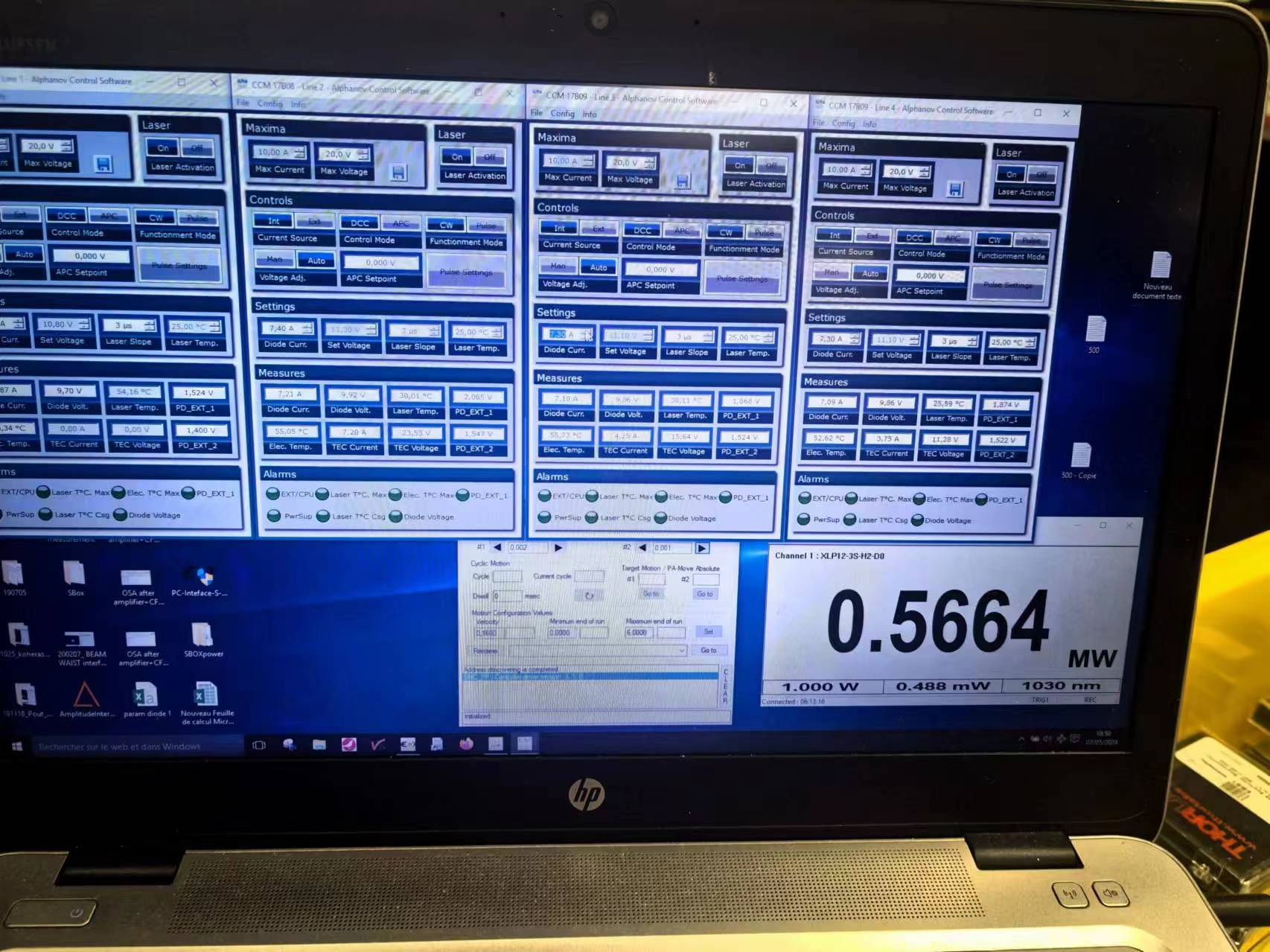 |
| Attachment 2: high_power_experiments.png
| 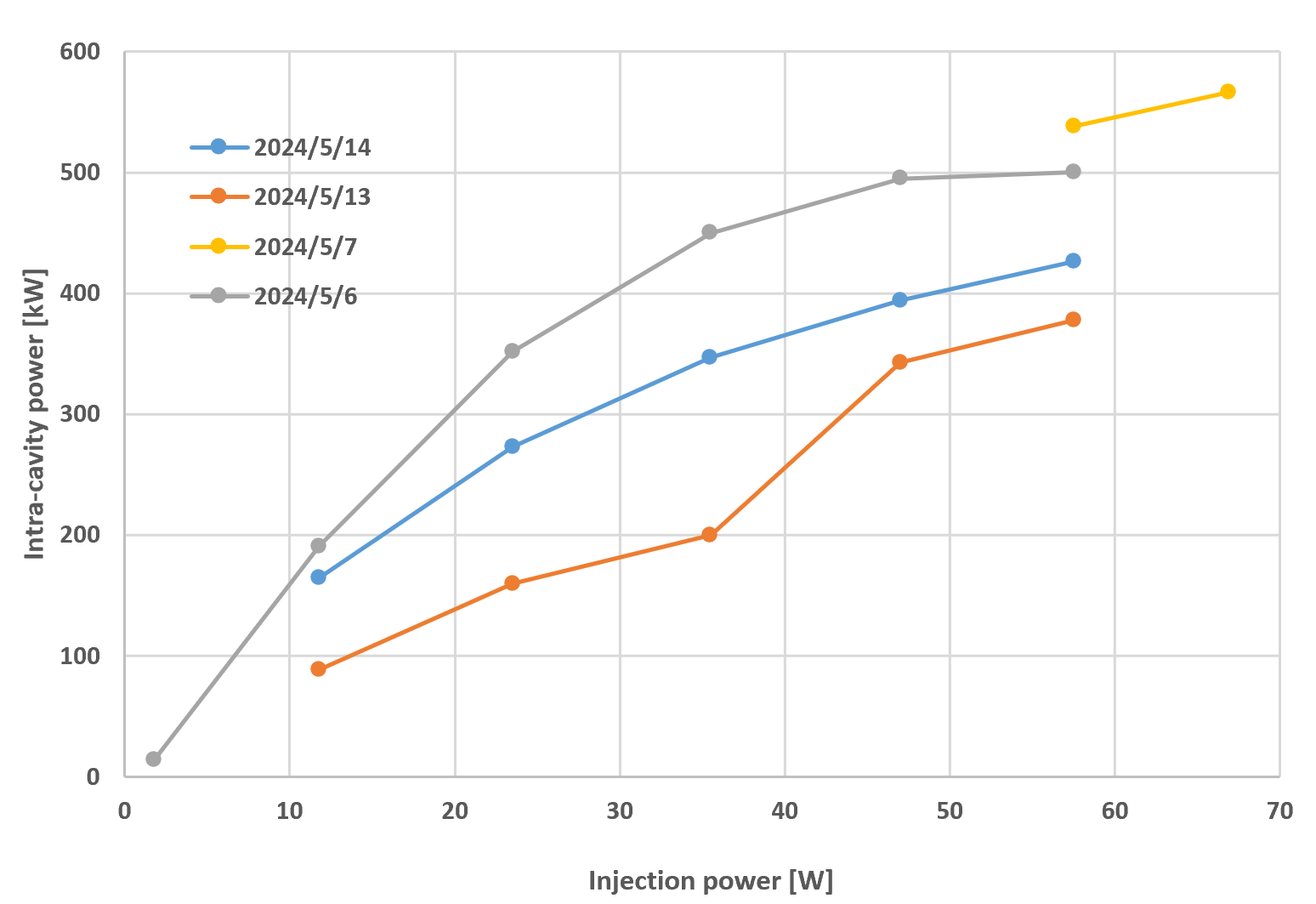 |
| Attachment 3: record_20240506-0514.xlsx
|
| Attachment 4: Screenshot_2024-05-14_1_103202-400kW-6A.png
| 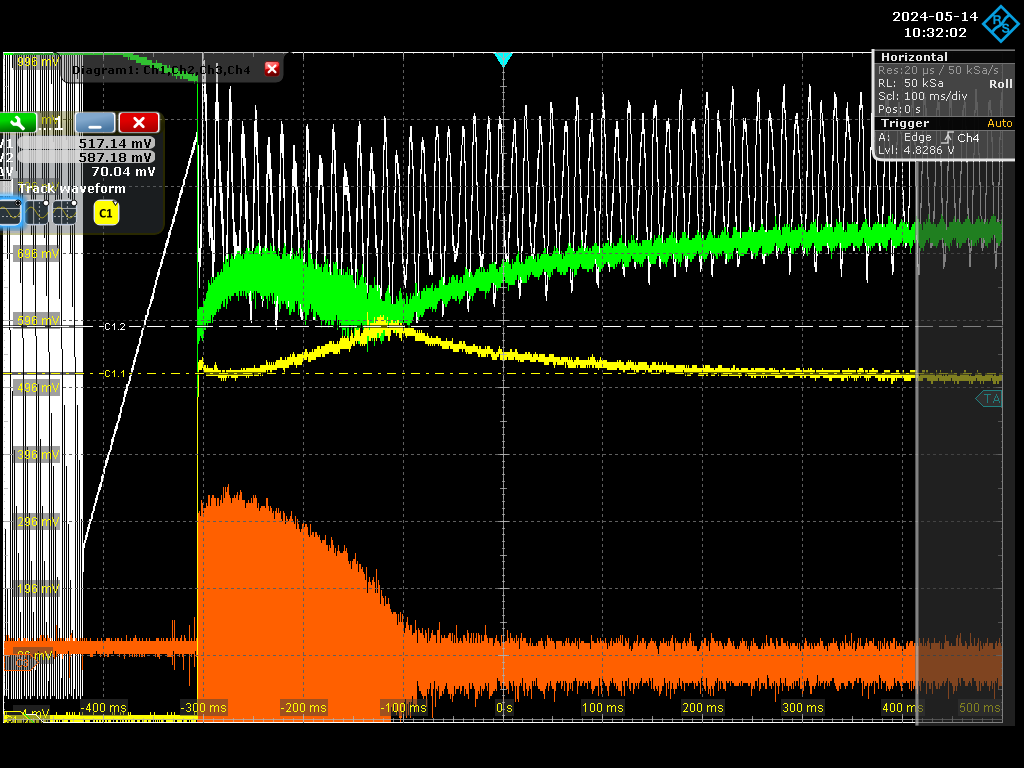 |
| Attachment 5: Screenshot_2024-05-14_5_104129-377kw-4.75A.png
| 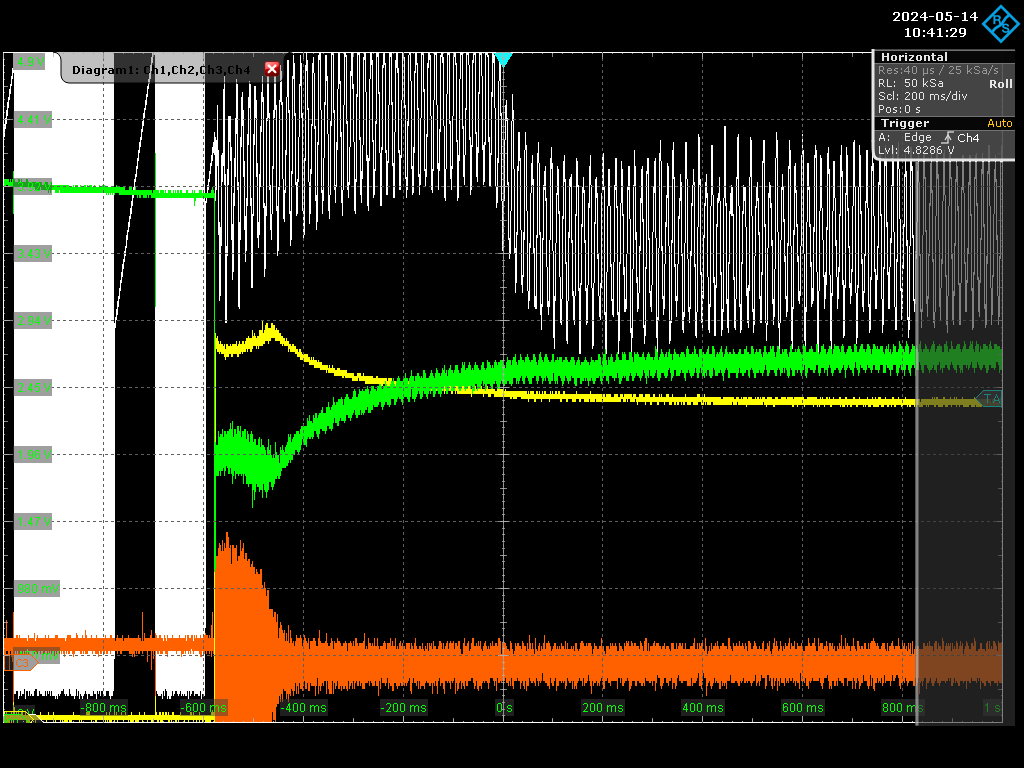 |
| Attachment 6: Screenshot_2024-05-14_6_104350-300kW-3.5A.png
| 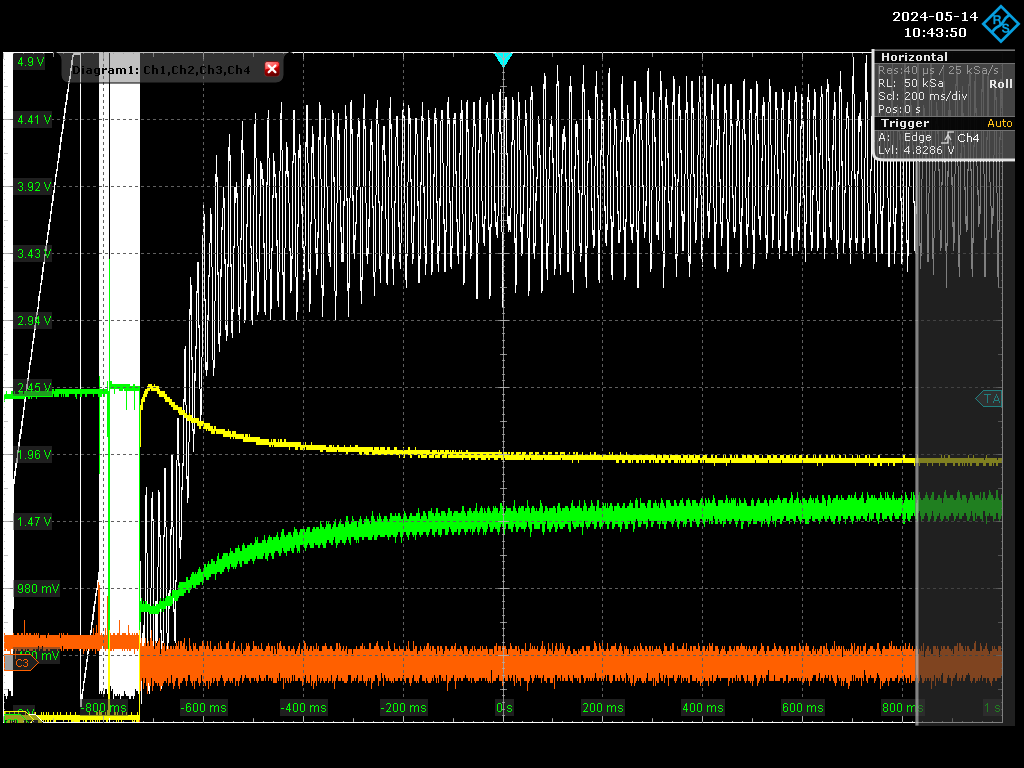 |
|
224
|
Wed Oct 2 10:12:55 2024 |
Ronic Chiche | Under Process | issue | lasers and optics | Optical room | CELIA 100W laser amplifier repair | this morning with Alice, we sent the Menhir 160MHz injected in a fiber (with 6mW at the end of a long fiber) into the laser amplifier, to look for leakage or damage in the first stages of the amplifier (the amplifier is totally off).
first of all, we checked for light scattering around the laser crate with a sensitive optical card => nothing
and then, we checked for light scattering inside the laser crate with an optical viewer => we just saw 1 or 2 small spots located at the end of an optical element at the 2nd stage level.
but it's difficult to understand the optical path and know the different elements with the 1st stage still in place.
we think it is mandatory to open the top of the crate and lift the 1st stage to have a better look inside the optical parts which are at the 2nd and 3rd stage levels:
we could remove the front side of the crate without any damage to any fibers in the crate.
we just saw 1 fiber, glued to an optical element on the 2nd stage, and going to the 3rd stage.
the 1st stage is just an electronics parts stage which seems easy to be removed.
... to be discussed...
|
|
225
|
Wed Oct 2 18:12:54 2024 |
Ronic Chiche | Under Process | issue | lasers and optics | Optical room | CELIA 100W laser amplifier repair | this afternoon, we saw some electric cables badly connected to their power supply.
we fixed it by soldering them together and screwing the result to the power supply.
(see 1st image)
we lift the plate of the 1st stage and we check for optical leakage in the fibers (see 2nd image + picture of the top part of the cassette).
(Aurélien took several images)
without the 1st stage amplification, we saw some lealage only in the bottom part of the "optical cassette".
light was scattered mostly from one side (2 spots) and we saw also very weak scattering in the other directions.
with the 1st stage amplification, we clearly saw the losses from the bent fibers inside the top part of the cassette => it's a good sign.
but after the 5%-10% coupler (the one used for the diagnostic of the power to allow the use of the 2nd stage), we don't see any losses, which means there is no light in this part !
the fiber break could be in between...
Aurélien should send the images to Jérome to get a diagnostic.
the old schematic is attached but it has been modified in the Loic Thesis (p. 165)
we identified the black optics components as 2 isolators (AFW-PISO-30-1W-FB) and 1 circulator (AFW-CIR-PM-30) from AFW technologies.
| Ronic Chiche wrote: |
|
this morning with Alice, we sent the Menhir 160MHz injected in a fiber (with 6mW at the end of a long fiber) into the laser amplifier, to look for leakage or damage in the first stages of the amplifier (the amplifier is totally off).
first of all, we checked for light scattering around the laser crate with a sensitive optical card => nothing
and then, we checked for light scattering inside the laser crate with an optical viewer => we just saw 1 or 2 small spots located at the end of an optical element at the 2nd stage level.
but it's difficult to understand the optical path and know the different elements with the 1st stage still in place.
we think it is mandatory to open the top of the crate and lift the 1st stage to have a better look inside the optical parts which are at the 2nd and 3rd stage levels:
we could remove the front side of the crate without any damage to any fibers in the crate.
we just saw 1 fiber, glued to an optical element on the 2nd stage, and going to the 3rd stage.
the 1st stage is just an electronics parts stage which seems easy to be removed.
... to be discussed...
|
|
| Attachment 1: IMG20241002144351.jpg
| 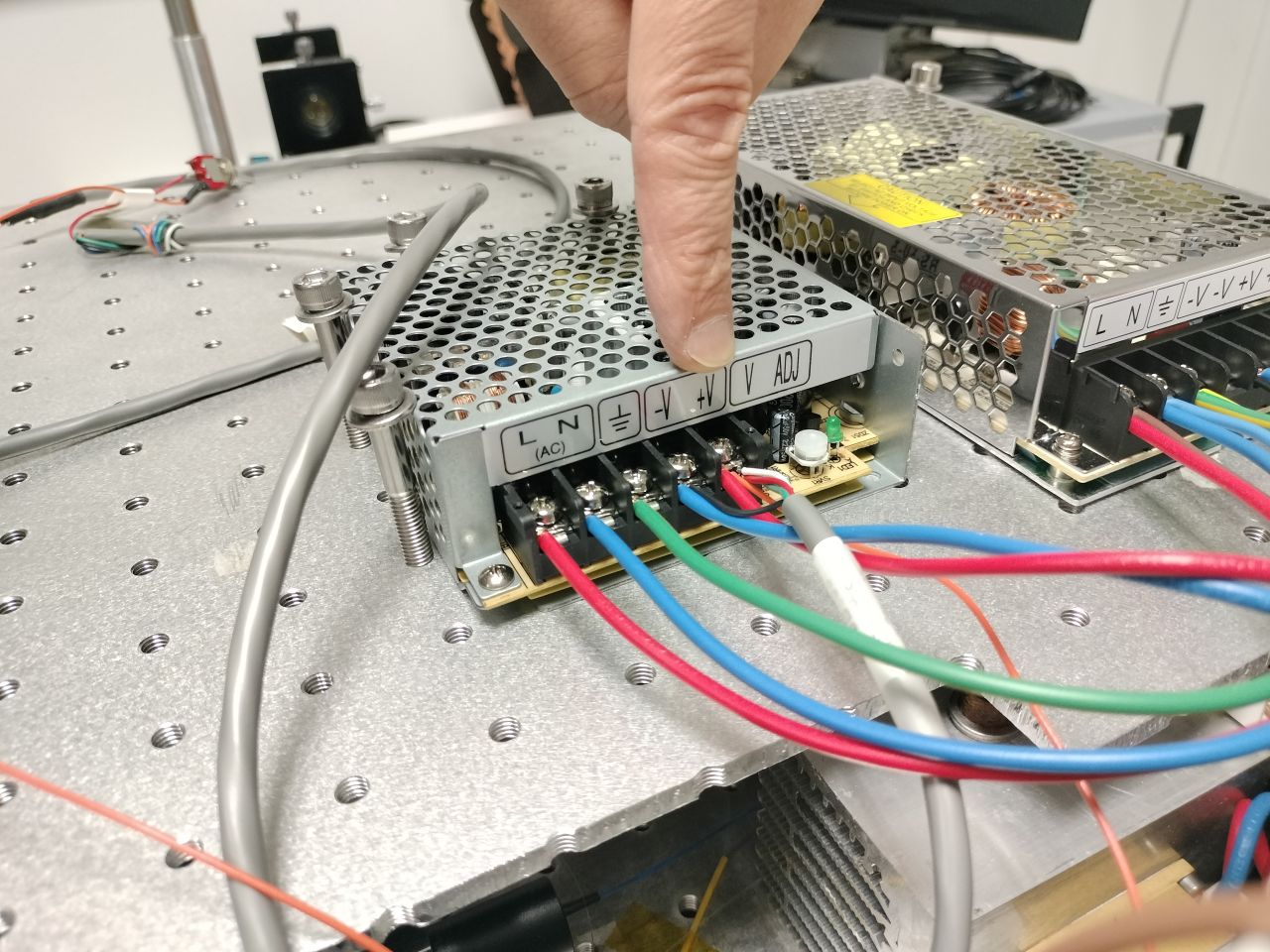 |
| Attachment 2: IMG20241002144936.jpg
|  |
| Attachment 3: 20241002_161657.jpg
|  |
| Attachment 4: Clipboard_10-02-2024_01.jpg
| 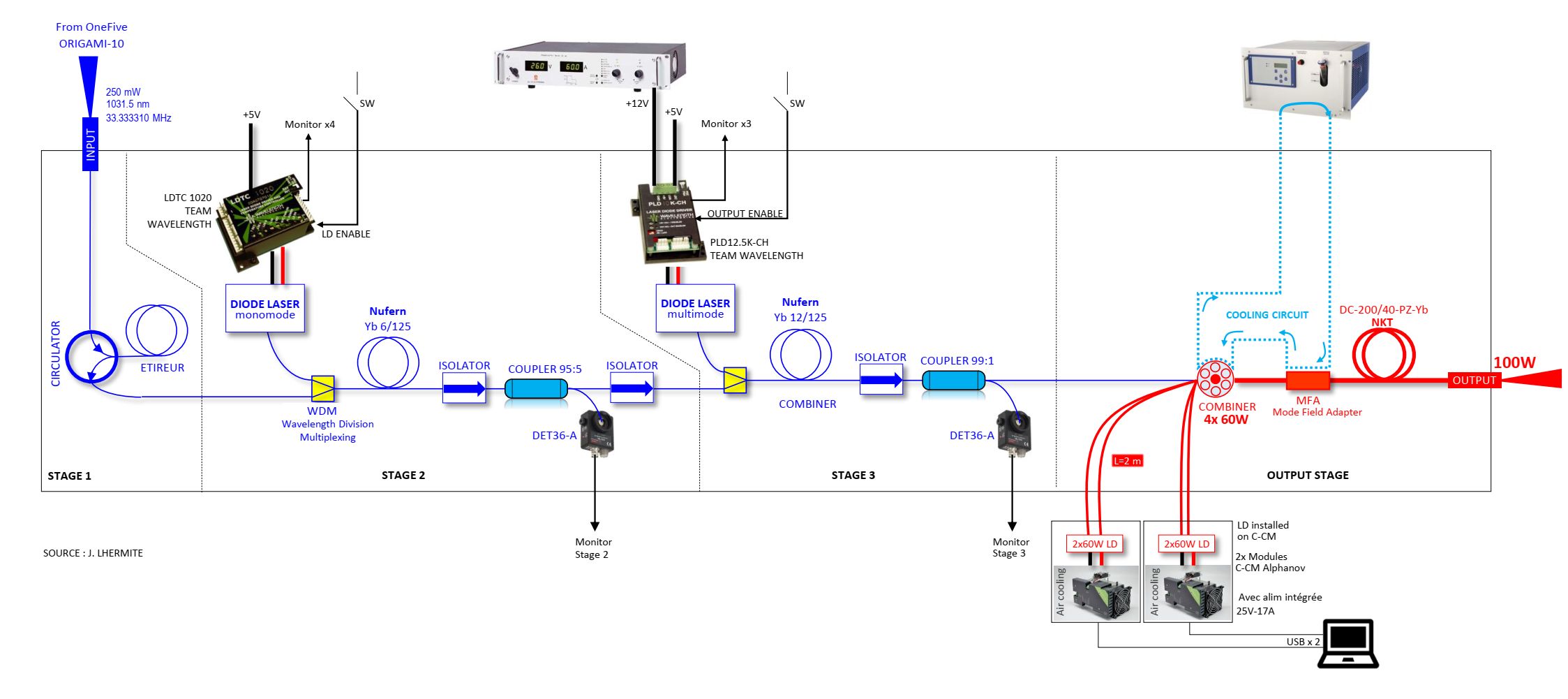 |
|
226
|
Fri Nov 29 12:06:05 2024 |
Alice Renaux | Fixed | info | lasers and optics | Optical room | Menhir 160MHz laser | The Menhir 160MHz has been put back in place on the CELIA amplifier setup. Its output power is measured to be 150-160mW with an attenuator as expected. Its spectrum is available in "spectre_avant_cvbg.xlsx" and "spectre_avant_cvbg.png".
The pulses are stretched by means of a CVBG. Their spectrum is available in "spectre_apres_cvbg.xlsx" and "spectre_apres_cvbg.png".
The laser is coupled into an optical fiber with an output power of 11.5mW for a 32mW input.
|
| Attachment 1: spectre_avant_cvbg.xlsx
|
| Attachment 2: spectre_apres_cvbg.xlsx
|
| Attachment 3: spectre_avant_cvbg.png
| 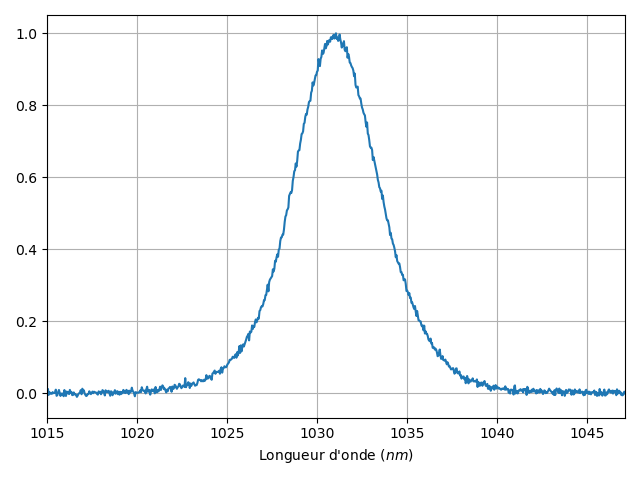 |
| Attachment 4: spectre_apres_cvbg.png
| 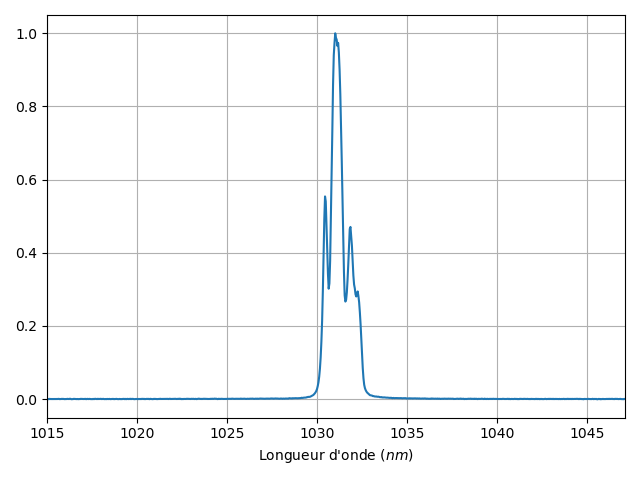 |
|
227
|
Fri Nov 29 16:50:04 2024 |
Alice Renaux | Under Process | info | lasers and optics | Optical room | Menhir 216MHz laser | The Menhir 216MHz laser has been put back in place on the cavity table. Its output power is measured to be 160mW with an attenuator. Its spectrum is available in "spectre.xlsx" and "spectre.png". The main wavelength is a bit shorter (1028.75nm) and the spectrum a bit narrower (4.73nm) than expected.
|
| Attachment 1: spectre.xlsx
|
| Attachment 2: spectre.png
| 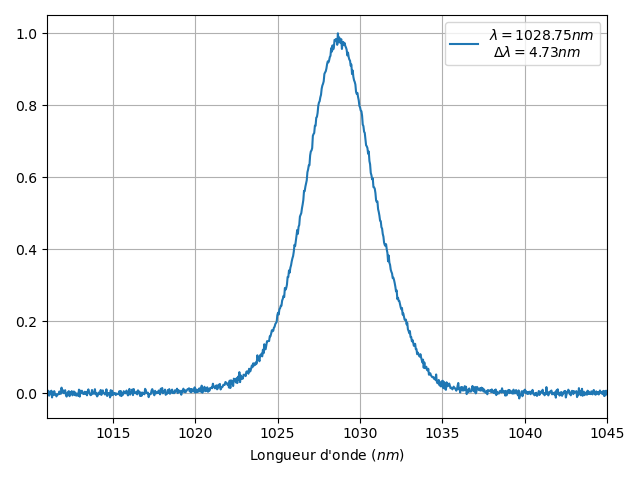 |
|
230
|
Mon Dec 16 10:20:56 2024 |
Ronic Chiche | Under Process | issue | lasers and optics | Optical room | CELIA 100W laser amplifier repair | friday morning, we add a zoom call with Jerome Lhermite about the amplifier repair.
he approximately confirmed the amplifier scheme from the Loic thesis.
he suggested to:
1) identify the circulator ports.
they have some tapes with text written on them.
the goal is to understand if it is still used in the present setup and if a CFBG could still be connected to it (and from which one end could be the fiber seen "broken").
2) use the 5% output tap of the amplifier to check if some light is outed if the input or circulator fibers are injected with 1st stage switched ON or OFF.
3) follow the "broken" fiber to check to which element it is connected to => we should need to unroll the fibers in the bottom "fiber cassette"... :-(
| Ronic Chiche wrote: |
|
this afternoon, we saw some electric cables badly connected to their power supply.
we fixed it by soldering them together and screwing the result to the power supply.
(see 1st image)
we lift the plate of the 1st stage and we check for optical leakage in the fibers (see 2nd image + picture of the top part of the cassette).
(Aurélien took several images)
without the 1st stage amplification, we saw some lealage only in the bottom part of the "optical cassette".
light was scattered mostly from one side (2 spots) and we saw also very weak scattering in the other directions.
with the 1st stage amplification, we clearly saw the losses from the bent fibers inside the top part of the cassette => it's a good sign.
but after the 5%-10% coupler (the one used for the diagnostic of the power to allow the use of the 2nd stage), we don't see any losses, which means there is no light in this part !
the fiber break could be in between...
Aurélien should send the images to Jérome to get a diagnostic.
the old schematic is attached but it has been modified in the Loic Thesis (p. 165)
we identified the black optics components as 2 isolators (AFW-PISO-30-1W-FB) and 1 circulator (AFW-CIR-PM-30) from AFW technologies.
| Ronic Chiche wrote: |
|
this morning with Alice, we sent the Menhir 160MHz injected in a fiber (with 6mW at the end of a long fiber) into the laser amplifier, to look for leakage or damage in the first stages of the amplifier (the amplifier is totally off).
first of all, we checked for light scattering around the laser crate with a sensitive optical card => nothing
and then, we checked for light scattering inside the laser crate with an optical viewer => we just saw 1 or 2 small spots located at the end of an optical element at the 2nd stage level.
but it's difficult to understand the optical path and know the different elements with the 1st stage still in place.
we think it is mandatory to open the top of the crate and lift the 1st stage to have a better look inside the optical parts which are at the 2nd and 3rd stage levels:
we could remove the front side of the crate without any damage to any fibers in the crate.
we just saw 1 fiber, glued to an optical element on the 2nd stage, and going to the 3rd stage.
the 1st stage is just an electronics parts stage which seems easy to be removed.
... to be discussed...
|
|
|
| Attachment 1: Sans_titre.png
| 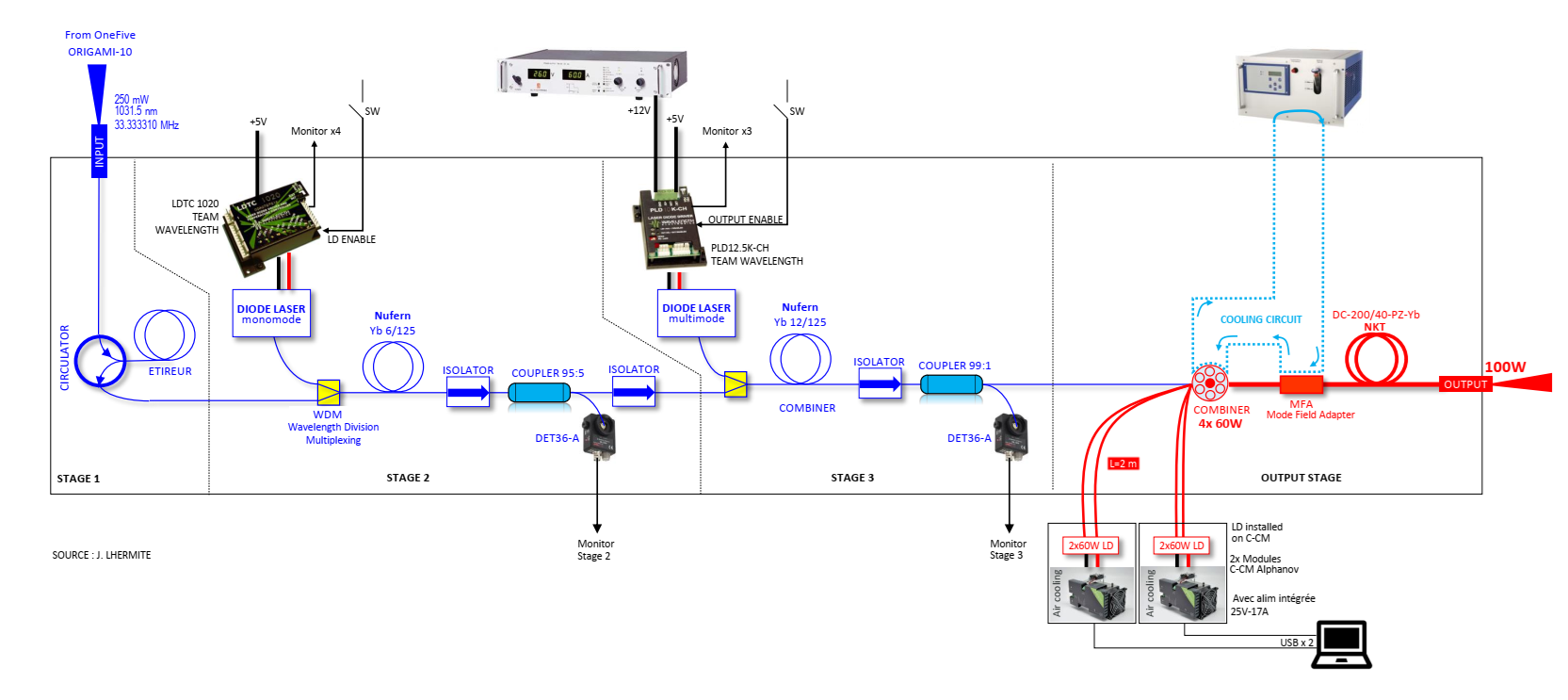 |
|
234
|
Tue May 27 18:12:22 2025 |
Alice Renaux | Under Process | report | lasers and optics | Optical room | 2-mirror cavity alignment | Yesterday and today, I replaced the OEWaves CW laser with the NKT CW laser. Its screen does not display anything, so it has to be operated through the GraphiK software.
I then re-aligned the cavity with a new adjustment adaptation tool between the mirror mounts and the irises.
The motor positions are :
- 1 : 3.354420 mm
- 3 : 2.128850 mm
- 4 : 3.468480 mm
- 5 : 3.157300 mm
I then connected the LaseLock module to scan the NKT laser wavelength on a roughly 0-10 V range at a 2Hz rate, so that it could match the cavity's resonance frequency.
Without optimizing the injection, I monitored the transmitted power with a photodiode paired with an amplifier. The pictures are available through this link : https://box.in2p3.fr/s/TGgwkKgYik7MyqW, and an example picture is attached. Their timestamp is in their filenames, and it seems that the transmission varies quite a lot on a ≈10 s scale, and these variations seem to be periodic on a ≈1 minute scale. The peaks seem weirdly wide, almost up to 100-200 MHz (≈FSR). |
| Attachment 1: IMG20250527160111.jpg
| 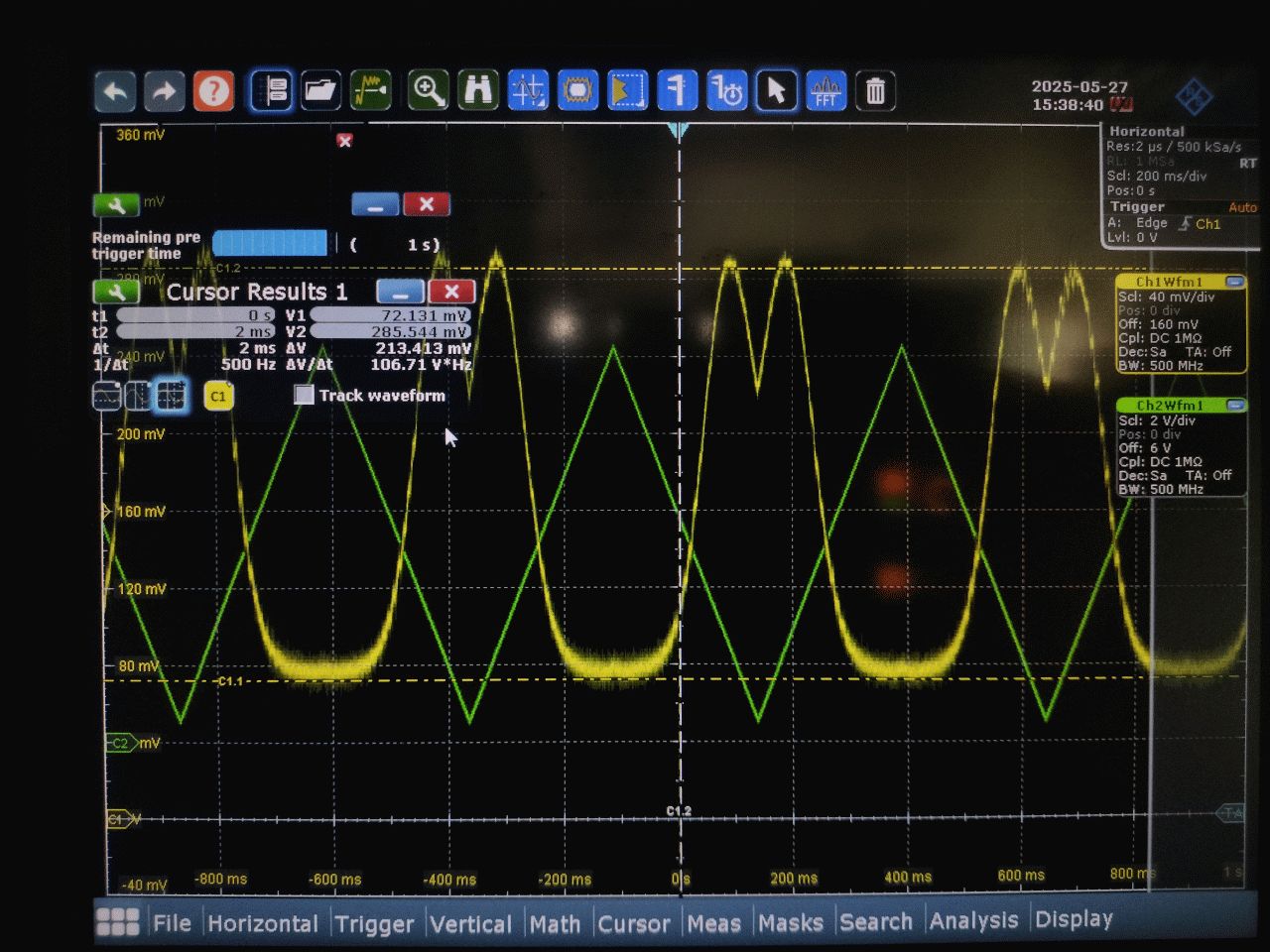 |
|
235
|
Wed May 28 10:55:15 2025 |
Alice Renaux | Under Process | report | lasers and optics | Optical room | 2-mirror cavity alignment | The NKT laser PZT sensitivity is ~0.09pm/V of wavelength variation, which is equivalent to ~ 25MHz/V
So, the full range of the scan is roughly 250MHz (more than a FSR) for 10V.
It seems impossible to get such large resonances unless the Finesse is very low => let's try to change M1 by a spare GammaFactory plan or 10m ROC mirror.
| Alice Renaux wrote: |
|
Yesterday and today, I replaced the OEWaves CW laser with the NKT CW laser. Its screen does not display anything, so it has to be operated through the GraphiK software.
I then re-aligned the cavity with a new adjustment adaptation tool between the mirror mounts and the irises.
The motor positions are :
- 1 : 3.354420 mm
- 3 : 2.128850 mm
- 4 : 3.468480 mm
- 5 : 3.157300 mm
I then connected the LaseLock module to scan the NKT laser wavelength on a roughly 0-10 V range at a 2Hz rate, so that it could match the cavity's resonance frequency.
Without optimizing the injection, I monitored the transmitted power with a photodiode paired with an amplifier. The pictures are available through this link : https://box.in2p3.fr/s/TGgwkKgYik7MyqW, and an example picture is attached. Their timestamp is in their filenames, and it seems that the transmission varies quite a lot on a ≈10 s scale, and these variations seem to be periodic on a ≈1 minute scale. The peaks seem weirdly wide, almost up to 100-200 MHz (≈FSR).
|
|
| Attachment 1: Sans_titre.jpg
| 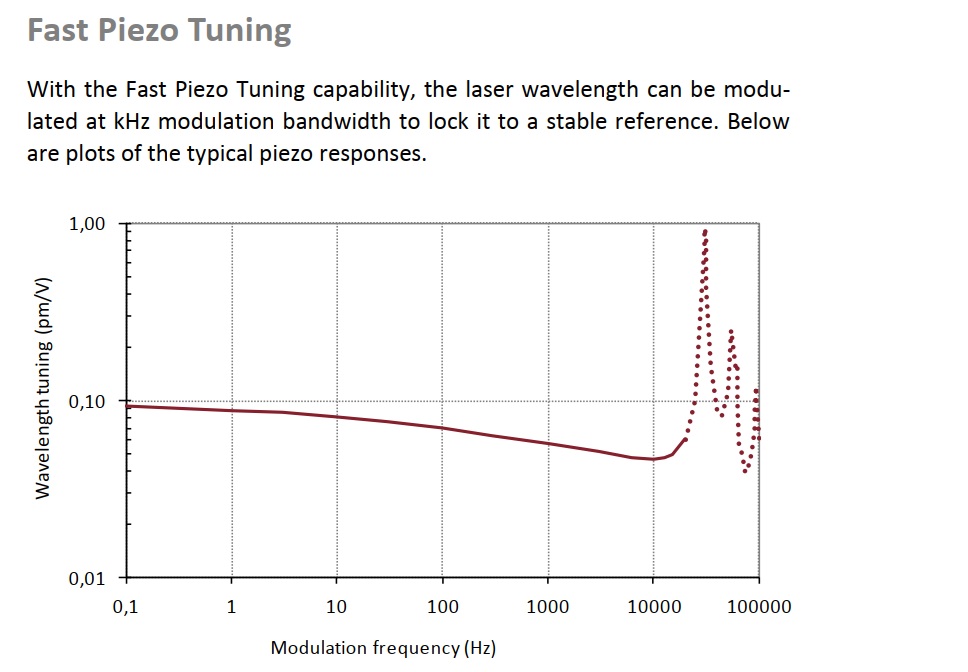 |
|
236
|
Wed May 28 18:27:27 2025 |
Alice Renaux | Under Process | report | lasers and optics | Optical room | 2-mirror cavity full setup | Today with Ronic, we changed the FP cavity's mirrors to Layertek (Gamma Factory) mirrors :
- M1 : n°161186 --> fused silica, unknown absorption, unknown diffusion, T1=2500ppm transmission planar mirror ;
- M2 : n°161182 --> fused silica, unknown absorption, unknown diffusion, T2=10ppm transmission, 5m ROC mirror.
RTL (round-trip losses) ~ 2500 + 10 ppm (we forget the unknown parameters for absorption and diffusion).
The maximal finesse we could expect is thus F=π([(1-T1)(1-T2)]^(1/4))/(1-[(1-T1)(1-2)]^(1/2)) ~ 2*pi /RTL ≈ 2500 assuming no absorption and no scattering.
The FP cavity's FSR is ≈ 216 MHz given its length.
We managed to see some optical beating on the FP cavity's mirrors and to reach the fundamental transverse mode of the FP cavity by adjusting the injection mirrors, but when scanning the laser's wavelength, some higher-order modes appear and the fundamental mode is reached when the voltage applied to the piezoelectric actuator of the laser's cavity is ≈0V. The actuator is not meant to work with negative voltages, so we translated one of the FP cavity's mirrors so that the fundamental transverse mode's resonance frequency is in the middle of the voltage range.
We also removed the D-shaped mirrors, as they are only useful when working with high power. |
|
237
|
Fri Jun 13 20:10:00 2025 |
Alice Renaux | Fixed | report | lasers and optics | Optical room | Damaged mirrors test | Today with Dorian we tested three mirrors with which we previously haven't been able to obtain any resonance or optical beating :
- C16111/11 : The mirror looks normal under a microscope, apart from a few inclusions and maybe a small scratch towards the edge. We tested it with a 161186 M1 mirror and we weren't able to obtain any optical beating on the cavity's mirrors or resonance.
- 161185 (1) : The mirror looks normal with the naked eye. We tested it with a 161182 M2 mirror and we were able to notice some optical beating on the cavity's mirrors as well as small resonance peaks and a higher-order transverse mode.
- 161185 (2) : The mirror shows some damage on the substrate side (not the coated side). We tested it with a 161186 M2 mirror and we were able to notice some optical beating on the cavity's mirrors as well as huge resonance peaks and a Gaussian transverse mode.
The updated recap file is available here, as well as a few pictures. |
|
239
|
Thu Aug 28 15:29:00 2025 |
Alice Renaux | Under Process | report | lasers and optics | Optical room | 2-mirror cavity locking | In June, we encountered some problems regarding the transmission and error signals (see images here), looking as if the laser was switched off before the cavity was filled.
Aurélien, Ronic and I discussed this on 08/27, resulting in a list of tests to perform. We :
- checked the mirrors' thickness (maybe there was some mechanical stress if they were too thick). The mirrors' thickness is 6.35mm (1/4 inch) and is consistent with the mounts size ;
- checked the mirrors' mounts' screws' tightening (maybe the mirrors were either moving if the screws were not tight enough or some mechanical stress if they were too tight). We tightened the mirrors' mounts' upper screws.
Next thing we did with Ronic was check if the error signal depended on the modulation/demodulation relative phase, which was not the case, but it should have.
Ronic added a quarter waveplate before the half waveplate in the injection system.
Today, on 08/29, the succession of the higher-order transverse modes when scanning the seeder laser's piezoelectric actuator's voltage to scan the seeder laser's optical frequency seemed a bit strange, so we checked the resonance frequencies of several occurrences of the same transverse mode :
- (0, 0) : @ -0.4V and 6.0V ;
- (1, 0) and (0, 1) : @0.5V and 6.9V.
In both cases, several occurrences were separated by about 6.4V, which corresponds to the voltage difference to scan a full FSR. The spacing between (0, 0) and (1, 0)/(0, 1) is then about 0.14*FSR.
I checked this by writing a small piece of Python code to calculate the cavity's fundamental transverse mode and its Rayleigh length, which is displayed in Figure 1, and then by calculating the resonance frequencies wrt the (0, 0) resonance frequency for the (1, 0), (0, 1) and (1, 1) transverse modes, which is displayed in Figure 2, with the following formula: $\nu_{p, n, m}=(p+\frac{(n+\frac{1}{2})\arctan(\frac{2L_{\text{cav}}}{z_{\text{R}}})+(m+\frac{1}{2})\arctan(\frac{2L_{\text{cav}}}{z_{\text{R}}})}{2\pi})\times\text{FSR}$ for a $p$ longitudinal and ($n$, $m$) transverse mode. Here, $p=1$. The spacing betwen (0, 0) and (1, 0)/(0, 1) is about 0.11*FSR, making the previous observation consistent with the calculation. Everything seems normal.
Ronic also increased the EOM modulation voltage, increasing the modulation depth for the generation of the error signal (from 100mV RMS to 300mV RMS), making the error signal depend on the modulation/demodulation relative phase, as it should. He managed to lock the laser onto the cavity for about 1s at a time.
Next steps are to optimize the PID parameters and to add a low-pass filter/AOM to cut the higher frequencies off and improve the feedback loop. |
| Attachment 1: Figure_1.png
| 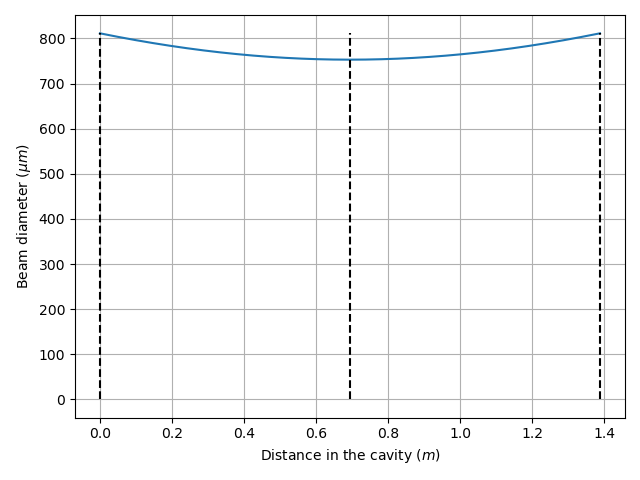 |
| Attachment 2: Figure_2.png
| 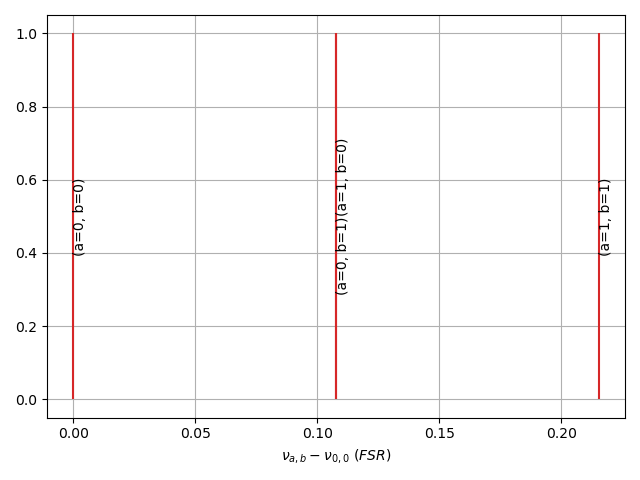 |
|
240
|
Wed Sep 3 18:10:34 2025 |
Alice Renaux | Under Process | report | lasers and optics | Optical room | Successful lock (finally !) | Today, with Ronic, we managed to get a successful lock with the NKT laser by setting up a new PDH box from scratch (photodiode + amplifer + mixer).
Me measured the injected power (5.4mW) and the transmitted power (33µW) after a wedge (92% transmission) and a 7ppm transmission mirror, so the intracavity power was 5.1W. We have a 950 enhancement factor for a 3100 finesse cavity, so a nominal enhancement factor of 2500. The lock was very stable, as shown in the attached picture (yellow signal is the transmitted power, orange signal is the error signal and green signal is the voltage sent from the Laselock module to the pizeoelectric actuator of the NKT laser cavity).
Then, we added a second EOM in order to perform a finesse measurement, but we weren't able to inject more than 3mW at full laser power in the cavity or to lock the laser onto the cavity. |
| Attachment 1: IMG_20250903_113758.jpg
| 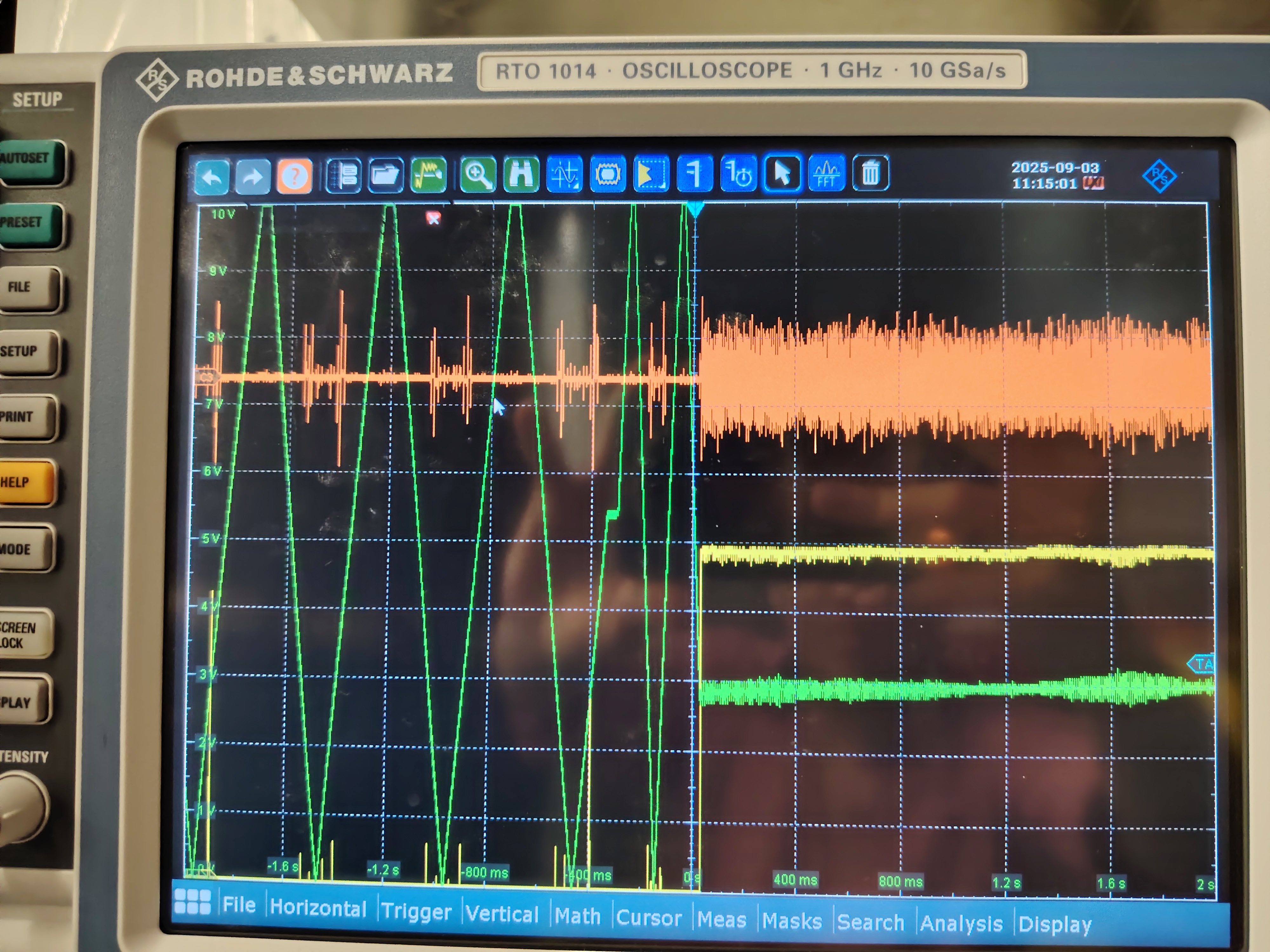 |
|
242
|
Thu Sep 4 17:52:03 2025 |
Alice Renaux | Under Process | report | lasers and optics | Optical room | Finesse measurement | Today, with Ronic, we measured the finesse of the 2-mirror cavity witht the NKT CW laser.
We were able to perfrom the measurement only once, and the results of the measurement are attached to this note. We added sidebands to the laser spectrum peak thanks to an EOM, and we sweeped the modulation frequency on a 1MHz span around an estimated FSR of 216.63MHz in 10s. We found a 82kHz linewidth, hence a finesse of 2651. |
| Attachment 1: Figure_3.png
|  |
|
243
|
Thu Sep 4 17:56:50 2025 |
Alice Renaux | Under Process | report | lasers and optics | Optical room | Finesse measurement | (Finesse 2651 is consistent with that obtained from the mirrors' transmission coefficients, which is about 3100.)
| Alice Renaux wrote: |
|
Today, with Ronic, we measured the finesse of the 2-mirror cavity witht the NKT CW laser.
We were able to perfrom the measurement only once, and the results of the measurement are attached to this note. We added sidebands to the laser spectrum peak thanks to an EOM, and we sweeped the modulation frequency on a 1MHz span around an estimated FSR of 216.63MHz in 10s. We found a 82kHz linewidth, hence a finesse of 2651.
|
|
|
244
|
Tue Sep 9 21:23:11 2025 |
Alice Renaux | Under Process | report | lasers and optics | Optical room | new cavity | Yesterday, we changed the M1 mirror to a 161185 Gamma Factory mirror of transmission 460ppm, the cavity finesse is now 13360.
We managed to lock it today. |
|
245
|
Wed Sep 10 11:27:45 2025 |
Alice Renaux | Under Process | report | lasers and optics | Optical room | new cavity | The 2-mirrors cavity has 460ppm of transmission for M1 and 10ppm for M2 which should exhibit a Finesse around 13400.
Today, we managed to lock the NKT laser (with an AOM for fast feedback) onto the cavity, and we made 5 Finesse measurements with the modulation technic : 14151, 13847, 13968, 14604, 13892 with an average around 14000 => LW = 216MHz/F ~ 16kHz.
On the plot (Frequency span 1MHz <=> Time span 10s)
blue curve : raw data
black curve : cleaned data
red curve : fitted data
| Alice Renaux wrote: |
|
Yesterday, we changed the M1 mirror to a 161185 Gamma Factory mirror of transmission 460ppm, the cavity finesse is now 13360.
We managed to lock it today.
|
|
| Attachment 1: Finesse.png
| 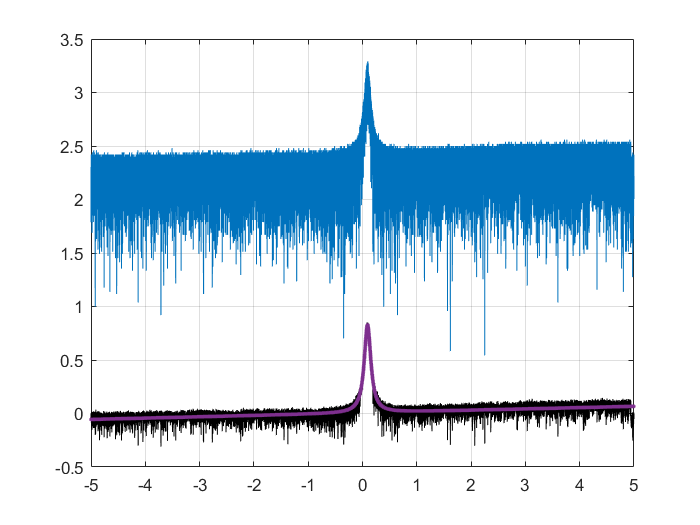 |
|
73
|
Mon Apr 4 13:58:23 2022 |
Manar Amer | Fixed | issue | detectors and electronics | utilities | Optical room | Clean Airflow Dust measurements | The dust meter cap was cleaned using Alcohol, and using the filter white cap the dust count was (0 Av. 10 min)
After the dust counter was hand held in direct airflow, it counted (1581 p/m3 Av. 2 min).
I tested the count also in the SAS, and it counted twice the amount ~ 4500 p/m3
Note: discussion on the next steps to take for the airflow filtering !!!!!!!! |
|
74
|
Fri Apr 8 19:27:12 2022 |
Manar Amer | Fixed | issue | detectors and electronics | utilities | Optical room | Clean Airflow Dust measurements | Dust measurement done today on top of the SBox average 10min
| Manar Amer wrote: |
|
The dust meter cap was cleaned using Alcohol, and using the filter white cap the dust count was (0 Av. 10 min)
After the dust counter was hand held in direct airflow, it counted (1581 p/m3 Av. 2 min).
I tested the count also in the SAS, and it counted twice the amount ~ 4500 p/m3
Note: discussion on the next steps to take for the airflow filtering !!!!!!!!
|
|
| Attachment 1: 20220408_DustMeasurement.jpg
| 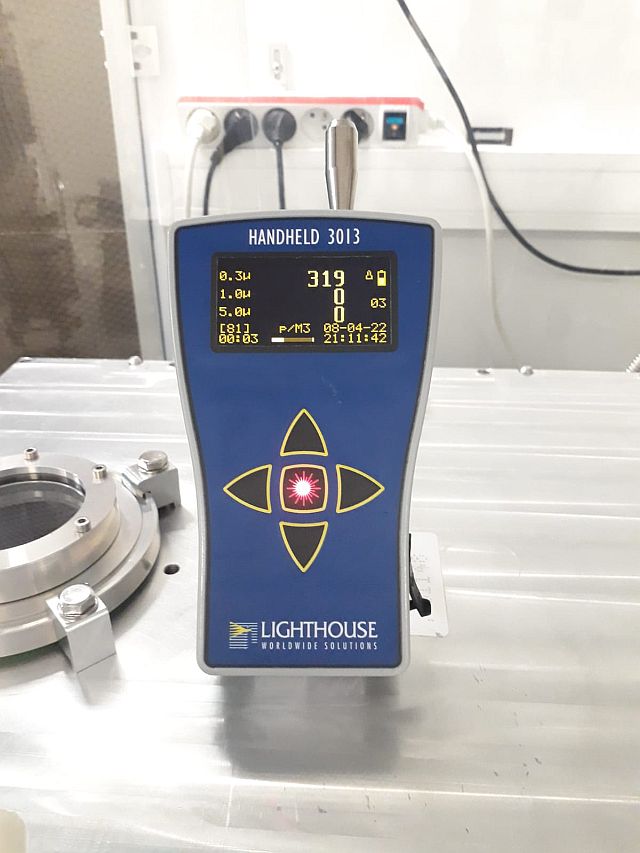 |
|