| ID |
Date |
Author |
Status |
Type |
Category |
Location |
Title |
|
40
|
Thu Oct 21 10:24:01 2021 |
Blanc | Fixed | info | utilities | Other | Presentations |
Here the first part of all the presentations since the beginning of the project. |
| Attachment 1: 2-Présentation_LAL_22_06_2020_Corrigée.pptx
|
| Attachment 2: 4-Présentation_LAL_29_06_2020_Corrigée.pptx
|
| Attachment 3: 5-Présentation_LAL_27_07_2020.pptx
|
| Attachment 4: 6-Présentation_LAL_30_11_2020.pptx
|
| Attachment 5: 7-Présentation_LAL_07_12_2020.pptx
|
|
41
|
Thu Oct 21 10:30:38 2021 |
Blanc | Fixed | info | utilities | Other | Presentations |
Here the second part of all the presentations since the beginning of the project. |
| Attachment 1: 8-Présentation_LAL_15_04_2021_elog.pptx
|
| Attachment 2: 9-Présentation_LAL_10_05_2021_elog.pptx
|
| Attachment 3: 10-Présentation_LAL_28_06_2021.pptx
|
|
42
|
Thu Oct 21 10:32:54 2021 |
Blanc | Fixed | info | utilities | Other | Presentations |
Here the last part of all the presentations since the beginning of the project. |
| Attachment 1: 12-Présentation_LAL_13_09_2021.pptx
|
| Attachment 2: 13-Présentation_LAL_27_09_2021.pptx
|
| Attachment 3: 14-Présentation_LAL_11_10_2021.pptx
|
| Attachment 4: Présentation_Amplitude_23_08_2021.pptx
|
|
7
|
Mon Apr 19 19:11:47 2021 |
Manar Amer | Fixed | report | mechanics | software | Other | Distances between mirrors |
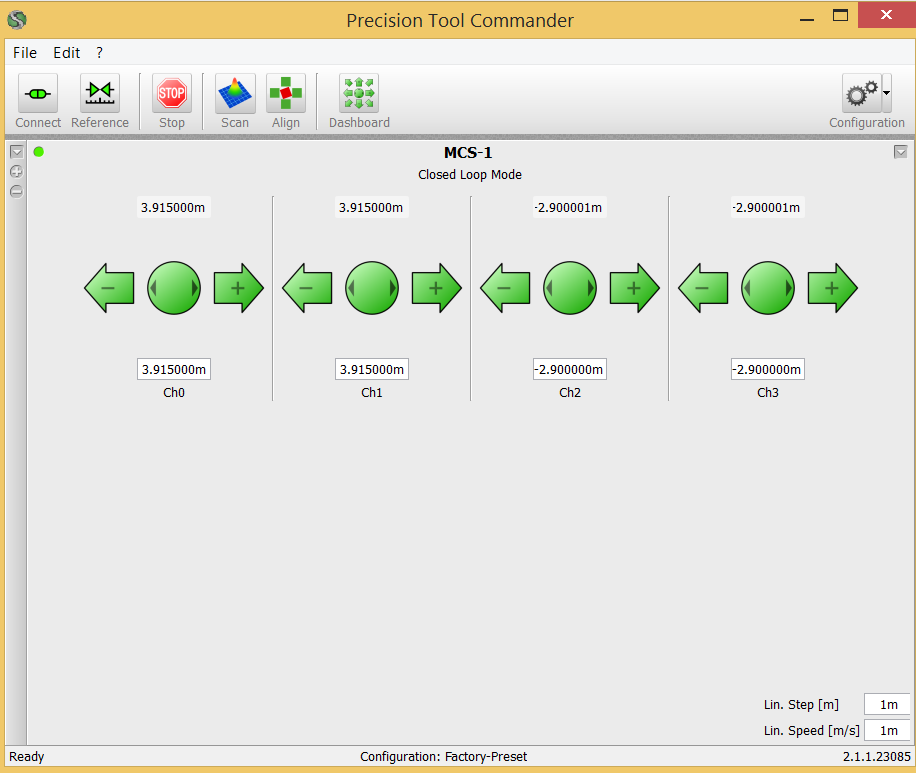
- At the reference zero the distance between the mirrors is (taken from a reference presentation "status9nov2020" attached):
M1-M2 = 88.029 mm
M3-M4 = 84.6895 mm
- The distances between the spherical mirrors ( M3-M4 ) was set to take into account the stability of the mirror ( M3-M4 > Spherical mirror focal length = 85.3 mm)
M3-M4 = 90.5 mm
we increased the distance between them by 5.8 mm, and moving the mirrors symmetrically, M3 and M4 moved by -2.9 mm (negative defines outer motion)
- Following the definition of M3-M4, fixing of the angle = 2.55637 degrees and frequency (Frep = 876.3636 MHz). Distance between planners (M1-M2)
M1-M2 = 80.2 mm
we decreased the distance between them by 7.83 mm, and moving the mirrors symmetrically, M1 and M2 moved by +3.915 mm (positive defines inward motion)
**** Photo attached is the values on the software at the time. |
| Attachment 1: 20211604__Distances_Between_mirrors.png
|
 |
| Attachment 2: status9nov2020.pptx
|
|
43
|
Thu Dec 2 16:12:17 2021 |
Aurélien Martens | Fixed | report | mechanics | software | Optical room | new smaract positions |
M1 and M2 at 5.1085mm and M3 and M4 at -2.9mm |
|
11
|
Tue May 4 15:56:33 2021 |
Manar Amer | Fixed | report | mechanics | lasers and optics | software | Other | Distances between mirrors |
New update on the position of the Motors for the cavity
***** we moved the motors to set the cavity at 876MHz, and checked it right after with the RF modulation at FSR.
So compared to the expected setting we had to move inwards the two planar mirrors by 0.9 mm each.
Planar : M1-M2 motor = + 4.815 mm ------> M1-M2 = 78.399 mm
Spherical : M3-M4 motor = -2.9 mm ------> M3-M4 = 90.4895 mm
| Manar Amer wrote: |
- At the reference zero the distance between the mirrors is (taken from a reference presentation "status9nov2020" attached):
M1-M2 = 88.029 mm
M3-M4 = 84.6895 mm
- The distances between the spherical mirrors ( M3-M4 ) was set to take into account the stability of the mirror ( M3-M4 > Spherical mirror focal length = 85.3 mm)
M3-M4 = 90.5 mm
we increased the distance between them by 5.8 mm, and moving the mirrors symmetrically, M3 and M4 moved by -2.9 mm (negative defines outer motion)
- Following the definition of M3-M4, fixing of the angle = 2.55637 degrees and frequency (Frep = 876.3636 MHz). Distance between planners (M1-M2)
M1-M2 = 80.2 mm
we decreased the distance between them by 7.83 mm, and moving the mirrors symmetrically, M1 and M2 moved by +3.915 mm (positive defines inward motion)
**** Photo attached is the values on the software at the time.
|
|
| Attachment 1: 20210305_Distances_between_Mirrors_new_motor_set_point.png
|
 |
|
23
|
Fri Oct 1 16:55:47 2021 |
Blanc | Fixed | info | mechanics | lasers and optics | detectors and electronics | Optical room | 1GHz oscillator Frep measurement |
| a previous cavity FSR measurement was giving a center frequency around 867.5MHz.
the present 1GHz oscillator Frep measurement is about 879.888MHz.
the present shift is about 12.4MHz which is equivalent to move one cavity lenght by 4.3mm which is HUGE !!!
as the 1GHz oscillator does not have any motor, one has to move the FP cavity mirrors instead.
the PZT inside the 1GHz oscillator (Thorlabs PC4QR) has a dynamic range of (20µm for 150V... we will drive it with 10V) 1.3µm.
then, we will have to adjust the FP cavity FSR with an accuracy much better than 4kHz (the cavity linewidth is 500kHz !!!) |
|
35
|
Tue Oct 19 18:27:20 2021 |
Ronic Chiche | Fixed | report | mechanics | lasers and optics | detectors and electronics | Optical room | PZT resonant frequencies |
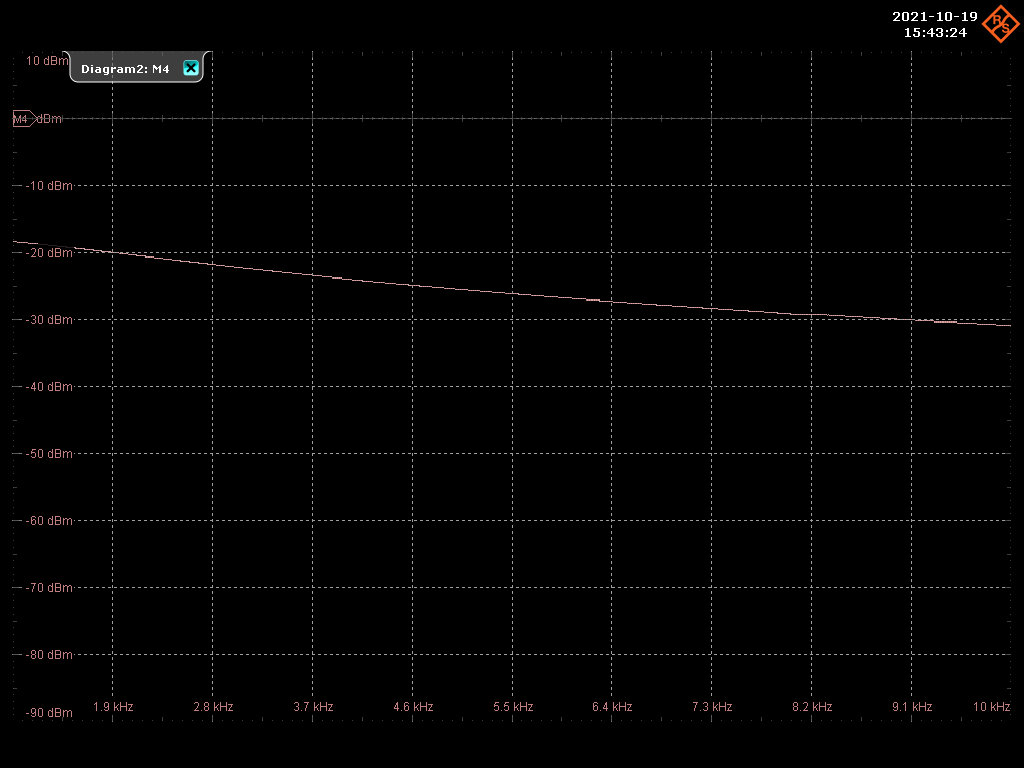
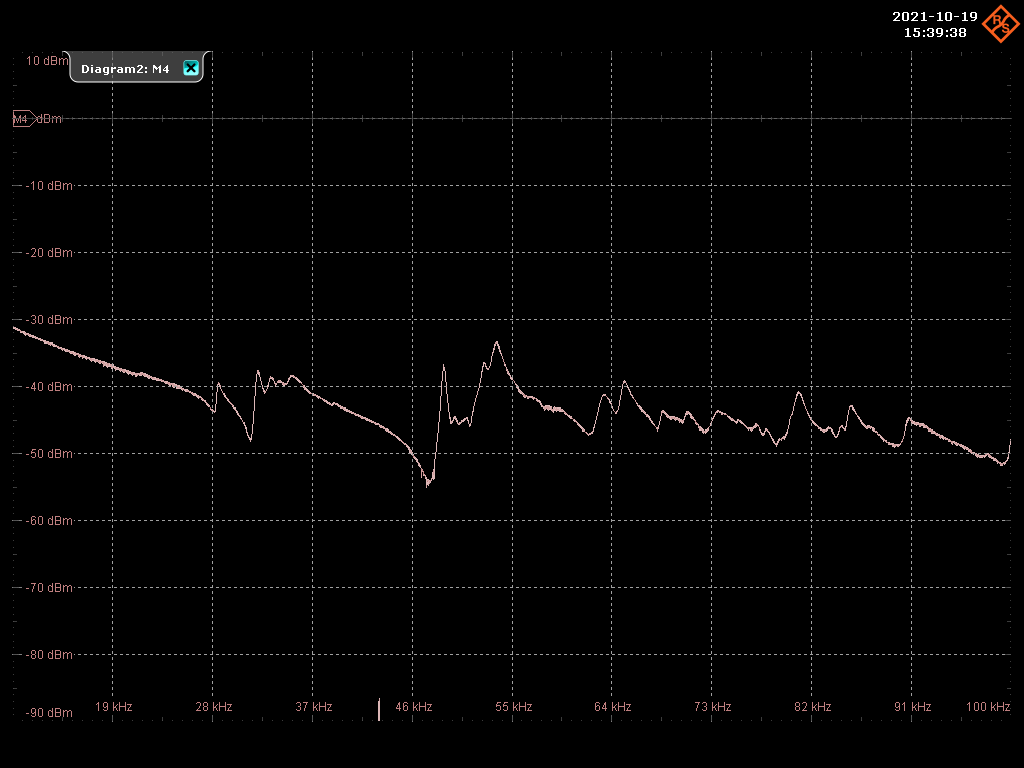
we have excited the PZT with a swept sinus wave from 1kHz to 10kHz and from 10kHz to 100kHz.
here are the 2 different spectrums:
- the 1kHz-10kHz is a standard spectrum where we see the impedance behavior of the PZT: Zpzt ~ 1/jCw
- the 10kHz-100kHz exhibit several PZT resonances and the 1st one is close to 28kHz.
(without PZT resonances, we should have the same behavior at higher frequencies than in the range 1kHz-10kHz) |
| Attachment 1: Sweep_1kHz-10kHz.png
|
 |
| Attachment 2: Sweep_10kHz-100kHz.png
|
 |
|
39
|
Thu Oct 21 09:44:35 2021 |
Blanc | Fixed | info | mechanics | lasers and optics | detectors and electronics | Optical room | 1GHz oscillator Frep measurement |
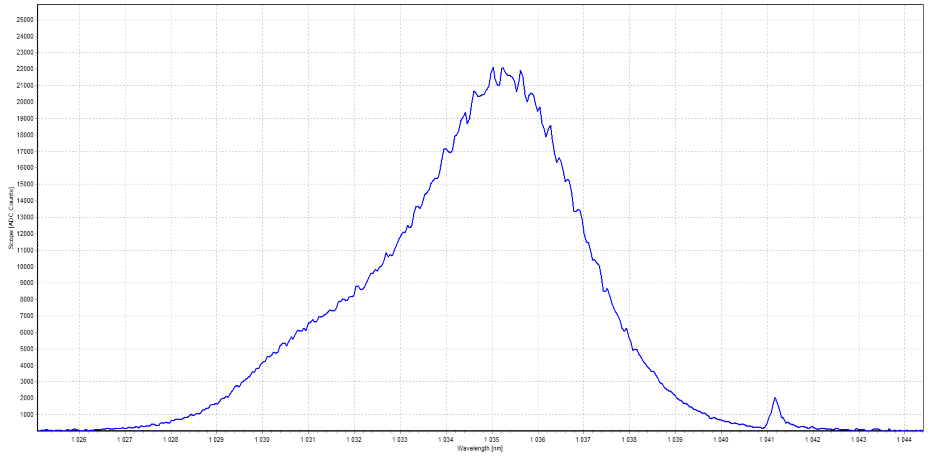
The optical spectrum of the GHz oscillator: FWHM ~ 4nm
| Blanc wrote: |
| a previous cavity FSR measurement was giving a center frequency around 867.5MHz. the present 1GHz oscillator Frep measurement is about 879.888MHz. the present shift is about 12.4MHz which is equivalent to move one cavity lenght by 4.3mm which is HUGE !!! as the 1GHz oscillator does not have any motor, one has to move the FP cavity mirrors instead. the PZT inside the 1GHz oscillator (Thorlabs PC4QR) has a dynamic range of (20µm for 150V... we will drive it with 10V) 1.3µm. then, we will have to adjust the FP cavity FSR with an accuracy much better than 4kHz (the cavity linewidth is 500kHz !!!) |
|
| Attachment 1: Spectre_GHz-3.PNG
|
 |
|
25
|
Mon Oct 4 15:10:17 2021 |
Aurélien Martens | Fixed | report | mechanics | detectors and electronics | software | Optical room | new position of smaract motors |
following the measuremetn at 879.9 MHZ of the laser theoptical cavity length has been adjusted to that value from 876MHz setting of the 5th of may 21.
new motor positions:
M3/M4 : -2.9mm
M1/M2 : +5.196mm |
|
5
|
Mon Apr 19 18:41:03 2021 |
Manar Amer | Fixed | report | mechanics | cabling | software | Other | Setting up the Motors |
A document attached that describes the procedure needed to:
- connect the motors
- configure the Ethernet connection
- Calibrate and reference the software used to control the motors. |
| Attachment 1: setting_up_the_motors.docx
|
|
4
|
Thu Apr 15 19:54:19 2021 |
Manar Amer | Fixed | report | mechanics | cabling | Other | Mirrors Mottors Connections |
Added the cabling to the categories
| Manar Amer wrote: |
|
* The connections to control the motors of the mirrors are connected in the order stated :
M1 - M2 - M3 - M4
bottom right - bottom left - top right - top left
* The cables on the back of the box are connected as shown in attached photo
as they are connected they show on the software (Precision Tool commander) as
M1 - M2 - M3 - M4
Ch0 - Ch1 - Ch2 - Ch3
|
|
|
3
|
Thu Apr 15 19:45:08 2021 |
Manar Amer | Fixed | report | mechanics | Other | Mirrors Mottors Connections |
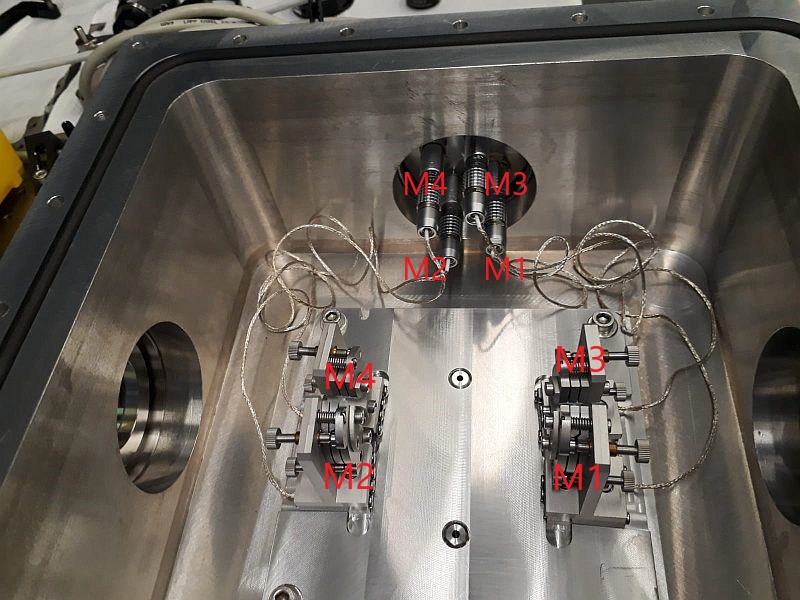
* The connections to control the motors of the mirrors are connected in the order stated :
M1 - M2 - M3 - M4
bottom right - bottom left - top right - top left
* The cables on the back of the box are connected as shown in attached photo
as they are connected they show on the software (Precision Tool commander) as
M1 - M2 - M3 - M4
Ch0 - Ch1 - Ch2 - Ch3
|
| Attachment 1: 20210804_Motor_connections_with_mirrors_inside_cavity_box.jpg
|
 |
| Attachment 2: 20210804_Mottor_cables_behind_cavity_box.jpg
|
 |
|
1
|
Tue Mar 23 18:33:16 2021 |
Ronic Chiche | Fixed | info | lasers and optics | detectors and electronics | Optical room | Phase noise measurement of the Amplitude MIKAN |
Installation of the MIKAN.
powermeter (with OD1) just after the oscillator shows 440mW for 4A of the MIKAN pump current.
Installation of a periscope as the oscillator beam position is very close to the table... not easy to put devices at this height (be aware to use proper wavelength range mirrors: Thorlabs BB1-E03)
Installation of a HALF waveplate to align beam polarisation on the isolator axis
Installation of a High power isolator (the one of ThomX): Newport ISO-FRDY-05-1030-N
powermeter (with OD1) just after the isolator shows 427mW
|
|
2
|
Tue Apr 6 09:25:47 2021 |
Ronic Chiche | Fixed | info | lasers and optics | detectors and electronics | Optical room | Phase noise measurement of the Amplitude MIKAN |
Coupling into a 50-50% fiber coupler using the Thorlabs XYZ table NanoMax TS.
We reached 117mW after the 50% arm which means we coupled about 230mW (the coupling better than 50%).
| Ronic Chiche wrote: |
|
Installation of the MIKAN.
powermeter (with OD1) just after the oscillator shows 440mW for 4A of the MIKAN pump current.
Installation of a periscope as the oscillator beam position is very close to the table... not easy to put devices at this height (be aware to use proper wavelength range mirrors: Thorlabs BB1-E03)
Installation of a HALF waveplate to align beam polarisation on the isolator axis
Installation of a High power isolator (the one of ThomX): Newport ISO-FRDY-05-1030-N
powermeter (with OD1) just after the isolator shows 427mW
|
|
|
10
|
Fri Apr 30 17:41:10 2021 |
Aurélien Martens | Fixed | report | lasers and optics | detectors and electronics | Optical room | Lock, cavity length and finesse estimate |
Ronic just suceeded in obtaining a reasonably good lock on the cavity. Air flow is switched off.
We stopped all movements (closed loop, click STOP in the PTC interface) and saw immediately a fair but not excellent lock.
We then switched off the smaract motors and the obtained lock was good. Switching on again the smaract means tthat the references are lost.
We futher saw a drift of the locking point, probalby suggetsing that the thermal load in the cavity slightly changed after switching off the motors.
We then added the second 1GHz BW EOM to add sidebands thanks to the MARCONI RF generator. We observed that the FSR is aroung 867.6MHz (in air). We then looked at the points where the transmission signal related to the sideband is halved. We observed that the corresponding frequencies are 867.296 and 867.776MHz. the corresponding FWHM of about 500kHz corresponds approximately to a 2000 finesse.
Picture color code:
TRANS : Green
REFLECT : Yellow
PZT : Blue
|
| Attachment 1: IMG_20210430_173331.jpg
|
 |
|
13
|
Wed Jun 30 20:26:38 2021 |
Kevin Dupraz | Under Process | info | lasers and optics | detectors and electronics | Optical room | Cameras Calibration |
After installing cameras the actual calibration are :
NF_Refl: acA1920-40gm
pixel size (real): 5.86um
Magnification = [0.53,0.56]
pixel size (image): 3.22um
image donne on input plan mirror M1 (accuracy about few mm)
NF_Trans: acA1920-40gm
pixel size (real): 5.86um
Magnification = 1.32
pixel size (image): 7.73um
image donne on output plan mirror M2 (accuracy about few mm)
need to adjust the NF transmission as the Magnification is greater than 1. |
| Attachment 1: NF_Refl_calib_hex2mm__2021-06-23__16-59-26.bmp
|
| Attachment 2: NF_Trans_calib_hex2mm__2021-06-23__17-06-49.bmp
|
| Attachment 3: NF_Inj_calib_DIODE__2021-06-24__10-56-00.bmp
|
| Attachment 4: NF_Inj_calib_DIODE__2021-06-24__10-42-00.bmp
|
| Attachment 5: NF_Trans__2021-06-25__16-38-56.bmp
|
|
15
|
Mon Sep 6 18:17:24 2021 |
Kevin Dupraz | Under Process | report | lasers and optics | detectors and electronics | Optical room | Cavity lock and references |
Cavity is lock and optimized with the NKT. Input power is maximized (10mW).
Cavity mode is in attachement. The reference on camera with BeamProfiler Matlab code is the following:
FF_refl: [2.0883 1.1606]
NF_refl: [5.3869 3.9327]
FF_inj: [1.9491 1.3980]
NF_inj: [5.6431 3.5234]
|
| Attachment 1: NF_Trans_2021-09-06__17-49-00.bmp
|
|
16
|
Tue Sep 7 11:05:47 2021 |
Aurélien Martens | Fixed | report | lasers and optics | detectors and electronics | Optical room | Lock, cavity length and finesse estimate |
we observed that the transmitted light coming from the cavity is made of the cavity mode light and the scattered light on the borders of the mirrors.
the scattered light on the borders of the mirrors is triggered by the cavity mode itself when the cavity is locked.
we didn't put an iris to cut this scattered light coming from the cavity.
Question:
could it be possible that the wrong Finesse value could come from the fact that the transmission was measured with the whole light coming from the cavity and not only the cavity mode light?
| Aurélien Martens wrote: |
|
Ronic just suceeded in obtaining a reasonably good lock on the cavity. Air flow is switched off.
We stopped all movements (closed loop, click STOP in the PTC interface) and saw immediately a fair but not excellent lock.
We then switched off the smaract motors and the obtained lock was good. Switching on again the smaract means tthat the references are lost.
We futher saw a drift of the locking point, probalby suggetsing that the thermal load in the cavity slightly changed after switching off the motors.
We then added the second 1GHz BW EOM to add sidebands thanks to the MARCONI RF generator. We observed that the FSR is aroung 867.6MHz (in air). We then looked at the points where the transmission signal related to the sideband is halved. We observed that the corresponding frequencies are 867.296 and 867.776MHz. the corresponding FWHM of about 500kHz corresponds approximately to a 2000 finesse.
Picture color code:
TRANS : Green
REFLECT : Yellow
PZT : Blue
|
|
|
18
|
Tue Sep 7 17:48:50 2021 |
Blanc | Fixed | info | lasers and optics | detectors and electronics | Optical room | Locking of the cavity and setup changing |
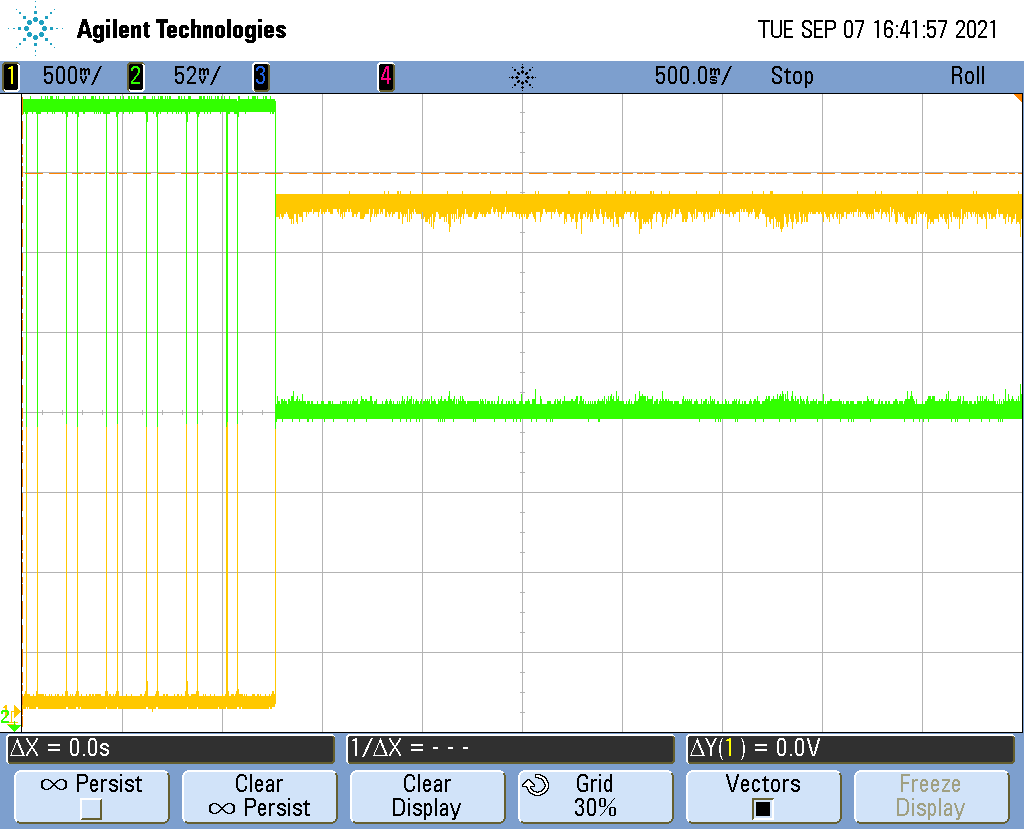
We change the setup a bit to have the same polarization on the photodiode and the PDH (in reflexion of the cavity). CF: schematics (futur).
Thanks to that, the symetry between reflexion and transmission is better now (as you can see on the plot).
We also put more power on PHD to have a better SNR by changing splitters. (We had 100 µW and now we have more than 1 mW, at the expense of the power on the camera).
Thanks to that we obtained a good locking, The coupling is quite good (roughtly 50%, on the green line)
In the following plot, the green line is the reflexion and the yellow lin is the transmission. |
| Attachment 1: scope_0.png
|
 |