| ID |
Date |
Author |
Status |
Type |
Category |
Location |
Title |
|
70
|
Thu Feb 2 17:40:10 2023 |
Blanc | Fixed | info | lasers and optics | Optical room | Schéma Manip |
Ci-dessous le schéma actuel de la manip. |
| Attachment 1: 7_Minicav_setup_23_05_2022.PNG
|
 |
|
20
|
Thu Sep 9 16:34:37 2021 |
Blanc | Fixed | info | lasers and optics | Optical room | Ring light in the cavity |
We put a diaphragm in the input beam but it doesn't work to suppress the ring light only but it attenuates the whole transmitted beam (cavity mode and ring light) viewed on the camera. |
|
22
|
Fri Sep 24 09:55:35 2021 |
Manar Amer | Under Process | report | lasers and optics | Optical room | Reflection Line Polarization Measuremet |
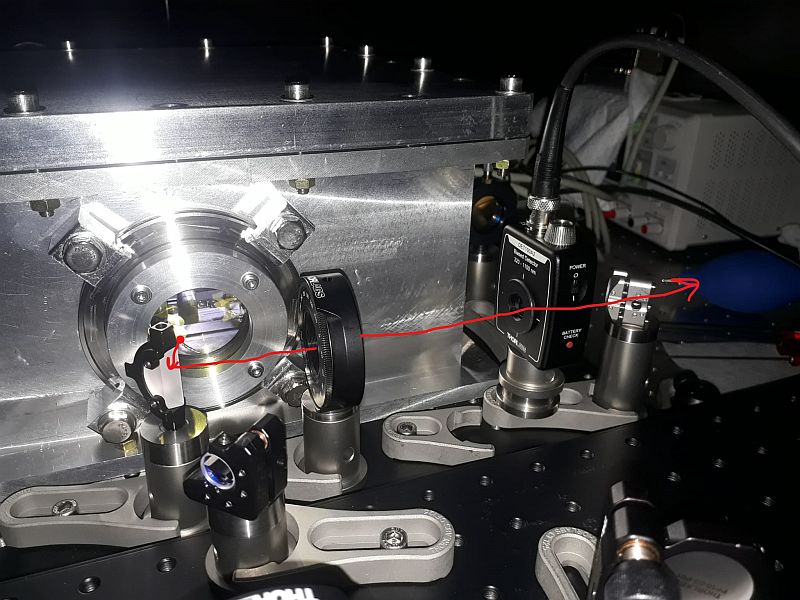
With the help of Ronic the cavity was locked in preparation to measure the polarization of the reflection line when the cavity is locked (measurement when it is not locked was done before)
the purpose is to compare the two measurements (locked vs not locked)
General details:
- when not locked : measurements of the polarization was taken from the point where the photodiode is placed in the picture enclose
- When Locked: we can't measure it from that point as we need the line to split into two, one goes to PDH to maintain the lock of the cavity and the other one we use for our measurement.
- The reflection line is split at the point where the beam splitter is (BS, behind the photodiode in picture), we intended to take the measurements from this point.
Observation:
before starting the measurement of polarization, we observed
- the power measured for the reflection line (point at end of red arrow in picture, after BS) is really sensitive to the polarization, it shows when rotating the half-wave plate
- but, when measuring the power at the point shown in the picture (before BS, where the photodiode is placed) it is not sensitive to polarization.
This tells us that the dielectric BS placed in the reflection line affects the polarization.
This could affect the stability of the locking of the cavity, as the PDH is sensitive to polarization.
** Further investigation is needed before proceeding **
Footnotes:
- BS: Beam splitter.
- Dielectric component's sensitivity to polarization
- most of the components placed in the transmission line are dielectric.
|
| Attachment 1: Reflection_line.jpg
|
 |
|
56
|
Tue Jun 14 11:16:37 2022 |
Blanc | Under Process | issue | lasers and optics | Optical room | Problèmes Cavitée |
Précédentes ref pour lesquelles la manip fonctionnait :
Caméras :
709 ; 371 NF
389 ; 280 FF
Moteurs :
5.091422 ; 5.091422 ; -2.9 ; -2.9
Problèmes dans la cavité :
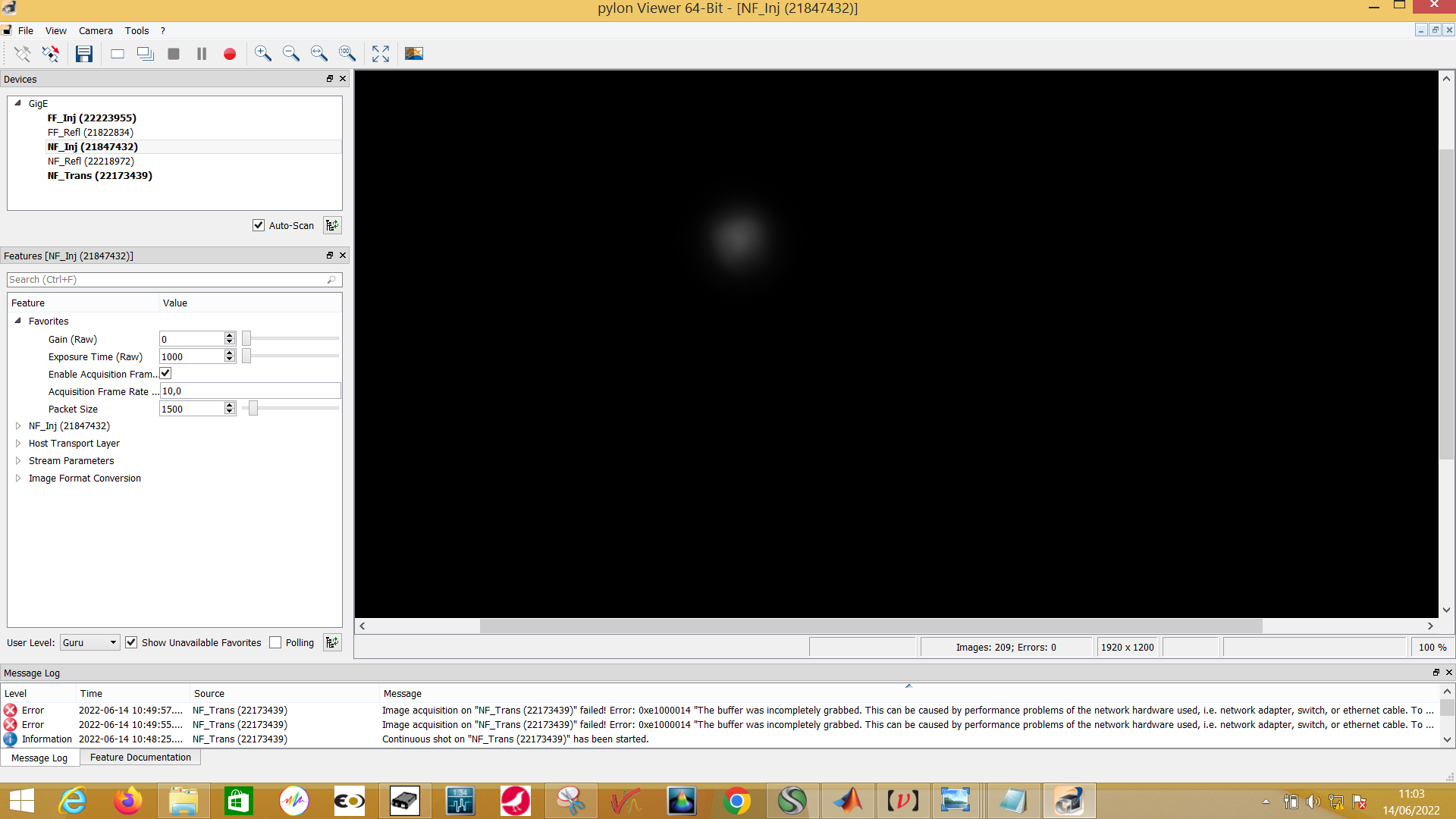
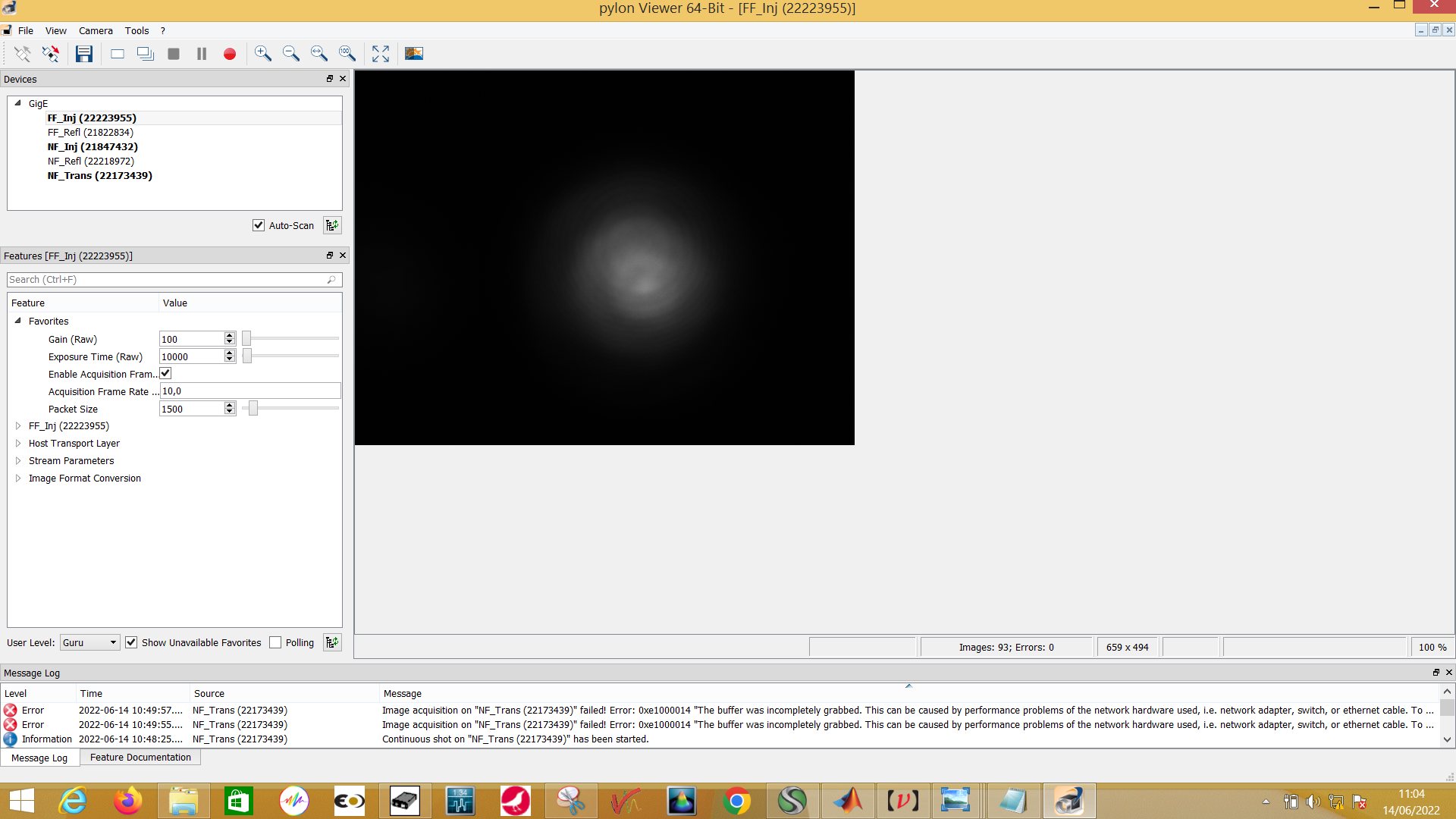
- Pas de beating de mode alors que l'on est sur les références d'injection
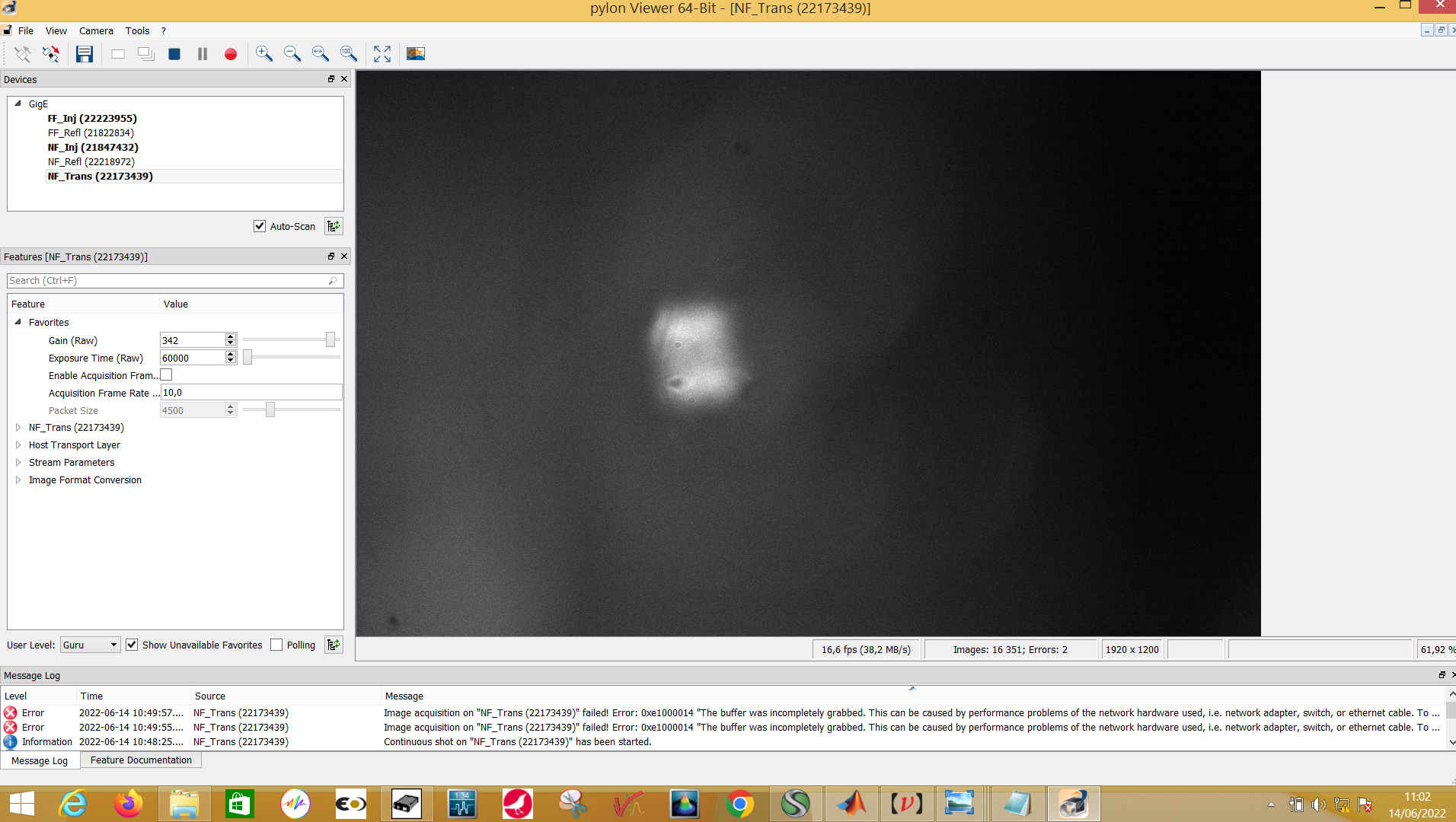
- Faisceau carré en transmission
- Les softs étaient ouverts et la clé de la lockline tournée en position laser alors que j'avais tout fermé à la fin des manips et mis en standby...
|
| Attachment 1: Transmission.PNG
|
 |
| Attachment 2: NF_inj.PNG
|
 |
| Attachment 3: FF_inj.PNG
|
 |
|
40
|
Thu Oct 21 10:24:01 2021 |
Blanc | Fixed | info | utilities | Other | Presentations |
Here the first part of all the presentations since the beginning of the project. |
| Attachment 1: 2-Présentation_LAL_22_06_2020_Corrigée.pptx
|
| Attachment 2: 4-Présentation_LAL_29_06_2020_Corrigée.pptx
|
| Attachment 3: 5-Présentation_LAL_27_07_2020.pptx
|
| Attachment 4: 6-Présentation_LAL_30_11_2020.pptx
|
| Attachment 5: 7-Présentation_LAL_07_12_2020.pptx
|
|
41
|
Thu Oct 21 10:30:38 2021 |
Blanc | Fixed | info | utilities | Other | Presentations |
Here the second part of all the presentations since the beginning of the project. |
| Attachment 1: 8-Présentation_LAL_15_04_2021_elog.pptx
|
| Attachment 2: 9-Présentation_LAL_10_05_2021_elog.pptx
|
| Attachment 3: 10-Présentation_LAL_28_06_2021.pptx
|
|
42
|
Thu Oct 21 10:32:54 2021 |
Blanc | Fixed | info | utilities | Other | Presentations |
Here the last part of all the presentations since the beginning of the project. |
| Attachment 1: 12-Présentation_LAL_13_09_2021.pptx
|
| Attachment 2: 13-Présentation_LAL_27_09_2021.pptx
|
| Attachment 3: 14-Présentation_LAL_11_10_2021.pptx
|
| Attachment 4: Présentation_Amplitude_23_08_2021.pptx
|
|
64
|
Wed Jan 25 12:18:25 2023 |
Blanc | Fixed | info | lasers and optics | Optical room | Position des miroirs et gain photodiode |
Nouvelle position des miroirs :
5.198865 ; 5.199305 ; -2.9 ; -2.9
Photodiode de transmission, gain de 60, 1MOhm osc : 2.5 V
Photodiode de transmission, gain de 50, 1MOhm osc : 800 mV |
|
21
|
Thu Sep 16 18:23:13 2021 |
Blanc | Fixed | info | lasers and optics | Optical room | Polarization Results in transmission |
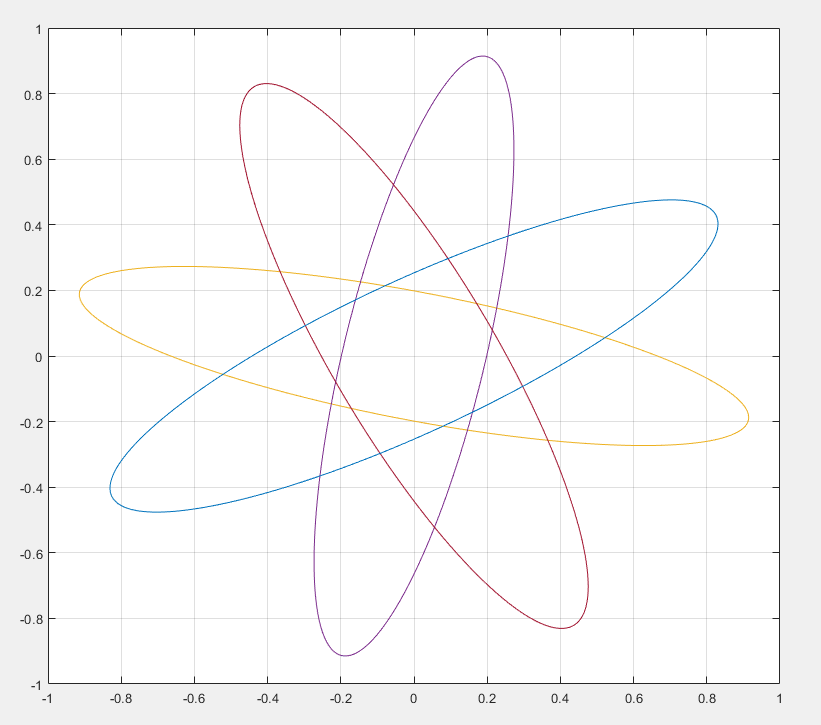
After data processing, I finally find the polarization in transmissin of the FPC. As you can see below, the polarisation is not linear but elliptical.
The four ellipsies are here due to having not enougth parameters to extract with certainty one ellipse. |
| Attachment 1: Polarisation_transmission_cavité.png
|
 |
|
17
|
Tue Sep 7 14:27:07 2021 |
Blanc | Fixed | info | lasers and optics | Optical room | Polarisation Results of the NKT |
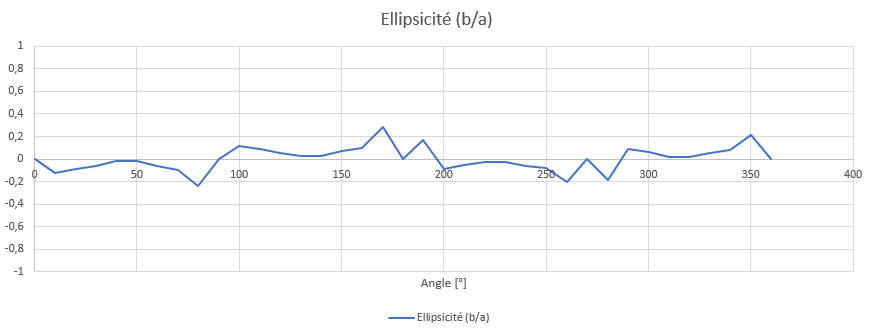
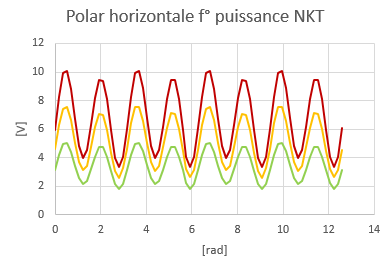
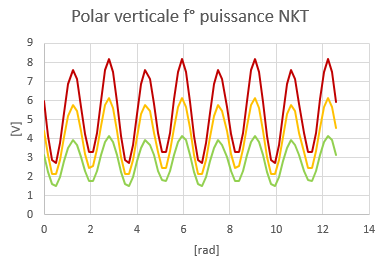
I made many tests about polarization and we can see some points thanks to the following figures :
1- The ellipsicity of the NKT is near to 0 (between -0,2 and 0,2) which means the polarization is rectilinear horizontale (attachement 1).
2- The power of the NKT has no influence on the polarization, verticale or horizontale (attachement 2 and 3).
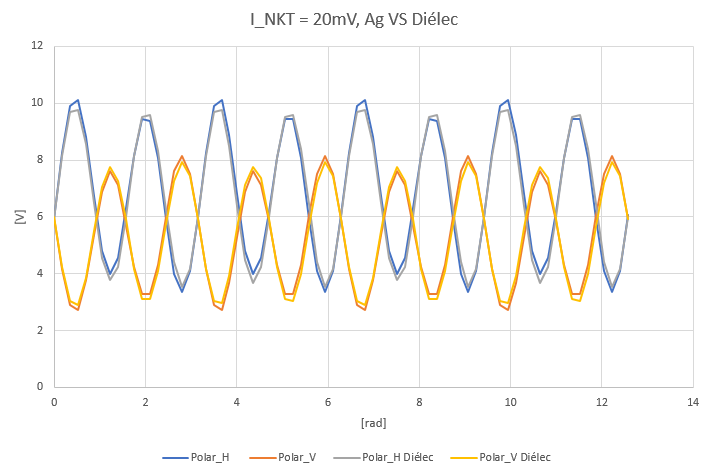
3- The polarization is not changed by the type of mirror (Ag or Diélec) (attachement 4)
The next step is to measure the polarization after the cavity to know the ellipsicity. |
| Attachment 1: Ellipsicité_NKT.PNG
|
 |
| Attachment 2: Polar_horizontale_fonction_pussance_NKT.PNG
|
 |
| Attachment 3: Polar_verticale_fonction_pussance_NKT.PNG
|
 |
| Attachment 4: Polarisation_Ag_VS_Diélec.PNG
|
 |
|
19
|
Wed Sep 8 10:50:38 2021 |
Blanc | Fixed | info | lasers and optics | Optical room | Polarisation Results of the NKT |
To have the polarisation, we must have 1 value because the laser in entry of the system has 1 polar. Due to that, the graphe of the ellipticity is not true, it is the mean value on the following table which shows the ellipticity and the polarization.
| Blanc wrote: |
|
I made many tests about polarization and we can see some points thanks to the following figures :
1- The ellipsicity of the NKT is near to 0 (between -0,2 and 0,2) which means the polarization is rectilinear horizontale (attachement 1).
2- The power of the NKT has no influence on the polarization, verticale or horizontale (attachement 2 and 3).
3- The polarization is not changed by the type of mirror (Ag or Diélec) (attachement 4)
The next step is to measure the polarization after the cavity to know the ellipsicity.
|
|
| Attachment 1: Tableau_polar.PNG
|
 |
|
77
|
Thu Mar 2 11:42:19 2023 |
Blanc | Fixed | info | lasers and optics | Optical room | Polar cavité |
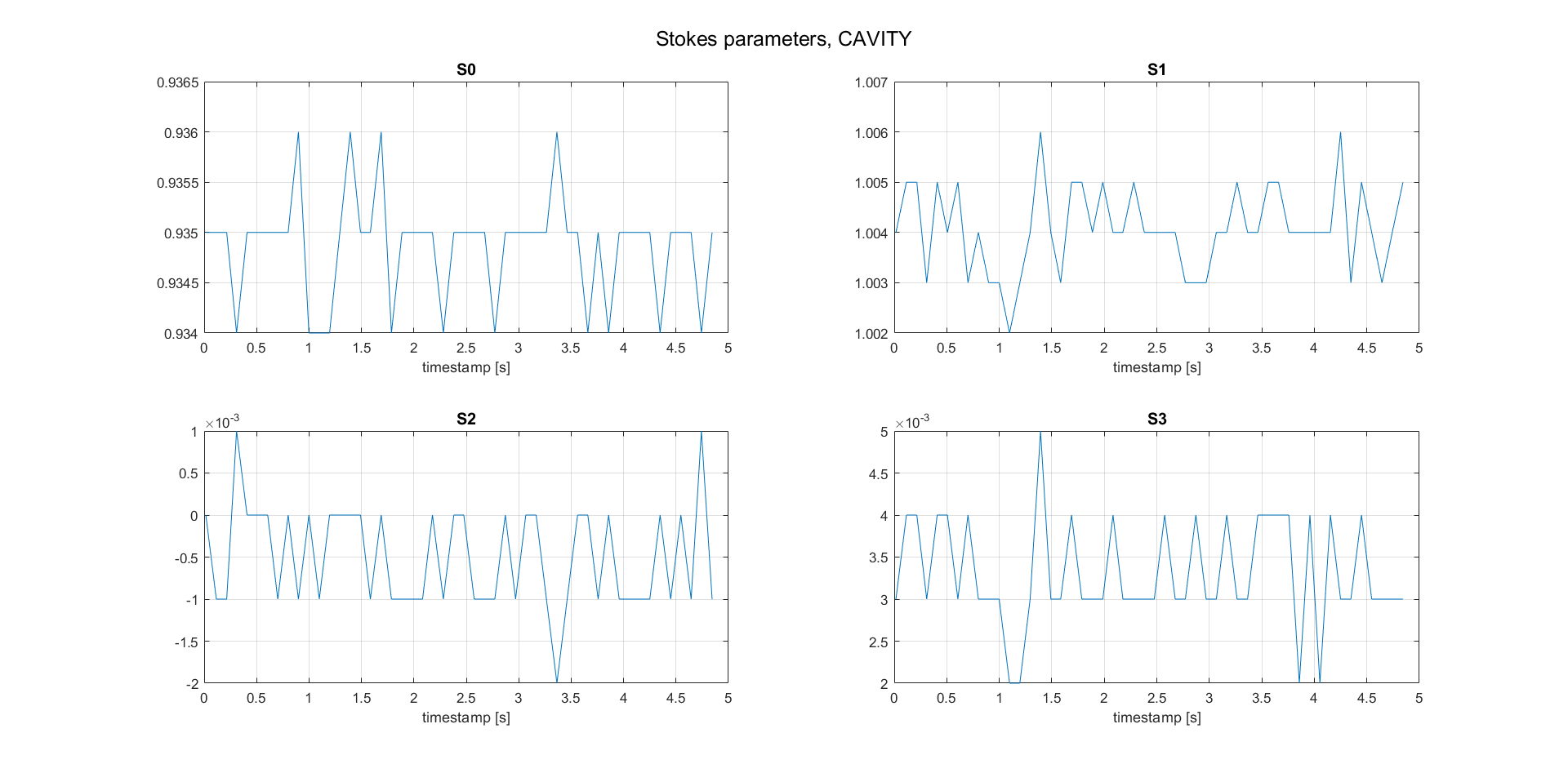
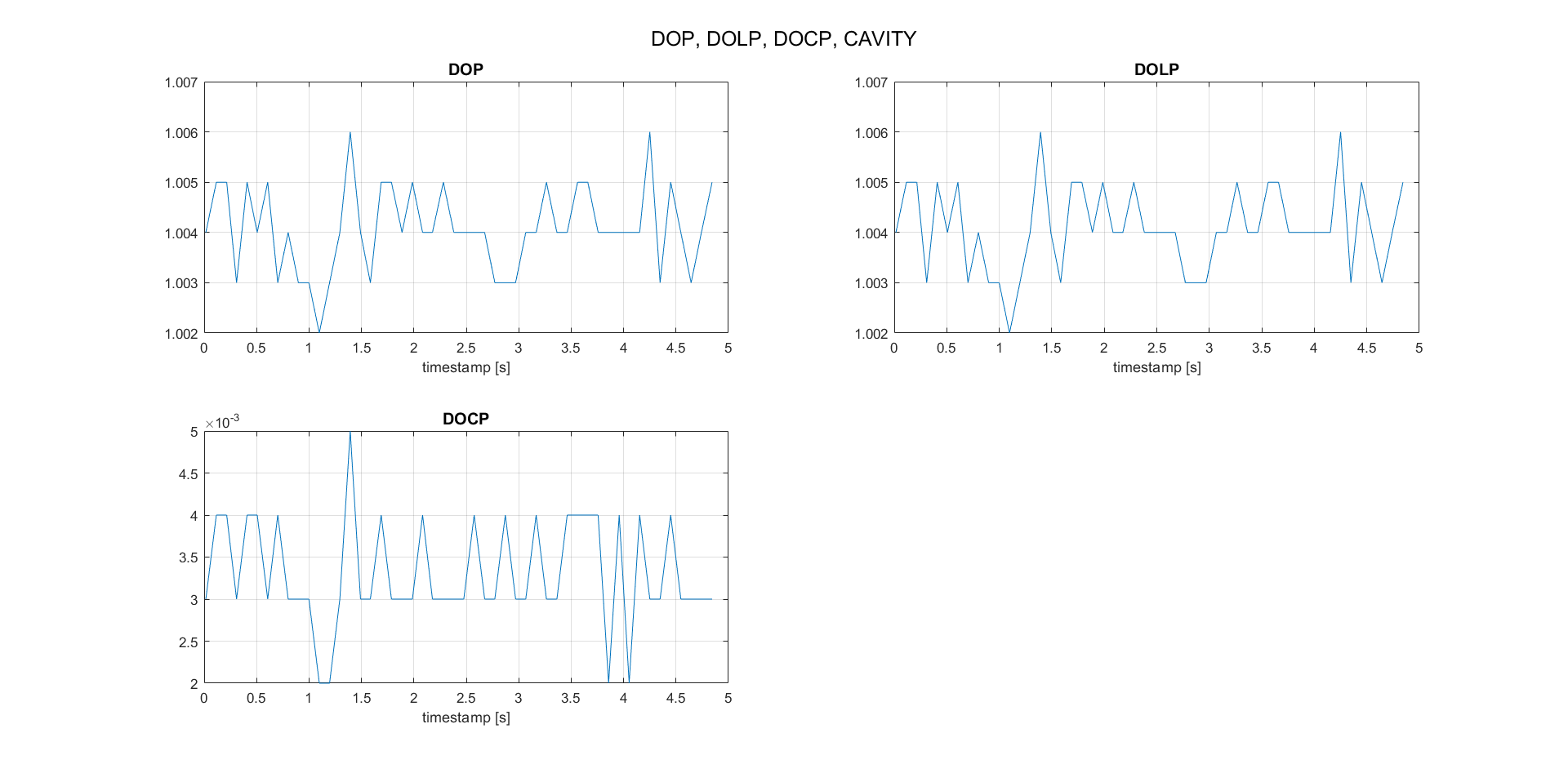
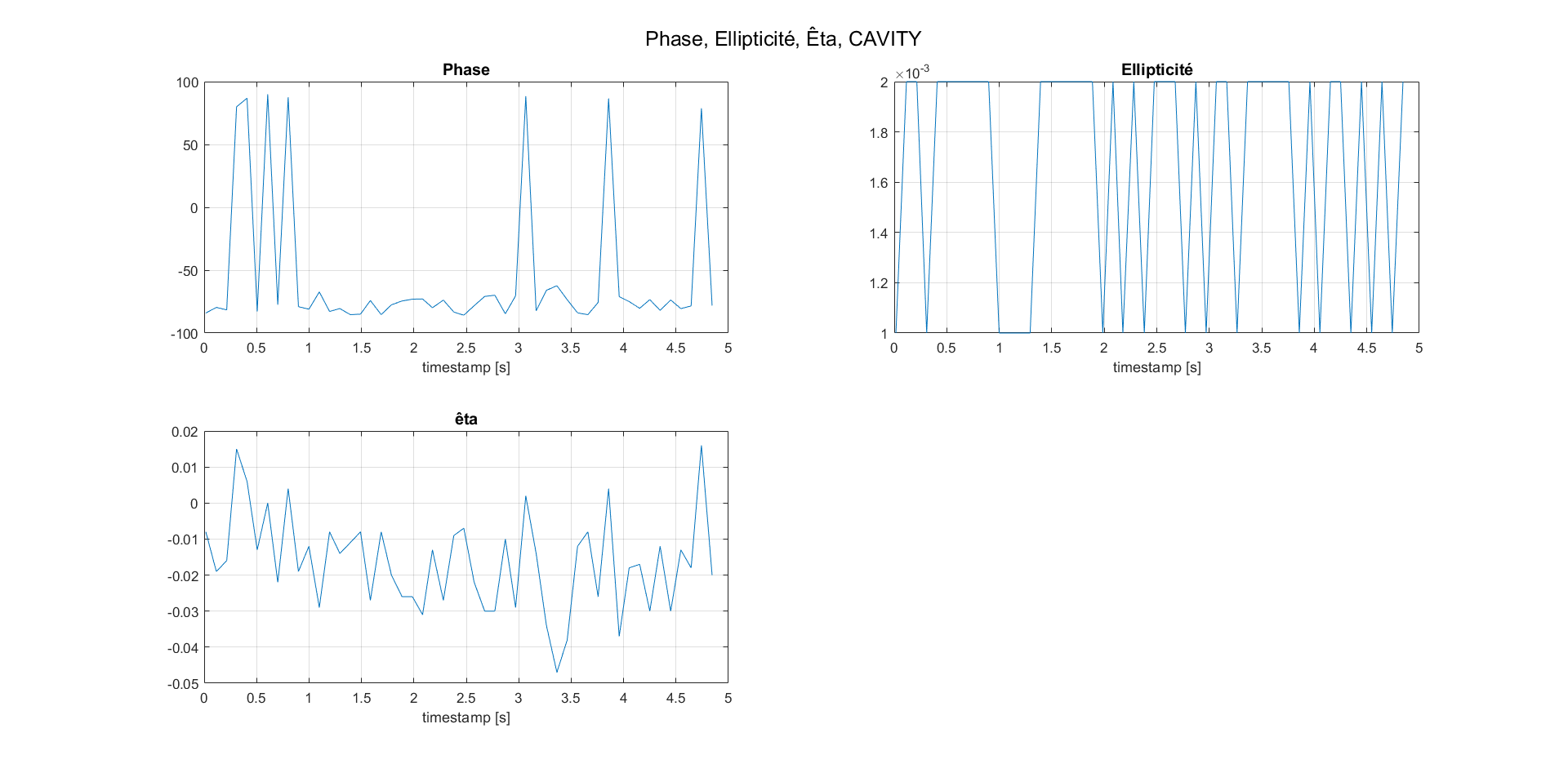
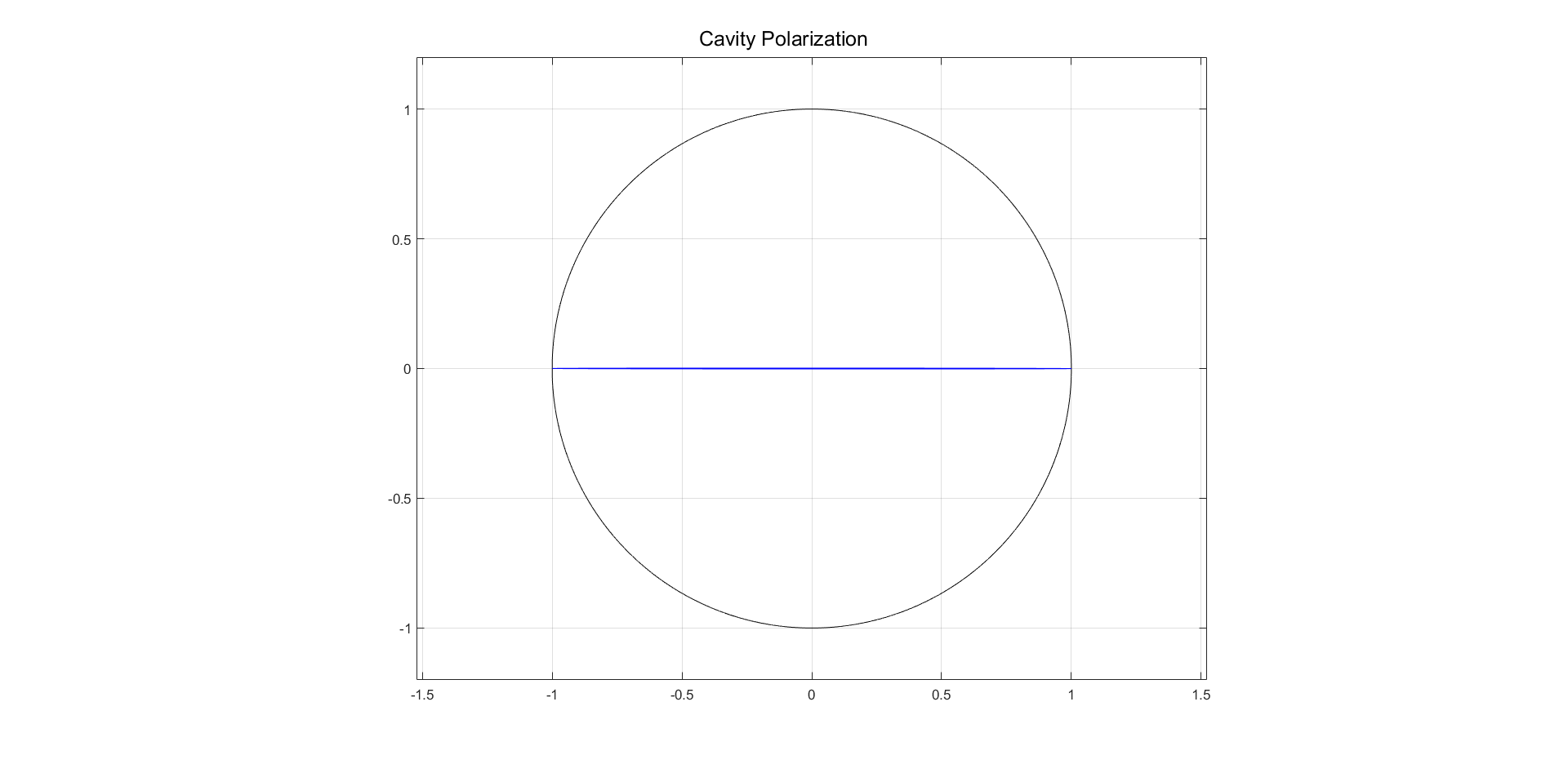
Après avoir locké avec la lockline et retiré le glan et la paire de lambda sur la voie PDH, j'ai observé que la polarisation dans la cavité changeait en fonction de la polarisation en amont que l'on pouvait changer grâce à la paire de lambda qui se trouve après le combiner. J'ai donc cherché à la rendre linéaire, vu que l'on a jusqu'ici préréglé la polarisation comme ci celle de la cavité était linéaire. (cf: images)
J'ai également observé que la perte de puissance sur la photodiode à gain utilisée pour le lock, que l'on pouvait observer en changeant la polarisation en entrée, n'était pas dûe au fait que la polarisation d'entrée ne soit pas la même que celle de la cavité, mais plutôt qu'elle était dûe au fait que la polarisation d'entrée ne soit pas la même que celle de l'ensemble lambda/4+lambda/2+PBS en transmission de la cavité. => On essayait de matcher au mieux avec cette polar et non celle de la cavité.
Il faut donc enlever le PBS pour pouvoir matcher au mieux avec la cavité. |
| Attachment 1: Stokes_parameters_CAVITY.png
|
 |
| Attachment 2: DOP_DOLP_DOCP_CAVITY.png
|
 |
| Attachment 3: Phase_Ellipticité_Êta_CAVITY.png
|
 |
| Attachment 4: Ellipse_Polarization_CAVITY.png
|
 |
|
78
|
Thu Mar 2 17:42:51 2023 |
Blanc | Fixed | info | lasers and optics | Optical room | Polar cavité |
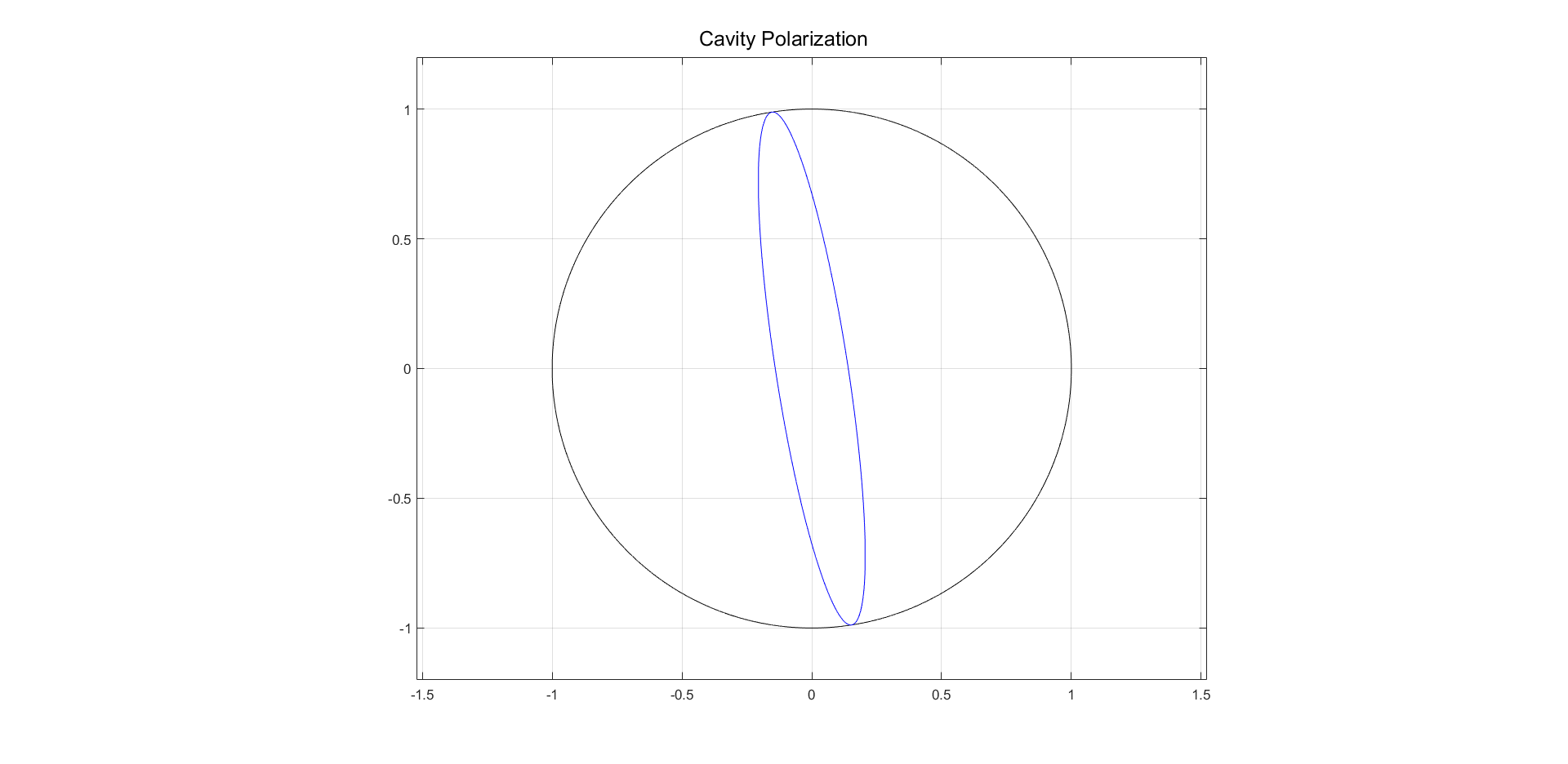
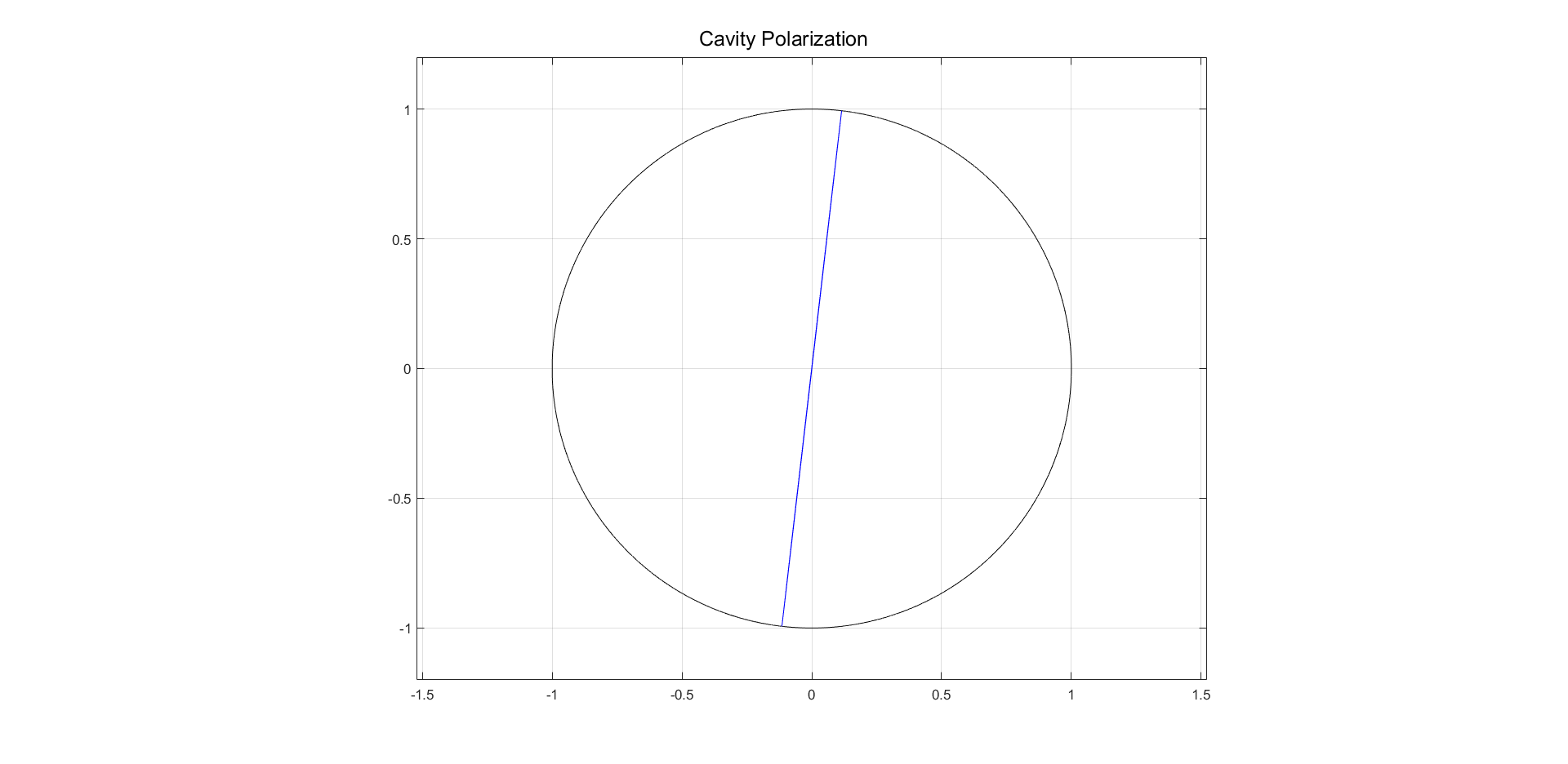
Après avoir enlevé le PBS en transmission de la cavité j'ai cherché à atteindre le maximum possible sur la photodiode de transmission en faisant varier la polarisation en entrée de la cavité.
J'ai remarqué que l'on était pas très sensible (40 mV d'incertitude) lorsque l'on atteignait le maximum et que l'on changeait l'état de polarisation (cf : images) |
| Attachment 1: Ellipse_Polarization_CAVITY.png
|
 |
| Attachment 2: Ellipse_Polarization_CAVITY_2.png
|
 |
|
1
|
Tue Mar 23 18:33:16 2021 |
Ronic Chiche | Fixed | info | lasers and optics | detectors and electronics | Optical room | Phase noise measurement of the Amplitude MIKAN |
Installation of the MIKAN.
powermeter (with OD1) just after the oscillator shows 440mW for 4A of the MIKAN pump current.
Installation of a periscope as the oscillator beam position is very close to the table... not easy to put devices at this height (be aware to use proper wavelength range mirrors: Thorlabs BB1-E03)
Installation of a HALF waveplate to align beam polarisation on the isolator axis
Installation of a High power isolator (the one of ThomX): Newport ISO-FRDY-05-1030-N
powermeter (with OD1) just after the isolator shows 427mW
|
|
2
|
Tue Apr 6 09:25:47 2021 |
Ronic Chiche | Fixed | info | lasers and optics | detectors and electronics | Optical room | Phase noise measurement of the Amplitude MIKAN |
Coupling into a 50-50% fiber coupler using the Thorlabs XYZ table NanoMax TS.
We reached 117mW after the 50% arm which means we coupled about 230mW (the coupling better than 50%).
| Ronic Chiche wrote: |
|
Installation of the MIKAN.
powermeter (with OD1) just after the oscillator shows 440mW for 4A of the MIKAN pump current.
Installation of a periscope as the oscillator beam position is very close to the table... not easy to put devices at this height (be aware to use proper wavelength range mirrors: Thorlabs BB1-E03)
Installation of a HALF waveplate to align beam polarisation on the isolator axis
Installation of a High power isolator (the one of ThomX): Newport ISO-FRDY-05-1030-N
powermeter (with OD1) just after the isolator shows 427mW
|
|
|
37
|
Wed Oct 20 14:54:00 2021 |
Ronic Chiche | Fixed | info | lasers and optics | detectors and electronics | Optical room | Phase noise measurement of the Amplitude MIKAN |
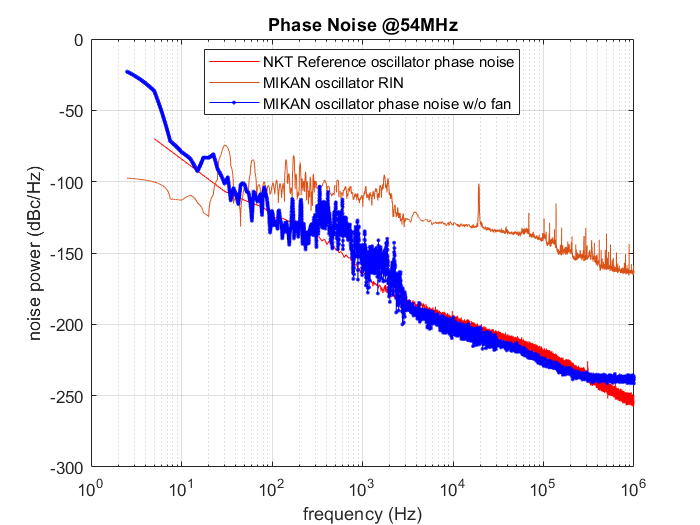
MIKAN phase noise and RIN measurements:
| Ronic Chiche wrote: |
|
Coupling into a 50-50% fiber coupler using the Thorlabs XYZ table NanoMax TS.
We reached 117mW after the 50% arm which means we coupled about 230mW (the coupling better than 50%).
| Ronic Chiche wrote: |
|
Installation of the MIKAN.
powermeter (with OD1) just after the oscillator shows 440mW for 4A of the MIKAN pump current.
Installation of a periscope as the oscillator beam position is very close to the table... not easy to put devices at this height (be aware to use proper wavelength range mirrors: Thorlabs BB1-E03)
Installation of a HALF waveplate to align beam polarisation on the isolator axis
Installation of a High power isolator (the one of ThomX): Newport ISO-FRDY-05-1030-N
powermeter (with OD1) just after the isolator shows 427mW
|
|
|
| Attachment 1: MIKAN_optical_phase_noise_comparison_with_NKT_CW_oscillator_&_RIN_@54MHz.png
|
 |
|
35
|
Tue Oct 19 18:27:20 2021 |
Ronic Chiche | Fixed | report | mechanics | lasers and optics | detectors and electronics | Optical room | PZT resonant frequencies |
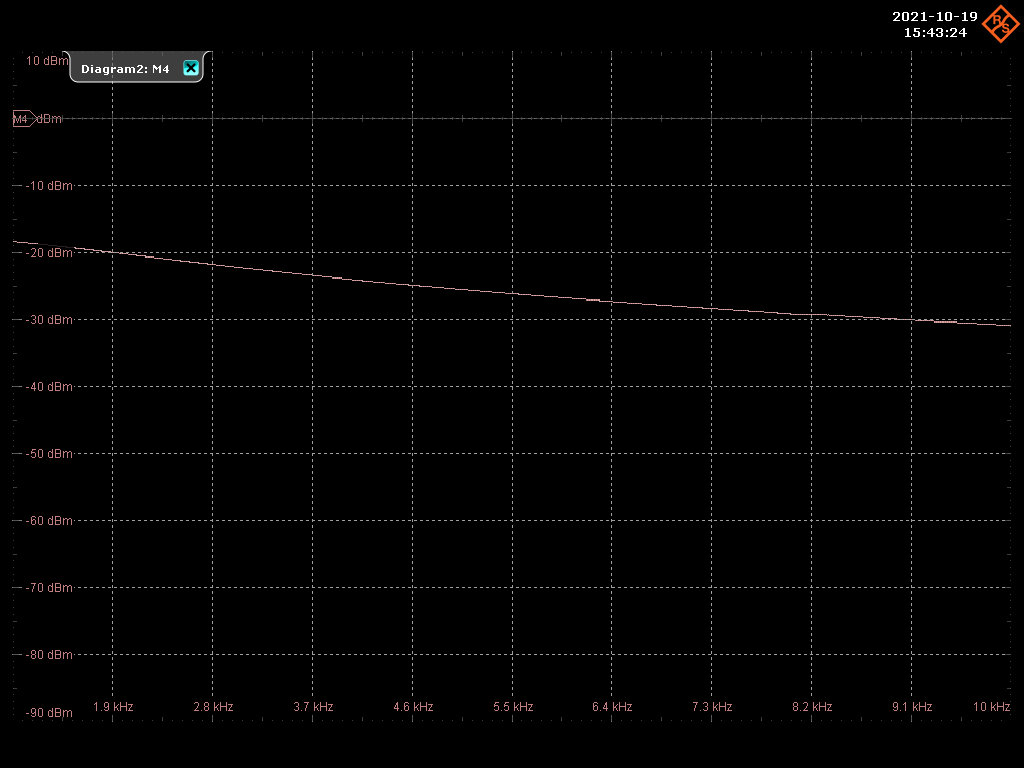
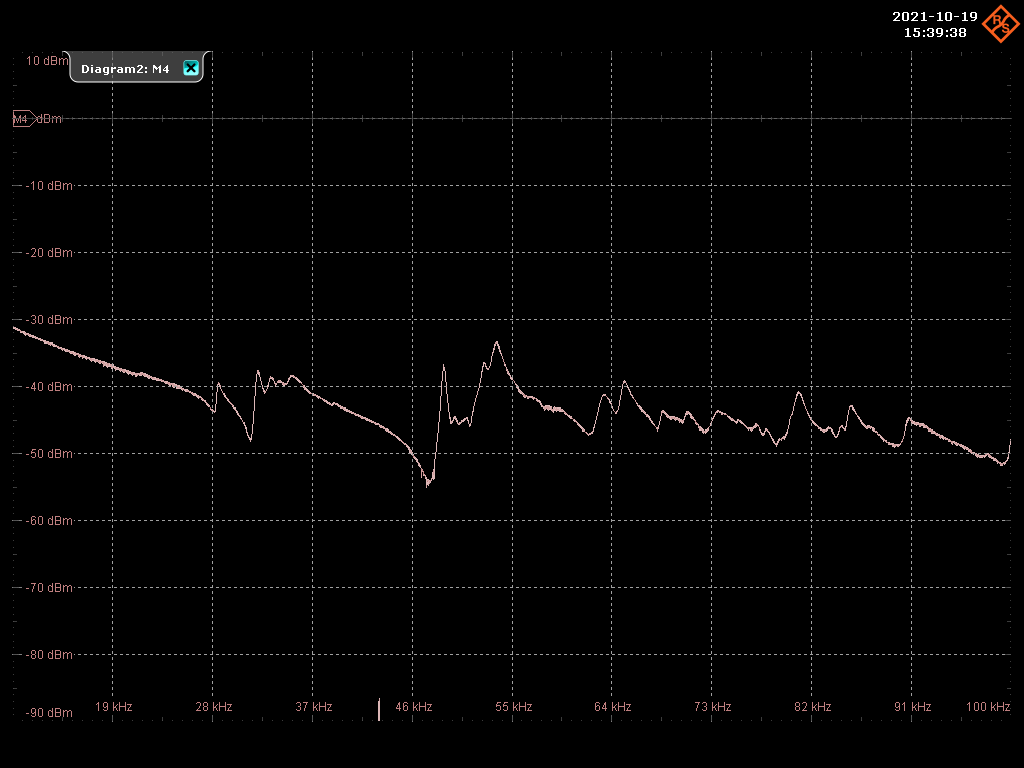
we have excited the PZT with a swept sinus wave from 1kHz to 10kHz and from 10kHz to 100kHz.
here are the 2 different spectrums:
- the 1kHz-10kHz is a standard spectrum where we see the impedance behavior of the PZT: Zpzt ~ 1/jCw
- the 10kHz-100kHz exhibit several PZT resonances and the 1st one is close to 28kHz.
(without PZT resonances, we should have the same behavior at higher frequencies than in the range 1kHz-10kHz) |
| Attachment 1: Sweep_1kHz-10kHz.png
|
 |
| Attachment 2: Sweep_10kHz-100kHz.png
|
 |
|
71
|
Mon Feb 6 16:51:51 2023 |
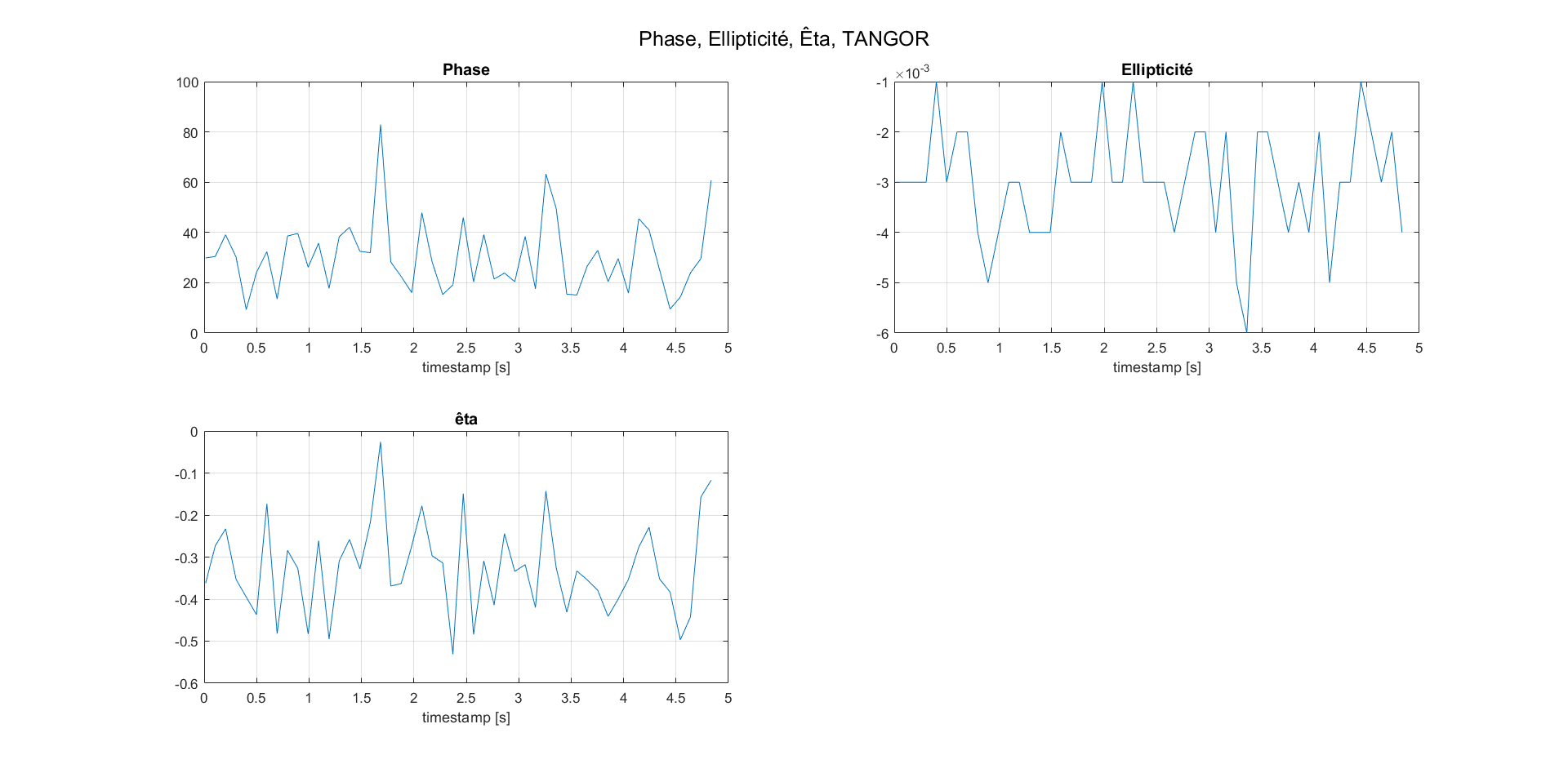
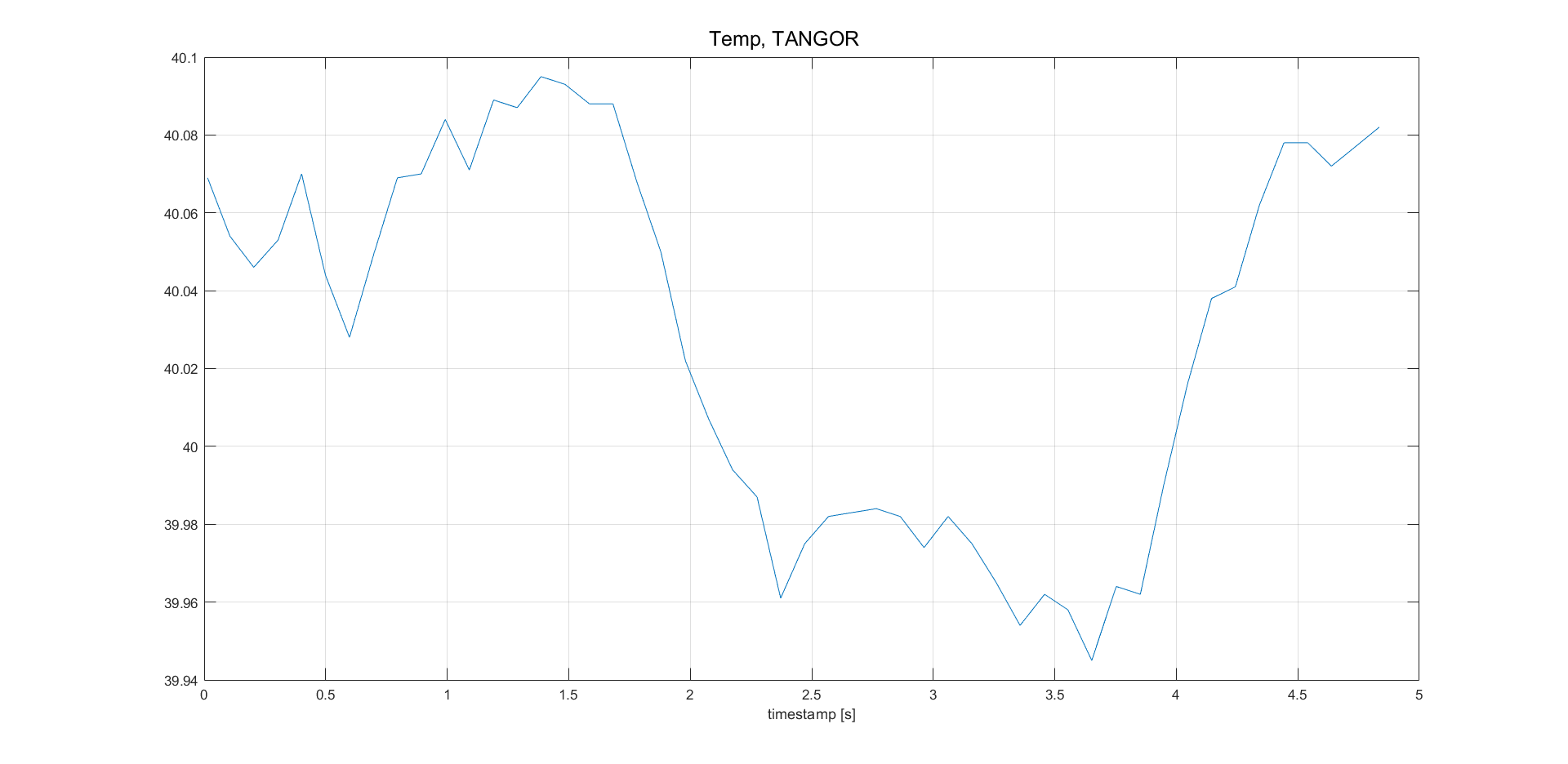
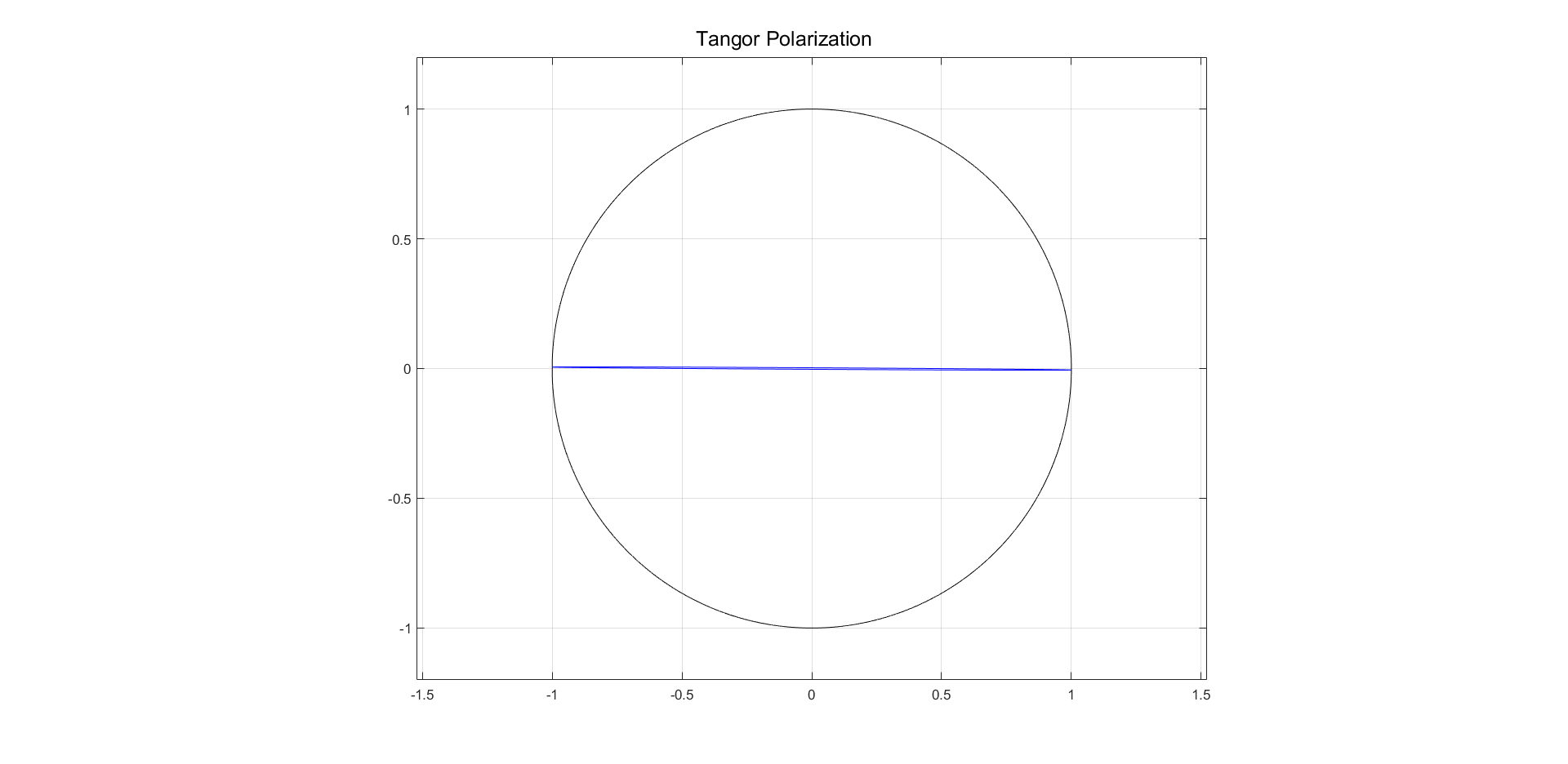
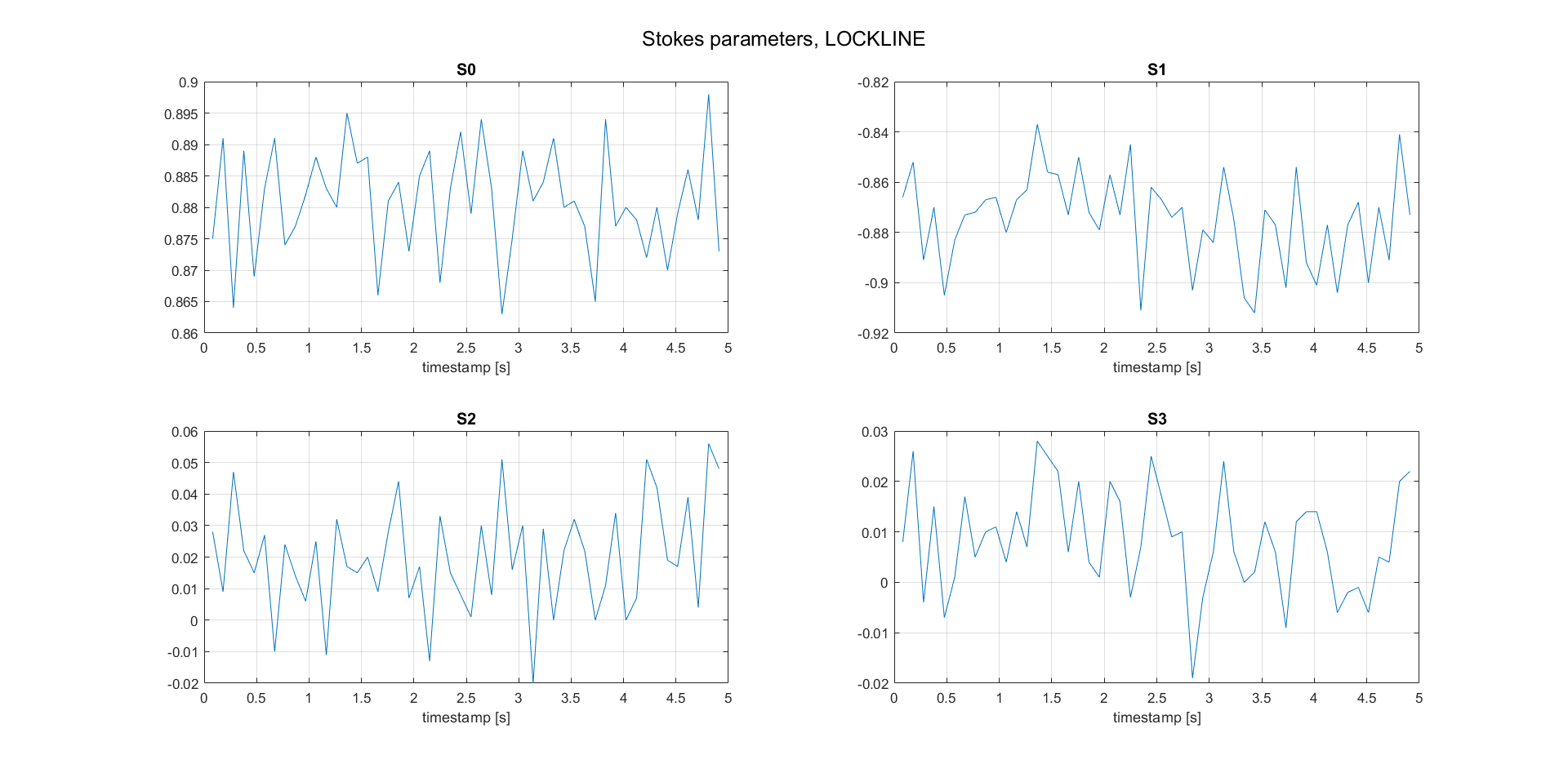
Blanc | Fixed | info | lasers and optics | Optical room | Optimisation de la polariation Tangor and Lockline |
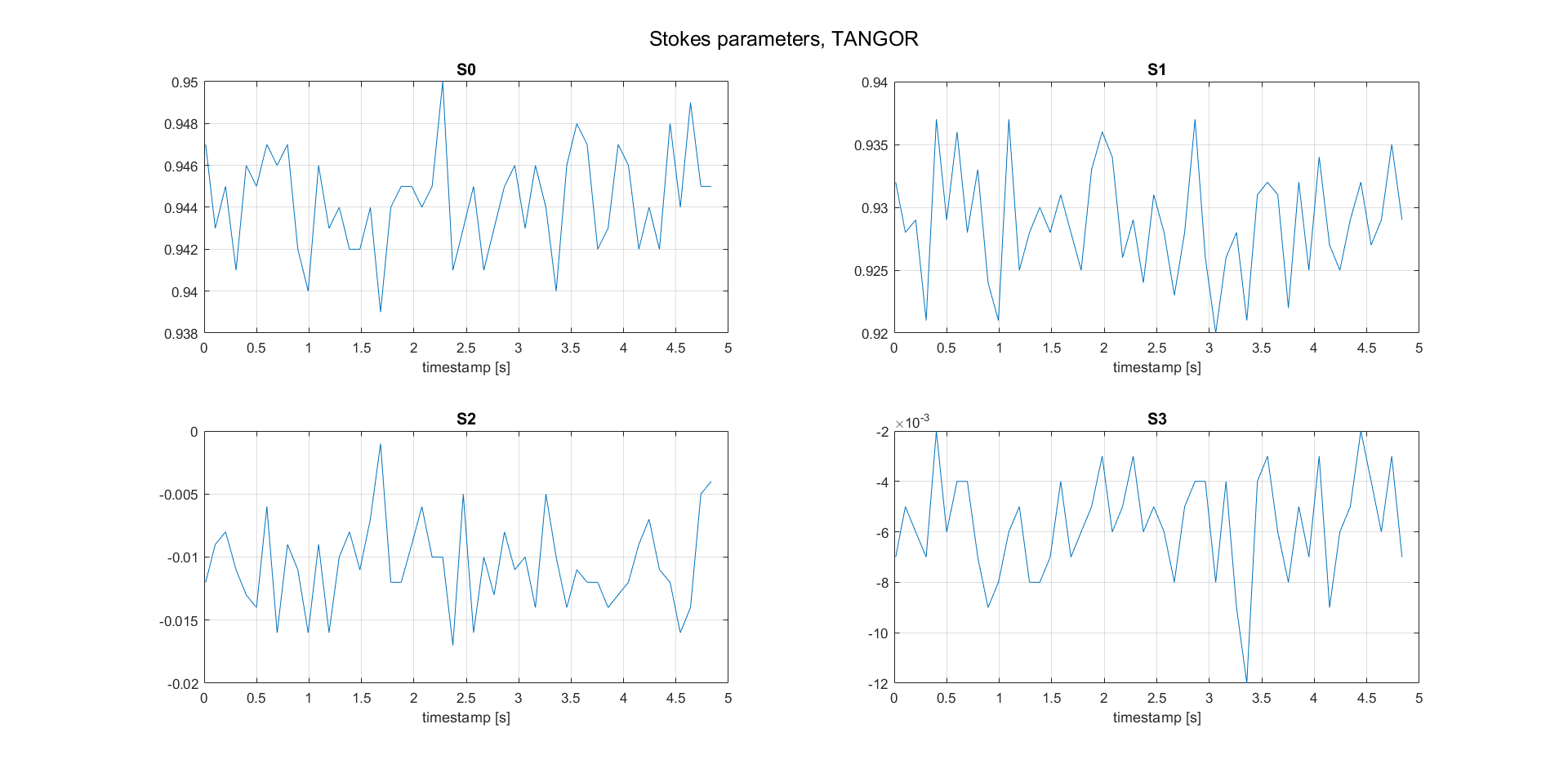
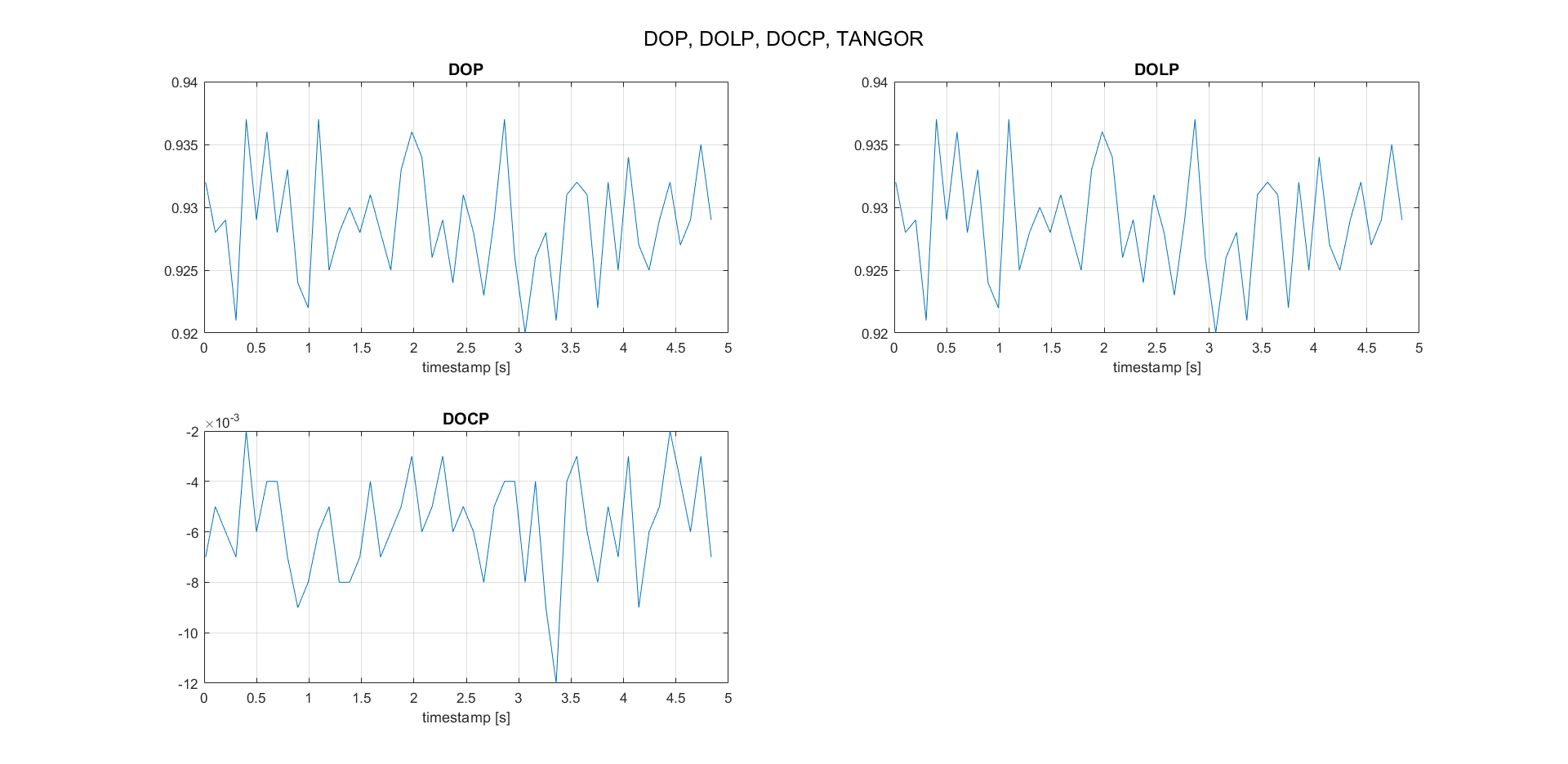
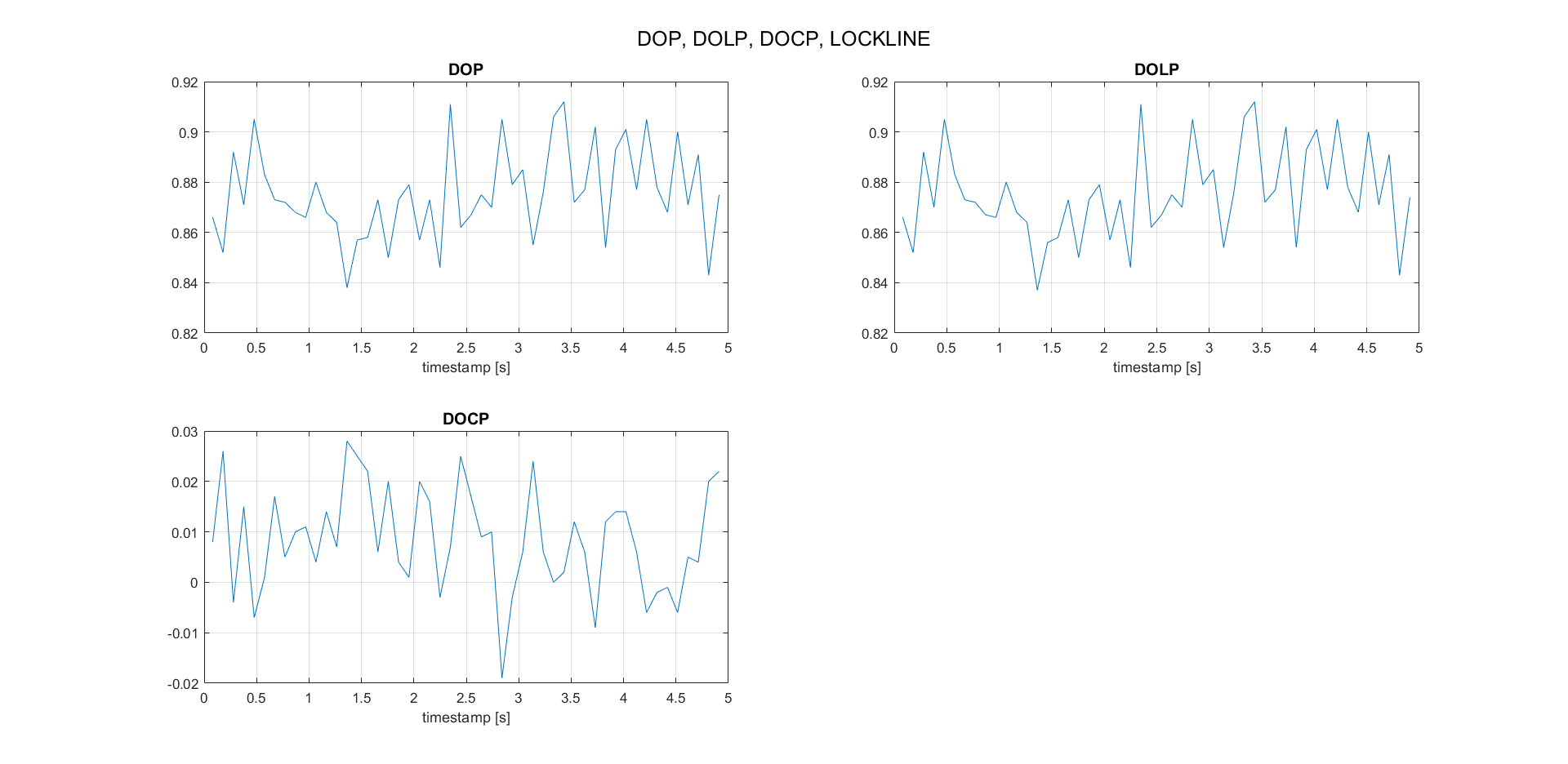
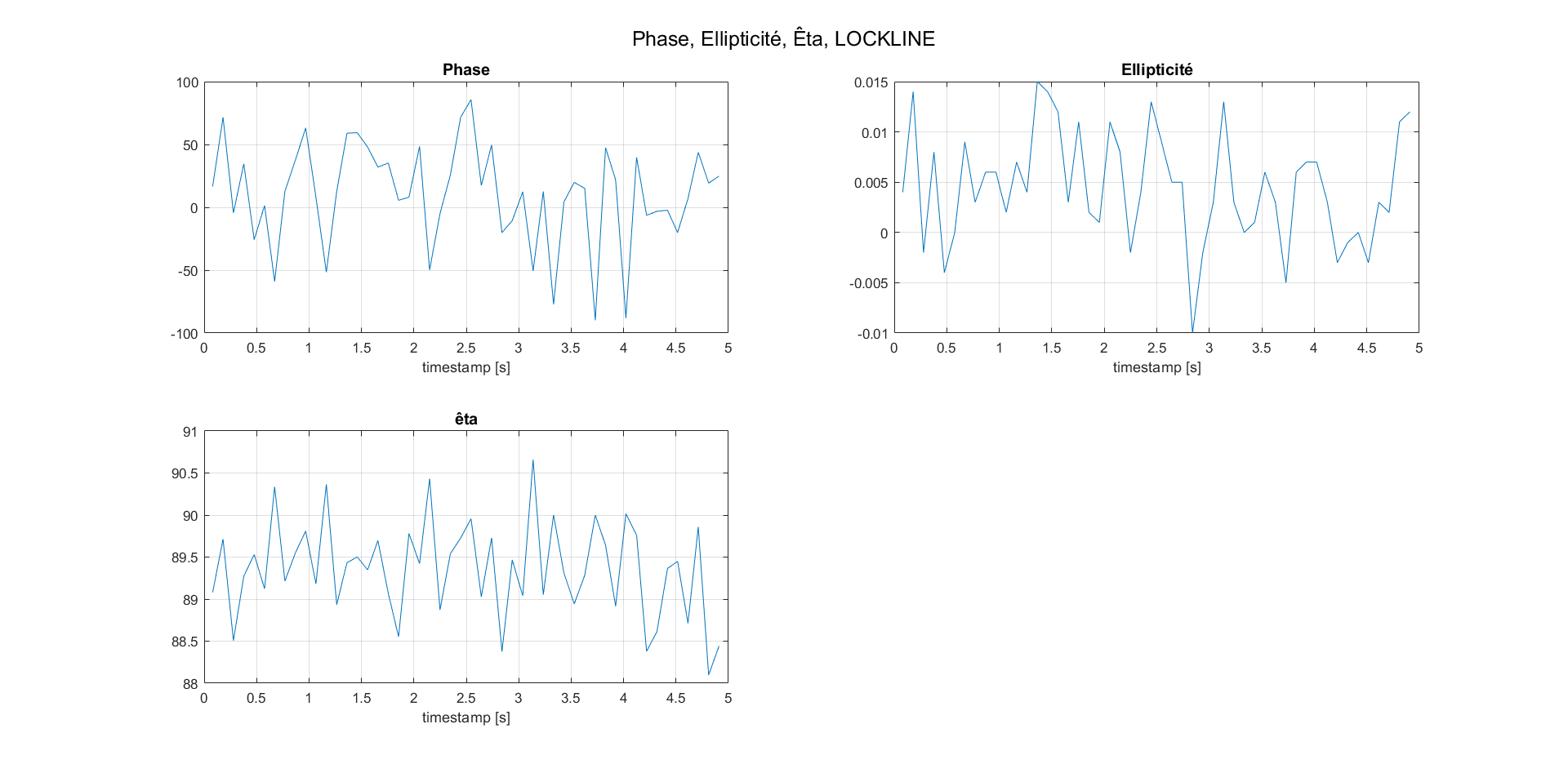
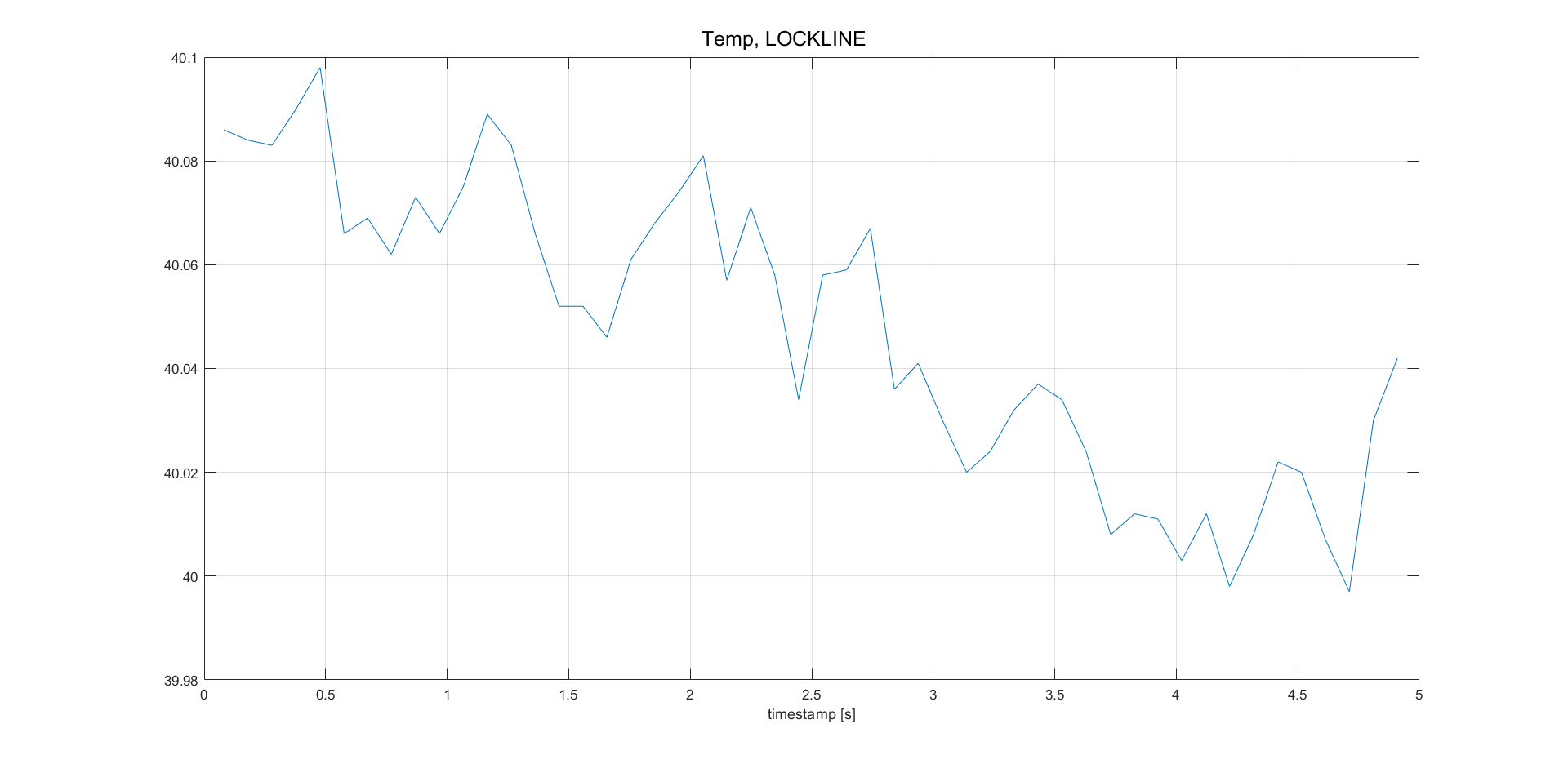
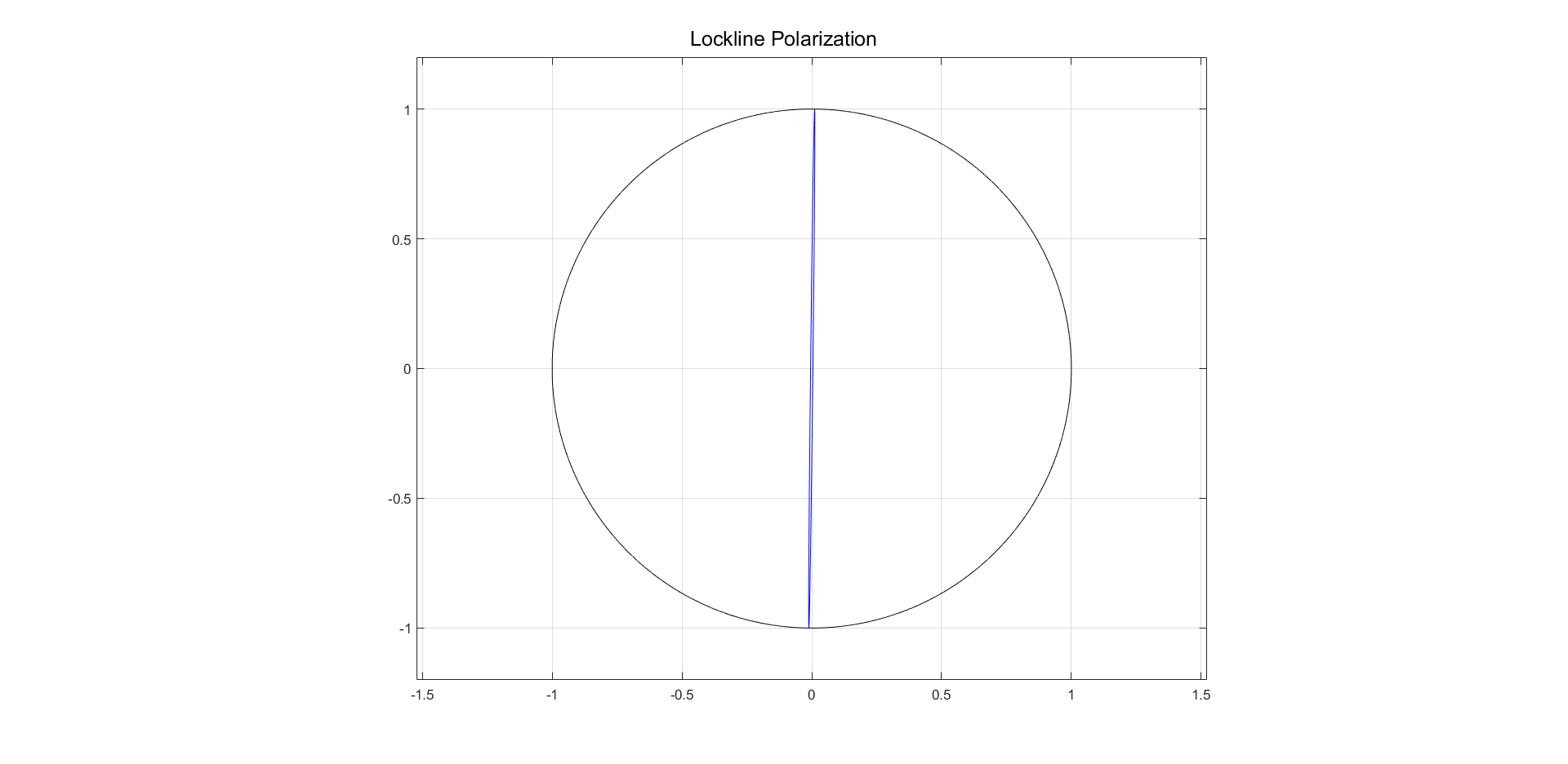
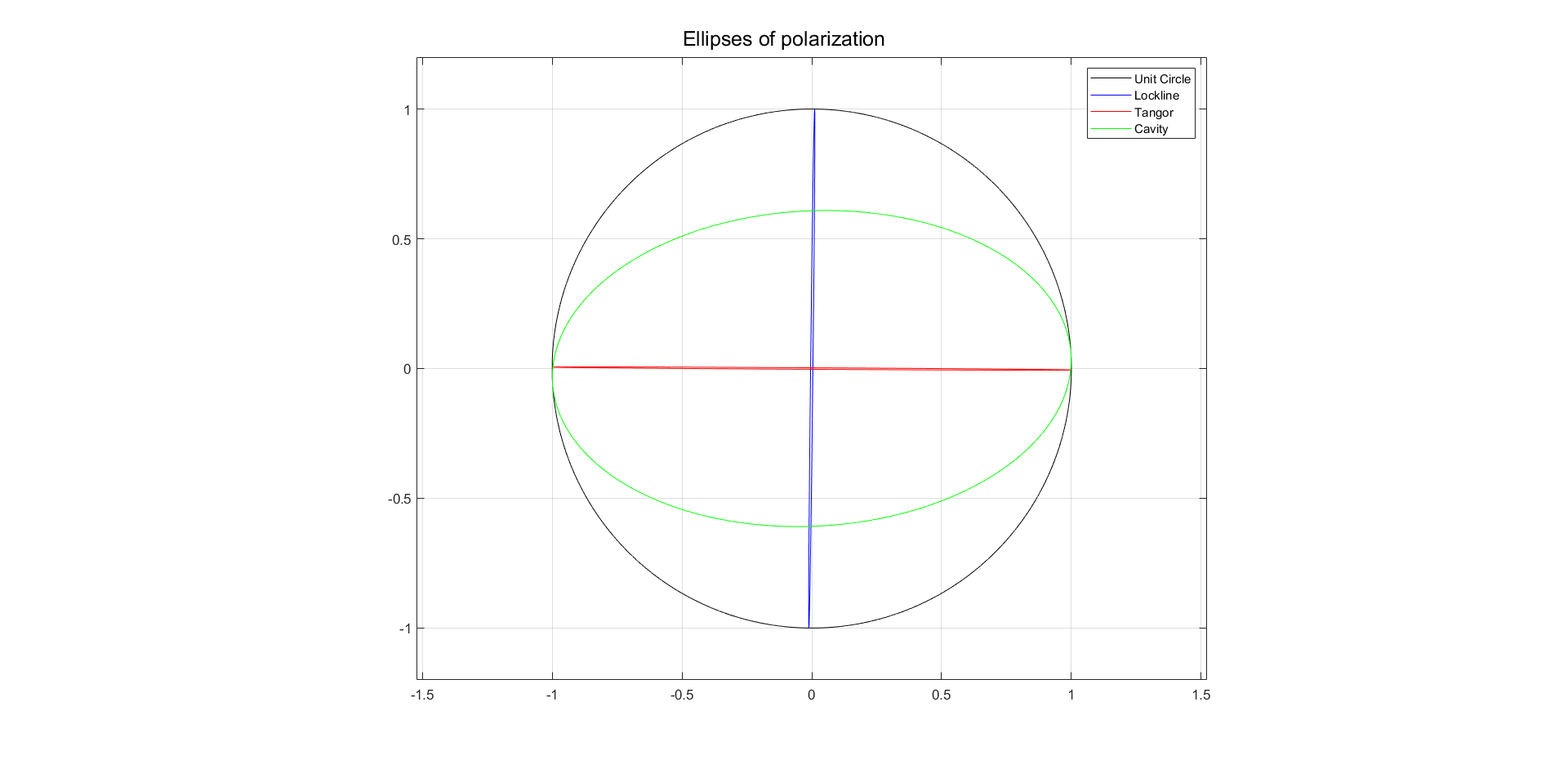
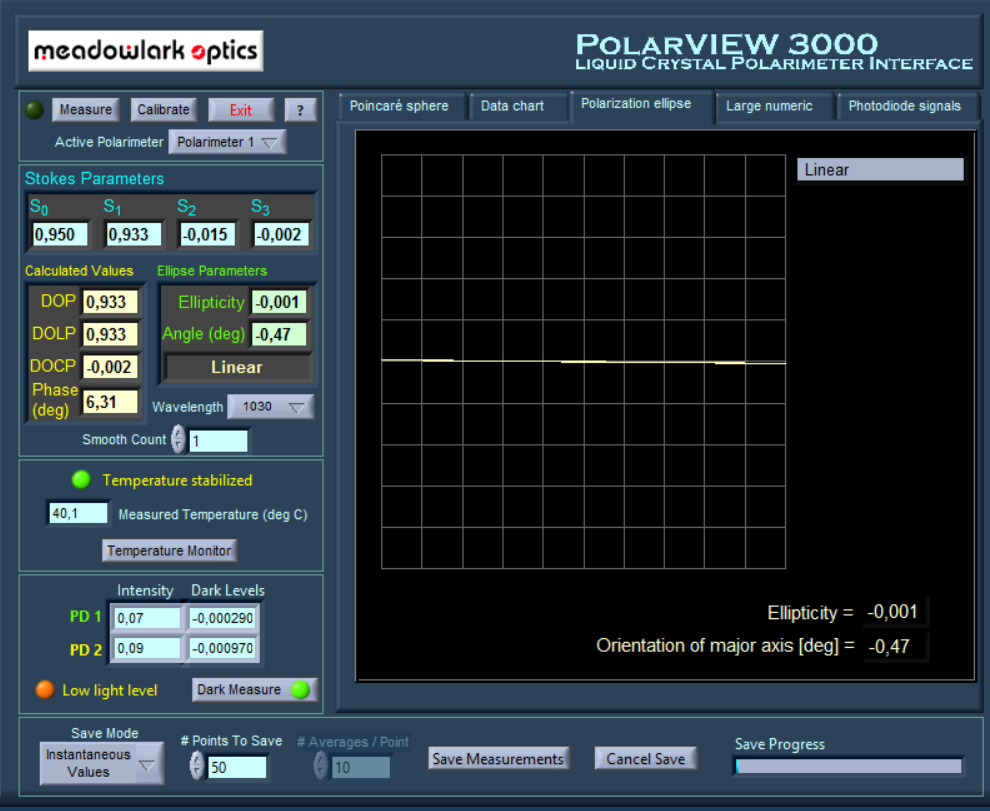
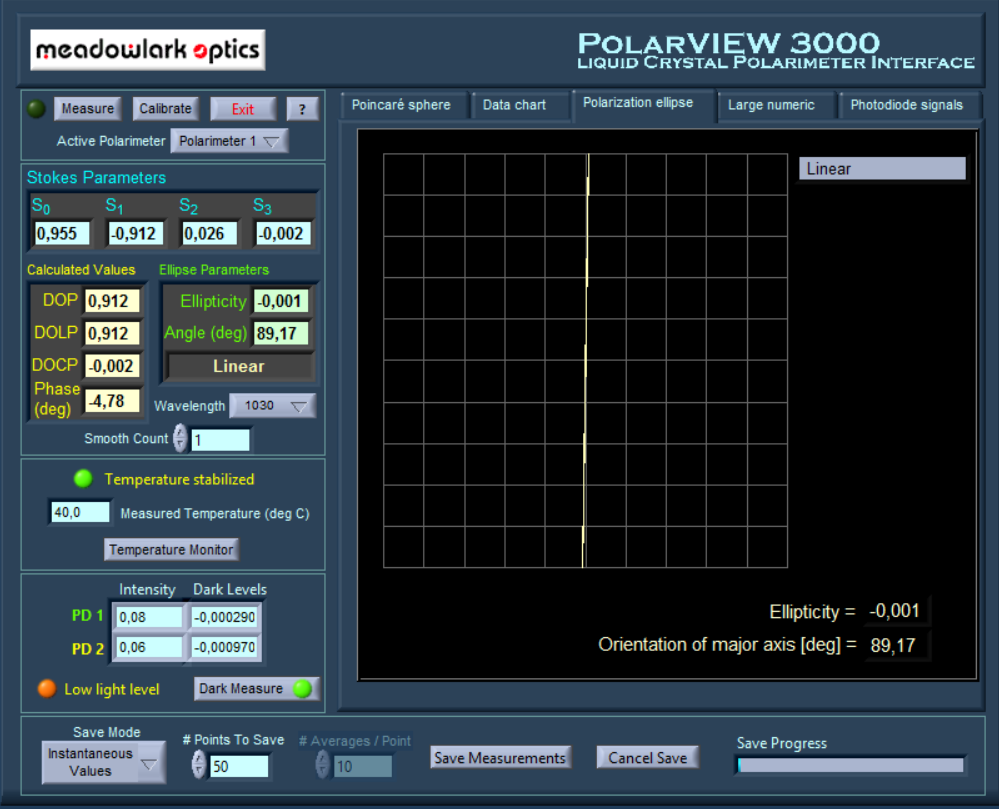
J'ai optimisé la polarisation du Tangor et de la Lockline en jouant sur l'angle du combiner et sur la lambda/2 de chacune des voies.
J'ai réussi à obtenir une polarisation croisée entre le Tangor et la Lockline et une polarisation quasi-linéaire pour chacune des deux voies.
Par contre, une partie de la puissance sur la ligne Tangor est perdu en passant à travers le combiner, car la fuite est plus intense (pas quantifiée car on n'y a pas accès).
|
| Attachment 1: Stokes_parameters_TANGOR.png
|
 |
| Attachment 2: DOP_DOLP_DOCP_TANGOR.png
|
 |
| Attachment 3: Phase_Ellipticité_Êta_TANGOR.png
|
 |
| Attachment 4: Tamp_TANGOR.png
|
 |
| Attachment 5: Ellipse_Polarization_TANGOR.png
|
 |
| Attachment 6: Stokes_parameters_LOCKLINE.png
|
 |
| Attachment 7: DOP_DOLP_DOCP_LOCKLINE.png
|
 |
| Attachment 8: Phase_Ellipticité_Êta_LOCKLINE.png
|
 |
| Attachment 9: Tamp_LOCKLINE.png
|
 |
| Attachment 10: Ellipse_Polarization_LOCKLINE.png
|
 |
| Attachment 11: Ellipse_Polarization_ALL_03_02_2023.png
|
 |
| Attachment 12: Polarisation_Tangor_after_combiner_03_02_2023_image.PNG
|
 |
| Attachment 13: Polarisation_lockline_after_combiner_03_02_2023_image.PNG
|
 |
|
65
|
Thu Jan 26 22:49:46 2023 |
Blanc | Fixed | info | lasers and optics | Optical room | Nouvelles positions moteurs et calibrations camera |
Positions moteurs :
5.198865 ; 5.198596 ; -2.9 ; -2.9
Calibration caméras :
NF_inj : 957;616
FF_inj : 328;2790
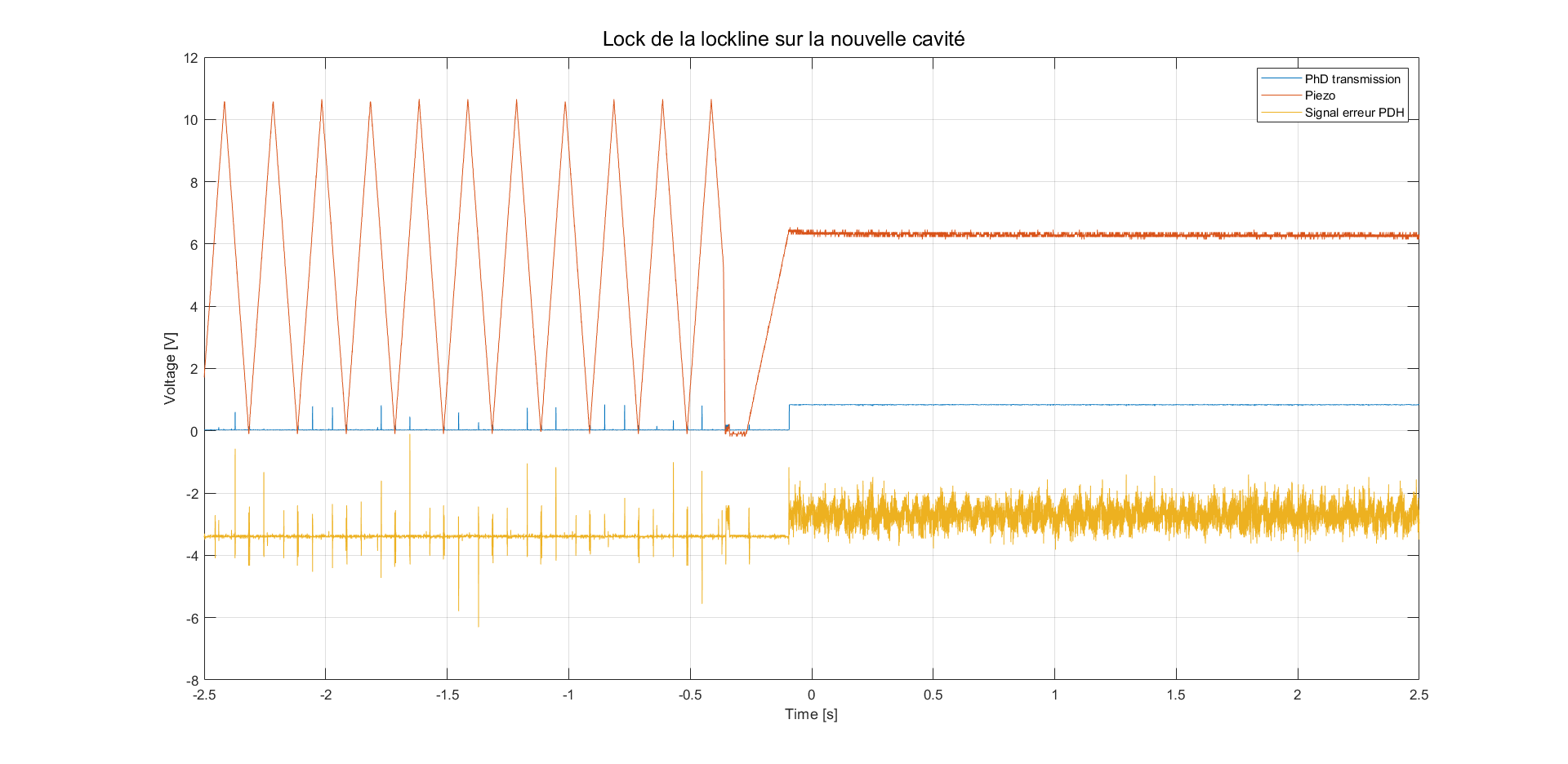
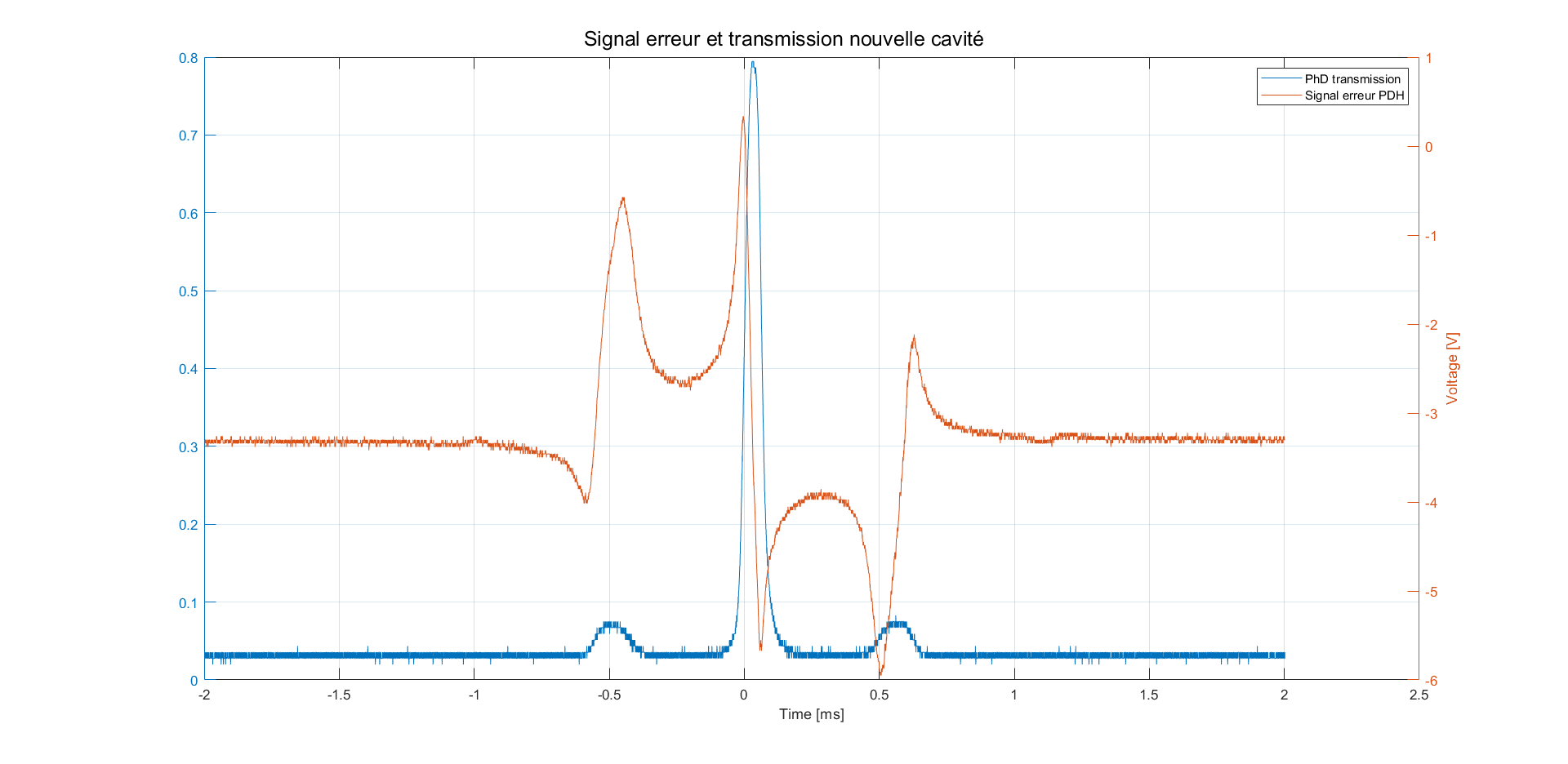
On a réussi à avoir un signal d'erreur très proche de la théorie, ainsi qu'un lock très propre. (Cf images)
En regardant laTF de la lockline, on a vu la modulation à +ou- 159 MHz autour du pic à 880 MHz de l'oscillateur GHz, mais cela n'explique pas l'offset sur le PDH.
Hypohèse à vérifier : le câble d'alimentation du PDH qui est défectueux. |
| Attachment 1: Lock_lockline.png
|
 |
| Attachment 2: Signal_d'erreur_PDH.png
|
 |
|
89
|
Fri May 26 18:08:27 2023 |
Blanc | Fixed | info | lasers and optics | Optical room | Modulation EOM |
EOM dans la lockline:
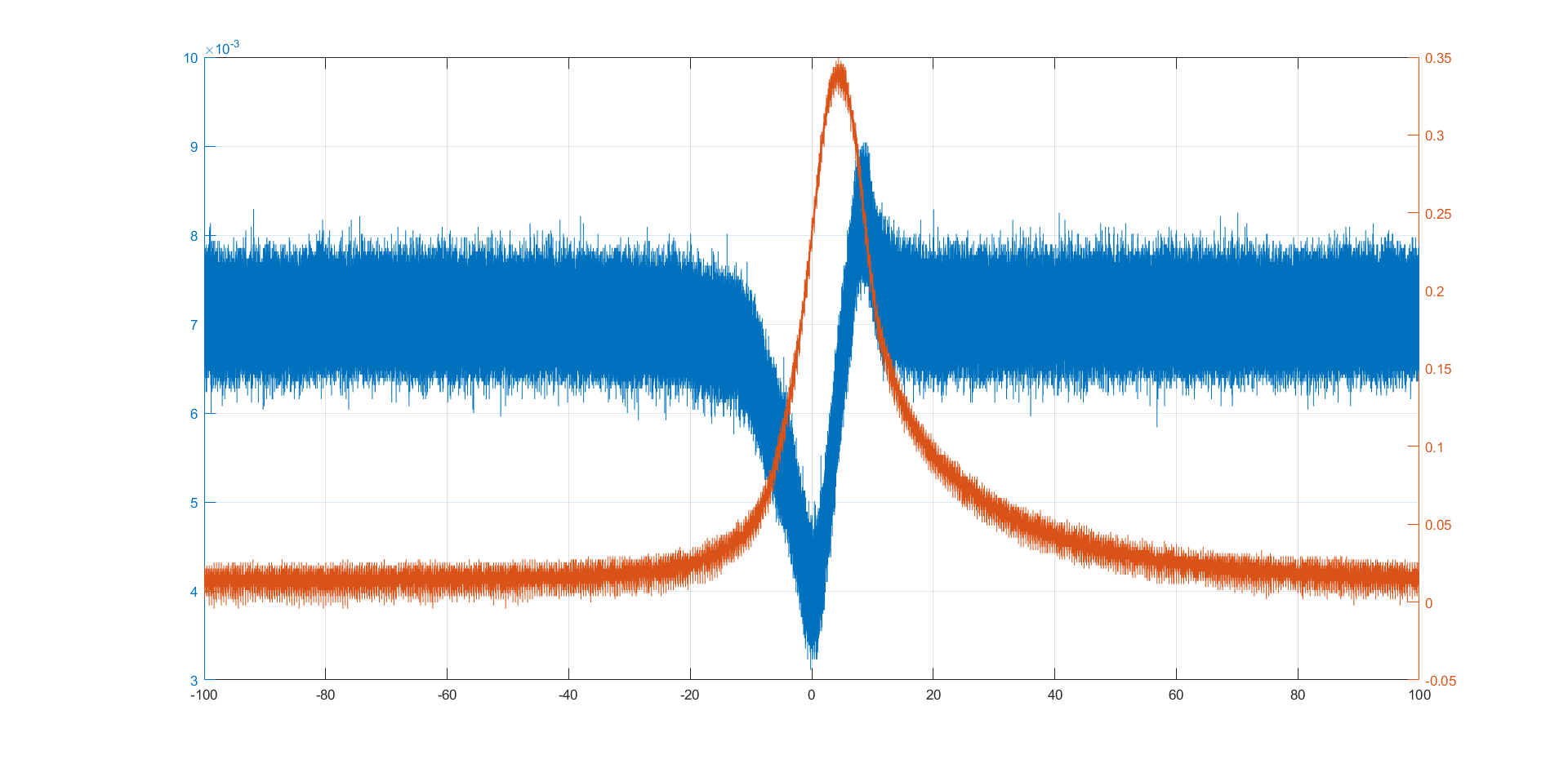
Image 1 (sans 2è étage): on voit la modulation en réflexion de la cavité.
Image 2 (avec 2è étage): on voit la modulation en réflexion de la cavité et il semblerait qu'elle soit présente aussi en transmission.
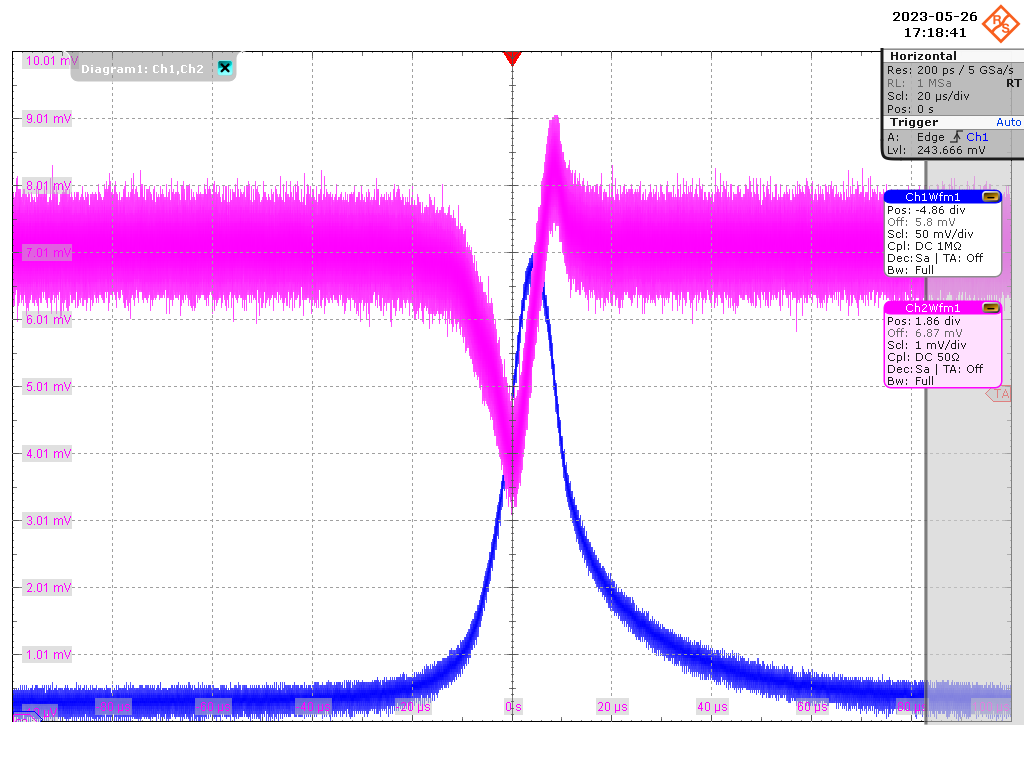
EOM sur le breadboard, pas d'ampli lockline:
Image 3 et 4 : Le niveau de signal est très bas en réflexion de la cavité, le modulation pourrait être noyé dans le bruit. Par contre il semblerait qu'en transmission il y ait possiblement la modulation mais ce n'est pas sûr. |
| Attachment 1: osc_preamp_AOM100_etage1_EOM.png
|
 |
| Attachment 2: osc_preamp_AOM100_etage1_EOM_etage2.png
|
 |
| Attachment 3: osc_preamp_AOM100_EOMbreadboard_matlab.png
|
 |
| Attachment 4: osc_preamp_AOM100_EOMbreadboard.png
|
 |