| ID |
Date |
Author |
Status |
Type |
Category |
Location |
Title |
|
168
|
Thu Nov 3 09:09:18 2022 |
Ronic Chiche | Fixed | info | lasers and optics | ThomX igloo | Strecher and fiber injection alignment | this morning : still 6.2 mW at the output of the fiber.
the powermeter has been removed and the fiber connected to amplifier input fiber (no EOM connected in between).
| Ronic Chiche wrote: |
|
This morning with Manar, we continued the strecher CVBG alignment and fiber injection procedure :
- we checked the power at the output of the laser and confirmed the measurement after the Isolator : ~ 36 mW
- we tried to improve the power after the strecher CVBG by rotating the quarter-wave plate but it seems we were already at the maximum : ~ 10.5 mW
- we aligned the 2 fiber injection mirrors + schafter-kirchoff mount z-axis : we saw 5 mW at the output of the fiber but it is very difficult to keep the power after swcrewing the 2 z-axis fixing screws of the schafter-kirchoff mount.
we decided to replace the 750mm focusing lens installed by a 1000mm lens.
- we aligned again the 2 fiber injection mirrors + schafter-kirchoff mount z-axis : now, we have ~ 6.2 mW stable at the output of the fiber after screwing the 2 z-axis fixing screws of the schafter-kirchoff mount.
the procedure for aligning the schafter-kirchoff mount is :
- unscrew the z-axis and tilt fixing screws (5 screws in total).
- improve the injection with the z-axis knob and the tilt screws
- tighten very softly all the fixing srews once the optimization is finished => you will lose a part of the alignment but not completely (~ 1 mW level)
- redo a part of the alignment with the 2 aligning mirrors => you should find back the values after optimization.
we let the power-meter at the output of the fiber to check in the next days if the injected power in the fiber changes or not....
it is important to not "kick" the fiber injection box or put anything on it ! as the schafter-kirchoff mount adjustment is soooo touchy...
| Ronic Chiche wrote: |
|
Manar + Victor, today in the morning we aligned the CVBG of the stretcher.
The double path using the mirror mounts, reached up to 5.4 mW just before the injection into the fibers
then we rotated the quarter wave plate and the power increased by a factor of ~ 2 to 10.3 mW
we started with the injection into the fiber by alignment of the 2 mirror mounts.
1) fiber not connected and have everything pass through the mount
2) connect fiber loosely and increase the power in fiber bit by bit until fiber fixed fully
reached power up to 438 uW
alignment not finished using the mounts, there is still also schafter-kirchoff mount.
| Ronic Chiche wrote: |
|
I used the 33MHz spectrum measurement : https://elog.lal.in2p3.fr/FPC/THOMX+commissioning/153
fitted by P=P0*sech²((f-f0)/df)
f0 = c/1030m
df = (c/1030nm^2) * 2.5nm
and the strecher CVBG measured data (in attached file with reference D24-02)
to estimate the expected power to be coupled into the fiber.
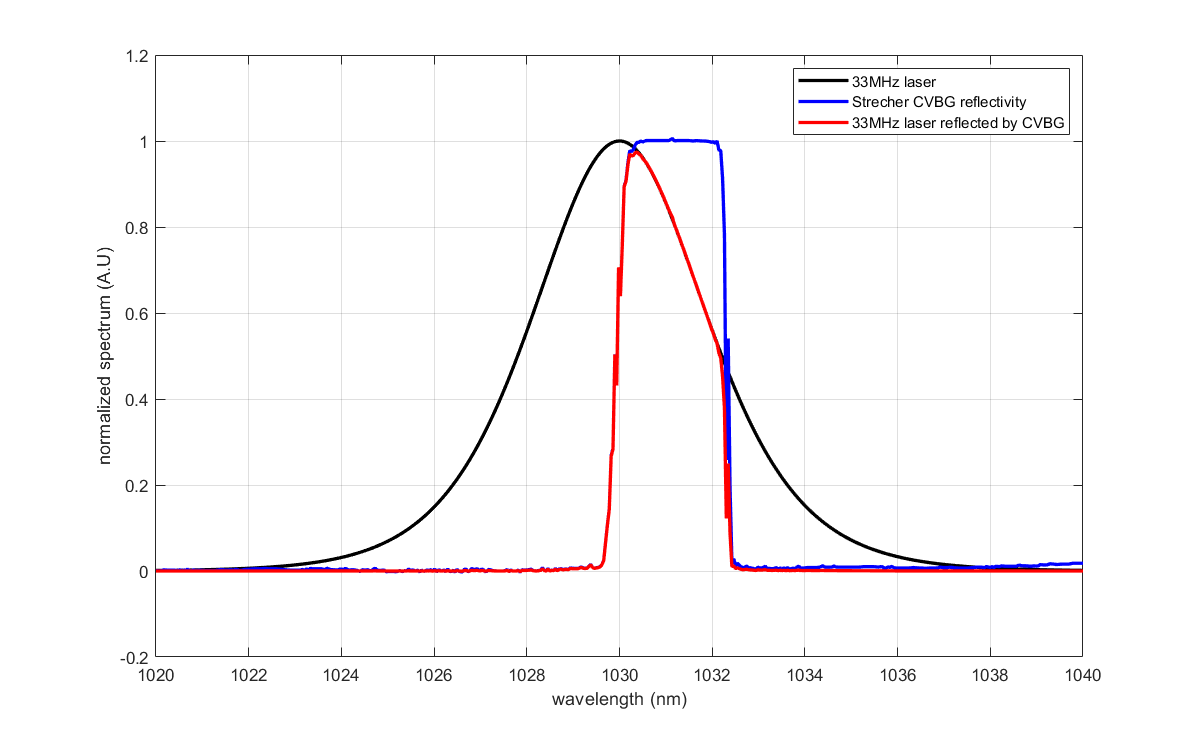
the corresponding plot shows 3 curves:
- black : the 33MHz laser spectrum "manually fittted" with the sech² function (mentionned at the begining of this post) to match the measured spectrum from the elog.
- blue : the strecher CVBG reflectivity curve from the Excel measured datasheet in attachement.
- red : the corresponding output power after a double path into a CVBG (the reflectivity is applied twice).
with this simulation, one can estimate the power after CVBG to be 12.5 mW for 35 mW of input power.
or 9.6 mW after CVBG for 27 mW of input power which is exactly what has been measured in a previous post by Loic : https://elog.lal.in2p3.fr/FPC/THOMX+commissioning/70
| Ronic Chiche wrote: |
|
This morning with Manar, we measured the power at different points:
- direct measurement at the output of the 33MHz laser : 35 mW
inside the injection box :
- after the Isolator + focalization lens : 35 mW
- just at the input of the strecher CVBG : 35 mW
- atfer optimizing the alignment of the double path CVBG, in between the 2 fiber injection coupling mirrors : 5,7 mW
(the power is measured after going through the quarter-waveplate and PBS)
I found an old post from Loic claiming that with 27mW input power, we got 9.6 mW after the PBS instead of 5,7 mW !
https://elog.lal.in2p3.fr/FPC/THOMX+commissioning/70
we have to check if the laser wavelength shifted, if the alignment could be improved, if the quarter-waveplate has the right angle,....
then, we tried to couple this 5,7mW inside the fiber using the schafter-kirchoff mount (SKM) but it is a nightmare.
changing the focus and the internal fiber angle is very sensitive, not always predictable and rarely reproductible...
I have to ask Guillaume how he used this mount...
the best power we saw in the fiber is 1mW but after screwing the fixing screws of the SKM, we lose almost all the alignment and we have something around 100-300µW...
| Ronic Chiche wrote: |
|
In preparation for tomorrow morning, I did a test with a 45° mount to have a power pickup inside the injection box.
I used the 133MHz laser.
output power measured with the powermeter : 45mW
output power measured with the powermeter + OD2 : 2mW
output power measured with the 45° mount with BB1-E03 mirror with the powermeter + OD2 : 2mW
as expected the BB1-E03 mirrors have a very good reflectance for AOI=45°
the specs give >99% @ 1030nm for both S and P polarizations.
| Ronic Chiche wrote: |
|
This morning with Viktor, we started the alignment of the CVBG and fiber.
we did a better alignment of the 2-pass CVBG.
we are able to the see a spot after PBS (after the 2 CVBG pass) which means the alignment is OK even if it can be improved.
then, we started the fiber injection alignment with the 2 last mirrors (7 & 8 on Alphanov documentation).
we saw that if we unswcrew the fiber to play on the focal position, we are able to improve a lot the power in the fiber.
2-3µW with the fiber screwed => 500µW with the fiber unscrewed.
it means the beam is not enough focused.
I will ask Guillaume Machinet his advice when injecting the 33MHz... do we need to replace the long focal lens just after the Isolator ?
and with which value approximatively ?
we played also with the Schafter+Kirchhoff mount of the fiber colimator (see attached documentation).
we loosen the 2 screws around the eccentric key which adjust the focal position + play on this eccentic key + tighten the 2 screws again.
now, we reached 330µW with the fiber properly screwed.
we have to check the available power before the fiber injection but we have very few place to place the powermeter.
maybe with a small mirror ?
| Ronic Chiche wrote: |
|
Today, after laser was modelocked, we checked the power inside the fiber coming from the Alphanov Strecher box.
it was almost zero, at the nW level.
after doing some very rough alignment, we clearly saw some power (with the powermeter) correlated with the position of mirrors, when turning the alignment knobs.
this is a first step but the output power in the fiber is still very low, about 20nW !
an additionnal 2mm L-shaped hex key is needed to do some walking alignment on the mounts.
|
|
|
|
|
|
|
|
|
167
|
Wed Nov 2 11:42:43 2022 |
Ronic Chiche | Fixed | info | lasers and optics | ThomX igloo | Strecher and fiber injection alignment | This morning with Manar, we continued the strecher CVBG alignment and fiber injection procedure :
- we checked the power at the output of the laser and confirmed the measurement after the Isolator : ~ 36 mW
- we tried to improve the power after the strecher CVBG by rotating the quarter-wave plate but it seems we were already at the maximum : ~ 10.5 mW
- we aligned the 2 fiber injection mirrors + schafter-kirchoff mount z-axis : we saw 5 mW at the output of the fiber but it is very difficult to keep the power after swcrewing the 2 z-axis fixing screws of the schafter-kirchoff mount.
we decided to replace the 750mm focusing lens installed by a 1000mm lens.
- we aligned again the 2 fiber injection mirrors + schafter-kirchoff mount z-axis : now, we have ~ 6.2 mW stable at the output of the fiber after screwing the 2 z-axis fixing screws of the schafter-kirchoff mount.
the procedure for aligning the schafter-kirchoff mount is :
- unscrew the z-axis and tilt fixing screws (5 screws in total).
- improve the injection with the z-axis knob and the tilt screws
- tighten very softly all the fixing srews once the optimization is finished => you will lose a part of the alignment but not completely (~ 1 mW level)
- redo a part of the alignment with the 2 aligning mirrors => you should find back the values after optimization.
we let the power-meter at the output of the fiber to check in the next days if the injected power in the fiber changes or not....
it is important to not "kick" the fiber injection box or put anything on it ! as the schafter-kirchoff mount adjustment is soooo touchy...
| Ronic Chiche wrote: |
|
Manar + Victor, today in the morning we aligned the CVBG of the stretcher.
The double path using the mirror mounts, reached up to 5.4 mW just before the injection into the fibers
then we rotated the quarter wave plate and the power increased by a factor of ~ 2 to 10.3 mW
we started with the injection into the fiber by alignment of the 2 mirror mounts.
1) fiber not connected and have everything pass through the mount
2) connect fiber loosely and increase the power in fiber bit by bit until fiber fixed fully
reached power up to 438 uW
alignment not finished using the mounts, there is still also schafter-kirchoff mount.
| Ronic Chiche wrote: |
|
I used the 33MHz spectrum measurement : https://elog.lal.in2p3.fr/FPC/THOMX+commissioning/153
fitted by P=P0*sech²((f-f0)/df)
f0 = c/1030m
df = (c/1030nm^2) * 2.5nm
and the strecher CVBG measured data (in attached file with reference D24-02)
to estimate the expected power to be coupled into the fiber.
the corresponding plot shows 3 curves:
- black : the 33MHz laser spectrum "manually fittted" with the sech² function (mentionned at the begining of this post) to match the measured spectrum from the elog.
- blue : the strecher CVBG reflectivity curve from the Excel measured datasheet in attachement.
- red : the corresponding output power after a double path into a CVBG (the reflectivity is applied twice).
with this simulation, one can estimate the power after CVBG to be 12.5 mW for 35 mW of input power.
or 9.6 mW after CVBG for 27 mW of input power which is exactly what has been measured in a previous post by Loic : https://elog.lal.in2p3.fr/FPC/THOMX+commissioning/70
| Ronic Chiche wrote: |
|
This morning with Manar, we measured the power at different points:
- direct measurement at the output of the 33MHz laser : 35 mW
inside the injection box :
- after the Isolator + focalization lens : 35 mW
- just at the input of the strecher CVBG : 35 mW
- atfer optimizing the alignment of the double path CVBG, in between the 2 fiber injection coupling mirrors : 5,7 mW
(the power is measured after going through the quarter-waveplate and PBS)
I found an old post from Loic claiming that with 27mW input power, we got 9.6 mW after the PBS instead of 5,7 mW !
https://elog.lal.in2p3.fr/FPC/THOMX+commissioning/70
we have to check if the laser wavelength shifted, if the alignment could be improved, if the quarter-waveplate has the right angle,....
then, we tried to couple this 5,7mW inside the fiber using the schafter-kirchoff mount (SKM) but it is a nightmare.
changing the focus and the internal fiber angle is very sensitive, not always predictable and rarely reproductible...
I have to ask Guillaume how he used this mount...
the best power we saw in the fiber is 1mW but after screwing the fixing screws of the SKM, we lose almost all the alignment and we have something around 100-300µW...
| Ronic Chiche wrote: |
|
In preparation for tomorrow morning, I did a test with a 45° mount to have a power pickup inside the injection box.
I used the 133MHz laser.
output power measured with the powermeter : 45mW
output power measured with the powermeter + OD2 : 2mW
output power measured with the 45° mount with BB1-E03 mirror with the powermeter + OD2 : 2mW
as expected the BB1-E03 mirrors have a very good reflectance for AOI=45°
the specs give >99% @ 1030nm for both S and P polarizations.
| Ronic Chiche wrote: |
|
This morning with Viktor, we started the alignment of the CVBG and fiber.
we did a better alignment of the 2-pass CVBG.
we are able to the see a spot after PBS (after the 2 CVBG pass) which means the alignment is OK even if it can be improved.
then, we started the fiber injection alignment with the 2 last mirrors (7 & 8 on Alphanov documentation).
we saw that if we unswcrew the fiber to play on the focal position, we are able to improve a lot the power in the fiber.
2-3µW with the fiber screwed => 500µW with the fiber unscrewed.
it means the beam is not enough focused.
I will ask Guillaume Machinet his advice when injecting the 33MHz... do we need to replace the long focal lens just after the Isolator ?
and with which value approximatively ?
we played also with the Schafter+Kirchhoff mount of the fiber colimator (see attached documentation).
we loosen the 2 screws around the eccentric key which adjust the focal position + play on this eccentic key + tighten the 2 screws again.
now, we reached 330µW with the fiber properly screwed.
we have to check the available power before the fiber injection but we have very few place to place the powermeter.
maybe with a small mirror ?
| Ronic Chiche wrote: |
|
Today, after laser was modelocked, we checked the power inside the fiber coming from the Alphanov Strecher box.
it was almost zero, at the nW level.
after doing some very rough alignment, we clearly saw some power (with the powermeter) correlated with the position of mirrors, when turning the alignment knobs.
this is a first step but the output power in the fiber is still very low, about 20nW !
an additionnal 2mm L-shaped hex key is needed to do some walking alignment on the mounts.
|
|
|
|
|
|
|
|
166
|
Mon Oct 24 17:35:01 2022 |
Ronic Chiche | Fixed | info | lasers and optics | ThomX igloo | Strecher and fiber injection alignment | Manar + Victor, today in the morning we aligned the CVBG of the stretcher.
The double path using the mirror mounts, reached up to 5.4 mW just before the injection into the fibers
then we rotated the quarter wave plate and the power increased by a factor of ~ 2 to 10.3 mW
we started with the injection into the fiber by alignment of the 2 mirror mounts.
1) fiber not connected and have everything pass through the mount
2) connect fiber loosely and increase the power in fiber bit by bit until fiber fixed fully
reached power up to 438 uW
alignment not finished using the mounts, there is still also schafter-kirchoff mount.
| Ronic Chiche wrote: |
|
I used the 33MHz spectrum measurement : https://elog.lal.in2p3.fr/FPC/THOMX+commissioning/153
fitted by P=P0*sech²((f-f0)/df)
f0 = c/1030m
df = (c/1030nm^2) * 2.5nm
and the strecher CVBG measured data (in attached file with reference D24-02)
to estimate the expected power to be coupled into the fiber.
the corresponding plot shows 3 curves:
- black : the 33MHz laser spectrum "manually fittted" with the sech² function (mentionned at the begining of this post) to match the measured spectrum from the elog.
- blue : the strecher CVBG reflectivity curve from the Excel measured datasheet in attachement.
- red : the corresponding output power after a double path into a CVBG (the reflectivity is applied twice).
with this simulation, one can estimate the power after CVBG to be 12.5 mW for 35 mW of input power.
or 9.6 mW after CVBG for 27 mW of input power which is exactly what has been measured in a previous post by Loic : https://elog.lal.in2p3.fr/FPC/THOMX+commissioning/70
| Ronic Chiche wrote: |
|
This morning with Manar, we measured the power at different points:
- direct measurement at the output of the 33MHz laser : 35 mW
inside the injection box :
- after the Isolator + focalization lens : 35 mW
- just at the input of the strecher CVBG : 35 mW
- atfer optimizing the alignment of the double path CVBG, in between the 2 fiber injection coupling mirrors : 5,7 mW
(the power is measured after going through the quarter-waveplate and PBS)
I found an old post from Loic claiming that with 27mW input power, we got 9.6 mW after the PBS instead of 5,7 mW !
https://elog.lal.in2p3.fr/FPC/THOMX+commissioning/70
we have to check if the laser wavelength shifted, if the alignment could be improved, if the quarter-waveplate has the right angle,....
then, we tried to couple this 5,7mW inside the fiber using the schafter-kirchoff mount (SKM) but it is a nightmare.
changing the focus and the internal fiber angle is very sensitive, not always predictable and rarely reproductible...
I have to ask Guillaume how he used this mount...
the best power we saw in the fiber is 1mW but after screwing the fixing screws of the SKM, we lose almost all the alignment and we have something around 100-300µW...
| Ronic Chiche wrote: |
|
In preparation for tomorrow morning, I did a test with a 45° mount to have a power pickup inside the injection box.
I used the 133MHz laser.
output power measured with the powermeter : 45mW
output power measured with the powermeter + OD2 : 2mW
output power measured with the 45° mount with BB1-E03 mirror with the powermeter + OD2 : 2mW
as expected the BB1-E03 mirrors have a very good reflectance for AOI=45°
the specs give >99% @ 1030nm for both S and P polarizations.
| Ronic Chiche wrote: |
|
This morning with Viktor, we started the alignment of the CVBG and fiber.
we did a better alignment of the 2-pass CVBG.
we are able to the see a spot after PBS (after the 2 CVBG pass) which means the alignment is OK even if it can be improved.
then, we started the fiber injection alignment with the 2 last mirrors (7 & 8 on Alphanov documentation).
we saw that if we unswcrew the fiber to play on the focal position, we are able to improve a lot the power in the fiber.
2-3µW with the fiber screwed => 500µW with the fiber unscrewed.
it means the beam is not enough focused.
I will ask Guillaume Machinet his advice when injecting the 33MHz... do we need to replace the long focal lens just after the Isolator ?
and with which value approximatively ?
we played also with the Schafter+Kirchhoff mount of the fiber colimator (see attached documentation).
we loosen the 2 screws around the eccentric key which adjust the focal position + play on this eccentic key + tighten the 2 screws again.
now, we reached 330µW with the fiber properly screwed.
we have to check the available power before the fiber injection but we have very few place to place the powermeter.
maybe with a small mirror ?
| Ronic Chiche wrote: |
|
Today, after laser was modelocked, we checked the power inside the fiber coming from the Alphanov Strecher box.
it was almost zero, at the nW level.
after doing some very rough alignment, we clearly saw some power (with the powermeter) correlated with the position of mirrors, when turning the alignment knobs.
this is a first step but the output power in the fiber is still very low, about 20nW !
an additionnal 2mm L-shaped hex key is needed to do some walking alignment on the mounts.
|
|
|
|
|
|
|
165
|
Thu Oct 20 15:01:02 2022 |
Ronic Chiche | Fixed | info | lasers and optics | ThomX igloo | Strecher and fiber injection alignment | I used the 33MHz spectrum measurement : https://elog.lal.in2p3.fr/FPC/THOMX+commissioning/153
fitted by P=P0*sech²((f-f0)/df)
f0 = c/1030m
df = (c/1030nm^2) * 2.5nm
and the strecher CVBG measured data (in attached file with reference D24-02)
to estimate the expected power to be coupled into the fiber.
the corresponding plot shows 3 curves:
- black : the 33MHz laser spectrum "manually fittted" with the sech² function (mentionned at the begining of this post) to match the measured spectrum from the elog.
- blue : the strecher CVBG reflectivity curve from the Excel measured datasheet in attachement.
- red : the corresponding output power after a double path into a CVBG (the reflectivity is applied twice).
with this simulation, one can estimate the power after CVBG to be 12.5 mW for 35 mW of input power.
or 9.6 mW after CVBG for 27 mW of input power which is exactly what has been measured in a previous post by Loic : https://elog.lal.in2p3.fr/FPC/THOMX+commissioning/70
| Ronic Chiche wrote: |
|
This morning with Manar, we measured the power at different points:
- direct measurement at the output of the 33MHz laser : 35 mW
inside the injection box :
- after the Isolator + focalization lens : 35 mW
- just at the input of the strecher CVBG : 35 mW
- atfer optimizing the alignment of the double path CVBG, in between the 2 fiber injection coupling mirrors : 5,7 mW
(the power is measured after going through the quarter-waveplate and PBS)
I found an old post from Loic claiming that with 27mW input power, we got 9.6 mW after the PBS instead of 5,7 mW !
https://elog.lal.in2p3.fr/FPC/THOMX+commissioning/70
we have to check if the laser wavelength shifted, if the alignment could be improved, if the quarter-waveplate has the right angle,....
then, we tried to couple this 5,7mW inside the fiber using the schafter-kirchoff mount (SKM) but it is a nightmare.
changing the focus and the internal fiber angle is very sensitive, not always predictable and rarely reproductible...
I have to ask Guillaume how he used this mount...
the best power we saw in the fiber is 1mW but after screwing the fixing screws of the SKM, we lose almost all the alignment and we have something around 100-300µW...
| Ronic Chiche wrote: |
|
In preparation for tomorrow morning, I did a test with a 45° mount to have a power pickup inside the injection box.
I used the 133MHz laser.
output power measured with the powermeter : 45mW
output power measured with the powermeter + OD2 : 2mW
output power measured with the 45° mount with BB1-E03 mirror with the powermeter + OD2 : 2mW
as expected the BB1-E03 mirrors have a very good reflectance for AOI=45°
the specs give >99% @ 1030nm for both S and P polarizations.
| Ronic Chiche wrote: |
|
This morning with Viktor, we started the alignment of the CVBG and fiber.
we did a better alignment of the 2-pass CVBG.
we are able to the see a spot after PBS (after the 2 CVBG pass) which means the alignment is OK even if it can be improved.
then, we started the fiber injection alignment with the 2 last mirrors (7 & 8 on Alphanov documentation).
we saw that if we unswcrew the fiber to play on the focal position, we are able to improve a lot the power in the fiber.
2-3µW with the fiber screwed => 500µW with the fiber unscrewed.
it means the beam is not enough focused.
I will ask Guillaume Machinet his advice when injecting the 33MHz... do we need to replace the long focal lens just after the Isolator ?
and with which value approximatively ?
we played also with the Schafter+Kirchhoff mount of the fiber colimator (see attached documentation).
we loosen the 2 screws around the eccentric key which adjust the focal position + play on this eccentic key + tighten the 2 screws again.
now, we reached 330µW with the fiber properly screwed.
we have to check the available power before the fiber injection but we have very few place to place the powermeter.
maybe with a small mirror ?
| Ronic Chiche wrote: |
|
Today, after laser was modelocked, we checked the power inside the fiber coming from the Alphanov Strecher box.
it was almost zero, at the nW level.
after doing some very rough alignment, we clearly saw some power (with the powermeter) correlated with the position of mirrors, when turning the alignment knobs.
this is a first step but the output power in the fiber is still very low, about 20nW !
an additionnal 2mm L-shaped hex key is needed to do some walking alignment on the mounts.
|
|
|
|
|
| Attachment 1: D24-02.xls
|
| Attachment 2: 33MHz_power_spectrum_after_double_patch_strecher_CVBG.png
|  |
|
164
|
Wed Oct 19 15:01:32 2022 |
Ronic Chiche | Fixed | info | lasers and optics | ThomX igloo | Strecher and fiber injection alignment | This morning with Ronic, using a pickup mirror, we measured the power in different locations along the path of the stretcher box
Output power from oscillator : ~35mW
After the isolator : ~ 35 mW
just before the CVBG : ~ 35 mW
just before the fiber injection : 3 mW
After improving on the mirrors directly correlated to the first line in CVBG and the second reflection line (mirror 4 and 6 on the Alphanov documentation)
we managed to increase the power output just before the fiber to 5.7 mW
To confirm it is indeed the second reflection we see, when cutting the second line and the power drops to almost sero (~70 uW)
We will check the CVBG documentation if it is the maximum power we can obtain after the it due to it's bandwidth !!!!
for the fiber injection :
First without connecting the fiber we checked power after Schafter+Kirchhoff mount we measure 5.5 mW (all power pass through)
when connecting the fiber, we get 300 uW after a quick alignment on the power meter + OD2.
The issue of being too much sensitive arises from the Schafter+Kirchhoff mount, after adjusting the tilt screws and Black knob we got 1.05mW in the fiber for a quick moment.
we had at one point a stable 811 uW into the fiber, but when fixing the mount screws the power drops significantly to 150 uW and it is very difficult to reproduce.
The Schafter+Kirchhoff mount is very difficult to align, waiting on advice from Guillaume Machinet.
| Ronic Chiche wrote: |
|
In preparation for tomorrow morning, I did a test with a 45° mount to have a power pickup inside the injection box.
I used the 133MHz laser.
output power measured with the powermeter : 45mW
output power measured with the powermeter + OD2 : 2mW
output power measured with the 45° mount with BB1-E03 mirror with the powermeter + OD2 : 2mW
as expected the BB1-E03 mirrors have a very good reflectance for AOI=45°
the specs give >99% @ 1030nm for both S and P polarizations.
| Ronic Chiche wrote: |
|
This morning with Viktor, we started the alignment of the CVBG and fiber.
we did a better alignment of the 2-pass CVBG.
we are able to the see a spot after PBS (after the 2 CVBG pass) which means the alignment is OK even if it can be improved.
then, we started the fiber injection alignment with the 2 last mirrors (7 & 8 on Alphanov documentation).
we saw that if we unswcrew the fiber to play on the focal position, we are able to improve a lot the power in the fiber.
2-3µW with the fiber screwed => 500µW with the fiber unscrewed.
it means the beam is not enough focused.
I will ask Guillaume Machinet his advice when injecting the 33MHz... do we need to replace the long focal lens just after the Isolator ?
and with which value approximatively ?
we played also with the Schafter+Kirchhoff mount of the fiber colimator (see attached documentation).
we loosen the 2 screws around the eccentric key which adjust the focal position + play on this eccentic key + tighten the 2 screws again.
now, we reached 330µW with the fiber properly screwed.
we have to check the available power before the fiber injection but we have very few place to place the powermeter.
maybe with a small mirror ?
| Ronic Chiche wrote: |
|
Today, after laser was modelocked, we checked the power inside the fiber coming from the Alphanov Strecher box.
it was almost zero, at the nW level.
after doing some very rough alignment, we clearly saw some power (with the powermeter) correlated with the position of mirrors, when turning the alignment knobs.
this is a first step but the output power in the fiber is still very low, about 20nW !
an additionnal 2mm L-shaped hex key is needed to do some walking alignment on the mounts.
|
|
|
|
|
163
|
Wed Oct 19 14:57:43 2022 |
Ronic Chiche | Fixed | info | lasers and optics | ThomX igloo | Strecher and fiber injection alignment | This morning with Manar, we measured the power at different points:
- direct measurement at the output of the 33MHz laser : 35 mW
inside the injection box :
- after the Isolator + focalization lens : 35 mW
- just at the input of the strecher CVBG : 35 mW
- atfer optimizing the alignment of the double path CVBG, in between the 2 fiber injection coupling mirrors : 5,7 mW
(the power is measured after going through the quarter-waveplate and PBS)
I found an old post from Loic claiming that with 27mW input power, we got 9.6 mW after the PBS instead of 5,7 mW !
https://elog.lal.in2p3.fr/FPC/THOMX+commissioning/70
we have to check if the laser wavelength shifted, if the alignment could be improved, if the quarter-waveplate has the right angle,....
then, we tried to couple this 5,7mW inside the fiber using the schafter-kirchoff mount (SKM) but it is a nightmare.
changing the focus and the internal fiber angle is very sensitive, not always predictable and rarely reproductible...
I have to ask Guillaume how he used this mount...
the best power we saw in the fiber is 1mW but after screwing the fixing screws of the SKM, we lose almost all the alignment and we have something around 100-300µW...
| Ronic Chiche wrote: |
|
In preparation for tomorrow morning, I did a test with a 45° mount to have a power pickup inside the injection box.
I used the 133MHz laser.
output power measured with the powermeter : 45mW
output power measured with the powermeter + OD2 : 2mW
output power measured with the 45° mount with BB1-E03 mirror with the powermeter + OD2 : 2mW
as expected the BB1-E03 mirrors have a very good reflectance for AOI=45°
the specs give >99% @ 1030nm for both S and P polarizations.
| Ronic Chiche wrote: |
|
This morning with Viktor, we started the alignment of the CVBG and fiber.
we did a better alignment of the 2-pass CVBG.
we are able to the see a spot after PBS (after the 2 CVBG pass) which means the alignment is OK even if it can be improved.
then, we started the fiber injection alignment with the 2 last mirrors (7 & 8 on Alphanov documentation).
we saw that if we unswcrew the fiber to play on the focal position, we are able to improve a lot the power in the fiber.
2-3µW with the fiber screwed => 500µW with the fiber unscrewed.
it means the beam is not enough focused.
I will ask Guillaume Machinet his advice when injecting the 33MHz... do we need to replace the long focal lens just after the Isolator ?
and with which value approximatively ?
we played also with the Schafter+Kirchhoff mount of the fiber colimator (see attached documentation).
we loosen the 2 screws around the eccentric key which adjust the focal position + play on this eccentic key + tighten the 2 screws again.
now, we reached 330µW with the fiber properly screwed.
we have to check the available power before the fiber injection but we have very few place to place the powermeter.
maybe with a small mirror ?
| Ronic Chiche wrote: |
|
Today, after laser was modelocked, we checked the power inside the fiber coming from the Alphanov Strecher box.
it was almost zero, at the nW level.
after doing some very rough alignment, we clearly saw some power (with the powermeter) correlated with the position of mirrors, when turning the alignment knobs.
this is a first step but the output power in the fiber is still very low, about 20nW !
an additionnal 2mm L-shaped hex key is needed to do some walking alignment on the mounts.
|
|
|
|
|
162
|
Tue Oct 18 17:51:12 2022 |
Ronic Chiche | Fixed | info | lasers and optics | ThomX igloo | Strecher and fiber injection alignment | In preparation for tomorrow morning, I did a test with a 45° mount to have a power pickup inside the injection box.
I used the 133MHz laser.
output power measured with the powermeter : 45mW
output power measured with the powermeter + OD2 : 2mW
output power measured with the 45° mount with BB1-E03 mirror with the powermeter + OD2 : 2mW
as expected the BB1-E03 mirrors have a very good reflectance for AOI=45°
the specs give >99% @ 1030nm for both S and P polarizations.
| Ronic Chiche wrote: |
|
This morning with Viktor, we started the alignment of the CVBG and fiber.
we did a better alignment of the 2-pass CVBG.
we are able to the see a spot after PBS (after the 2 CVBG pass) which means the alignment is OK even if it can be improved.
then, we started the fiber injection alignment with the 2 last mirrors (7 & 8 on Alphanov documentation).
we saw that if we unswcrew the fiber to play on the focal position, we are able to improve a lot the power in the fiber.
2-3µW with the fiber screwed => 500µW with the fiber unscrewed.
it means the beam is not enough focused.
I will ask Guillaume Machinet his advice when injecting the 33MHz... do we need to replace the long focal lens just after the Isolator ?
and with which value approximatively ?
we played also with the Schafter+Kirchhoff mount of the fiber colimator (see attached documentation).
we loosen the 2 screws around the eccentric key which adjust the focal position + play on this eccentic key + tighten the 2 screws again.
now, we reached 330µW with the fiber properly screwed.
we have to check the available power before the fiber injection but we have very few place to place the powermeter.
maybe with a small mirror ?
| Ronic Chiche wrote: |
|
Today, after laser was modelocked, we checked the power inside the fiber coming from the Alphanov Strecher box.
it was almost zero, at the nW level.
after doing some very rough alignment, we clearly saw some power (with the powermeter) correlated with the position of mirrors, when turning the alignment knobs.
this is a first step but the output power in the fiber is still very low, about 20nW !
an additionnal 2mm L-shaped hex key is needed to do some walking alignment on the mounts.
|
|
|
|
161
|
Mon Oct 17 13:58:08 2022 |
Ronic Chiche | Fixed | info | lasers and optics | ThomX igloo | Strecher and fiber injection alignment | This morning with Viktor, we started the alignment of the CVBG and fiber.
we did a better alignment of the 2-pass CVBG.
we are able to the see a spot after PBS (after the 2 CVBG pass) which means the alignment is OK even if it can be improved.
then, we started the fiber injection alignment with the 2 last mirrors (7 & 8 on Alphanov documentation).
we saw that if we unswcrew the fiber to play on the focal position, we are able to improve a lot the power in the fiber.
2-3µW with the fiber screwed => 500µW with the fiber unscrewed.
it means the beam is not enough focused.
I will ask Guillaume Machinet his advice when injecting the 33MHz... do we need to replace the long focal lens just after the Isolator ?
and with which value approximatively ?
we played also with the Schafter+Kirchhoff mount of the fiber colimator (see attached documentation).
we loosen the 2 screws around the eccentric key which adjust the focal position + play on this eccentic key + tighten the 2 screws again.
now, we reached 330µW with the fiber properly screwed.
we have to check the available power before the fiber injection but we have very few place to place the powermeter.
maybe with a small mirror ?
| Ronic Chiche wrote: |
|
Today, after laser was modelocked, we checked the power inside the fiber coming from the Alphanov Strecher box.
it was almost zero, at the nW level.
after doing some very rough alignment, we clearly saw some power (with the powermeter) correlated with the position of mirrors, when turning the alignment knobs.
this is a first step but the output power in the fiber is still very low, about 20nW !
an additionnal 2mm L-shaped hex key is needed to do some walking alignment on the mounts.
|
|
| Attachment 1: Adjustment_SMS.pdf
|
|
160
|
Thu Oct 13 12:26:07 2022 |
Ronic Chiche | Fixed | info | lasers and optics | ThomX igloo | Strecher and fiber injection alignment | Today, after laser was modelocked, we checked the power inside the fiber coming from the Alphanov Strecher box.
it was almost zero, at the nW level.
after doing some very rough alignment, we clearly saw some power (with the powermeter) correlated with the position of mirrors, when turning the alignment knobs.
this is a first step but the output power in the fiber is still very low, about 20nW !
an additionnal 2mm L-shaped hex key is needed to do some walking alignment on the mounts. |
|
159
|
Thu Oct 13 12:19:11 2022 |
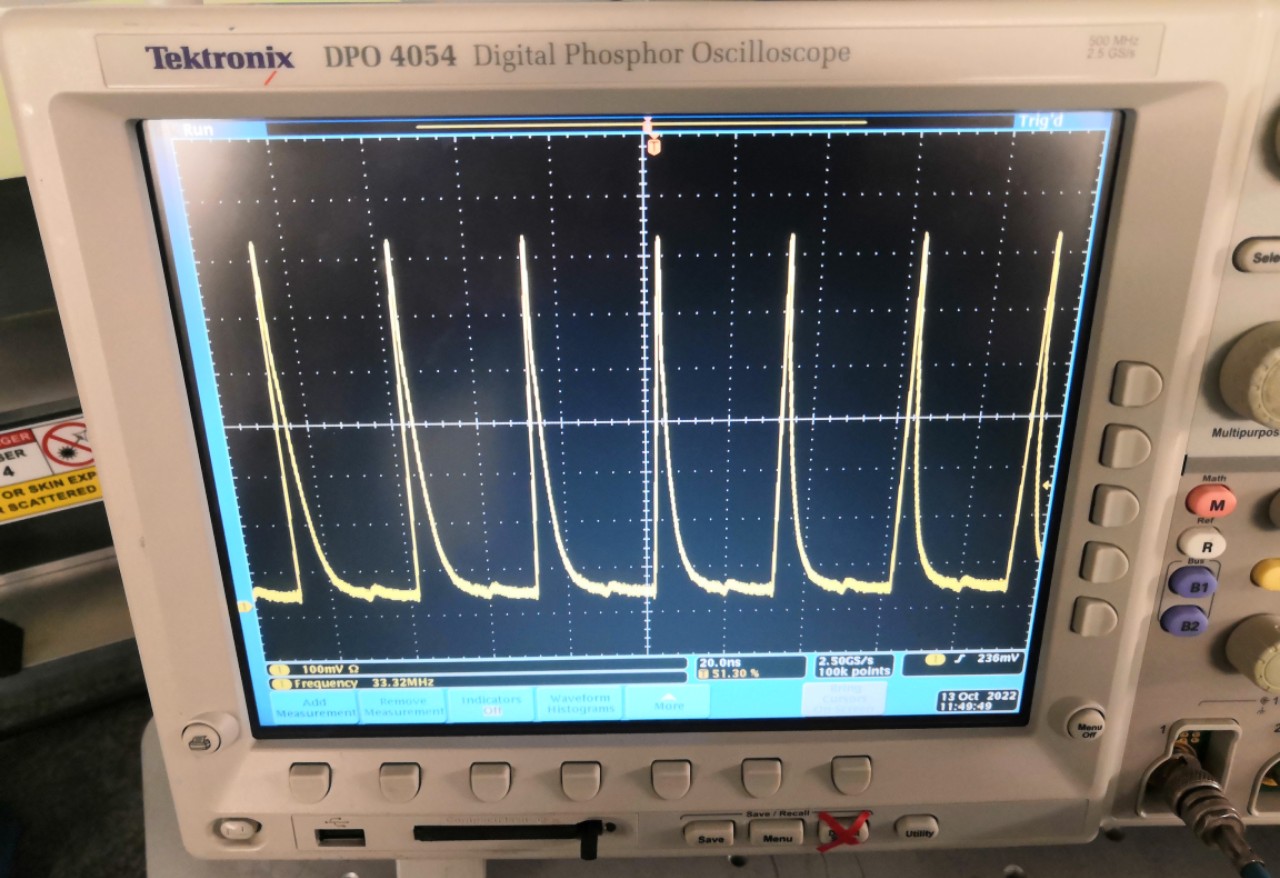
Ronic Chiche | Fixed | info | lasers and optics | Optical room | 33MHz laser SN2439 back to Orsay | Today, we succeded to make the laser modelock.
the ouptut power is above 35mW (the powermeter was saturated)
here is a screenshot of the signal on the scope.
| Ronic Chiche wrote: |
|
Yesterday, we put back the 33MHz oscillator into the casemate with the new Smaract controller.
after switching ON the laser controller, we saw some power at the output but we have to check if the laser is modelock or not.
| Ronic Chiche wrote: |
|
Today, we used an "ELI-NP" Smaract controller made with these 2 references :
MCS-3CC-ETH-TAB (SN 2271) => main controller
MCS-3S-EP-SDS15-TAB (SN 2472) => sensor module
with the ethernet parameters:
IP : 10.0.52.226
MASK: 255.255.255.0
GW : 10.0.52.01
PORT : 5001
one has to configure the device into PTC or MCS software as :
network:10.0.52.226:5001
then, one can access the Smaract controller and move both Frep and CEP stages.
we succeded to make the laser modelock again ! :-)
the output power is about 42mW !
| Ronic Chiche wrote: |
|
Yesterday with Aurélien, we try to make the laser modelock using the Smaract translation stages embedded inside the laser head.
unfortunately, we got some errors when we try to do the "calibration" and "reference" of both Smaract stages !
we contacted by email M. Nicoul to help us on this topic
Today, we removed the 33MHz and its controller and motors controller from the casemate to install it in the PLIC room.
with the help of M. Nicoul, we did a first check of the PZT capacitance of each stage (~ 60nF)
for channel 0 (Frep), the measured capacitance is 53nF on the laser head
for channel 2 (CEP), the measured capacitance is 63nF on the laser head
between pins 1 and 9 of the DB9 connector.
M. Nicoul says that these values are compatible with the reference values ~ 60nF, then the PZT translation stages are OK.
Then, the controler is maybe damaged.
One has to find a new one to test the stages.
| Ronic Chiche wrote: |
|
This morning, with Aurélien and Daniele, we did the swap between the 33MHz and 133MHz oscillators.
now, the 33MHz oscillator is on ThomX inside the casemate.
it has been restarted and some laser is going out.
it has been screwed on the metal plate, roughly aligned with the Alphanov "fiber injection and strecher" box.
tomorrow, we will do the fine alignment with this box and check if the laser is properly modelocking.
the 133MHz oscillator is back in the PLIC optical room.
it has been restarted and some laser is going out.
it seems there are no pulses at the output... it seems we have to trigger the modelock.
| Ronic Chiche wrote: |
|
On the 8th of July, the SN2439 33MHz laser was returned from NKT to our lab, being repaired.
it stayed all the weekend to warm up in the optical room and has been turned on on Monday.
the mode-locking was not working (28mW output power and a CW line for the optical spectrum), thus I "kicked" the laser with 100µm moves on the motors.
now, the laser is mode-locked with 42mW output power and the expected optical spectrum.
|
|
|
|
|
|
| Attachment 1: IMG_20221013_095839.jpg
|  |
|
158
|
Thu Oct 13 12:12:49 2022 |
Ronic Chiche | Fixed | info | lasers and optics | Optical room | 33MHz laser SN2439 back to Orsay | Yesterday, we put back the 33MHz oscillator into the casemate with the new Smaract controller.
after switching ON the laser controller, we saw some power at the output but we have to check if the laser is modelock or not.
| Ronic Chiche wrote: |
|
Today, we used an "ELI-NP" Smaract controller made with these 2 references :
MCS-3CC-ETH-TAB (SN 2271) => main controller
MCS-3S-EP-SDS15-TAB (SN 2472) => sensor module
with the ethernet parameters:
IP : 10.0.52.226
MASK: 255.255.255.0
GW : 10.0.52.01
PORT : 5001
one has to configure the device into PTC or MCS software as :
network:10.0.52.226:5001
then, one can access the Smaract controller and move both Frep and CEP stages.
we succeded to make the laser modelock again ! :-)
the output power is about 42mW !
| Ronic Chiche wrote: |
|
Yesterday with Aurélien, we try to make the laser modelock using the Smaract translation stages embedded inside the laser head.
unfortunately, we got some errors when we try to do the "calibration" and "reference" of both Smaract stages !
we contacted by email M. Nicoul to help us on this topic
Today, we removed the 33MHz and its controller and motors controller from the casemate to install it in the PLIC room.
with the help of M. Nicoul, we did a first check of the PZT capacitance of each stage (~ 60nF)
for channel 0 (Frep), the measured capacitance is 53nF on the laser head
for channel 2 (CEP), the measured capacitance is 63nF on the laser head
between pins 1 and 9 of the DB9 connector.
M. Nicoul says that these values are compatible with the reference values ~ 60nF, then the PZT translation stages are OK.
Then, the controler is maybe damaged.
One has to find a new one to test the stages.
| Ronic Chiche wrote: |
|
This morning, with Aurélien and Daniele, we did the swap between the 33MHz and 133MHz oscillators.
now, the 33MHz oscillator is on ThomX inside the casemate.
it has been restarted and some laser is going out.
it has been screwed on the metal plate, roughly aligned with the Alphanov "fiber injection and strecher" box.
tomorrow, we will do the fine alignment with this box and check if the laser is properly modelocking.
the 133MHz oscillator is back in the PLIC optical room.
it has been restarted and some laser is going out.
it seems there are no pulses at the output... it seems we have to trigger the modelock.
| Ronic Chiche wrote: |
|
On the 8th of July, the SN2439 33MHz laser was returned from NKT to our lab, being repaired.
it stayed all the weekend to warm up in the optical room and has been turned on on Monday.
the mode-locking was not working (28mW output power and a CW line for the optical spectrum), thus I "kicked" the laser with 100µm moves on the motors.
now, the laser is mode-locked with 42mW output power and the expected optical spectrum.
|
|
|
|
|
|
157
|
Fri Oct 7 17:47:39 2022 |
Ronic Chiche | Fixed | info | lasers and optics | Optical room | 33MHz laser SN2439 back to Orsay | Today, we used an "ELI-NP" Smaract controller made with these 2 references :
MCS-3CC-ETH-TAB (SN 2271) => main controller
MCS-3S-EP-SDS15-TAB (SN 2472) => sensor module
with the ethernet parameters:
IP : 10.0.52.226
MASK: 255.255.255.0
GW : 10.0.52.01
PORT : 5001
one has to configure the device into PTC or MCS software as :
network:10.0.52.226:5001
then, one can access the Smaract controller and move both Frep and CEP stages.
we succeded to make the laser modelock again ! :-)
the output power is about 42mW !
| Ronic Chiche wrote: |
|
Yesterday with Aurélien, we try to make the laser modelock using the Smaract translation stages embedded inside the laser head.
unfortunately, we got some errors when we try to do the "calibration" and "reference" of both Smaract stages !
we contacted by email M. Nicoul to help us on this topic
Today, we removed the 33MHz and its controller and motors controller from the casemate to install it in the PLIC room.
with the help of M. Nicoul, we did a first check of the PZT capacitance of each stage (~ 60nF)
for channel 0 (Frep), the measured capacitance is 53nF on the laser head
for channel 2 (CEP), the measured capacitance is 63nF on the laser head
between pins 1 and 9 of the DB9 connector.
M. Nicoul says that these values are compatible with the reference values ~ 60nF, then the PZT translation stages are OK.
Then, the controler is maybe damaged.
One has to find a new one to test the stages.
| Ronic Chiche wrote: |
|
This morning, with Aurélien and Daniele, we did the swap between the 33MHz and 133MHz oscillators.
now, the 33MHz oscillator is on ThomX inside the casemate.
it has been restarted and some laser is going out.
it has been screwed on the metal plate, roughly aligned with the Alphanov "fiber injection and strecher" box.
tomorrow, we will do the fine alignment with this box and check if the laser is properly modelocking.
the 133MHz oscillator is back in the PLIC optical room.
it has been restarted and some laser is going out.
it seems there are no pulses at the output... it seems we have to trigger the modelock.
| Ronic Chiche wrote: |
|
On the 8th of July, the SN2439 33MHz laser was returned from NKT to our lab, being repaired.
it stayed all the weekend to warm up in the optical room and has been turned on on Monday.
the mode-locking was not working (28mW output power and a CW line for the optical spectrum), thus I "kicked" the laser with 100µm moves on the motors.
now, the laser is mode-locked with 42mW output power and the expected optical spectrum.
|
|
|
|
|
156
|
Wed Oct 5 15:51:26 2022 |
Ronic Chiche | Fixed | info | lasers and optics | Optical room | 33MHz laser SN2439 back to Orsay | Yesterday with Aurélien, we try to make the laser modelock using the Smaract translation stages embedded inside the laser head.
unfortunately, we got some errors when we try to do the "calibration" and "reference" of both Smaract stages !
we contacted by email M. Nicoul to help us on this topic
Today, we removed the 33MHz and its controller and motors controller from the casemate to install it in the PLIC room.
with the help of M. Nicoul, we did a first check of the PZT capacitance of each stage (~ 60nF)
for channel 0 (Frep), the measured capacitance is 53nF on the laser head
for channel 2 (CEP), the measured capacitance is 63nF on the laser head
between pins 1 and 9 of the DB9 connector.
M. Nicoul says that these values are compatible with the reference values ~ 60nF, then the PZT translation stages are OK.
Then, the controler is maybe damaged.
One has to find a new one to test the stages.
| Ronic Chiche wrote: |
|
This morning, with Aurélien and Daniele, we did the swap between the 33MHz and 133MHz oscillators.
now, the 33MHz oscillator is on ThomX inside the casemate.
it has been restarted and some laser is going out.
it has been screwed on the metal plate, roughly aligned with the Alphanov "fiber injection and strecher" box.
tomorrow, we will do the fine alignment with this box and check if the laser is properly modelocking.
the 133MHz oscillator is back in the PLIC optical room.
it has been restarted and some laser is going out.
it seems there are no pulses at the output... it seems we have to trigger the modelock.
| Ronic Chiche wrote: |
|
On the 8th of July, the SN2439 33MHz laser was returned from NKT to our lab, being repaired.
it stayed all the weekend to warm up in the optical room and has been turned on on Monday.
the mode-locking was not working (28mW output power and a CW line for the optical spectrum), thus I "kicked" the laser with 100µm moves on the motors.
now, the laser is mode-locked with 42mW output power and the expected optical spectrum.
|
|
|
| Attachment 1: Stick-Slip_Positioners_Mechanical_and_Electrical_Interface_Data_Sheet.pdf
|
|
155
|
Mon Oct 3 18:54:58 2022 |
Ronic Chiche | Fixed | info | lasers and optics | Optical room | 33MHz laser SN2439 back to Orsay | This morning, with Aurélien and Daniele, we did the swap between the 33MHz and 133MHz oscillators.
now, the 33MHz oscillator is on ThomX inside the casemate.
it has been restarted and some laser is going out.
it has been screwed on the metal plate, roughly aligned with the Alphanov "fiber injection and strecher" box.
tomorrow, we will do the fine alignment with this box and check if the laser is properly modelocking.
the 133MHz oscillator is back in the PLIC optical room.
it has been restarted and some laser is going out.
it seems there are no pulses at the output... it seems we have to trigger the modelock.
| Ronic Chiche wrote: |
|
On the 8th of July, the SN2439 33MHz laser was returned from NKT to our lab, being repaired.
it stayed all the weekend to warm up in the optical room and has been turned on on Monday.
the mode-locking was not working (28mW output power and a CW line for the optical spectrum), thus I "kicked" the laser with 100µm moves on the motors.
now, the laser is mode-locked with 42mW output power and the expected optical spectrum.
|
|
|
154
|
Tue Aug 30 18:31:49 2022 |
Loïc Amoudry | Fixed | report | lasers and optics | Optical room | Amplifier output power | We checked the Dichroic mirror we have : it is a DMSP1000 shortpass dichroic mirror as specified in this post.
The Arrow engraved on the edge of the mirror points on the AR surface !
not on the HR surface...
the AOI is 45°.
| Loïc Amoudry wrote: |
|
The ouput power of the ThomX amplifier has been measured as a function of the 3rd stage pumps current (0A is 1st and 2nd stage turned on).
We measured the total power, the total power without the "donuts" pump signal dumped by an iris and the transmission of a dichroic mirror (for ref see image).
|
|
|
153
|
Tue Jul 12 15:55:20 2022 |
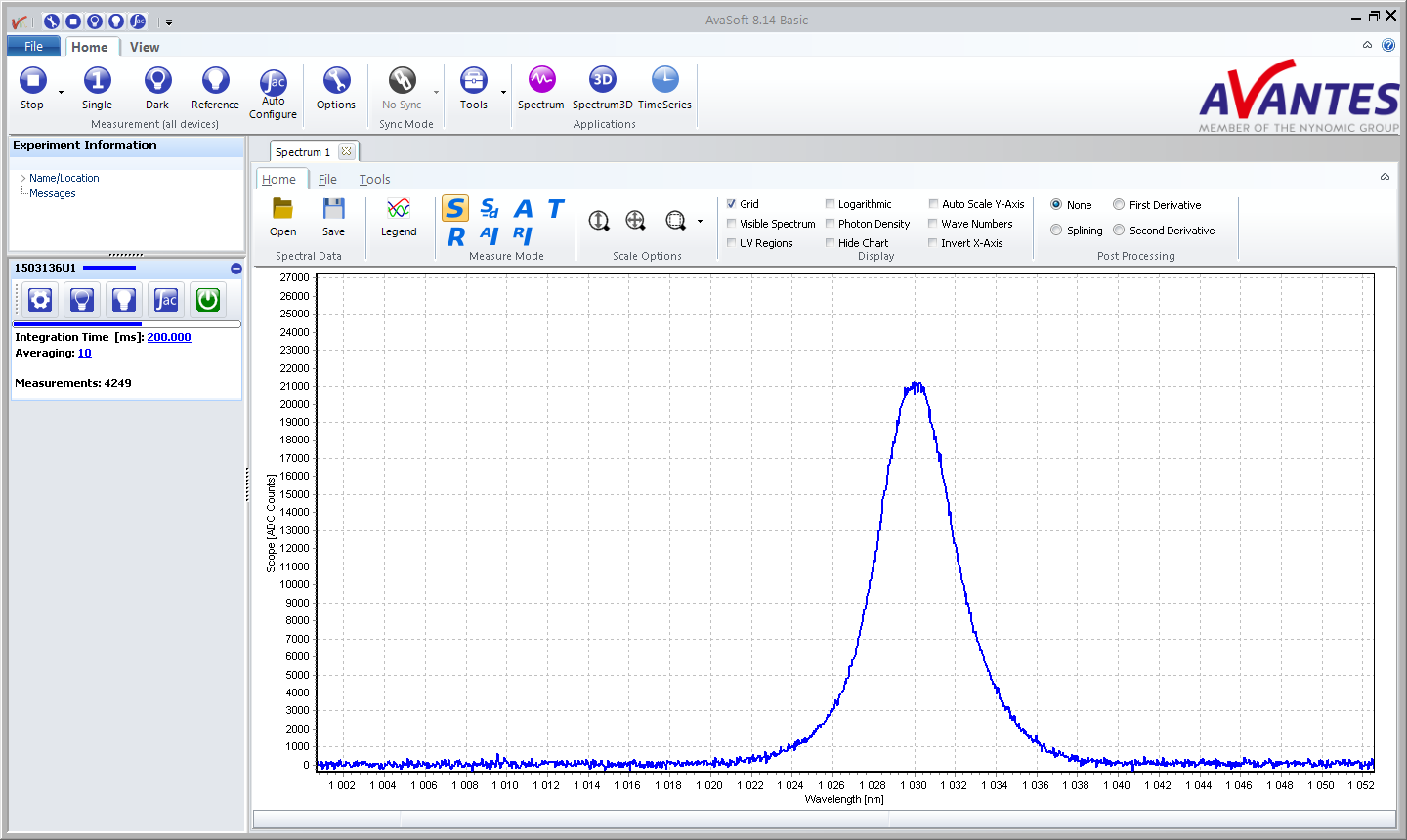
Ronic Chiche | Fixed | info | lasers and optics | Optical room | 33MHz laser SN2439 back to Orsay | On the 8th of July, the SN2439 33MHz laser was returned from NKT to our lab, being repaired.
it stayed all the weekend to warm up in the optical room and has been turned on on Monday.
the mode-locking was not working (28mW output power and a CW line for the optical spectrum), thus I "kicked" the laser with 100µm moves on the motors.
now, the laser is mode-locked with 42mW output power and the expected optical spectrum.
|
| Attachment 1: Capture.PNG
|  |
|
152
|
Wed Jun 15 15:18:57 2022 |
Ronic Chiche | Fixed | info | lasers and optics | ThomX igloo | mirrors removing | This morning with Viktor, we opened the 2 vessels and removed the 4 FP-cavity mirrors.
all the mirrors have been put in plastic boxes with labels to indicate which mirror it is,
and with all the HR coatings face down.
the mirrors are in the PLIC room in the "THOMX MIRRORS" box. |
|
151
|
Tue Jun 14 10:43:07 2022 |
Ronic Chiche | Fixed | info | vacuum | ThomX igloo | Vessels vacuum at ambiant pressure | Last Friday and this morning, with Bruno, we close the ring/cavity valves and put some dry air in the two vessels through a filter to avoid turbulences.
Now, the two vessels are at ambient pressure and ready for opening (to remove the mirrors).
One can let the ambient pressure in the vessels as long as we want, the ring/cavity valves have been chosen to be compatible with the high vacuum in the ring and the ambient pressure in the vessel for a long time.
|
|
150
|
Tue Apr 26 11:15:23 2022 |
Ronic Chiche | Fixed | issue | lasers and optics | ThomX igloo | Alphanov amplifier compressor's CVBG thermal images | last Friday with Manar, we took some thermal images of the Alpnavov compressor box.
I post a small document to summarize some points :
- the 2 mirrors used to make the CVBG injection are polarized thin-film mirrors... thus sensitive to the beam polarization.
there is also a half-wave plate on the input path...
are we sure that the beam polarization is properly set with the Onefive laser injecting the amplifier?
(Alphanov used their own seeder).
- the CVBG temperature seems normal without too much difference between profiles and values.
- the 2 thin-film mirrors seem quite hot (45°) compared to the rest of the setup.
a basic calculation of power thermally radiated gives an absorbed power of around 55mW which is equivalent to about 500ppm of absorption.
is this estimation correct? could it be the confirmation of some misalignment that traps some power inside the mirror substrate?
(document corrected to take into account the room temperature) |
| Attachment 1: Thermal_images.pdf
|
|
149
|
Tue Apr 26 11:12:58 2022 |
Ronic Chiche | Fixed | issue | lasers and optics | ThomX igloo | Alphanov amplifier compressor's CVBG thermal images | last Friday with Manar, we took some thermal images of the Alpnavov compressor box.
I post a small document to summarize some points :
- the 2 mirrors used to make the CVBG injection are polarized thin-film mirrors... thus sensitive to the beam polarization.
there is also a half-wave plate on the input path...
are we sure that the beam polarization is properly set with the Onefive laser injecting the amplifier ?
(Alphanov used their own seeder).
- the CVBG temperature seems normal without too much difference between profiles and values.
- the 2 thin-film mirrors seem quite hot (45°) compared to the rest of the setup.
a basic calculation about power thermally radiated gives an absorbed power of around 0.2W which is equivalent to more than 1000ppm of absorption.
is this estimation correct? could it be the confirmation of some misalignment that traps some power inside the mirror substrate?
|
| Attachment 1: Thermal_images.pdf
|
|