| ID |
Date |
Author |
Status |
Type |
Category |
Location |
Title |
|
45
|
Thu Dec 19 16:23:39 2019 |
Ronic Chiche | Fixed | info | lasers and optics | Optical room | Cavity beam axis moving with power |
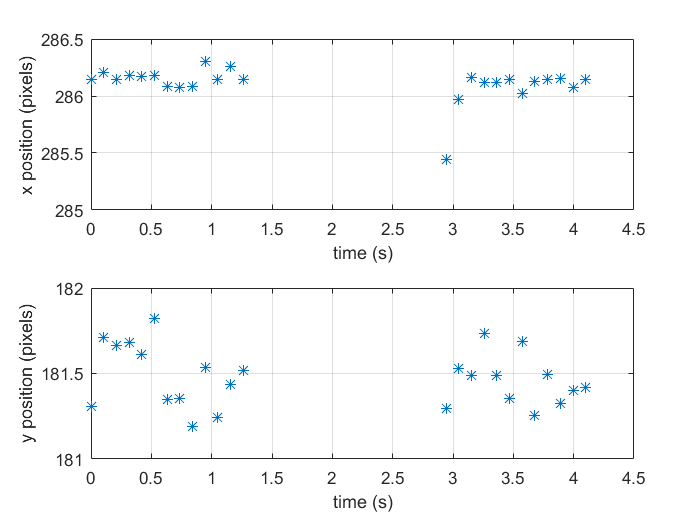
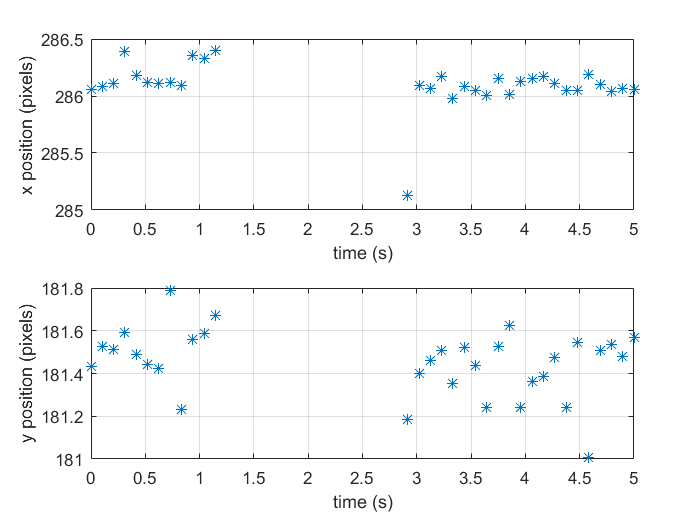
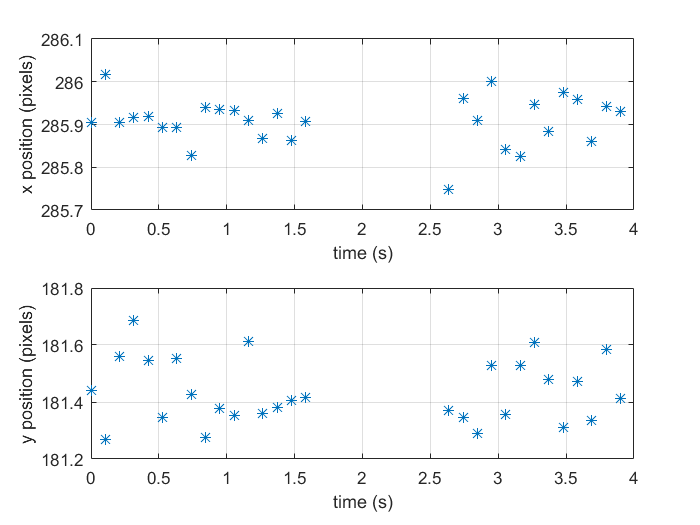
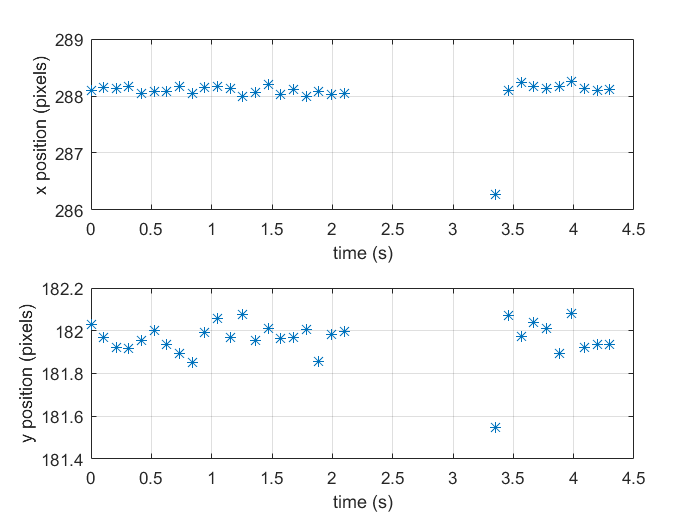
how the cavity beam axis is moving during a lock when the cavity is hot ?
could it explain a part of the Transmission / Coupling signal decay ?
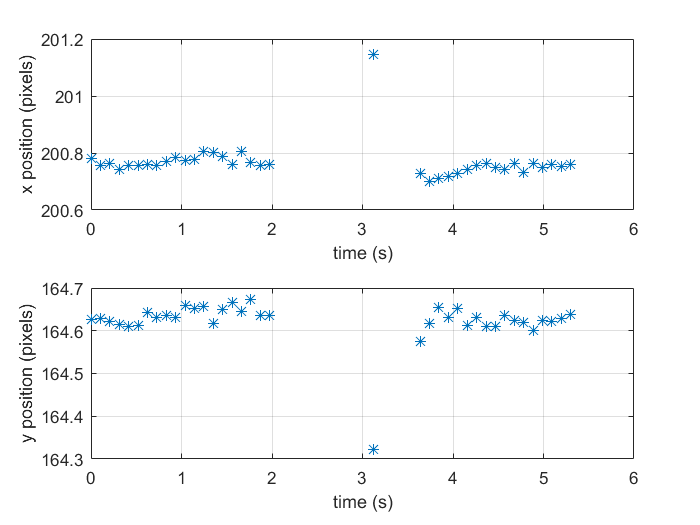
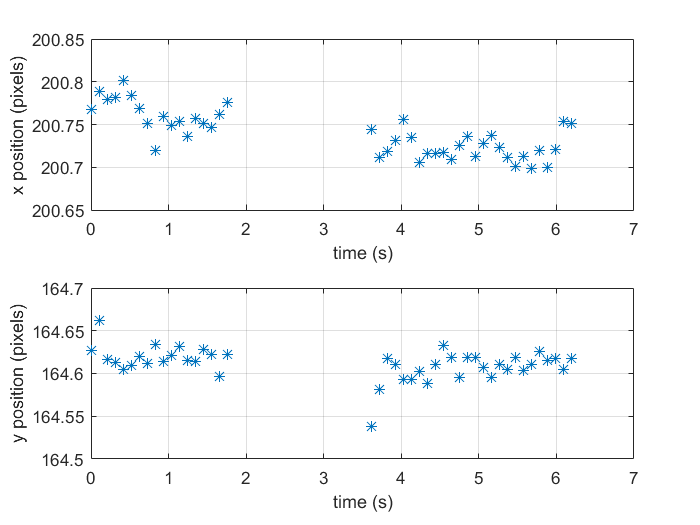
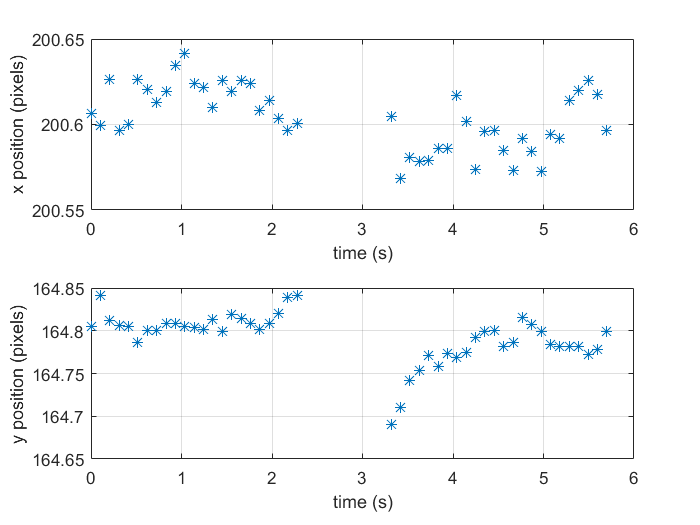
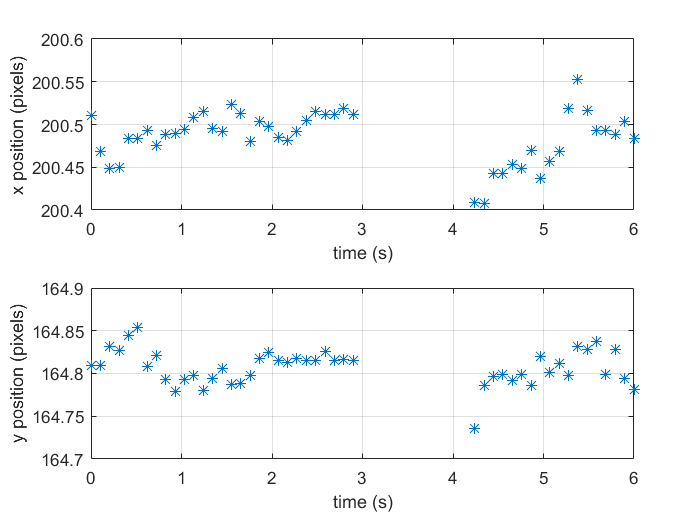
we placed 2 Basler camera, one at (30+Z) cm and the other at (85+Z) cm (Z is about 15cm) from the M3 mirror, we recorded the video during a lock and we analyzed the centroid X and Y displacement at 2A and 3A.
frames acquisition speed is a quite slow ~ 100ms => we need to acquire the frames faster !
with these data, the displacement is no more than some pixels, which means << 100µm ... it should be completely negligeable for photdiode thorlabs DET100 with ~10mm of diameter.
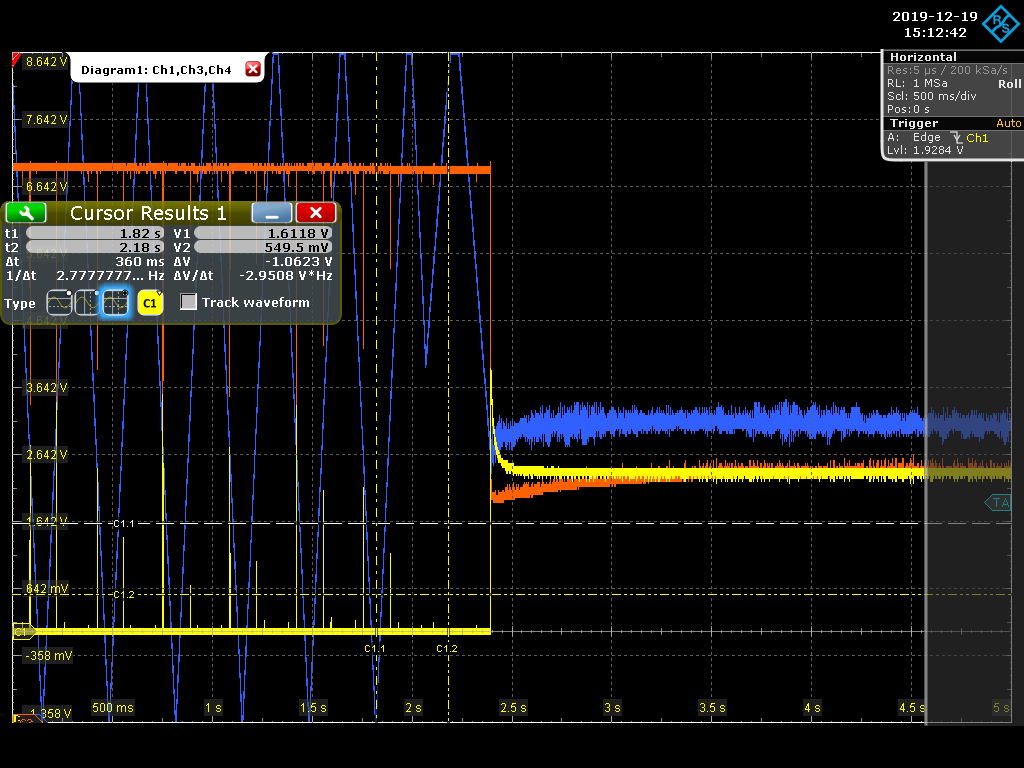
the last picture displays typical locking curves (before and after lock) :
- transmission : yellow
- coupling : orange
- PZT correction : blue |
| Attachment 1: Basler_30cm_2A_v1.png
|
 |
| Attachment 2: Basler_30cm_2A_v2.png
|
 |
| Attachment 3: Basler_30cm_3A_v1.png
|
 |
| Attachment 4: Basler_30cm_3A_v2.png
|
 |
| Attachment 5: Basler_85cm_2A_v1.png
|
 |
| Attachment 6: Basler_85cm_2A_v2.png
|
 |
| Attachment 7: Basler_85cm_3A_v1.png
|
 |
| Attachment 8: Basler_85cm_3A_v2.png
|
 |
| Attachment 9: Screenshot_2019-12-19_4_151242.png
|
 |
|
95
|
Wed Jun 8 11:10:17 2022 |
Manar Amer | Fixed | report | lasers and optics | detectors and electronics | software | Optical room | Cavity Lock |
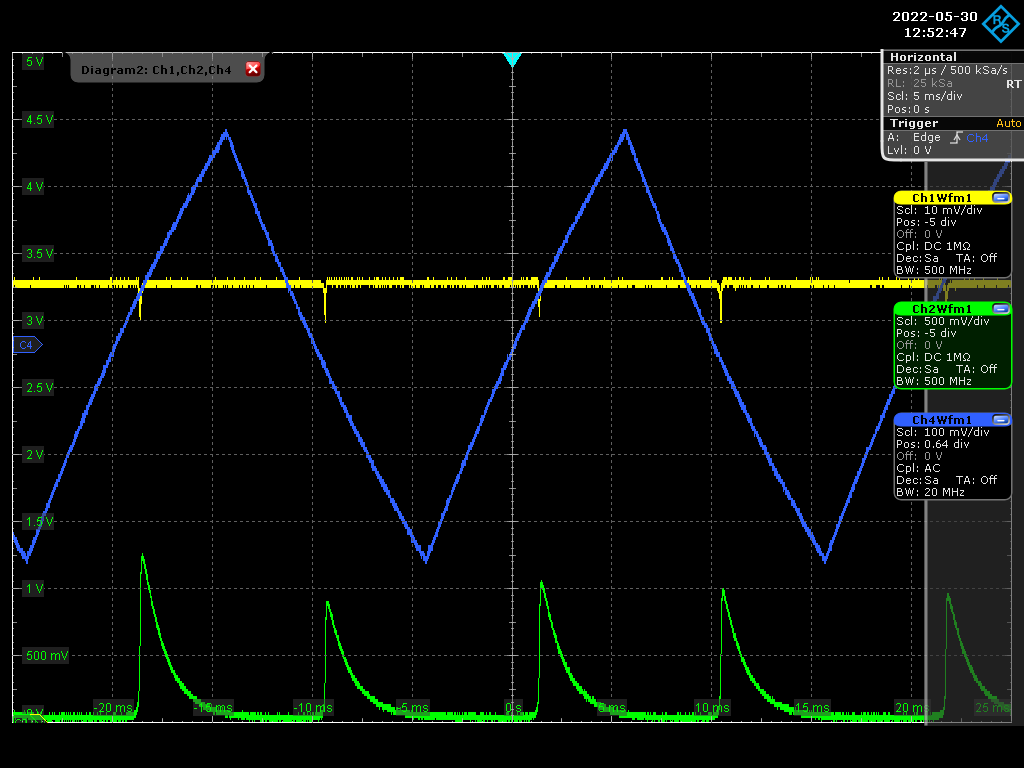
Start with the cavity lock images attached, taken from last week, at start we have a coupling ~ 5% and started improving on the alignment .
The image of 00 modes attached corresponds to the coupling seen on the oscilloscope.
We have a higher coupling with the 11 mode due to the size of the injected beam in comparison to mode
lenses were added to improve it. |
| Attachment 1: Screenshot_2022-05-30_0_125247.png
|
 |
| Attachment 2: 20220530_00_Mode.bmp
|
| Attachment 3: 11.bmp
|
|
97
|
Wed Jun 8 11:31:47 2022 |
Manar Amer | Fixed | report | lasers and optics | detectors and electronics | software | Optical room | Cavity Lock |
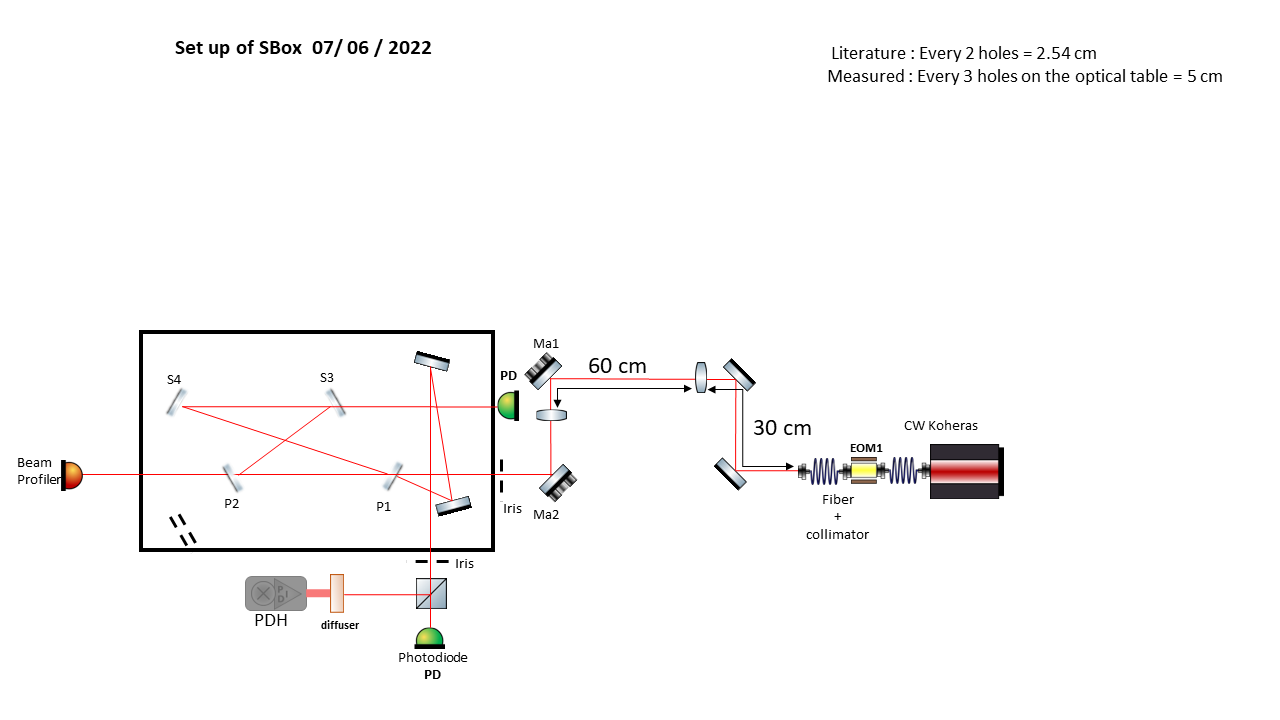
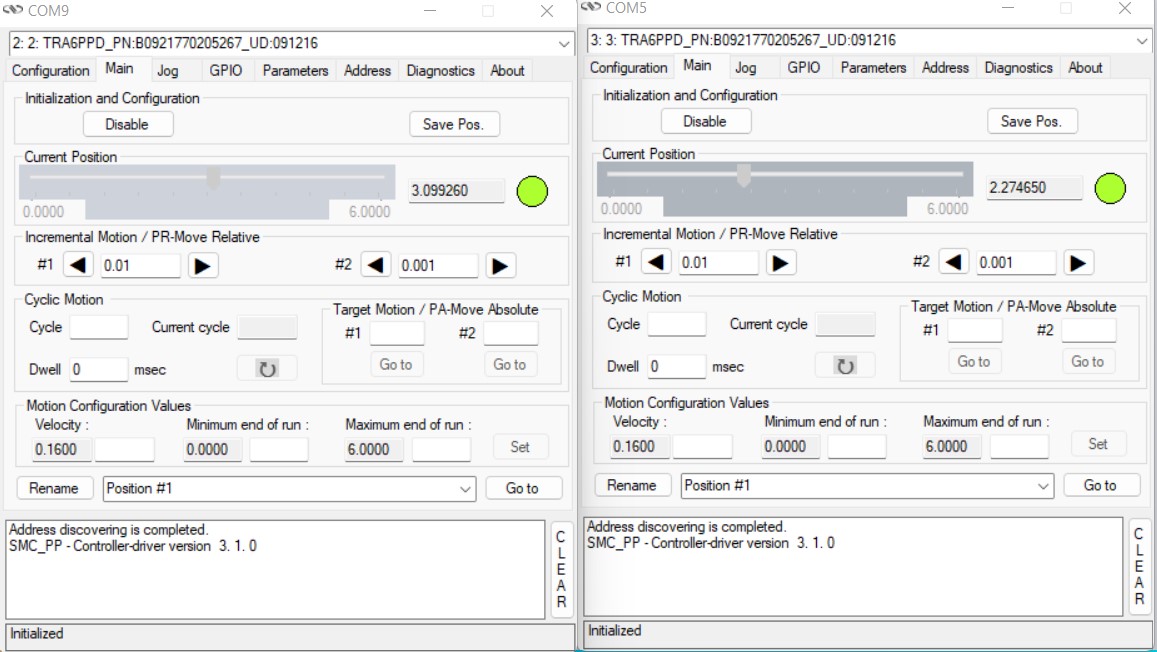
Current setup at SBox for locking the cavity
After spacial matching, the coupling increased to ~ 15 - 20 %
The locking was done for the fundamental mode, tried to improve the coupling with the motors, but the lock is very unstable to be investigated. (Note: the cavity in under normal pressure)
| Manar Amer wrote: |
|
Start with the cavity lock images attached, taken from last week, at start we have a coupling ~ 5% and started improving on the alignment .
The image of 00 modes attached corresponds to the coupling seen on the oscilloscope.
We have a higher coupling with the 11 mode due to the size of the injected beam in comparison to mode
lenses were added to improve it.
|
|
| Attachment 1: 20220607_SBox_Setup.png
|
 |
| Attachment 2: Ma1_Ma2_Horizontal_end-of-day.jpg
|
 |
| Attachment 3: Ma1_Ma2_Vertical_end-of-day.jpg
|
 |
|
98
|
Thu Jun 9 19:59:42 2022 |
Manar Amer | Fixed | report | lasers and optics | detectors and electronics | software | Optical room | Cavity Lock |
Cavity locked today under vacuum and no airflow, it is stable over a long time
the alignment was improved and an increase of the transmission by 20 % from its original value
unfortunately, data from the oscilloscope was saved, but it was not in the correct format (image) to show.
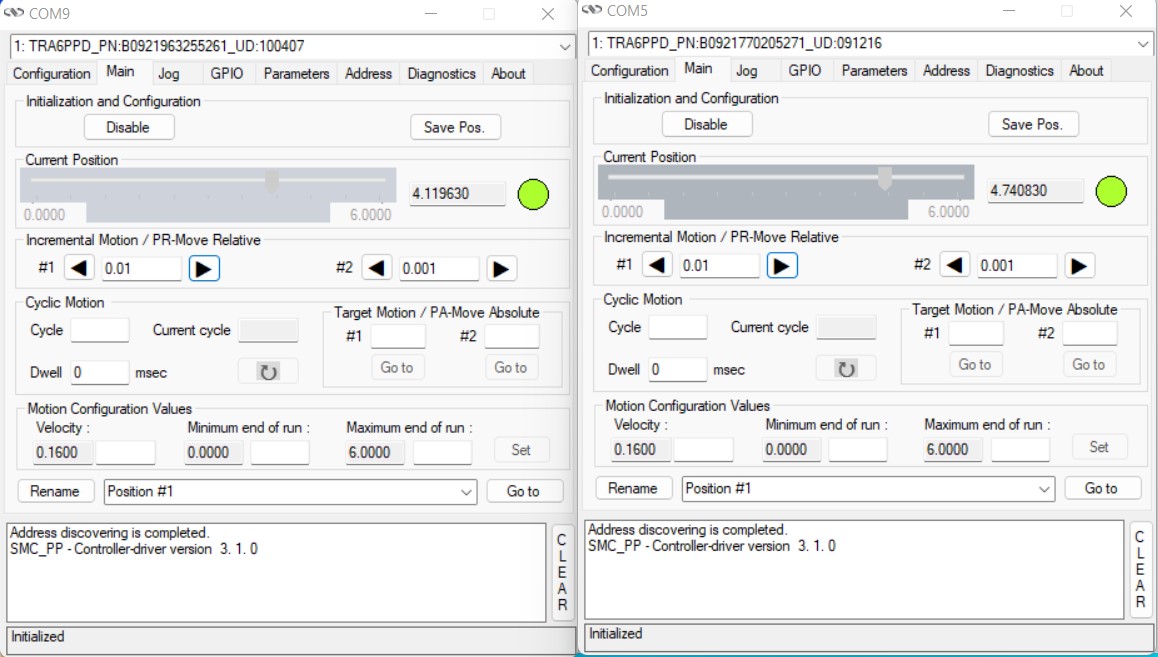
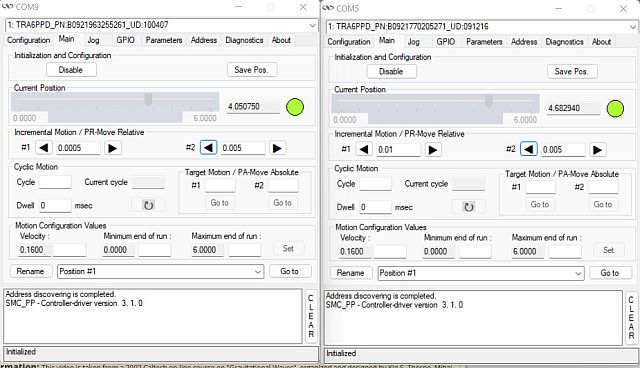
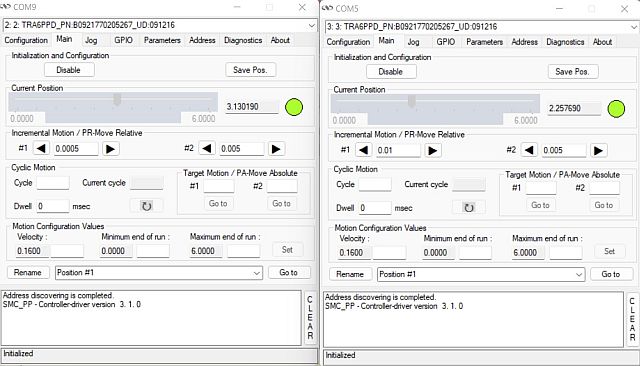
Attached ; the mode shape, the new motor positions.
| Manar Amer wrote: |
|
Current setup at SBox for locking the cavity
After spacial matching, the coupling increased to ~ 15 - 20 %
The locking was done for the fundamental mode, tried to improve the coupling with the motors, but the lock is very unstable to be investigated. (Note: the cavity in under normal pressure)
| Manar Amer wrote: |
|
Start with the cavity lock images attached, taken from last week, at start we have a coupling ~ 5% and started improving on the alignment .
The image of 00 modes attached corresponds to the coupling seen on the oscilloscope.
We have a higher coupling with the 11 mode due to the size of the injected beam in comparison to mode
lenses were added to improve it.
|
|
|
| Attachment 1: 00_Mode_Locked_Under_vacuum.bmp
|
| Attachment 2: Ma1_Ma2_Horizontal_end-of-day.jpg
|
 |
| Attachment 3: Ma1_Ma2_Vertical_end-of-day.jpg
|
 |
|
101
|
Wed Jul 6 18:34:12 2022 |
Manar Amer | Fixed | report | lasers and optics | detectors and electronics | software | Optical room | Cavity Lock |
Closing the series for the setup
The cavity was only locked @ 133.33 MHz but the Finesse was not measured
The FSR was changed to match the new laser MENHIR 216.6625 MHz
| Manar Amer wrote: |
|
Cavity locked today under vacuum and no airflow, it is stable over a long time
the alignment was improved and an increase of the transmission by 20 % from its original value
unfortunately, data from the oscilloscope was saved, but it was not in the correct format (image) to show.
Attached ; the mode shape, the new motor positions.
| Manar Amer wrote: |
|
Current setup at SBox for locking the cavity
After spacial matching, the coupling increased to ~ 15 - 20 %
The locking was done for the fundamental mode, tried to improve the coupling with the motors, but the lock is very unstable to be investigated. (Note: the cavity in under normal pressure)
| Manar Amer wrote: |
|
Start with the cavity lock images attached, taken from last week, at start we have a coupling ~ 5% and started improving on the alignment .
The image of 00 modes attached corresponds to the coupling seen on the oscilloscope.
We have a higher coupling with the 11 mode due to the size of the injected beam in comparison to mode
lenses were added to improve it.
|
|
|
|
|
119
|
Fri Jul 22 18:19:13 2022 |
Manar Amer | Fixed | report | lasers and optics | detectors and electronics | software | Optical room | CVBG stretching / Fiber Injection |
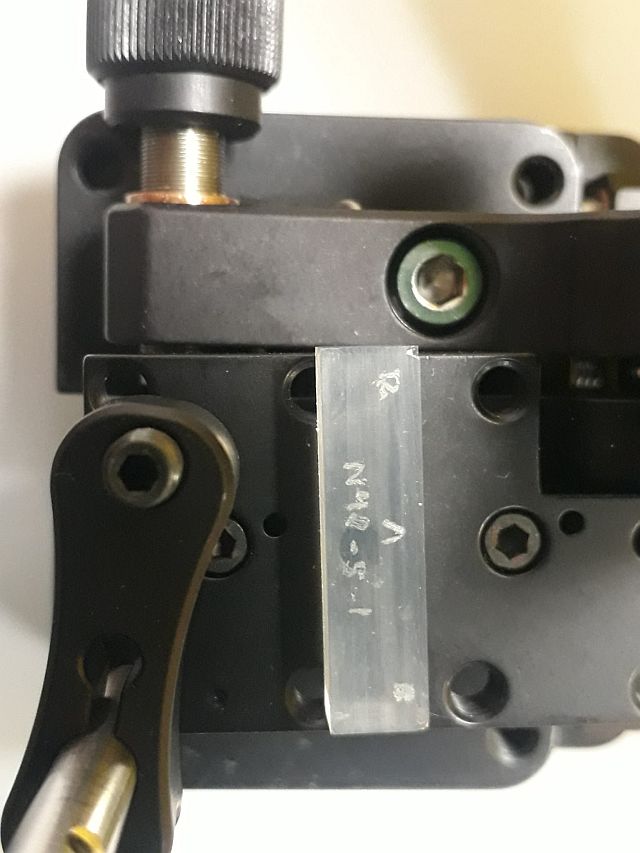
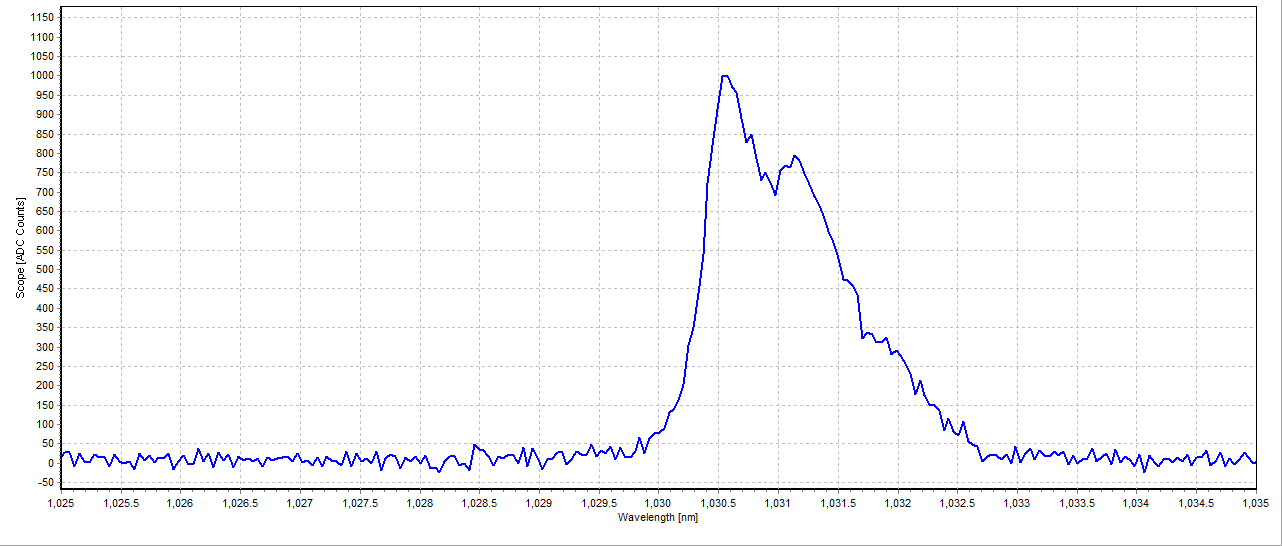
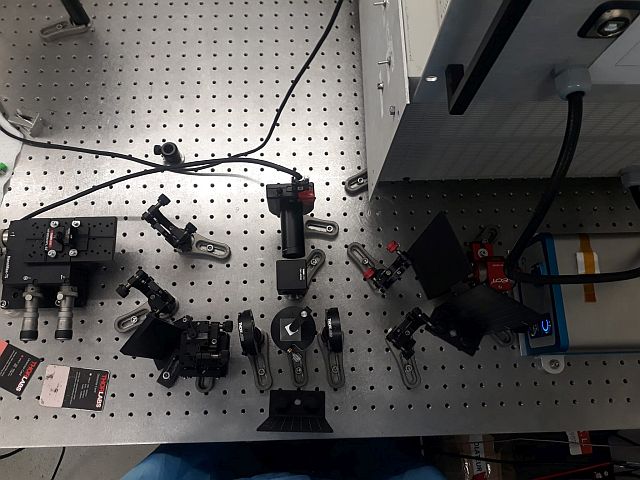
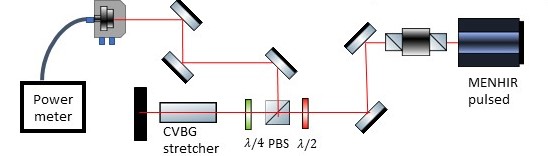
Before injecting into the amplifier, the pulse needs to be stretched using a CVBG, type attached.
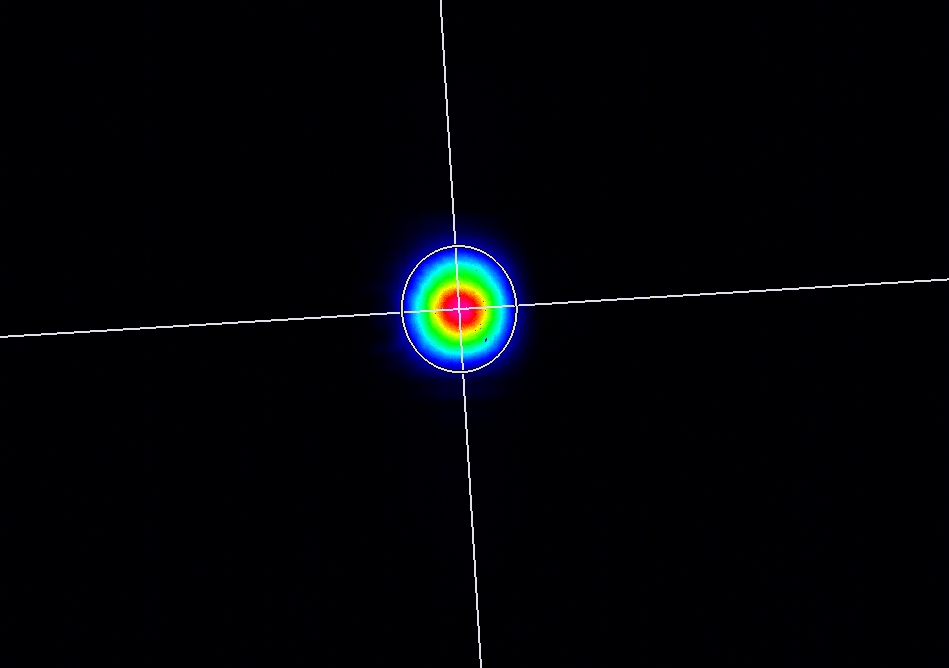
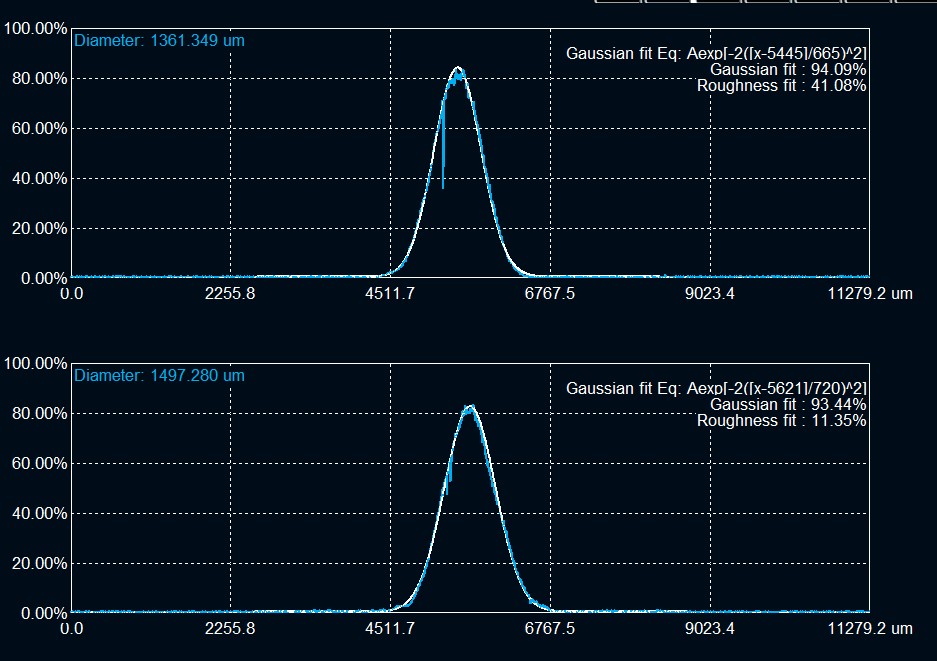
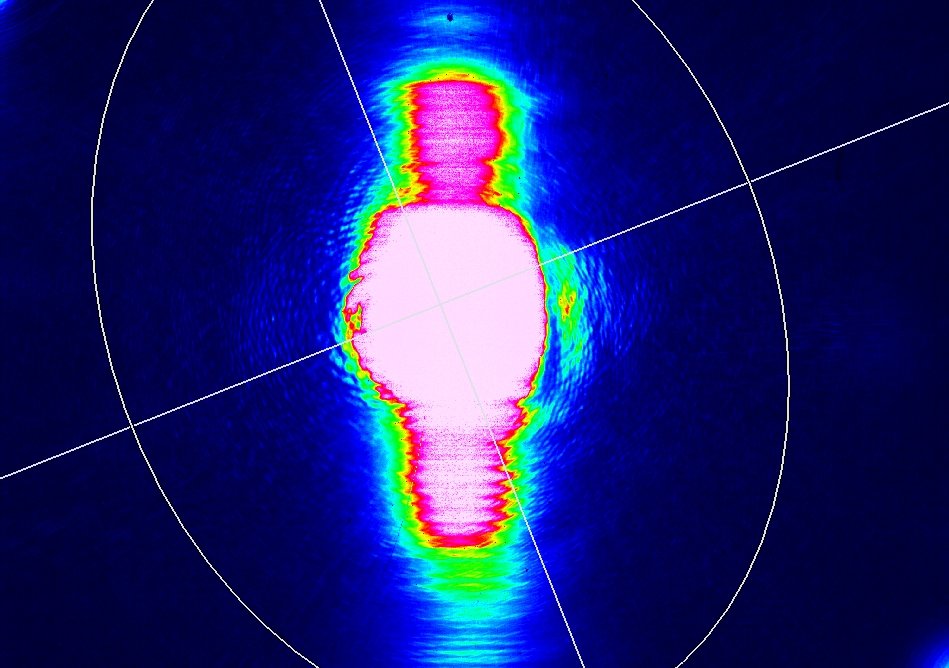
the CVBG is to be used at a small angle, the beam shape and spectrum after the PBS is attached.
After measuring the beam profile, a mirror was placed to direct all the power for fiber injection
power before the fiber is 13 mW and the power injected is 6.19 mW
|
| Attachment 1: CVBG.jpg
|
 |
| Attachment 2: beamafterCVBG.jpg
|
 |
| Attachment 3: beamafterCVBG_Fit.jpg
|
 |
| Attachment 4: beamafterCVBG_saturated.jpg
|
 |
| Attachment 5: SpectrumafterCVBGzoom.png
|
 |
| Attachment 6: CVBG_Injection_Setup.jpg
|
 |
| Attachment 7: 20220722_CVBG_stretching.jpeg
|
 |
|
131
|
Fri Aug 19 16:03:40 2022 |
Manar Amer | Fixed | report | lasers and optics | detectors and electronics | software | Optical room | CVBG stretching / Fiber Injection |
closing series
| Manar Amer wrote: |
|
Before injecting into the amplifier, the pulse needs to be stretched using a CVBG, type attached.
the CVBG is to be used at a small angle, the beam shape and spectrum after the PBS is attached.
After measuring the beam profile, a mirror was placed to direct all the power for fiber injection
power before the fiber is 13 mW and the power injected is 6.19 mW
|
|
|
51
|
Fri Jan 24 17:58:45 2020 |
Loïc Amoudry | Fixed | info | lasers and optics | Optical room | CFBG removed from ThomX CELIA amplifier |
The CFBG has been removed successfully and the amplifier is closed now.
The soldering machine had a calibration trouble and was sent to the company for review during holidays.
The output power has been checked and is the same as before (tested until 30W ouput power). |
|
116
|
Fri Jul 22 17:07:32 2022 |
Manar Amer | Fixed | report | lasers and optics | detectors and electronics | software | Optical room | CELIA amplifier installation + chiller |
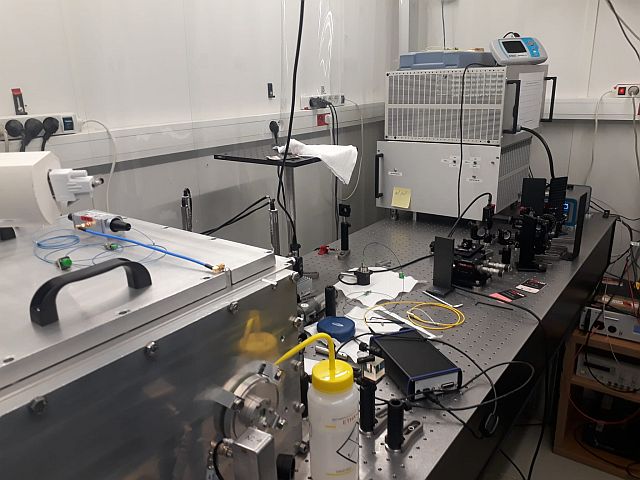
Amplifier placed next to the pulsed laser on the table under the airflow
The output is in free space with height from the table of about 10 cm, note the injection height into the cavity is between 14 - 15 cm.
a power cable is placed but not plugged.
Connection to the computer is made using USB B on amplifier to USB A (note need a longer cable, the available on is too short)
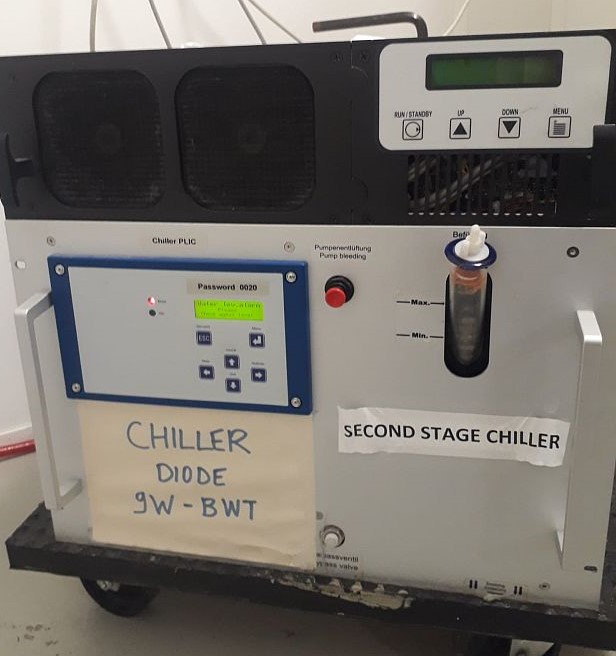
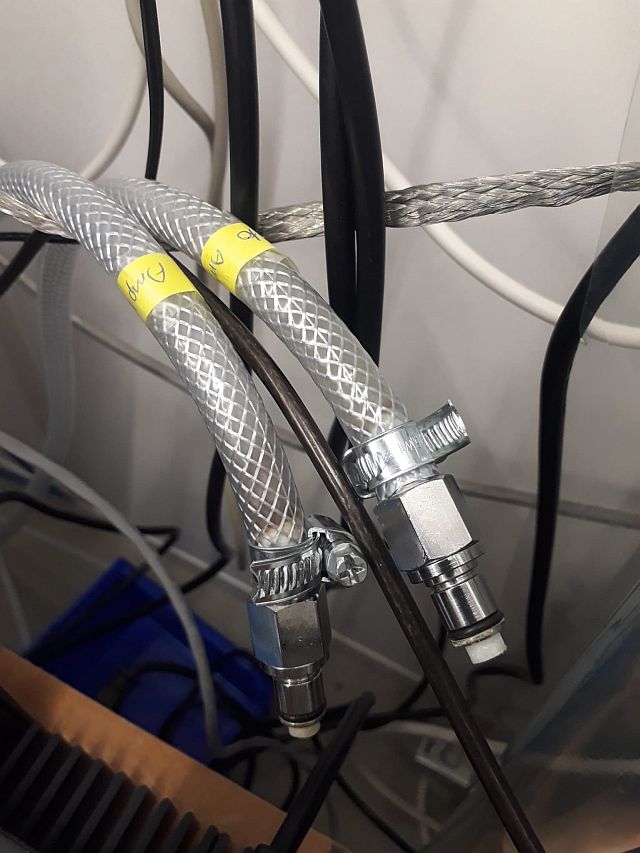
The cooling, to be connected to an outside chiller, will use the bottom one shown in the image attached.
The two water tubes, from chiller to amplifier, has been marked. The size of the tubes from the amplifier fit inside the tubes from the chiller.
| Manar Amer wrote: |
|
The amplifier was installed on the optical table next to SBox table.
The CVBG that will be used for stretching before amplification needs cleaning (they are very fragile, 'ask victor for best method')
The software to drive the diodes of the amplifier we have is not the compatible one.
|
|
| Attachment 1: WhatsApp_Image_2022-07-22_at_4.26.24_PM.jpg
|
 |
| Attachment 2: WhatsApp_Image_2022-07-22_at_4.26.24_PM.jpg
|
 |
| Attachment 3: WhatsApp_Image_2022-07-22_at_5.02.24_PM.jpg
|
 |
|
120
|
Fri Jul 22 18:25:31 2022 |
Manar Amer | Fixed | report | lasers and optics | detectors and electronics | software | Optical room | CELIA amplifier installation + chiller |
The software to control the CELIA amplifier is on the laptop that was placed in ThomX bunker.
I have placed it in the PLIC room next to the SBox table.
it is called 'Alphanov Control Software'
| Manar Amer wrote: |
|
Amplifier placed next to the pulsed laser on the table under the airflow
The output is in free space with height from the table of about 10 cm, note the injection height into the cavity is between 14 - 15 cm.
a power cable is placed but not plugged.
Connection to the computer is made using USB B on amplifier to USB A (note need a longer cable, the available on is too short)
The cooling, to be connected to an outside chiller, will use the bottom one shown in the image attached.
The two water tubes, from chiller to amplifier, has been marked. The size of the tubes from the amplifier fit inside the tubes from the chiller.
| Manar Amer wrote: |
|
The amplifier was installed on the optical table next to SBox table.
The CVBG that will be used for stretching before amplification needs cleaning (they are very fragile, 'ask victor for best method')
The software to drive the diodes of the amplifier we have is not the compatible one.
|
|
|
|
129
|
Fri Aug 19 16:02:33 2022 |
Manar Amer | Fixed | report | lasers and optics | detectors and electronics | software | Optical room | CELIA amplifier installation + chiller |
Closing series
| Manar Amer wrote: |
|
The software to control the CELIA amplifier is on the laptop that was placed in ThomX bunker.
I have placed it in the PLIC room next to the SBox table.
it is called 'Alphanov Control Software'
| Manar Amer wrote: |
|
Amplifier placed next to the pulsed laser on the table under the airflow
The output is in free space with height from the table of about 10 cm, note the injection height into the cavity is between 14 - 15 cm.
a power cable is placed but not plugged.
Connection to the computer is made using USB B on amplifier to USB A (note need a longer cable, the available on is too short)
The cooling, to be connected to an outside chiller, will use the bottom one shown in the image attached.
The two water tubes, from chiller to amplifier, has been marked. The size of the tubes from the amplifier fit inside the tubes from the chiller.
| Manar Amer wrote: |
|
The amplifier was installed on the optical table next to SBox table.
The CVBG that will be used for stretching before amplification needs cleaning (they are very fragile, 'ask victor for best method')
The software to drive the diodes of the amplifier we have is not the compatible one.
|
|
|
|
|
115
|
Tue Jul 12 19:07:50 2022 |
Manar Amer | Fixed | report | lasers and optics | detectors and electronics | software | Optical room | CELIA amplifier installation |
The amplifier was installed on the optical table next to SBox table.
The CVBG that will be used for stretching before amplification needs cleaning (they are very fragile, 'ask victor for best method')
The software to drive the diodes of the amplifier we have is not the compatible one. |
|
224
|
Wed Oct 2 10:12:55 2024 |
Ronic Chiche | Under Process | issue | lasers and optics | Optical room | CELIA 100W laser amplifier repair |
this morning with Alice, we sent the Menhir 160MHz injected in a fiber (with 6mW at the end of a long fiber) into the laser amplifier, to look for leakage or damage in the first stages of the amplifier (the amplifier is totally off).
first of all, we checked for light scattering around the laser crate with a sensitive optical card => nothing
and then, we checked for light scattering inside the laser crate with an optical viewer => we just saw 1 or 2 small spots located at the end of an optical element at the 2nd stage level.
but it's difficult to understand the optical path and know the different elements with the 1st stage still in place.
we think it is mandatory to open the top of the crate and lift the 1st stage to have a better look inside the optical parts which are at the 2nd and 3rd stage levels:
we could remove the front side of the crate without any damage to any fibers in the crate.
we just saw 1 fiber, glued to an optical element on the 2nd stage, and going to the 3rd stage.
the 1st stage is just an electronics parts stage which seems easy to be removed.
... to be discussed...
|
|
225
|
Wed Oct 2 18:12:54 2024 |
Ronic Chiche | Under Process | issue | lasers and optics | Optical room | CELIA 100W laser amplifier repair |
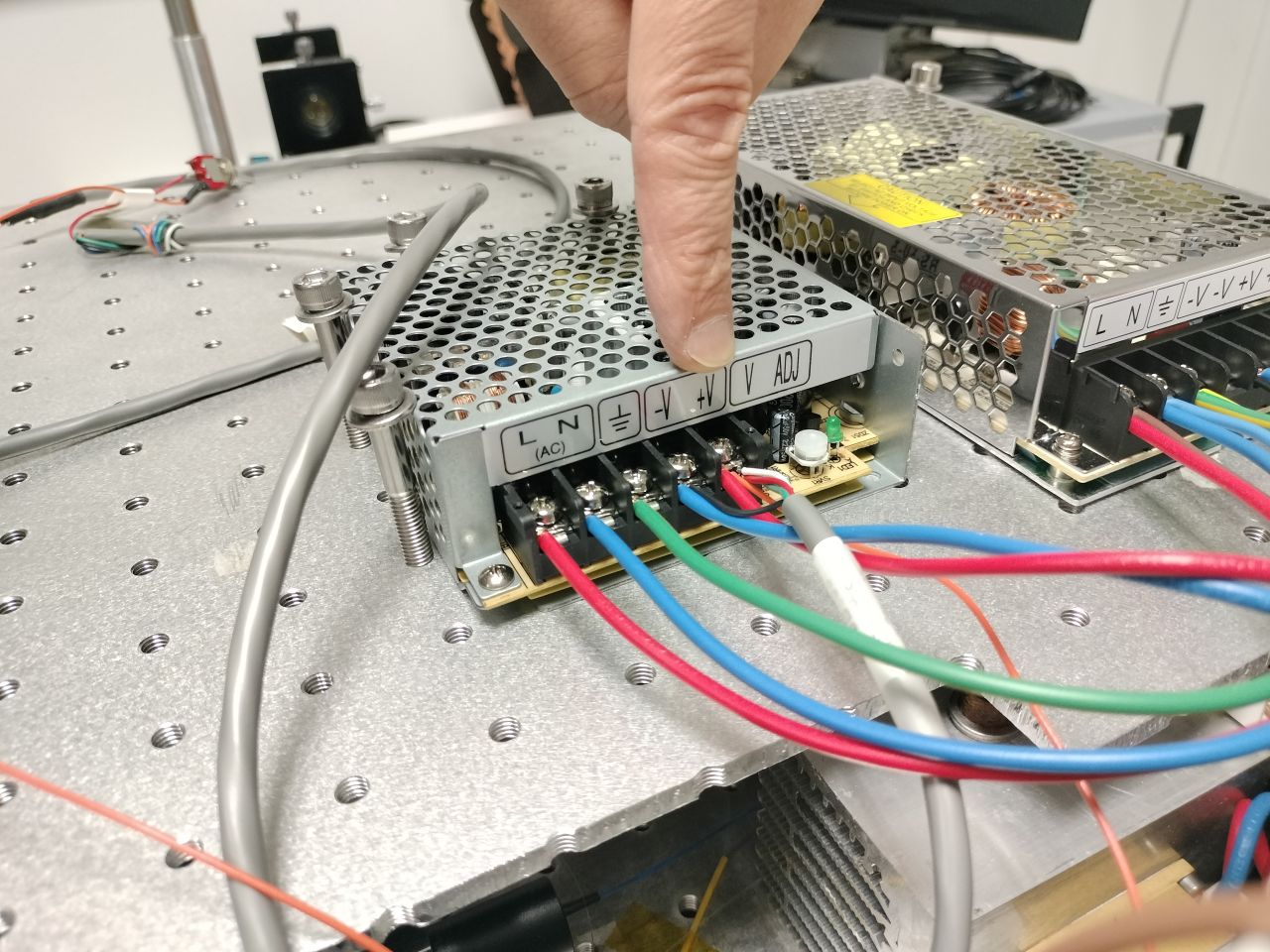
this afternoon, we saw some electric cables badly connected to their power supply.
we fixed it by soldering them together and screwing the result to the power supply.
(see 1st image)
we lift the plate of the 1st stage and we check for optical leakage in the fibers (see 2nd image + picture of the top part of the cassette).
(Aurélien took several images)
without the 1st stage amplification, we saw some lealage only in the bottom part of the "optical cassette".
light was scattered mostly from one side (2 spots) and we saw also very weak scattering in the other directions.
with the 1st stage amplification, we clearly saw the losses from the bent fibers inside the top part of the cassette => it's a good sign.
but after the 5%-10% coupler (the one used for the diagnostic of the power to allow the use of the 2nd stage), we don't see any losses, which means there is no light in this part !
the fiber break could be in between...
Aurélien should send the images to Jérome to get a diagnostic.
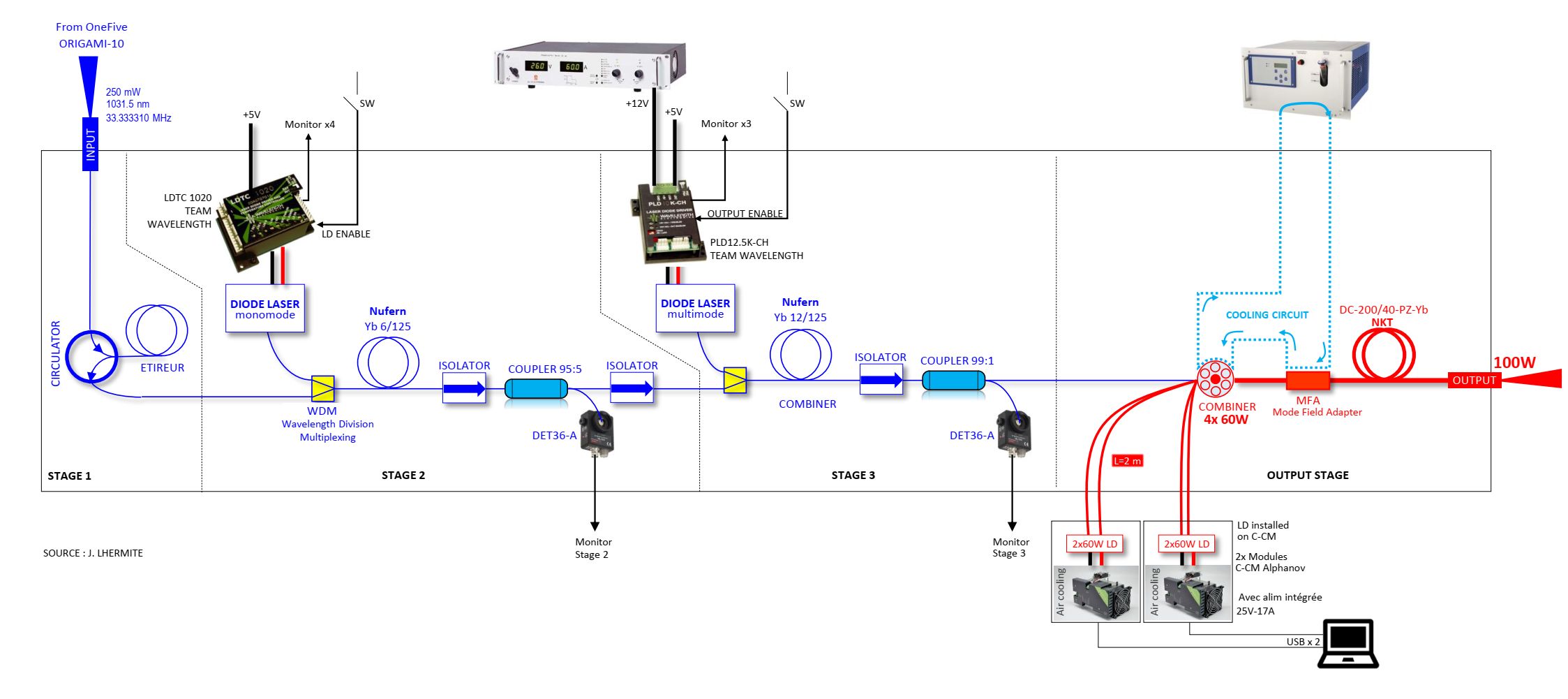
the old schematic is attached but it has been modified in the Loic Thesis (p. 165)
we identified the black optics components as 2 isolators (AFW-PISO-30-1W-FB) and 1 circulator (AFW-CIR-PM-30) from AFW technologies.
| Ronic Chiche wrote: |
|
this morning with Alice, we sent the Menhir 160MHz injected in a fiber (with 6mW at the end of a long fiber) into the laser amplifier, to look for leakage or damage in the first stages of the amplifier (the amplifier is totally off).
first of all, we checked for light scattering around the laser crate with a sensitive optical card => nothing
and then, we checked for light scattering inside the laser crate with an optical viewer => we just saw 1 or 2 small spots located at the end of an optical element at the 2nd stage level.
but it's difficult to understand the optical path and know the different elements with the 1st stage still in place.
we think it is mandatory to open the top of the crate and lift the 1st stage to have a better look inside the optical parts which are at the 2nd and 3rd stage levels:
we could remove the front side of the crate without any damage to any fibers in the crate.
we just saw 1 fiber, glued to an optical element on the 2nd stage, and going to the 3rd stage.
the 1st stage is just an electronics parts stage which seems easy to be removed.
... to be discussed...
|
|
| Attachment 1: IMG20241002144351.jpg
|
 |
| Attachment 2: IMG20241002144936.jpg
|
 |
| Attachment 3: 20241002_161657.jpg
|
 |
| Attachment 4: Clipboard_10-02-2024_01.jpg
|
 |
|
230
|
Mon Dec 16 10:20:56 2024 |
Ronic Chiche | Under Process | issue | lasers and optics | Optical room | CELIA 100W laser amplifier repair |
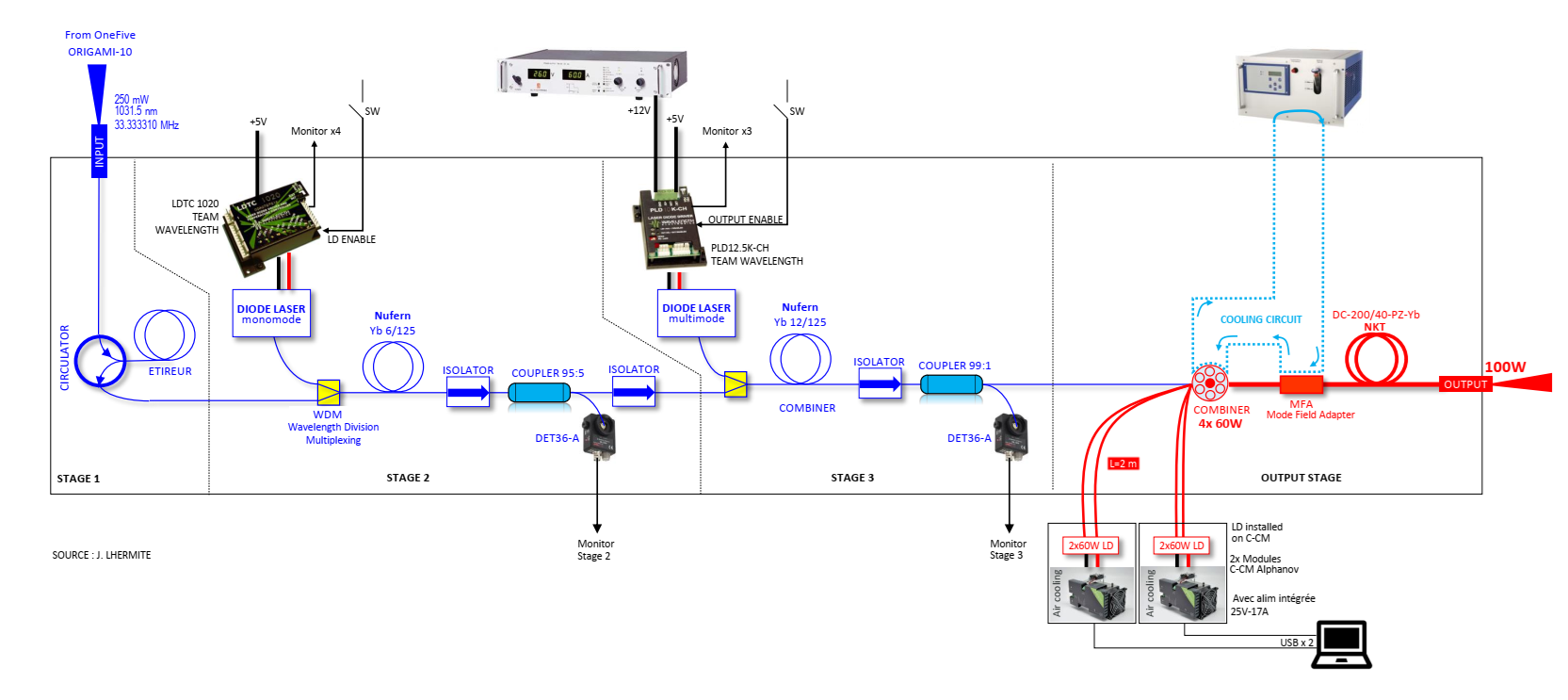
friday morning, we add a zoom call with Jerome Lhermite about the amplifier repair.
he approximately confirmed the amplifier scheme from the Loic thesis.
he suggested to:
1) identify the circulator ports.
they have some tapes with text written on them.
the goal is to understand if it is still used in the present setup and if a CFBG could still be connected to it (and from which one end could be the fiber seen "broken").
2) use the 5% output tap of the amplifier to check if some light is outed if the input or circulator fibers are injected with 1st stage switched ON or OFF.
3) follow the "broken" fiber to check to which element it is connected to => we should need to unroll the fibers in the bottom "fiber cassette"... :-(
| Ronic Chiche wrote: |
|
this afternoon, we saw some electric cables badly connected to their power supply.
we fixed it by soldering them together and screwing the result to the power supply.
(see 1st image)
we lift the plate of the 1st stage and we check for optical leakage in the fibers (see 2nd image + picture of the top part of the cassette).
(Aurélien took several images)
without the 1st stage amplification, we saw some lealage only in the bottom part of the "optical cassette".
light was scattered mostly from one side (2 spots) and we saw also very weak scattering in the other directions.
with the 1st stage amplification, we clearly saw the losses from the bent fibers inside the top part of the cassette => it's a good sign.
but after the 5%-10% coupler (the one used for the diagnostic of the power to allow the use of the 2nd stage), we don't see any losses, which means there is no light in this part !
the fiber break could be in between...
Aurélien should send the images to Jérome to get a diagnostic.
the old schematic is attached but it has been modified in the Loic Thesis (p. 165)
we identified the black optics components as 2 isolators (AFW-PISO-30-1W-FB) and 1 circulator (AFW-CIR-PM-30) from AFW technologies.
| Ronic Chiche wrote: |
|
this morning with Alice, we sent the Menhir 160MHz injected in a fiber (with 6mW at the end of a long fiber) into the laser amplifier, to look for leakage or damage in the first stages of the amplifier (the amplifier is totally off).
first of all, we checked for light scattering around the laser crate with a sensitive optical card => nothing
and then, we checked for light scattering inside the laser crate with an optical viewer => we just saw 1 or 2 small spots located at the end of an optical element at the 2nd stage level.
but it's difficult to understand the optical path and know the different elements with the 1st stage still in place.
we think it is mandatory to open the top of the crate and lift the 1st stage to have a better look inside the optical parts which are at the 2nd and 3rd stage levels:
we could remove the front side of the crate without any damage to any fibers in the crate.
we just saw 1 fiber, glued to an optical element on the 2nd stage, and going to the 3rd stage.
the 1st stage is just an electronics parts stage which seems easy to be removed.
... to be discussed...
|
|
|
| Attachment 1: Sans_titre.png
|
 |
|
9
|
Fri Oct 19 11:23:27 2018 |
Loïc Amoudry | Fixed | report | lasers and optics | Optical room | Beam size vs D-shape position |
Measurement done on 18/10/18.
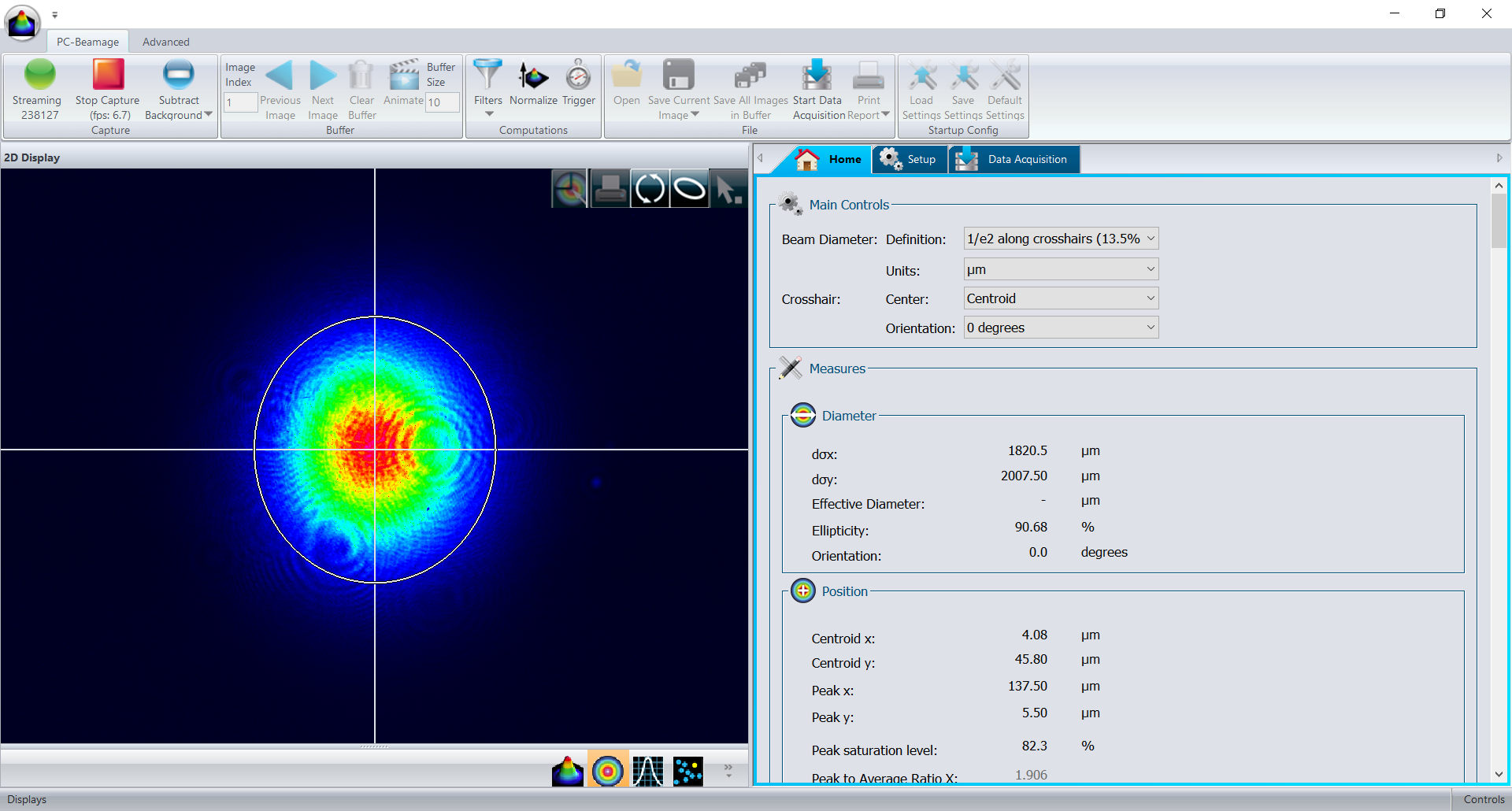
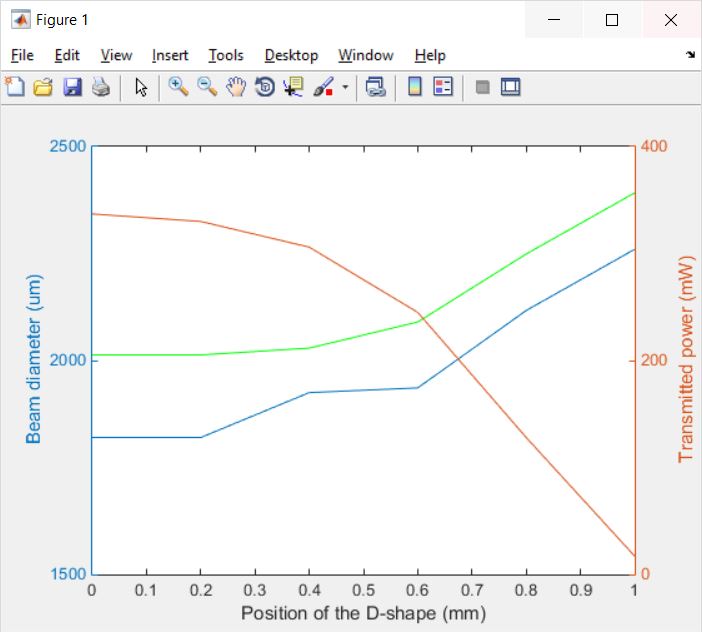
At high power, the shape of the 0.0 mode does not change. The D-shape only generate losses in the cavity. Then the power stored in the cavity decrease. As with this configuration, the cavity beam size decrease when power increase, the beam size decreased.
Measurements done @4A on 3rd stage.
| x (um) |
y (um) |
Picomotors displacement (um) |
Transmission power (mW) |
| 1820 |
2013 |
0 |
337 |
| 1820 |
2013 |
200 |
330 |
| 1925 |
2029 |
400 |
306 |
| 1936 |
2090 |
600 |
245 |
| 2117 |
2249 |
800 |
125 |
| 2260 |
2392 |
1000 |
17 |
Then we get the D-shape away from the beam to not cut it and decreased the amplifier power to validate the beam size at a known value. So the power as been decreased to 2A (= 125 mW in trans) and the beam size was x=2079 y=2255, similar to the 125 mW with D-shape mirrors values. |
| Attachment 1: 181018_4A_no_cut.PNG
|
 |
|
10
|
Fri Oct 19 11:46:21 2018 |
Loïc Amoudry | Fixed | report | lasers and optics | Optical room | Beam size vs D-shape position |
Matlab code for size vs position and power :
clear all
close all
x = [1820 1820 1925 1936 2117 2260];
y = [2013 2013 2029 2090 2249 2392];
Position = [0 0.2 0.4 0.6 0.8 1];
Trans = [337 330 306 245 128 17]
hold on
[ax,h1,h2] = plotyy(Position,x,Position,Trans)
set(get(ax(1), 'Ylabel'), 'String', 'Beam diameter (um)');
set(get(ax(2), 'Ylabel'), 'String', 'Transmitted power (mW)');
xlabel('Position of the D-shape (mm)')
plot(Position,y,'g')
hold off
| Loïc Amoudry wrote: |
|
Measurement done on 18/10/18.
At high power, the shape of the 0.0 mode does not change. The D-shape only generate losses in the cavity. Then the power stored in the cavity decrease. As with this configuration, the cavity beam size decrease when power increase, the beam size decreased.
Measurements done @4A on 3rd stage.
| x (um) |
y (um) |
Picomotors displacement (um) |
Transmission power (mW) |
| 1820 |
2013 |
0 |
337 |
| 1820 |
2013 |
200 |
330 |
| 1925 |
2029 |
400 |
306 |
| 1936 |
2090 |
600 |
245 |
| 2117 |
2249 |
800 |
125 |
| 2260 |
2392 |
1000 |
17 |
Then we get the D-shape away from the beam to not cut it and decreased the amplifier power to validate the beam size at a known value. So the power as been decreased to 2A (= 125 mW in trans) and the beam size was x=2079 y=2255, similar to the 125 mW with D-shape mirrors values.
|
|
| Attachment 1: size_vs_position_and_power.JPG
|
 |
|
37
|
Tue Dec 17 10:46:24 2019 |
Ronic Chiche | Fixed | info | lasers and optics | Optical room | Beam size behind M2 |
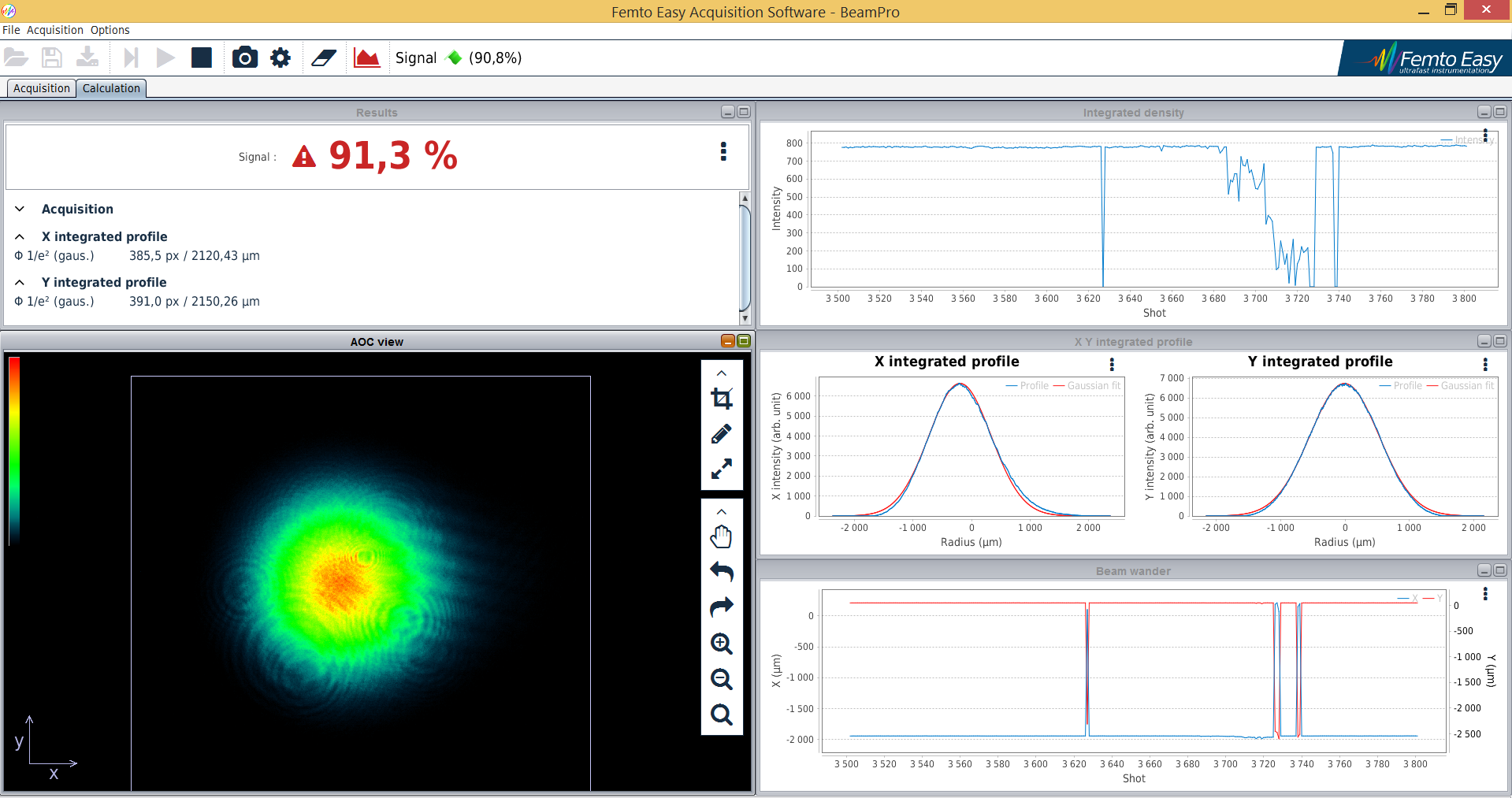
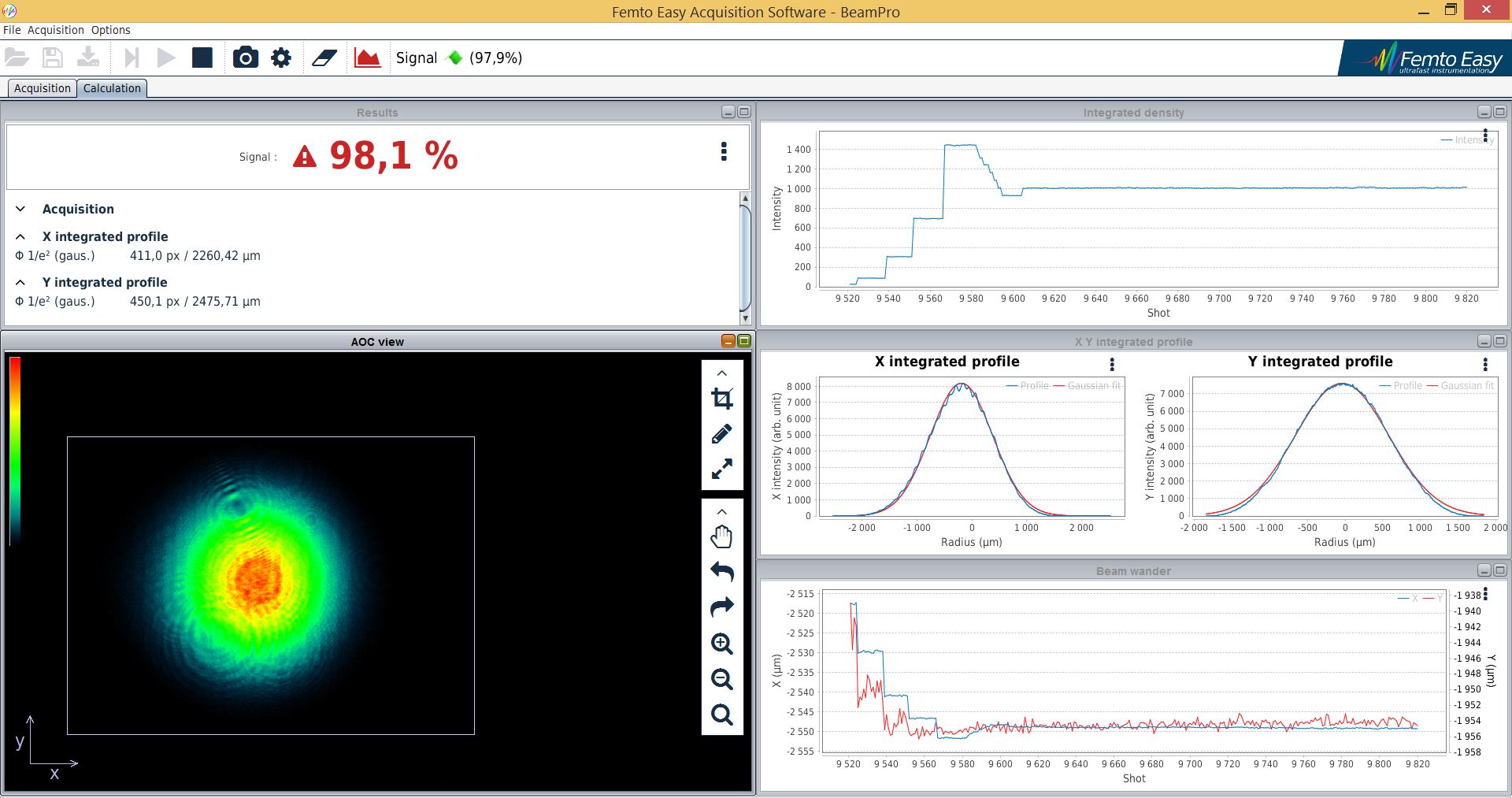
Beam diameter behind M2 :
- 2nd stage @ 6A - 1kW inside cavity
sx = 2120 µm
sy = 2150 µm
- 3rd stage @ 3A - 30kW inside cavity
sx = 2260 µm
sy = 2475 µm |
| Attachment 1: beam_diameter_behind_M2_-_1kW.png
|
 |
| Attachment 2: beam_diameter_behind_M2_-_30kW.png
|
 |
|
41
|
Tue Dec 17 17:58:12 2019 |
Ronic Chiche | Fixed | info | lasers and optics | Optical room | Beam size behind M2 |
the telescope matchs the cold cavity beam, so it is normal to have a power decrease on the transmission photodiode when the cavity is heating at high power.
we can try to adjust the telescope by moving lens, one by one, to increase the cavity power.
| Ronic Chiche wrote: |
|
Beam diameter behind M2 :
- 2nd stage @ 6A - 1kW inside cavity
sx = 2120 µm
sy = 2150 µm
- 3rd stage @ 3A - 30kW inside cavity
sx = 2260 µm
sy = 2475 µm
|
|
|
44
|
Thu Dec 19 16:03:17 2019 |
Ronic Chiche | Fixed | info | lasers and optics | Optical room | Beam size behind M2 |
Yesterday, we tried to better adapt positions of the telescope lenses, dynamically, during the lock, to improve the matching between input beam and cavity mode.
it is a difficult task because it is quite sensitive to the alignment. we need to realign very often... and it is a long process.
at the end, we concluded that we need to move to much the lenses to be feasible, then we stopped.
then we tried also to change the cavity mode by moving the spherical mirrors inside the cavity but again, the telescope is too far from its expected parameters.
we need to make a cavity mode smaller at high power and we need to move too far the spherical mirrors, then we stopped also this trial.
the conclusion is we need to better measure the cavity mode and make a telescope better adapted to the "hot" cavity.
it is still strange to measure a tranmsission signal AND a coupling signal with a "thermal" decay at the beginning of the lock for both and we expect that they complementary and should vary in contrary direction.
very strange as we use very large PhD which should net be sensitive to misalignments.
| Ronic Chiche wrote: |
|
the telescope matchs the cold cavity beam, so it is normal to have a power decrease on the transmission photodiode when the cavity is heating at high power.
we can try to adjust the telescope by moving lens, one by one, to increase the cavity power.
| Ronic Chiche wrote: |
|
Beam diameter behind M2 :
- 2nd stage @ 6A - 1kW inside cavity
sx = 2120 µm
sy = 2150 µm
- 3rd stage @ 3A - 30kW inside cavity
sx = 2260 µm
sy = 2475 µm
|
|
|