| ID |
Date |
Author |
Status |
Type |
Category |
Location |
Title |
|
407
|
Tue Feb 18 19:33:27 2025 |
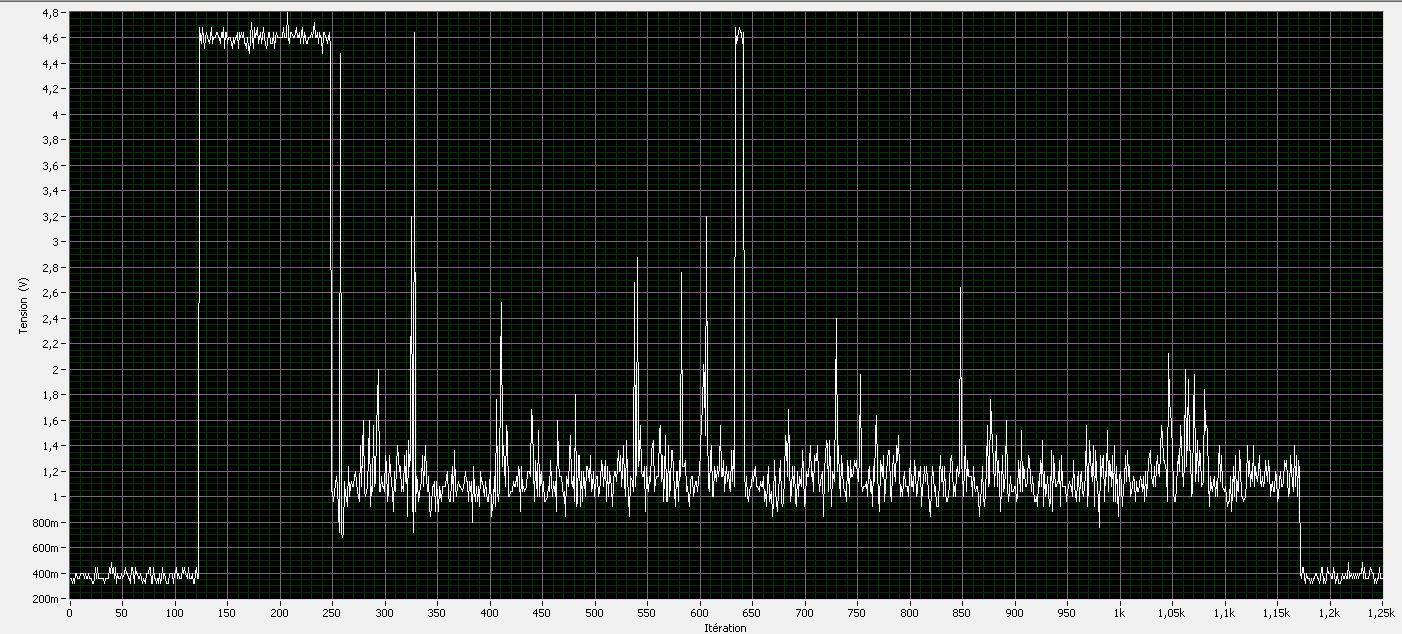
Ronic Chiche | Under Process | info | mechanics | lasers and optics | detectors and electronics | ThomX igloo | correlations between accelerometer and lock losses @ 20Hz | here is the same kind of measurement (pk-pk of 1 sec of acquisition) done on the laser PZT when the FP is at 90kW.
it's from 6:20pm to 7:10pm => ~2.4s by point
the minimum values are for the PZT being off.
the maximum values are for PZT scanning or lock loss.
in between, we get the measurements of the perturbations.
at 6:30pm (~250 points), Jean-Noel stopped all the water cooling circuit of ThomX.
at 6:46pm (~650 points), Jean-Noel restarted the main water cooling circuit.
at 7pm (~1000 points), Jean-Noel restarted all the water cooling circuit.
at 7:10pm (~1250 points) => we stopped the acquisition.
conclusion : no clear effect of the water cooling circuit on the locking stability.
| Ronic Chiche wrote: |
|
here is the acquisition from 10:30am to 5:30pm
11k point in 7h => 1.57k points / h
the noise is almost the same during the daylight, a little bit increasing from 1:30pm.
I restarted an acquisition at 5:30pm to check if the noise reduction during the night is repeatable or not....
| Ronic Chiche wrote: |
|
here is the pk-pk measurement of the accelerometer during the whole night.
the recording started at 5pm yesterday and has been stopped this morning at 10am.
one got 28k points in 17 hours => 1.65k points / h
the "last" peak in the evening at 8.5k points is equivalent to 10pm.
the "fisrt" peaks in the morning at 23k points is equivalent to 7am.
I discussed with Jean-Noël but we don't any clear correlation of this schedule with some equipment schedule in ThomX....
I restarted a new acquisition at 10.30am.
| Ronic Chiche wrote: |
|
one possible source for this acoustic noise was the vibrations coming from the water cooling of the dipoles which is normally never turned off even when the machine is off.
this afternoon, Kevin turned off the main valve of the water cooling of half of the dipoles (the half on the FPC side), and we recorded the peak-peak value of accelerometer signal on a long trend (~20mn) but we didn't see a clear difference before and after.
I keep recording the accelerometer pk-pk signal during the night in case of one could see something different...
| Ronic Chiche wrote: |
|
new plots, with the accelerometer placed directly on the optical cavity table (on the marble part), close to the oscillator.
the correlation seems a bit better....
we would need to put the accelerometer on one foot of the table to check if the table has not some micro-movement or at the IP to check if the water in the dipole are doing some vibrations.
| Ronic Chiche wrote: |
|
this morning, I did some new plots with the accelerometer placed on the top of the case of the OneFive laser.
I previously observed with the accelerometer placed on the top of one cavity vessel, the correlation between the accelerometer signal and the PZT noise is pretty good but not 100%.
I will move the accelerometer on the optical cavity table.
| Ronic Chiche wrote: |
|
at the end of the day, I moved the accelerometer from the top of the cavity vessel to the top case of the Onefive laser.
I quickly saw again quite strong correlations between the vibrations compensated by the PZT and the accelerometer signal.
when one does a laser motor step which makes a systematic lock loss, one doesn't see any signal on the accelerometer.
=> more measurements have to be done.
I would like also to put also the accelerometer on the mechanics attached to the pipe at the IP.
=> to be discussed to find the best place as a lot of cables, the 2 dipoles and the aluminium sheets around the vacuum stufs don't let a lot of place to put the accelerometer....
| Ronic Chiche wrote: |
|
then, I moved the accelerometer on top of the "X-hutch side" vessel, placed directly on the metal top case, inside the housing.
- the "no noise same range" image shows a standard situation during 10s when there no noise either on PZT or Accelerometer.
on can compare the noise level on the accelerometer with the previous post when it was outside on top of the housing.
its noise is much much lower... which means the housing is properly dumping the acoustic noise at this frequency around 20-30Hz.
so, we increase the accelerometer measurement sensitivity to better measure its noise.
- the "no noise new range" image shows a standard situation during 10s when there no noise either on PZT or Accelerometer but with a smaller range.
- the "noise 1,2,3" images show the situation when the PZT start to compensate large noise with good correlation with accelerometer placed on top of the optical vessel.
- the "noise 1,2,3 not clear" images show the situation when the PZT start to compensate large noise with correlation with accelerometer but the signal level is not the same as before.
this make me think the origin of the noise is maybe not coming from the inside of the optical vessel.
=> conclusion : we see for the first time a correlation between the PZT noise and some vibration/acoustic noise.
now, we have to investigate the precise origin of this noise (or the different sources).
| Ronic Chiche wrote: |
|
this morning, I did some measurement with nobody interfering with the tests.
- the "no noise" image shows a standard situation during 10s when there is no noise either on PZT or Accelerometer.
most of the time, we are in this situation.
- the "slaping door" image shows the case where the large igloo door is opened and slaping when it closes.
the accelerometer and the PZT exhibit correlated noise when the door is slaping.
we can see a PZT "recovery" time longer than the perturbation.
but these events are rare and are not the source of the problematic perturbations.
- "noise 1,2,3" images show the typical situation when the PZT start to compensate large noise without any correlation with accelerometer placed on top of the housing.
=> conclusion, some external noise (to the housing) should not be the source of the perturbations on the PZT.
| Ronic Chiche wrote: |
|
today I connected a copy of the laser PZT signal to the 2nd scope CH2 (with AC coupling to remove the DC offset) to be able to monitor synchronously the Accelerometer and laser PZT signals.
the accelerometer is still connected to the 2nd scope CH4 and placed on top of the housing.
I filtered both signals in the Labview Signal Express software with a low-pass filter at 30Hz to focus on low frequencies noise (~20Hz).
now, I need to wait to work with the bunker closed to compare with normal operation (if some people work in the same time in the bunker, obviously, we will get some correlation between the accelerometer and laser PZT signals.....)
| Ronic Chiche wrote: |
|
I installed an accelerometer setup in the bunker.
presently, the accelerometer is placed on top of the housing and its signal is connected to the 2nd scope (33MHz and 500MHz RF beating) on channel 4.
the FPC is locked to ~90kW.
the accelerometer noise is filtered on the Labview Signal Express software in order to focus on the 20Hz noise.
one applied a RII elliptic 5th order low pass filter at 30Hz.
the 20Hz noise can be seen on the PZT which always compensate for CFP frequency drifts.
figure 1 : example of typical accelerometer filtered noise (yellow curve) when the PZT compensation (green curve) is quite (measurement on 4 seconds)
figure 2 : example of accelerometer filtered noise (yellow curve) when the PZT compensation (green curve) exhibits some 20Hz noise (measurement on 10 seconds)
conclusion : there is no clear evidence of a correlation between accoustic noise outside of the housing (measured by the accelerometer) and the 20Hz noise in the laser PZT compensation.
=> putting the 2 signals on 2 different scopes doesn't help because the slow acquisition done is not synchronous.
next try : use the same scope and put the accelerometer inside the housing, for example on top of one of the FPC vessel.
|
|
|
|
|
|
|
|
|
|
|
| Attachment 1: Capture.JPG
|  |
|
408
|
Wed Feb 19 09:28:12 2025 |
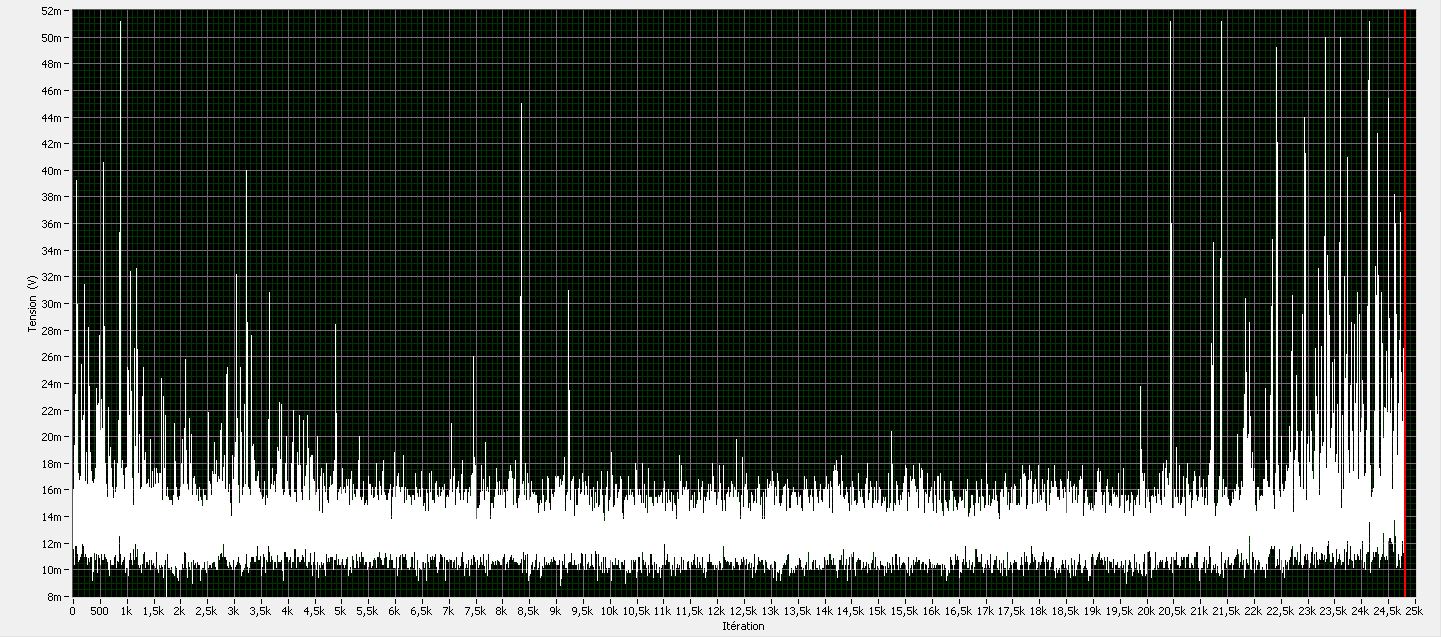
Ronic Chiche | Under Process | info | mechanics | lasers and optics | detectors and electronics | ThomX igloo | correlations between accelerometer and lock losses @ 20Hz | long term pk-pk measurement of the accelerometer (placed on the optical cavity table, on the marble part close to the laser oscillator) from 5:30pm to 9am => ~ 2.255s / pt
start of the quiet period : ~ 5k pts <=> 8:45pm
3 peaks at ~ 7.5k, 8.5k, 9.5k pts <=> 10:10pm, 10:50pm, 11:30pm
begining of the noise : big peak at ~20.5k pts <=> 6:20am
conclusion : relatively same behavior than the previous measurement made in the same condition except the "quiet" and "wake up" schedule of the noise is not strictly the same.
| Ronic Chiche wrote: |
|
here is the same kind of measurement (pk-pk of 1 sec of acquisition) done on the laser PZT when the FP is at 90kW.
it's from 6:20pm to 7:10pm => ~2.4s by point
the minimum values are for the PZT being off.
the maximum values are for PZT scanning or lock loss.
in between, we get the measurements of the perturbations.
at 6:30pm (~250 points), Jean-Noel stopped all the water cooling circuit of ThomX.
at 6:46pm (~650 points), Jean-Noel restarted the main water cooling circuit.
at 7pm (~1000 points), Jean-Noel restarted all the water cooling circuit.
at 7:10pm (~1250 points) => we stopped the acquisition.
conclusion : no clear effect of the water cooling circuit on the locking stability.
| Ronic Chiche wrote: |
|
here is the acquisition from 10:30am to 5:30pm
11k point in 7h => 1.57k points / h
the noise is almost the same during the daylight, a little bit increasing from 1:30pm.
I restarted an acquisition at 5:30pm to check if the noise reduction during the night is repeatable or not....
| Ronic Chiche wrote: |
|
here is the pk-pk measurement of the accelerometer during the whole night.
the recording started at 5pm yesterday and has been stopped this morning at 10am.
one got 28k points in 17 hours => 1.65k points / h
the "last" peak in the evening at 8.5k points is equivalent to 10pm.
the "fisrt" peaks in the morning at 23k points is equivalent to 7am.
I discussed with Jean-Noël but we don't any clear correlation of this schedule with some equipment schedule in ThomX....
I restarted a new acquisition at 10.30am.
| Ronic Chiche wrote: |
|
one possible source for this acoustic noise was the vibrations coming from the water cooling of the dipoles which is normally never turned off even when the machine is off.
this afternoon, Kevin turned off the main valve of the water cooling of half of the dipoles (the half on the FPC side), and we recorded the peak-peak value of accelerometer signal on a long trend (~20mn) but we didn't see a clear difference before and after.
I keep recording the accelerometer pk-pk signal during the night in case of one could see something different...
| Ronic Chiche wrote: |
|
new plots, with the accelerometer placed directly on the optical cavity table (on the marble part), close to the oscillator.
the correlation seems a bit better....
we would need to put the accelerometer on one foot of the table to check if the table has not some micro-movement or at the IP to check if the water in the dipole are doing some vibrations.
| Ronic Chiche wrote: |
|
this morning, I did some new plots with the accelerometer placed on the top of the case of the OneFive laser.
I previously observed with the accelerometer placed on the top of one cavity vessel, the correlation between the accelerometer signal and the PZT noise is pretty good but not 100%.
I will move the accelerometer on the optical cavity table.
| Ronic Chiche wrote: |
|
at the end of the day, I moved the accelerometer from the top of the cavity vessel to the top case of the Onefive laser.
I quickly saw again quite strong correlations between the vibrations compensated by the PZT and the accelerometer signal.
when one does a laser motor step which makes a systematic lock loss, one doesn't see any signal on the accelerometer.
=> more measurements have to be done.
I would like also to put also the accelerometer on the mechanics attached to the pipe at the IP.
=> to be discussed to find the best place as a lot of cables, the 2 dipoles and the aluminium sheets around the vacuum stufs don't let a lot of place to put the accelerometer....
| Ronic Chiche wrote: |
|
then, I moved the accelerometer on top of the "X-hutch side" vessel, placed directly on the metal top case, inside the housing.
- the "no noise same range" image shows a standard situation during 10s when there no noise either on PZT or Accelerometer.
on can compare the noise level on the accelerometer with the previous post when it was outside on top of the housing.
its noise is much much lower... which means the housing is properly dumping the acoustic noise at this frequency around 20-30Hz.
so, we increase the accelerometer measurement sensitivity to better measure its noise.
- the "no noise new range" image shows a standard situation during 10s when there no noise either on PZT or Accelerometer but with a smaller range.
- the "noise 1,2,3" images show the situation when the PZT start to compensate large noise with good correlation with accelerometer placed on top of the optical vessel.
- the "noise 1,2,3 not clear" images show the situation when the PZT start to compensate large noise with correlation with accelerometer but the signal level is not the same as before.
this make me think the origin of the noise is maybe not coming from the inside of the optical vessel.
=> conclusion : we see for the first time a correlation between the PZT noise and some vibration/acoustic noise.
now, we have to investigate the precise origin of this noise (or the different sources).
| Ronic Chiche wrote: |
|
this morning, I did some measurement with nobody interfering with the tests.
- the "no noise" image shows a standard situation during 10s when there is no noise either on PZT or Accelerometer.
most of the time, we are in this situation.
- the "slaping door" image shows the case where the large igloo door is opened and slaping when it closes.
the accelerometer and the PZT exhibit correlated noise when the door is slaping.
we can see a PZT "recovery" time longer than the perturbation.
but these events are rare and are not the source of the problematic perturbations.
- "noise 1,2,3" images show the typical situation when the PZT start to compensate large noise without any correlation with accelerometer placed on top of the housing.
=> conclusion, some external noise (to the housing) should not be the source of the perturbations on the PZT.
| Ronic Chiche wrote: |
|
today I connected a copy of the laser PZT signal to the 2nd scope CH2 (with AC coupling to remove the DC offset) to be able to monitor synchronously the Accelerometer and laser PZT signals.
the accelerometer is still connected to the 2nd scope CH4 and placed on top of the housing.
I filtered both signals in the Labview Signal Express software with a low-pass filter at 30Hz to focus on low frequencies noise (~20Hz).
now, I need to wait to work with the bunker closed to compare with normal operation (if some people work in the same time in the bunker, obviously, we will get some correlation between the accelerometer and laser PZT signals.....)
| Ronic Chiche wrote: |
|
I installed an accelerometer setup in the bunker.
presently, the accelerometer is placed on top of the housing and its signal is connected to the 2nd scope (33MHz and 500MHz RF beating) on channel 4.
the FPC is locked to ~90kW.
the accelerometer noise is filtered on the Labview Signal Express software in order to focus on the 20Hz noise.
one applied a RII elliptic 5th order low pass filter at 30Hz.
the 20Hz noise can be seen on the PZT which always compensate for CFP frequency drifts.
figure 1 : example of typical accelerometer filtered noise (yellow curve) when the PZT compensation (green curve) is quite (measurement on 4 seconds)
figure 2 : example of accelerometer filtered noise (yellow curve) when the PZT compensation (green curve) exhibits some 20Hz noise (measurement on 10 seconds)
conclusion : there is no clear evidence of a correlation between accoustic noise outside of the housing (measured by the accelerometer) and the 20Hz noise in the laser PZT compensation.
=> putting the 2 signals on 2 different scopes doesn't help because the slow acquisition done is not synchronous.
next try : use the same scope and put the accelerometer inside the housing, for example on top of one of the FPC vessel.
|
|
|
|
|
|
|
|
|
|
|
|
| Attachment 1: Capture.JPG
|  |
|
409
|
Wed Feb 19 10:35:06 2025 |
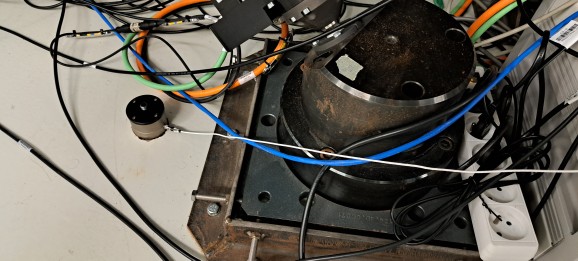
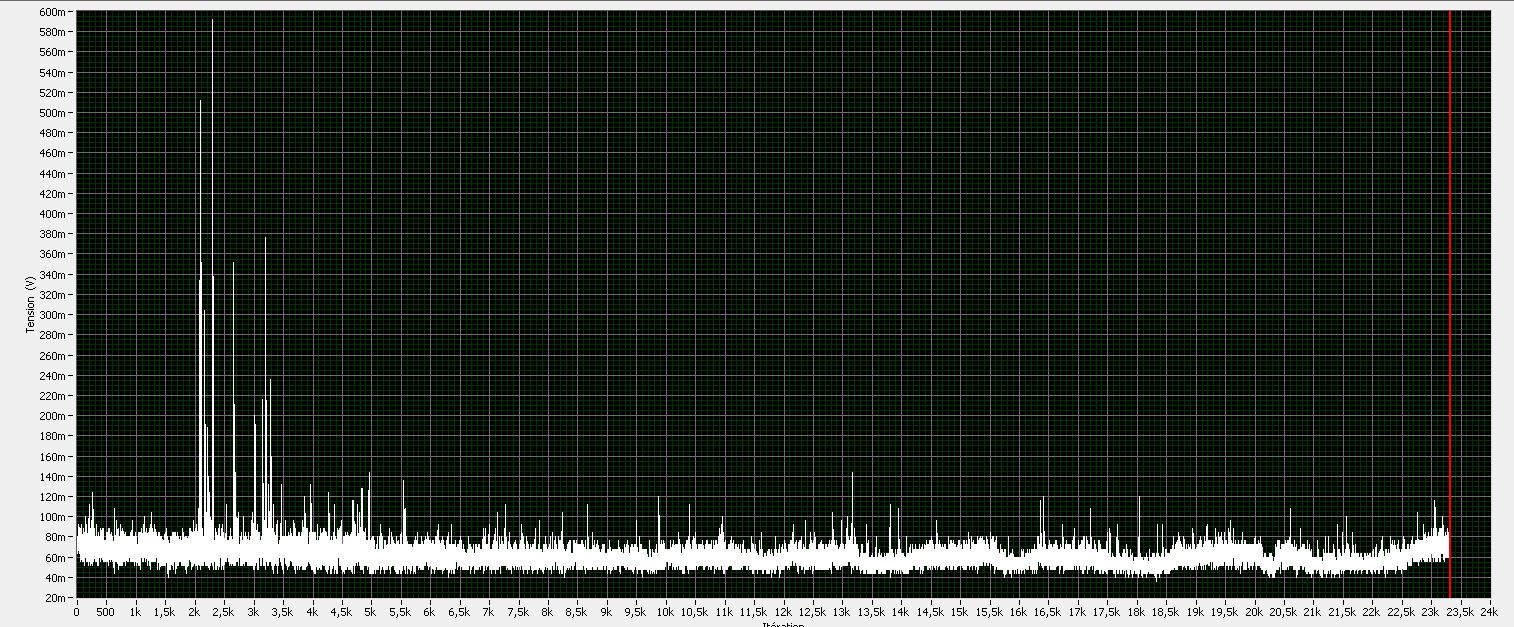
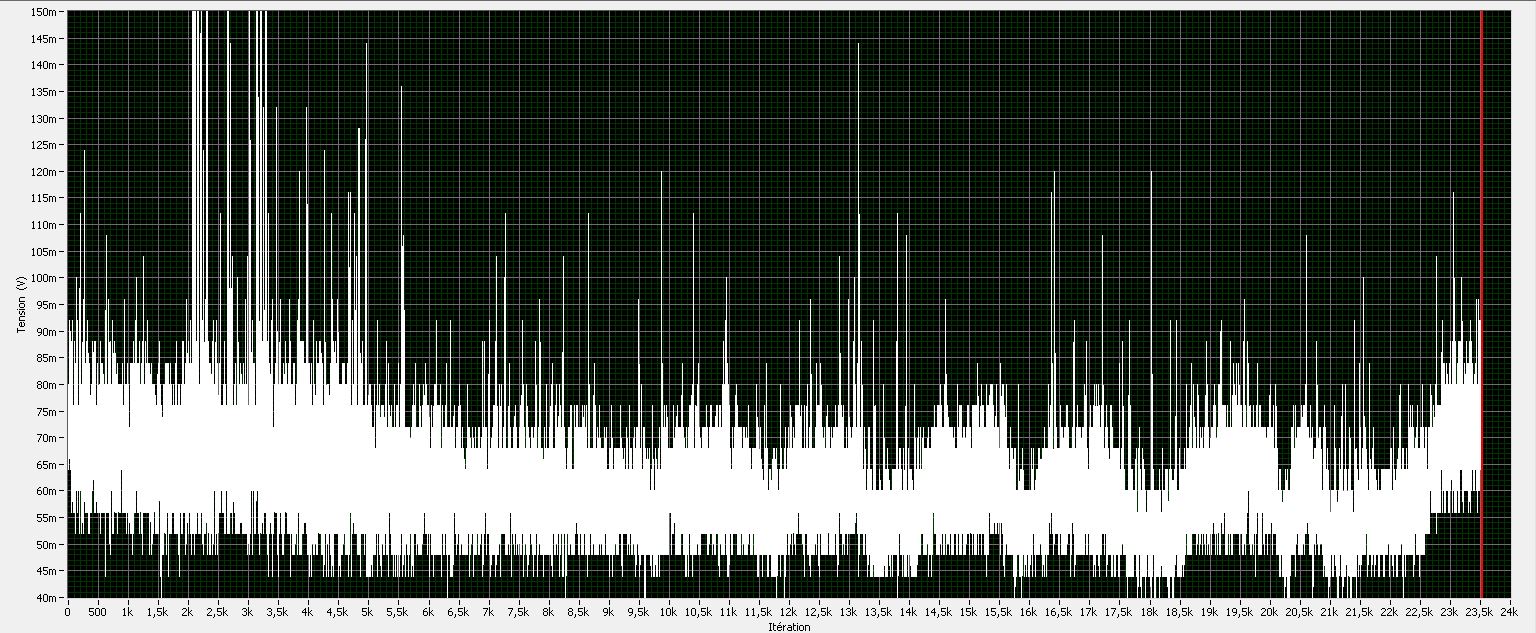
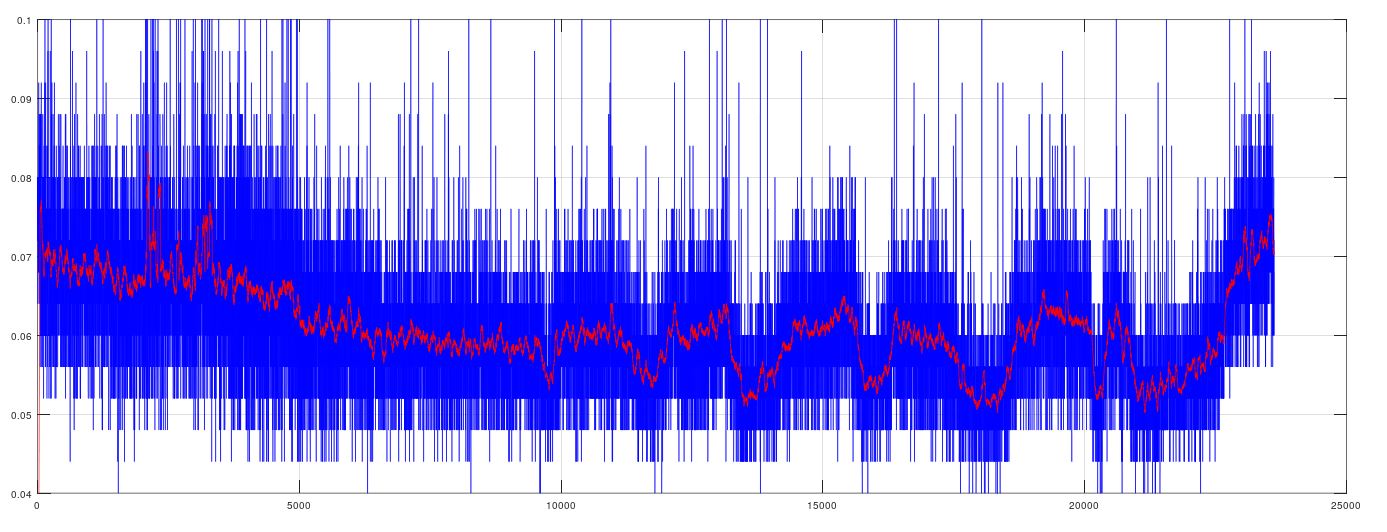
Ronic Chiche | Under Process | info | mechanics | lasers and optics | detectors and electronics | ThomX igloo | correlations between accelerometer and lock losses @ 20Hz | I installed the accelerometer on the ground close to one feet of the FP cavity hexapod (see picture) and restarted the acquisition at 6:40pm on 20th of february.
the acquisition corresponds to the night between the 20th and the 21th of february.
23.3k points from 6:40pm to 9am => 2.215s / point
the large peaks in between 2k and 3.5k points correspond to 7:55pm to 8:50pm => some working operation in the bunker (maybe finish the work of the kicker).
one does not observe a clear decrease of the vibrations during the night.
I added a vertical zoom of the acquisition => it seems there is a small decrease during the night but nothing clear.
the last plot shows exactly the same data but with a strong filtering (raw data in blue, filtered data in red).
we see a little bit better the reduction of the vibration during the night.
| Ronic Chiche wrote: |
|
long term pk-pk measurement of the accelerometer (placed on the optical cavity table, on the marble part close to the laser oscillator) from 5:30pm to 9am => ~ 2.255s / pt
start of the quiet period : ~ 5k pts <=> 8:45pm
3 peaks at ~ 7.5k, 8.5k, 9.5k pts <=> 10:10pm, 10:50pm, 11:30pm
begining of the noise : big peak at ~20.5k pts <=> 6:20am
conclusion : relatively same behavior than the previous measurement made in the same condition except the "quiet" and "wake up" schedule of the noise is not strictly the same.
| Ronic Chiche wrote: |
|
here is the same kind of measurement (pk-pk of 1 sec of acquisition) done on the laser PZT when the FP is at 90kW.
it's from 6:20pm to 7:10pm => ~2.4s by point
the minimum values are for the PZT being off.
the maximum values are for PZT scanning or lock loss.
in between, we get the measurements of the perturbations.
at 6:30pm (~250 points), Jean-Noel stopped all the water cooling circuit of ThomX.
at 6:46pm (~650 points), Jean-Noel restarted the main water cooling circuit.
at 7pm (~1000 points), Jean-Noel restarted all the water cooling circuit.
at 7:10pm (~1250 points) => we stopped the acquisition.
conclusion : no clear effect of the water cooling circuit on the locking stability.
| Ronic Chiche wrote: |
|
here is the acquisition from 10:30am to 5:30pm
11k point in 7h => 1.57k points / h
the noise is almost the same during the daylight, a little bit increasing from 1:30pm.
I restarted an acquisition at 5:30pm to check if the noise reduction during the night is repeatable or not....
| Ronic Chiche wrote: |
|
here is the pk-pk measurement of the accelerometer during the whole night.
the recording started at 5pm yesterday and has been stopped this morning at 10am.
one got 28k points in 17 hours => 1.65k points / h
the "last" peak in the evening at 8.5k points is equivalent to 10pm.
the "fisrt" peaks in the morning at 23k points is equivalent to 7am.
I discussed with Jean-Noël but we don't any clear correlation of this schedule with some equipment schedule in ThomX....
I restarted a new acquisition at 10.30am.
| Ronic Chiche wrote: |
|
one possible source for this acoustic noise was the vibrations coming from the water cooling of the dipoles which is normally never turned off even when the machine is off.
this afternoon, Kevin turned off the main valve of the water cooling of half of the dipoles (the half on the FPC side), and we recorded the peak-peak value of accelerometer signal on a long trend (~20mn) but we didn't see a clear difference before and after.
I keep recording the accelerometer pk-pk signal during the night in case of one could see something different...
| Ronic Chiche wrote: |
|
new plots, with the accelerometer placed directly on the optical cavity table (on the marble part), close to the oscillator.
the correlation seems a bit better....
we would need to put the accelerometer on one foot of the table to check if the table has not some micro-movement or at the IP to check if the water in the dipole are doing some vibrations.
| Ronic Chiche wrote: |
|
this morning, I did some new plots with the accelerometer placed on the top of the case of the OneFive laser.
I previously observed with the accelerometer placed on the top of one cavity vessel, the correlation between the accelerometer signal and the PZT noise is pretty good but not 100%.
I will move the accelerometer on the optical cavity table.
| Ronic Chiche wrote: |
|
at the end of the day, I moved the accelerometer from the top of the cavity vessel to the top case of the Onefive laser.
I quickly saw again quite strong correlations between the vibrations compensated by the PZT and the accelerometer signal.
when one does a laser motor step which makes a systematic lock loss, one doesn't see any signal on the accelerometer.
=> more measurements have to be done.
I would like also to put also the accelerometer on the mechanics attached to the pipe at the IP.
=> to be discussed to find the best place as a lot of cables, the 2 dipoles and the aluminium sheets around the vacuum stufs don't let a lot of place to put the accelerometer....
| Ronic Chiche wrote: |
|
then, I moved the accelerometer on top of the "X-hutch side" vessel, placed directly on the metal top case, inside the housing.
- the "no noise same range" image shows a standard situation during 10s when there no noise either on PZT or Accelerometer.
on can compare the noise level on the accelerometer with the previous post when it was outside on top of the housing.
its noise is much much lower... which means the housing is properly dumping the acoustic noise at this frequency around 20-30Hz.
so, we increase the accelerometer measurement sensitivity to better measure its noise.
- the "no noise new range" image shows a standard situation during 10s when there no noise either on PZT or Accelerometer but with a smaller range.
- the "noise 1,2,3" images show the situation when the PZT start to compensate large noise with good correlation with accelerometer placed on top of the optical vessel.
- the "noise 1,2,3 not clear" images show the situation when the PZT start to compensate large noise with correlation with accelerometer but the signal level is not the same as before.
this make me think the origin of the noise is maybe not coming from the inside of the optical vessel.
=> conclusion : we see for the first time a correlation between the PZT noise and some vibration/acoustic noise.
now, we have to investigate the precise origin of this noise (or the different sources).
| Ronic Chiche wrote: |
|
this morning, I did some measurement with nobody interfering with the tests.
- the "no noise" image shows a standard situation during 10s when there is no noise either on PZT or Accelerometer.
most of the time, we are in this situation.
- the "slaping door" image shows the case where the large igloo door is opened and slaping when it closes.
the accelerometer and the PZT exhibit correlated noise when the door is slaping.
we can see a PZT "recovery" time longer than the perturbation.
but these events are rare and are not the source of the problematic perturbations.
- "noise 1,2,3" images show the typical situation when the PZT start to compensate large noise without any correlation with accelerometer placed on top of the housing.
=> conclusion, some external noise (to the housing) should not be the source of the perturbations on the PZT.
| Ronic Chiche wrote: |
|
today I connected a copy of the laser PZT signal to the 2nd scope CH2 (with AC coupling to remove the DC offset) to be able to monitor synchronously the Accelerometer and laser PZT signals.
the accelerometer is still connected to the 2nd scope CH4 and placed on top of the housing.
I filtered both signals in the Labview Signal Express software with a low-pass filter at 30Hz to focus on low frequencies noise (~20Hz).
now, I need to wait to work with the bunker closed to compare with normal operation (if some people work in the same time in the bunker, obviously, we will get some correlation between the accelerometer and laser PZT signals.....)
| Ronic Chiche wrote: |
|
I installed an accelerometer setup in the bunker.
presently, the accelerometer is placed on top of the housing and its signal is connected to the 2nd scope (33MHz and 500MHz RF beating) on channel 4.
the FPC is locked to ~90kW.
the accelerometer noise is filtered on the Labview Signal Express software in order to focus on the 20Hz noise.
one applied a RII elliptic 5th order low pass filter at 30Hz.
the 20Hz noise can be seen on the PZT which always compensate for CFP frequency drifts.
figure 1 : example of typical accelerometer filtered noise (yellow curve) when the PZT compensation (green curve) is quite (measurement on 4 seconds)
figure 2 : example of accelerometer filtered noise (yellow curve) when the PZT compensation (green curve) exhibits some 20Hz noise (measurement on 10 seconds)
conclusion : there is no clear evidence of a correlation between accoustic noise outside of the housing (measured by the accelerometer) and the 20Hz noise in the laser PZT compensation.
=> putting the 2 signals on 2 different scopes doesn't help because the slow acquisition done is not synchronous.
next try : use the same scope and put the accelerometer inside the housing, for example on top of one of the FPC vessel.
|
|
|
|
|
|
|
|
|
|
|
|
|
| Attachment 1: img1.jpg
|  |
| Attachment 2: Capture.JPG
|  |
| Attachment 3: Capture.JPG
|  |
| Attachment 4: Capture.JPG
|  |
|
411
|
Fri Feb 21 10:13:03 2025 |
Ronic Chiche | Under Process | info | mechanics | lasers and optics | detectors and electronics | ThomX igloo | correlations between accelerometer and lock losses @ 20Hz | for this 20Hz oscillation, could it be a natural resonance of the optical table placed on its feet ?
typical mass of the table m ~ 8T
feets :
young modulus of steel E ~ 210 G N/m²
length L ~ 1m
diameter d ~ 10cm
rigidity for 6 feets => k ~ 6. pi.d²/4L E ~ 9.9 G N/m
rough estimation of the oscillation frequency : f = sqrt(k / m) / 2pi ~ 177 Hz
if the rigidity of the real moving feets is lower (~ by a factor 80) than if they were made of plain steel, we are not so far.
to be continued...
| Ronic Chiche wrote: |
|
I installed the accelerometer on the ground close to one feet of the FP cavity hexapod (see picture) and restarted the acquisition at 6:40pm on 20th of february.
the acquisition corresponds to the night between the 20th and the 21th of february.
23.3k points from 6:40pm to 9am => 2.215s / point
the large peaks in between 2k and 3.5k points correspond to 7:55pm to 8:50pm => some working operation in the bunker (maybe finish the work of the kicker).
one does not observe a clear decrease of the vibrations during the night.
I added a vertical zoom of the acquisition => it seems there is a small decrease during the night but nothing clear.
the last plot shows exactly the same data but with a strong filtering (raw data in blue, filtered data in red).
we see a little bit better the reduction of the vibration during the night.
| Ronic Chiche wrote: |
|
long term pk-pk measurement of the accelerometer (placed on the optical cavity table, on the marble part close to the laser oscillator) from 5:30pm to 9am => ~ 2.255s / pt
start of the quiet period : ~ 5k pts <=> 8:45pm
3 peaks at ~ 7.5k, 8.5k, 9.5k pts <=> 10:10pm, 10:50pm, 11:30pm
begining of the noise : big peak at ~20.5k pts <=> 6:20am
conclusion : relatively same behavior than the previous measurement made in the same condition except the "quiet" and "wake up" schedule of the noise is not strictly the same.
| Ronic Chiche wrote: |
|
here is the same kind of measurement (pk-pk of 1 sec of acquisition) done on the laser PZT when the FP is at 90kW.
it's from 6:20pm to 7:10pm => ~2.4s by point
the minimum values are for the PZT being off.
the maximum values are for PZT scanning or lock loss.
in between, we get the measurements of the perturbations.
at 6:30pm (~250 points), Jean-Noel stopped all the water cooling circuit of ThomX.
at 6:46pm (~650 points), Jean-Noel restarted the main water cooling circuit.
at 7pm (~1000 points), Jean-Noel restarted all the water cooling circuit.
at 7:10pm (~1250 points) => we stopped the acquisition.
conclusion : no clear effect of the water cooling circuit on the locking stability.
| Ronic Chiche wrote: |
|
here is the acquisition from 10:30am to 5:30pm
11k point in 7h => 1.57k points / h
the noise is almost the same during the daylight, a little bit increasing from 1:30pm.
I restarted an acquisition at 5:30pm to check if the noise reduction during the night is repeatable or not....
| Ronic Chiche wrote: |
|
here is the pk-pk measurement of the accelerometer during the whole night.
the recording started at 5pm yesterday and has been stopped this morning at 10am.
one got 28k points in 17 hours => 1.65k points / h
the "last" peak in the evening at 8.5k points is equivalent to 10pm.
the "fisrt" peaks in the morning at 23k points is equivalent to 7am.
I discussed with Jean-Noël but we don't any clear correlation of this schedule with some equipment schedule in ThomX....
I restarted a new acquisition at 10.30am.
| Ronic Chiche wrote: |
|
one possible source for this acoustic noise was the vibrations coming from the water cooling of the dipoles which is normally never turned off even when the machine is off.
this afternoon, Kevin turned off the main valve of the water cooling of half of the dipoles (the half on the FPC side), and we recorded the peak-peak value of accelerometer signal on a long trend (~20mn) but we didn't see a clear difference before and after.
I keep recording the accelerometer pk-pk signal during the night in case of one could see something different...
| Ronic Chiche wrote: |
|
new plots, with the accelerometer placed directly on the optical cavity table (on the marble part), close to the oscillator.
the correlation seems a bit better....
we would need to put the accelerometer on one foot of the table to check if the table has not some micro-movement or at the IP to check if the water in the dipole are doing some vibrations.
| Ronic Chiche wrote: |
|
this morning, I did some new plots with the accelerometer placed on the top of the case of the OneFive laser.
I previously observed with the accelerometer placed on the top of one cavity vessel, the correlation between the accelerometer signal and the PZT noise is pretty good but not 100%.
I will move the accelerometer on the optical cavity table.
| Ronic Chiche wrote: |
|
at the end of the day, I moved the accelerometer from the top of the cavity vessel to the top case of the Onefive laser.
I quickly saw again quite strong correlations between the vibrations compensated by the PZT and the accelerometer signal.
when one does a laser motor step which makes a systematic lock loss, one doesn't see any signal on the accelerometer.
=> more measurements have to be done.
I would like also to put also the accelerometer on the mechanics attached to the pipe at the IP.
=> to be discussed to find the best place as a lot of cables, the 2 dipoles and the aluminium sheets around the vacuum stufs don't let a lot of place to put the accelerometer....
| Ronic Chiche wrote: |
|
then, I moved the accelerometer on top of the "X-hutch side" vessel, placed directly on the metal top case, inside the housing.
- the "no noise same range" image shows a standard situation during 10s when there no noise either on PZT or Accelerometer.
on can compare the noise level on the accelerometer with the previous post when it was outside on top of the housing.
its noise is much much lower... which means the housing is properly dumping the acoustic noise at this frequency around 20-30Hz.
so, we increase the accelerometer measurement sensitivity to better measure its noise.
- the "no noise new range" image shows a standard situation during 10s when there no noise either on PZT or Accelerometer but with a smaller range.
- the "noise 1,2,3" images show the situation when the PZT start to compensate large noise with good correlation with accelerometer placed on top of the optical vessel.
- the "noise 1,2,3 not clear" images show the situation when the PZT start to compensate large noise with correlation with accelerometer but the signal level is not the same as before.
this make me think the origin of the noise is maybe not coming from the inside of the optical vessel.
=> conclusion : we see for the first time a correlation between the PZT noise and some vibration/acoustic noise.
now, we have to investigate the precise origin of this noise (or the different sources).
| Ronic Chiche wrote: |
|
this morning, I did some measurement with nobody interfering with the tests.
- the "no noise" image shows a standard situation during 10s when there is no noise either on PZT or Accelerometer.
most of the time, we are in this situation.
- the "slaping door" image shows the case where the large igloo door is opened and slaping when it closes.
the accelerometer and the PZT exhibit correlated noise when the door is slaping.
we can see a PZT "recovery" time longer than the perturbation.
but these events are rare and are not the source of the problematic perturbations.
- "noise 1,2,3" images show the typical situation when the PZT start to compensate large noise without any correlation with accelerometer placed on top of the housing.
=> conclusion, some external noise (to the housing) should not be the source of the perturbations on the PZT.
| Ronic Chiche wrote: |
|
today I connected a copy of the laser PZT signal to the 2nd scope CH2 (with AC coupling to remove the DC offset) to be able to monitor synchronously the Accelerometer and laser PZT signals.
the accelerometer is still connected to the 2nd scope CH4 and placed on top of the housing.
I filtered both signals in the Labview Signal Express software with a low-pass filter at 30Hz to focus on low frequencies noise (~20Hz).
now, I need to wait to work with the bunker closed to compare with normal operation (if some people work in the same time in the bunker, obviously, we will get some correlation between the accelerometer and laser PZT signals.....)
| Ronic Chiche wrote: |
|
I installed an accelerometer setup in the bunker.
presently, the accelerometer is placed on top of the housing and its signal is connected to the 2nd scope (33MHz and 500MHz RF beating) on channel 4.
the FPC is locked to ~90kW.
the accelerometer noise is filtered on the Labview Signal Express software in order to focus on the 20Hz noise.
one applied a RII elliptic 5th order low pass filter at 30Hz.
the 20Hz noise can be seen on the PZT which always compensate for CFP frequency drifts.
figure 1 : example of typical accelerometer filtered noise (yellow curve) when the PZT compensation (green curve) is quite (measurement on 4 seconds)
figure 2 : example of accelerometer filtered noise (yellow curve) when the PZT compensation (green curve) exhibits some 20Hz noise (measurement on 10 seconds)
conclusion : there is no clear evidence of a correlation between accoustic noise outside of the housing (measured by the accelerometer) and the 20Hz noise in the laser PZT compensation.
=> putting the 2 signals on 2 different scopes doesn't help because the slow acquisition done is not synchronous.
next try : use the same scope and put the accelerometer inside the housing, for example on top of one of the FPC vessel.
|
|
|
|
|
|
|
|
|
|
|
|
|
|
|
327
|
Fri Mar 1 18:38:17 2024 |
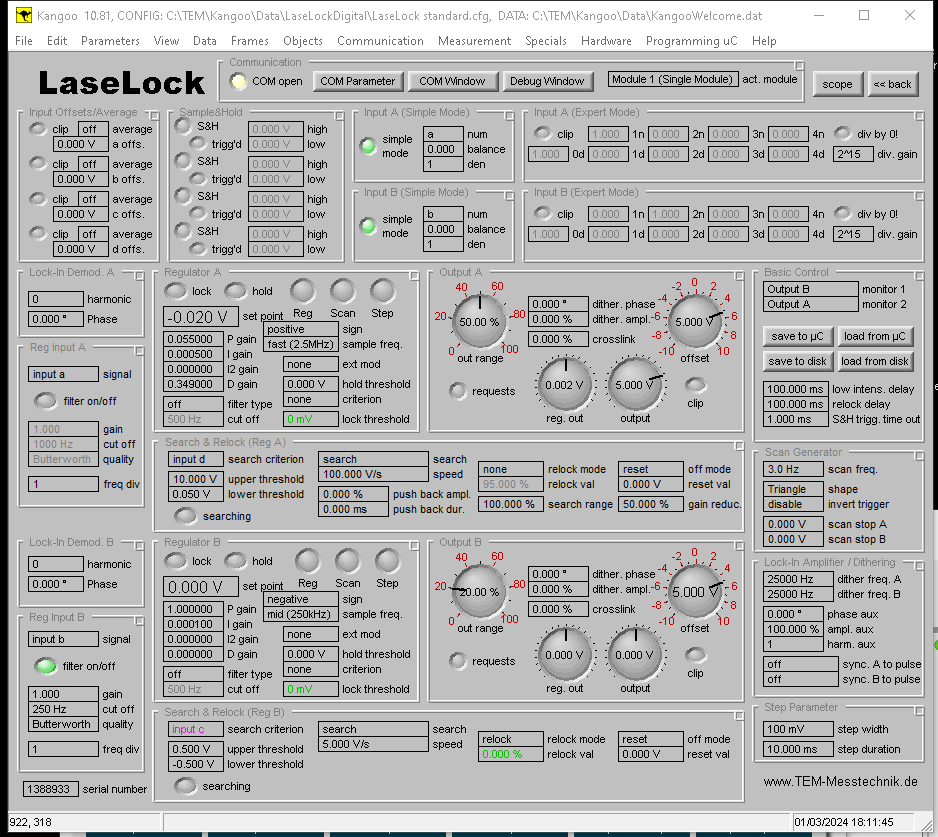
Ronic Chiche | Fixed | info | software | ThomX igloo | correct parameters for locking the FP-cavity | Today, we restarted the FP-cavity locking, after 3 weeks without using it.
those 3 weeks have been used to set the machine ring at the new (better) frequency : 500.067MHz (corresponding to a change of -183kHz)
or 33.3378MHz in fondamental frequency (corresponding to a change of -12.2kHz)
the power supply of FP-cavity photodiodes was OFF maybe due to some electrons losses.
we had to switch it OFF and ON to restart it.
the computer was restarted and we had to restart the applications and set their parameters.
in attachement, the parameters of the Kangoo software.
we had several "warnings" from the laser amplifier software => the amplifier stopped
but maybe it's because of the electrons not sent in the dump which pertubate the monitoring signal levels of the amplifier => to be confirmed
we had to do some alignment.
with 33% of amplifier ratio, we had 49kW inside the FP-cavity.
we tried to move a bit the L-shape mirror but without any significant effect to improve the intra-cavity power.
we didn't start the laser and FP cavities length increase procedure.
surprinsingly, the beating frequency between laser cavity and 33.3378MHz is only 140Hz and not 12kHz as expected.... to be investigated
|
| Attachment 1: good_parameters.png
|  |
|
328
|
Mon Mar 4 09:32:06 2024 |
Ronic Chiche | Fixed | info | software | ThomX igloo | correct parameters for locking the FP-cavity | this morning I solved the problem of the 33MHz frequency beating which should be ~12kHz between the generator (at the new frequency 33.3378MHz) and the laser cavity frequency (still at the old frequency which is 33.35MHz)...
the generator providing the 33MHz frequency has 2 channels, and only one was set at the proper frequency !
so, I set both channels at 33.3378MHz and now I measure properly ~12kHz of frequency beating.
now, we can move the laser cavity and the FP cavity in confidence.
| Ronic Chiche wrote: |
|
Today, we restarted the FP-cavity locking, after 3 weeks without using it.
those 3 weeks have been used to set the machine ring at the new (better) frequency : 500.067MHz (corresponding to a change of -183kHz)
or 33.3378MHz in fondamental frequency (corresponding to a change of -12.2kHz)
the power supply of FP-cavity photodiodes was OFF maybe due to some electrons losses.
we had to switch it OFF and ON to restart it.
the computer was restarted and we had to restart the applications and set their parameters.
in attachement, the parameters of the Kangoo software.
we had several "warnings" from the laser amplifier software => the amplifier stopped
but maybe it's because of the electrons not sent in the dump which pertubate the monitoring signal levels of the amplifier => to be confirmed
we had to do some alignment.
with 33% of amplifier ratio, we had 49kW inside the FP-cavity.
we tried to move a bit the L-shape mirror but without any significant effect to improve the intra-cavity power.
we didn't start the laser and FP cavities length increase procedure.
surprinsingly, the beating frequency between laser cavity and 33.3378MHz is only 140Hz and not 12kHz as expected.... to be investigated
|
|
|
331
|
Tue Mar 5 11:20:43 2024 |
Ronic Chiche | Fixed | info | software | ThomX igloo | correct parameters for locking the FP-cavity | this morning, I finished the FP-cavity alignment with the new ring RF frequency.
I get back 50kW @ 33% amplifier ratio.
I'm also able to lock very smoothly on the 500MHz ring RF frequency.
so, we are ready to produce X-ray.
warning : apparently, when one changes the 33MHz generator frequency with the "Nicolas" script, it does not change both channels of the generator, which is mandatory for us.
=> to be fixed : freq(CH2) = freq(CH1)
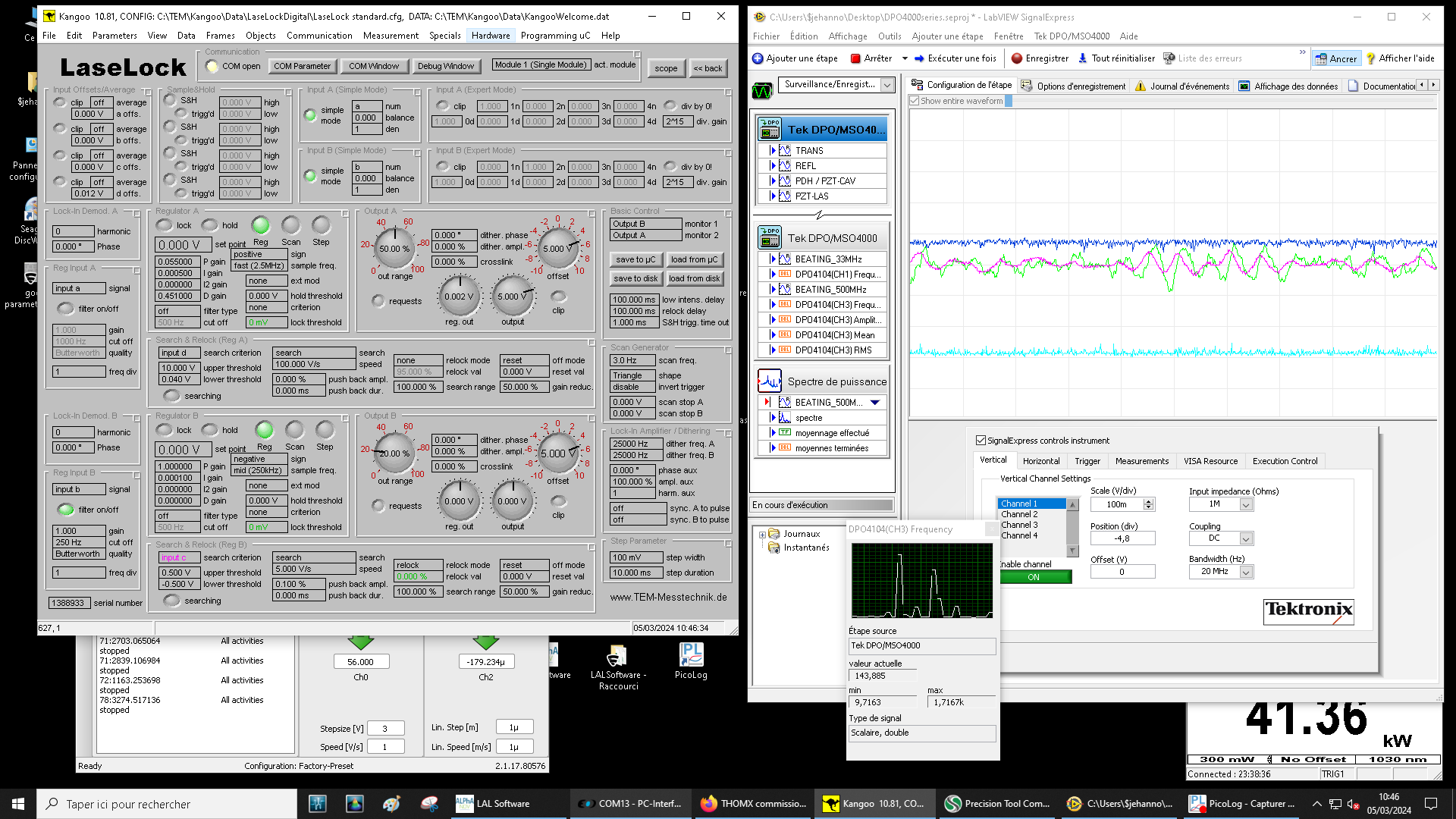
new optimized lock parameters in attached file (Kangoo parameters)
no more "Alphanov amplifier warnings" when one works without the ring machine => it is important/mandatory to send the electrons in the dump.
| Ronic Chiche wrote: |
|
this morning I solved the problem of the 33MHz frequency beating which should be ~12kHz between the generator (at the new frequency 33.3378MHz) and the laser cavity frequency (still at the old frequency which is 33.35MHz)...
the generator providing the 33MHz frequency has 2 channels, and only one was set at the proper frequency !
so, I set both channels at 33.3378MHz and now I measure properly ~12kHz of frequency beating.
now, we can move the laser cavity and the FP cavity in confidence.
| Ronic Chiche wrote: |
|
Today, we restarted the FP-cavity locking, after 3 weeks without using it.
those 3 weeks have been used to set the machine ring at the new (better) frequency : 500.067MHz (corresponding to a change of -183kHz)
or 33.3378MHz in fondamental frequency (corresponding to a change of -12.2kHz)
the power supply of FP-cavity photodiodes was OFF maybe due to some electrons losses.
we had to switch it OFF and ON to restart it.
the computer was restarted and we had to restart the applications and set their parameters.
in attachement, the parameters of the Kangoo software.
we had several "warnings" from the laser amplifier software => the amplifier stopped
but maybe it's because of the electrons not sent in the dump which pertubate the monitoring signal levels of the amplifier => to be confirmed
we had to do some alignment.
with 33% of amplifier ratio, we had 49kW inside the FP-cavity.
we tried to move a bit the L-shape mirror but without any significant effect to improve the intra-cavity power.
we didn't start the laser and FP cavities length increase procedure.
surprinsingly, the beating frequency between laser cavity and 33.3378MHz is only 140Hz and not 12kHz as expected.... to be investigated
|
|
|
| Attachment 1: Correct_lock_parameters.png
|  |
|
316
|
Thu Jan 25 10:15:28 2024 |
Ronic Chiche | Fixed | info | mechanics | lasers and optics | cabling | ThomX igloo | controller M1 & M4 (plan mirrors) with IcePap controllers | previously, we have connected motor M4 with an IcePap controller.
see this post : https://elog.lal.in2p3.fr/FPC/THOMX+commissioning/278
due to the backlash behavior of the FP-cavity motors, it is impossible to work in both directions on one motor when the FP-cavity is locked.
so, we decided to use also the motor M1 to work in the other direction.
then, normally M1 will work in one direction and M4 in the other direction.
motor M1 (or P1Z) which was on the axis 9 on the ISP controller has been assigned to OC/OP/OCH.01-MOT.06
motor M4 (or P4Z) which was on the axis 12 on the ISP controller has been assigned to OC/OP/OCH.01-MOT.03
|
|
317
|
Thu Jan 25 12:45:41 2024 |
Ronic Chiche | Fixed | info | mechanics | lasers and optics | cabling | ThomX igloo | controller M1 & M4 (plan mirrors) with IcePap controllers | this double motors scheme works good.
if motor P4 is used by increasing value, the FP-cavityPZT signal (pink signal on scope) goes HIGHER
if motor P1 is used by increasing value, the FP-cavityPZT signal (pink signal on scope) goes LOWER
!!! CAREFUL !!!
after each session, it is mandatory to put the motors back to their initial position to avoid FP-cavity misalignment.
on P1 : - 900 000 steps
on P4 : - 360 000 steps
| Ronic Chiche wrote: |
|
previously, we have connected motor M4 with an IcePap controller.
see this post : https://elog.lal.in2p3.fr/FPC/THOMX+commissioning/278
due to the backlash behavior of the FP-cavity motors, it is impossible to work in both directions on one motor when the FP-cavity is locked.
so, we decided to use also the motor M1 to work in the other direction.
then, normally M1 will work in one direction and M4 in the other direction.
motor M1 (or P1Z) which was on the axis 9 on the ISP controller has been assigned to OC/OP/OCH.01-MOT.06
motor M4 (or P4Z) which was on the axis 12 on the ISP controller has been assigned to OC/OP/OCH.01-MOT.03
|
|
|
319
|
Fri Jan 26 11:05:27 2024 |
Ronic Chiche | Fixed | info | mechanics | lasers and optics | cabling | ThomX igloo | controller M1 & M4 (plan mirrors) with IcePap controllers | at the begining of each session, it will be mandatory to avoid any backlash for the motors :
- for the P4 motor : one can go 2k steps DOWN, then 2k steps UP to go back to -360 000 and use the steps UP without any backlash
- for the P1 motor : one can go 2k steps UP, then 2k steps DOWN to go back to -900 000 and use the steps DOWN without any backlash
today, I used the P1 motor to do some steps DOWN to find back the main resonance at the begining of the session.
| Ronic Chiche wrote: |
|
this double motors scheme works good.
if motor P4 is used by increasing value, the FP-cavityPZT signal (pink signal on scope) goes HIGHER
if motor P1 is used by increasing value, the FP-cavityPZT signal (pink signal on scope) goes LOWER
!!! CAREFUL !!!
after each session, it is mandatory to put the motors back to their initial position to avoid FP-cavity misalignment.
on P1 : - 900 000 steps
on P4 : - 360 000 steps
| Ronic Chiche wrote: |
|
previously, we have connected motor M4 with an IcePap controller.
see this post : https://elog.lal.in2p3.fr/FPC/THOMX+commissioning/278
due to the backlash behavior of the FP-cavity motors, it is impossible to work in both directions on one motor when the FP-cavity is locked.
so, we decided to use also the motor M1 to work in the other direction.
then, normally M1 will work in one direction and M4 in the other direction.
motor M1 (or P1Z) which was on the axis 9 on the ISP controller has been assigned to OC/OP/OCH.01-MOT.06
motor M4 (or P4Z) which was on the axis 12 on the ISP controller has been assigned to OC/OP/OCH.01-MOT.03
|
|
|
|
283
|
Wed Nov 15 09:36:35 2023 |
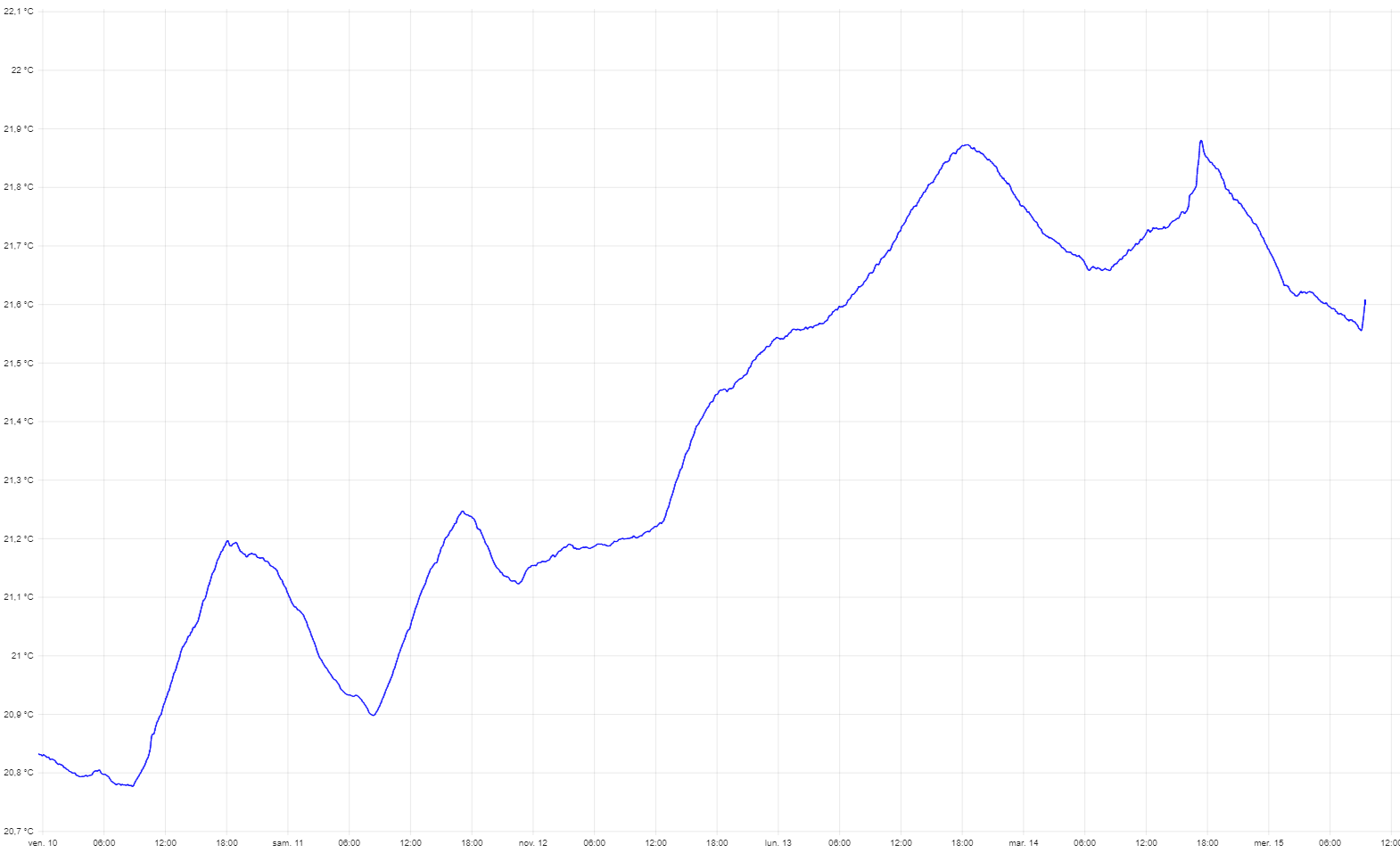
Ronic Chiche | Fixed | report | detectors and electronics | ThomX igloo | bunker temperature curve | |
| Attachment 1: 2023-11-10_to_2023-11-15_-_temperature_curve.png
|  |
|
422
|
Fri May 2 10:05:43 2025 |
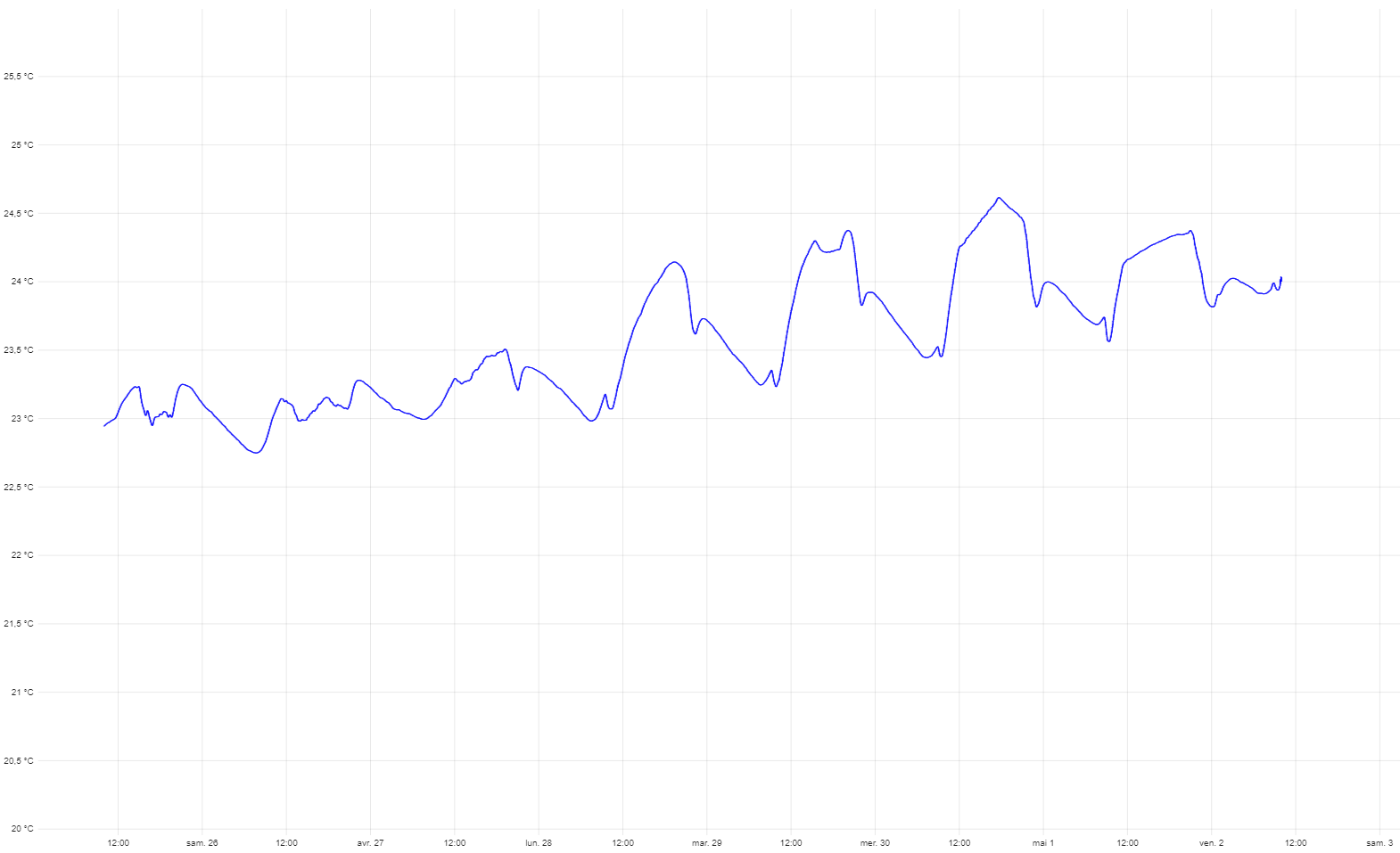
Ronic Chiche | Under Process | report | lasers and optics | ThomX igloo | air conditionning in ThomX Bunker | The temperature slitly increase in thomx Bunker from 23° to 24° during the last day.
The thermalisation of the CFP is very long...
In any case the operation of the CFP is so easy, it seems to be correlated to the weather... tody it's very nice as of hte rest of the week.
The stored power is easily 94 KW and there is not jump or delock problems.
The temperature of the bunker continiusly increase and now we observe some delocking du to high frq perturbations... may be the twe things are correlated. |
| Attachment 1: temp.png
|  |
|
423
|
Tue May 6 09:29:43 2025 |
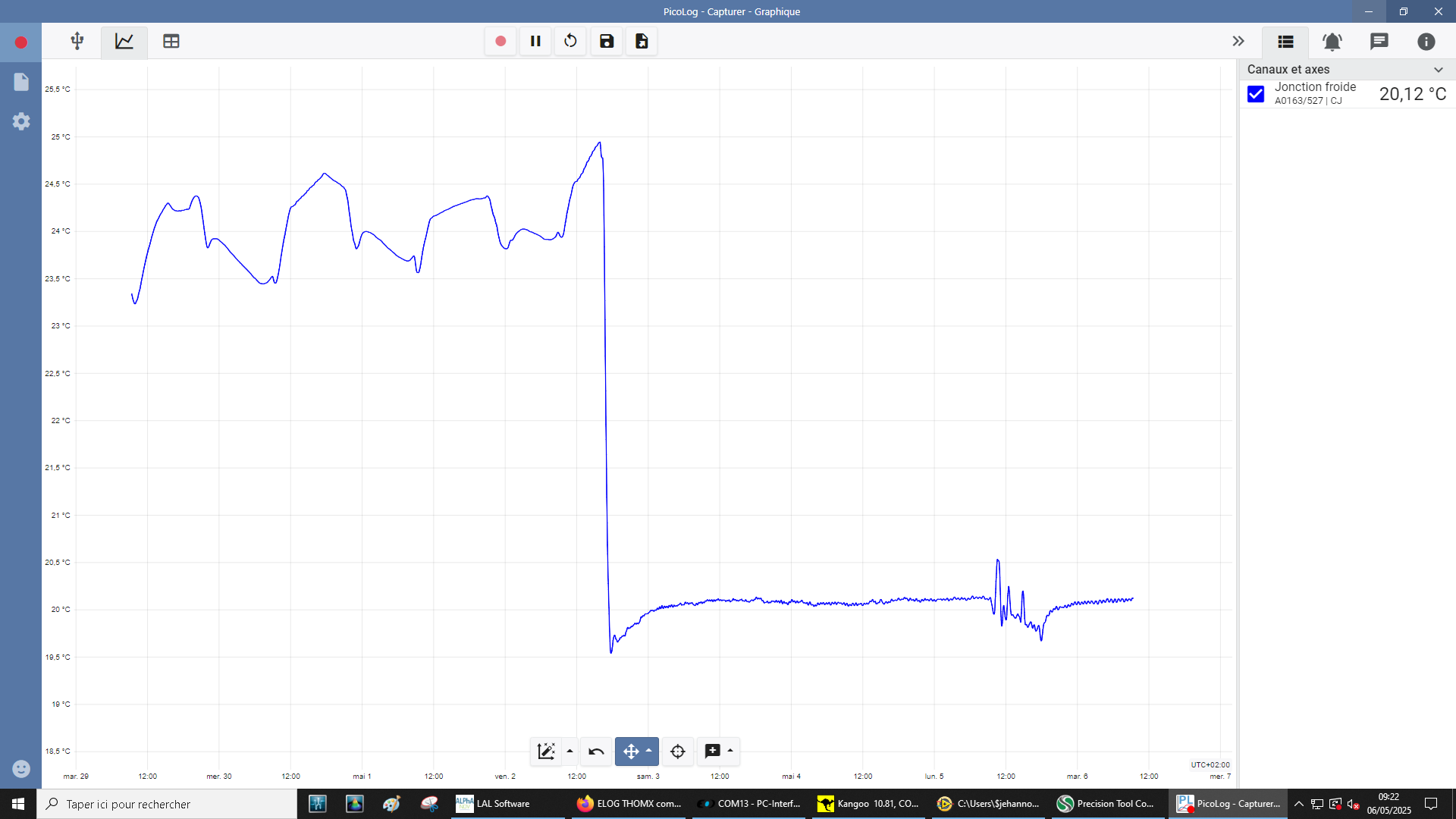
Ronic Chiche | Under Process | report | lasers and optics | ThomX igloo | air conditionning in ThomX Bunker | after the new temperature setting for the bunker air cooling (winter to summer transition), the temperature drop from 24° to 20°C which induced a slight misalignment between the onefive oscillator and the fiber injection.
the amplifier photodiode PD_IN which checks the amplifier power injection drop also from 3mW to 2.885mW... hopefully, it is enough to start the amplifier without realignment.
but bad news, I don't see any transmission of the cavity... to be checked...
| Ronic Chiche wrote: |
|
The temperature slitly increase in thomx Bunker from 23° to 24° during the last day.
The thermalisation of the CFP is very long...
In any case the operation of the CFP is so easy, it seems to be correlated to the weather... tody it's very nice as of hte rest of the week.
The stored power is easily 94 KW and there is not jump or delock problems.
The temperature of the bunker continiusly increase and now we observe some delocking du to high frq perturbations... may be the twe things are correlated.
|
|
| Attachment 1: Sans_titre.png
|  |
|
424
|
Tue May 6 10:58:18 2025 |
Ronic Chiche | Under Process | report | lasers and optics | ThomX igloo | air conditionning in ThomX Bunker | I finally got 93-94kW for 33% amp ratio.
I had to move the FP-cavity length to compensate the temperature change in the bunker.
doing that, I had the message "Low Limit SW pressed" when I tried to move P4z under -98 000 steps !!!
=> so, maybe this number is not the correct steps number and we are much closer to the end than we could expect.
=> could it be the reason for the 20Hz noise related to the too strong springs, as we already observed before ?
in the meantime, I changed the use of the P1z and P4z motors to not face the situation again.
so, P4z will be used to move to higher steps (even if its apparent position seems higher than P1z).
and P1z will be used to move to lower steps.
surprinsingly, the CEP position was almost already optimized...
| Ronic Chiche wrote: |
|
after the new temperature setting for the bunker air cooling (winter to summer transition), the temperature drop from 24° to 20°C which induced a slight misalignment between the onefive oscillator and the fiber injection.
the amplifier photodiode PD_IN which checks the amplifier power injection drop also from 3mW to 2.885mW... hopefully, it is enough to start the amplifier without realignment.
but bad news, I don't see any transmission of the cavity... to be checked...
| Ronic Chiche wrote: |
|
The temperature slitly increase in thomx Bunker from 23° to 24° during the last day.
The thermalisation of the CFP is very long...
In any case the operation of the CFP is so easy, it seems to be correlated to the weather... tody it's very nice as of hte rest of the week.
The stored power is easily 94 KW and there is not jump or delock problems.
The temperature of the bunker continiusly increase and now we observe some delocking du to high frq perturbations... may be the twe things are correlated.
|
|
|
|
446
|
Fri Jul 18 09:23:40 2025 |
Ronic Chiche | Under Process | info | lasers and optics | ThomX igloo | Xrays experiment with prostate | Today we do XRays for experiment.
The laser start to 33% at 93 KW but Pgain = 0.033
The laser is locked so stable for the moment. We have Xrays and the system is stable.
I have started a trend of laser power.
Some high freq perturbations are visibles but no delock.
It's clear that when the charge vary a lot in the ring we see more high frq perturbations!!
Each time we inject electrons we see high freq pert!!! But the delock are rare!
When electrons are lost we see high freq perturbations!!
New PID parameters
P=0.03
I=0.0005
I2=0
D=0.5
Axe18=+0.0016014
We have done a vertical scan and de e-beam seem to be very very large!! >1mm
The e-beam is not well adjusted but the lock is really much better!
We do good measurement of X fluorescence spectrum of Prostate, ThomX is becoming more and more interesting Xrays source!!
Daniele |
|
22
|
Tue Mar 26 18:32:40 2019 |
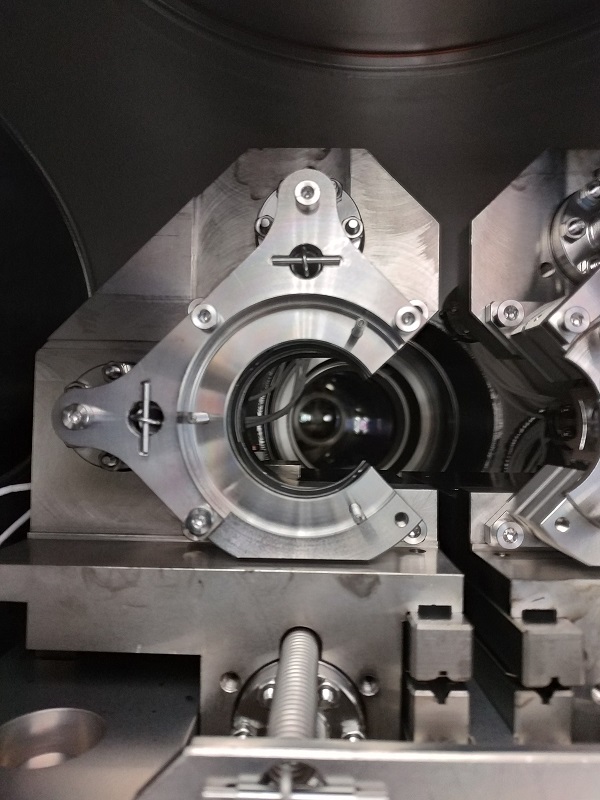
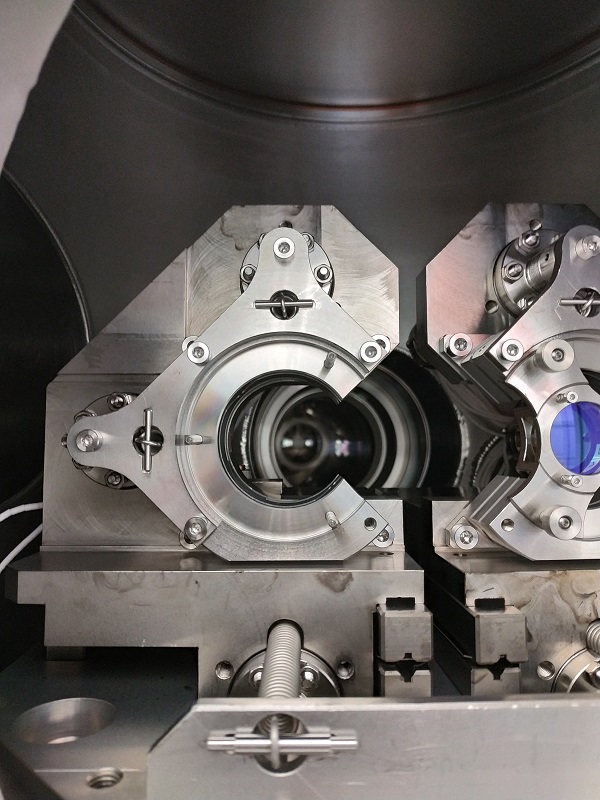
Loïc Amoudry | Fixed | report | mechanics | lasers and optics | cabling | Optical room | Wires in laser path | There was some ceramic wires close to the beem path right before P4. We moved them away (we can imagine they could move again with vibration). |
| Attachment 1: before.jpg
|  |
| Attachment 2: after_wire_displaced.jpg
|  |
|
151
|
Tue Jun 14 10:43:07 2022 |
Ronic Chiche | Fixed | info | vacuum | ThomX igloo | Vessels vacuum at ambiant pressure | Last Friday and this morning, with Bruno, we close the ring/cavity valves and put some dry air in the two vessels through a filter to avoid turbulences.
Now, the two vessels are at ambient pressure and ready for opening (to remove the mirrors).
One can let the ambient pressure in the vessels as long as we want, the ring/cavity valves have been chosen to be compatible with the high vacuum in the ring and the ambient pressure in the vessel for a long time.
|
|
53
|
Tue Sep 3 17:51:04 2019 |
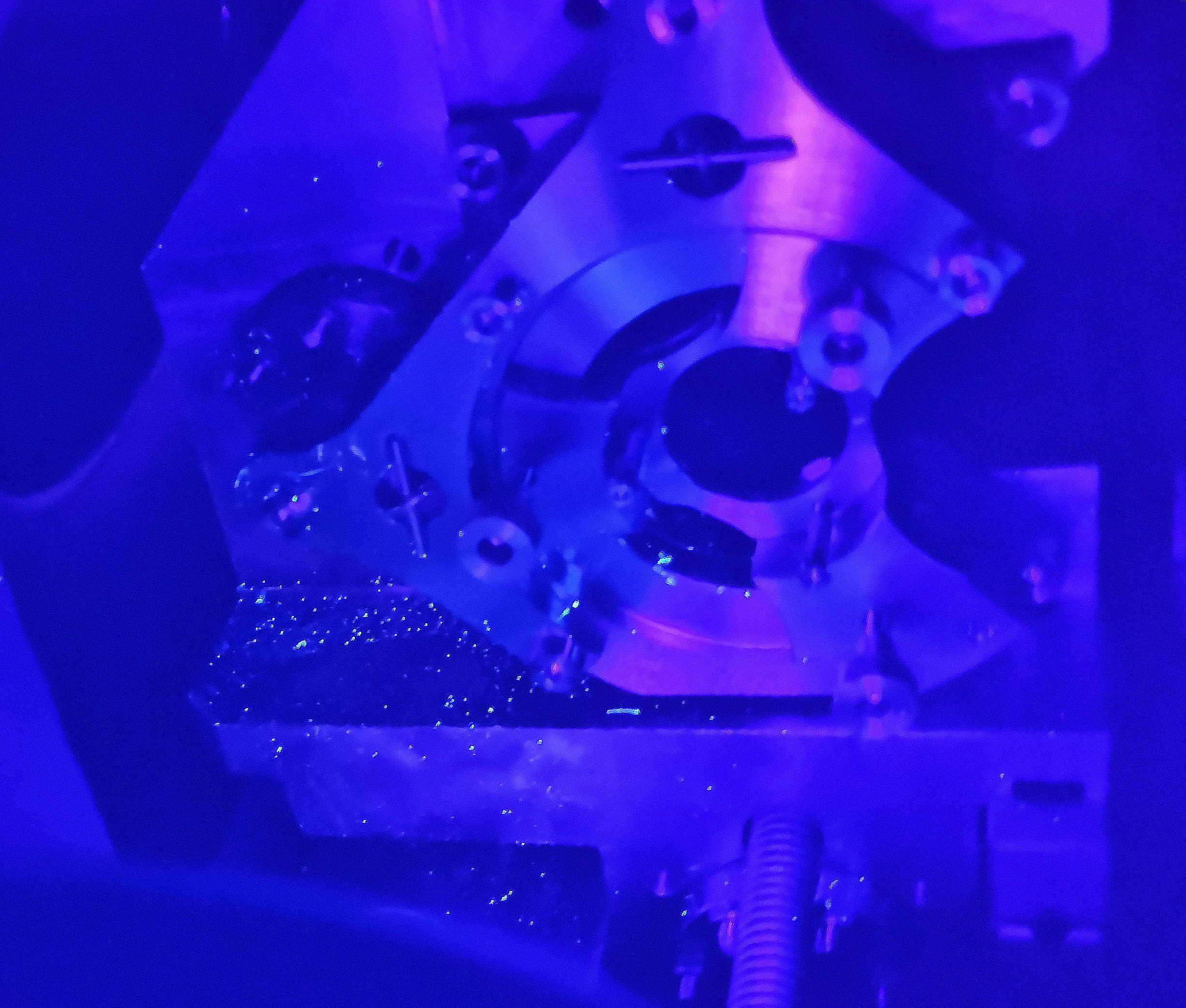
Ronic Chiche | Fixed | issue | mechanics | lasers and optics | vacuum | Optical room | Vessel cleanliness | looking in the vessel of the FP cavity using a UV lamp shows a lot of dust... more dust than outside the cavity !!!
here is picture where one can see a cleaned zone using a finger (with gloves).
question : where does come from this dust ?
2 possibilities :
- large and small belows which could trap the dust and release it during the pumping process
- ionic pumps could release some clusters when they are working.
we plan to clean as effectively as possible the inner surfaces, to close bellows, make woking ion pumps to check if it released again some dust. |
| Attachment 1: IMG_20190903_161910.jpg
|  |
|
310
|
Wed Jan 10 15:21:46 2024 |
Ronic Chiche | Under Process | info | lasers and optics | ThomX igloo | Variable focal lens validation | we plan to use Electrically Tunable Lenses EL-10-30-C NIR to build the ThomX telescope but they need to be compatible with the powerful laser beam.
for CW regime, on the datasheet (see attached file), the optical damage threshold is 10 kW/cm².
with 70W laser power and 1mm² beam surface (which is much smaller than the real beam size), we are at 7kW/cm².
for pulsed regime, with Daniele, we can imagine that the inner material is water (n ~ 1.3 in the datasheet).
One found a paper about laser induced electric breakdown in water (see attached paper) which give a breakdown field of about 1e8 V/m (see Fig. 1 of the paper) for 7ns pulse width.
with 70W average power, 33MHz repetition rate, 10ps pulse width 1mm² beam surface, one has an intensity of ~ 2e11 W/m² (or 2.7 GW/cm²)
I = E² / 377 => E = 8.7e6 V/m which is also much smaller than the breakdown value.
from the fig. 4 of the paper, it seems the breakdown threshold increases a lot for shorter pulses from 30 GW/cm² (~10ns pulses) to ~150 GW/cm² (~10ps pulses)
so, one can expect a good behavior in pulsed regime too.
can anyone check the validity of these rough calculations ???
|
| Attachment 1: Optotune_EL-10-30.pdf
|
| Attachment 2: JOSAB.8.000337.pdf
|
|
443
|
Fri Jul 11 16:15:12 2025 |
Ronic Chiche | Fixed | info | lasers and optics | detectors and electronics | ThomX igloo | Tuning of the slow feeback loop analog BW + fast feedback loop gain + PID | Today with Daniele, we tuned the potentiometer after the Laselock which drives the analog BW of the PID on the laser PZT,
and we tuned also the fast loop gain (with the rotary potentiometer dedicated to it) => the PID parameters have changed.
so, the recipies has changed => to be updated
the global observation with the x3 amplifier on the laser PZT channel, is the system is more noisy.
the maximum power for 33% amp ratio is now ~93kW instead of 97-98kW.
we tried this afternoon to do a long run with the RF and the FPC loops activated, but it seams that a lot of high frequency noise is present.
is it coming from the new parameters feedback setup or because of the electron machine which is ON ? |
|