| ID |
Date |
Author |
Status |
Type |
Category |
Location |
Title |
|
266
|
Wed Sep 20 19:10:16 2023 |
Ronic Chiche | Fixed | issue | mechanics | lasers and optics | detectors and electronics | ThomX igloo | !!! strange FP cavity behavior => impossible to lock !!! | this afternoon, in adjusting the CEP and improving the parameters of the lock, I was able to get ~ 47kW stable inside the cavity, always for 30% of laser amplification ratio.
it confirms that the Finesse, and then the gain of FP-cavity, has suddenly increased thanks to some "mirrors surface cleaning"
| Ronic Chiche wrote: |
|
This morning,
- I installed the fast feedback loop.
now, the error signal goes to the Laselock AND
to a FEMTO DHPVA amplifier which is connected to the Leysop M250 HV amplifier connected through its HV+ output to the EOM.
one can set the gain of this loop thanks to the DHPVA gain potentiometer and to a 30dB attenuator.
it allows to have a fast and stable lock ONLY IF one reduce the FP-cavity gain using the CEP.
I will check later if I'm able to lock at the maximum gain but today, the cavity power is ~ 30kW, to be compared to the 45kW we were able to get before the "mirror cleaning event".
- I had to swap the sampling frequency of the Laselock from 250kHz to 2.5MHz to reduce the latency and improve the Slow feedback loop stability.
with the previous sampling frequency, the fast feedback loop was almost uneffective...
in attachement, the Laselock parameters and a picture of a lock.
yellow: FP-cavity transmission signal
blue : FP-cavity reflection signal
green: PZT signal
pink: PDH error signal
One has to move again the L-shape arm to remove the HOM
and check if we are able to lock in the same time the FP-cavity on the 500.25MHz reference oscillator... to be done this afternoon.
| Ronic Chiche wrote: |
|
it could be also an optical unstability, as when the intra-cavity power increases, the radius of curvatures of the mirrors increases too due to thermal effect, and then one could go in the instability region.
but if it was the case, by reducing the power in the FP-cavity, we would also reduce the thermal effect and then, we would come back in the stability region...
and it is not the case : the system is unstable even with 20kW instead of 40kW.
| Ronic Chiche wrote:kW |
|
this morning, we tried:
- to move a bit the arm of the L-shape off the beam axis (in case of it could have touch something and induce vibrations) => no effect
- to change the CEP to get an equivalent lower Finesse => weak improvement
- to add a diffuser in front of the PDH photodiode and check the saturation level after the FEMTO amplifier to avoid non linearity effects in the PDH signal => weak improvement
- to move the half and quarter waveplates in the incoming beam path => no effect
then, we have to work with the laser intracavity EOM to try to cancel high frequencies noise
| Ronic Chiche wrote: |
|
suddenly, BEFORE switching the HV amplifier ON and BEFORE connecting it to the EOM (in order to explore the HV effect on the EOM for the fast feedback loop),
we lost the lock between the laser and the FP-cavity: in attchement a plot a the lock with the "best" PID parameters.
- yellow: FP-cavity transmission signal
- green: PZT signal
- pink: PDH error signal
the lock was pretty "normal" except that we observed that the intra-cavity power is always slowly increasing from 40kW to ~44kW during a lock, all along this last week.
there are several possiblities for that :
- a slow increasing of the input power (we see the effect on the reflected signal when the FP-cavity is not locked)
- fluctuations of the CEP to the "good" value,
- or more supprisingly an improvement of the Finesse.
after this issue, we tried to change the laser input power (30% to 25%), or the change the CEP => we always get the same result => the lock is either too "weak" (not enough gain) or too "strong" (the system is unstable and goes in oscillations visible on the picture a the end of each lock period).
we tried to change the PID parameters quite a lot to try to compensate a change in the FP-cavity transfer function without any effect => impossible to have a proper lock as before.
we tried to check if the PDH phase, to produce a proper error signal, has changed => no, it was the good one.
we tried to correct the laser alignement to the FP-cavity, but it was more or less correct and we didn't see any change in the locking.
then, one possibility could be that one dust have been suddenly removed from the cavity mirrors by the high power and the Finesse suddenly increased substancially.
=> more Finesse => less bandwidth => high frequency noise are less "visible" in the error signal and we get less bandwith for the feedback => more difficult to lock.
we thought that this kind of problem could be solved by changing the CEP, but in this case, it didn't succeded to lock.
the other possibility is that just before having this issue, we were doing tests on the EOM with a 0-10V signal.
=> could it be possible that the static polarisation of the laser has changed ?
then, we would need to adjust the waveplates in the laser path to adjust the correct polarisation ?
=> not for sure... as the maximum transmitted power at the begining of the lock is the same as before... and compatible with ~ 43 - 44kW in the FP-cavity.
could it be also that the intermediate signals of the PDH scheme are saturated (because of the increasing power : 40kW to 44kW) and produce a "false" error signal leading to instability ?
or could it be a bug in the Laselock ?
=> we could restart it to confirm....
|
|
|
|
|
|
275
|
Thu Nov 9 16:40:16 2023 |
Ronic Chiche | Fixed | info | mechanics | lasers and optics | detectors and electronics | ThomX igloo | Ring frequency / Laser "day by day" locking | today, the equivalent Smaract position corresponding to the 500.25MHz ring frequency is +156µm on MCS-1/ch0 (closed loop mode) |
|
276
|
Thu Nov 9 17:02:26 2023 |
Ronic Chiche | Fixed | info | mechanics | lasers and optics | detectors and electronics | ThomX igloo | Laser / FP-cavity "day by day" locking | today, we locked the FP cavity at ~50kW with 30% laser amplifier ratio (16W) during almost all the day (from 10am to 4pm)
CEP optimized for MCS-1/Ch2 = -244µm at the end of the day.
once one finds the proper CEP value to reach to correct loops gain, the cavity lock and power are very stable:
one looses the lock only when one needs to use the Smaract motors to follow the long temperature drifts.
several elements of the ThomX machine have been powered ON progressively during the lock without any lock perturbation excepting for a very short time when switching ON the RF cavity (to be confirmed) and when one tried to inject electrons into the ring (loss of the electrons after few turns only)... but it's not very clear. the lock is still stable but some time one sees a lock loss without "reason"... could it be the electron loss or some bad compensation of the noise due to feedback, it's hard to say.
at the end of the day, I had to realign the FP-cavity injection and change the CEP more often than in the morning,
and surprisingly, the intra-cavity power drops a little bit at the begining of the lock (~50kW) and after some tenth of seconds (=> ~47-48kW).
it is not so much but it is very repeatable at each try.
I tried to optimize the CEP, the injection alignment, the PID parameters => it helps but at the end, I still have this slow power drop of few kW over tenth of seconds that I didn't see at the begining of the day... to be investigated.
|
|
277
|
Fri Nov 10 09:43:26 2023 |
Ronic Chiche | Fixed | info | mechanics | lasers and optics | detectors and electronics | ThomX igloo | Ring frequency / Laser "day by day" locking | temperature stable around 20.8°C
today, the equivalent Smaract position corresponding to the 500.25MHz ring frequency is +158.4µm on MCS-1/ch0 (closed loop mode)
it is very difficult to maintain both loops in the same time as soon as it is needed to move one motor (CFP or Laser) because of the one element (RF reference or Laser or CFP) is drifting in frequency.
to try to understand why these 3 elements seems to drift so fast one from each other, we only measure the beating frequency between the RF reference and the free running laser (without lock of the CFP)... and we see a drift around several Hz by second of the beating signal => who is guilty ? Laser or RF synthesizer ?
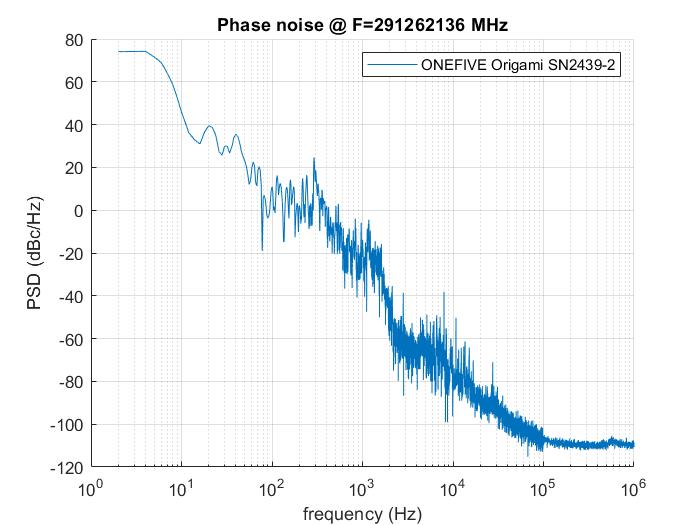
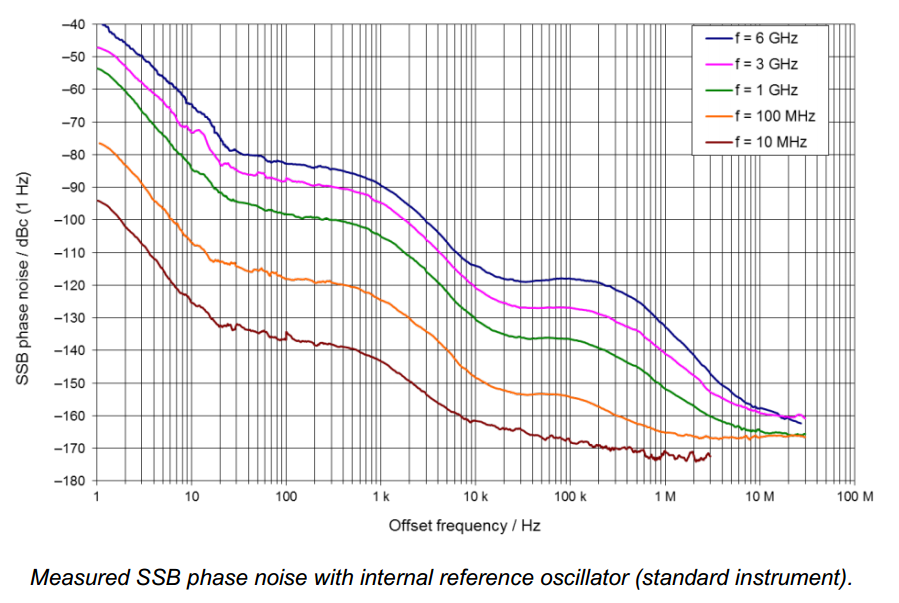
one can compare their respective phase noise to have an idea of their relative phase/frequency stability :
the OneFive phase noise gives +40dBc/Hz @10Hz offset in optical frequency which is 300000 (110dB) more than at 1GHz => 40 - 110 = -70dBc/Hz @10Hz offset @ 1GHz
to be compared to the SMA100A which gives -85dBc/Hz @10Hz offset @ 1GHz
conclusion : the RF reference should be more stable in long term and the drifts we see should come from the laser...
| Ronic Chiche wrote: |
|
today, the equivalent Smaract position corresponding to the 500.25MHz ring frequency is +156µm on MCS-1/ch0 (closed loop mode)
|
|
| Attachment 1: untitled.jpg
|  |
| Attachment 2: Capture1.PNG
|  |
|
279
|
Fri Nov 10 12:37:42 2023 |
Ronic Chiche | Fixed | info | mechanics | lasers and optics | detectors and electronics | ThomX igloo | Laser / FP-cavity "day by day" locking | as the temperature is back to a normal value ~ 20.8°C, the injected power to the amplifier (PD_IN in the Alphanov software) is back to 3.15mW without doing any alignment.
this morning the lock was around 48.5kW with 30% laser amplifier ratio (16W) after CEP/alignment tuning.
| Ronic Chiche wrote: |
|
today, we locked the FP cavity at ~50kW with 30% laser amplifier ratio (16W) during almost all the day (from 10am to 4pm)
CEP optimized for MCS-1/Ch2 = -244µm at the end of the day.
once one finds the proper CEP value to reach to correct loops gain, the cavity lock and power are very stable:
one looses the lock only when one needs to use the Smaract motors to follow the long temperature drifts.
several elements of the ThomX machine have been powered ON progressively during the lock without any lock perturbation excepting for a very short time when switching ON the RF cavity (to be confirmed) and when one tried to inject electrons into the ring (loss of the electrons after few turns only)... but it's not very clear. the lock is still stable but some time one sees a lock loss without "reason"... could it be the electron loss or some bad compensation of the noise due to feedback, it's hard to say.
at the end of the day, I had to realign the FP-cavity injection and change the CEP more often than in the morning,
and surprisingly, the intra-cavity power drops a little bit at the begining of the lock (~50kW) and after some tenth of seconds (=> ~47-48kW).
it is not so much but it is very repeatable at each try.
I tried to optimize the CEP, the injection alignment, the PID parameters => it helps but at the end, I still have this slow power drop of few kW over tenth of seconds that I didn't see at the begining of the day... to be investigated.
|
|
|
280
|
Tue Nov 14 10:35:16 2023 |
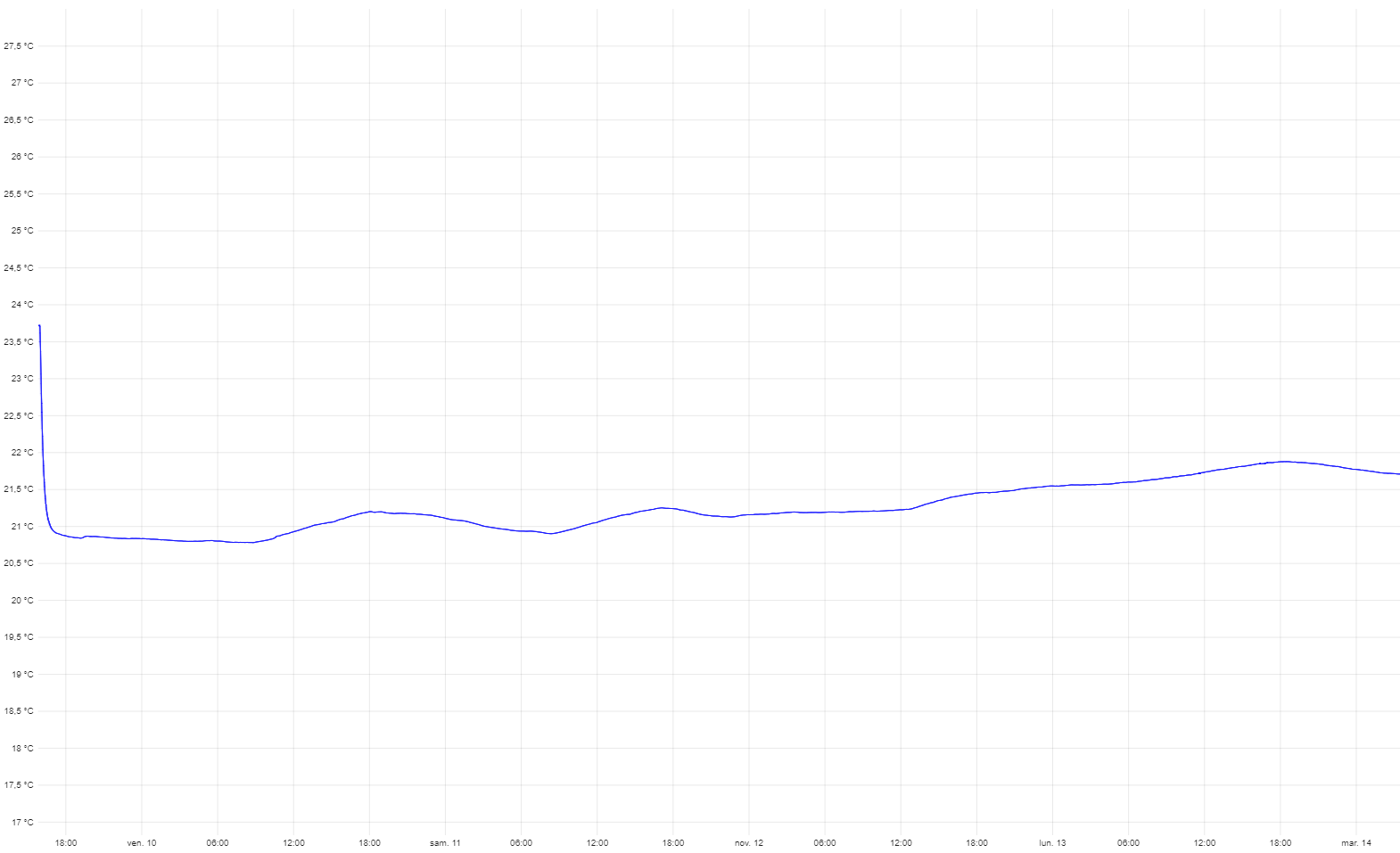
Ronic Chiche | Fixed | info | mechanics | lasers and optics | detectors and electronics | ThomX igloo | Laser / FP-cavity "day by day" locking | temperature since we moved to temperature probe (jump at the beginning of the plot) below the ring on a metallic base.
| Ronic Chiche wrote: |
|
as the temperature is back to a normal value ~ 20.8°C, the injected power to the amplifier (PD_IN in the Alphanov software) is back to 3.15mW without doing any alignment.
this morning the lock was around 48.5kW with 30% laser amplifier ratio (16W) after CEP/alignment tuning.
| Ronic Chiche wrote: |
|
today, we locked the FP cavity at ~50kW with 30% laser amplifier ratio (16W) during almost all the day (from 10am to 4pm)
CEP optimized for MCS-1/Ch2 = -244µm at the end of the day.
once one finds the proper CEP value to reach to correct loops gain, the cavity lock and power are very stable:
one looses the lock only when one needs to use the Smaract motors to follow the long temperature drifts.
several elements of the ThomX machine have been powered ON progressively during the lock without any lock perturbation excepting for a very short time when switching ON the RF cavity (to be confirmed) and when one tried to inject electrons into the ring (loss of the electrons after few turns only)... but it's not very clear. the lock is still stable but some time one sees a lock loss without "reason"... could it be the electron loss or some bad compensation of the noise due to feedback, it's hard to say.
at the end of the day, I had to realign the FP-cavity injection and change the CEP more often than in the morning,
and surprisingly, the intra-cavity power drops a little bit at the begining of the lock (~50kW) and after some tenth of seconds (=> ~47-48kW).
it is not so much but it is very repeatable at each try.
I tried to optimize the CEP, the injection alignment, the PID parameters => it helps but at the end, I still have this slow power drop of few kW over tenth of seconds that I didn't see at the begining of the day... to be investigated.
|
|
|
| Attachment 1: courbe_temperature_jeudi9-mardi14.png
|  |
|
281
|
Tue Nov 14 10:51:57 2023 |
Ronic Chiche | Fixed | info | mechanics | lasers and optics | detectors and electronics | ThomX igloo | Ring frequency / Laser "day by day" locking | temperature stable around 21.7°C
today, the equivalent Smaract position corresponding to the 500.25MHz ring frequency is +147µm on MCS-1/ch0 (closed loop mode)
| Ronic Chiche wrote: |
|
temperature stable around 20.8°C
today, the equivalent Smaract position corresponding to the 500.25MHz ring frequency is +158.4µm on MCS-1/ch0 (closed loop mode)
it is very difficult to maintain both loops in the same time as soon as it is needed to move one motor (CFP or Laser) because of the one element (RF reference or Laser or CFP) is drifting in frequency.
to try to understand why these 3 elements seems to drift so fast one from each other, we only measure the beating frequency between the RF reference and the free running laser (without lock of the CFP)... and we see a drift around several Hz by second of the beating signal => who is guilty ? Laser or RF synthesizer ?
one can compare their respective phase noise to have an idea of their relative phase/frequency stability :
the OneFive phase noise gives +40dBc/Hz @10Hz offset in optical frequency which is 300000 (110dB) more than at 1GHz => 40 - 110 = -70dBc/Hz @10Hz offset @ 1GHz
to be compared to the SMA100A which gives -85dBc/Hz @10Hz offset @ 1GHz
conclusion : the RF reference should be more stable in long term and the drifts we see should come from the laser...
| Ronic Chiche wrote: |
|
today, the equivalent Smaract position corresponding to the 500.25MHz ring frequency is +156µm on MCS-1/ch0 (closed loop mode)
|
|
|
|
284
|
Thu Nov 16 17:48:29 2023 |
Ronic Chiche | Fixed | info | mechanics | lasers and optics | detectors and electronics | ThomX igloo | Laser / FP-cavity "day by day" locking | temperature @ 22.3°C
today, all the PC applications were closed except the web browser.
I had to restart all of them, then try to relock.
(maybe I let the terminal window open with all the apps and someone tried to unlog by removing them ?)
the cavity height was pretty misaligned.
after a rough alignment, the power inside the cavity was back at 49kW for 30% amplifier ratio.
the CEP motor needs to be adjusted a lot during the cavity heating process
| Ronic Chiche wrote: |
|
temperature since we moved to temperature probe (jump at the beginning of the plot) below the ring on a metallic base.
| Ronic Chiche wrote: |
|
as the temperature is back to a normal value ~ 20.8°C, the injected power to the amplifier (PD_IN in the Alphanov software) is back to 3.15mW without doing any alignment.
this morning the lock was around 48.5kW with 30% laser amplifier ratio (16W) after CEP/alignment tuning.
| Ronic Chiche wrote: |
|
today, we locked the FP cavity at ~50kW with 30% laser amplifier ratio (16W) during almost all the day (from 10am to 4pm)
CEP optimized for MCS-1/Ch2 = -244µm at the end of the day.
once one finds the proper CEP value to reach to correct loops gain, the cavity lock and power are very stable:
one looses the lock only when one needs to use the Smaract motors to follow the long temperature drifts.
several elements of the ThomX machine have been powered ON progressively during the lock without any lock perturbation excepting for a very short time when switching ON the RF cavity (to be confirmed) and when one tried to inject electrons into the ring (loss of the electrons after few turns only)... but it's not very clear. the lock is still stable but some time one sees a lock loss without "reason"... could it be the electron loss or some bad compensation of the noise due to feedback, it's hard to say.
at the end of the day, I had to realign the FP-cavity injection and change the CEP more often than in the morning,
and surprisingly, the intra-cavity power drops a little bit at the begining of the lock (~50kW) and after some tenth of seconds (=> ~47-48kW).
it is not so much but it is very repeatable at each try.
I tried to optimize the CEP, the injection alignment, the PID parameters => it helps but at the end, I still have this slow power drop of few kW over tenth of seconds that I didn't see at the begining of the day... to be investigated.
|
|
|
|
|
285
|
Fri Nov 17 11:44:35 2023 |
Ronic Chiche | Fixed | info | mechanics | lasers and optics | detectors and electronics | ThomX igloo | Laser / FP-cavity "day by day" locking | temperature @ 21.9°C
48.5kW inside CFP for 30% amplifier ratio
Frep Laser motor = 123.4µm
CEP motor = -67.8µm
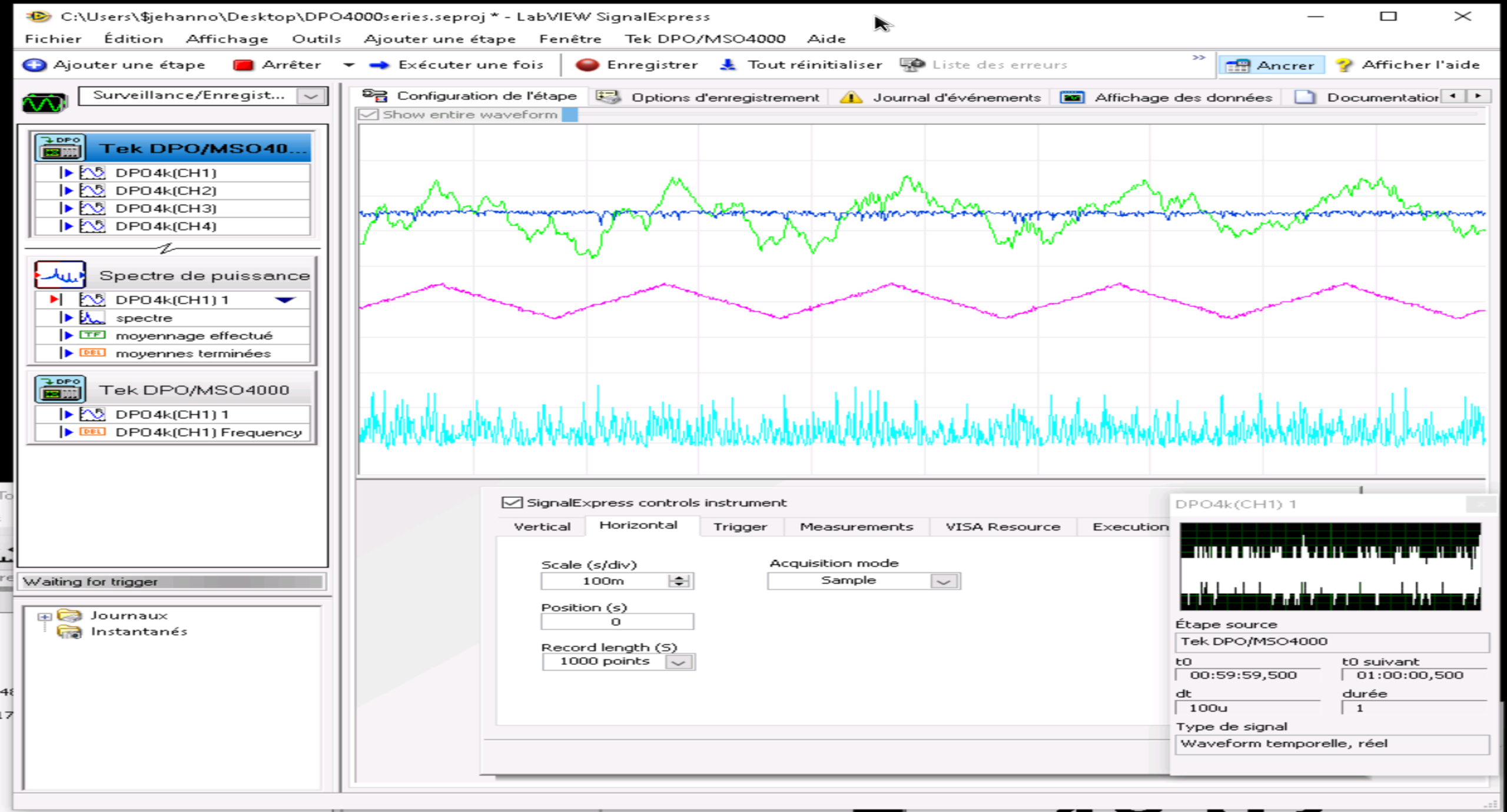
below the image of the relative voltage range between CFP PZT (pink) and laser PZT (green).
the CFP PZT is driven by 10x the voltage range showed by the scope (0-100V HV output and 0-10V monitor on the Laselock)
one can see on the scope that the relative range of both PZT voltage range is roughly the same which means that the real CFP PZT sensitivity is 10x smaller than the Laser PZT sensitivity.
as the CFP PZT is driven by 0-100V and the Laser PZT is driven by 0-10V voltages, they have approximately the same range which is ~200nm (calibrated with the Laser motor in closed loop mode).
in a previous email, the CFP PZT should be given with a sensitivty of about 4nm/V => 400nm/100V of length range => 800nm/100V of CFP roundtrip range => 80e-9/100V of relative sensitivity => 40Hz of frequency peak-peak range for 500MHz carrier frequency.
there is a discrepancy between measurements (~10Hz peak-peak range for 500MHz carrier) and expected value !
| Ronic Chiche wrote: |
|
temperature @ 22.3°C
today, all the PC applications were closed except the web browser.
I had to restart all of them, then try to relock.
(maybe I let the terminal window open with all the apps and someone tried to unlog by removing them ?)
the cavity height was pretty misaligned.
after a rough alignment, the power inside the cavity was back at 49kW for 30% amplifier ratio.
the CEP motor needs to be adjusted a lot during the cavity heating process
| Ronic Chiche wrote: |
|
temperature since we moved to temperature probe (jump at the beginning of the plot) below the ring on a metallic base.
| Ronic Chiche wrote: |
|
as the temperature is back to a normal value ~ 20.8°C, the injected power to the amplifier (PD_IN in the Alphanov software) is back to 3.15mW without doing any alignment.
this morning the lock was around 48.5kW with 30% laser amplifier ratio (16W) after CEP/alignment tuning.
| Ronic Chiche wrote: |
|
today, we locked the FP cavity at ~50kW with 30% laser amplifier ratio (16W) during almost all the day (from 10am to 4pm)
CEP optimized for MCS-1/Ch2 = -244µm at the end of the day.
once one finds the proper CEP value to reach to correct loops gain, the cavity lock and power are very stable:
one looses the lock only when one needs to use the Smaract motors to follow the long temperature drifts.
several elements of the ThomX machine have been powered ON progressively during the lock without any lock perturbation excepting for a very short time when switching ON the RF cavity (to be confirmed) and when one tried to inject electrons into the ring (loss of the electrons after few turns only)... but it's not very clear. the lock is still stable but some time one sees a lock loss without "reason"... could it be the electron loss or some bad compensation of the noise due to feedback, it's hard to say.
at the end of the day, I had to realign the FP-cavity injection and change the CEP more often than in the morning,
and surprisingly, the intra-cavity power drops a little bit at the begining of the lock (~50kW) and after some tenth of seconds (=> ~47-48kW).
it is not so much but it is very repeatable at each try.
I tried to optimize the CEP, the injection alignment, the PID parameters => it helps but at the end, I still have this slow power drop of few kW over tenth of seconds that I didn't see at the begining of the day... to be investigated.
|
|
|
|
|
| Attachment 1: Screenshot_2023-11-17_11-37-50.png
|  |
|
287
|
Thu Nov 23 12:25:07 2023 |
Ronic Chiche | Fixed | issue | mechanics | lasers and optics | detectors and electronics | ThomX igloo | Temperature control of the FP-cavity length | as the CFP motors displacements induce a cavity unlock, we try to change the cavity length by changing the temperature of elment of the cavity.
yesterday, we tried to put a "heating cable" borrowed to the vacuum group to change the temperature of one bellows between the FP-cavity and the electron ring.
we chose a below because it is flexible and should not apply a too strong force on the cavity vessels.
we heated the cable at ~30°C but we didn't see a clear effect on the FP-cavity frequency measurement.
then, we put a heating cable around the X-ray output flange of the FP-cavity vessel and we saw a clear effect : a relatively fast (at a "second" level) frequency change.
the problem is the heating system is not remotely driven.
the cable is R=55ohms impedance and can reach 450°C for 1kW dissipated.
so today, we will try to use 2 remotely controlled Siglent SPD3303X power supplies.
they can reach V=120V DC => P=V²/R=260W => we could reach more than 100°C |
|
294
|
Tue Nov 28 18:38:16 2023 |
Ronic Chiche | Fixed | issue | mechanics | lasers and optics | detectors and electronics | ThomX igloo | Temperature control of the FP-cavity length | several days ago, we installed a heating cable around the output flange (close to the X-hutch) of the FP-cavity vessel.
we are able to heat this cable by applying a DC voltage coming from 2 DC voltage supplies in serie (2 devices with 2x 0-30V / 3A => 0-120V / 3A).
currently, we apply at maximum 7V DC on each channel => 28V DC on the cable. its temperature reach ~ 30°C after 1/2h or more.
this temperature increase on one vessel of the FP-cavity, changes very slowly the length of the FP-cavity.
see this post (red curve on fig. 2) for a typical temperature curve measured (exponential-like curve) on the heating cable itself : https://elog.lal.in2p3.fr/FPC/THOMX+commissioning/290
the length change rate of the FP-cavity, due to this heating, is difficult to estimate because it depends on the part of this exponential curve you make the measurement.
but globally the drift is about 50nm every 5 minutes, which is roughly equivalent to 10 steps of the FP-cavity motor every 5 minutes.
| Ronic Chiche wrote: |
|
as the CFP motors displacements induce a cavity unlock, we try to change the cavity length by changing the temperature of elment of the cavity.
yesterday, we tried to put a "heating cable" borrowed to the vacuum group to change the temperature of one bellows between the FP-cavity and the electron ring.
we chose a below because it is flexible and should not apply a too strong force on the cavity vessels.
we heated the cable at ~30°C but we didn't see a clear effect on the FP-cavity frequency measurement.
then, we put a heating cable around the X-ray output flange of the FP-cavity vessel and we saw a clear effect : a relatively fast (at a "second" level) frequency change.
the problem is the heating system is not remotely driven.
the cable is R=55ohms impedance and can reach 450°C for 1kW dissipated.
so today, we will try to use 2 remotely controlled Siglent SPD3303X power supplies.
they can reach V=120V DC => P=V²/R=260W => we could reach more than 100°C
|
|
|
295
|
Tue Nov 28 19:01:19 2023 |
Ronic Chiche | Fixed | info | mechanics | lasers and optics | detectors and electronics | ThomX igloo | Long term lock of Laser-FP cavity-RF reference | today for the first time, we were able to make a long term lock of all the elements (Laser on FP cavity and FP-cavity on RF reference) during 20 minutes @50kW without any single loss of lock.
the success of this long term lock was coming from the possibility to drive the Smaract motor in piezo-scan mode and to apply a heating on one vessel of the FP-cavity to let its frequency slowly drift always in the same direction.
then, the FP-cavity motor can follow this drift without any loss of the lock.
even when we lost the lock, it was quite easy to get it back because of the frequency drift, always in the same direction due to the FP-cavity heating with the heating cable.
a good strategy to make this double lock :
1) adjust the laser frequency to the RF reference frequency in using the Smaract motor in "closed loop" mode until reaching a beating < 10Hz.
2) search for FP-cavity resonance in using the ISP motor of the FP-cavity
3) once the laser is locked on the FP-cavity, the FP-cavity length changes => work on the FP-cavity motor to follow the drift until one reachs a thermal equilibrium.
4) once the thermal equilibrium is reached, one can switch on the heating of the heating cable to continue the slow "thermal" drift in the same direction 5V of total voltage should be enough for 1h of work.
5) in the same time, one need to cancel the frequency offset between the RF reference and the FP-cavity using the FP-cavity motor and one need to follow the laser cavity fluctuations using the Smaract motor in "closed loop" mode.
6) once the FP-cavity is at the same length than the RF-reference, one can close the second loop (when both PZT are in the middle of their range).
7) at that point, one need to swap the Smaract motor control to "piezo scan" mode => one follows only the laser fluctuations ~ 1µm peak-peak
8) one always follows the FP-cavity drift using the IcePap controller on the FP-cavity motor, 10 steps by 10 steps => it should work during 1h.
9) when one reachs the thermal equilibrium again, one can add 5V to the heating cable voltage.
|
|
297
|
Wed Nov 29 12:20:18 2023 |
Ronic Chiche | Fixed | issue | mechanics | lasers and optics | detectors and electronics | ThomX igloo | Temperature control of the FP-cavity length | today, I removed one of the DC voltage supply (as with 30V, we are already able to 30°C on the heating cable).
the remaining DC voltage supply is configured in series (2x30V = 60V max) and is at the IP address : 192.168.1.101
| Ronic Chiche wrote: |
|
several days ago, we installed a heating cable around the output flange (close to the X-hutch) of the FP-cavity vessel.
we are able to heat this cable by applying a DC voltage coming from 2 DC voltage supplies in serie (2 devices with 2x 0-30V / 3A => 0-120V / 3A).
currently, we apply at maximum 7V DC on each channel => 28V DC on the cable. its temperature reach ~ 30°C after 1/2h or more.
this temperature increase on one vessel of the FP-cavity, changes very slowly the length of the FP-cavity.
see this post (red curve on fig. 2) for a typical temperature curve measured (exponential-like curve) on the heating cable itself : https://elog.lal.in2p3.fr/FPC/THOMX+commissioning/290
the length change rate of the FP-cavity, due to this heating, is difficult to estimate because it depends on the part of this exponential curve you make the measurement.
but globally the drift is about 50nm every 5 minutes, which is roughly equivalent to 10 steps of the FP-cavity motor every 5 minutes.
| Ronic Chiche wrote: |
|
as the CFP motors displacements induce a cavity unlock, we try to change the cavity length by changing the temperature of elment of the cavity.
yesterday, we tried to put a "heating cable" borrowed to the vacuum group to change the temperature of one bellows between the FP-cavity and the electron ring.
we chose a below because it is flexible and should not apply a too strong force on the cavity vessels.
we heated the cable at ~30°C but we didn't see a clear effect on the FP-cavity frequency measurement.
then, we put a heating cable around the X-ray output flange of the FP-cavity vessel and we saw a clear effect : a relatively fast (at a "second" level) frequency change.
the problem is the heating system is not remotely driven.
the cable is R=55ohms impedance and can reach 450°C for 1kW dissipated.
so today, we will try to use 2 remotely controlled Siglent SPD3303X power supplies.
they can reach V=120V DC => P=V²/R=260W => we could reach more than 100°C
|
|
|
|
298
|
Wed Nov 29 12:33:33 2023 |
Ronic Chiche | Fixed | info | mechanics | lasers and optics | detectors and electronics | ThomX igloo | Long term lock of Laser-FP cavity-RF reference | today, I did a 20 minutes "double lock" run w/o any single lock loss.
the attached file shows the recorded RMS beating voltage between 500MHz signals (laser harmonic and RF reference).
the end of the plot after iteration ~1.8k shows the lock loss to the RF reference.
when the lock is not working, one gets a sine signal V=V0*sin(phi(t)) with V0=288mV => Vrms = 288/sqrt(2)) = 204mV rms
(this signal is not on the figure)
for low phase values : V=V0*dphi
when the locking is good, this voltage is about V = 3.5mV rms => dphi = 12mrad rms
a full beating signal period (500MHz => 2ns) corresponds to 2pi, so dphi = 12mrad rms => jitter dt = 4ps rms
| Ronic Chiche wrote: |
|
today for the first time, we were able to make a long term lock of all the elements (Laser on FP cavity and FP-cavity on RF reference) during 20 minutes @50kW without any single loss of lock.
the success of this long term lock was coming from the possibility to drive the Smaract motor in piezo-scan mode and to apply a heating on one vessel of the FP-cavity to let its frequency slowly drift always in the same direction.
then, the FP-cavity motor can follow this drift without any loss of the lock.
even when we lost the lock, it was quite easy to get it back because of the frequency drift, always in the same direction due to the FP-cavity heating with the heating cable.
a good strategy to make this double lock :
1) adjust the laser frequency to the RF reference frequency in using the Smaract motor in "closed loop" mode until reaching a beating < 10Hz.
2) search for FP-cavity resonance in using the ISP motor of the FP-cavity
3) once the laser is locked on the FP-cavity, the FP-cavity length changes => work on the FP-cavity motor to follow the drift until one reachs a thermal equilibrium.
4) once the thermal equilibrium is reached, one can switch on the heating of the heating cable to continue the slow "thermal" drift in the same direction 5V of total voltage should be enough for 1h of work.
5) in the same time, one need to cancel the frequency offset between the RF reference and the FP-cavity using the FP-cavity motor and one need to follow the laser cavity fluctuations using the Smaract motor in "closed loop" mode.
6) once the FP-cavity is at the same length than the RF-reference, one can close the second loop (when both PZT are in the middle of their range).
7) at that point, one need to swap the Smaract motor control to "piezo scan" mode => one follows only the laser fluctuations ~ 1µm peak-peak
8) one always follows the FP-cavity drift using the IcePap controller on the FP-cavity motor, 10 steps by 10 steps => it should work during 1h.
9) when one reachs the thermal equilibrium again, one can add 5V to the heating cable voltage.
|
|
| Attachment 1: Screenshot_2023-11-29_12-04-09.png
|  |
|
299
|
Wed Nov 29 16:39:16 2023 |
Ronic Chiche | Fixed | info | mechanics | lasers and optics | detectors and electronics | ThomX igloo | Long term lock of Laser-FP cavity-RF reference | this afternoon, we did a new long-term "double lock" run w/o any single lock loss during 1/2h.
we did 2 acquisitions :
fig 1 : phase measurement between the 33MHz signal coming from the laser and the 500MHz RF.
this plot doesn't last 1/2h.
the measured jitter is ~45ps, at the limit of the scope resolution.
fig 2 : same phase measurement between the two 500MHz signals (laser and RF)
the lock is lost at the end of the plot.
the measured voltage noise is Vrms ~ 2.5mV rms => jitter ~ 2.8ps rms
the conversion factor between jitter and voltage is 1,1 ps / mV
!!! CAREFUL !!! heating the FP-cavity with the heating cable works in the opposite direction of the heating due to power in the cavity !
| Ronic Chiche wrote: |
|
today, I did a 20 minutes "double lock" run w/o any single lock loss.
the attached file shows the recorded RMS beating voltage between 500MHz signals (laser harmonic and RF reference).
the end of the plot after iteration ~1.8k shows the lock loss to the RF reference.
when the lock is not working, one gets a sine signal V=V0*sin(phi(t)) with V0=288mV => Vrms = 288/sqrt(2)) = 204mV rms
(this signal is not on the figure)
for low phase values : V=V0*dphi
when the locking is good, this voltage is about V = 3.5mV rms => dphi = 12mrad rms
a full beating signal period (500MHz => 2ns) corresponds to 2pi, so dphi = 12mrad rms => jitter dt = 4ps rms
| Ronic Chiche wrote: |
|
today for the first time, we were able to make a long term lock of all the elements (Laser on FP cavity and FP-cavity on RF reference) during 20 minutes @50kW without any single loss of lock.
the success of this long term lock was coming from the possibility to drive the Smaract motor in piezo-scan mode and to apply a heating on one vessel of the FP-cavity to let its frequency slowly drift always in the same direction.
then, the FP-cavity motor can follow this drift without any loss of the lock.
even when we lost the lock, it was quite easy to get it back because of the frequency drift, always in the same direction due to the FP-cavity heating with the heating cable.
a good strategy to make this double lock :
1) adjust the laser frequency to the RF reference frequency in using the Smaract motor in "closed loop" mode until reaching a beating < 10Hz.
2) search for FP-cavity resonance in using the ISP motor of the FP-cavity
3) once the laser is locked on the FP-cavity, the FP-cavity length changes => work on the FP-cavity motor to follow the drift until one reachs a thermal equilibrium.
4) once the thermal equilibrium is reached, one can switch on the heating of the heating cable to continue the slow "thermal" drift in the same direction 5V of total voltage should be enough for 1h of work.
5) in the same time, one need to cancel the frequency offset between the RF reference and the FP-cavity using the FP-cavity motor and one need to follow the laser cavity fluctuations using the Smaract motor in "closed loop" mode.
6) once the FP-cavity is at the same length than the RF-reference, one can close the second loop (when both PZT are in the middle of their range).
7) at that point, one need to swap the Smaract motor control to "piezo scan" mode => one follows only the laser fluctuations ~ 1µm peak-peak
8) one always follows the FP-cavity drift using the IcePap controller on the FP-cavity motor, 10 steps by 10 steps => it should work during 1h.
9) when one reachs the thermal equilibrium again, one can add 5V to the heating cable voltage.
|
|
|
| Attachment 1: Screenshot_2023-11-29_15-25-37.png
|  |
| Attachment 2: Screenshot_2023-11-29_15-44-27.png
|  |
|
301
|
Thu Nov 30 15:53:10 2023 |
Ronic Chiche | Fixed | issue | mechanics | lasers and optics | detectors and electronics | ThomX igloo | Temperature control of the FP-cavity length | this afternoon, I started the heating cable after the warm-up of the FP-cavity :
14h20 : start to fill 50kW in the cavity
15h : start of the heating cable @10V (2x 5V) (iteration 2300)
15h16 : start of the heating cable @60V (2x 30V) (iteration 3400)
15h20 : start of the heating cable @20V (2x 10V) (iteration 3600)
the offset frequency, for 20V of voltage on the DC voltage supply, is 175Hz @500MHz (equivalent to 3.5µm)
| Ronic Chiche wrote: |
|
today, I removed one of the DC voltage supply (as with 30V, we are already able to 30°C on the heating cable).
the remaining DC voltage supply is configured in series (2x30V = 60V max) and is at the IP address : 192.168.1.101
| Ronic Chiche wrote: |
|
several days ago, we installed a heating cable around the output flange (close to the X-hutch) of the FP-cavity vessel.
we are able to heat this cable by applying a DC voltage coming from 2 DC voltage supplies in serie (2 devices with 2x 0-30V / 3A => 0-120V / 3A).
currently, we apply at maximum 7V DC on each channel => 28V DC on the cable. its temperature reach ~ 30°C after 1/2h or more.
this temperature increase on one vessel of the FP-cavity, changes very slowly the length of the FP-cavity.
see this post (red curve on fig. 2) for a typical temperature curve measured (exponential-like curve) on the heating cable itself : https://elog.lal.in2p3.fr/FPC/THOMX+commissioning/290
the length change rate of the FP-cavity, due to this heating, is difficult to estimate because it depends on the part of this exponential curve you make the measurement.
but globally the drift is about 50nm every 5 minutes, which is roughly equivalent to 10 steps of the FP-cavity motor every 5 minutes.
| Ronic Chiche wrote: |
|
as the CFP motors displacements induce a cavity unlock, we try to change the cavity length by changing the temperature of elment of the cavity.
yesterday, we tried to put a "heating cable" borrowed to the vacuum group to change the temperature of one bellows between the FP-cavity and the electron ring.
we chose a below because it is flexible and should not apply a too strong force on the cavity vessels.
we heated the cable at ~30°C but we didn't see a clear effect on the FP-cavity frequency measurement.
then, we put a heating cable around the X-ray output flange of the FP-cavity vessel and we saw a clear effect : a relatively fast (at a "second" level) frequency change.
the problem is the heating system is not remotely driven.
the cable is R=55ohms impedance and can reach 450°C for 1kW dissipated.
so today, we will try to use 2 remotely controlled Siglent SPD3303X power supplies.
they can reach V=120V DC => P=V²/R=260W => we could reach more than 100°C
|
|
|
|
| Attachment 1: Screenshot_2023-11-30_15-48-05.png
|  |
|
302
|
Mon Dec 4 10:45:50 2023 |
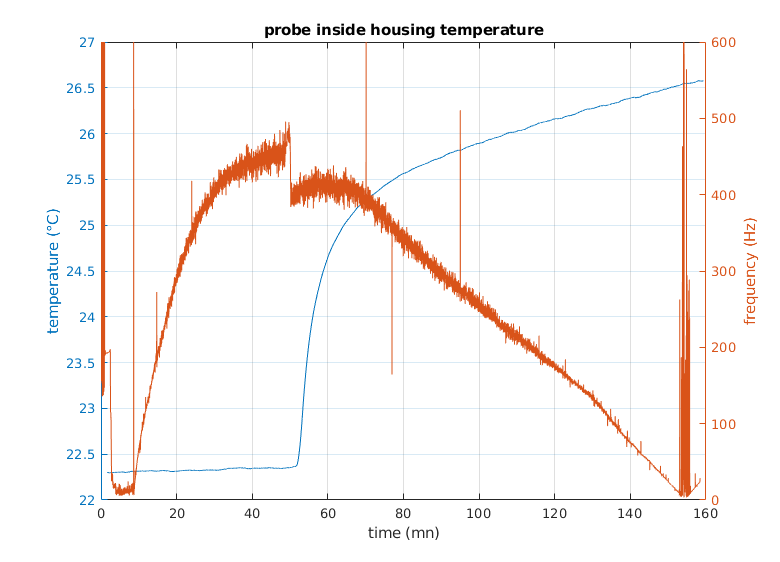
Ronic Chiche | Fixed | issue | mechanics | lasers and optics | detectors and electronics | ThomX igloo | Temperature control of the FP-cavity length | last friday, I locked the cavity and then, switched ON the heating cable after waiting the cavity reaches a steady state in frequency drift : see the figure.
blue : temperature of the probe on the heating cable
red : freqeuncy drift between FP-cavity (laser locked on it) and RF reference oscillator.
@ 10min : filling the FP-cavity with 50kW
@ 50min : "long" lock loss of about 1min => jumb in frequency => it is strange to see the cavity does not reach the same frequency steady state after the lock loss than before the lock loss.
(just before the small frequency jump, the frequency is increasing a bit because of the lock has been lost and the laser is drifting by itself in open loop. the jump, after that, corresponds to the moment where the laser is locked back to the FP-cavity)
@ 55min : switch ON the heating cable with 20V on the voltage supply => the probe stuck on the cable shows the temperature increases => and a bit later, one can see the frequency decreasing.
surprisingly, we don't reach a steady state ...
I suspect that filling the FP-cavity with power (without switching ON the heating cable) could first inscrease the frequency and later could decrease it if several parts of the mechanics are involved and if the thermal conduction is slow because of some isolation embbedded in the mechanics (for example ceramics balls).
it is possible to make the frequency drifting sensitivity test of the heating cable without locking the cavity at 50kW.
one can work in open loop, without power in the FP-cavity, and follow the frequency drift by keeping the main resonance at the same relative position to the laser PZT.
| Ronic Chiche wrote: |
|
this afternoon, I started the heating cable after the warm-up of the FP-cavity :
14h20 : start to fill 50kW in the cavity
15h : start of the heating cable @10V (2x 5V) (iteration 2300)
15h16 : start of the heating cable @60V (2x 30V) (iteration 3400)
15h20 : start of the heating cable @20V (2x 10V) (iteration 3600)
the offset frequency, for 20V of voltage on the DC voltage supply, is 175Hz @500MHz (equivalent to 3.5µm)
| Ronic Chiche wrote: |
|
today, I removed one of the DC voltage supply (as with 30V, we are already able to 30°C on the heating cable).
the remaining DC voltage supply is configured in series (2x30V = 60V max) and is at the IP address : 192.168.1.101
| Ronic Chiche wrote: |
|
several days ago, we installed a heating cable around the output flange (close to the X-hutch) of the FP-cavity vessel.
we are able to heat this cable by applying a DC voltage coming from 2 DC voltage supplies in serie (2 devices with 2x 0-30V / 3A => 0-120V / 3A).
currently, we apply at maximum 7V DC on each channel => 28V DC on the cable. its temperature reach ~ 30°C after 1/2h or more.
this temperature increase on one vessel of the FP-cavity, changes very slowly the length of the FP-cavity.
see this post (red curve on fig. 2) for a typical temperature curve measured (exponential-like curve) on the heating cable itself : https://elog.lal.in2p3.fr/FPC/THOMX+commissioning/290
the length change rate of the FP-cavity, due to this heating, is difficult to estimate because it depends on the part of this exponential curve you make the measurement.
but globally the drift is about 50nm every 5 minutes, which is roughly equivalent to 10 steps of the FP-cavity motor every 5 minutes.
| Ronic Chiche wrote: |
|
as the CFP motors displacements induce a cavity unlock, we try to change the cavity length by changing the temperature of elment of the cavity.
yesterday, we tried to put a "heating cable" borrowed to the vacuum group to change the temperature of one bellows between the FP-cavity and the electron ring.
we chose a below because it is flexible and should not apply a too strong force on the cavity vessels.
we heated the cable at ~30°C but we didn't see a clear effect on the FP-cavity frequency measurement.
then, we put a heating cable around the X-ray output flange of the FP-cavity vessel and we saw a clear effect : a relatively fast (at a "second" level) frequency change.
the problem is the heating system is not remotely driven.
the cable is R=55ohms impedance and can reach 450°C for 1kW dissipated.
so today, we will try to use 2 remotely controlled Siglent SPD3303X power supplies.
they can reach V=120V DC => P=V²/R=260W => we could reach more than 100°C
|
|
|
|
|
| Attachment 1: 2023_12_01_temp_freq.png
|  |
|
304
|
Thu Dec 7 14:59:02 2023 |
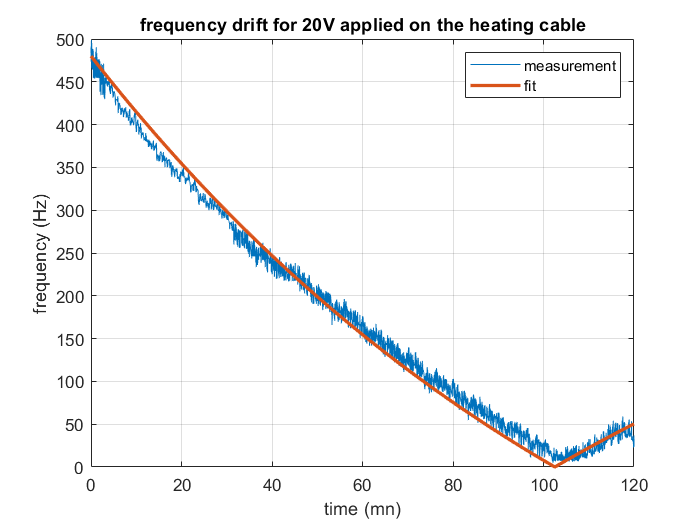
Ronic Chiche | Fixed | issue | mechanics | lasers and optics | detectors and electronics | ThomX igloo | Temperature control of the FP-cavity length | on last tuesday, I did a long-term measurement of the frequency drift when the heating cable is powered ON at 20V (2x 10V) @ t=0mn.
the freqeuncy drift (between the laser, locked in open loop on the FP-cavity, and the RF reference oscillator) acquisition was made by the National Instrument software.
the sampling rate of this acquisition is not set by the user but depends on several parameters of the acquisition... and then can be subject to change.
on can see on the data, in blue, a possible sampling rate change @ t~30mn.
@ t~100mn : the frequency sign changes but the measurement gives always the absolute value.
in orange, the fit is not very good... possibly due to the sampling rate change.
the conclusion we can have is only this frequency drift action has a very long time constant ~ 2h
and could be used to compensate, as soon as the power is in the FPcavity, the frequency drift coming from this power.
| Ronic Chiche wrote: |
|
last friday, I locked the cavity and then, switched ON the heating cable after waiting the cavity reaches a steady state in frequency drift : see the figure.
blue : temperature of the probe on the heating cable
red : freqeuncy drift between FP-cavity (laser locked on it) and RF reference oscillator.
@ 10min : filling the FP-cavity with 50kW
@ 50min : "long" lock loss of about 1min => jumb in frequency => it is strange to see the cavity does not reach the same frequency steady state after the lock loss than before the lock loss.
(just before the small frequency jump, the frequency is increasing a bit because of the lock has been lost and the laser is drifting by itself in open loop. the jump, after that, corresponds to the moment where the laser is locked back to the FP-cavity)
@ 55min : switch ON the heating cable with 20V on the voltage supply => the probe stuck on the cable shows the temperature increases => and a bit later, one can see the frequency decreasing.
surprisingly, we don't reach a steady state ...
I suspect that filling the FP-cavity with power (without switching ON the heating cable) could first inscrease the frequency and later could decrease it if several parts of the mechanics are involved and if the thermal conduction is slow because of some isolation embbedded in the mechanics (for example ceramics balls).
it is possible to make the frequency drifting sensitivity test of the heating cable without locking the cavity at 50kW.
one can work in open loop, without power in the FP-cavity, and follow the frequency drift by keeping the main resonance at the same relative position to the laser PZT.
| Ronic Chiche wrote: |
|
this afternoon, I started the heating cable after the warm-up of the FP-cavity :
14h20 : start to fill 50kW in the cavity
15h : start of the heating cable @10V (2x 5V) (iteration 2300)
15h16 : start of the heating cable @60V (2x 30V) (iteration 3400)
15h20 : start of the heating cable @20V (2x 10V) (iteration 3600)
the offset frequency, for 20V of voltage on the DC voltage supply, is 175Hz @500MHz (equivalent to 3.5µm)
| Ronic Chiche wrote: |
|
today, I removed one of the DC voltage supply (as with 30V, we are already able to 30°C on the heating cable).
the remaining DC voltage supply is configured in series (2x30V = 60V max) and is at the IP address : 192.168.1.101
| Ronic Chiche wrote: |
|
several days ago, we installed a heating cable around the output flange (close to the X-hutch) of the FP-cavity vessel.
we are able to heat this cable by applying a DC voltage coming from 2 DC voltage supplies in serie (2 devices with 2x 0-30V / 3A => 0-120V / 3A).
currently, we apply at maximum 7V DC on each channel => 28V DC on the cable. its temperature reach ~ 30°C after 1/2h or more.
this temperature increase on one vessel of the FP-cavity, changes very slowly the length of the FP-cavity.
see this post (red curve on fig. 2) for a typical temperature curve measured (exponential-like curve) on the heating cable itself : https://elog.lal.in2p3.fr/FPC/THOMX+commissioning/290
the length change rate of the FP-cavity, due to this heating, is difficult to estimate because it depends on the part of this exponential curve you make the measurement.
but globally the drift is about 50nm every 5 minutes, which is roughly equivalent to 10 steps of the FP-cavity motor every 5 minutes.
| Ronic Chiche wrote: |
|
as the CFP motors displacements induce a cavity unlock, we try to change the cavity length by changing the temperature of elment of the cavity.
yesterday, we tried to put a "heating cable" borrowed to the vacuum group to change the temperature of one bellows between the FP-cavity and the electron ring.
we chose a below because it is flexible and should not apply a too strong force on the cavity vessels.
we heated the cable at ~30°C but we didn't see a clear effect on the FP-cavity frequency measurement.
then, we put a heating cable around the X-ray output flange of the FP-cavity vessel and we saw a clear effect : a relatively fast (at a "second" level) frequency change.
the problem is the heating system is not remotely driven.
the cable is R=55ohms impedance and can reach 450°C for 1kW dissipated.
so today, we will try to use 2 remotely controlled Siglent SPD3303X power supplies.
they can reach V=120V DC => P=V²/R=260W => we could reach more than 100°C
|
|
|
|
|
|
| Attachment 1: untitled.png
|  |
|
306
|
Mon Dec 11 17:21:32 2023 |
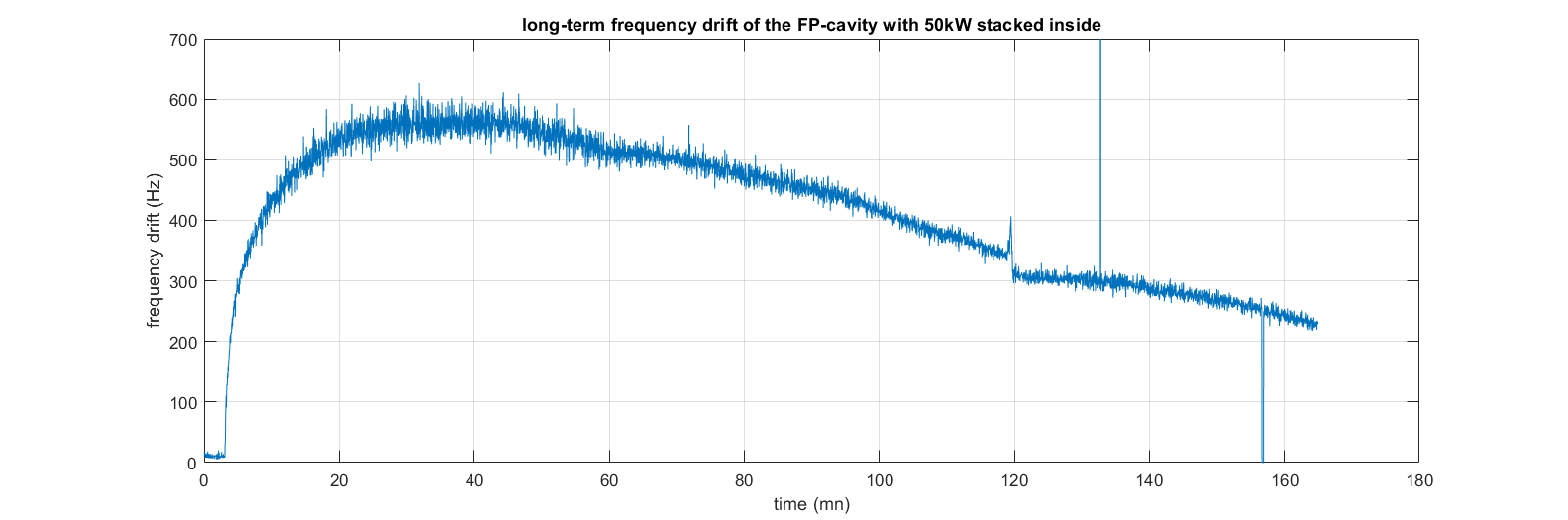
Ronic Chiche | Fixed | issue | mechanics | lasers and optics | detectors and electronics | ThomX igloo | Temperature control of the FP-cavity length | today with Fatematuj, we did a long-term frequency drift measurement between the FP-cavity loaded with 50kW and the RF reference frequency... and without any other thermal source (no heating cable !)
we had a small lock loss at t ~ 120mn.
we see at the begining an exponential behavior of the FP-cavity reaching a thermal steady state until t ~ 40mn, and then we see the frequency slowly drifting in the reverted direction...
which is the evidence of the thermal source reaching a different mechanical part of the FP-cavity for which an increase of temperature induces a reverted change in frequency.
the very long delay between these 2 opposite behaviors could come from the ceramic balls on which the big mechanical mounts of the mirrors are placed.
we have to redo this measurement with a longer period to see if and when we are reaching a steady state !
| Ronic Chiche wrote: |
|
on last tuesday, I did a long-term measurement of the frequency drift when the heating cable is powered ON at 20V (2x 10V) @ t=0mn.
the freqeuncy drift (between the laser, locked in open loop on the FP-cavity, and the RF reference oscillator) acquisition was made by the National Instrument software.
the sampling rate of this acquisition is not set by the user but depends on several parameters of the acquisition... and then can be subject to change.
on can see on the data, in blue, a possible sampling rate change @ t~30mn.
@ t~100mn : the frequency sign changes but the measurement gives always the absolute value.
in orange, the fit is not very good... possibly due to the sampling rate change.
the conclusion we can have is only this frequency drift action has a very long time constant ~ 2h
and could be used to compensate, as soon as the power is in the FPcavity, the frequency drift coming from this power.
| Ronic Chiche wrote: |
|
last friday, I locked the cavity and then, switched ON the heating cable after waiting the cavity reaches a steady state in frequency drift : see the figure.
blue : temperature of the probe on the heating cable
red : freqeuncy drift between FP-cavity (laser locked on it) and RF reference oscillator.
@ 10min : filling the FP-cavity with 50kW
@ 50min : "long" lock loss of about 1min => jumb in frequency => it is strange to see the cavity does not reach the same frequency steady state after the lock loss than before the lock loss.
(just before the small frequency jump, the frequency is increasing a bit because of the lock has been lost and the laser is drifting by itself in open loop. the jump, after that, corresponds to the moment where the laser is locked back to the FP-cavity)
@ 55min : switch ON the heating cable with 20V on the voltage supply => the probe stuck on the cable shows the temperature increases => and a bit later, one can see the frequency decreasing.
surprisingly, we don't reach a steady state ...
I suspect that filling the FP-cavity with power (without switching ON the heating cable) could first inscrease the frequency and later could decrease it if several parts of the mechanics are involved and if the thermal conduction is slow because of some isolation embbedded in the mechanics (for example ceramics balls).
it is possible to make the frequency drifting sensitivity test of the heating cable without locking the cavity at 50kW.
one can work in open loop, without power in the FP-cavity, and follow the frequency drift by keeping the main resonance at the same relative position to the laser PZT.
| Ronic Chiche wrote: |
|
this afternoon, I started the heating cable after the warm-up of the FP-cavity :
14h20 : start to fill 50kW in the cavity
15h : start of the heating cable @10V (2x 5V) (iteration 2300)
15h16 : start of the heating cable @60V (2x 30V) (iteration 3400)
15h20 : start of the heating cable @20V (2x 10V) (iteration 3600)
the offset frequency, for 20V of voltage on the DC voltage supply, is 175Hz @500MHz (equivalent to 3.5µm)
| Ronic Chiche wrote: |
|
today, I removed one of the DC voltage supply (as with 30V, we are already able to 30°C on the heating cable).
the remaining DC voltage supply is configured in series (2x30V = 60V max) and is at the IP address : 192.168.1.101
| Ronic Chiche wrote: |
|
several days ago, we installed a heating cable around the output flange (close to the X-hutch) of the FP-cavity vessel.
we are able to heat this cable by applying a DC voltage coming from 2 DC voltage supplies in serie (2 devices with 2x 0-30V / 3A => 0-120V / 3A).
currently, we apply at maximum 7V DC on each channel => 28V DC on the cable. its temperature reach ~ 30°C after 1/2h or more.
this temperature increase on one vessel of the FP-cavity, changes very slowly the length of the FP-cavity.
see this post (red curve on fig. 2) for a typical temperature curve measured (exponential-like curve) on the heating cable itself : https://elog.lal.in2p3.fr/FPC/THOMX+commissioning/290
the length change rate of the FP-cavity, due to this heating, is difficult to estimate because it depends on the part of this exponential curve you make the measurement.
but globally the drift is about 50nm every 5 minutes, which is roughly equivalent to 10 steps of the FP-cavity motor every 5 minutes.
| Ronic Chiche wrote: |
|
as the CFP motors displacements induce a cavity unlock, we try to change the cavity length by changing the temperature of elment of the cavity.
yesterday, we tried to put a "heating cable" borrowed to the vacuum group to change the temperature of one bellows between the FP-cavity and the electron ring.
we chose a below because it is flexible and should not apply a too strong force on the cavity vessels.
we heated the cable at ~30°C but we didn't see a clear effect on the FP-cavity frequency measurement.
then, we put a heating cable around the X-ray output flange of the FP-cavity vessel and we saw a clear effect : a relatively fast (at a "second" level) frequency change.
the problem is the heating system is not remotely driven.
the cable is R=55ohms impedance and can reach 450°C for 1kW dissipated.
so today, we will try to use 2 remotely controlled Siglent SPD3303X power supplies.
they can reach V=120V DC => P=V²/R=260W => we could reach more than 100°C
|
|
|
|
|
|
|
| Attachment 1: frequency_drift.png
|  |
|
324
|
Fri Feb 9 09:50:45 2024 |
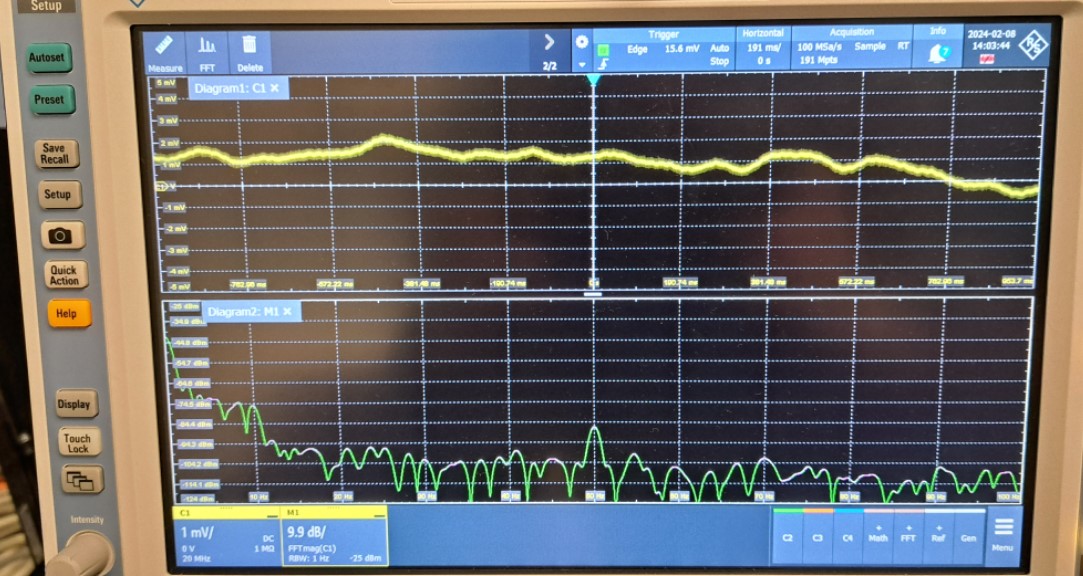
Ronic Chiche | Under Process | issue | mechanics | lasers and optics | detectors and electronics | ThomX igloo | 20Hz oscillation in the locking between Laser and FP-cavity | yesterday I did 2 tests to try to understand the origin of the 20Hz oscillation which is dominant in the remaining 10-20ps rms jitter between the transmitted pulses and the RF reference generator.
10ps rms jitter is equivalent to phase jitter dphi = 2*pi*f0*dt = 2mrad rms @ 33MHz or 30mrad rms @ 500MHz.
with V0 = 1Vpeak of beating signal amplitude, the equivalent rms beating voltage is dV = V0 * sin(dphi) ~ V0 * dphi = 2mV rms @ 33MHz or 30mV rms @ 500MHz
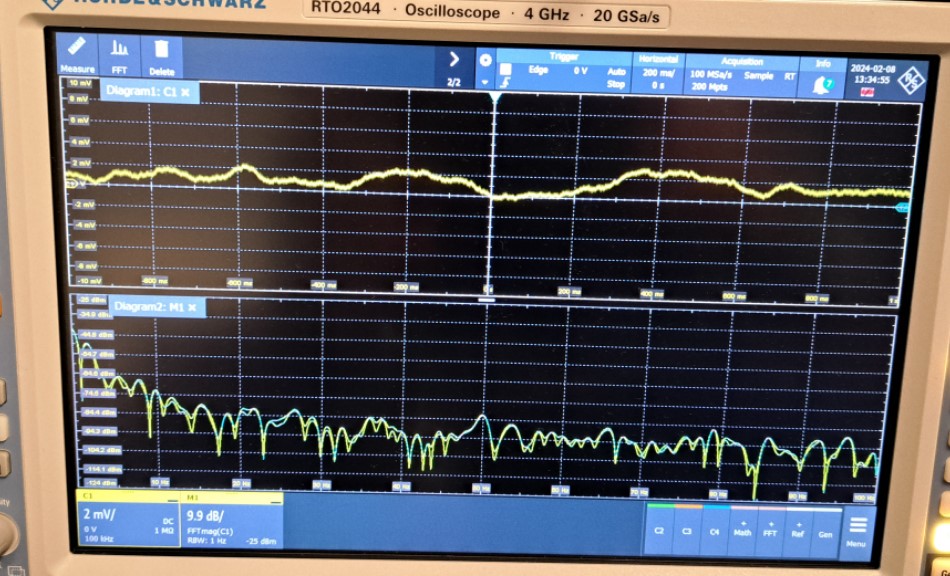
1) I did a beating between the internal photodiode of the laser with an external 33MHz oscillator (the photodiode is too slow to use higher harmonic).
the difficult part is to see the 2mV rms noise on a 2Vpp oscillating signal, so I locked the external 33MHz reference oscillator with the beating signal => see first plot.
there is no trace of 20Hz oscillation in the beating signal => the lock is too good and removed the oscillation ?
2) I did a beating between the photodiode in reflection of the FP-cavity (so the signal is not coming only from the oscillator but is going also through the Alphanov amplifier) with the 500MHz RF Ring generator.
I cannot the lock the generator anymore, so the measurement is done in open loop. I adjust the laser Frep with the motor to try to cancel the beating frequency => see 2nd plot
there is no trace of 20Hz oscillation in the beating signal => it is in contradiction with the previous post : "conclusion: the 20Hz oscillation is coming from the laser cavity" ?!?
maybe we need a more complex measurement scheme with the possibility to measure in the same time the 10-20ps rms jitter coming from the locked FP-cavity transmitted signal/500MHz Ring generator
AND the beating signal between the laser or amplifier with 500MHz local reference generator... to be done...
| Ronic Chiche wrote: |
|
this afternoon, we did 2 tests to better understand this 20Hz oscillation:
- we locked the amplified laser directly to the 500MHz ring reference oscillator, without any intermediate locking to the FP-cavity => no change
the 20Hz oscillation is still present in the correction signal of the laser PZT.
- we switched OFF the controller of the hexapod => no change.
conclusion:
the 20Hz oscillation is coming from the laser cavity
or is coming from "outside" and could be measured, maybe at a higher level, with an external "noises & vibrations measurement system".
| Ronic Chiche wrote: |
|
this morning, we tried to find the origin of the 20Hz oscillation.
- we switched OFF the laser Smaract motors controller => no change
- then, we addionally disconnected the FP-cavity PZT cable from the Laselock (we put a charge of 1kohm) => no change
- then, we switched ON the laser Smaract motors controller and switched OFF the FP-cavity motors controllers => no change
in conclusion, we don't really know where this instabillity comes from.
the amplitude is roughly 1Vpp (when the oscillation is at its maximum) on the laser PZT <=> length oscillation of ~20nm pp
could it come :
- from the air cooling regulation with pressure variation ?
- from vibrations of the hexapod below the table ?
or is it from inside of the laser or FP cavities ?
see these posts for the first measurements on this issue: https://elog.lal.in2p3.fr/FPC/THOMX+commissioning/257
|
|
|
| Attachment 1: 20240208_133745.jpg
|  |
| Attachment 2: 20240208_140636.jpg
|  |
|