| ID |
Date |
Author |
Status |
Type |
Category |
Location |
Title |
|
159
|
Mon Sep 12 17:00:35 2022 |
Manar Amer | Fixed | report | lasers and optics | Optical room | Power storage In Cavity | at max stage we reached at 2.5 A on the diodes we have
8000 gain , coupling ~ 60% , with power inside the cavity 50 kW
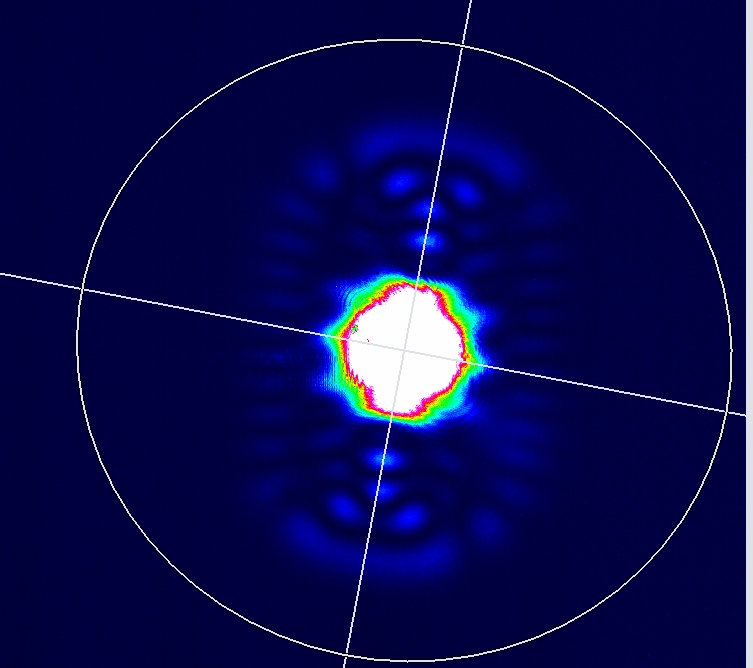
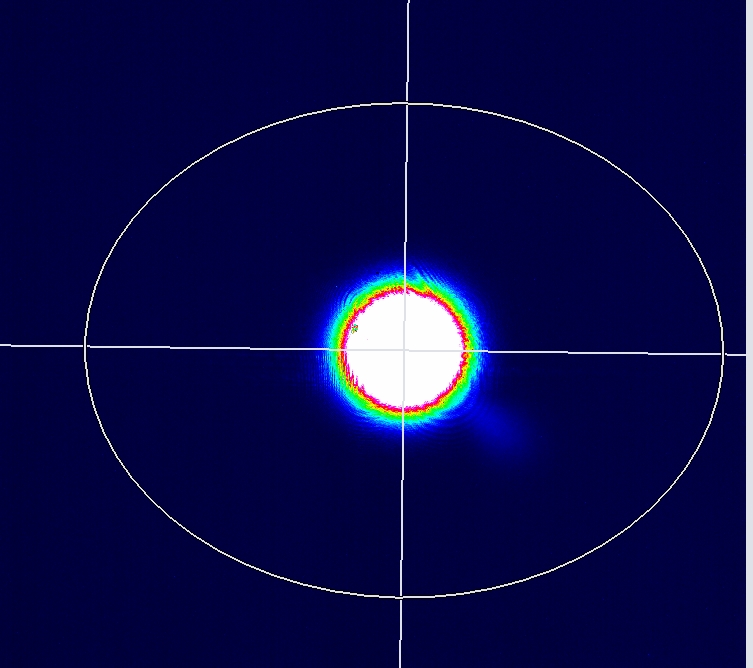
The higer order mode that was observed today,
it was also observed on Friday along the other higher order mode recorded on the logbook.
after cutting it with the D-shaped mirror we recorded the shape (image attached)
| Manar Amer wrote: |
|
Power increased in the amplifier
reflective filters added at the transmission point to be able to have signal on the Beam Profiler, Transmission diode and power meter
|
Amplifier output current (A)
diode 1
|
Amplifier output current (A)
diode 2
|
Amplifier output current (A)
diode 3
|
Amplifier output current (A)
diode 4
|
Power Output (W) |
Transmitted power (mW) |
note |
| 0.5 |
0.5 |
0.5 |
0.5 |
|
|
no change in the beam shape |
| 1 |
1 |
1 |
1 |
|
|
|
| 1.5 |
1 |
1 |
1 |
|
|
Appearance of higher order mode (vertical), suppressed using D-shaped mirror (vertical only) by (-23000), image recorded. |
| 1.5 |
1.5 |
1.5 |
1.5 |
|
|
no change |
| 2 |
1.8 |
1.5
|
1.5 |
|
52 mA |
52 mA after CEP adjustment , power measured after 2 reflective fillers NDUV30A and NDUV20 |
| 2 |
2 |
2 |
2 |
|
70 mA |
|
| 2.5 |
2.5 |
2 |
2 |
|
95 |
|
| 2.5 |
2.5 |
2.5 |
2.5 |
|
|
sudden drop in power, cavity lock lost, lock system looks ok (maybe something in the cavity)
mode shape is the same
coupling is large, transmission is very low
change the CEP, mo effect in changing it (we have no gain in the cavity, No Finesse) could be something happened to the mirrors !!!!!!
|
| Manar Amer wrote: |
|
At transmission power of 42 mW, coupling 60%, we see fundamental mode with a degeneracy
The D-shape motors were moved to a position 2 000 000 steps (in theory they should be the max position)
but no change appeared on the 00 mode or the higher order mode.
We will break the vacuum and check the position of the D-shaped mirrors.
| Manar Amer wrote: |
|
We start of power output from amplifier of 1W with only the first and second stage on then we start with the third stage power increase,
Note: when changing the current on the third stage 4 diodes, better to do it step by step for each one with a step of ~ 0.5 A
|
Amplifier output current (A)
for four diodes
|
Power Output (W) |
Transmitted power (MW)
|
| 0 , 0 , 0 , 0 |
~ 1 |
2.3 |
| 1 , 1 , 1 , 1 |
/ |
11.0 |
| 1.5 , 1.3, 1 , 1 |
/ |
35 |
| 1.5 , 1.5 , 1 , 1 |
/ |
42.16 |
| |
|
- we placed at the transmission point a splitter the transmitted power before was 35 mW after placing it we had 26 mW
- 97 % transmission , 3% reflected which goes to the beam profiler
- We see degeneracy modes at the last step of 42.16 mW , so we started to test the D-shaped mirrors
- the full range of the motors is 50.8 mm
- each step = 30 nm , 30 000 steps = 1 mm
|
|
|
|
| Attachment 1: 00mode_higer.jpg
|  |
| Attachment 2: 00mode_Removed_higer.jpg
|  |
|
160
|
Mon Sep 12 18:49:42 2022 |
Manar Amer | Fixed | issue | lasers and optics | Optical room | Damage on mirror surface | Following the storage of ~ 50 kW inside the cavity and a sudden drop in transmitted power from the cavity
damage to the mirror surface was suspected.
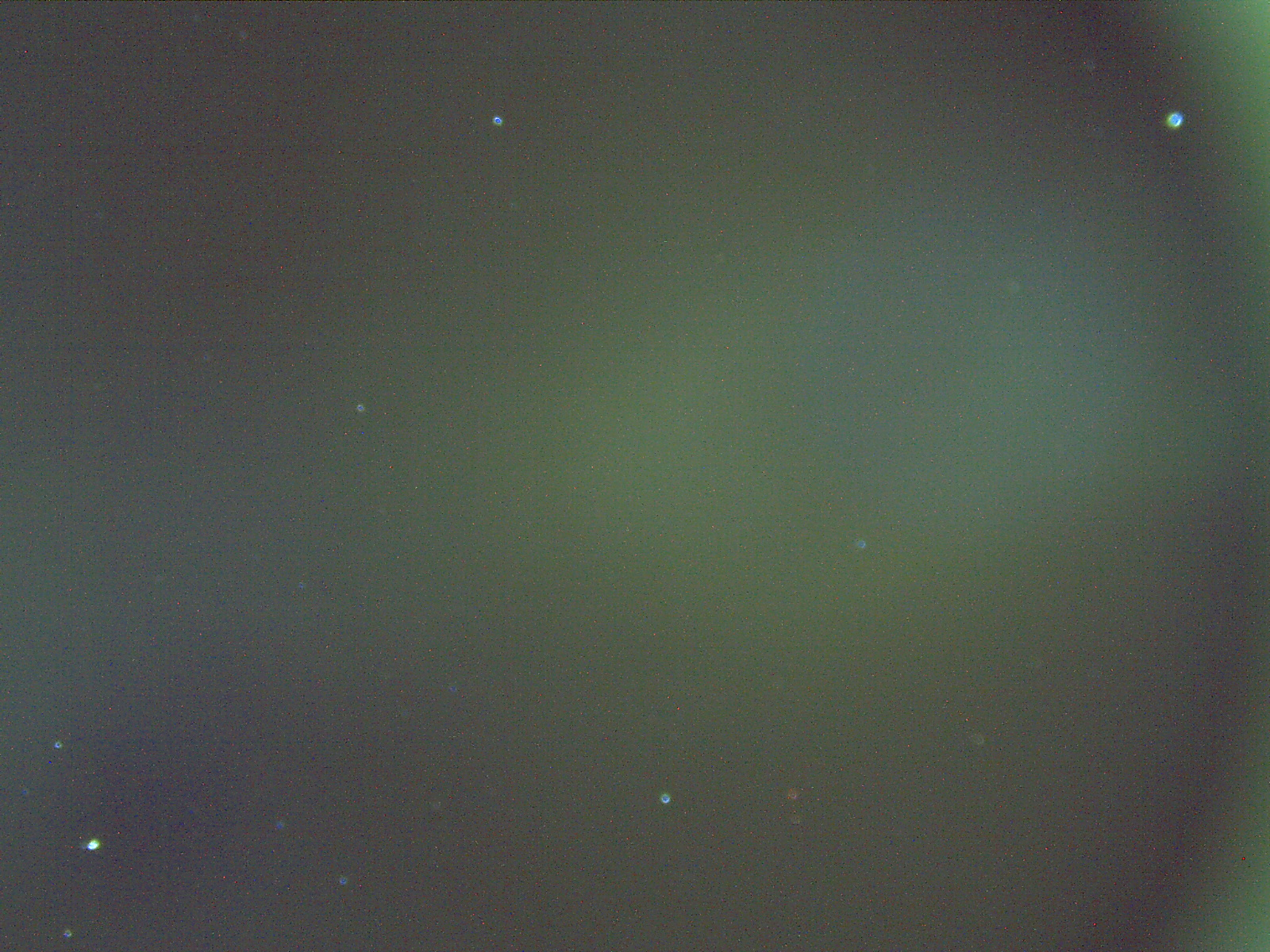
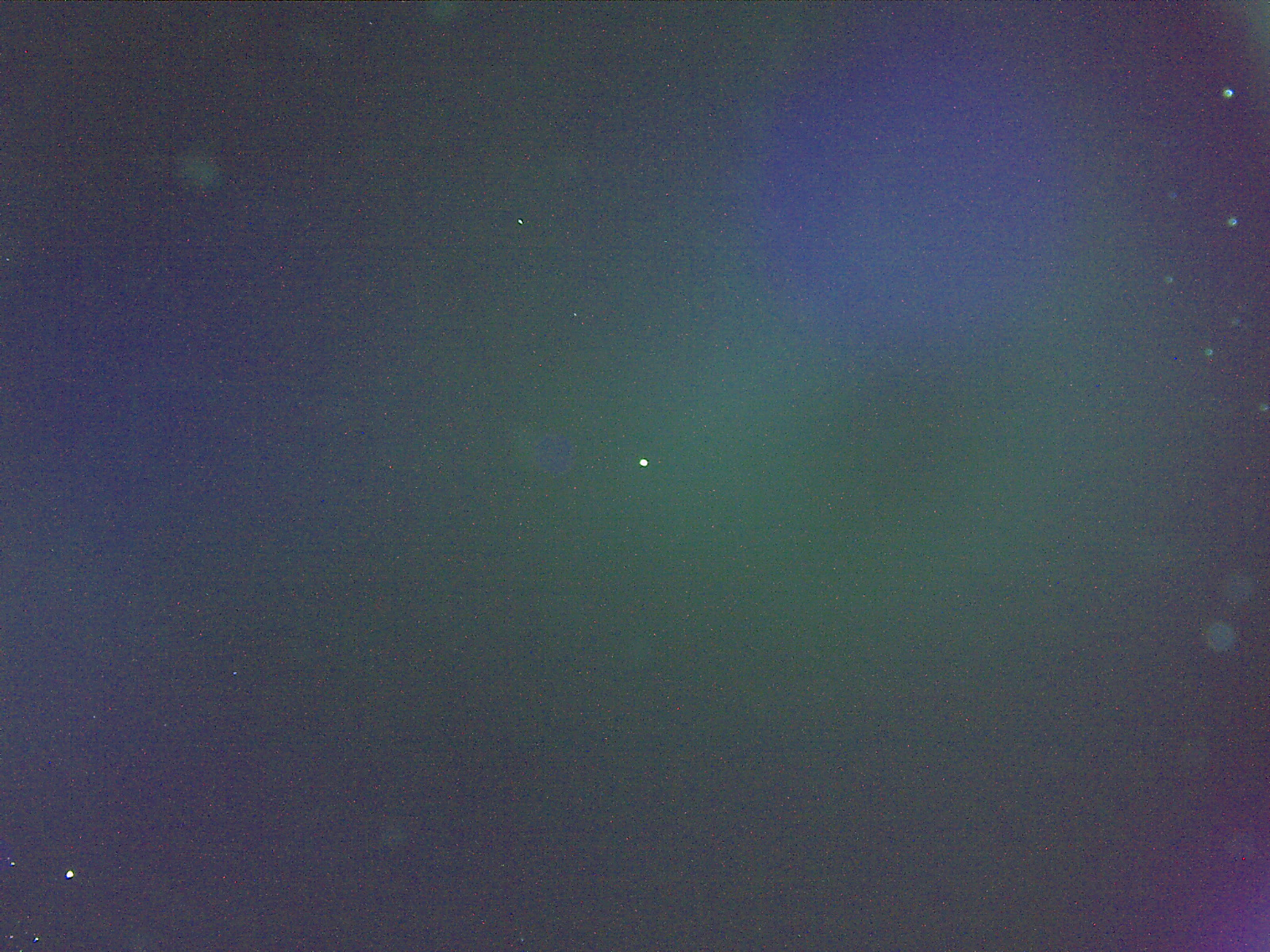
We broke vacuum and took images of the surface of the 2 mirrors in the cavity, the spherical and the planar mirror
image 1 , spherical reflective surface (no visible damage with the UV light, and no visible damage under the microscope)
image 2 , planar coupler mirror reflective surface (no visible damage under UV light, but under the microscope there is a damaged spot close to the center)
image 4 is the planar surface reflective surface at zoom 8 on the microscope.
|
| Attachment 1: image001.jpg
|  |
| Attachment 2: image002.jpg
|  |
| Attachment 3: image004.jpg
|  |
|
161
|
Mon Sep 12 18:50:57 2022 |
Manar Amer | Fixed | issue | lasers and optics | Optical room | Damage on mirror surface | Tomorrow will try to shift the injection mirror to avoid hitting the damaged spot.
| Manar Amer wrote: |
|
Following the storage of ~ 50 kW inside the cavity and a sudden drop in transmitted power from the cavity
damage to the mirror surface was suspected.
We broke vacuum and took images of the surface of the 2 mirrors in the cavity, the spherical and the planar mirror
image 1 , spherical reflective surface (no visible damage with the UV light, and no visible damage under the microscope)
image 2 , planar coupler mirror reflective surface (no visible damage under UV light, but under the microscope there is a damaged spot close to the center)
image 4 is the planar surface reflective surface at zoom 8 on the microscope.
|
|
|
162
|
Tue Sep 13 19:26:27 2022 |
Manar Amer | Fixed | report | lasers and optics | Optical room | Damage on mirror surface | After discussing, we have decided against shifting the mirror to avoid the time lost.
We changed the injection mirror to a different mirror from Mighty Laser set, Transmission of mirror 80 ppm. (no visible damage at the center of the mirror, only a small scratch on the back)
mirror cleaned using pure ethanol and pure water with spin coater, also the spherical mirror was cleaned again.
| Manar Amer wrote: |
|
Tomorrow will try to shift the injection mirror to avoid hitting the damaged spot.
| Manar Amer wrote: |
|
Following the storage of ~ 50 kW inside the cavity and a sudden drop in transmitted power from the cavity
damage to the mirror surface was suspected.
We broke vacuum and took images of the surface of the 2 mirrors in the cavity, the spherical and the planar mirror
image 1 , spherical reflective surface (no visible damage with the UV light, and no visible damage under the microscope)
image 2 , planar coupler mirror reflective surface (no visible damage under UV light, but under the microscope there is a damaged spot close to the center)
image 4 is the planar surface reflective surface at zoom 8 on the microscope.
|
|
|
|
163
|
Tue Sep 13 19:31:14 2022 |
Manar Amer | Fixed | report | lasers and optics | Optical room | liPower storage In Cavity | After changing the mirror M1 and cleaning the 2 mirrors
They were placed in the cavity box (avoiding touching the mounts to not affect the alignment and placing the mirrors as close to the previous position)
we saw horizontal higher order modes immediately after injecting power, horizontal misalignment!!.
We aligned the injected beam, adjusted the cavity length and saw the modes 01 (high transition) and 00 (ok but still much lower than 01)
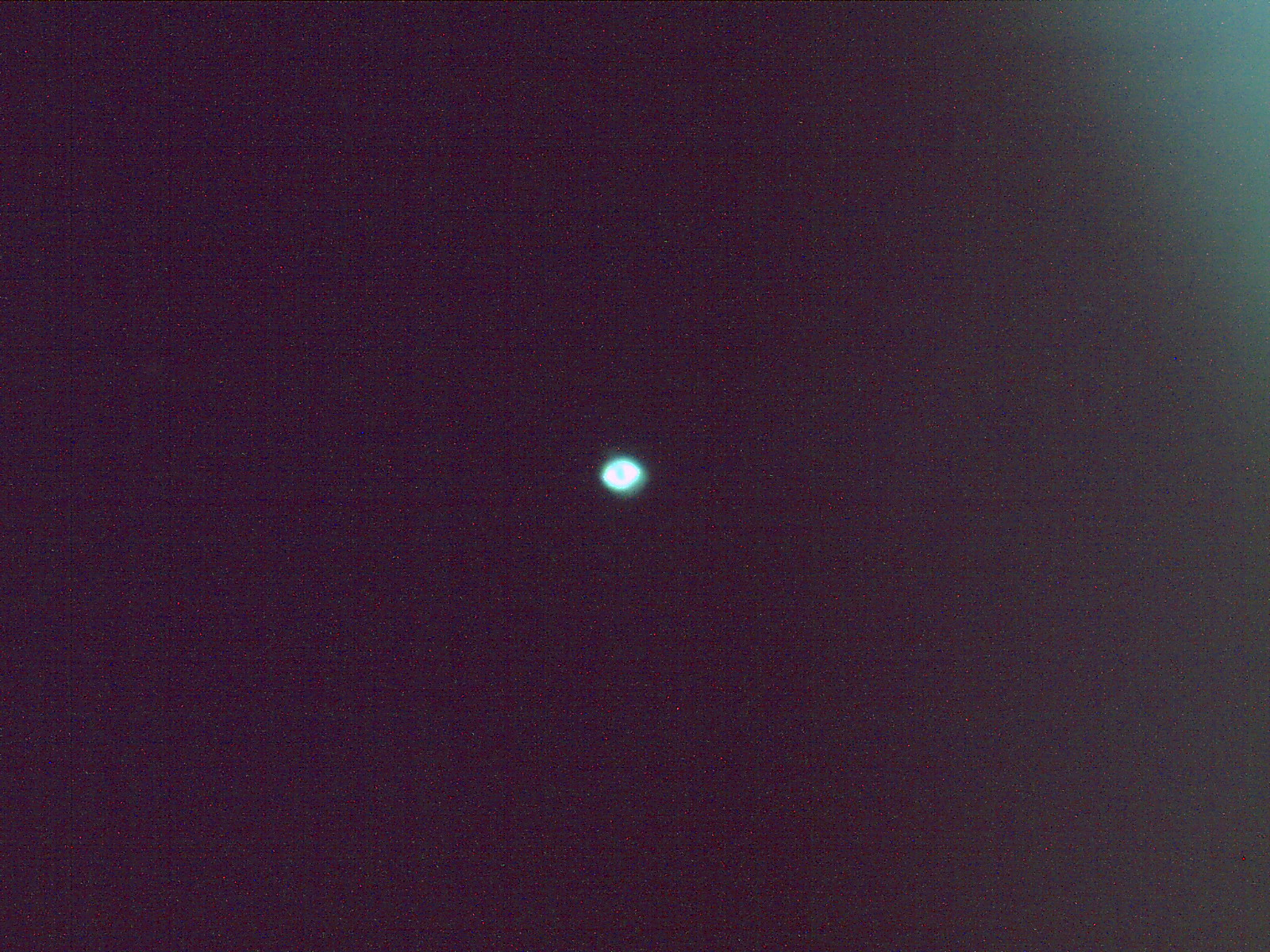
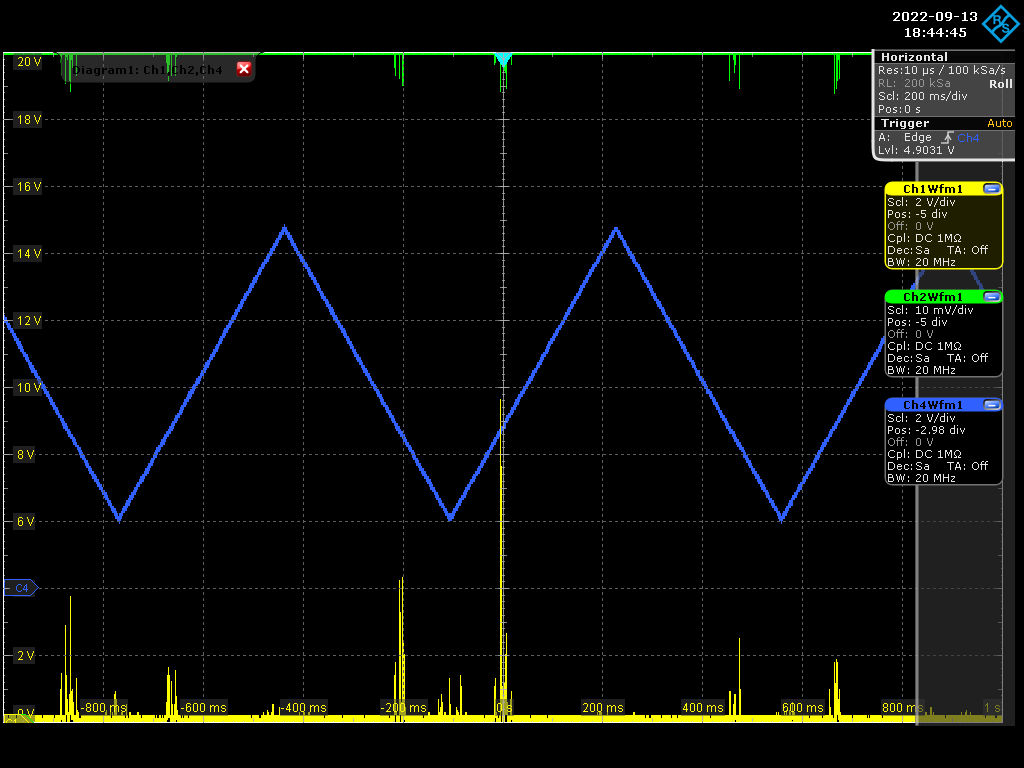
The image attached shows some coupling < 5% , we adjusted the CEP, but it was the max coupling.
we will need to align better tomorrow to increase 00 modes.
The cavity box is closed and placed under vacuum again.
| Manar Amer wrote: |
|
at max stage we reached at 2.5 A on the diodes we have
8000 gain , coupling ~ 60% , with power inside the cavity 50 kW
The higer order mode that was observed today,
it was also observed on Friday along the other higher order mode recorded on the logbook.
after cutting it with the D-shaped mirror we recorded the shape (image attached)
| Manar Amer wrote: |
|
Power increased in the amplifier
reflective filters added at the transmission point to be able to have signal on the Beam Profiler, Transmission diode and power meter
|
Amplifier output current (A)
diode 1
|
Amplifier output current (A)
diode 2
|
Amplifier output current (A)
diode 3
|
Amplifier output current (A)
diode 4
|
Power Output (W) |
Transmitted power (mW) |
note |
| 0.5 |
0.5 |
0.5 |
0.5 |
|
|
no change in the beam shape |
| 1 |
1 |
1 |
1 |
|
|
|
| 1.5 |
1 |
1 |
1 |
|
|
Appearance of higher order mode (vertical), suppressed using D-shaped mirror (vertical only) by (-23000), image recorded. |
| 1.5 |
1.5 |
1.5 |
1.5 |
|
|
no change |
| 2 |
1.8 |
1.5
|
1.5 |
|
52 mA |
52 mA after CEP adjustment , power measured after 2 reflective fillers NDUV30A and NDUV20 |
| 2 |
2 |
2 |
2 |
|
70 mA |
|
| 2.5 |
2.5 |
2 |
2 |
|
95 |
|
| 2.5 |
2.5 |
2.5 |
2.5 |
|
|
sudden drop in power, cavity lock lost, lock system looks ok (maybe something in the cavity)
mode shape is the same
coupling is large, transmission is very low
change the CEP, mo effect in changing it (we have no gain in the cavity, No Finesse) could be something happened to the mirrors !!!!!!
|
| Manar Amer wrote: |
|
At transmission power of 42 mW, coupling 60%, we see fundamental mode with a degeneracy
The D-shape motors were moved to a position 2 000 000 steps (in theory they should be the max position)
but no change appeared on the 00 mode or the higher order mode.
We will break the vacuum and check the position of the D-shaped mirrors.
| Manar Amer wrote: |
|
We start of power output from amplifier of 1W with only the first and second stage on then we start with the third stage power increase,
Note: when changing the current on the third stage 4 diodes, better to do it step by step for each one with a step of ~ 0.5 A
|
Amplifier output current (A)
for four diodes
|
Power Output (W) |
Transmitted power (MW)
|
| 0 , 0 , 0 , 0 |
~ 1 |
2.3 |
| 1 , 1 , 1 , 1 |
/ |
11.0 |
| 1.5 , 1.3, 1 , 1 |
/ |
35 |
| 1.5 , 1.5 , 1 , 1 |
/ |
42.16 |
| |
|
- we placed at the transmission point a splitter the transmitted power before was 35 mW after placing it we had 26 mW
- 97 % transmission , 3% reflected which goes to the beam profiler
- We see degeneracy modes at the last step of 42.16 mW , so we started to test the D-shaped mirrors
- the full range of the motors is 50.8 mm
- each step = 30 nm , 30 000 steps = 1 mm
|
|
|
|
|
| Attachment 1: Screenshot_2022-09-13_0_184445.png
|  |
|
164
|
Wed Sep 14 16:16:08 2022 |
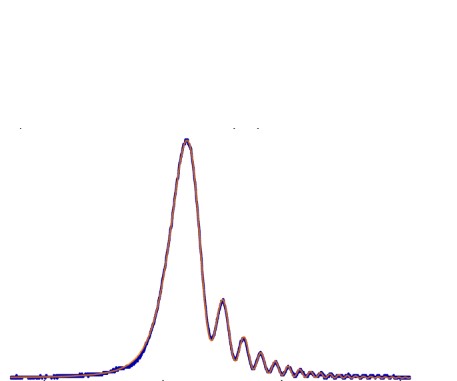
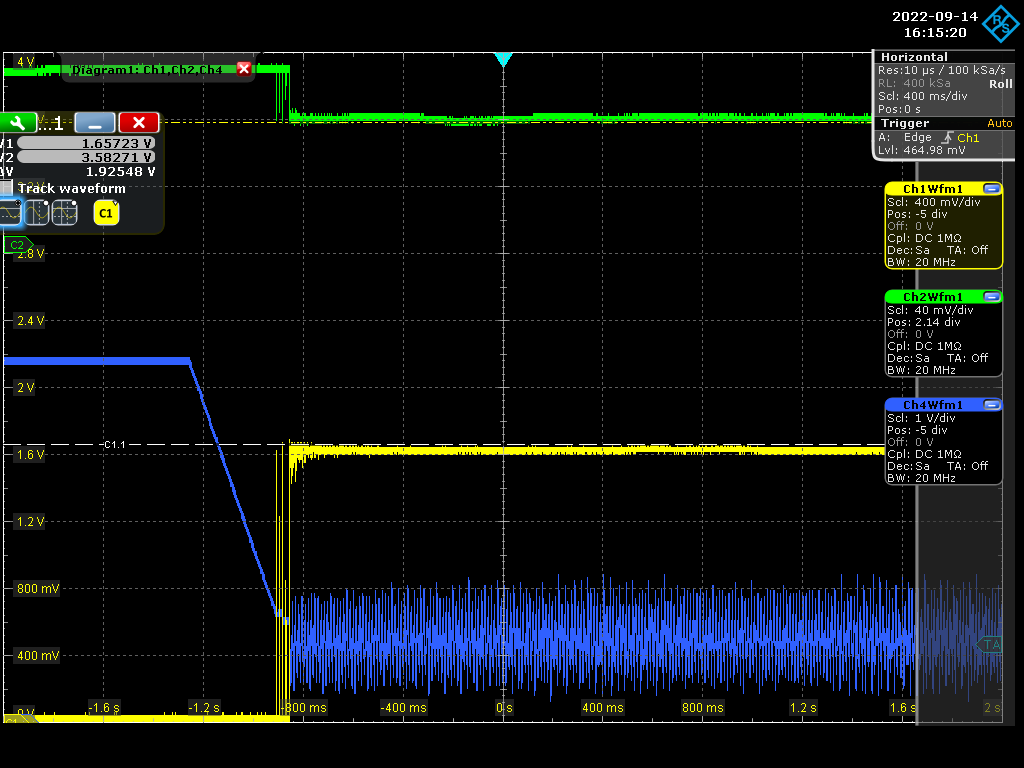
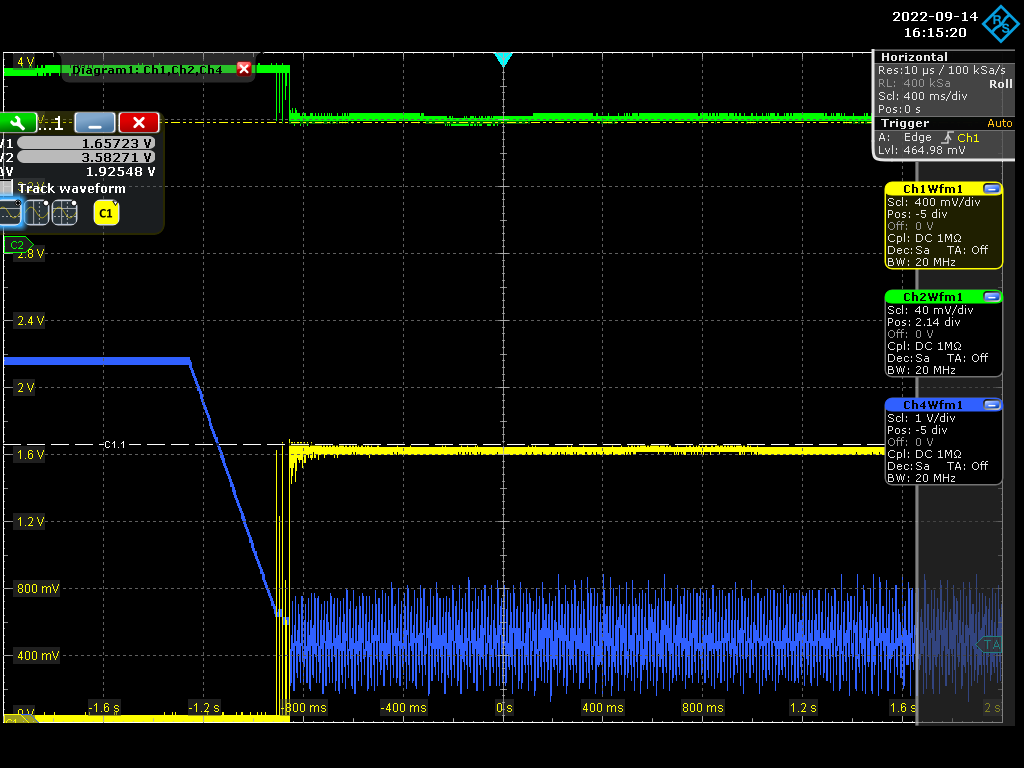
Manar Amer | Fixed | report | lasers and optics | Optical room | Power storage In Cavity | The cavity was locked under vacuum, coupling is approximately < 10%
The lock was relatively easy and the usual sign (oscillations on the transmission tail) of high finesse on the transmission signal was not seen.
| Manar Amer wrote: |
|
After changing the mirror M1 and cleaning the 2 mirrors
They were placed in the cavity box (avoiding touching the mounts to not affect the alignment and placing the mirrors as close to the previous position)
we saw horizontal higher order modes immediately after injecting power, horizontal misalignment!!.
We aligned the injected beam, adjusted the cavity length and saw the modes 01 (high transition) and 00 (ok but still much lower than 01)
The image attached shows some coupling < 5% , we adjusted the CEP, but it was the max coupling.
we will need to align better tomorrow to increase 00 modes.
The cavity box is closed and placed under vacuum again.
| Manar Amer wrote: |
|
at max stage we reached at 2.5 A on the diodes we have
8000 gain , coupling ~ 60% , with power inside the cavity 50 kW
The higer order mode that was observed today,
it was also observed on Friday along the other higher order mode recorded on the logbook.
after cutting it with the D-shaped mirror we recorded the shape (image attached)
| Manar Amer wrote: |
|
Power increased in the amplifier
reflective filters added at the transmission point to be able to have signal on the Beam Profiler, Transmission diode and power meter
|
Amplifier output current (A)
diode 1
|
Amplifier output current (A)
diode 2
|
Amplifier output current (A)
diode 3
|
Amplifier output current (A)
diode 4
|
Power Output (W) |
Transmitted power (mW) |
note |
| 0.5 |
0.5 |
0.5 |
0.5 |
|
|
no change in the beam shape |
| 1 |
1 |
1 |
1 |
|
|
|
| 1.5 |
1 |
1 |
1 |
|
|
Appearance of higher order mode (vertical), suppressed using D-shaped mirror (vertical only) by (-23000), image recorded. |
| 1.5 |
1.5 |
1.5 |
1.5 |
|
|
no change |
| 2 |
1.8 |
1.5
|
1.5 |
|
52 mA |
52 mA after CEP adjustment , power measured after 2 reflective fillers NDUV30A and NDUV20 |
| 2 |
2 |
2 |
2 |
|
70 mA |
|
| 2.5 |
2.5 |
2 |
2 |
|
95 |
|
| 2.5 |
2.5 |
2.5 |
2.5 |
|
|
sudden drop in power, cavity lock lost, lock system looks ok (maybe something in the cavity)
mode shape is the same
coupling is large, transmission is very low
change the CEP, mo effect in changing it (we have no gain in the cavity, No Finesse) could be something happened to the mirrors !!!!!!
|
| Manar Amer wrote: |
|
At transmission power of 42 mW, coupling 60%, we see fundamental mode with a degeneracy
The D-shape motors were moved to a position 2 000 000 steps (in theory they should be the max position)
but no change appeared on the 00 mode or the higher order mode.
We will break the vacuum and check the position of the D-shaped mirrors.
| Manar Amer wrote: |
|
We start of power output from amplifier of 1W with only the first and second stage on then we start with the third stage power increase,
Note: when changing the current on the third stage 4 diodes, better to do it step by step for each one with a step of ~ 0.5 A
|
Amplifier output current (A)
for four diodes
|
Power Output (W) |
Transmitted power (MW)
|
| 0 , 0 , 0 , 0 |
~ 1 |
2.3 |
| 1 , 1 , 1 , 1 |
/ |
11.0 |
| 1.5 , 1.3, 1 , 1 |
/ |
35 |
| 1.5 , 1.5 , 1 , 1 |
/ |
42.16 |
| |
|
- we placed at the transmission point a splitter the transmitted power before was 35 mW after placing it we had 26 mW
- 97 % transmission , 3% reflected which goes to the beam profiler
- We see degeneracy modes at the last step of 42.16 mW , so we started to test the D-shaped mirrors
- the full range of the motors is 50.8 mm
- each step = 30 nm , 30 000 steps = 1 mm
|
|
|
|
|
|
| Attachment 1: High_Finesse_sign_on_transmission_.jpg
|  |
| Attachment 2: Screenshot_2022-09-14_0_161520.png
|  |
|
165
|
Wed Sep 14 17:21:59 2022 |
Manar Amer | Fixed | report | lasers and optics | Optical room | Power storage In Cavity | We improved the lock using the alignment, polarization and CEP , the maximum we got was ~ 12% coupling
only the second stage is on !
Decision : this is the maximum we can obtain using the M1 from mighty laser
tomorrow we break the vacuum and try with shifting M1 from ThomX position to avoid the damaged spot
| Manar Amer wrote: |
|
The cavity was locked under vacuum, coupling is approximately < 10%
The lock was relatively easy and the usual sign (oscillations on the transmission tail) of high finesse on the transmission signal was not seen.
| Manar Amer wrote: |
|
After changing the mirror M1 and cleaning the 2 mirrors
They were placed in the cavity box (avoiding touching the mounts to not affect the alignment and placing the mirrors as close to the previous position)
we saw horizontal higher order modes immediately after injecting power, horizontal misalignment!!.
We aligned the injected beam, adjusted the cavity length and saw the modes 01 (high transition) and 00 (ok but still much lower than 01)
The image attached shows some coupling < 5% , we adjusted the CEP, but it was the max coupling.
we will need to align better tomorrow to increase 00 modes.
The cavity box is closed and placed under vacuum again.
| Manar Amer wrote: |
|
at max stage we reached at 2.5 A on the diodes we have
8000 gain , coupling ~ 60% , with power inside the cavity 50 kW
The higer order mode that was observed today,
it was also observed on Friday along the other higher order mode recorded on the logbook.
after cutting it with the D-shaped mirror we recorded the shape (image attached)
| Manar Amer wrote: |
|
Power increased in the amplifier
reflective filters added at the transmission point to be able to have signal on the Beam Profiler, Transmission diode and power meter
|
Amplifier output current (A)
diode 1
|
Amplifier output current (A)
diode 2
|
Amplifier output current (A)
diode 3
|
Amplifier output current (A)
diode 4
|
Power Output (W) |
Transmitted power (mW) |
note |
| 0.5 |
0.5 |
0.5 |
0.5 |
|
|
no change in the beam shape |
| 1 |
1 |
1 |
1 |
|
|
|
| 1.5 |
1 |
1 |
1 |
|
|
Appearance of higher order mode (vertical), suppressed using D-shaped mirror (vertical only) by (-23000), image recorded. |
| 1.5 |
1.5 |
1.5 |
1.5 |
|
|
no change |
| 2 |
1.8 |
1.5
|
1.5 |
|
52 mA |
52 mA after CEP adjustment , power measured after 2 reflective fillers NDUV30A and NDUV20 |
| 2 |
2 |
2 |
2 |
|
70 mA |
|
| 2.5 |
2.5 |
2 |
2 |
|
95 |
|
| 2.5 |
2.5 |
2.5 |
2.5 |
|
|
sudden drop in power, cavity lock lost, lock system looks ok (maybe something in the cavity)
mode shape is the same
coupling is large, transmission is very low
change the CEP, mo effect in changing it (we have no gain in the cavity, No Finesse) could be something happened to the mirrors !!!!!!
|
| Manar Amer wrote: |
|
At transmission power of 42 mW, coupling 60%, we see fundamental mode with a degeneracy
The D-shape motors were moved to a position 2 000 000 steps (in theory they should be the max position)
but no change appeared on the 00 mode or the higher order mode.
We will break the vacuum and check the position of the D-shaped mirrors.
| Manar Amer wrote: |
|
We start of power output from amplifier of 1W with only the first and second stage on then we start with the third stage power increase,
Note: when changing the current on the third stage 4 diodes, better to do it step by step for each one with a step of ~ 0.5 A
|
Amplifier output current (A)
for four diodes
|
Power Output (W) |
Transmitted power (MW)
|
| 0 , 0 , 0 , 0 |
~ 1 |
2.3 |
| 1 , 1 , 1 , 1 |
/ |
11.0 |
| 1.5 , 1.3, 1 , 1 |
/ |
35 |
| 1.5 , 1.5 , 1 , 1 |
/ |
42.16 |
| |
|
- we placed at the transmission point a splitter the transmitted power before was 35 mW after placing it we had 26 mW
- 97 % transmission , 3% reflected which goes to the beam profiler
- We see degeneracy modes at the last step of 42.16 mW , so we started to test the D-shaped mirrors
- the full range of the motors is 50.8 mm
- each step = 30 nm , 30 000 steps = 1 mm
|
|
|
|
|
|
|
| Attachment 1: Screenshot_2022-09-14_0_161520.png
|  |
|
166
|
Fri Sep 16 15:56:45 2022 |
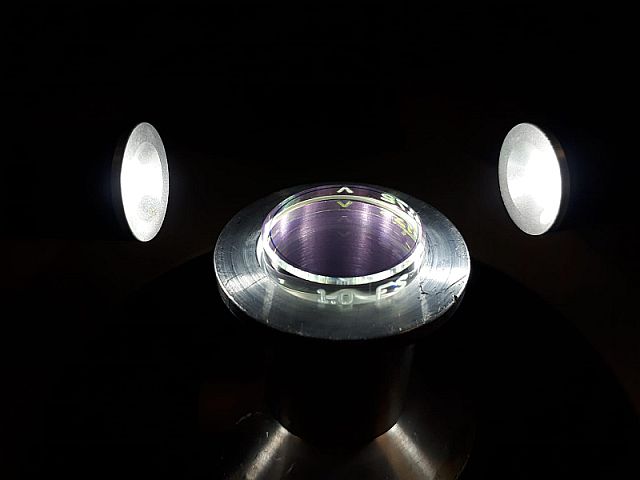
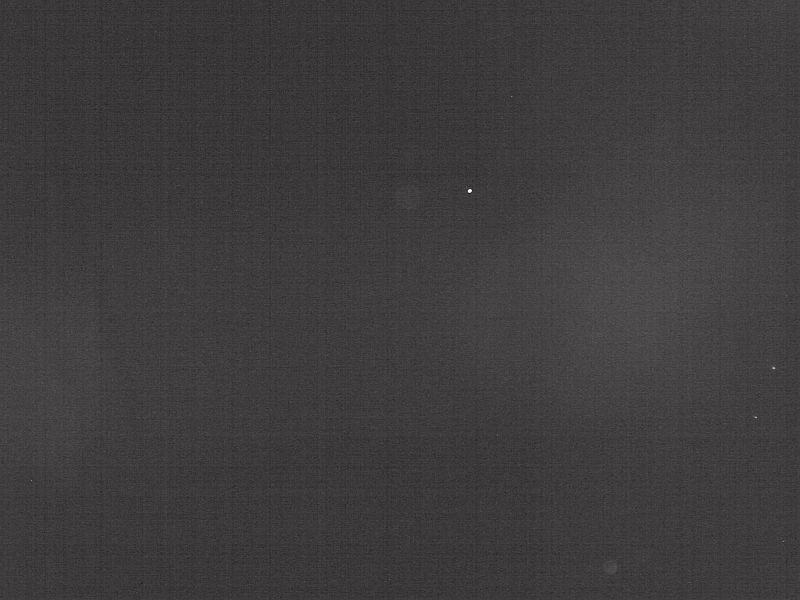
Manar Amer | Fixed | report | lasers and optics | Optical room | Damage on mirror surface | a better image of the damaged spot, image taken with the arrow for the reflective surface facing the other direction (image shows position)
The image of M1 for ThomX reflective surface was taken at min zoom (full image scale 13 mm) and max zoom (full image scale 2 mm) on microscope
The spot appears to be not close to the center of the mirror, at max zoom in the center we do not see the spot it is just out of the image
the last image has the mirror position adjusted to center the damaged spot for a better image of it.
| Manar Amer wrote: |
|
After discussing, we have decided against shifting the mirror to avoid the time lost.
We changed the injection mirror to a different mirror from Mighty Laser set, Transmission of mirror 80 ppm. (no visible damage at the center of the mirror, only a small scratch on the back)
mirror cleaned using pure ethanol and pure water with spin coater, also the spherical mirror was cleaned again.
| Manar Amer wrote: |
|
Tomorrow will try to shift the injection mirror to avoid hitting the damaged spot.
| Manar Amer wrote: |
|
Following the storage of ~ 50 kW inside the cavity and a sudden drop in transmitted power from the cavity
damage to the mirror surface was suspected.
We broke vacuum and took images of the surface of the 2 mirrors in the cavity, the spherical and the planar mirror
image 1 , spherical reflective surface (no visible damage with the UV light, and no visible damage under the microscope)
image 2 , planar coupler mirror reflective surface (no visible damage under UV light, but under the microscope there is a damaged spot close to the center)
image 4 is the planar surface reflective surface at zoom 8 on the microscope.
|
|
|
|
| Attachment 1: M1_mirror_on_Microscope_stand0.jpg
|  |
| Attachment 2: M1X_front_min_zoom.jpg
|  |
| Attachment 3: M1X_front_max_zoom.jpg
|  |
| Attachment 4: M1X_front_damaged_spot_max_zoom.jpg
|  |
|
167
|
Fri Sep 16 17:47:56 2022 |
Manar Amer | Fixed | report | lasers and optics | Optical room | Damage on mirror surface | ThomX injection mirror has been cleaned and placed again inside the optical cavity.
This time to avoid the damaged spot I have displaced the mirror mount horizontally to have a distance between center of the beam and the spot ~ 2.5 - 3 mm.
The alignment was affected slightly but recovered by adjusting the mirror mount nobs, (00 mode observed in air)
The cavity was closed is being pumped with vacuum.
To be done: adjust the cavity length and find the resonance, improve the outer alignment, lock the cavity
| Manar Amer wrote: |
|
a better image of the damaged spot, image taken with the arrow for the reflective surface facing the other direction (image shows position)
The image of M1 for ThomX reflective surface was taken at min zoom (full image scale 13 mm) and max zoom (full image scale 2 mm) on microscope
The spot appears to be not close to the center of the mirror, at max zoom in the center we do not see the spot it is just out of the image
the last image has the mirror position adjusted to center the damaged spot for a better image of it.
| Manar Amer wrote: |
|
After discussing, we have decided against shifting the mirror to avoid the time lost.
We changed the injection mirror to a different mirror from Mighty Laser set, Transmission of mirror 80 ppm. (no visible damage at the center of the mirror, only a small scratch on the back)
mirror cleaned using pure ethanol and pure water with spin coater, also the spherical mirror was cleaned again.
| Manar Amer wrote: |
|
Tomorrow will try to shift the injection mirror to avoid hitting the damaged spot.
| Manar Amer wrote: |
|
Following the storage of ~ 50 kW inside the cavity and a sudden drop in transmitted power from the cavity
damage to the mirror surface was suspected.
We broke vacuum and took images of the surface of the 2 mirrors in the cavity, the spherical and the planar mirror
image 1 , spherical reflective surface (no visible damage with the UV light, and no visible damage under the microscope)
image 2 , planar coupler mirror reflective surface (no visible damage under UV light, but under the microscope there is a damaged spot close to the center)
image 4 is the planar surface reflective surface at zoom 8 on the microscope.
|
|
|
|
|
|
168
|
Tue Sep 20 12:50:40 2022 |
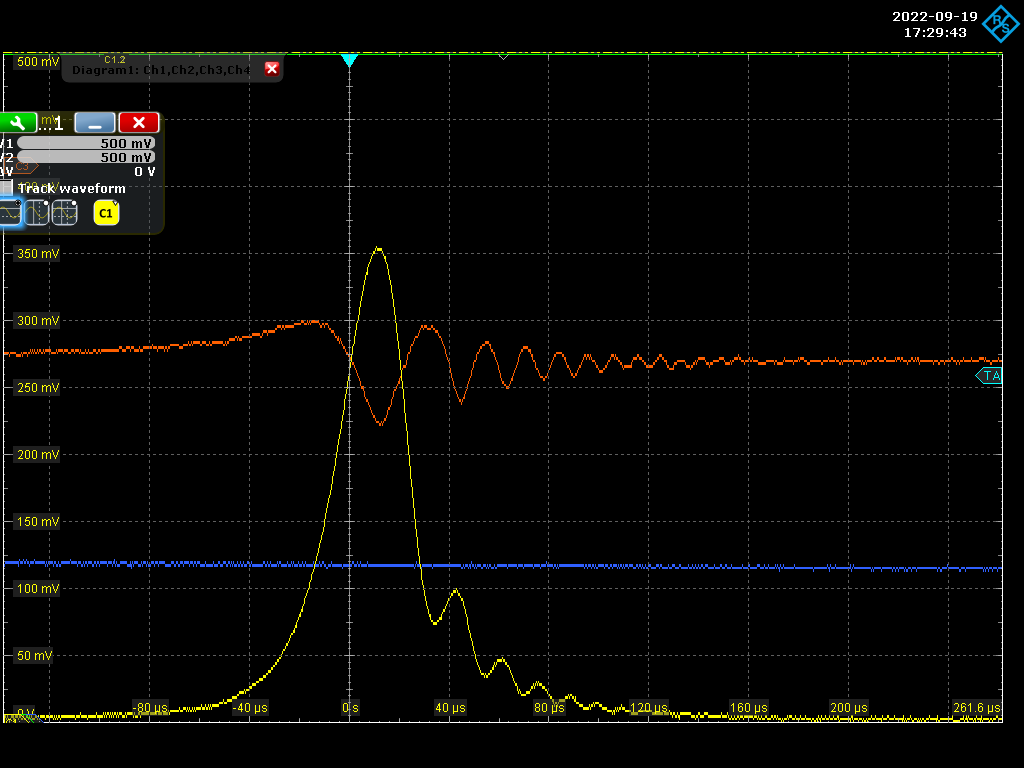
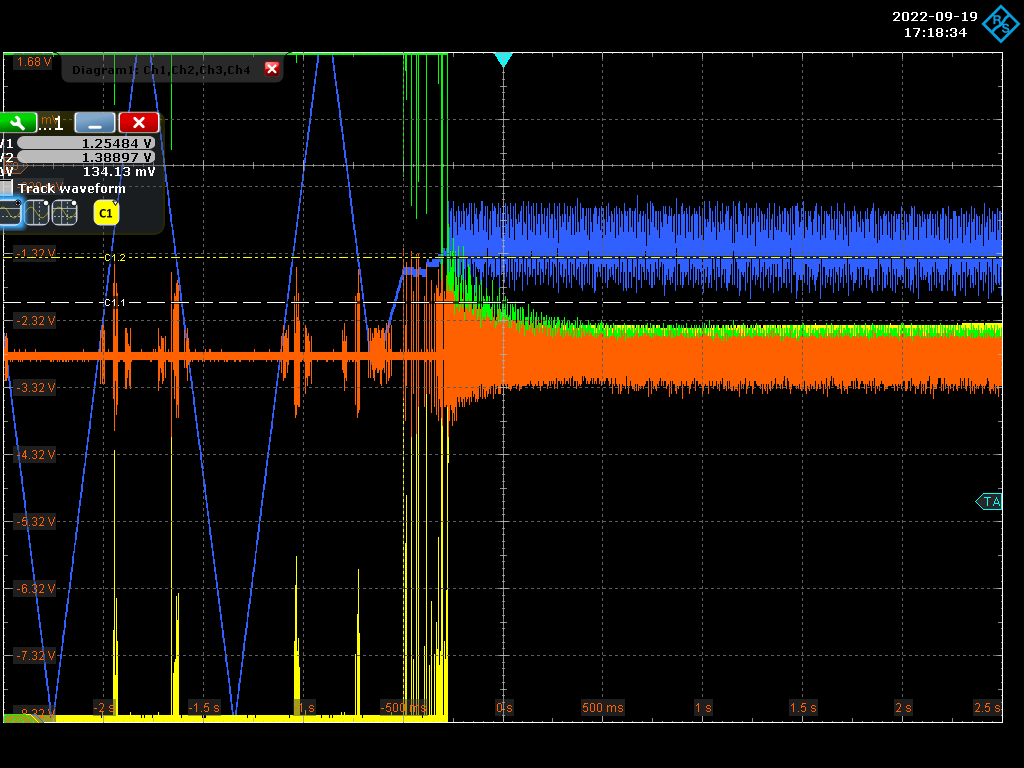
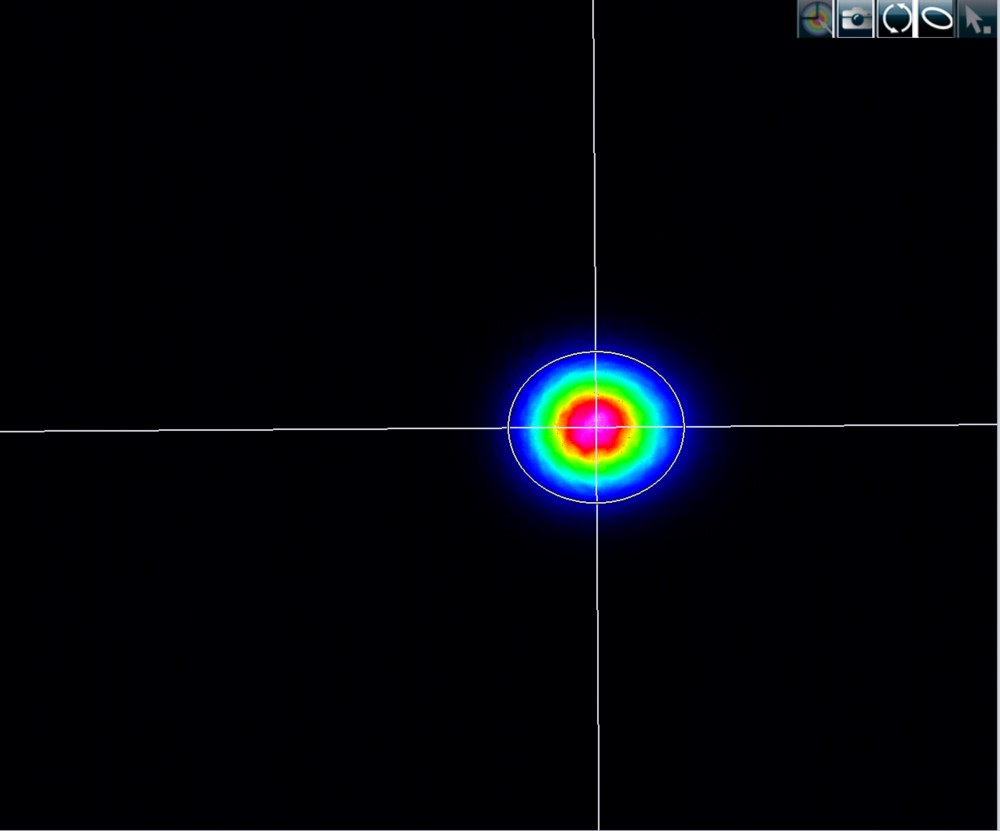
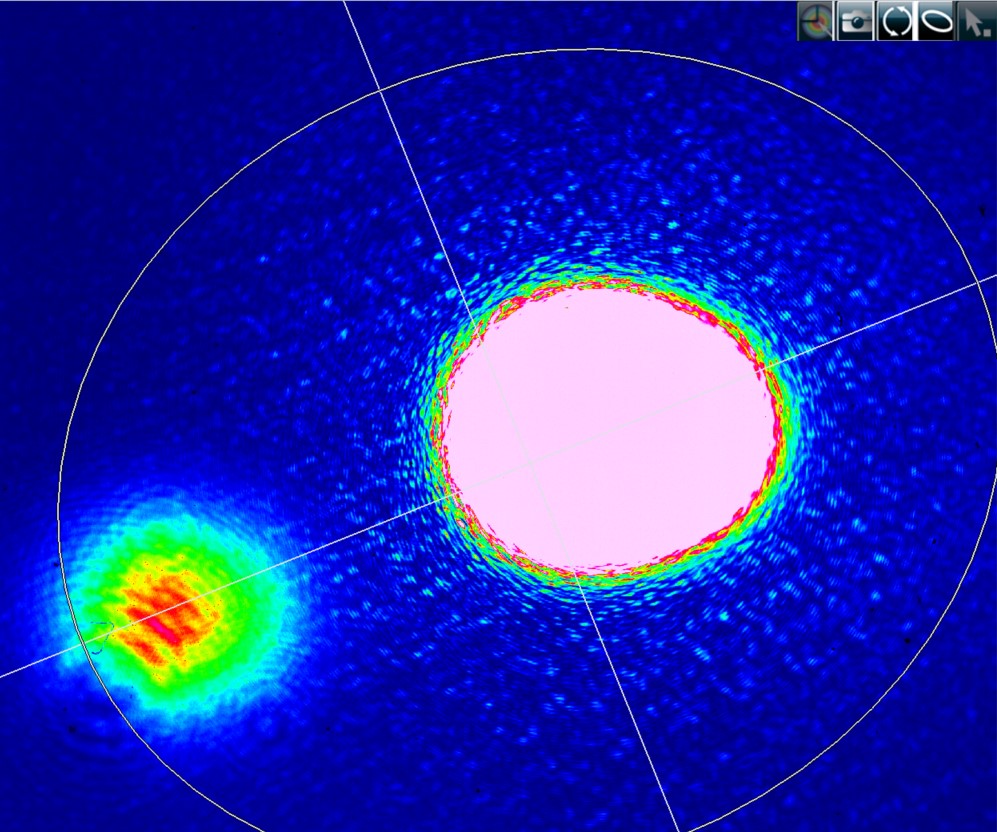
Manar Amer | Fixed | report | lasers and optics | Optical room | M1 ThomX used while shifted from damaged spot | Yesterday , we locked the cavity and we see a sign of a high finesse on the transmission signal, but no measurement of Finesse was done.
we have a coupling of ~ 45%, which is a loss of 20% from the previous coupling of 60%
an estimate done by Ronic MATLAB simulation for the coupling drop where we have 200 pp additional losses and gain of 2.6 k we should get a transmission of 1.1 mW for injected power of ~ 300 mW
which is consistent with the power measured after a 50% beam splitter on transmission we got 0.51 mW (total would be 1.02mW)
in addition, there is a beam that is next to the mode of the cavity , confirmed it was not a reflection from the beam splitter or the optics.
it could be that we are still close to the damaged spot ?
| Manar Amer wrote: |
|
ThomX injection mirror has been cleaned and placed again inside the optical cavity.
This time to avoid the damaged spot I have displaced the mirror mount horizontally to have a distance between center of the beam and the spot ~ 2.5 - 3 mm.
The alignment was affected slightly but recovered by adjusting the mirror mount nobs, (00 mode observed in air)
The cavity was closed is being pumped with vacuum.
To be done: adjust the cavity length and find the resonance, improve the outer alignment, lock the cavity
| Manar Amer wrote: |
|
a better image of the damaged spot, image taken with the arrow for the reflective surface facing the other direction (image shows position)
The image of M1 for ThomX reflective surface was taken at min zoom (full image scale 13 mm) and max zoom (full image scale 2 mm) on microscope
The spot appears to be not close to the center of the mirror, at max zoom in the center we do not see the spot it is just out of the image
the last image has the mirror position adjusted to center the damaged spot for a better image of it.
| Manar Amer wrote: |
|
After discussing, we have decided against shifting the mirror to avoid the time lost.
We changed the injection mirror to a different mirror from Mighty Laser set, Transmission of mirror 80 ppm. (no visible damage at the center of the mirror, only a small scratch on the back)
mirror cleaned using pure ethanol and pure water with spin coater, also the spherical mirror was cleaned again.
| Manar Amer wrote: |
|
Tomorrow will try to shift the injection mirror to avoid hitting the damaged spot.
| Manar Amer wrote: |
|
Following the storage of ~ 50 kW inside the cavity and a sudden drop in transmitted power from the cavity
damage to the mirror surface was suspected.
We broke vacuum and took images of the surface of the 2 mirrors in the cavity, the spherical and the planar mirror
image 1 , spherical reflective surface (no visible damage with the UV light, and no visible damage under the microscope)
image 2 , planar coupler mirror reflective surface (no visible damage under UV light, but under the microscope there is a damaged spot close to the center)
image 4 is the planar surface reflective surface at zoom 8 on the microscope.
|
|
|
|
|
|
| Attachment 1: Screenshot_2022-09-19_2_172943.png
|  |
| Attachment 2: Screenshot_2022-09-19_1_171834.png
|  |
| Attachment 3: 00mode_LOCK.jpg
|  |
| Attachment 4: 00mode_LOCK_saturaed.jpg
|  |
|
169
|
Wed Sep 21 12:10:07 2022 |
Manar Amer | Fixed | report | lasers and optics | Optical room | M1 ThomX used while shifted from damaged spot | To compare between the 2 images of the cavity mode:
- the mode by itself has an integration time of 0.06 ms, position (x, y) = (1142.969, -53.932) um on the beam profiler
- the mode saturated with the spot next to it almost at max intensity has an integration time of 50 ms, position (-3700, -2000) um
comparing the positions of both spots, they have difference (4842.969, 2053.932) um
------ > total difference on the beam profiler ~ 5.3 mm , the distance from the spherical mirror to the beam profiler is ~ 40 cm
| Manar Amer wrote: |
|
Yesterday , we locked the cavity and we see a sign of a high finesse on the transmission signal, but no measurement of Finesse was done.
we have a coupling of ~ 45%, which is a loss of 20% from the previous coupling of 60%
an estimate done by Ronic MATLAB simulation for the coupling drop where we have 200 pp additional losses and gain of 2.6 k we should get a transmission of 1.1 mW for injected power of ~ 300 mW
which is consistent with the power measured after a 50% beam splitter on transmission we got 0.51 mW (total would be 1.02mW)
in addition, there is a beam that is next to the mode of the cavity , confirmed it was not a reflection from the beam splitter or the optics.
it could be that we are still close to the damaged spot ?
| Manar Amer wrote: |
|
ThomX injection mirror has been cleaned and placed again inside the optical cavity.
This time to avoid the damaged spot I have displaced the mirror mount horizontally to have a distance between center of the beam and the spot ~ 2.5 - 3 mm.
The alignment was affected slightly but recovered by adjusting the mirror mount nobs, (00 mode observed in air)
The cavity was closed is being pumped with vacuum.
To be done: adjust the cavity length and find the resonance, improve the outer alignment, lock the cavity
| Manar Amer wrote: |
|
a better image of the damaged spot, image taken with the arrow for the reflective surface facing the other direction (image shows position)
The image of M1 for ThomX reflective surface was taken at min zoom (full image scale 13 mm) and max zoom (full image scale 2 mm) on microscope
The spot appears to be not close to the center of the mirror, at max zoom in the center we do not see the spot it is just out of the image
the last image has the mirror position adjusted to center the damaged spot for a better image of it.
| Manar Amer wrote: |
|
After discussing, we have decided against shifting the mirror to avoid the time lost.
We changed the injection mirror to a different mirror from Mighty Laser set, Transmission of mirror 80 ppm. (no visible damage at the center of the mirror, only a small scratch on the back)
mirror cleaned using pure ethanol and pure water with spin coater, also the spherical mirror was cleaned again.
| Manar Amer wrote: |
|
Tomorrow will try to shift the injection mirror to avoid hitting the damaged spot.
| Manar Amer wrote: |
|
Following the storage of ~ 50 kW inside the cavity and a sudden drop in transmitted power from the cavity
damage to the mirror surface was suspected.
We broke vacuum and took images of the surface of the 2 mirrors in the cavity, the spherical and the planar mirror
image 1 , spherical reflective surface (no visible damage with the UV light, and no visible damage under the microscope)
image 2 , planar coupler mirror reflective surface (no visible damage under UV light, but under the microscope there is a damaged spot close to the center)
image 4 is the planar surface reflective surface at zoom 8 on the microscope.
|
|
|
|
|
|
|
|
170
|
Mon Sep 26 16:15:06 2022 |
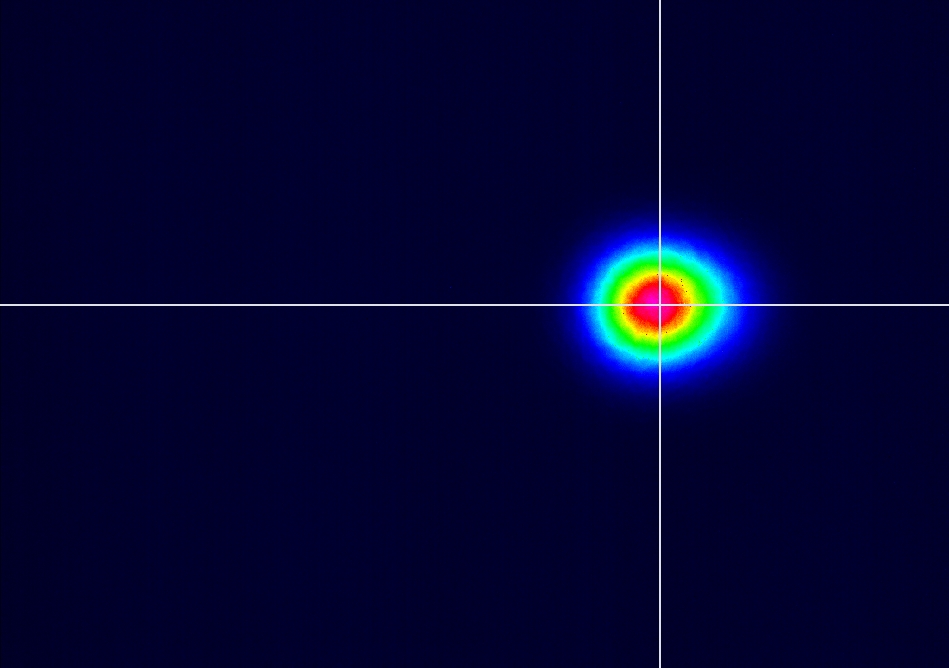
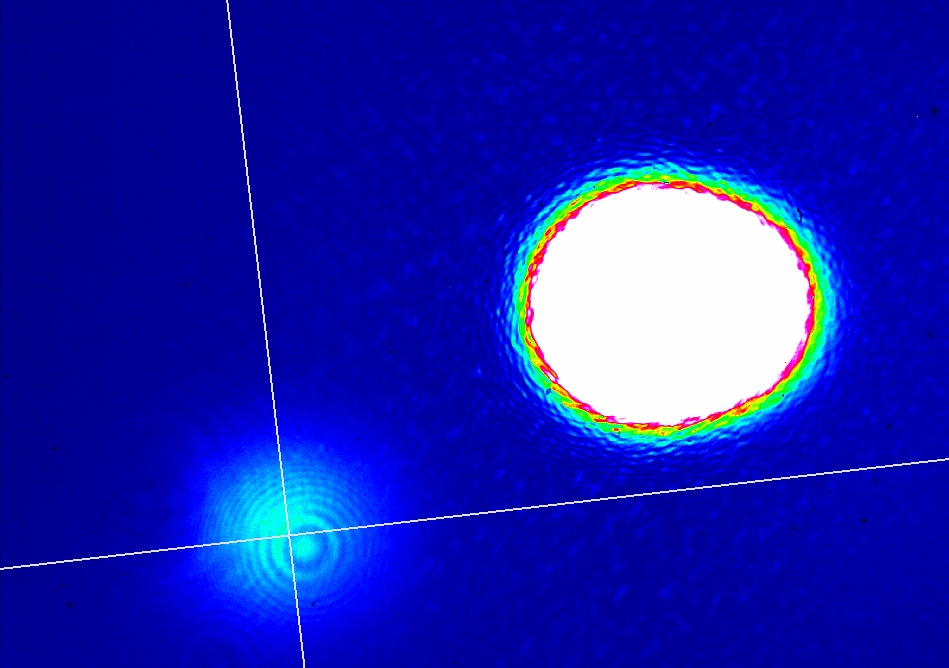
Manar Amer | Fixed | report | lasers and optics | Optical room | M1 ThomX used while shifted from damaged spot | On Wednesday 21st , I opened the cavity did an additional 2 mm shift of the injection mirror and put it under vacuum again.
Locked the cavity, and observed the transmitted beam.
The second spot is still visible on the beam profiler , the distance difference between the 2 spots is ~ 5.2 mm (the same as before )
no difference in distance, decreases the likelihood that it is from the damage (to be investigated more)
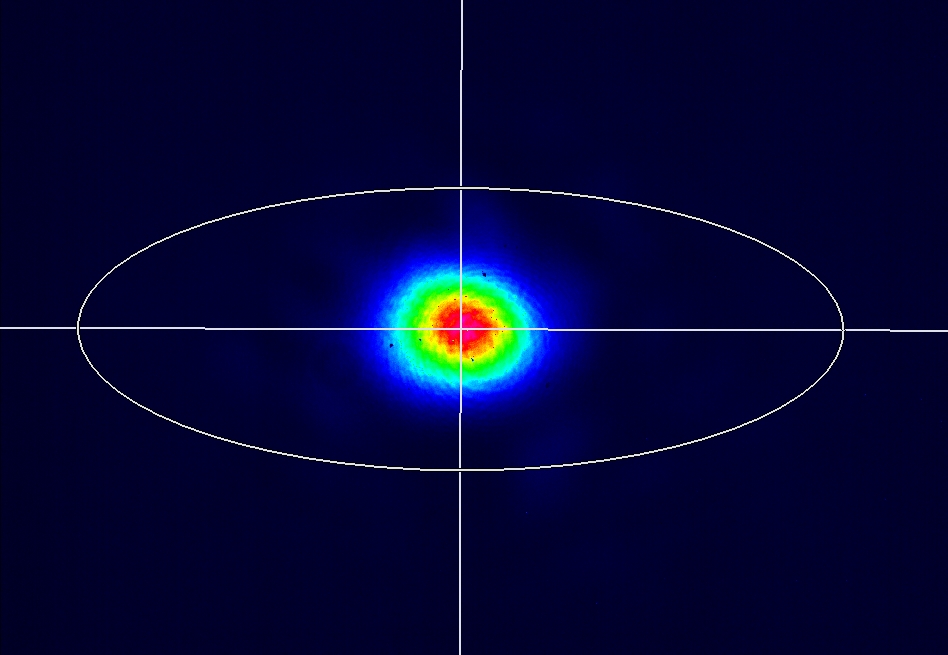
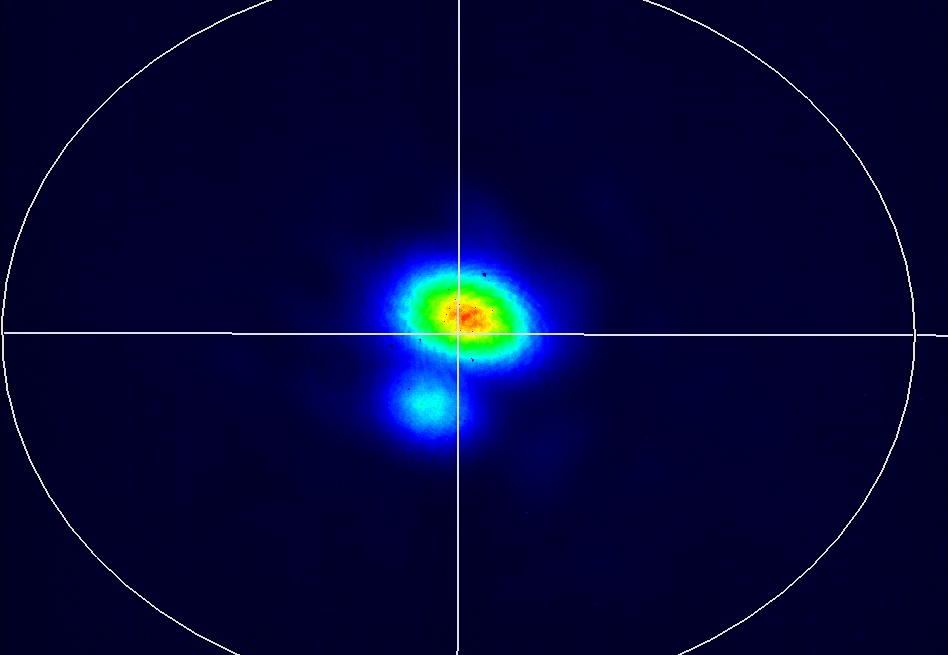
in addition, we have locked at the reflection from the cavity to confirm the spot next to the beam.
We took two images when the laser was locked with the cavity and when it was not.
We clearly see that the spot is indeed related to the mode of the cavity. And probably the damaged spot.
(Difference is size on the reflection image is due to the distance is larger than the transmission + the spherical mirror effect is not there)
| Manar Amer wrote: |
|
To compare between the 2 images of the cavity mode:
- the mode by itself has an integration time of 0.06 ms, position (x, y) = (1142.969, -53.932) um on the beam profiler
- the mode saturated with the spot next to it almost at max intensity has an integration time of 50 ms, position (-3700, -2000) um
comparing the positions of both spots, they have difference (4842.969, 2053.932) um
------ > total difference on the beam profiler ~ 5.3 mm , the distance from the spherical mirror to the beam profiler is ~ 40 cm
| Manar Amer wrote: |
|
Yesterday , we locked the cavity and we see a sign of a high finesse on the transmission signal, but no measurement of Finesse was done.
we have a coupling of ~ 45%, which is a loss of 20% from the previous coupling of 60%
an estimate done by Ronic MATLAB simulation for the coupling drop where we have 200 pp additional losses and gain of 2.6 k we should get a transmission of 1.1 mW for injected power of ~ 300 mW
which is consistent with the power measured after a 50% beam splitter on transmission we got 0.51 mW (total would be 1.02mW)
in addition, there is a beam that is next to the mode of the cavity , confirmed it was not a reflection from the beam splitter or the optics.
it could be that we are still close to the damaged spot ?
| Manar Amer wrote: |
|
ThomX injection mirror has been cleaned and placed again inside the optical cavity.
This time to avoid the damaged spot I have displaced the mirror mount horizontally to have a distance between center of the beam and the spot ~ 2.5 - 3 mm.
The alignment was affected slightly but recovered by adjusting the mirror mount nobs, (00 mode observed in air)
The cavity was closed is being pumped with vacuum.
To be done: adjust the cavity length and find the resonance, improve the outer alignment, lock the cavity
| Manar Amer wrote: |
|
a better image of the damaged spot, image taken with the arrow for the reflective surface facing the other direction (image shows position)
The image of M1 for ThomX reflective surface was taken at min zoom (full image scale 13 mm) and max zoom (full image scale 2 mm) on microscope
The spot appears to be not close to the center of the mirror, at max zoom in the center we do not see the spot it is just out of the image
the last image has the mirror position adjusted to center the damaged spot for a better image of it.
| Manar Amer wrote: |
|
After discussing, we have decided against shifting the mirror to avoid the time lost.
We changed the injection mirror to a different mirror from Mighty Laser set, Transmission of mirror 80 ppm. (no visible damage at the center of the mirror, only a small scratch on the back)
mirror cleaned using pure ethanol and pure water with spin coater, also the spherical mirror was cleaned again.
| Manar Amer wrote: |
|
Tomorrow will try to shift the injection mirror to avoid hitting the damaged spot.
| Manar Amer wrote: |
|
Following the storage of ~ 50 kW inside the cavity and a sudden drop in transmitted power from the cavity
damage to the mirror surface was suspected.
We broke vacuum and took images of the surface of the 2 mirrors in the cavity, the spherical and the planar mirror
image 1 , spherical reflective surface (no visible damage with the UV light, and no visible damage under the microscope)
image 2 , planar coupler mirror reflective surface (no visible damage under UV light, but under the microscope there is a damaged spot close to the center)
image 4 is the planar surface reflective surface at zoom 8 on the microscope.
|
|
|
|
|
|
|
|
| Attachment 1: 00mode_damaged_0_26ms.jpg
|  |
| Attachment 2: 00mode_damaged_saturted_50ms.jpg
|  |
| Attachment 3: reflection_noLock.jpg
|  |
| Attachment 4: reflection_Lock_0_15ms.jpg
|  |
|
171
|
Tue Sep 27 19:30:49 2022 |
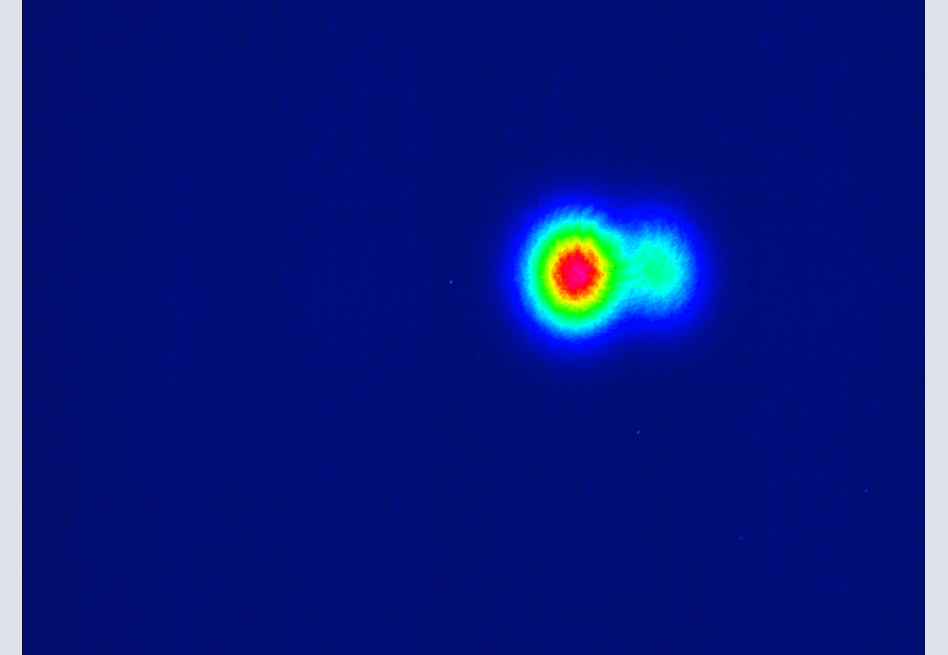
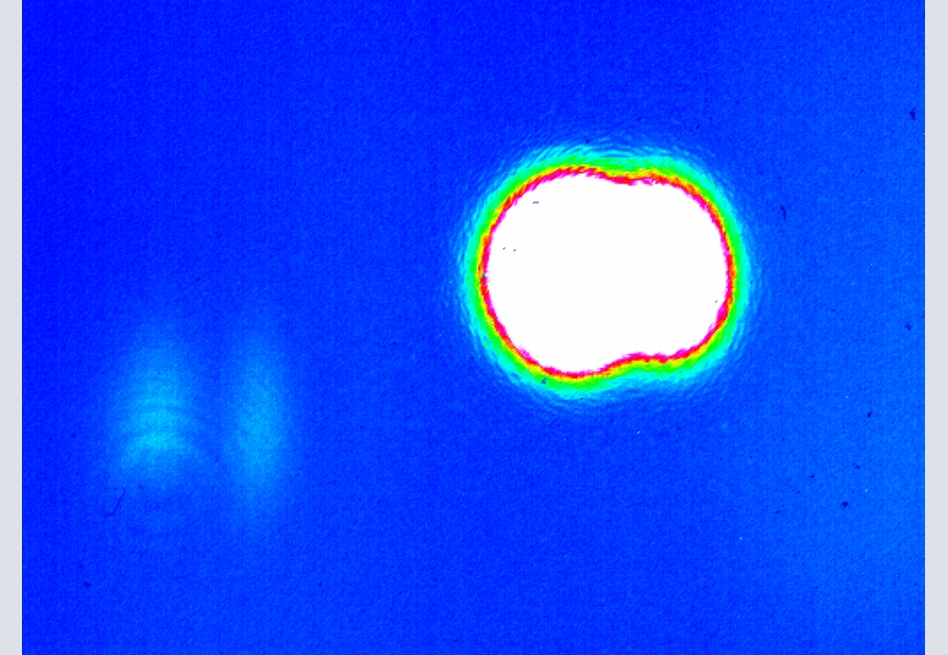
Manar Amer | Fixed | report | lasers and optics | Optical room | M1 Gamma Factory | In the morning, Vacuum broken and rotated M1 ThomX 90 degrees clockwise, locked the cavity in air and we observe a degeneracy close to the fundamental mode.
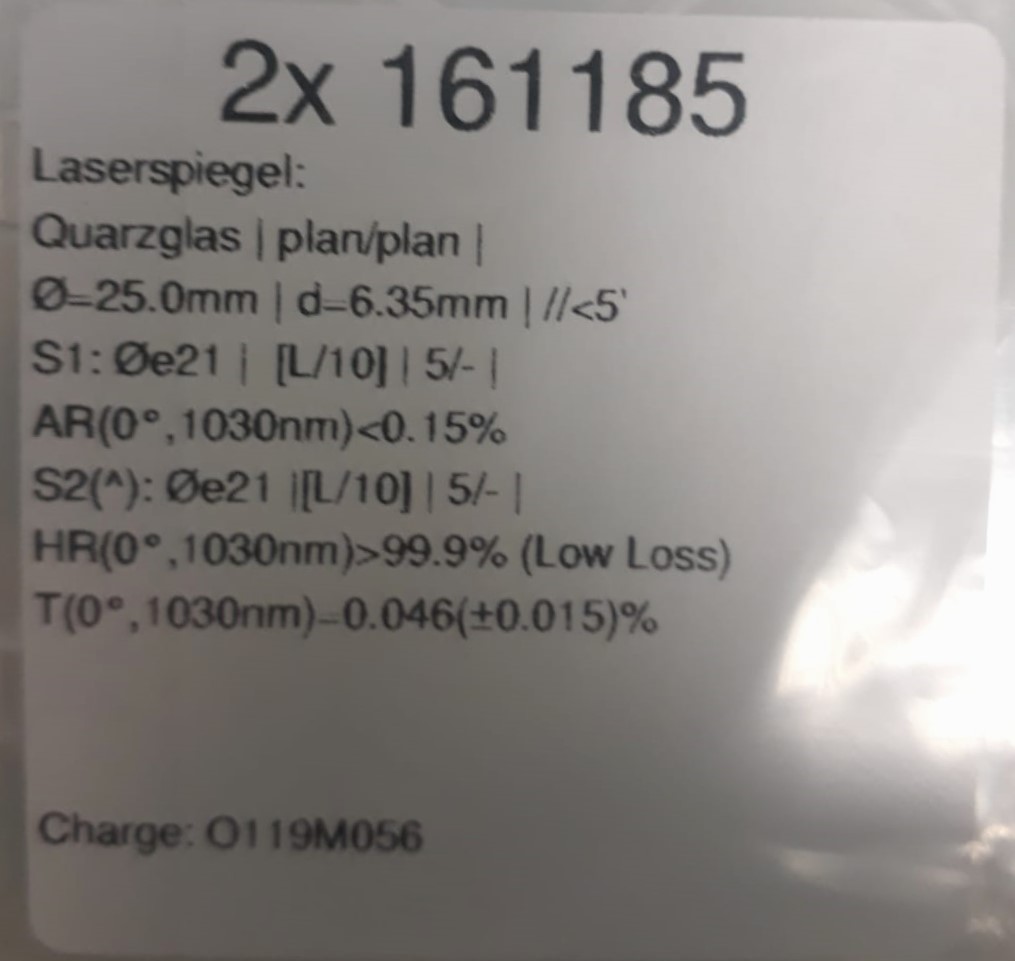
In the afternoon, I cleaned M1 from Gamma factory using pure ethanol and pure water with the spincoater
then placed it as the coupling mirror, aligned and locked in air. we observed similar degeneracy to before next to the fundamental mode.
During the process, M2 spherical from ThomX installed in the cavity was not changed. There could be damage on it, will investigate tomorrow.
| Manar Amer wrote: |
|
On Wednesday 21st , I opened the cavity did an additional 2 mm shift of the injection mirror and put it under vacuum again.
Locked the cavity, and observed the transmitted beam.
The second spot is still visible on the beam profiler , the distance difference between the 2 spots is ~ 5.2 mm (the same as before )
no difference in distance, decreases the likelihood that it is from the damage (to be investigated more)
in addition, we have locked at the reflection from the cavity to confirm the spot next to the beam.
We took two images when the laser was locked with the cavity and when it was not.
We clearly see that the spot is indeed related to the mode of the cavity. And probably the damaged spot.
(Difference is size on the reflection image is due to the distance is larger than the transmission + the spherical mirror effect is not there)
| Manar Amer wrote: |
|
To compare between the 2 images of the cavity mode:
- the mode by itself has an integration time of 0.06 ms, position (x, y) = (1142.969, -53.932) um on the beam profiler
- the mode saturated with the spot next to it almost at max intensity has an integration time of 50 ms, position (-3700, -2000) um
comparing the positions of both spots, they have difference (4842.969, 2053.932) um
------ > total difference on the beam profiler ~ 5.3 mm , the distance from the spherical mirror to the beam profiler is ~ 40 cm
| Manar Amer wrote: |
|
Yesterday , we locked the cavity and we see a sign of a high finesse on the transmission signal, but no measurement of Finesse was done.
we have a coupling of ~ 45%, which is a loss of 20% from the previous coupling of 60%
an estimate done by Ronic MATLAB simulation for the coupling drop where we have 200 pp additional losses and gain of 2.6 k we should get a transmission of 1.1 mW for injected power of ~ 300 mW
which is consistent with the power measured after a 50% beam splitter on transmission we got 0.51 mW (total would be 1.02mW)
in addition, there is a beam that is next to the mode of the cavity , confirmed it was not a reflection from the beam splitter or the optics.
it could be that we are still close to the damaged spot ?
| Manar Amer wrote: |
|
ThomX injection mirror has been cleaned and placed again inside the optical cavity.
This time to avoid the damaged spot I have displaced the mirror mount horizontally to have a distance between center of the beam and the spot ~ 2.5 - 3 mm.
The alignment was affected slightly but recovered by adjusting the mirror mount nobs, (00 mode observed in air)
The cavity was closed is being pumped with vacuum.
To be done: adjust the cavity length and find the resonance, improve the outer alignment, lock the cavity
| Manar Amer wrote: |
|
a better image of the damaged spot, image taken with the arrow for the reflective surface facing the other direction (image shows position)
The image of M1 for ThomX reflective surface was taken at min zoom (full image scale 13 mm) and max zoom (full image scale 2 mm) on microscope
The spot appears to be not close to the center of the mirror, at max zoom in the center we do not see the spot it is just out of the image
the last image has the mirror position adjusted to center the damaged spot for a better image of it.
| Manar Amer wrote: |
|
After discussing, we have decided against shifting the mirror to avoid the time lost.
We changed the injection mirror to a different mirror from Mighty Laser set, Transmission of mirror 80 ppm. (no visible damage at the center of the mirror, only a small scratch on the back)
mirror cleaned using pure ethanol and pure water with spin coater, also the spherical mirror was cleaned again.
| Manar Amer wrote: |
|
Tomorrow will try to shift the injection mirror to avoid hitting the damaged spot.
| Manar Amer wrote: |
|
Following the storage of ~ 50 kW inside the cavity and a sudden drop in transmitted power from the cavity
damage to the mirror surface was suspected.
We broke vacuum and took images of the surface of the 2 mirrors in the cavity, the spherical and the planar mirror
image 1 , spherical reflective surface (no visible damage with the UV light, and no visible damage under the microscope)
image 2 , planar coupler mirror reflective surface (no visible damage under UV light, but under the microscope there is a damaged spot close to the center)
image 4 is the planar surface reflective surface at zoom 8 on the microscope.
|
|
|
|
|
|
|
|
|
| Attachment 1: 00mode_ThomX_Mirror_degeneracySpot_1point04ms.jpg
|  |
| Attachment 2: 00mode_ThomX_Mirror_degeneracySpot_saturateat50.jpg
|  |
| Attachment 3: Coupling_mirror_.jpeg
|  |
|
172
|
Wed Sep 28 18:43:51 2022 |
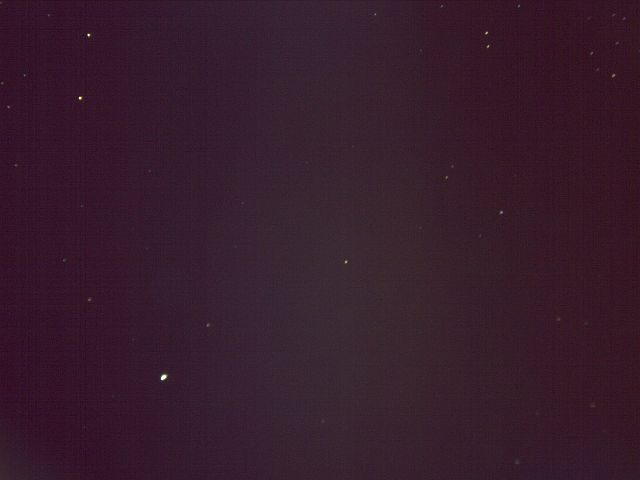
Manar Amer | Fixed | report | lasers and optics | Optical room | M2 ThomX spherical Cleaning | Today, M2 Spherical-3 from ThomX that was installed inside the SBox was removed, there was one big dust on the surface of the mirror, mirror was cleaned
using pure ethanol and pure water with spincoater. (images taken with arrow far from us)
M1 from Gamma factory, fixed with the addition of the ring with 3 screws.
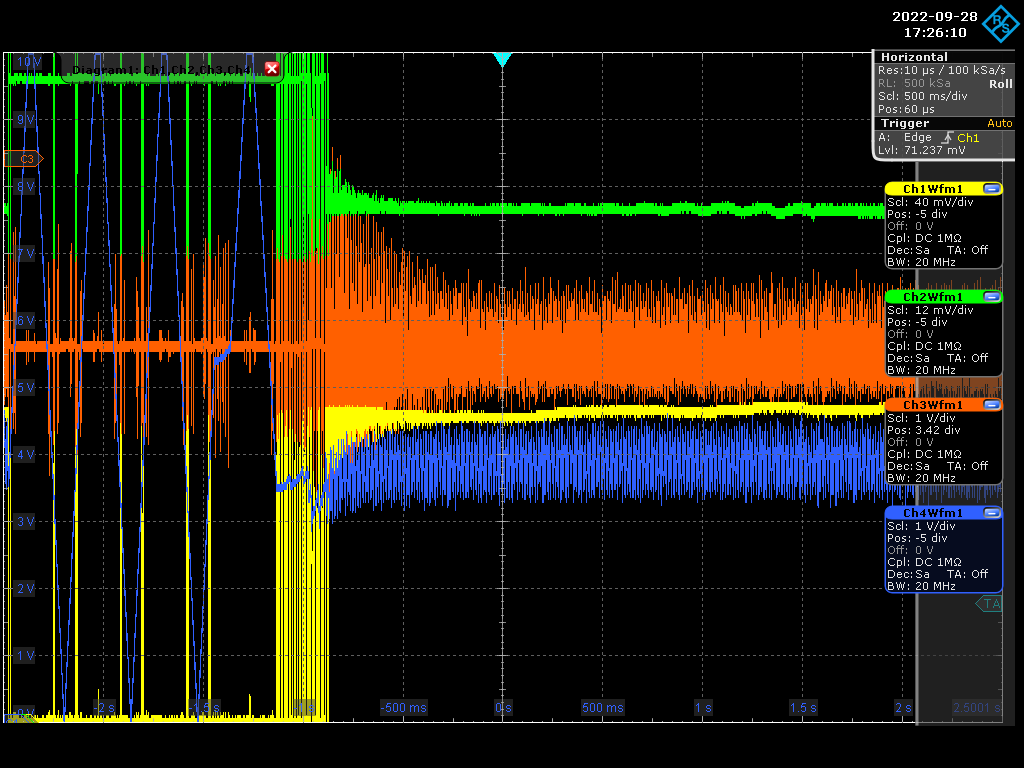
The mode was immediately seen after, did not have to align. After locking the cavity, we do not see the degeneracy resonance we saw yesterday.
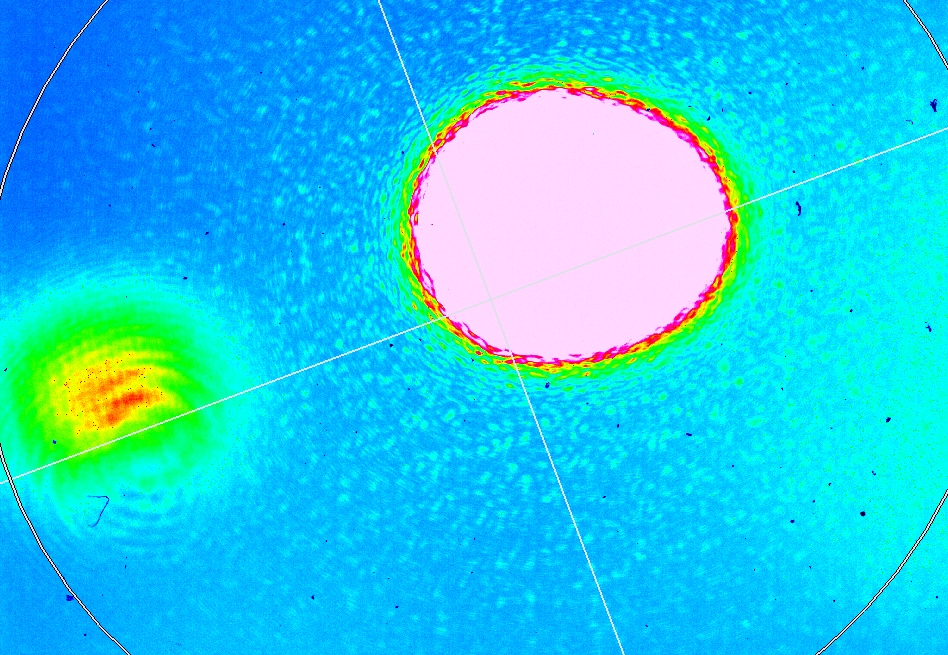
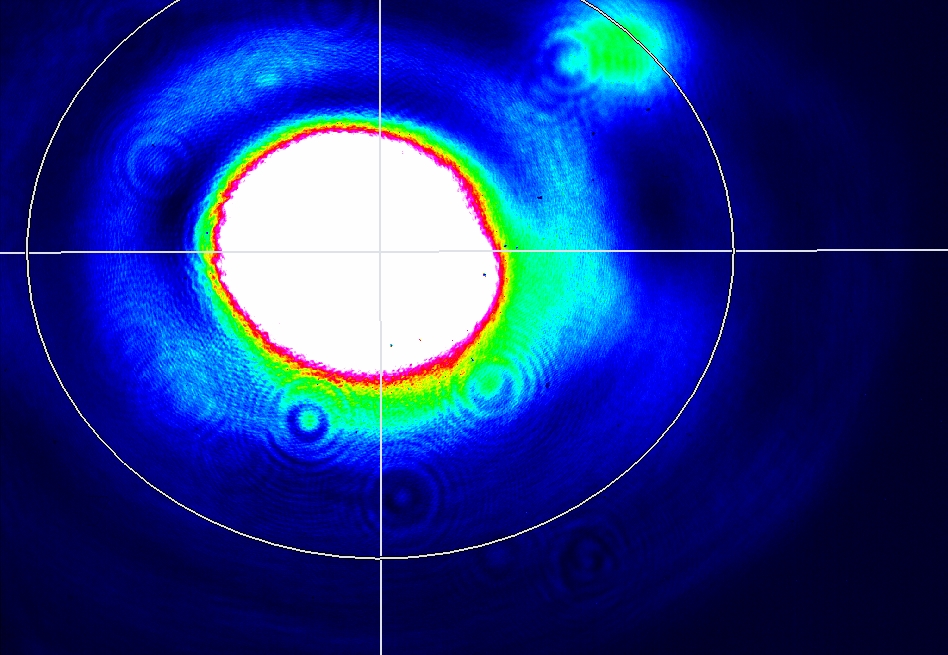
But we still see the spot on the bottom left of the mode in transmission. The integration time for both centers maximums were 0.34 for mode and 200 for spot.
After optimizing the polarization and the CEP, we managed to get a coupling of ~ 25%
| Manar Amer wrote: |
|
In the morning, Vacuum broken and rotated M1 ThomX 90 degrees clockwise, locked the cavity in air and we observe a degeneracy close to the fundamental mode.
In the afternoon, I cleaned M1 from Gamma factory using pure ethanol and pure water with the spincoater
then placed it as the coupling mirror, aligned and locked in air. we observed similar degeneracy to before next to the fundamental mode.
During the process, M2 spherical from ThomX installed in the cavity was not changed. There could be damage on it, will investigate tomorrow.
| Manar Amer wrote: |
|
On Wednesday 21st , I opened the cavity did an additional 2 mm shift of the injection mirror and put it under vacuum again.
Locked the cavity, and observed the transmitted beam.
The second spot is still visible on the beam profiler , the distance difference between the 2 spots is ~ 5.2 mm (the same as before )
no difference in distance, decreases the likelihood that it is from the damage (to be investigated more)
in addition, we have locked at the reflection from the cavity to confirm the spot next to the beam.
We took two images when the laser was locked with the cavity and when it was not.
We clearly see that the spot is indeed related to the mode of the cavity. And probably the damaged spot.
(Difference is size on the reflection image is due to the distance is larger than the transmission + the spherical mirror effect is not there)
| Manar Amer wrote: |
|
To compare between the 2 images of the cavity mode:
- the mode by itself has an integration time of 0.06 ms, position (x, y) = (1142.969, -53.932) um on the beam profiler
- the mode saturated with the spot next to it almost at max intensity has an integration time of 50 ms, position (-3700, -2000) um
comparing the positions of both spots, they have difference (4842.969, 2053.932) um
------ > total difference on the beam profiler ~ 5.3 mm , the distance from the spherical mirror to the beam profiler is ~ 40 cm
| Manar Amer wrote: |
|
Yesterday , we locked the cavity and we see a sign of a high finesse on the transmission signal, but no measurement of Finesse was done.
we have a coupling of ~ 45%, which is a loss of 20% from the previous coupling of 60%
an estimate done by Ronic MATLAB simulation for the coupling drop where we have 200 pp additional losses and gain of 2.6 k we should get a transmission of 1.1 mW for injected power of ~ 300 mW
which is consistent with the power measured after a 50% beam splitter on transmission we got 0.51 mW (total would be 1.02mW)
in addition, there is a beam that is next to the mode of the cavity , confirmed it was not a reflection from the beam splitter or the optics.
it could be that we are still close to the damaged spot ?
| Manar Amer wrote: |
|
ThomX injection mirror has been cleaned and placed again inside the optical cavity.
This time to avoid the damaged spot I have displaced the mirror mount horizontally to have a distance between center of the beam and the spot ~ 2.5 - 3 mm.
The alignment was affected slightly but recovered by adjusting the mirror mount nobs, (00 mode observed in air)
The cavity was closed is being pumped with vacuum.
To be done: adjust the cavity length and find the resonance, improve the outer alignment, lock the cavity
| Manar Amer wrote: |
|
a better image of the damaged spot, image taken with the arrow for the reflective surface facing the other direction (image shows position)
The image of M1 for ThomX reflective surface was taken at min zoom (full image scale 13 mm) and max zoom (full image scale 2 mm) on microscope
The spot appears to be not close to the center of the mirror, at max zoom in the center we do not see the spot it is just out of the image
the last image has the mirror position adjusted to center the damaged spot for a better image of it.
| Manar Amer wrote: |
|
After discussing, we have decided against shifting the mirror to avoid the time lost.
We changed the injection mirror to a different mirror from Mighty Laser set, Transmission of mirror 80 ppm. (no visible damage at the center of the mirror, only a small scratch on the back)
mirror cleaned using pure ethanol and pure water with spin coater, also the spherical mirror was cleaned again.
| Manar Amer wrote: |
|
Tomorrow will try to shift the injection mirror to avoid hitting the damaged spot.
| Manar Amer wrote: |
|
Following the storage of ~ 50 kW inside the cavity and a sudden drop in transmitted power from the cavity
damage to the mirror surface was suspected.
We broke vacuum and took images of the surface of the 2 mirrors in the cavity, the spherical and the planar mirror
image 1 , spherical reflective surface (no visible damage with the UV light, and no visible damage under the microscope)
image 2 , planar coupler mirror reflective surface (no visible damage under UV light, but under the microscope there is a damaged spot close to the center)
image 4 is the planar surface reflective surface at zoom 8 on the microscope.
|
|
|
|
|
|
|
|
|
|
| Attachment 1: MS_directfromcavity_reduceSize.jpg
|  |
| Attachment 2: MS_afteralcholeswipe_reducedSize.jpg
|  |
| Attachment 3: Screenshot_2022-09-28_0_172610.png
|  |
| Attachment 4: 00mode0point34ms_transmission.jpg
|  |
| Attachment 5: 00mode_200ms.jpg
|  |
| Attachment 6: reflection_lock.jpg
|  |
|
173
|
Fri Jan 6 12:33:18 2023 |
Ronic Chiche | Fixed | info | lasers and optics | Optical room | Laser Menhir reinstallation + CVBG + fiber injection | The lab purchased the Menhir laser @ 216MHz.
it has been sent back to Menhir photonics for inspection, and then is now at lab.
it has been reinstalled to the SBOX setup with injection in a CVBG for pulse stretching before amplification.
the power after CVBG is 24mV.
the power coupled to the fiber is only 6.4mW => to be optimized.
the spectrum has been mesured after CVBG and seems correct : picture is attached.
|
| Attachment 1: MenhirJan2022.PNG
|  |
|
174
|
Thu Dec 7 09:09:27 2023 |
Ronic Chiche | Fixed | info | lasers and optics | ThomX igloo | New mirrors batch informations | the 2 files describe the specfications for the 16 mirrors ordered (4 for ThomX + spare, 4 for SBOX + spare) and the measurements made by the LMA.
I add also a 3rd file in which all the "special' mirrors are referenced. |
| Attachment 1: miroirs_puma_2022_thomx_Kbox.docx
|
| Attachment 2: Miroirs_à_1031_nm-ThomX_-_KBox_Mars_2023.pdf
|
| Attachment 3: Recap_miroirs_KBOX_et_THOMX.xlsx
|
|
175
|
Thu Dec 7 09:30:03 2023 |
Ronic Chiche | Fixed | info | mechanics | lasers and optics | detectors and electronics | software | Optical room | new setup for the 160MHz Menhir oscillator | from the begining of the week, Xinyi, Aurélien, Viktor and myself started to install a new setup for the Menhir 160MHz oscillator.
the goal is to rich a record power in the FP-cavity.
- the 160MHz Menhir oscillator has been injected in a fiber.
we reached ~ 25mV on 50ohms which is equivalent to 0.5mA in a DET10 photodiode.
=> ~1mW coupled in the fiber => it is not enough to put an EOM and an AOM before the amplifier.
=> one needs to improve the fiber injection.
in fact, I checked the power in the fiber with a powermeter, and it is ~16mW !
at this level of power, one needs to add some optical density before connecting to a photodiode, or it can be saturated.
- we calculated the mirrors position in the SBOX vessel to obtain a 160MHz FSR FP-cavity.
see in attached files, the calculations and scheme in the PPTX file and the Matlab code to get some results.
- we cleaned the optical table and verified with the dust counter that the SBOX environnement is clean.
the 2nd airflow box (from the entrance) seems more dusty (measureed directly close to the top) than the others.
we also opened the vessel and cleaned it.
see the dust measurement inside the SBOX.
- we checked the motors inside the vessel :
=> spherical and plan mirrors translation stage control with the ESP300.
the translation stage have been placed on the middle of their range.
=> the 2 D-shape mirrors translation stage control with PICOMOTORS controller Newport 8742.
- today, Viktor and Xinyi should start the installation of the mirrors mount and make some test to check if the beam is properly propagated inside the FP-cavity, before installing the final mirrors.
the mirror mounts are the Newport SU100TW-F2K zero-drift low waveform distortion : https://www.newport.com/p/SU100TW-F2K
they can accept mirrors with 6-6.35mm thickness => normally the SBOX mirrors from the LMA have a 6.35mm thickness.
see 1st file from this post : https://elog.lal.in2p3.fr/FPC/SBOX+commissioning/174 |
| Attachment 1: Plan_SBOX_@_160MHz.pptx
|
| Attachment 2: Implantation_disymmetric.m
|
clear
clc

% simulation parameters
c=299792458;            % light speed in vacuum
Frep=160.3084e6;        % laser repetition rate
D=0.07;                 % side distance between "output" windows of the vessel
DR=0.12;                % side distance between "input" windows of the vessel
L0=1.02;                % cavity box length
L3=0.505;               % distance between spherical mirrors

theta1=linspace(0.115,0.120,1e3);

% calculated parameters
Lrt=c/Frep;
theta2=2*atan(1./((Lrt/D)-1./tan(theta1/2)));
L2=D./sin(theta2);
L4=D./sin(theta1);
L1=Lrt-L2-L3-L4;

LM3=(DR-D)./tan(theta2);
LM2=L0-DR./tan(theta2);
LM1=L0-L1-LM2;
LM4=L0-L3-LM3;

id=LM1>0.15 & LM2>0.15 & LM3>0.15 & LM4>0.15 & abs(LM1-LM3)>0.08 & abs(LM2-LM4)>0.08;
L1(~id)=0;
L2(~id)=0;
L4(~id)=0;
LM1(~id)=0;
LM2(~id)=0;
LM3(~id)=0;
LM4(~id)=0;

figure(1)
clf
plot(theta1*1e3,L1)
hold on
plot(theta1*1e3,L2)
plot(theta1*1e3,L4)
plot(theta1*1e3,LM1)
plot(theta1*1e3,LM2)
plot(theta1*1e3,LM3)
plot(theta1*1e3,LM4)
grid on
legend('L1','L2','L4','LM1','LM2','LM3','LM4','location','best')
xlabel('theta1 angle (mrad)')
ylabel('length parameters (m)')

id=find(id~=0);
id=id(1);

disp(['LRT = ' num2str(Lrt) ' m'])
disp(['D = ' num2str(D*1e3) ' mm'])
disp(['theta1 = ' num2str(theta1(id)*1e3) ' mrad'])
disp(['theta2 = ' num2str(theta2(id)*1e3) ' mrad'])
disp(['L1 = ' num2str(L1(id)*1e3) ' mm'])
disp(['L2 = ' num2str(L2(id)*1e3) ' mm'])
disp(['L3 = ' num2str(L3*1e3) ' mm'])
disp(['L4 = ' num2str(L4(id)*1e3) ' mm'])
disp(' ')
disp(['L0 = ' num2str(L0) ' m'])
disp(['DR = ' num2str(DR*1e3) ' mm'])
disp(['LM1 = ' num2str(LM1(id)*1e3) ' mm'])
disp(['LM2 = ' num2str(LM2(id)*1e3) ' mm'])
disp(['LM3 = ' num2str(LM3(id)*1e3) ' mm'])
disp(['LM4 = ' num2str(LM4(id)*1e3) ' mm'])
disp(['LM3-LM1 = ' num2str((LM3(id)-LM1(id))*1e3) ' mm'])
disp(['LM2-LM4 = ' num2str((LM2(id)-LM4(id))*1e3) ' mm'])
|
| Attachment 3: IMG_20210519_155329.jpg
|  |
|
176
|
Fri Dec 8 18:59:24 2023 |
Xinyi Lu | Fixed | report | lasers and optics | Optical room | Mounts installation and cavity alignment | Over the last two days, Viktor, Ronic and I have started to install the mirror mounts and try to align the cavity.
- We used the Menhir laser @ 160MHz for alignment.
- To make it easier to operate, we removed some lenses and waveplates, and kept only a few necessary reflective mirrors.
- We measured the distance with rulers and placed the mounts in designed positions.
- We installed Iris on the mirror mounts, used a CCD camera to determine if the beam was in the center, and optimized the two reflective mirrors outside the cavity.
- There were some problems with the controller of the injection mirrors (Newport™) in front of the cavity, and Ronic has fixed them successfully.
- Next week, we will continue to align the cavity, measure the cavity mode, and design the telescope. We will install the old SBX mirrors for alignment first, and then replace them with the final good mirrors. |
|
177
|
Thu Dec 14 17:52:53 2023 |
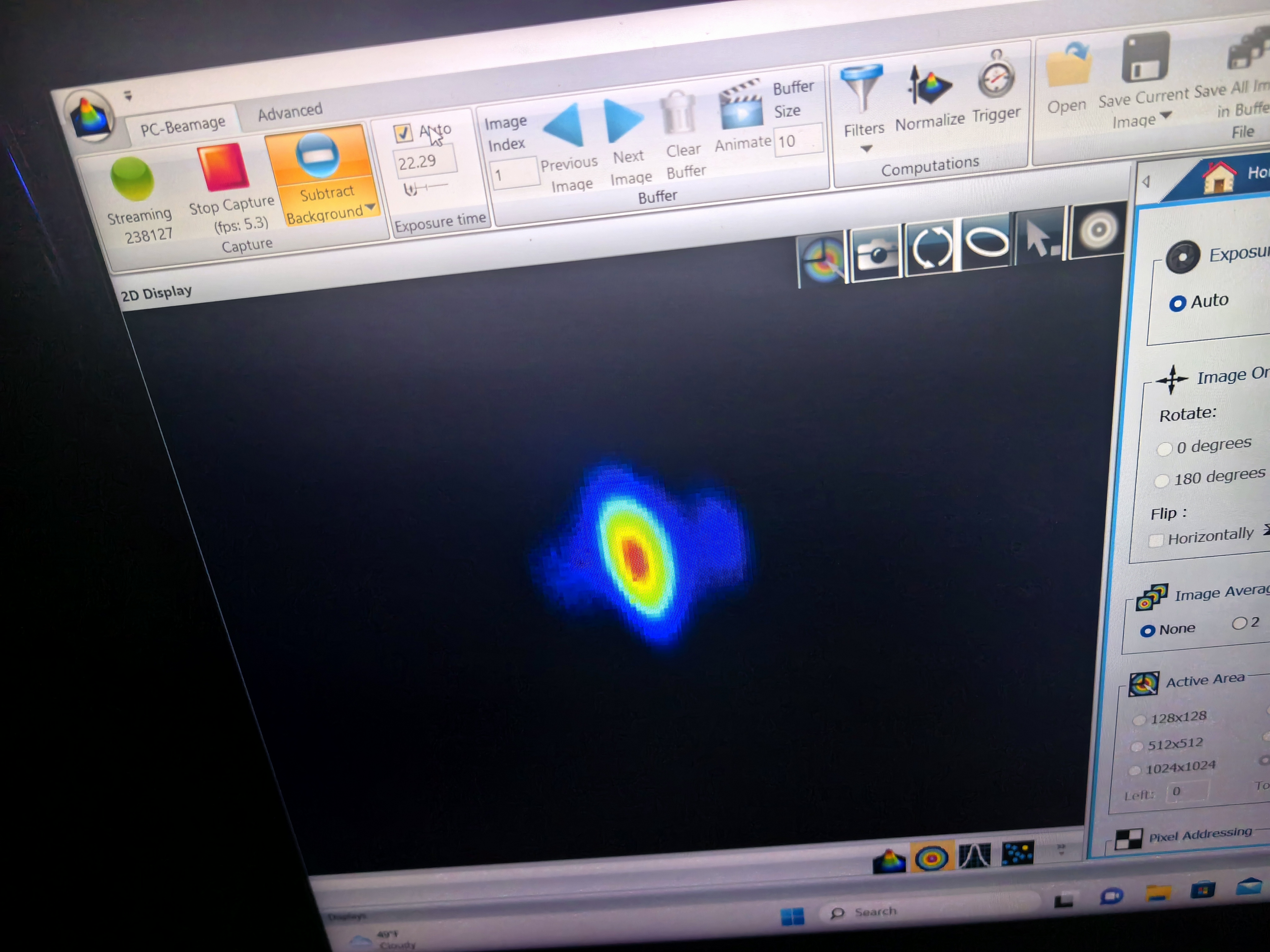
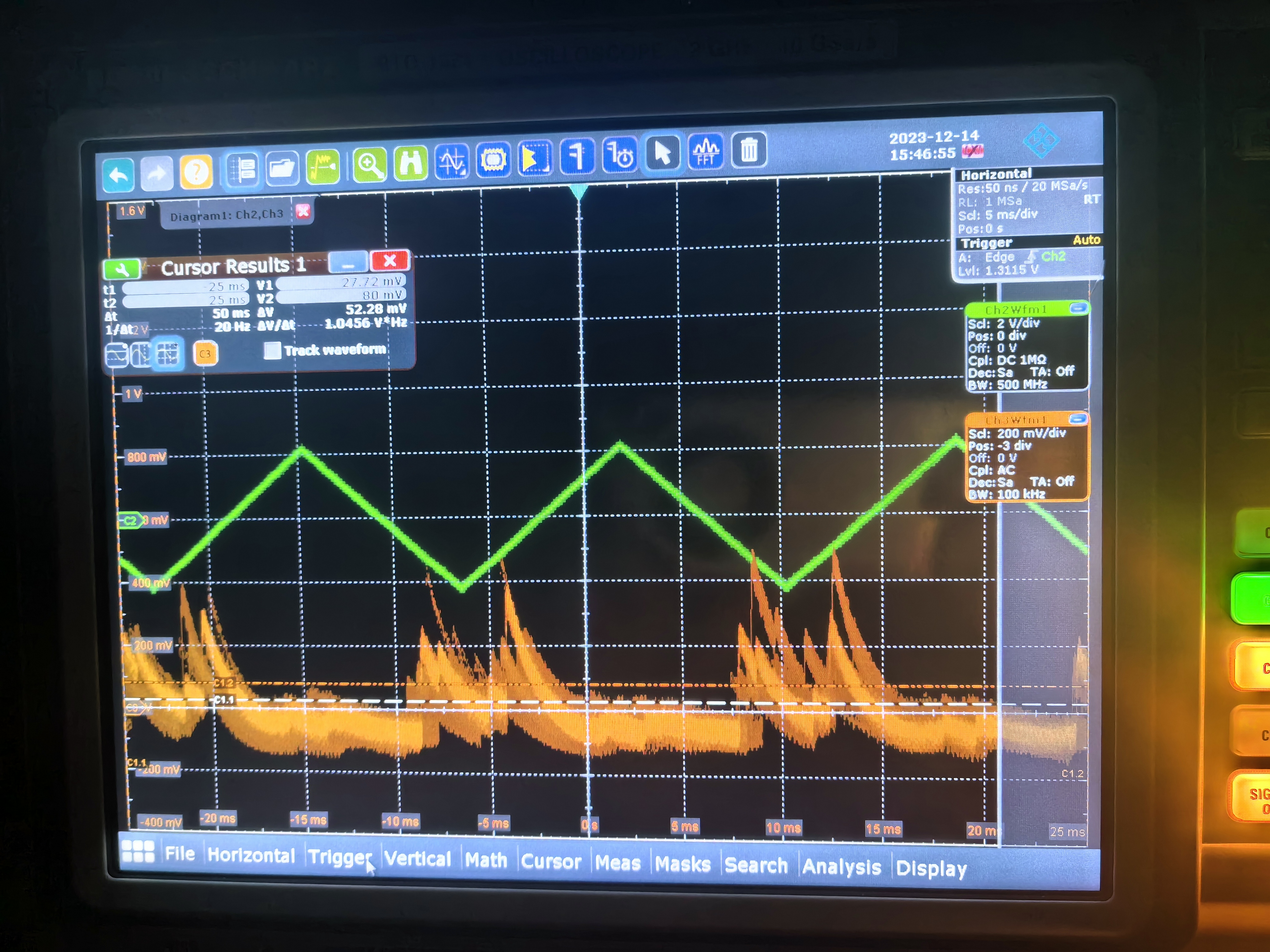
Xinyi Lu | Fixed | report | lasers and optics | Optical room | Mounts installation and cavity alignment | Over the past few days, Viktor, Ronic and I have continued to align the cavity. We installed 4 mirrors and monitored the transmitted laser with a CCD and photodiode. By adjusting the motors of the cavity mirror stages and the injector mirrors, we obtained resonances and less symmetric TEM20-like patterns. Possible reasons for this are a mismatch between the beam sizes of the laser and the cavity mode, and the mounts are installed in rough positions.
Tomorrow, we plan to use the CW laser to realign the optical cavity and position the mounts more precisely.
| Xinyi Lu wrote: |
|
Over the last two days, Viktor, Ronic and I have started to install the mirror mounts and try to align the cavity.
- We used the Menhir laser @ 160MHz for alignment.
- To make it easier to operate, we removed some lenses and waveplates, and kept only a few necessary reflective mirrors.
- We measured the distance with rulers and placed the mounts in designed positions.
- We installed Iris on the mirror mounts, used a CCD camera to determine if the beam was in the center, and optimized the two reflective mirrors outside the cavity.
- There were some problems with the controller of the injection mirrors (Newport™) in front of the cavity, and Ronic has fixed them successfully.
- Next week, we will continue to align the cavity, measure the cavity mode, and design the telescope. We will install the old SBX mirrors for alignment first, and then replace them with the final good mirrors.
|
|
| Attachment 1: CCD.jpg
|  |
| Attachment 2: oscillograph.jpg
|  |
|
178
|
Wed Dec 20 10:45:37 2023 |
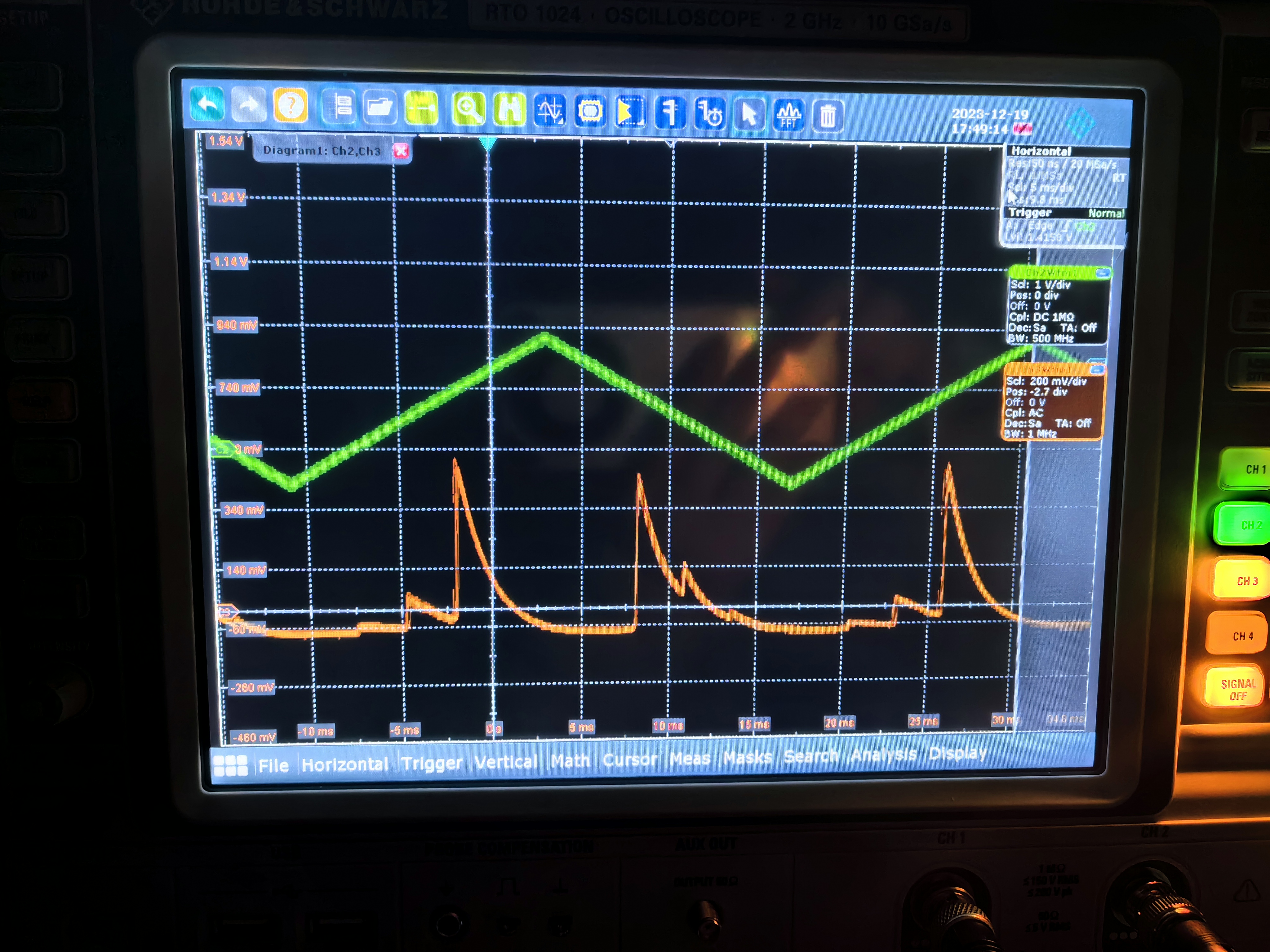
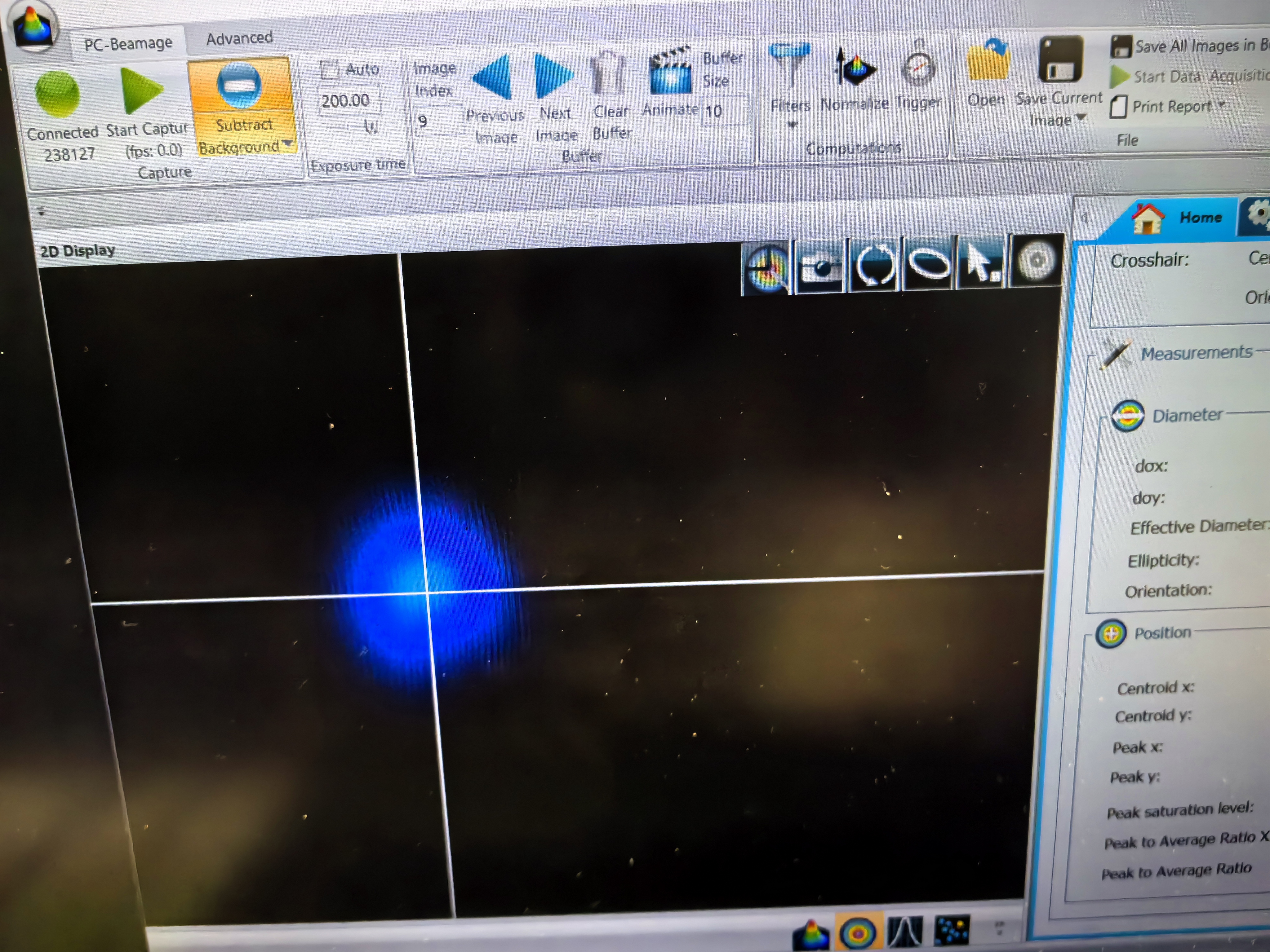
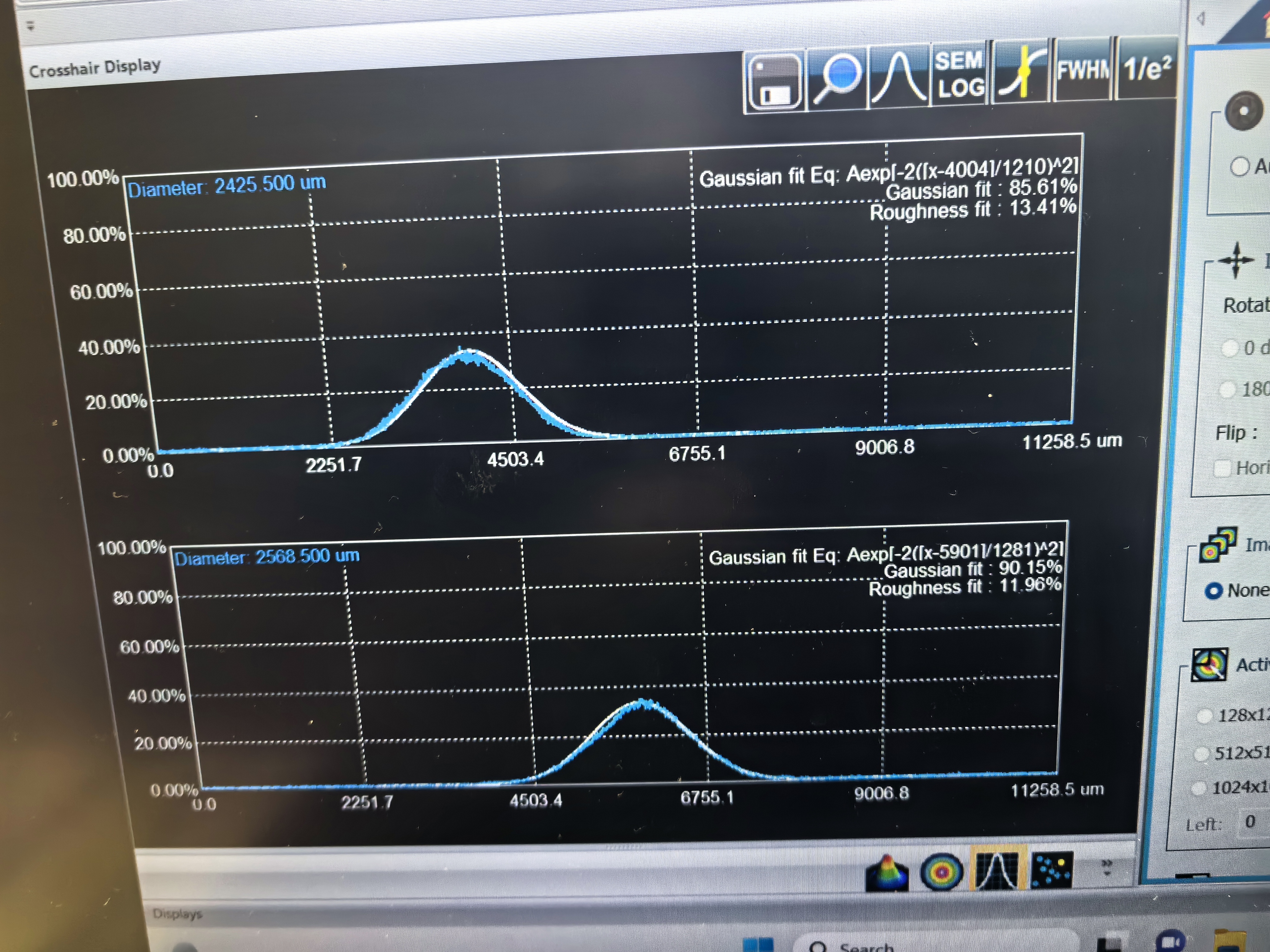
Xinyi Lu | Fixed | report | lasers and optics | Optical room | Mounts installation and cavity alignment | - Over the last few days, Viktor, Ronic and I have reinstalled the mounts and realigned the cavity with CW laser and old mirrors. By optimizing the injector mirrors, we got the fundamental mode at the transmission. We measured the beam size in the M2 window with a diameter of 2.5 mm.
- The current coupling efficiency is low. There is a need to increase the coupling in order to lock the cavity and measure FSR and finesse.
- The next step is to measure the incident light parameters and design the telescope to improve the coupling efficiency.
| Xinyi Lu wrote: |
|
Over the past few days, Viktor, Ronic and I have continued to align the cavity. We installed 4 mirrors and monitored the transmitted laser with a CCD and photodiode. By adjusting the motors of the cavity mirror stages and the injector mirrors, we obtained resonances and less symmetric TEM20-like patterns. Possible reasons for this are a mismatch between the beam sizes of the laser and the cavity mode, and the mounts are installed in rough positions.
Tomorrow, we plan to use the CW laser to realign the optical cavity and position the mounts more precisely.
| Xinyi Lu wrote: |
|
Over the last two days, Viktor, Ronic and I have started to install the mirror mounts and try to align the cavity.
- We used the Menhir laser @ 160MHz for alignment.
- To make it easier to operate, we removed some lenses and waveplates, and kept only a few necessary reflective mirrors.
- We measured the distance with rulers and placed the mounts in designed positions.
- We installed Iris on the mirror mounts, used a CCD camera to determine if the beam was in the center, and optimized the two reflective mirrors outside the cavity.
- There were some problems with the controller of the injection mirrors (Newport™) in front of the cavity, and Ronic has fixed them successfully.
- Next week, we will continue to align the cavity, measure the cavity mode, and design the telescope. We will install the old SBX mirrors for alignment first, and then replace them with the final good mirrors.
|
|
|
| Attachment 1: resonances.jpg
|  |
| Attachment 2: cavity_mode.jpg
|  |
| Attachment 3: cavity_mode_diameter.jpg
|  |
|