| ID |
Date |
Author |
Status |
Type |
Category |
Location |
Title |
|
9
|
Thu Apr 29 06:14:09 2021 |
Manar Amer | Fixed | report | lasers and optics | Other | Mode observed and cavity Lock |
** Following up from yesterday an observation about the TM00 mode : it has been seen with similar dimensions and its position is the same, this was before restarting the temperature regulator.
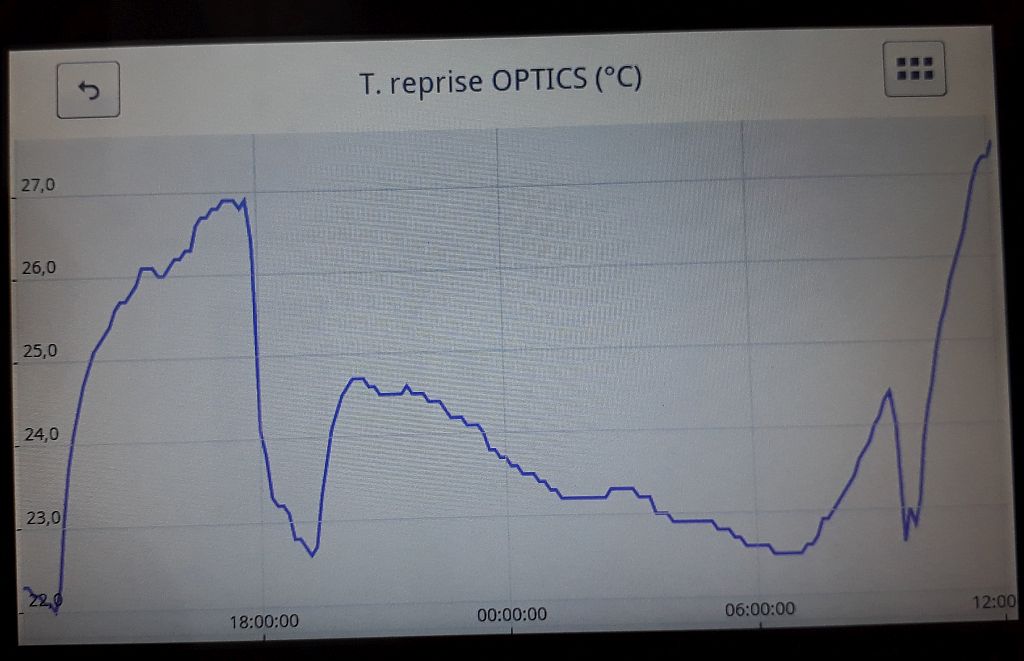
--> after restarting the temp. regulator there was a slight shift in the position (likely it is caused by the temperature variation, a temperature graph for during the morning is attached)
** Coupling of the cavity and koheras is observed (photo attached)
** Error curve measurement to be done.
- What we used before to do a frequency scan and lock the cavity was a function generator and an amplifier
- There is noise from the amplifier causing the sweep to pass through the cavity frequencies a lot.
- we shift to using LaseLock, it gives a very clean sweep ( a clean sweep meaning we have a resistance at the output of laselock combined with the capacitance in the Piezo input behind the koheras, this gives the time constant which affects the signal shape)
- Changes in the temperature of the koheras affects its wavelength and in turn the mode resonates in the cavity.
- note** when the mode is at the top peak of the sweep (Piezo ) meaning we are observing the resonance at the ends of the sweep, we increase the temperature of the laser very slightly to shit the sweep a little ( temp increase ~ 0.010 c , very small increase step by step )
- For observing the Mode Lock of the cavity, there are a few points to be aware of :
- Coupling Frequency -----{convention represented in blue curve}
- The reflection from the mirror M1 (cavity reflection) -----{convention represented in yellow curve}
- The transmission from the nirrors M2,M3,M4 ( what is resonating in the cavity) -----{convention represented in green curve}
- :When the laser is in resonance with the cavity "locked" the reflection decreases and power is stored momentarily in the cavity meaning the transmission increase that is why when the cavity is locked we see a decrease in the reflection (yellow curve) and at the same moment an increase in the cavity transmission (green curve)
- To be done : do a measurement of the error signal curve, what is needed :
- the reflected beam (split it into two ) -- one for coupling measurement done before and the other for the error signal curve
- PDH -- photodiode with bandwidth amplifier
- Function generator
- EOM
- ...
| Manar Amer wrote: |
|
Following the Helium Neon Alignment + change in the distance between the mirrors to be; M3-M4 = 90.5 mm , M1-M2 = 80.2 mm -→ The alignment using the Koheras CW laser is done.
- Additional components used:
- for monitoring beam : Photodiode (power of beam), Beam Profiler (shape, position, power , ... )
- for Koheras frequency scan: function generator, Amplifier or use lase-lock (had some issues to be checked)
- Telescope: made using 1 m focal length to match the beam shape of the cavity
- Observed during:
- The alignment is fairly similar to the previous one, placed two irises to preserve it.
- Fundamental mode observed (beam profiler after M2) was circular
- when the frequency scan was fine-tuned around the fundamental mode we could see the mode pulsing in the cavity, but there was a bit of instability.
- when doing a very wide frequency scan (50 V ~ 1.5 GHz), multiple modes where showing inside the cavity
Photos attached show:
- some resonating modes in the cavity
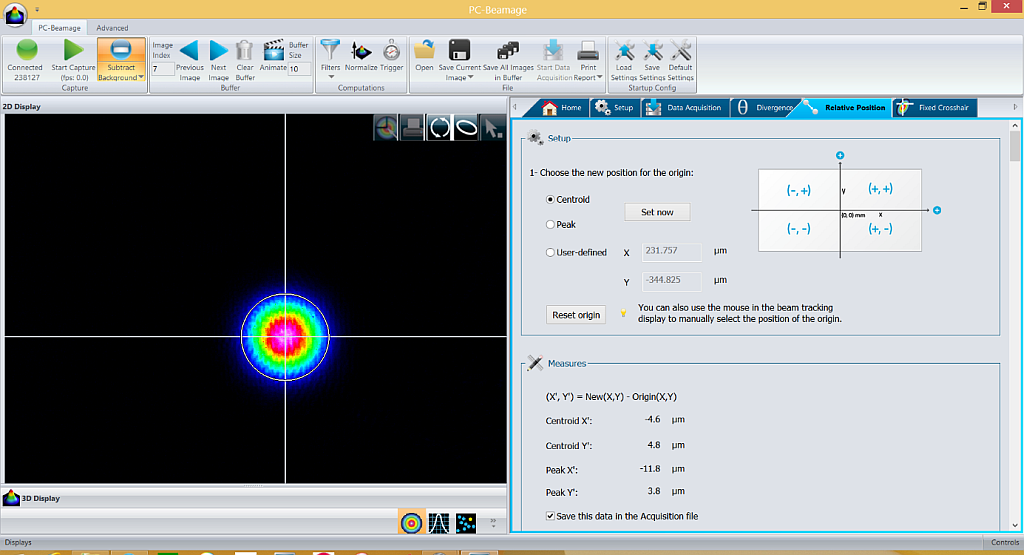
- Fundamental mode resonating in the cavity, with its properties (2D shape, 1D shape, position) ** The picture is taken after subtracting the background **
- from 2D it is very circular
- from 1D it is confirmed to be circular (715.00 um - 704.00 um)
- From position, we have a reference to compare with tomorrow morning.
- Diffraction that can be observed in the cavity (you can clearly see the edges of the mirrors in the photo)
- The temperature curve is attached for the duration of the exp. (before starting Ronic switched something off and then put it on !!!!!! it seems to be for temp regulation )
** Notes for tomorrow morning : first : switch on the laser and check if the beam 00 mode is still observed and check its position
this is to see the stability and the effect of the temperature.
|
|
| Attachment 1: 20212804_Fundamental_mode_in_cavity_2D_-_Position.png
|
 |
| Attachment 2: 20212804_Cavity_Coupling_with_Koheras.jpg
|
 |
| Attachment 3: 20212804_Temperature_Curve.jpg
|
 |
|
14
|
Wed Jun 30 20:29:17 2021 |
Manar Amer | Fixed | report | lasers and optics | Other | Mode observed and cavity Lock |
New configuration is made. The new mode observed in NF_Trans is the following :
| Manar Amer wrote: |
|
** Following up from yesterday an observation about the TM00 mode : it has been seen with similar dimensions and its position is the same, this was before restarting the temperature regulator.
--> after restarting the temp. regulator there was a slight shift in the position (likely it is caused by the temperature variation, a temperature graph for during the morning is attached)
** Coupling of the cavity and koheras is observed (photo attached)
** Error curve measurement to be done.
- What we used before to do a frequency scan and lock the cavity was a function generator and an amplifier
- There is noise from the amplifier causing the sweep to pass through the cavity frequencies a lot.
- we shift to using LaseLock, it gives a very clean sweep ( a clean sweep meaning we have a resistance at the output of laselock combined with the capacitance in the Piezo input behind the koheras, this gives the time constant which affects the signal shape)
- Changes in the temperature of the koheras affects its wavelength and in turn the mode resonates in the cavity.
- note** when the mode is at the top peak of the sweep (Piezo ) meaning we are observing the resonance at the ends of the sweep, we increase the temperature of the laser very slightly to shit the sweep a little ( temp increase ~ 0.010 c , very small increase step by step )
- For observing the Mode Lock of the cavity, there are a few points to be aware of :
- Coupling Frequency -----{convention represented in blue curve}
- The reflection from the mirror M1 (cavity reflection) -----{convention represented in yellow curve}
- The transmission from the nirrors M2,M3,M4 ( what is resonating in the cavity) -----{convention represented in green curve}
- :When the laser is in resonance with the cavity "locked" the reflection decreases and power is stored momentarily in the cavity meaning the transmission increase that is why when the cavity is locked we see a decrease in the reflection (yellow curve) and at the same moment an increase in the cavity transmission (green curve)
- To be done : do a measurement of the error signal curve, what is needed :
- the reflected beam (split it into two ) -- one for coupling measurement done before and the other for the error signal curve
- PDH -- photodiode with bandwidth amplifier
- Function generator
- EOM
- ...
| Manar Amer wrote: |
|
Following the Helium Neon Alignment + change in the distance between the mirrors to be; M3-M4 = 90.5 mm , M1-M2 = 80.2 mm -→ The alignment using the Koheras CW laser is done.
- Additional components used:
- for monitoring beam : Photodiode (power of beam), Beam Profiler (shape, position, power , ... )
- for Koheras frequency scan: function generator, Amplifier or use lase-lock (had some issues to be checked)
- Telescope: made using 1 m focal length to match the beam shape of the cavity
- Observed during:
- The alignment is fairly similar to the previous one, placed two irises to preserve it.
- Fundamental mode observed (beam profiler after M2) was circular
- when the frequency scan was fine-tuned around the fundamental mode we could see the mode pulsing in the cavity, but there was a bit of instability.
- when doing a very wide frequency scan (50 V ~ 1.5 GHz), multiple modes where showing inside the cavity
Photos attached show:
- some resonating modes in the cavity
- Fundamental mode resonating in the cavity, with its properties (2D shape, 1D shape, position) ** The picture is taken after subtracting the background **
- from 2D it is very circular
- from 1D it is confirmed to be circular (715.00 um - 704.00 um)
- From position, we have a reference to compare with tomorrow morning.
- Diffraction that can be observed in the cavity (you can clearly see the edges of the mirrors in the photo)
- The temperature curve is attached for the duration of the exp. (before starting Ronic switched something off and then put it on !!!!!! it seems to be for temp regulation )
** Notes for tomorrow morning : first : switch on the laser and check if the beam 00 mode is still observed and check its position
this is to see the stability and the effect of the temperature.
|
|
|
| Attachment 1: NF_Trans__2021-06-25__16-38-56.bmp
|
|
3
|
Thu Apr 15 19:45:08 2021 |
Manar Amer | Fixed | report | mechanics | Other | Mirrors Mottors Connections |
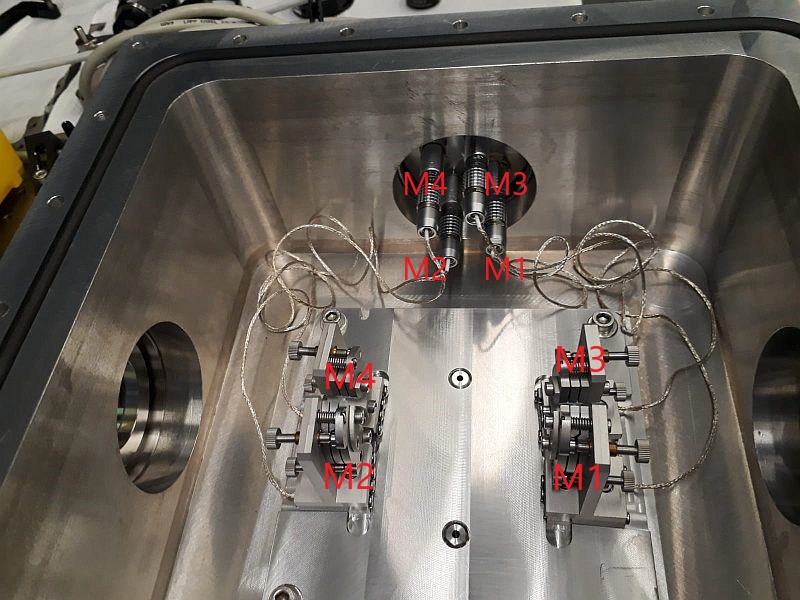
* The connections to control the motors of the mirrors are connected in the order stated :
M1 - M2 - M3 - M4
bottom right - bottom left - top right - top left
* The cables on the back of the box are connected as shown in attached photo
as they are connected they show on the software (Precision Tool commander) as
M1 - M2 - M3 - M4
Ch0 - Ch1 - Ch2 - Ch3
|
| Attachment 1: 20210804_Motor_connections_with_mirrors_inside_cavity_box.jpg
|
 |
| Attachment 2: 20210804_Mottor_cables_behind_cavity_box.jpg
|
 |
|
4
|
Thu Apr 15 19:54:19 2021 |
Manar Amer | Fixed | report | mechanics | cabling | Other | Mirrors Mottors Connections |
Added the cabling to the categories
| Manar Amer wrote: |
|
* The connections to control the motors of the mirrors are connected in the order stated :
M1 - M2 - M3 - M4
bottom right - bottom left - top right - top left
* The cables on the back of the box are connected as shown in attached photo
as they are connected they show on the software (Precision Tool commander) as
M1 - M2 - M3 - M4
Ch0 - Ch1 - Ch2 - Ch3
|
|
|
68
|
Thu Feb 2 16:21:05 2023 |
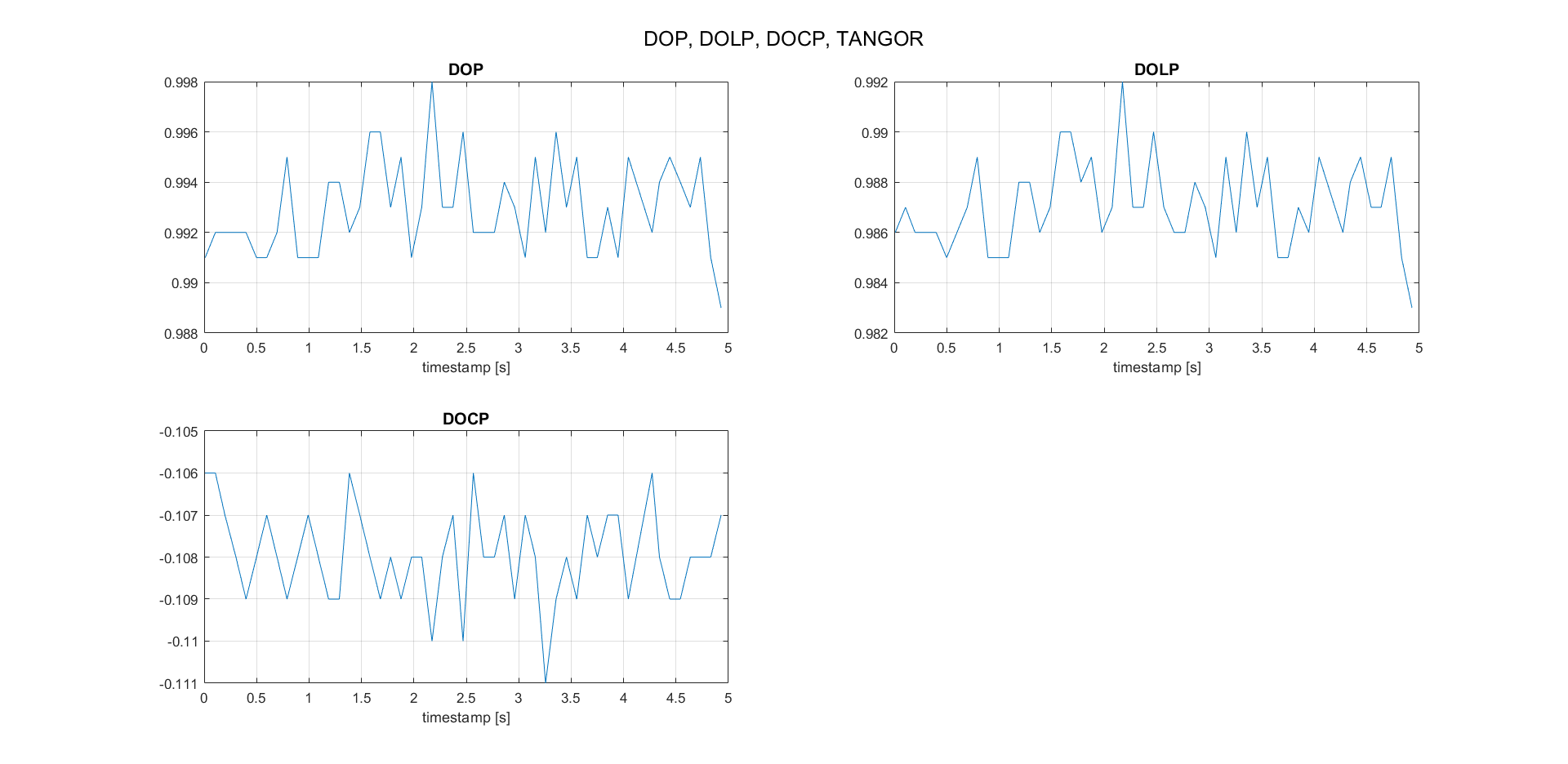
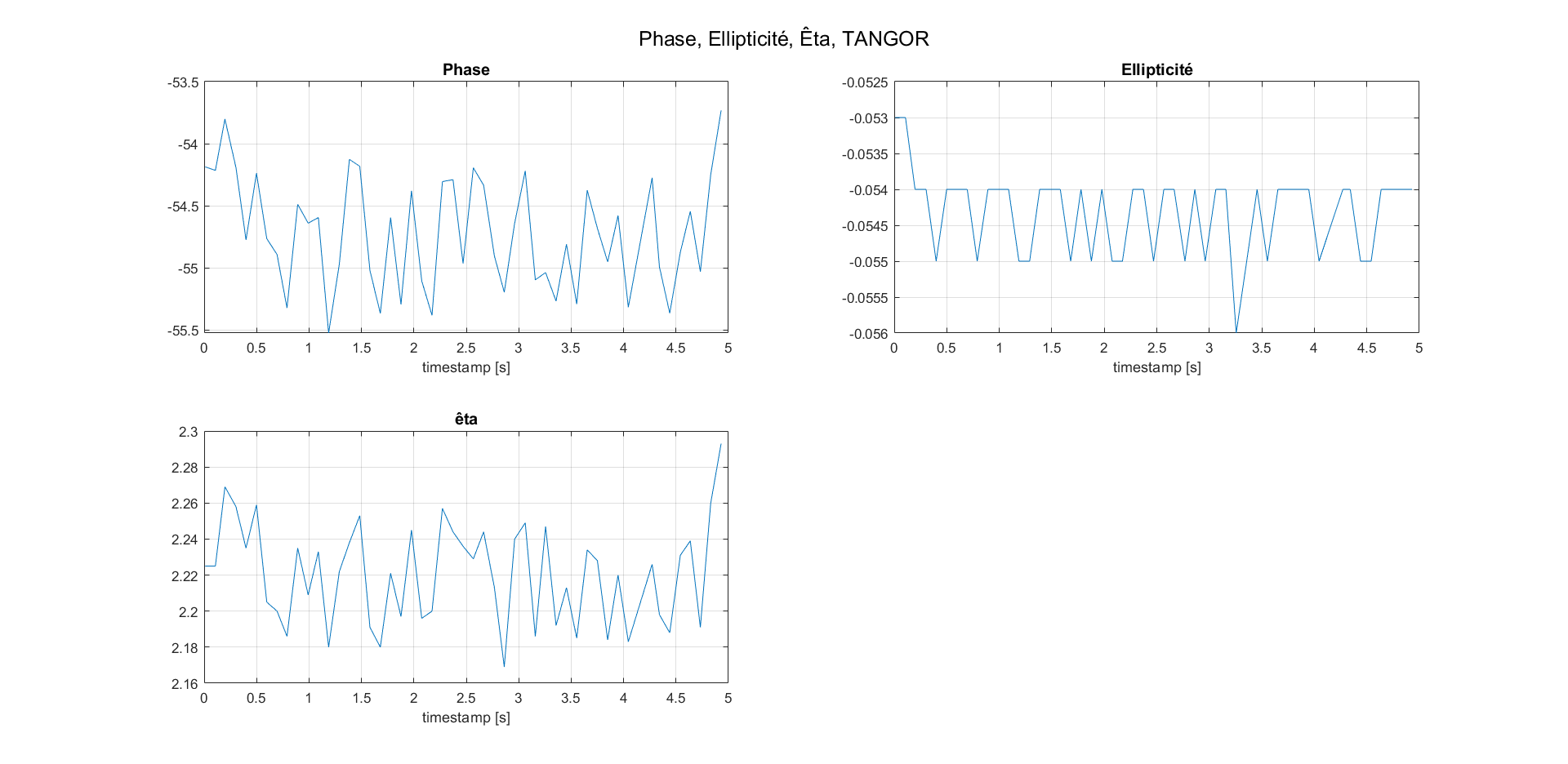
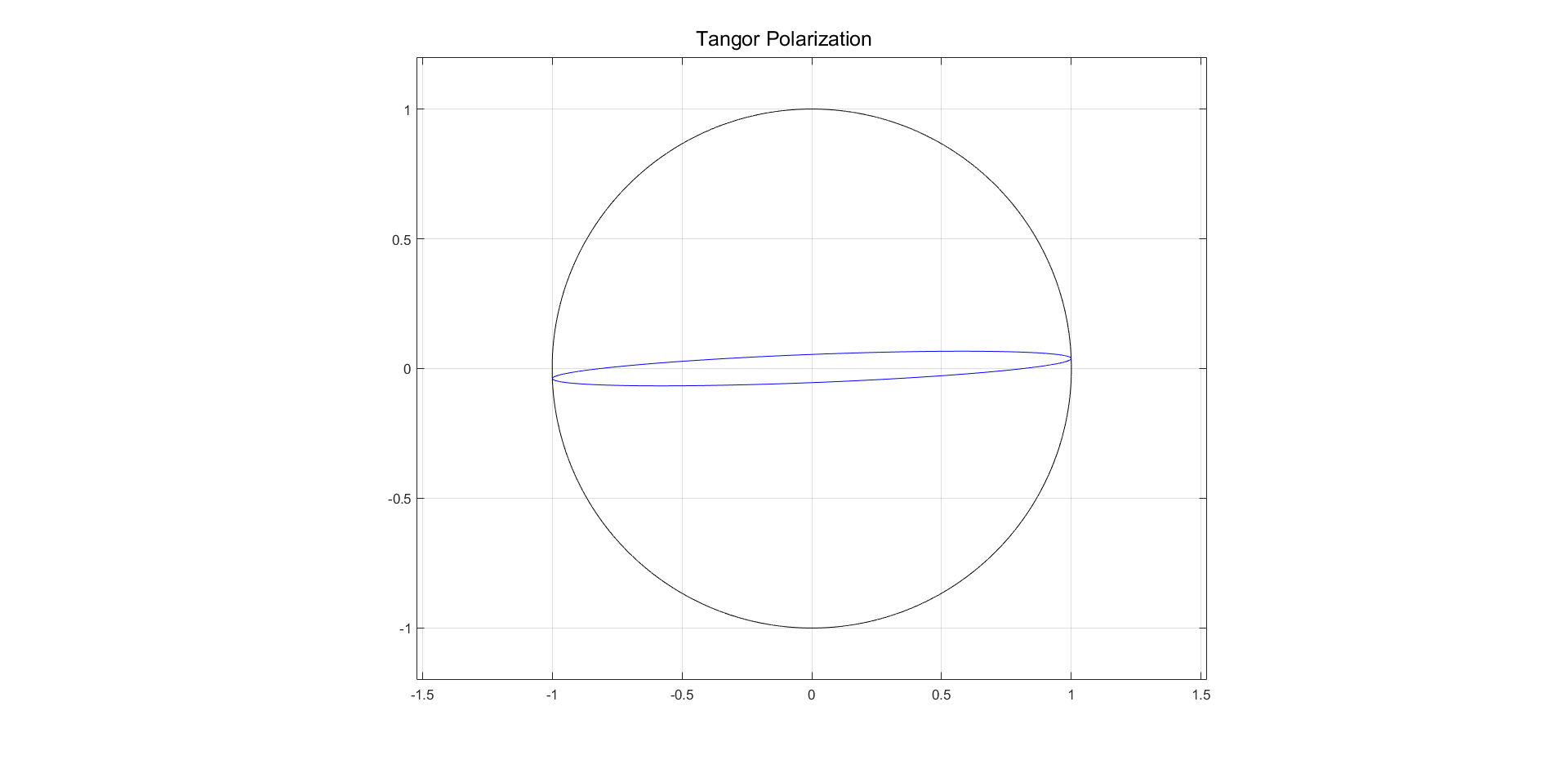
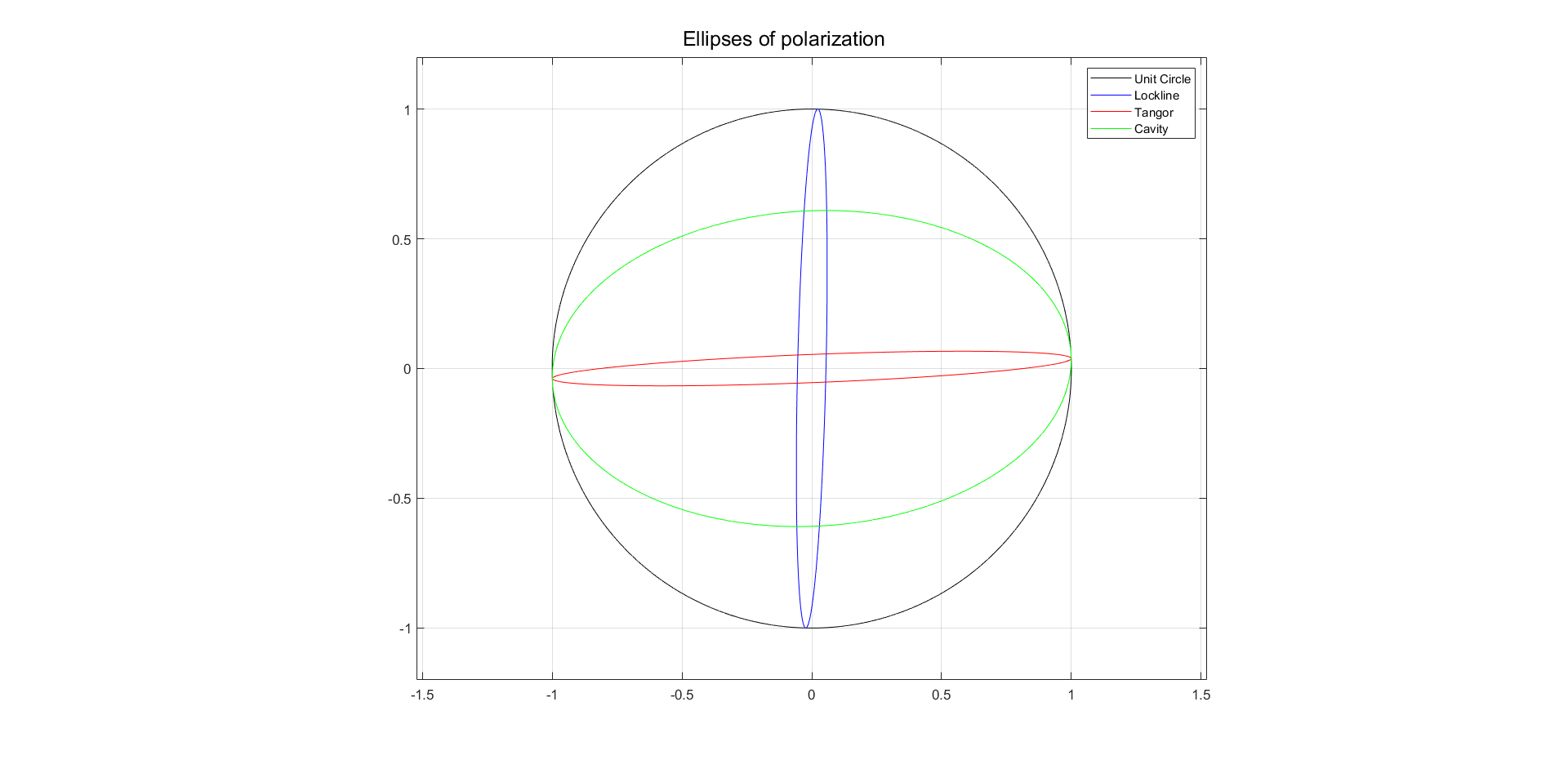
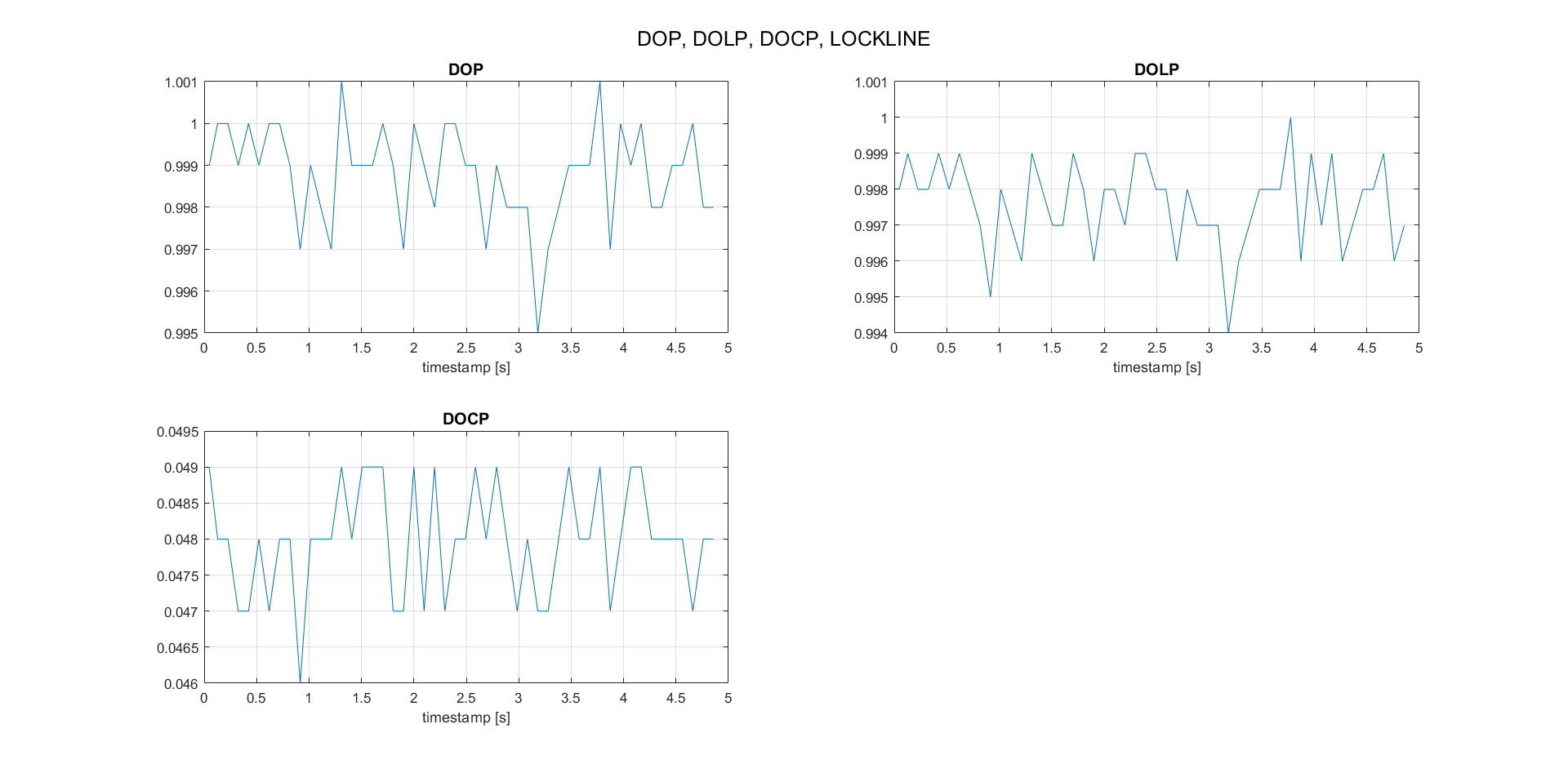
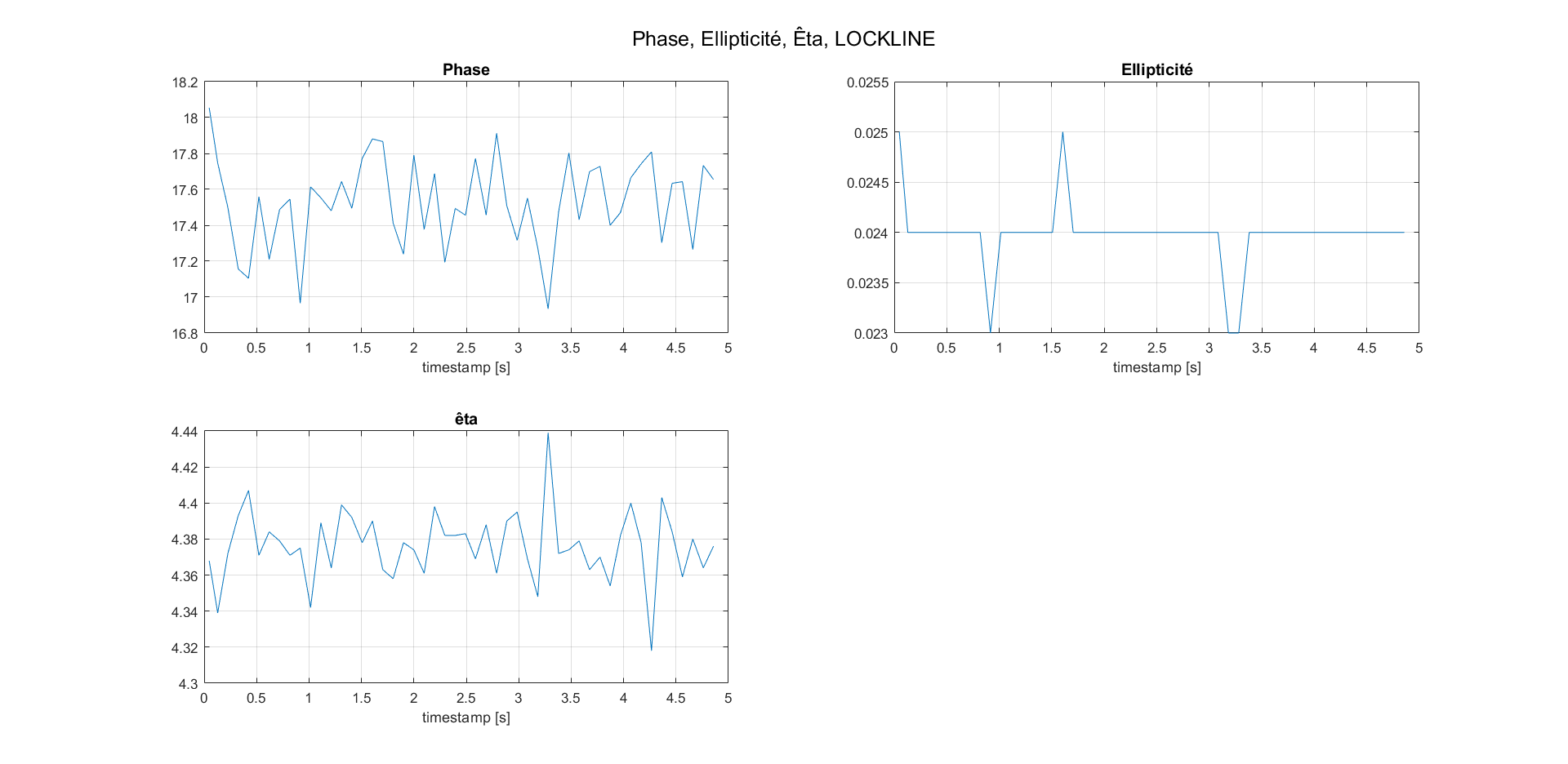
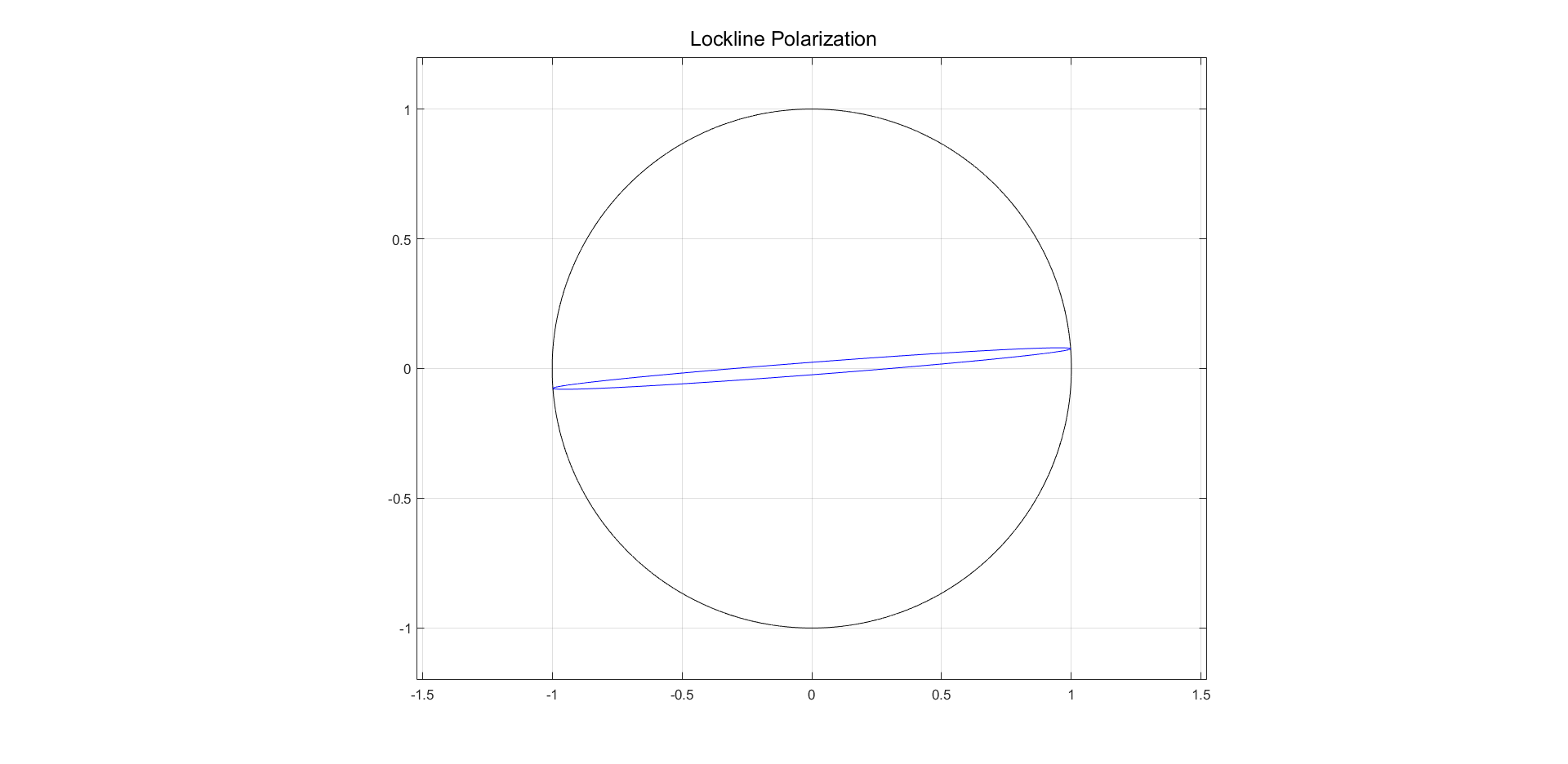
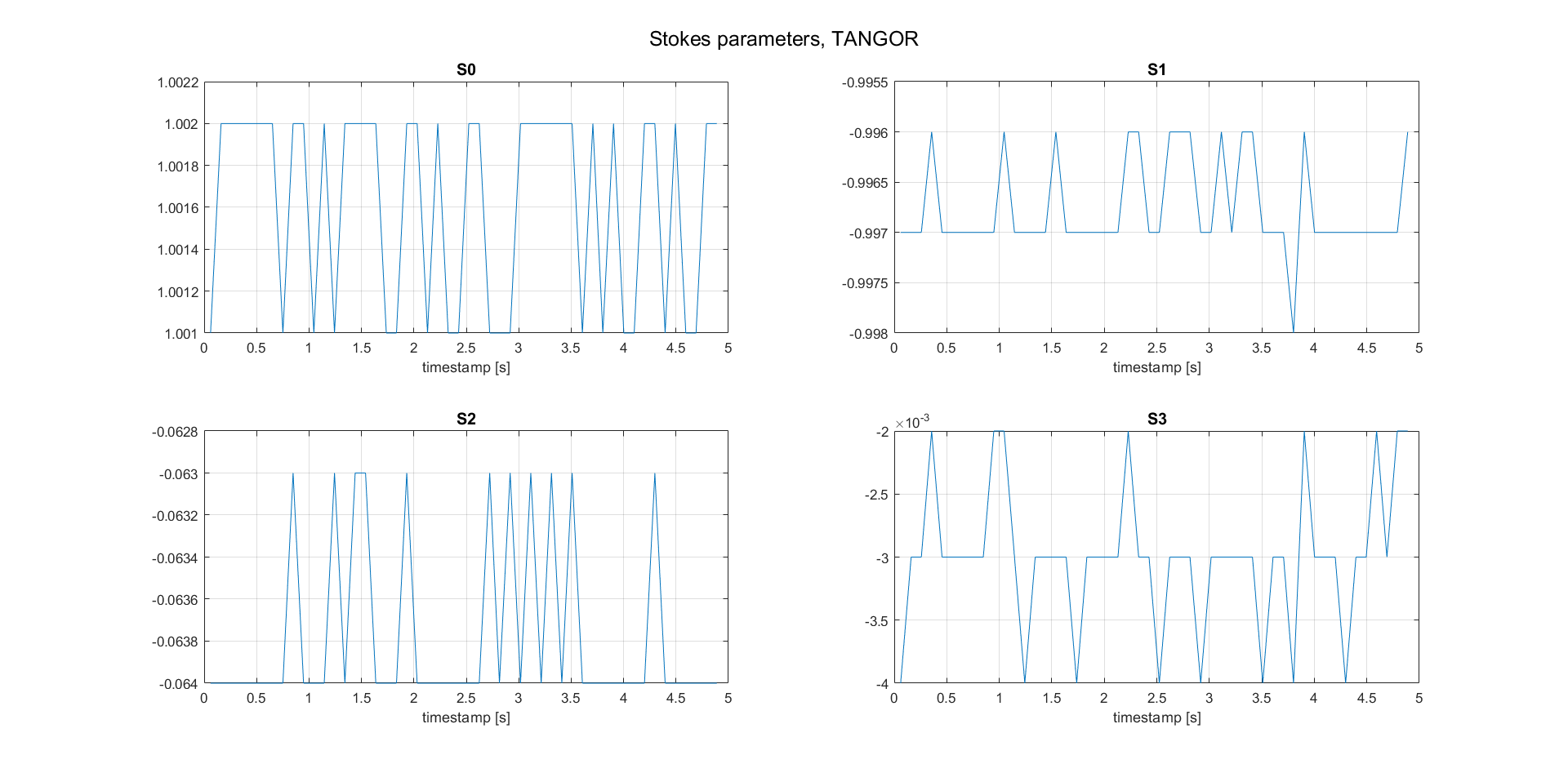
Blanc | Fixed | info | lasers and optics | Optical room | Mesures de Polarisation Lockline et Tangor |
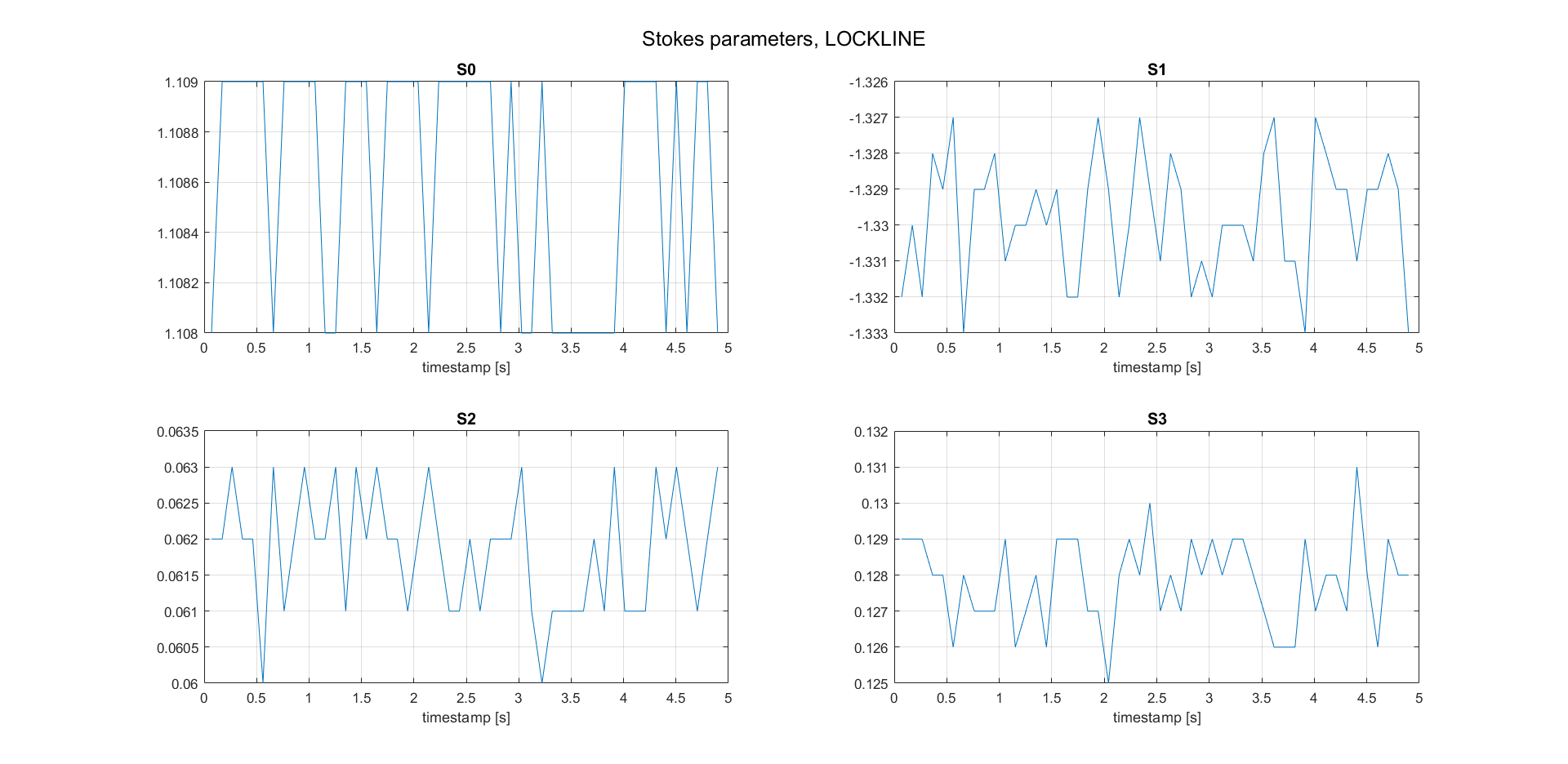
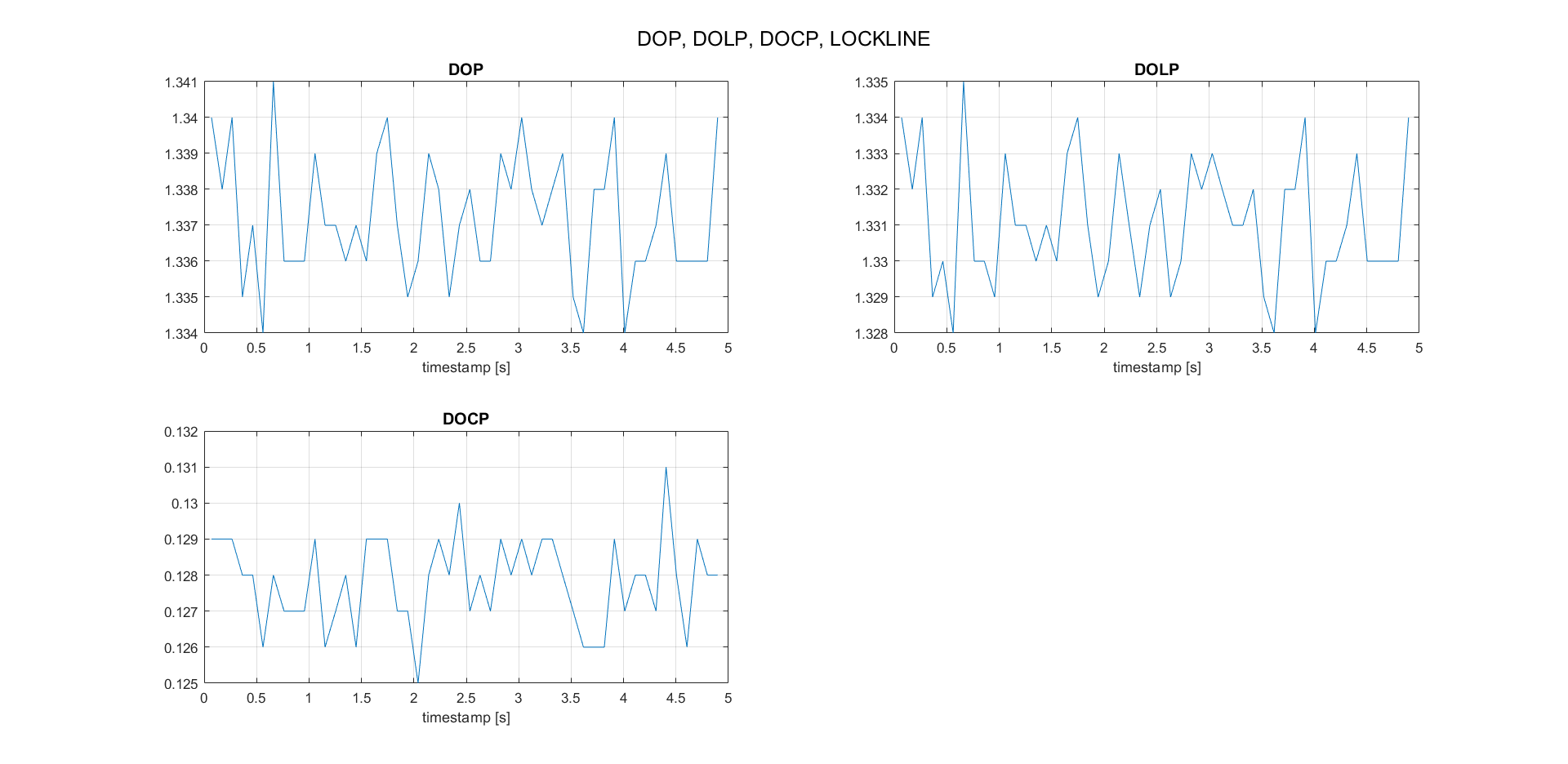
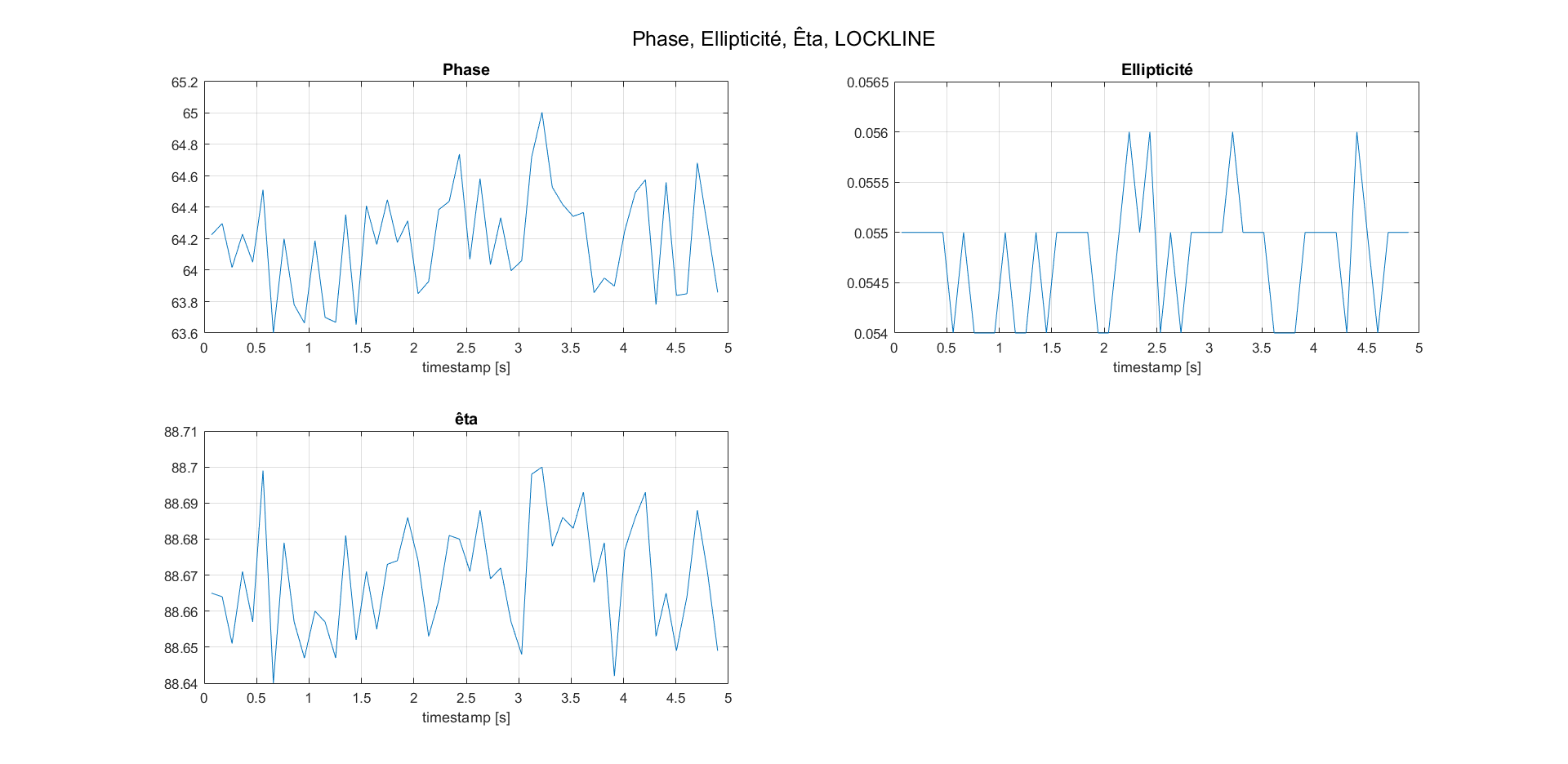
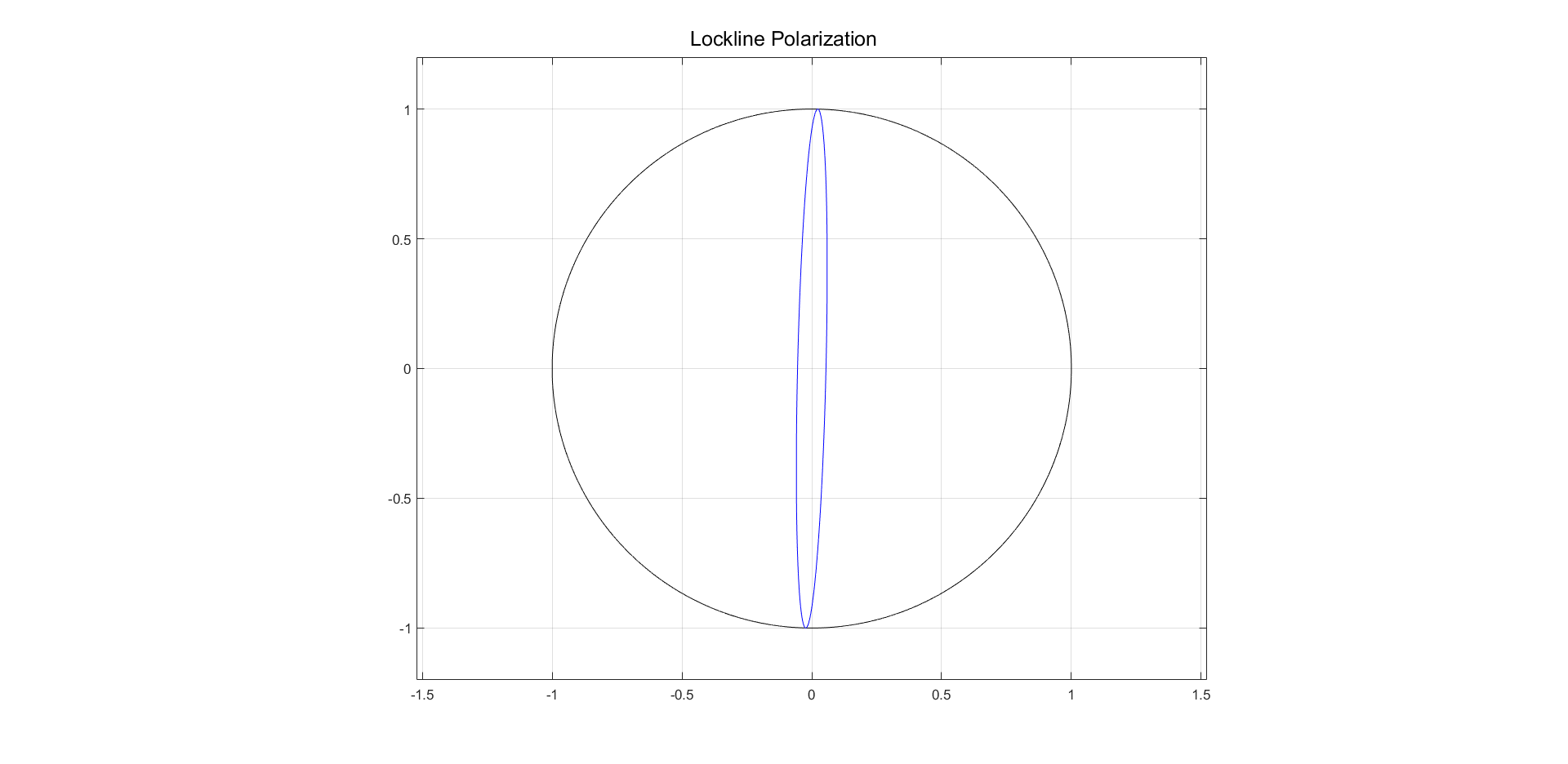
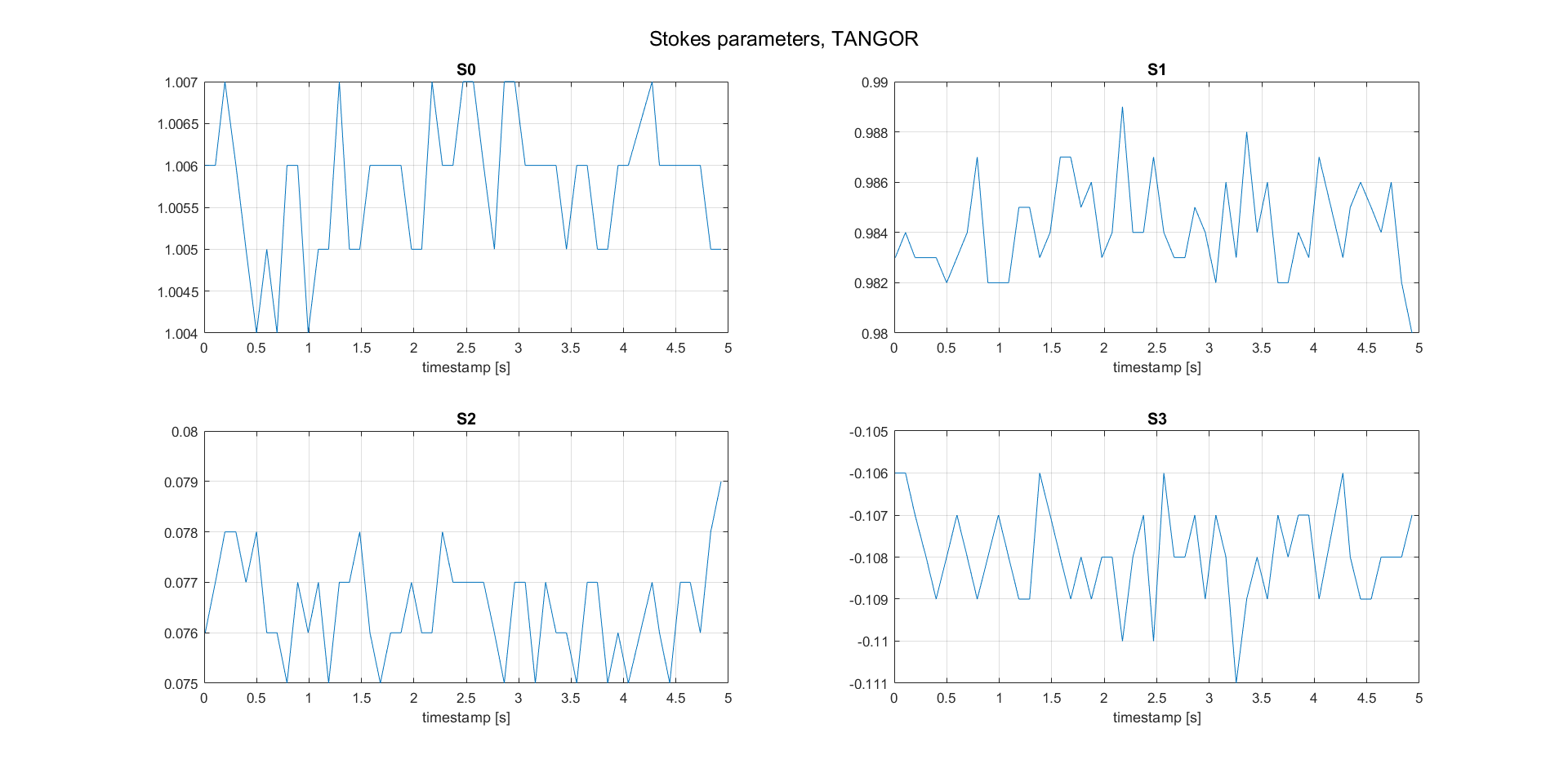
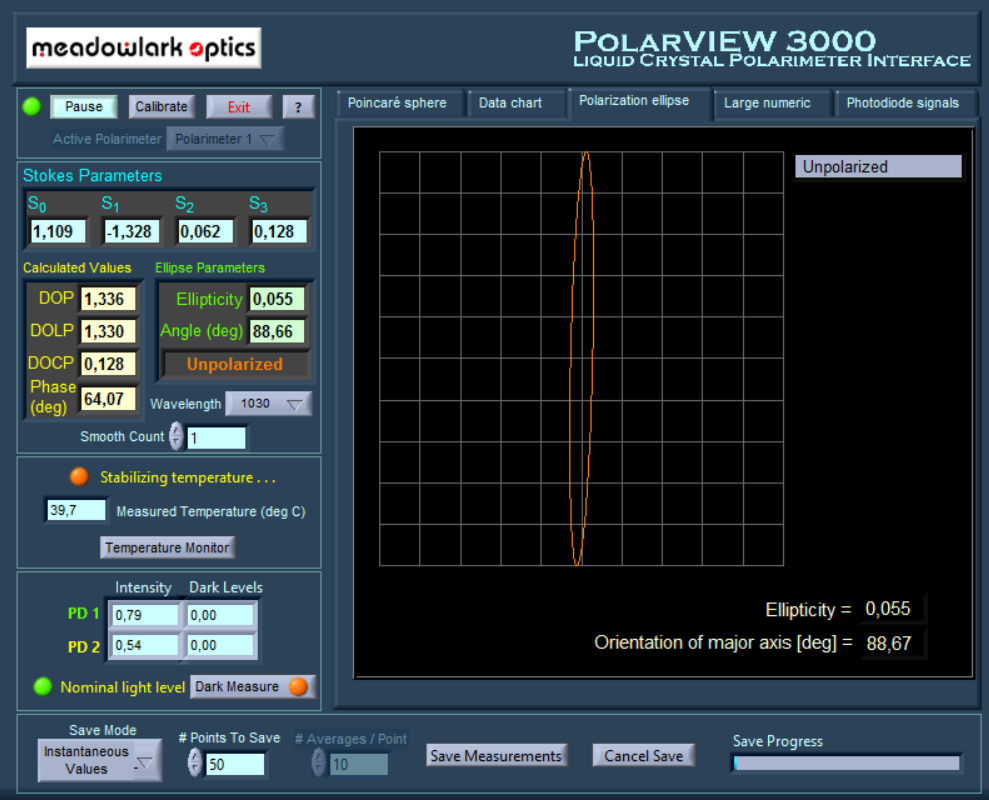
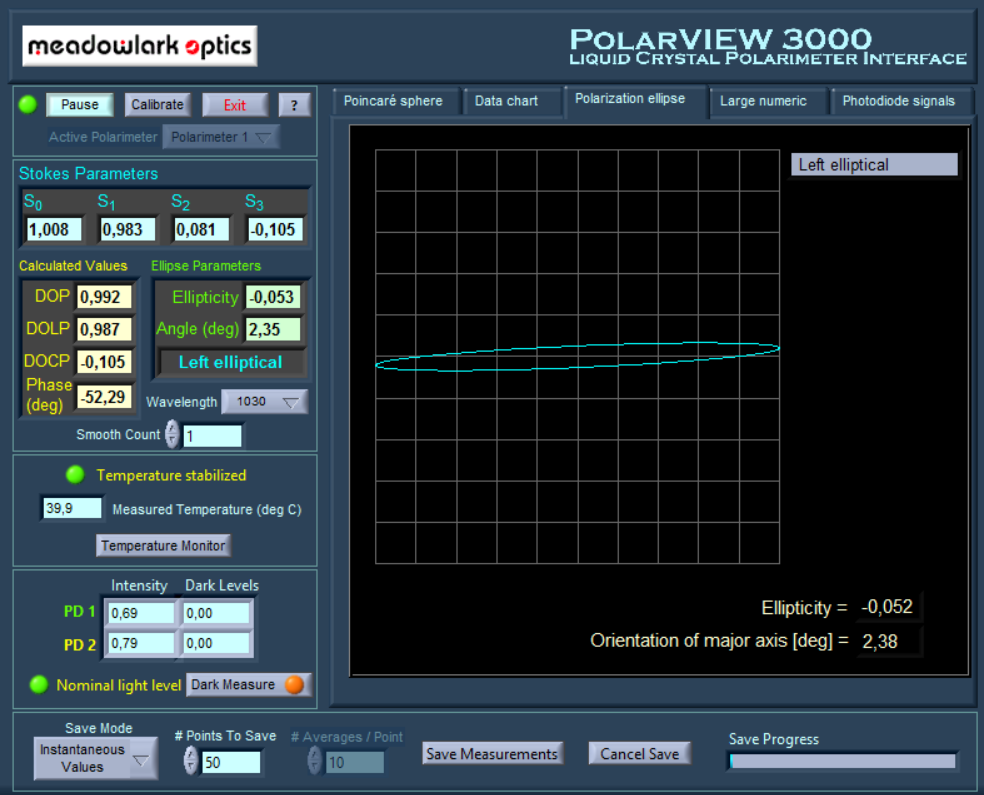
Vérification des polarisations après le combiner pour le Tangor et la Lockline.
On remarque certains paramètres de Stokes ont des valeurs étranges, comme S1 de la lockline.
De plus le polariseur voit la lockline comme non-polarisé.
=> Différence entre les façons de baisser la puissance entre le Tangor et la Lockline ? |
| Attachment 1: Stokes_parameters_LOCKLINE.png
|
 |
| Attachment 2: DOP_DOLP_DOCP_LOCKLINE.png
|
 |
| Attachment 3: Phase_Ellipticité_Êta_LOCKLINE.png
|
 |
| Attachment 4: Ellipse_Polarization_LOCKLINE.png
|
 |
| Attachment 5: Stokes_parameters_TANGOR.png
|
 |
| Attachment 6: DOP_DOLP_DOCP_TANGOR.png
|
 |
| Attachment 7: Phase_Ellipticité_Êta_TANGOR.png
|
 |
| Attachment 8: Ellipse_Polarization_TANGOR.png
|
 |
| Attachment 9: Ellipse_Polarization_ALL.png
|
 |
| Attachment 10: Polarisation_lockline_after_combiner_image.PNG
|
 |
| Attachment 11: Polarisation_Tangor_after_combiner_image.PNG
|
 |
|
66
|
Mon Jan 30 14:39:52 2023 |
Blanc | Fixed | info | lasers and optics | Optical room | Mesures de Polarisation |
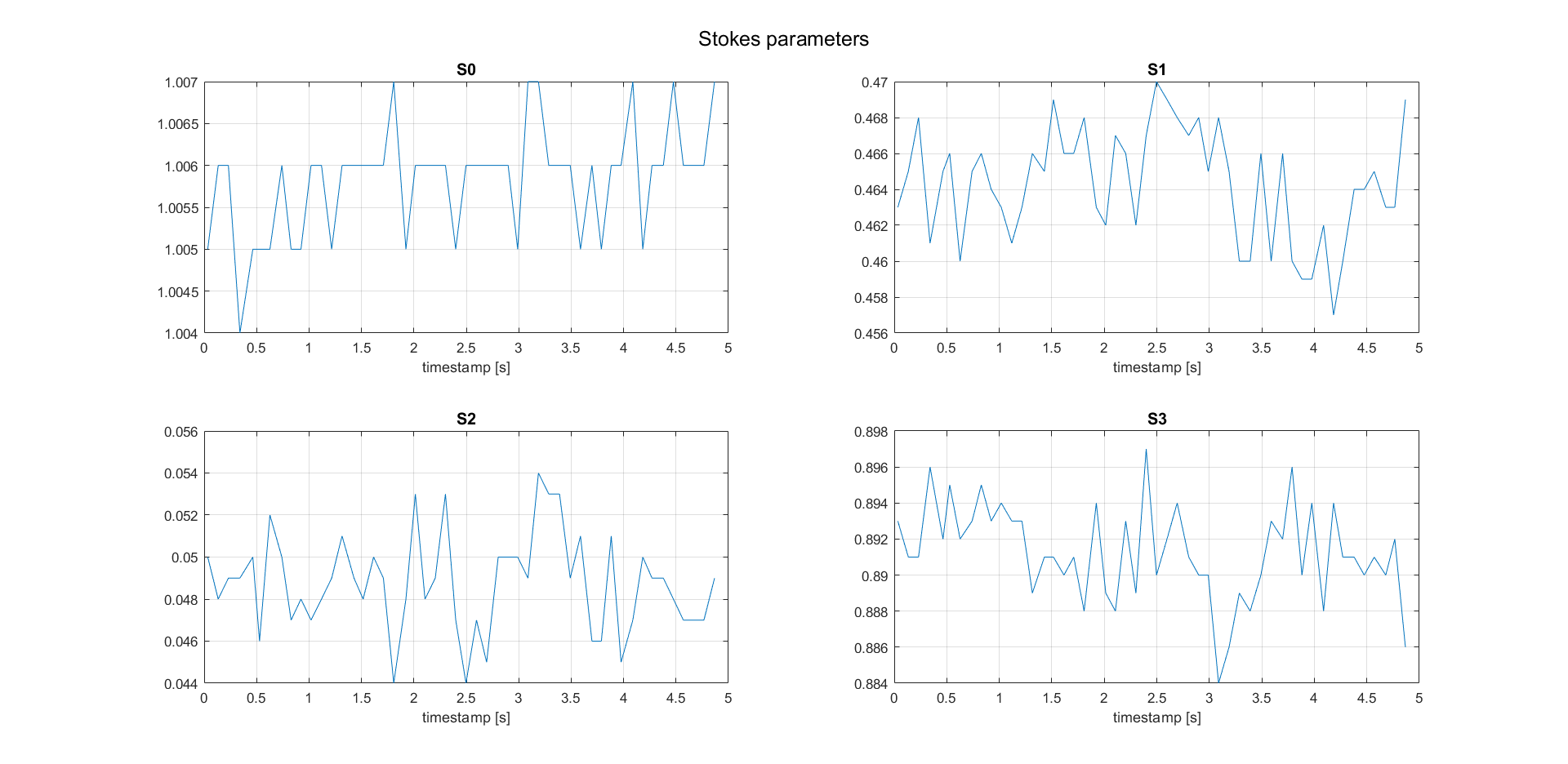
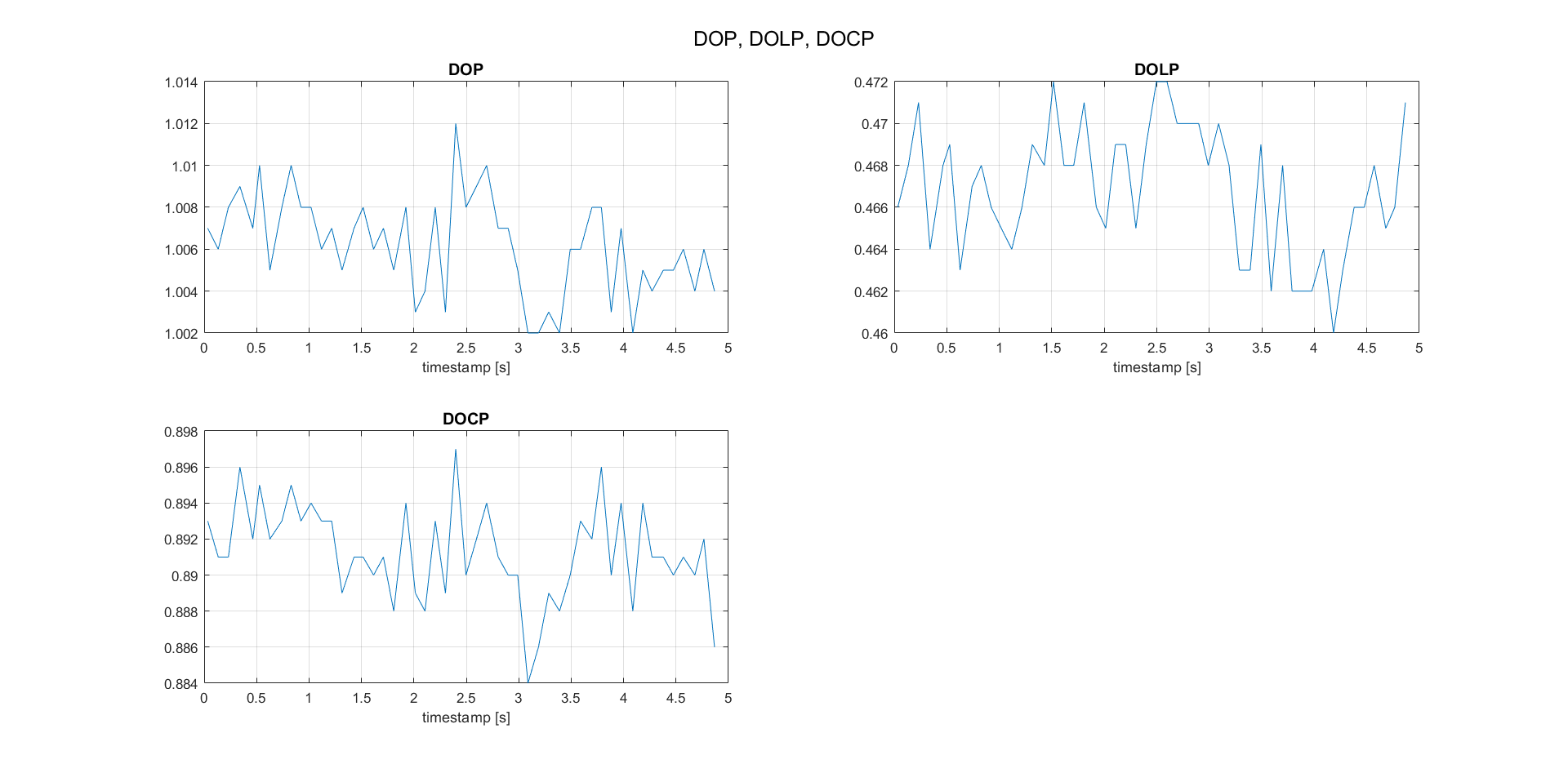
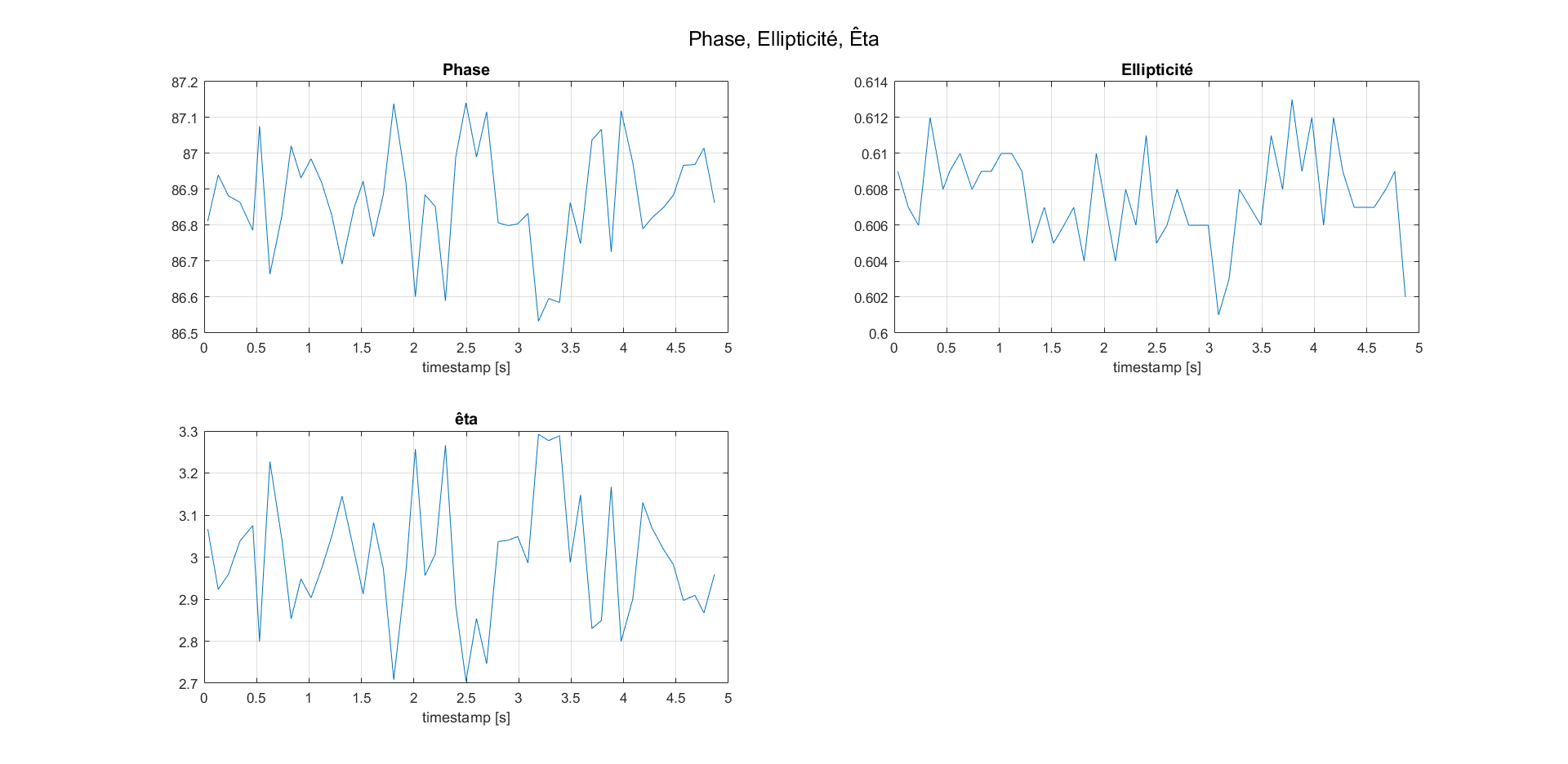
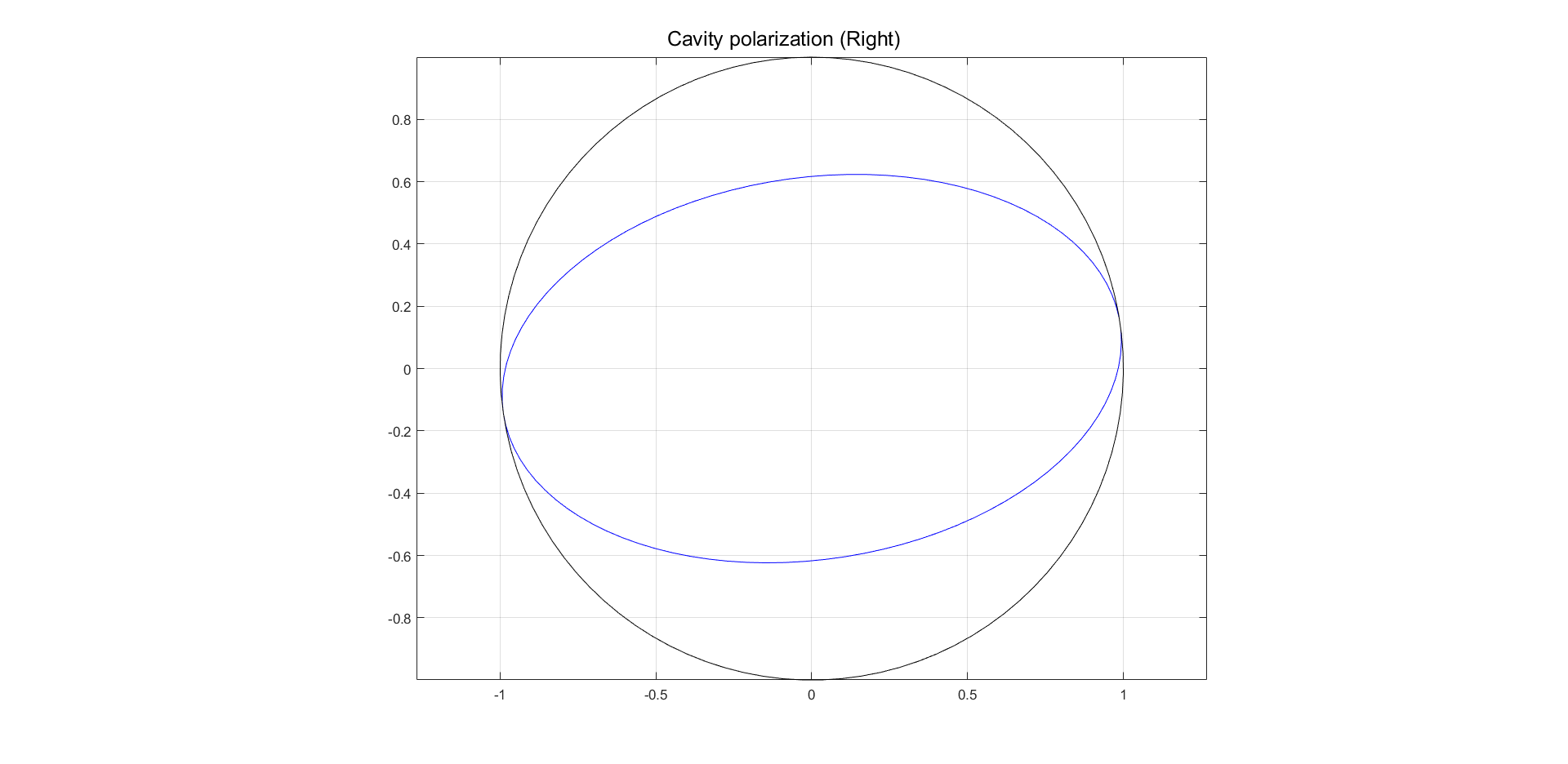
En récupérant la transmission du miroir M3 sphérique sortant de la cavité, on a pu faire une mesure de polarisation de la cavité. (Cf courbes ci-dessous)
La moyenne pour chaque courbe donne :
S0 = 1.0058 ; S1 = 0.4643 ; S2 = 0.0488 ; S3 = 0.8913
DOP = 1.0062 ; DOLP = 0.4669 ; DOCP = 0.8913
Phase = 86.8705° ; Ellipticité = 0.6076 ; Êta = 2.9962
Température de la tête du polarimètre : 39.9815
Par reconstruction, on obtient l'ellipse donnée en bleu ci-dessous. |
| Attachment 1: Paramètres_de_Stokes.png
|
 |
| Attachment 2: DOP_DOLP_DOCP.png
|
 |
| Attachment 3: Phase_Ellipticité_Êta.png
|
 |
| Attachment 4: Ellipse_polarisation_cavité.png
|
 |
|
67
|
Thu Feb 2 16:06:54 2023 |
Blanc | Fixed | info | lasers and optics | Optical room | Mesures de Polarisation |
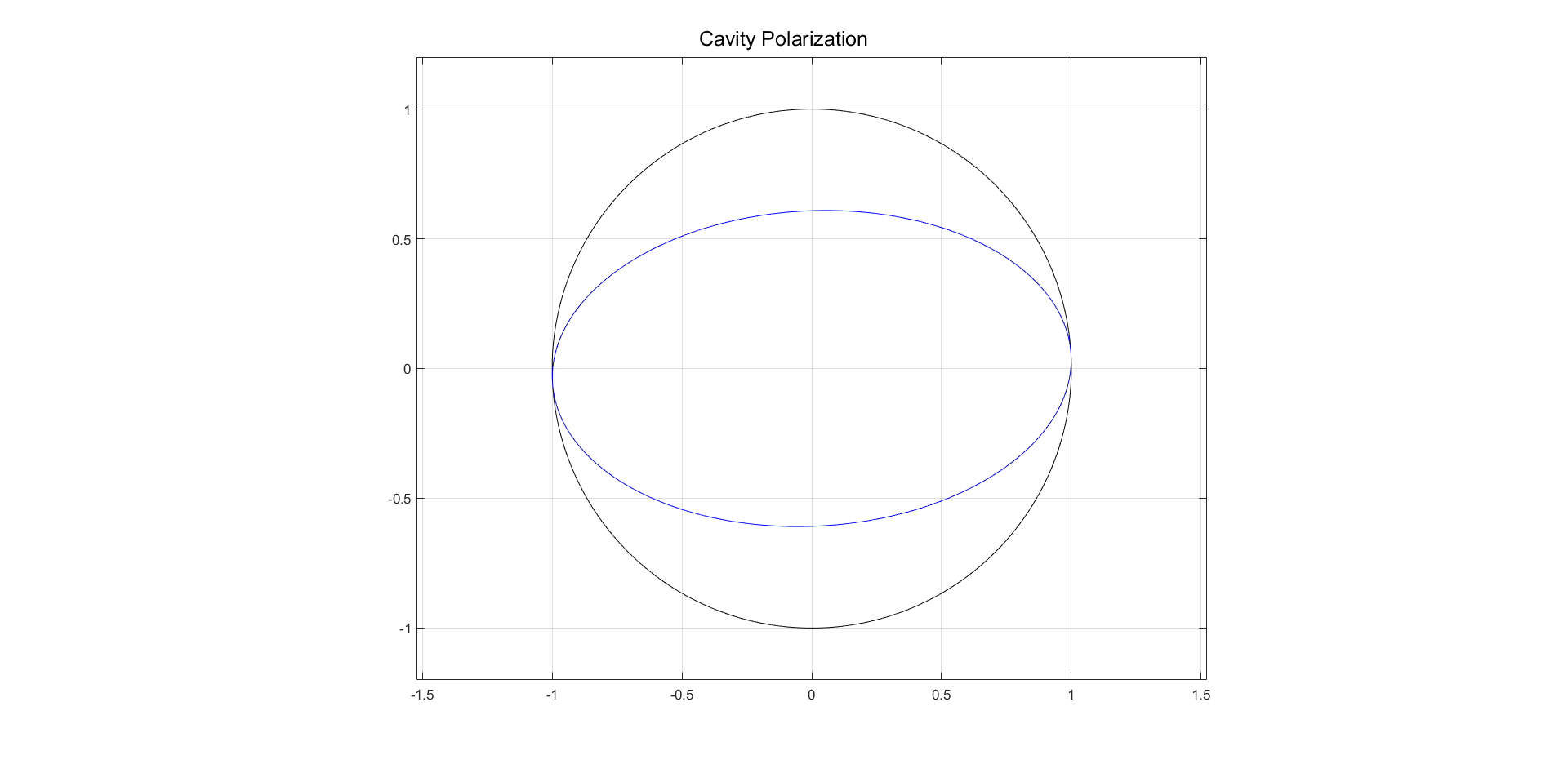
Correction su l'orientation de l'ellipse.
| Blanc wrote: |
|
En récupérant la transmission du miroir M3 sphérique sortant de la cavité, on a pu faire une mesure de polarisation de la cavité. (Cf courbes ci-dessous)
La moyenne pour chaque courbe donne :
S0 = 1.0058 ; S1 = 0.4643 ; S2 = 0.0488 ; S3 = 0.8913
DOP = 1.0062 ; DOLP = 0.4669 ; DOCP = 0.8913
Phase = 86.8705° ; Ellipticité = 0.6076 ; Êta = 2.9962
Température de la tête du polarimètre : 39.9815
Par reconstruction, on obtient l'ellipse donnée en bleu ci-dessous.
|
|
| Attachment 1: Ellipse_Polarization_CAVITY.png
|
 |
|
74
|
Fri Feb 17 18:02:11 2023 |
Blanc | Fixed | info | lasers and optics | Optical room | Mesure polarisation voie de réflexion |
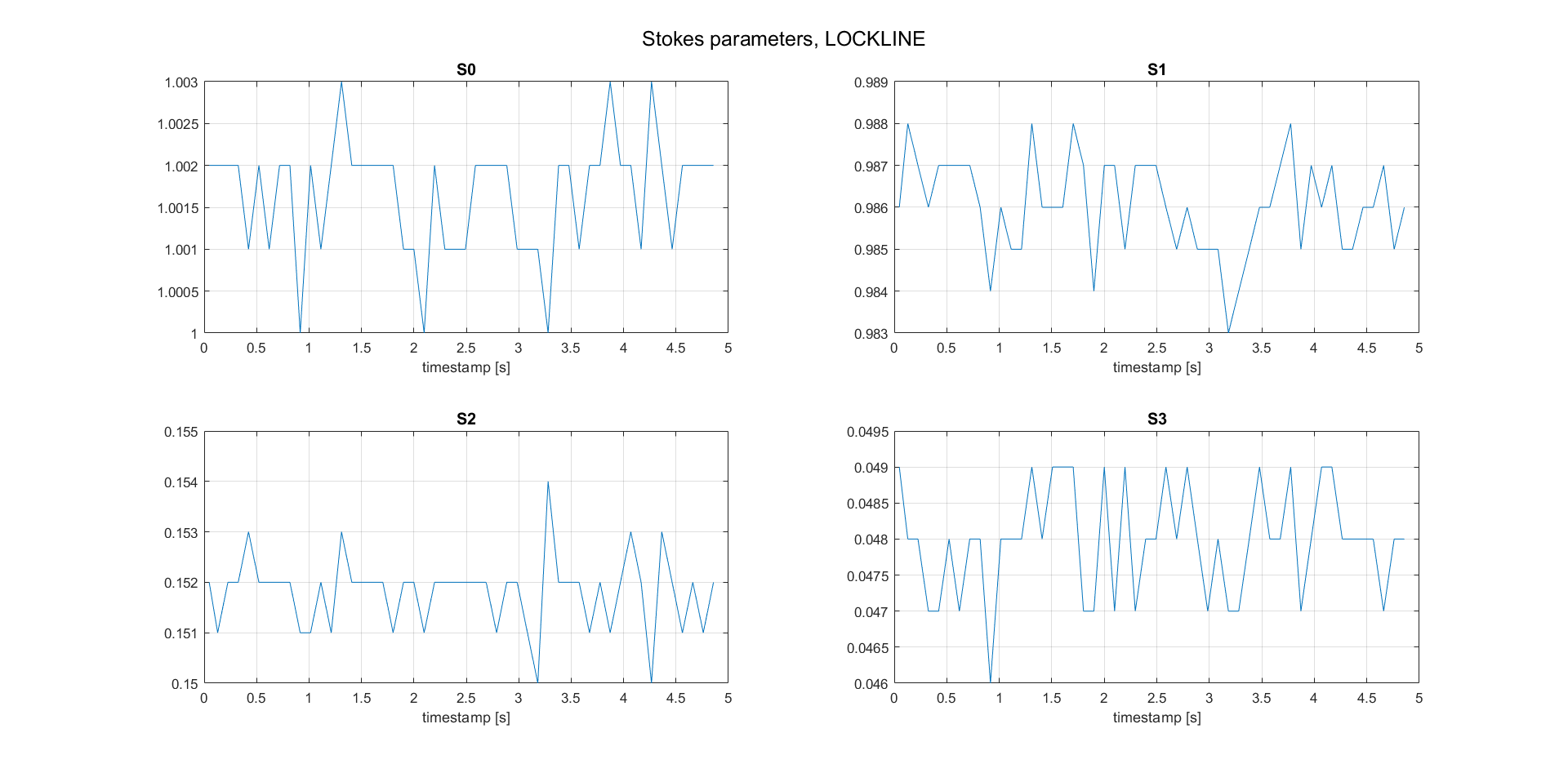
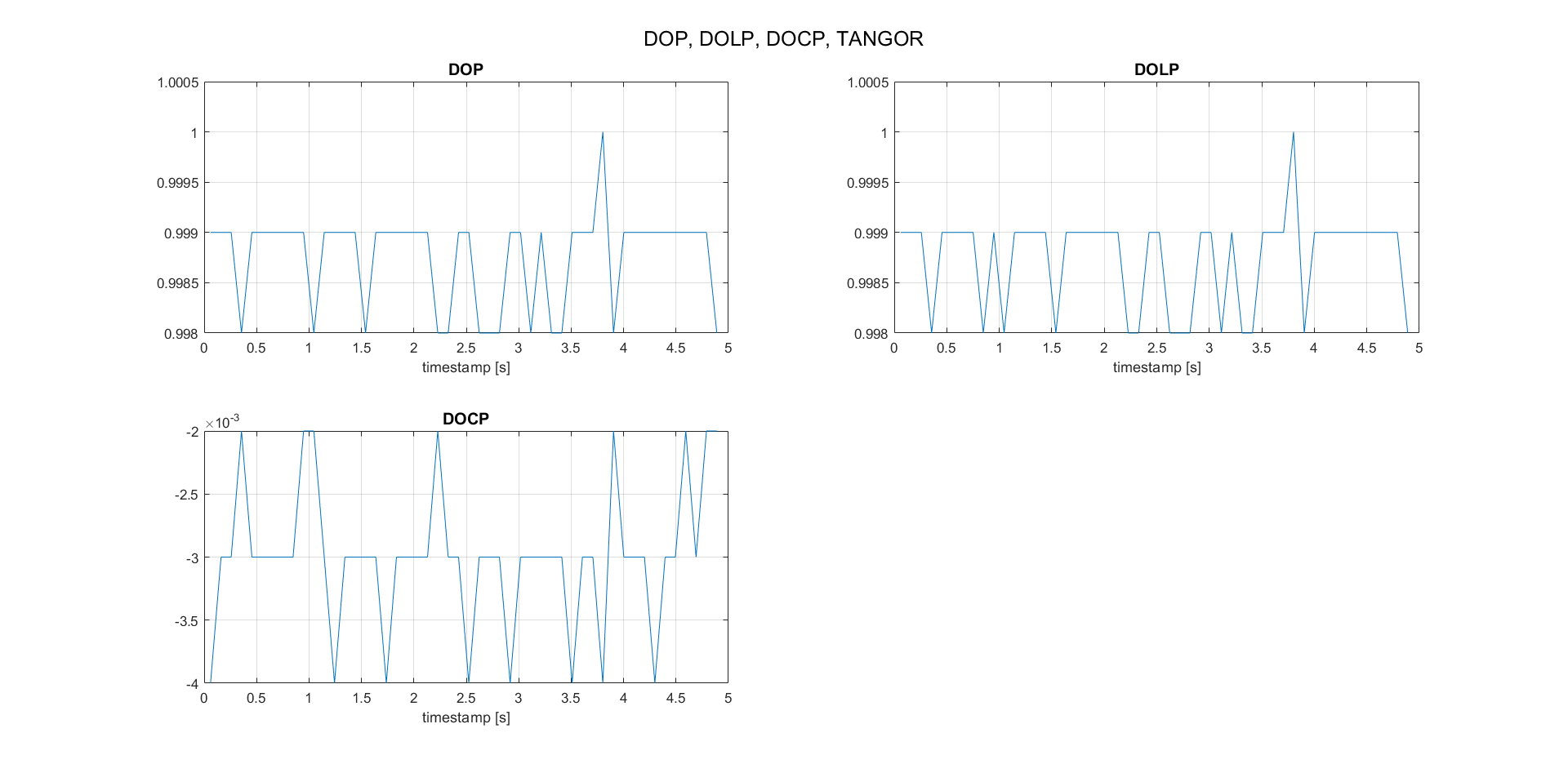
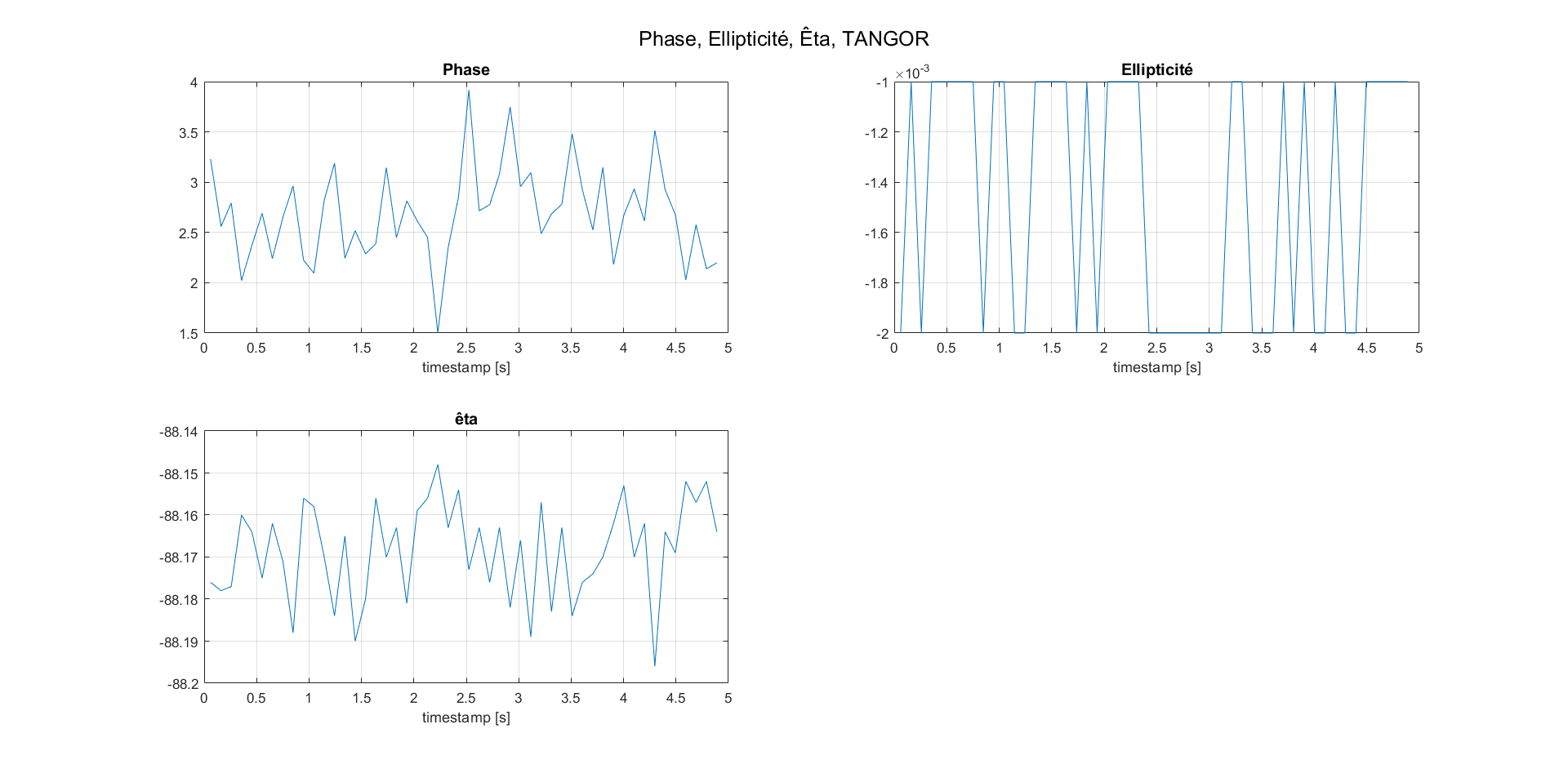
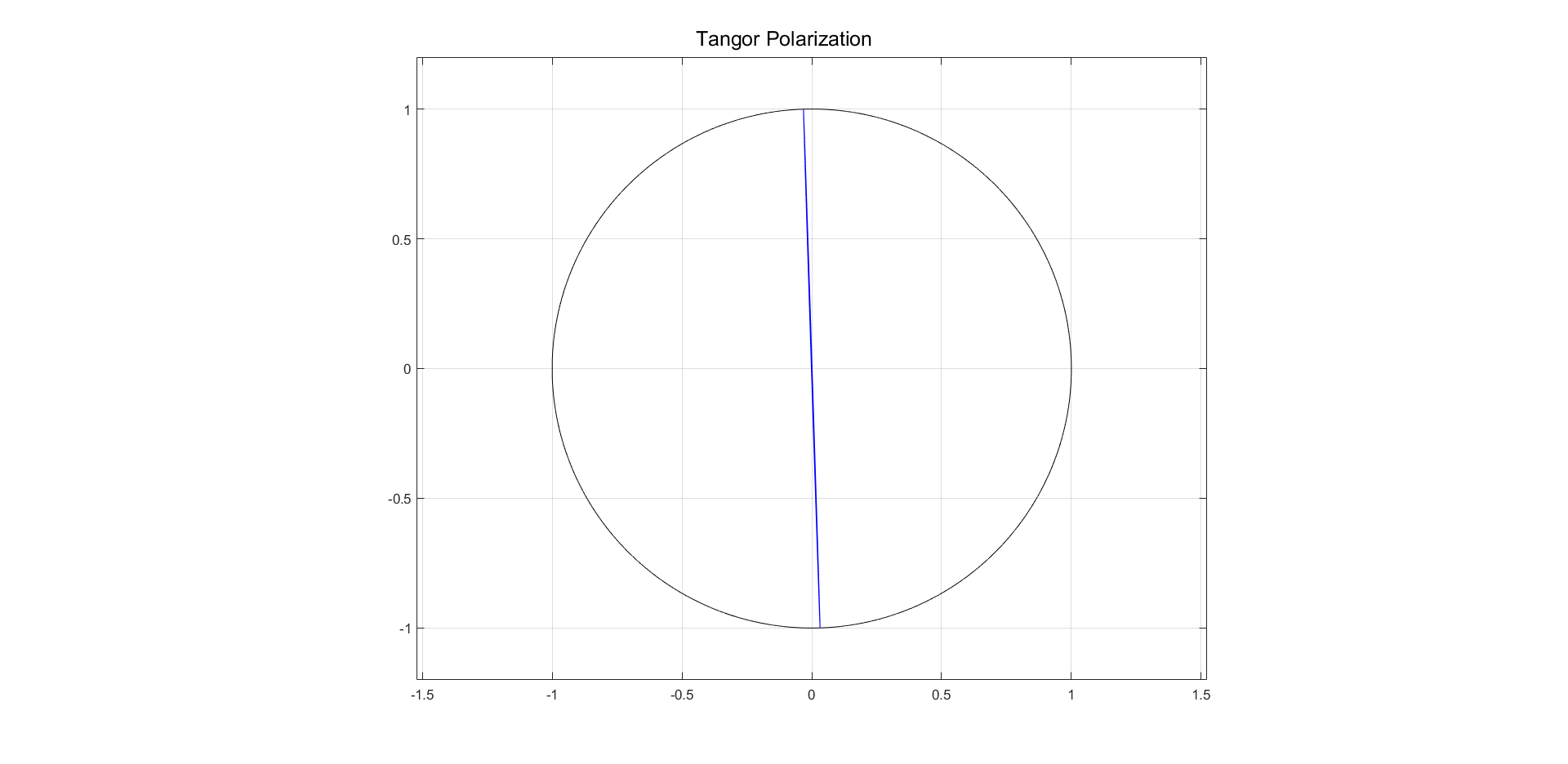
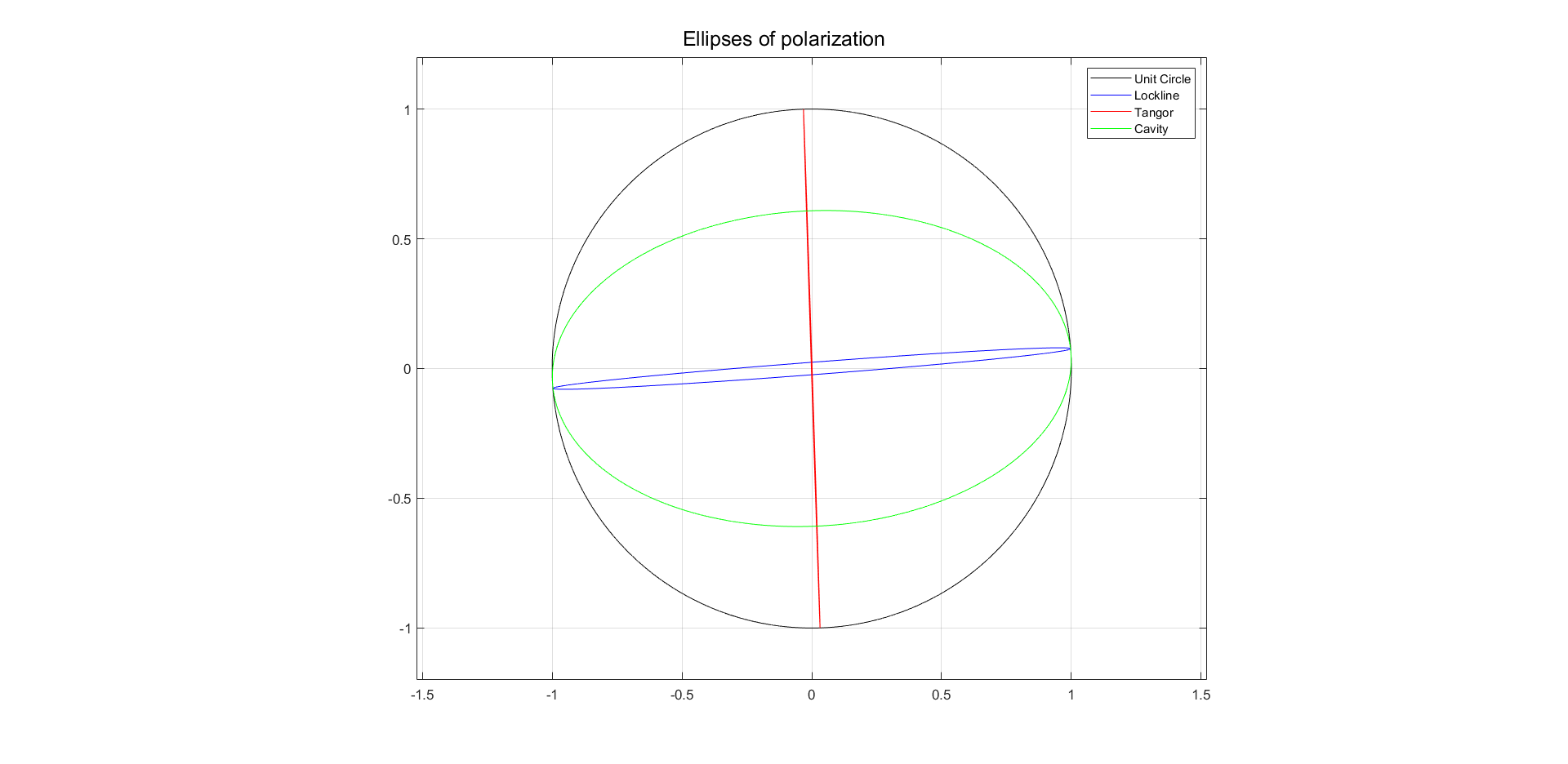
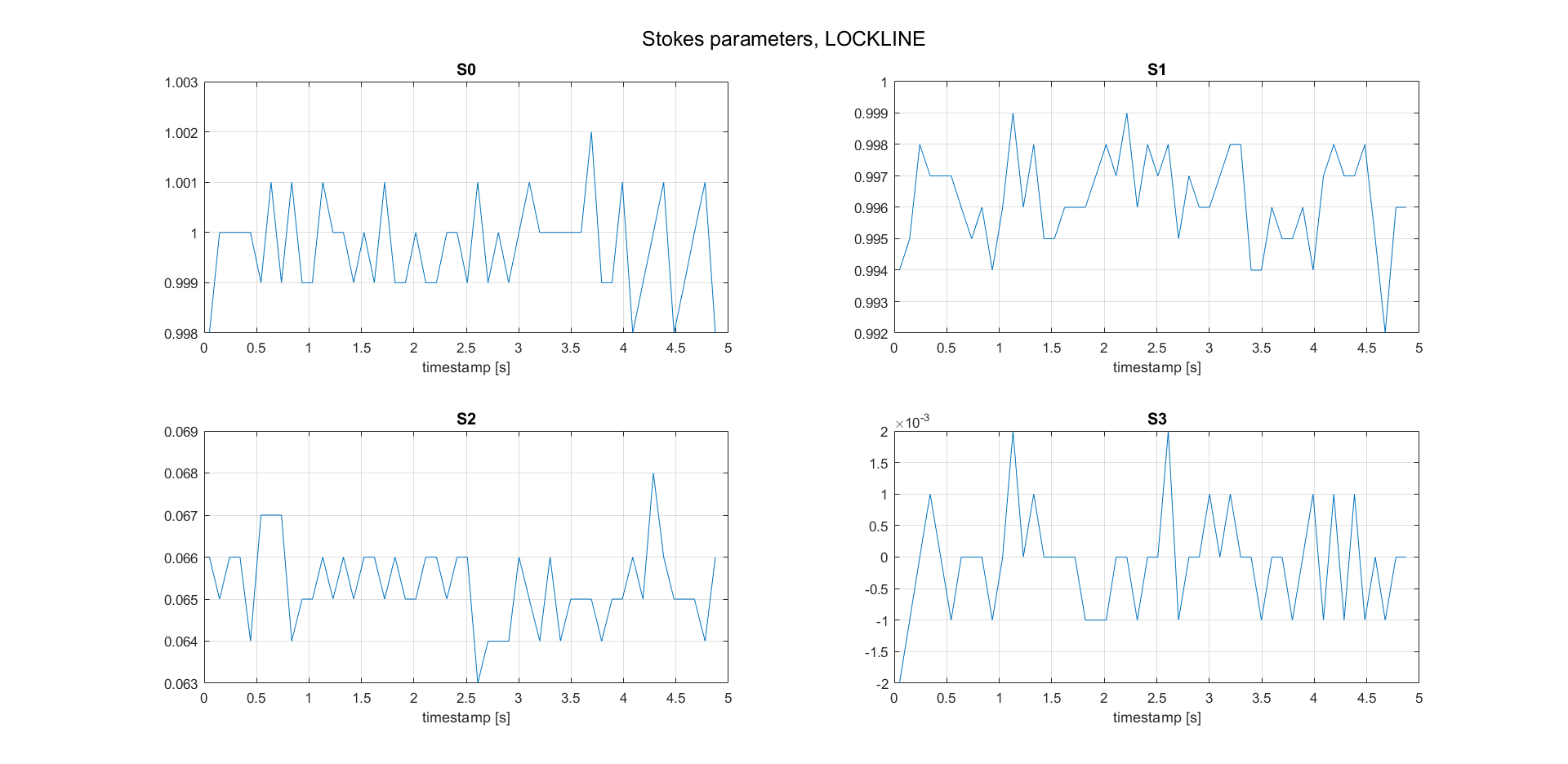
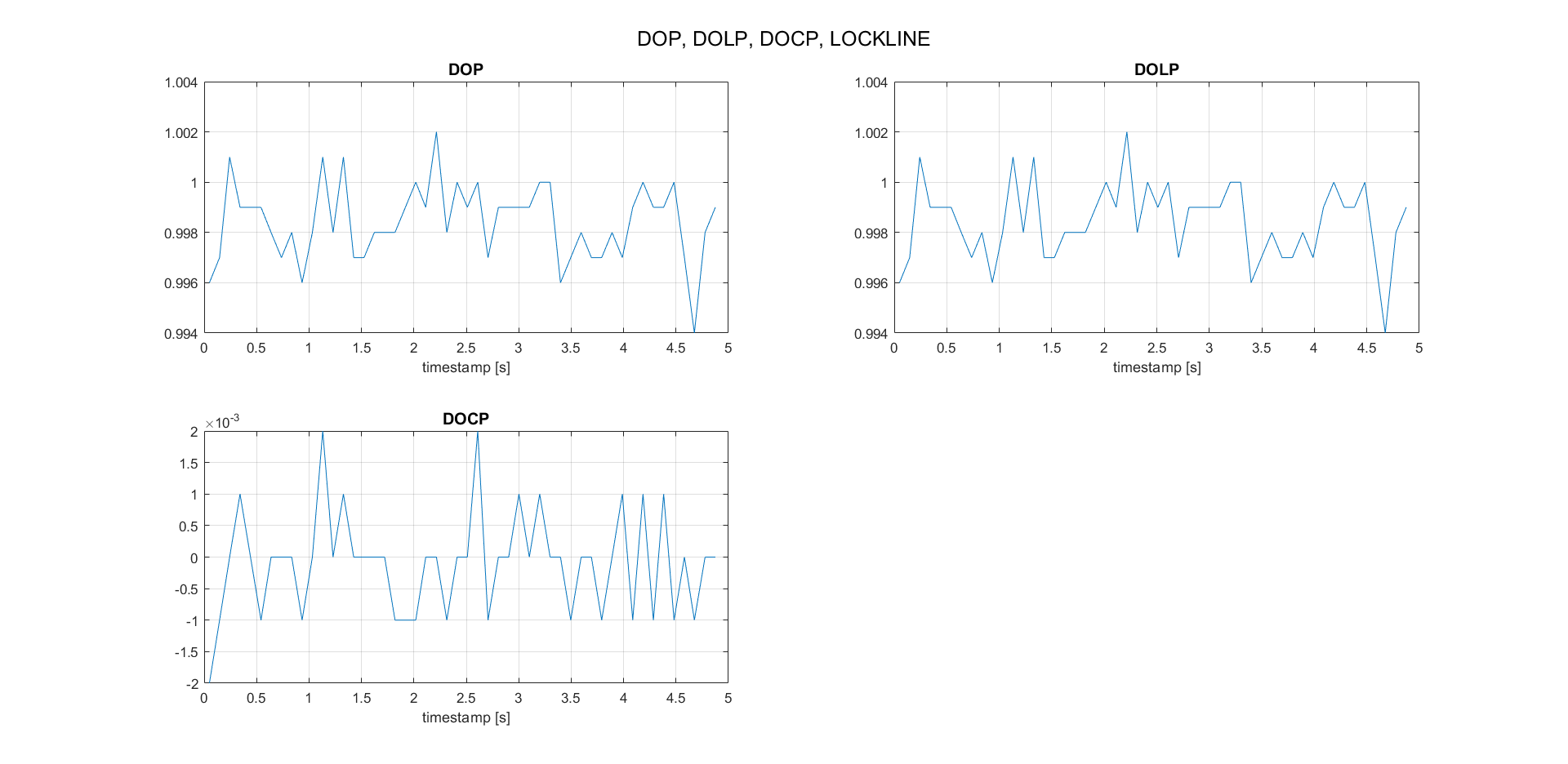
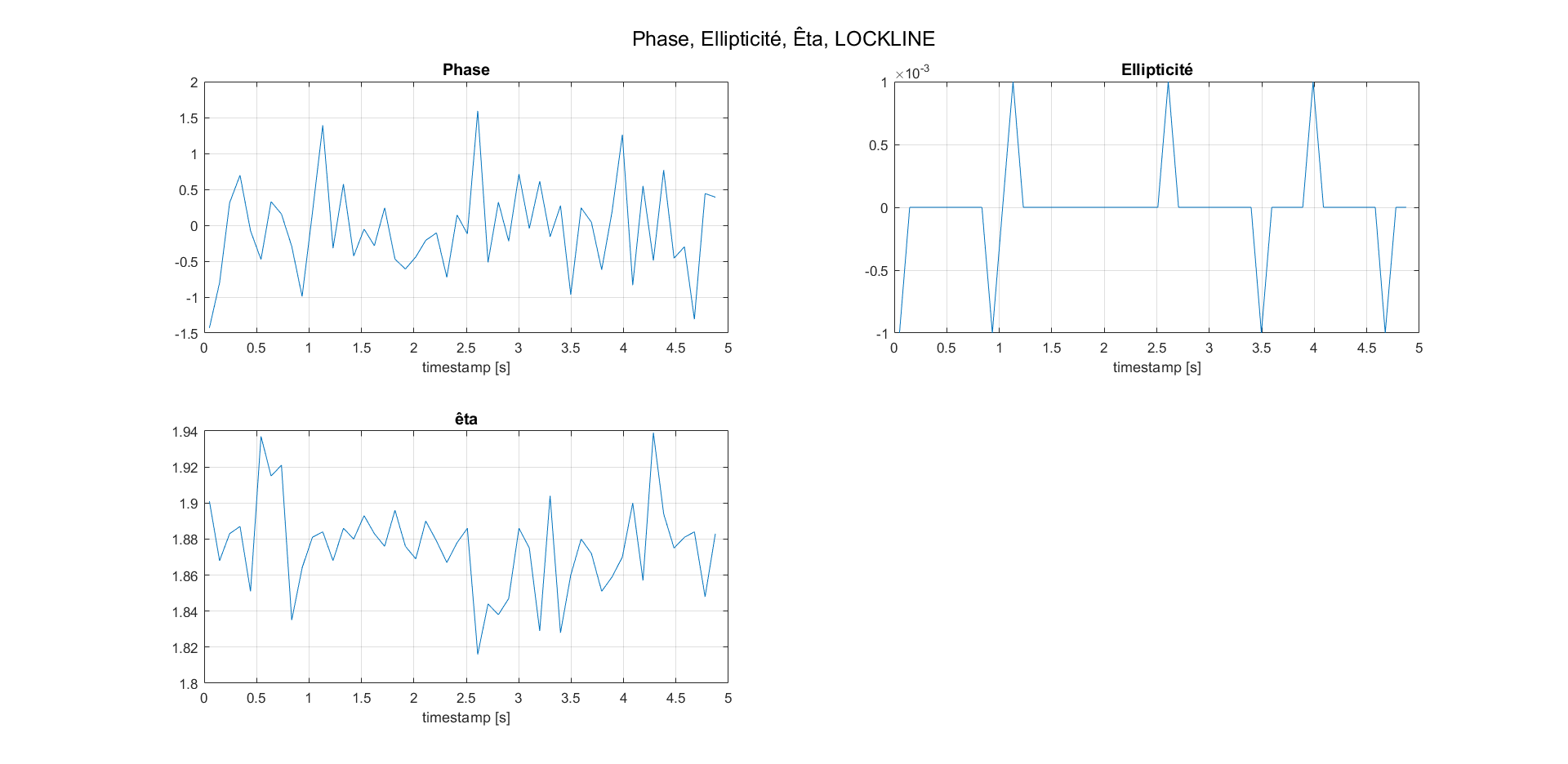
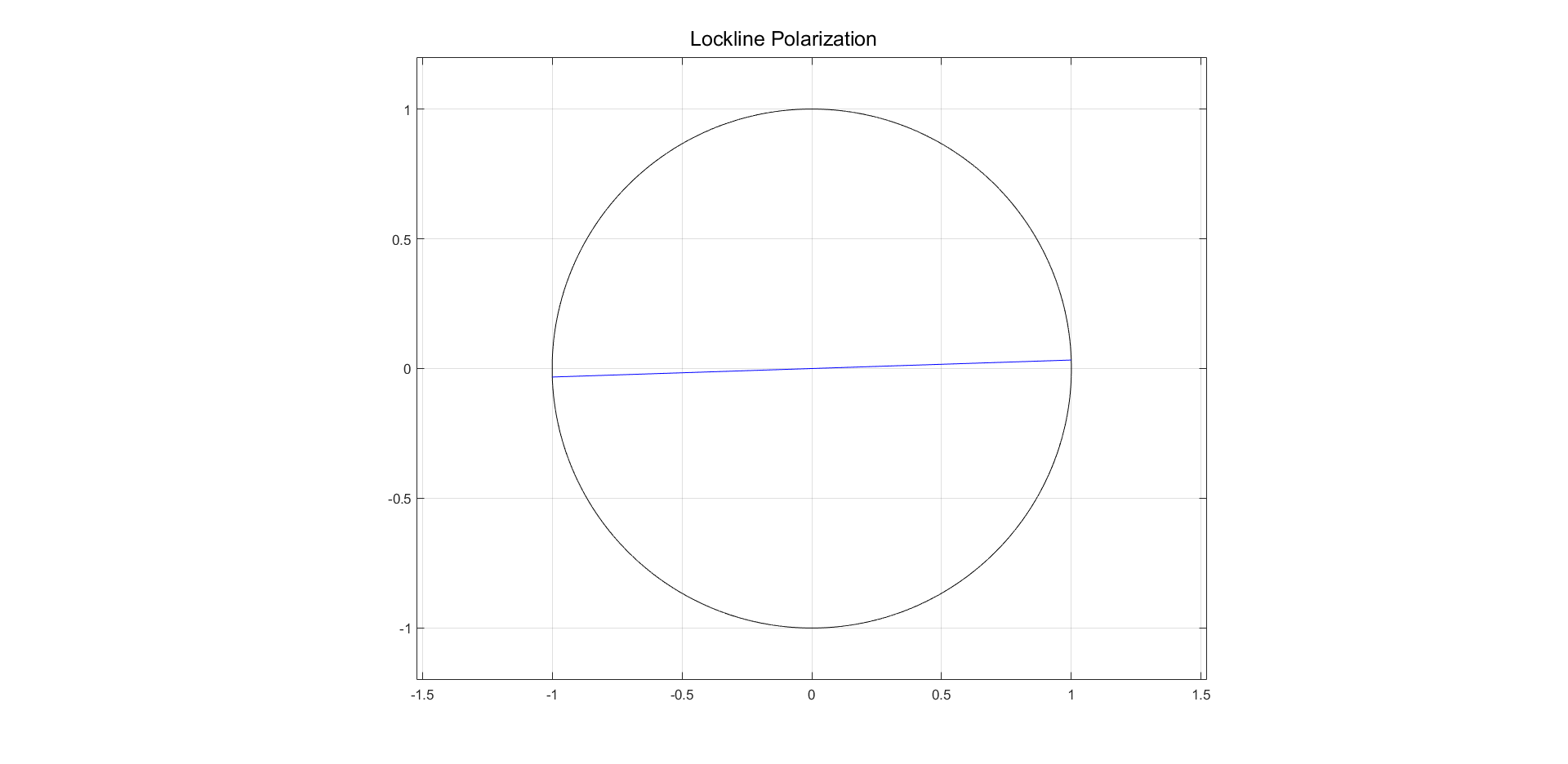
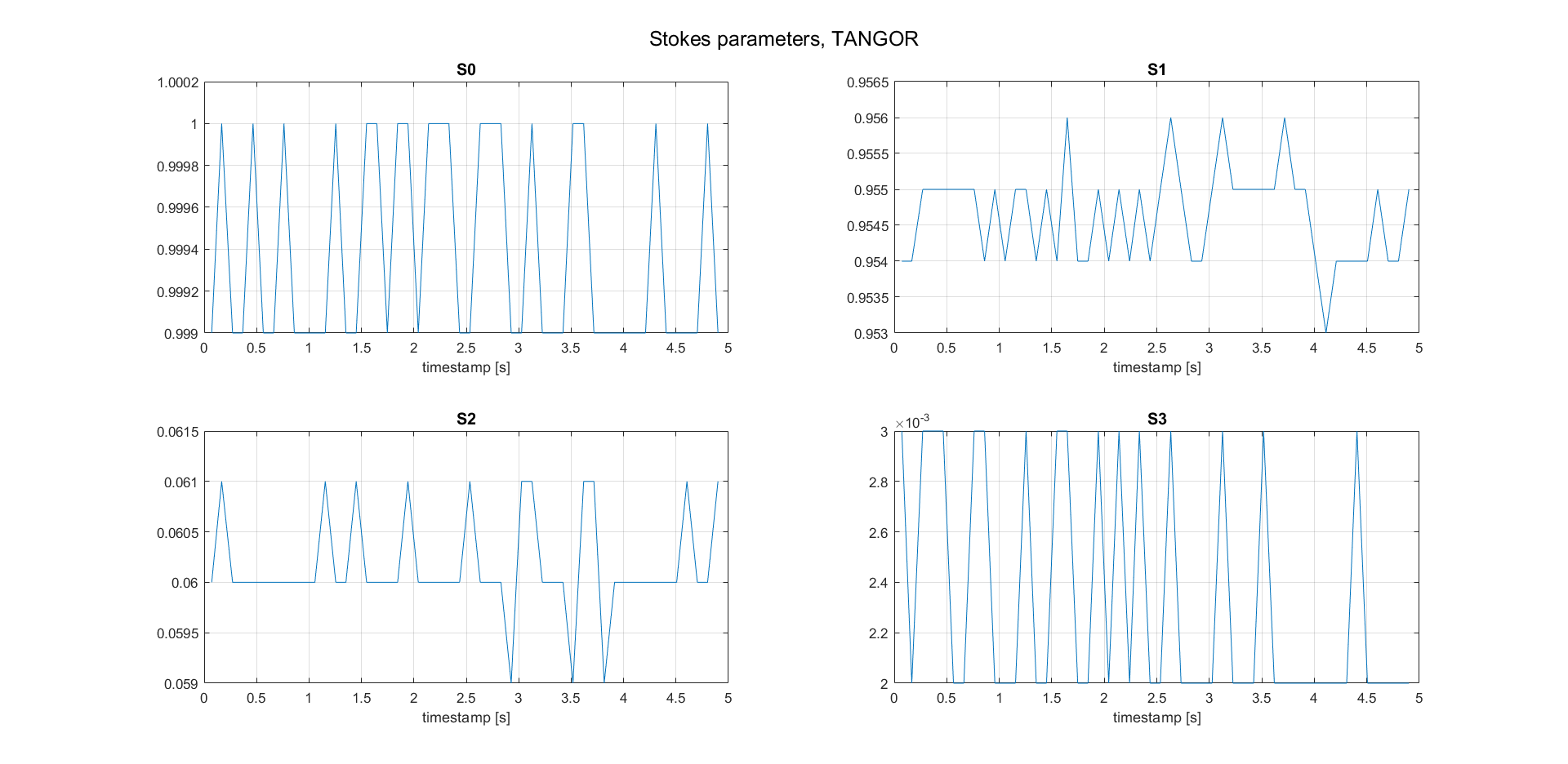
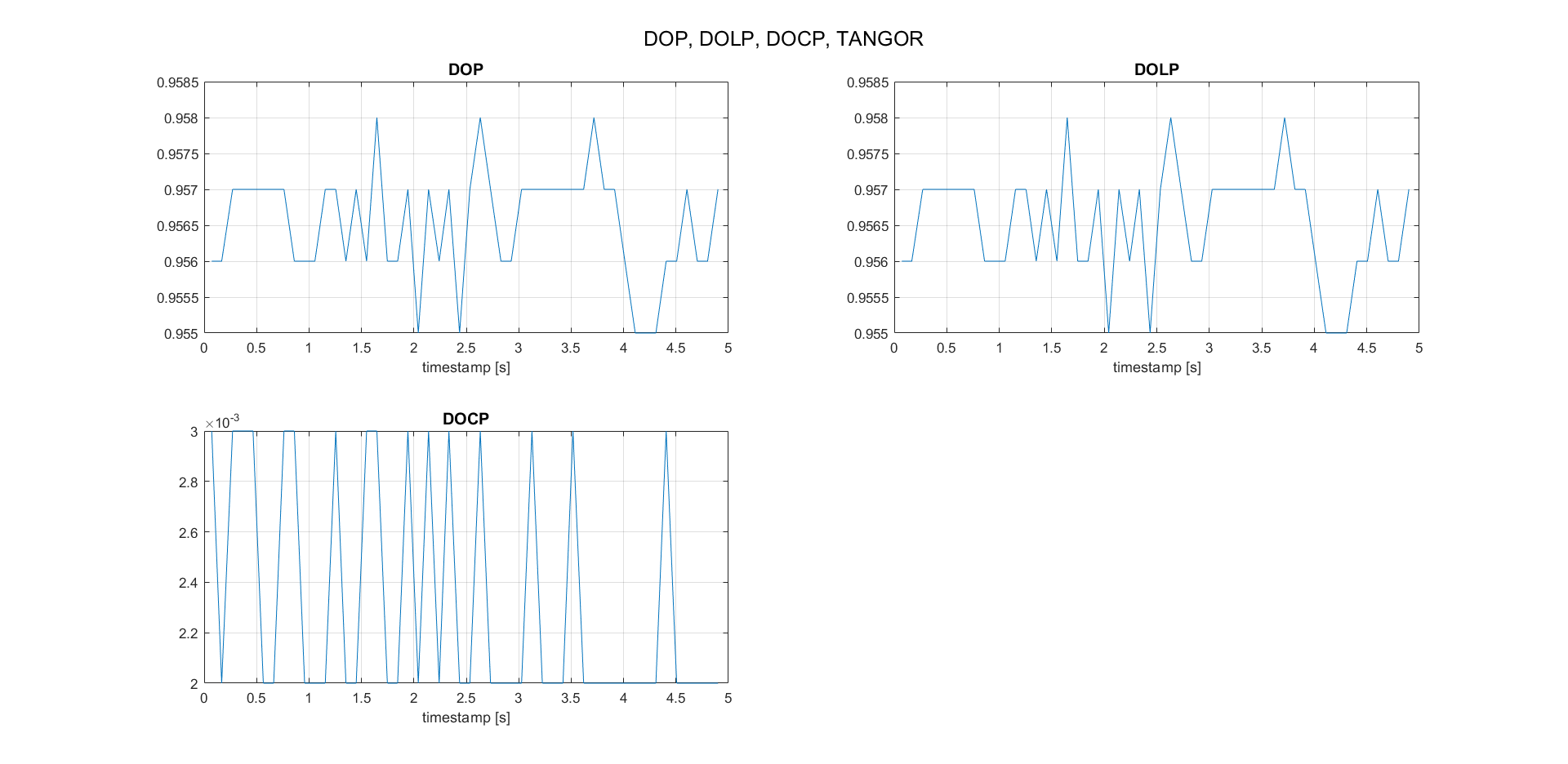
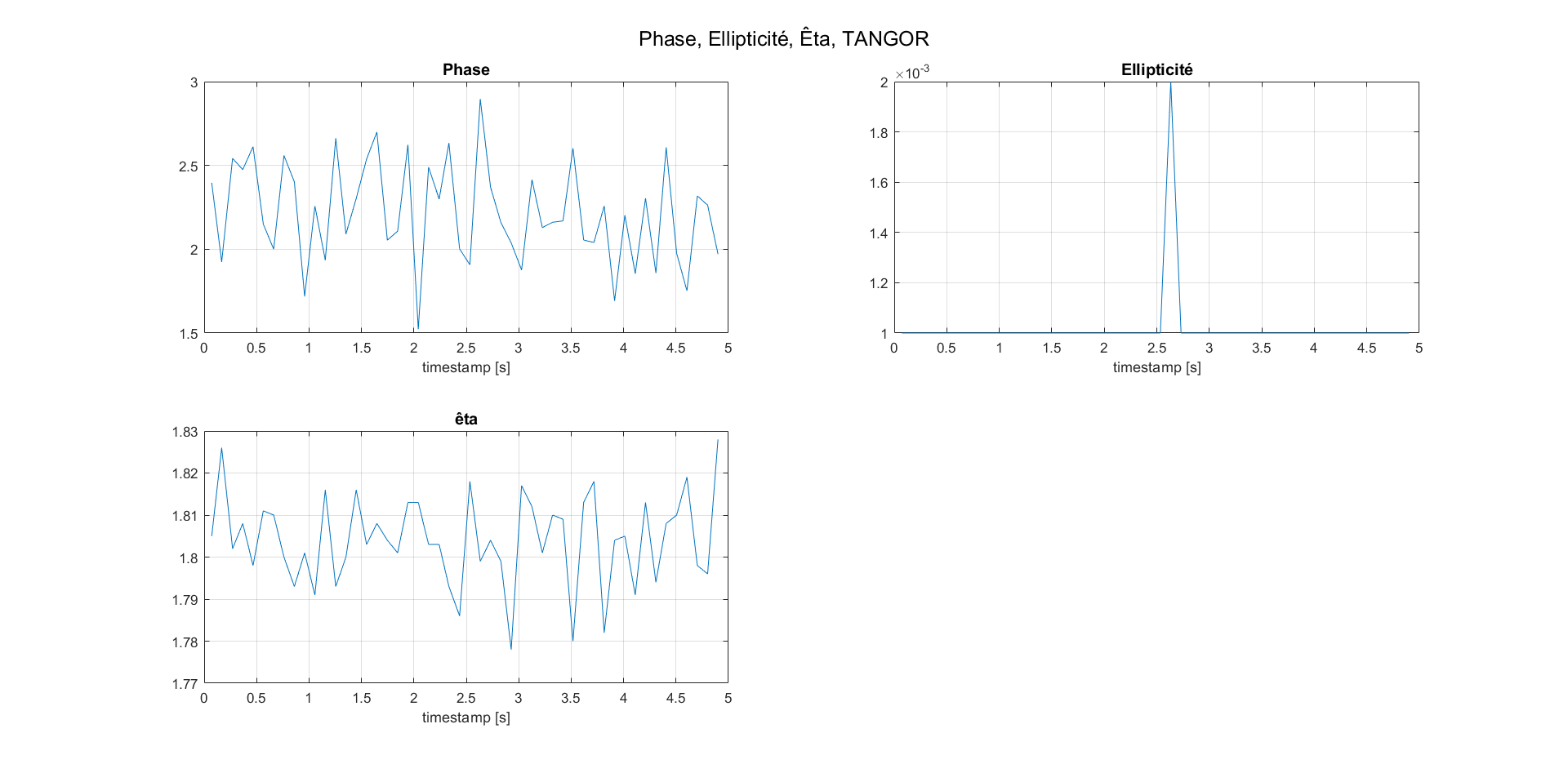
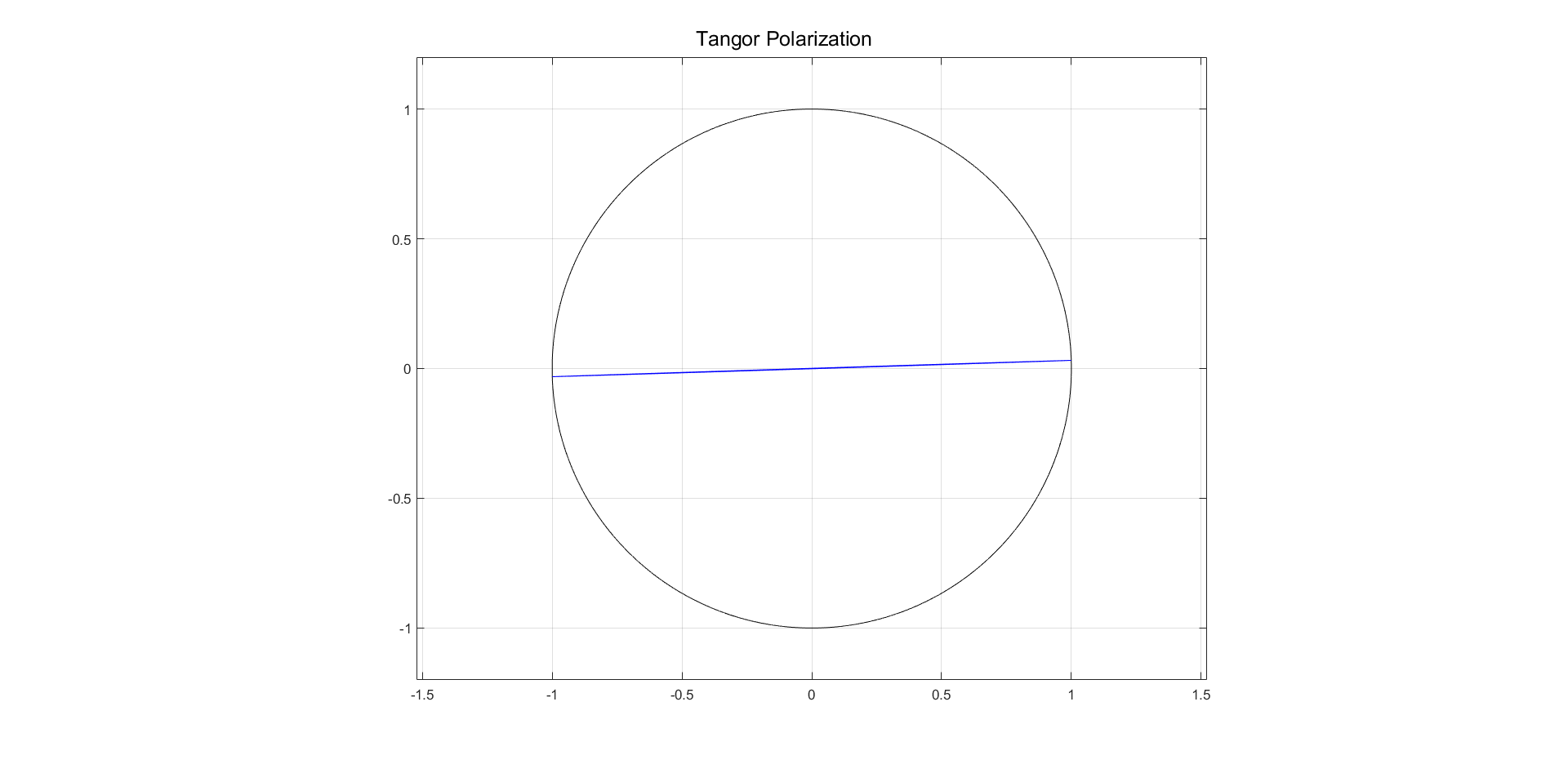
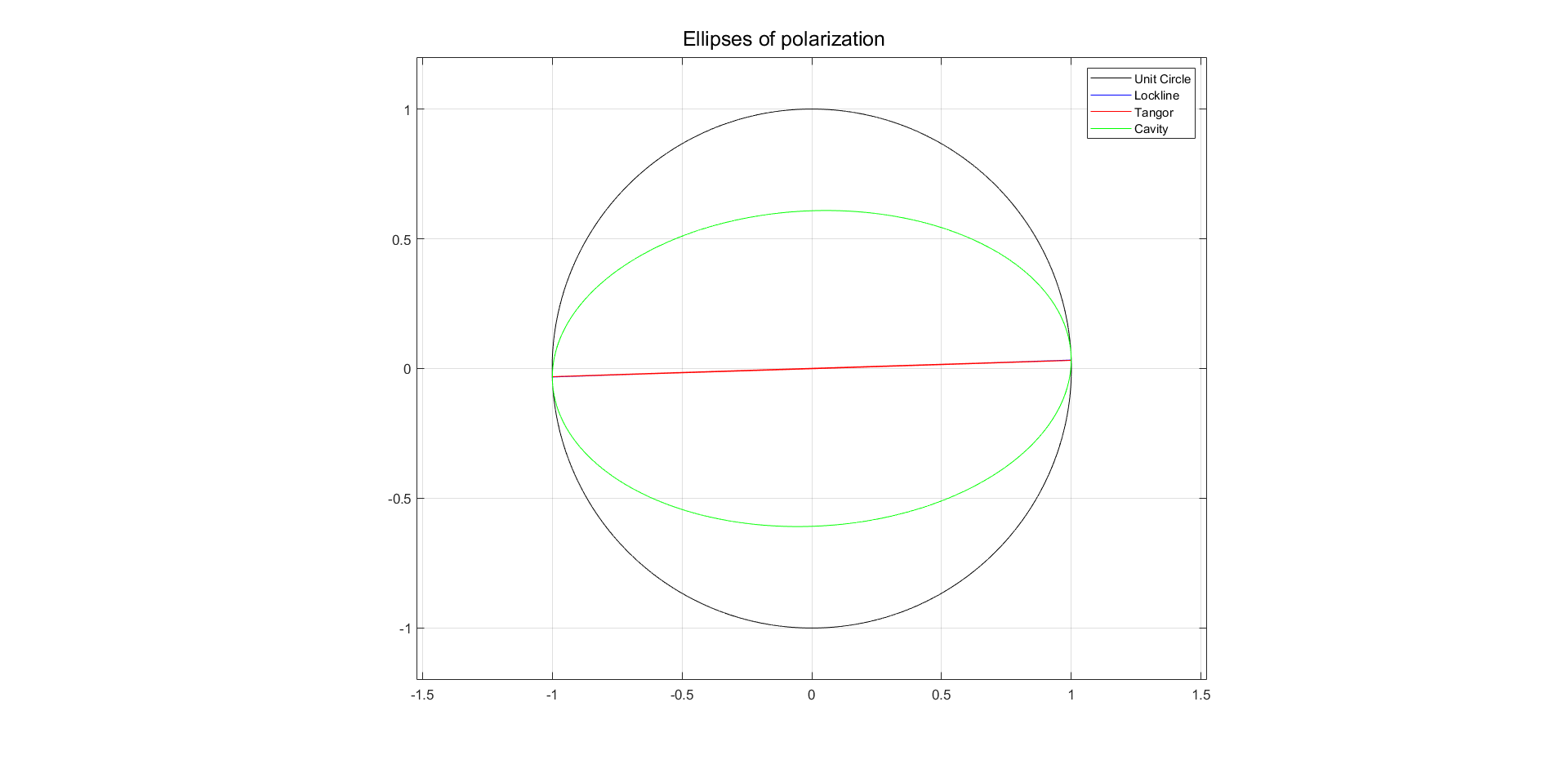
J'ai fait les mesures de polarisation sur la voie de réflexion pour voir la polarisation avant le glan et après le glan du Tangor et de la lockline.
Dans l'ordre :
Image 1-9 : avant le glan
Image 10-18 après le glan
Malgré le fait que l'état de polarisation du Tangor et celui de l'axe du glan soient perpendiculaires, il n'y a pas extinction du Tangor en sortie de glan (défaut glan? partie du faisceau non polarisé?) |
| Attachment 1: Stokes_parameters_LOCKLINE.png
|
 |
| Attachment 2: DOP_DOLP_DOCP_LOCKLINE.png
|
 |
| Attachment 3: Phase_Ellipticité_Êta_LOCKLINE.png
|
 |
| Attachment 4: Ellipse_Polarization_LOCKLINE.png
|
 |
| Attachment 5: Stokes_parameters_TANGOR.png
|
 |
| Attachment 6: DOP_DOLP_DOCP_TANGOR.png
|
 |
| Attachment 7: Phase_Ellipticité_Êta_TANGOR.png
|
 |
| Attachment 8: Ellipse_Polarization_TANGOR.png
|
 |
| Attachment 9: ALL_polar_Ellipses.png
|
 |
| Attachment 10: Stokes_parameters_LOCKLINE.png
|
 |
| Attachment 11: DOP_DOLP_DOCP_LOCKLINE.png
|
 |
| Attachment 12: Phase_Ellipticité_Êta_LOCKLINE.png
|
 |
| Attachment 13: Ellipse_Polarization_LOCKLINE.png
|
 |
| Attachment 14: Stokes_parameters_TANGOR.png
|
 |
| Attachment 15: DOP_DOLP_DOCP_TANGOR.png
|
 |
| Attachment 16: Phase_Ellipticité_Êta_TANGOR.png
|
 |
| Attachment 17: Ellipse_Polarization_TANGOR.png
|
 |
| Attachment 18: ALL_polar_Ellipses.png
|
 |
|
62
|
Fri Jan 20 18:01:22 2023 |
Blanc | Fixed | info | lasers and optics | Optical room | Mesure de finesse |
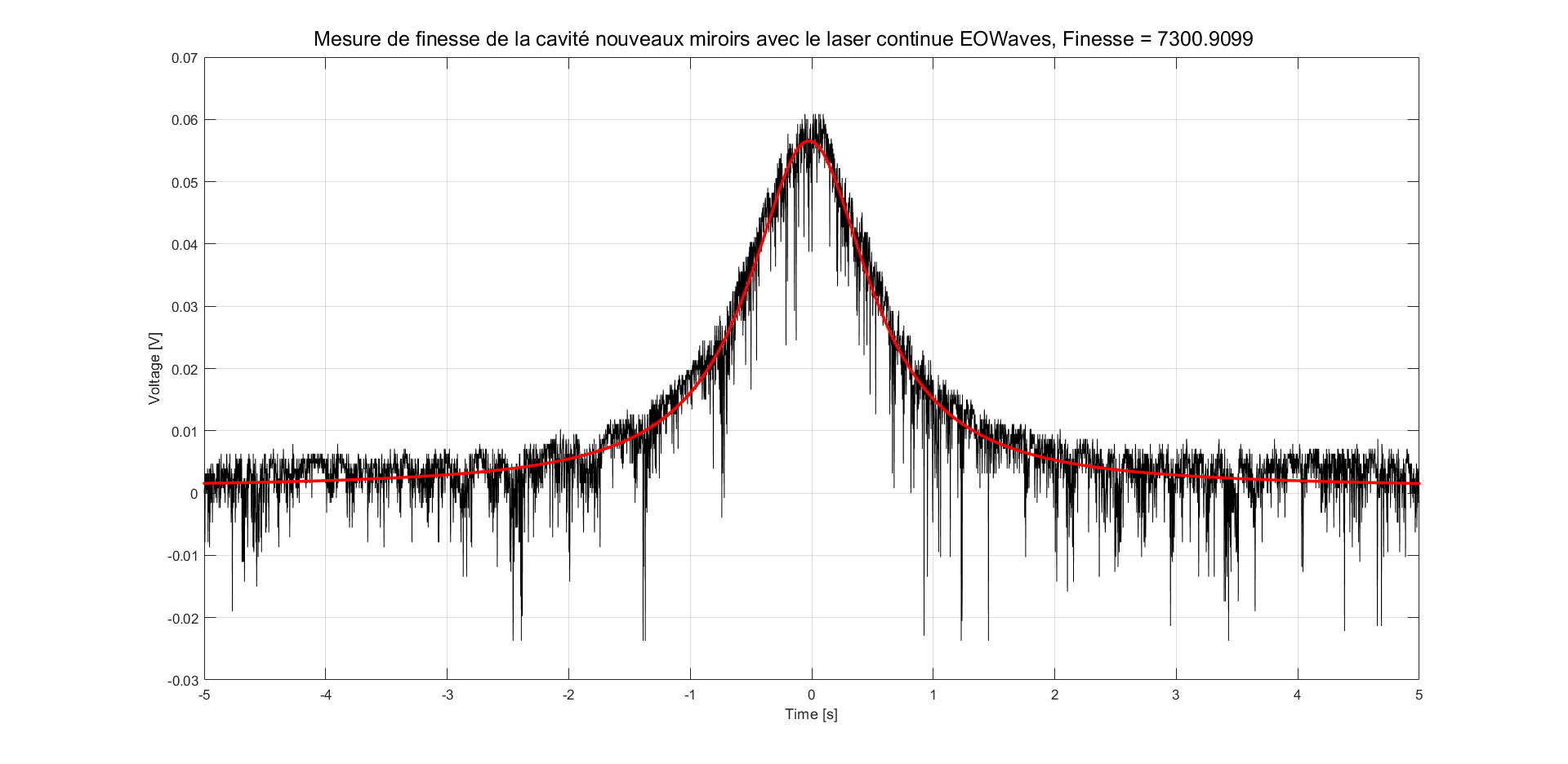
Fréquence centrale : 879.48 MHz
FWHM mesurée à la main sans sweep : 120 / 130 KHz
=> Finesse = FSR/FWHM = ~7000
Apporter un analyseur de spectre pour régler le sweep du Marconi pour une mesure de finesse plus précise. |
|
63
|
Wed Jan 25 12:12:36 2023 |
Blanc | Fixed | info | lasers and optics | Optical room | Mesure de finesse |
| Blanc wrote: |
|
Fréquence centrale : 879.48 MHz
FWHM mesurée à la main sans sweep : 120 / 130 KHz
=> Finesse = FSR/FWHM = ~7000
Apporter un analyseur de spectre pour régler le sweep du Marconi pour une mesure de finesse plus précise.
|
On a pu mesurer la FWHM à l'aide du sweep : 124kHz
On obtient une finesse de 7300 en ayant traité les données. |
| Attachment 1: Mesure_de_finesse.png
|
 |
|
52
|
Fri Dec 17 17:03:34 2021 |
Kevin Dupraz | Under Process | report | lasers and optics | Optical room | Manip 17 12 2021 reprise réf nouvelle injection pour polarisation |
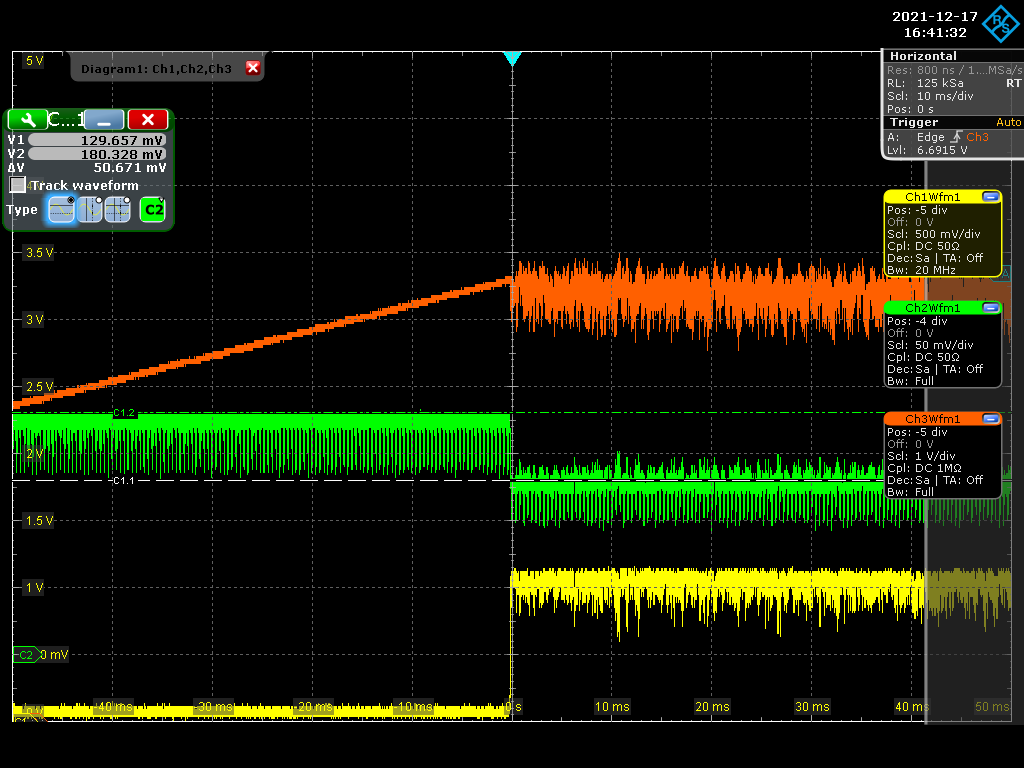
Tangor : 4.2W
* Réalignement de l'injection suite aux modifications :
- Changement de l'ordre des waveplate maintenant : lambda/4, puis lambda/2
- suppression de l'iris au niveau de la transmission, perte d'au moins un facteur sur le signal en transmission
- reprise des références sur les caméras en reflection. (NF:[10.2548, 6.1092], FF:[1.9881, 1.5929])
* Optimisation du couplage en pointé, puis en polarisation
--> Maximum de reflection dans la photodiode (transmission maximale)
- couplage mesuré en réflection : 32% +- 4%(PV) max (180 mV)
- max intensité en transmission (0 dB, sans densité) : 1.1V
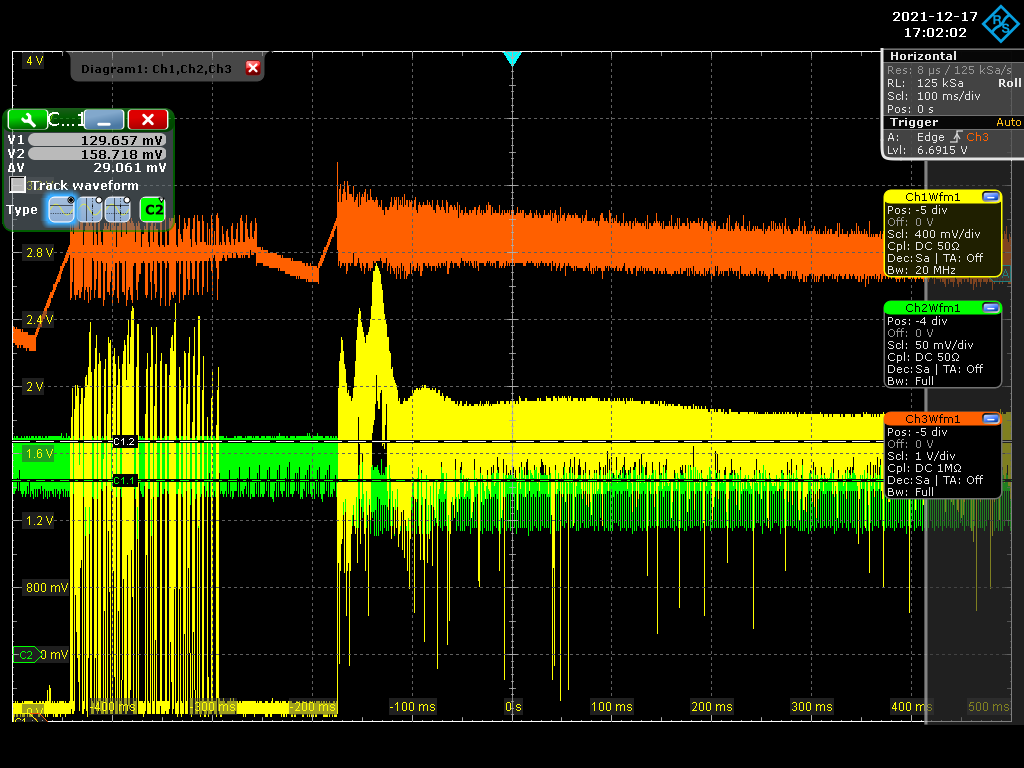
Tangor : 20W
- Montée en puissance: grosse dérive thermique mais le signal en réflection est "correcte".
- transmission (30dB, OD30) : pic max à 2.6 V
"puissance stable", 1.88V
- couplage : 25% (40mV/160mV)
On part en vacances ^^ |
| Attachment 1: Screenshot_2021-12-17_0_164132.png
|
 |
| Attachment 2: Screenshot_2021-12-17_1_170202.png
|
 |
|
49
|
Thu Dec 16 12:12:10 2021 |
Kevin Dupraz | Under Process | report | lasers and optics | Optical room | Manip 16 12 2021 montée en puissance |
Matin:
* Redémarrage Tangor 4W
- couplage 15%
- max photodiode Transmission (60dB, OD30) : 1.9V
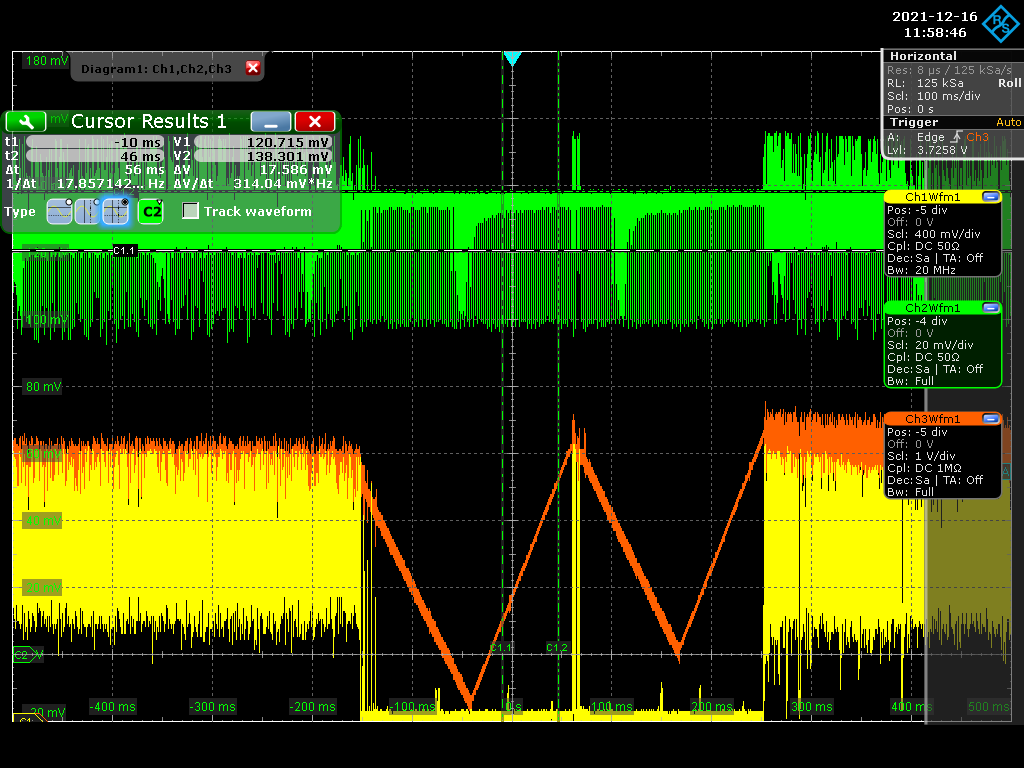
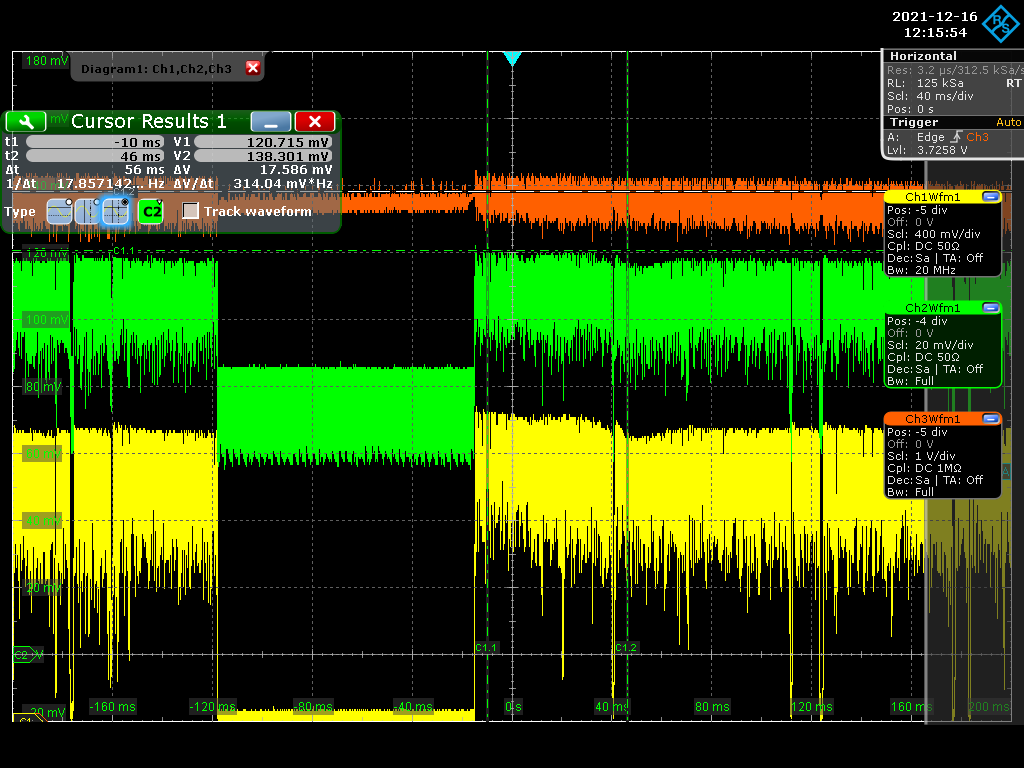
* Montée en Puissance 20 W
- début des effets thermiques : dérive thermique (la cavité chauffe et le piezo doit suivre, la tension baisse)
- max photodiode Transmission (40dB, OD30) : 1.6 V
- Reflection (~12%) ~140mV max:
* quand résonance => plus de signal sur la reflexion que hors lock.
- Hypothèses:
saturation de la photodiode ==> avec une densité OD10 (même effet)
effet de polarisation: essaie avec la densité OD10 (absorbante) dans le faisceau au niveau de la lambda/4 en reflection ==> la densité est brulée (ne tient pas la puissance)
==> essayer avec densité réflective.
* impossible de locker sur le max de transmission |
| Attachment 1: Screenshot_2021-12-16_0_115846.png
|
 |
|
50
|
Thu Dec 16 12:13:52 2021 |
Kevin Dupraz | Under Process | report | lasers and optics | Optical room | Manip 16 12 2021 montée en puissance |
| Kevin Dupraz wrote: |
|
Matin:
* Redémarrage Tangor 4W
- couplage 15%
- max photodiode Transmission (60dB, OD30) : 1.9V
* Montée en Puissance 20 W
- début des effets thermiques : dérive thermique (la cavité chauffe et le piezo doit suivre, la tension baisse)
- max photodiode Transmission (40dB, OD30) : 1.6 V
- Reflection (~12%) ~140mV max:
* quand résonance => plus de signal sur la reflexion que hors lock.
- Hypothèses:
saturation de la photodiode ==> avec une densité OD10 (même effet)
effet de polarisation: essaie avec la densité OD10 (absorbante) dans le faisceau au niveau de la lambda/4 en reflection ==> la densité est brulée (ne tient pas la puissance)
==> essayer avec densité réflective.
* impossible de locker sur le max de transmission
|
|
| Attachment 1: Screenshot_2021-12-16_1_121553.png
|
 |
|
47
|
Tue Dec 14 12:59:07 2021 |
Kevin Dupraz | Under Process | report | lasers and optics | Optical room | Manip 14 12 2021 injection optimization (and calibration) |
Matin :
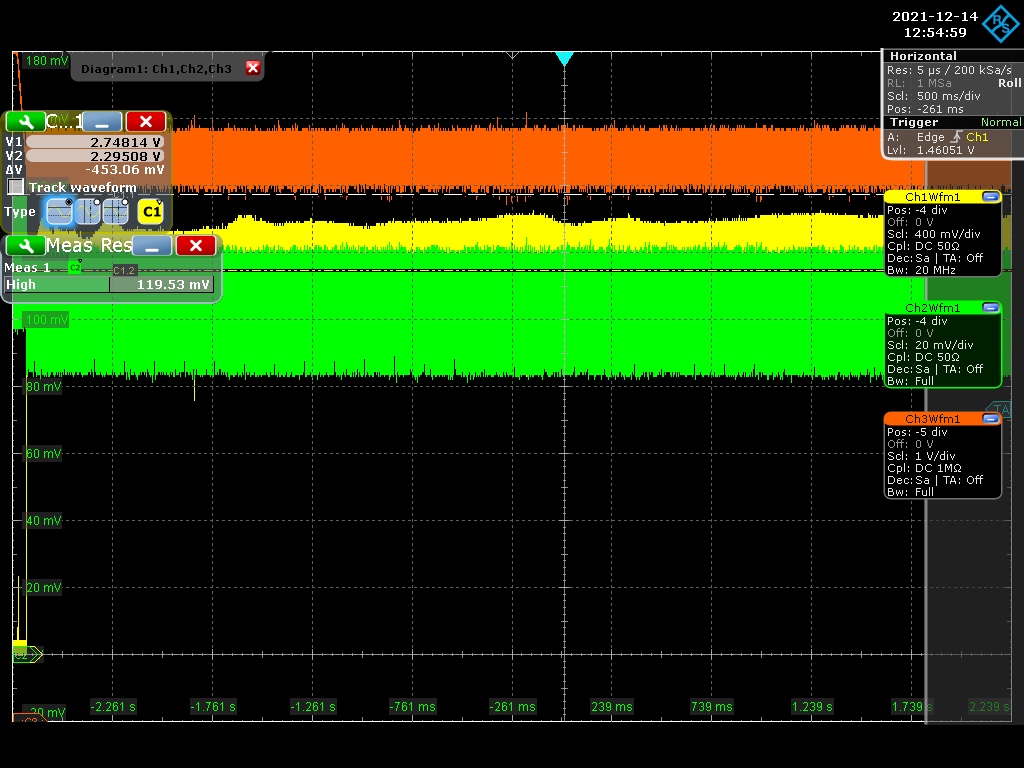
moteurs :
M1, M2 (plans): 5.110500m
M3, M4 (sphériques): -2.900000m
- Optimization de la première L/2 (en sortie tangor), le flux est maximisé en sortie du combiner.
* mesure sortie Tangor (Power meter de puissance) : 85 + 90 mW
* mesure sortie Tangor (Power meter PH100-Si-HA-OD1 "226316" + OD2) : 4.11mW
* mesure avant combiner, entre miroirs de replis Newfocus (Power meter + OD2) : 3.53mW
* mesure après pick-off (injection cavité) (Power meter + OD2) : 2.93mW
- Optimization du couplage avec la polarisation :
* modification de la polarisation injecté dans la cavité
* optimisation du flux reçu sur la photodiode en réflection
* mesure du couplage.
** Optimum trouvé à 15% de couplage (en scan 5Hz, 0-10V)
Position des lambdas :
- L/2 en injection : 333°
- L/4 en injection : 48°
- L/2 en réflection : 225°
- L/4 en réflection : 54°
- Déplacement de la photodiode en transmission.
* Réglage de l'iris au niveau de la photodiode : Iris ouvert PV résonance 31 mV, Iris fermée 25 mV
- Lock de la cavité.
* transmission : 2.65V (60dB)
* reflection : 16.5% de couplage
* mesure devant la caméra en transmission (Power meter PH100-Si-HA-OD1 "226316" + OD2) : 0.635 uW
* image (P.J) sauvegardé bin |
| Attachment 1: Screenshot_2021-12-14_2_125459.png
|
 |
|
48
|
Thu Dec 16 10:40:55 2021 |
Kevin Dupraz | Under Process | report | lasers and optics | Optical room | Manip 14 12 2021 injection optimization (and calibration) |
Après-midi :
* Optimisation de l'alignement en injection pour avoir le plus de puissance en transmission
* Optimisation (vérification) de la polarisation pour avoir le plus de couplage.
* tension photoDiode en réflexion (50 Ohm) : max à 136 mV (couplage 20%)
* tension Photodiode transmission PDA100A-EC(50 ohm) : max à 3.6 V (60 dB de gain)
- Passage à 50 W en sortie de TANGOR.
* Vérificaton de l'alignement pour avoir le plus de puissance en transmission.
* Vérification de la polarisation pour avoir le plus de couplage.
* tension Photodiode transmission PDA100A-EC(50 ohm) : max à 4.9 V (40 dB de gain)
* Changement de la polarisation sur la ligne de réflexion (uniquement la lambda/4) pour ne pas saturer la photodiode.
* tension photoDiode en réflexion (50 Ohm) : max à 136 mV (couplage 12%)
* Références caméras :
> NF_refl : x0 = 11.9 mm; y0 = 8.65 mm; sigma_x = 0.185 mm; sigma_y = 0.167 mm.
> FF_refl : x0 = 2.44 mm; y0 = 0.61 mm; sigma_x = 0.241 mm; sigma_y = 0.259 mm.
> NF_inj : x0 = 8.57 mm; y0 = 5.40 mm; sigma_x = 0.123 mm; sigma_y = 0.127 mm.
- Plus de splitter 90/10 en sortie de TANGOR, 4.5 W en sortie TANGOR :
* Compensation du walk-of introduit par ce splitter.
* réalignement de la cavité après locking
* Photodiode Transmission (60dB + densité OD30) : max 2V
* Reflection (près changement de pile) : 18% de couplage (tension max 136 mV, 50 Ohm)
| Kevin Dupraz wrote: |
|
Matin :
moteurs :
M1, M2 (plans): 5.110500m
M3, M4 (sphériques): -2.900000m
- Optimization de la première L/2 (en sortie tangor), le flux est maximisé en sortie du combiner.
* mesure sortie Tangor (Power meter de puissance) : 85 + 90 mW
* mesure sortie Tangor (Power meter PH100-Si-HA-OD1 "226316" + OD2) : 4.11mW
* mesure avant combiner, entre miroirs de replis Newfocus (Power meter + OD2) : 3.53mW
* mesure après pick-off (injection cavité) (Power meter + OD2) : 2.93mW
- Optimization du couplage avec la polarisation :
* modification de la polarisation injecté dans la cavité
* optimisation du flux reçu sur la photodiode en réflection
* mesure du couplage.
** Optimum trouvé à 15% de couplage (en scan 5Hz, 0-10V)
Position des lambdas :
- L/2 en injection : 333°
- L/4 en injection : 48°
- L/2 en réflection : 225°
- L/4 en réflection : 54°
- Déplacement de la photodiode en transmission.
* Réglage de l'iris au niveau de la photodiode : Iris ouvert PV résonance 31 mV, Iris fermée 25 mV
- Lock de la cavité.
* transmission : 2.65V (60dB)
* reflection : 16.5% de couplage
* mesure devant la caméra en transmission (Power meter PH100-Si-HA-OD1 "226316" + OD2) : 0.635 uW
* image (P.J) sauvegardé bin
|
|
| Attachment 1: Screenshot_2021-12-14_3_182645.png
|
 |
|
46
|
Fri Dec 10 16:57:56 2021 |
Kevin Dupraz | Under Process | report | lasers and optics | Optical room | Manip 10 12 2021 (optimization injection Burst) |
Manip 10/12/2021
Après recherche de la résonnance principale
- MCS miroirs plan à 5.110250mm (en derive vers les negatifs)
- pic transmission à 5V
- couplage ~7%
Décalage du spot (très faible, à peine visible à la camera NF_refl)
- grosse perte en transmission ==> alignement OK
Grossissement du spot
* début taille_sigma à 0.220mm (calibration NF_Refl)
* nouvelle position en éloignant la lentille 1 taille à 0.300mm ==> max transmission ~3V,
- Walk en vertical ==> pas d'amélioration et dégradation.
- Divergent en entrée de cavité (test à la carte)
* En rapprochant la lentille 1 passage pas le minimum de taille vers 0.190 mm
* Depassement du minimum. Taille faisceau 0.317 mm (0.380 mm sur y) ==> max transmission ~2.5V,
- Walk en vertical ==> pas d'amélioration et dégradation.
- divergence pas apréciable
* On se met au minimum de taille sur la caméra. Taille faisceau 0.178 mm (0.170mm sur y) ==> max transmission ~5.3V
- Couplage 25% max (beaucoup de fluctuations).
- Gros décalage vertical (~ 1 sigma) ne provoque pas une baisse du transmis.
- Décalage horizontal sensible.
Après mangé Ronic a "lockée" la cavité. Le gain de la photodiode en transmission a été changé et la tension sur la résonnance principale est d'environ 600 - 800 mV
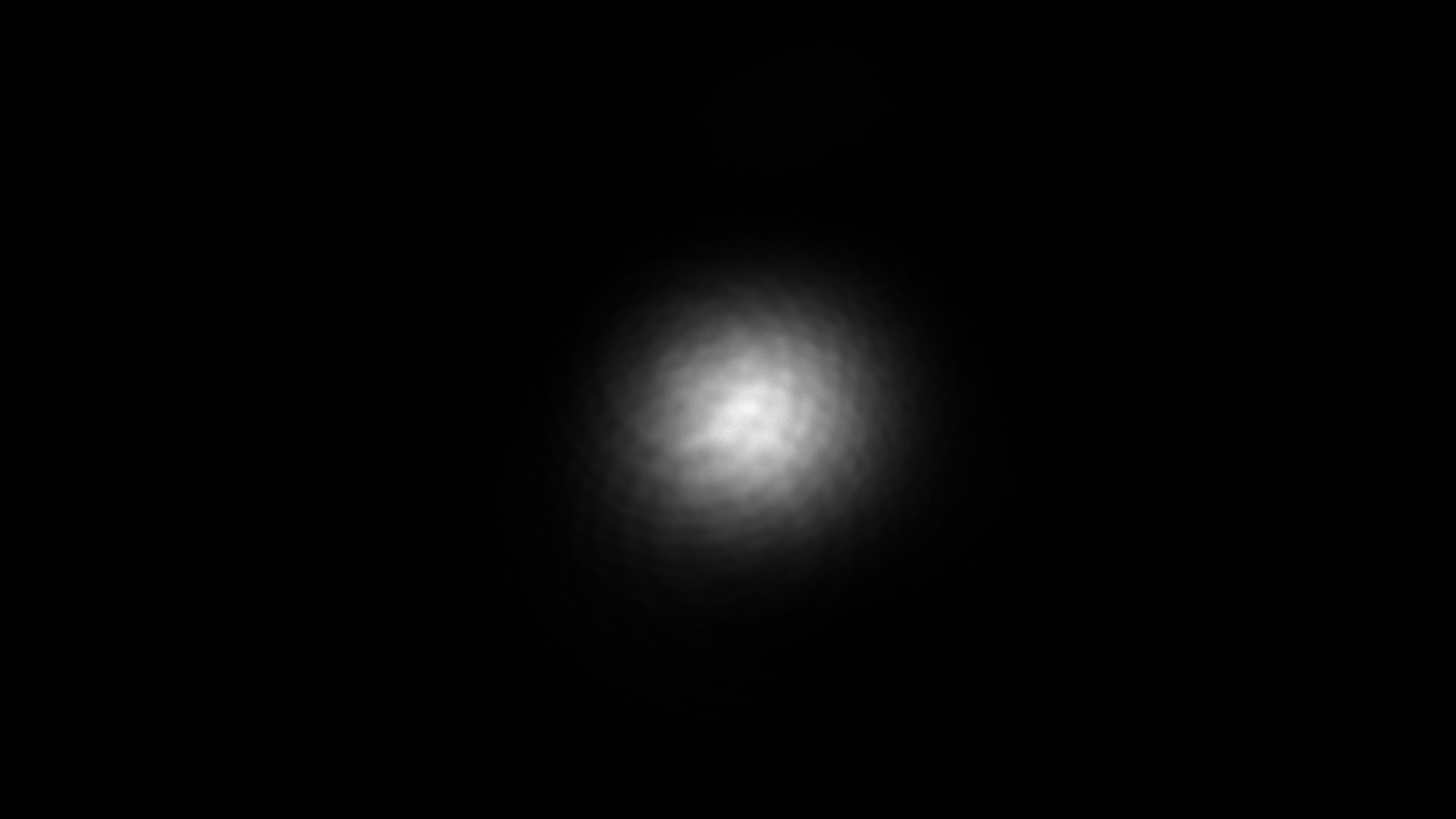
deux images ont été faites en entrée de cavité à environ 18 cm du splitter pour la camera de test afin d'être à peu près à une distance équivalente du miroir d'injection M1.
|
| Attachment 1: NF_Refl__2021-12-10__14-25-08.png
|
 |
| Attachment 2: test__2021-12-10__14-25-08_1920_25gm.png
|
 |
|
32
|
Tue Oct 5 18:24:53 2021 |
Ronic Chiche | Fixed | info | lasers and optics | Optical room | Locking with fast analog loop on AOM |
in addition to the standard locking scheme with the GHz laser PZT,
we added an AOM after the PDH modulation EOM and we drove it with an FM modulated signal generator (FMDev = 2.4MHz) seeded by the error signal.
(we didn't put a 50ohm plug to adapt the error signal coming from the PDH box, otherwise, it is too much smaller)
the result is a transmitted signal almost clean for some milliseconds... but we still have regular unlocks that the PZT loop is unable to drive.
the PZT resonant frequency around 30kHz seems much less present in the error signal.
todo list:
- take some data of the error/trans signals to make a post-mortem analysis (a windowed FFT could tell us if the 30kHz is more powerful just before an unlock)
- make an RLC model of the cable+resistor+PZT capacitor, to try to find a way to dump the 30kHz frequency.
|
|
18
|
Tue Sep 7 17:48:50 2021 |
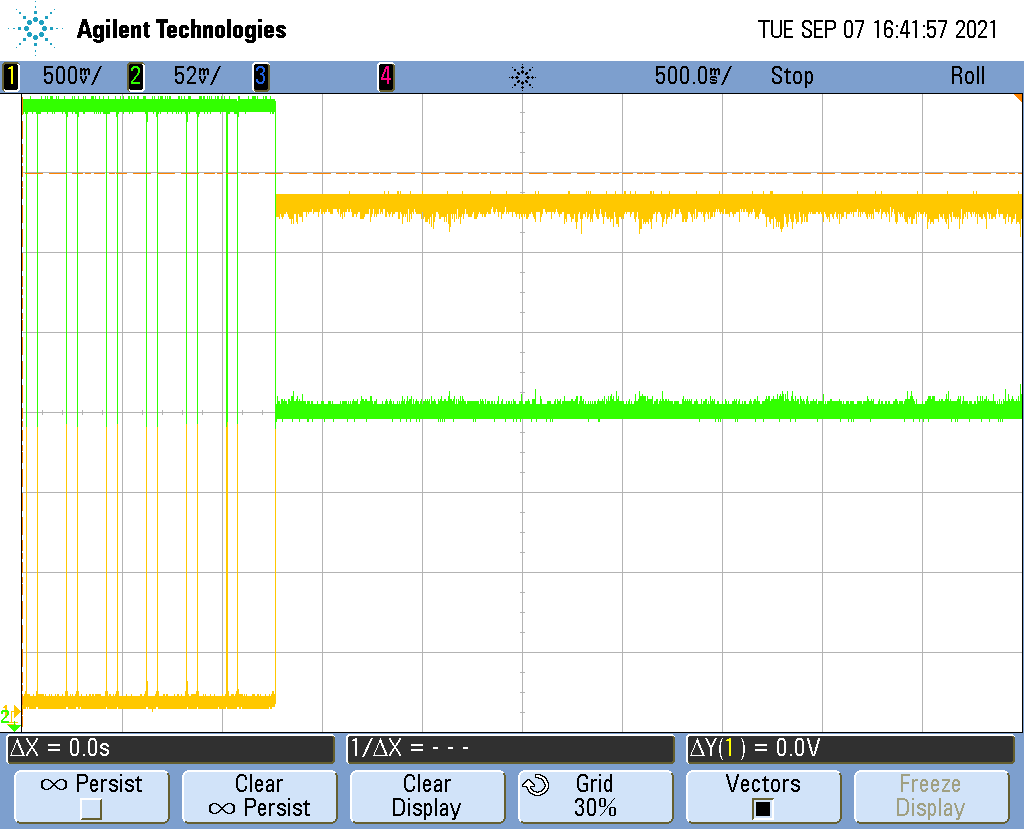
Blanc | Fixed | info | lasers and optics | detectors and electronics | Optical room | Locking of the cavity and setup changing |
We change the setup a bit to have the same polarization on the photodiode and the PDH (in reflexion of the cavity). CF: schematics (futur).
Thanks to that, the symetry between reflexion and transmission is better now (as you can see on the plot).
We also put more power on PHD to have a better SNR by changing splitters. (We had 100 µW and now we have more than 1 mW, at the expense of the power on the camera).
Thanks to that we obtained a good locking, The coupling is quite good (roughtly 50%, on the green line)
In the following plot, the green line is the reflexion and the yellow lin is the transmission. |
| Attachment 1: scope_0.png
|
 |
|
10
|
Fri Apr 30 17:41:10 2021 |
Aurélien Martens | Fixed | report | lasers and optics | detectors and electronics | Optical room | Lock, cavity length and finesse estimate |
Ronic just suceeded in obtaining a reasonably good lock on the cavity. Air flow is switched off.
We stopped all movements (closed loop, click STOP in the PTC interface) and saw immediately a fair but not excellent lock.
We then switched off the smaract motors and the obtained lock was good. Switching on again the smaract means tthat the references are lost.
We futher saw a drift of the locking point, probalby suggetsing that the thermal load in the cavity slightly changed after switching off the motors.
We then added the second 1GHz BW EOM to add sidebands thanks to the MARCONI RF generator. We observed that the FSR is aroung 867.6MHz (in air). We then looked at the points where the transmission signal related to the sideband is halved. We observed that the corresponding frequencies are 867.296 and 867.776MHz. the corresponding FWHM of about 500kHz corresponds approximately to a 2000 finesse.
Picture color code:
TRANS : Green
REFLECT : Yellow
PZT : Blue
|
| Attachment 1: IMG_20210430_173331.jpg
|
 |
|
16
|
Tue Sep 7 11:05:47 2021 |
Aurélien Martens | Fixed | report | lasers and optics | detectors and electronics | Optical room | Lock, cavity length and finesse estimate |
we observed that the transmitted light coming from the cavity is made of the cavity mode light and the scattered light on the borders of the mirrors.
the scattered light on the borders of the mirrors is triggered by the cavity mode itself when the cavity is locked.
we didn't put an iris to cut this scattered light coming from the cavity.
Question:
could it be possible that the wrong Finesse value could come from the fact that the transmission was measured with the whole light coming from the cavity and not only the cavity mode light?
| Aurélien Martens wrote: |
|
Ronic just suceeded in obtaining a reasonably good lock on the cavity. Air flow is switched off.
We stopped all movements (closed loop, click STOP in the PTC interface) and saw immediately a fair but not excellent lock.
We then switched off the smaract motors and the obtained lock was good. Switching on again the smaract means tthat the references are lost.
We futher saw a drift of the locking point, probalby suggetsing that the thermal load in the cavity slightly changed after switching off the motors.
We then added the second 1GHz BW EOM to add sidebands thanks to the MARCONI RF generator. We observed that the FSR is aroung 867.6MHz (in air). We then looked at the points where the transmission signal related to the sideband is halved. We observed that the corresponding frequencies are 867.296 and 867.776MHz. the corresponding FWHM of about 500kHz corresponds approximately to a 2000 finesse.
Picture color code:
TRANS : Green
REFLECT : Yellow
PZT : Blue
|
|